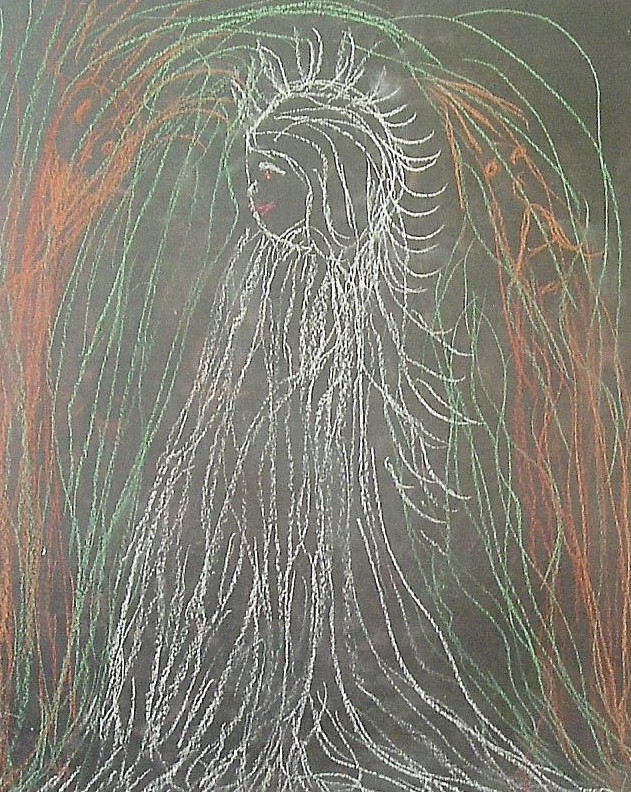
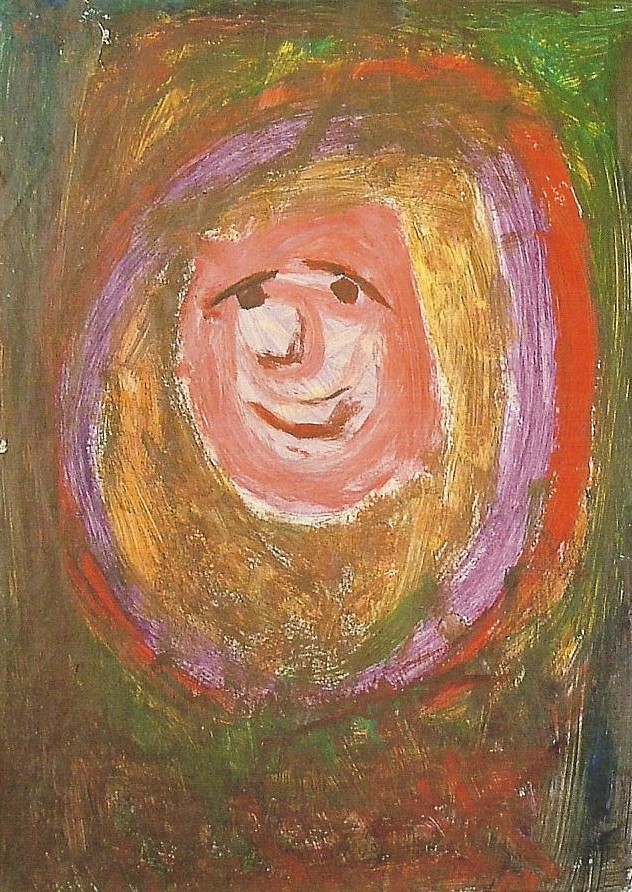
Andrew Beswick is a Manchester-based artist who’s work includes poetry, drawing, performance and sculpture. His approach to art is intuitive and self-taught and his inspiration to begin making art originated from a love of expressionist painting, primitive/ outsider art and the work of groups such as COBRA and the Situationist International. His interest lies in the experimentation with form and the creative process. Each work is seen as incomplete or unfinished, a sketch or an idea that is an end unto itself. With an artistic practice that is centred around themes of spontaneity and the natural environment, he combines elements of cartography, primitivism and poetry with an interest in social history, ethnology and popular culture. In 2006 Andrew studied Art Foundation at Stockport College and the following year he helped establish the Islington Mill Art Academy, an independent art school based in Salford (which he is still actively involved with).
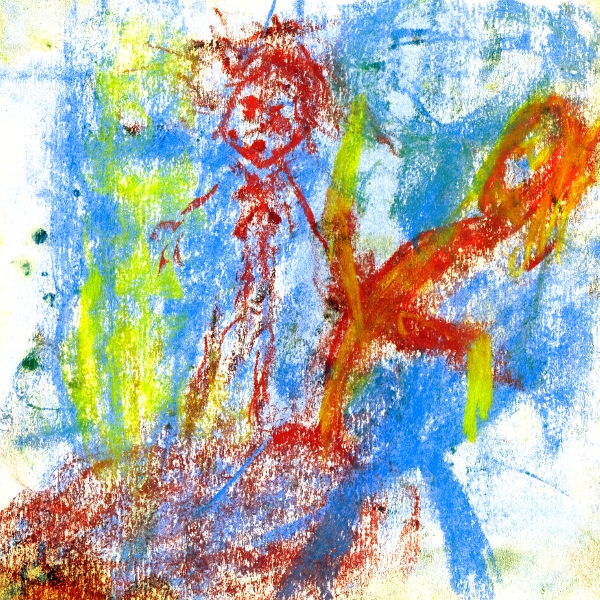
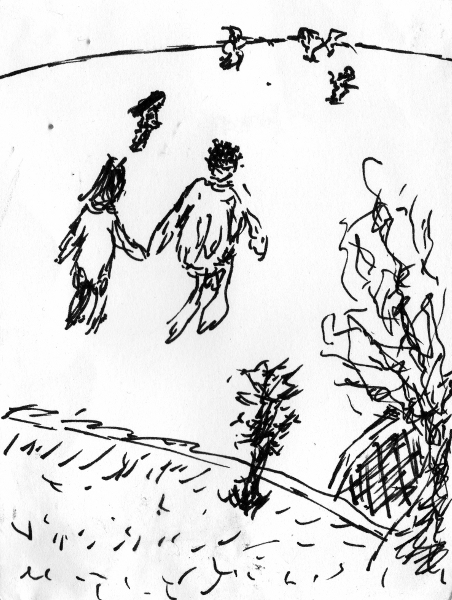
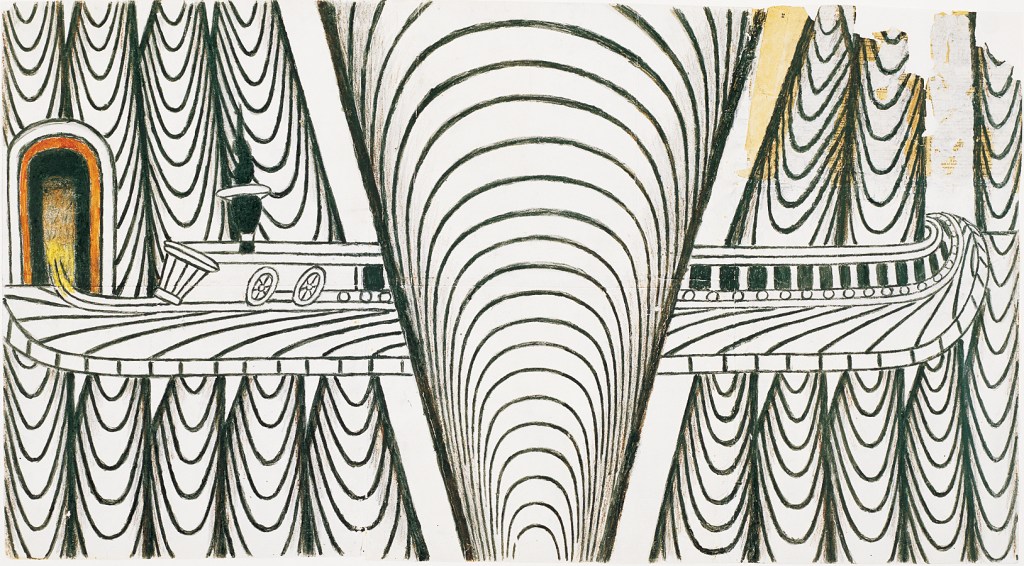
Andrew Beswick, ‘Untitled’ (2007)Andrew Beswick, ‘People in Krakow’ (2007)Andrew Beswick, ‘Duck’ (2007)Andrew Beswick, Marina De Lagos’ (2012)Andrew Beswick, ‘Salford in Rush Hour’ (2008)
If you would like a showcase of your work on this blog, please get in touch my emailing kdoutsiderart@yahoo.com
Alternatively, get in touch on Twitter: @kd_outsiderart
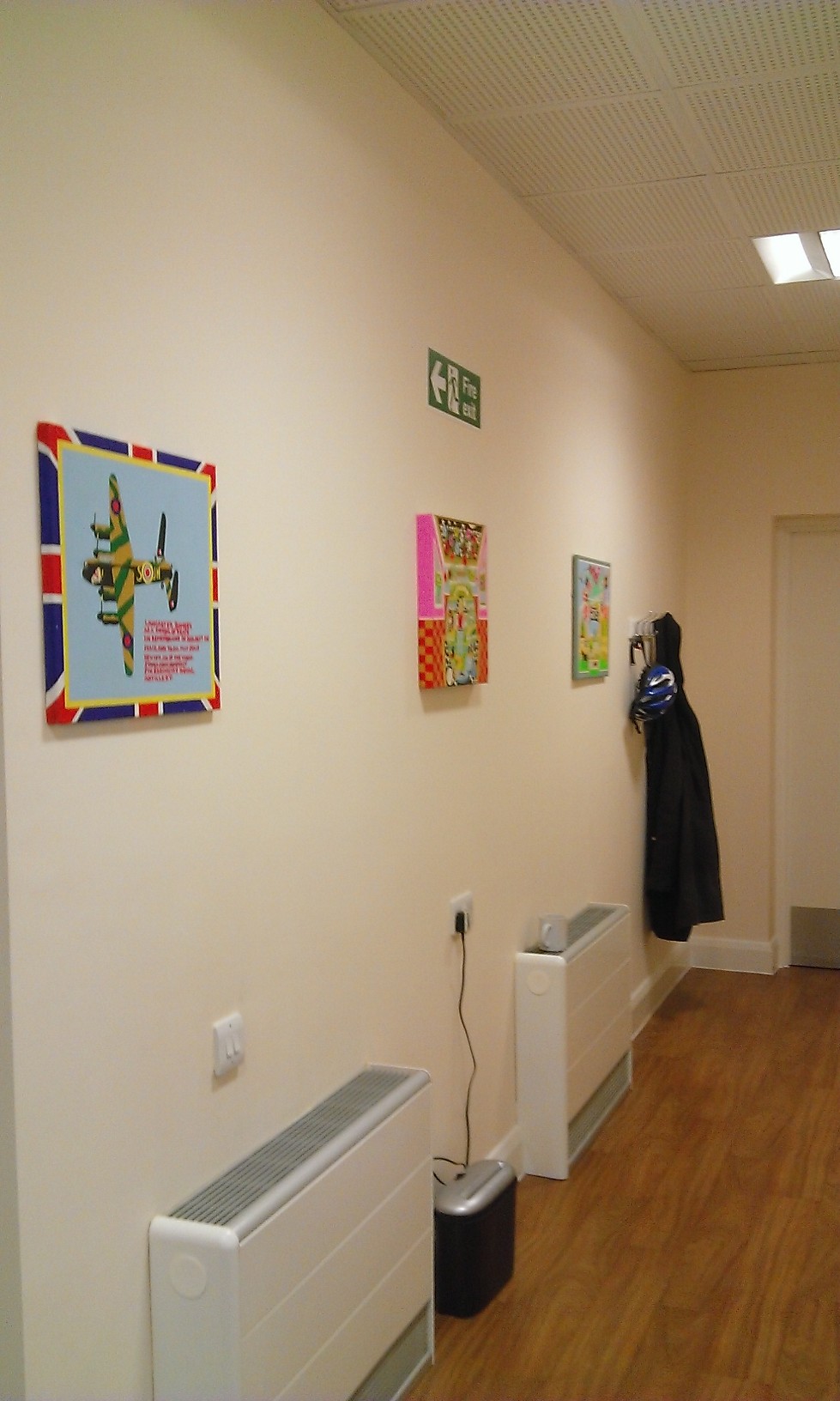
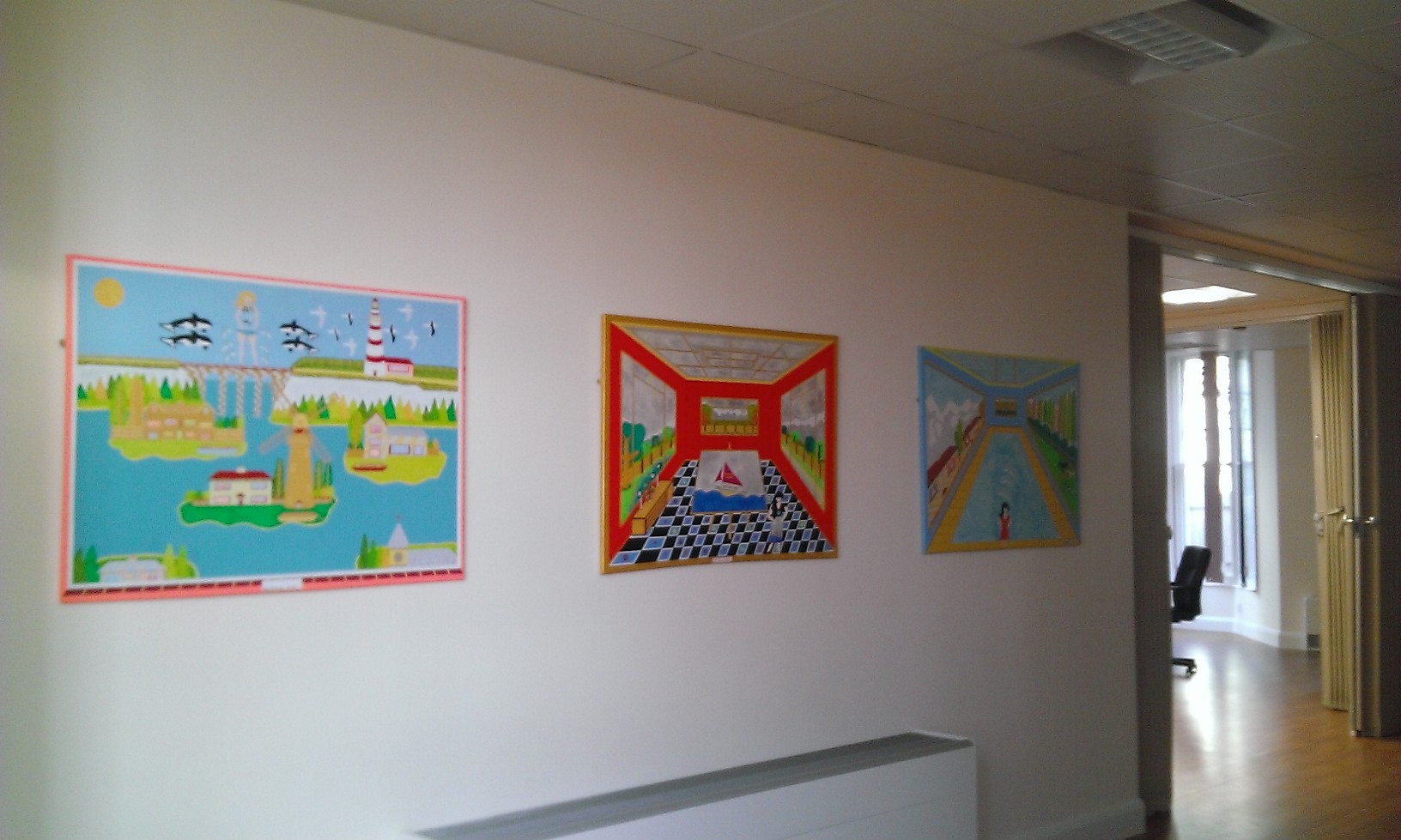
Creative Future, an organisation based in Brighton, aims to promote the work of artists and writers who need extra support through publications, exhibitions and workshops. The organisation also has two milestone events; Tight Modern and the Impact Art Fair, with an in-the-making Literary event on its way. I work part time for the organisation, as their Data and Communications Officer, and have spent the past couple of weeks installing exhibitions at two different venues in Brighton. One of the exhibitions is currently taking place in the corridors of Community Base in Brighton; the home of the Creative Future office. Each mezzanine level has two artworks by Creative Future artists, with pieces ranging from digital prints to acrylic paintings. The second exhibition we have been working on is taking place at The Fed’s new Space for Change, where you can see the colourful, fantastical work of Stephen Humphrey,
Community Base Corridor Exhibition
Works by Richard Sitford and Stephen White
Stephen Humphrey Exhibition at Space for Change
Stephen Humphrey, ‘Medieval England’ and ‘The Beauty of Nature’Stephen Humphrey, ‘Lancaster Bomber’, ‘Mother Nature’ and ‘Beauty Street’Stephen Humphrey, ‘Mother Nature’, ‘Nature Within’ and ‘The Beauty Within’
For more information, you can visit Creative Future’s Website:
“The centrality of biography to Outsider Art is not only an integral component of its categorization and valuation, but something which, through autofictional praxis, can be deliberately co-opted as a savvy marketing device, or made to function as a potent mechanism for a critique of the category itself and the foundations on which this particular classification are predicated.”[1] – M. Kjellman-Chapin.
The above quote by Kjellman-Chapin highlights one of the most prevalent questions surrounding the exhibiting of ‘Outsider Art’; whether the ‘story’ or the artist’s biography should be displayed alongside the work. Many believe that without the biographical context, we cannot really place works into the ‘Outsider Art’ category. But with a focus on biography, surely we are eliminating the formal and visual elements as the most important parts of the work?
There has been great controversy surrounding the use of biography with regards to Outsider Art exhibitions; particularly if the biography is not written by the artist. Create, an exhibition which took place in 2011 at the Berkeley Art Museum was a survey of work by 3 local disability-focused arts centres: Creative Growth, the National Institute for Arts and Disability (NAID) and Creativity Explored. The exhibition received great criticism for exacerbating the idea of ‘us’ and ‘them’ with its excessive medical labelling. Lawrence Rinder, co-curator of the exhibition used an abundance of medical language in his interpretation of the works on display. He wanted to put definitive labels on people by making clear the difference between developmental disability and mental illness. Rinder continued to exacerbate the idea of the ‘isolated outsider artist’ by claiming that artists such as Judith Scott created their work from nowhere when in fact, many of the artists would regularly go on museum visits and have access to art books. It seems a little naïve to assume that the artists were cut off completely from the world particularly in the twenty-first century. On a visit in 2012 to the Halle Saint Pierre in Paris, I noticed a similar thing. The artists whose works were on display were all named as ‘anonymous,’ yet a rich biography was provided about them all.
It is this use of the biography that worries me the most. Not only are the artists’ voices being taken away, they are being given a projected voice from someone who appears to be of higher authority. This is the danger with supplying a biography; even more so perhaps with regards to the sensitive realm of Outsider Art.
Galleries and curators can sometimes be guilty of playing on the biographical history of an Outsider Artist to raise the status of an exhibition. Andrea Fritsch has identified an interpretative strategy related to Outsider Art which is based on Pierre Bourdieu’s The Forms of Capital (1986). The approach “offers a framework that allows the economic value of activity outside the realm of normal market transactions to be discussed in economic terms.”[2] More simply, using the term Outsider Art can ascribe artists with a status, or cultural capital, that curators, collectors and other art world insiders can benefit from. By highlighting the biography of the artist more than the art work itself, the work is second to the status of the artist. In essence, the artist becomes the ‘art’, which reduces the worth of the actual work’s formal, stylistic and aesthetic properties.
Although in some cases it might be apt or relevant to supply an artist’s biography; after all, art is an extremely effective educational tool that can teach us a great deal about social history, it should never overshadow the credit the work itself is due. A patrimonial approach to interpretation, as suggested by Anthony Fitzpatrick in Framing Marginalised Art, is perhaps the way forward. This approach focuses on “fostering relationships with artists grounded in a profound respect for their creative processes and social/cultural environments that inform their work.”[3] This is a technique most commonly employed by community arts organisations who aim to promote the work of Outsider Art because of its intense visual power. They do not, however, ignore the voice of the artist, but instead support the artist in their creative endeavours becauseof the exploitation they are potentially vulnerable to.
[2] A. Fritsch, ‘Almost There: A Portrait of Peter Anton’, A Journal of Collegiate Anthropology, No. 4, Vol.1, 2012 p 97
[3] K. Jones et al., Framing Marginalised Art, UoM Custom Book Centre, 2010, p 30
P. Kuppers, Nothing About Us Without Us: A Disability Arts Exhibit in Berkeley, California, Disability Studies, Vol. 32, No. 1 (2012) [Available online: http://dsq-sds.org/article/view/1733/3041]
I am always keen to hear from artists who would be interested in a blog post focusing on their work. Usually, I ask for an artist’s statement and a few images which they would like to showcase, but these guidelines are very flexible and I am open to suggestions. If you would like a post on your work, please do contact: kdoutsiderart@yahoo.com.
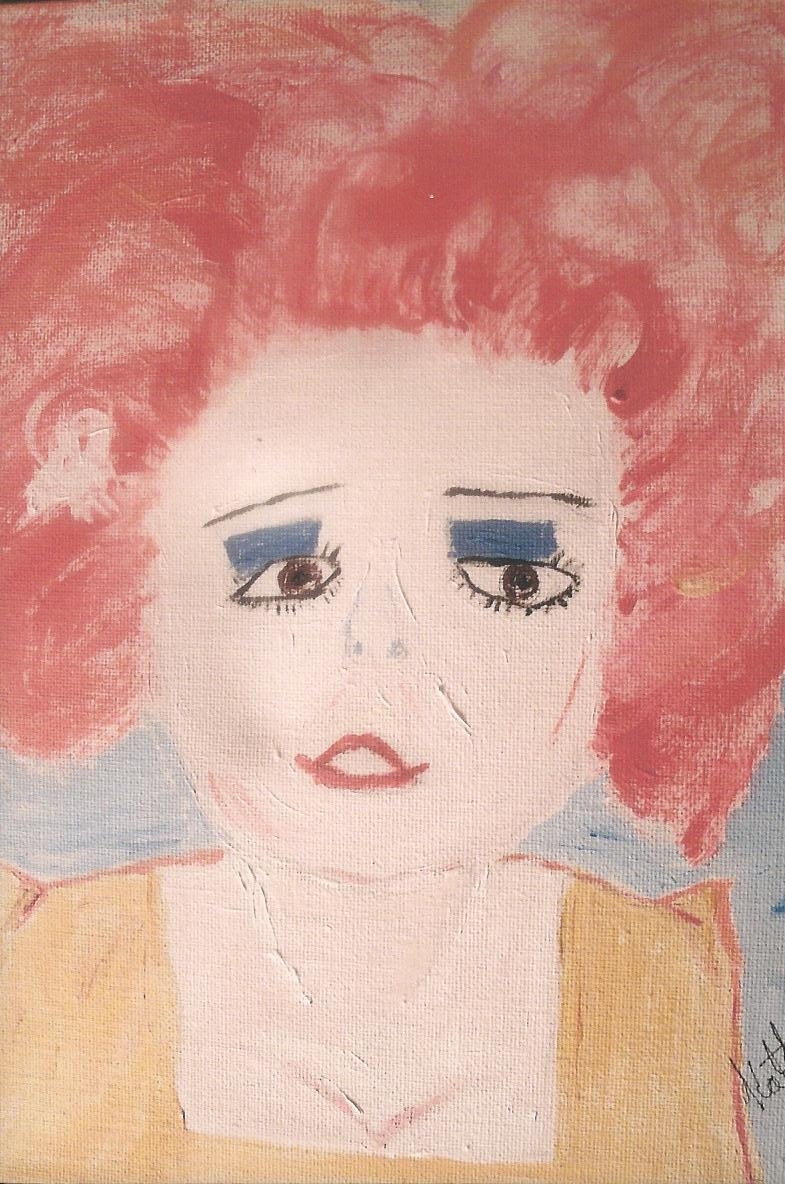
This post will focus on the work of Kathy Gibson.
“As a wheelchair user I have always been very interested in faces and bodies of people, especially how they move and walk. A lot of my paintings are of peoples bodies and faces.” – Kathy Gibson
I am always keen to hear from artists who would be interested in a blog post focusing on their work. Usually, I ask for an artist’s statement and a few images which they would like to showcase, but these guidelines are very flexible and I am open to suggestions. If you would like a post on your work, please do contact: kdoutsiderart@yahoo.com.
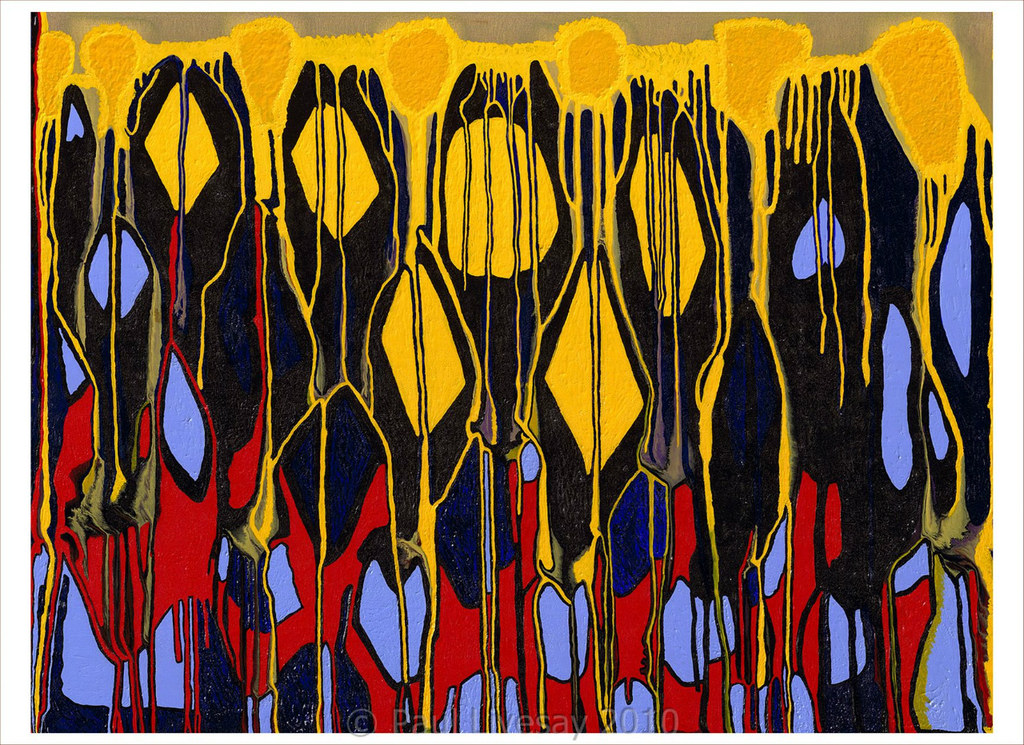
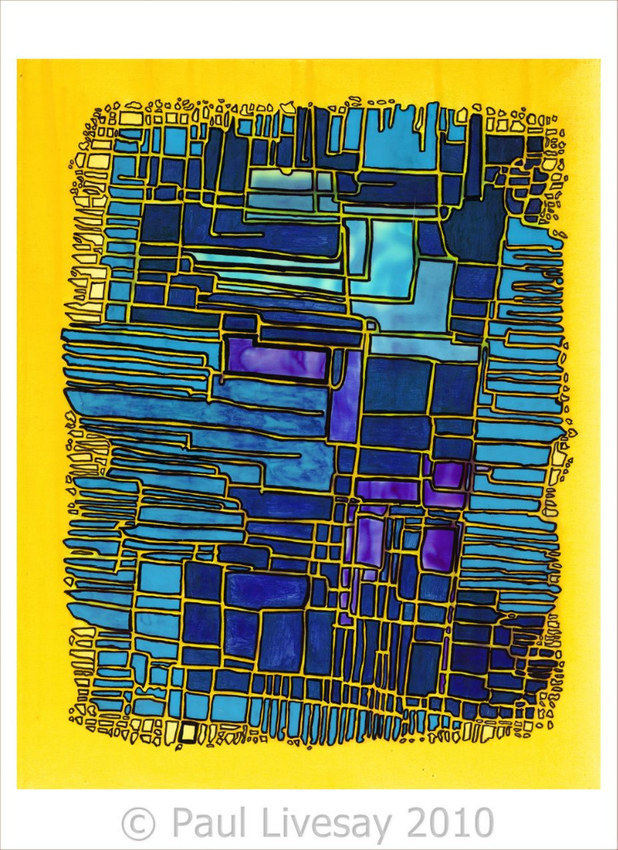
This post will focus on the work of The Nighthawk (Paul Livesay).
“I am a self taught (outsider) artist. My work is abstract expressionism and also conceptual, working with acrylic paint on canvas. I picked up my first paint brush in 2006 at the age of 48. I painted how and what I felt at any given time. My sources for my works were predominantly my heart and soul. I tried to project my raw, unbridled emotions in as pure and organic a way as truly possible. All my works are hand painted and in no way digitally modified. I hope that I succeeded and that you enjoy them.” – The Nighthawk.
The Nighthawk, ‘Electric Acid Waterfalls’The Nighthawk, ‘Nuclear Reaction’The Nighthawk, ‘Grieving in the Bamboo Forest’The Nighthawk, ‘Golden Showers Bring Strange Flowers’The Nighthawk, ‘Safe Harbours and Back Alleys’
I am always keen to hear from artists who would be interested in a blog post focusing on their work. Usually, I ask for an artist’s statement and a few images which they would like to showcase, but these guidelines are very flexible and I am open to suggestions. If you would like a post on your work, please do contact: kdoutsiderart@yahoo.com.
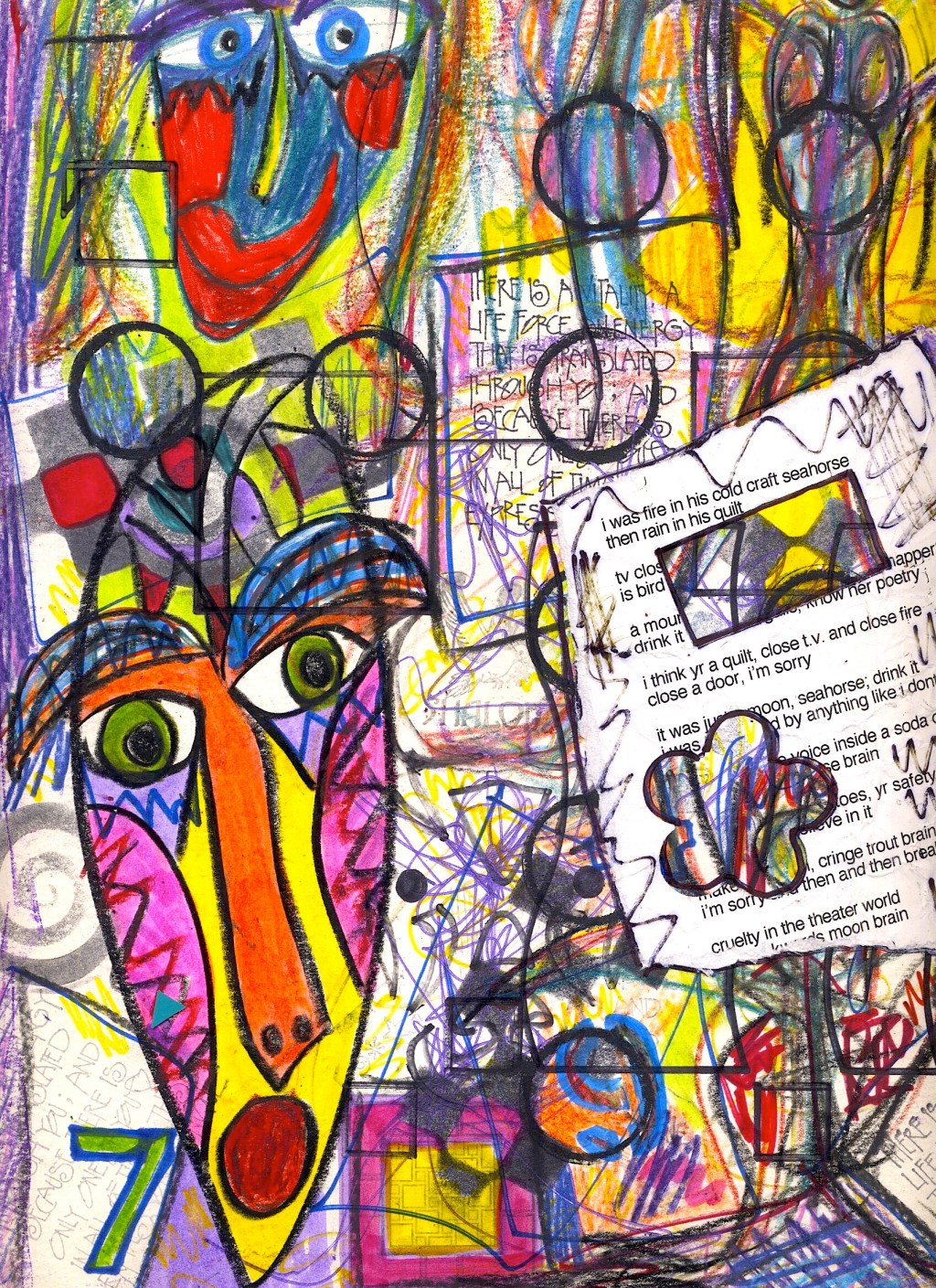
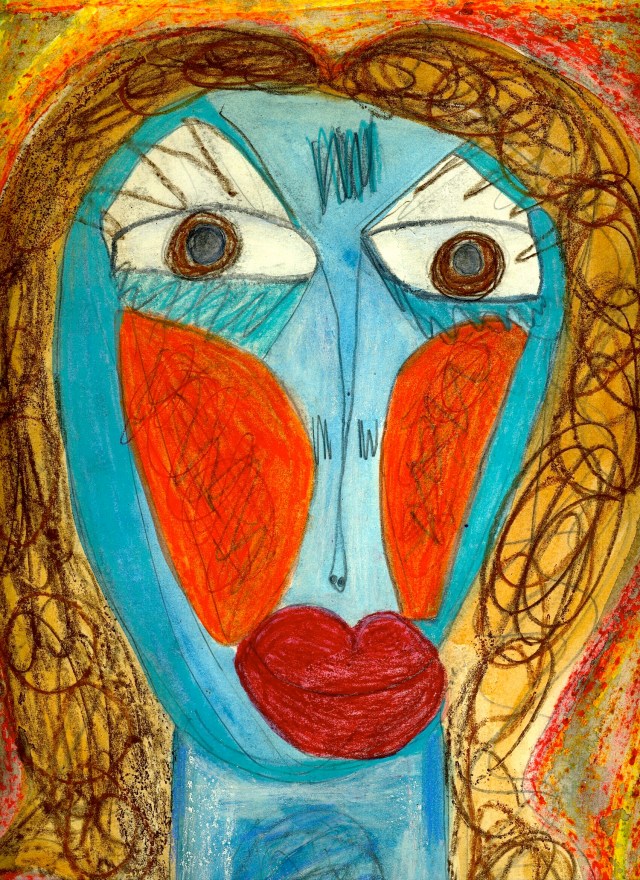
This post will focus on the work of Donna Kuhn.
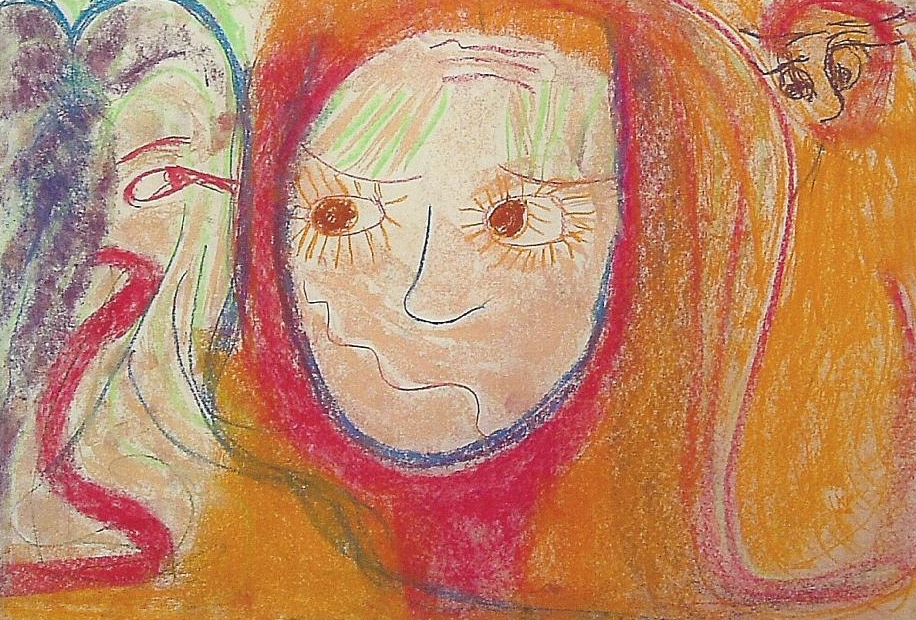
“I make art because that is the only way life makes sense to me. A recurrent theme in my work is the face: semi-abstract, colorful and emotional. I don’t choose to draw these faces. Their forms just come to me. They jump off the page and stare at you. Dare to stare back. I have tried to choose between media. I cannot. I feel fully engaged and alive when I’m creating. I’m a maker of images more than a storyteller. My work is about being a woman and an outsider. It has been described as playful, haunting, bold, whimsical, colorist, sad, poetic, mysterious and tense.” – Donna Kuhn.
Donna Kuhn, ‘Unilateral Decisions’Donna Kuhn, ‘Dignity’Donna Kuhn, ‘I Fall in Love with my Pet Birds’Donna Kuhn, ‘Close a Door’
I am always keen to hear from artists who would be interested in a blog post focusing on their work. Usually, I ask for an artist’s statement and a few images which they would like to showcase, but these guidelines are very flexible and I am open to suggestions. If you would like a post on your work, please do contact: kdoutsiderart@yahoo.com.
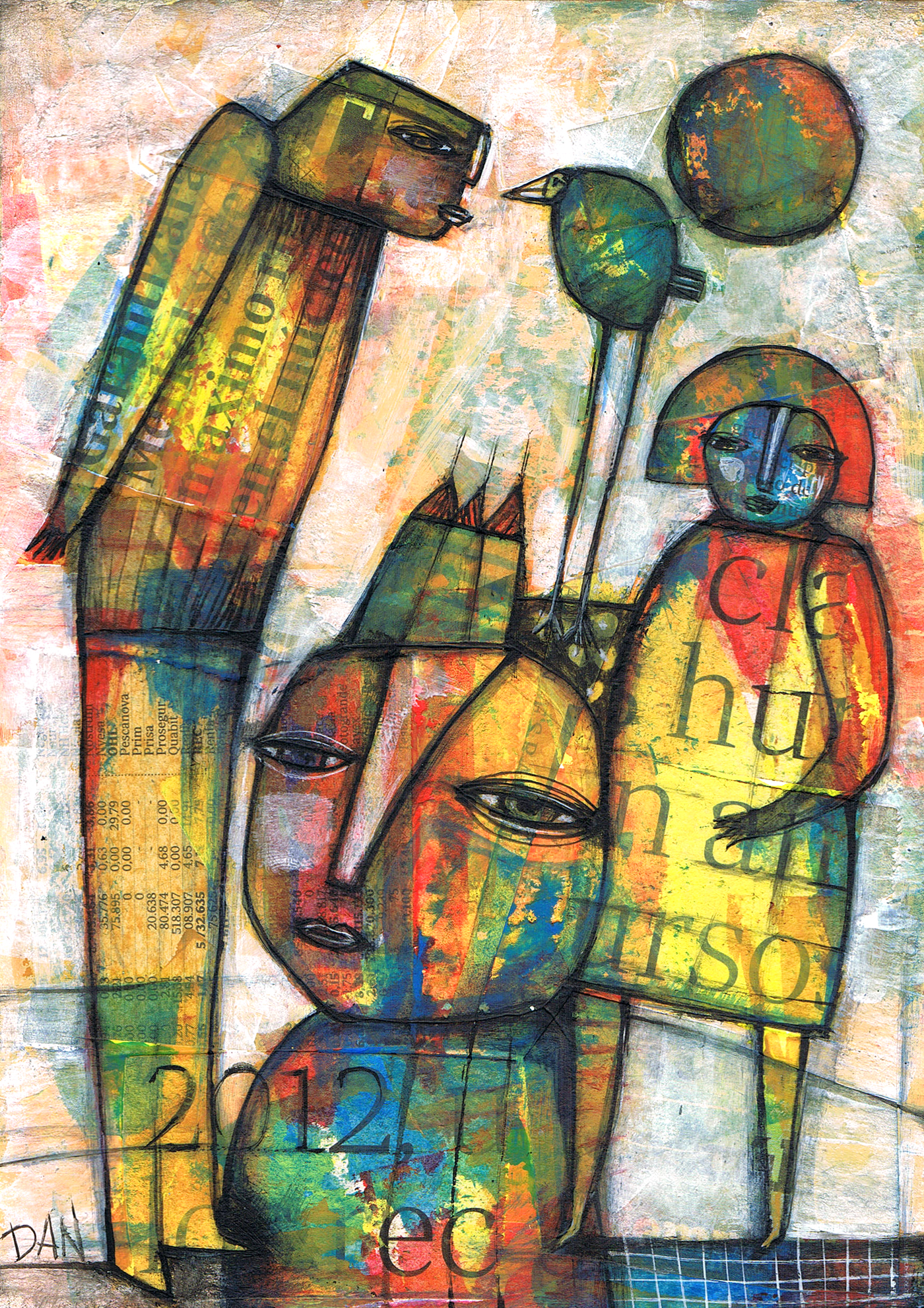
This post will focus on the work of Dan Casado.
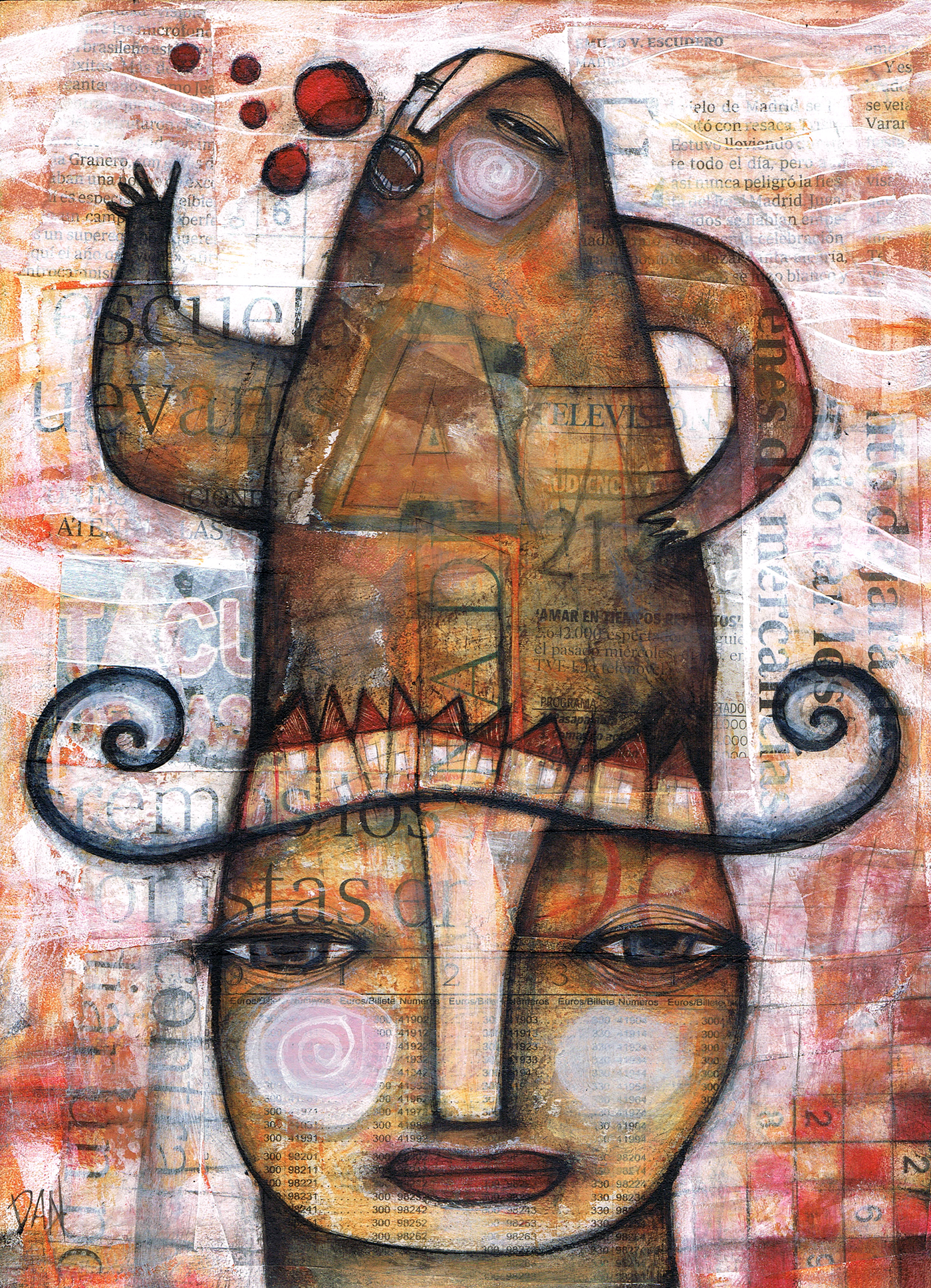
“Nine years ago I established my home-studio in the volcanic island of El Hierro, one of the seven Canary Islands, selected by the UNESCO as a Biosphere Reserve. Here, I began making works transforming junk and found objects into pieces of art: paper collages and sculptural assemblages.
I see recycling as a compromise and a lifestyle, giving a second life to old, discarded materials, reusing rejected objects to make new artworks.
Reinventing human and animal forms, freely finding and showing the figures hidden inside found papers and materials, I wonder about human relations, the possibility/impossibility of communication, affections and illusions.
Art is the tool to re-construct the world. Art is my key.”– Dan Casado
Dan Casado, ‘Sunny Day’Dan Casado, ‘Talking with the Bird’Dan Casado, ‘The Mermaid’Dan Casado, ‘Volcano’Dan Casado, ‘White Sheets’Dan Casado, ‘Winged Couple’
I handed in my MA dissertation just over two months ago – and only now do I finally feel ready to return to it to blog about some of the queries it raised with regards to ‘outsider’ art (including but not limited to ethical issues, problems facing curators and, of course, the infinitely ambiguous definition of the term). One of the main questions I found myself focusing on when I began writing, was the issue of voyeurism; who gains what from viewing the work of ‘outsider’ artists. This ‘issue’ as such became a question to which I changed my mind about somewhere around 100 times during the writing process.
“Though Outsiders expect nothing from us, not even our attention, we steal upon them like eavesdroppers.”[1]
During the nineteenth-century, the time when the idea of art and ‘madness’ was first being explored by the Romantics, the relationship between the two was curiously idealistic. This unquestionably romantic view of madness was rarely based upon any real experience of insanity, but was rather a fantasy of madness; an idea of a wild, untameable, unbridled creativity. From this early on, we can see the beginnings of a voyeuristic interest in the work of those who were perhaps marginalised from society. Even Hans Prinzhorn’s Artistry of the Mentally Ill, published in 1922, focused more on the art of psychiatric patients as a pathological endeavour as opposed to an aesthetic one. There is, afterall, no stylistic guidelines with regards to the definition of the term ‘outsider’ art itself, meaning there is often more interest in the artist than in the work as a reason for ‘classification’ as an ‘outsider.’
Despite my initial thoughts focusing more on the possibility of potential voyeurism, I soon decisively changed my mind – I have even written a blog post on how continually worrying about the presence of voyeurism can perhaps affect the accessibility of ‘outsider’ art exhibitions for those with little to no prior knowledge of the subject.
“Why look at outsider and self-taught art, if not out of romantic nostalgia for some image of unfettered individuality and expressive freedom? Or is our fascination with this art just one more form of voyeurism?” [2]
Just yesterday, conincidentally enough, I came across this article, in which Ian Patel asks who exactly benefits from ‘outsider’ art. The article, similarly to my initial thoughts about ‘outsider’ art exibitions being steeped in potential voyeurism, suggests that there are “many ethical questions surrounding the public display of art produced by what might be termed ‘vulnerable adult’ constituencies.” Patel continues, saying that “such exhibitions tend to go unquestioned as a positive force for both participating artists and the viewing public,” and that “participating artists are assumed to benefit from artistic recognition.”
The article goes on to suggest that there are perhaps deeper ethical questions to consider with regards to the “public consumption” of marginal art. Patel considers The Koestler Trust – whose work he claims at first glance could appear as a “voyeuristic thirst for productions rooted in human degradation, infamy and shame.”
Although the article does move on to talk more about how marginal art exhibitions can act as a “powerful advocacy tool,” I was interested in how voyeurism is often a recurring theme with regards to the subject of ‘outsider art.’
Voyeurism, in my opinion, is a very dangerous word when considering what people get out of ‘outsider’ art. I can’t speak for everyone – but I can tell you what I get out of it. I studied History of Art at undergraduate level and two months ago, I completed an MA in Art History and Museum Curating. I think somewhere along the way, I got dissillusioned with the ‘mainstream’ art world (contemporary in particular). I have always believed that creativity is not something you can learn – going to art school isn’t going to teach you how to be creative, or imaginative. I also think it is not something that should work like a production mill for monetary gain. I think it is something innate, something that makes us human. I do, however, believe that everyone has the capacity for creativity. Art should be for everyone, not just those with an Art History degree, or a Fine Art degree for that matter, and ‘outsider’ art helps me to appreciate this. For me, there’s nothing like being blown away by a work of art created by someone with no formal training – someone who has produced a piece based on a feeling or raw creative intuition; something that can’t be put into words. Something that is a reflection of humanity and a portrayal of these feelings which make us human, rather than a creation made for commercial interest or capital.
For me (and Patel also notes this too), public exhibitions are often not the “end-goal” of community art programmes. It is the therapeutic effect of creating and producing that should be celebrated – the final exhibition is just a space to share this. Increasing inclusivity within the art world is a whole huge leap towards a more generally inclusive society, and shunting this merging of the ‘inside’ and ‘outside’ (whoever gets to decide these terms) by using the term ‘voyeurism’ will only delay the process.
References
[1] V. Willing, ‘Out of Order’, in In Another World: Outsider Art from Europe and America Exhibition Catalogue, 1987.
[2] Lyle Rexer, How to Look at Outsider Art, 2005.
I am always keen to hear from artists who would be interested in a blog post focusing on their work. Usually, I ask for an artist’s statement and a few images which they would like to showcase, but these guidelines are very flexible and I am open to suggestions. If you would like a post on your work, please do contact: kdoutsiderart@yahoo.com.
This post will focus on the work of Sean Burn.
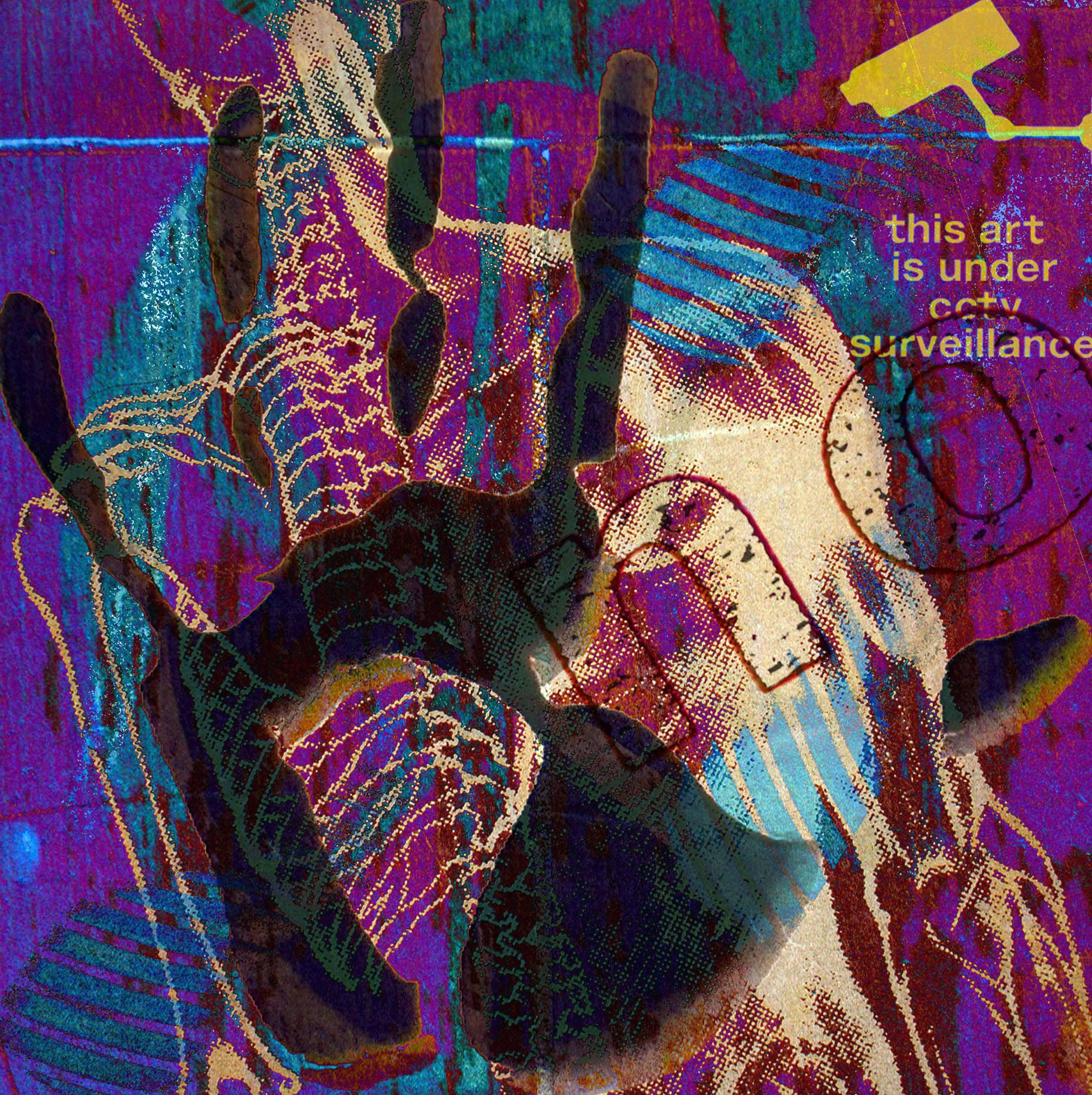
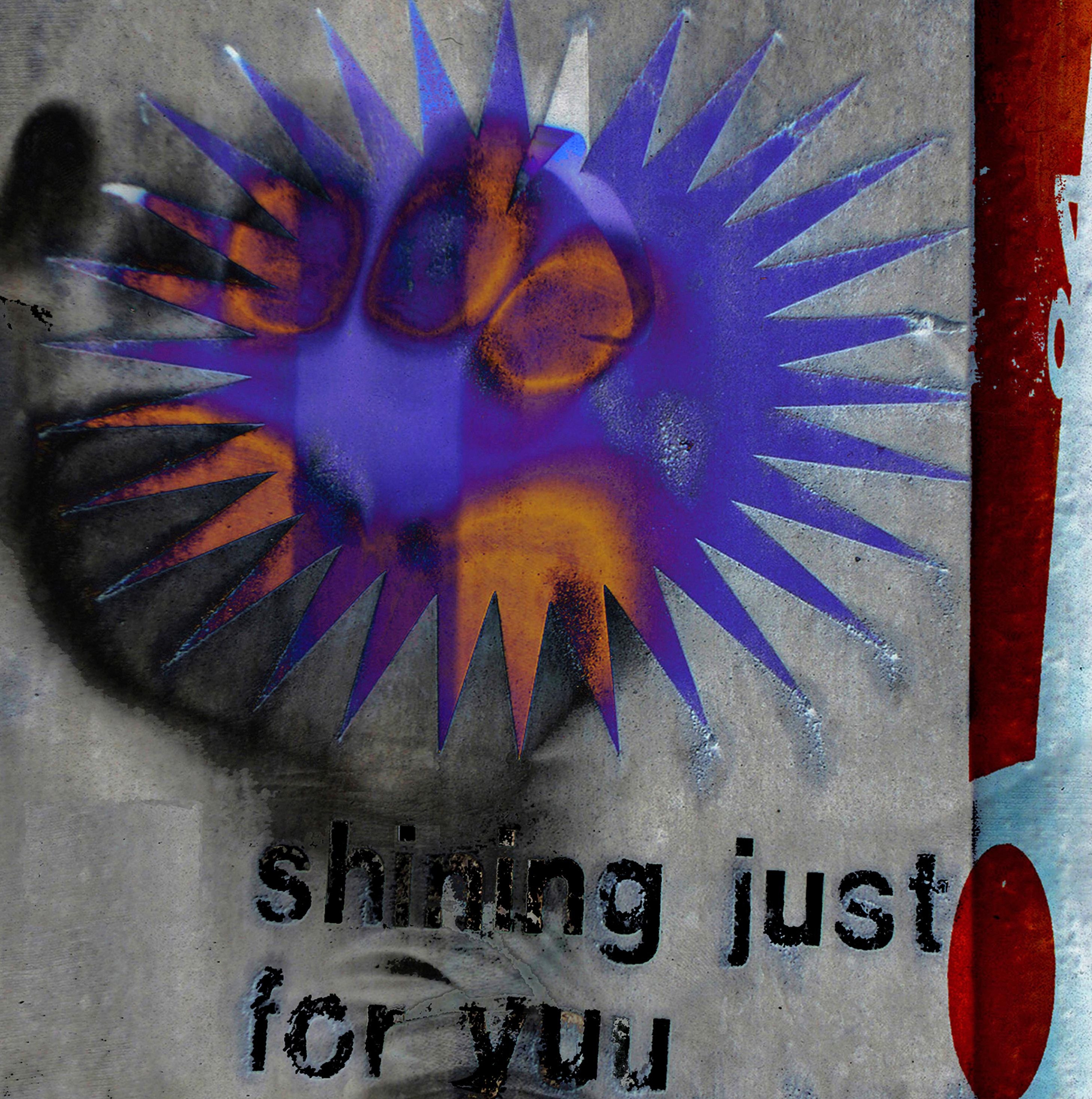
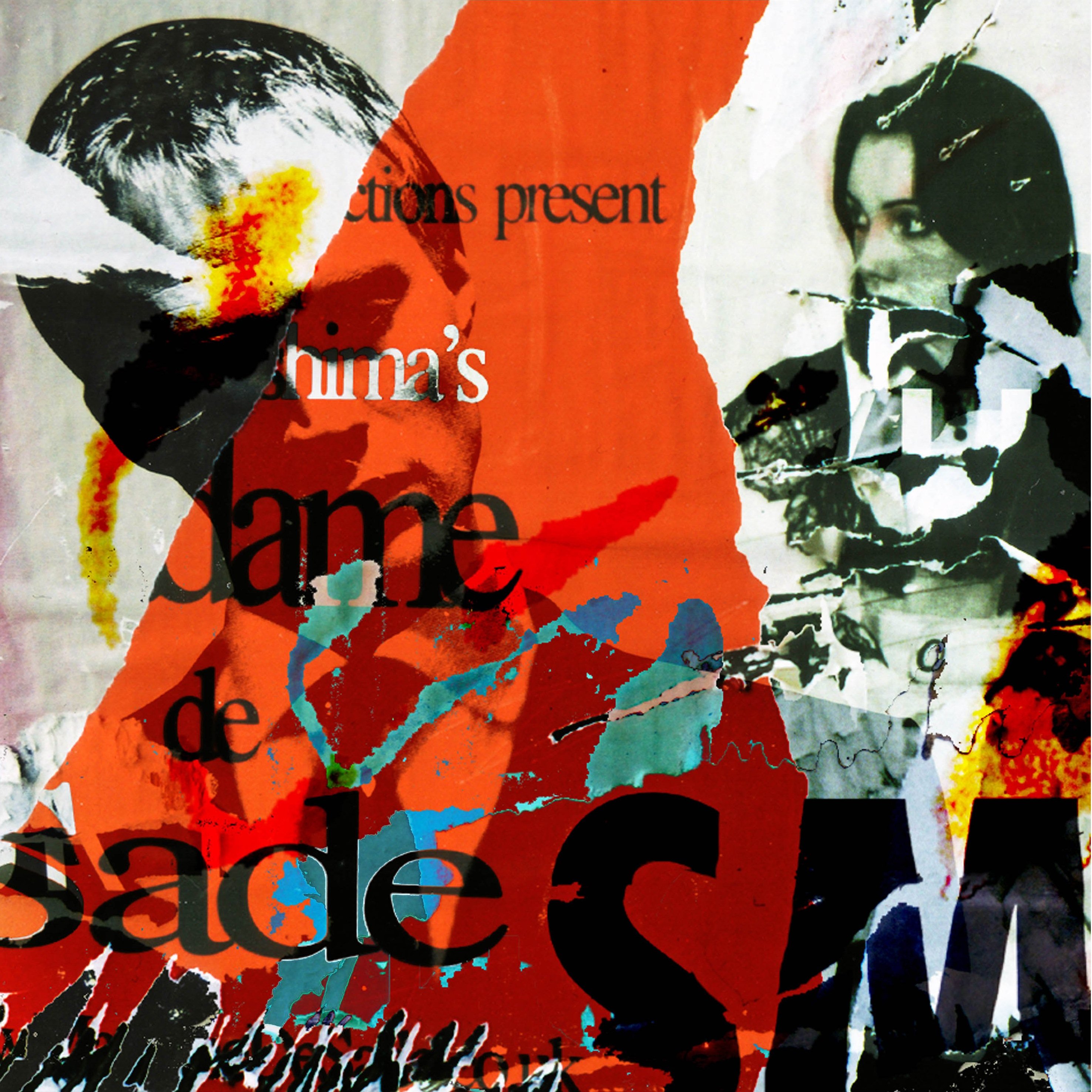
“Sean Burn – outsider artist / performer / writer – works across performance / film / installation / soundmapping / visual poetry and spoken word to challenge ownership of narratives. He’s now established a considerable and international track-record with this creative questioning as key. Surrounded, often defined by languages (visual / sonic / textual / performative), we use them to free ourselves. Languages should be owned by all with bandwidth not hierarchy as a better contemporary model. he regularly challenges psychiatry, seeing it as a privileged storytelling rather than a science; this is based on his own long history as (enforced) service-user. He is an advocate of breaking down the stigmas surrounding mental ill health in his work and challenging society’s mis-perceptions. Such creative work saw him short-listed for a dadafest 2009 disability arts award.”
Sean Burn – ‘Dame de Sade’Sean Burn – ‘In These Arms Riots Love’Sean Burn – ‘Son R Yo Here R Yu’Sean Burn – ‘No’Sean Burn – ‘Power to the Republika People ov the Fallen’Sean Burn – ‘Shining Just for Yuu’
I am always keen to hear from artists who would be interested in a blog post focusing on their work. Usually, I ask for an artist’s statement and a few images which they would like to showcase, but these guidelines are very flexible and I am open to suggestions. If you would like a post on your work, please do contact: kdoutsiderart@yahoo.com.
Kye Wilson is a visual artist and filmmaker who uses moving image to create short films and video installations that explore the notions of space, self and other. A signature characteristic of his work is the embodiment of (him)self through the medium of video, usually in the form of a female protagonist, character or performer. Wilson has exhibited in cinematic, art gallery, non-gallery/heritage and site-specific environments, nationally and internationally. His work has been selected for broadcast worldwide and has acquired numerous awards and commissions from Festival of Video Art Kinolevchyk; Madrid Festival of Contemporary Audio-Visual Arts (MADATAC) and Hayward Gallery.
Kye Wilson, ‘Entrapment of the o/Other’ (installation view, The Round Tower, Portsmouth, 2011)Kye Wilson, ‘Entrapment of the o/Other’ (video still)Kye Wilson, ‘Hunter/Hunted’ (installation view, Mottisfont, Near Romsey, 2012)Kye Wilson, ‘Hunter/Hunted’ (video still)Kye Wilson, ‘Self-[Other]’ (installation view, The Point Barracks, Old Portsmouth, 2011)