Category: Reviews

  • Book Review: Artaud the Moma by Jacques Derrida

    Book Review: Artaud the Moma by Jacques Derrida

    In this extended post, writer Nick Moss reviews Jacques Derrida: Artaud the Moma (Columbia University Press, 2017). Moss critically examines Derrida’s writings about what it means for an artist – and subsequently their work – to exhibit in various institutions. 
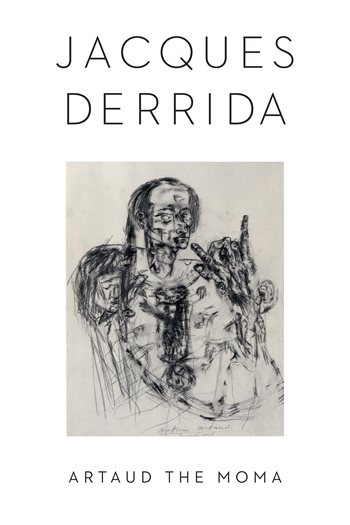

    artaud the moma

    Jacques Derrida engaged repeatedly with the work of Antonin Artaud throughout his life. His best known essays on Artaud are collected in Writing and Difference (Routledge 2001 2nd ed.) As he states in the text reviewed here (a lecture given at the Museum of Modern Art in New York in 1996 on the occasion of the exhibition of Antonin Artaud: Works on Paper), Artaud represented for him “a sort of privileged enemy, a painful enemy that I carry and prefer within myself.” Derrida states that he is bound to Artaud by “a sort of reasoned detestation.” He is resistant to “what might be called, thanks to a certain misunderstanding, the philosophy, politics or ideology of Artaud.” The resistance to Artaud, though, is ultimately a resistance to Michel Foucault/Gilles Deleuze’s romanticisation of Artaud, “everything in this work that, in the name of the proper body or the body without organs, in a name of a re-appropriation of self, is consonant with an ecologico-naturalist protest.” For Derrida the re-appropriation of self is a myth, as is the privileging of some kind of end to alienation, especially if this is to be realised through any form of “schizo-politics.” As he makes explicit in his essay “Cogito and the History of Madness,” madness is always already internal to reason and thus privileging “madness” actually reinforces the divide that Foucault and Deleuze would seek to overcome.

    artaud paule with ferrets 1947
    Antonin Artaud, Paule with Ferrets (courtesy of ArtStack)

    Nevertheless, in the text given at MOMA, Derrida enters into a strategic alliance with Artaud, in order to save Artaud from the “museographic institutions” which, 100 years after his birth, seek to recuperate his work, to commodify that which was intended as resistance to “technical reproduction,” these works which sought to deliver a coup, a blow struck against “the Christian West, the god who steals my body, the spirit, the holy spirit and the holy family, all the forces-ideological, political, economic-that are one with this thief of bodies.” The “thief of bodies” is that “machination…the social, medical, psychiatric, judicial, ideological machine, the machine of the police, which is to say, … a philosophico-political network that allied itself with more obscure forces so as to reduce this living lightning to a body that was bruised, tortured, rent, drugged, and above all electrocuted by a nameless suffering, an unnameable passion to which no other resource remained than to rename and reinvent language.”

    artaud-self-portrait2
    Antonin Artaud, Self-Portrait (courtesy of ArtStack)

    The drawings on display at MoMA were the sketches and drawings Artaud made while detained in the psychiatric hospital at Rodez. The works are, Artaud states, “deliberately botched, thrown on the page like some scorn for the forms and the lines, so as to scorn the idea taken up and manage to make it fall.”  It is in this ‘fall’ – in the art’s failing – that Artaud’s coup is struck. Yet every blow leaves a trace, a bruise, and so it is here – the works are ‘maladroit,’ they are ‘ill-fashioned,’ scorched by flame, but they survive to be archived and displayed. Artaud intended the drawings to be “not that of a man who does not know how to draw, but that of a man who has abandoned the principle of drawing and who wants to draw at his age, my age, as if he had learned nothing by principle, by law, or by art.” For Artaud the works are intended as weapons, not commodities, but they become commodified in any event. How then to restore, to protect, their existence as “gestures, a verb, a grammar, an arithmetic, a whole Kabbalah…that shits on the other,” to maintain their endurance as “a machine that has breath”? How to preserve the destructive essence (and we should be clear Artaud’s intent was destructive, not merely critical) of Artaud’s project against “the museographic management of its surplus value.”  As Derrida puts it: “Will it be possible to do what I am trying to do, to say ‘Merde?’ Will it be possible, either with or without blasphemy, to read and to cite ‘Shit,’ ‘Shit to art,’ to do it then as it must be done, in this great temple that is a great art museum and above all modern, thus in a museum that has the sense of history, the very great museum of one of the greatest metropolises in the new world?”

    Autoportrait-Antonin-Artaud-1946
    Antonin Artaud, Autoportrait (courtesy of ArtStack)

    One of Derrida’s oft-deployed strategies of resistance was to introduce an element of slippage, or wordplay, puns, double-meanings, into his own texts, so that the text could never be reduced to a single canonical reading. He does the same here, with his punning on Artaud-momo (“idiot” as he referred to himself”) Artaud-MoMA, and on glyph/glyphe/hieroglyph/electroglyph. The words of the Derrida-text begin to echo the “glossolalic or glossopoetic rebirth of language” sought by Artaud. And we should not forget that  in these ‘botched’ works, which Derrida tells us were intended to do no less than “change the eye with the drawing,” produced in the period described by Artaud as “ten years since language left,” that language-as-writing is essential to these works – that words are strewn across their surfaces, inseparable from image. ”And ever since a certain day in October 1939 I have never written without also drawing.” (In this of course, Artaud stands as a precursor to Twombly, and to Basquiat – for all three, word and image can only exist side by side, so that the works become, as Katharina Schmidt has described them, a ‘meta-script.’) In this museum devoted to the commodification of the image, Derrida insists we go back to the words carved, hacked, scrawled, on to the surfaces. To hear the questions Artaud asked: “And who today will say what?” “And what do you yourself say?” – to hear, within the works, “Artaud interrogating a ghost of himself.”
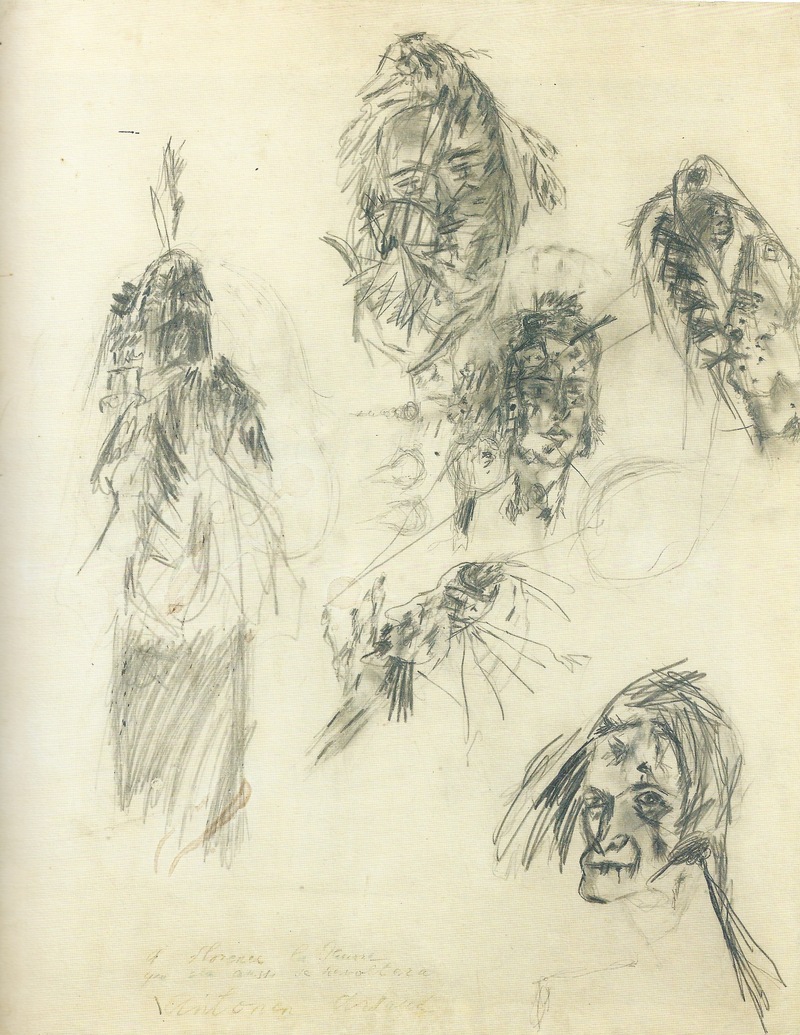
    Scan_2
    Antonin Artaud, Untitled (courtesy of ArtStack)

    Derrida battles with the “agony of an art that nevertheless, at the instant of its death, will perhaps survive its own apocalypse.” He seeks to retrieve Artaud’s project of anti-art, to cry “woe to whoever might consider them as works of art, works of aesthetic simulation of reality.” More than that – he uses the museum as archive against itself, and refuses to have Artaud’s voices silenced, so that the images are all that remain. It is Derrida’s determination to restore “the event as event.” And thus he seeks to allow Artaud’s words to come back, to haunt, but also, the sound of Artaud’s voice – at the beginning and the end of the lecture, from a recording of “To Have Done With the Judgement of God.” The ranting, scatological Artaud, “starving, drunk with rage against America.” The intent is to have the drawings address the viewer again “as if they were conducting a trial.” Such that “never before, when finding myself faced with drawings or paintings…never have I heard so many voices, never have I felt myself called, yelled at, touched, provoked, torn apart by the incisive and lacerating acuteness of a broadside of interjections so justly addressed to their addressee.”
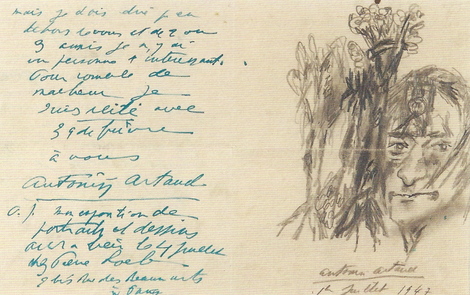
    Scan_5
    Antonin Artaud, Autoportrait (courtesy of ArtStack)

    As to whether the strategies Derrida employs can succeed when Artaud is already entombed in the gallery space of MoMA – “especially MoMA in which Artaud the Momo would have right away identified the malevolent figure of the great expropriator”- we have to ask whether allowing the voice of Artuad-Momo to be heard can ever be enough, when Artaud himself declaims -against accusations of mysticism -that he has “always been body.” Can the body of Artaud-Momo – the anti-artist, the beaten, broken, electrocuted body (body of artist/body of work) stand in the way of “this great march of the symbolic market, from Paris to New York, from capital to capital, metropole to metropole?”

    le pendue
    Antonin Artaud, Le Pendue (courtesy of ArtStack)

    There is a further point to take up. In the book’s afterword, Kaira M Cabanas, associate professor of global modern and contemporary art history at the University of Florida notes that Jean Dubuffet presided over the Societe des Amis d’Antonin Artaud, and that he rejected Artaud’s work as Art Brut: “I find Antonin Artaud very cultured, not at all Art Brut.” There is much truth in this. Artaud’s rhetorical/scatological manoeuvres were pathologized as a way of neutering the content of his lacerating attacks on Church and State. But Cabanas seeks to take this as a prelude for a discussion about the purpose of outsider art more generally:

    “Often the inclusion of outsider art is read as a progressive move within the modern and/or contemporary art institution, and in the early 2010s one witnesses how the art of ‘madness’, ‘outsider’ and ‘self-taught’ became the ‘new’ in the contemporary global circuit….this legitimation…occurs at the expense of what we might learn from the specificity of the work’s contemporaneity vis-a-vis the historicity of the psychiatric institution.”
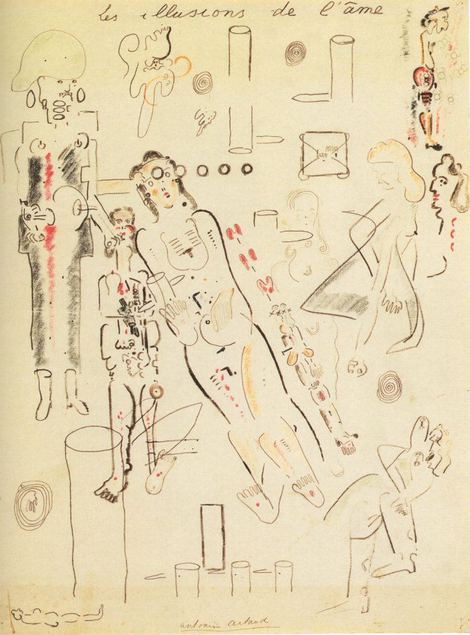
    les illusions
    Antonin Artaud, Les illusions de l’ame (courtesy of ArtStack)

    This is, I think, specious. I write as someone who is more than happy to adopt and preserve the perspective of outsider as a vantage point from which to view the contemporary art world. Nevertheless, I think Cabanas’s argument is crassly reductive and presumes a) that ‘outsider’ art has no aesthetic merit beyond its ‘specificity’ as art produced within a particular institutional context, and b) that the works’ ‘original meanings and values’ i.e. their place as works produced within/symptomatic of said institutions is diminished if displayed outside such institutions, so that the critical content of the work can only have effect within the context of its own production.

    It strikes me that the opposite is true – that the exhibition of works produced outside the cycle of art-world luxury commodity production, which contain the ‘auratic’ to which Walter Benjamin refers as an auratic ‘trace’ of an originary trauma, might more likely impact on their audience as the lightning-strikes Artaud aimed towards, if shown outside their institutional context. When we encounter, for instance, Luc Tuyman’s Gas Chamber painting, do we dismiss all save the aesthetic, or does the political not there intrude on and shadow the aesthetic?

    la boulabaise
    Antonin Artaud, La Bouillabaisse de formes dans la tour de Babel (courtesy of ArtStack)

    Artaud referred to “the innumerable necrophages that fill churches, police stations, army barracks, prisons, hospitals, university faculties.” We might note one of the many reasons for such complaint would be the determination of some academics to determine for themselves “who today will say what.”

    By Nick Moss

    For more information on Jacques Derrida: Artaud the Moma, please click here.
  • Review: Koestler Voices, New Poetry from Prisons

    Review: Koestler Voices, New Poetry from Prisons

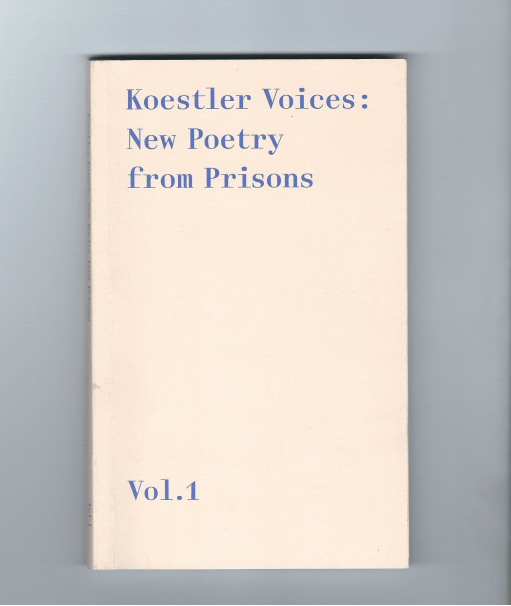
    In this post, writer Nick Moss reviews the Koestler Trust’s latest poetry pamphlet, Koestler Voices: New Poetry from Prisons. The collection was published to coincide with the Koestler Trust’s latest national exhibition, ‘Inside,’ which appeared at the Southbank Centre until 15th November 2017. The Koestler Trust is an arts charity that supports prisoners, ex-prisoners and detainees to express themselves creatively.


    koestlervoices

    “I should declare an interest at the start, insofar as I have 2 poems in the book. However, all the other works are new to me and I have no personal knowledge of any of the authors.

    This volume was prompted by the reaction of exhibition visitors to the poetry curated by Benjamin Zephaniah in the 2016 Koestler Trust exhibition. The essence of the poems is captured by Benjamin Zephaniah in his introduction, where he comments that “These poems are absurd and strange, they are light and heavy, they are intense, intellectual and playful. They are honest.”

    In a recent Guardian article on the Teach First and Unlock projects to introduce graduate prison officers (The Guardian 9 November 2017) one of the graduates interviewed reported his first time on a wing: “I’ve never come into contact with people like this before.” I think it’s important therefore to recognise how important it is to have these poems described by Zephaniah as “intellectual”. We, the ‘people like them’ who fill the jails, are capable of critical thought and reflection. If ‘intellectual’ simply connotes a level of prestige acquired through academic qualification then it has no essential meaning. If it applies to anyone engaged in a critical analysis (in this case of the institutions which contain us) then prisoners such as the writers here are more deserving of the label than the blinkered, knee jerk civil servants who draw up Ministry of Justice policies.

    address-book-2246444_1920

    The book is divided into 4 sections – Inside, Outside, Portraits/Pictures, Letters/ Confessions – and this review can only attempt to give a snapshot of each section.

    The poetry covering Inside moves from despairing to defiant. One writer focuses on the song of a nightingale he hears at Dartmoor Prison, another gives us a picture of ‘the weans runnin riot/ mair interested in sweets’ in the visiting hall. ‘Networked Gym-Fit Recidivist’ captures the ‘nonchalant callousness’ of ‘a prison officer bellowing’ and is scathing about the standards of prison healthcare and the point of it all, concluding, ‘It’s just a  scam, the wrapper’s off.’ Many of the poems in Inside are about looking out; the view of outside from the cell window. Outside can be a strange place. I remember standing in the yard at Belmarsh looking at the block of flats in Plumstead I’d lived in 10 years ago. Outside is where time hasn’t ground to a halt. Outside is the ‘sweet remembered earth’ that Bob writes of in Lockdown. From outside Leslie tells us ‘sunshine shone/through the window casting/ a shadow of bars / unto his appeal papers.’

    The Outside section opens with the brilliant ‘Killie Bus Tales’- written in Scottish dialect – ‘drinkin cans a Super n Frosty Jacks (ah wish ah hudnae sat as close tae the back.)’ There are several poems that experiment with Scottish dialect. They are written with a confidence and dry wit that suggests the authors have been enjoying Irvine Welsh and James Kelman along the way. We also get to see the impact of jail time on the families left behind. Graham’s heart-breaking ‘Empty Chair’ is a cool, carefree ode to summer madness, until we reach the end:

    empty chair, warmth of sun

    cold beer, the clink of ice in mum’s spiced rum

    barbeque smoke mixing with skunk

    tapping of feet to Fool’s Gold Funk

    children laugh splashing without a care

    daisies and bluebells in their hair

    but no one mentions that empty chair.

    Some of the poems are playful, like Jacinda’s ‘Animal School’, where ‘Wonger drank from the toilets/ And everyone was late,’ and Jonathan’s ‘I Built a Rocket Ship.’ Others have a real fury; ‘See Nothing, hear nothing, speak nothing’s’ tale of ‘smart uniforms and shiny boots/ dragged and kicked and took me away/where no one will hear and no one will see/ and now, I am nothing.’

    adult-1850177_1920

    Portraits and Pictures is perhaps the most powerful section, with the poets digging deep to capture aspects of their friends and families, building narratives of lives where people come and go, stand, fall, fail and stand up again. ‘The Piano Player,’ with ‘hooch fuelled/ male voices/full of angry/jobless depression,’ Guiltfoot Ron: ‘He’s got an angry knee/ and an eyeful of fear,’ Dys-Leg-Sarah who sees ‘Words squirming like wriggly squiggly worms on a page.’ These are wonderful poems, capturing the essence of vulnerable, raw lives in just a few lines.

    Letters/ Confessions contains work which is heart-breaking, and work which is disturbing (in its proper sense of disrupting ordinary perception, shaking the reader’s view of things.) These are poems of loss, ‘Tortured/By Wondering how you are’; ‘…eager to forgive/ In the midst of our own little dust storm.’ Poems also of defiance: ‘You rained your fists on me/ endless thumps you hoped would break me/They are now my bricks.’ One of the strongest and strangest poems is Leon’s ‘Understand Me,’- ‘Understand me arresting the terrorisms of the night/over breakfast I’ll let them loose in the kitchen.’  Leon’s poem has the down-at -heel surrealism of Adrian Henri, but, most importantly, when it says ‘Understand Me,’ it does so on its own terms. ‘Understand me locking the door at midnight/throwing the key away. Later I will climb in/through a window.’ This poem could stand for the book as a whole; prisoners saying ‘Understand me – but understand me as I am, not as some caricature of a prisoner you have as an idee fixe.’

    Koestler Voices shows prisoners thinking hard about who they are and where they are. As prisoners and ex-prisoners, we have no choice but to do so. Perhaps this volume will stand as proof that we might also be worth listening to.

    By Nick Moss


    Koestler Voices: New Poetry from Prisons is available for £10 from the Koestler Trust, 168A Du Cane Road, London, W12 0TX. Click here to visit the Koestler Trust’s website

  • Paris Outsider Art Fair 2017: In Pictures

    Paris Outsider Art Fair 2017: In Pictures

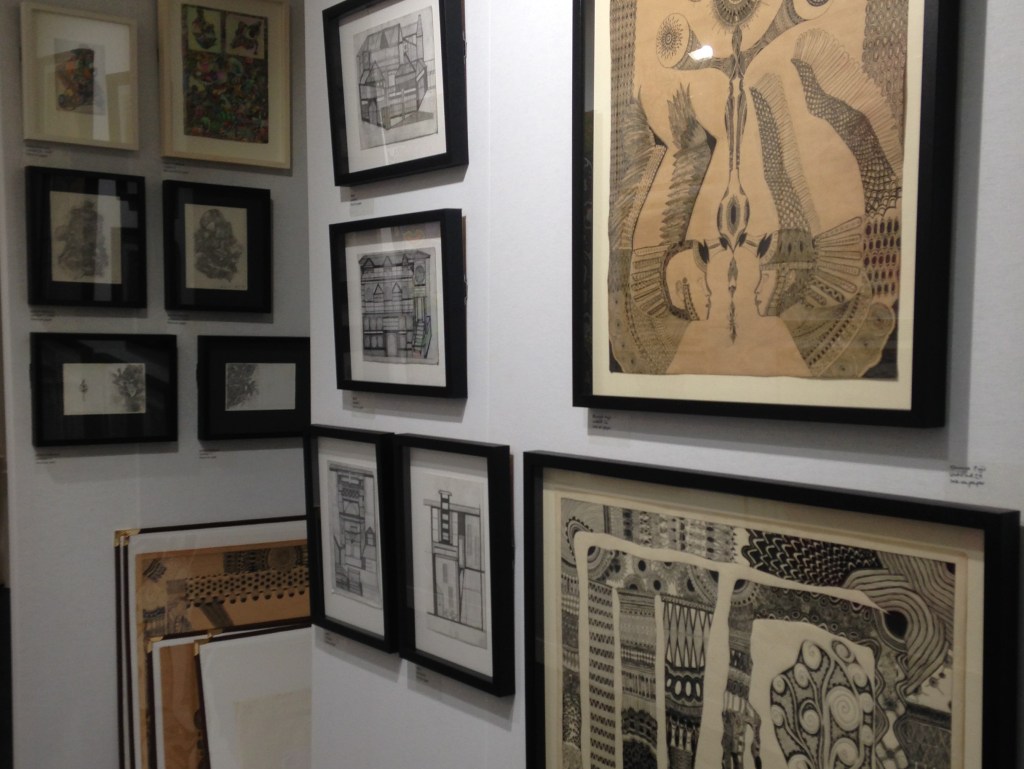
    From 19 – 22 October 2017, eclectic work by talented, unknown and untrained artists descended on Paris from all over the globe for the latest instalment of the Paris Outsider Art Fair. I was lucky enough to be able to hop on the Eurostar and head over to Paris for a couple of days to check out this year’s offering. In between squeezing as much of Paris into one day as might be physically possible (breakfast in Montmartre, the Montmartre Museum, the Tuileries, the Louvre  – just the building, Notre Dame Cathedral), I managed to enjoy the opening night, or vernissage, as well as a quick second (much quieter) visit on the Friday evening.

    This year, as in others, the variety of work on display at the Fair was truly astounding; work by figural outsider artists (Henry Darger, Willem van Genk), to artists who are completely unknown – but equally as talented. There were familiar faces from fairs past – the Cavin-Morris Gallery, Creative Growth Art Center, and the Andrew Edlin Gallery, as well as some fresh faces. I thought the best way to share my experience of this year’s Fair with you is through the photographs I took.

    You can find out more about the Outsider Art Fair (which has a New York incarnation as well as the Parisian offering) by clicking here.


  • Review: The Graybar Hotel, Curtis Dawkins

    Review: The Graybar Hotel, Curtis Dawkins

    In this blog post, writer Nick Moss reviews ‘The Graybar Hotel’ by Curtis Dawkins. Dawkins is an MFA graduate and prisoner serving life without parole. In the book, he takes inside the worlds of prison and prisoners, offering a window into prison life through the eyes of his narrators and their cellmates. 


    “Curtis Dawkins is a life sentence prisoner in the United States. He writes without any attempt to glamorise or romanticise his circumstances. His day to day life is spent within the Michigan prison system and so that is what he writes about. He has an MFA in Creative Writing , but there is no sense here of Dawkins seeing himself as being in any way apart from the other prisoners he lives alongside. His writings carry a sense of someone struggling to make the words carry the truth of the experiences he has. As a result, there is a dry, caustic humour which runs through the stories in the book. This is not an attempt to look objectively at the prison system. Dawkins writes from within, and is true to, the everyday of prison life.

    Dawkins gets that the mundanity and tedium of prison life is its fundamental – that life is filled primarily by talking bullshit and listening to more-or-less amusing lies and watching episodes of the Price Is Right (or Countdown more often, in the UK):

    ‘Normally I’m not a very good conversationalist, but the past two months in jail had made clear to me I had nothing better to do. So if someone talked to me , I had resolved to take him up on it. At least until he got boring, or until the lies became too much…’

    There are echoes of Charles Bukowski and Raymond Carver in Dawkin’s writings, but the resonances are due to his combination of craft and wit, not to any contrived attempt at dirty realism. The realism here is sometimes cruel, sometimes banal, but it is never a put-on. The tale of Tom’s faked suicide – in which a particularly annoying cell mate plans to get out of county jail by staging a hanging – is a case in point, with the cell mates hesitating a few seconds before stepping in to hold his legs and call the guards. In that hesitation , and the cruelty and kindness, the bitterness and comedy, that is covered by its span, is prison life in its essence.

    Dawkins catches this repeatedly in his tales – the prisoner dialling random numbers so as to talk to someone on the outside; Arthur and his cape and his request for a lobotomy; Micky, the bank robber who dressed as a clown, and who wanders off into the fog .

    Something that only cons and ex-cons really know is the way in which people come and go into your life when you’re inside – one minute you’re sharing a cell, and maybe sharing your hopes and dream and nightmares – the next they’re gone and you never see them again. This happens again and again in Dawkin’s tales, and it’s what makes them so true to life in prison, the sense of things always shifting, never settling, even if life is at the same time as boring as hell, interrupted by moments of piss-yourself laughter.

    Dawkins doesn’t dwell on autobiography. We get fragments -of his life and the lives of the people who fill his stories, but we don’t get the full picture. We get to hear of Jonnie Rae, who shares his ketamine drifting; we get some of the lowdown on Pepper Pie, who is planning to walk through walls, but the tales are written in the knowledge that ‘most prisoners have spent their formative years having their trust continually compromised, so to trust another person with information or emotions, is a sign of weakness. They don’t want to seem weak, so they offer up very little. I never learned the full story of why he was here.’ We get the macabre incidental details of prison life:

    ‘Some of the prisoners here wear the numbers of the dead. According to the Department of Corrections, the prisoner has been “released by death” and they just reuse the number.’

    Not all the stories focus on prison life. ‘Swans,’ which focuses indeed on swans, but also weed, suicide and future hope, is  wonderfully surreal and heartbreaking. Even at their most bleak, though, Dawkins’ stories are funny. He reminds us that ‘When fucked up people end up inside they can be whoever they want. A crackhead becomes a high class pimp. A tax evader was a master forger and poker champ.’ So we get the story of Robert and his 152 lies, and his revenge on the con who tries to put him right. And we get Clyde’s homecoming and his resigned reaction to what it means to be free.

    Dawkins say that ‘if your words aren’t real then neither are you’ – but his stories work because they don’t treat ‘realness’ as an excuse for cliché. His stories are real because they are about people – in all their fucked-up glory and stupidity, and they capture the particularity of prison life, but they could equally well take place on the outside. Their brilliance lies in the fact that they are about people who are in prison, not about ‘prisoners.’

    By Nick Moss


  • Review: outsider art comes to Mayfair

    Review: outsider art comes to Mayfair

    In this blog, writer Nick Moss reviews two Mayfair exhibitions showcasing work by artists who could be considered ‘outside of the mainstream.’ In the post, he contemplates the implications of these displays and considers what we can learn from their curation and interpretation.


    Two current Mayfair exhibitions appear to suggest that the Chinese wall between outsider art and the mainstream art world is beginning to crumble. We should perhaps then bear in mind that a Chinese wall is intended to protect the interests of both parties. Is what Jean Dubuffet characterised as a world of ‘competition, acclaim and social promotion’ the most suitable environment for encounters with art which is the antithesis of these? We can contend that what the art world hides behind its side of the wall is its exposure as an industry based on the commodification of artistic singularity, but we ought to consider whether preserving a space outside this might be a necessary strategy to maintain artistic autonomy at a  distance from what Dubuffet called the art world’s ‘fallacious parade.’ Or can art produced ‘intuitively’ survive its incarnation in a mainstream gallery setting?

    Ida Applebroog: Mercy Hospital

    ida2
    Ida Applebroog, Mercy Hospital (courtesy of Hauser & Wirth)

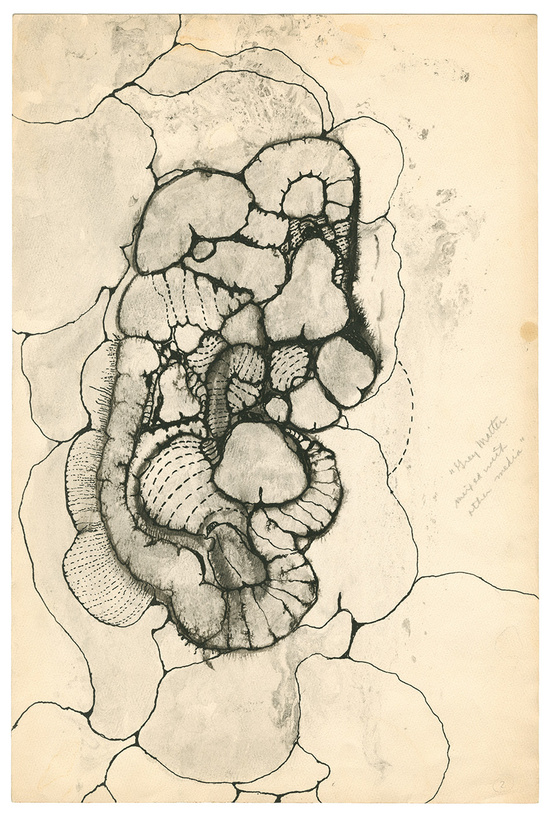
    Hauser and Wirth (23 Savile Row London W1S 2ET) are showing Ida Applebroog’s Mercy Hospital drawings.  In 1969, Applebroog was struggling with her mental health and chose to withdraw from day-to-day engagement with the world – the drawings helped negotiate her return. The Courtauld’s Jo Applin comments in the press release, “The Mercy Hospital drawings allowed her to draw herself back to life, back to herself, leading from catastrophic breakdown to a creative, personal and political breakthrough.” The work stands then as a record of  psychological crisis, and is described as belonging “to the long history of art created at a moment of ‘breakdown’, a period very often linked with creative ‘breakthrough’.” While it is clear that the work does reflect  a time of personal trauma, there is a danger that we are encouraged, as so often, to see the work solely in relation to this, and outside any aesthetic frame of reference – as if the art is no more than a crude clue to the artist’s psyche. 

    ida4
    Ida Applebroog, Mercy Hospital (courtesy of Hauser & Wirth)

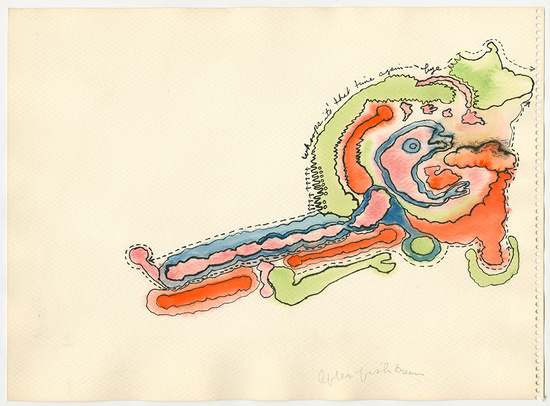
    The Mercy Hospital drawings make use of a range of materials – black India ink, pencil, watercolour and pastel. Some are figurative, and depict bodies or partial figurative shapes and coils. Others are entirely abstract. Throughout, there runs a theme of shapes – seemingly intestinal or umbilical – curling protectively around other such forms. Some of the drawings have text inserted within – which far from simply illustrating “disorientation and isolation” as claimed, actually suggest that Appelbroog approached her circumstances with her sense of humour intact. “I’m just waiting for this to dry,” reads one inscription. One of the watercolours shows a group of figures standing in what appears to be a state of abjection, suggesting that withdrawal and isolation for Appelbroog was a positive choice. Other drawings have “Whoops! It’s that time again… bye,” in a scene where one shape seeks to feed from another. In a pastel sketch, a series of shapes appear to form a precarious tower. The writing reads:

    ‘OVER
    THE
    BRINK’

    ideabig2
    Ida Applebroog, Mercy Hospital (courtesy of Hauser & Wirth)

    For all they are the product of crisis, there is something comforting about the softness, the intertwining of the shapes in the drawings. Colours blend rather than jar, and the shapes, while seemingly evidencing the artist retreating into and starting to use her art to dissect the forms of her own body, demonstrate a sense of unending curiosity rather than body-horror. This is work that is both unflinching and beautiful.

    Ida Applebroog’s  Mercy Hospital drawings are on show until 29 July 2017

    Susan Te Kahurangi King

    susan ke
    Susan Te Kahurangi King, Untitled (courtesy of Marlborough Contemporary)

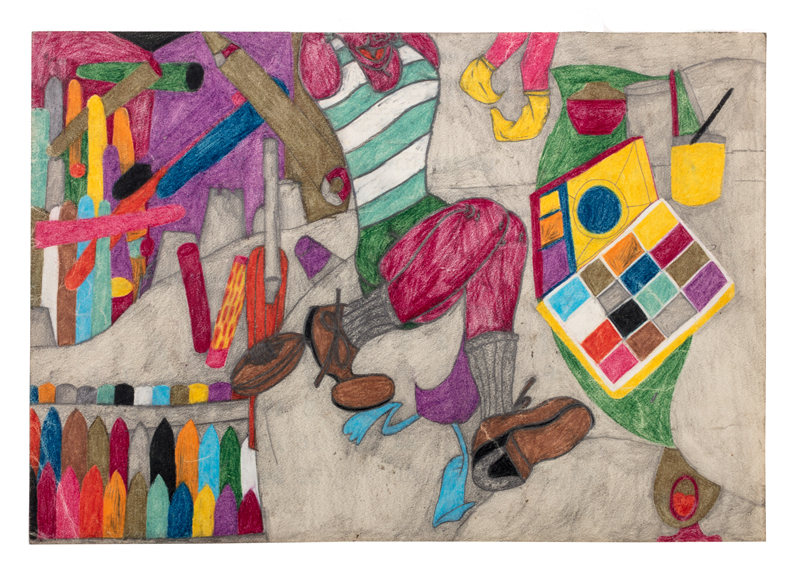
    Marlborough Contemporary (6 Albemarle Street London W1S 4BY) is showing a range of drawings, including early works, by Susan Te Kahurangi King. These are, simply, a joy. One of the things that strikes you immediately is the continuity of drafting skill and of imagery and characterisation from the work of her youth to now. Susan’s world – its themes and personalities – have been there from the start. The work is also reflexive. Figures appear armed with paints and giant crayons, commenting on the production of the work, and perhaps showing the artist mocking her own pretensions. This can also be a comedically malicious world – characters are bitten and have their tails pulled. Meanwhile, others happily eat ice lollies and dance.

    susan te kahrungi
    Susan Te Kahurangi King, Untitled

    One of the refreshing points to note in the Marlborough Contemporary presentation is that the work is simply shown as the work of one of the gallery’s artists, who happens to choose not to speak. The gallery has hosted a ‘Drawing with Susan’ event, an interactive silent group drawing session with the artist on-site. If so-called ‘outsider art’ is to receive the recognition its artists deserve, then both these exhibitions show ways in which the art can be curated respectfully and imaginatively without stigmatising the circumstances of its creation.

    Susan Te Kahurangi King’s works are  on show until 1 July 2017

  • Outsider Art in Paris

    Outsider Art in Paris

    After taking part in this year’s PARIS OUTSIDER ART FAIR (with Outside In, where I am the Communications Officer), I can see the transformation that is visibly taking place within the outsider art field. With major galleries (albeit predominantly from the field itself) from all over the world taking up a stall at the fair, the ‘cabinet of curiosity’ idea of outsider art exhibitions gone-by seems to have well and truly disappeared. The younger sibling of the lauded New York Outsider Art Fair, the Paris incarnation is quickly growing legs, and this was no more apparent than this year in the centre of such a cosmopolitan city with a constant stream of visitors: art lovers, collectors, and curious passersby alike.


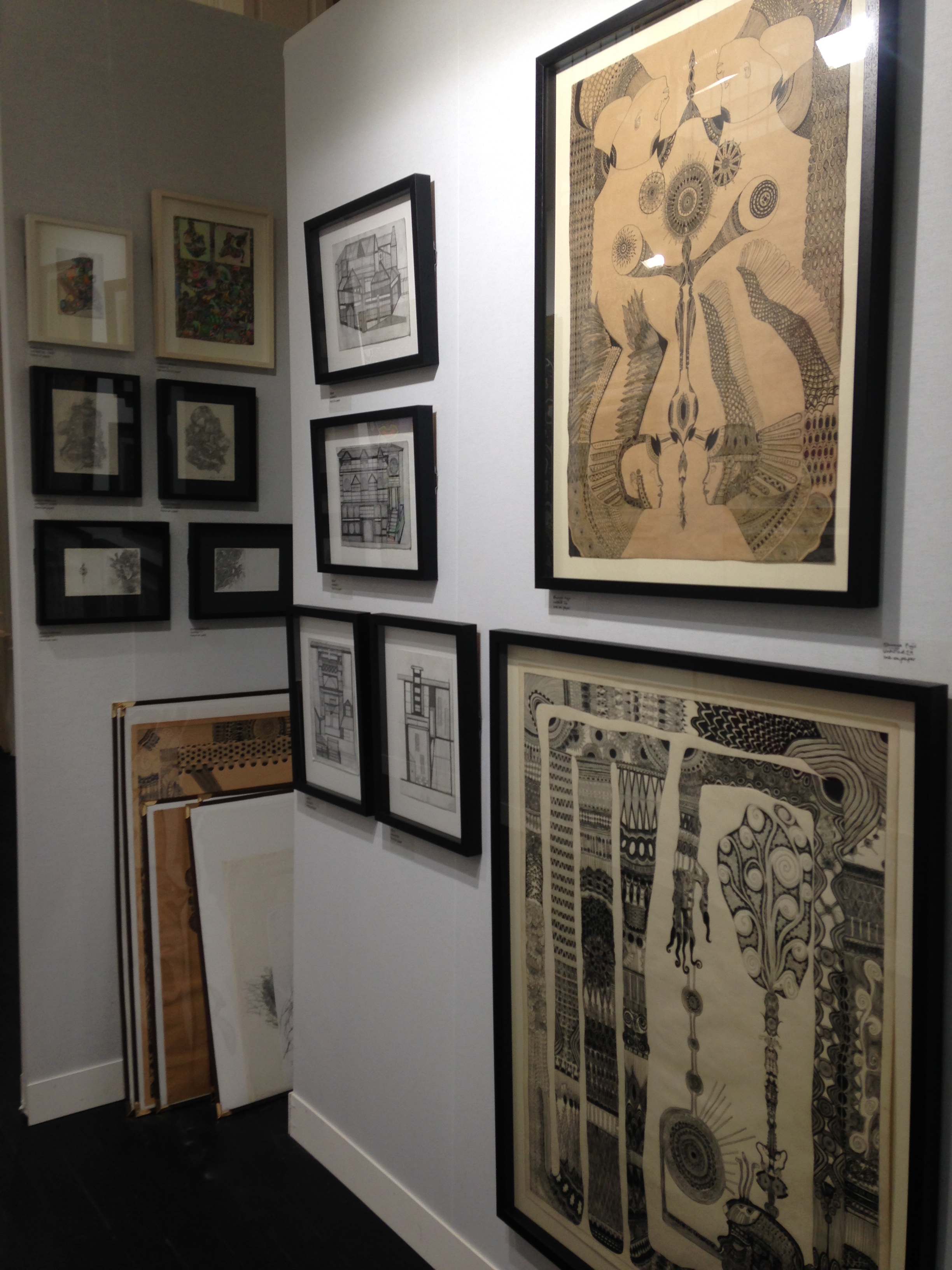
    Martin Phillimore, Albert and Shinya Fujii's work on the Outside In stall
    Martin Phillimore, Albert and Shinya Fujii’s work on the Outside In stall

    In previous years, the Fair has been held at Hotel le A, with each stall having its own intimate hotel room showcase. This year, it had a much more Fair-like air at the Hotel du Duc; a grand conference and event venue located near the Paris Opera House.

    This year the Ricco/Maresca Gallery from New York set up shop on this side of the Atlantic for the first time, London-based England & Co had their debut in Paris, and Australia was represented in the form of Coo-ee; specialists in Australian Aboriginal Art. In addition to the dealer stalls, there was a programmed talk featuring psychologists, psychiatrists, artists and curators, focusing on sexuality in the work of Henry Darger, Eugene von Bruenchenhein, Aloise Corbaz and Miroslav Tichy, and a specially curated corner of work by Japanese artist Shinichi Sawada.

    Gregory Blackstock at the Garde Rail Gallery
    Gregory Blackstock at the Garde Rail Gallery

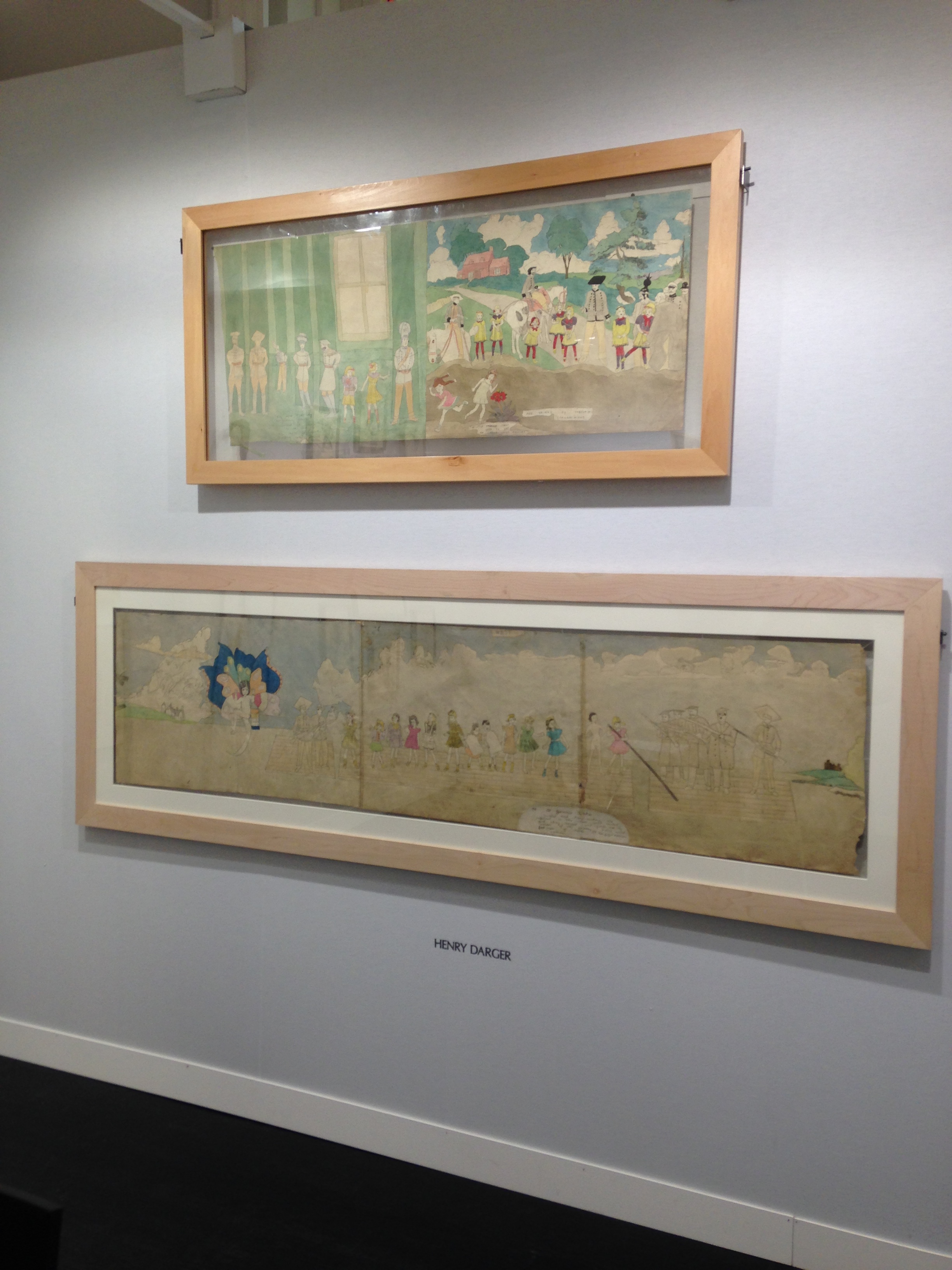
    What was refreshing was that, if you were unaware as to the title or contents of the fair, you could so easily have believed it was a very-much-mainstream-art-world-art-fair. The stalls were curated to an incredibly professional level, and the quality of work on display was unquestionable. It was fantastic to see work by some of the big names there in the flesh: Henry Darger, Bill Traylor, George Widener, and Martin Ramirez. But what was equally fantastic was the huge number of emerging artists brought to the fair by galleries who so obviously respected their work, and who so obviously respected the artists. At the Outside In stall, we were representing Bali and Buddhism inspired ink drawings by Japanese artist Shinya Fujii, whose work has only ever been exhibited outside of Japan on one other occasion. It attracted a huge amount of interest, and it was so wonderful to see people returning at the end of the day to say they had fallen in love with it; they simply couldn’t go home without it.

    Marie-Rose Lortet's solo show
    Marie-Rose Lortet’s solo show

    I was really pleased to see work by ‘anthropologist’ of the everyday, Gregory Blackstock, presented by the Garde Rail Gallery from Austin, Texas. Blackstock creates visual lists based on what he has experienced, memorised and then regurgitated. These include Monsters of the Deep, Classical Clowns and The Irish Joys – amongst hundreds of other categories. I spoke to Karen Light-Pina from the Garde Rail Gallery, who discovered Blackstock’s work in 2003. This interaction was typical of the fair; being able to meet and talk to a gallerist who personally knows the artist.

    Carlo Zinelli pieces seemed to pop up on several stalls, perhaps a sign that he is flavour of the moment. Zinelli was diagnosed with schizophrenia during his time volunteering for the Spanish Civil War in 1939 and was soon placed on medical leave, where he was committed to a psychiatric hospital in Verona. After ten years, he was admitted to a painting atelier created by sculptors Michael Noble and Pino Castagna, where he painted for hours every day with tempera paints and coloured pencils – often on both sides of the paper. His works are bright, bold blocks of colour, telling the story of his childhood.

    Marcel Storr's work
    Marcel Storr’s work

    There were several exhibiting artists present at the fair, including Cathy Ward whose scratchboard works were presented by Galerie Toxic. I saw Cathy many times, deep in conversation with visitors who were visibly excited at being able to ask the artist herself about her own work; her inspiration, her process, her style. And I think Cathy was equally as keen to share her work with visitors in person. French artist Marie-Rose Lortet had a solo exhibition of her lace architectural structures and faces with the Marie Finaz Gallery, and was herself present at the stall on several occasions.

    There was something about the rawness and the depth of the work that made the Fair unlike any other. Fairs can at times be at risk of becoming a caricature of the commercial, corporate, hard-sell, but this was far from it. This was about enjoying the work, and enjoying the artists’ stories. There was a sense of camaraderie between the stalls, despite the fact that many were competing for sales and displaying works by the same artists. I think this camaraderie came from a want to protect the artists on display, but all the while shouting from the rooftops about how talented they are.

    Henry Darger's work at the Carl Hammer stall
    Henry Darger’s work at the Carl Hammer stall

    Overall it was great. It is so refreshing to see this kind of art having a stage like this; a stage that has been a long time coming, and a stage that many mainstream artists and mainstream art galleries can take for granted. Far from being the ‘European version’ of the New York Outsider Art Fair, it was noticeable that this was in fact an international event in its own right and it is without a doubt becoming a key date on the Outsider Art calendar. I look forward to next year’s incarnation!

  • Susan Levin: Art from Dreams

    Susan Levin: Art from Dreams

    ‘My Jungian Journey in Collage, Assemblage and Poetry’

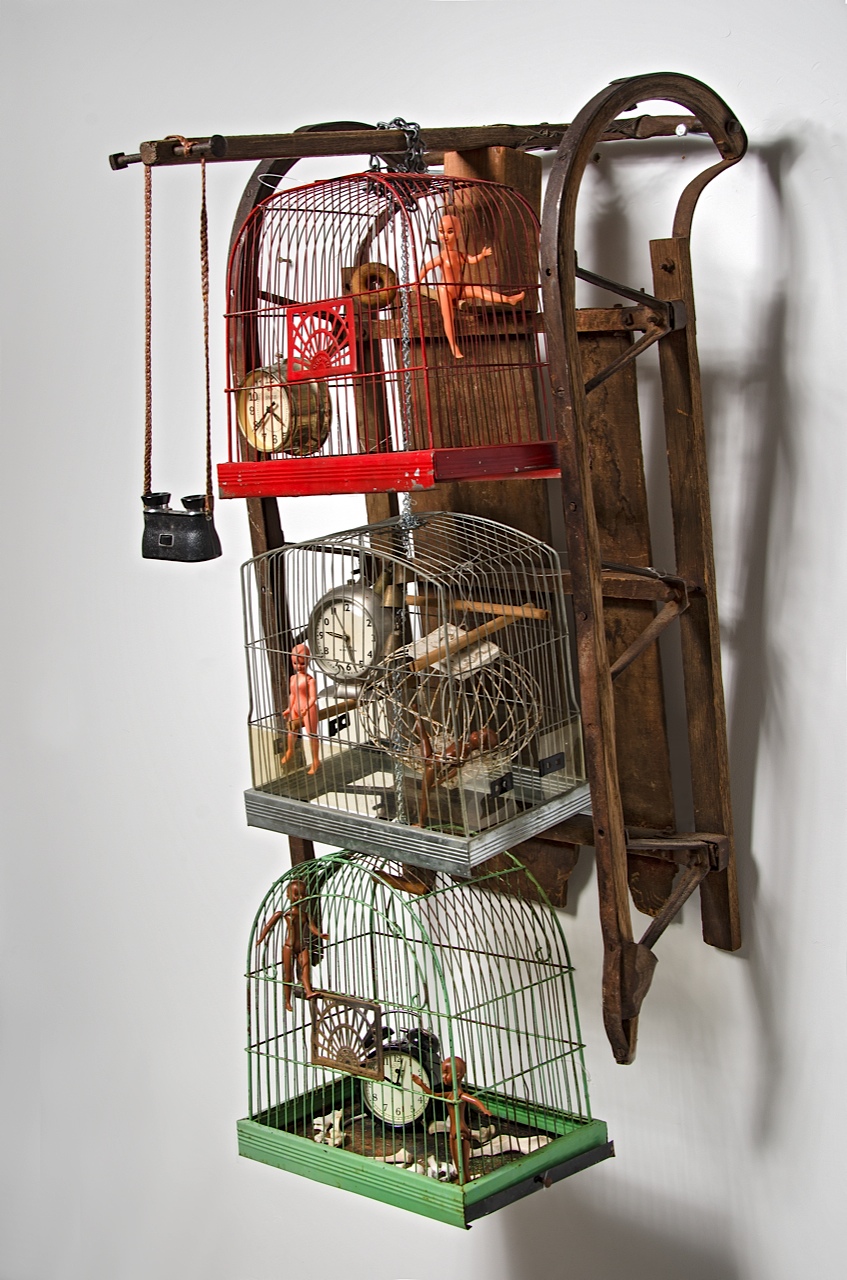
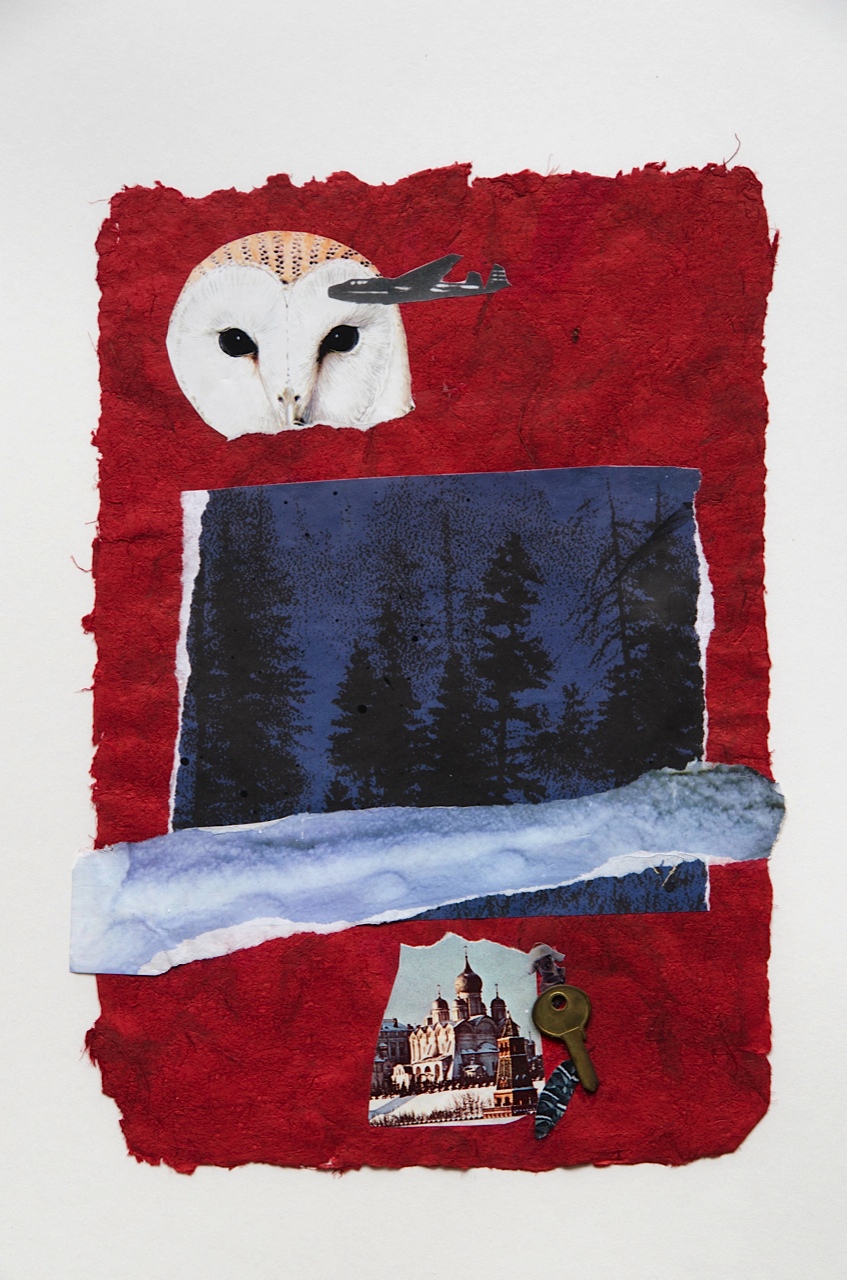
    I was recently sent a book by Susan Levin, who is based in California, entitled ‘Art from Dreams: My Jungian Journey in Collage, Assemblage, and Poetry,’ and felt I had to share it with you. The book is beautiful as an object in itself, but the works inside (particularly the assemblages – which are my particular favourites) are just extraordinary. The book – as noted on Susan Levin’s website – celebrates artistic expression as an exploration for self-awareness.

    “Art making and poetry reveal to ourselves and to others the images and feelings that arise within us in dreams. The very process of creation taps into the source of our inner wisdom. Poetry itself can be accessible as a collage of named images put together in various forms to communicate to and from our innermost selves.”

    Susan Levin has a BA from the University of Michigan and a Masters of Public Health (MPH) from Johns Hopkins University. In addition, she studied at the Center for Creative Studies in Detroit, Michigan. She is now a practising artist in Los Angeles, California.

    CRW_0048


    Alchemy

    Nobody sees us-
    the Archaeologist and me-
    as we excavate the night
    searching for beginnings,
    unearthing symbols, images.
    Everything is held to the fire
    We get close to truth,
    to what is known and unknown.
    We awaken to re-imagine our lives

    CRW_0051

    Home

    I left the ship on the city’s river
    and walked barefoot through its mud
    up the steps to the bank
    to retrieve my currency.
    Now with my valuable fuel,
    I stopped traveling the wrong freeways.
    Redeemed my compass

    susan levin-8

    Cages of our Lives
    susan levin-11
    Night Journey

    You can find our more about Susan, her work, and her book by clicking here

  • Double Review: Face to Face with the Outsiders… and The Gravy Train

    Double Review: Face to Face with the Outsiders… and The Gravy Train

    (Image Credit: Nick Blinko – not from exhibition)


    Recently, I participated in a bit of a London exhibition marathon. I had been planning the day for a while, hoping to fit in a third visit to the Wellcome Collection’s fantastic ‘Souzou’ exhibition, as well as popping in to various other smaller shows whilst I had possession of a London Travel Card.

    The first stop was ‘Face to face with the Outsiders’ at the Julian Hartnoll Gallery just by Green Park tube station. The Gallery, I found, is a tiny treasure amidst the corporate, expensive world of Old Bond Street and Jermyn Street; both just around the corner. The exhibition beautifully brought together a vast and varied range of portraits created by those considered to be on the ‘margins’ of the art world. Amazing matchstick men, carved and coloured by Pradeep Kumar, required a (thankfully supplied) magnifying glass to experience the intricacies, and Tim Holliman’s portraits of well-known celebrities and sports stars encouraged a who’s who guessing game. However, I was particularly taken with a piece by Nick Blinko: a monochrome ink drawing made up of hundreds and hundreds of tiny – but perfectly formed – faces.

    Madge Gill (not from exhibition)
    Madge Gill (not from exhibition)

    There was also work from renowned ‘outsider artist’ Madge Gill, whose female faces peer pensively from the depths of the pen shrubbery, and up and coming ‘outsider’ superstar Kate Bradbury, as well as a colourful splash of Ben Wilson’s chewing gum pieces. The monochrome works by Blinko and Gill – amongst others – were set off perfectly against the bright, whimsical figures produced by Martha Grunenwaldt, whose ethereal people almost swim, or float, through an array of colours.

    The gallery was so intimately tiny, but it seemed like the perfect place to be surrounded by these beautifully curious faces. The contrast of bright, electric colours (Wilson, Grunenwaldt, Holliman, and Shafique Uddin) and moody ink drawings (Blinko, Gill, and Bradbury), all depicting the same thing – the human face – perfectly highlighted the huge variety of work produced by ‘outsider artists.’

    Martha Grunenwaldt (not in exhibition)
    Martha Grunenwaldt (not in exhibition)

    Next, I visited the ‘Souzou: Outsider Art from Japan’ at the Wellcome Collection for the third time. Still amazing. Still would like to have the twist-tie figure display cabinet as my dining table. You can read my previous review of this exhibition here.

    The third – and final – exhibition on the day’s agenda was ‘The Gravy Train and Roads to Recovery’ in the Conference Centre at St. Pancras Hospital. This exhibition was an eclectic mix of work by Service Users at the Margarete Centre and Kate Bradbury’s dervishes (and, of course, some of her much-loved black and white inks). Organised by The Arts Project, the exhibition aimed to highlight the idea that whilst treatment for substance misuse historically focussed on harm reduction and substitute prescribing, other recovery methods emphasise equality, opportunity and equal access to society. The Arts Project say of the show:

    “The artwork in this exhibition has been made by service users who, of their own volition, and without necessarily involving training or teaching, replace problematic substance use with creativity. This exhibition showcases outsider art work covering a range of years and artists reflecting a broad spectrum of style and creativity. This work combined with the visionary creativity of Kate Bradbury makes for a fascinating multi-layered experience.”

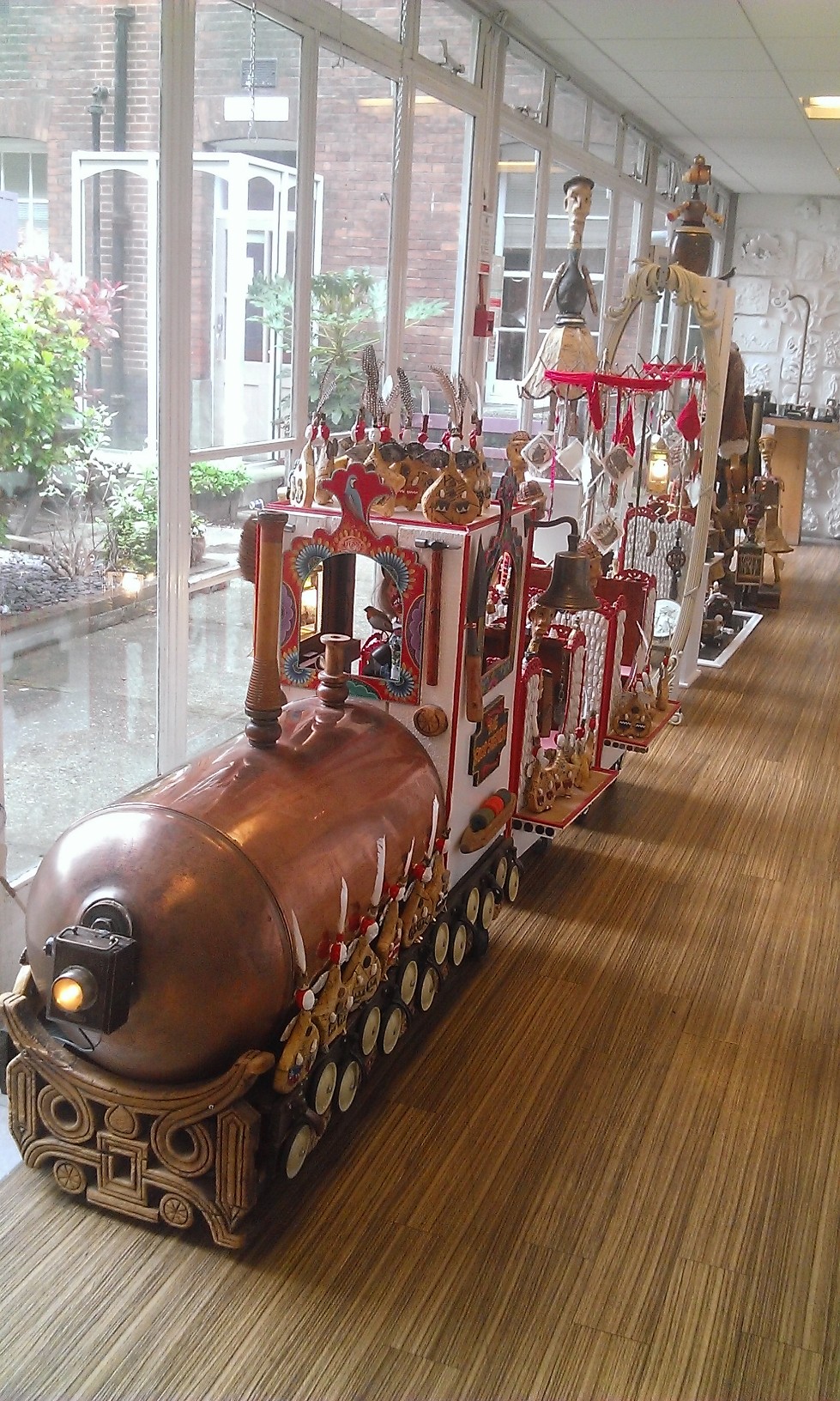
    And that it certainly was. Bradbury’s Gravy Train was in situ, looking magical as it transported a selection her dervishes down towards the reception area. I actually got to meet Kate at the exhibition, which was fantastic. She spoke a bit about her work, telling me that The Gravy Train had recently been displayed in The Crypt Gallery, St. Pancras, where it had visually resembled a train travelling through a tunnel. In fact, The Gravy Train quite aptly symbolises the journey to recovery experienced by many of the artists from the Margarete Centre – “where art becomes a skill with which to embrace opportunity and achievement,” The Arts Project say. The resulting exhibition is a fascinating installation exploring the very nature of journey.

    Kate Bradbury, 'The Gravy Train'
    Kate Bradbury, ‘The Gravy Train’

    These three exhibitions highlight the fact that 2013 is a big year for ‘outsider art.’ Of course, there’s the blockbuster Wellcome Collection show, but these smaller exhibitions were well worth a visit, highlighting the huge variety and overwhelming talent of ‘outsider artists.’ The tone seems to have been set for the rest of the year with two much anticipated solo shows coming up at Pallant House Gallery in Chichester to look forward to; Phil Baird in August and Kate Bradbury in November as well as a Madge Gill exhibition at Orleans House opening in October.


    ‘Face to Face with the Outsiders’ finished on 11 May, but you can visit the British Outsider Art website for more information. Click here.
    ‘Souzou: Outsider Art from Japan’ is on until 30 June 2013, for more information click here.
    ‘The Gravy Train and Roads to Recovery’ is on until 22 June 2013, for more information click here
  • ‘Side by Side’ Exhibition and Symposium

    ‘Side by Side’ Exhibition and Symposium

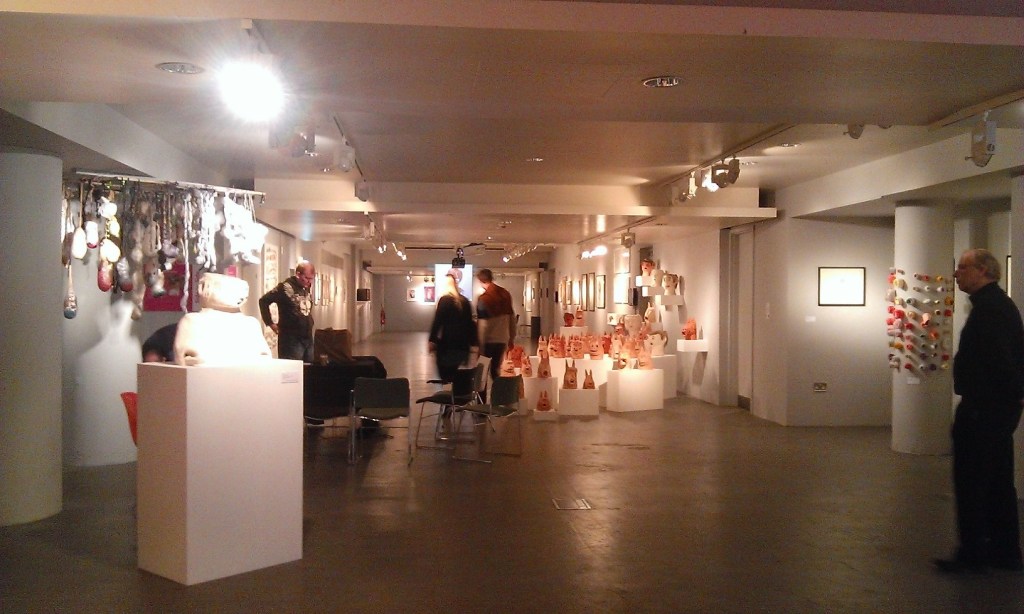
    On Friday 22 March, I visited the ‘Side by Side’ exhibition in the Spirit Level at the Royal Festival Hall; a collaboration between the Southbank Centre, The Rocket Artists and the University of Brighton. The exhibition, pioneering in its promotion of inclusive arts in such a high profile institution, features an array of multi-disciplinary works including drawings, sculptures, paintings, film and music, and brings  together a whole variety of inclusive arts groups from all over Europe.  
    Photograph taken at the 'Side by Side' exhibition
    Photograph taken at the ‘Side by Side’ exhibition

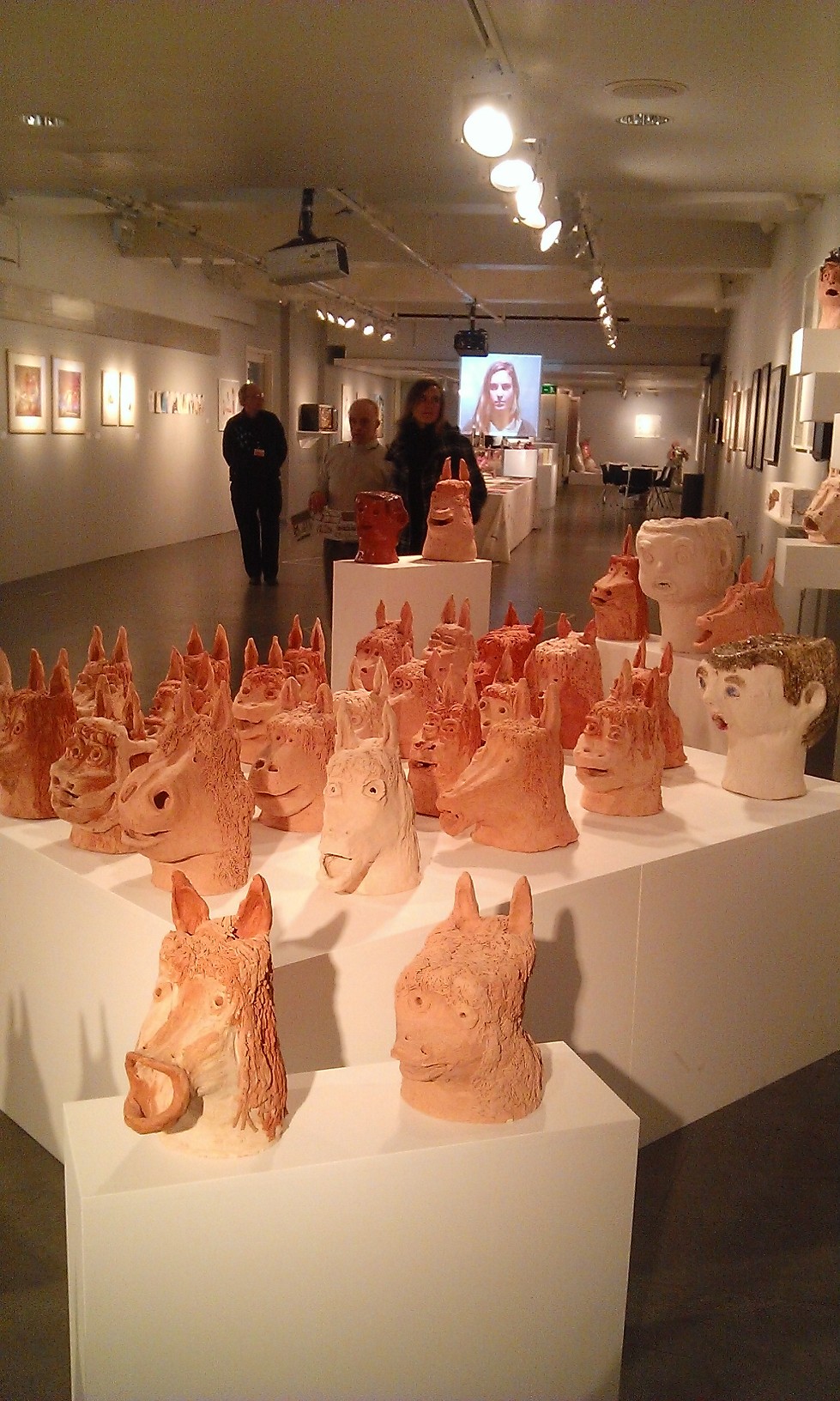
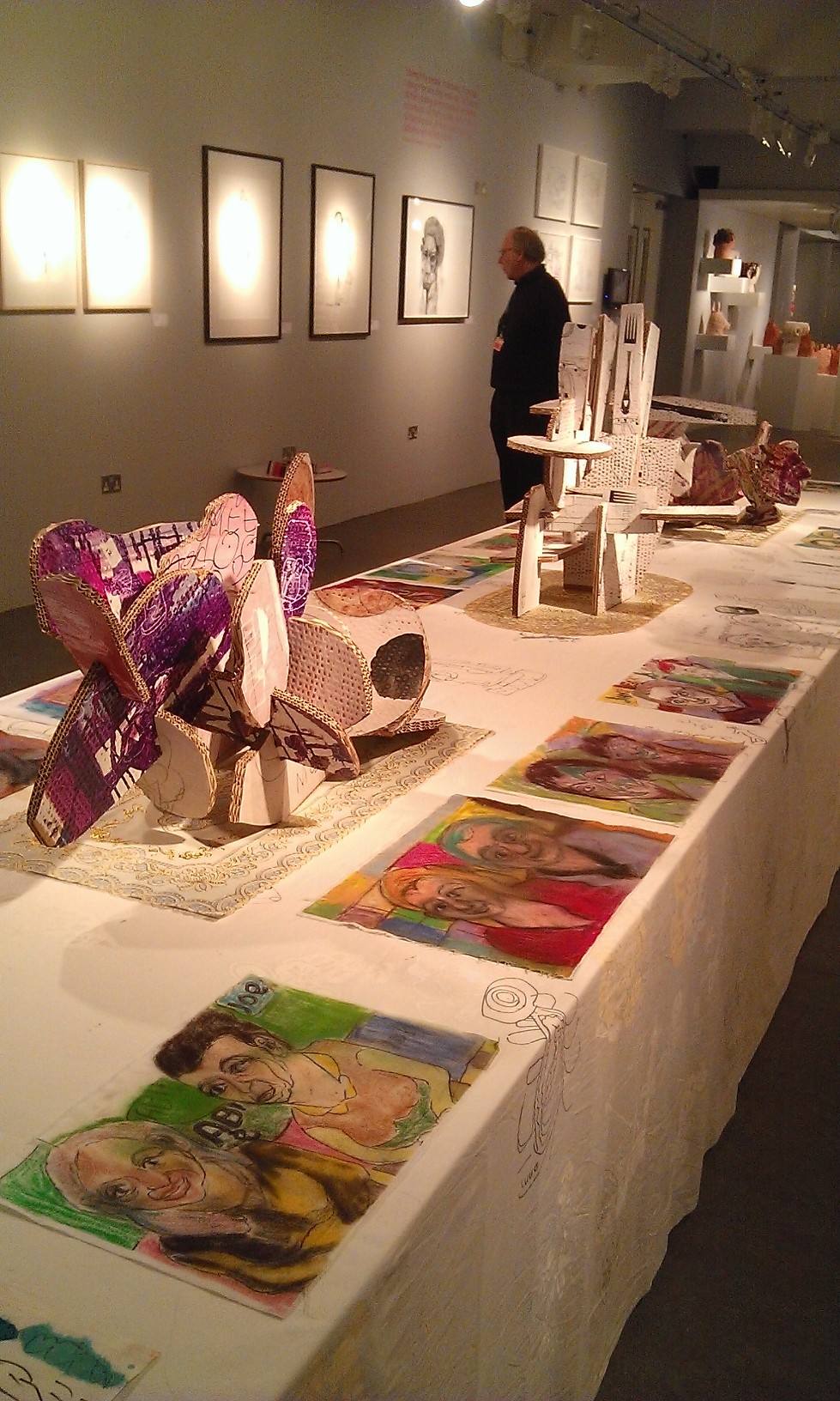
    The exhibition is a warren of inspiration and awe; from modelled horses’ heads from Amsterdam, to glass jars filled with individual responses to a medical conference. One of my favourite parts of the exhibition is what I have called ‘the cardboard box area.’ This space consisted of a cardboard box tower with canvas works placed at various points around the sculpture – waiting to be discovered – as well as film projection and video. The rest of the works in the exhibition are equally exemplary, and are a treat for all of the senses. There is a sensual hanging piece, which invites you to be a part of it, paintings; black and white, colour, sculpture and tables and tables of beautiful creations, all displayed in a bright, spacious gallery.

    Jars filled with individual responses to a medical conference
    Jars filled with individual responses to a medical conference
    Sculptural heads from Amsterdam
    Sculptural heads from Amsterdam
    Hanging piece by Linda Bell
    Hanging piece by Linda Bell
    Table adorned with works by various artists
    Table adorned with works by various artists

    The exhibition was accompanied by a Symposium, which I was lucky enough to be able attend. The Symposium was concerned with current inclusive arts practice and its progression, and provided a forum space in which both artists and their colleagues could discuss best practice and consider ways of thinking about art that aren’t directly related to written or spoken language. The outcome of the day was a collaboratively produced manifesto on what inclusive arts can and should be.

    There were brief talks from Alice Fox (Rocket Artists, University of Brighton), Sue Williams of the Arts Council (who spoke about the Creative Case for Diversity) and Andrew Pike from KCAT (Kilkenny Collection for Arts Talent, Ireland), after which the group split up to participate in different workshops facilitated by various inclusive arts groups: Action Space, Corali Dance, Intoart, Project Volume, Stay Up Late, StopGap Dance Company and Rocket Artists. Each workshop covered a different ‘art’ e.g. visual art, dance, music…

    I attended the Rocket Artists’ ‘Say it with Bags’ workshop, which aimed to look at the use of language with regards to inclusive arts practice. For this workshop, we were asked to have a look around the ‘Side by Side’ exhibition and choose a piece that we were drawn to. Once we had decided on a piece, we then chose a word, movement and sound and created a drawing in response to the piece. This activity was designed to help us think about art in a more practical way – not just with words (whether spoken or written).

    After the workshops, everyone reconvened to show/tell about the manifesto points that they had collaboratively created in the various workshops. Our group created two films to get our points across. Other groups used performance, dance, music or drawings to help illustrate their points.

    What I understood the term ‘Side by Side’ to mean in the context of the Symposium and exhibition, was that the creation of this concluding manifesto was collaborative – a joint effort by the artists and those working with them. It was predominantly about creating a space to discuss/think about art in a more practical way – particularly for those who find traditional forms of communication difficult. It was about raising the status of the artist to the same level of those working with them.

    Conducting some research into the project has highlighted the aims it is trying to achieve – these are:

    • To establish a platform in a mainstream art space for leading and best practice organisations.
    • To present a range of inclusive practices that span visual art, performance, music and film.
    • To build a picture of what constitutes good/innovative practice with reference to Inclusive Arts.
    • To highlight the process of collaboration as creating a space for equality.
    • To create a platform and catalyst for future artistic collaborations between artists and groups.

    The symposium really acted as a forum about the current state of Inclusive Arts in the UK and how this can be moved forward. The main questions we were encouraged to think about were:

    • What lies at the heart of the experience of the creative, collaborative process?
    • What conditions are necessary to enhance the collaborative process?

    It was very much about everyone being involved in the workshops on the same level – both the artists and those they work with. So, overall, I think the phrase ‘Side by Side’ was used to express the idea of collaboration, and to eliminate the idea of there being a difference between the ‘teacher/workshop leader/arts facilitator’ and the artist.


    I would be really interested to hear from others about their views on inclusive arts practice, so if you have any thoughts, please leave them below.

    The ‘Side by Side’ exhibition is running at the Royal Festival Hall until 5 April 2013. For more information, click here. For more information on the project itself, click here.
     

  • Review – ‘Souzou: Outsider Art from Japan’ at the Wellcome Collection

    Review – ‘Souzou: Outsider Art from Japan’ at the Wellcome Collection

    ‘Outsider art’, although a term that is so often criticised for its ambiguity and uncomfortable sentiments, takes centre stage this spring at the Wellcome Collection in London. Despite the semantic controversy surrounding the term itself, there is nothing ambiguous, controversial or uncomfortable about Souzou: Outsider Art from Japan.

    Unlike the development and history of ‘outsider art’ in Europe; which ran parallel to the discipline of psychiatry – think Hanz Prinzhorn, in Japan, ‘outsider art’ has been “more closely aligned with public health and education reform from 1945.” Kazuo Itoga, considered the father of social welfare reform in Japan, pioneered the principle of producing personal artworks within an institutional context, insisting on self-expression and a policy of ‘non-intervention’ in the creative process.

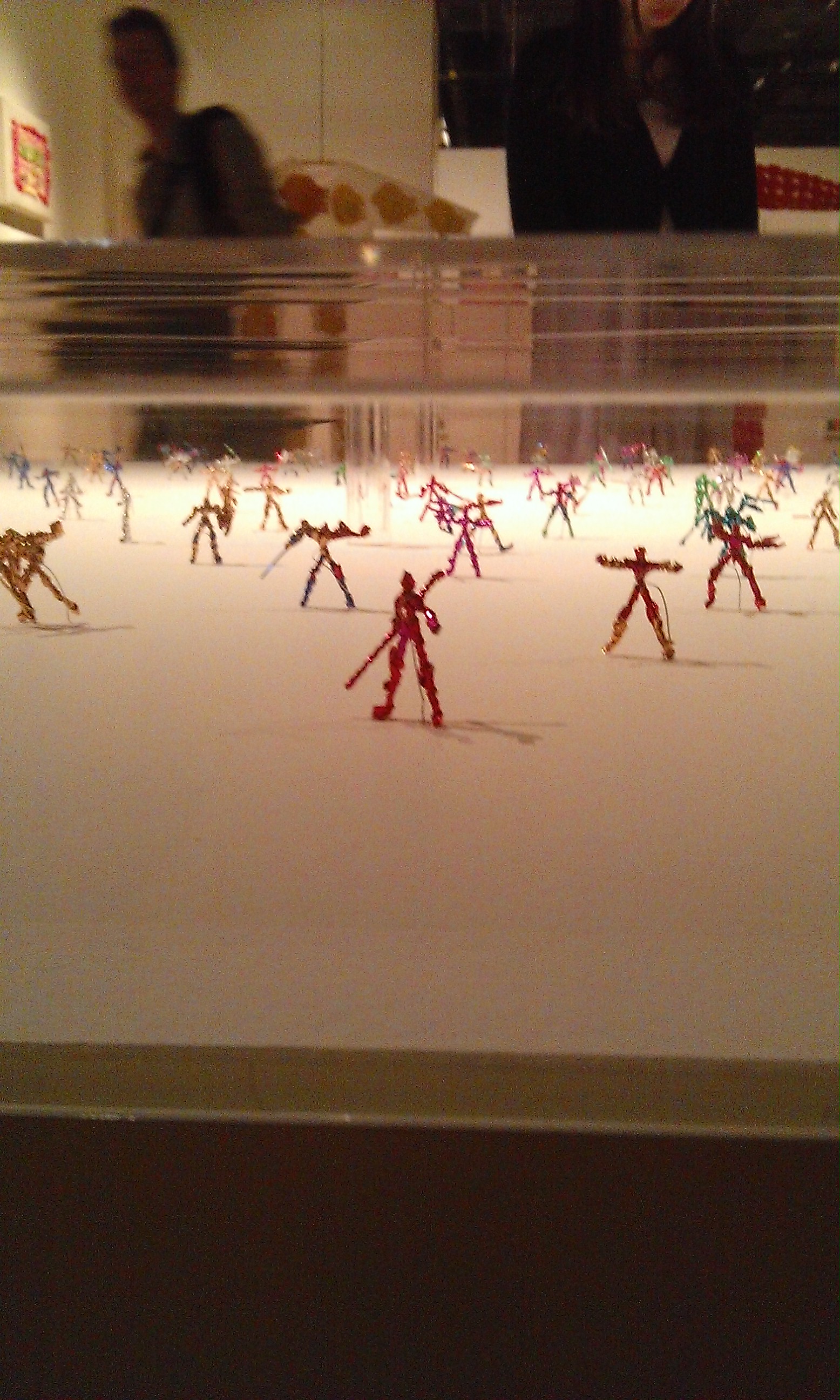
    Historical context aside, the exhibition at the Wellcome Collection is as diverse as the term ‘outsider art’. Amongst the sculpture and 2D works on display are tiny shiny model figures, bongos (the animal – not the drum), lions, life size dolls, still lifes, graphic posters, illustrations of morning tv programmes, and – perhaps some of my favourites – the Fried Chicken Pyjamas and the Pigeon Shaped Cookie Pyjamas by Takahiro Shimoda.

    Shota Katsube
    Shota Katsube
    Takahiro Shimoda 'Fried Chicken Pyjamas'
    Takahiro Shimoda ‘Fried Chicken Pyjamas’

    Split into six named sections – ‘Language’, ‘Making’, ‘Representation’, ‘Relationships’, ‘Culture’ and ‘Possibility’ – the exhibition represents works that are characteristically and stylistically common to what we consider to be ‘traditional outsider art’, as well as works that draw on popular culture, creativity and the structure of language. The section headed ‘language’ looks at the challenge of communication in a written or spoken form and how “visual expression can offer a release from the confines of language.” The ways we encounter language are explored, with Masataka Aikawa’s storybook-inspired ink drawings and Hiroyuki Komatsu’s pieces which reference the plots and characters from his favourite daytime TV programmes.

    Komatsu’s pieces, amongst others, finally highlight that – contrary to Dubuffet’s stubborn views on isolation and immunity – ‘outsider artists’ are more often than not very much in tune with contemporary culture. In fact, there is a whole section of the exhibition entitled ‘Culture’, which demonstrates the “artists’ keen awareness of their surroundings and of the wider cultural context.” Kiyoaki Amemiya’s mountainous landscapes and Ryosuke Otsuji’s “contemporary interpretation” of Okinawan lions highlight the influence of historical Japanese culture; whilst Daisuke Kibushi’s post-war movie posters and Keisuke Ishino’s paper anime figures allude to the impact of popular culture.

    ‘Representation’ and ‘Relationships’ include depictions of the objects and people that the artists experience in their everyday lives. ‘Representation’ raises questions about subjectivity vs objectivity – exemplified in the work of Takashi Shuji and Takanari Nitta, where seemingly everyday objects – hairdryers, windows – “are elevated to objects of beauty,” whilst ‘Relationships’ examines “the ways the artists depict themselves and their multifaceted relationships with other people.” The artists explore idealised visions of themselves (as is the case with the work of Yoko Kubota and Masao Obata), as well as their ambitions, fears, desires and the notions of “absence, uncertainty and erasure.”

    When we think of ‘outsider art’, we often think of the use of unconventional objects – in fact, I recently wrote a post about the ‘outsider artist’ as a pioneer of the ready-made movement in the history of modern art – and this is explored in ‘Making.’ In this section, the importance of work and employment in Japan is highlighted with the use of clay and washi (Japanese paper), used by Komei Bekki and Seiji Murata, who are both employed in these industries respectively. This section includes a vibrant array of tactile materials – textiles, clay, and cloth – which require “repetitive, time-consuming processes that have calming and therapeutic effects.”

    My favourite piece in the show, however, sits in the final category of ‘Possibility.’ Norimitsu Kokubo’s panoramic cityscape is a work-in-progress which depicts a map of the world as visualised through the artist’s internet research. When finished, the work will measure a hefty 10 metres across. This work epitomises this section’s attempt to portray works which “collate and reorder information… to create parallel, ‘improved’ realities.”

    Norimitsu Kokubo, '3 Parks with  a panoramic view. A 360 degree world of panoramic view - Ferris Wheel, clusters of buildings with magnetically-levitated trains, past present future, a suburban town with railroad bridges, a city under development with indigenous peoples and natural resources.'
    Norimitsu Kokubo, ‘3 Parks with a panoramic view. A 360 degree world of panoramic view – Ferris Wheel, clusters of buildings with magnetically-levitated trains, past present future, a suburban town with railroad bridges, a city under development with indigenous peoples and natural resources.’

    The term Souzou, in my opinion, goes part of the way in distilling any preconceptions about this type of art because it is a word that the Western world has (somewhat unknowingly) needed for so long. With no direct translation into English, it can mean either ‘creation’ or ‘imagination’ – “both meanings allude to a force by which new ideas are born and take shape in the world.” Maybe it doesn’t need a direct translation; after all, ‘Outsider Art’ is an “imperfect approximation” of another term that does not translate comfortably into English – Jean Dubuffet’s Art Brut. It is our need for labels and categories that has tied us in a knot when it comes to ‘outsider art’; when really we do not need words at all.

    The exhibition is a timely reminder of the importance of displaying works created by those who cannot so easily align themselves with the mainstream art world. Created by Japanese artists in day centres all over Japan, the works perhaps illustrate the term Souzou better than any English translation ever could, and certainly better than many works in the current contemporary mainstream. The exhibition blows away the hierarchical idea of biographical context and focuses on the achievement of these artists and their incredible creations. There is something here for everyone, and I challenge you not to come away thinking about the astounding imagination and creative ability of these people. Perhaps this year is the year that ‘outsider art’ finally becomes recognised as an illustration of authentic creativity and talent and can once and for all be lost as a category, and works of the Souzou calibre can be known simply as ‘Art.’

    Souzou: Outsider Art from Japan is on at the Wellcome Collection from 28 March – 30 June 2013. For more information, click here.
    All quoted information is taken from the ‘Souzou: Outsider Art from Japan’ exhibition companion, available from the Wellcome Collection.