Almost six years ago, artist Joe Cook appeared on kdoutsiderart for the first time. In this artist showcase, Joe shares his new body of work. Joe says:
This new body of work is a direct continuation of my previous illustration work. My brief was to create a diverse range of characters in a far away land, living a life of heroic adventure and intrigue. I took direct influence from Henry Matisse, amongst others. The shapes and colours he created in his cut-out era feel exotic and foreign to me and I tried to employ those curves and free flowing lines where I could. Similarly, where there is action in my drawings there is also naivety and an unapologetic (David Shrigley-like?) quality to the movement. I scoured photos from the internet and national geographic back editions for real life examples of everyday folk lost in their endeavours in far tropical lands. Ultimately I tried to be honest in what I saw and how I adapted that to paper. The drawings are primarily pencil and ink and don’t always follow the tried and tested rules on how illustrations should look, feel and move.
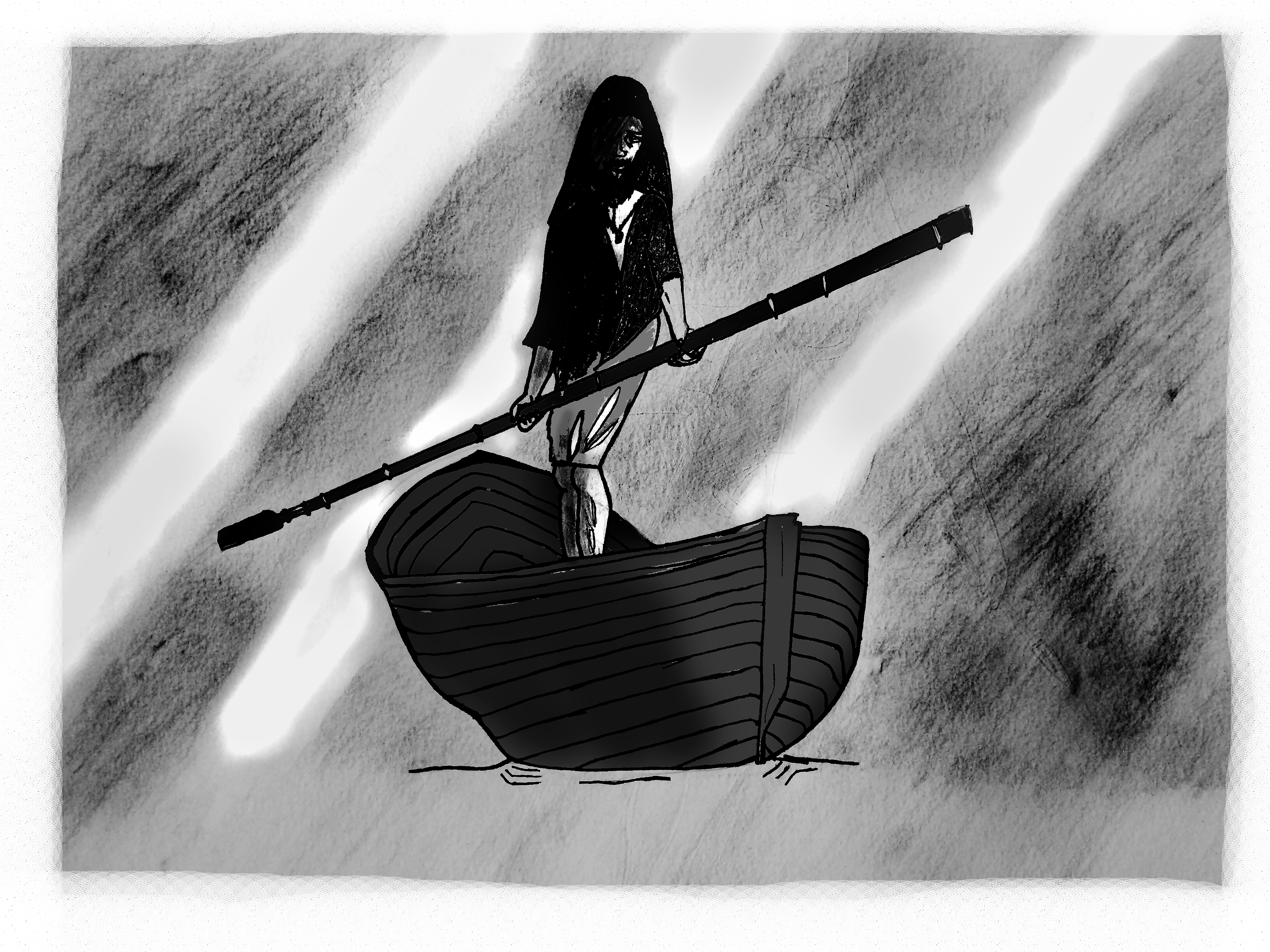
Joe Cook, BoyJoe Cook, EleleleJoe Cook, EyezJoe Cook, Candle ManJoe Cook, The StoneJoe Cook, Captainas FishermanasJoe Cook, Black Coat Eating
Welcome to the second installment of ‘In Focus,’ a series of blog posts that see a question and answer session taking place between me and PhD student Marion Scherr. This post focuses on the implications of the term ‘outsider art’ for the artists it describes, and considerations when exhibiting works of outsider art.
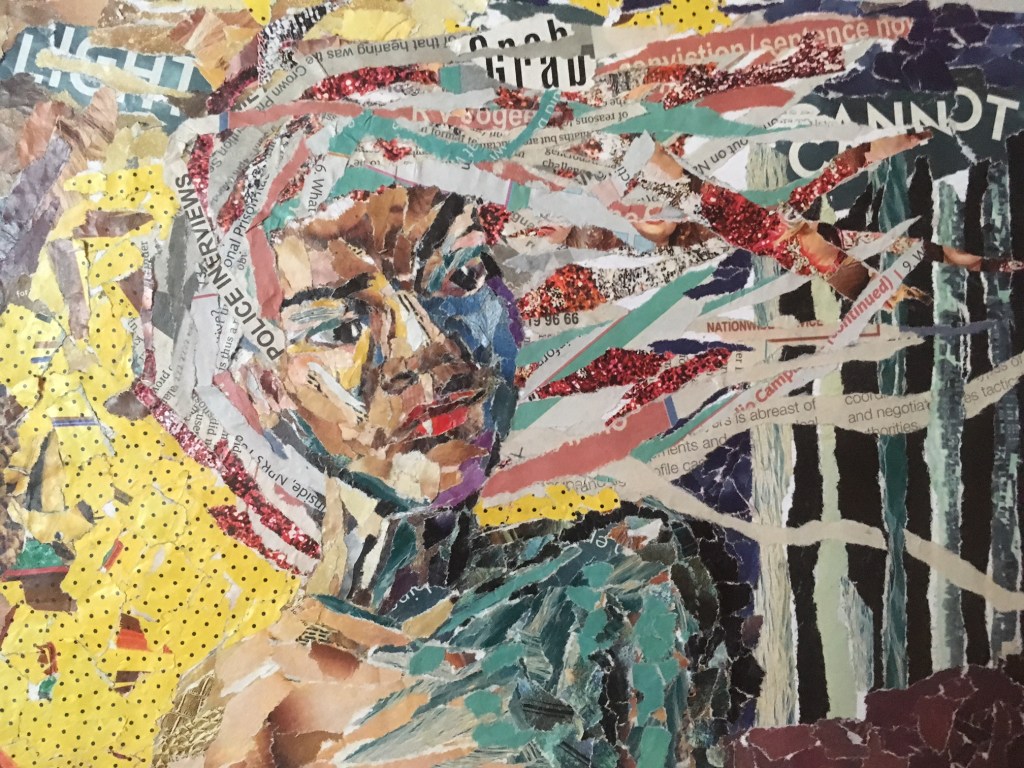
Joanna Simpson, Good Luck Gum Nut Folk
Marion Scherr (MS): You know many artists yourself and seem to have talked quite a bit with them about the term. Could you give a brief overview of the different opinions and viewpoints artists have about the term? What are the pros and cons people mention when speaking to you about the term ‘Outsider Art’?
Kate Davey (KD): I’ve generally found that artists don’t feel as strongly about the term as academics and curators do, which I find interesting. I’ve had mixed responses, from people who are really pleased to have a found a term (that comes with its own artistic community) that they feel an affinity with. Others have expressed feelings about it being quite limiting, particularly in terms of what kind of shows they can enter or exhibit in, and how they are viewed as an artist.
Interestingly, a couple of years ago I did a blog post focusing on artists’ responses to the term. From this, you can see that a fair few of the artists note that in the term outsider art they have found a ‘movement’ that they feel they themselves and their work can belong in – and belong in successfully. I think there’s something about artists who might see themselves as ‘outsider artists’ finding a community of other artists who view themselves and their work in this way. I find this is quite different to the mainstream art world which can be quite saturated with competition. Certainly I’ve found much more comradery amongst outsider artists, which is always really good to see.
I think I might have mentioned this in a previous answer, but I think that artists who see themselves as ‘outsider’ artists are able to access more support with their professional development and their artistic career through organisations specifically set up to support and promote artists doing this kind of work, which is so important.
Julia Clark, Owl
MS: Do you think the way in which a work of art is perceived changes, if the audience is told it has been produced by an ‘Outsider’? What is the feedback of gallery/museum visitors like in this regard in your experience?
KD: In my experience, there have been mixed reviews, but generally people are very open to experiencing new kinds of art, and particularly art that might be different to the work they normally view. It’s not to everyone’s taste, and I think this is sometimes where a bit of context can be really useful. I have had a couple of experiences in the past where exhibition-goers have maybe asked ‘what’s wrong with’ one of the artists whose work is on display, but I generally take this as an interest or curiosity in the work and the person who made it – and this is when I’ll talk about outsider art and what it means today.
I think in recent years the market and for and opinion of outsider art has come on leaps and bounds – certainly in the U.K. where we’ve had big exhibitions at the Wellcome Collection and the Hayward Gallery. The main thing, I think, is to display work by ‘outsider artists’ just as you would the work of a ‘mainstream’ artist, so the public see it as valid art and are able to appreciate it for its aesthetic qualities.
I’ve had a few really positive experiences where people weren’t expecting to come across ‘outsider’ art at a gallery or museum, but they have gone away feeling like the work was the most powerful work they saw during their visit.
I think as taste makers, curators and galleries have a role to play here. As long as they are showing ‘outsider’ work (and showing it well) then art audiences (and the more general public) will come to see this work as valid – and, most importantly, as art.
MS: In one of your blog posts you mention that the show ‘Jazz Up Your Lizard’ has changed your mind about curating ‘Outsider Art’. Rather than presenting it in a ‘white cube’ you speak about turning this approach round and “shaping the place to fit the work” and/or finding a space, that works well with particular artworks. What are your opinions on this issue now? What do you normally look out for and what elements do you consider, when you think about the place and setting of a show?
KD: The Jazz Up Your Lizard show was a real turning point for me. As I’ve written about before, I was adamant that outsider art be shown the same way as its ‘mainstream’ parallel. However, this show was a bit different, as I was working very closely with the artist throughout – an artist I have known and admired for a long time. There were also some practical issues involved – the exhibition space had been painted black, and the curator I was working with on the show really liked the colour (and so did I!). The exhibiting artist’s work is very bright, but macabre in content. I think the black just really brought out the colours, as well as the darker side of the works – that on first inspection can sometimes seem fairly jolly.
When curating exhibitions in future, I’d really like to take the lessons I learnt from this show on board. Things I would now consider include what it is we want to pull from the work – what is the essence of it? What might people get from it and how can we help this along? I’ll always work closely with the artist, where possible, as they are the best interpreter of the work. When curating, I really like to think about audiences who might not ‘naturally’ consider visiting an art exhibition – or more specifically an outsider art exhibition. Anything that helps them experience this work is absolutely vital. This includes colour, space, accessibility, accompanying text, events etc. So these are now all things I consider in great detail.
Featured Image: Don’t Look Back in Anger by a Koestler Trust entrant
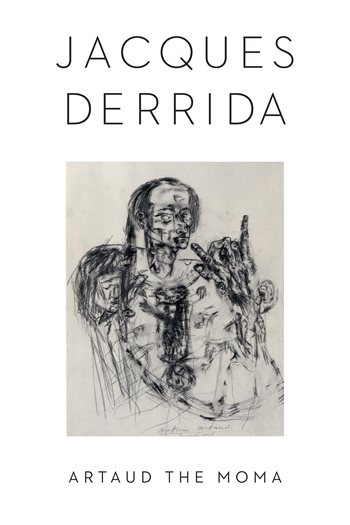
In this extended post, writer Nick Moss reviews Jacques Derrida: Artaud the Moma (Columbia University Press, 2017). Moss critically examines Derrida’s writings about what it means for an artist – and subsequently their work – to exhibit in various institutions.
Jacques Derrida engaged repeatedly with the work of Antonin Artaud throughout his life. His best known essays on Artaud are collected in Writing and Difference (Routledge 2001 2nd ed.) As he states in the text reviewed here (a lecture given at the Museum of Modern Art in New York in 1996 on the occasion of the exhibition of Antonin Artaud: Works on Paper), Artaud represented for him “a sort of privileged enemy, a painful enemy that I carry and prefer within myself.” Derrida states that he is bound to Artaud by “a sort of reasoned detestation.” He is resistant to “what might be called, thanks to a certain misunderstanding, the philosophy, politics or ideology of Artaud.” The resistance to Artaud, though, is ultimately a resistance to Michel Foucault/Gilles Deleuze’s romanticisation of Artaud, “everything in this work that, in the name of the proper body or the body without organs, in a name of a re-appropriation of self, is consonant with an ecologico-naturalist protest.” For Derrida the re-appropriation of self is a myth, as is the privileging of some kind of end to alienation, especially if this is to be realised through any form of “schizo-politics.” As he makes explicit in his essay “Cogito and the History of Madness,” madness is always already internal to reason and thus privileging “madness” actually reinforces the divide that Foucault and Deleuze would seek to overcome.
Antonin Artaud, Paule with Ferrets (courtesy of ArtStack)
Nevertheless, in the text given at MOMA, Derrida enters into a strategic alliance with Artaud, in order to save Artaud from the “museographic institutions” which, 100 years after his birth, seek to recuperate his work, to commodify that which was intended as resistance to “technical reproduction,” these works which sought to deliver a coup, a blow struck against “the Christian West, the god who steals my body, the spirit, the holy spirit and the holy family, all the forces-ideological, political, economic-that are one with this thief of bodies.” The “thief of bodies” is that “machination…the social, medical, psychiatric, judicial, ideological machine, the machine of the police, which is to say, … a philosophico-political network that allied itself with more obscure forces so as to reduce this living lightning to a body that was bruised, tortured, rent, drugged, and above all electrocuted by a nameless suffering, an unnameable passion to which no other resource remained than to rename and reinvent language.”
Antonin Artaud, Self-Portrait (courtesy of ArtStack)
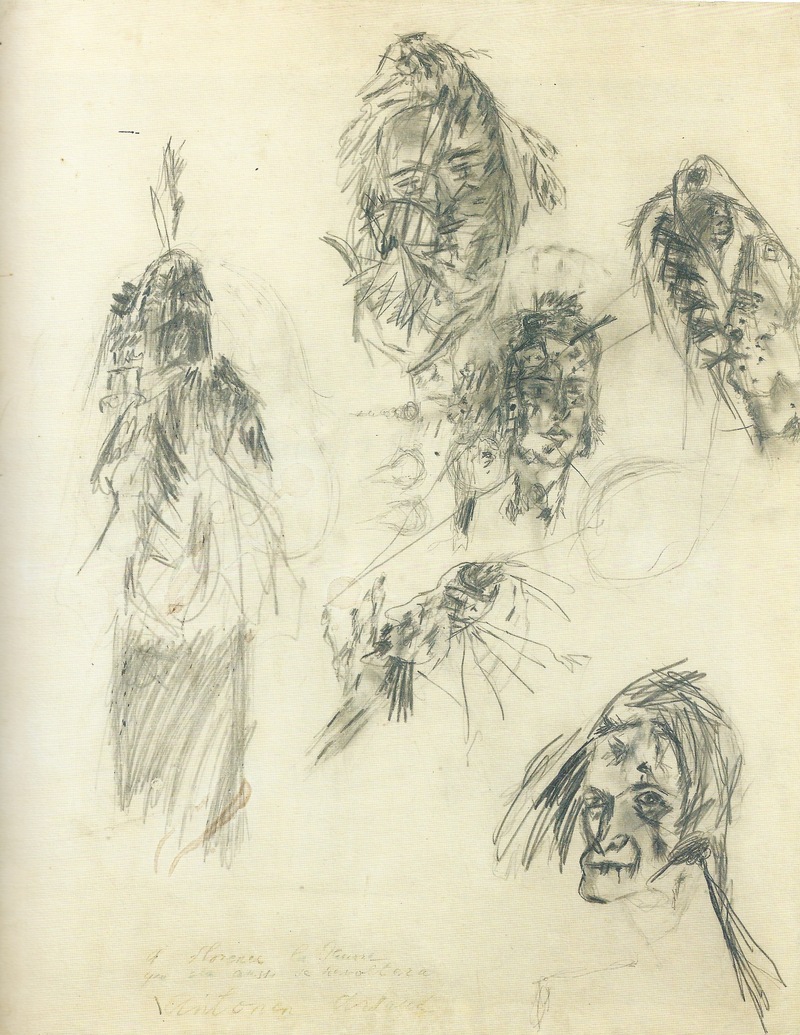
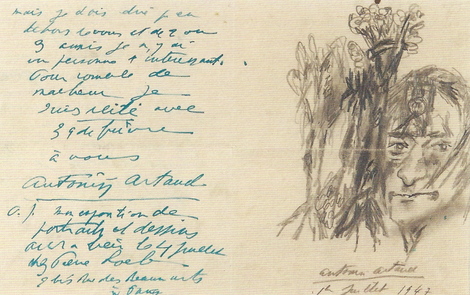
The drawings on display at MoMA were the sketches and drawings Artaud made while detained in the psychiatric hospital at Rodez. The works are, Artaud states, “deliberately botched, thrown on the page like some scorn for the forms and the lines, so as to scorn the idea taken up and manage to make it fall.” It is in this ‘fall’ – in the art’s failing – that Artaud’s coup is struck. Yet every blow leaves a trace, a bruise, and so it is here – the works are ‘maladroit,’ they are ‘ill-fashioned,’ scorched by flame, but they survive to be archived and displayed. Artaud intended the drawings to be “not that of a man who does not know how to draw, but that of a man who has abandoned the principle of drawing and who wants to draw at his age, my age, as if he had learned nothing by principle, by law, or by art.” For Artaud the works are intended as weapons, not commodities, but they become commodified in any event. How then to restore, to protect, their existence as “gestures, a verb, a grammar, an arithmetic, a whole Kabbalah…that shits on the other,” to maintain their endurance as “a machine that has breath”? How to preserve the destructive essence (and we should be clear Artaud’s intent was destructive, not merely critical) of Artaud’s project against “the museographic management of its surplus value.” As Derrida puts it: “Will it be possible to do what I am trying to do, to say ‘Merde?’ Will it be possible, either with or without blasphemy, to read and to cite ‘Shit,’ ‘Shit to art,’ to do it then as it must be done, in this great temple that is a great art museum and above all modern, thus in a museum that has the sense of history, the very great museum of one of the greatest metropolises in the new world?”
Antonin Artaud, Autoportrait (courtesy of ArtStack)
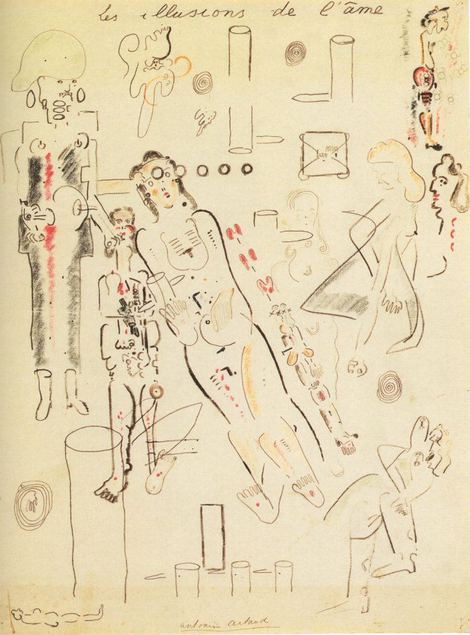
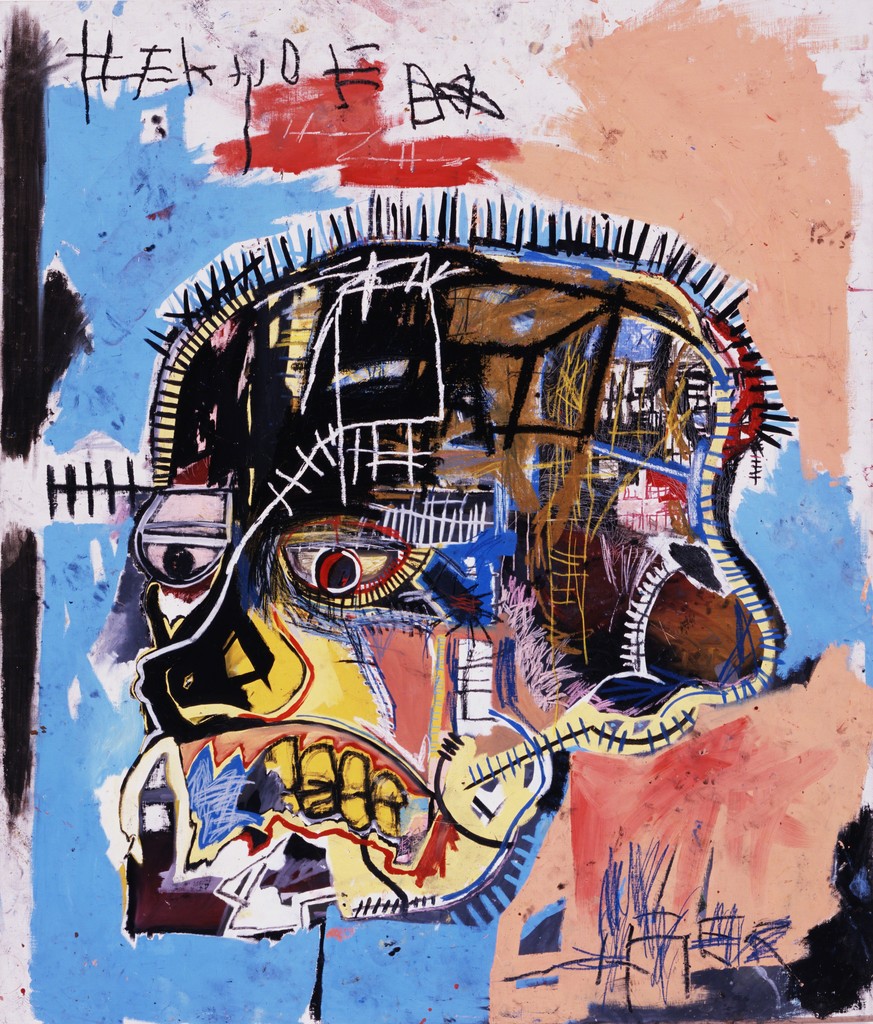
One of Derrida’s oft-deployed strategies of resistance was to introduce an element of slippage, or wordplay, puns, double-meanings, into his own texts, so that the text could never be reduced to a single canonical reading. He does the same here, with his punning on Artaud-momo (“idiot” as he referred to himself”) Artaud-MoMA, and on glyph/glyphe/hieroglyph/electroglyph. The words of the Derrida-text begin to echo the “glossolalic or glossopoetic rebirth of language” sought by Artaud. And we should not forget that in these ‘botched’ works, which Derrida tells us were intended to do no less than “change the eye with the drawing,” produced in the period described by Artaud as “ten years since language left,” that language-as-writing is essential to these works – that words are strewn across their surfaces, inseparable from image. ”And ever since a certain day in October 1939 I have never written without also drawing.” (In this of course, Artaud stands as a precursor to Twombly, and to Basquiat – for all three, word and image can only exist side by side, so that the works become, as Katharina Schmidt has described them, a ‘meta-script.’) In this museum devoted to the commodification of the image, Derrida insists we go back to the words carved, hacked, scrawled, on to the surfaces. To hear the questions Artaud asked: “And who today will say what?” “And what do you yourself say?” – to hear, within the works, “Artaud interrogating a ghost of himself.”
Antonin Artaud, Untitled (courtesy of ArtStack)
Derrida battles with the “agony of an art that nevertheless, at the instant of its death, will perhaps survive its own apocalypse.” He seeks to retrieve Artaud’s project of anti-art, to cry “woe to whoever might consider them as works of art, works of aesthetic simulation of reality.” More than that – he uses the museum as archive against itself, and refuses to have Artaud’s voices silenced, so that the images are all that remain. It is Derrida’s determination to restore “the event as event.” And thus he seeks to allow Artaud’s words to come back, to haunt, but also, the sound of Artaud’s voice – at the beginning and the end of the lecture, from a recording of “To Have Done With the Judgement of God.” The ranting, scatological Artaud, “starving, drunk with rage against America.” The intent is to have the drawings address the viewer again “as if they were conducting a trial.” Such that “never before, when finding myself faced with drawings or paintings…never have I heard so many voices, never have I felt myself called, yelled at, touched, provoked, torn apart by the incisive and lacerating acuteness of a broadside of interjections so justly addressed to their addressee.”
Antonin Artaud, Autoportrait (courtesy of ArtStack)
As to whether the strategies Derrida employs can succeed when Artaud is already entombed in the gallery space of MoMA – “especially MoMA in which Artaud the Momo would have right away identified the malevolent figure of the great expropriator”- we have to ask whether allowing the voice of Artuad-Momo to be heard can ever be enough, when Artaud himself declaims -against accusations of mysticism -that he has “always been body.” Can the body of Artaud-Momo – the anti-artist, the beaten, broken, electrocuted body (body of artist/body of work) stand in the way of “this great march of the symbolic market, from Paris to New York, from capital to capital, metropole to metropole?”
Antonin Artaud, Le Pendue (courtesy of ArtStack)
There is a further point to take up. In the book’s afterword, Kaira M Cabanas, associate professor of global modern and contemporary art history at the University of Florida notes that Jean Dubuffet presided over the Societe des Amis d’Antonin Artaud, and that he rejected Artaud’s work as Art Brut: “I find Antonin Artaud very cultured, not at all Art Brut.” There is much truth in this. Artaud’s rhetorical/scatological manoeuvres were pathologized as a way of neutering the content of his lacerating attacks on Church and State. But Cabanas seeks to take this as a prelude for a discussion about the purpose of outsider art more generally:
“Often the inclusion of outsider art is read as a progressive move within the modern and/or contemporary art institution, and in the early 2010s one witnesses how the art of ‘madness’, ‘outsider’ and ‘self-taught’ became the ‘new’ in the contemporary global circuit….this legitimation…occurs at the expense of what we might learn from the specificity of the work’s contemporaneity vis-a-vis the historicity of the psychiatric institution.”
Antonin Artaud, Les illusions de l’ame (courtesy of ArtStack)
This is, I think, specious. I write as someone who is more than happy to adopt and preserve the perspective of outsider as a vantage point from which to view the contemporary art world. Nevertheless, I think Cabanas’s argument is crassly reductive and presumes a) that ‘outsider’ art has no aesthetic merit beyond its ‘specificity’ as art produced within a particular institutional context, and b) that the works’ ‘original meanings and values’ i.e. their place as works produced within/symptomatic of said institutions is diminished if displayed outside such institutions, so that the critical content of the work can only have effect within the context of its own production.
It strikes me that the opposite is true – that the exhibition of works produced outside the cycle of art-world luxury commodity production, which contain the ‘auratic’ to which Walter Benjamin refers as an auratic ‘trace’ of an originary trauma, might more likely impact on their audience as the lightning-strikes Artaud aimed towards, if shown outside their institutional context. When we encounter, for instance, Luc Tuyman’s Gas Chamber painting, do we dismiss all save the aesthetic, or does the political not there intrude on and shadow the aesthetic?
Antonin Artaud, La Bouillabaisse de formes dans la tour de Babel (courtesy of ArtStack)
Artaud referred to “the innumerable necrophages that fill churches, police stations, army barracks, prisons, hospitals, university faculties.” We might note one of the many reasons for such complaint would be the determination of some academics to determine for themselves “who today will say what.”
By Nick Moss
For more information on Jacques Derrida: Artaud the Moma, please click here.
From 4th – 6th May 2018, Outside In is hosting the European Outsider Art Association (EOA) conference at Pallant House Gallery, Chichester. This year’s conference focuses on ‘the Artist’s Voice,’ celebrating the work of excluded and non-traditional artists and sharing best practice in the field through a series of presentations, key note speeches, and workshops delivered by artists and practitioners.
Bobby Baker’s Diary Drawings, Mental Illness and Me, 1997 – 2008, Day 579 Cathedral of the Mind. Image Andrew Whittuck, 2009
The keynote speech to open the conference will be delivered by multi-disciplinary British artist Bobby Baker, and panel discussions during the conference will focus on ‘supporting the artist’s voice’ and ‘exhibiting the artist’s voice.’ Presenters at the conference include the Living Museum (the Netherlands), Out By Art (Sweden), Venture Arts (UK), Joy of Sound (UK) and Look Kloser (UK). Panellists will include Garvald Artists (Scotland), Headway East London (UK), Arts Project Australia (Australia), Blue Circus (Finland), Creahm/MadMusee (Belgium), and Creative Minds (UK). In addition to all of this, there are dedicated slots for artist presentations that will be happening throughout the conference.
There will also be an opportunity to find out more about the work of Outside In through presentations from director Marc Steene, and by taking part in creative workshops and tours led by Outside In artists. The conference will run alongside a new exhibition of work by renowned outsider artist Scottie Wilson at Pallant House Gallery, which in turn will be accompanied by a special commissioned work by an Outside In artist in response to Wilson’s practice.
In the run up to the conference (2nd and 3rd May), you can join a VIP programme of activities that will include trips to Bethlem Museum of the Mind, ActionSpace, an opening of an Outside In exhibition at Long and Ryle Gallery, an outsider environment in Brighton, and a tour of a renowned collection of modern British and outsider art.
For more information and a full programme of events, please click here.
I can only apologise for the lack of posts in recent weeks – I hit the ground running at the start of 2018, and haven’t managed to stop just yet. However, I wanted to write a quick post for you as a couple of days ago, I was doing my usual crawl through the internet for the latest news on outsider art: upcoming exhibitions, auctions, in depth articles on individual artists, when I noticed the recurrence of a new word alluding to artists creating outside of the cultural mainstream. The word was ‘autodidact’, which literally means ‘a self-taught person.’
Interior (1944) by Horace Pippin (c) National Gallery of Art, Washington, DC
The first occurrence of the word appeared when I was reading an article on the new ‘Outliers and American Vanguard Art’ exhibition opening at the National Gallery of Art in Washington DC. The exhibition, the article notes, aims to “reconsider the ubiquitous but limited ‘Outsider’ designation as an umbrella term for autodidact artists.” Also interesting is the title of the exhibition itself – more specifically, the use of the term ‘Vanguard’ which means ‘a group of people leading the way in new developments or ideas.’ Both terms are new (to me, anyway), when it comes to describing the work of those traditionally known as outsider artists.
Aloïse Corbaz, image from “Brevario Grimani (circa 1943), 19 pages, bound, in a notebook, colored pencil and pencil on paper, 9 5/8 x 13 inches, collection abcd/Bruno Decharme (photo courtesy of Collection abcd)
The second occurrence of the term (that I came across within the space of about half an hour!) was in an Hyperallergic article about the American Folk Art Museum’s new show, ‘Vestiges and Verse: Notes from the Newfangled Epic.’ In this article, author Edward Gomez notes that the exhibition, “organized by Valerie Rousseau, AFAM’s curator of self-taught art and at brut… calls attention to the integration of text and image in works made by a diverse group of autodidacts.”
The most notable thing about the use of the term – following my reading of the articles and after a quick Google search – seems to be the predominantly positive slant the term gives to art work that is so often seen as ‘lesser’ or ‘not the norm.’ There is a whole Wikipedia page of celebrated famous autodidacts, including but not limited to authors Terry Pratchett and Ernest Hemingway, artists Frida Kahlo and Jean Michel Basquiat, and musicians David Bowie, Jimi Hendrix and Kurt Cobain.
I didn’t, however, see any renowned ‘outsider’ artists on the list. There still seems to be some sort of invisible barrier that separates these big stars of the arts and ‘outsider’ artists – despite there often being similarities in their backgrounds and circumstances. For example, although Basquiat’s background and style of work could undoubtedly be classed as ‘outsider’ (he ran away from home at 15, dropped out of school), he seems to have broken into the mainstream art world without too much trouble. In fact, he was the focus of a very popular exhibition at the Barbican that closed this month.
So, my question (as ever), is what creates this gulf between artists who gain fame and fortune through their work, and those whose legacies are confined to the barracks of ‘outsider’ art? What makes someone eligible to be included in Wikipedia’s ‘autodidact’ list? Do they have to be a certain kind of self-taught? I’d be interested to know your thoughts, so feel free to leave any comments below.
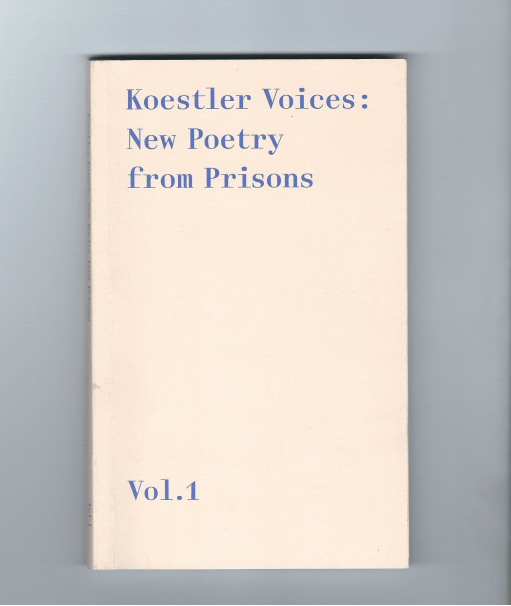
In this post, writer Nick Moss reviews the Koestler Trust’s latest poetry pamphlet, Koestler Voices: New Poetry from Prisons. The collection was published to coincide with the Koestler Trust’s latest national exhibition, ‘Inside,’ which appeared at the Southbank Centre until 15th November 2017. The Koestler Trust is an arts charity that supports prisoners, ex-prisoners and detainees to express themselves creatively.
“I should declare an interest at the start, insofar as I have 2 poems in the book. However, all the other works are new to me and I have no personal knowledge of any of the authors.
This volume was prompted by the reaction of exhibition visitors to the poetry curated by Benjamin Zephaniah in the 2016 Koestler Trust exhibition. The essence of the poems is captured by Benjamin Zephaniah in his introduction, where he comments that “These poems are absurd and strange, they are light and heavy, they are intense, intellectual and playful. They are honest.”
In a recent Guardian article on the Teach First and Unlock projects to introduce graduate prison officers (The Guardian 9 November 2017) one of the graduates interviewed reported his first time on a wing: “I’ve never come into contact with people like this before.” I think it’s important therefore to recognise how important it is to have these poems described by Zephaniah as “intellectual”. We, the ‘people like them’ who fill the jails, are capable of critical thought and reflection. If ‘intellectual’ simply connotes a level of prestige acquired through academic qualification then it has no essential meaning. If it applies to anyone engaged in a critical analysis (in this case of the institutions which contain us) then prisoners such as the writers here are more deserving of the label than the blinkered, knee jerk civil servants who draw up Ministry of Justice policies.
The book is divided into 4 sections – Inside, Outside, Portraits/Pictures, Letters/ Confessions – and this review can only attempt to give a snapshot of each section.
The poetry covering Inside moves from despairing to defiant. One writer focuses on the song of a nightingale he hears at Dartmoor Prison, another gives us a picture of ‘the weans runnin riot/ mair interested in sweets’ in the visiting hall. ‘Networked Gym-Fit Recidivist’ captures the ‘nonchalant callousness’ of ‘a prison officer bellowing’ and is scathing about the standards of prison healthcare and the point of it all, concluding, ‘It’s just a scam, the wrapper’s off.’ Many of the poems in Inside are about looking out; the view of outside from the cell window. Outside can be a strange place. I remember standing in the yard at Belmarsh looking at the block of flats in Plumstead I’d lived in 10 years ago. Outside is where time hasn’t ground to a halt. Outside is the ‘sweet remembered earth’ that Bob writes of in Lockdown. From outside Leslie tells us ‘sunshine shone/through the window casting/ a shadow of bars / unto his appeal papers.’
The Outside section opens with the brilliant ‘Killie Bus Tales’- written in Scottish dialect – ‘drinkin cans a Super n Frosty Jacks (ah wish ah hudnae sat as close tae the back.)’ There are several poems that experiment with Scottish dialect. They are written with a confidence and dry wit that suggests the authors have been enjoying Irvine Welsh and James Kelman along the way. We also get to see the impact of jail time on the families left behind. Graham’s heart-breaking ‘Empty Chair’ is a cool, carefree ode to summer madness, until we reach the end:
empty chair, warmth of sun
cold beer, the clink of ice in mum’s spiced rum
barbeque smoke mixing with skunk
tapping of feet to Fool’s Gold Funk
children laugh splashing without a care
daisies and bluebells in their hair
but no one mentions that empty chair.
Some of the poems are playful, like Jacinda’s ‘Animal School’, where ‘Wonger drank from the toilets/ And everyone was late,’ and Jonathan’s ‘I Built a Rocket Ship.’ Others have a real fury; ‘See Nothing, hear nothing, speak nothing’s’ tale of ‘smart uniforms and shiny boots/ dragged and kicked and took me away/where no one will hear and no one will see/ and now, I am nothing.’
Portraits and Pictures is perhaps the most powerful section, with the poets digging deep to capture aspects of their friends and families, building narratives of lives where people come and go, stand, fall, fail and stand up again. ‘The Piano Player,’ with ‘hooch fuelled/ male voices/full of angry/jobless depression,’ Guiltfoot Ron: ‘He’s got an angry knee/ and an eyeful of fear,’ Dys-Leg-Sarah who sees ‘Words squirming like wriggly squiggly worms on a page.’ These are wonderful poems, capturing the essence of vulnerable, raw lives in just a few lines.
Letters/ Confessions contains work which is heart-breaking, and work which is disturbing (in its proper sense of disrupting ordinary perception, shaking the reader’s view of things.) These are poems of loss, ‘Tortured/By Wondering how you are’; ‘…eager to forgive/ In the midst of our own little dust storm.’ Poems also of defiance: ‘You rained your fists on me/ endless thumps you hoped would break me/They are now my bricks.’ One of the strongest and strangest poems is Leon’s ‘Understand Me,’- ‘Understand me arresting the terrorisms of the night/over breakfast I’ll let them loose in the kitchen.’ Leon’s poem has the down-at -heel surrealism of Adrian Henri, but, most importantly, when it says ‘Understand Me,’ it does so on its own terms. ‘Understand me locking the door at midnight/throwing the key away. Later I will climb in/through a window.’ This poem could stand for the book as a whole; prisoners saying ‘Understand me – but understand me as I am, not as some caricature of a prisoner you have as an idee fixe.’
Koestler Voices shows prisoners thinking hard about who they are and where they are. As prisoners and ex-prisoners, we have no choice but to do so. Perhaps this volume will stand as proof that we might also be worth listening to.
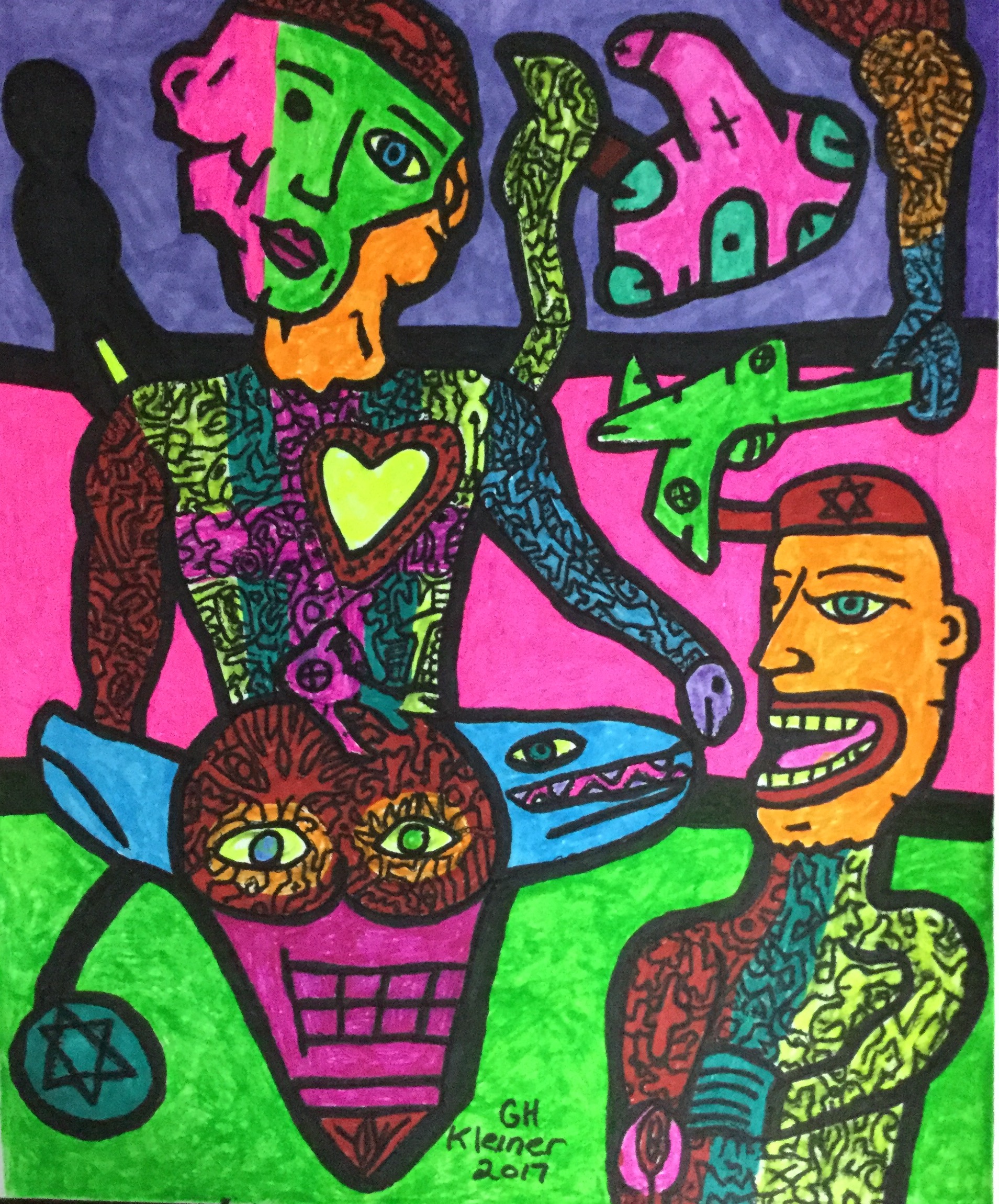
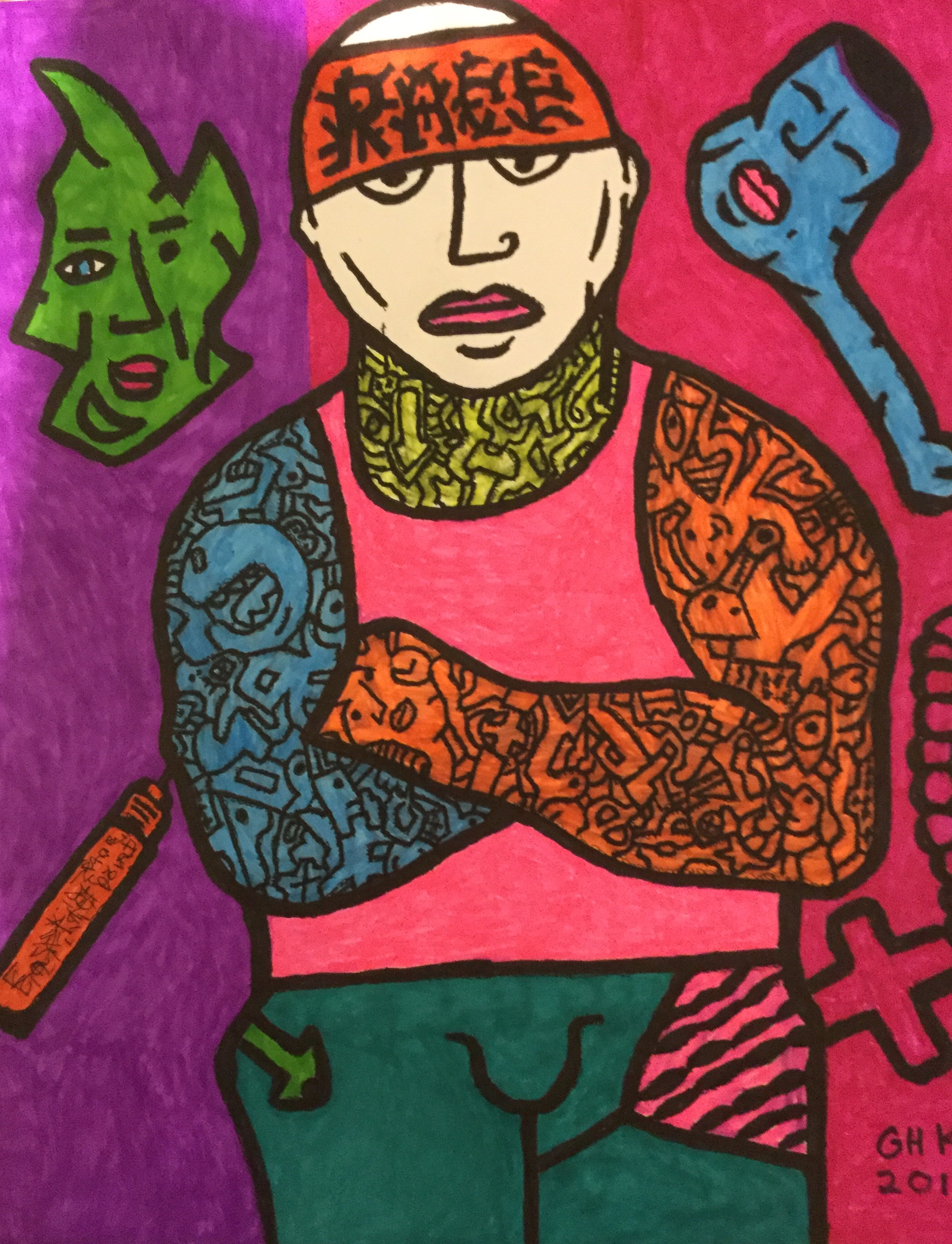
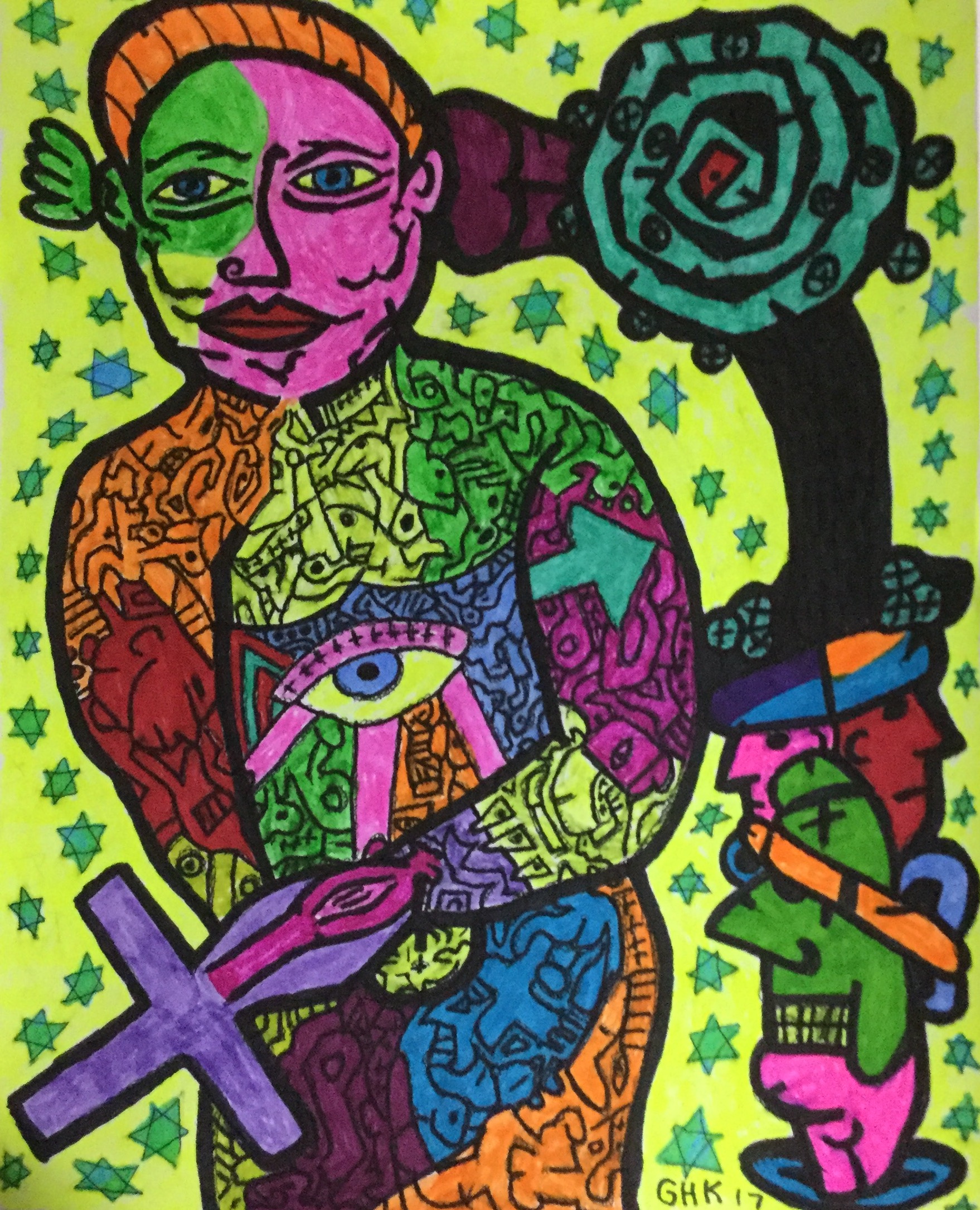
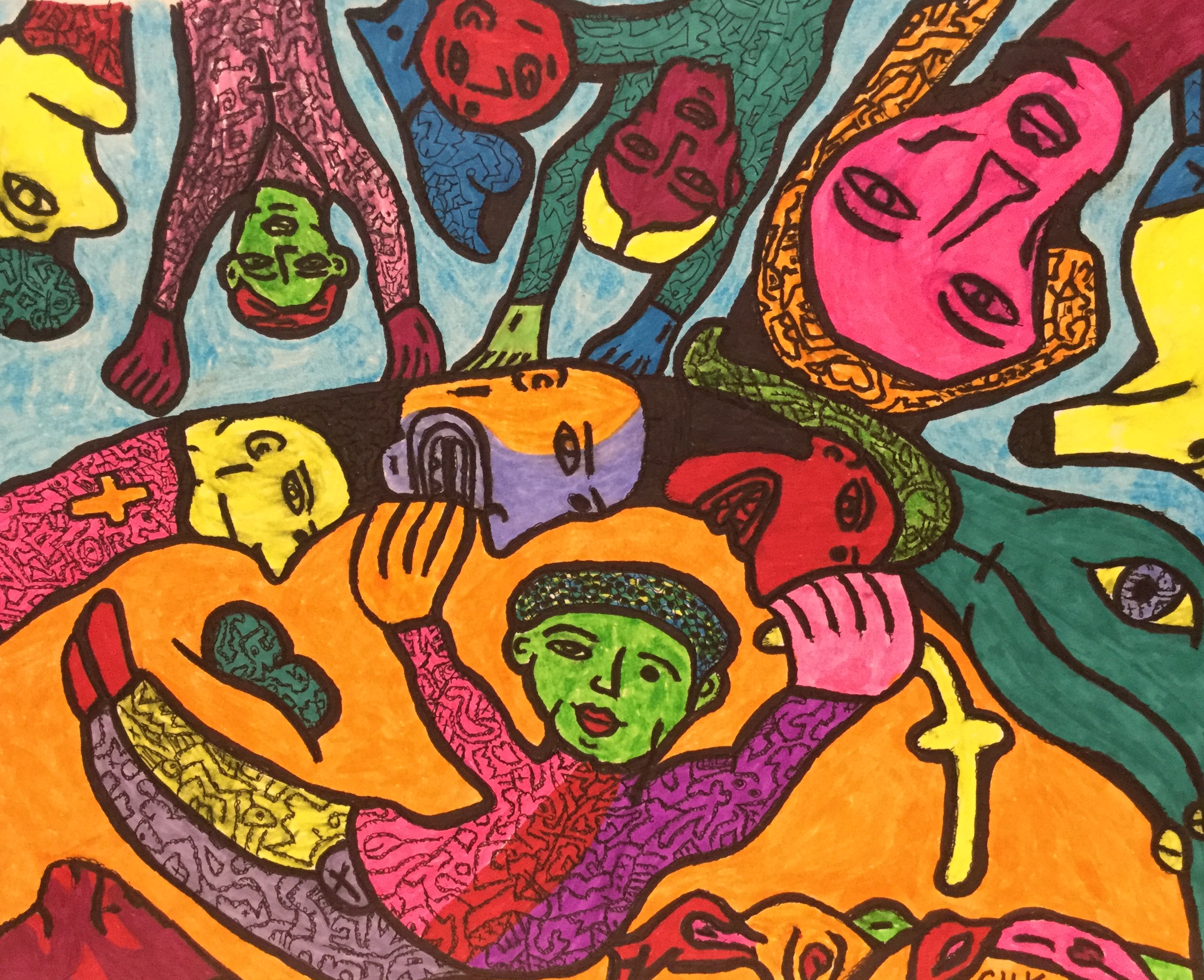
This artist showcase comes from Gary Kleiner. Hugely influenced by his artist mother, Gary’s uses his own pain to create uniquely expressive work. Read on for more about Gary’s work and his life as an artist. If you’d like to get in touch about an artist showcase, please email kdoutsiderart@yahoo.com.
Got to go, nice eyes
When did your interest in art/creating begin?
It began in childhood because my mom is an artist – she is 79 years’ old. In elementary school I realized I was proud of art work I did. I grew up following mom to the galleries in New York – her saying of the minimalist artists that my art was better! I helped set up her art studios in New York. I followed her comic strips and kid books. Van Gogh is my favourite – the story makes the artist. I also like Keith Harring, Basquiat, Bacon, Picasso, Dali, Kahlo etc.
A graffiti study
What is your starting point for each piece?
Very interesting question. First I’m empathic and highly intuitive. Originally I just drew for enjoyment. I created a method of drawing in a mental hospital. It consists of listening to emotional music, closing my eyes with paper in front of me. I take my pencil, I think about what I want to draw – I feel the presence of the paper and go. I draw about 20 different lines and open my eyes. If I need more lines I close my eyes again. Now I open them. I have developed this ability to see pictures in my random lines which is one of my techniques. I do this in Starbucks in the States – they must think I’m crazy.
I ask myself what I see on the paper with lines and connect the lines to form faces and things while thinking of my idea. My pencil drawing is now done, hopefully touching upon my unconscious. It doesn’t always capture my exact idea, but maybe I captured another thing that was bothering me.
My ideal world
Who/what influences your work?
My life, pain, my fathers death four years ago, my divorce four years ago, unemployment, mental illness diagnosis, other artists. My mother taught me to think of vomit when doing my work. It means more than thinking outside of the box; I make the box. I have taught myself to intentionally use pain and other difficult emotions to make my art good. It’s interesting that all my pain has led me to something I love. I think this is my calling.
What do you hope the viewer gets from your work?
I hope the viewer gets an understanding of what my work is about. This is funny, I was going to hang this pic for a show and mom sees it. She says you’re not going to hang this? She said it looks like it was done by a psychopath. I hung it anyway knowing it is a good piece. I will adjust my works, but I’m not painting fluffy bunnies. I would like the viewer to see the pain and sadness in the artist.
Get your ass off me
What do you think about the term outsider art? Is there a term you think works better?
I don’t mind the title. You really do feel like an outsider approaching a gallery with your work. I’m trying to get inside the art world by asking the mainstream galleries questions like ‘You didn’t like my work because?’ ‘Can you tell me exactly what you are looking for?’ I spoke to this secretary, she seemed taken aback: ‘Um um, I don’t know we just have to like it,’ and hung up. I’m trying to bring legitimacy to outsider art. Outsider art should just be called art.
A self artistic study in keeping boundaries
What are you working on at the moment?
I’m currently working on a drawing of a bald man (me) covered with tattoos holding a gun – with my ex’s face on the gun. The fun is pointing at a balloon shaped like a heart with a cross in the middle. Tattoos represent all my thoughts, the gun represents my wife’s desire to keep my kids from loving me. I’m also working on another picture of me covered in tattoos with my kids physically attached to me. This is my desire – to have my kids close to me. I replay people and themes in different ways attempting to compose a nice picture. Lately I have been focusing on the importance of composition.
Where do you see your way taking you in the future?
I would like my art to continue to be seen in galleries around the world. I want to teach others the use of creativity to help them with their problems.
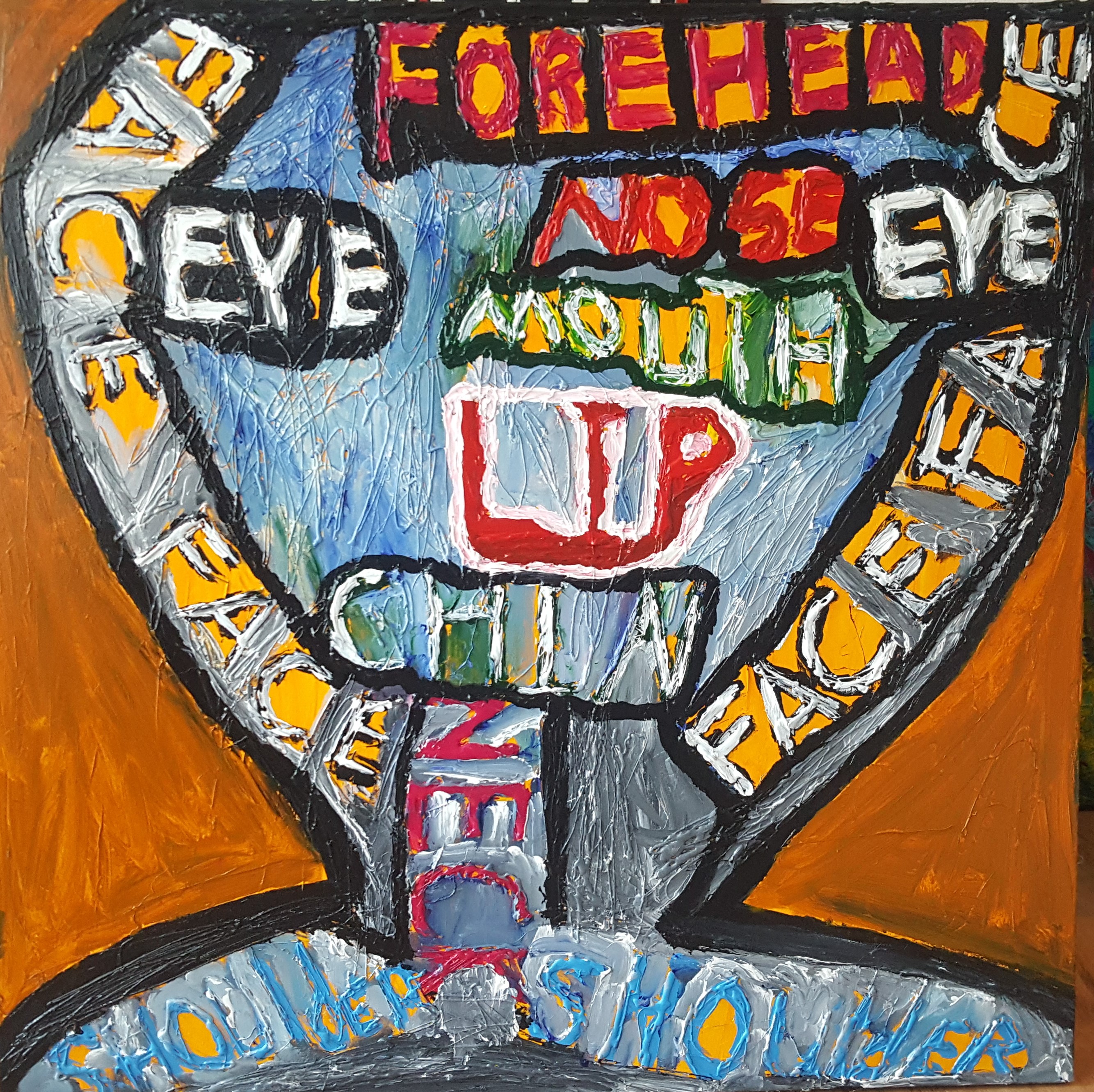
This artist showcase introduces the work of Darrell Black. Black was originally inspired by space and science, but his creative journey has taken him on a path of simplification and ‘stripping back.’ Keep reading for a Q&A with Black about his work and his life as an artist, as well as a selection of images of his work.
The Promised Land
When did your interest in art/crating begin?
My interest in Art began early in childhood, growing up my parents had a miniature sculpture of artist Rodin’s ‘The Thinker’ and abstract paintings by various artists on the wall. At the time I never took any real interest in it, but what I loved was space and anything to do with science. I created as a child, spacecraft including futuristic worlds and cities using any and all household items I could find: utensils, clothes pins and tools. Anything I could find to feed my fantasy this was my first introduction into art without realizing it but my main focus was always science.
Moonlit Metropolis
What is your starting point for each piece?
When I decide to start on a work of art my mind is clear, free of all worry and thought. I start on a canvas from every direction and within the throes of creation, I am a mere spectator. My advice: let your hands do what they do in the creating process, you the artist are only a spectator. The job of the artist is to clean up the mess left behind by creation, fine tuning the image by adding color, defining lines that make up the painting; fixing things up.
The Sacrifice
Who or what influences your work?
The influence on my artwork comes from traditional and non traditional sources. I take inspiration from everyone and everything incorporating the person or object’s mental or physical state in my creations. For example, learning about the personality of Picasso, researching all the tragedy and agony he caused to friends and family; the personal problems of artists like Rothko, Pollock and Basquiat; the struggles of Winston Churchill to defeat the Nazis and win the war against tyranny; the scientists of the Manhattan project beginning from scratch to create the atom bomb; Dr. Frankenstein’s determination to create a monster – all of this struggle, hardship and commitment to succeed against all odds gives me the incentive as an artist to create new and innovative work.
A Really Bad Trip
What do you hope the viewer gets from your work?
The hope is to confront the viewer with a question, and for each person to come up with the same or a different answer. That for me as the artist is very interesting, since there is no right or wrong answer, just a different perspective or another way of seeing the world.
Formulation of Human
What do you think of the term outsider art? Is there a term you think works better?
Personally speaking I think the term ‘Outsider Art’ is a bit outdated and in some way self-defeating. I think the word creates a secondary class of artists whose creativity is seen by others in the art world as being more infantile than substantive, denying many worthy self-taught artists their rightful place in the pantheon of art along side well-known and established artists. I think the term self-taught artists or creatives works best.
The Path to Sanctity
What are you working on at the moment?
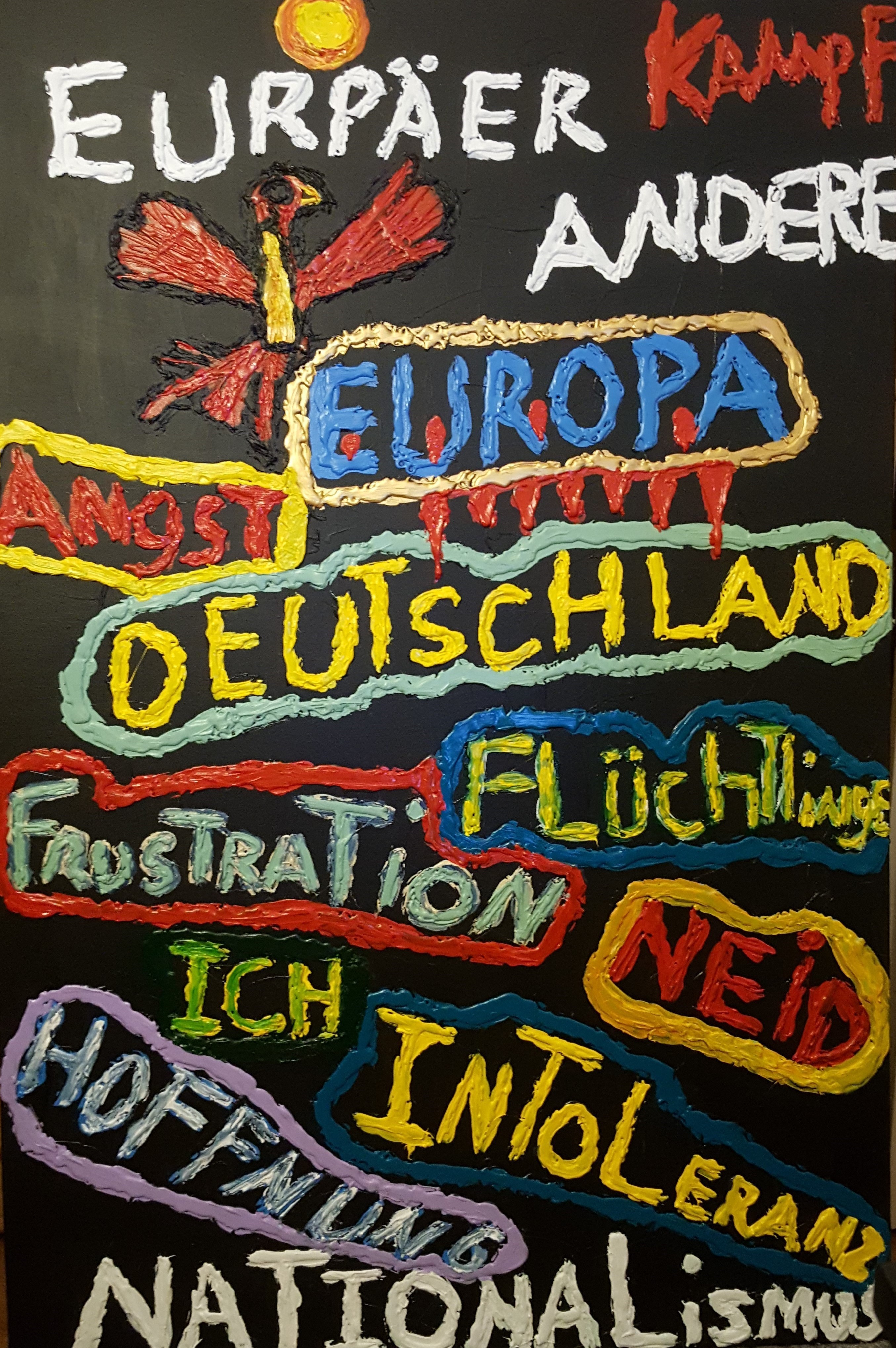
I’m presently working on large canvases in a multitude of languages. They express the problems and hopes of many people in certain parts of the world using mere color and writing in an attempt to show our basic similarities, helping to create mutual respect between cultures, and merging all spoken word into one universal language of understanding and acceptance for everyone.
The State of Europe
Where do you see your work taking you in the future?
My artwork has always been a journey of self-discovery. My images began with simple patterns and colors, resulting in more complex and recognizable objects and figures, but after learning so much about many artists and their approach to art, I realized that stripping away from a work of art – simplifying creation to its vary basic elements – might be the key to great works of art.
In this post, writer Nick Moss considers the benefits of having a ‘code of practice’ for galleries and museums when working with outsider artists – much like there is a code of practice for those working with Aboriginal artists.
“It is perhaps to do a disservice to both art forms to make too much of comparisons between Aboriginal art and art produced by self-trained artists and artists in institutions. However, it is true of both that ab initio they were not produced for the commercial art market, and were produced by artists who had no experience of the snares and ruses of that market or the peculiarity and irrationality of its attributions of value.
Aboriginal art is rooted in the telling of the ‘Dreamtime’ stories – the symbolic telling of the creation of the world. The ‘Dreamtime’ stories are reckoned to be over 50,000 years old, and have been handed down through generations over time. They are expressed in the complex symbolic language of the Aboriginal peoples and captured in a traditional iconography which combines with stories, dance and song to pass on ‘Dreamings’ and so preserve the rites and maintain the development of Aboriginal culture in the face of settler opposition and state violence. However beautiful the works may be, their visual language is intended to serve a communicative and history-embodying rather than primarily aesthetic purpose. The works that now are produced on canvas, were, until the development of a commercial market for them, more usually produced by painting on leaves, wood carving, rock carving, sculpting, ceremonial clothing and sand painting.
In this sense then, the comparison with ‘outsider art’ can be made – outsider art often expresses private mythologies which are communicated through complex, self-produced symbolic languages, and can be set down in a variety of media, often determined by the extent to which the artist has access to particular materials at hand.
Aboriginal art serves a primarily communal function. Its attraction for, and appearance within, the commercial art market is a secondary feature of the fact of its production. This is both its strength and its weakness. Again, the comparison to outsider art can be made.
As the artist Wenten Rubuntia put it in The Weekend Australian Magazine, April 2002
‘Doesn’t matter what sort of painting we do in this country, it still belongs to the people, all the people. This is worship, work, culture. It’s all Dreaming.’
As commercial art dealers and galleries made inroads into Aboriginal communities in the 1970s, they began to take advantage of the artists who had no experience of the commercial art world, its contractual or valuation norms, and in any event were not making art for the business of art – some artists recognised the need for self organisation.
As an example, artists at Papunya and Alice Springs observed first hand the development of the private art market and the exploitation of their friends and thus formed the Warlukurlangu arts centre. The name ‘Warlukurlangu’ derives from an important Jukurrpa (Dreaming) and means ‘belonging to fire.’ The name was chosen by a number of older men and women who saw the need for an art centre and endeavoured to form an organisation that represented their interests as artists but also recognised and determined to defend the importance of the cultural laws which are embodied in the stories depicted in paint. The establishment of Warlukurlangu was one way of ensuring the artists had some control over the purchase and distribution of their paintings.
As the market for Aboriginal art increased both with regard to the volume of works coming to market and the venality of that market, the Australian Senate initiated an inquiry into issues in the sector. It heard from the Northern Territory Art Minister, Marion Scrymgour, that Aboriginal artists were often tricked by backpackers into selling their art on the cheap, and that backpackers were often the creators of purportedly Aboriginal art being sold in tourist shops around Australia:
‘The material they call Aboriginal art is almost exclusively the work of fakers, forgers and fraudsters. Their work hides behind false descriptions and dubious designs. The overwhelming majority of the ones you see in shops throughout the country, not to mention Darling, are fakes, pure and simple. There is some anecdotal evidence here in Darwin at least, they have been painted by backpackers working on industrial scale wood production.’
The inquiry’s final report (Standing Committee on Environment, Communications, Information Technology and the Arts: Indigenous Art – Securing the Future of Australia’s Indigenous Visual Arts and Craft Sector) made recommendations for changed funding and governance of the sector, including a code of practice. The report itself is a classic fudge, a refusal to fully address the ethical and legal issues arising from the commercialisation of Aboriginal art. Thus:
‘There is no doubt that there have been unethical, and at times illegal, practices engaged in within the field of Indigenous arts and craft. There are probably still instances of these problems, and there may be people seeking to take advantage of issues within the sector by ripping off artists or art centres.’
Nevertheless:
‘In spite of all this, the committee urges everyone in the sector to recognise each other’s sense of commitment, and reap the benefits of co-operation, rather than sow seeds of rancour and division.’
The Committee refused to take a stance explicitly in support of the formal regulation of the art market in relation to its exploitation of Aboriginal art. In effect, it concluded that even bad business was good business, in that it allowed Aboriginal artists to benefit from the untrammelled joys of free market capitalism.
‘Much of what was claimed about business practices appeared to be based on hearsay, and there was little tolerance of the diversity of people and legitimate ways of doing business which might all contribute to the benefit of Indigenous creativity, Indigenous art and Indigenous prosperity.’
The ultimate outcome – self-regulation via a Code of Practice was far from ideal, but the Code of Practice itself makes for useful reading. In particular, the section on Dealing with Artists, which is produced below in full:
Dealer Members must use their best endeavours to ensure that every dealing with an Artist in relation to Artwork involves the informed consent of the Artist. The following clauses will assist Dealer Members to ensure they have the informed consent of Artists.
3.1 Provide a Clear Explanation of the Agreement: Before making an Agreement with an Artist in relation to Artwork, a Dealer Member must clearly explain to the Artist the key terms of the proposed Agreement, so that the Artist understands the Agreement (for example, using a translator if required). The explanation should be given by the Dealer Member to the Artist either directly, or through an Artist’s Representative, in the manner requested by the Artist or Artist’s Representative. If there is any doubt about whether the Artist fully understands the explanation, the Dealer Member must also give the Artist the opportunity to ask a third party for assistance to help the Artist to understand, and negotiate changes to, the proposed Agreement.
3.2 Agreements with Artists: An Agreement between a Dealer Member and an Artist in relation to Artwork (whether written or verbal) must cover the following key terms: (a) a description of the relevant Artwork(s), including the quantity and nature of the Artwork(s); (b) any limitation on the Artist’s freedom to deal with other Dealers or representatives; (c) whether the Dealer Member is acting as an Agent or in some other capacity; (d) the cooling-off rights (which must be in accordance with clause 3.3) and how the Agreement can otherwise be changed or terminated; (e) costs and payment terms for the Artwork (which must be in accordance with clause 3.4); (f) details about any exhibition in which the Artwork is to appear, and any associated promotional activities; and (g) any other information determined by the Directors and notified to signatories to the Code from time to time.
3.3 Artist’s Cooling-off Rights (a) An Artist or Artist’s Representative may terminate an Agreement within: (i) 7 days after entering into the Agreement; or (ii) such longer period as is agreed between the parties. (b) A Dealer must not require the Artist to pay any fees, charges, penalties, compensation or other costs as a result of the Artist exercising cooling-off rights under this clause 3.3.
3.4 Payment for Artists: An Agreement must also cover the following in relation to each Artwork: (a) the amount of the payment and the means by which the payment will be made; (b) the date by which payment to the Artist will be made which (unless otherwise agreed) must be: (i) where the Dealer Member is acting as an Agent, no later than 30 days after receiving funds for the Artwork; and (ii) where the Dealer Member buys Artwork directly from the Artist, no later than 30 days after the Dealer Member takes possession of the Artwork; (c) if the Dealer Member is acting as an Agent, the amount of the Dealer Member’s commission; (d) any factors known to the Dealer Member that could affect the payment terms; and (e) the cost of any goods and services (e.g. canvas, paint, paintbrushes, framing, etc) to be deducted from the payment to the Artist (if any).
4.1 Record Keeping by Dealer Members (a) A Dealer Member must keep records of all dealings with Artists, providing clear evidence of the key terms, and performance of those key terms, of any Agreement between the Dealer Member and Artist (the Records). (b) If the Dealer Member is an Agent, the Dealer Member’s Records should also include: (i) details of Artwork held by the Dealer Member for sale; (ii) the dates of sale of Artwork by the Dealer Member; and (iii) the type and quantity of Artwork sold by the Dealer Member and: (A) the price received by the Dealer Member for the Artwork sold; and (B) details of the payment to the Artist (including the amount, date and method of payment) and details of each amount deducted by the Dealer Member from the sale price of the Artwork (for example, the Dealer Member’s commission on the sale). (c) If the Dealer Member purchases Artwork and subsequently on-sells the Artwork, the Dealer Member’s Records should also record the price the Dealer Member was paid for the sale of that Artwork.
4.2 Request for Dealer Member’s Records: A Dealer Member must provide a copy of the Dealer Member’s Records that relate to an Artist or Artwork to the Artist within 7 days of a request by the Artist (either directly or through an Artist’s Representative), provided that the Dealer Member is not obliged to make the same Records available to an Artist more than once every 30 days. The Dealer Member must provide a copy of the Dealer Member’s Records to the Company, in response to a request in writing by the Company.
The purpose of this article is to put forward a (relatively) simple proposition. If we can accept that there is a similarity in form and content between Aboriginal art and outsider art (both use complex symbolic forms and mythologies to tell stories through works which are not primarily produced for the art market, and both are produced by artists who (because of their socio-economic situation/confinement/lack of knowledge of commercial practice) are vulnerable to exploitation by the commercial art market, then we ought equally to be able to accept that there is a need for the adoption of a similar Code of Practice to protect the interests of outsider artists. The proposition therefore is this; all gallerists and dealers in outsider art should voluntarily adopt and display the excerpt from the Code of Practice above, as a statement of a commitment to dealing ethically with outsider artists, and all art workers, art therapists, agents and educators should make sure the artists with who they work are made aware of the relevant sections of the Code and educated in its rights, its implications and benefits for them.”
‘Innocence is a splendid thing, only it has the misfortune not to keep very well and to be easily misled.’
― Immanuel Kant, Groundwork of the Metaphysics of Morals
By Nick Moss
**All images have been sourced from image-sharing websites
This artist showcase brings you the work of Susan Spangenberg. Susan produces work for the process of expression, not the final result, and the act of creating can be painful, but it’s also healing at the same time. The interview with Susan is a moving testament to how powerful creativity can be for some people, and how being an artist – and making art -can be equally a cure and a curse.
Hung
When did your interest in art/creating begin?
I started creating from my earliest memory, the age of three. I didn’t speak or look people in the eye for much of my life. (I lived in fear, coming from an abusive household and then being further traumatized in the mental health system). Art was my voice and form of expressing myself and still is today.
Spirits of the Fire
What is your starting point for each piece?
The starting point of my art work is a thought, a phrase, a joke, an emotion, a fear, an anxiety, an issue I’m trying to overcome personally, the news of the day. Some pieces are done more impulsively than others, like my suicidal, emotional, self-referential work. Other work I am more conscious of creating and aware of, such as my social/political art which tends to be more graphic and takes more time and thought to execute. I’ve learned to embrace the fear, excitement and process of creating. It took me a long time to embrace this desire instead of suppressing it. I now realize the process of creating – the fear of the unknown, letting go and trying new things is my freedom and how I grow and surprise myself. I admit I work quickly and getting it out is what is important, not how beautiful or technically proficient it is. Technique is not my strength. It’s torture when I do not act on my impulses. Even when I try not to create, eventually I must give in, so I can relax and stay sane.
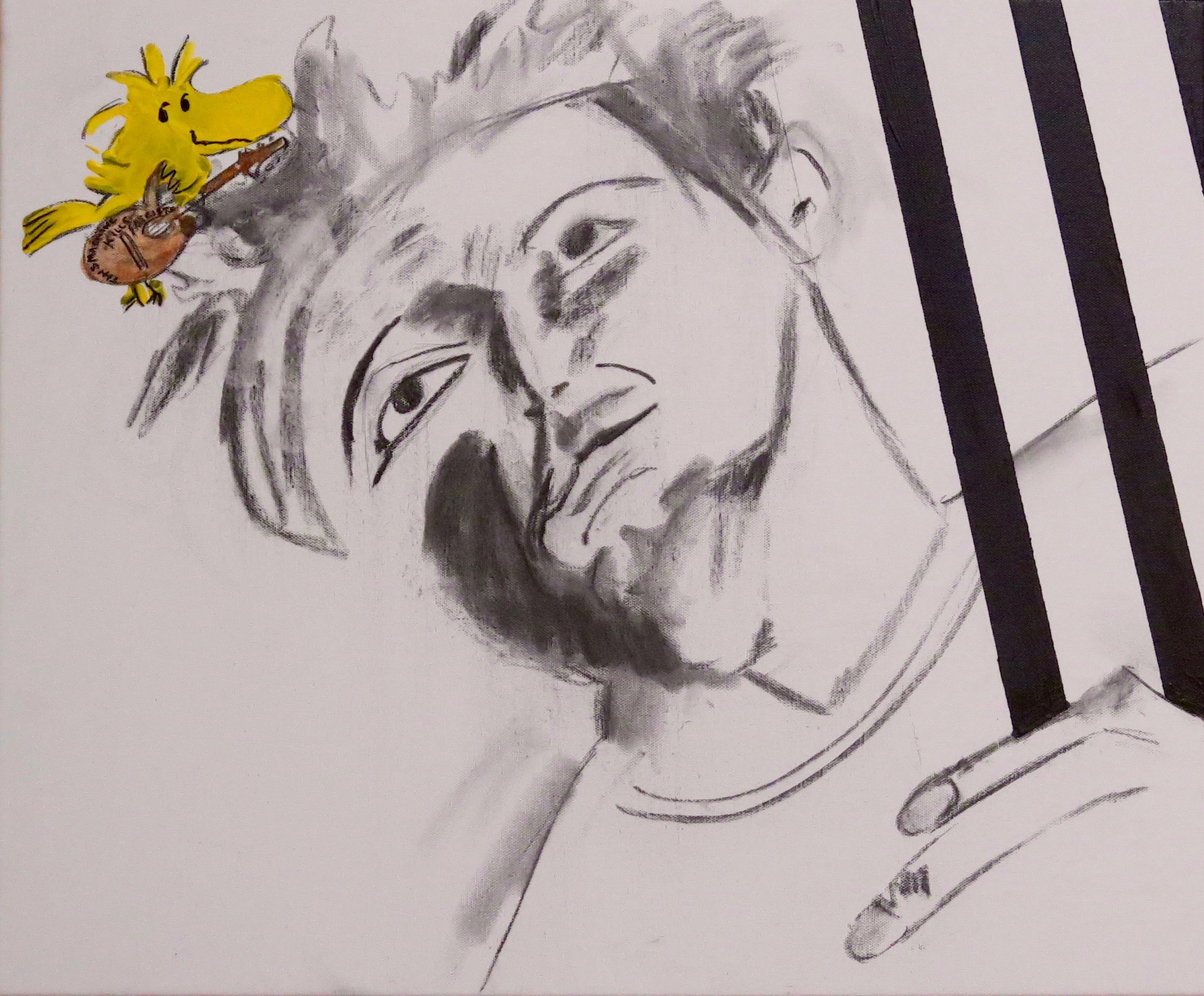
Woody Saves Woody from Creedmoor
Who/what influences your work?
I’ve been influenced by artists overall. However, for the most part they’ve been actors, writers and musicians. Marlon Brando, Rod Steiger, Steve McQueen, Emily Dickinson, Tennessee Williams, John Lennon, Iggy Pop, Johnny Cash, my late great acting teacher, Sanford Morris. (When I was growing up, my dream was to be an actor, not a visual artist).
Mad Women
What do you hope the viewer gets from your work?
I try not to worry what the viewer sees. I have no control over that. The work takes on a life of its own and the viewer I hope has some connection with it. Holding someone’s attention is the most difficult part and quite humbling. If someone bothers to look at my work in this age of information and over-stimulation, I am pleased.
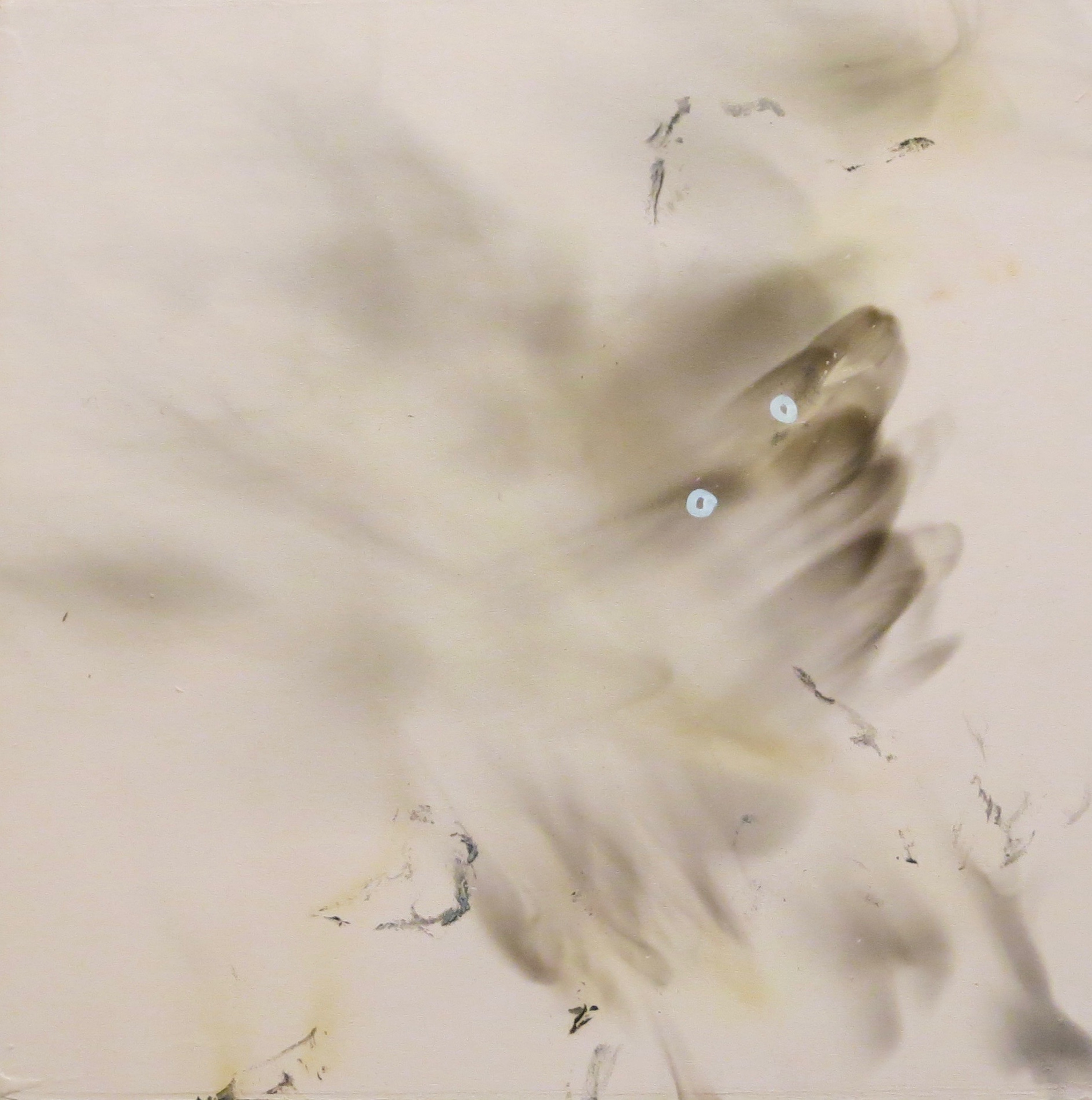
Surfacing
What do you think about the term outsider art? Is there a term that you think works better?
I’ve heard many different definitions over the years for the term ‘outsider art’. Let’s break the word outsider down to the simplest form and I’ll keep this definition without changing it or suggesting anything better or different (I’m not one for labels). Ultimately all artists feel like “outsiders” by definition, in that I believe none of us feel like we fit into society. And non-artists also feel like they don’t fit into society. Isn’t this why we all love art? This tug of war within ourselves individually, that we do not feel we fit into society and yet we all try to fit in because we must live in some form of society is what makes us all outsiders and outsider artists.
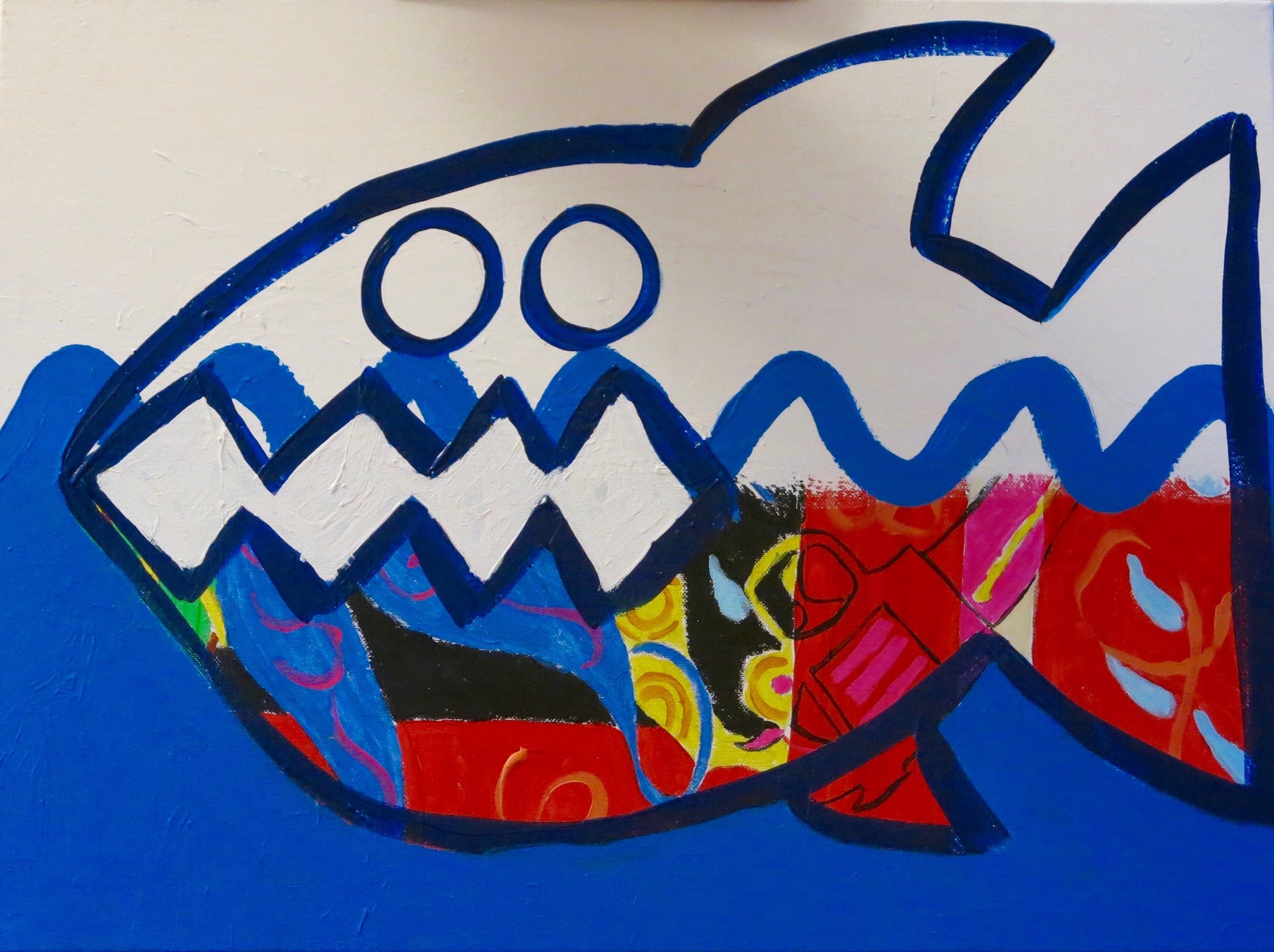
Higher Species?
What are you working on at the moment?
I am currently writing my memoir and I hope to publish it.
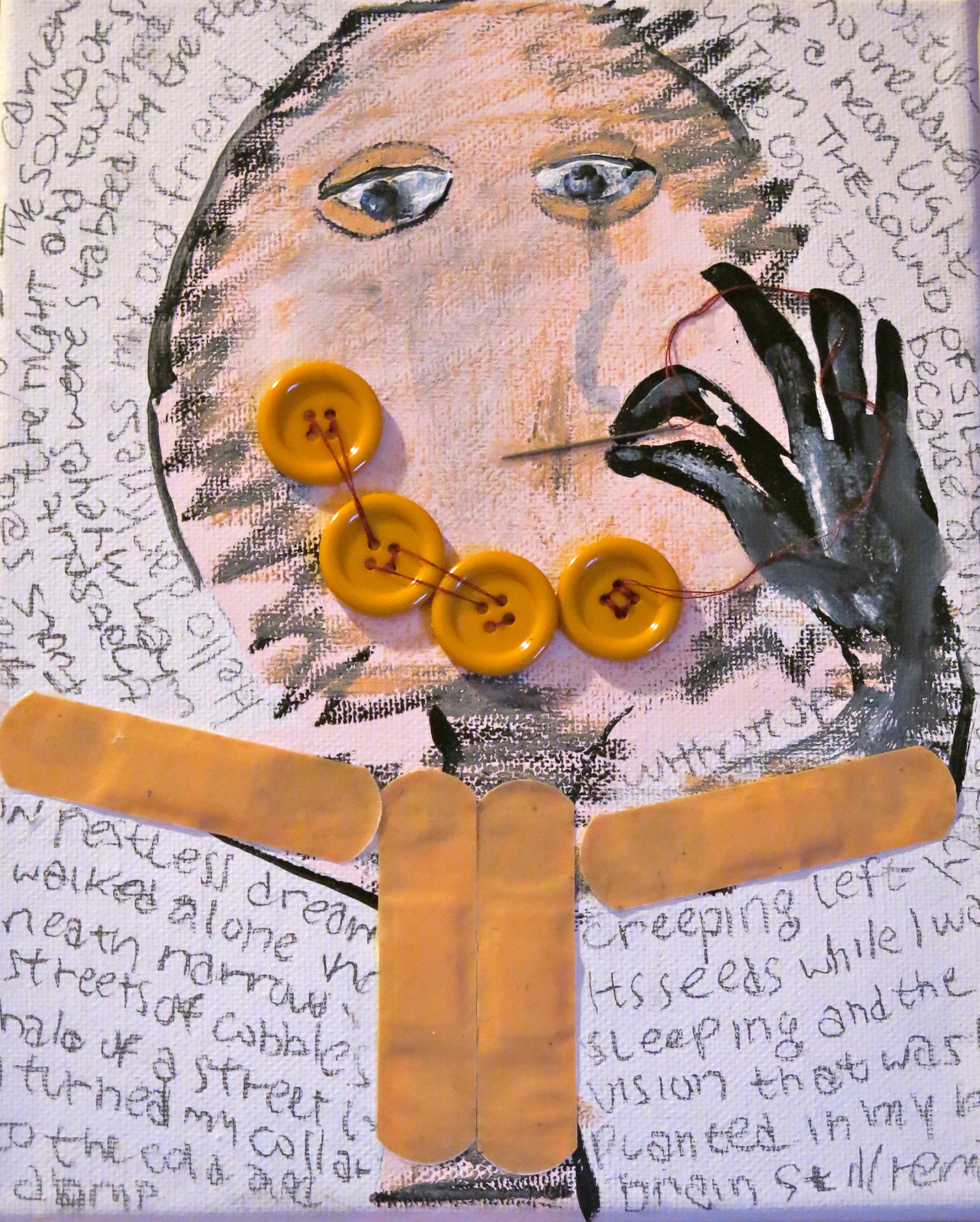
The Sound of Silence
Where do you see your work taking you in the future?
I don’t know where I see my art taking me in the future. What I would like is for my art to mean something and to leave the world in a better place somehow. Art is work and physically and mentally draining. I wish I didn’t need to create. It is a curse in one sense and also a life saving outlet. I hope one day I don’t feel the need to be an artist or even call myself one. Being comfortable with myself, alone with myself and being in my own skin is very difficult for me. Perhaps if I felt good about myself, I wouldn’t feel the need to be an artist. I do know that art will continue to allow me to heal myself and also connect with others. Connecting with other people is also a difficult thing for me. Perhaps one day I will paint all the pretty boring things in the world, and that wouldn’t be such a bad thing, because it might mean that I’m over all the pain in my life.




















 KDOA
KDOA 