When I came across ARTHOUSE Meath a couple of months ago, I thought that it was an incredible idea, and so when the opportunity arose to do a post on them, I jumped at the chance. ARTHOUSE Meath is an innovative social enterprise creating artworks and products for sale at exhibition, trade and retail. The works produced and sold are created by people over 19 living with severe epilepsy and learning difficulties.
The ARTHOUSE’s main aim is to show what can be achieved – they have been the trade stationary supplier for Mary Portas concessions stores in House of Fraser – and 100% of sales revenue goes into the project for ongoing development, with any profit going to the Meath Epilepsy Charity.
Below are two short case studies on two of the artists working at ARTHOUSE Meath; Marjorie Doherty and Peter Andrews.
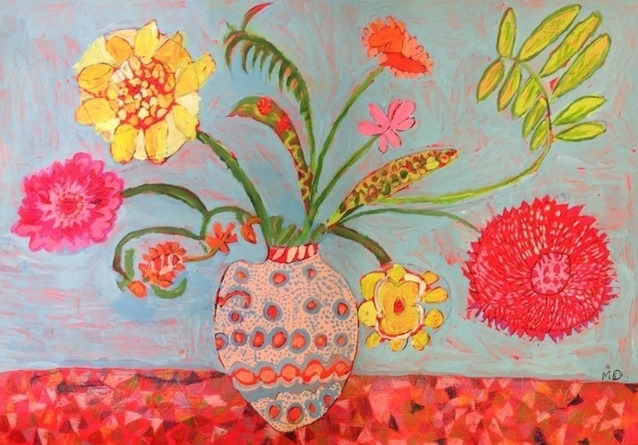
Marjorie Doherty
Marjorie first came to the Meath Epilepsy Trust in October 2005 when ARTHOUSE Meath had just been set up. Although Marjorie had never done much art before, she seemed to really relish the fact that she was doing something with purpose. An incredibly hard worker, Marjorie visits the ARTHOUSE for two full days a week, where she creates stunning pieces of work proving that she has great artistic skills and is extremely dexterous.
“Art is my favourite thing to do. I do birds, drawing birds and painting things.” – Marjorie Doherty
Marjorie Doherty, ‘Best Dad’Marjorie Doherty, ‘Spirit of Summer’
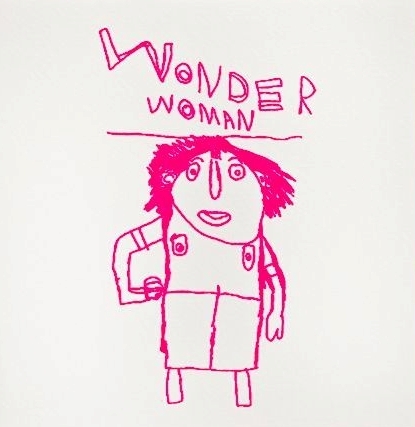
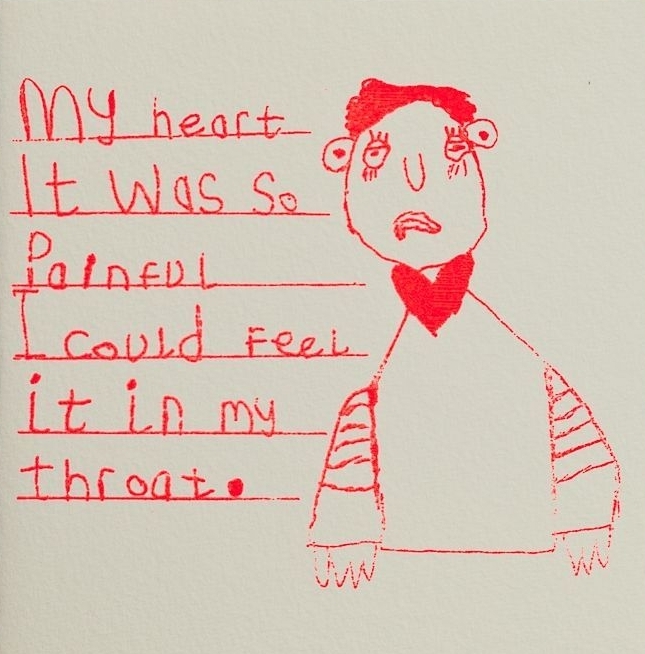
Peter Andrews
Peter visits the ARTHOUSE Meath studio nearly everyday, meaning he has become one of the organisation’s most prolific artists. He also works front of house, greeting customers in the shop and selling products. Recently, Peter sold his own work to a customer in the shop; an interaction that embodies everything that ARTHOUSE Meath strives to achieve.
“I love painting because it calms me down. I love to paint ladies because of the feelings inside when I achieve nice paintings.” – Peter Andrews
Peter Andrews, ‘Wonder Woman’Peter Andrews, ‘Heart in Throat’
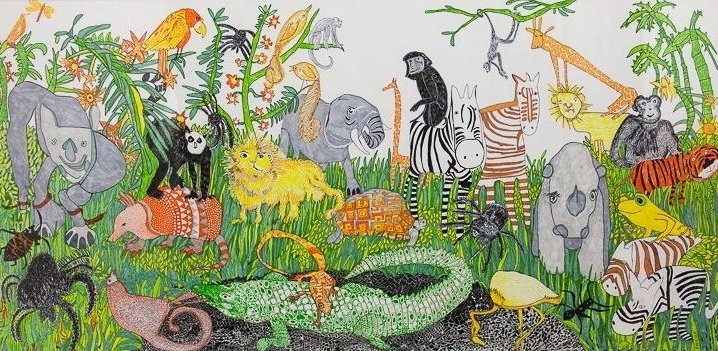
The piece below is a collaboration between 8+ ARTHOUSE Meath artists who, depending on levels of dexterity and ability, would have all worked on different aspects of it. Marjorie and Pete both worked on it.
ARTHOUSE Meath, ‘Jungle Fever’
For more information on ARTHOUSE Meath, please visit their website:
In Outsider Art under Analysis: Part One (Speakers), I wrote about the talk I attended at the Wellcome Collection on 15 June 2013. In this post, I will answer some of the questions raised during the discussion (no research, just my own thoughts). It would be great to hear everyone else’s answers too, so feel free to add a comment below the post.
1) Can ‘outsider artists’ talk about their work meaningfully and coherently?
This is a difficult one, as I know a lot of people like accompanying interpretative material to aid them when they view an artwork. However, I think that art is really another form of communication, and so the idea that some artists – for example those without speech or writing – can’t actually talk about their work seems quite unimportant. This is more of a question that encompasses the whole of art history and not just ‘outsider art’; do we need accompanying material, or is the work alone enough? I think a lot of artists who are aligned with/align themselves with the notion of ‘outsider art’ (and actually, artists more generally) do use creativity as a way of communicating their ideas, so for this reason, does it matter that some may not be able to ‘talk’ about their work?
2) Why do we feel we have to label people? Why can’t outsider artists just be called artists?
This is obviously an on-going debate with regards to the label ‘outsider art,’ which I have spoken about in a previous blog post. I, for one, would love for all art to be considered as just ‘art’ and all artists to be considered as just ‘artists.’ But I think it’s a bit more complicated than that. In the present day, I actually think that the term ‘outsider art’ is verging on redundant. In ten, maybe twenty years’ time, I don’t think we will use it. But, if having had a label at some point has helped raised awareness and can actually bring this art into the mainstream, then it can only be a good thing.
Karl Schmidt, Rottluff, ‘The Factory,’ 1909, Brucke Museum, Berlin
3) Did ‘outsider art’ exist before the 1930s?
The golden age of Outsider art was between 1880 and 1930 – so in short, yes! It emerged at this time because of the development and progression of European psychiatry. Patients were encouraged to draw, paint, and take part in alternative activities to aid their recovery. This was also the period when modern artists started to take notice of what was becoming quite a powerful and popular type of art. There was a lot of discontent due to accelerated mechanisation and urbanisation in Europe at this time, and of course, it encompassed two world wars and a period of huge unrest in between. Many artists working during this period were looking for new direction – they wanted a way to illustrate their discontent, a new way to depict the devastated world around them. The idea that ‘outsider artists’ were self-taught, yet representing the world as they saw it, and their inner worlds, regardless of whether this fitted with the accepted ‘canon’ of the time was something that really resonated– most notably with the German Expressionists such as Karl Schmidt-Rottluff and Max Beckmann, and, of course, the Surrealists.
The term ‘outsider art’ itself was coined by Roger Cardinal in 1972, following on from Jean Dubuffet’s ‘Art Brut’ or ‘Raw Art’, which emerged in the 1940s.
4) What is ‘outsider art’? In simple terms – has it become outdated?
5) Not everyone is an artist, and not everything is art. People have to go to art school and study what has come before to become an artist.
I really wasn’t sure about this statement. I know a lot of people work very hard to become artists in the dog-eat-dog art world; the go to art school, they learn about art and artists that have gone before, and they build on this in their own practice, BUT I do think that everyone has an inner artist, if this is too far, perhaps, then at least everyone has an immense amount of potential for creativity inside of them. I just don’t know who’s to say what is and isn’t art, and why people who aren’t formally trained cannot be considered as artists. I think this is one of the major reasons that the term itself needs to be forgotten; it gives the illusion of a distinction between who is ‘inside’ and who is ‘outside’ and therefore who can be called an ‘artist.’
6) Why is ‘outsider art’ not taught as part of the art historical canon?
This is something that I really hope will change soon. As part of my undergraduate degree, I was very lucky as I was actually taught about the emergence of outsider art, and about artists such as Louis Wain and Richard Dadd. I think people find it difficult to include in the canon because it is not a ‘movement’, and it did not take place over one definite period of time – it has been happening throughout this period – running parallel, if you will, alongside the history of modern art.
I also think that historians might find it difficult to talk about – there’s no definitive style etc. And, as Roger Cardinal said at the talk – it is a movement of individuals. I think the way forward is to include ‘outsider artists’ alongside teachings in the development of modern art. After all, they were immensely influential to hugely prolific modern artists, particularly those within the Surrealist movement, and this influence should not be forgotten.
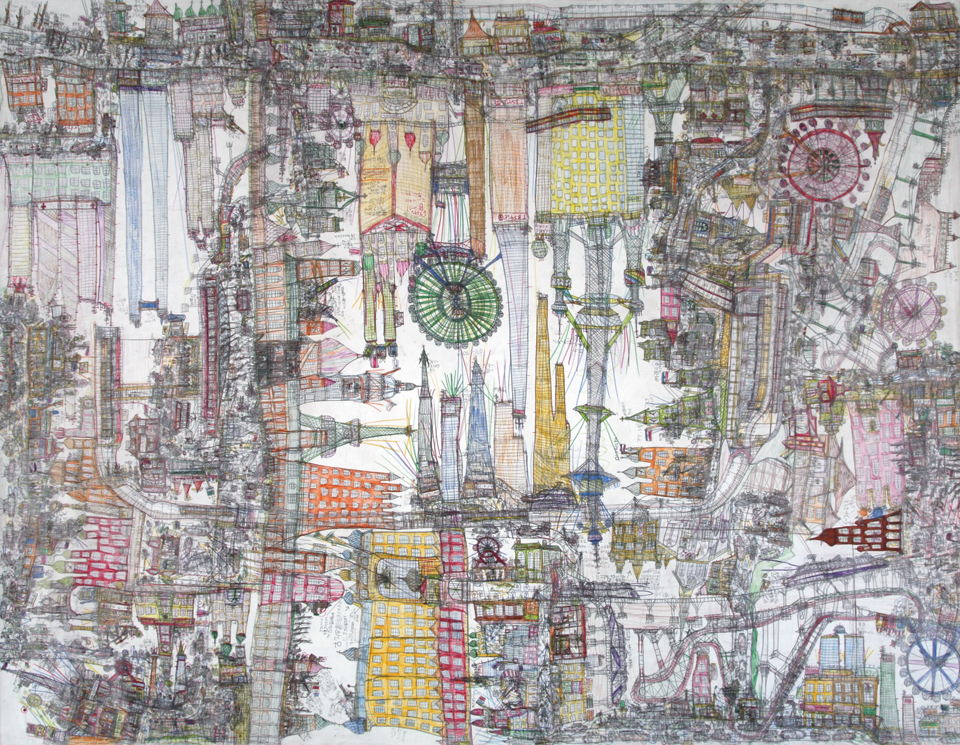
Above Image: ‘The Economically Booming City of Tianjin, China’ by Norimitsu Kokubo
On Saturday 15 June, I visited the Wellcome Collection for a talk on the history and development of ‘outsider art’; an event accompanying the current ‘Souzou: Outsider Art from Japan’ exhibition. Here, I have outlined the main points covered by each of the speakers, and highlighted a few of the questions raised during the discussion. I am hoping to come back to these questions in ‘Part Two’, and answer them for myself.
The panel consisted of Roger Cardinal; art historian and ‘coiner’ of the term ‘outsider art’, John Maizels; editor of Raw Vision Magazine, David O’Flynn; consultant psychiatrist at the Lambeth and Maudsley Hospitals, and Shamita Sharmacharja; curator of the current Wellcome Collection exhibition.
John Maizels chaired the event which aimed to explore the history of ‘outsider art’, right from its early days as a diagnostic tool for psychiatrists to the growing popularity of visionary artists in the present day. Each speaker gave a presentation on their specialist area, followed by a chance for questions and a discussion with the audience.
Roger Cardinal spoke first, defining work aligned with the term as anything ‘outside the spheres of normal art making,’ before going into detail about the three highly influential characters who really shaped the beginning of what we now know as ‘outsider art’: Jean Dubuffet, Hans Prinzhorn, and Andre Breton. Roger discussed how early on in its development, ‘outsider art’ was merely a diagnostic tool within the asylums of 19th- and early 20th- century Europe. It was Prinzhorn’s interested in the work that really encouraged a much more creative and aesthetic stance, rather than a continuing pathological one.
The point I found most interesting during Roger’s talk was his stating that ‘outsider art’ is categorically not a movement – it is not a school, a style, or a political movement – instead, it is a ‘movement of one’ in the sense that each artist should be looked at separately. It is a ‘movement of individuals.’ This was great to hear, as it is something I have been trying (and seemingly failing!) to put into words… until now!
‘Untitled’, by Shota Katsube (source: careersuicideblog.wordpress.com)
Next to speak was David O’Flynn. Having a psychiatrist on the panel was something I found really interesting, and I really wasn’t sure what to expect. I continuously advocate that work aligned with ‘outsider art’, or (for want of not using the term) work created by those on the margins of society, should not in any way be associated with the backgrounds or biographies of the artists, so to have a psychiatrist on the panel was something I questioned – would it take away from the focus on the aesthetic? Would it again pathologise the work?
David, however, is not only a psychiatrist, but also manages the Adamson Collection – a collection of art founded by Edward Adamson, the ‘father’ of art therapy (I am definitely not an endorser of art therapy – and was pleased to hear David say that he was also extremely ‘anti-interpretation’). He spoke about the change in European mental health care in the mid 20th-century, and how this had a huge impact on the emergence of ‘outsider art’. There was a move from psychiatrists ‘discovering’ or ‘finding’ work created by patients to them actively setting up creative spaces where patients were encouraged to create.
David also raised a few interesting points with regards to the Adamson collection – and to psychiatric collections more generally. Who has ownership of the work? They were created in a hospital environment during the process of healing; are they art objects or tools for healing? Should the creators be named? What are the copyright issues? David argued that the artists’ names should be shown, afterall, they were denied an identity in the asylums; they shouldn’t be excluded a second time around.
Although I’m not sure how I feel about psychiatrists talking about ‘outsider art’ (or, actually, just art in general), I do think it was important for David to be there as the emergence of ‘outsider art’ relied quite heavily on the influence and encouragement of certain psychiatrists.
‘Mother’, by Toshiko Yamanishi
The final speaker was Shamita Sharmacharja, who focused on her curating of the ‘Souzou’ exhibition. Shamita said she had chosen to go for an ‘object-led’ approach rather than a heavily biographical or health focused interpretation – something which I think is very important when displaying ‘outsider art’. It means that the artists’ talents are not simply pushed to one side in favour of their medical history. Shamita quite rightly stated that the artists’ works were art – she would not focus on the biography of other artists she was displaying, so why would she for this exhibition?
After the introductory speeches, it was time for audience questions. The questions were wildly diverse, and came from people who worked with artists outside of the ‘mainstream’ art world, and from those who knew fairly little about the subject.
The Questions
1) Can ‘outsider artists’ talk about their work meaningfully and coherently?
2) Why do we feel we have to label people? Why can’t outsider artists just be called artists?
3) Why is there so much interest in Japanese ‘outsider art’ at the moment?
4) Did ‘outsider art’ exist before the 1930s?
5) What is ‘outsider art’? In simple terms – has it become outdated?
6) Not everyone is an artist, and not everything is art. People have to go to art school and study what has come before to become an artist.
7) Why is ‘outsider art’ not taught as part of the art historical canon?
In Outsider Art under Analysis: Part Two, I will return to these questions and answer them for myself. I would be really interested to hear other people’s responses to the questions as well.
‘Outsider art’ in the traditional sense – i.e. Jean Dubuffet’s description – alludes to an isolated artist, working on the periphery of the mainstream art world. Contrary to this controversial belief, many of the most notable ‘outsider artists’ of the twentieth century were supported, encouraged and ‘outed’ by some of the most famous ‘mainstream’ artists of the same century. This series of blog posts will highlight a few of these relationships, in the hope of rectifying the general thought that artists that often sit under the umbrella of ‘outsider art’ were completely immune to and separate from the twentieth century ‘mainstream’ art world. In fact, many of the ‘masters’ of modern art were hugely influenced by these relationships.
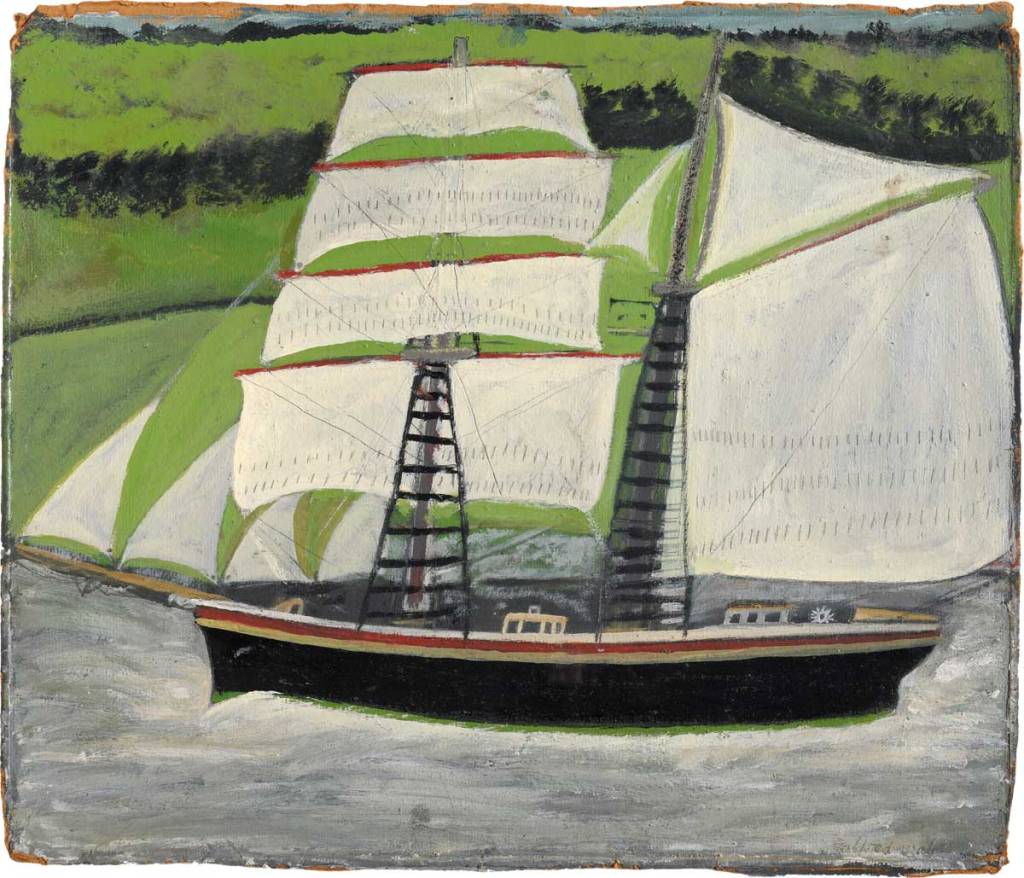
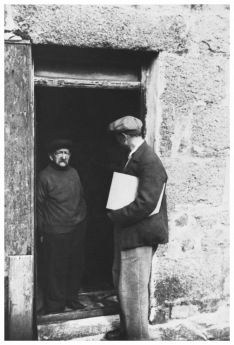
In St. Ives in 1928 came another chance meeting of two celebrated twentieth century artists – that of self-taught Cornish fisherman Alfred Wallis (1855 – 1942) and modern favourite, Ben Nicholson (1894 – 1982). This union occurred when Nicholson and a friend, Christopher Wood, came across Wallis’s paintings nailed to a wall beside an old fisherman’s cottage during a visit to the area. Nicholson saw in Wallis’s work what he wanted to achieve in his own – a certain fresh naivety. Nicholson documented their meeting: “On the way back from Porthmeor Beach, we passed an open door in Back Road West and through it saw some paintings of ships and houses on odd pieces of paper and cardboard nailed up all over the wall, with particularly large nails through the smallest ones. We knocked on the door and inside found Wallis, and the paintings we got from him then were the first he made.”[1]
Much like Bill Traylor, Wallis is another artist who discovered his creative side later on in life, at the age of 68 after the death of his wife. In his earlier years, it is thought that Wallis went to sea as a fisherman – possibly even from the age of nine. Taking up painting after his retirement from a shop selling salvaged marine goods in St. Ives, Wallis used old torn boxes and ship paints to create his masterpieces.
In an article authored by Nicholson in 1948, the artist compared Wallis’s style of working to that of Paul Klee:
“He would cut out the top and bottom of an old cardboard box, and sometimes the four sides, into irregular shapes, using each shape as the key to the movement in a painting, and using the colour and texture of the board as the key to its colour and texture. When the painting was completed, what remained of the original board, a brown, a grey, a white or a green board, sometimes in the sky, sometimes in the sea, or perhaps in a field or a lighthouse, would be as deeply experienced as the remainder of the painting.”[2]
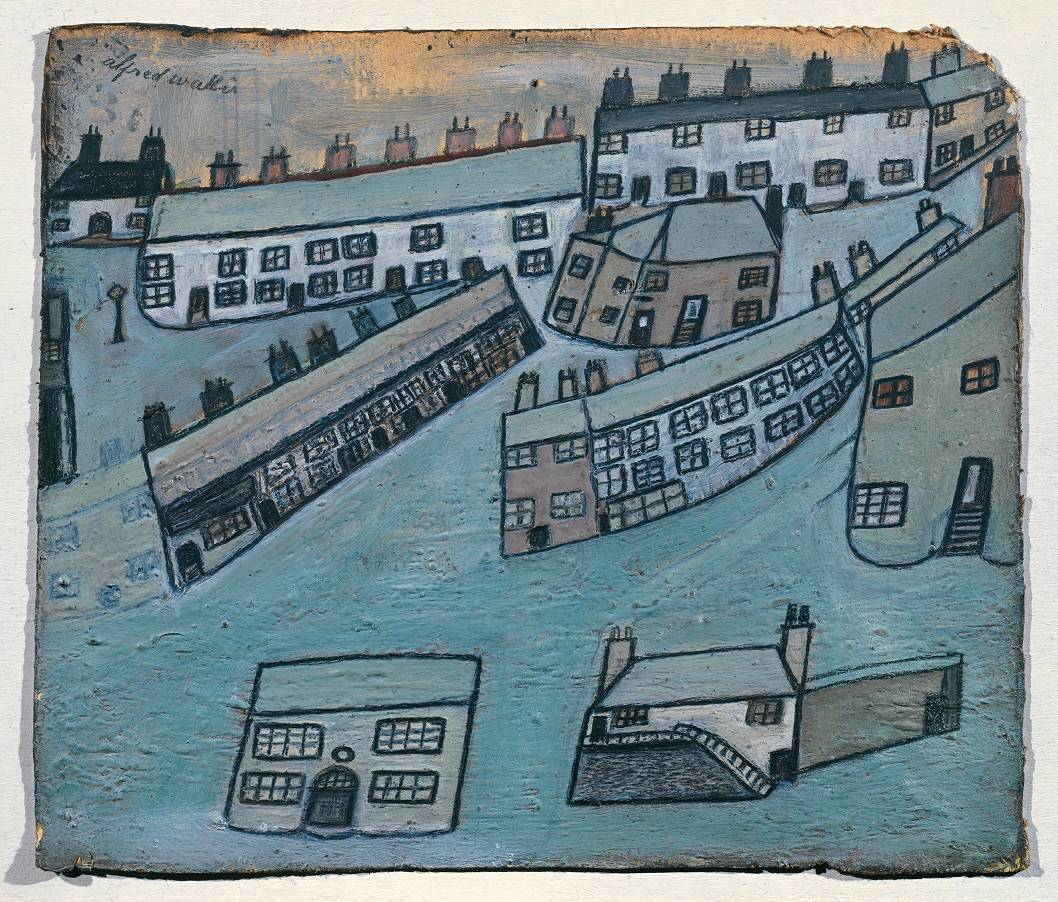
Wallis’s works are incredibly evocative of what we now see as a self-taught, uninhibited, and untutored style. He largely ignores perspective and often, the objects depicted will vary in size depending on how much importance the artist gave to them.[3]
Michael Glover, writing for the Independent during a joint exhibition celebrating the works of both Wallis and Nicholson at Compton Verney in 2011, speaks of Nicholson’s behaviour towards the older artist: “He began to patronize the old man, and to buy his paintings for the price of a meal or two. After he returned to his smart home in London, Wallis continues to send him batches, bound up with string and brown paper. Nicholson’s friends bought them too. Wallis began to be lionised a bit by the London avant-garde – Herbert Read and his friends.”[4]
Nicholson’s interest in Wallis didn’t bring his work great recognition during his lifetime – Wallis continued to live in poverty after the meeting, despite Nicholson’s valiant attempts to promote the self-taught artist’s work and bring it to the attention of the burgeoning modern art scene. We know now, however, that that fateful chance meeting between the two – patronising aside – would in fact set the older artist up to become recognised as one of the most prolific and original 20th Century British artists. His unique ‘primitive’ portrayal of boats and ships provided inspiration to many artists, and his work is undoubtedly considered highly influential in the development of British Modernism.
Alfred Wallis, ‘Harbour Scene’
Alfred Wallis, ‘House at St. Ives’
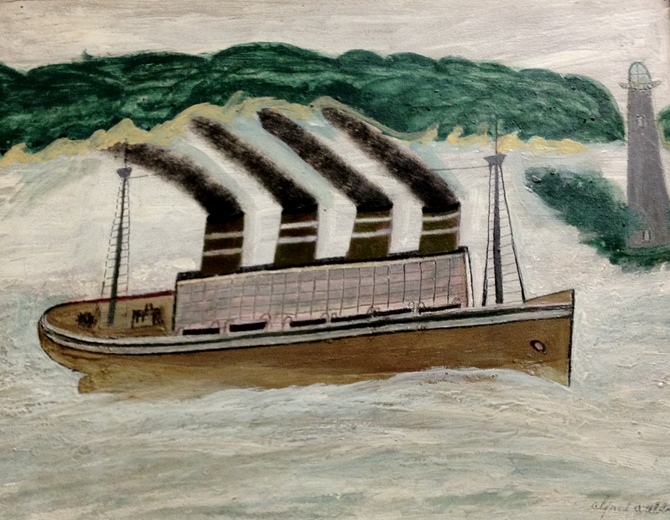
Alfred Wallis, ‘The Blue Ship’Alfred Wallis, ‘The Steamer’
Recently, I participated in a bit of a London exhibition marathon. I had been planning the day for a while, hoping to fit in a third visit to the Wellcome Collection’s fantastic ‘Souzou’ exhibition, as well as popping in to various other smaller shows whilst I had possession of a London Travel Card.
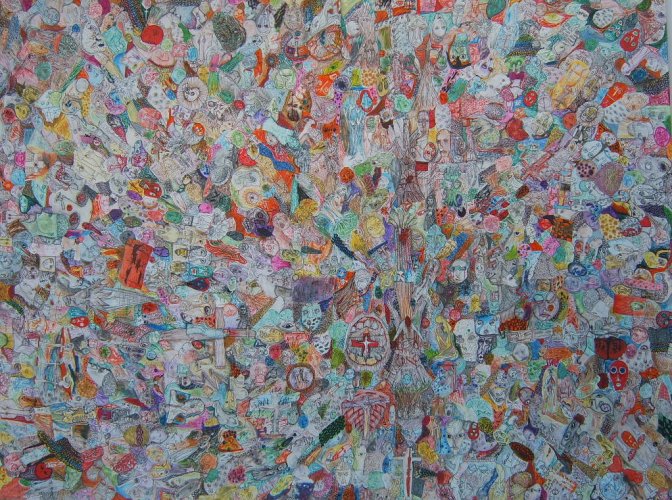
The first stop was ‘Face to face with the Outsiders’ at the Julian Hartnoll Gallery just by Green Park tube station. The Gallery, I found, is a tiny treasure amidst the corporate, expensive world of Old Bond Street and Jermyn Street; both just around the corner. The exhibition beautifully brought together a vast and varied range of portraits created by those considered to be on the ‘margins’ of the art world. Amazing matchstick men, carved and coloured by Pradeep Kumar, required a (thankfully supplied) magnifying glass to experience the intricacies, and Tim Holliman’s portraits of well-known celebrities and sports stars encouraged a who’s who guessing game. However, I was particularly taken with a piece by Nick Blinko: a monochrome ink drawing made up of hundreds and hundreds of tiny – but perfectly formed – faces.
Madge Gill (not from exhibition)
There was also work from renowned ‘outsider artist’ Madge Gill, whose female faces peer pensively from the depths of the pen shrubbery, and up and coming ‘outsider’ superstar Kate Bradbury, as well as a colourful splash of Ben Wilson’s chewing gum pieces. The monochrome works by Blinko and Gill – amongst others – were set off perfectly against the bright, whimsical figures produced by Martha Grunenwaldt, whose ethereal people almost swim, or float, through an array of colours.
The gallery was so intimately tiny, but it seemed like the perfect place to be surrounded by these beautifully curious faces. The contrast of bright, electric colours (Wilson, Grunenwaldt, Holliman, and Shafique Uddin) and moody ink drawings (Blinko, Gill, and Bradbury), all depicting the same thing – the human face – perfectly highlighted the huge variety of work produced by ‘outsider artists.’
Martha Grunenwaldt (not in exhibition)
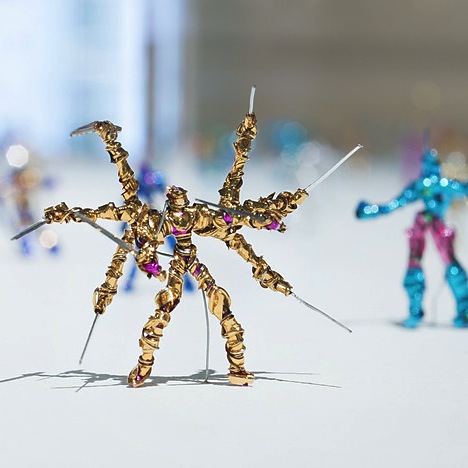
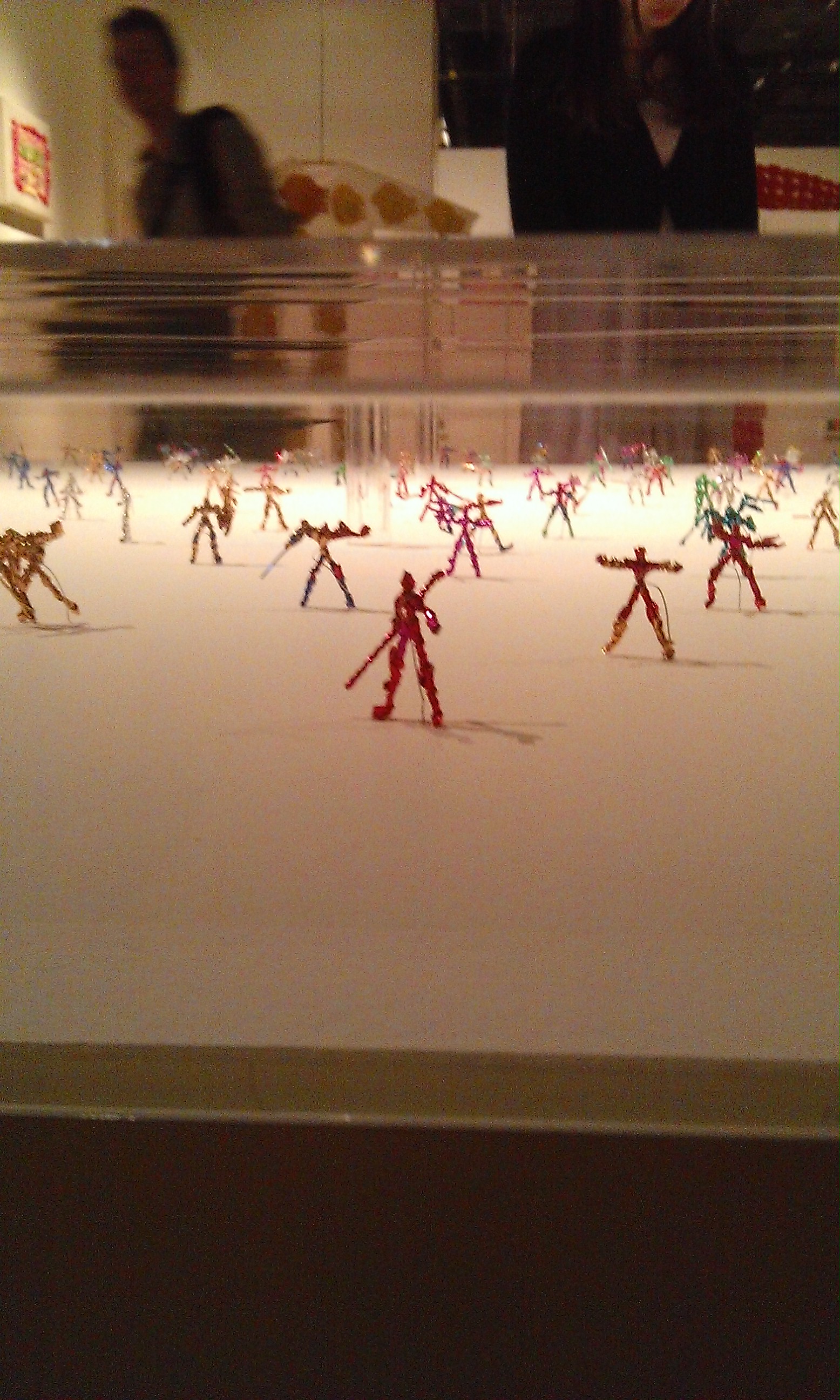
Next, I visited the ‘Souzou: Outsider Art from Japan’ at the Wellcome Collection for the third time. Still amazing. Still would like to have the twist-tie figure display cabinet as my dining table. You can read my previous review of this exhibition here.
The third – and final – exhibition on the day’s agenda was ‘The Gravy Train and Roads to Recovery’ in the Conference Centre at St. Pancras Hospital. This exhibition was an eclectic mix of work by Service Users at the Margarete Centre and Kate Bradbury’s dervishes (and, of course, some of her much-loved black and white inks). Organised by The Arts Project, the exhibition aimed to highlight the idea that whilst treatment for substance misuse historically focussed on harm reduction and substitute prescribing, other recovery methods emphasise equality, opportunity and equal access to society. The Arts Project say of the show:
“The artwork in this exhibition has been made by service users who, of their own volition, and without necessarily involving training or teaching, replace problematic substance use with creativity. This exhibition showcases outsider art work covering a range of years and artists reflecting a broad spectrum of style and creativity. This work combined with the visionary creativity of Kate Bradbury makes for a fascinating multi-layered experience.”
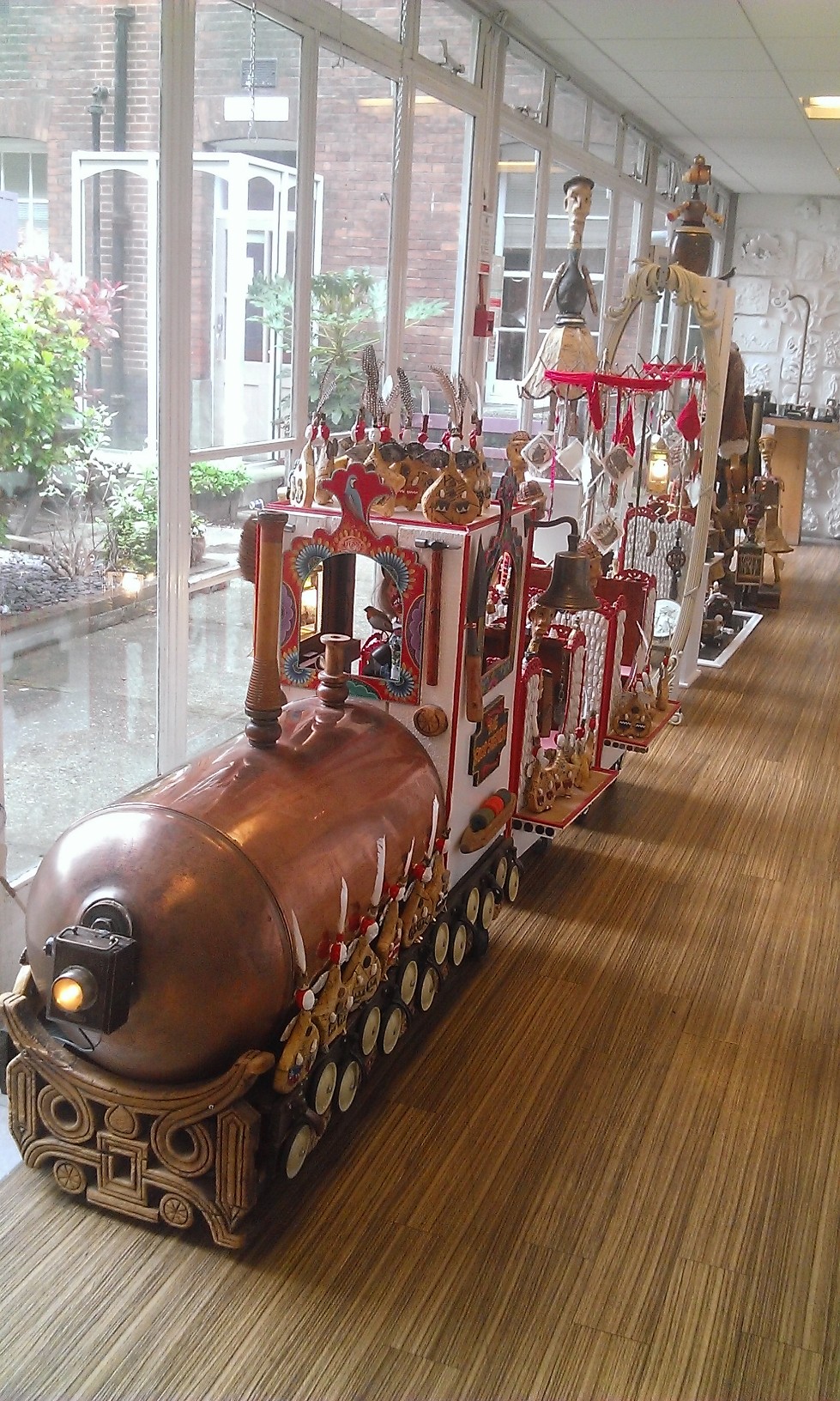
And that it certainly was. Bradbury’s Gravy Train was in situ, looking magical as it transported a selection her dervishes down towards the reception area. I actually got to meet Kate at the exhibition, which was fantastic. She spoke a bit about her work, telling me that The Gravy Train had recently been displayed in The Crypt Gallery, St. Pancras, where it had visually resembled a train travelling through a tunnel. In fact, The Gravy Train quite aptly symbolises the journey to recovery experienced by many of the artists from the Margarete Centre – “where art becomes a skill with which to embrace opportunity and achievement,” The Arts Project say. The resulting exhibition is a fascinating installation exploring the very nature of journey.
Kate Bradbury, ‘The Gravy Train’
These three exhibitions highlight the fact that 2013 is a big year for ‘outsider art.’ Of course, there’s the blockbuster Wellcome Collection show, but these smaller exhibitions were well worth a visit, highlighting the huge variety and overwhelming talent of ‘outsider artists.’ The tone seems to have been set for the rest of the year with two much anticipated solo shows coming up at Pallant House Gallery in Chichester to look forward to; Phil Baird in August and Kate Bradbury in November as well as a Madge Gill exhibition at Orleans House opening in October.
‘Face to Face with the Outsiders’ finished on 11 May, but you can visit the British Outsider Art website for more information. Click here.
‘Souzou: Outsider Art from Japan’ is on until 30 June 2013, for more information click here.
‘The Gravy Train and Roads to Recovery’ is on until 22 June 2013, for more information click here.
‘Outsider art’ in the traditional sense – i.e. Jean Dubuffet’s description – alludes to an isolated artist, working on the periphery of the mainstream art world. Contrary to this controversial belief, many of the most notable ‘outsider artists’ of the twentieth century were supported, encouraged and ‘outed’ by some of the most famous ‘mainstream’ artists of the same century. This series of blog posts will highlight a few of these relationships, in the hope of rectifying the general thought that artists that often sit under the umbrella of ‘outsider art’ were completely immune to and separate from the twentieth century ‘mainstream’ art world. In fact, many of the ‘masters’ of modern art were hugely influenced by these relationships.
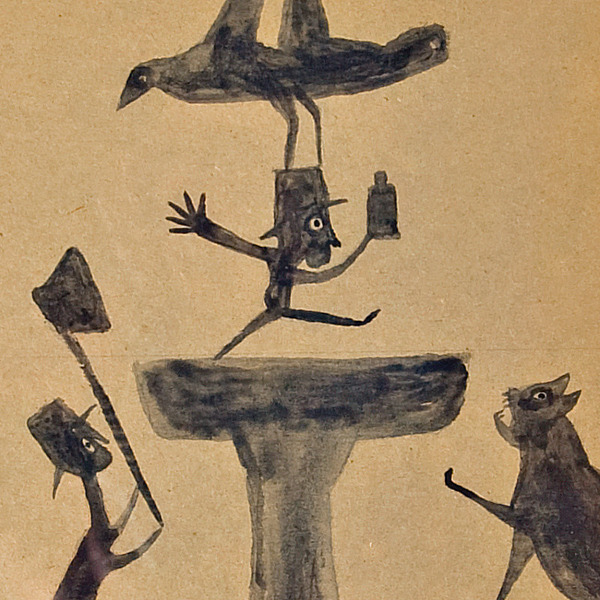
Born into slavery on a plantation in Alabama, Bill Traylor is perhaps one of the best known self-taught artists of the twentieth century. Working on the plantation he was born onto for many years of his life, Traylor moved to Montgomery in 1928 where he worked as a labourer until he became physically unable to continue. Only beginning to produce art when he was 85 years old, Traylor used mainly modest, everyday materials to create a unique portfolio of his experiences – both past and present. He recorded events from the everyday, of life in Montgomery, which he attempted to sell to passers-by on a sidewalk. It was on this sidewalk that a unique meeting would change the fate of his artistic career.
Bill Traylor
Charles Shannon – a painter and teacher – discovered Bill Traylor in 1939, as Traylor was perched on a box, drawing in the street near a fish market in his native Montgomery. Shannon supported the artist financially, and provided Traylor with materials as well as his first exhibiting opportunity at the New South Gallery in 1940. Despite full recognition of Traylor’s career as an artist not occurring until the 1980s (long after his death in 1947), Shannon is credited as having contributed significantly to the artist’s support network and therefore his later recognition.
Shannon was fascinated by the seemingly innate creativity that Traylor had discovered at such a late stage in his life, despite having never drawn or even been able to write beforehand. Shannon, in his article ‘Bill Traylor’s Triumph’, published in Art and Antiques in 1988, speaks of his experience of Traylor as an artist: “He worked all day; some evenings I would drop by around ten o’clock and he would still be there, his drawing board in his lap, a brush in his hand. He was calm and right with himself, beautiful to see.”[1]
Bill Traylor
Traylor was not known for talking about his work, but Shannon noted that he talked almost continuously whilst he worked – but, regretfully, he only recorded a very small number of these comments: “Now, I sometimes wish that I had [asked him questions]. I only knew what he volunteered to tell me.”[2]
After Traylor’s death in 1949, Shannon continued to be an advocate for his work despite the lack of public attention and interest. Many members of Traylor’s family in fact had no idea that he had been an artist, they were not aware of Shannon’s support of the artist, and they were not aware that it was Shannon who had saved his work. It wasn’t until 1979 that Shannon – in possession of 1200 – 1500 works by the self-taught artist – managed to secure an exhibition at the R. H. Oosterom Gallery in New York. Today, Traylor’s work is often considered as an important part of the development of twentieth century art – despite the Museum of Modern Art, NY, offering Shannon one dollar per piece in 1942; something the advocate was incensed by, returning the cheque and taking back possession of the works himself.
In 1986, when Michael Bonsteel asked Shannon what he thought made Traylor’s work great, he responded: “What made his work great is like trying to answer ‘what is grass?’ The rhythm, the interesting shapes, the composition, the endless inventiveness – it all reflects such a wonderful joy of living. His whole sense of life comes through. It was just the man. I think he was a great man. It’s not so much how he depicted or what he did. It was just the soul of the man.”[3]
Below you will find some excellent and inspiring exhibitions that are taking place (mainly in the UK – sorry!) this spring and summer. From the Wellcome Collection to the Impact Art Fair; a dedicated art fair showcasing work by those facing barriers to the art world due to mental health reasons, disability, substance misuse or other social circumstances, there is bound to be something for everyone. I’m going to try and keep doing these ‘What’s On’ posts regularly to keep you all updated – and as 2013 seems to be a big year for the outsider art world! *(Click on the titles of the exhibitions to visit the webpage)*
This exhibition showcases more than 300 works for the first major display of Japanese Outsider Art in the UK. With 46 exceptionally talent artists represented; all of whom are residents and day visitors at social welfare institutions in Japan, this exhibition consists of an excitingly diverse range of ceramics, textiles, paintings, sculpture and drawing.
This exhibition at The Conference Centre presents artwork from Service Users at the Margarete Centre and highlights equality, opportunity and equal access to society as treatments for substance misuse. Alongside work by participants of the Margarete Centre are works by upcoming visionary artist Kate Bradbury.
Image from ‘The Gravy Train and Roads to Recovery’ Facebook Page
This touring exhibition consists of the work of 20 artists facing barriers to the art world selected through an open national competition. The tour features the six Award Winners from the Outside In: National exhibition: Kate Bradbury, Manuel Bonifacio, Matthew Sergison-Main, Michelle Roberts, Nigel Kingsbury and Phil Baird.
On the back of the success of Outside In: National, the work of Outside In artists will be popping up all over the country in 2013 – from The Museum of Somerset in the South West and Hastings Museum and Art Gallery in the South East right up to Perth Museum and Art Gallery in Scotland, and everywhere in between. For information on all of the dates and venues, visit Outside In’s website.
I Ar You: Portraits by Self-Taught American Artists features an intimate selection of important artists from the Deep South and beyond, presenting self-portraits and anonymous figures alongside images of celebrities, presidents and cowboys.
An exhibition surveying the work of individuals who create alternatives in art, science and architecture. Focusing on self-taught practitioners whose work is generally produced outside of established channels and official institutions, The Alternative Guide to the Universe features a range of contributors from fringe physicists to the inventors of new languages, from artists who map cities of the future to others who design imaginary technologies.
This will be the second Impact Art Fair organised by Creative Future, which showcases work by highly talented artists whose access to the mainstream is limited by mental health issues, disability, chronic ill health or social circumstance.
*N.B. If you are an artist, you can still enter work for selection for the Impact Art Fair up until 23 April 2013.
In this innovative exhibition, the power of self-taught artistic talent, the drive of the human spirit to create, and the wonders of highly original inner worlds are revealed. This show surprises and challenges museum goers, forces examination of the conventional definition of the word ‘artist’, and shows that good art is good art regardless of the maker’s resume.
This is an exhibition of large-scale paintings and detailed pencil drawings by Peter White. His work depicts visions and dreamscapes that take the viewer on a journey into abstracted landscapes, figures and happenings. “My exhibition reflects my experiences and my creations. There are some windows into my memory and mind, but the rest is just colour and form.”
This amazing world of discarded objects has been created by artist Stephen Wright, who uses everyday objects to create mosaics: milk bottle tops, broken dolls, crockery and the rich pickings of car boot sales. The museum is open by appointment, but there are open days on 11 May, 8 June, 6 July, 3 August and 7 September 2013.
The Heartside Ministry was founded in 1983 in Grand Rapids, Michigan, as an outreach to the homeless and disenfranchised people of the streets in a neighbourhood abandoned by businesses and avoided by many. In 1993, in response to the needs of the community, the Ministry developed a programme of one-on-one adult literacy classes, further expanding in 1997 to include a computer centre that offered help with resumes, desktop publishing and web access. The Art Studio and Gallery was established along with a pottery studio and a weaving programme, allowing the Heartside community to express themselves, discover their talents and produce saleable items.
The Art Studio and Gallery represents a large part of what Heartside does, existing as a “safe and catalysing environment for the expression of the emotions, ideas, creativity and spirituality.” The art programme space consists of large storefront windows, high ceilings and a supportive atmosphere that is “especially conducive to artistic endeavour.” The studio space is open to the public throughout the week, providing the opportunity for creation, learning and socialisation, and the gallery is open for special neighbourhood and city functions, and also showcases the work of artists participating in the programme.
Under the guidance of the Arts Coordinator, the often self-taught artists have produced a prolific body of work spanning various mediums, styles and subject matters. The Coordinator works to “encourage the intuitive and spontaneous artistic tendencies within each individual artist.”
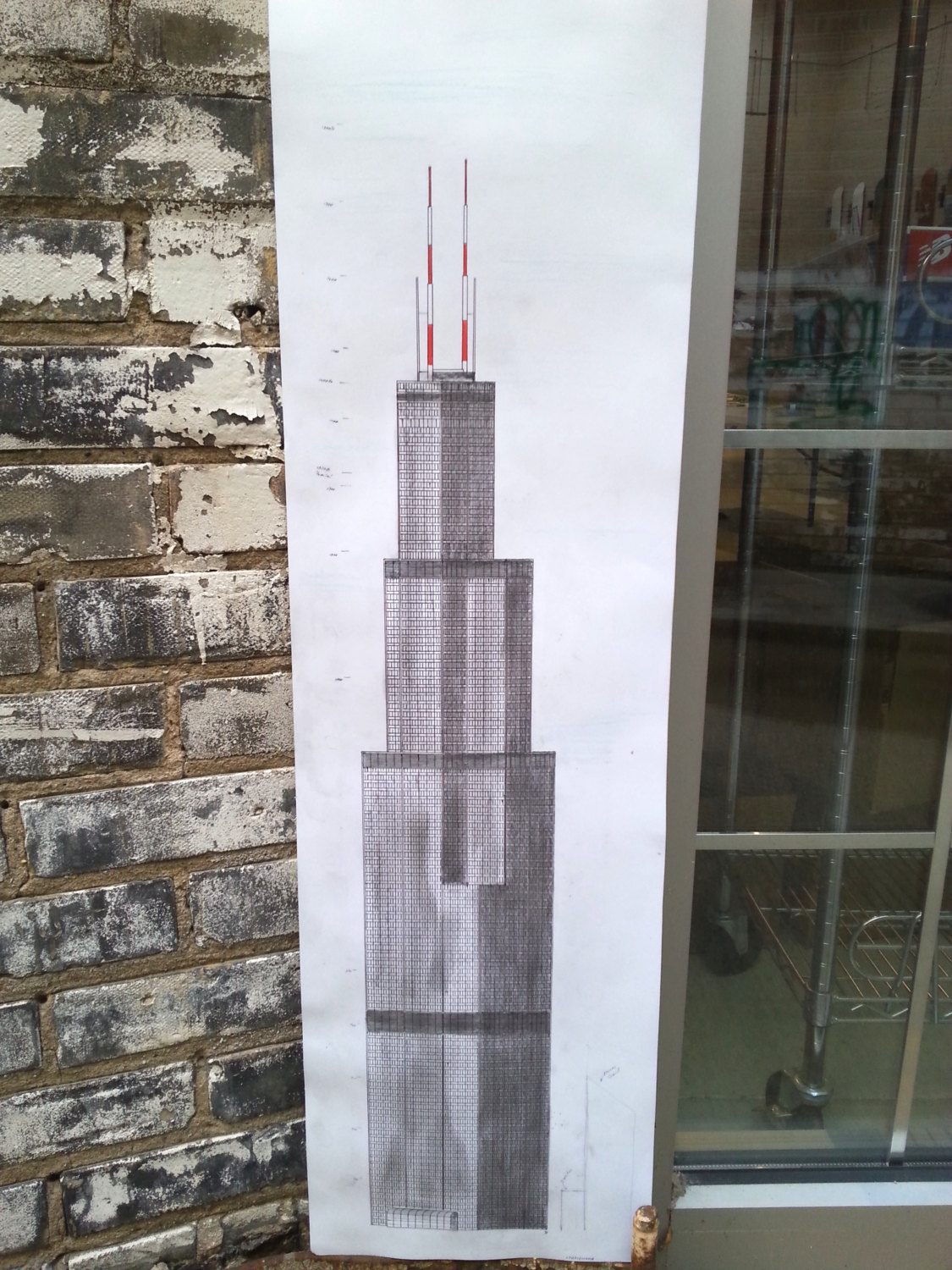
Tom Salazar, one of the Heartside artists, has been interested in art from a young age. His to-scale intricate impression of the Sears Tower is hand-drawn, with not a computer programme in sight. Sears Tower impressively has every window and is draw foot for foot completely to a smaller scale. Tom also makes miniatures of some of his designs, and takes inspiration from architecture, cars and landscapes, as well as building his own furniture when needed.
Tom Salazar, ‘Hand Drawn Sears Tower’
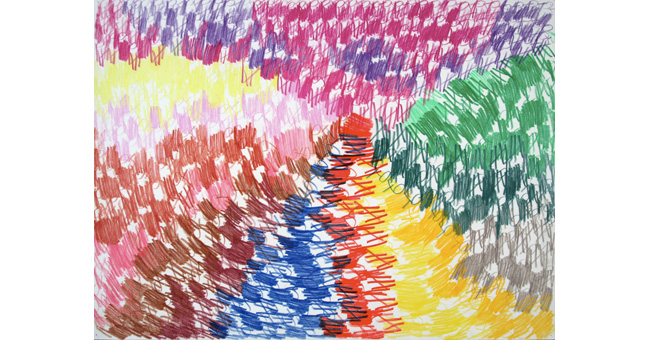
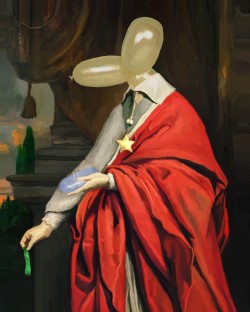
Art for another participant of the Heartside programme, Katalina, began as a hobby, before quickly becoming part of who she is as a person. Speaking of the kind of work she produces, Katalina says: “I am a self-taught, mixed-media artist. I use acrylic paints, chalk, pastels, coloured pencils, water-colours, ink, found objects and a wide variety of other media that I come across.” As an artist, Katalina doesn’t limit herself – “any medium or found object can be used in creating art.” She uses vintage photos, and is interested in creating narratives with collage. Katalina adds a final thought: “Art for me is a very healing power. Not only do I create something, but I can also express how I feel at that particular moment by telling a new story.”
Katalina, ‘Family Album’
Katalina’s Family Album is a mixed-media collage made from magazine photos on book board with the addition of buttons and beads to add texture.
Katalina’s work on display at Heartside
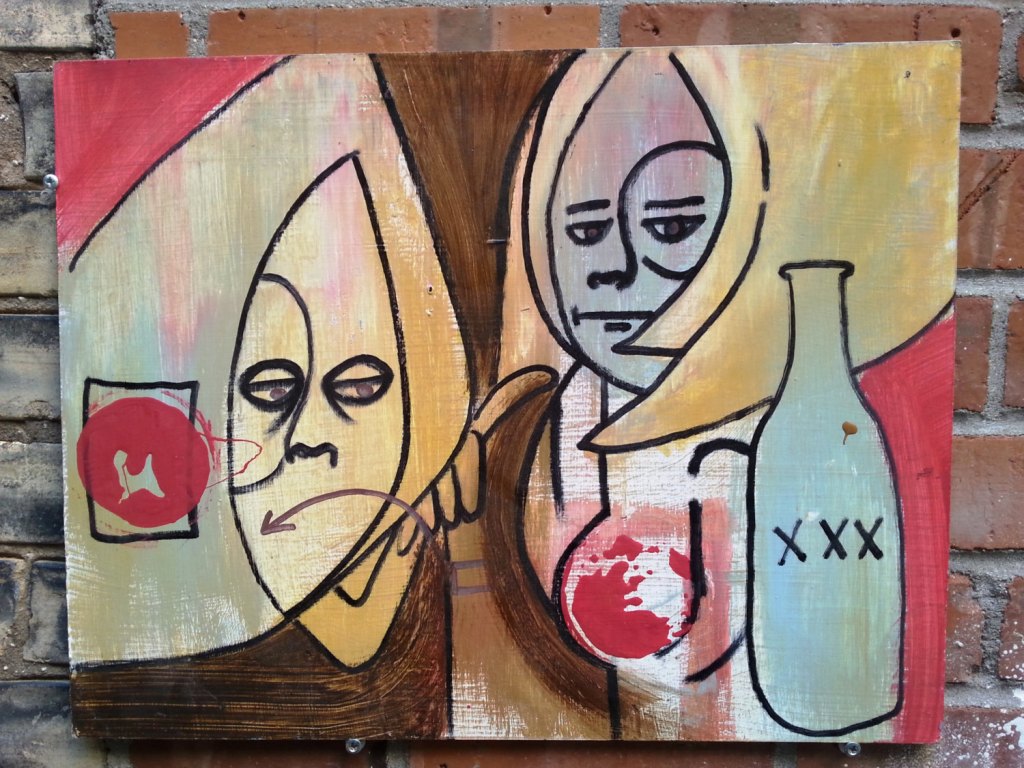
Scott Robinson, a former street artist, grew up skateboarding – “and when I got too old to do that I traded it in for paints,” he says. Scott adds about his progression from skateboarder to artist that “it’s all connected anyhow – skateboarders just look at the world differently. When I see a bench I don’t see a place to see, I see it as an object. The lines in my paintings reflect that.” Don’t Do It was created by Scott after he became sick of the graffiti scene and the threat of incarceration, instead choosing to bring his work to canvas. It is a piece that initially had no meaning, before Scott noticed a pregnant woman and alcohol within the piece. The title came from an intuitive sense of what the image was; a pregnant mother being tempted by the alcoholic drink.
Scott Robinson, ‘Don’t Do It’
These are just three of the very talented artists working at Heartside Studio and Gallery. For more information on the organisation, click here.
Most of the art created on the programme is for sale via Heartside’s Etsy gallery, and is priced between $10 and $40, with proceeds directly benefitting the individual artists. To visit the Etsy gallery, click here.
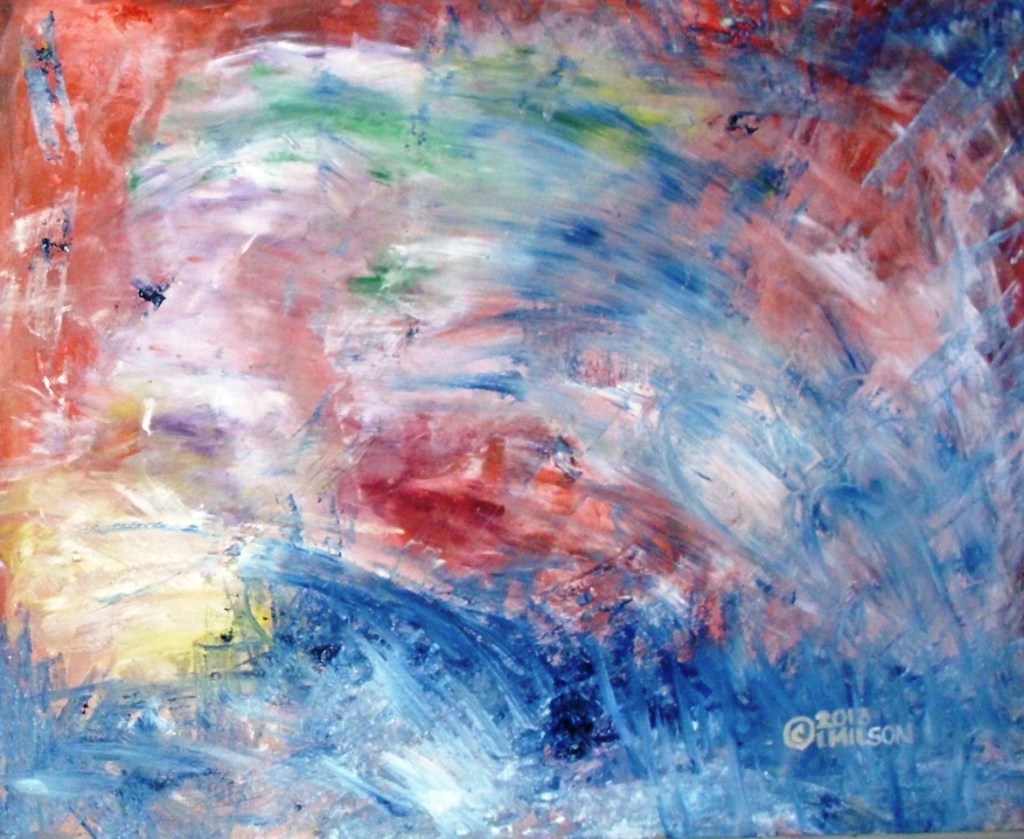
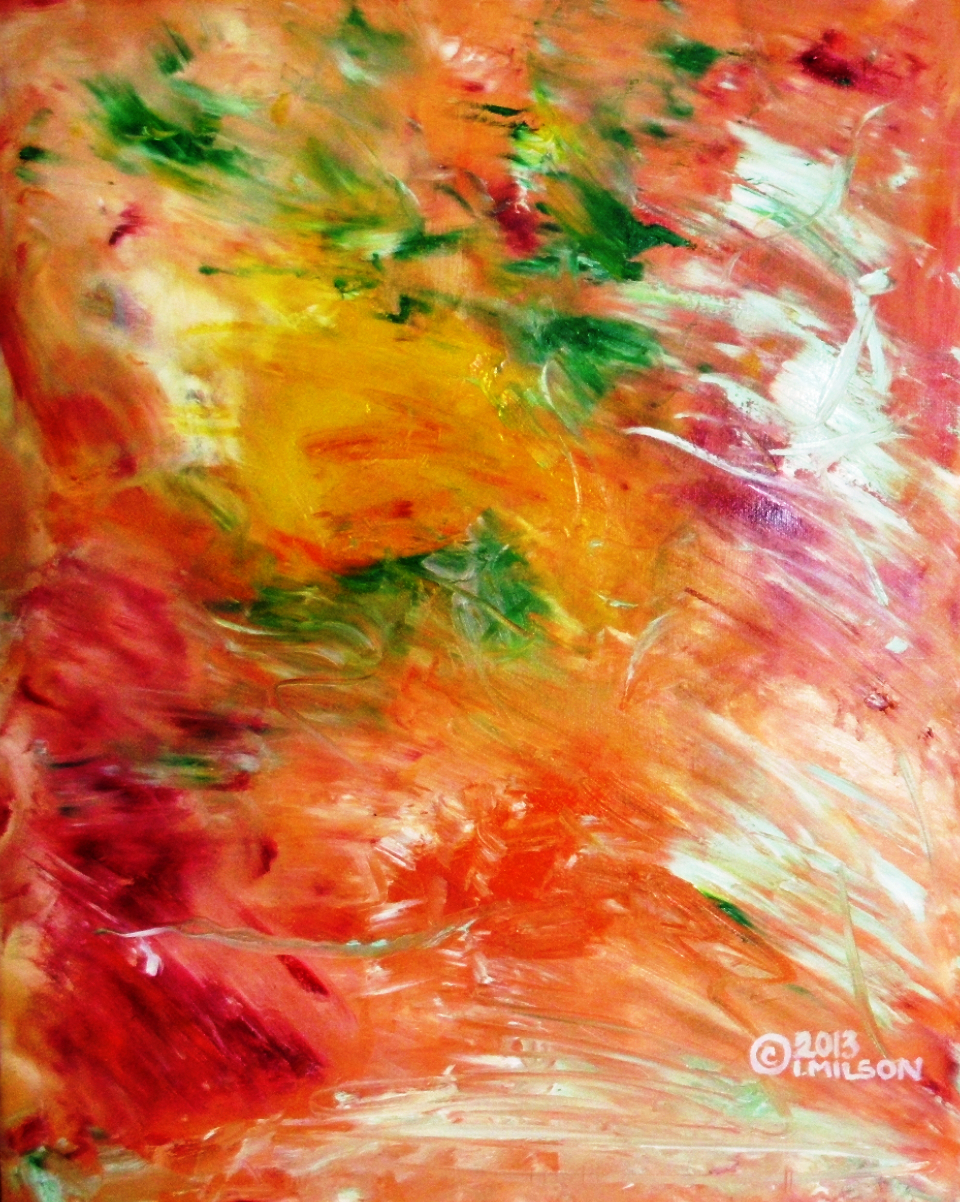
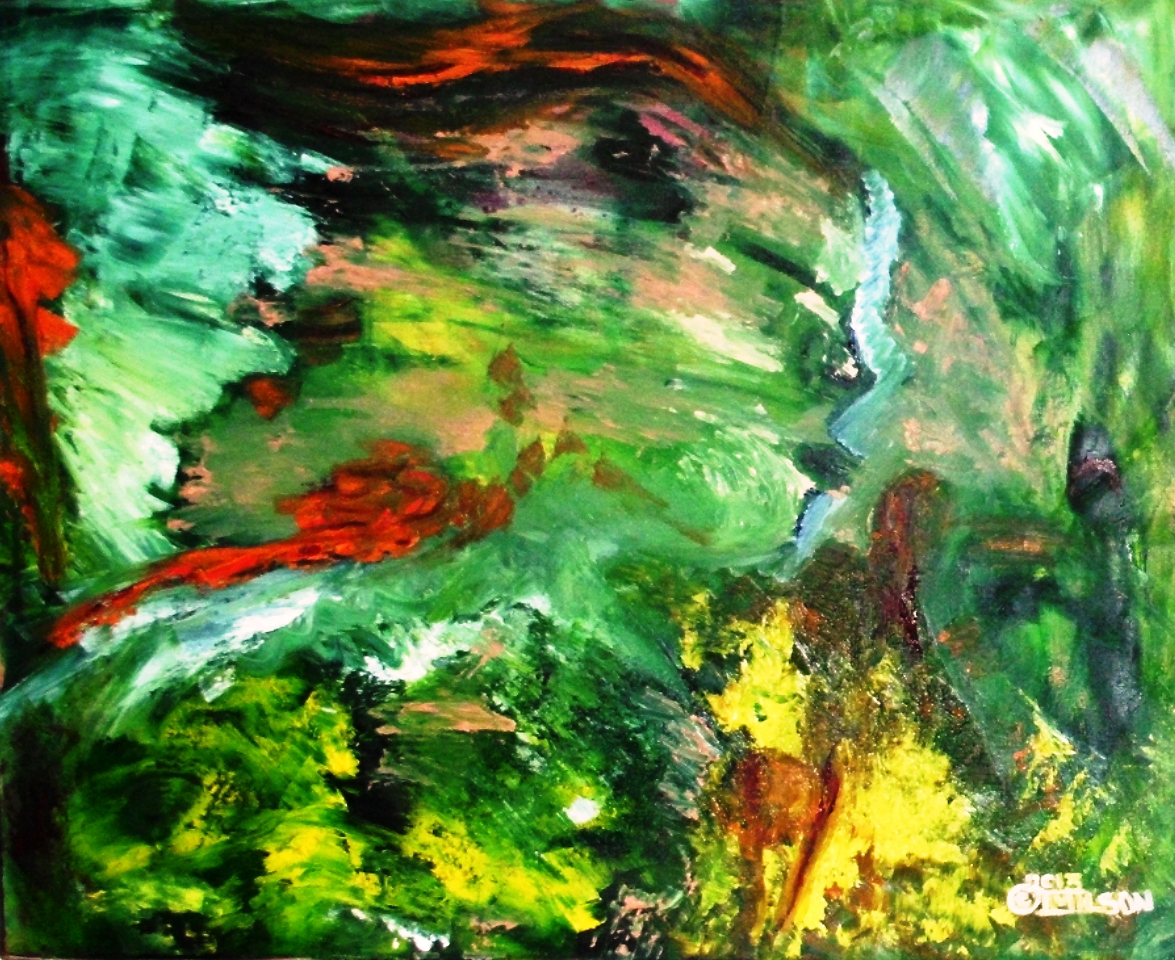
“The heart beats in a rhythm synchronized to the ebb and flow of cosmic energy that has no pre-conceived ideas, thoughts, or expressions. And it is that rhythm that inspires me to paint.” – Iva Milson
Iva Milson, ‘Duplicates’Iva Milson, ‘Throught Time and Space’Iva Milson, ‘Floating in the Waters of Love’Iva Milson, ‘Dream-in the Dream’Iva Milson, ‘Memories’
‘Outsider art’, although a term that is so often criticised for its ambiguity and uncomfortable sentiments, takes centre stage this spring at the Wellcome Collection in London. Despite the semantic controversy surrounding the term itself, there is nothing ambiguous, controversial or uncomfortable about Souzou: Outsider Art from Japan.
Unlike the development and history of ‘outsider art’ in Europe; which ran parallel to the discipline of psychiatry – think Hanz Prinzhorn, in Japan, ‘outsider art’ has been “more closely aligned with public health and education reform from 1945.” Kazuo Itoga, considered the father of social welfare reform in Japan, pioneered the principle of producing personal artworks within an institutional context, insisting on self-expression and a policy of ‘non-intervention’ in the creative process.
Historical context aside, the exhibition at the Wellcome Collection is as diverse as the term ‘outsider art’. Amongst the sculpture and 2D works on display are tiny shiny model figures, bongos (the animal – not the drum), lions, life size dolls, still lifes, graphic posters, illustrations of morning tv programmes, and – perhaps some of my favourites – the Fried Chicken Pyjamas and the Pigeon Shaped Cookie Pyjamas by Takahiro Shimoda.
Split into six named sections – ‘Language’, ‘Making’, ‘Representation’, ‘Relationships’, ‘Culture’ and ‘Possibility’ – the exhibition represents works that are characteristically and stylistically common to what we consider to be ‘traditional outsider art’, as well as works that draw on popular culture, creativity and the structure of language. The section headed ‘language’ looks at the challenge of communication in a written or spoken form and how “visual expression can offer a release from the confines of language.” The ways we encounter language are explored, with Masataka Aikawa’s storybook-inspired ink drawings and Hiroyuki Komatsu’s pieces which reference the plots and characters from his favourite daytime TV programmes.
Komatsu’s pieces, amongst others, finally highlight that – contrary to Dubuffet’s stubborn views on isolation and immunity – ‘outsider artists’ are more often than not very much in tune with contemporary culture. In fact, there is a whole section of the exhibition entitled ‘Culture’, which demonstrates the “artists’ keen awareness of their surroundings and of the wider cultural context.” Kiyoaki Amemiya’s mountainous landscapes and Ryosuke Otsuji’s “contemporary interpretation” of Okinawan lions highlight the influence of historical Japanese culture; whilst Daisuke Kibushi’s post-war movie posters and Keisuke Ishino’s paper anime figures allude to the impact of popular culture.
‘Representation’ and ‘Relationships’ include depictions of the objects and people that the artists experience in their everyday lives. ‘Representation’ raises questions about subjectivity vs objectivity – exemplified in the work of Takashi Shuji and Takanari Nitta, where seemingly everyday objects – hairdryers, windows – “are elevated to objects of beauty,” whilst ‘Relationships’ examines “the ways the artists depict themselves and their multifaceted relationships with other people.” The artists explore idealised visions of themselves (as is the case with the work of Yoko Kubota and Masao Obata), as well as their ambitions, fears, desires and the notions of “absence, uncertainty and erasure.”
When we think of ‘outsider art’, we often think of the use of unconventional objects – in fact, I recently wrote a post about the ‘outsider artist’ as a pioneer of the ready-made movement in the history of modern art – and this is explored in ‘Making.’ In this section, the importance of work and employment in Japan is highlighted with the use of clay and washi (Japanese paper), used by Komei Bekki and Seiji Murata, who are both employed in these industries respectively. This section includes a vibrant array of tactile materials – textiles, clay, and cloth – which require “repetitive, time-consuming processes that have calming and therapeutic effects.”
My favourite piece in the show, however, sits in the final category of ‘Possibility.’ Norimitsu Kokubo’s panoramic cityscape is a work-in-progress which depicts a map of the world as visualised through the artist’s internet research. When finished, the work will measure a hefty 10 metres across. This work epitomises this section’s attempt to portray works which “collate and reorder information… to create parallel, ‘improved’ realities.”
Norimitsu Kokubo, ‘3 Parks with a panoramic view. A 360 degree world of panoramic view – Ferris Wheel, clusters of buildings with magnetically-levitated trains, past present future, a suburban town with railroad bridges, a city under development with indigenous peoples and natural resources.’
The term Souzou, in my opinion, goes part of the way in distilling any preconceptions about this type of art because it is a word that the Western world has (somewhat unknowingly) needed for so long. With no direct translation into English, it can mean either ‘creation’ or ‘imagination’ – “both meanings allude to a force by which new ideas are born and take shape in the world.” Maybe it doesn’t need a direct translation; after all, ‘Outsider Art’ is an “imperfect approximation” of another term that does not translate comfortably into English – Jean Dubuffet’s Art Brut. It is our need for labels and categories that has tied us in a knot when it comes to ‘outsider art’; when really we do not need words at all.
The exhibition is a timely reminder of the importance of displaying works created by those who cannot so easily align themselves with the mainstream art world. Created by Japanese artists in day centres all over Japan, the works perhaps illustrate the term Souzou better than any English translation ever could, and certainly better than many works in the current contemporary mainstream. The exhibition blows away the hierarchical idea of biographical context and focuses on the achievement of these artists and their incredible creations. There is something here for everyone, and I challenge you not to come away thinking about the astounding imagination and creative ability of these people. Perhaps this year is the year that ‘outsider art’ finally becomes recognised as an illustration of authentic creativity and talent and can once and for all be lost as a category, and works of the Souzou calibre can be known simply as ‘Art.’
Souzou: Outsider Art from Japan is on at the Wellcome Collection from 28 March – 30 June 2013. For more information, click here.
All quoted information is taken from the ‘Souzou: Outsider Art from Japan’ exhibition companion, available from the Wellcome Collection.





















 KDOA
KDOA 