Category: Outsider Art: Theory and Thoughts

  • Reclaiming Outsider Art

    Reclaiming Outsider Art

    Has the time finally come to erase the term outsider art? Its all-encompassing – and negatively perceived – character divides many people. I have personally been edging ever closer to this idea over the past few years. However, in perhaps a somewhat hesitant, cautious U-turn, I have been coming round to the idea of using the term outsider art more freely – in a ‘reclaiming’ kind of way. Rather similar to the way the term ‘disability arts’ has been reclaimed. If we are able to reclaim and redefine the term, it could be a powerful vessel through which we can promote work by artists outside of the mainstream. It could be the basis of a community which includes people from all over the world, from a huge number of different cultures and backgrounds. For artists who work predominantly alone, or artists who are not linked to a wider art community or network, it could provide a lifeline, a point of identification, confirmation.
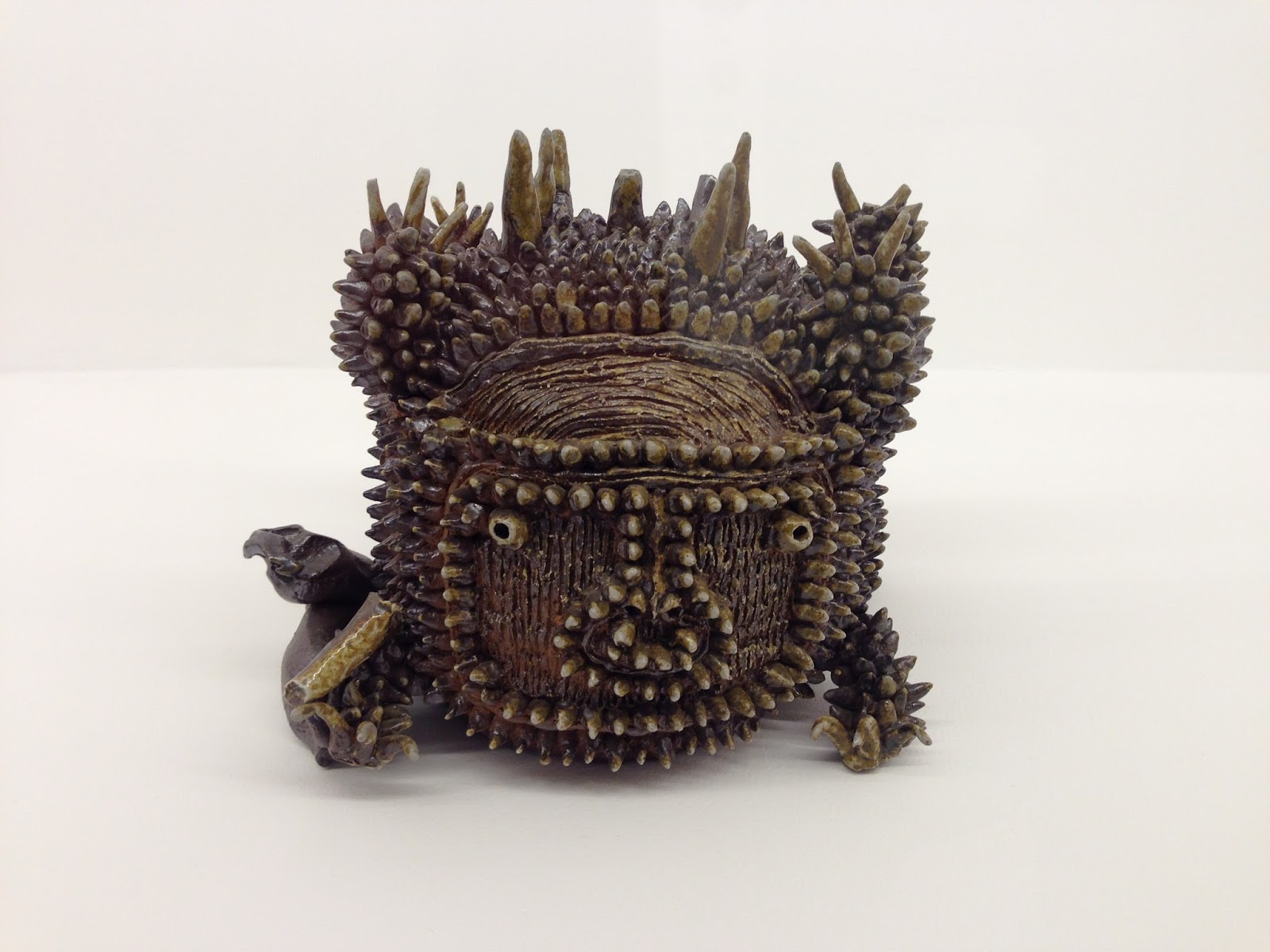
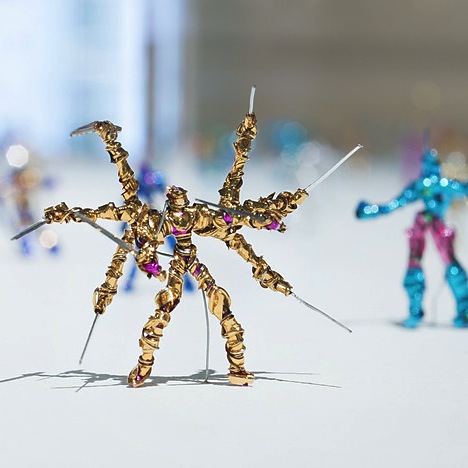
    Shinichi Sawada
    Shinichi Sawada

    The idea of ‘reclaiming’ a term is something that is becoming increasingly common in all parts of the world and is strongly linked to the idea of identity. Paula M. L. Moya in ‘Reclaiming Identity’ undertook the task of reclaiming identities because they are “evaluatable theoretical claims that have epistemic consequences. Who we understand ourselves to be will have consequences for how we experience and understand the world.”[1] After all, words aren’t bad, or derogatory; it is the meaning we imbue them with that makes them so. Are we able to change the negative meaning of words; flip them on their head and imbue them with positivity?

    Whilst researching for this post, I read a fair few texts about identity, which recognise two camps when it comes to derogatory or unfavourable terms: the Absolutist and the Reclaimer. The Absolutist thinks that the only way to overcome the negative connotations of certain labels and phrases is to eradicate them completely, whereas the Reclaimer asserts that certain terms “mark important features of the target group’s social history, and that reclaiming the term – making it non-derogatory – is both possible and desirable.”[2]

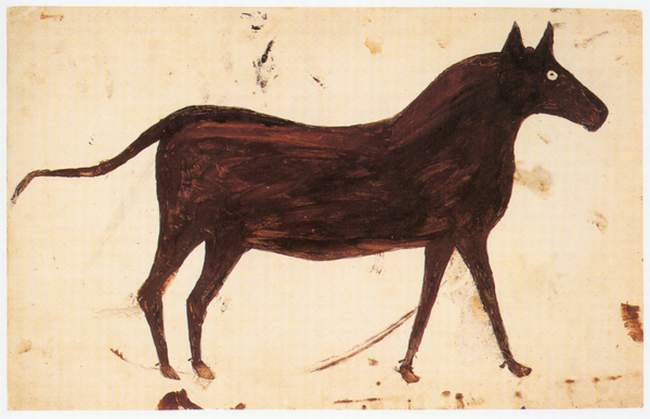
    Bill Traylor
    Bill Traylor

    So, if we relate this to outsider art, we can see that many camps are actively trying to discourage use of the term – the Absolutists. But, Hendricks and Oliver in ‘Language and Liberation’ assert that we can use the term in our favour. We are able to “detach the semantic content of the term from its pragmatic role of derogation, and it is desirable because doing so would take a weapon away from those who would wield it and would empower those who had formerly been victims.”[3] So, if we follow their theory, we could take the power away from those who currently hold it – perhaps this is the dealers, curators; high end art world people, and give it back to the artists. It could become a unifying term so that artists working outside of the mainstream with little to no contact with other artists or art networks can feel a part of something, a sense of belonging and validation, and perhaps even a sense of affirmation that they are, in fact, artists.

    – Kate Davey


    I would really like to hear what you think about the idea of the reclamation or eradication of the term outsider art in the comments below. Obviously, there is far more reading to be done into ‘identity’ and reclamation, but hopefully this is a starting point.


    References

    [1] Paula M. L. Moya, Reclaiming Identity, http://clogic.eserver.org/3-1&2/moya.html

    [2] Christina Hendricks and Kelly Oliver, Language and Liberation: Feminism, Philosophy and Language, State University of New York Press, 1999, p42

    [3] Ibid.

    Featured image: James Castle

  • Brian Gibson: Real Art… Really?

    Brian Gibson: Real Art… Really?

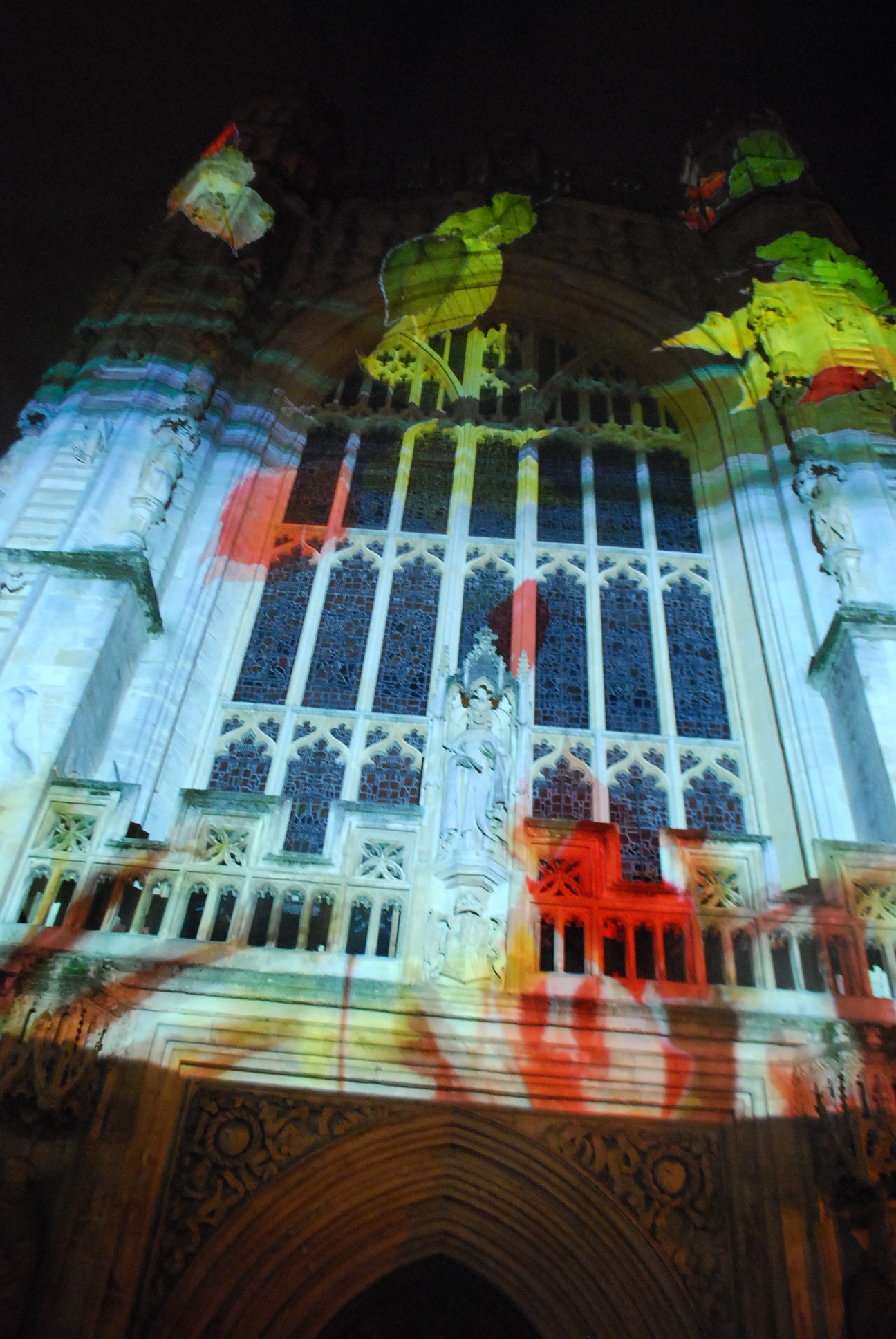
    Above image: Transient Graffiti on Bath Abbey (courtesy of http://www.suitedandbooted.org)


    Brian Gibson: “It’s 2015 now and after recent events the world seems a lot more complex … so I’m heading back to the relative calm of late 2014. Like a lot of people over the festive break I got myself hooked into various forms of social media, reaching saturation point – bloated with meaningful and quirky distractions offering opinions on this that and the other, making me feel futile in the ever-expanding and absorbing world of news feeds and interesting information. I was, however, able to break away from such infectious technology and get back on track, find my bearings and find some time to make a little bit of artwork, engage in some art dialogue and do a bit of offline viewing, that is to say look at some art situated in the real world.

    Image from the Transient Graffiti project
    Image from the Transient Graffiti project

    It was early December, when listening to the radio, I heard a series of broadcasts on Radio 4’s A Point of View by Philosopher Roger Scruton. Someone that I had not heard of but assumed he must be quite learned and well informed to get such a slot. He began with the subject of ‘fake art’ and, as I’ve had a number of conversations with people on the possibility of faking Outsider Art, I thought that this series would be interesting.

    His intent from the start was to clear some ground between what he sees as ‘original art’ that is genuine, sincere and truthful, but difficult to achieve, and the much easier ‘fake art’ that appeals to many critics today. His ire was directed towards the slick world of Jeff Koons and Damien Hirst and the art market that supports them. Cries of the emperor’s new clothes ensued – easy targets, I thought, why mention them now? Ok, they may well represent a particular brand of slick and successful art that looks like a product rather than anything hand made but any real significance either of these two monoliths had in the art world was decades ago. But this high-end financial world is so alien to me and those I know, that I cannot think of a single person who really cares that much about this type of work or what these artists are up to. The likes of Koons and Hirst are really not that important in the world of art that I and many other creative people inhabit. Sure, they are incredibly wealthy but they are old news.

    Image from Transient Graffiti project
    Image from Transient Graffiti project

    Next Scruton, in a sweeping gesture, guns for the faceless bureaucrats of the Arts Council who, he implies, fund only that which is unpopular with the public and is therefore arcane, excruciating and meaningless. I find this both insulting and a little disturbing as the Arts Council also funds a number of arts projects for historically marginalised communities who would remain hidden without their support. I have personally been involved in a number of projects, including Transient Grafitti, an animation created by Deaf Adults With Additional Needs, which was projected onto the face of Bath Abbey with additional artwork displayed inside Baths 44AD Gallery. A bringing together various organisations including Action On Hearing Loss and Suited and Booted Studios CLC, this project provided opportunities for a range of creative people to work with each other, developing ideas; going out into the community; being taken seriously; making it happen and showing it to the public who loved it. This would never have happened without their support. It does make me wonder what such an apparently erudite and influential thinker makes of Outsider art? Who knows? Despite listening to all three broadcasts I never get to find out. He does mention in his final broadcast that ‘real art’ (as opposed to ‘fake art’) has to have lasting appeal with three essential factors: beauty, form and redemption. I do not dispute the value of such qualities but they are not the only ingredients that make art real, tangible and meaningful. In the end I found his views quite narrow and patronising, the all-knowing expert dispensing his wisdom to the great unwashed telling us what real art is …really?”


    Post by Brian Gibson

  • Creating the ‘Outsider’

    Creating the ‘Outsider’

    Above image: ‘Wagenbach’s’ art at his home (Courtesy of canadianart.ca)


    By complete accident, I stumbled across an article I read a few years back about identity, authenticity and autofiction in relation to outsider art. The piece is called ‘Fake Identity, Real Work: Authenticity, Autofiction, and Outsider Art’ and is by M. Kjellman-Chapin.

    The essay focuses on several examples of ‘mainstream’ artists who have exploited the term ‘outsider’ for artistic purposes. It starts as you might expect an article focusing on outsider art to – with a description and contextualisation of the term. It then delves into the biographical histories of a selection of artists; their homes, their relationships. It describes their work; their style, their process, their medium. Then Kjellman-Chapin goes on to inform the reader that none of these ‘characters’ are real. They do not and have never existed in their own right. They are all the figment of various others’ imaginations.

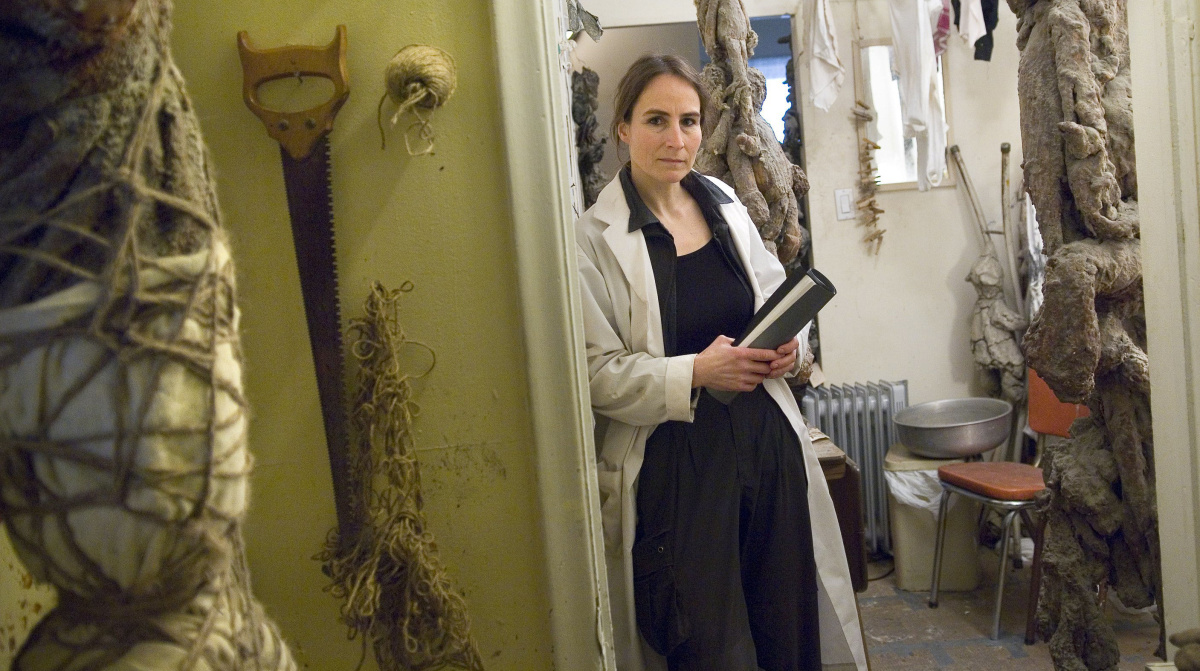
    Iris Haussler, an installation artist born in Germany and living in Canada, inhabits the minds and lives of a series of characters. The character that Kjellman-Chapin examines is Joseph Wagenbach, a long term resident of Robinson Street in Toronto, Canada. So private was Wagenbach, that he very rarely left his house. He took to covering his windows in newspaper to further maintain his privacy and was extremely estranged from his neighbours. But in June 2006, following a prolonged absence that was noted by various people in the neighbourhood, the authorities were called and Wagenbach was moved to a care facility. The discovery of hundreds of handmade creations in Wagenbach’s home following his removal, carefully rendered from wax and plaster, was enough to elicit the support of a committee of experts, including an archivist.

    ar-Art17
    Iris Haussler with ‘Wagenbach’s’ work (Courtesy of http://www.thestar.com)

    All of the handmade objects found in the house had been crafted by Haussler, as had the life of Wagenbach. An extension of the physical, tangible works ‘he’ created, Wagenbach was an art work in his own right, carefully constructed with a completely believable back story (there are many similarities between this and the story of the discovery of Henry Darger’s work). In a 2012 interview, Haussler said of her practice: “My characters are often underdogs, people who are developing obsessive work out of an inner need. When visitors come across their legacies, they notice that these people have dedicated their lives to something bigger in life. Observing that can be inspiring.” [1]

    Another example of this character creation is the Spelvin Collection; dreamt up by Beauvais Lyons, professor of printmaking at the University of Tennessee. The Spelvin Collection, part of the Hokes Archives, was brought together by ‘hoax’ collectors George and Helen Spelvin. It contains works by a string of Lyons’ characters including President portrait maker Arthur Middleton, librarian Emma Whorley, jilted bride Charlotte Black, and a selection of religious tracts printed on cereal boxes by Max Pritchard.

    Kjellman-Chapin explains the motive behind the dual-role creators and curators Haussler and Lyons: “Through works made by avatars, Haussler and Lyons can critique the orthodoxy of Outsider Art from the inside and reveal it to be itself an elaborate fabrication. Their projects are not simply exercises in faux histories; the layered fictions they have created function in a critical capacity.” [2] The practices of Haussler and Lyons are an incredible illustration of how we – the audience – define outsider art. All of the conjured artists quite neatly fit our evaluation of the outsider category. Their value is “located not in the plastic realities of the objects themselves, but in the capacity of the makers’ location in social space to wash over those objects and images and coat them in a taxonomically valued rhetoric of authenticity.” [3]

    arthurmiddleton
    ‘Arthur Middleton’, with his portraits of American Presidents (Courtesy of artoftheprank.com)

    There is perhaps, I think, a lesson here in the recent rise in popularity of outsider art. The example of Haussler and Lyons illustrates the simplicity of creating a believable character whom we can easily (and correctly?) assume would fit even Dubuffet’s strict definition of Art Brut. The use of the term outsider artist is bandied around a considerable amount in Europe and the US at the moment, and there is concern amongst some people that ‘mainstream’ artists will ‘jump on the bandwagon.’ I don’t think Haussler and Lyons have jumped on such a bandwagon – after all, their art is a ‘three dimensional novel’; a whole narrative of these characters, the situations they are in, their thoughts, beliefs, and their experiences. I do wonder, however, why they chose ‘outsiders’ – “shut-ins, outsiders and hoarders with an artistic bent whose fears and obsessions compel their odd creations.” [4] I like to think it’s because they are able to experience true, uninhibited creativity this way, and conjuring up a character so different from themselves provides Haussler and Lyons, and us as the audience, the opportunity to understand more empathically what it might be like for the real Middletons, Horleys and Wagenbachs of the world.

    Personally, I found myself fascinated by the work of Haussler and Lyons, but are they turning their characters into the art work? Are they instead exhibiting vulnerable people (regardless of their realness – or lack of it)? And what does this mean for real ‘outsider artists’? I would be interested to hear what you think about this one, so please let me know in the comments below.


    References


    [1] Artist Interview: Iris Haussler, Now Toronto

    [2] Kjellman-Chapin, Fake Identity, Real Work, p153

    [3] Kjellman-Chapin, Fake Identity, Real Work, p153

    [4] Artist Interview: Iris Haussler, Now Toronto

    Further information

  • Brian Gibson: Fessing Up

    Brian Gibson: Fessing Up

    Featured image: Agnes Richter, needlepoint jacket [notmodernart.tumblr.com]


    Following Brian Gibson’s fantastic previous post, entitled ‘What does it mean to be an Outsider?‘, he has written again for kdoutsiderart. This time, focusing on ‘confessional’ art. Here, her discusses whether artists who have experienced trauma or health issues feel ‘obliged’ to create art that is overtly confessional?

    There are a lot of people (past and present) whom I really admire who have the ability to write down, draw and paint to reveal a deeply personal, integral part of themselves succinctly and often explicitly. I have the greatest respect for those people who have such courage, placing a personal account of a particular aspect of their life in the public realm. There are certain works that have completely stirred me emotionally: Frida Kahlo’s drawing of her miscarriage and a painting of an abusive relationship by an artist showing at the Outside In Exhibition at Pallant House Gallery and the Outside In: West exhibition at the Somerset Museum are but two.

    When so much art of the modern era can be said to be autobiographical and increasingly stacked online into categories, is it wrong or demeaning to place such works into a genre defined as ‘confessional art’? I certainly don’t think that the two works which I have mentioned were specifically created to fit a market within a particular realm of art practice, even so, there are some artists such as Tracy Emin who seem to have made a very successful career out of  ‘fessing up’.

    Personally, I don’t know what to make of Tracy Emin anymore. She is now very much part of the art world establishment (I don’t begrudge her success), having evolved from what could be considered a quasi-outsider stance, in part due to the way in which she presents herself and her  work, tapping into the psychoanalytic influenced work of Louise Bourgeois and such works from the Prinzhorn collection as Agnes Richter’s needlepoint jacket. Whatever one thinks of Ms Emin herself or her work, she  seems to know how to profit from fessing up her past, whilst remaining in the driving seat. Likewise, the pianist James Rhodes has spoken openly about his experiences of abuse and mental health issues, he too seems to be in the driving seat, which to be honest is a pretty enviable position. Whilst this tack might work for some individuals, I am not so sure if this should be considered a creative formula for all those artists who have experienced mental health issues or trauma of some kind.  Even so, it can be tempting to mis-read such paths to success, acceptance and acknowledgement as being primarily down to being completely open; revealing your trauma, displaying it in your artwork, and putting it in the public realm for all to see.

    I fundamentally believe that people should not be silenced for what they have experienced. I have heard enough about people in glass houses and it being better to remain silent than be thought a fool. However, with the increase of social media platforms, I have noticed an increase in people telling their story because they can, but I wonder what happens after the rush of ‘likes’, when people find something new to share, does anything change significantly for the person concerned?  There are some wonderful blogs out there with some incredibly powerful images; there are also other stories which I fear will go unheard and unseen.  It takes a lot of courage to fess up, to speak out and say something but my concern is that a lot of confessional art will over time be reduced to the status of another form of ‘the selfie’.


  • Brian Gibson: What does it mean to be an ‘Outsider’?

    Brian Gibson: What does it mean to be an ‘Outsider’?

    I asked artist Brian Gibson for his thoughts on the term ‘Outsider Art’ and what it means to him as a practising artist.​ Below is his response and a display of his own artwork. Click here for more information on Brian and his work.

    I have never been quite certain as to where I fit as an Artist. For a long time the thought of being an artist felt very alien to me, it was after all another culture. Artists were clever, confident, sophisticated and well educated people. That was not how I saw myself; I was just some lone youth from a council estate on the outskirts of Newcastle from a single parent household who had a history of truancy with little to show in terms of qualifications.

    On the domestic front it was my Father who could draw, he was very gifted, he could draw calligraphy free hand or paint golden Celtic knots or Spanish dancers onto painted egg shells and all sorts of other intricacies. He was a gifted man who never really dared to share or show his talent beyond the garden gate. In comparison my creative efforts were never so precise. My handwriting was spidery and I never could quite get the hang of perspective; such things didn’t come natural to me, so the notion of becoming an artist wasn’t even on the radar for me. However there was a creative flame that flickered within me and I was fortunate that my efforts were never discouraged and even if the end results often fell short of how I wanted things to be, I was at least able to lose myself in what I would later know as “the creative process.”

    Brian Gibson, White Rabbit
    Brian Gibson, White Rabbit

    Art became less of an alien culture, as I got to know various accomplished works of art via my regular city visits to the art galleries and libraries when absconding from school. Also importantly for me was the fact that I had met someone who had decided to embark on their own creative path; he was a poet by the name of Barry MacSweeny. He lived on the adjacent Council Estate and was the elder cousin of two of my school friends, so occasionally we could find him in his mother’s kitchen writing away whenever we called round for a biscuit and drink of pop.  As one of the emerging 60’s poets, his first book of poems was published when he was just 19 years old. Being older he didn’t have much to do with us, appearance wise he looked a bit like Terry Collier from the TV series “The Likely Lads”; dapper and wiry.

    Having known such a person in my youth left a simmering impression on me. Why I mention him here is that he chose to do something creative and that was influential for me and secondly, if he were a visual artist he might now be considered posthumously to be some kind of Outsider. Although he never went to University, he was nominated for the poetry chair at Oxford. This however turned out to be just a cynical publicity stunt concocted by his publisher. This humiliation along with his own personal demons contributed to him remaining a marginalised poet for over 25 years. He died in 2002 aged 52.

    Brian Gibson, Those Late John Garfield Blues
    Brian Gibson, Those Late John Garfield Blues

    The original definition of  term “Outsider” set out by Roger Cardinal back in the 1970s seems to have evolved and undergone a seismic transformation in recent years, particularly with the expansion of social media. Such connectivity has meant that creative people working outside the mainstream are no longer so dependent on the nod of the well informed to decide whether this or that piece is an actual work of art.

    Now individuals can link up with other individuals, share ideas, post up images, form groups, put together exhibitions and even sell their work. Autonomy, self-empowerment and money – it all sounds rather good but the reality may be a little different. To be an Outsider Artist seems to have become incredibly fashionable of late, numerous tee-shirts and accessories in Selfridges and articles in Sunday supplements seems to be of good indicator of this.

    Outsider Art is now being presented as the more rebellious sibling to the established world of fine art, with Folk art the more amenable earthy but less noteworthy cousin. Outsider Art is more rock and roll, more edgy, and people are proud to wear their Outsiderness like a badge of honour. Now and this may not be a bad thing but I am aware that anyone can get in on the act.  I have seen a lot of savvy websites by individuals where the work veers into being more about a product in a particular style that happens to look like Outsider Art. As a trained artist who was dealing with his or her own mental health issues once said to me: “Outsider Art is easy to fake,” or at least it might seem that way. So a question that I have is “What does it means when such work becomes an entrepreneurial enterprise?”

    Brian Gibson, Candy Says
    Brian Gibson, Candy Says

    There are many other questions regarding the increasing popularity and branding of Outsider Art. I can envisage a future where a retailer such as Primark would be either selling tee-shirts cheaply of original prints from acknowledged Outsiders such as Madge Gill or  Jean Dubuffett and the like or, more likely – to save on copy write issues – just employing some people to produce something that looks a bit  like  the work of an Outsider Artist. Is this any more different than buying an original reprint from a more exclusive and prestigious source or to put it another way, who gets the money and what is the money the measure of ?

    Despite its current popularity, Outsider Artists tend to be Outsiders for a reason. It may well be that the making of work is the sole or soul reason why a person pursues a creative path, everything else may well be an after thought. The poet Barry MacSweeny could write and he could rant and he had his own demons so there were times when he just couldn’t get much of any thing together. I don’t think that this lessened the quality of his work, but I doubt if it served him very well in getting his work published. This seems to be the reality for a number of visual artists that I know, making the work is one thing, doing the rest is another. The added pressures of presenting work to a public audience to a deadline and dealing with unknown people, along with all the other stuff can be more than enough for most.

    Brian Gibson, Way Down in a Hole
    Brian Gibson, Way Down in a Hole

    For a good while now marginalised individuals and groups have worked hard to put themselves in the frame work so to speak in a way in which they feel represents them in the way that they wish to be seen and valued. It can take a lot of time and thought to develop environments where people feel safe and supported but I am sure that I am not the only one to have heard stories of unscrupulous figures waiting in the wings who are only too willing to put their profit and their own prestige way before the people they purport to represent. Having worked with vulnerable adults for over ten years now, I am just a little concerned that with so many self proclaimed Outsiders seeking centre stage, individuals and groups who have been historically marginalised may once again find them selves out of the picture.

    Brian Gibson, Sometimes I Feel Like a Motherless Child
    Brian Gibson, Sometimes I Feel Like a Motherless Child

    A note on Brian’s work (presented in this blog post):


    Earlier this year I produced six pieces with the overall title of  “I am frightened and timid and I don’t want to play” specifically for an exhibition as part of Fringe Arts Bath. Some of  the works are named after the titles of songs but don’t really have much to do with the songs themselves, if at all.


    Click here for Brian’s website
  • Taxonomy: The Problems of Categorisation

    Taxonomy: The Problems of Categorisation

    Above image: Bill Traylor, Brown Mule, 1939 (source: www.petulloartcollection.org)


    “Categorisation is something that we do naturally and unconsciously every day. We recognise one animal as a cat and another as a dog. We organise objects in the world around us in ways that reflect these categories. In our kitchens, we keep baking trays with other baking trays, saucepans with other saucepans and keep food separate from cleaning products. We categorise ideas, people, tasks and objects. Categorisation is fundamental to the way we think.” – James Sinclair, 2006.

    As humans, we categorise things to make sense of the world; we link new things to past experiences, and we group similar people or ideas. We group genres of books in the library. We archive our emails in labelled folders. If we did not do this, we would “become inundated by our environment and unable to cope.”[1] This is a poignant theory with regards to the relative ambiguity of Outsider Art.

    I am not sure if you have heard of the fictitious taxonomy of animals described by writer Jorge Luis Borges in 1942. It looked at the work of John Wilkins; a 17th-century philosopher who proposed a new language that would parallel as a classification system. Borges wanted to illustrate the arbitrariness of such a way of categorising the world, so used an example of a taxonomy taken from an ancient Chinese encyclopaedia entitled ‘Celestial Emporium of Benevolent Knowledge.’ The list described in the encyclopaedia divides animals into one of 14 categories:

    • Those that belong to the emperor
    • Embalmed ones
    • Those that are trained
    • Suckling pigs
    • Mermaids
    • Fabulous ones
    • Stray dogs
    • Those that are included in this classification
    • Those that tremble as if they were mad
    • Innumerable ones
    • Those drawn with a very fine camel hair brush
    • Et cetera
    • Those that have just broken the flower vase
    • Those that, at a distance, resemble flies.

    Quite ridiculous, right? It is a similar story for the huge list of terms we have that fall under the umbrella of Outsider Art (not quite so ridiculous, but probably equally as long). Here are just a few that I have come across at some point: self-taught art, visionary art, primitive art, naive art, marginalised art.. etc. etc. Sometimes giving things labels help us make sense of them, but it can also mean we end up generalising about people or situations that, actually, we have absolutely no idea about.

    I have written before about my position on the debate with regard to the term Outsider Art. I sit somewhere between thinking we should not need it, and thinking that to have a label means that people recognise it. Particularly people who have not been aware of it before. We have seen, more so in the last year, an exponential increase in awareness of the subject (particularly in the UK, thanks to a number of high profile London-based exhibitions on the subject). Now, when I tell someone what I blog on, they have some idea what I am talking about. And surely, this can only be a good thing. Raising the profile of this art is of course number one on my agenda. But following close behind is number two on the agenda: to eliminate the discriminatory and redundant term used to describe it. It is a double-edge sword, it seems; raising people’s awareness of a term that one day we hope to be rid of.

    Shinichi Sawada
    Shinichi Sawada

    Outsider Art is one of those terms that would fit into that ‘other’ tick box you get on forms, or your ‘miscellaneous’ email folder. It is where everything that cannot be neatly categorised can be bundled up, and we can smile, thinking we’ve hoovered the dust up. Everything is in its place. But it is this attitude that means that it is becoming increasingly difficult to break open Outsider Art and get people to actually think about what they are grouping together. To put it crudely, we are grouping people diagnosed with mental health issues with ex-offenders, ex-offenders with those who have not been to art school, and those who have not been to art school with artists who paint or draw in a way that is not similar to what we conventionally consider to be art. We are, in essence, grouping people. Is this not the same as those sweeping generalisations that go against our twenty-first century ideas about acceptance, inclusivity, and political correctness? Do all women like the colour pink, all men like cars and sport? I do not recall other types of art being categorised in this way. Surely this in some way goes against our innate need for categorisation, because – like the Chinese encyclopaedia – it does not make any sense.

    To move forward, we need to continue to break down the barriers around what we consider to be Outsider Art. We need to have open conversations about what it is, where it is going, and what it all means. But then we need to consciously think about – as humans with innate needs – how we can better categorise the work under this umbrella. I, for one, have not figured this out yet, but I feel like we are making some progress simply by raising awareness about it. It feels like the first step on a ladder that looks a little something like this: Awareness > De-constructing > Re-constructing. And maybe the re-construction of the category will provide evidence that we actually do not need such a term – we will realise that the work of ‘Outsider Artists’ actually fits within the ‘accepted’ canon of art history; after all, all art made in the past is, by its existence, the history of art.


    Let me know what you think in the comments below, or on Twitter: @kd_outsiderart

    References

    [1] Kate Griffiths, ‘The Role of Categorization in Perception’, 2000

  • Outsider Art.. or ‘Inside’ Art: January Thoughts

    Outsider Art.. or ‘Inside’ Art: January Thoughts

    Above image: Henry Darger


    Happy New Year everyone – I hope you are all enjoying what 2014 has had to offer so far. I thought I would do a bit of an off the cuff ‘rambling’ blog post talking about a couple of ideas I have recently had relating to the term ‘outsider art’. Hopefully you will share your ideas and opinions on these below.

    The festive period brought a bit of a break from blogging and the art world in general, so, as I rekindled old and started new conversations about ‘outsider art’ in the new year, I had some fresh ideas that I wanted to share with you. The first came to me earlier in the week, when I was thinking about how I would now – two years on from starting the blog – describe the term ‘outsider art.’ This is an art that categorically comes from within, an art that (according to Dubuffet) isn’t influenced by art history or external factors. Despite my absolute disagreement with this idea of Dubuffet’s, I do believe that one of the reasons I am so drawn to ‘outsider art’ is because it epitomises raw communication from the heart and soul. Why then, do we call it ‘outsider art’ – shouldn’t it be ‘inside art’ or ‘art from within’? It seems absurd to me, as someone who enjoys using words, that the term itself should be so contradictory to the work caught beneath this umbrella.

    Often, when I tell people that I write about ‘outsider art’, they’ll ask: “Is that open-air art?” Hmm, it would make sense, wouldn’t it? I think someone also shared this opinion on BBC Imagine’s recent programme dedicated to ‘outsider art’; ‘Turning the Art World Inside Out’ (I think you can still catch it here on Youtube). So why, I wonder, can’t we give it a more deserving, fitting, and altogether less controversial name? ‘Art from within’ or ‘Inside’ art might go some of the way to distilling visions of the ‘societal outsider’ and alleviate the current separation between ‘outsider art’ and the ‘mainstream’ art world. Or, to play devil’s advocate, do we even need a label at all? I’m not so sure any more… Let me know what you think.

    Bill Traylor
    Bill Traylor

    The second thing I wanted to write about stems from a conversation I had on a recent visit to a prison. I was asked how artists who are also offenders or ex-offenders could ever shake the label of being an offender or an ex-offender if they are continuously associated with organisations who are known to work with these groups. This is something I have thought about previously, but to have someone who is potentially in that position to voice their concerns made me re-evaluate its importance. I know a lot of fantastic organisations working with ‘marginalised’ groups, but I wonder if perhaps there is something in this idea that people don’t want to be associated with their past or known by one label that doesn’t encompass everything they are or can be. For example, if art is marketed as ‘offender art’, does that mean the creator’s image is tainted; that they are not seen simply as an artist working within the art world?

    I have always wanted ‘outsider art’ to be exhibited and publicised in a way that eliminates in-depth biographies, and instead just focusses on the art as a captivating piece of work created by a talented individual. There are plenty of organisations operating across the country that do a fantastic job in supporting artists who are perhaps facing barriers to the ‘mainstream’ art world for whatever reason, and I think that these charities and groups are undoubtedly needed; in particular to encourage and nurture an artist’s first steps into, or a return to, the art world. The conversation in the prison concluded with a suggested solution that these organisations are invaluable as a springboard towards a career as an artist. By becoming an artist unwanted labels can be lost; replaced, if necessary, with more favourable and accurate ones.

    I would really value and appreciate your ideas on either of these thoughts, so please post any comments below. Happy New Year!

  • Outsider Art under Analysis: Part Two (Answers)

    Outsider Art under Analysis: Part Two (Answers)

    Above image: Marcel Storr

    In Outsider Art under Analysis: Part One (Speakers), I wrote about the talk I attended at the Wellcome Collection on 15 June 2013. In this post, I will answer some of the questions raised during the discussion (no research, just my own thoughts). It would be great to hear everyone else’s answers too, so feel free to add a comment below the post.


    1) Can ‘outsider artists’ talk about their work meaningfully and coherently? 

    This is a difficult one, as I know a lot of people like accompanying interpretative material to aid them when they view an artwork. However, I think that art is really another form of communication, and so the idea that some artists – for example those without speech or writing – can’t actually talk about their work seems quite unimportant. This is more of a question that encompasses the whole of art history and not just ‘outsider art’; do we need accompanying material, or is the work alone enough? I think a lot of artists who are aligned with/align themselves with the notion of ‘outsider art’ (and actually, artists more generally) do use creativity as a way of communicating their ideas, so for this reason, does it matter that some may not be able to ‘talk’ about their work?

    2) Why do we feel we have to label people? Why can’t outsider artists just be called artists?

    This is obviously an on-going debate with regards to the label ‘outsider art,’ which I have spoken about in a previous blog post. I, for one, would love for all art to be considered as just ‘art’ and all artists to be considered as just ‘artists.’ But I think it’s a bit more complicated than that. In the present day, I actually think that the term ‘outsider art’ is verging on redundant. In ten, maybe twenty years’ time, I don’t think we will use it. But, if having had a label at some point has helped raised awareness and can actually bring this art into the mainstream, then it can only be a good thing.

    Karl Schmidt, Rottluff, 'The Factory,' 1909, Brucke Museum, Berlin
    Karl Schmidt, Rottluff, ‘The Factory,’ 1909, Brucke Museum, Berlin

    3) Did ‘outsider art’ exist before the 1930s?

    The golden age of Outsider art was between 1880 and 1930 – so in short, yes! It emerged at this time because of the development and progression of European psychiatry. Patients were encouraged to draw, paint, and take part in alternative activities to aid their recovery. This was also the period when modern artists started to take notice of what was becoming quite a powerful and popular type of art.  There was a lot of discontent due to accelerated mechanisation and urbanisation in Europe at this time, and of course, it encompassed two world wars and a period of huge unrest in between. Many artists working during this period were looking for new direction – they wanted a way to illustrate their discontent, a new way to depict the devastated world around them. The idea that ‘outsider artists’ were self-taught, yet representing the world as they saw it, and their inner worlds, regardless of whether this fitted with the accepted ‘canon’ of the time was something that really resonated– most notably with the German Expressionists such as Karl Schmidt-Rottluff and Max Beckmann, and, of course, the Surrealists.

    The term ‘outsider art’ itself was coined by Roger Cardinal in 1972, following on from Jean Dubuffet’s ‘Art Brut’ or ‘Raw Art’, which emerged in the 1940s.

    4) What is ‘outsider art’? In simple terms – has it become outdated?

    In simple terms, it is very outdated and almost redundant. The meaning of it has changed so much over the decades that actually describing it proves very difficult! It originated as a term to describe work created by those incarcerated within mental institutions, but has evolved to become more of an umbrella term for a whole host of different stylistic approaches – naïve art, folk art, self-taught art, to name but a few. Again, it is useful for the time being in that this art can be ‘called’ something, and is not just floating in the ethers, on the margins of the art world. In fact, particularly this year with the huge exhibitions taking place that are showcasing the talents of artists under this term, it seems almost ridiculous to describe this work as being ‘outside’ of the mainstream. The hope is that one day it won’t need a specific term and work created under this umbrella will simply be known as ‘art.’

    5) Not everyone is an artist, and not everything is art. People have to go to art school and study what has come before to become an artist.

    I really wasn’t sure about this statement. I know a lot of people work very hard to become artists in the dog-eat-dog art world; the go to art school, they learn about art and artists that have gone before, and they build on this in their own practice, BUT I do think that everyone has an inner artist, if this is too far, perhaps, then at least everyone has an immense amount of potential for creativity inside of them. I just don’t know who’s to say what is and isn’t art, and why people who aren’t formally trained cannot be considered as artists. I think this is one of the major reasons that the term itself needs to be forgotten; it gives the illusion of a distinction between who is ‘inside’ and who is ‘outside’ and therefore who can be called an ‘artist.’

    Jean Dubuffet, 'Spinning Round', 1961, Tate.
    Jean Dubuffet, ‘Spinning Round’, 1961, Tate.

    6) Why is ‘outsider art’ not taught as part of the art historical canon? 

    This is something that I really hope will change soon. As part of my undergraduate degree, I was very lucky as I was actually taught about the emergence of outsider art, and about artists such as Louis Wain and Richard Dadd. I think people find it difficult to include in the canon because it is not a ‘movement’, and it did not take place over one definite period of time – it has been happening throughout this period – running parallel, if you will, alongside the history of modern art.

    I also think that historians might find it difficult to talk about – there’s no definitive style etc. And, as Roger Cardinal said at the talk – it is a movement of individuals. I think the way forward is to include ‘outsider artists’ alongside teachings in the development of modern art. After all, they were immensely influential to hugely prolific modern artists, particularly those within the Surrealist movement, and this influence should not be forgotten.

  • Outsider Art under Analysis: Part One (Speakers)

    Outsider Art under Analysis: Part One (Speakers)

    Above Image:  ‘The Economically Booming City of Tianjin, China’ by Norimitsu Kokubo


    On Saturday 15 June, I visited the Wellcome Collection for a talk on the history and development of ‘outsider art’; an event accompanying the current ‘Souzou: Outsider Art from Japan’ exhibition. Here, I have outlined the main points covered by each of the speakers, and highlighted a few of the questions raised during the discussion. I am hoping to come back to these questions in ‘Part Two’, and answer them for myself. 


    The panel consisted of Roger Cardinal; art historian and ‘coiner’ of the term ‘outsider art’, John Maizels; editor of Raw Vision Magazine, David O’Flynn; consultant psychiatrist at the Lambeth and Maudsley Hospitals, and Shamita Sharmacharja; curator of the current Wellcome Collection exhibition.

    John Maizels chaired the event which aimed to explore the history of ‘outsider art’, right from its early days as a diagnostic tool for psychiatrists to the growing popularity of visionary artists in the present day. Each speaker gave a presentation on their specialist area, followed by a chance for questions and a discussion with the audience.

    Roger Cardinal spoke first, defining work aligned with the term as anything ‘outside the spheres of normal art making,’ before going into detail about the three highly influential characters who really shaped the beginning of what we now know as ‘outsider art’: Jean Dubuffet, Hans Prinzhorn, and Andre Breton. Roger discussed how early on in its development, ‘outsider art’ was merely a diagnostic tool within the asylums of 19th- and early 20th- century Europe. It was Prinzhorn’s interested in the work that really encouraged a much more creative and aesthetic stance, rather than a continuing pathological one.

    The point I found most interesting during Roger’s talk was his stating that ‘outsider art’ is categorically not a movement – it is not a school, a style, or a political movement – instead, it is a ‘movement of one’ in the sense that each artist should be looked at separately. It is a ‘movement of individuals.’ This was great to hear, as it is something I have been trying (and seemingly failing!) to put into words… until now!

    'Untitled', by Shota Katsube
    ‘Untitled’, by Shota Katsube (source: careersuicideblog.wordpress.com)

    Next to speak was David O’Flynn. Having a psychiatrist on the panel was something I found really interesting, and I really wasn’t sure what to expect. I continuously advocate that work aligned with ‘outsider art’, or (for want of not using the term) work created by those on the margins of society, should not in any way be associated with the backgrounds or biographies of the artists, so to have a psychiatrist on the panel was something I questioned – would it take away from the focus on the aesthetic? Would it again pathologise the work?

    David, however, is not only a psychiatrist, but also manages the Adamson Collection – a collection of art founded by Edward Adamson, the ‘father’ of art therapy (I am definitely not an endorser of art therapy – and was pleased to hear David say that he was also extremely ‘anti-interpretation’). He spoke about the change in European mental health care in the mid 20th-century, and how this had a huge impact on the emergence of ‘outsider art’. There was a move from psychiatrists ‘discovering’ or ‘finding’ work created by patients to them actively setting up creative spaces where patients were encouraged to create.

    David also raised a few interesting points with regards to the Adamson collection – and to psychiatric collections more generally. Who has ownership of the work? They were created in a hospital environment during the process of healing; are they art objects or tools for healing? Should the creators be named? What are the copyright issues? David argued that the artists’ names should be shown, afterall, they were denied an identity in the asylums; they shouldn’t be excluded a second time around.

    Although I’m not sure how I feel about psychiatrists talking about ‘outsider art’ (or, actually, just art in general), I do think it was important for David to be there as the emergence of ‘outsider art’ relied quite heavily on the influence and encouragement of certain psychiatrists.

    'Mother', by Toshiko Yamanishi
    ‘Mother’, by Toshiko Yamanishi

    The final speaker was Shamita Sharmacharja, who focused on her curating of the ‘Souzou’ exhibition. Shamita said she had chosen to go for an ‘object-led’ approach rather than a heavily biographical or health focused interpretation – something which I think is very important when displaying ‘outsider art’. It means that the artists’ talents are not simply pushed to one side in favour of their medical history. Shamita quite rightly stated that the artists’ works were  art – she would not focus on the biography of other artists she was displaying, so why would she for this exhibition?

    After the introductory speeches, it was time for audience questions. The questions were wildly diverse, and came from people who worked with artists outside of the ‘mainstream’ art world, and from those who knew fairly little about the subject.


    The Questions

    1) Can ‘outsider artists’ talk about their work meaningfully and coherently? 

    2) Why do we feel we have to label people? Why can’t outsider artists just be called artists?

    3) Why is there so much interest in Japanese ‘outsider art’ at the moment?

    4) Did ‘outsider art’ exist before the 1930s?

    5) What is ‘outsider art’? In simple terms – has it become outdated?

    6) Not everyone is an artist, and not everything is art. People have to go to art school and study what has come before to become an artist.

    7) Why is ‘outsider art’ not taught as part of the art historical canon? 

    In Outsider Art under Analysis: Part Two, I will return to these questions and answer them for myself. I would be really interested to hear other people’s responses to the questions as well.

  • ‘Outsider Art’ and the ‘Traditional’ History of Modern Art

    ‘Outsider Art’ and the ‘Traditional’ History of Modern Art

    In most people’s minds, the development of art (more specifically Western art) in the twentieth century appears pretty linear. It starts with Manet – the father of Modern Art – and the Salon des Refuses in France and moves through the ‘isms’: French Impressionism, Post-Impressionism, Symbolism, Expressionism, Cubism… etc. etc., without much divergence or digression.

    Roger Cardinal, in his essay ‘Cultural Conditioning’ from his pioneering publication Outsider Art (1972), speaks of Jean Dubuffet’s pamphlet, Asphyxiante culture. In the pamphlet, Dubuffet recalls a conversation with a teacher about there always having been an art “alien to established culture and which ipso facto [has] been neglected and finally lost without a trace.”[1] The teacher replied that “if such works had been assessed by contemporary experts and deemed unworthy of preservation, it was to be concluded that they could not have been of comparable value to the works of their time that had survived.”[2] The teacher expanded – he had seen some German paintings that had been executed at almost exactly the same time as the Impressionists were making their mark. BUT, they bore no resemblance to the Monet’s, Sisley’s and Pissarro’s that were taking the art world by storm. The teacher then felt obliged to admit that “they were aesthetically inferior to the work of the Impressionists; art criticism had accordingly been perfectly justified in preferring the latter.”[3]

    In response to his teacher’s somewhat passive acceptance of the power of critics and historians in shaping the history of art, Dubuffet pointed out:

    “The stupidity of this sort of reasoning, based as it is on a notion of objective value that betrays the worst kind of cultural myopia: where respected critics have testified their approval, there can be no dissension; bad marks in art can never be forgiven, at least not by a layman.”[4]

    To Dubuffet, his teacher had “bowed before the prevailing wind emitted by the Establishment, and could consent to find objective beauty only in the place marked out by a superior order.”[5]

    Conversely to Dubuffet’s teacher’s dismissal of art not accepted by the Establishment, I for one can certainly see comparisons between the work of ‘outsider artists’ and the Manets, Matisses and Mondrians of the Modern Art world. The most glaringly obvious comparison (although I’m not a fan of comparisons) comes from the contradictorily all-encompassing Expressionism – which could in theory act as the sole ‘label’ for all of its preceding movements. The essential idea behind Expressionism (which originated in Germany in around 1910) was that “art should not be limited to the recording of visual impressions, but should express emotional experiences and spiritual values.”[6] I think these descriptions also aptly define the majority of works of ‘outsider art’ – raw and emotive, spiritual; a visual incarnation of the inner voice.

    At the time of increasing popularity for German Expressionism, the artists who aligned themselves with the ‘movement’ were becoming aware of ‘outsider art’. They were inspired. The psychologically isolated mechanical era of industrialisation in Germany combined with the imminent threat of war led artists such as Max Beckmann to look for a new language for these continuing contextual dilemmas. German Expressionists looked to convey certain aspects of ‘outsider art’ in their own quest to create a language that was undoubtedly a critical response to contemporary political and social problems.

    Max Beckmann, 'The Night'
    Max Beckmann, ‘The Night’

    So… How is ‘outsider art’ so often excluded from the rigid linear progression of twentieth century Modern Art when it so obviously informed one of the biggest movements of this era?

    Similarly, Henri Rousseau – ridiculed during his life, and never embraced by the ‘accepted’ canon – has come to be recognised as a self-taught genius with works of an impeccably high standard. Alfred H. Barr, Jr., writing the foreword for They Taught Themselves: American Primitive Painters of the 20th Century, notes that, even alongside the famed French Impressionists, “Rousseau now seems one of the foremost French painters of his generation,” who can undoubtedly “hold [his] own in the company of [his] best professionally trained compatriots.”[7]

    Henri Rousseau, 'Exotic Landscape'
    Henri Rousseau, ‘Exotic Landscape’

    Likewise, the thousands of drawings created by Bill Traylor – who was born into slavery in Alabama in 1854 – “didn’t fit into the heroic story of Modern Art.”[8] Jonathan Keats, writing for Forbes, insists that if Traylor had “been known beyond the city limits of Montgomery, he’d have been a worthy rival of Picasso and Matisse.”[9] Keats continues, claiming that Traylor’s work could have “given up the game” – it was “totally untutored yet as sophisticated as anything in a museum.”[10]

    Bill Traylor, 'Untitled Black Male Boar with Curly Tail'
    Bill Traylor, ‘Untitled Black Male Boar with Curly Tail’

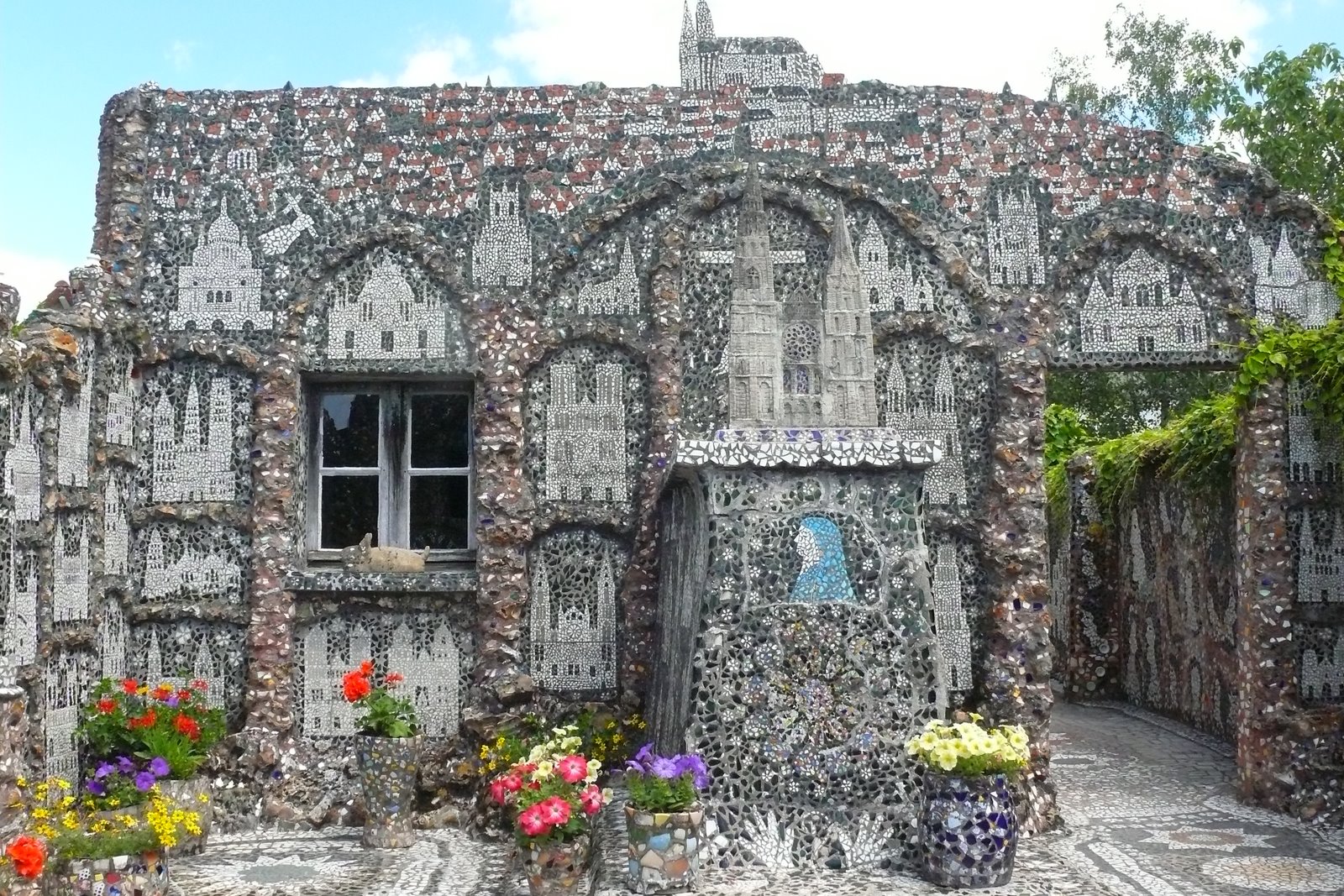
    There are even more glaringly apparent comparisons as we move towards the present day, with the rise of the ‘Ready Made’, or of the ‘Found Object’; both an illustration of the Modernist revolt against traditional materials which saw artists attempt to demonstrate that art can be made from anything. A lot of the most well-known ‘outsider artists’ used any materials that they could get their hands on. Although perhaps not a conscious choice – like those rebellious Modern artists – ‘outsider artists’ are often renowned for their innovative use of found materials. One of the most famous examples is Raymond Isidore’s ‘Picassiette’ – his embellished property, which he decorated with salvaged shards. Perhaps most ‘outsider artists’ could come under this ‘category’, for many of them used non-traditional art-making tools such as toothpaste, or in Traylor’s case, the backs of discarded posters and cardboard scraps.

    Raymond Isidore, 'La Maison Picassiette'
    Raymond Isidore, ‘La Maison Picassiette’

    The list goes on – and the longer it gets, the more confusing it is that the highly influential and original works of ‘outsider artists’ were excluded from the mainstream art world at their time of production and have since been excluded from what we know as ‘The History of Art.’

    The celebrated ‘outsiders’ of today may not have been critically acclaimed at the time, but – luckily – they have not been “neglected and finally lost without a trace”; as Dubuffet’s teacher claimed of most art “alien to established culture.”[11] The more we look back at the development of Western art in the twentieth-century, the more we can start to place pioneering ‘outsider artists’ into the canon of Modern Art. Perhaps with hindsight we can look back at ‘outsider art’ made during the twentieth century and realise that the term has, in fact, been obsolete this whole time.

    As Alan Bowness writes in Modern European Art – a bite-sized overview of the twentieth century art world:

    “Artistic ‘movements’ are the generalizations of journalists when confronted by the existence of new work that cannot be fitted into any convenient pigeon hole. Such terms survive only because they have a certain historical validity, and also because they help to confer some sort of order on the apparent anarchy that the contemporary art scene has, ever since Romanticism, seemed to present.”[12]

    References

    [1] Roger Cardinal, “Cultural Conditioning” in Outsider Art, 1972 [available online: http://www.petulloartcollection.org/history/article.cfm?n_id=19%5D

    [2] Ibid.

    [3] Ibid.

    [4] Ibid.

    [5] Ibid.

    [6] Alan Bowness, Modern European Art, (Thames and Hudson, 1972)

    [7] Alfred H. Barr, Jr., Foreword to They Taught Themselves: American Primitive Painters of the 20th Century (1942, reprinted 1999) [available online: http://www.petulloartcollection.org/history/article.cfm?n_id=1%5D

    [8] Jonathan Keats, ‘Where does Outsider Art belong? Ex-Slave Bill Traylor Reigns Supreme at the Philadelphia Museum’, Forbes [available online: http://www.forbes.com/sites/jonathonkeats/2013/03/13/where-does-outsider-art-belong-ex-slave-bill-traylor-reigns-supreme-at-the-philadelphia-museum/%5D

    [9] Ibid.

    [10] Ibid.

    [11] Op. Cit., Cardinal

    [12] Op. Cit., Bowness