When I came across ARTHOUSE Meath a couple of months ago, I thought that it was an incredible idea, and so when the opportunity arose to do a post on them, I jumped at the chance. ARTHOUSE Meath is an innovative social enterprise creating artworks and products for sale at exhibition, trade and retail. The works produced and sold are created by people over 19 living with severe epilepsy and learning difficulties.
The ARTHOUSE’s main aim is to show what can be achieved – they have been the trade stationary supplier for Mary Portas concessions stores in House of Fraser – and 100% of sales revenue goes into the project for ongoing development, with any profit going to the Meath Epilepsy Charity.
Below are two short case studies on two of the artists working at ARTHOUSE Meath; Marjorie Doherty and Peter Andrews.
Marjorie Doherty
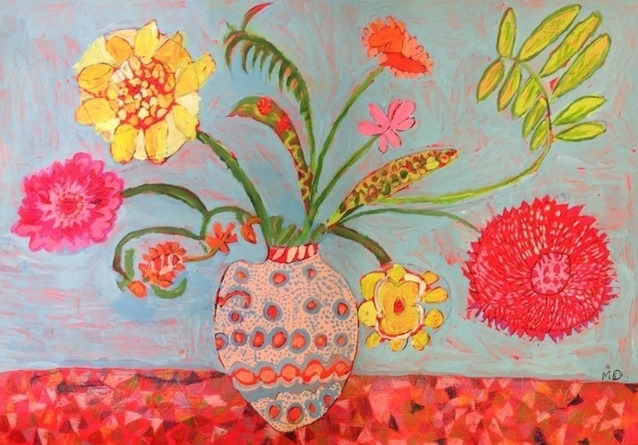
Marjorie first came to the Meath Epilepsy Trust in October 2005 when ARTHOUSE Meath had just been set up. Although Marjorie had never done much art before, she seemed to really relish the fact that she was doing something with purpose. An incredibly hard worker, Marjorie visits the ARTHOUSE for two full days a week, where she creates stunning pieces of work proving that she has great artistic skills and is extremely dexterous.
“Art is my favourite thing to do. I do birds, drawing birds and painting things.” – Marjorie Doherty
Marjorie Doherty, ‘Best Dad’Marjorie Doherty, ‘Spirit of Summer’
Peter Andrews
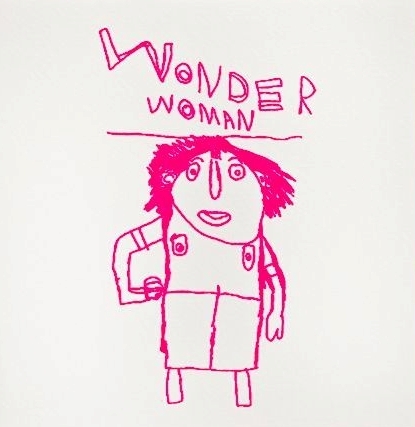
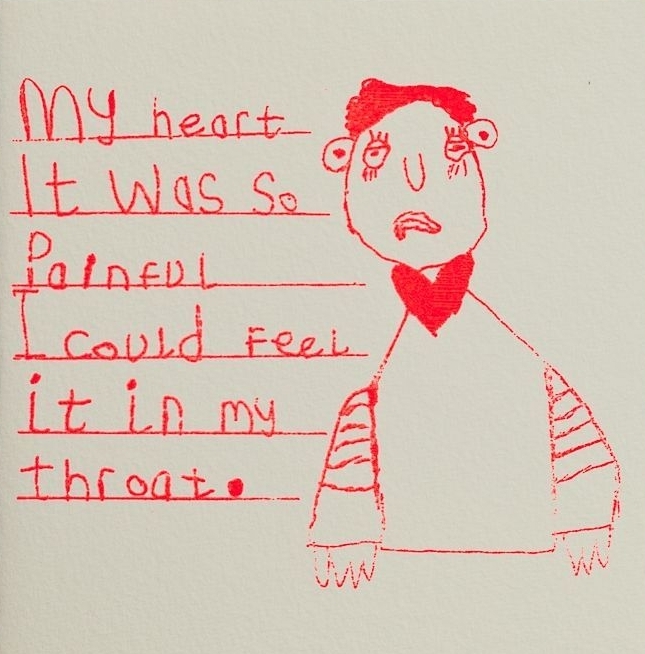
Peter visits the ARTHOUSE Meath studio nearly everyday, meaning he has become one of the organisation’s most prolific artists. He also works front of house, greeting customers in the shop and selling products. Recently, Peter sold his own work to a customer in the shop; an interaction that embodies everything that ARTHOUSE Meath strives to achieve.
“I love painting because it calms me down. I love to paint ladies because of the feelings inside when I achieve nice paintings.” – Peter Andrews
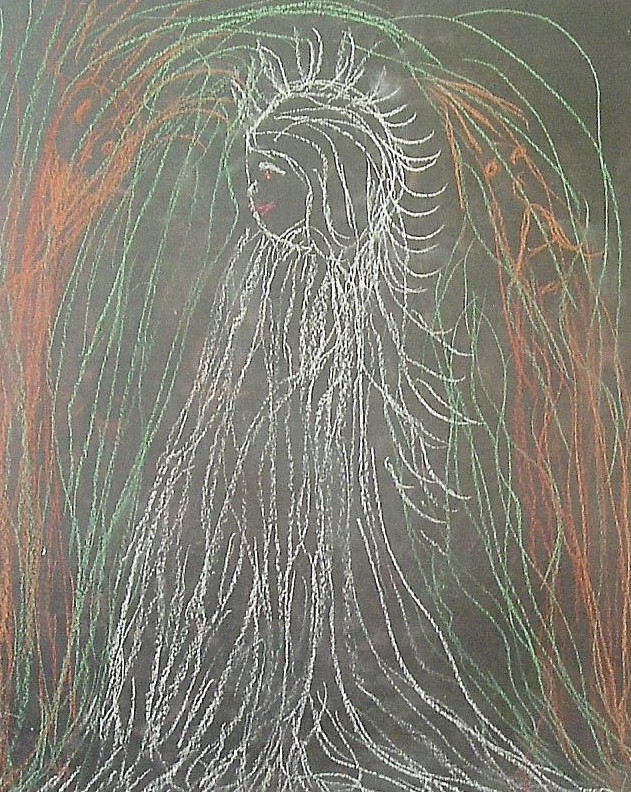
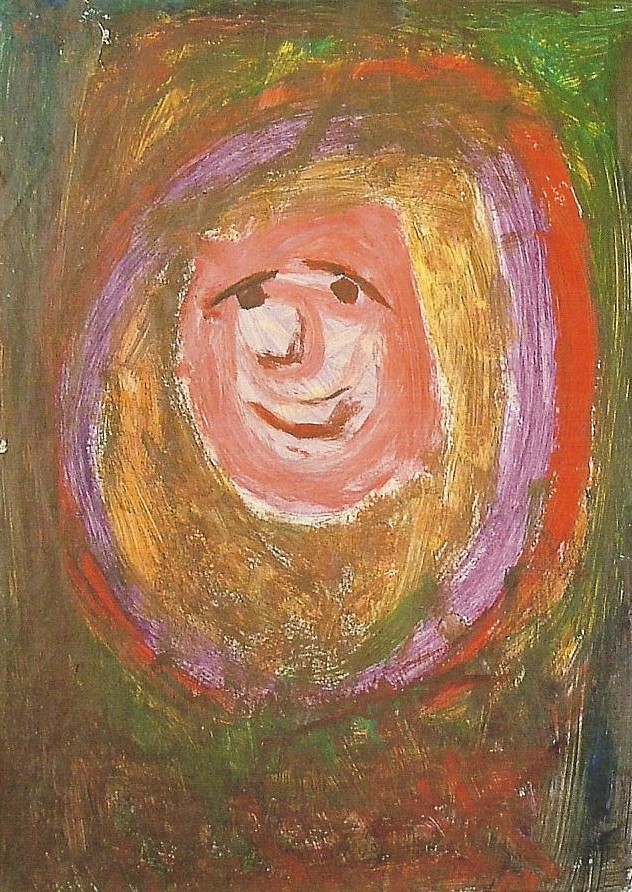
Peter Andrews, ‘Wonder Woman’Peter Andrews, ‘Heart in Throat’
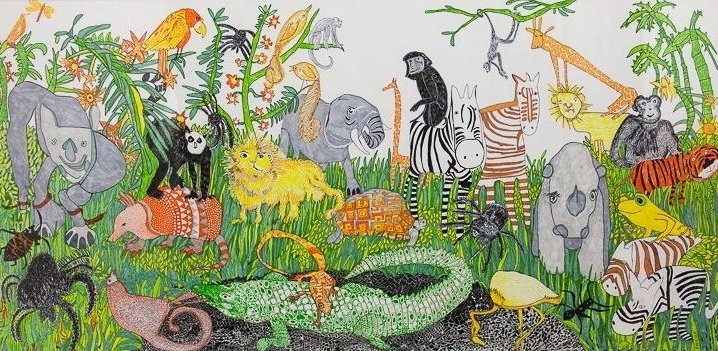
The piece below is a collaboration between 8+ ARTHOUSE Meath artists who, depending on levels of dexterity and ability, would have all worked on different aspects of it. Marjorie and Pete both worked on it.
ARTHOUSE Meath, ‘Jungle Fever’
For more information on ARTHOUSE Meath, please visit their website:
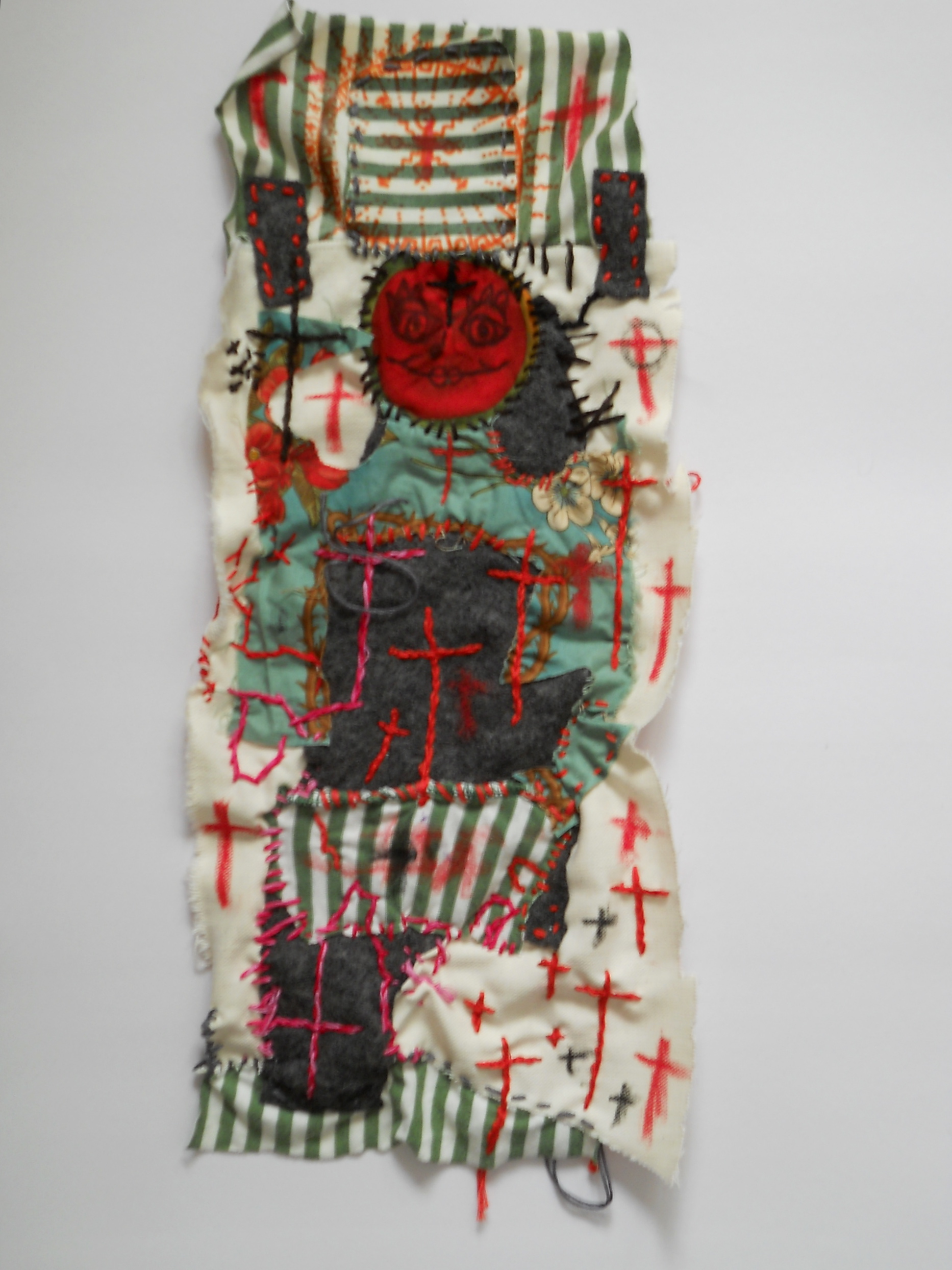
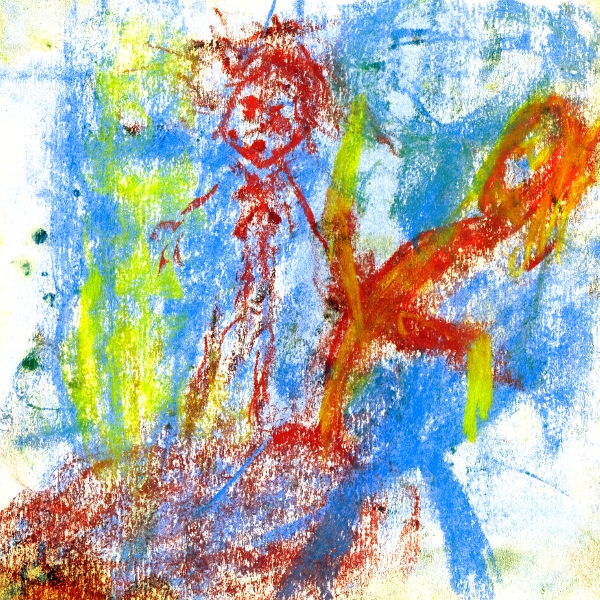
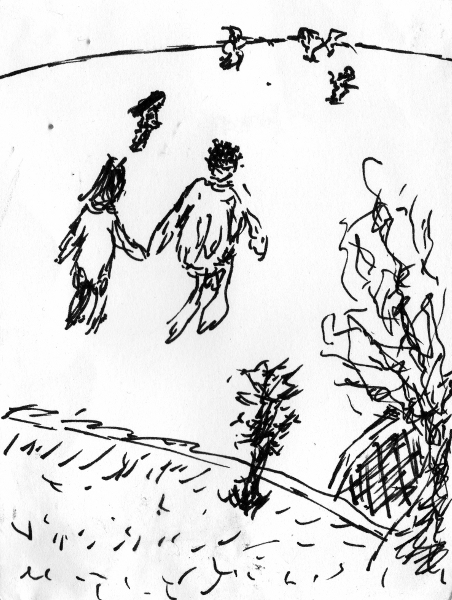
Anthony Stevens is a self-taught artist whose work is inspired by life experience. His work could be said to be a narrative that he uses to process previous traumatic life events and the after-effects of these. He works predominantly in fabric and hand stitching, or marker pens and card and has been avidly creating for the past three years; however, the urge to create has visibly strengthened in the last four to five months.
Although Anthony’s work tends to be about externalising inner dynamics, he quite often uses art alongside his Buddhist practise to understand and re-frame his life experiences so that he is able to use them as a source of value and growth. He says of his recent practice: “It feels like I am entering a new phase of life, one that is self-created and which I am happy to step into..I feel very much alive.”
Below, Anthony talks through some of his more recent work.
Anthony Stevens, ‘Things are getting better’
“‘Things are getting better” is about my (or humanities) habit of listening to all of those negative inner voices that stop us enjoying the freedom and goodness inherent in each moment.”
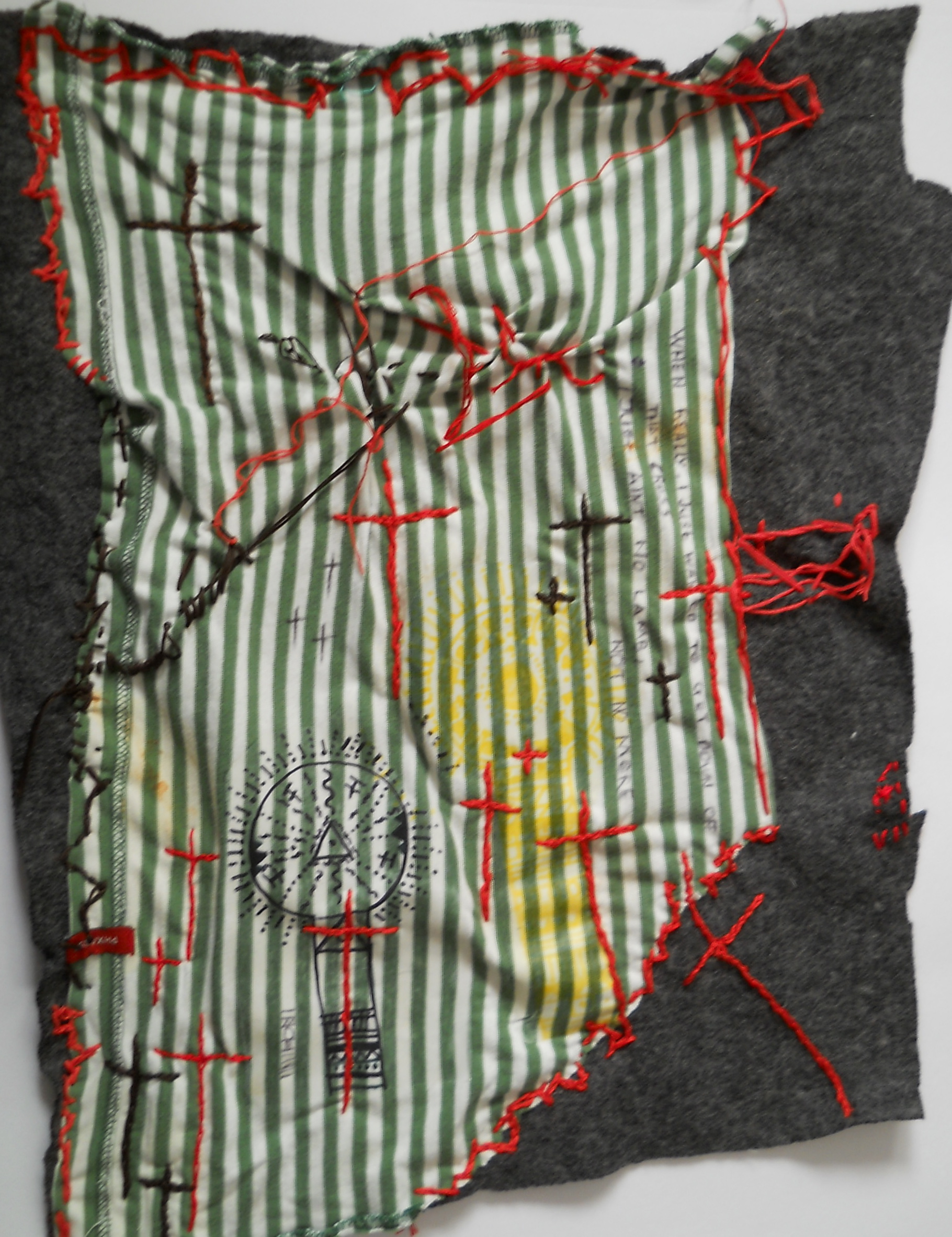
Anthony Stevens, ‘There aint no flys in the chicken bone jar’
“This piece is done in marker peens and oil pastels and was inspired by a memory I had. It is my version of ‘ignoring the elephant in the room’ syndrome.”
Anthony Stevens, ‘Catholic chanting to Gohonzon’Anthony Stevens, ‘Catholic chanting to Gohonzon’Anthony Stevens, ‘Catholic chanting to Gohonzon’
“The series entitled ‘Catholic chanting to Gohonzon’ is heavily influenced by my Buddhist practise and represent how the past and things that lay hidden in the mind can interfere with us being able to see how things ‘really are’.”
Anthony Stevens, ‘Ambivalence Towards the Mother’
“This piece is about a period in my life when I was trying to gain control over myself and the general chaos of my life by engaging in disordered eating. Living with this part of the psyche in control is like living with a dictator whose will must be obeyed at all costs! Ambivalence towards the mother figure is often regarded in Psychoanalysis as a major contributory factor in disordered eating, hence the title.”
Anthony Stevens, ‘Untitled’
“This work is about psychosis and how the voices that I thought were God actually came from a far more ‘earthly’ place. This is about me examining the origins of delusion and the role psychosis has in trying to tell a valuable story, and understanding its language. I used marker pen and card to create this.”
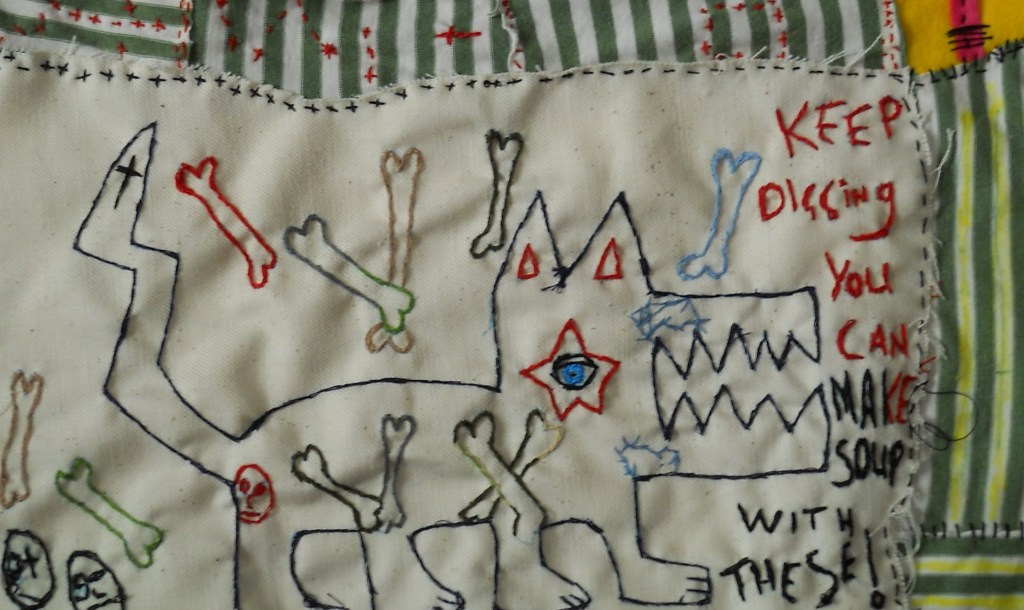
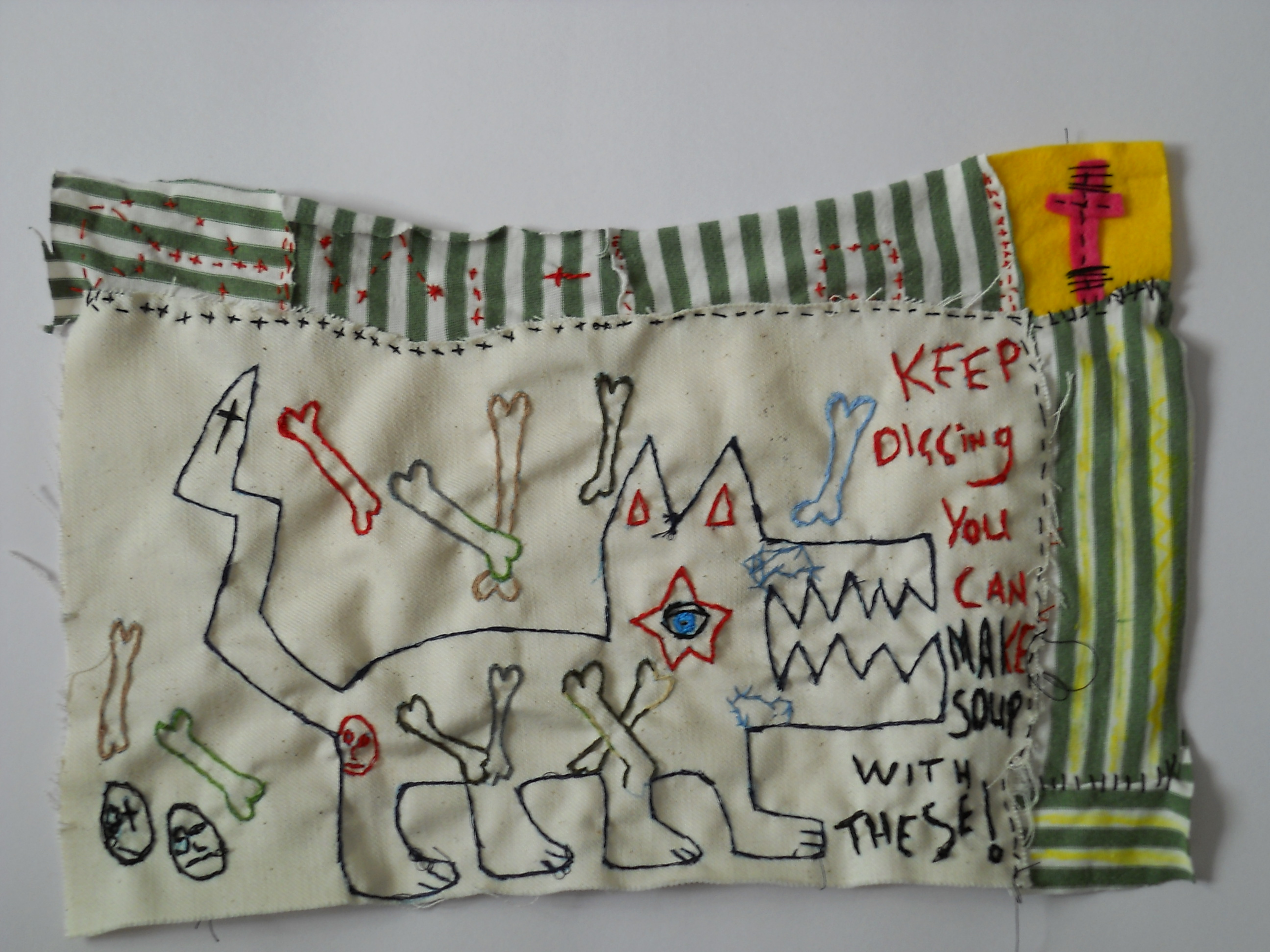
Anthony Stevens, ‘Making soup’
“‘Making soup’ is about searching within for all the things we need to make our lives rich and nourishing. The different fabrics used represent differing aspects and influence from personal and social culture (the pink and yellow is about punk ‘DIY’ culture, and the stripes represent duality, sleep/waking, life and death.”
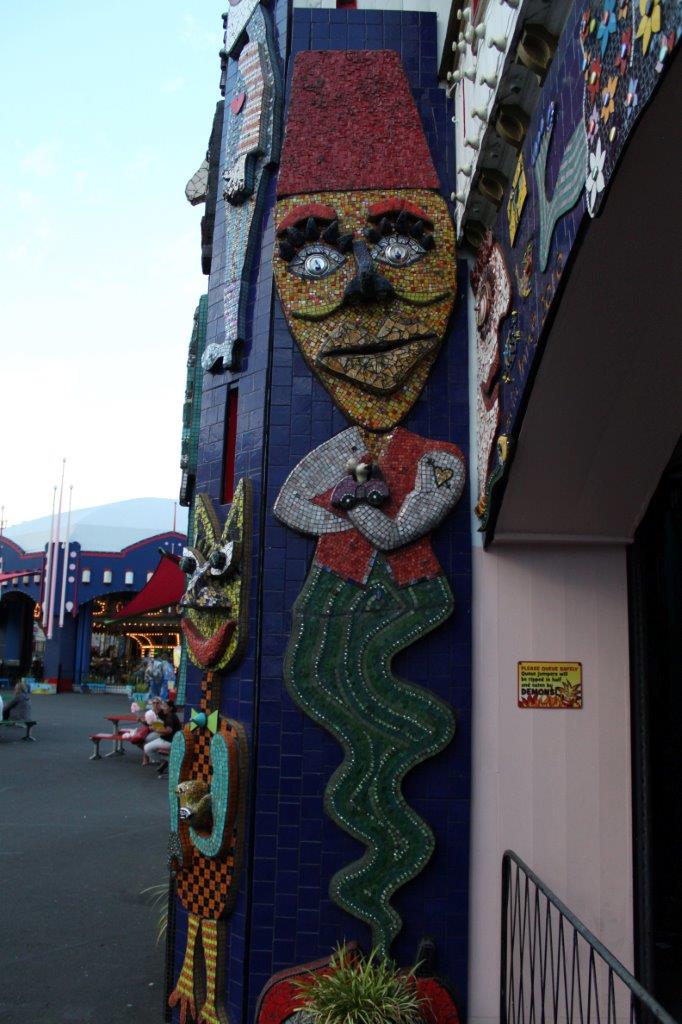
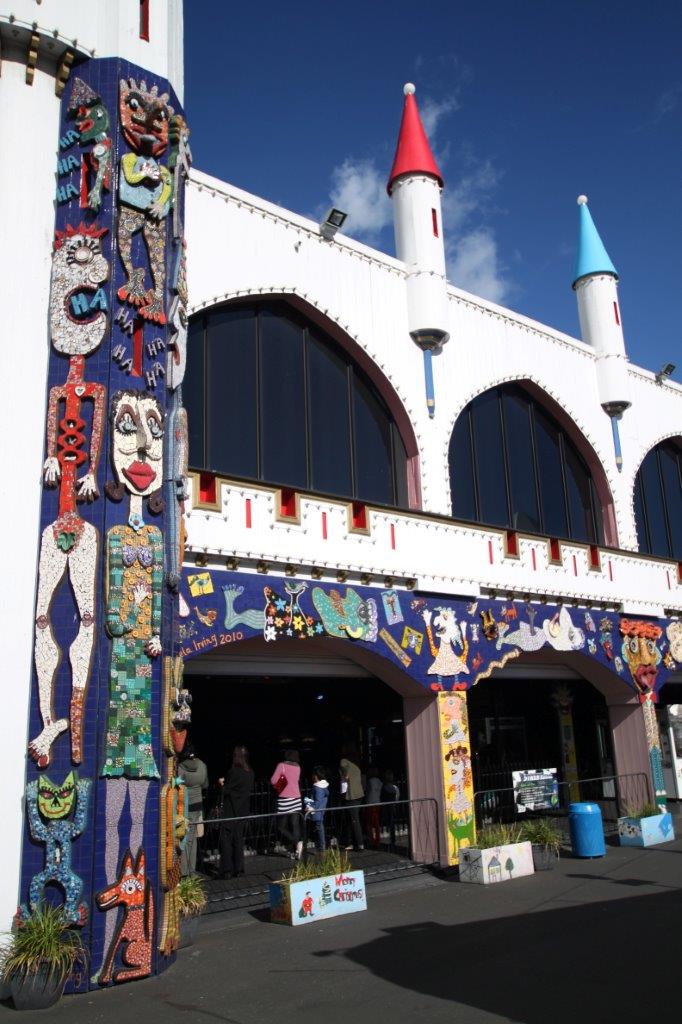
‘Dreaming with Open Eyes’ – a sculptural mosaic installation at Luna Park, Melbourne, by Pamela Irving.
Dreaming with Open Eyes is about serendipity and destiny.
“For years I had fantasized about creating a large scale installation in Melbourne. My aesthetic has developed over three decades. It reflects interest in myth, bold use of colour, whimsy and the figurative and narrative traditions. This has culminated in the creation of my own cast of quirky characters. My inspiration has been taken from diverse sources and gathered from extensive travels. These include “outsider” art environments and the legacy of ancient Roman mosaics.
Early in 2010, by chance, Mary Stuart the CEO of Luna Park visited my studio/gallery in Bentleigh, Melbourne. Mary loved my bird encrusted courtyard. The courtyard is totally covered in mosaics and bird figurines. She invited me to create something quirky like the courtyard, for Luna Park. Hence the commission to commence work on the Luna Palace Building.
Luna Park is one of Australia’s oldest tourist attractions. It has been thrilling children and adults alike since 1912.
The title “Dreaming with Open Eyes” is descriptive of my process, as I work in my studio, as I walk down the street I am dreaming and imagining my works.
This commission is a dream come true. To create a large scale mosaic installation on one of Australia’s most iconic tourist attractions. The commission is now in its 4th year. Another large section will be added by the end of this year.
Entrance to Luna Park is free so if you are in Melbourne please feel free to visit.”
– Pamela Irving
‘Dreaming with Open Eyes’, Pamela Irving. Photo credit: Jake Griffin.‘Dreaming with Open Eyes’, Pamela Irving. Photo credit: Jake Griffin‘Dreaming with Open Eyes’, Pamela Irving. Photo credit: Jake Griffin‘Dreaming with Open Eyes’, Pamela Irving. Photo credit: Jake Griffin
‘Outsider art’ in the traditional sense – i.e. Jean Dubuffet’s description – alludes to an isolated artist, working on the periphery of the mainstream art world. Contrary to this controversial belief, many of the most notable ‘outsider artists’ of the twentieth century were supported, encouraged and ‘outed’ by some of the most famous ‘mainstream’ artists of the same century. This series of blog posts will highlight a few of these relationships, in the hope of rectifying the general thought that artists that often sit under the umbrella of ‘outsider art’ were completely immune to and separate from the twentieth century ‘mainstream’ art world. In fact, many of the ‘masters’ of modern art were hugely influenced by these relationships.
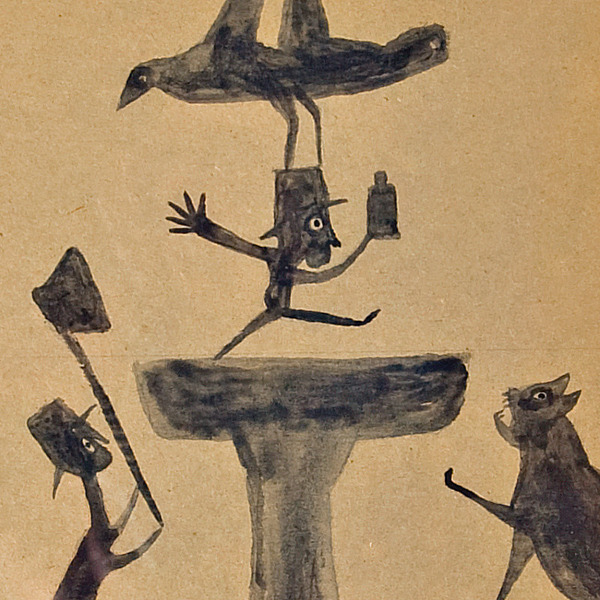
Born into slavery on a plantation in Alabama, Bill Traylor is perhaps one of the best known self-taught artists of the twentieth century. Working on the plantation he was born onto for many years of his life, Traylor moved to Montgomery in 1928 where he worked as a labourer until he became physically unable to continue. Only beginning to produce art when he was 85 years old, Traylor used mainly modest, everyday materials to create a unique portfolio of his experiences – both past and present. He recorded events from the everyday, of life in Montgomery, which he attempted to sell to passers-by on a sidewalk. It was on this sidewalk that a unique meeting would change the fate of his artistic career.
Bill Traylor
Charles Shannon – a painter and teacher – discovered Bill Traylor in 1939, as Traylor was perched on a box, drawing in the street near a fish market in his native Montgomery. Shannon supported the artist financially, and provided Traylor with materials as well as his first exhibiting opportunity at the New South Gallery in 1940. Despite full recognition of Traylor’s career as an artist not occurring until the 1980s (long after his death in 1947), Shannon is credited as having contributed significantly to the artist’s support network and therefore his later recognition.
Shannon was fascinated by the seemingly innate creativity that Traylor had discovered at such a late stage in his life, despite having never drawn or even been able to write beforehand. Shannon, in his article ‘Bill Traylor’s Triumph’, published in Art and Antiques in 1988, speaks of his experience of Traylor as an artist: “He worked all day; some evenings I would drop by around ten o’clock and he would still be there, his drawing board in his lap, a brush in his hand. He was calm and right with himself, beautiful to see.”[1]
Bill Traylor
Traylor was not known for talking about his work, but Shannon noted that he talked almost continuously whilst he worked – but, regretfully, he only recorded a very small number of these comments: “Now, I sometimes wish that I had [asked him questions]. I only knew what he volunteered to tell me.”[2]
After Traylor’s death in 1949, Shannon continued to be an advocate for his work despite the lack of public attention and interest. Many members of Traylor’s family in fact had no idea that he had been an artist, they were not aware of Shannon’s support of the artist, and they were not aware that it was Shannon who had saved his work. It wasn’t until 1979 that Shannon – in possession of 1200 – 1500 works by the self-taught artist – managed to secure an exhibition at the R. H. Oosterom Gallery in New York. Today, Traylor’s work is often considered as an important part of the development of twentieth century art – despite the Museum of Modern Art, NY, offering Shannon one dollar per piece in 1942; something the advocate was incensed by, returning the cheque and taking back possession of the works himself.
In 1986, when Michael Bonsteel asked Shannon what he thought made Traylor’s work great, he responded: “What made his work great is like trying to answer ‘what is grass?’ The rhythm, the interesting shapes, the composition, the endless inventiveness – it all reflects such a wonderful joy of living. His whole sense of life comes through. It was just the man. I think he was a great man. It’s not so much how he depicted or what he did. It was just the soul of the man.”[3]
The Heartside Ministry was founded in 1983 in Grand Rapids, Michigan, as an outreach to the homeless and disenfranchised people of the streets in a neighbourhood abandoned by businesses and avoided by many. In 1993, in response to the needs of the community, the Ministry developed a programme of one-on-one adult literacy classes, further expanding in 1997 to include a computer centre that offered help with resumes, desktop publishing and web access. The Art Studio and Gallery was established along with a pottery studio and a weaving programme, allowing the Heartside community to express themselves, discover their talents and produce saleable items.
The Art Studio and Gallery represents a large part of what Heartside does, existing as a “safe and catalysing environment for the expression of the emotions, ideas, creativity and spirituality.” The art programme space consists of large storefront windows, high ceilings and a supportive atmosphere that is “especially conducive to artistic endeavour.” The studio space is open to the public throughout the week, providing the opportunity for creation, learning and socialisation, and the gallery is open for special neighbourhood and city functions, and also showcases the work of artists participating in the programme.
Under the guidance of the Arts Coordinator, the often self-taught artists have produced a prolific body of work spanning various mediums, styles and subject matters. The Coordinator works to “encourage the intuitive and spontaneous artistic tendencies within each individual artist.”
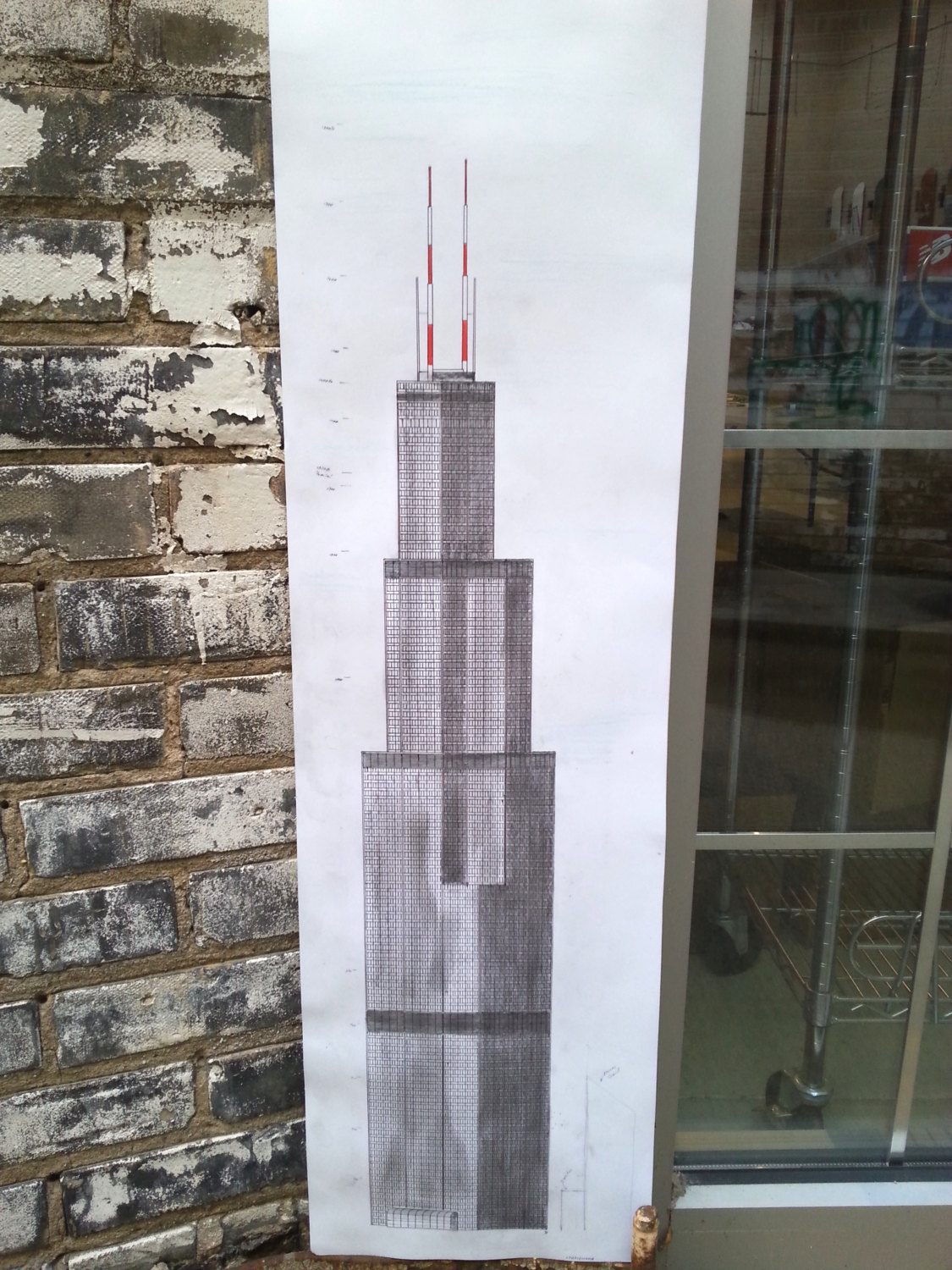
Tom Salazar, one of the Heartside artists, has been interested in art from a young age. His to-scale intricate impression of the Sears Tower is hand-drawn, with not a computer programme in sight. Sears Tower impressively has every window and is draw foot for foot completely to a smaller scale. Tom also makes miniatures of some of his designs, and takes inspiration from architecture, cars and landscapes, as well as building his own furniture when needed.
Tom Salazar, ‘Hand Drawn Sears Tower’
Art for another participant of the Heartside programme, Katalina, began as a hobby, before quickly becoming part of who she is as a person. Speaking of the kind of work she produces, Katalina says: “I am a self-taught, mixed-media artist. I use acrylic paints, chalk, pastels, coloured pencils, water-colours, ink, found objects and a wide variety of other media that I come across.” As an artist, Katalina doesn’t limit herself – “any medium or found object can be used in creating art.” She uses vintage photos, and is interested in creating narratives with collage. Katalina adds a final thought: “Art for me is a very healing power. Not only do I create something, but I can also express how I feel at that particular moment by telling a new story.”
Katalina, ‘Family Album’
Katalina’s Family Album is a mixed-media collage made from magazine photos on book board with the addition of buttons and beads to add texture.
Katalina’s work on display at Heartside
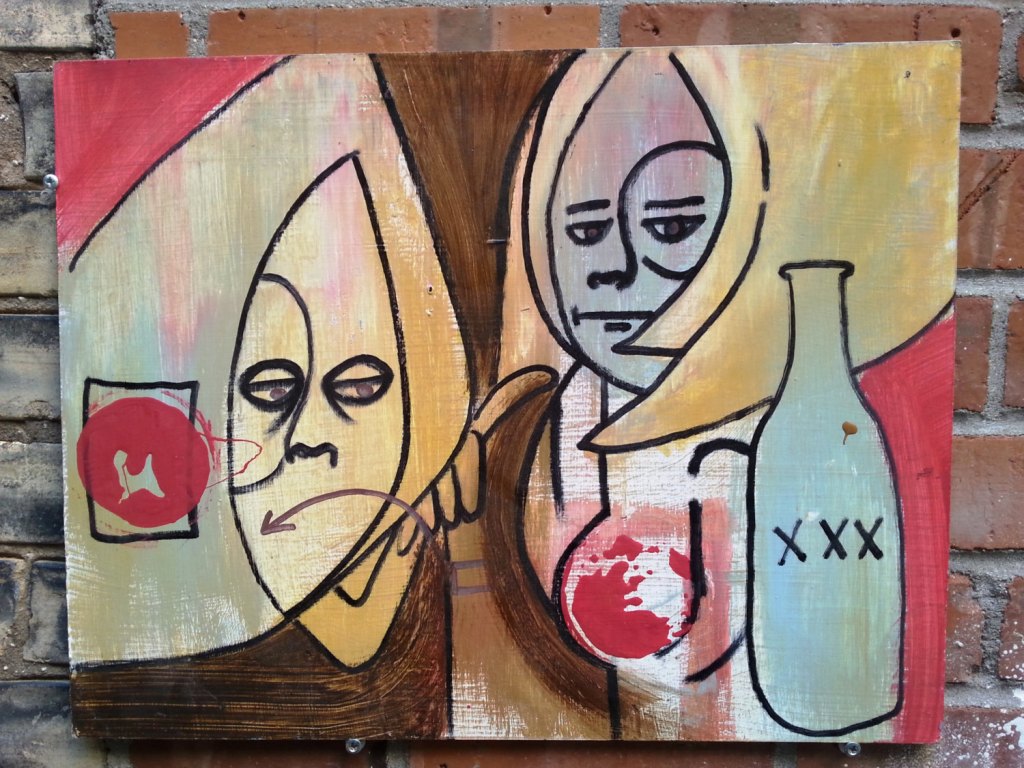
Scott Robinson, a former street artist, grew up skateboarding – “and when I got too old to do that I traded it in for paints,” he says. Scott adds about his progression from skateboarder to artist that “it’s all connected anyhow – skateboarders just look at the world differently. When I see a bench I don’t see a place to see, I see it as an object. The lines in my paintings reflect that.” Don’t Do It was created by Scott after he became sick of the graffiti scene and the threat of incarceration, instead choosing to bring his work to canvas. It is a piece that initially had no meaning, before Scott noticed a pregnant woman and alcohol within the piece. The title came from an intuitive sense of what the image was; a pregnant mother being tempted by the alcoholic drink.
Scott Robinson, ‘Don’t Do It’
These are just three of the very talented artists working at Heartside Studio and Gallery. For more information on the organisation, click here.
Most of the art created on the programme is for sale via Heartside’s Etsy gallery, and is priced between $10 and $40, with proceeds directly benefitting the individual artists. To visit the Etsy gallery, click here.
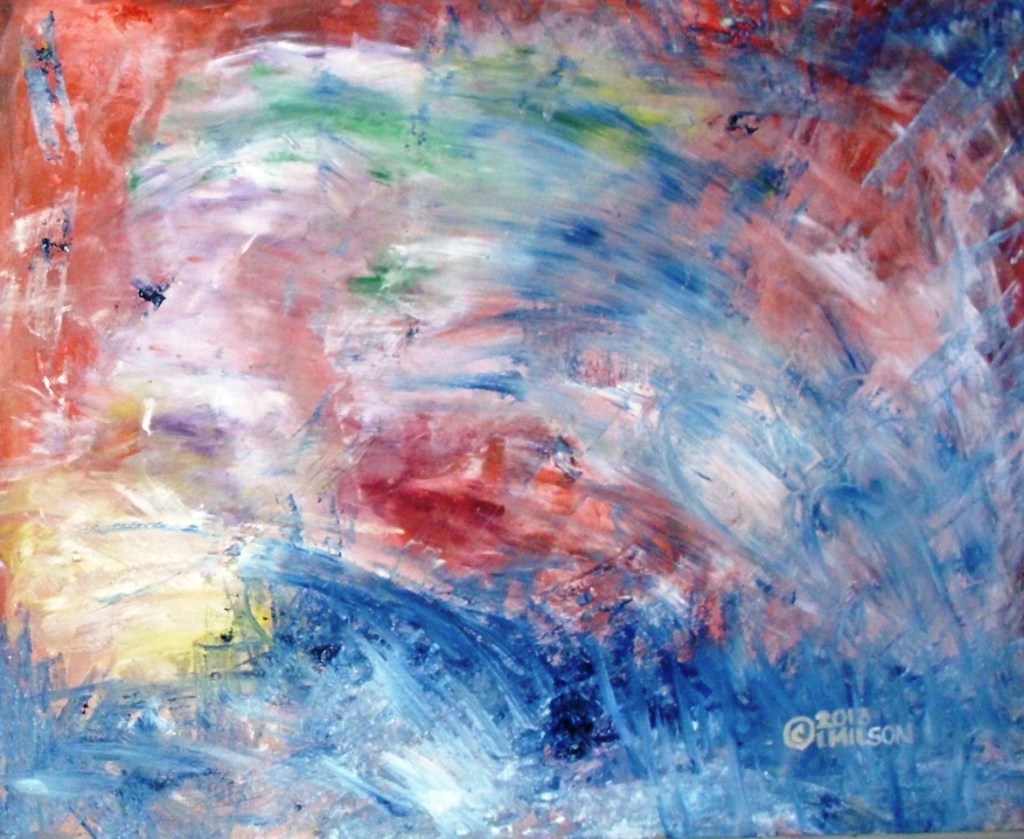
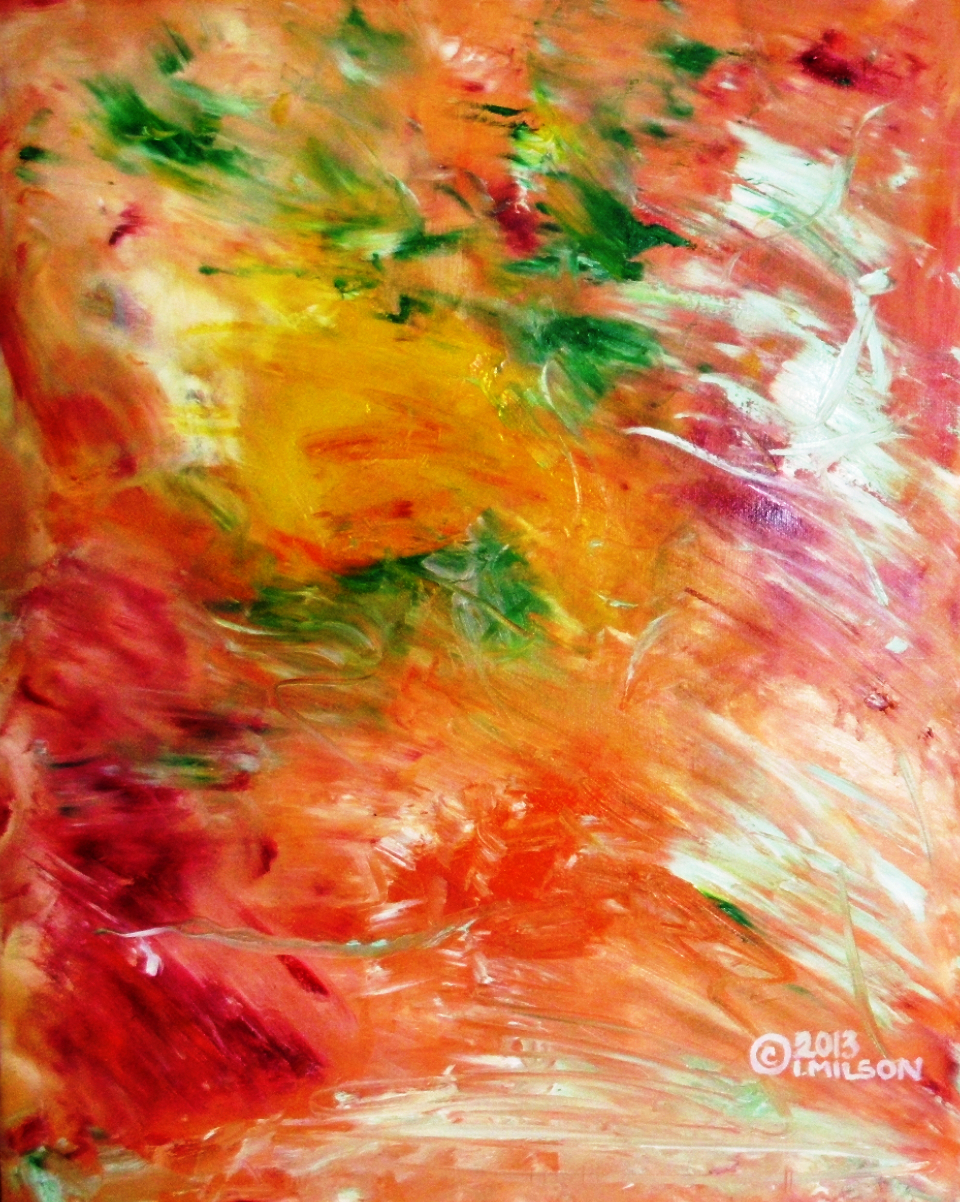
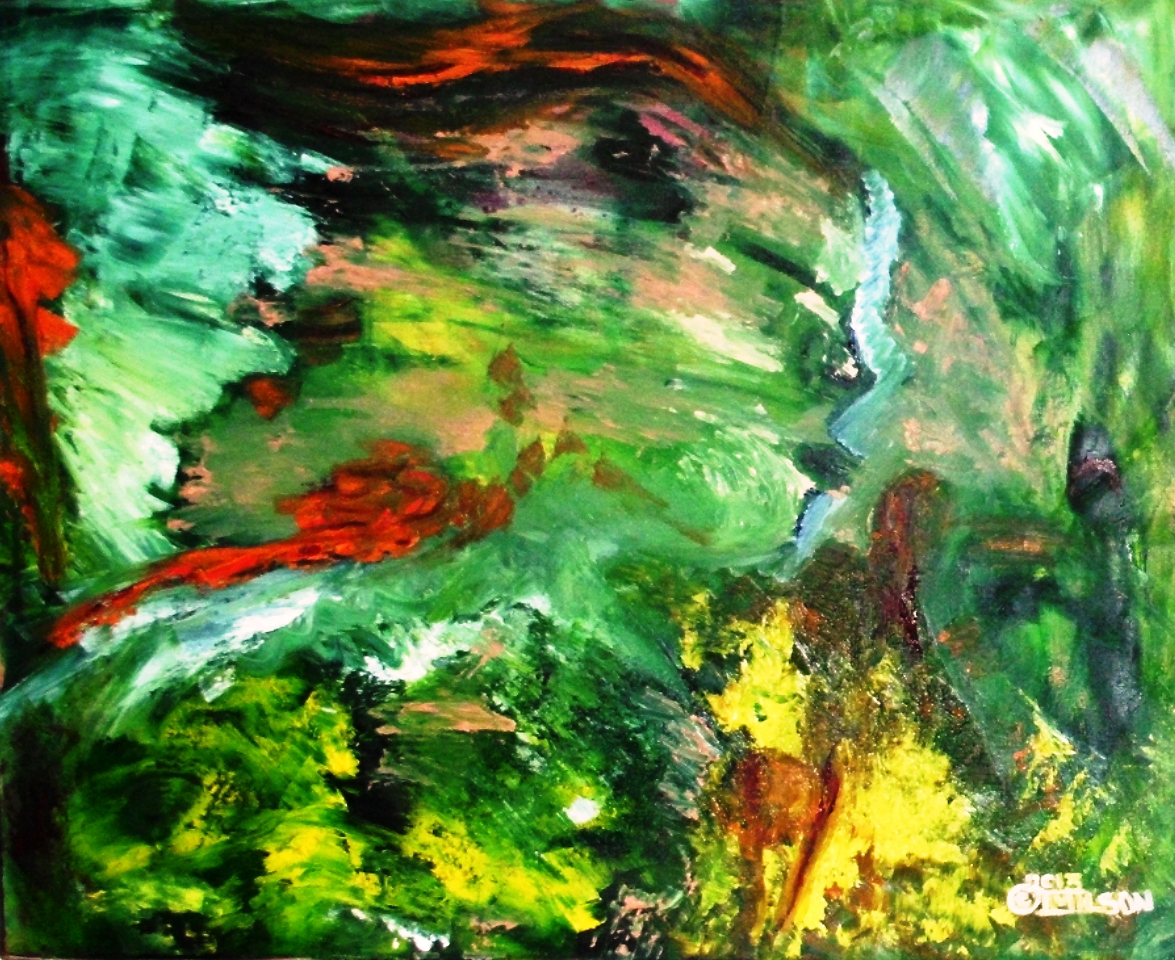
“The heart beats in a rhythm synchronized to the ebb and flow of cosmic energy that has no pre-conceived ideas, thoughts, or expressions. And it is that rhythm that inspires me to paint.” – Iva Milson
Iva Milson, ‘Duplicates’Iva Milson, ‘Throught Time and Space’Iva Milson, ‘Floating in the Waters of Love’Iva Milson, ‘Dream-in the Dream’Iva Milson, ‘Memories’
Andrew Beswick is a Manchester-based artist who’s work includes poetry, drawing, performance and sculpture. His approach to art is intuitive and self-taught and his inspiration to begin making art originated from a love of expressionist painting, primitive/ outsider art and the work of groups such as COBRA and the Situationist International. His interest lies in the experimentation with form and the creative process. Each work is seen as incomplete or unfinished, a sketch or an idea that is an end unto itself. With an artistic practice that is centred around themes of spontaneity and the natural environment, he combines elements of cartography, primitivism and poetry with an interest in social history, ethnology and popular culture. In 2006 Andrew studied Art Foundation at Stockport College and the following year he helped establish the Islington Mill Art Academy, an independent art school based in Salford (which he is still actively involved with).
Andrew Beswick, ‘Untitled’ (2007)Andrew Beswick, ‘People in Krakow’ (2007)Andrew Beswick, ‘Duck’ (2007)Andrew Beswick, Marina De Lagos’ (2012)Andrew Beswick, ‘Salford in Rush Hour’ (2008)
If you would like a showcase of your work on this blog, please get in touch my emailing kdoutsiderart@yahoo.com
Alternatively, get in touch on Twitter: @kd_outsiderart
I am always keen to hear from artists who would be interested in a blog post focusing on their work. Usually, I ask for an artist’s statement and a few images which they would like to showcase, but these guidelines are very flexible and I am open to suggestions. If you would like a post on your work, please do contact: kdoutsiderart@yahoo.com.
This post will focus on the work of Kathy Gibson.
“As a wheelchair user I have always been very interested in faces and bodies of people, especially how they move and walk. A lot of my paintings are of peoples bodies and faces.” – Kathy Gibson
I am always keen to hear from artists who would be interested in a blog post focusing on their work. Usually, I ask for an artist’s statement and a few images which they would like to showcase, but these guidelines are very flexible and I am open to suggestions. If you would like a post on your work, please do contact: kdoutsiderart@yahoo.com.
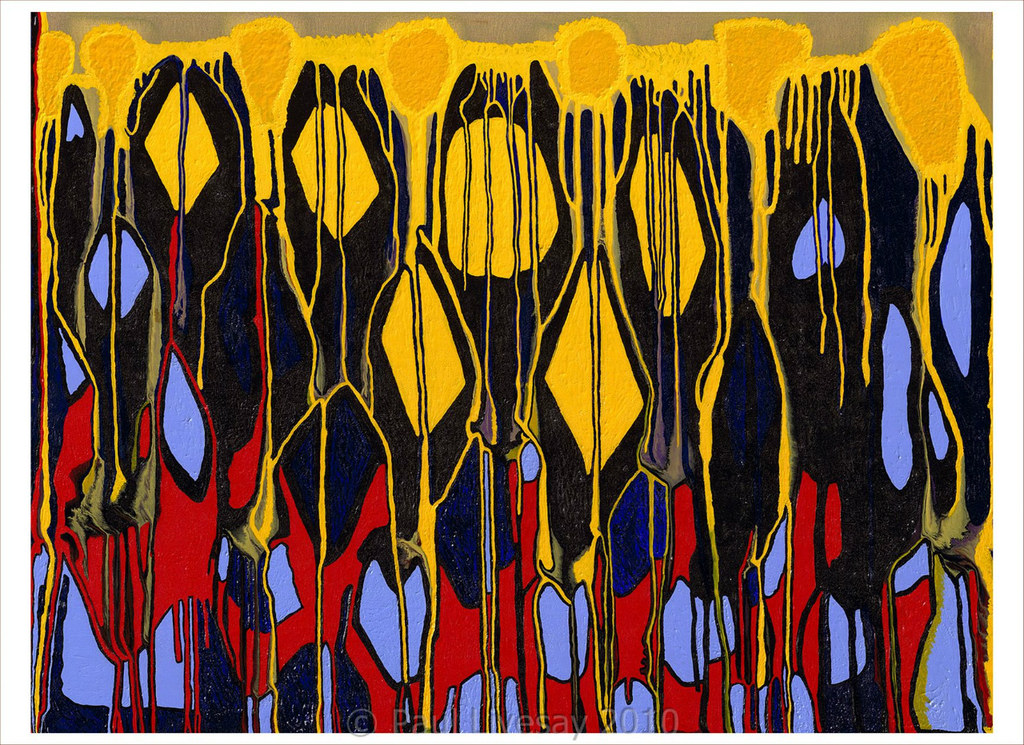
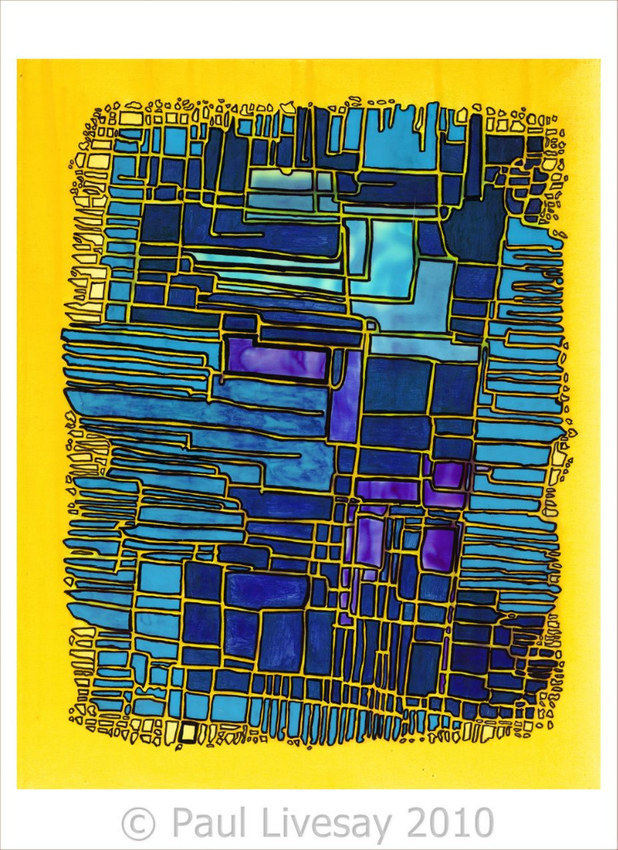
This post will focus on the work of The Nighthawk (Paul Livesay).
“I am a self taught (outsider) artist. My work is abstract expressionism and also conceptual, working with acrylic paint on canvas. I picked up my first paint brush in 2006 at the age of 48. I painted how and what I felt at any given time. My sources for my works were predominantly my heart and soul. I tried to project my raw, unbridled emotions in as pure and organic a way as truly possible. All my works are hand painted and in no way digitally modified. I hope that I succeeded and that you enjoy them.” – The Nighthawk.
The Nighthawk, ‘Electric Acid Waterfalls’The Nighthawk, ‘Nuclear Reaction’The Nighthawk, ‘Grieving in the Bamboo Forest’The Nighthawk, ‘Golden Showers Bring Strange Flowers’The Nighthawk, ‘Safe Harbours and Back Alleys’
I am always keen to hear from artists who would be interested in a blog post focusing on their work. Usually, I ask for an artist’s statement and a few images which they would like to showcase, but these guidelines are very flexible and I am open to suggestions. If you would like a post on your work, please do contact: kdoutsiderart@yahoo.com.
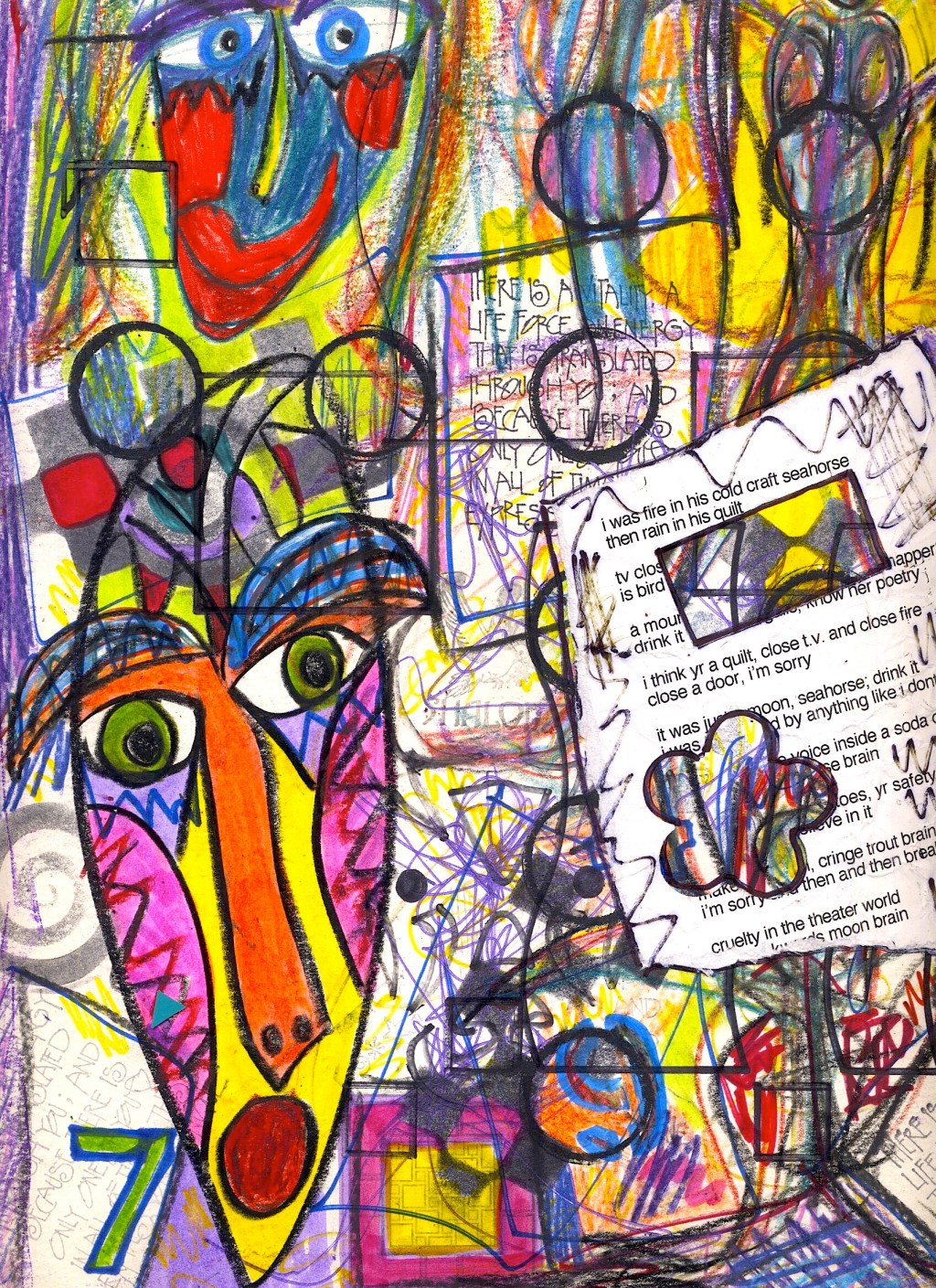
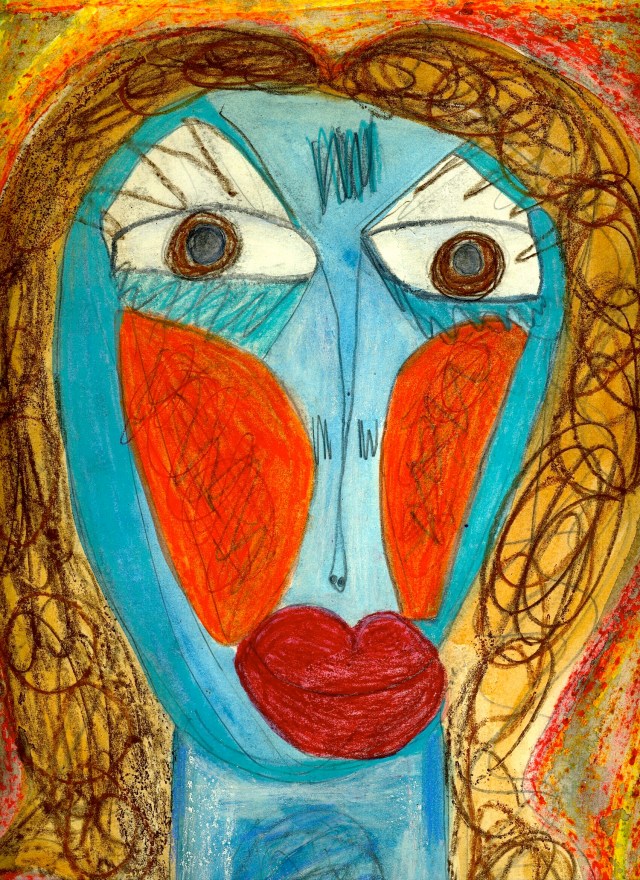
This post will focus on the work of Donna Kuhn.
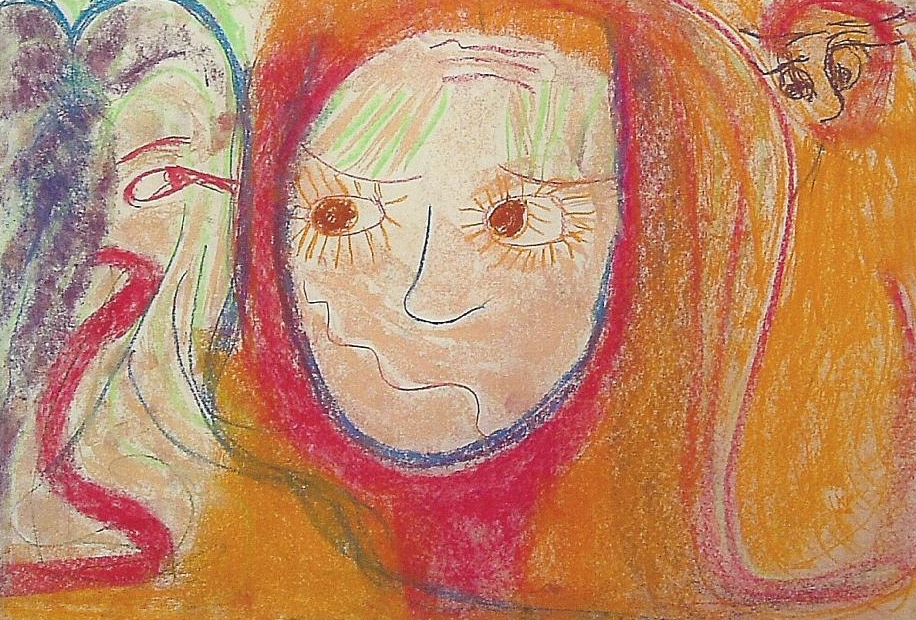
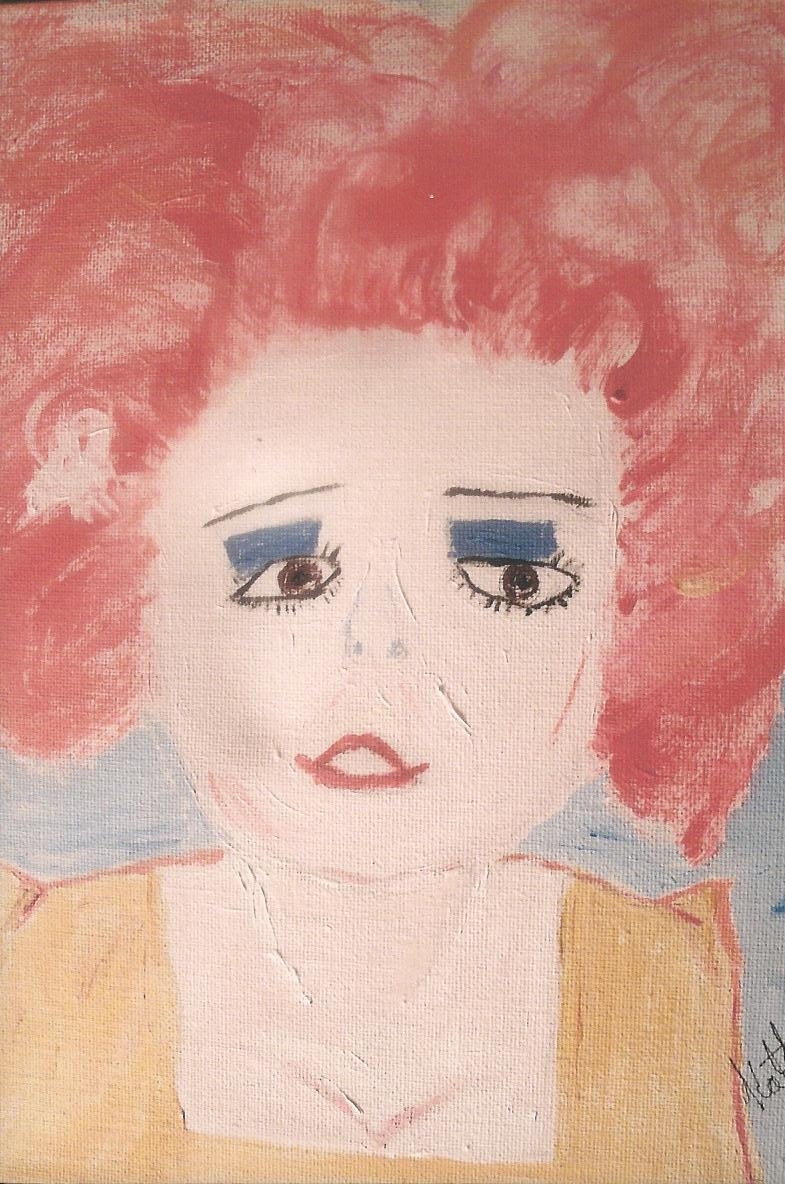
“I make art because that is the only way life makes sense to me. A recurrent theme in my work is the face: semi-abstract, colorful and emotional. I don’t choose to draw these faces. Their forms just come to me. They jump off the page and stare at you. Dare to stare back. I have tried to choose between media. I cannot. I feel fully engaged and alive when I’m creating. I’m a maker of images more than a storyteller. My work is about being a woman and an outsider. It has been described as playful, haunting, bold, whimsical, colorist, sad, poetic, mysterious and tense.” – Donna Kuhn.
Donna Kuhn, ‘Unilateral Decisions’Donna Kuhn, ‘Dignity’Donna Kuhn, ‘I Fall in Love with my Pet Birds’Donna Kuhn, ‘Close a Door’


























 KDOA
KDOA 