Category: Outsider Art: Theory and Thoughts

  • Aboriginal art, outsider art, and a code of conduct

    Aboriginal art, outsider art, and a code of conduct

    In this post, writer Nick Moss considers the benefits of having a ‘code of practice’ for galleries and museums when working with outsider artists – much like there is a code of practice for those working with Aboriginal artists. 


    “It is perhaps to do a disservice to both art forms to make too much of comparisons between Aboriginal art and art produced by self-trained artists and artists in institutions. However, it is true of both that ab initio they were not produced for the commercial art market, and were produced by artists who had no experience of the snares and ruses of that market or the peculiarity and irrationality of its attributions of value.

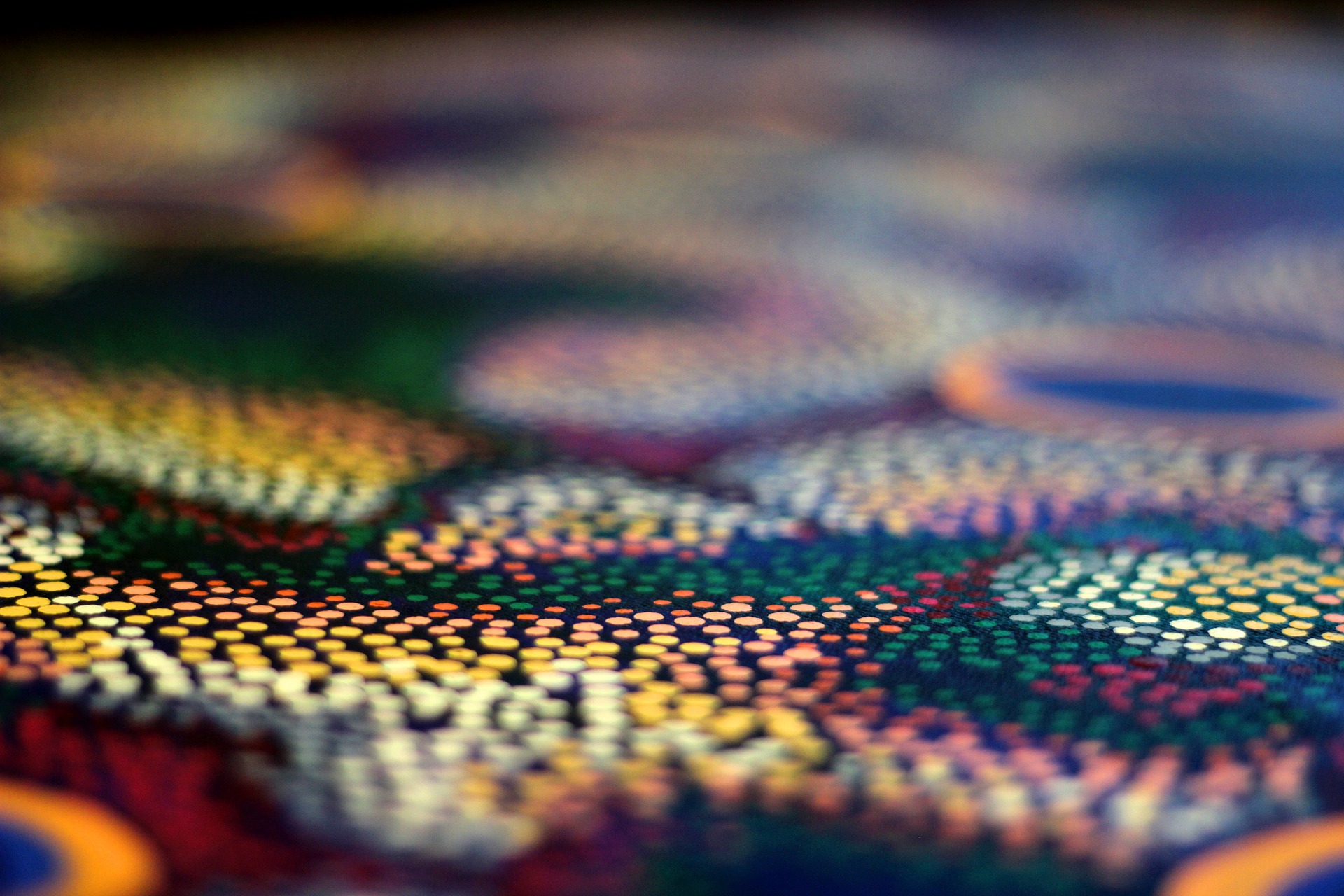
    Aboriginal art is rooted in the telling of the ‘Dreamtime’ stories – the symbolic telling of the creation of the world. The ‘Dreamtime’ stories are reckoned to be over 50,000 years old, and have been handed down through generations over time. They are expressed in the complex symbolic language of the Aboriginal peoples and captured in a traditional iconography which combines with stories, dance and  song to pass on ‘Dreamings’ and so preserve the rites and maintain the development of Aboriginal culture in the face of settler opposition and state violence. However beautiful the works may be, their visual language is intended to serve a communicative and history-embodying rather than primarily aesthetic purpose. The works that now are produced on canvas, were, until the development of a commercial market for them, more usually produced by  painting on leaves, wood carving, rock carving, sculpting, ceremonial clothing and sand painting.
    photographic-background-1540116_1920

    In this sense then, the comparison with ‘outsider art’ can be made – outsider art often expresses private mythologies which are communicated through complex, self-produced symbolic languages, and can be set down in a variety of media, often determined by the extent to which the artist has access to particular materials at hand.

    Aboriginal art serves a primarily communal function. Its attraction for, and appearance within, the commercial art market is a secondary feature of the fact of its production. This is both its strength and its weakness. Again, the comparison to outsider art can be made.

    As the artist Wenten Rubuntia put it in The Weekend Australian Magazine, April 2002

    ‘Doesn’t matter what sort of painting we do in this country, it still belongs to the people, all the people. This is worship, work, culture. It’s all Dreaming.’  

    As commercial art dealers and galleries made inroads into Aboriginal communities in the 1970s, they began to take advantage of the artists who had no experience of the commercial art world, its contractual or valuation norms, and in any event were not making art for the business of art – some artists recognised the need for self organisation.

    As an example, artists at Papunya and Alice Springs observed first hand the development of the private art market and the exploitation of their friends and thus formed the Warlukurlangu arts centre. The name ‘Warlukurlangu’ derives from an important Jukurrpa (Dreaming) and means ‘belonging to fire.’ The name was chosen by a number of older men and women who saw the need for an art centre and endeavoured to form an organisation that represented their interests as artists but also recognised and determined to defend the importance of the cultural laws which are embodied in the stories depicted in paint. The establishment of Warlukurlangu was one way of ensuring the artists had some control over the purchase and distribution of their paintings.
    tate-2684212_1920

    As the market for Aboriginal art increased both with regard to the volume of works coming to market and the venality of that market, the Australian Senate initiated an inquiry into issues in the sector. It heard from the Northern Territory Art Minister, Marion Scrymgour, that Aboriginal artists were often tricked by backpackers into selling their art on the cheap, and that backpackers were often the creators  of purportedly  Aboriginal art being sold in tourist shops around Australia:

    ‘The material they call Aboriginal art is almost exclusively the work of fakers, forgers and fraudsters. Their work hides behind false descriptions and dubious designs. The overwhelming majority of the ones you see in shops throughout the country, not to mention Darling, are fakes, pure and simple. There is some anecdotal evidence here in Darwin at least, they have been painted by backpackers working on industrial scale wood production.’

    The inquiry’s final report (Standing Committee on Environment, Communications, Information Technology and the Arts: Indigenous Art – Securing the Future of Australia’s Indigenous Visual Arts and Craft Sector) made recommendations for changed funding and governance of the sector, including a code of practice. The report itself is a classic fudge, a refusal to fully address the ethical and legal issues arising from the commercialisation of Aboriginal art. Thus:

    ‘There is no doubt that there have been unethical, and at times illegal, practices engaged in within the field of Indigenous arts and craft. There are probably still instances of these problems, and there may be people seeking to take advantage of issues within the sector by ripping off artists or art centres.’

    Nevertheless:

    ‘In spite of all this, the committee urges everyone in the sector to recognise each other’s sense of commitment, and reap the benefits of co-operation, rather than sow seeds of rancour and division.’

    The Committee refused to take a stance explicitly in support of the formal regulation of the art market in relation to its exploitation of Aboriginal art. In effect, it concluded that even bad business was good business, in that it allowed Aboriginal artists to benefit from the untrammelled joys of free market capitalism.

    Much of what was claimed about business practices appeared to be based on hearsay, and there was little tolerance of the diversity of people and legitimate ways of doing business which might all contribute to the benefit of Indigenous creativity, Indigenous art and Indigenous prosperity.’

    The ultimate outcome – self-regulation via a Code of Practice was far from ideal, but the Code of Practice itself makes for useful reading. In particular, the section on Dealing with Artists, which is produced below in full:

    Dealer Members must use their best endeavours to ensure that every dealing with an Artist in relation to Artwork involves the informed consent of the Artist. The following clauses will assist Dealer Members to ensure they have the informed consent of Artists.

    3.1 Provide a Clear Explanation of the Agreement:  Before making an Agreement with an Artist in relation to Artwork, a Dealer Member must clearly explain to the Artist the key terms of the proposed Agreement, so that the Artist understands the Agreement (for example, using a translator if required). The explanation should be given by the Dealer Member to the Artist either directly, or through an Artist’s Representative, in the manner requested by the Artist or Artist’s Representative. If there is any doubt about whether the Artist fully understands the explanation, the Dealer Member must also give the Artist the opportunity to ask a third party for assistance to help the Artist to understand, and negotiate changes to, the proposed Agreement.

    3.2 Agreements with Artists: An Agreement between a Dealer Member and an Artist in relation to Artwork (whether written or verbal) must cover the following key terms: (a) a description of the relevant Artwork(s), including the quantity and nature of the Artwork(s); (b) any limitation on the Artist’s freedom to deal with other Dealers or representatives; (c) whether the Dealer Member is acting as an Agent or in some other capacity; (d) the cooling-off rights (which must be in accordance with clause 3.3) and how the Agreement can otherwise be changed or terminated; (e) costs and payment terms for the Artwork (which must be in accordance with clause 3.4); (f) details about any exhibition in which the Artwork is to appear, and any associated promotional activities; and (g) any other information determined by the Directors and notified to signatories to the Code from time to time.

    3.3 Artist’s Cooling-off Rights (a) An Artist or Artist’s Representative may terminate an Agreement within: (i) 7 days after entering into the Agreement; or (ii) such longer period as is agreed between the parties. (b) A Dealer must not require the Artist to pay any fees, charges, penalties, compensation or other costs as a result of the Artist exercising cooling-off rights under this clause 3.3.

    3.4 Payment for Artists:  An Agreement must also cover the following in relation to each Artwork: (a) the amount of the payment and the means by which the payment will be made; (b) the date by which payment to the Artist will be made which (unless otherwise agreed) must be: (i) where the Dealer Member is acting as an Agent, no later than 30 days after receiving funds for the Artwork; and (ii) where the Dealer Member buys Artwork directly from the Artist, no later than 30 days after the Dealer Member takes possession of the Artwork; (c) if the Dealer Member is acting as an Agent, the amount of the Dealer Member’s commission; (d) any factors known to the Dealer Member that could affect the payment terms; and (e) the cost of any goods and services (e.g. canvas, paint, paintbrushes, framing, etc) to be deducted from the payment to the Artist (if any).

    4.1 Record Keeping by Dealer Members (a) A Dealer Member must keep records of all dealings with Artists, providing clear evidence of the key terms, and performance of those key terms, of any Agreement between the Dealer Member and Artist (the Records). (b) If the Dealer Member is an Agent, the Dealer Member’s Records should also include: (i) details of Artwork held by the Dealer Member for sale; (ii) the dates of sale of Artwork by the Dealer Member; and (iii) the type and quantity of Artwork sold by the Dealer Member and: (A) the price received by the Dealer Member for the Artwork sold; and (B) details of the payment to the Artist (including the amount, date and method of payment) and details of each amount deducted by the Dealer Member from the sale price of the Artwork (for example, the Dealer Member’s commission on the sale). (c) If the Dealer Member purchases Artwork and subsequently on-sells the Artwork, the Dealer Member’s Records should also record the price the Dealer Member was paid for the sale of that Artwork.

     4.2 Request for Dealer Member’s Records: A Dealer Member must provide a copy of the Dealer Member’s Records that relate to an Artist or Artwork to the Artist within 7 days of a request by the Artist (either directly or through an Artist’s Representative), provided that the Dealer Member is not obliged to make the same Records available to an Artist more than once every 30 days. The Dealer Member must provide a copy of the Dealer Member’s Records to the Company, in response to a request in writing by the Company.

    aboriginal-art-1540115_1920

    The purpose of this article is to put forward a (relatively) simple proposition. If we can accept that there is a similarity in form and content between Aboriginal art and outsider art (both use complex symbolic forms and mythologies to tell stories through works which are not primarily produced for the art market, and both are produced by artists who (because of their socio-economic situation/confinement/lack of knowledge of commercial practice) are vulnerable to exploitation by the commercial art market, then we ought equally to be able to accept that there is a need for the adoption of a similar Code of Practice to protect the interests of outsider artists. The proposition therefore is this; all gallerists and dealers in outsider art should voluntarily adopt and display the excerpt from the Code of Practice above, as a statement of a commitment to dealing ethically with outsider artists, and all art workers, art therapists, agents and educators should make sure the artists with who they work are made aware of the relevant sections of the Code and educated in its rights, its  implications and benefits for them.”

    ‘Innocence is a splendid thing, only it has the misfortune not to keep very well and to be easily misled.’
    ― Immanuel KantGroundwork of the Metaphysics of Morals

    By Nick Moss

    **All images have been sourced from image-sharing websites


  • Nick Moss: Insider Art

    Nick Moss: Insider Art

    In this post, writer Nick Moss responds to Cornelia Parker’s current installation at Frith Street Gallery and reflects on how, in opposition to Parker’s ‘insider art’ – which feeds us messages of unquestioned assumption – outsider art has the power to contain the multitude of voices that go unheard in the art world.


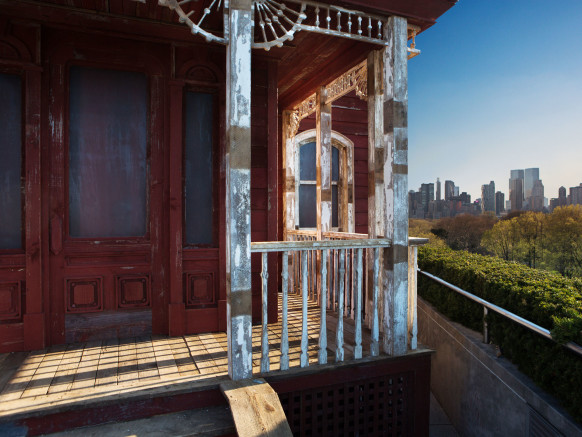
    The first reaction of anyone who sees themselves as “progressive” when first encountering Cornelia Parker’s current installation at Frith Street Gallery (28 April 2017-21 June 2017) will doubtless be euphoric.  All the right boxes are ticked- it’s a mocked-up nightmare of  the USA under President Donald Trump. In 2016 Parker was commissioned by the Metropolitan Museum of Art to create a site-specific installation for the museum’s roof garden. The ensuing work, Transitional Object (PsychoBarn) was apparently inspired by the paintings of Edward Hopper and by the Bates family’s mansion from Alfred Hitchcock’s 1960 film Psycho. According to the press blurb “PsychoBarn loomed on the city’s skyline as a harbinger of things to come – signalling that all was not so well in the American psyche.”

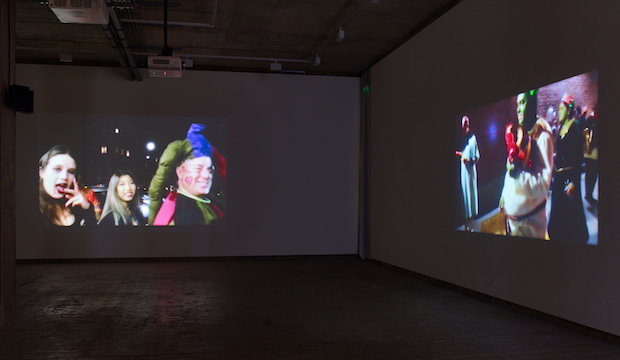
    Parker visited New York at the end of October 2016 to give lectures about the PsychoBarn prior to its de-installation. Its closing date was Halloween, “the old festival of All Saint’s Eve, which has been famously elevated in the USA to a theatrical celebration far removed from its folkloric and religious origins.” Parker and her husband used their iPhones to film people dressed up on the streets. The resulting video American Gothic 2017 “captures ghoulish revellers having their last hurrah, mingling with the crowds of the un-dead. On All Hallows night in Greenwich Village every American archetype, good and bad, seemed to be out promenading the sidewalks, from superheroes, vampires, clowns, ghouls, trolls, Freddie Krueger and Hannibal Lecter, Uncle Sam, Dorothy and the characters from The Wizard of Oz.” The scenes are displayed in slow motion  and accompanied by a slowed-down location soundtrack, which provides a low drone as background noise. On a 4th screen is footage of Trump supporters outside Trump Towers, celebrating his election. This is shown in real time, but without sound.

    HouseClose-582x437
    Cornelia Parker, PsychoBarn (Image courtesy of wired.com)

    I have no axe to grind against Cornelia Parker. I have been moved by some of her previous work-Anti-Mass particularly. This is therefore not a critique of her work per se. It is, however, written as Parker takes up her role as 2017 official election artist, and reflects therefore, necessarily, on the politics inherent to American Gothic, and what they say about “progressives’” responses to the Trump election.

    The first thing to note is that, were the Halloween scenes to be played in real time they would show happy, pissed revellers looking to dress up and party. This is no pre-apocalyptic “last hurrah” , no mournful parade-it’s a time when the streets are taken over by ordinary people, masking themselves and taking advantage of their anonymity to get absolutely wasted ! In slowing down the footage Parker is passing judgement on the revellers purported departure from the “folkloric and religious origins” of the festival. I’m always bemused by the fact that people who describe themselves using that mealy-mouthed  epithet “progressive” stop seeing  the liberatory element of the  abandonment of “tradition”, when said liberation involves working class people behaving riotously in the street. George Orwell , in Down and Out in Paris and London, contends that “Fear of the mob is a superstitious fear. It is based on the idea that there is some mysterious, fundamental difference between rich and poor, as though they were two different races.” Parker manipulates her footage of the crowd and in doing so her fear of  that crowd (and eo ipso that of her presumed audience) is made apparent.

    So the procession of ghouls is manipulated to meet the need of another crowd-that embodied in disillusioned progressive opinion- who want to see their passive despair reflected back at them in the comfort of the gallery space. And on the 4th screen they get to stare open-mouthed at the crowds of ecstatic Trump supporters. As already noted, this footage is silent. This is a shame-as we see groups such as Blacks for Trump and Latinos For Trump  actively explaining their motivations to the camera, but are denied the chance to hear them. Presumably we are supposed to be already part of a consensus that they have nothing to say worth hearing. It is worth noting though, that the primary claim  of the working class and poor people who voted for Trump, for Le Pen, for Brexit, was that thy were “the forgotten”-the casualties of deindustrialisation whose voices now counted for nothing. A working class vote for A right wing politics that in the long run are against the voters’ interests is,in essence, an expression of powerlessness. It is a gesture against the political Establishment, for sure, but more than that, it demonstrates a belief that change can no longer be effected by solidarity-that you can only , for instance,get new housing stock   by driving out the family next door. It is the beginning of the war of the poor against the poor. Such being the case, we might want to consider how “progressive” is an artwork that actively erases the voices of those who are already “the forgotten.”

    american gothic
    Cornelia Parker, American Gothic (Image courtesy of culturewhisper.com)

    In his Outline of a Theory of Practice (1977) Pierre Bourdieu noted that “The most successful ideological effects are those which have no need for words, and ask no more than complicitous silence”. American Gothic demonstrates this precisely by engaging us in the act of “complicitous silencing” of the voices of the Trump supporters. We are seduced again into the act of ignoring those who feel themselves “forgotten”, while the parade of slow-motion grotesques goes on around us.

    What we have then is the opposite of what first appearances lead us to believe. Once all of the manipulation of footage, all the technological mediation is stripped away, the 4 screens show the raucous celebrations of Trump supporters, and the Halloween debaucheries of the costumed revellers of New York. What we have in fact is a 4 screen technological effacement of the voice of the working class, a 4 screen installation that doesn’t challenge its anticipated audience , doesn’t provoke, but tells them just what they want to hear. Trump is bad, and these are frightening times. We can agree. We can accept that it’s not Cornelia Parker’s role to point us towards a way out of the Bad Times. But we should surely expect more from art than a (perhaps unconscious) reproduction of Bourdieu’s “complicitous silence”-in this case in fact a “complicitous silencing.”

    As much as we might flinch at the difficulties inherent in the use of the descriptor “outsider art”, we might best see the logic of the term  in relation to those art forms antonymous to it.  There is a sense in which much art now-the Hirsts, the Quinns etc-by virtue of their cost, their materials, their intended audience, might best be called “oligarch art.”  But if outsider art has an antonymous counterpart art form, then that must be, logically, something like an “insider art”-and American Gothic is insider art paradeigma. It does nothing other than offer platitudes to an audience who will already agree with the point it so clumsily makes. Outsider art, then, must be the opposite of this. It will contain the multitude of voices that go unheard in the art world. The loud, the ugly, the distressed, the vicious,as well as the sublime, the beautiful, the soothing. It will admit all that is excluded from the discourse of the mainstream. It may do this therapeutically, as pharmakon, as celebration. What it will not do is silence, look away from or exclude. In that sense then, as opposition to insider art, we might still make positive usage of the term.

  • Place and space: exhibiting outsider art

    Place and space: exhibiting outsider art

    My recent co-curation of Jazz Up Your Lizard, the exhibition of work by Steve Murison that celebrate five years’ of the blog, got me thinking again about what it means to be a curator of outsider art.

    img_2607
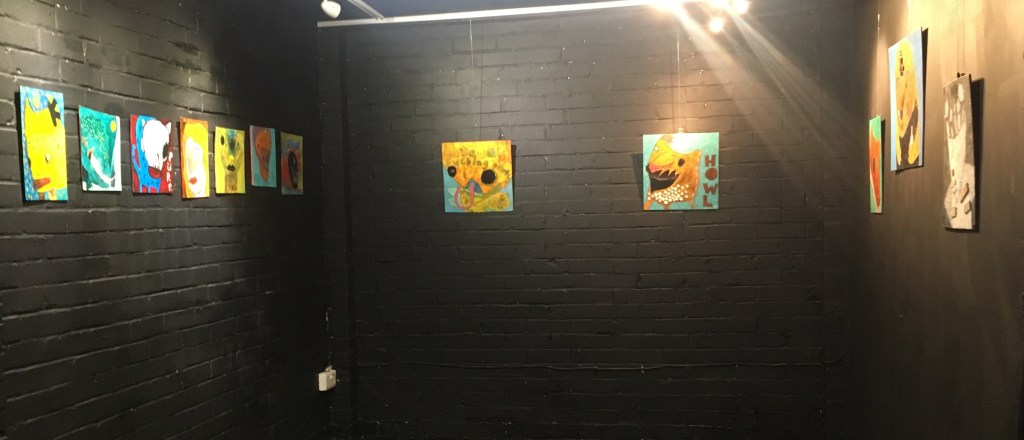
    Jazz Up Your Lizard at Gallery Lock In

    In previous posts, I have mentioned that the role of a curator is to display work that fits into the ‘outsider’ category in exactly the same way as you would go about displaying ‘mainstream’ art. White cube, professional frames, even spacing, measurements and accuracy, pristine walls. The idea being that art is art is art, regardless of what ‘category’ it fits into and regardless of who created it. It should be just art. And of course, the best way to break down any distinctions is to hold the work in the same stead when it comes to showing it to the public.

    However, certain factors have changed my mind. Whilst curating Steve’s show, I suddenly had a bit of a revelation. It was a revelation that was partly the result of the existing practicalities of the gallery space, but also a revelation in what it means to curate work that is unique, distinctive, and alive beyond the surface it has been created on.

    img_2599
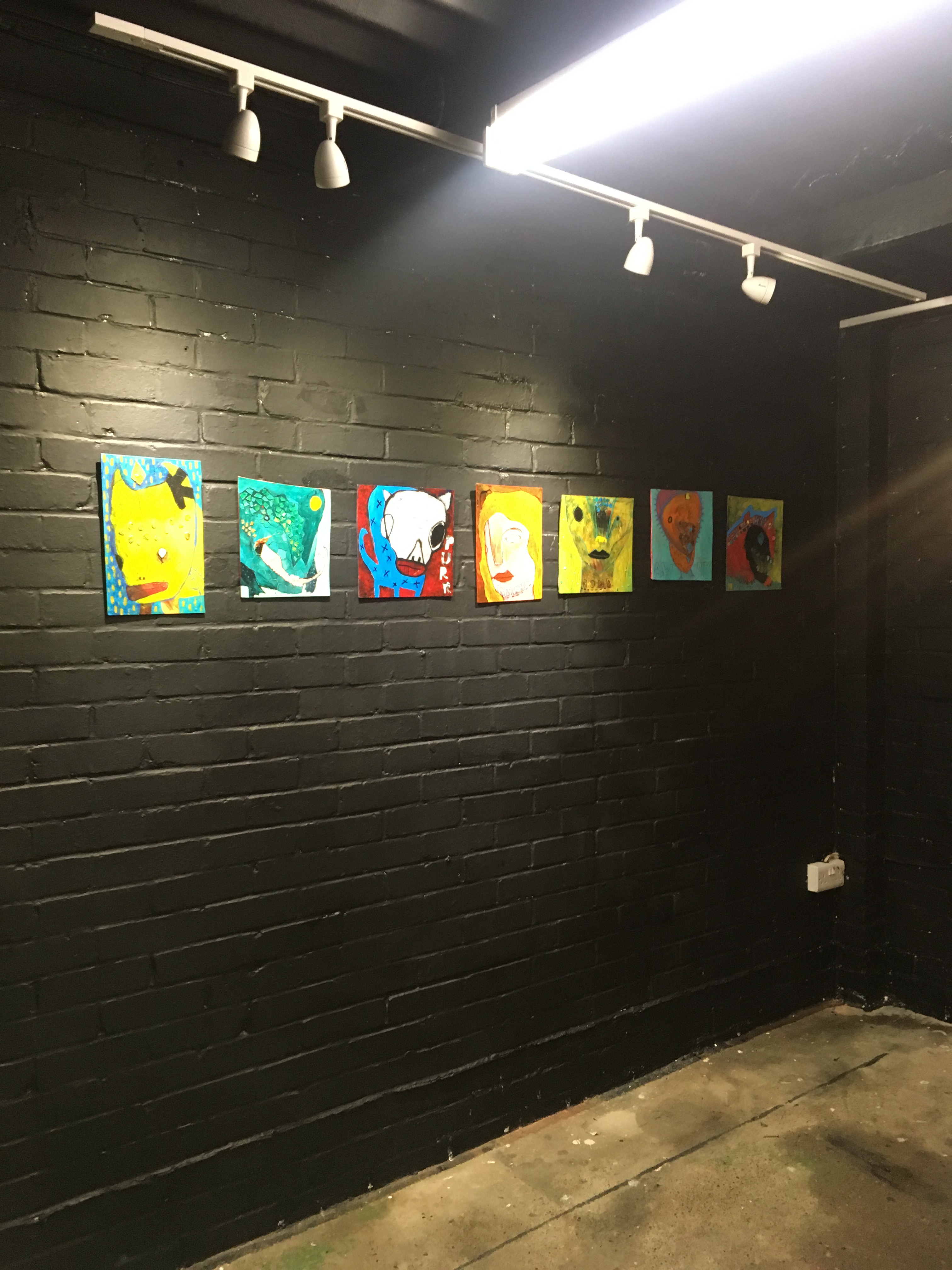
    Jazz Up Your Lizard at Gallery Lock In

    Gallery Lock In, the venue for the exhibition, is unique in itself. From the outside, it’s just two garages, and when the doors are down, you wouldn’t even be able to guess what’s going on inside. But manager and curator Beth Troakes has done a fantastic job of creating a unique, cavernous, characterful space. It’s not a bland white cube. It has life as a space in it’s own right – even without any work on the walls.

    The walls in the gallery had been painted black for a previous exhibition, and we decided to leave them like that. Steve’s work is vibrant, and on the surface quite jolly, but it hides hints of darker inferences. I was apprehensive at first, given the thoughts I’d outlined in previous posts. In fact, what we managed to create was an exhibition that was a whole new piece of art in itself. The unique character of the gallery really complemented Steve’s equally unique work. They played together in a way that brought out the best in both.

    img_2601
    Jazz Up Your Lizard at Gallery Lock In

    Perhaps everything I’d insisted about white cube spaces was actually a huge generalisation. There is work that is better complemented, better exhibited, in spaces that are equally as edgy. Sure, Steve’s work would have looked great in a white washed, square gallery space – because his work is great full stop. But in Gallery Lock In, it looked like it belonged there. It looked comfortable, at home.

    Maybe we are doing a disservice to some works by trying to squeeze them into a space that’s the wrong size, the wrong shape, the wrong fit. Maybe the purpose of an outsider art curator – or in fact, any curator – is to find (or make) a space that works with the art, shaping the place to fit the work, rather than the other way round.

    It would be great to know what you think about this – leave your comments below!

  • The ‘Savant’ Artist

    The ‘Savant’ Artist

    I have wanted to write about this subject for a while now, ever since I first received a wall calendar of a certain artist’s work as a Christmas present over two years ago. Since then, I have been lucky enough to see this artist’s work in person at the Paris Outsider Art Fair in 2015, and have now purchased another calendar, four notepads and a book. The artist is Gregory Blackstock, a ‘savant’ with a gift for drawing.


    blackstock_the-majorworld-troublemakerbeetles-thanks-raw-vision
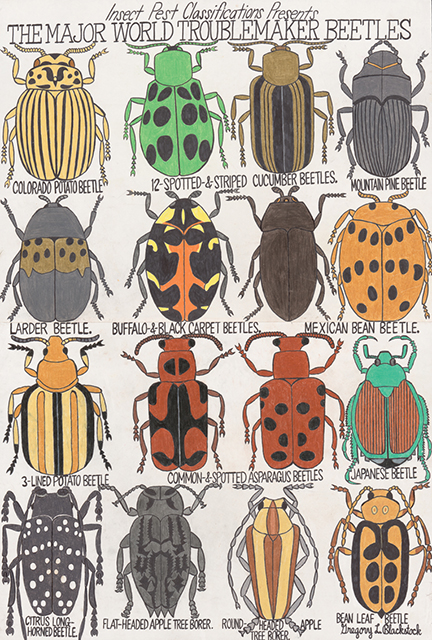
    Gregory Blackstock, The Major World Troublemaker Beetles, Image courtesy of Raw Vision

    This post will focus on the phenomenon that is the ‘savant’ artist. The term savant is most commonly used to describe someone with a developmental disability (for example autism) who demonstrates extraordinary abilities. Savants like Blackstock have long been considered within the outsider art bracket, and have been represented in various exhibitions on the subject, including the Hayward Gallery’s ‘Alternative Guide to the Universe’ in 2013.

    The most famous savant outside of the art world is likely to be Kim Peek, who inspired the film Rain Man, which in turn raised awareness of ‘autistic savants’ –  or people with extraordinary abilities. Peek’s extensive knowledge library included world and American history, people and leaders, geography, sport, movies, the Bible, calendar calculations, telephone area codes and Shakespeare. Although there are many savants who do not express their abilities creatively, there are a huge number who do. The Wisconsin Medical Society dedicates a whole page to Artistic Autistic Savants,  noting that “to many of the artistic savants, it is their release – their escape – their way to fit into a noisy and disordered world. Their way to connect with the people around them. They create and they perform because they are compelled to by the forces that make them unique, but they also do so because it brings them tremendous joy.”[1]

    blackstock_the-windmills_gregkuceragallery
    Gregory Blackstock, The Windmills, Image courtesy of the Greg Kucera Gallery

    In this post, I want to outline the work of four ‘Artistic Autistic Savants’; Gregory Blackstock (b. 1946), George Widener (b. 1962), James Henry Pullen (1835 – 1916), and Esther Brokaw (b. 1960). The work of all four is exceptional in its accuracy, whether that be in the representation of historical facts and dates, lists of obscure animals, hand-carved ships, or the leaves of a tree.

    estherbrokaw_wildflowers-artslant
    Esther Brokaw, Wildflowers, Image courtesy of Artslant

    In his book ‘Outsider Art and the Autistic Creator’, Roger Cardinal writes about Blackstock’s outstanding ability to regurgitate thousands of facts, images, numbers, and languages from memory – he can even recite the names of all of the children from his schooldays.[2]

    Darold A. Treffert, in his foreword for ‘Blackstock’s Collections’,  writes that “Blackstock shows those characteristic traits that constitute Savant Syndrome: an extraordinary skill coupled with outstanding memory grafted onto some underlying disability. But while all savants have that basic matrix, each savant is also unique, and that certainly is the case with Blackstock. First of all, his meticulously drawn lists of all sorts of items are , as an artistic format, inimitable. Second, most savants have skills in only one area of expertise, such as art, music, or mathematics – spectacular as those skills might be. But Blackstock has several areas of special skills, a somewhat unusual circumstance among savants.”[3]

    blackstock-theartsupplies
    Gregory Blackstock, The Art Supplies

    The depths of Blackstock’s knowledge and memory is really quite something. So vast and varied is it, the illustrated guide to his work, ‘Blackstock Collections,’ sees it imperative to categorise such a huge number of works under different headings – ‘Fish I like,’ ‘The Tools,’ ‘Architectural Collection,’ ‘ The Noisemakers,’ ‘Our Famous Birds.’ This way, we are able to make better sense of this one man’s awe-inspiring encyclopedic knowledge.

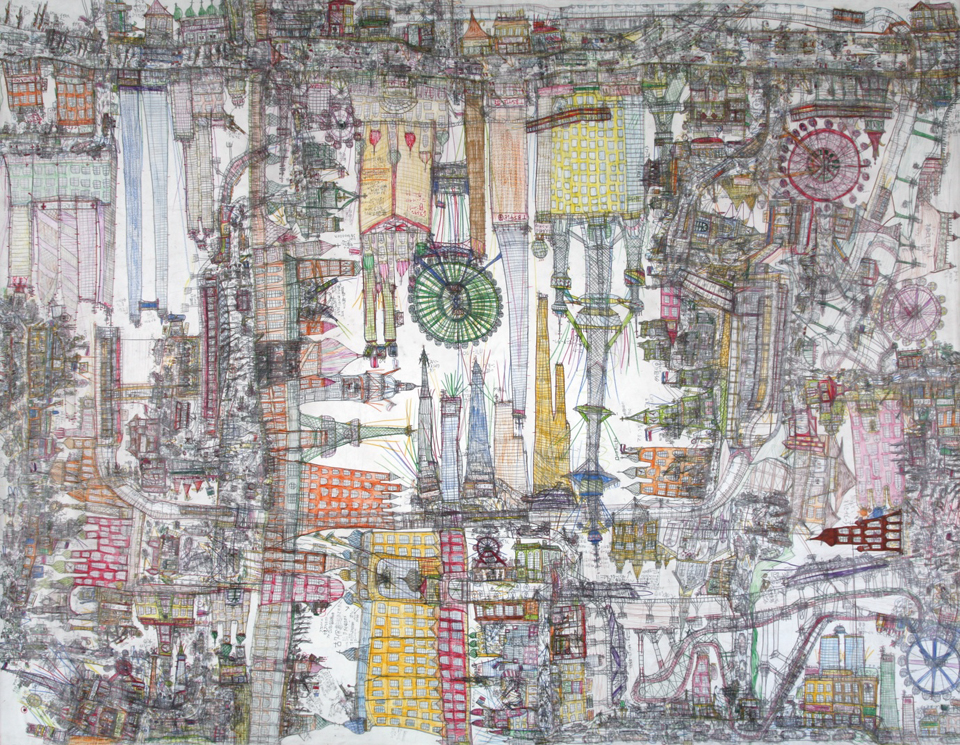
    George Widener, another – equally prolific – savant, was represented in the Hayward Gallery’s ‘Alternative Guide to the Universe.’ Widener’s brain has been proven to function like a super-calculator; allowing him to process information in a wholly different way to the majority of people.[4] His favoured method of communication is the calendar format. His calendars help him to consider time and space in a linear pattern, and they often refer to historical events – like the sinking of the Titanic, but they can also be made up of registration plates or telephone numbers.[5]

    widener-megalopolis_henryboxergallery
    George Widener, Megalopolis, Image courtesy of the Henry Boxer Gallery

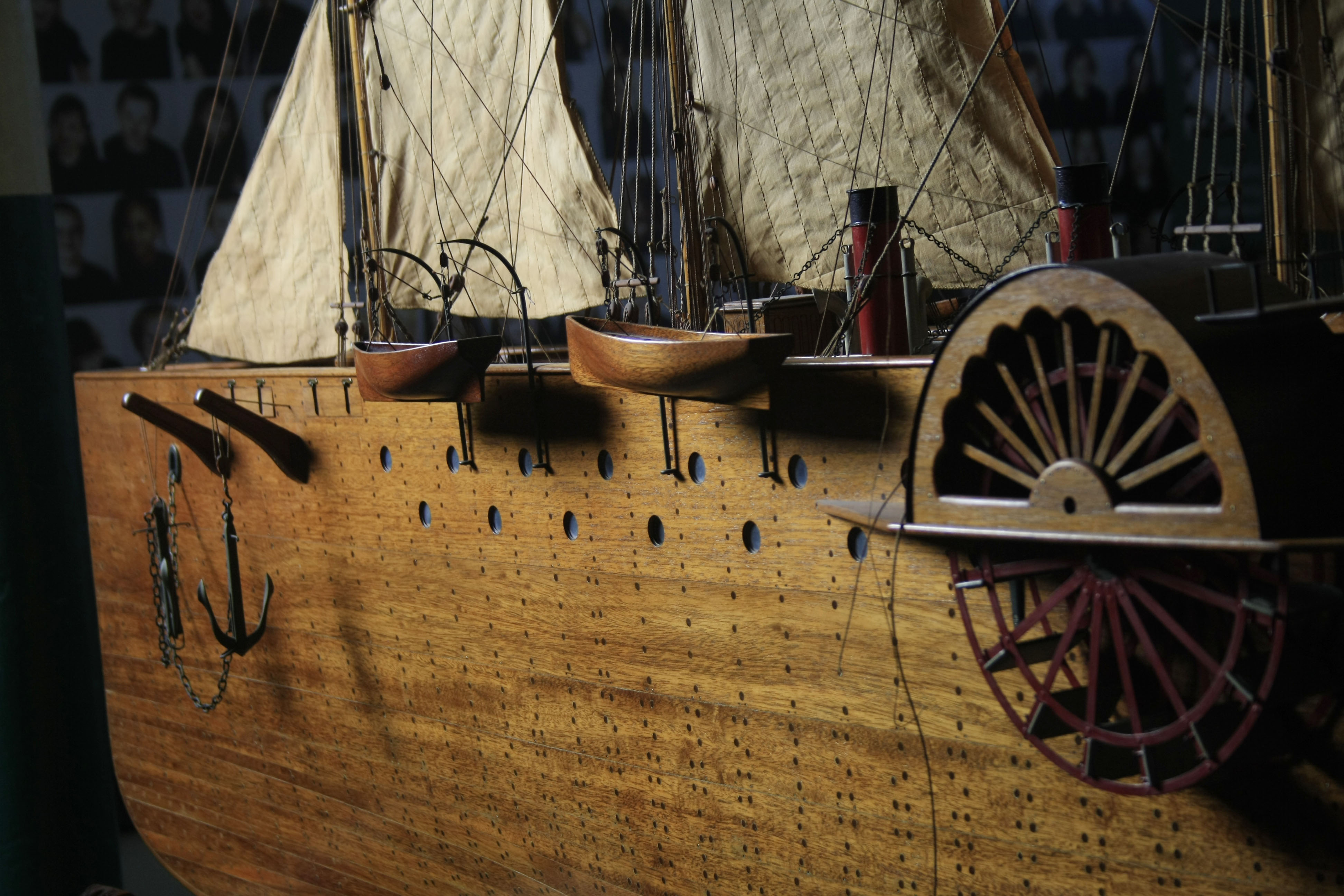
    More of a craftsman than an artist per se, James Henry Pullen carved and built ships inspired by his childhood fascination with watching his peers play with toy boats in little puddles. During his lifetime, Pullen became incredibly skilled in his making of these ships, reproducing them in pencil drawings, earning himself the title of ‘the Genius of Earlswood Asylum.'[6] He even attracted the attention of King Edward VII, who began sending him tusks of ivory to work with, and Sir Edward Landseer, who sent him engravings of his work to copy.[7]

    james-henry-pullen_downsyndromeeassociation2
    James Henry Pullen, Image courtesy of the Down’s Syndrome Association

    Esther Brokaw’s early interest in art was encouraged by her Aunt Lois, who took her to visit galleries and bought her art materials during her youth. For forty-four years of her life, Brokaw went undiagnosed. It was only in 2004 that her diagnosis helped her to understand her equal obsessions with painting and stock market charts. Brokaw paints in acrylic, watercolour and oil from photographs she has taken herself. She is renowned for her immaculate detail when it comes to depicting every leaf on a tree, or every beam of light cast down from the sky.[8]

    esther-brokaw_goodpurposegallery
    Esther Brokaw, Image courtesy of the Good Purpose Gallery

    The above artists are just four examples of the incredible ability of people we call ‘savants.’ The Wisconsin Medical Society, which I have utilised heavily for this post, has a more inclusive list of savants – both artistic and non-artistic.

    Despite its association – for me anyway – with religion and spirituality, the term savant is a celebration of unparalleled ability amongst people who have been diagnosed as having a form of ‘disability.’ The awe-inspiring memory and inimitable attention to fact and detail is a testament to human skill and creativity. The fact that many savants choose creative methods to express their extraordinary knowledge is also testament to the power of creativity. The power it has as a vessel for sharing and expression, and the power it has to raise awareness of the uniqueness of the human condition.

    george_widener_magic_square_1024x768_artspace
    George Widener, Magic Square, Image courtesy of Artspace

    References

    [1] Wisconsin Medical Society – The Artistic Autistic Savant

    [2] Roger Cardinal, Outsider Art and the autistic creator, 2009 (available online: https://www.ncbi.nlm.nih.gov/pmc/articles/PMC2677583/)

    [3] Blackstock’s Collections (2006), p10

    [4] Outsider Art Fair

    [5] Collection de l’Art Brut Lausanne 

    [6] Wisconsin Medical Society

    [7] Langdon Down Museum

    [8] Wisconsin Medical Society

  • NEW Online Exhibition: Redefining Outsider Art

    NEW Online Exhibition: Redefining Outsider Art

    A few months back, you may have seen my call out for artists to submit work on the theme of ‘outsider art’ for an online exhibition. Well, we had some great, diverse submissions, and the exhibition is now ready.

    Click here to visit the online exhibition


    If you are a regular reader of kdoutsiderart.com you will have noticed a focus on the terminology itself and how this might impact on the artists it represents. Throughout history, the different language used to describe what we call outsider art has usually been decided by someone who is not themselves an ‘outsider artist.’

    For this online exhibition, I wanted to bring in the perspective of artists who are regularly ‘labelled’ by the term to bring some balance to the continuing conversation.

    As human beings, I think it’s incredibly difficult to not label things. We do it all the time – using our own memory and experience, we group things with other similar things (objects, people, places) in a bid to make sense of them. It has been the same throughout the history of art: work created with quick, expressive brushstrokes towards the latter part of the 19th century was labelled ‘Impressionism,’ and Dali, Magritte and others who produced work from their unconscious were named ‘Surrealists.’ So, it is not unique to have a name for a group of art or artists. However, what’s puzzling about the term outsider art is that it doesn’t describe a specific artistic style; rather, it describes the person who created the work.

    This exhibition aims to shine a light on the views of artists who align themselves – or who have been aligned – with the term ‘outsider art.’ The callout received mixed responses to the question: what does outsider art mean to you? From experience, there seems to be a split between artists who are very happy to be included under the ‘outsider art’ umbrella, and those who would rather not be. It has been great hearing artists’ alternative titles; I’ve heard things like ‘Independent Art,’ ‘Dark Surrealist Art,’ ‘Symbolic Automatism,’ ‘Nomadic Art.’

    My hope is that this online exhibition will be a rich addition to the continuing conversation around the term outsider art.

    Featured image: Ofir Hirsch, La Hechicera Enamorada Terrenero

  • A Note on Outsider Art

    A Note on Outsider Art

    On 31st May, I was very kindly invited to give a talk at the ‘Life is Your Very Own Canvas’ mid-exhibition event in Aberdeen by organiser of the show, Steve Murison. The exhibition showcased work by people who are part of the Penumbra Art Group in Aberdeen. I spoke briefly about outsider art and how I had become interested in it, and what I was doing now to support artists who might be considered ‘outsider.’ Although the talk was brief, I took some time in the run up to refresh my memory on all things outsider art – which I thought I would put together in a blog post.
    gaston chaissac
    Gaston Chaissac

    My prior research took me back to when I first starting studying outsider art – right to the beginning, to quotes from Jean Dubuffet and Roger Cardinal. I’m going to split this post into four different sections, just to put my thoughts down on paper (or computer): a brief history of outsider art, what it is today, my interest in outsider art, and what I think about outsider art now.

    First things first, the exhibition was absolutely extraordinary. Many of the artists with work on the wall had never picked up a pen or a paintbrush before joining the art group, and many had re-found their creativity many years after losing it to illness or life events. There was a mixture of 2D pieces, including a series of ‘diary drawings’ illustrating the artist’s daily life in and around the city of Aberdeen, and 3D pieces; like a jaw-dropping papier mache dragon. It was inspiring to meet many of the artists at the event, who were all incredibly proud (as they should be) at having their work hanging in the exhibition.

    norimitsukokubo
    Norimitsu Kokubo

    The History

    So, let’s start at the beginning. The initial emergence of outsider art occurred between the ‘Golden Years’ of 1880 and 1930. The term itself was coined by art historian Roger Cardinal in 1972 as an English equivalent to Jean Dubuffet’s ‘Art Brut’ or Raw Art, which was coined in the 1940s. When describing work as ‘Art Brut,’ Dubuffet meant work that was untouched and untainted by traditional artistic and social conventions. In his manifesto Art Brut in Preference to the Cultural Arts (1949) he says:

    “We understand this term (Art Brut) to be works produced by persons unscathed by artistic culture, where mimicry plays little or no part. The artists derive everything – subjects, choice of materials, means of transposition, rhythms, styles of writing etc. – from their own depths, and not from the conventions of classical or fashionable art.”

    Dubuffet’s collection of Art Brut is housed in the Collection de L’Art Brut in Lausanne, Switzerland, for which there is (still) a very strict acquisitions criteria. The museum’s acquisitions are based on the following five characteristics: social marginality, cultural virginity, the disinterested character of the work, artistic autonomy, and inventiveness. There are, of course, contentious ideas within Dubuffet’s strict – and marginalising – criteria. It is incredibly difficult, even so in the early 20th century, for someone to be completely detached and separated from culture in all its forms.

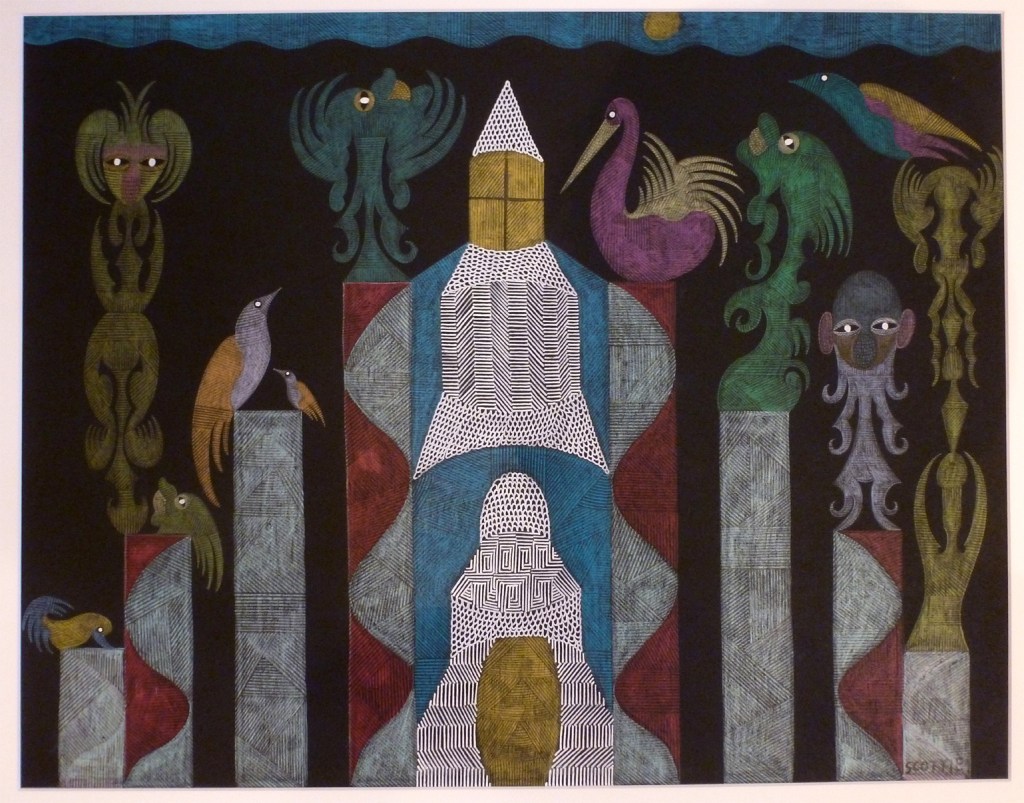
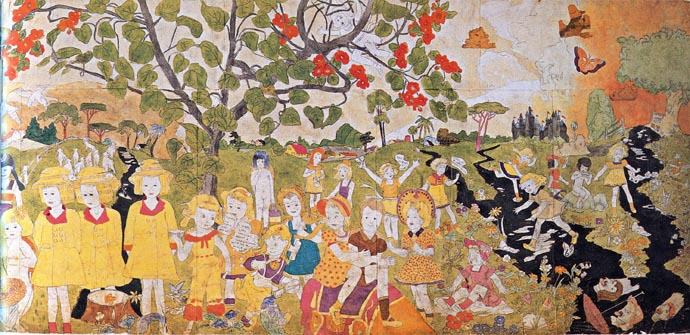
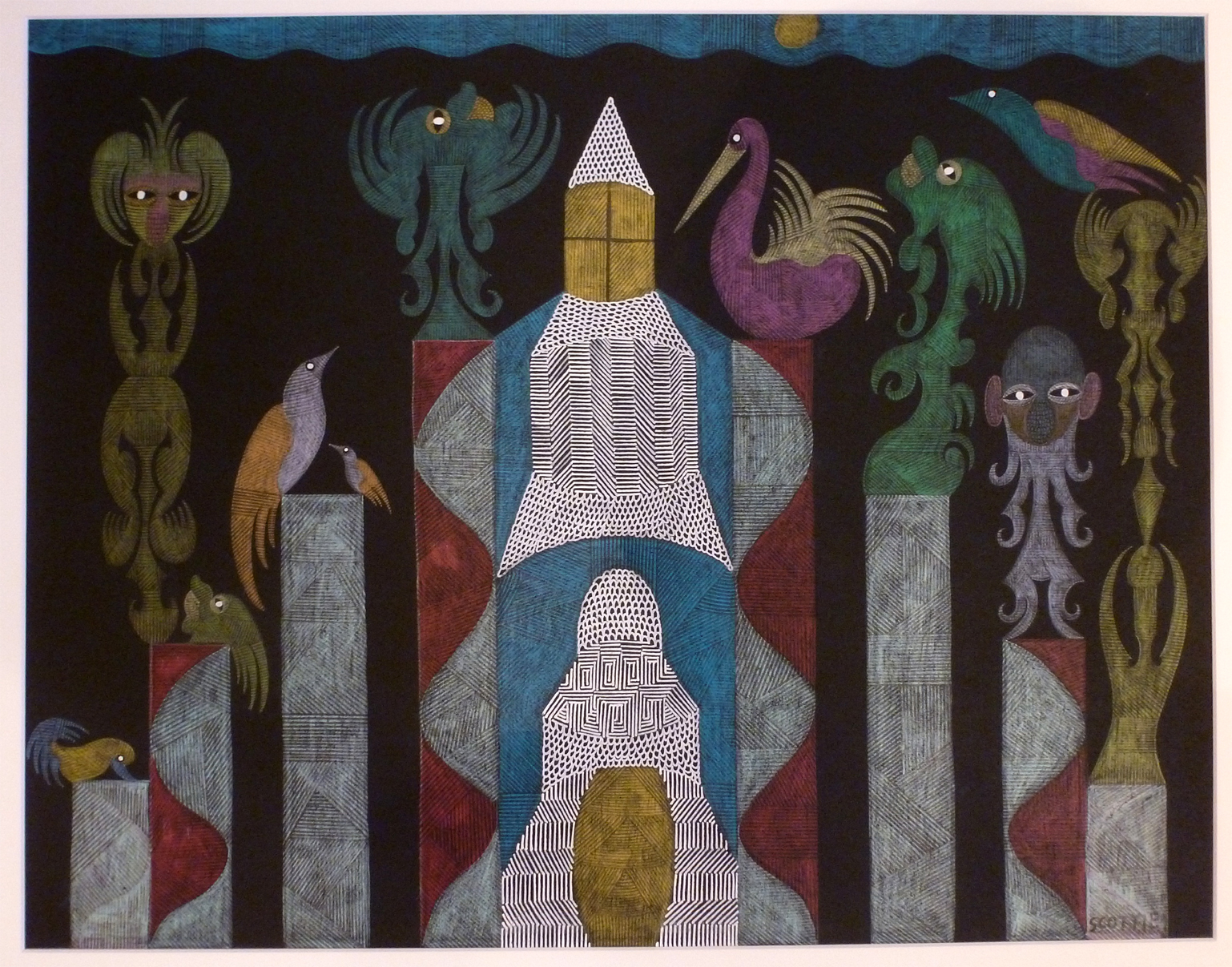
    Take for example some of the most famous outsider artists. Adolf Wolfli worked as a farm hand in his early life; Scottie Wilson was in the armed forces, travelling to both South Africa and India; and Henry Darger worked for most of his life as a caretaker.

    Dubuffet’s Art Brut is idealistic, it is not realistic. And this is where some of the contentions and debates arise around the term and what it stands for – back then and still today.

    dagrer1
    Henry Darger

    Outsider Art in the Present Day

    Throughout the 20th Century, the term gradually gained momentum. It is still around today, although in a very different form to Dubuffet’s Art Brut.  Today, it is more of an umbrella term for work that is created outside of mainstream culture – and includes terms like ‘self-taught art,’ ‘folk art,’ ‘intuitive art.’

    Everyone in the field has their own idea of what it means – a popular one being that anyone who calls themselves an outsider cannot be considered an outsider artist. Originally, outsider art was taken from the homes of artists on the sad happening of their death (like the famous story of Darger whose work was found when his apartment was cleared following his death, whence his tomes of The Vivien Girls books were uncovered).

    And then, of course, there is the divide between mainstream and ‘outsider’ art. At what point does an outsider artist become an ‘insider’ artist? Dubuffet was known to have ‘ex-communicated’ one of his own discoveries, Gaston Chaissac, because of his contact with ‘cultivated circles,’ and Joe Coleman was expelled from the 2002 New York Outsider Art Fair in which he had taken part since 1997 because he had been to art school and had ‘become too aware of the whole business process of selling.’

    A good way to look at it, I think – as it gets very confusing – is how Editor of Raw Vision Magazine, John Maizels talks about it in his book Raw Creation: Outsider Art and Beyond (1996):

    “Think of Art Brut as the white hot centre – the purest form of creativity. The next in a series of concentric circles would be outsider art, including art brut and extending beyond it. This circle would in turn overlap with that of folk art, which would then merge into self-taught art, ultimately diffusing into the realms of so-called professional art.”

    scottie wilson
    Scottie Wilson

    My Journey with Outsider Art

    My own interest in outsider art first started when I was at university. I studied History of Art, and – surprisingly – we had a whole module on outsider art. Well, it was actually a module on psychoanalysis and art, but the term outsider art kept cropping up, and I was curious. To help with my paper for this module, I visited Bethlem Museum and Archives to look at the work of Richard Dadd. I immediately found myself immersed in this world of raw human creation.

    Outsider art for me often comes straight from within. It’s not made for a market and it doesn’t come out of art schools (although I am certainly not adverse to people who have been to art school aligning themselves with outsider art). It inspires me because one of the most innate and unique things about being a human being is our ability to be creative. I think there is nothing that illustrates this better than outsider art.

    I went on to write my BA Hons dissertation on the links between German Expressionism and outsider art and was not surprised to find that many art movements in the twentieth century were inspired by the work of outsider artists – including the Surrealists and German Expressionists. Artists at this time wanted to capture the intuitive spontaneity of this work to represent the turbulent times they were living through.

    I went on to study for an MA in Art History and by this point was focusing solely on outsider art. I wrote my extended dissertation on the ethics of exhibiting and curating work by outsider artists. For me, it was interesting to think about how ethical it is to display work by someone who never intended for it to be seen. I would think about Henry Darger and his Vivien Girls. He had created this whole world in private – surely it should have been kept private? But if it had been, we wouldn’t have had access to this astounding feat of imagination – maybe the books would have been destroyed?

    I continued my research, thinking about the different ways the work could be displayed to best exhibit its aesthetic and inspirational qualities. Should interpretation include a note on the artist? Should the work stand on its own? There seemed to be so many questions that kept on breeding more questions.

    Ever since I finished my MA four years ago, I have been working with various projects and organisations that promote or support artists facing some kind of barrier to the art world – whether that barrier is their health, disability or social circumstance.

    aloise corbaz
    Aloise Corbaz

    What do I think now?

    For me, the term outsider art should be redundant. It shouldn’t be outsider art – it should just be art. Sometimes, people and artists need a little bit of extra support to get their work out there, and for this reason I think it’s vital to have organisations and projects like Outside In and Creative Future, but I think the next chapter is to challenge the impenetrable art world.

    Why is it so difficult for people to break into the art world if they haven’t been to art school? Who gets to choose what is and isn’t art? For me, outsider art is the bravest form of art. It is defined by artists exposing themselves on paper, in clay, on film, in words, and then sharing it with the world. It’s all about creativity, raw intuition, and the uniqueness of being human – and it can certainly teach us all a lot about humanity!

  • CALL OUT FOR SUBMISSIONS: Redefining Outsider Art

    CALL OUT FOR SUBMISSIONS: Redefining Outsider Art

    REDEFINING OUTSIDER ART: LOOKING AT LANGUAGE
    AN ONLINE EXHIBITION LOOKING AT THE TERM OUTSIDER ART AND WHAT IT MEANS IN THE 21ST CENTURY


    Call out for submissions to an online exhibition focusing on the term outsider art and what it means to YOU as an artist.


    brown mule
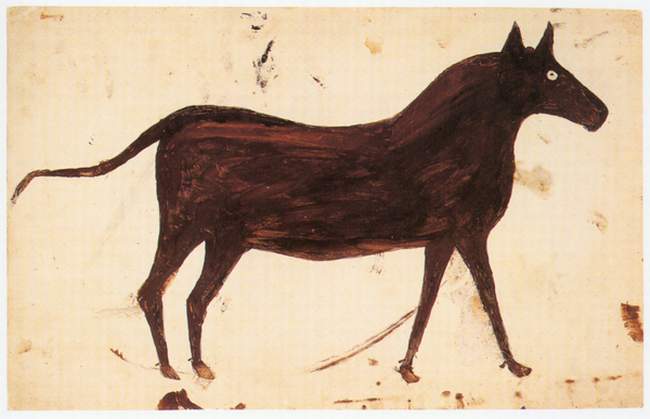
    Bill Traylor, Brown Mule, 1939 [source: http://www.petulloartcollection.org]
    kdoutsiderart.com regularly focuses on the ambiguities of the term outsider art and what potential impact it might have on the artists it aims to ‘define.’ In late 2015, I posted a blog that outlined the thoughts of six artists who find themselves housed under this ‘outsider’ umbrella. Following on from this, I’d like to expand this idea, and am inviting artists who might in some way align themselves with the term outsider art to tell me what they think. I’d like to know what you think of the term outsider art, and – if you have an idea – what a better term might be.

    I’m looking for responses in a variety of media – using words, images, sculpture, performance, sound – to contribute to an online exhibition challenging the term outsider art. Unlike other conversations around the term, I’d like us to work together to break down the term outsider art and for you to really think about what it means to you as an artist. By providing real-life responses from artists as well as potential alternatives, we can be a positive addition to the continuing conversation.

    henry darger1

    Submissions
    Submitted work must be in a digital format – this can be images, a sound or movie file, or a PDF or Word Document. Each artist can submit one piece, and all pieces must be accompanied with a brief description of how it relates to the continuing conversation around outsider art. Please email all submissions to kdoutsiderart@yahoo.com by 1st July 2016.

  • The Story of Art: our collective history

    The Story of Art: our collective history

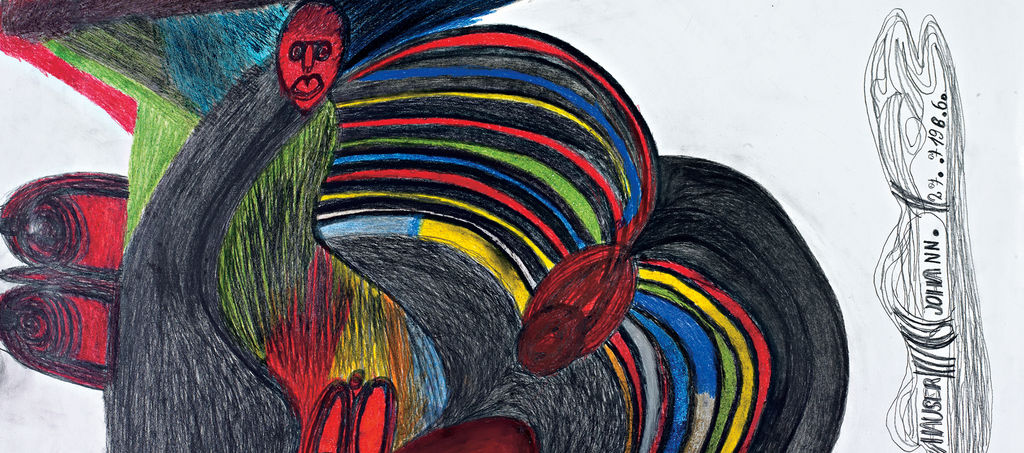
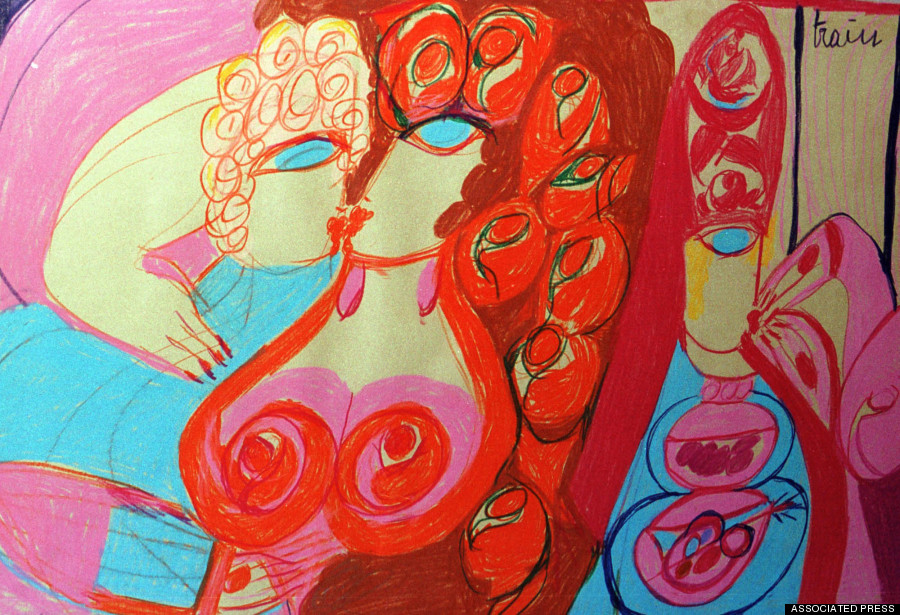
    I feel like I haven’t written a longer piece on outsider art and its accompanying tensions in a long time. A visit to the Whitworth Art Gallery, Manchester – part of a team day out in my final weeks working for Outside In – took me back four years to the research I was conducting into displaying outsider art. The Whitworth, structurally both modern and beautiful, has been home to the Musgrave Kinley Outsider Art Collection now for several years. The collection is one of the formative and most important Outsider Art collections in the world, and includes works by prominent figures such as Aloise Corbaz, Johann Hauser and Lee Godie.

    johann hauser
    Johann Hauser, Nackte Frau mir Hut, Art Brut Center Gugging, Maria Gugging

    Currently at the Whitworth, an exhibition focusing on portraits expertly showcases a huge number of works from the gallery’s collections – including the Musgrave Kinley Outsider Art Collection. It was a privilege to see works by the likes of Ben Wilson, Hauser, and Corbaz alongside great British masters such as Francis Bacon, Sir Stanley Spencer and Leon Underwood. There is no division in the exhibition between work by tutored, mainstream artists, and the equally aesthetically brilliant works by so-called ‘outsider’ artists.

    Curator Bryony Bond says: “Many works predate the gallery’s formation by hundreds of years, others were made on different continents, and many more were made without the expectation of being shown in a gallery at all. Together, however, these individual works of art, each made in different circumstances, shape the collection, and give the Whitworth its unique personality.”

    joahnn 2
    Johann Hauser, Frau mit Fahne, Art Brut Center Gugging, Maria Gugging

    Back in 2013, I wrote a blog on the relationship between ‘outsider’ art and the ‘traditional’ history of modern art, in which I touched upon the abandonment of ‘outsider’ art within most art history curriculums. So often excluded from the history (and story) of art, ‘outsider’ artists have been wholly welcomed into the Whitworth exhibition, helping to illustrate the history of a prestigious art gallery, its donors and collectors. This highlighted for me the importance of including such works in telling the story: whether that’s a story about collections and collectors, or whether it’s the story of art – and, to go one step further, the story of humanity more generally.

    Let’s take Hauser as an example. Born in 1926 in Slovakia, Hauser was admitted to a psychiatric institution at the young age of 17. He was transferred to another hospital near Vienna in the late 1940s, where he remained for the rest of his life. Here, he joined the Haus der Künstler (House of Artists), where his doctor – the lauded Leo Navratil – encouraged him to start drawing. His work took inspiration from popular culture: portraits of film stars, current events and photos of war machines.

    aloise
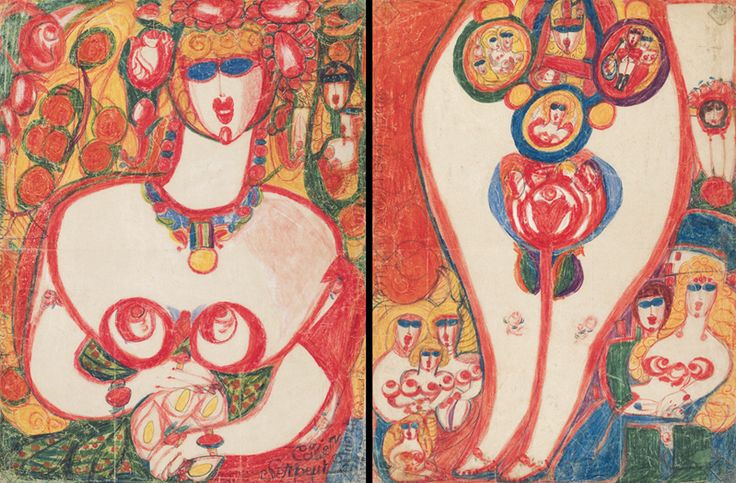
    Aloise Corbaz

    Does erasing works by people like Hauser erase people like Hauser? Surely if we are telling the full unadulterated story of art (and humanity), these are important chapters.

    Corbaz was born in Switzerland in 1886. At the age of 32, she was diagnosed with schizophrenia and was admitted to a psychiatric hospital. It was after this admission that she began to experiment with creative writing and drawing. At first, she kept her creations on scrap-paper secret – whether for reasons of fear or privacy, but after a while she was allowed to use larger sheets of paper as well as crayons and coloured pencils. Corbaz is now one of the most celebrated ‘outsider’ artists in history. If we erase her work, are we erasing her story – are we erasing her as a person?

    ALOISE
    Aloise Corbaz

    In this respect, the Whitworth is leading the way (certainly in the UK anyway). By integrating work by the renowned British modern greats and the work of artists like Hauser and Corbaz, they are accepting – and celebrating – the great breadth and variety of people who are and were a part of the story of human history. Their work is equally as – if not more – important in shedding light on the diverse experiences of human beings. Art is a great way to share the truths and tribulations of being human and provides a visual tool to help reduce stigma surrounding fundamental issues like mental health and disability. We must remember to include the diverse stories of people from all walks of life to ensure our collective human story is varied and interesting, but above all, to ensure that it is truthful.

    ‘Portraits’ continues at the Whitworth Gallery, Manchester, until 23 October 2016.


    Click here to find out more about the show


  • The ‘S’ Word: can the arts reduce mental health stigma?

    The ‘S’ Word: can the arts reduce mental health stigma?

    In the UK – despite much progress since the abolition of large psychiatric hospitals and a significant increase in care in the community – stigma surrounding mental health issues is still an incredibly prominent issue. The Mental Health Foundation notes that “people with mental health problems say that the social stigma attached to mental ill health and the discrimination they experience can make their difficulties worse and make it harder to recover.” Existing stigma can be exacerbated by the media’s biased and often hyperbolized coverage of people with mental health issues, which often paints a portrait of dangerous criminals who should be avoided. Considering one in four people will experience a mental health problem at some point in their lives, this is a very key issue.


    paint


    The research


    Many organisations and researchers have looked into the impact the arts can have on reducing stigma, with predominantly positive findings and results. Two researchers from the University of Strathclyde’s School of Applied Social Sciences – Lee Knifton and Neil Quinn – have conducted research into the impact of the arts on mental health stigma. They started with a week-long mental health arts and film festival in Glasgow and Lanarkshire in 2007, which has since developed into a national programme in numerous locations in Scotland. The learning from their accompanying research has continually shaped the festival, and they have found that “arts events reduce stigma amongst audiences and media by increasing positive beliefs rather than simply reducing negative ones.”

    In ‘Using theatre to address mental illness stigma: a knowledge translation study in bipolar disorder’ (2014), E. Michalak et al. noted that “Emerging evidence… indicates that an effective multifaceted strategy to prevent and reduce mental illness stigma would include creative arts and contact-based approaches.”[Michalak et al. 2014]. The paper concluded that:

    “The power of arts-based approaches, which are consonant with the current emphasis on narrative-based medicine, may lie in their potential to reach and speak to an audience that may not be responsive to conventional methods for addressing stigma and may represent a yet-to-be fully tapped mechanism for change.” [Michalak et al 2014].

    The arts can be – and have been – used in a myriad of ways in an attempt to reduce stigma. For example, in 2013, Time to Change commissioned two British artists to create ‘get well soon’ cards to be sent to people experiencing mental health issues. This campaign was a result of findings that showed 79% of the public would consider sending a card to someone experiencing a physical health problem, but only 50% would consider sending one to someone experiencing a mental health problem.

    bobbin


    Unique characteristics


    I want to move away slightly from the statistics, and think about characteristics innate to the arts that might enable them to be key players in reducing stigma and discrimination towards – well anyone – but let’s talk about them in relation to mental health. The arts are unique in their universal accessibility – from Hollywood blockbuster films, to visual arts exhibitions and popular music, making them a vital resource to be tapped into. They offer a channel through which real, down-to-earth stories about human experience of mental health issues can be conveyed to the general public.

    The arts have long been known for their ability to provide the artist with a voice, and this voice can be used for powerful results. A key form of communication, the arts are cross-cultural, cross-language, and cross-class. They can represent the things that cannot be put into words, or conveyed through language.

    MECCA (Multi-Ethnic Collaborative of Community Agencies) have run a Stigma Reduction through the Arts project, ultimately focusing on “reducing behavioral and mental health disparities through reducing the associated stigma surrounding mental illness” by creating specialist workshops that utilised educational documentaries, collaborative expression, and exhibitions. The notes on the project mention that:

    “Artistic expression of thoughts, emotions, and attitudes through a variety of mediums provides the general public with the opportunity to view mental health issues through a consumer perspective in an effort to counteract stereotypes, dispel prejudice, discrimination, and negative attitudes contributing to the stigma.”

    painting


    Providing a different ‘label’


    Not only is art a great way to communicate different – and often difficult – messages, it also gives its maker a new ‘label.’ Now, I’m certainly no advocate for labels, but labelling is something we as humans innately do. We like to group things together so we can use our existing knowledge to make sense of new information.

    A key example here is the annual Koestler Trust exhibition held at the Southbank Centre in London every autumn. The exhibition showcases work by people in prison, secure patients, and detainees. Although not focusing on mental health, it is still a prime example of reducing stigma using the arts. In this case, stigma surrounding those who are or who have been in prison or detained in a secure setting. The exhibition, situated as it is in a huge mainstream arts centre, removes the label ‘offender’ or ‘prisoner’ from the creator, instead presenting them to the world as an ‘artist’ or ‘writer.’

    As multi-faceted human beings, art exhibitions and events can highlight another side of us. They can show the world what we’re really good at, or what we’re really passionate about. They are also really good at compressing more than one emotion, sentiment, or message into one concise image – or song, or poem.

    By looking at just one painting, you might be able to see and understand very quickly how someone is feeling and why they might be experiencing these feelings. If we were to go about finding this out through conversation, it could take a while – not to mention an awful lot of trust-building, and in reality, we might give up after not too long.

    It would be good to hear whether you think the arts are key for reducing stigma surrounding mental health – and if so, why are they? Post in the comments below if you have any thoughts!

    pencils


    References


    Erin E Michalak et al., ‘Using theatre to address mental illness stigma: a knowledge translation study in bipolar disorder,’ International Journal of Bipolar Disorders, 2014, 2:1. Available online: http://www.journalbipolardisorders.com/content/2/1/1

  • What Does the Term ‘Outsider Art’ Mean to You?

    Every now and then I like to twist myself up into knots thinking about the term ‘outsider art’; what it means in today’s context and whether we should even be using it anymore. You can find some of my thoughts under the ‘Outsider Art: Theory and Thoughts’ category (or by clicking here), but in this blog post I wanted to share some of the thoughts of artists who have recently featured on the blog. A while ago, I started asking artists what they thought of the term outsider art, and, if they didn’t think it was appropriate or relevant, was there a term better suited to describing their work?

    I’ve had some really interesting responses, and some equally interesting new terms. Maybe it’s time we listened to the artists we are categorising under this term.

    Daniele Valeriani, Vanitas 1 (detail)
    Daniele Valeriani, Vanitas 1 (detail)

    Daniele Valeriani: Dark Surreal Art
    “I could consider myself an outsider for sure due to the fact that I do not care about fashions or easy solutions. In fact what I create is not conditioned or calculated but simply what I like the most. I don’t care about judgments except from other artists I admire, and only then so that I can learn or increase my technique or cultural view. In my case Dark Surreal Art is the term that I find more akin to my art because better emphasizes my style and themes. Outsider is a broader term.”
    More of Daniele’s work is coming soon on the blog

    Mario Soane, Que horas son corazon
    Mario Soane, Que horas son corazon

    Mario Seoane: Symbolic Automatism
    “I’ve been an outsider all my life and in every aspect it. If there is a place in art for me, I guess it would be on the outside. But I like the term Art Brut better (not sure if it is because of the French sound to it or what). I believe that art is about brutality, even if it’s about hiding it. We are all animals, brutes. All our actions, as much as they are masked under the shroud of civilization, are brutish in nature. Art is no exception.”
    Click here to see more of Mario’s work

    Anonymous, A Cold Heart Melts
    Anonymous, A Cold Heart Melts

    Brendan Liam: Nomadic Art
    “Nomadic Art is closer to street art than fine art. It is always artist-less, or by Anonymous. This is partially because knowing the name attached to a piece of visual art arguably clouds one’s ability to objectively view the art. Naturally some artists are so unique they may not need to sign and thus may not avoid the subjectivity issue addressed normally by anonymity. The thing to note is the credentials attached to the art here – which are none. No artist means no resume, and all that goes away with that.” Click here to see more on Brendan

    Frank Heiler, Don't Look
    Frank Heiler, Don’t Look

    Frank Heiler: Dark Surrealism
    “I think outsider art fits well with some of my work, especially my more experimental pieces. Although I do draw influences from other artists, I always try to keep a foreign, outside element to my art, something chaotic and new, with my own influence. Dark Surrealism is probably a better term to describe what I do, however.”
    Click here to see more of Frank’s work

    Mr Bartle, The Cellist
    Mr Bartle, The Cellist

    Mr Bartle
    “Like all art classifications it’s useful in grouping together work with similar characteristics, but the term is defined differently in different places. If outsider art is art created by untrained artists, then that’s not me. If outsider art is only art created by people on the edge of society, then that’s not me. Why I feel comfortable with the term and am happy with it as a classification regardless of other people’s ideas of what it should mean, is that I ‘feel’ like an outsider. I’ve never known where I’m supposed to fit into everything. So much of it doesn’t make sense to me – the way I’d like to live, depression.”
    Click here to see more of Mr Bartle’s work

    Beatrice Roberts
    Beatrice Roberts

    Beatrice Roberts
    “Well, due to my own life experience, I feel like an outsider most of the time. I’m not a ‘people person’ and some of this is, I’m sure, due to my past. I was bullied for many years and my self-confidence was eroded to a massive extent. I still have anxiety issues because of it. I was also isolated from family, friends and any support networks, so I got into the habit of being self-reliant. These days I have a wonderful partner and I am slowly but surely healing, but as my art is me, and I feel like an outsider, it is probably a reasonable term to use for my art.”
    Click here to see more of Beatrice’s work

    Let me know what you think. Do any of the terms above resonate with you? What do you think of the term outsider art? Do you like being referred to as an ‘outsider artist’? Post any thoughts in the comments below.