Category: Outsider Art: Theory and Thoughts

  • Artificial Hells? A Summary of Claire Bishop

    Artificial Hells? A Summary of Claire Bishop

    Following on from my recent post summarising Julian Spalding’s thoughts on the Eclipse of Art in the twentieth century, I have been reading a number of other texts that focus on the political and societal factors that impacted on the western art world in the twentieth century. This post offers a summary of Claire Bishop’s ‘Artifical Hells: Participatory Art and the Politics of Spectatorship.’ 

    outsider-art-fair-2014-top
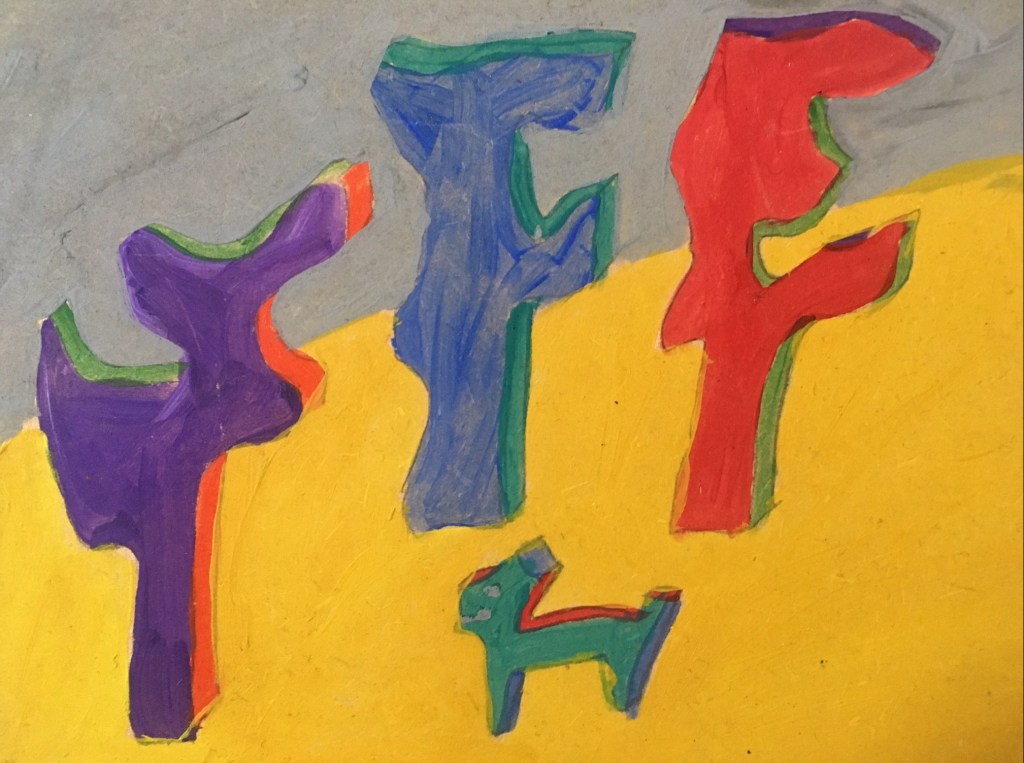
    Francesco de Silva, Untitled

    The book looks at the trajectory of participatory art across the twentieth century. Originally a peripheral activity given little to no gravidas in the art world, participatory arts have grown in popularity – and respect – becoming “a genre in [their] own right, with MFA courses on social practice and two dedicated prizes.”[1] The rise and tradition of participatory art is most notable in European countries, where there is a strong parallel with public arts funding. Participatory arts activities, according to Bishop, see the shift of the audience member from ‘viewer’ to ‘collaborator’ or ‘co-producer.’ They are difficult to commercialise, as they are less a concrete object and more a series of events or workshops, yet they occupy a very important place in society.

    Bishop links the rise of participatory arts activities to social and political happenings in Europe in the twentieth century, and, perhaps more notably, to consumption and capitalism. A return to a more ‘social’ art, Bishop claims, can be seen to align with the rise and fall of far left-wing political agendas; for example, the avant-garde in Europe around 1917, the ‘neo’ avant-garde leading up to the late 1960s, and the fall of communism in 1989 could be seen as the driving force behind the participatory art of the 1990s.[2]

    In the UK, Bishop uses the example of the New Labour government of the late 1990s. Under this leadership, public spending on the arts shifted to have a more socially engaged focused. Based heavily on Francois Matarasso’s report on the impact of arts on society, New Labour’s cultural policy focused on what the arts were able to do for society; “increasing employability, minimising crime, fostering aspiration – anything but artistic experimentation and research as values in and of themselves.”[3] The key phrase utilised by New Labour was ‘social exclusion’: “if people became disconnected from schooling and education, and subsequently the labour market, they are more likely to pose problems to welfare systems as a whole.”[4] This new leaning towards the societal impacts of art were deeply criticised by the far-left because they seemed to seek to “conceal social inequality, rendering it cosmetic rather than structural.”[5] Cultural theorist Paola Merli noted that these new ‘uses’ for art would not change structural conditions, they would only help people come to accept them.
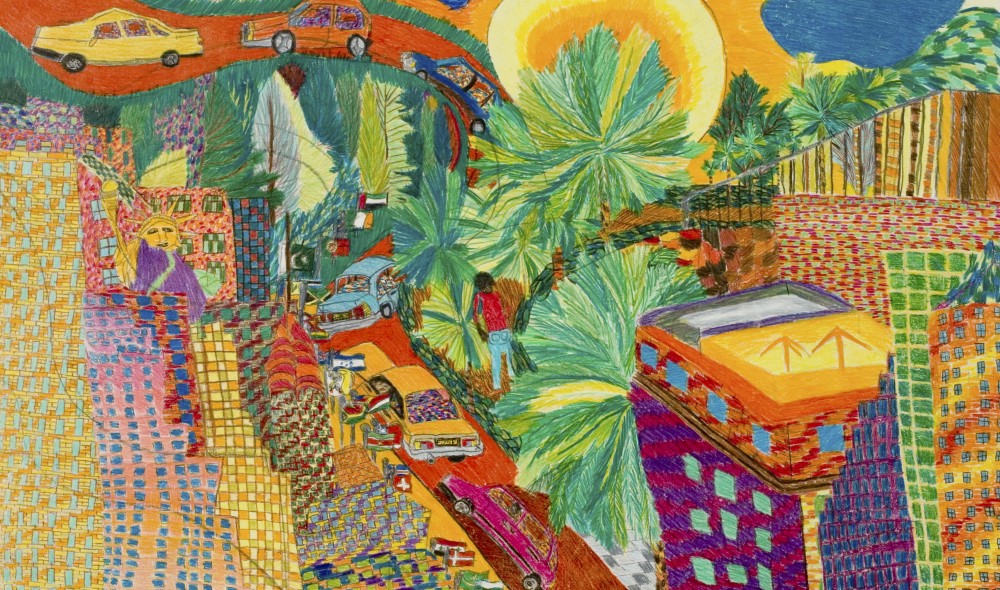
    jereon pomp
    Jereon Pomp (Image courtesy of http://www.outsiderartmuseum.nl)

    This politicisation of participatory arts, Bishop states, is:

    “Less about repairing the social bond than a mission to enable all members of society to be self-administering, fully functioning consumers who do not rely on the welfare state and who can cope with a deregulated, privatised word… In this logic, participation in society is merely participation in the task of being individually responsible for what, in the past, was the collective concern of the state.”[6]

    In this instance, Bishop notes, art becomes indistinguishable from government policy. Arts projects that prioritise tangible outcomes and outputs are sociological rather than artistic. This idea of art and creativity as political agenda has (unfortunately) seen arts projects evaluated solely on their positive impact on individuals and communities rather than on any aesthetic level. This way of thinking, Bishop notes, has “led to an ethically charged climate in which participatory and socially engaged art has become largely exempt from art criticism.”[7]

    This notion of separation between ‘art’ which is actively critiqued and ‘participatory art’, which is not (not on an aesthetic level anyway), “reinforces a class division whereby the educated elite speak down to the less privileged.”[8] This idea was initially suggested by Grant Kester, and Bishop agrees with this; that participatory art and its lack of ‘academic critique’ can give participants the image of being passive and vulnerable. Additionally, the continuing separation between how ‘art’ and ‘participatory art’ are dealt with on an aesthetic and critical level means that there are other distinctions and assumptions that are made between the two. Bishop notes that “there is usually the objection that artists who end up exhibiting their work in galleries and museums compromise their projects’ social and political aspirations; the purer position is not to engage in the commercial field at all, even if this means losing audiences.”[9] She continues:

    “Not only is the gallery thought to invite a passive mode of reception (compared to the active co-production of collaborative art), but it also reinforces the hierarchies of elite culture… Even if art engages with ‘real people’, this art is ultimately produced for, and consumed by, a middle-class gallery audience and wealthy collectors.”[10]
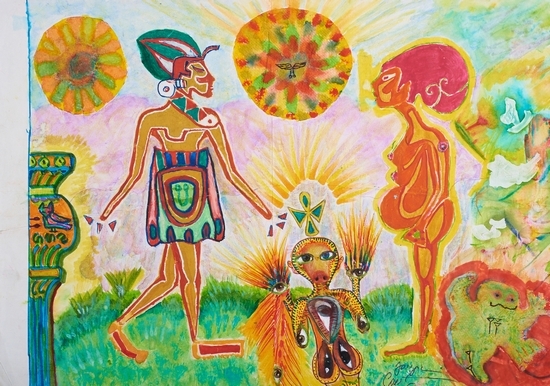
    jayne county
    Jayne County, See Me in No Special Light (Image courtesy of the Outsider Art Fair)

    This idea of a differentiation between active and passive; participatory and non-participatory, is unproductive, Bishop notes, because it only reflects societal inequalities. For example, either the spectator is inferior because they do nothing and the performer does something, or the performer is inferior to the critical thinking of the spectator.[11]

    This theory is amplified when Bishop argues that “high culture, as found in art galleries, is produced for and on behalf of the ruling classes; by contrast, ‘the people’ (the marginalised, the excluded) can only be emancipated by direct inclusion in the production of a work.”[12] This is also true of funders of the arts, where there is an underlying assumption that the working-classes can only engage physically, while the middle-classes can engage critically.[13]

    Ultimately, Bishop’s argument is that participatory art is a creation of the ruling powers to seemingly give voice to working-class members of society in a way that doesn’t distribute too much power. Today, she notes, the resurgence of participatory art “accompanies the consequences of the collapse of really existing communism, the apparent absence of a viable left alternative, the emergence of contemporary ‘post-political’ consensus, and the near total marketization of art and education.”[14] Although seemingly a socialist construction that allows people who have not had access to the ‘art’ world as was, participatory art is, according to Bishop, a way for the ruling classes to hold onto the real power, while handing over a sense of a small morself of this power to the rest of society. In his essay The Uses of Democracy (1992), Jacques Ranciere notes that “participation in what we normally refer to as democratic regimes is usually reduced to a question of filling up the spaces left empty by power.”[15]


    References

    (All Claire Bishop, Artifical Hells: Participatory Art and the Politics of Spectatorship, Verso, 2012)

    [1] Bishop, P 2
    [2] Bishop, P 3
    [3] Bishop, P 13
    [4] Bishop, P 13
    [5] Bishop P 13
    [6] Bishop, P 14
    [7] Bishop, P 23
    [8] Bishop, P 26
    [9] Bishop, P 37
    [10] Bishop, P 37
    [11] Bishop, P 38
    [12] Bishop, P 38
    [13] Bishop, P 38
    [14] Bishop, P 276
    [15] Bishop, P 283

  • The Eclipse of Art?

    The Eclipse of Art?

    Continuing on the theme of the construction and sociology of the art world, this blog post references Julian Spalding’s interesting read ‘The Eclipse of Art: Tackling the Crisis in Art Today.’ This post is somewhat a summary of Spalding’s main thoughts, which cover the descent of art in the modern era. In the book, he looks at the changing art education system, the changing language of art, and how value judgements are made about art and who makes them. Spalding is a kind of champion for the ‘traditional’ medium of painting, so much of his work focuses on how we can reinstate painting as the respected art form it once was. As always, please let me know your thoughts in the comments below, or alternatively, drop me an email: kdoutsiderart@yahoo.com. Hope you find something of interest!


    art-1851483_1920

    Julian Spalding’s ‘The Eclipse of Art: Tacking the Crisis in Art Today’ is a somewhat scathing attack on the ready-mades and found-object sculptures of the late twentieth century, and a plea for the return of painting as a respected and important form of art.

    Spalding splits his book into four main sections: the Eclipse of Language, the Eclipse of Learning, the Eclipse of Content and the Eclipse of Judgement. He concludes his argument with a chapter entitled The Passing of the Eclipse, in which he suggests where and how we might move forward from the devastating impact modern art has had on the art world and society as a whole (of course, he talks almost exclusively about the western art world). Despite a heavy criticism of most work produced in media other than oil paint, Spalding finishes the book with a certain optimism for the future; so long as we can move away from the preference of the artist as an individual celebrity over individual works.

    The book is ultimately a comparison between oil painting (historic, modern and contemporary) and other forms of visual art, along with an insight into how the ebbs and flows of the art world over the last century have almost entirely been dictated by collectors, dealers, and rich patrons. This shift in who was ‘in charge’ combined with the aftermath of two world wars, an industrial revolution, and the development of new technologies (e.g. photography and other, more mechanical methods like screen printing) led to a new landscape that was almost a direct reaction to what had come before.

    paint-2940513_1920

    Spalding talks about painting’s descent into obsoletion, echoed by the socialist and feminist voice of John Berger in his pivotal Ways of Seeing. Painting, according to Berger, was “a manifestation of the desire of man (particularly males) to take possession of things, including other people (particularly females).”[1] Painting was on the side of the haves, not the have-nots. Berger championed photography as a new and accessible art form, and questioned the need for the outdated medium of painting when new methods of representation and communication were at our fingertips.

    In ‘The Eclipse of Language,’ Spalding refers to visual art as being “a language, not a craft,”[2] but then follows this up by saying that art is in fact “not a language, because you cannot use it to converse. It is a one way communication.”[3] And, give them their due, artists in the twentieth century were keen to make art more of a two-way conversation, but this was just not possible with the rise of the ready-mades. These new objects on display in the most prestigious museums and galleries in the world were a completed statement. The public had “no choice but to think their own thoughts when looking at such ‘found objects’ because it is impossible to know from just looking at them what the artist intended you to think or feel about them, because they had not been changed by the artist in any way.”[4]

    The chapter ‘the Eclipse of Learning’ is perhaps the most interesting contextually, giving – to some degree – a sense of how we have ended up in this situation. Languages, Spalding asserts, have to be learnt, and “the same is true of the language of art.”[5] Spalding argues that it is through the art education system that things began to radically change. Historically, prior to the industrial revolution, artists would take on apprenticeships as young as thirteen years old, where they would work with an artist for seven to eight years. This was really the only way to learn, because skills like grinding pigments required “years of practice to perfect,” and acquiring materials was financially out of the reach of many.[6] However, the new mechanical equipment born out of the industrial revolution meant the rigorous apprenticeships of the past were no longer needed, and so class divisions began to appear: “Was art a career for those who were good with their hands (the working classes) or for those who were good with their heads (the rule, now managing classes)?”[7] Art was becoming more theoretical; particularly in the way it was starting to be taught in art schools. As a subject, it moved from a respected trade to become part of polytechnic colleges, and then finally, part of the higher education system, available to study at most universities. Students started much later (eighteen, rather than thirteen), and they did not need studios anymore; they could work from home. There was also a bubbling feeling amongst students that selling art was selling out.

    lens-3114729_1920

    Interestingly, Spalding asks the question: are artists born or made? His response is that when we look at art, we might say that artists are born, but this natural freedom and energy is often lost in adolescence – many artists are ‘unmade’ at this point. A revival of the arts apprenticeship, Spalding states, is what the art world needs. Apprenticeships, and a society that is able to select the art it values the most, uninfluenced by dealers, agents, curators and patrons:

    Society as a whole needs to select the art it values the most, but it cannot do this by voting (though the idea is intriguing) or even buying. So if democracy and market forces cannot do the choosing, who does it for us? Who are the selectors and the judges? And what motivates their selection of modern art?[8]

    In ‘The Eclipse of Judgement,’ Spalding discusses the hierarchies that exist in the private and public art worlds and how this impacts hugely on the art work available to audiences. The last half of the twentieth century saw the rise of the artist as a celebrated individual – or celebrity – mirroring E. H. Gombrich’s saying that “there is no such thing as art, only artists,”[9] and Howard Becker’s individualistic theory of art making, which asserts that:

    (1) Specially gifted people (2) create works of exceptional beauty and depth which (3) express profound human emotions and cultural values. (4) The work’s special qualities testify to its maker’s special gifts, and the already known gifts of the maker testify to the special qualities of the work. (5) Since the works reveal the maker’s essential qualities and worth, all the works that person makes, but no others, should be included in the corpus on which his reputation is based.[10]

    istanbul-168774_1920

    The art world, Becker notes, uses “reputations, once made, to organize other activities, treating things and people with distinguished reputations differently from others.”[11]

    Joseph Beuys once said that ‘everyone is an artist,’ but why, then, do some pieces of work sell for much more than others? What makes someone an artist? Spalding argues that this greatly depends on who has an authoritative interest in what is considered art. In the 1990s, London became the capital of the visual arts world, to appreciate “how and why this happened, one needs to understand how an art world can be created by a tiny handful of people in powerful positions. All you need is an artist to make the work, someone to exhibit it, someone to promote it and sell it – though not necessarily in that order.”[12] This process does not involve the public, or their thoughts about art at all. In America, it was more difficult for this system of key players to take hold – it is much bigger geographically, and tastes much more diverse. In London, however, “there was one very big fish in a comparatively small ocean,” and this fish was Charles Saatchi.[13] For decades since Saatchi’s rise to power, artists have been making works specifically to draw his attention; and Saatchi likes to be shocked. The world of dealers, galleries and the art market differs greatly to any other kind of retail ‘endeavour’, because dealers and gallery owners do not want to sell what the public want to buy. They want to promote their ‘stable’ of artists and the expense of other artists. They are not offering what the market wants, they are instead making the market.

    This market system that is driven by the interests of people in positions of power leaves the public with a very narrow view of what work is being made today. This role is technically supposed to be the responsibility of the public museum and gallery. However, in light of drastic and continuing cuts to core funding, public galleries have found themselves at the mercy of these wealthy dealers and collectors. They are “tied to the apron strings of the art market, quite simply because the richer dealers… can help sponsor shows that fill otherwise empty exhibition programmes.”[14]


    References

    [1] Julian Spalding, The Eclipse of the Art World: Tackling the Crisis in Art Today, Prestel Verlag, 2003, P 30

    [2] Spalding, P 38

    [3] Spalding, P 38

    [4] Spalding, P 39

    [5] Spalding, P 41

    [6] Spalding, P 42

    [7] Spalding, P43

    [8] Spalding, P 73

    [9] Spaling, P 76

    [10] Howard S. Becker, Art Worlds, University of California Press, 1982, P 353

    [11] Becker, P 352

    [12] Spalding, P 86

    [13] Spalding P 86

    [14] Spalding, P 89

  • Reputation and the Art World

    Reputation and the Art World

    The next post in my PhD series continues on the theme of the art world as a system, and, more specifically, Becker’s book Art Worlds. This post will focus on the notion of reputation in the art world – how it’s gained, what it means for artists who do gain a ‘reputation,’ and how the theory of reputation excludes art that could or would be considered ‘good’ or ‘great’ art under other circumstances.


    Image result for duchamp's fountain
    Marcel Duchamp’s Foundation (courtesy of http://www.tate.org.uk)

    I’ll start by reiterating something that has always been a strong (but also evidenced) feeling of mine. That the history of art has only ever celebrated success that has slotted into the expected idea or ‘norm’ of what success looks like. Changes in what is celebrated, or what can be celebrated, do happen, but generally only through the existing channels and expectations of the art world. For example, change is generally catalysed by people who have had previous experience of or in the art world (Marcel Duchamp and his fountain). This means that to create real change in what is expected and what is accepted, ultimately, a systemic upheaval is needed.

    The art world has and still does single out somewhat interchangeable artists. It waves a magic wand and calls them ‘special’. But, again, why? How? And who makes these decisions? The idea of the art world being built around individuals and their reputations is a rather Western theory. Many societies’ art systems’ do not work like this, which is why we often don’t hear about specific artists from other countries (non-Western, generally). This is the ‘individualistic’ theory of art. Sociologist Raymonde Moulin’s theory is that the contemporary art world (in western society) frequently celebrates the artist over the art work. This means that anything a certain artist makes will always be celebrated as ‘good art.’

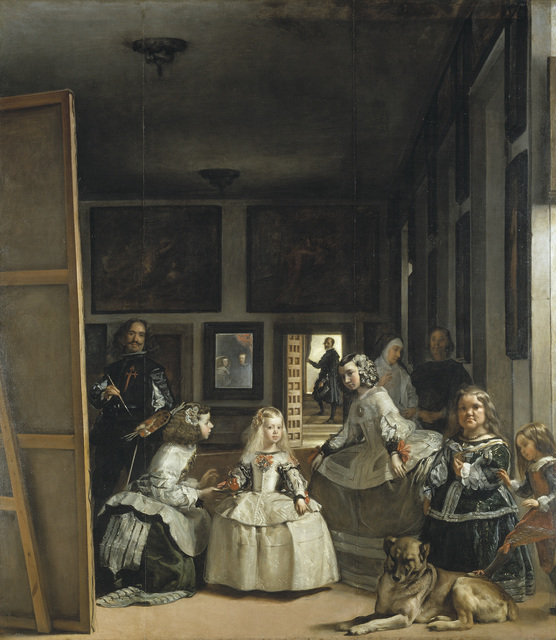
    Diego Velázquez, ‘Las Meninas’, 1656, Museo Nacional del Prado
    Diego Velazquez, Las Meninas, (courtesy of http://www.artsy.net)

    Artists (or artists with a reputation) are special because they make work that no one else can make, or that other people could only make ‘badly.’ The theory states that these artists have a special quality that separates them from others working in a similar field. Take for example, the novels of Charles Dickens. What makes these so special, and therefore so celebrated, compared to other literature from 19th century England? A good question. To answer it, we have to ask ourselves what this ‘something special’ is.

    Becker notes that this special quality is seen in works that evoke profound human emotions in audiences, and works that talk to the current social or historical context. If we as the audience know that a work has been created by someone with this ‘superior ability,’ we take more notice of it. This is evidenced in new exhibitions of ‘blockbuster’ artists that pop up all over the world – they are attractive to audiences with experience of the art world at all points on the spectrum. We visit these exhibitions not because we know that every work in the show will be to our liking, but because we know that the work will be of a certain standard, aligned with the artist’s reputation. In essence, we know what to expect.

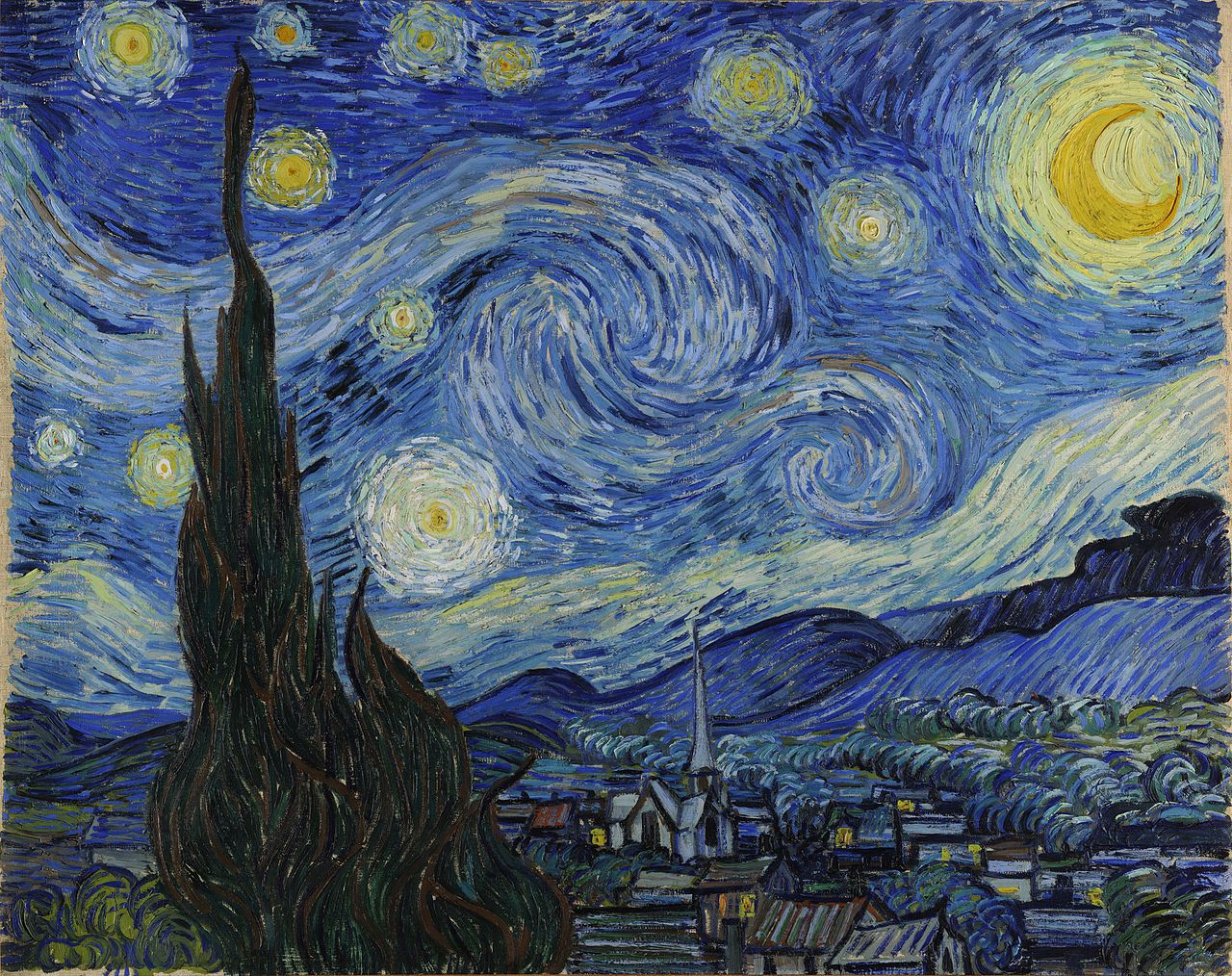
    Vincent Van Gogh, Starry Night (courtesy of http://www.vangoghgallery.com)

    Because of this idea of reputation building and making, artists start to separate their ‘commercial’ and ‘personal’ work; they mark work as ‘unfinished’ if they are not happy with it, and sometimes, they destroy it or take out lawsuits that mean images of it cannot be published or reproduced. They do this to maintain their reputation. All work they make has to live up to the standard ascribed to them and their work. It is not just artists that gain reputations, though, art works can be described as ‘masterpieces’ and schools of art are judged on the work created by their members. Different mediums also have different reputational status. For example, works made in oil paint are generally considered to be of a higher calibre than glass blown works, or tapestries.

    Such reputational ascription needs a certain person or peoples to imbue such status. This elevates academics, historians and critics to the position of reputation-maker. They must select the criteria by which we can determine whether a work, medium or artist is any good. Similarly, those involved in the chain of distribution set similar criteria, or boundaries. For example, a work must be unique, singular, irreplaceable, produced by just one person. A sculpture must not be too heavy to sit on a gallery floor, a piece of music not too long so an audience cannot sit through the full duration.

    Image result for charles dickens novels
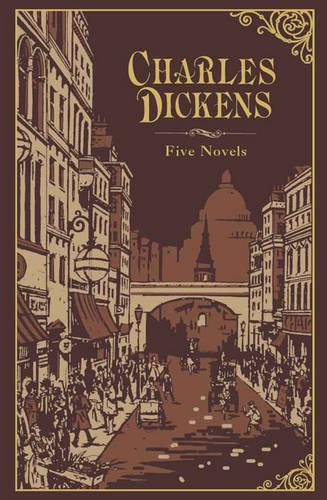
    Charles Dickens book cover (courtesy of http://www.waterstones.com)

    The problem with this ascription of reputation by a small number of people is that there is so much work being created that an academic, historian, critic, couldn’t possibly know or recognise every piece from a certain genre, or made in a certain medium. This is more difficult, too, in the field of visual art, because visual language is universal. Literature is slightly different, in that not every text is available in every language.

    The theory of ‘universals’ suggests that works with the highest reputation are those with lasting power. Some works have been celebrated for years, centuries, and even millennia. We must remember, however, that some works last not because they are incredibly special aesthetically, but because they are historically important. And this also does not answer the question of how contemporary artists still working today are ascribed such high status.

    The problem with the individualistic theory and the theory of reputation is that it leaves a lot of people and work behind. It is in essence a selection process that is undertaken by a small few. Mavericks are often closely linked enough to the art world that certain works may get noticed some of the time, but this selection process almost always excludes work by folk and naïve artists (of the four categories Becker discusses in his book). This is not to say that folk or naïve artists to not have any special gifts, or cannot created aesthetically astounding works. A folk artist’s work, if we adhere to the theory of reputation, is too commonplace, and a naïve artist’s too private.


    By Kate Davey
    Referencing Howard S. Becker, Art Worlds, University of California Press, 1982

  • The ‘Integrated Professional’ and the ‘Naive Artist’

    The ‘Integrated Professional’ and the ‘Naive Artist’

    My previous PhD research-inspired post, ‘The Cycle of Cultural Consumption’, focused mainly on what sort of culture audiences ‘consume’ and why. It looked at Pierre Bourdieu’s theory of habitus, and how our social and educational background is the biggest influencing factor when it comes to the culture that is available – and interesting – to us. As I continue to read and research, I have turned my attention now to artists and their relationship with the art world. So, rather than a focus on audiences, I am looking at producers and how they interact and integrate with the ‘art world’ as a system.

    I have recently been reading two books – Gary Alan Fine’s ‘Everyday Genius: Self-Taught Art and Culture of Authenticity’ and Howard S. Becker’s ‘Art Worlds.’ Fine’s book focuses almost exclusively on work by self-taught artists, whereas Becker’s sociological insight into art worlds and how they work is slightly broader, encompassing not just visual art, but other media too. It is Becker’s broader text that I will reference in this post, as it gives more of a contextual overview of the art world and its players. I will return to Fine’s book in a later post.


    2
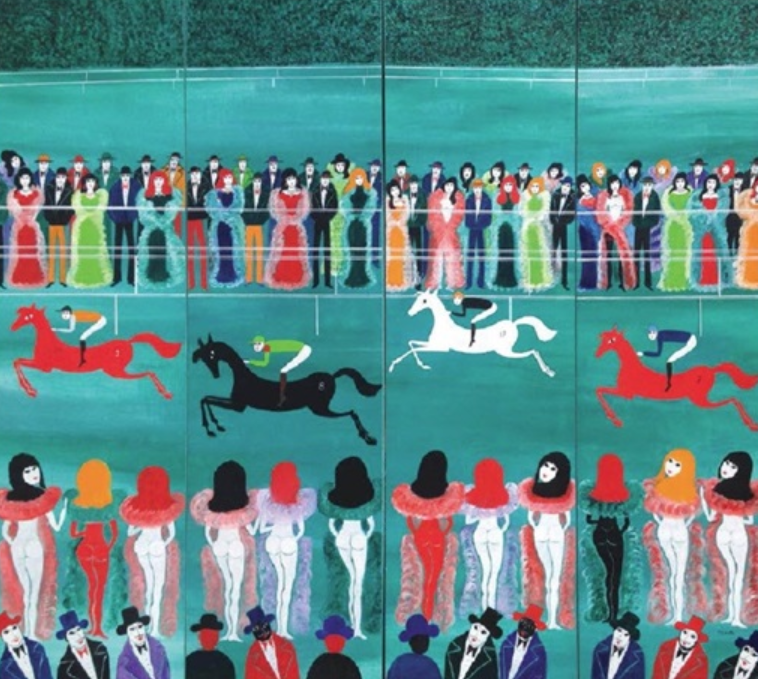
    Poucette, Longchamps (courtesy of http://www.artnet.com)

    The art world – and in this case, I am referring to the art world as the art schools, galleries, museums, curators, critics, and media outlets that make up what we would ‘traditionally’ and ‘conventionally’ see as the art system – is based on an historical, standard system of acceptance. Artists are generally expected to attend art school, following this, they might find representation from a gallery or dealer, in turn having their work exhibited in museums, galleries and online. There is this unconscious system constantly ticking over, and only a few are privy to the pattern. As Becker says: “How do we know the pattern? That takes us out of the realm of gestalt psychology and into the operations of art worlds and social worlds generally, for it is a question about the distribution of knowledge, and that is a fact of social organization.” [1]

    In ‘Art Worlds,’ Becker describes four main types of artist – the ‘integrated professional,’ ‘the maverick,’ ‘the folk artist,’ and ‘the naïve artist.’ The integrated professional is someone who has journeyed the correct way through this system. They follow the rules when creating their work, and in turn, their work is accepted by art world aficionados. They don’t create anything too surprising, too unexpected, and this is all great – nothing to upset the status quo here. The title ‘maverick’ refers to “artists who have been part of the conventional art world of their time, place, and medium but found it unacceptably constraining.” [2] So these are artists who have entered the art world in the traditional and ‘respected’ way at some point, but have decided it’s not really for them. They know the system, they know how it works, but what they make – or what they want to make – goes against the accepted norm. I guess in a sense you could consider Marcel Duchamp a maverick (although in some respects his impact on the art world as a whole makes him less of a maverick in Becker’s sense and more of an influencer).

    1
    Henri Hecht Maik, Marché dans les Hautes Herbes (courtesy of http://www.artnet.com)

    This leaves our ‘folk’ artists and our ‘naïve’ artists. Becker’s understanding of a ‘folk’ artist differs slightly from the ‘folk’ artist we might associate with outsider art. He refers mainly to quilt-makers, and people who have learned particular techniques and crafts from their families or communities. His term ‘naïve’ artists probably more closely aligns with our current outsider art category. These artists “create unique and peculiar forms and genres because they have never acquired and internalized the habits of vision and thought professional artists acquire during their training.”[3] Interestingly, Becker says of the terms ‘naïve’ and ‘folk’ that they do not relate to people. Instead, they refer to the position a person holds in relation to the ‘accepted’ art world. He notes that “wherever an art world exists, it defines the boundaries of acceptable art, recognizing those who produce the work it can assimilate as artists entitled to full membership, and denying membership and its benefits to those whose work it cannot assimilate.”

    In many cases, the ‘integrated professional’ is the safe bet. They are someone who knows the system, their work aligns with what is expected; it fits into the canon. Imagine, Becker asks, “a canonical artist, fully prepared to produce, and fully capable of producing, the canonical art work. Such an artist would be fully integrated into the existing art world. He would cause no trouble for anyone who had to cooperate with him, and his work would find large and responsive audiences.” [5]

    3
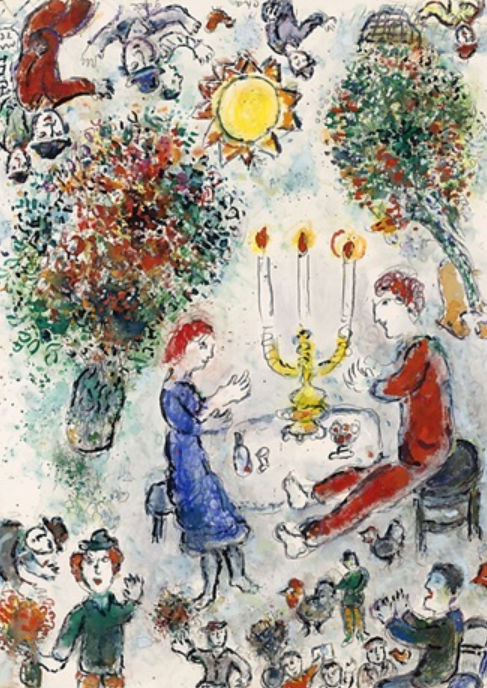
    Marc Chagall, Le Repas des Amoureux (The Romantic Dinner) (courtesy of http://www.artnet.com)

    So, yes, a safe bet. But is it the right bet? How do we challenge this? My favourite question: who gets to decide? Well, it is, it seems, the decision of those who have travelled the ‘integrated professional’ route: “conventions known to all well-socialized members of a society make possible some of the most basic and important forms of cooperation characteristic of an art world.”[4] Becker mentions Russian philosopher Mikhail Bakhtin’s discussion of the standard of taste, “when he remarked that while what made art great was a matter of opinion, some opinions were better than others because their holders had more experience of the works and genres in question and so could make finer and more justifiable discriminations.”[6]

    All decisions are made by certain people at a certain point in history. Decisions about whether a piece of art is accepted into the art world generally has no relation to the aesthetic quality of the work. We know this because “art worlds frequently incorporate at a later date works they originally rejected, so that the distinction must lie not in the work but in the ability of an art world to accept it and its maker.”[7]

    4
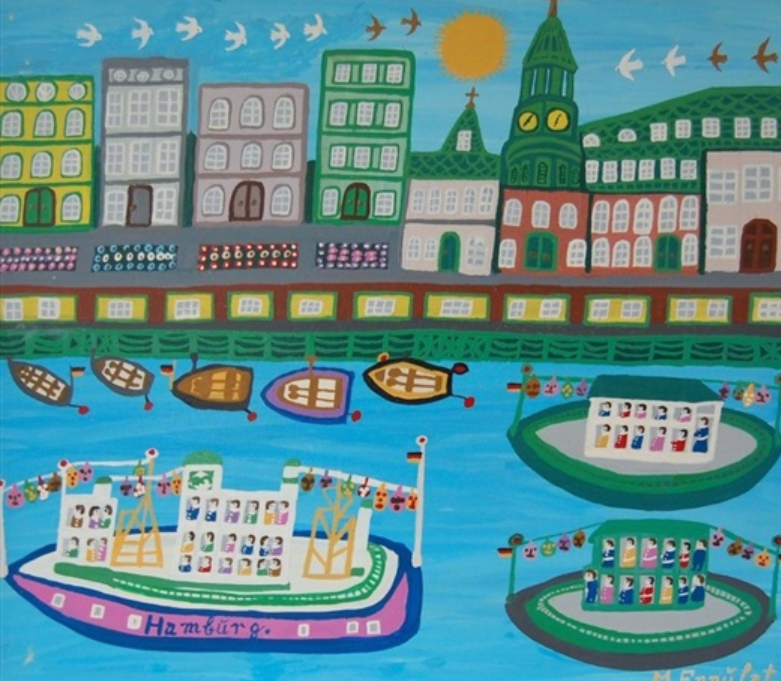
    Minna Ennulat, River Scene Hamburg (courtesy of http://www.artnet.com)

    All of this thinking about systems and how we mould ourselves to fit them – not just the art world, but a whole host of other societal systems (the education system for one) – had me thinking about something someone said at a conference I attended last week. The conference was about collections of patient created art work in Europe, and so there was a strong focus on mental health, stigma, and the ethical exhibiting of work by people who historically were ‘locked up’ in huge psychiatric institutions. In one session, one of the panellists said that a person experiencing mental health issues shouldn’t be attempting to fit in to a societal system that has been created by ‘well’ people. (It is like that age old adage – if you spend your whole life trying to teach a fish to fly, it will always feel like a failure). Instead, we should seriously be thinking about how our societal systems work, and within these existing systems, we should be consciously making space for people who for whatever reason don’t  – or can’t – fit what we consider to be the ‘norm.’

    “Who tries things first? Who listens and acts on their opinions? Why are their opinions respected? Concretely, how does word spread from those who see something new that is worth noticing? Why does anyone believe them?”[8]


    Thank you for taking the time to read this post. As part of the PhD research process, I am really keen to hear from anyone who has any thoughts on the subjects I am covering in these posts – whether you agree, or strongly disagree! I am particularly keen to hear from artists about their experiences of trying to enter the ‘art world’ (whether this has been positive or negative). You can drop me an email: kdoutsiderart@yahoo.com, or send me a tweet: @kd_outsiderart.

    5
    Gustavo Novoa, Daisy Trail (courtesy of http://www.artnet.com)

    References

    [1] Howard S. Becker, ‘Art Worlds,’ University of California Press, 1984, P 41

    [2] Becker, P 233

    [3] Becker, P 265

    [4] Becker, P 46

    [5] Becker, P 228-229

    [6] Becker, P 47

    [7] Becker, P 226-227

    [8] Becker, P 55

  • The Cycle of Cultural Consumption

    The Cycle of Cultural Consumption

    First of all, I would like to start with an apology for the lack of posts of late. I do, however, have good news! I have recently started a PhD at the University of Chichester, in which I will be focusing on the relationship between outsider art and the mainstream art world. Specifically, it will be looking at whether, as is commonly suggested, there really has been a ‘rise’ in outsider art within the mainstream art world – with a particular focus on the last ten years or so.

    My intention is to use this blog to share my thoughts along the way – and hopefully have some feedback from you, the reader. If you have any thoughts or comments on any of the posts featured on this blog, please contact me by emailing kdoutsiderart@yahoo.com.


    Joanna Simpson - Gum Nut Folk
    Joanna Simpson, Good Luck Gum Nut Folk

    The first assignment that I have been working on as part of my PhD project has seen me entering the world of the sociology and philosophy of art. So, I have been reading a lot of Pierre Bourdieu! I find that blogging has been really helpful for me in amalgamating my thoughts and bringing them together in a less academically rigorous way. In light of this, I would like to share some of my thoughts so far about Bourdieu’s theories on art, and how I propose they relate directly to outsider art and outsider artists.

    Pierre Bourdieu, a French scholar whose writings span the 1970s and 1980s, was a philosopher and self-proclaimed sociologist. Influenced by the works of his socialist predecessors; Ludwig Wittgenstein, Karl Marx, Max Weber, Bourdieu’s writings focus on the hierarchies of power that exist within the world. Most useful to me, of course, are his writings about culture. In these, he states that the way we consume and appraise culture is directly dependant on our class and educational background. So, people who have been brought up in households where trips to art exhibitions and excursions to the theatre are a regular – or normal – occurrence, are going to feel more comfortable consuming culture as adults. They will, Bourdieu asserts, already have the skills and tools available to them that will support them in deciphering the context and meaning of a work of art.

    blogpic

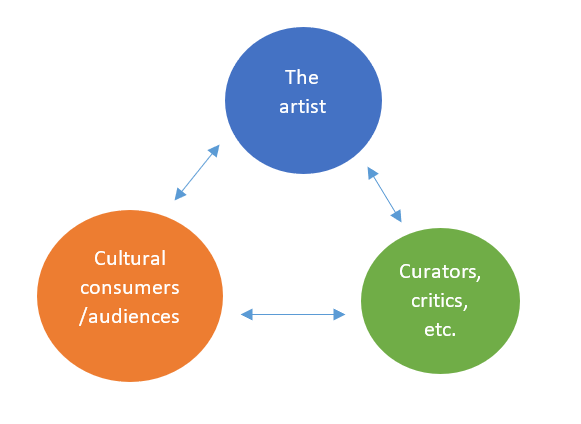
    When reading Bourdieu, I was struck by what is apparent to many people working within (or with knowledge of) the art world. There seems to be an impregnable cycle within the art world that means that at every stage of participation, one needs to be from a certain social or educational background. I will call this cycle the ‘cycle of cultural consumption.’ To write about this cycle, I will begin with the artist. However, it is important to note that the artist is not the beginning of the cycle – the artist is just a part of it; the artist could in theory be the beginning, the middle or the end (see diagram above. I hope this will become clearer as I explain each cycle component.

    Bourdieu does not write a lot about why artists create. But he does write about who or what influences an artist and how this has changed over the course of the previous few centuries. Prior to the nineteenth century, many artists were commissioned directly by the Church or the State, meaning they had little to no control over the content of their work. The Church and the State held all of the power. However, with the turn of the twentieth century – a century that in its youth in Europe was marred by uncertainty, instability, discontent, and of course, war – a revolution was starting. Artists were becoming autonomous individuals who were inspired by the context within which they were living and working.

    Jim Sanders
    Artwork by Jim Sanders

    So it seems that at this point the artist was beginning to take back some power. But hold on! How were these artists able to do this? How were they able to erase centuries of codes and language commonly used within works of art – and used, too, by educated cultural consumers who could fluently understand these codes and this language. Because, Bourdieu says, artists like Edouard Manet and Marcel Duchamp were already inside the art world. They were only able to challenge the accepted norm in such a spectacular way because they were already big fish swimming in the ocean of the art world. So, not so revolutionary when we look at it like this.

    To relate this to outsider art; it seems it is possible for artists creating challenging, unusual, unique work to have an impact on the art world – to have this work shown and to have it seen. But only if the artist is already able to navigate the art world, which generally assumes that a person has taken the ‘preferred’ educational route (art school), which is generally only possible for people from a certain educational background (most commonly middle-class or upper-class).

    The next players in my cycle theory are the ‘taste-makers.’ These are the people who decide what work is shown in a museum or gallery, and therefore what we (the public) consider to be art. These are the curators, the critics, the gallery and museum directors. The gatekeepers. We know these gatekeepers exist as tastemakers because art is such a subjective topic that if there weren’t people in these positions of power making decisions about what we see before we even know what the options are, then there would certainly be many more ‘famous’ or ‘admired’ artists in the world. Imagine for a moment the vast amount of work being produced by artists every single day. All over the world, every minute, every hour. In a world of seven billion people, there is going to be at least one person who likes each new creation. But then why isn’t this reflected in what we see in museums and galleries. Why do we see the same ‘big’ names, the same ‘big blockbuster’ shows? The same artists who are the ‘flavour of the moment’? We see these precisely because of the existence of the taste-makers and gatekeepers who are making our decisions about cultural and aesthetic value for us.

    Alan Doyle 3
    Artwork by Alan Doyle

    And the decisions of the tastemakers and gatekeepers favour artists from a specific background (social and educational) because they too are from these backgrounds. In 2015, the Department for Culture, Media and Sport highlighted that 91.8% of jobs in the creative economy in the UK were done by people in ‘more advantaged socio-economic groups’ compared to 66% of the jobs market as a whole.[2] Being from these backgrounds means that tastemakers and gatekeepers curate and interpret works by people from a similar background to themselves (who they relate to – makes sense right?), and therefore for people from a similar background. Again, to bring this back to outsider art – is a curator going to choose to exhibit work by someone who potentially attended the same art school as them, is their peer in that sense, or work by someone who is from a background that they really have no experience of and are therefore unable to relate to?

    The Museum Association’s 2015-16 report Valuing Diversity: The Case for Inclusive Museums noted that “museum collections are often not interpreted from diverse viewpoints… Often the good work that comes out of projects is not used or displayed in the long term and therefore is inaccessible to people who would be interested in engaging with narratives that are relevant to their experience.”[3] This quote brings me onto the third person in our cycle of cultural consumption – the consumer.

    The artist makes the work, it is then chosen (or not chosen) by the tastemakers and gatekeepers. If it is chosen, maybe it is exhibited with some accompanying wall labels. Maybe these wall labels are written in a language that is unintelligible to someone who has no prior experience of the art world or art school. Someone from a low socio-economic background, or someone who didn’t attend university might visit this exhibition. Whilst there, they realise they are unable to relate to the work that has been produced, because it has been produced by someone from a certain social and educational background that is a world apart from their own experiences. They are unable to understand the codes used within the interpretative material because, again, it has been chosen and written by someone who is from a very different social and educational background. After an experience like this, would you think that the cultural world was for you? I know that I certainly wouldn’t.

    Jim Sanders 2
    Artwork by Jim Sanders

    Much of Bourdieu’s writing is informed by experiments and studies he conducted, in particular focusing on understanding the cultural consumer. In The Love of Art, a study conducted by Bourdieu in French museums found that 55% of visitors to French museums held at least a Baccalaureate. Only one per cent of visits were made by farmers or farm labourers, and 4% by industrial manual workers. Tellingly, 23% of visits were made by clerical staff and junior executives, and 45% made by people from an upper class background.[3] Although conducted around 30 years ago (and in France), these results are reflected in data collected much more recently by Arts Council England for their 2017-18 Equality, Diversity and the Creative Case report. The report highlighted that the most frequent National Portfolio Organisation attendees were supervisory, clerical and junior managerial, administrative and professional workers, making up 28.9% of visitors. At 10% of all visits, the least reflected group was semi-skilled and unskilled manual workers.

    So here completes the cycle (well, not completes, but continues). When you look at it like this – as Bourdieu does, it becomes clear why efforts need to be made to diversify our arts workforce, our arts audiences and, of course, the art we show in museums and galleries. If we make an effort to diversify just one segment of this cycle of cultural consumption, the ripple effect will surely create a more reflective, innovate and exciting art world that everyone (from all social and educational backgrounds) can enjoy and participate in.

    By Kate Davey


    References

    [1] Department for Culture, Media and Sport, Creative Industries: Focus on Employment, 2016, P6

    [2] Museums Association, Valuing Diversity: The Case for Inclusive Museums, 2015-16, P 14

    [3] Bourdieu, Pierre and Alain Darbel, The Love of Art, Polity Press, 1991, P 14

    Useful books/articles on or by Pierre Bourdieu

    Richard Jenkins, Pierre Bourdieu, Routledge, 1992

    Pierre Bourdieu, ‘Intellectual Field and Creative Project,’ in M. F. D Young (ed.), Knowledge and Control: New Directions in the Sociology of Education, Collier-Macmillan, 1971

    Karl Maton, ‘Habitus,’ in Pierre Bourdieu: Key Concepts edited by Michael Grenfell, Acumen, 2008

    Pierre Bourdieu, Distinction: A Social Critique of the Judgement of Taste, Routledge and Kegan, 1979

    Pierre Bourdieu and Alain Darbel, The Love of Art, Polity Press, 1991


    Feature image by Alan Doyle

  • In Focus: the Context of Outsider Art

    In Focus: the Context of Outsider Art

    Welcome to the final installment of ‘In Focus,’ a series of blog posts featuring question and answer sessions between me and PhD student Marion Scherr. In this last post, we’ll look at the term outsider art in an international context, and discuss the relationship between outsider art and the ‘traditional, mainstream’ art that is taught to college and university students. 


    Steve Murison - Unwitch My Heart with Bile and Rum
    Steve Murison, Unwitch My Heart with Bile and Rum


    Marion Scherr (MS): What are your experiences or thoughts on how ‘Outsider Art’ is dealt with on an international scale? I’m always wondering why the term is used predominantly – and with a few important exceptions – in the English-speaking West, and hasn’t caught on in other countries/languages to a certain extent.

    Kate Davey (KD): This is a very interesting question, and something I am working with at the moment. I think, even within Europe, there is a lot of variation about how the term Outsider Art is used and the connotations that surround it. From my experience, there are parts of Europe that still very much use a medical model when discussing outsider artists and the work they create. I think this is probably because that is where the work originated in many parts of Europe – in psychiatric institutions – and it was found predominantly by doctors (e.g. Prinzhorn and Morganthaler).

    I am not entirely sure why it seems so different in the UK – it is perhaps more to do with the history of mental health than the history of outsider art. Certainly there are very few organisations that focus on a medical model in the UK. Even Bethlem Gallery, which is attached to the Royal Bethlem Hospital, does not focus on a medical model. The artists are very much at the heart of what they do, and it is about being an artist rather than a patient.

    In places like America, terms like self-taught or folk art are much more common than the term outsider art, and again, I think it is more a reflection on social history than art history, and I think this is the case for much of the world. In recent years, outsider art from Japan has become a big market, with much of the work that falls under this category being produced in Japan’s day centres. Again, social reasons rather than artistic – and I think this is probably the key to understanding why the term is so different across the world. I am not saying I agree with this idea, because it instantly takes the focus away from the art and puts it on society, politics and medicine (which we are trying to move away from in the outsider art world and focus purely on aesthetic), but it certainly seems to be true.

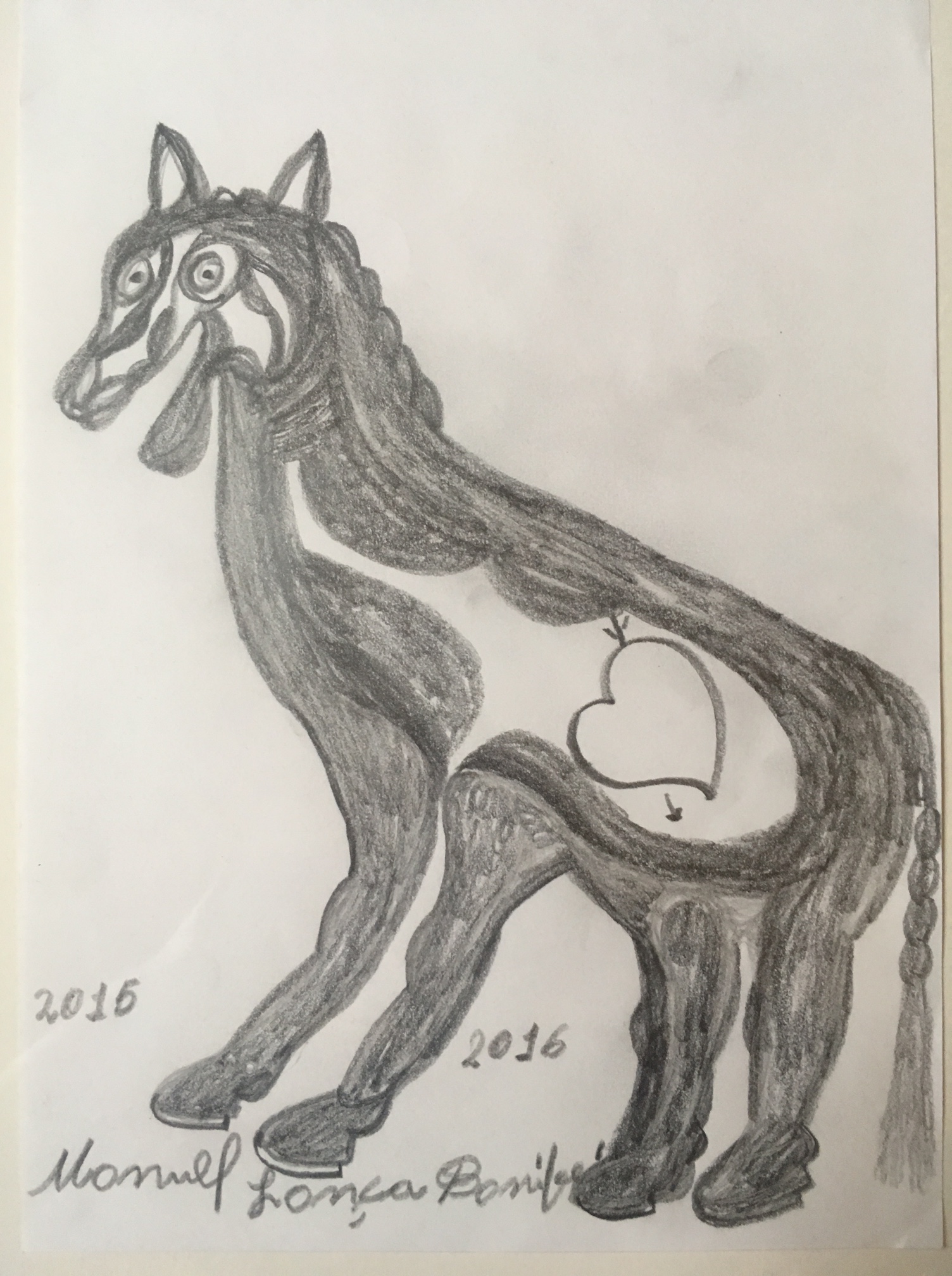
    Manuel Lanca Bonifacio
    Manuel Lanca Bonifacio

    MS: I would be interested to hear more about your thoughts regarding the position of ‘Outsider Art’ in relation to “general” art history as taught in schools and universities. Do you think ‘Outsider Art’ should or can be included into the curriculum of art history? If so, how would you suggest it should be contextualized?

    KD: I think it very much should be a part of taught art history at schools and universities. I was lucky enough to be taught about outsider art during my undergraduate degree in art history, but nonetheless it was taught in a separate module that was actually entitled ‘Psychoanalysis and Art.’ So, again, it was separated from the ‘art’ world, and was taught as more of a medical module. There are so many examples of key modern artists being influenced and inspired by the work of outsider artists, that if we do omit it from what we teach, we are at risk of missing out a huge and vitally important part of history.

    In terms of contextualising outsider art, I think history can contextualise it perfectly well on its own. It was created at a certain point in time, for a certain reason – and much of it did intertwine with social, political and economic history. I wrote my undergraduate dissertation on the links between German Expressionism and Outsider Art, and this is a perfect example of a well-known (now, anyway) group of artists wanting to imitate the intuitive rawness evoked by outsider artists as a reaction to their own social and political context. There are many moments where outsider art dovetails with the ‘mainstream’ art world throughout art history, and I think to ignore this is to do a disservice to the greater picture of what ‘art’ is and what it can explain about society and humanity (now, and historically).


    We hope you have enjoyed the In Focus series! If you have any comments or questions, please do post them below. Both Marion and I would love to hear your thoughts on any of the topics we’ve been discussing. 


    Featured Image by Matthew

  • In Focus: Exhibiting Outsider Art

    In Focus: Exhibiting Outsider Art

    Welcome to the second installment of ‘In Focus,’ a series of blog posts that see a question and answer session taking place between me and PhD student Marion Scherr. This post focuses on the implications of the term ‘outsider art’ for the artists it describes, and considerations when exhibiting works of outsider art. 


    Joanna Simpson - Gum Nut Folk
    Joanna Simpson, Good Luck Gum Nut Folk

    Marion Scherr (MS): You know many artists yourself and seem to have talked quite a bit with them about the term. Could you give a brief overview of the different opinions and viewpoints artists have about the term? What are the pros and cons people mention when speaking to you about the term ‘Outsider Art’?

    Kate Davey (KD): I’ve generally found that artists don’t feel as strongly about the term as academics and curators do, which I find interesting. I’ve had mixed responses, from people who are really pleased to have a found a term (that comes with its own artistic community) that they feel an affinity with. Others have expressed feelings about it being quite limiting, particularly in terms of what kind of shows they can enter or exhibit in, and how they are viewed as an artist.

    Interestingly, a couple of years ago I did a blog post focusing on artists’ responses to the term. From this, you can see that a fair few of the artists note that in the term outsider art they have found a ‘movement’ that they feel they themselves and their work can belong in – and belong in successfully. I think there’s something about artists who might see themselves as ‘outsider artists’ finding a community of other artists who view themselves and their work in this way. I find this is quite different to the mainstream art world which can be quite saturated with competition. Certainly I’ve found much more comradery amongst outsider artists, which is always really good to see.

    I think I might have mentioned this in a previous answer, but I think that artists who see themselves as ‘outsider’ artists are able to access more support with their professional development and their artistic career through organisations specifically set up to support and promote artists doing this kind of work, which is so important.

    Julia Clark
    Julia Clark, Owl

    MS: Do you think the way in which a work of art is perceived changes, if the audience is told it has been produced by an ‘Outsider’? What is the feedback of gallery/museum visitors like in this regard in your experience?

    KD: In my experience, there have been mixed reviews, but generally people are very open to experiencing new kinds of art, and particularly art that might be different to the work they normally view. It’s not to everyone’s taste, and I think this is sometimes where a bit of context can be really useful. I have had a couple of experiences in the past where exhibition-goers have maybe asked ‘what’s wrong with’ one of the artists whose work is on display, but I generally take this as an interest or curiosity in the work and the person who made it – and this is when I’ll talk about outsider art and what it means today.

    I think in recent years the market and for and opinion of outsider art has come on leaps and bounds – certainly in the U.K. where we’ve had big exhibitions at the Wellcome Collection and the Hayward Gallery. The main thing, I think, is to display work by ‘outsider artists’ just as you would the work of a ‘mainstream’ artist, so the public see it as valid art and are able to appreciate it for its aesthetic qualities.

    I’ve had a few really positive experiences where people weren’t expecting to come across ‘outsider’ art at a gallery or museum, but they have gone away feeling like the work was the most powerful work they saw during their visit.

    I think as taste makers, curators and galleries have a role to play here. As long as they are showing ‘outsider’ work (and showing it well) then art audiences (and the more general public) will come to see this work as valid – and, most importantly, as art.

    MS: In one of your blog posts you mention that the show ‘Jazz Up Your Lizard’ has changed your mind about curating ‘Outsider Art’. Rather than presenting it in a ‘white cube’ you speak about turning this approach round and “shaping the place to fit the work” and/or finding a space, that works well with particular artworks. What are your opinions on this issue now? What do you normally look out for and what elements do you consider, when you think about the place and setting of a show?

    KD: The Jazz Up Your Lizard show was a real turning point for me. As I’ve written about before, I was adamant that outsider art be shown the same way as its ‘mainstream’ parallel. However, this show was a bit different, as I was working very closely with the artist throughout – an artist I have known and admired for a long time. There were also some practical issues involved – the exhibition space had been painted black, and the curator I was working with on the show really liked the colour (and so did I!). The exhibiting artist’s work is very bright, but macabre in content. I think the black just really brought out the colours, as well as the darker side of the works – that on first inspection can sometimes seem fairly jolly.

    When curating exhibitions in future, I’d really like to take the lessons I learnt from this show on board. Things I would now consider include what it is we want to pull from the work – what is the essence of it? What might people get from it and how can we help this along? I’ll always work closely with the artist, where possible, as they are the best interpreter of the work. When curating, I really like to think about audiences who might not ‘naturally’ consider visiting an art exhibition – or more specifically an outsider art exhibition. Anything that helps them experience this work is absolutely vital. This includes colour, space, accessibility, accompanying text, events etc. So these are now all things I consider in great detail.


    Featured Image: Don’t Look Back in Anger by a Koestler Trust entrant

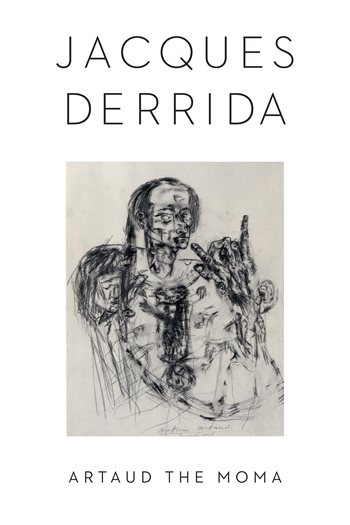
  • Book Review: Artaud the Moma by Jacques Derrida

    Book Review: Artaud the Moma by Jacques Derrida

    In this extended post, writer Nick Moss reviews Jacques Derrida: Artaud the Moma (Columbia University Press, 2017). Moss critically examines Derrida’s writings about what it means for an artist – and subsequently their work – to exhibit in various institutions. 


    artaud the moma

    Jacques Derrida engaged repeatedly with the work of Antonin Artaud throughout his life. His best known essays on Artaud are collected in Writing and Difference (Routledge 2001 2nd ed.) As he states in the text reviewed here (a lecture given at the Museum of Modern Art in New York in 1996 on the occasion of the exhibition of Antonin Artaud: Works on Paper), Artaud represented for him “a sort of privileged enemy, a painful enemy that I carry and prefer within myself.” Derrida states that he is bound to Artaud by “a sort of reasoned detestation.” He is resistant to “what might be called, thanks to a certain misunderstanding, the philosophy, politics or ideology of Artaud.” The resistance to Artaud, though, is ultimately a resistance to Michel Foucault/Gilles Deleuze’s romanticisation of Artaud, “everything in this work that, in the name of the proper body or the body without organs, in a name of a re-appropriation of self, is consonant with an ecologico-naturalist protest.” For Derrida the re-appropriation of self is a myth, as is the privileging of some kind of end to alienation, especially if this is to be realised through any form of “schizo-politics.” As he makes explicit in his essay “Cogito and the History of Madness,” madness is always already internal to reason and thus privileging “madness” actually reinforces the divide that Foucault and Deleuze would seek to overcome.

    artaud paule with ferrets 1947
    Antonin Artaud, Paule with Ferrets (courtesy of ArtStack)

    Nevertheless, in the text given at MOMA, Derrida enters into a strategic alliance with Artaud, in order to save Artaud from the “museographic institutions” which, 100 years after his birth, seek to recuperate his work, to commodify that which was intended as resistance to “technical reproduction,” these works which sought to deliver a coup, a blow struck against “the Christian West, the god who steals my body, the spirit, the holy spirit and the holy family, all the forces-ideological, political, economic-that are one with this thief of bodies.” The “thief of bodies” is that “machination…the social, medical, psychiatric, judicial, ideological machine, the machine of the police, which is to say, … a philosophico-political network that allied itself with more obscure forces so as to reduce this living lightning to a body that was bruised, tortured, rent, drugged, and above all electrocuted by a nameless suffering, an unnameable passion to which no other resource remained than to rename and reinvent language.”

    artaud-self-portrait2
    Antonin Artaud, Self-Portrait (courtesy of ArtStack)

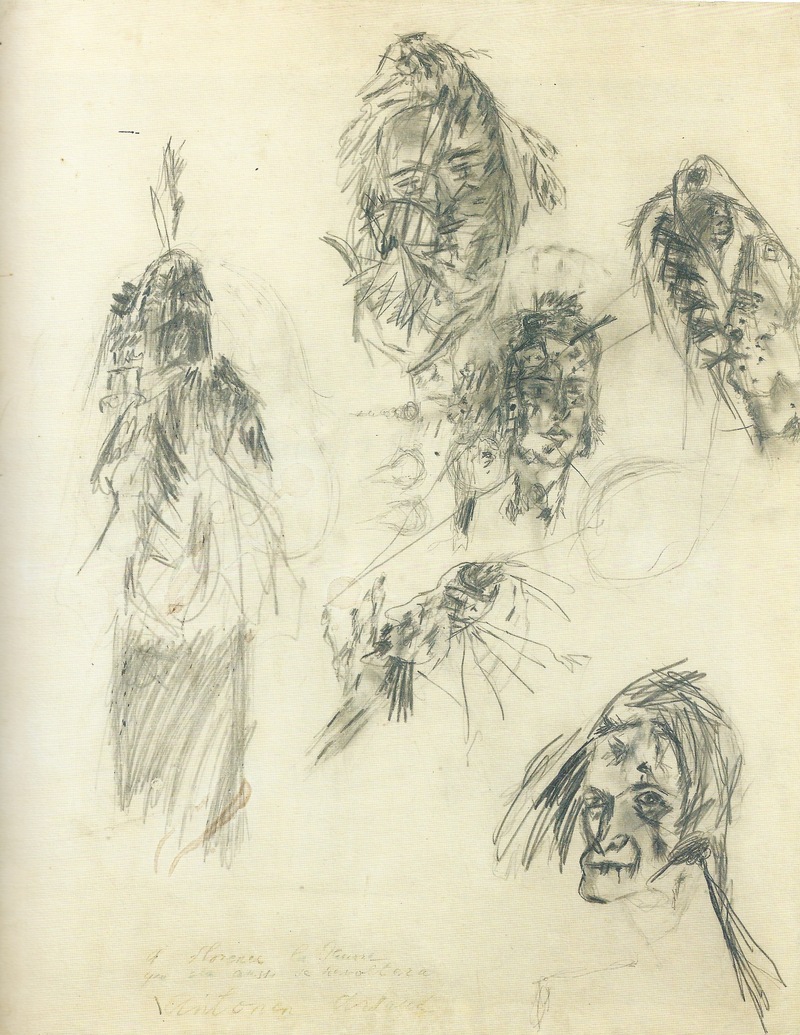
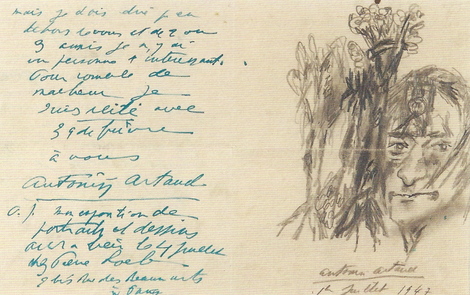
    The drawings on display at MoMA were the sketches and drawings Artaud made while detained in the psychiatric hospital at Rodez. The works are, Artaud states, “deliberately botched, thrown on the page like some scorn for the forms and the lines, so as to scorn the idea taken up and manage to make it fall.”  It is in this ‘fall’ – in the art’s failing – that Artaud’s coup is struck. Yet every blow leaves a trace, a bruise, and so it is here – the works are ‘maladroit,’ they are ‘ill-fashioned,’ scorched by flame, but they survive to be archived and displayed. Artaud intended the drawings to be “not that of a man who does not know how to draw, but that of a man who has abandoned the principle of drawing and who wants to draw at his age, my age, as if he had learned nothing by principle, by law, or by art.” For Artaud the works are intended as weapons, not commodities, but they become commodified in any event. How then to restore, to protect, their existence as “gestures, a verb, a grammar, an arithmetic, a whole Kabbalah…that shits on the other,” to maintain their endurance as “a machine that has breath”? How to preserve the destructive essence (and we should be clear Artaud’s intent was destructive, not merely critical) of Artaud’s project against “the museographic management of its surplus value.”  As Derrida puts it: “Will it be possible to do what I am trying to do, to say ‘Merde?’ Will it be possible, either with or without blasphemy, to read and to cite ‘Shit,’ ‘Shit to art,’ to do it then as it must be done, in this great temple that is a great art museum and above all modern, thus in a museum that has the sense of history, the very great museum of one of the greatest metropolises in the new world?”

    Autoportrait-Antonin-Artaud-1946
    Antonin Artaud, Autoportrait (courtesy of ArtStack)

    One of Derrida’s oft-deployed strategies of resistance was to introduce an element of slippage, or wordplay, puns, double-meanings, into his own texts, so that the text could never be reduced to a single canonical reading. He does the same here, with his punning on Artaud-momo (“idiot” as he referred to himself”) Artaud-MoMA, and on glyph/glyphe/hieroglyph/electroglyph. The words of the Derrida-text begin to echo the “glossolalic or glossopoetic rebirth of language” sought by Artaud. And we should not forget that  in these ‘botched’ works, which Derrida tells us were intended to do no less than “change the eye with the drawing,” produced in the period described by Artaud as “ten years since language left,” that language-as-writing is essential to these works – that words are strewn across their surfaces, inseparable from image. ”And ever since a certain day in October 1939 I have never written without also drawing.” (In this of course, Artaud stands as a precursor to Twombly, and to Basquiat – for all three, word and image can only exist side by side, so that the works become, as Katharina Schmidt has described them, a ‘meta-script.’) In this museum devoted to the commodification of the image, Derrida insists we go back to the words carved, hacked, scrawled, on to the surfaces. To hear the questions Artaud asked: “And who today will say what?” “And what do you yourself say?” – to hear, within the works, “Artaud interrogating a ghost of himself.”

    Scan_2
    Antonin Artaud, Untitled (courtesy of ArtStack)

    Derrida battles with the “agony of an art that nevertheless, at the instant of its death, will perhaps survive its own apocalypse.” He seeks to retrieve Artaud’s project of anti-art, to cry “woe to whoever might consider them as works of art, works of aesthetic simulation of reality.” More than that – he uses the museum as archive against itself, and refuses to have Artaud’s voices silenced, so that the images are all that remain. It is Derrida’s determination to restore “the event as event.” And thus he seeks to allow Artaud’s words to come back, to haunt, but also, the sound of Artaud’s voice – at the beginning and the end of the lecture, from a recording of “To Have Done With the Judgement of God.” The ranting, scatological Artaud, “starving, drunk with rage against America.” The intent is to have the drawings address the viewer again “as if they were conducting a trial.” Such that “never before, when finding myself faced with drawings or paintings…never have I heard so many voices, never have I felt myself called, yelled at, touched, provoked, torn apart by the incisive and lacerating acuteness of a broadside of interjections so justly addressed to their addressee.”

    Scan_5
    Antonin Artaud, Autoportrait (courtesy of ArtStack)

    As to whether the strategies Derrida employs can succeed when Artaud is already entombed in the gallery space of MoMA – “especially MoMA in which Artaud the Momo would have right away identified the malevolent figure of the great expropriator”- we have to ask whether allowing the voice of Artuad-Momo to be heard can ever be enough, when Artaud himself declaims -against accusations of mysticism -that he has “always been body.” Can the body of Artaud-Momo – the anti-artist, the beaten, broken, electrocuted body (body of artist/body of work) stand in the way of “this great march of the symbolic market, from Paris to New York, from capital to capital, metropole to metropole?”

    le pendue
    Antonin Artaud, Le Pendue (courtesy of ArtStack)

    There is a further point to take up. In the book’s afterword, Kaira M Cabanas, associate professor of global modern and contemporary art history at the University of Florida notes that Jean Dubuffet presided over the Societe des Amis d’Antonin Artaud, and that he rejected Artaud’s work as Art Brut: “I find Antonin Artaud very cultured, not at all Art Brut.” There is much truth in this. Artaud’s rhetorical/scatological manoeuvres were pathologized as a way of neutering the content of his lacerating attacks on Church and State. But Cabanas seeks to take this as a prelude for a discussion about the purpose of outsider art more generally:

    “Often the inclusion of outsider art is read as a progressive move within the modern and/or contemporary art institution, and in the early 2010s one witnesses how the art of ‘madness’, ‘outsider’ and ‘self-taught’ became the ‘new’ in the contemporary global circuit….this legitimation…occurs at the expense of what we might learn from the specificity of the work’s contemporaneity vis-a-vis the historicity of the psychiatric institution.”

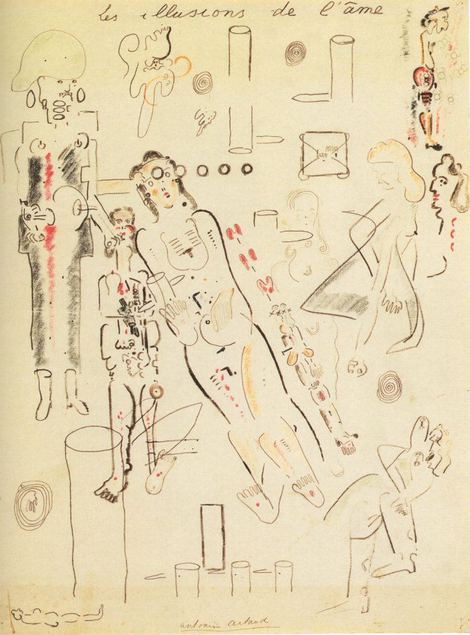
    les illusions
    Antonin Artaud, Les illusions de l’ame (courtesy of ArtStack)

    This is, I think, specious. I write as someone who is more than happy to adopt and preserve the perspective of outsider as a vantage point from which to view the contemporary art world. Nevertheless, I think Cabanas’s argument is crassly reductive and presumes a) that ‘outsider’ art has no aesthetic merit beyond its ‘specificity’ as art produced within a particular institutional context, and b) that the works’ ‘original meanings and values’ i.e. their place as works produced within/symptomatic of said institutions is diminished if displayed outside such institutions, so that the critical content of the work can only have effect within the context of its own production.

    It strikes me that the opposite is true – that the exhibition of works produced outside the cycle of art-world luxury commodity production, which contain the ‘auratic’ to which Walter Benjamin refers as an auratic ‘trace’ of an originary trauma, might more likely impact on their audience as the lightning-strikes Artaud aimed towards, if shown outside their institutional context. When we encounter, for instance, Luc Tuyman’s Gas Chamber painting, do we dismiss all save the aesthetic, or does the political not there intrude on and shadow the aesthetic?

    la boulabaise
    Antonin Artaud, La Bouillabaisse de formes dans la tour de Babel (courtesy of ArtStack)

    Artaud referred to “the innumerable necrophages that fill churches, police stations, army barracks, prisons, hospitals, university faculties.” We might note one of the many reasons for such complaint would be the determination of some academics to determine for themselves “who today will say what.”

    By Nick Moss

    For more information on Jacques Derrida: Artaud the Moma, please click here.

  • In Focus: The Question of Outsider Art

    In Focus: The Question of Outsider Art

    Over the past six months or so, I have been contributing to a project by PhD student Marion Scherr. Marion initially got in touch because she is currently completing her PhD thesis at the University of Oldenburg, Germany (School of Linguistics and Cultural Studies), focusing on the personal experiences, opinions and thoughts of artists who have been labelled or choose to label themselves as ‘Outsider Artists.’ She is comparing and contrasting the artists’ personal experiences with representations in academic and media discourses in the UK.

    Since summer 2017, Marion and I have been in a game of email ping pong, sending emails to and fro about the nature of outsider art, what it means for curators and academics, and ultimately, what it means for the artists themselves. After speaking to Marion, I thought it would be interesting to relay some of the conversations we’ve been having. The series has four installments, of which I will post one per month for the next four months. Both Marion and I would love to hear your comments on any of the questions or answers, so please do leave them below. Keep reading for the first question!


    Mitsi B - Always
    Mitsi B, Always

    Marion Scherr (MS): When and in what context did you come across the term ‘Outsider Art’ for the first time, and how have your opinions on the term changed since then?

    Kate Davey (KD): I first came across the term outsider art in 2008 when I was studying for my undergraduate degree in Art History. It was introduced to us during a module on psychoanalysis and art, which predominantly focused on sublimation and perversion in art. I remember seeing images of work by Richard Dadd during the lecture, and it was the first time a piece of work has ever truly made me feel something. It was then that I decided I would focus my attention on this interesting (and to me at that point, completely unknown) area of work. I visited the Bethlem Museum archives to see Dadd’s work in the flesh, which was a fantastic experience.

    I focused my BA Hons dissertation on outsider art and then went on to do an MA in Art History and Museum Curating, this time focusing more specifically on curating exhibitions of outsider art. At this stage, I was somewhat accepting of the term – it described an area of work that I needed to describe in my essays and using that term made it easier. I did a lot of reading around the subject, both for and outside of my studies, and I was looking for an outlet to share my thoughts and discoveries – which is when I started this blog.

    It was a combination of this research and starting work for a couple of organisations that supported marginalised artists that encouraged me to start questioning the term. Until that point, it had been a given, and particularly as an undergraduate student, it’s difficult to question these things. My blog became somewhere where I could air my thoughts freely, sometimes heading off on tangents, but always feeling better once I’d written it down.

    I started to become dubious of the term, wondering why – unlike other movements in art history – this term described the person creating the work rather than the work itself. I wrote many posts about how the ultimate aim is the complete elimination of the term ‘outsider art’ and the unconditional welcoming of ‘outsider artists’ into the mainstream canon. My views have changed many times over the years, and at one point I welcomed the term again, wanting artists who might be grouped under that term to ‘take it back’, in a similar way to what happened during the disability arts movement. Over the years I have also had the opportunity to speak to many people about the issue, including many artists, and have found that definitions and ideas about the term are varied and diverse.

    A couple of years ago I decided to do a call out on the blog for artists to submit their visual response to the term outsider art, and to give an alternative term that they might prefer to use. This was very enlightening – most of the artists did still want a term, whether that was ‘outsider art’ or not, and many of them were in fact happy with the term. I have done a lot of research on taxonomy and categorisation, and humans innately like to group things together. I think for this reason, there does need to be a term, but there is still a long way to go in unpicking what it really means, and ultimately (and most importantly), unpicking what it means for the artists it describes. Does it condemn them to work in the ghettos of the art world, never really being a true part of the art historical canon? Does ridding ourselves of the term also mean we will rid ourselves of all of the wonderful organisations who are supporting artists who face barriers to the mainstream art world?

    As you can see, I am still not at a final decision, and I don’t know if I ever will be – and in some ways, I hope to never not be. This is a topic that continues to fascinate me, and I will keep exploring it.

    Manuel Lanca Bonifacio 4
    Manuel Lanca Bonifacio

    MS: You have been involved in putting together exhibitions yourself – how do you personally define the term? And how would you explain it to a visitor who isn’t familiar with the term at all?

    KD: I think over the years I have become much more flexible about who might be considered an outsider artist, and generally (for my blog) I will leave it open to the artist to decide if that’s something they would like to be associated with. In terms of the exhibitions I have curated, I have tried to convey that the artists I consider to fall under this category create because they have to, not to sell the work, not to gain any fame from the work etc. My hope is to inform the public that anyone can be an artist – anyone can create, and anyone should feel like they are able to create. It’s always a bit of a win if someone comes along to the exhibition feeling inspired to go home and make or create something themselves.

    I do also give people information on the history of the term – objectively – so that the public are able to come to their own conclusions about what might be considered outsider art (and it generally helps people to see where the work has come from and the context that this sort of work sits in more widely).

    If I were describing the term to someone who didn’t know about it, I would give them Roger Cardinal’s definition as a starting point, but would hope to convey to them that I consider it to be a term that encompasses people who haven’t necessarily taken the ‘traditional’ route to become an artist. It’s about unfettered creativity and a need to produce something – which is actually what innately makes us all human. I find I know people who don’t consider themselves ‘art’ people, but once they see a work of ‘outsider art’ they find they can relate to it more easily than a piece that has developed out of an art school or the art historical canon.

    So I guess to sum up, I haven’t got an ‘elevator pitch’ for what I think outsider art is now, but I’m very open to (and thoroughly enjoy!) discussions with a wide range of people about this area of work. I think it’s an open conversation and everyone who is working in this area – curators, researchers, directors, and artists – should aim to engage with people about the subject. It’s such a fluid thing, and it’s a ‘type’ of art that has been so fluid and depends so heavily on people, that it doesn’t feel right to have a strict paragraph of text to define it.


    Featured image by Alan Doyle

  • The Autodidact: What Does it Take to Make it Big?

    The Autodidact: What Does it Take to Make it Big?

    I can only apologise for the lack of posts in recent weeks – I hit the ground running at the start of 2018, and haven’t managed to stop just yet. However, I wanted to write a quick post for you as a couple of days ago, I was doing my usual crawl through the internet for the latest news on outsider art: upcoming exhibitions, auctions, in depth articles on individual artists, when I noticed the recurrence of a new word alluding to artists creating outside of the cultural mainstream. The word was ‘autodidact’, which literally means ‘a self-taught person.’

    interior
    Interior (1944) by Horace Pippin (c) National Gallery of Art, Washington, DC

    The first occurrence of the word appeared when I was reading an article on the new ‘Outliers and American Vanguard Art’ exhibition opening at the National Gallery of Art in Washington DC. The exhibition, the article notes, aims to “reconsider the ubiquitous but limited ‘Outsider’ designation as an umbrella term for autodidact artists.” Also interesting is the title of the exhibition itself – more specifically, the use of the term ‘Vanguard’ which means ‘a group of people leading the way in new developments or ideas.’ Both terms are new (to me, anyway), when it comes to describing the work of those traditionally known as outsider artists.

    aloise
    Aloïse Corbaz, image from “Brevario Grimani (circa 1943), 19 pages, bound, in a notebook, colored pencil and pencil on paper, 9 5/8 x 13 inches, collection abcd/Bruno Decharme (photo courtesy of Collection abcd)

    The second occurrence of the term (that I came across within the space of about half an hour!) was in an Hyperallergic article about the American Folk Art Museum’s new show, ‘Vestiges and Verse: Notes from the Newfangled Epic.’ In this article, author Edward Gomez notes that the exhibition, “organized by Valerie Rousseau, AFAM’s curator of self-taught art and at brut… calls attention to the integration of text and image in works made by a diverse group of autodidacts.”

    The most notable thing about the use of the term – following my reading of the articles and after a quick Google search – seems to be the predominantly positive slant the term gives to art work that is so often seen as ‘lesser’ or ‘not the norm.’ There is a whole Wikipedia page of celebrated famous autodidacts, including but not limited to authors Terry Pratchett and Ernest Hemingway, artists Frida Kahlo and Jean Michel Basquiat, and musicians David Bowie, Jimi Hendrix and Kurt Cobain.

    Frida_FD-cat-v15-20_web
    Frida Kahlo, Self-Portrait with Monkeys (http://heard.org/exhibits/frida-kahlo-diego-rivera/)

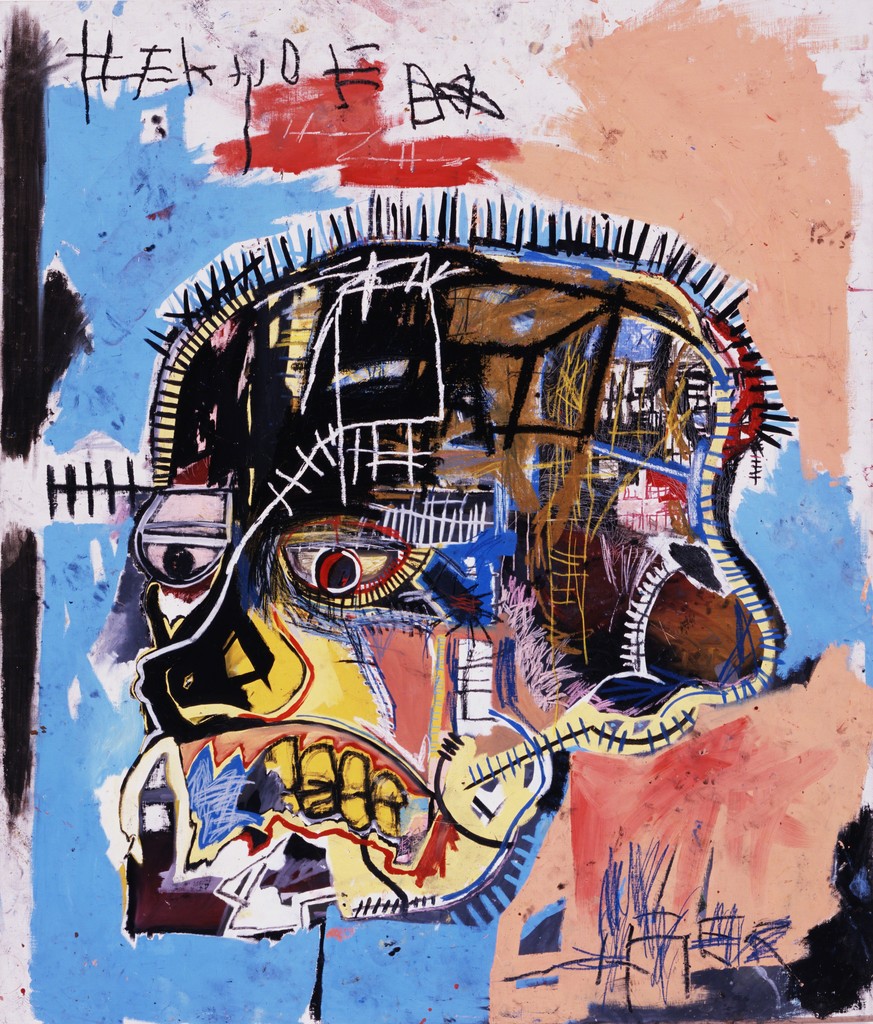
    I didn’t, however, see any renowned ‘outsider’ artists on the list. There still seems to be some sort of invisible barrier that separates these big stars of the arts and ‘outsider’ artists – despite there often being similarities in their backgrounds and circumstances. For example, although Basquiat’s background and style of work could undoubtedly be classed as ‘outsider’ (he ran away from home at 15, dropped out of school), he seems to have broken into the mainstream art world without too much trouble. In fact, he was the focus of a very popular exhibition at the Barbican that closed this month.

    basquiat
    Jean Michel Basquiat (https://www.artsy.net/artist/jean-michel-basquiat)

    So, my question (as ever), is what creates this gulf between artists who gain fame and fortune through their work, and those whose legacies are confined to the barracks of ‘outsider’ art? What makes someone eligible to be included in Wikipedia’s ‘autodidact’ list? Do they have to be a certain kind of self-taught? I’d be interested to know your thoughts, so feel free to leave any comments below.