Category: Exhibitions

  • What’s On: Spring/Summer 2013

    What’s On: Spring/Summer 2013

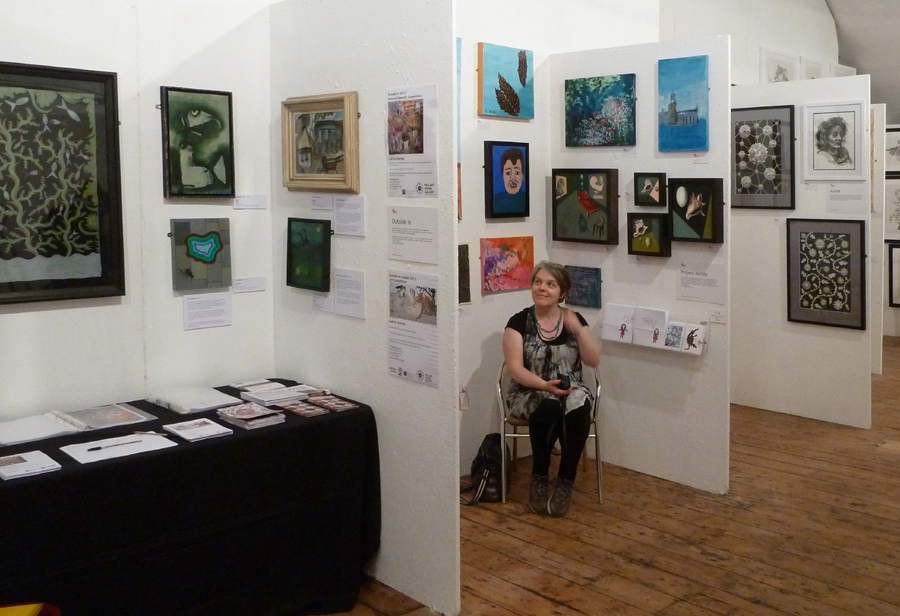
    Image above: Impact Art Fair 2011

    Below you will find some excellent and inspiring exhibitions that are taking place (mainly in the UK – sorry!) this spring and summer. From the Wellcome Collection to the Impact Art Fair; a dedicated art fair showcasing work by those facing barriers to the art world due to mental health reasons, disability, substance misuse or other social circumstances, there is bound to be something for everyone. I’m going to try and keep doing these ‘What’s On’ posts regularly to keep you all updated – and as 2013 seems to be a big year for the outsider art world! *(Click on the titles of the exhibitions to visit the webpage)*


    Souzou: Outsider Art from Japan
    Until 30 June 2013

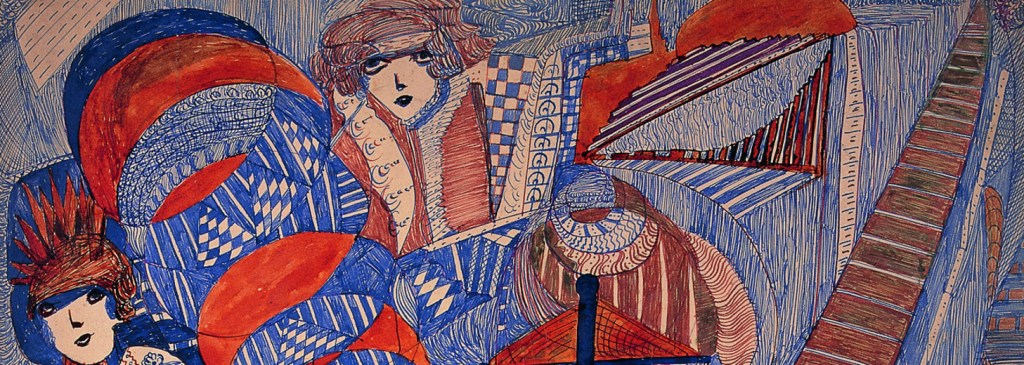
    This exhibition showcases more than 300 works for the first major display of Japanese Outsider Art in the UK. With 46 exceptionally talent artists represented; all of whom are residents and day visitors at social welfare institutions in Japan, this exhibition consists of an excitingly diverse range of ceramics, textiles, paintings, sculpture and drawing.
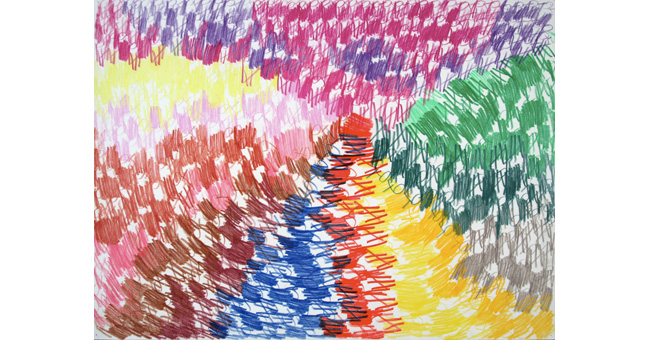
    Toshiko Yamanishi, 'Mother'
    Toshiko Yamanishi, ‘Mother’
    Image from http://www.wellcomecollection.org

    The Gravy Train and Roads to Recovery
    Until 22 June 2013

    This exhibition at The Conference Centre presents artwork from Service Users at the Margarete Centre and highlights equality, opportunity and equal access to society as treatments for substance misuse. Alongside work by participants of the Margarete Centre are works by upcoming visionary artist Kate Bradbury.

    Image from 'The Gravy Train and Roads to Recovery' Facebook Page
    Image from ‘The Gravy Train and Roads to Recovery’ Facebook Page

    Outside In: On Tour
    Until 3 January 2014

    This touring exhibition consists of the work of 20 artists facing barriers to the art world selected through an open national competition. The tour features the six Award Winners from the Outside In: National exhibition: Kate Bradbury, Manuel Bonifacio, Matthew Sergison-Main, Michelle Roberts, Nigel Kingsbury and Phil Baird.

    The four venues the exhibition will be touring to are: The Museum of East Anglian LifeRoyal Brompton Hospital,  Salisbury Arts Centre and The Public.
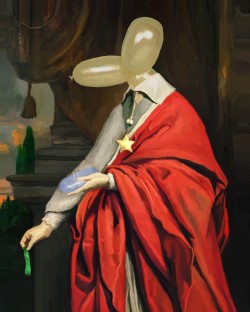
    Regina Lafay, 'Convert' Image from www.outsidein.org.uk
    Regina Lafay, ‘Convert’
    Image from www.outsidein.org.uk


    Outside In: Regional

    On the back of the success of Outside In: National, the work of Outside In artists will be popping up all over the country in 2013 – from The Museum of Somerset in the South West and Hastings Museum and Art Gallery in the South East right up to Perth Museum and Art Gallery in Scotland, and everywhere in between. For information on all of the dates and venues, visit Outside In’s website.


    I Ar You at Large Glass Gallery
    Until 24 May 2013

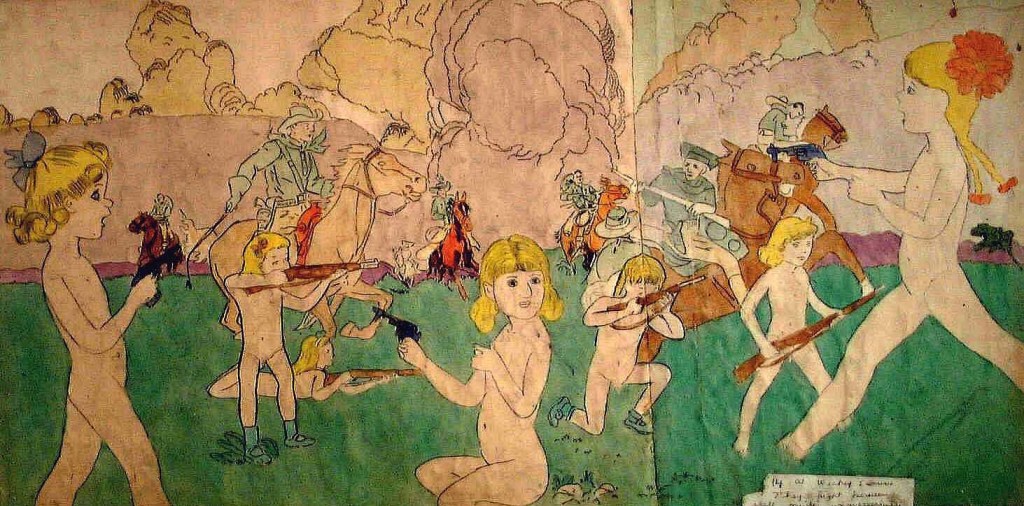
    I Ar You: Portraits by Self-Taught American Artists features an intimate selection of important artists from the Deep South and beyond, presenting self-portraits and anonymous figures alongside images of celebrities, presidents and cowboys.

    Image from www.largeglass.co.uk
    Image from http://www.largeglass.co.uk

    The Alternative Guide to the Universe at the Hayward Gallery
    11 June – 26 August 2013

    An exhibition surveying the work of individuals who create alternatives in art, science and architecture. Focusing on self-taught practitioners whose work is generally produced outside of  established channels and official institutions, The Alternative Guide to the Universe features a range of contributors from fringe physicists to the inventors of new languages, from artists who map cities of the future to others who design imaginary technologies.


    The Impact Art Fair at Block 336, Brixton
    26 – 28 July 2013

    This will be the second Impact Art Fair organised by Creative Future, which showcases work by highly talented artists whose access to the mainstream is limited by mental health issues, disability, chronic ill health or social circumstance.

    *N.B. If you are an artist, you can still enter work for selection for the Impact Art Fair up until 23 April 2013.

    Heidi Aldous Image from www.impact-art-fair.org.uk
    Heidi Aldous
    Image from www.impact-art-fair.org.uk

    “Great and Mighty Things”: Outsider Art from the Jill and Sheldon Bonovitz Collection at The Philadephia Museum of Art
    Until 9 June 2013

    In this innovative exhibition, the power of self-taught artistic talent, the drive of the human spirit to create, and the wonders of highly original inner worlds are revealed. This show surprises and challenges museum goers, forces examination of the conventional definition of the word ‘artist’, and shows that good art is good art regardless of the maker’s resume.


    Gods, Devils and Dreams by Peter Harry Lewis White at Bethlem Gallery
    Until 17 May 2013

    This is an exhibition of large-scale paintings and detailed pencil drawings by Peter White. His work depicts visions and dreamscapes that take the viewer on a journey into abstracted landscapes, figures and happenings. “My exhibition reflects my experiences and my creations. There are some windows into my memory and mind, but the rest is just colour and form.”

    Peter White Image from www.bethlemgallery.com
    Peter White
    Image from www.bethlemgallery.com

    Steve Wright’s House of Dreams
    Museum open days: 11 May, 8 June, 6 July, 3 August and 7 September 2013

    This amazing world of discarded objects has been created by artist Stephen Wright, who uses everyday objects to create mosaics: milk bottle tops, broken dolls, crockery and the rich pickings of car boot sales. The museum is open by appointment, but there are open days on 11 May, 8 June, 6 July, 3 August and 7 September 2013.

    Stephen Wright's House of Dreams Image from www.stephenwrightartist.co.uk
    Stephen Wright’s House of Dreams
    Image from www.stephenwrightartist.co.uk

    To keep up to date with other goings-on in the ‘outsider art’ world, follow me on Twitter: @kd_outsiderart
     

  • ‘Side by Side’ Exhibition and Symposium

    ‘Side by Side’ Exhibition and Symposium

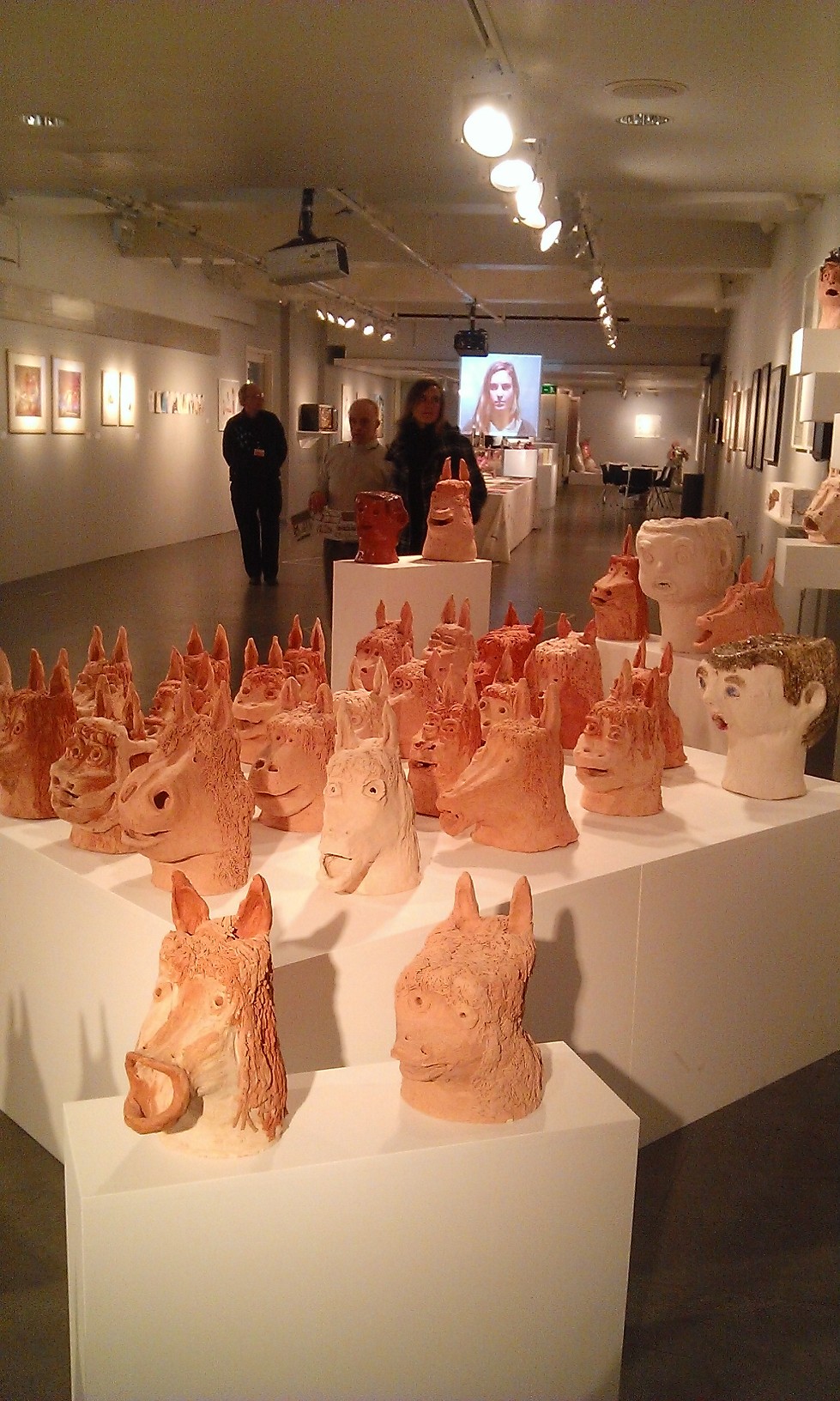
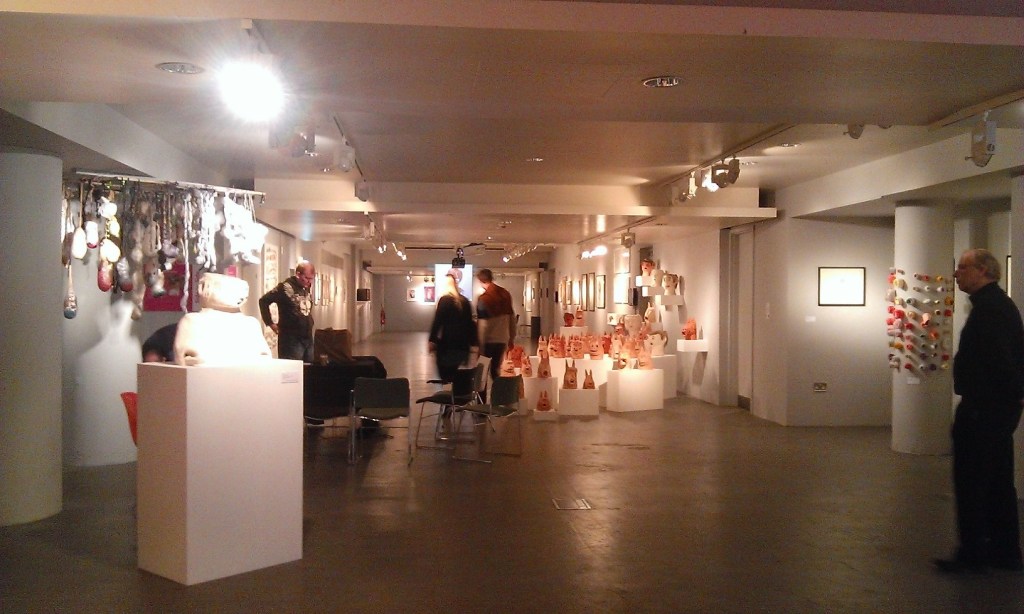
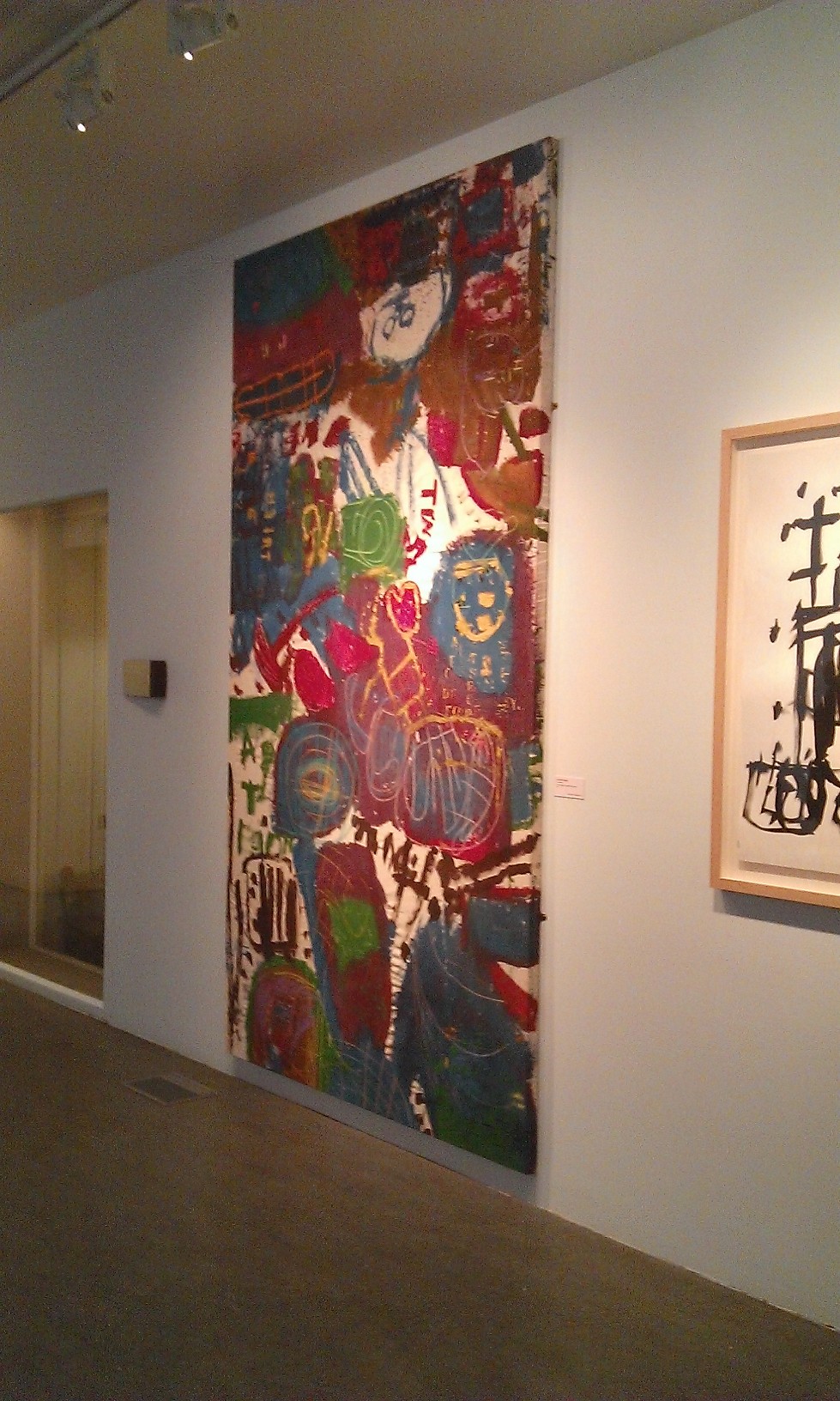
    On Friday 22 March, I visited the ‘Side by Side’ exhibition in the Spirit Level at the Royal Festival Hall; a collaboration between the Southbank Centre, The Rocket Artists and the University of Brighton. The exhibition, pioneering in its promotion of inclusive arts in such a high profile institution, features an array of multi-disciplinary works including drawings, sculptures, paintings, film and music, and brings  together a whole variety of inclusive arts groups from all over Europe.  
    Photograph taken at the 'Side by Side' exhibition
    Photograph taken at the ‘Side by Side’ exhibition

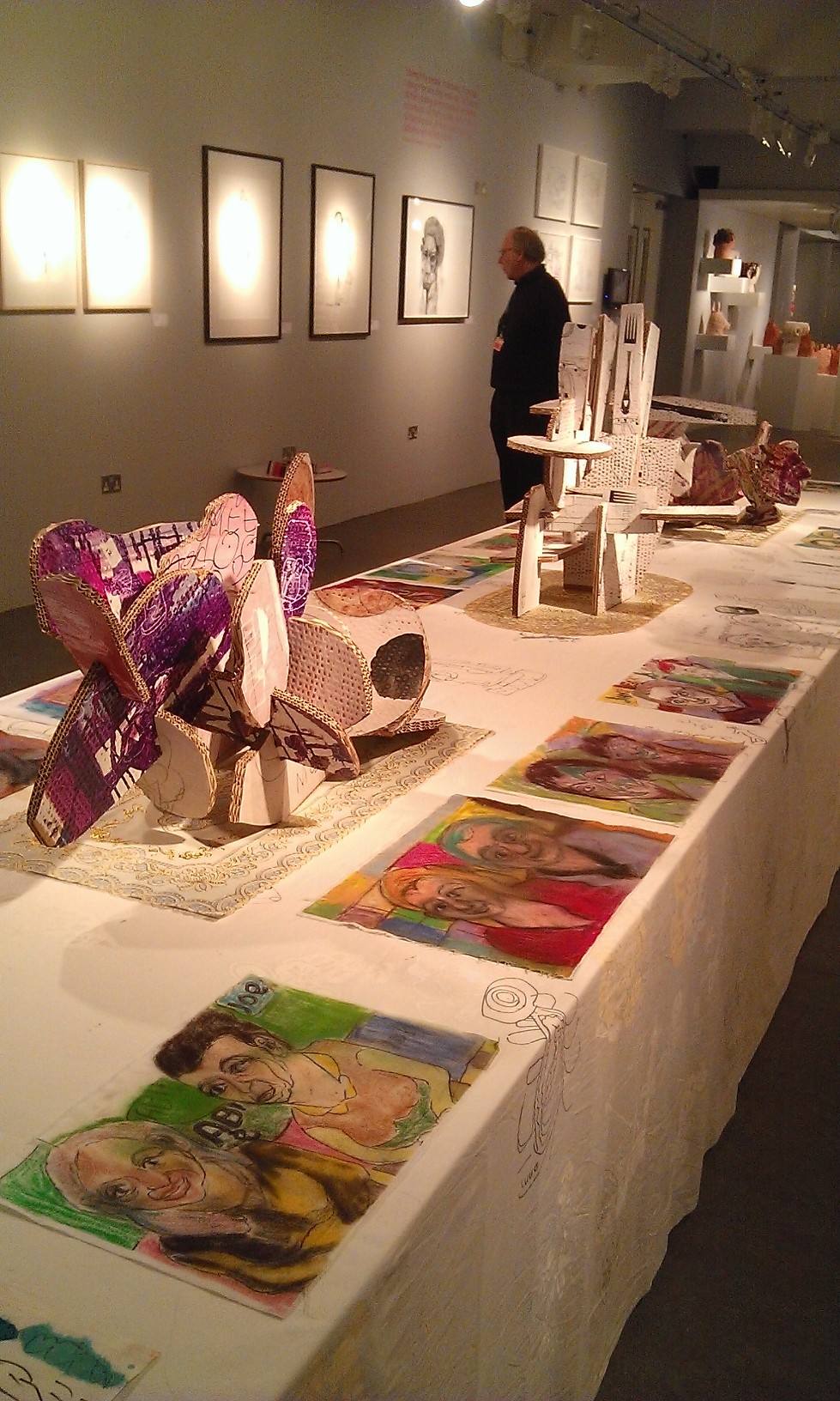
    The exhibition is a warren of inspiration and awe; from modelled horses’ heads from Amsterdam, to glass jars filled with individual responses to a medical conference. One of my favourite parts of the exhibition is what I have called ‘the cardboard box area.’ This space consisted of a cardboard box tower with canvas works placed at various points around the sculpture – waiting to be discovered – as well as film projection and video. The rest of the works in the exhibition are equally exemplary, and are a treat for all of the senses. There is a sensual hanging piece, which invites you to be a part of it, paintings; black and white, colour, sculpture and tables and tables of beautiful creations, all displayed in a bright, spacious gallery.

    Jars filled with individual responses to a medical conference
    Jars filled with individual responses to a medical conference
    Sculptural heads from Amsterdam
    Sculptural heads from Amsterdam
    Hanging piece by Linda Bell
    Hanging piece by Linda Bell
    Table adorned with works by various artists
    Table adorned with works by various artists

    The exhibition was accompanied by a Symposium, which I was lucky enough to be able attend. The Symposium was concerned with current inclusive arts practice and its progression, and provided a forum space in which both artists and their colleagues could discuss best practice and consider ways of thinking about art that aren’t directly related to written or spoken language. The outcome of the day was a collaboratively produced manifesto on what inclusive arts can and should be.

    There were brief talks from Alice Fox (Rocket Artists, University of Brighton), Sue Williams of the Arts Council (who spoke about the Creative Case for Diversity) and Andrew Pike from KCAT (Kilkenny Collection for Arts Talent, Ireland), after which the group split up to participate in different workshops facilitated by various inclusive arts groups: Action Space, Corali Dance, Intoart, Project Volume, Stay Up Late, StopGap Dance Company and Rocket Artists. Each workshop covered a different ‘art’ e.g. visual art, dance, music…

    I attended the Rocket Artists’ ‘Say it with Bags’ workshop, which aimed to look at the use of language with regards to inclusive arts practice. For this workshop, we were asked to have a look around the ‘Side by Side’ exhibition and choose a piece that we were drawn to. Once we had decided on a piece, we then chose a word, movement and sound and created a drawing in response to the piece. This activity was designed to help us think about art in a more practical way – not just with words (whether spoken or written).

    After the workshops, everyone reconvened to show/tell about the manifesto points that they had collaboratively created in the various workshops. Our group created two films to get our points across. Other groups used performance, dance, music or drawings to help illustrate their points.

    What I understood the term ‘Side by Side’ to mean in the context of the Symposium and exhibition, was that the creation of this concluding manifesto was collaborative – a joint effort by the artists and those working with them. It was predominantly about creating a space to discuss/think about art in a more practical way – particularly for those who find traditional forms of communication difficult. It was about raising the status of the artist to the same level of those working with them.

    Conducting some research into the project has highlighted the aims it is trying to achieve – these are:

    • To establish a platform in a mainstream art space for leading and best practice organisations.
    • To present a range of inclusive practices that span visual art, performance, music and film.
    • To build a picture of what constitutes good/innovative practice with reference to Inclusive Arts.
    • To highlight the process of collaboration as creating a space for equality.
    • To create a platform and catalyst for future artistic collaborations between artists and groups.

    The symposium really acted as a forum about the current state of Inclusive Arts in the UK and how this can be moved forward. The main questions we were encouraged to think about were:

    • What lies at the heart of the experience of the creative, collaborative process?
    • What conditions are necessary to enhance the collaborative process?

    It was very much about everyone being involved in the workshops on the same level – both the artists and those they work with. So, overall, I think the phrase ‘Side by Side’ was used to express the idea of collaboration, and to eliminate the idea of there being a difference between the ‘teacher/workshop leader/arts facilitator’ and the artist.


    I would be really interested to hear from others about their views on inclusive arts practice, so if you have any thoughts, please leave them below.

    The ‘Side by Side’ exhibition is running at the Royal Festival Hall until 5 April 2013. For more information, click here. For more information on the project itself, click here.


  • Review – ‘Souzou: Outsider Art from Japan’ at the Wellcome Collection

    Review – ‘Souzou: Outsider Art from Japan’ at the Wellcome Collection

    ‘Outsider art’, although a term that is so often criticised for its ambiguity and uncomfortable sentiments, takes centre stage this spring at the Wellcome Collection in London. Despite the semantic controversy surrounding the term itself, there is nothing ambiguous, controversial or uncomfortable about Souzou: Outsider Art from Japan.

    Unlike the development and history of ‘outsider art’ in Europe; which ran parallel to the discipline of psychiatry – think Hanz Prinzhorn, in Japan, ‘outsider art’ has been “more closely aligned with public health and education reform from 1945.” Kazuo Itoga, considered the father of social welfare reform in Japan, pioneered the principle of producing personal artworks within an institutional context, insisting on self-expression and a policy of ‘non-intervention’ in the creative process.

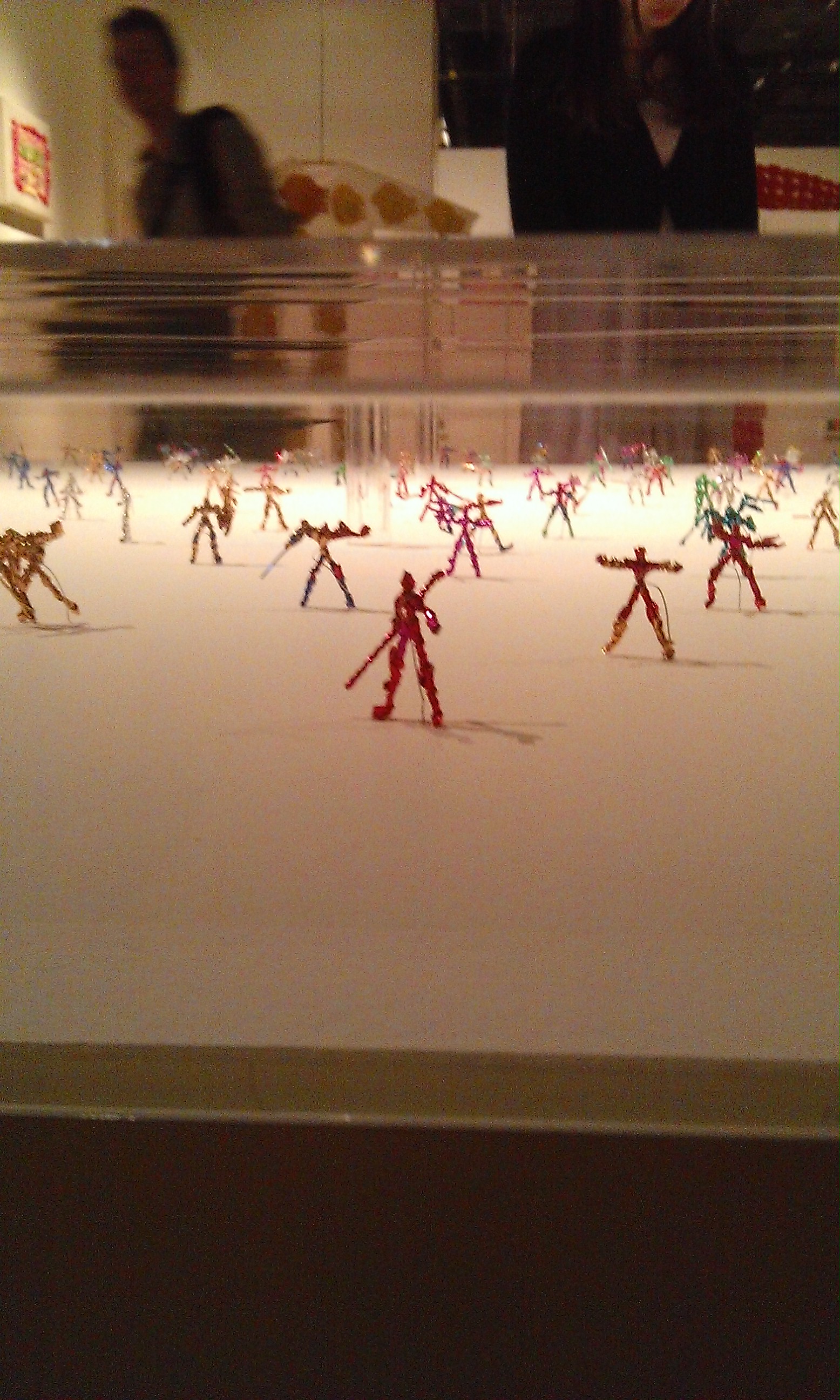
    Historical context aside, the exhibition at the Wellcome Collection is as diverse as the term ‘outsider art’. Amongst the sculpture and 2D works on display are tiny shiny model figures, bongos (the animal – not the drum), lions, life size dolls, still lifes, graphic posters, illustrations of morning tv programmes, and – perhaps some of my favourites – the Fried Chicken Pyjamas and the Pigeon Shaped Cookie Pyjamas by Takahiro Shimoda.

    Shota Katsube
    Shota Katsube
    Takahiro Shimoda 'Fried Chicken Pyjamas'
    Takahiro Shimoda ‘Fried Chicken Pyjamas’

    Split into six named sections – ‘Language’, ‘Making’, ‘Representation’, ‘Relationships’, ‘Culture’ and ‘Possibility’ – the exhibition represents works that are characteristically and stylistically common to what we consider to be ‘traditional outsider art’, as well as works that draw on popular culture, creativity and the structure of language. The section headed ‘language’ looks at the challenge of communication in a written or spoken form and how “visual expression can offer a release from the confines of language.” The ways we encounter language are explored, with Masataka Aikawa’s storybook-inspired ink drawings and Hiroyuki Komatsu’s pieces which reference the plots and characters from his favourite daytime TV programmes.

    Komatsu’s pieces, amongst others, finally highlight that – contrary to Dubuffet’s stubborn views on isolation and immunity – ‘outsider artists’ are more often than not very much in tune with contemporary culture. In fact, there is a whole section of the exhibition entitled ‘Culture’, which demonstrates the “artists’ keen awareness of their surroundings and of the wider cultural context.” Kiyoaki Amemiya’s mountainous landscapes and Ryosuke Otsuji’s “contemporary interpretation” of Okinawan lions highlight the influence of historical Japanese culture; whilst Daisuke Kibushi’s post-war movie posters and Keisuke Ishino’s paper anime figures allude to the impact of popular culture.

    ‘Representation’ and ‘Relationships’ include depictions of the objects and people that the artists experience in their everyday lives. ‘Representation’ raises questions about subjectivity vs objectivity – exemplified in the work of Takashi Shuji and Takanari Nitta, where seemingly everyday objects – hairdryers, windows – “are elevated to objects of beauty,” whilst ‘Relationships’ examines “the ways the artists depict themselves and their multifaceted relationships with other people.” The artists explore idealised visions of themselves (as is the case with the work of Yoko Kubota and Masao Obata), as well as their ambitions, fears, desires and the notions of “absence, uncertainty and erasure.”

    When we think of ‘outsider art’, we often think of the use of unconventional objects – in fact, I recently wrote a post about the ‘outsider artist’ as a pioneer of the ready-made movement in the history of modern art – and this is explored in ‘Making.’ In this section, the importance of work and employment in Japan is highlighted with the use of clay and washi (Japanese paper), used by Komei Bekki and Seiji Murata, who are both employed in these industries respectively. This section includes a vibrant array of tactile materials – textiles, clay, and cloth – which require “repetitive, time-consuming processes that have calming and therapeutic effects.”

    My favourite piece in the show, however, sits in the final category of ‘Possibility.’ Norimitsu Kokubo’s panoramic cityscape is a work-in-progress which depicts a map of the world as visualised through the artist’s internet research. When finished, the work will measure a hefty 10 metres across. This work epitomises this section’s attempt to portray works which “collate and reorder information… to create parallel, ‘improved’ realities.”

    Norimitsu Kokubo, '3 Parks with  a panoramic view. A 360 degree world of panoramic view - Ferris Wheel, clusters of buildings with magnetically-levitated trains, past present future, a suburban town with railroad bridges, a city under development with indigenous peoples and natural resources.'
    Norimitsu Kokubo, ‘3 Parks with a panoramic view. A 360 degree world of panoramic view – Ferris Wheel, clusters of buildings with magnetically-levitated trains, past present future, a suburban town with railroad bridges, a city under development with indigenous peoples and natural resources.’

    The term Souzou, in my opinion, goes part of the way in distilling any preconceptions about this type of art because it is a word that the Western world has (somewhat unknowingly) needed for so long. With no direct translation into English, it can mean either ‘creation’ or ‘imagination’ – “both meanings allude to a force by which new ideas are born and take shape in the world.” Maybe it doesn’t need a direct translation; after all, ‘Outsider Art’ is an “imperfect approximation” of another term that does not translate comfortably into English – Jean Dubuffet’s Art Brut. It is our need for labels and categories that has tied us in a knot when it comes to ‘outsider art’; when really we do not need words at all.

    The exhibition is a timely reminder of the importance of displaying works created by those who cannot so easily align themselves with the mainstream art world. Created by Japanese artists in day centres all over Japan, the works perhaps illustrate the term Souzou better than any English translation ever could, and certainly better than many works in the current contemporary mainstream. The exhibition blows away the hierarchical idea of biographical context and focuses on the achievement of these artists and their incredible creations. There is something here for everyone, and I challenge you not to come away thinking about the astounding imagination and creative ability of these people. Perhaps this year is the year that ‘outsider art’ finally becomes recognised as an illustration of authentic creativity and talent and can once and for all be lost as a category, and works of the Souzou calibre can be known simply as ‘Art.’

    Souzou: Outsider Art from Japan is on at the Wellcome Collection from 28 March – 30 June 2013. For more information, click here.

    All quoted information is taken from the ‘Souzou: Outsider Art from Japan’ exhibition companion, available from the Wellcome Collection.

  • Creative Future Exhibitions

    Creative Future Exhibitions

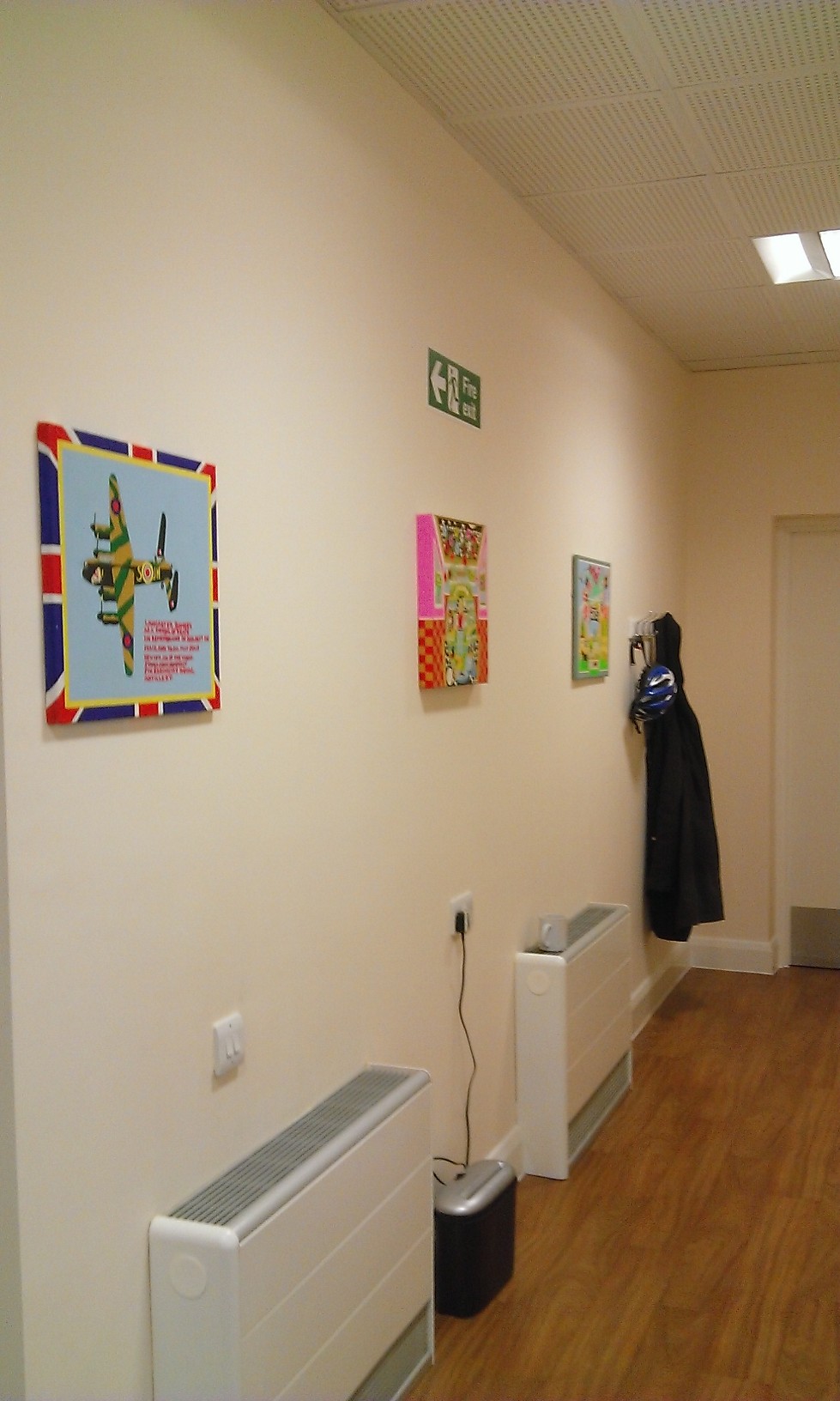
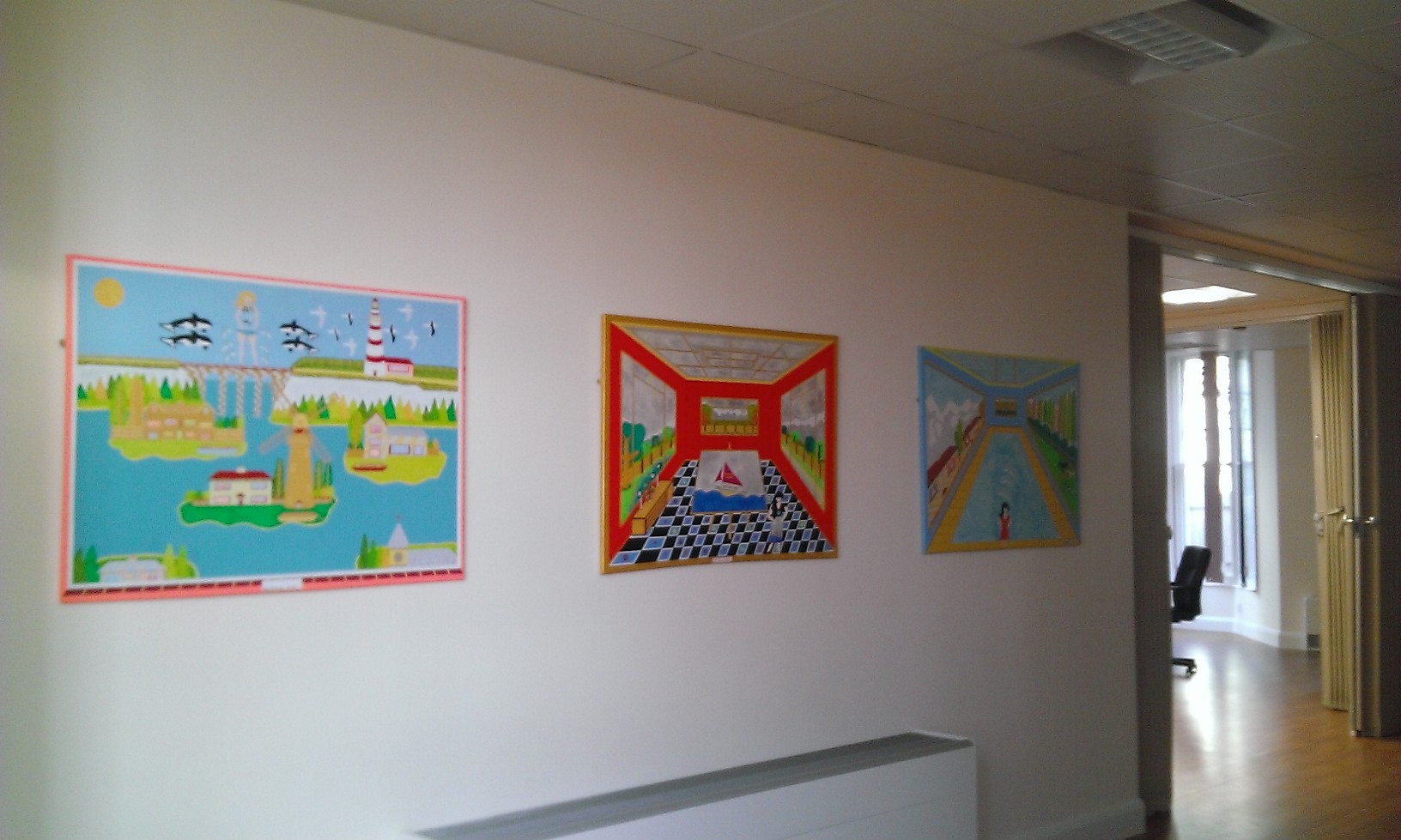
    Creative Future, an organisation based in Brighton, aims to promote the work of artists and writers who need extra support through publications, exhibitions and workshops. The organisation also has two milestone events; Tight Modern and the Impact Art Fair, with an in-the-making Literary event on its way. I work part time for the organisation, as their Data and Communications Officer, and have spent the past couple of weeks installing exhibitions at two different venues in Brighton. One of the exhibitions is currently taking place in the corridors of Community Base in Brighton; the home of the Creative Future office. Each mezzanine level has two artworks by Creative Future artists, with pieces ranging from digital prints to acrylic paintings. The second exhibition we have been working on is taking place at The Fed’s new Space for Change, where you can see the colourful, fantastical work of Stephen Humphrey,

    Community Base Corridor Exhibition

    Comm Base_2
    Works by Richard Sitford and Stephen White

    Stephen Humphrey Exhibition at Space for Change

    Stephen Humphrey, 'Medieval England' and 'The Beauty of Nature'
    Stephen Humphrey, ‘Medieval England’ and ‘The Beauty of Nature’
    Stephen Humphrey, 'Lancaster Bomber', 'Mother Nature' and 'Beauty Street'
    Stephen Humphrey, ‘Lancaster Bomber’, ‘Mother Nature’ and ‘Beauty Street’
    Stephen Humphrey, 'Mother Nature', 'Nature Within' and 'The Beauty Within'
    Stephen Humphrey, ‘Mother Nature’, ‘Nature Within’ and ‘The Beauty Within’
    For more information, you can visit Creative Future’s Website:
    www.creativefuture.org.uk
    Follow them on Twitter:
    @CreativeF_uture
    Like them on Facebook:
    Creative Future
  • Outside In: National, Pallant House Gallery

    Outside In: National, Pallant House Gallery

    (Featured Image: Carlo Keshishian, Over-Load)

    It is an exciting month ahead at Pallant House Gallery in Chichester this October as we see the opening of three exhibitions focusing on the work of outsider artists, or those who face barriers to the mainstream art world. The triennial competition, Outside In: National, will showcase works by selected finalists who submitted their work the competition earlier this year. Accompanying this ground-breaking exhibition will be a chance to see the fascinatingly diverse work of Pat Douthwaite and (for the first time in the UK in almost 50 years!) a major review of the work of Jean Dubuffet: father of Art Brut.


    Outside In: National
    27th October 2012 – 3rd February 2013

    ‘A Ground-breaking open-entry exhibition for artists producing work from the edges of society. The exhibition will showcase 80 works by over 60 artists selected from pieces submitted to the Outside In: National competition over the past year. From substance misusers to self-taught visionaries, the exhibition will provide a unique insight into the extraordinary breadth and vitality of work produced by individuals from outside the mainstream art world.’

    www.outsidein.org.uk

    Pat Douthwaite: An Uncompromising Vision
    23rd October 2012 – 3rd February 2013

    Despite an introduction to painting by J. D. Fergusson, whose wife Douthwaite had studied mime and modern dance with, Douthwaite was for the most part a self-taught artist. Because of this, she is often associated with Outsider Art in spite of her regular exhibition schedule. She was controversially not interested in establishing a place within the cultural mainstream and was always comfortable being linked to the term Outsider Art; her early work was even influenced by pioneer of Art Brut, Jean Dubuffet. Douthwaite lived a predominantly disorderly lifestyle; a lifestyle that involved a lot of travel and a lack of a permanent base or studio from which to work. Douthwaite worked in a variety of media including collage and assemblage, making her work as colourful as her semi-nomadic life.

    Learn more about Douthwaite’s life and work in the Pat Douthwaite ‘Step Up’ pack. Step Up is an innovative project that offers training for marginalised and outsider artists, enabling them to feel more confident delivering workshops and conducting in-depth research: www.pallant.org.uk/docs/stepupdouthwaitelowres_0.pdf


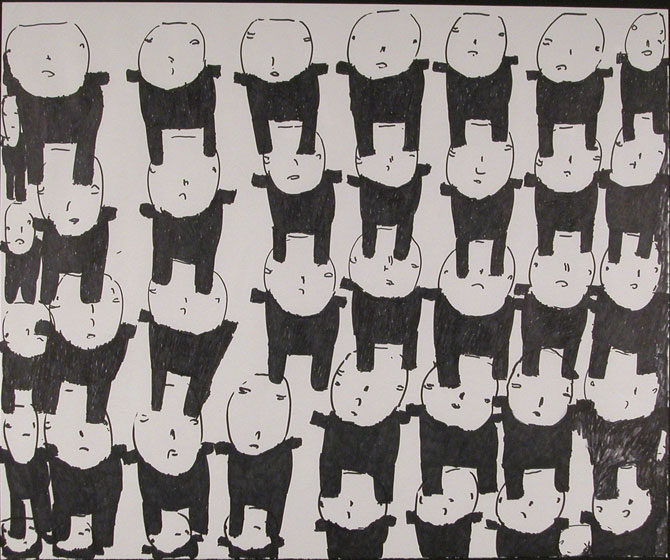
    Pat Douthwaite, Simon With a Gun, 1967


    Jean Dubuffet: Transitions
    20th October 2012 – 3rd February 2013

    Transitions will be the first major review of Dubuffet’s work for almost 50 years in a UK institution. Organised with the assistance of the Fondation Dubuffet in Paris, the exhibition will feature key paintings, drawings and sculpture from collections across France and the UK.

    Born in Le Havre in 1901, Dubuffet ran his father’s wine business for 17 years before returning to painting in his distinctively simple, primitive style. Dubuffet himself was fascinated by the work of children and the insane, eventually leading him to coin the term Art Brut in 1945, which translates as ‘Raw Art’. In 1949, Dubuffet produced a manifesto entitled Art Brut in Preference to the Cultural Arts, in which he intended to ‘valorise the idiosyncratic creative works of individuals which he considered to be outside “the system”,’ but to also ‘directly challenge and undermine the authority of “high culture” and conventional definitions of art.’ [Karen Jones et al., Framing Marginalised Art, 2010, p 11].

    By emulating the ‘crude, violent’ energy of the work of children and the ‘clinically insane’, Dubuffet soon had the term he coined applied to his own work, ‘rather than to their stylistic source as he had intended.’ [http://www.dubuffet.com/bio.htm]


    Jean Dubuffet, Le bariole Mariole, 1964


    www.pallant.org.uk

    www.outsidein.org.uk


  • Shadows of a Dream

    Shadows of a Dream


    Shadows of a Dream, a collaborative exhibition between Creative Future and Outside In, opened last Sunday (16th September) at Outside In: Gallery located in Wellington House Day Centre, Brighton. The exhibition showcases works by Maria Kuipers, Mercedes Gil Simon, Michelle Roberts, Jessica Levine and Neal Pearce.

    Jessica Levine’s work stems from sources including ‘personal travels, Kentish landscape, current affairs, childhood memories and textile designs.’ Jessica often explores ‘ideas using collage as… this is a useful process in realising finished pieces of work or in translating ideas using paint.’


    Jessica Levine, ‘Mexico’


    Maria Kuipers’ work focuses on ‘self’, and is underpinned by her interest in the human condition and passion for meaningful art. She often uses mixed media and aims for ‘material presence as well as mysterious imagery.’ Maria is an artist led by materials, and by taking an intuitive approach, she reaches into her inner self and works from the unconscious. She hopes that by trusting the creative process, she can make an art that is ‘beyond what is seen into the unseen.’


    Maria Kuipers, ‘Into the Dark (Breaching Boundaries Series)’


    Mercedes Gil Simon’s Black Paintings have evolved from photographs that she took as source material. They focus on night scenes of Brighton, or other cities which Mercedes has a connection to. The photographs are taken in the early hours of the morning to capture the unnerving calm of a city still sleeping. The works explore themes of Film Noir, and ‘convey an emotional and mysterious quality, creating highly evocative, atmospheric and subdued vistas.’


    Mercedes Gil Simon, ‘Black Paintings’


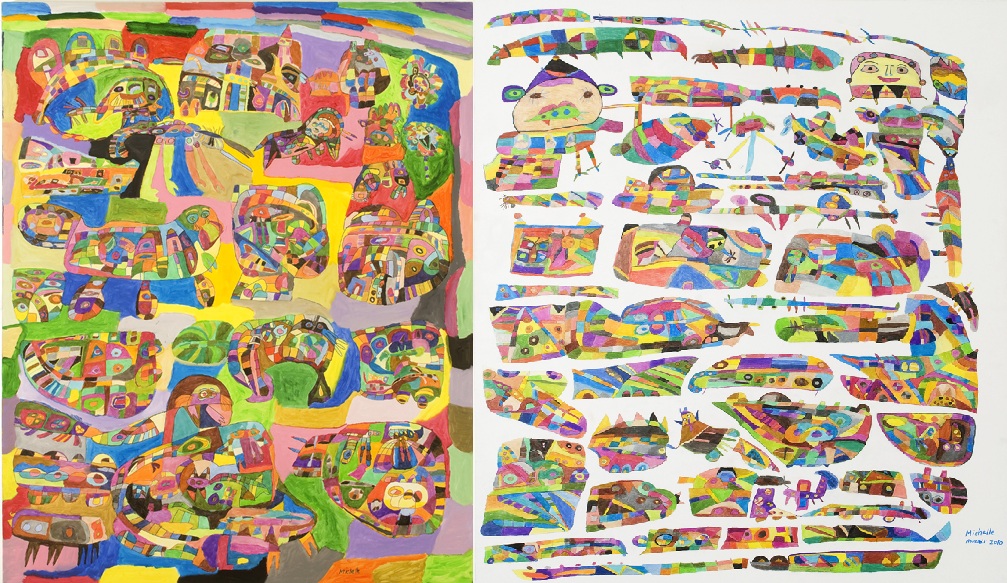
    Michelle Roberts has drawn and painted throughout her life; as a young girl, she accompanied her grandfather, a watercolour painter who often worked outdoors. She spends much of her free time drawing and painting, with the evolution of her works often taking weeks. Michelle creates ‘colourful and complex worlds, each with a distant logic and meaning that connect to her own life.’ Michelle is supported by Project Art Works, based in Hastings, who ‘produce pioneering visual arts projects for individuals with profound intellectual disability and multiple impairments.’


    Michelle Roberts, ‘A Mouse For Your House’


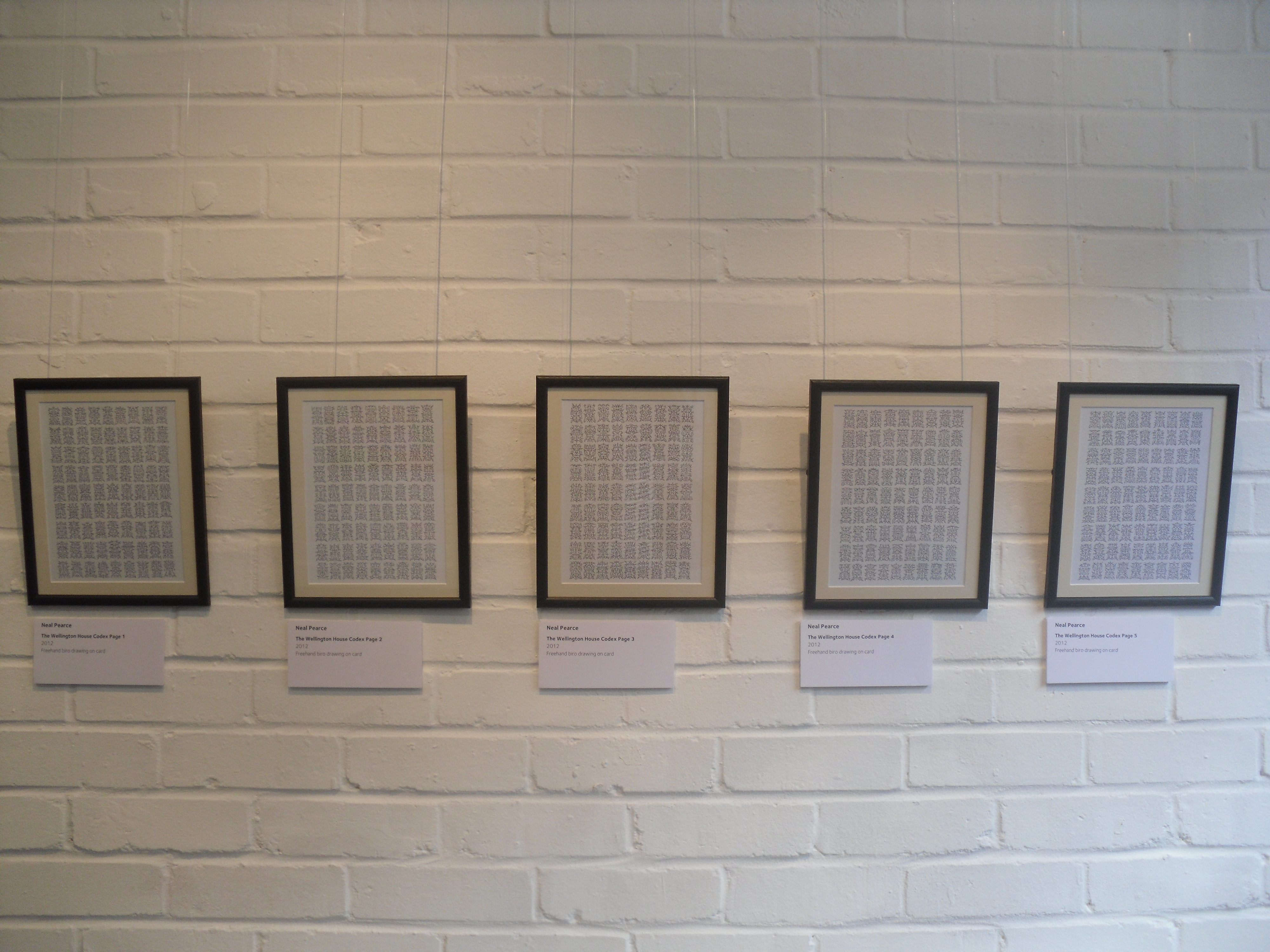
    Neal Pearce’s ‘The Infinite Codex’ was born in 1992, marking his departure from artistic and intellectual over-striving. Inspired by Douglas Adams’ Hitchhikers trilogy, Neal was intrigued by the depiction of Earth as the ultimate super-computer. ‘Could it be that each of us is encoded with invaluable data just waiting to be tapped – information far beyond the reaches of our worldly, tutored minds?’


    Neal Pearce, ‘Wellington House Codex’


    Shadows of a Dream is running until 21st Janurary 2013

    Outside In: Gallery
    Wellington House Day Options
    Wellington Street
    Brighton
    BN2 3AX

    Gallery opening times:

    Tuesday and Friday 1.30pm – 3.30pm
    Weekdays 9.30 – 3.30 (by appointment only)

    For more information visit:

    www.creativefuture.org.uk

    or

    www.outsidein.org.uk

  • Accessible Exhibitions: Outsider Art For All

    Accessible Exhibitions: Outsider Art For All

    ‘For, if outsider art arises from people who have no connection to the established art world, it ought to return to that world as well.’ This sentence, found in an article focusing on Intuit’s current constant struggle to ‘get people in the door’ got me thinking about interpretative curatorial techniques with relation to outsider art exhibitions. Straying slightly from the direct meaning behind this interesting sentence, I started to think about how outsider art exhibitions should be curated in a way that makes them accessible to those who have little to no art historical education.

    During research for my MA dissertation, I was looking into the idea of voyeurism and how a voyeuristic audience response with regards to outsider art exhibitions can be reduced by utilising different curatorial techniques. I have to say, I got a bit caught up with the whole voyeurism issue, until it was brought to my attention (partially by the Bethlem Heritage Blog) that we have to, in theory, provide biographical information about outsiders artists – or at the very least provide information on the ambiguity of the term itself, otherwise exhibitions on the subject would be incredibly inaccessible for those with no prior knowledge of the subject.

    Bethlem Heritage’s Curatorial Conversations (which I have been avidly following), focused last month on the often dangerous use of the term ‘voyeurism’ and how it can potentially stigmatise visitors; particularly those who ‘may have a general interest but little knowledge of the realities of mental health experiences and treatment.’ It is in essence, the post claims, pointless to preach to the converted – those who already have prior knowledge of mental illness. The aim of Bethlem is to ‘contribute towards the destigmatisation of mental health’, and this can only really be done by opening access to those with no prior knowledge on or experience of the matter.

    Similarly to this, Intuit’s new executive director, Joel Mangers, notes how he wants to attract people, ‘the bikers who go up and down Milwaukee Avenue, for instance’, who perhaps wouldn’t normally find themselves entering a space exhibiting outsider art; one of Mangers plans to do just this is to ‘bring Intuit exhibitions into public spaces.’

    Jean Dubuffet, in his 1949 manifesto Art brut in Preference to the Cultural Arts claimed that when he used the term Art Brut he was referring to works ‘produced by persons unscathed by artistic culture’. This highlights the traditional view that outsider art comes from a place where there is no mainstream cultural influence (perhaps not particularly relevant in the present day, however); and in essence, it should be able to return to a place (or to people) who are not predisposed to ideas of art or art theory from the contemporary mainstream.

    References

    http://art.newcity.com/2012/08/28/eye-exam-outsider-art-for-all/ – ‘Eye Exam: Outsider Art for All’ by Jason Foumberg

    http://bethlemheritage.wordpress.com/tag/curatorial-conversations/ – Bethlem Heritage’s Curatorial Conversations

    Fitzpatrick, Anthony, ‘Research Assistant Report’, in Framing Marginalised Art, ed. by. K. Jones et al., (Australian Research Council, 2007).

  • Shadows of a Dream – Brighton 17.09.12 – 21.01.13

    Shadows of a Dream – Brighton 17.09.12 – 21.01.13

    Shadows of a Dream is an collaborative exhibition between Outside In and Creative Future which will explore emotion, surrealism, light and dark through painting, drawing, collage, prints and textiles.

    The exhibition will present work from Jessica Levine, Mercedes Gil Simon, Maria Kuipers, Michelle Roberts and Neal Pearce.

    The exhibition will run from the 17th September 2012 until the 21st January 2013, and will be taking place at the Outside In: Gallery in Brighton, which you can find at:

    Wellington House Day Options
    Wellington Street
    Brighton,
    BN2 3AX

    To find out more, please visit Outside In: Gallery and Creative Future

    For more information on the artists involved, please use the following links to be taken to their personal webpages or their Outside In online galleries.

    Maria Kuipers

    Mercedes Gil Simon

    Jessica Levine

    Neal Pearce

    Michelle Roberts

    The cover image for this post is composed of two images created by Michelle Roberts; Dinosaur World and Spanish Holiday

  • What’s On: July 2012

    What’s On: July 2012

    ‘British Outsider Art’

    At Bethlem Heritage
    7th July – 3rd November 2012

    www.bethlemheritage.org.uk

    ‘Tight Modern’

    Tight Modern (a miniature version of Tate Modern) has just finished a stint at Royal Brompton Hospital in London. The exhibition will be in Brighton from the 9th until the 12th of August 2012 at East Street Bastion.

    www.wix.com/tightmodern/gallery
    www.creativefuture.org.uk

    ‘One in Four’

    An online auction being held by Studio Upstairs between 12th July and 23rd July 2012. A viewing night of the artworks will be held at The Royal Academy of Arts on the 20th July 2012. The auction is a collaboration between Studio Upstairs and The Royal Academy of Arts to raise awareness of the fact that one in four people will suffer with a mental illness in their lifetime.

    www.studioupstairs.org.uk

    ‘August Walla Retrospective’

    At Galerie Gugging
    Until 28th October 2012

    www.gugging.org

    ‘Outside In: London 2012’

    At Cafe Gallery (part of CGP London) to coincide with the Paralympics
    16th August – 9th September 2012

    www.outsidein.org.uk

    ‘Outside In: National 2012’

    The deadline for the national competition is 20th July 2012. Maginalised artists are able to submit up to 2 pieces of work from their Outside In online gallery to the competition.

    www.outsidein.org.uk

    ‘Creative Response: Summer Exhibition’

    12th June – 13th July 2012

    www.creativeresponsearts.org

  • ‘Framing Marginalised Art’

    ‘Framing Marginalised Art’

    I have just been doing some research for my dissertation into the different display techniques used by curators when exhibiting ‘outsider’ art and I came across the following categories in a book entitled Framing Marginalised Art by Karen Jones, Eugen Koh, Nurin Veis, Anthony White, Rosalind Hurworth, Johanna Bell, Brad Shrimpton and Anthony Fitzpatrick.

    1) Biographical Emphasis

    This way of exhibiting the work focuses on the biography of the artist. Although this is often viewed as a negative way to display the work of marginalised artists, Marcus Davies, in his 2007 book On Outsider Art and the Margins of the Mainstream, claims that it has some positives.

    One of the positive points that Davies focuses on is the way that this form of framing can make the work of ‘outsiders’ become more understandable, as the viewer can begin to see the circumstances from which the work is created. It is a also a way to show work that is perhaps culturally and aesthetically complex and it can also give the artist a voice; a voice with which they can tell their story.

    However, this display technique can “add to preconceptions that Outsider Art comes from a place of extreme otherness; the life of the artist may overshadow the actual artwork.”[1] Using a biographical emphasis can often be a substitute for real engagement with the work; however, this method is extremely popular when it comes to exhibiting ‘outsider’ art, and it has raised the marketability of work and exhibitions of the kind.

    2) Formal Emphasis

    This emphasis tries to eliminate the distraction or substitution of a biographical context and instead encourage a direct and uninterrupted engagement with the work itself on an aesthetic level. This method allows the work to speak for itself and lets the audience make a decision for themselves based on “the product of the individual’s art-making process and the intended use of the art object.”[2] Here, “formal considerations function to level the playing field between inside and out.”[3]

    An example of the use of a formal emphasis within an exhibition is the Musgrave Kinley Outsider Art Collection at the Irish Museum of Modern Art in Dublin, where ‘outsider’ art was displayed alongside the work of mainstream artists. Another viable example of this framing technique is the Inner Worlds Outside exhibition held at Whitechapel Gallery in London – where works by ‘outsider’ artists were displayed alongside the work of German Expressionists.

    However, Framing Marginalised Art argues that despite being the most aligned with the contemporary art world, this method also has its downsides. Using a formal emphasis can, argue the authors, do a disservice to the artist; “muting their individual voices and ‘obscuring important ethical questions about the personal and social costs of the production of this art’.”[4]

    3) Appropriate Emphasis

    This emphasis focuses on the individual relationship between the artwork and the audience. An example of this emphasis used within an exhibition can be seen in Parallel Visions: Modern Artists and Outsider Art held at the Los Angeles County Museum of Art in 1992. Davies claims that “in recasting the relationship between modern and Outsider Art, the exhibition replaced the standard frameworks of biographical and formal analysis with a more flexible model based on meaningful interactions between artwork, beholder, and context.”[5]

    Maurice Tuchman, co-curator of the exhibition, noted that by displaying ‘outsider’ art alongside ‘established, canonical’ artists, “all works are equally valid as art…. aesthetically challenging and intensely involving.”[6]

    4) Patrimonial Emphasis

    The emphasis here is on the promotion and preservation of ‘outsider’ art. It is “concerned with the ‘far-reaching cultural implications of outsider production’ which provides ‘a philosophical outlook premised on the preservation of culturally significant creations in deference to their specific social contexts’.”[7]

    I would be very interested to hear your thoughts on these ’emphases’; whether you think they are a valid way of ‘categorising’ ‘outsider’ art exhibitions, or, perhaps, you think there are other techniques used commonly within the exhibition of marginalised art?

    References:

    [1] Framing Marginalised Art by Jones Veis, White, Hurworth, Bell, Shrimpton and Fitzpatrick (2010), p 29 (Appendix 2)

    [2] Ibid.

    [3] Ibid.

    [4] Ibid.

    [5] Framing Marginalised Art by Jones Veis, White, Hurworth, Bell, Shrimpton and Fitzpatrick (2010), p 30 (Appendix 2)

    [6] Ibid.

    [7] Ibid.