I can only apologise for my lack of posting lately! Following the busy period of January – March – which included the 5 year (online and offline) anniversary celebrations, things have slid a little. One of the reasons I let things slide was because I have been planning a trip to the southern states of the US. I leave next week, and am heading to New Orleans LA, Austin TX, Memphis TN, and Nashville TN. As well as taking in the sights and culture of these wonderful cities, I am also hoping to squeeze in visits to several folk art environments.
There are many folk art environments in the south – of course, because much of the most renowned folk art is indigenous to the southern states. I scoured my Raw Vision Outsider Art Sourcebook (the last two editions!), and planned my route. I worked out that I can feasibly visit four of these environments during my trip (I did try to fit more in, but many were a little – and some were spectacularly – out of the way).
From New Orleans, I am driving West to just outside of Austin, which means a stop off in Houston on the way. In Houston, my plan is to visit the following environments:
1. Jeff McKissack’s The Orange Show (Houston, TX)
Image courtesy of TripAdvisor
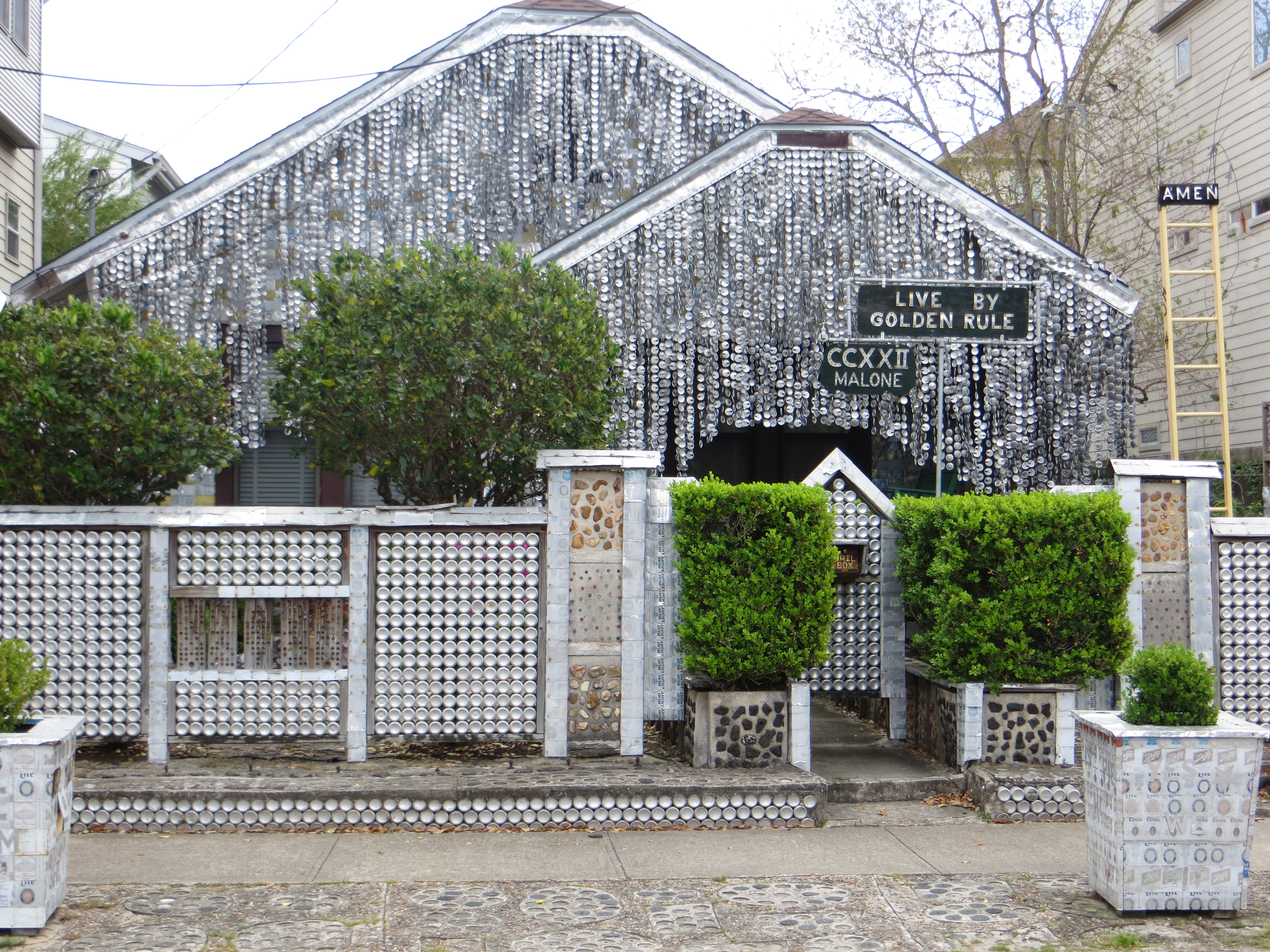
2. John Milkovisch’s The Beer Can House (Houston, TX)
Image courtesy of Suitcases & Sweets
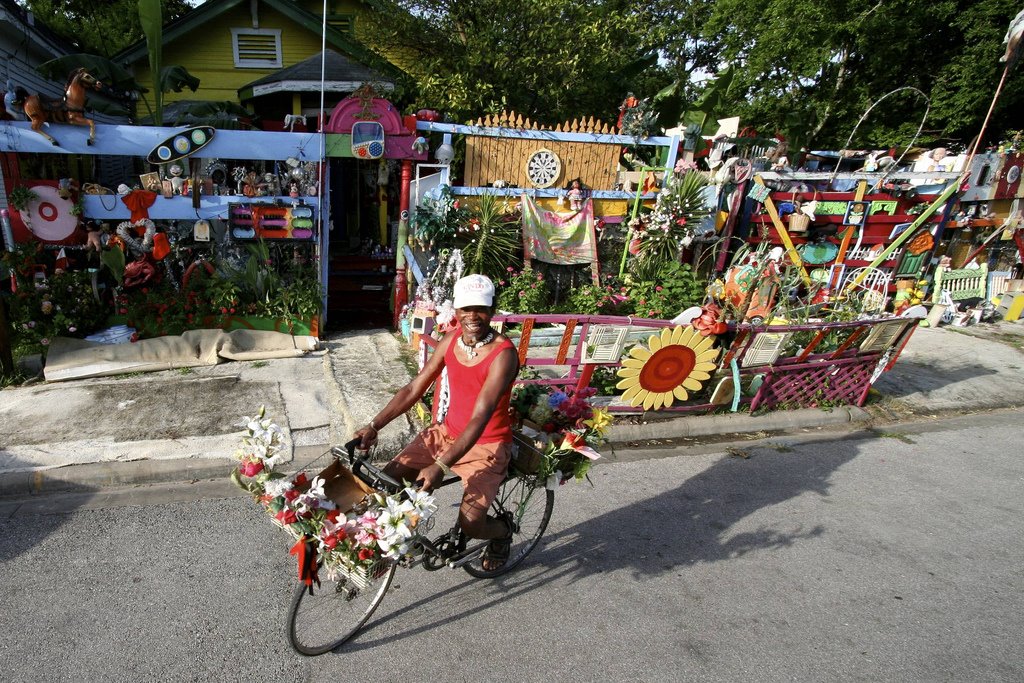
3. Cleveland Turner’s Flower Man’s House (Houston, TX)
Image courtesy of Deep Fried Kudzu
And then, when I’m driving between Memphis and Nashville, I’m hoping to stop off in Brownsville, TN on the way to visit:
4. Billy Tripp’s The Mindfield (Brownsville, TN)
Image courtesy of Amusing PlanetI’m hoping that on my return I’ll be able to share my adventures and pictures with you. If you have any suggestions as to other environments I might be able to stop by at on my route, drop a comment below! See you all soon!
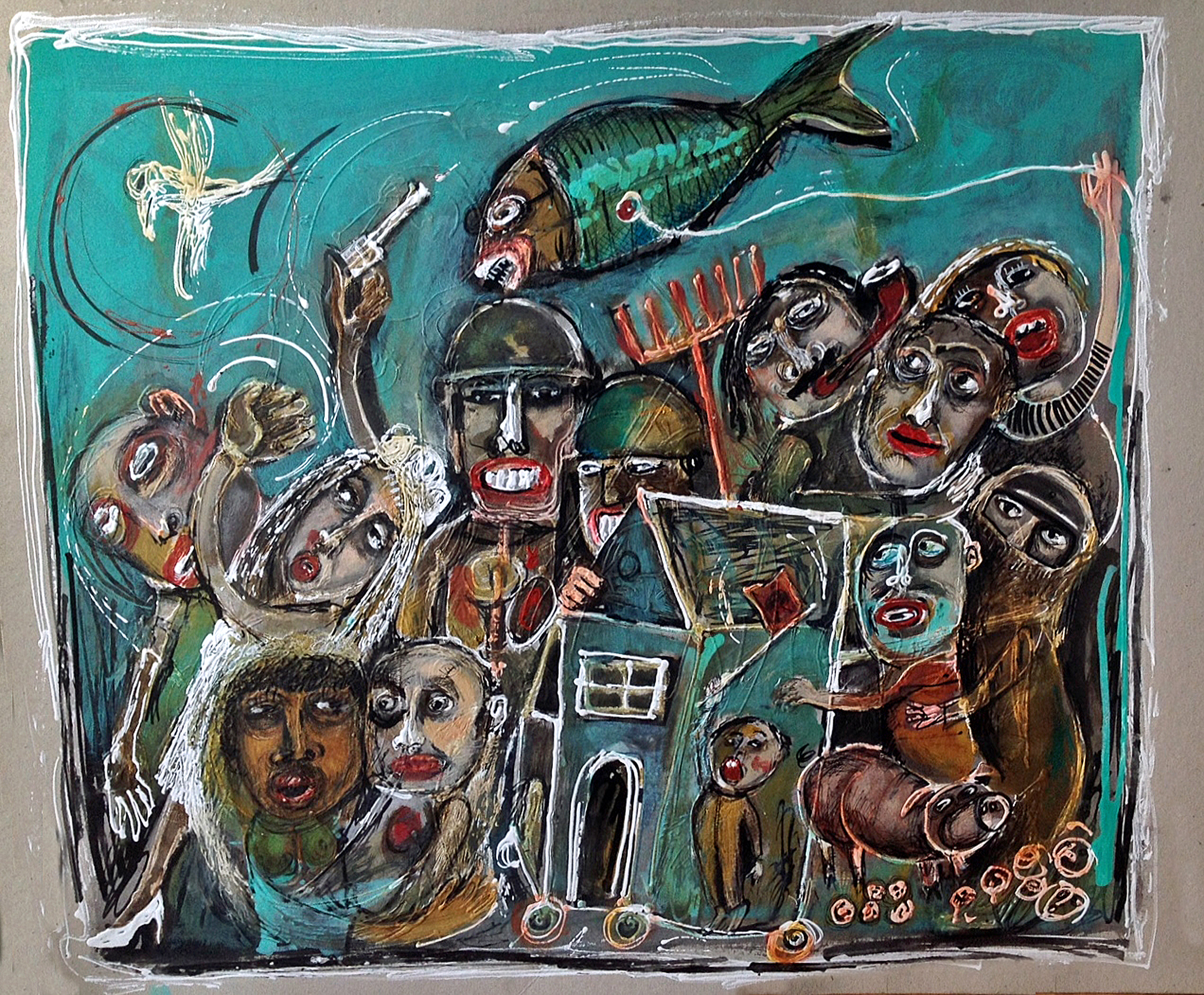
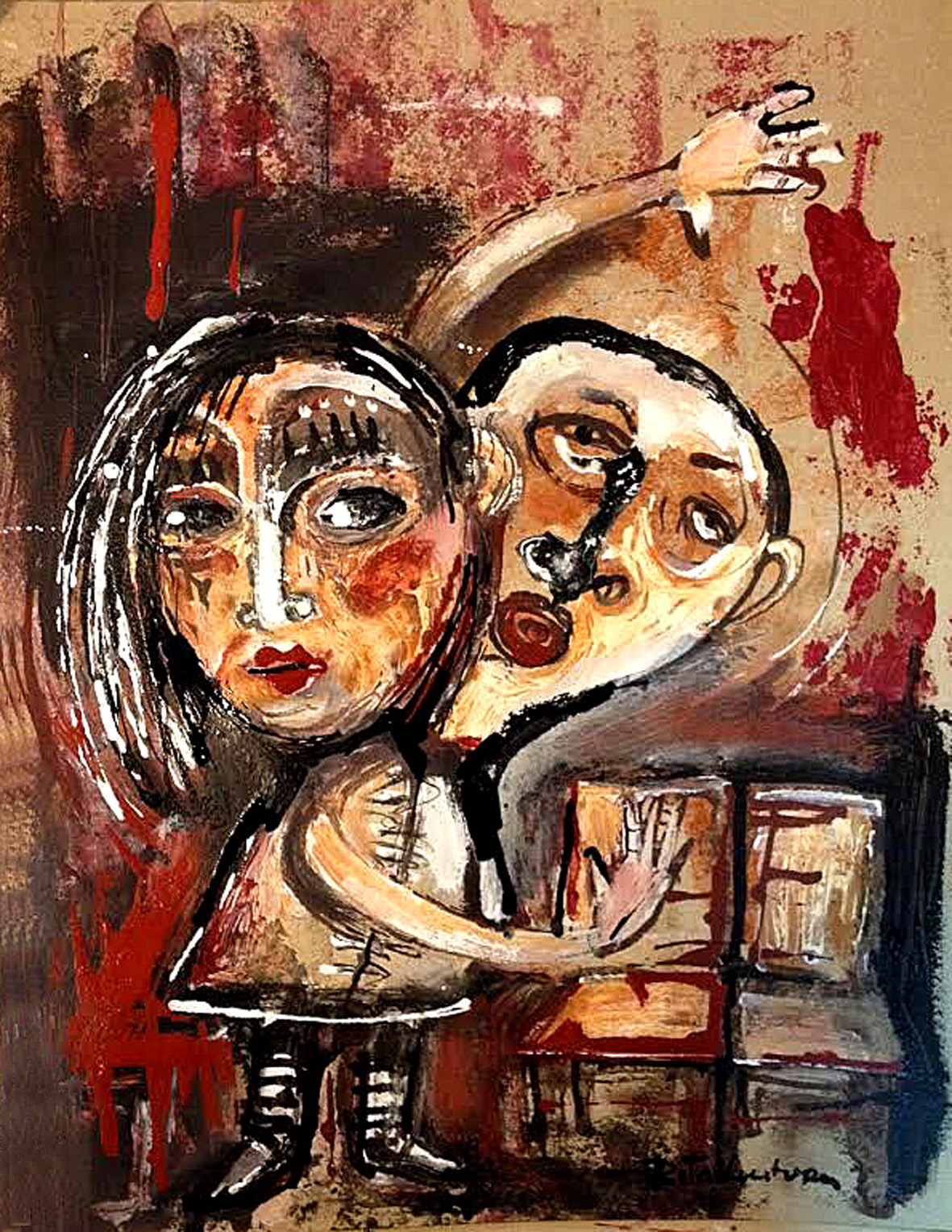
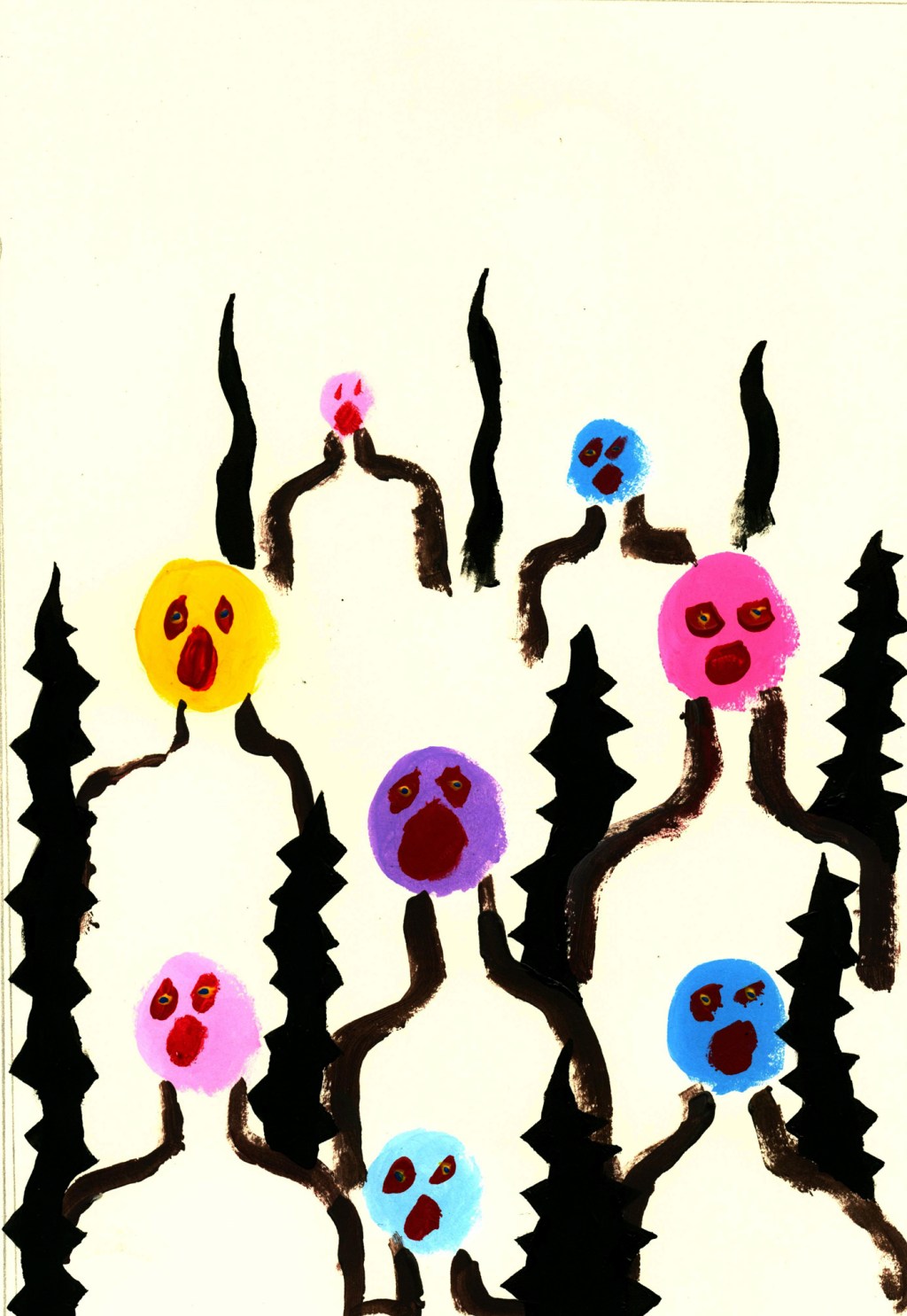
This Artist Showcase comes from Portuguese artist Rita Ventura, who starts each piece without rationalization – a few spots on the page, and then a wait to see what emerges. Is the figure happy, sad, anxious, is it a creature rather than a person? Find out more about her unique universe below.
Rita has responded to the questions in both English and Portuguese.
Romula e Remo
When did your interest in art/creating begin?
As a child, I never liked to play with dolls. Although everybody around me insisted and offered me several – and their only movement was to open and close their eyes, which were made of expressionless glass, I never took any pleasure or teaching from them. On the contrary, the best gift I could get was a box of paints, pens, pencils, and anything else that could stimulate my imagination.
At the age of three I entered the Lycée Français Charles Lepierre, whose curriculum included fine arts, and won my first painting prize at the age of five.
[Desde pequena nunca gostei de brincar com bonecas. Apesar de insistirem e de me terem oferecido várias, cuja única habilidade era abrirem e fecharem os olhos, feitos de vidro inexpressivo, nunca delas retirei qualquer prazer ou ensinamento. Pelo contrário, o melhor presente que me podiam dar era uma caixa de tintas, canetas, lápis e tudo que pudesse me estimular a imaginação.
Aos três anos ingressei no Lycée Français Charles Lepierre, cujo ensino promovia as artes plásticas, e aí ganhei o meu primeiro prémio de pintura aos cinco anos.]
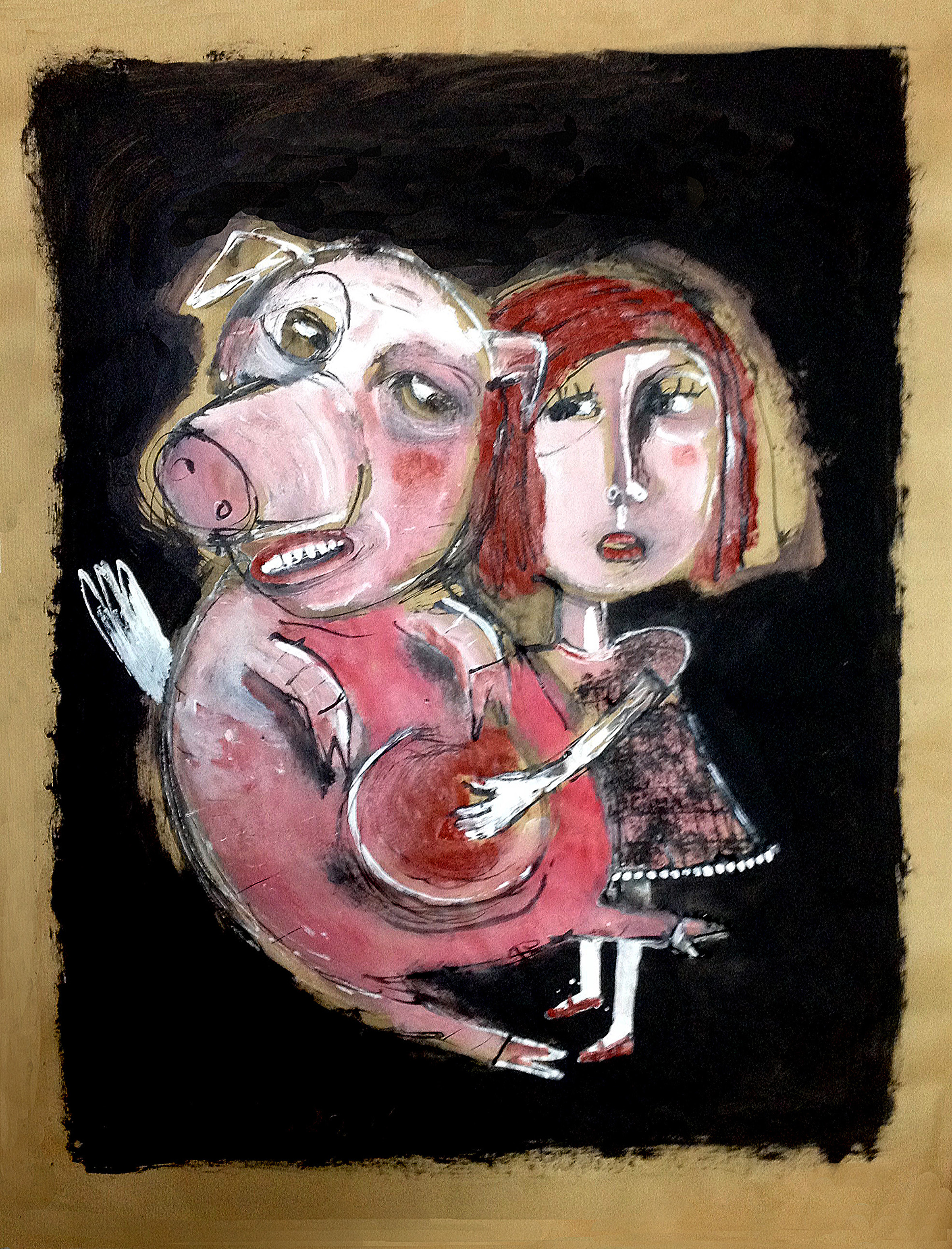
Pig Love
What is your starting point for each piece?
As a rule, my starting point is not thinking about anything, not rationalizing. I do not start with any previous studies or drawings. I choose a color that pleases me and I start by making a few random spots. Then I look at them and start discovering shapes, people or animals, causing them to ‘pop out.’ Only when I draw their eyes, I can tell by their expressions that they are trying to say something. Some are angry or evil, others play and laugh, but they all seem to interact. I am only the vehicle for them to tell their stories or concerns. Almost always very subtle and ironic, which amuses me a lot.
[Por regra, o meu ponto de partida é não pensar em nada, não racionalizar. Não faço estudos prévios, nem desenhos. Escolho uma cor que me agrade e começo por fazer umas manchas de forma aleatória. Depois olho para elas e começo a descobrir formas, pessoas ou bichos, fazendo-os “saírem cá para fora”. Só quando lhes desenho os olhos, percebo pelas suas expressões que estão a querer dizer algo. Alguns estão zangados ou são perversos, outros brincam e riem, mas todos parecem interagir. Apenas sou o veículo para que eles contem as suas histórias ou inquietações. Quase sempre de forma muito subtil e irónica, o que me diverte muito.]
Mulher Traçada
Who/what influences your work?
All that surrounds me, the environment, society in general, injustices, indignation in the face of moral or social problems (especially in the feminine universe) serves for my characters to highlight or to denounce current situations.
[Tudo aquilo que me rodeia, o ambiente, a sociedade em geral, as injustiças, a indignação face a problemas morais ou sociais (sobretudo no universo feminino) serve para os meus personagens alertarem ou denunciarem situações actuais.]
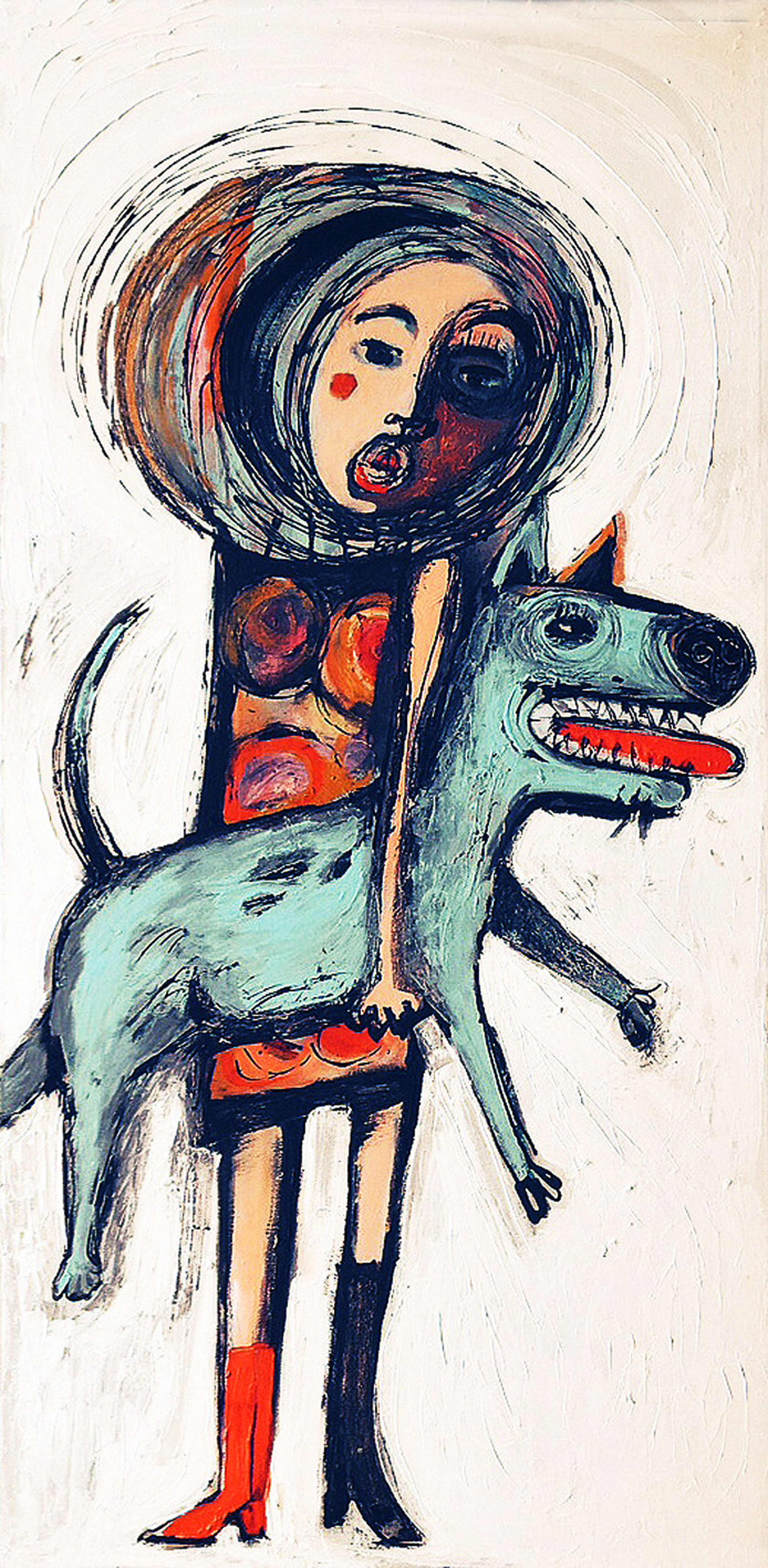
Mulher Com Cao Azul
What do you hope the viewer gets from your work?
It is very gratifying for me that people identify with my universe. A universe that makes you think or try to figure out what message I’m conveying.
Since language is not always direct (I like the nuances of the not so obvious), I find it very interesting that each person has his own reading, even if it is diametrically opposed. In fact, that’s what makes my pictures dynamic.
[É muito gratificante para mim que as pessoas se identifiquem no meu universo. Um universo que as faça pensar ou tentar descobrir que mensagem estou a passar.
Como a linguagem nem sempre é directa (agrada-me as nuances do não óbvio), acho muito interessante que cada pessoa tenha a sua própria leitura, mesmo que ela seja diametralmente oposta. Na verdade, é isso que torna os meus quadros dinâmicos.]
Europe
What do you think about the term outsider art? Is there a term that you think works better?
There has always been controversy surrounding the exact definition of Outsider Art. This has been happening since the awareness of the phenomenon. (As an English synonym for art brut Jean Dubuffet along with others, including Andre Breton, formed the Compagnie de l’Art Brut in 1948).
I think at the moment this term no longer makes sense only to refer to those who suffer from mental illness, isolation, those who are self-taught, or those who create compulsively and without rules.
In fact, I identify more with the term ‘intuitive artists’ or ‘intuitive art.’ Art produced by creators free from the influence of official styles, including the various vanguards, or the impositions of the art market. Often these artists produce in a very short time, difficult and complex works, often of great quality, never responding to the official art powers that be nor obeying previous studies (rough sketches, drawings, great reflections, etc.).
[Sempre houve controvérsia em torno da definição exacta de Outsider Art. Isso acontece desde que há consciência do fenómeno. (as an English synonym for art brut Jean Dubuffet Together with others, including Andre Breton, he formed the Compagnie de l’Art Brut in 1948 ).
Penso que actualmente esse termo deixou de fazer sentido apenas para referenciar aqueles que sofrem de doenças mentais, de isolamento, autodidatas que criam compulsivamente e sem regras .
Na verdade, identifico-me mais com o termo “artistas intuitivos” ou “arte intuitiva”. Uma arte produzida por criadores livres da influência de estilos oficiais, incluindo as diversas vanguardas, ou das imposições do mercado de arte. É frequente esses artistas produzirem em tempo muito curto, obras fortes e complexas, muitas vezes de grande qualidade, não respondendo nunca a canônes da arte oficial nem obedecendo a estudos prévios (esquissos, esboços, grandes reflexões, etc).]
Emocional Inteligence
What are you working on at the moment?
My job now is to explore mixed techniques on less noble supports, such as wrapping paper, crafts, etc.
Since I am impatient and afraid that my characters will run away, I like more and more to use fast and definitive materials. Often, instead of brushes, I turn to instruments invented by me where I make my cocktails of paints. I like the unpredictability of joining materials. There is a bit of magic or alchemy in the middle of it all…
[O meu trabalho consiste agora em explorar técnicas mistas em suportes menos nobres, tais como papel de embrulho, crafts, etc.
Como sou impaciente e tenho receio que os meus personagens fujam, gosto cada vez mais de materiais rápidos e definitivos. Muitas vezes, em vez de pincéis, recorro a instrumentos inventados por mim onde faço os meus cocktails de tintas. Agrada-me a imprevisibilidade da junção de materiais. Há um pouco de magia ou alquimia no meio de tudo isto…]
Brinquedo a Pilhas
Where do you see your work taking you in the future?
Where my work will take me in the future is unknown, but I hope I can continue to paint or create. That’s what gives me pleasure and peace. But also an uneasiness to rediscover myself more each time.
Just as I do not question the color of my skin, I also do not question the fact that I am a plastic artist and where it can lead me. It was not a choice but an acceptance of an often unforeseeable life. Whether this is comfortable or not, especially in the country where I live, where Outsider Art is not much publicized or valued, is another question. Luckily nowadays, with globalization, there are no longer insurmountable barriers and blogs like this can be a good window of opportunity.
But what would life be without this risk and the ability to reverse it when it suits us? For many it will be insecurity. For me it’s called Freedom.
[Onde o me trabalho me levará no futuro é uma incógnita, mas espero conseguir continuar sempre a pintar ou a criar. É isso que me dá prazer e paz. Mas também uma inquietação de me redescobrir cada vez mais.
Assim como não questiono a cor da minha pele, também não questiono o facto de ser artista plástica e onde isso me pode levar. Não se tratou de uma escolha, mas sim da aceitação de uma vida frequentemente imprevisível. Se isso é ou não confortável, sobretudo no país em que vivo, em que a Outsider Art não é muito divulgada nem valorizada, já é outra questão. Felizmente que hoje em dia, com a globalização, já não existem barreiras intransponíveis e blogues como este podem ser uma boa janela de oportunidades.
Mas o que seria a vida sem este risco e a capacidade de a reverter quando isso nos aprouver? Para muitos será a insegurança. Para mim chama-se Liberdade.]
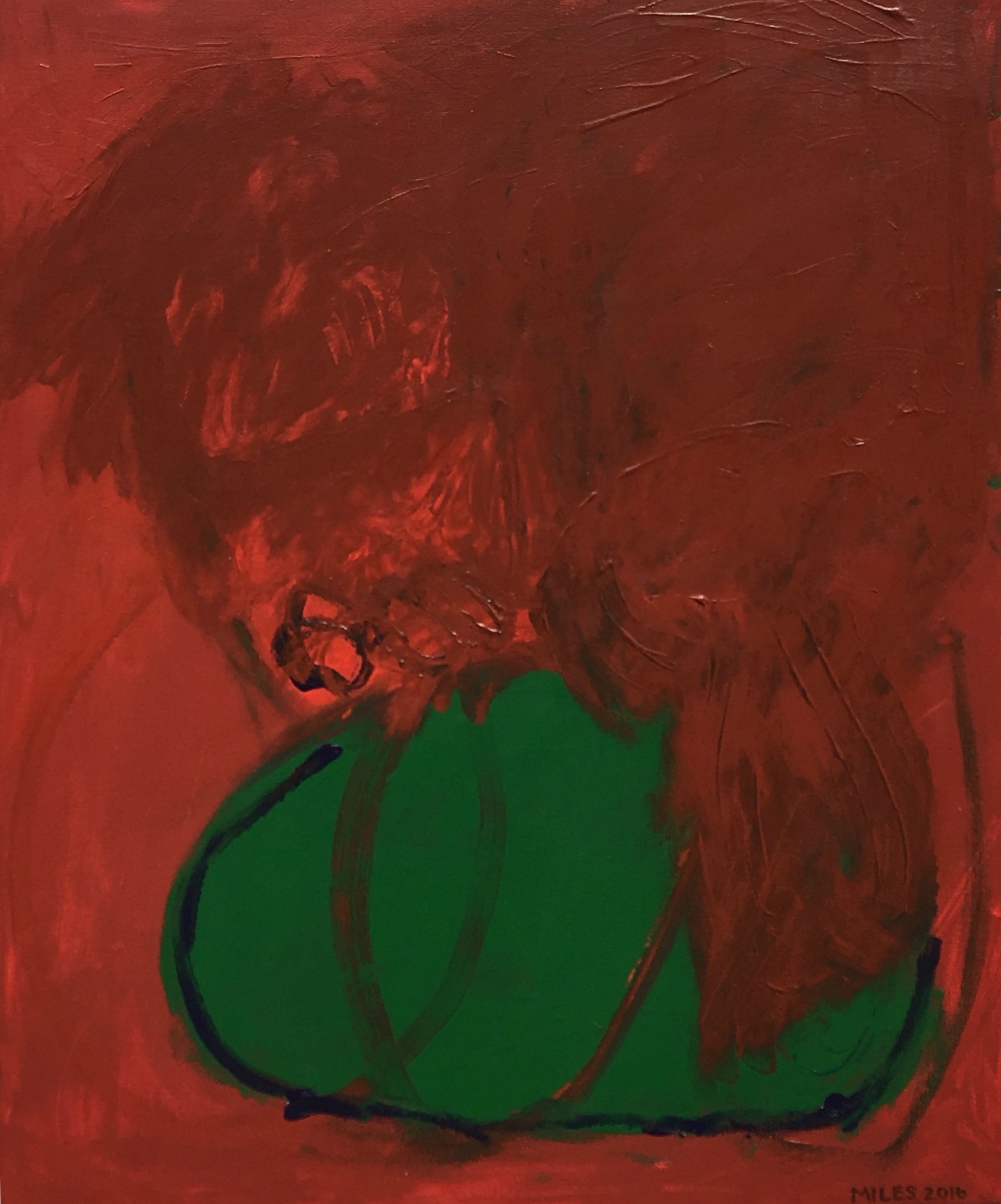
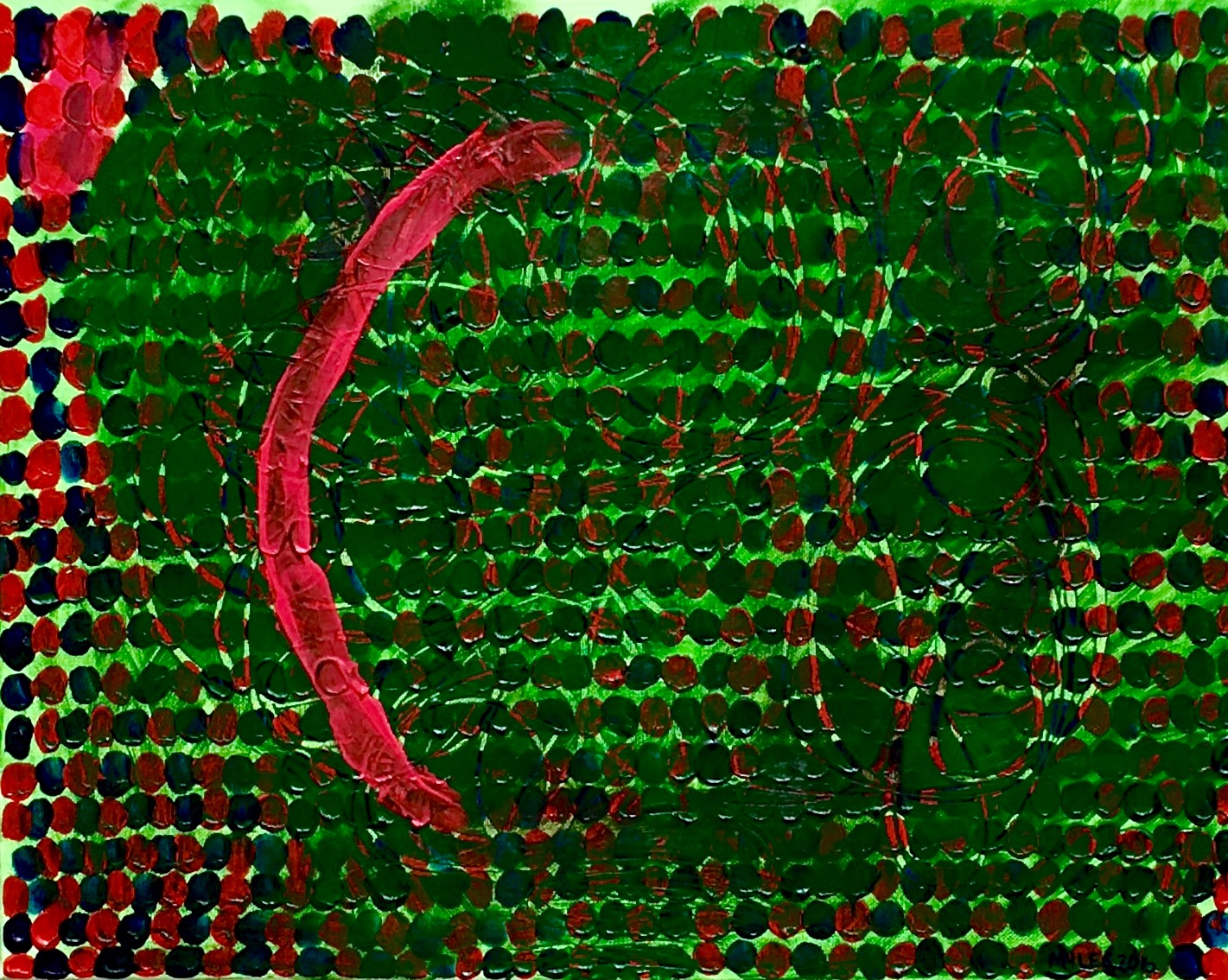
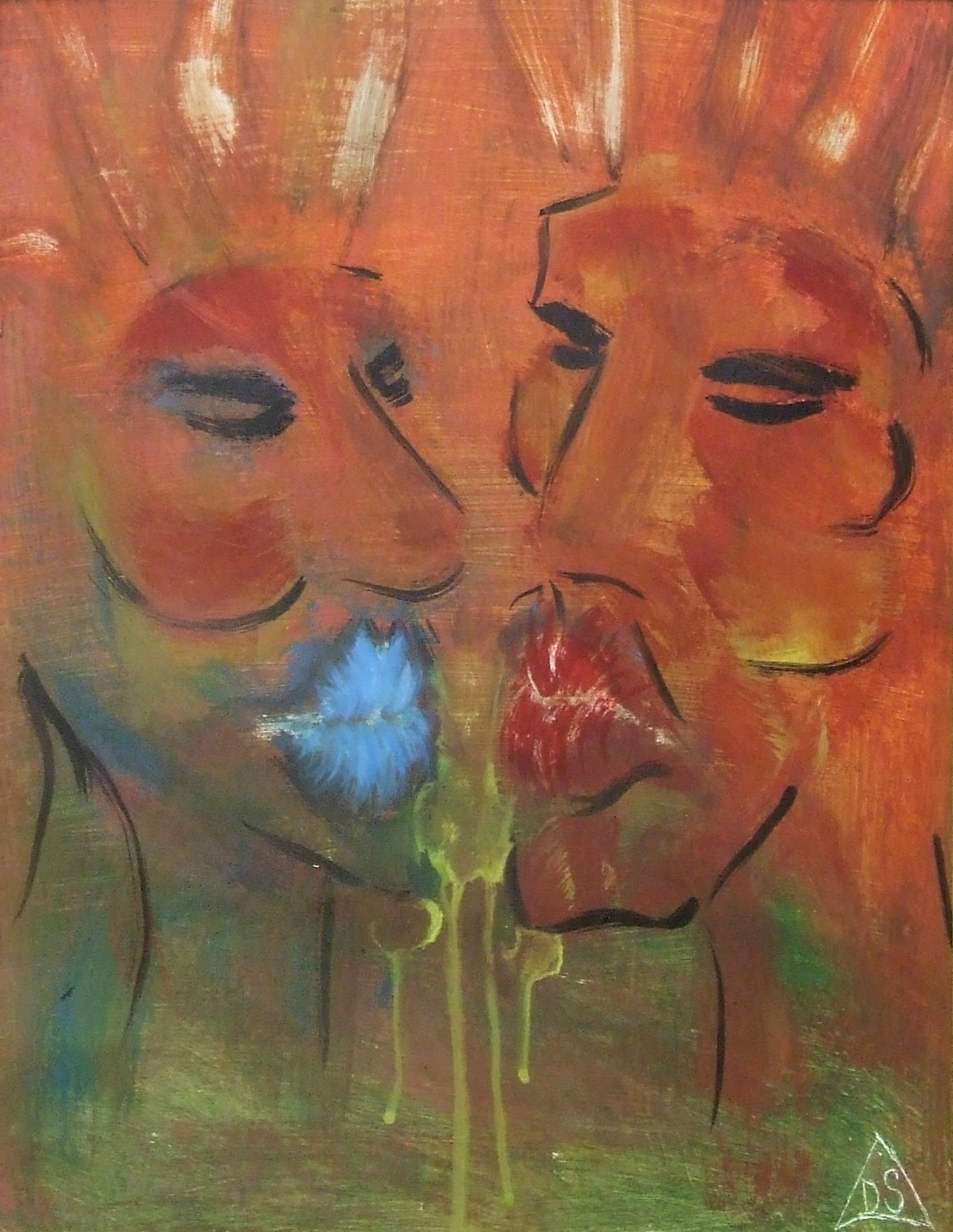
Following the blog’s 5th anniversary celebratory exhibitions and all they encompassed, I am very pleased to bring you the first Artist Showcase of 2017! This time, we get the chance to hear all about artist Luciana Mile’s work.
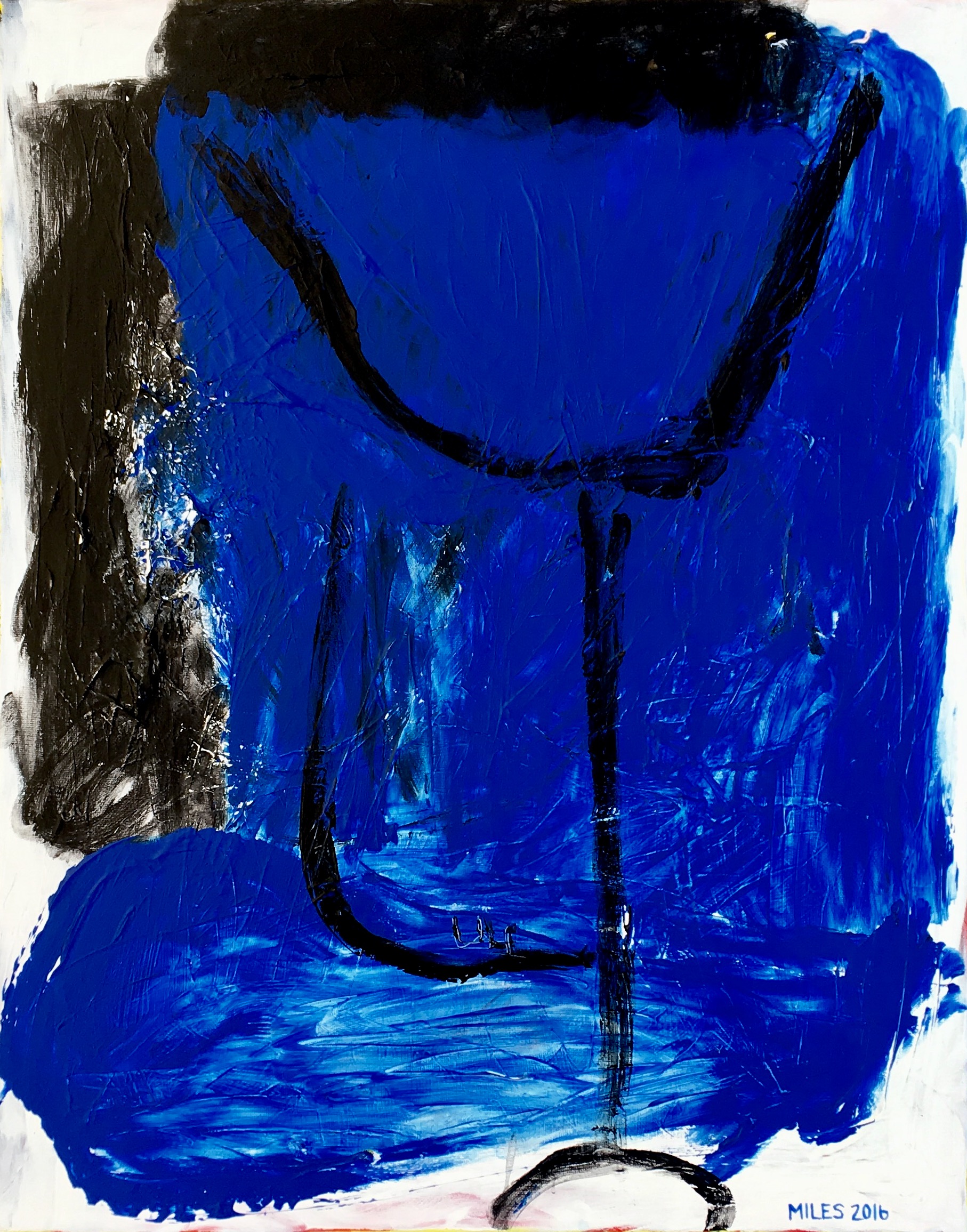
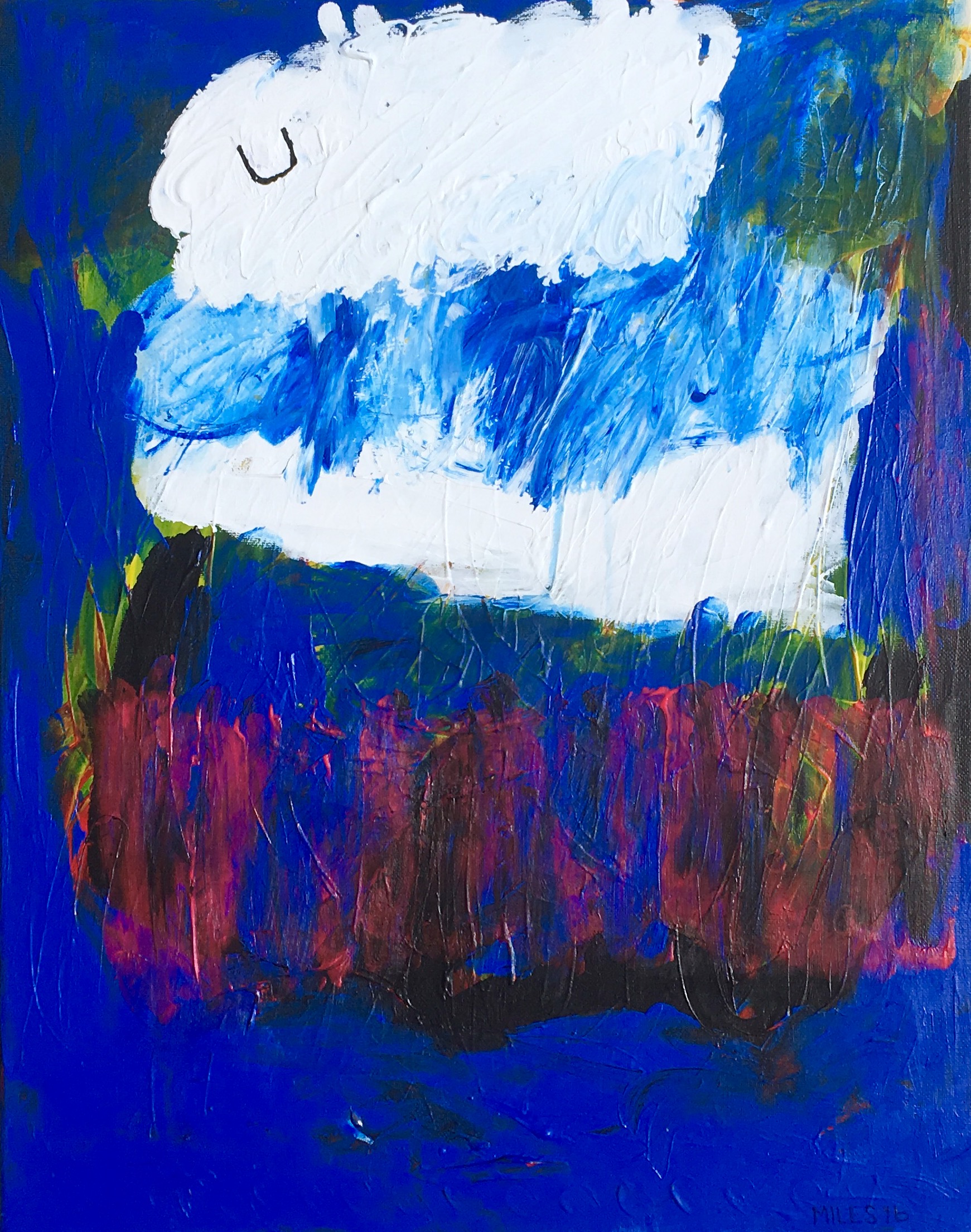
Luciana Miles, Untitled
When did your interest in art/creating begin?
I’ve always been interested in some form of art. I spent a good amount of my life in the theatre. My interest in visual art began in middle school, but didn’t really come into fruition until 2010 or 2011.
Luciana Miles, Untitled
What is your starting point for each piece?
My starting point is a blank canvas.
Luciana Miles, Untitled
Who/what influences your work?
I think everything in my small universe influences my work, but I really love Dada.
Luciana Miles, Untitled
What do you hope the viewer gets from your work?
I don’t really look too far past the completion stage. Once a painting is done, I no longer consider it mine.
Luciana Miles, Untitled
What do you think about the term outsider art? Is there a term that you think works better?
I think it’s fine. I don’t generally like labels but I understand their purpose.
Luciana Miles, Untitled
What are you working on at the moment?
The next painting.
Luciana Miles, Untitled
Where do you see your work taking you in the future?
My recent co-curation of Jazz Up Your Lizard, the exhibition of work by Steve Murison that celebrate five years’ of the blog, got me thinking again about what it means to be a curator of outsider art.
Jazz Up Your Lizard at Gallery Lock In
In previous posts, I have mentioned that the role of a curator is to display work that fits into the ‘outsider’ category in exactly the same way as you would go about displaying ‘mainstream’ art. White cube, professional frames, even spacing, measurements and accuracy, pristine walls. The idea being that art is art is art, regardless of what ‘category’ it fits into and regardless of who created it. It should be just art. And of course, the best way to break down any distinctions is to hold the work in the same stead when it comes to showing it to the public.
However, certain factors have changed my mind. Whilst curating Steve’s show, I suddenly had a bit of a revelation. It was a revelation that was partly the result of the existing practicalities of the gallery space, but also a revelation in what it means to curate work that is unique, distinctive, and alive beyond the surface it has been created on.
Jazz Up Your Lizard at Gallery Lock In
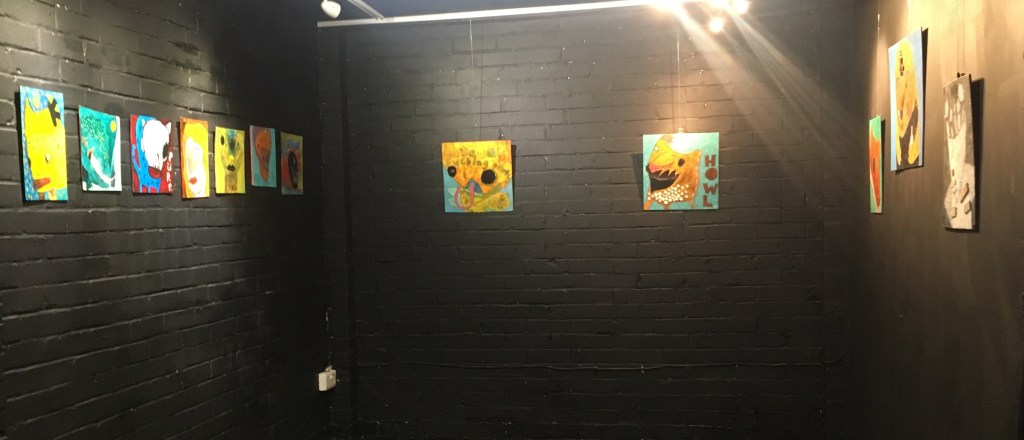
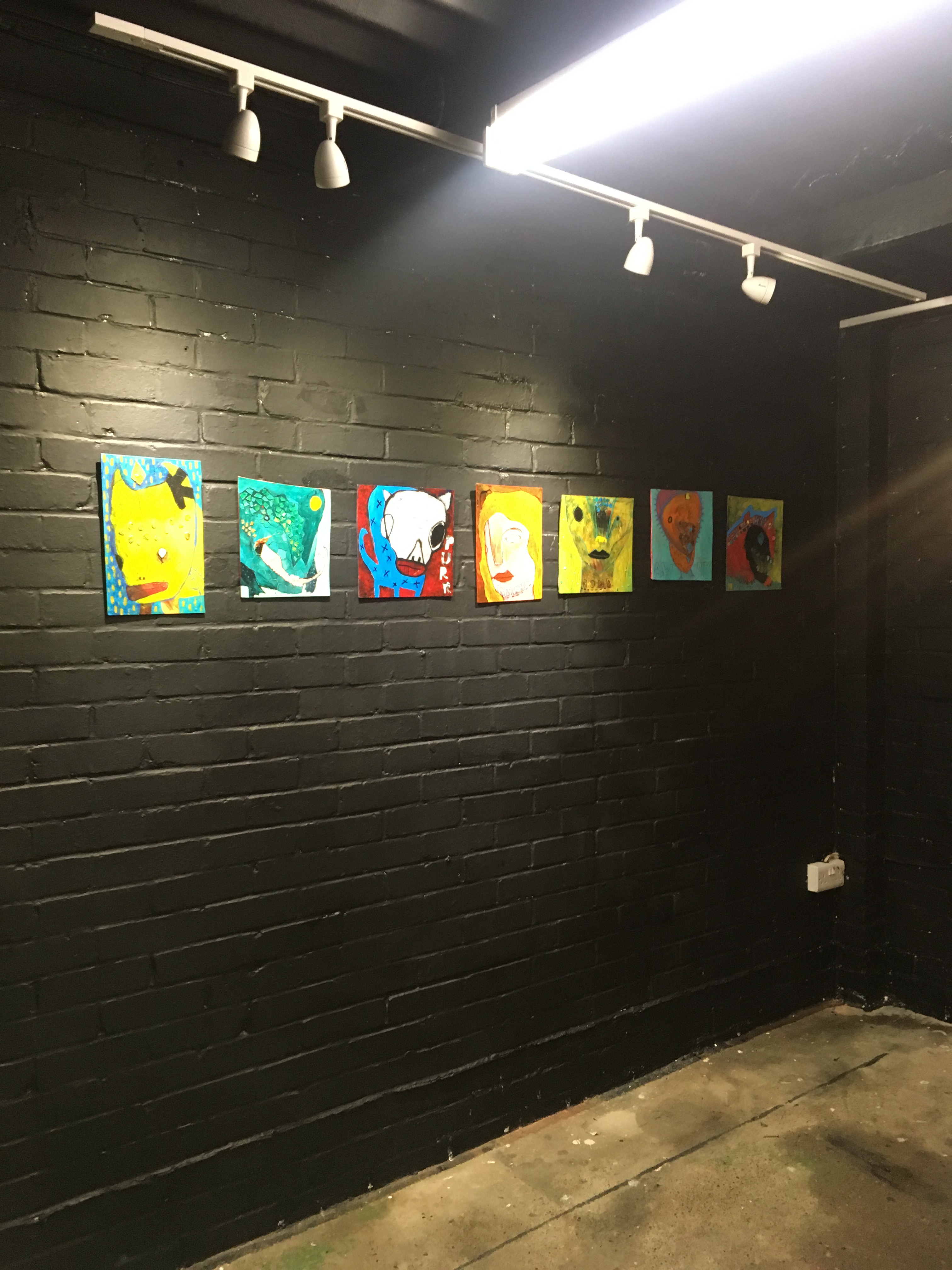
Gallery Lock In, the venue for the exhibition, is unique in itself. From the outside, it’s just two garages, and when the doors are down, you wouldn’t even be able to guess what’s going on inside. But manager and curator Beth Troakes has done a fantastic job of creating a unique, cavernous, characterful space. It’s not a bland white cube. It has life as a space in it’s own right – even without any work on the walls.
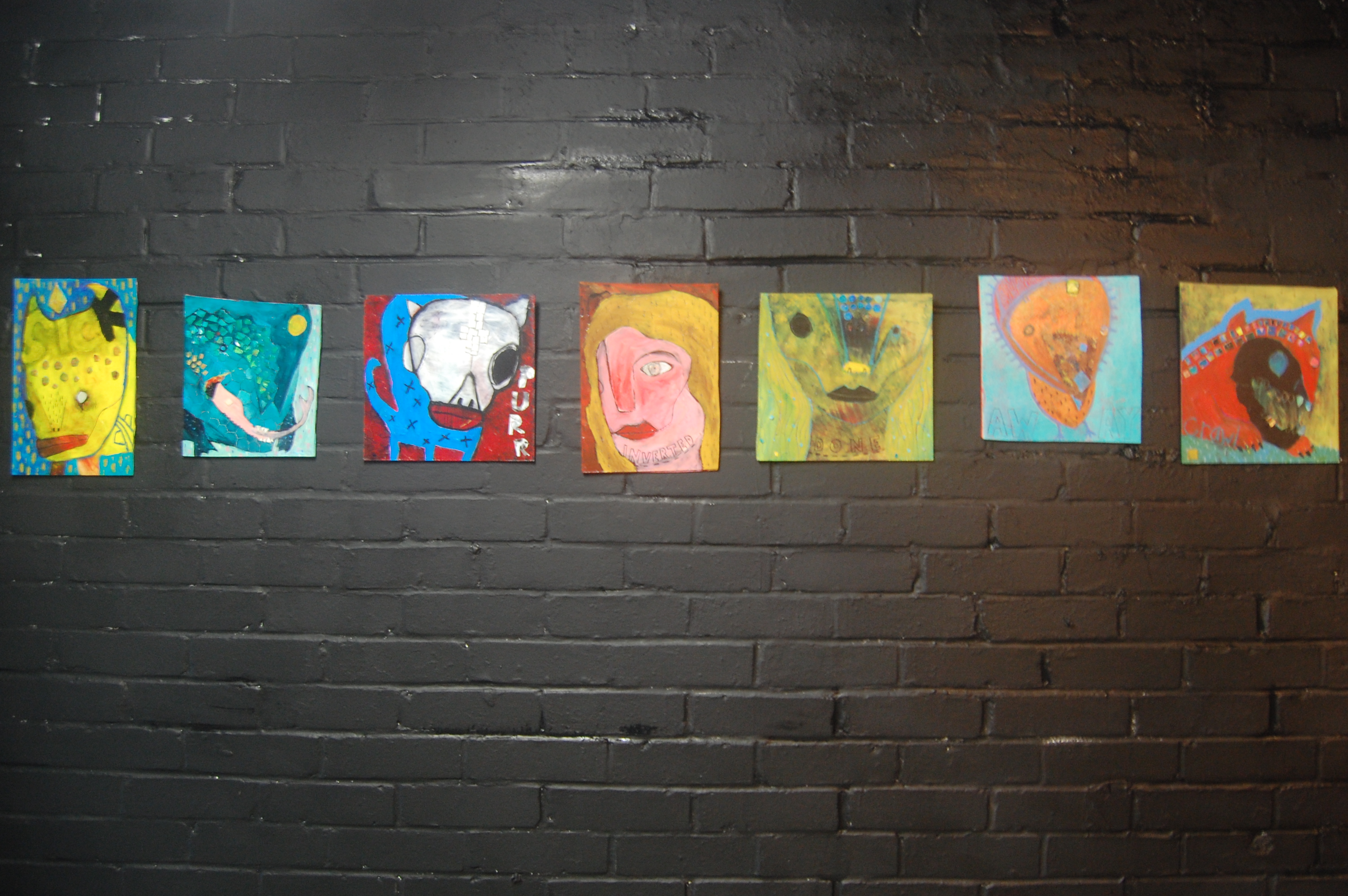
The walls in the gallery had been painted black for a previous exhibition, and we decided to leave them like that. Steve’s work is vibrant, and on the surface quite jolly, but it hides hints of darker inferences. I was apprehensive at first, given the thoughts I’d outlined in previous posts. In fact, what we managed to create was an exhibition that was a whole new piece of art in itself. The unique character of the gallery really complemented Steve’s equally unique work. They played together in a way that brought out the best in both.
Jazz Up Your Lizard at Gallery Lock In
Perhaps everything I’d insisted about white cube spaces was actually a huge generalisation. There is work that is better complemented, better exhibited, in spaces that are equally as edgy. Sure, Steve’s work would have looked great in a white washed, square gallery space – because his work is great full stop. But in Gallery Lock In, it looked like it belonged there. It looked comfortable, at home.
Maybe we are doing a disservice to some works by trying to squeeze them into a space that’s the wrong size, the wrong shape, the wrong fit. Maybe the purpose of an outsider art curator – or in fact, any curator – is to find (or make) a space that works with the art, shaping the place to fit the work, rather than the other way round.
It would be great to know what you think about this – leave your comments below!
If you’re a follower of this blog, you may know that we opened an exhibition of work by Scottish artist Steve Murison last night (1st February) at Gallery Lock In, Brighton (UK). The exhibition so far has been a huge success, with a new record for Gallery Lock In for the number of people who attended the opening night. If you haven’t seen it already, it continues until 5th February, 1-7pm daily, with a special ‘Werewolf Swap Shop’ taking place on Saturday 4th February. Read on for more!
The Cat Cave, Jazz Up Your Lizard at Gallery Lock In
The exhibition is the second physical exhibition I have co-curated on behalf of kdoutsiderart.com, but the first solo show, and the first where I have been working very closely with the artist during all stages of the project.
I have wanted to exhibit Steve’s work for a number of years, but often timing hasn’t been right, or practicalities have got in the way. However, the five year anniversary of this blog, and the kind donation of gallery space from Beth Troakes (Gallery Lock In) provided the perfect combination of right timing and most importantly – a venue!
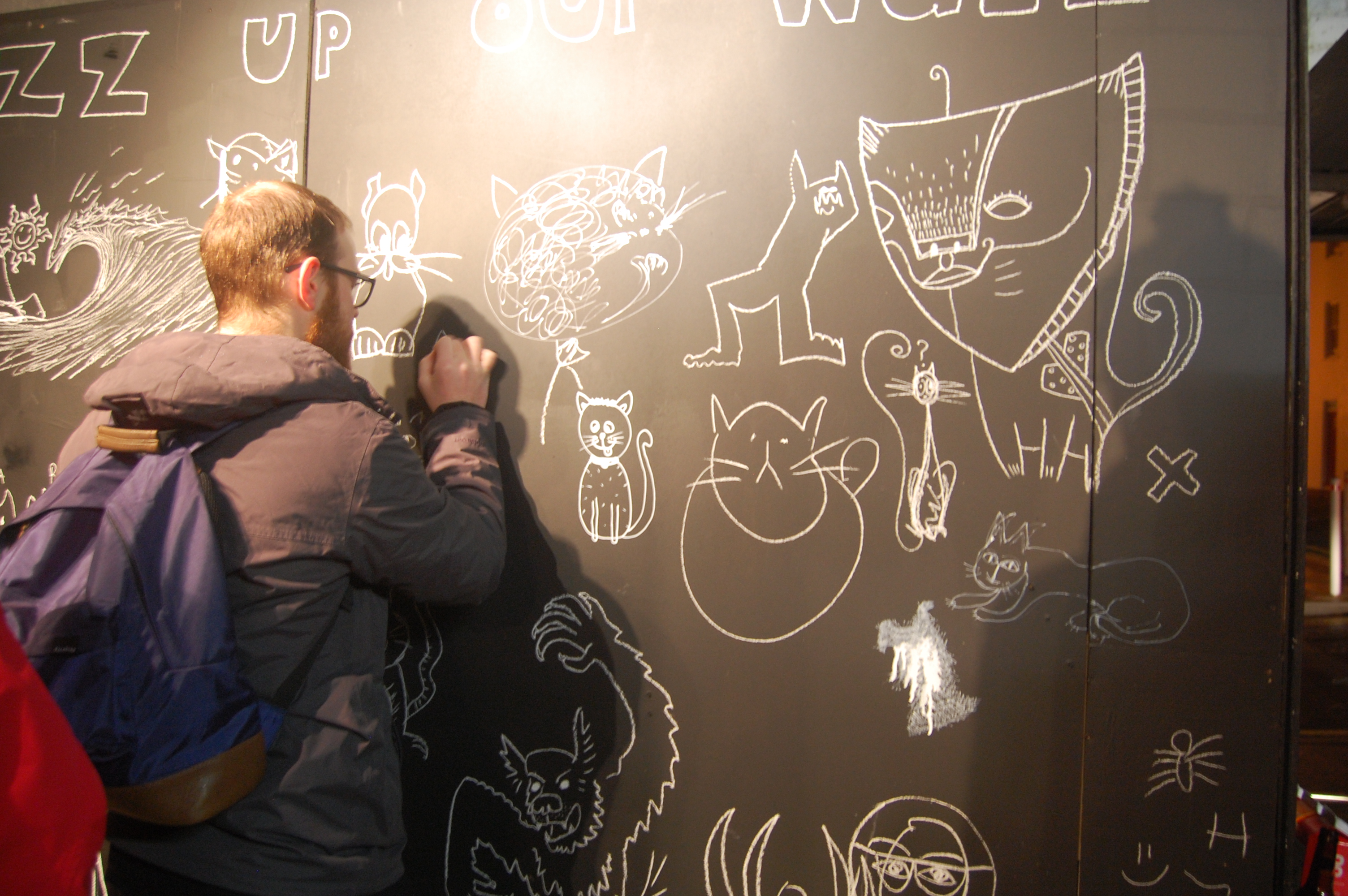
The interactive chalk cat wall, Jazz Up Your Lizard
The initial idea came about in late 2016, which gave us quite a short schedule to work to. We agreed that Steve would travel down from Aberdeen with his work, and we would hang and open the show on the Wednesday – quite a risk! But it was a risk that astronomically paid off. On the opening night, the show was incredibly well received, with people eager to see Steve’s curious works in the flesh and, sometimes more importantly, meet the artist behind them.
Although Steve’s ethos is incredibly humbling – he is adamant anyone should be able to own good art, regardless of how much money they have – we managed to sell six pieces on the first night. But there was a part of the show that wasn’t for sale – the Cat Cave. To take away one of his ‘Cats of the Roman Empire’, Steve asks for a drawing of a werewolf in return. To honour this tradition, we are holding a ‘Werewolf Swap Shop’ on Saturday 4th February, inviting people of all ages to join Steve in the gallery, draw their own interpretation of a werewolf, and leave with one of Steve’s characterful cats.
Cats of the Roman Empire, Jazz Up Your Lizard
Jazz Up Your Lizard has so far been very well received, with press coverage in the Brighton Argus and Viva Brighton (click here to read the article). Thank you so much to everyone who came along on the opening night, and if you haven’t yet seen the show, there’s still time! But most of all, I want to say a huge thank you to Steve for his unstoppable and uninhibited creation of amazing work, his incredibly helpful and laid back approach to the exhibition, and for agreeing to take part in the show in the first place!
Werewolf Swap Shop The Werewolf Swap Shop is taking place in the gallery space on Saturday 4th February. Come along and exchange a drawing of a werewolf for a Cat of the Roman Empire! You can also be creative and leave your mark on our chalk cat wall.
Jazz Up Your Lizard: an exhibition of work by Steve Murison continues until Sunday 5th February (1-7pm) at Gallery Lock In, Little Western Street, Brighton, BN1 2PU.
Alongside a physical exhibition of work by Scottish artist Steve Murison in Brighton in early February, there is also the opportunity to see work by many of the artists who have featured on the blog since its inception.
Danny Sumbler, Alchemical Romance
‘kdoutsiderart: 5 Years‘ is an online showcase of work by 21 artists who have had an artists’ showcase at some point on kdoutsiderart.com.
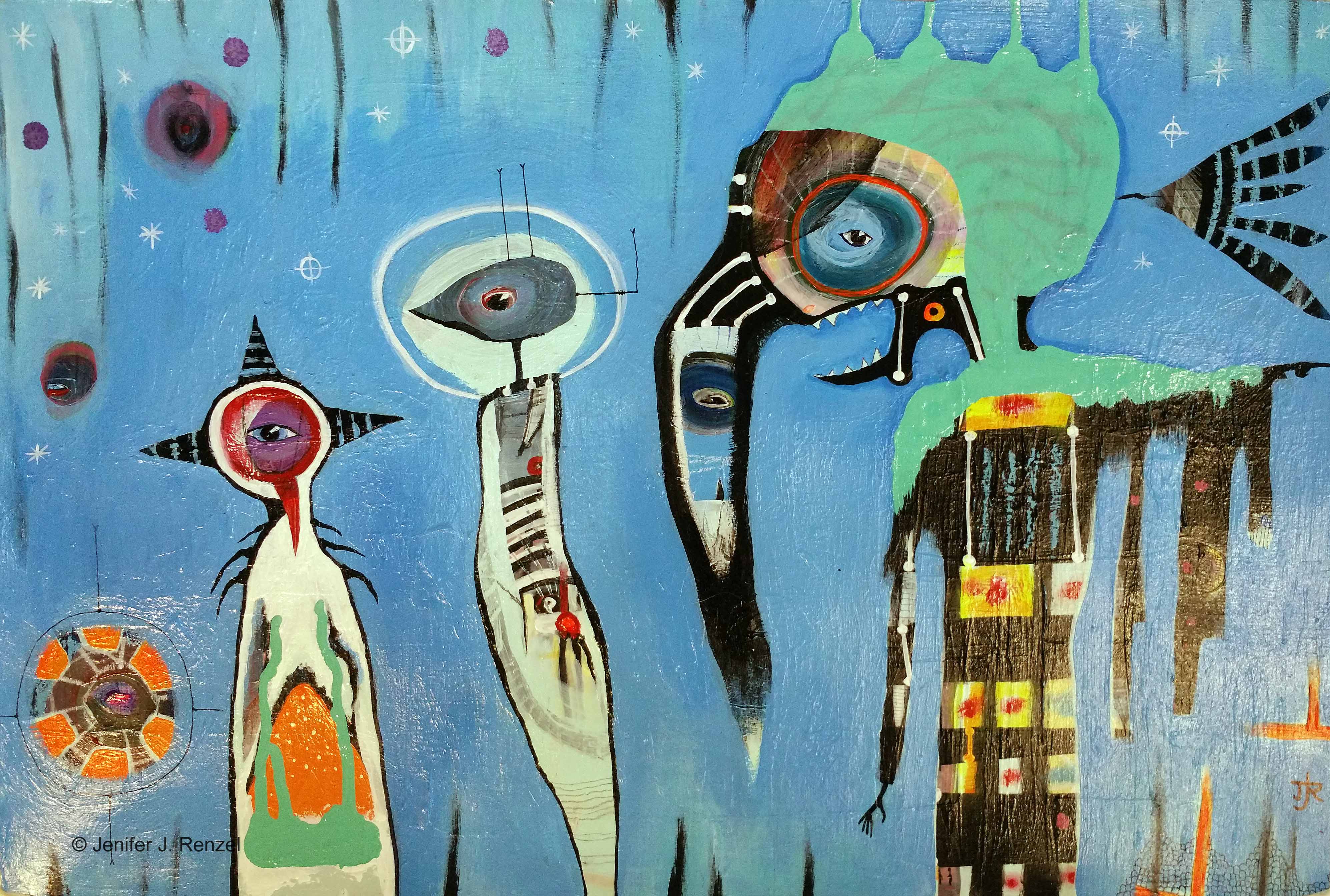
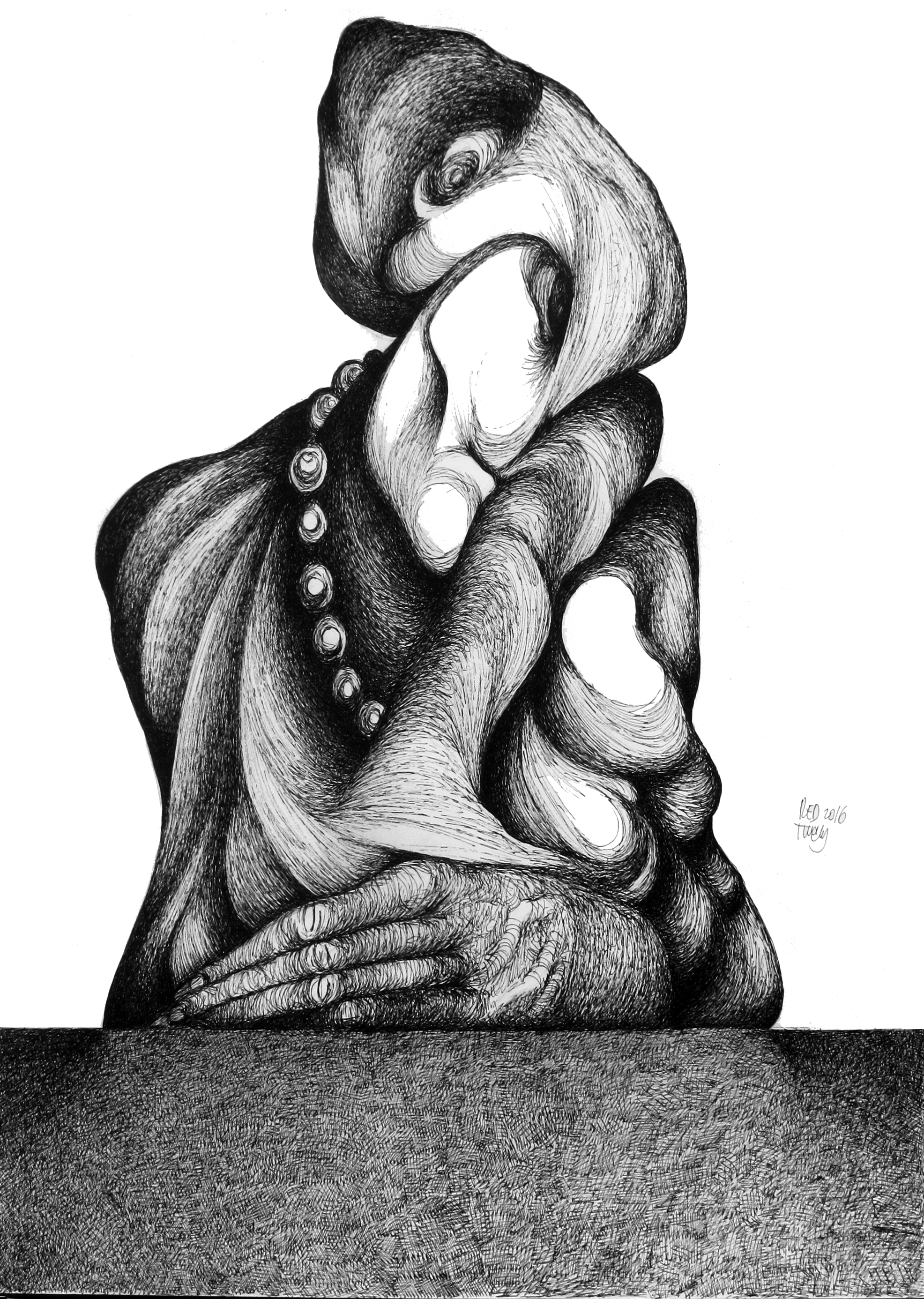
The work is diverse and varied: from a textile piece by Anthony Stevens, to Jenifer Renzel’s futuristic totem pole painting. There’s an intricate monochrome drawing by Red Tweny and mosaic ‘savage’ 3D figures by Pamela Irving.
Judy Shreve, The Bird Listener
The online exhibition is a big thank you to all of the artists who have shared their work on the blog at some point, for letting us into their world and enabling us to enjoy their unique creativity.
As part of the 5 year anniversary of kdoutsiderart.com, an exhibition of vibrant works by Scottish artist Steve Murison will open at Gallery Lock In, Brighton (UK), on 1st February.
“I think about skulls all the time, inverted crosses, mouldering decay. I picture burning beasts howling with intricate jewelled crowns. Have you ever witnessed something go horribly wrong? I haven’t looked at much of other peoples art for a few years, my simple line is unfurling and my cerulean blue stained hands give a hearty wave your way. Rum and coke. Violent Science fiction. The folk I love. Endless coffee on Sunday mornings. Bukowski. McCarthy. Tool. All my days smeared across ragged boards.” – Steve Murison
It’s Never Just a Cat
Steve has had work exhibited as part of Creative Future’s Impact Art Fair in London in 2013, and as part of previous kdoutsiderart exhibition, Miraculous Urgency, in Brighton in 2015.
A Lizard Hung By Sickly Moon
I first posted about Steve Murison back in August 2013, after seeing his work at the Impact Art Fair. His work is vibrant, somewhat naive in form, but incredibly deep in content. His characters take the form of animals – real and fantastical, and his pieces are tagged with comical but relatable titles – think We Found Your Idiot Skull in a Volcano, or A Petrified Heart in a Splintered Box.
We Found Your Idiot Skull in a Volcano
The exhibition space will also include a Werewolf Swap Shop, where you can bag yourself a unique cat painting by Steve in exchange for your own interpretation of a werewolf. Steve collects drawings of werewolves, so this is an exciting opportunity to share your work with Steve and take away your own little piece of his creativity.
Whisper Some More You Sweet Devil
Jazz Up Your Lizard will open on 1st February, 7 – 9pm, and will continue until 5th February, opening 1 – 7pm daily.
Gallery Lock In
Little Western Street
Brighton
East Sussex
BN1 2PU
Happy New Year! January 2017 is an exciting time for kdoutsiderart.com, as it marks 5 years since the very very first blog post! To mark this occasion, there will be two exciting things happening over the next couple of months. Before I go into these, I would just like to take this opportunity to thank all of the artists who have shared their work on the blog throughout the past 5 years, and a big thanks also goes to all of you readers – you’ve all given me reason to carry on writing when I felt I was sending stuff out into the abyss!
To thank you all, and to celebrate five years, I wanted to produce something physical in addition to something that is accessible from all over the world. For this reason, there will be two different exhibitions happening over the next couple of months. The first is a physical exhibition in Brighton, UK, showcasing the work of Scottish artist Steve Murison, and the second is an online exhibition featuring work by many of the artists who have appeared on this blog over the past five years.
Jazz Up Your Lizard: an exhibition of work by Steve Murison Gallery Lock In, Brighton, United Kingdom 1st – 5th February 2017
A Lizard Hung by a Sickly Moon
I am so pleased to announce the opening of an exhibition of work by Scottish artist Steve Murison in collaboration with Gallery Lock In, Brighton (UK) in early February to mark the 5 year anniversary of the blog.
I have been a big fan of Steve’s work ever since I first saw it at Creative Future’s Impact Art Fair in 2013. Since then, I have featured Steve’s work on kdoutsiderart, and have a steadily growing collection of it at home. Steve’s work is vibrant, somewhat naive in form, but incredibly deep in content. His characters take the form of animals – real and fantastical, and his pieces are tagged with comical but relatable titles.
A Petrified Heart in a Splintered Box
The exhibition opens on 1st February 2017, 7 – 9pm.
It continues from 2nd – 5th February, 1 – 7pm daily.
Gallery Lock In
Little Western Street
Brighton
BN1 2PU
kdoutsiderart: 5 years Online exhibition Opens 1st January 2017
Jenifer Renzel, Totem Pointing East
I am equally as pleased to announce the launch of a new online exhibition to mark the anniversary. ‘kdoutsiderart: 5 Years’ will feature work by many of the artists who have had artists’ showcases on the blog since its inception. I asked each artist to send an image of their work to be included in the online display as thank you for sharing their work at some point over the past 5 years.
Red Tweny, Looking out on the Balcony
The exhibition is incredibly diverse, including mixed media pieces, paintings, drawings, computer-generated art and sculpture.
This week’s Artist Showcase features the work of Levan Amashukeli. If you relate in some way to the term ‘outsider art’, email kdoutsiderart@yahoo.com to discuss a feature on your work.
Cat in a Bag
When did your interest in art/creating begin?
My interest in art and painting started when I was 3, maybe 4 years old. My father was a self-taught artist, so I often sat beside him while he painted. That was also when I understood and learnt how to mix colors and small details. Then I started to paint myself and the stone rolled down.
Ego
What is your starting point for each piece?
My starting point for each piece is a line, a free, unstructured line. Then I stop to see what will come out of it and – something magical can start with that line. Sometimes I let my 2 year old daughter Tamara start the process and then I continue and finish it. It’s very interesting and exciting to start from pure unknowns.
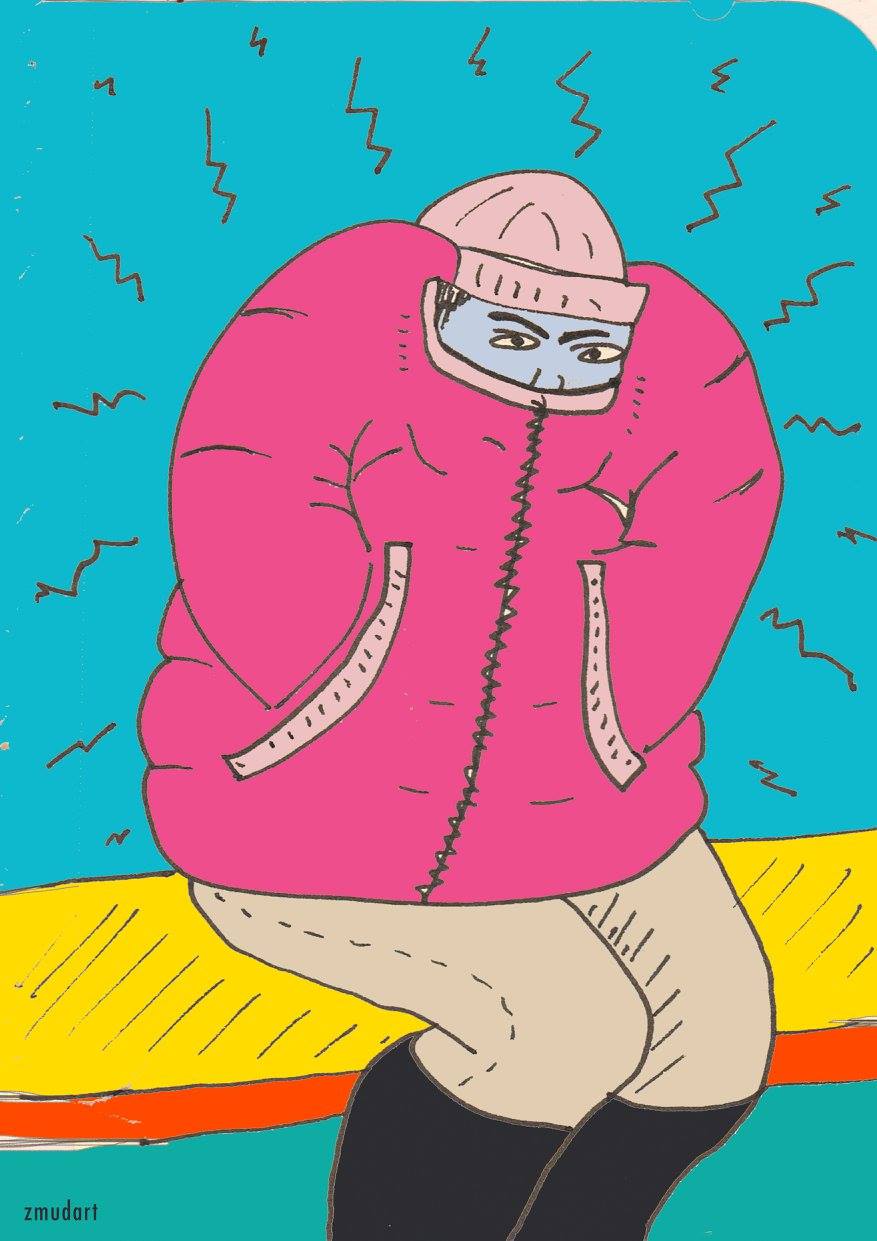
Cold
Who/what influences your work?
My art is influenced mainly by artists like Franz Marc, Otto Muller, Egon Schiele, Dali, Magritte and many others. All my childhood I used to read books about art and essays by artists I admire. German Expressionism with its colors, and Surrealism with its forms have a big influence on my art.
Hich Kok
What do you hope the viewer gets from your work?
I hope the viewers will see my art and interpret it in their own ways. My art is an universal narrative and it can be interpreted in different ways. Sometimes I collaborate with a viewer and change the name of my art piece, depending on the interpretation that is interesting for the viewer.
Mike or Not
What do you think about the term outsider art? Is there a term that you think works better?
My favorite novel is ‘The Outsider’ by Albert Camus. This novel gave me the inspiration for the term ‘outsider art’ and I like it very much. I think that every artist is an outsider at the beginning, then they start to study at art academies and become influenced by other artists. I will add something like Pure Art or Digital Brut to Digital Outsider Art.
Pressure
What are you working on at the moment?
Now I’m working on a joint project with French photographer Sebastien Canaud. This project is a mix of photography and digital art; classic black and white versus digital colors. Photos taken in an asylum near Tbilisi, Georgia, will be reinterpreted differently, newly and more colorfully. The exhibition will take place in February 2017.
They Think I’m Ugly
Where do you see your work taking you in the future?
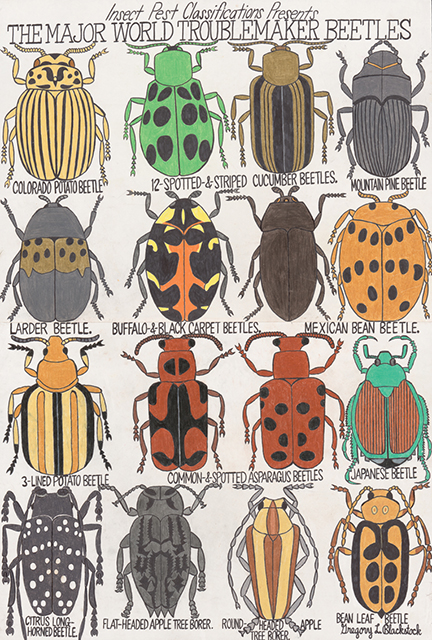
I have wanted to write about this subject for a while now, ever since I first received a wall calendar of a certain artist’s work as a Christmas present over two years ago. Since then, I have been lucky enough to see this artist’s work in person at the Paris Outsider Art Fair in 2015, and have now purchased another calendar, four notepads and a book. The artist is Gregory Blackstock, a ‘savant’ with a gift for drawing.
Gregory Blackstock, The Major World Troublemaker Beetles, Image courtesy of Raw Vision
This post will focus on the phenomenon that is the ‘savant’ artist. The term savant is most commonly used to describe someone with a developmental disability (for example autism) who demonstrates extraordinary abilities. Savants like Blackstock have long been considered within the outsider art bracket, and have been represented in various exhibitions on the subject, including the Hayward Gallery’s ‘Alternative Guide to the Universe’ in 2013.
The most famous savant outside of the art world is likely to be Kim Peek, who inspired the film Rain Man, which in turn raised awareness of ‘autistic savants’ – or people with extraordinary abilities. Peek’s extensive knowledge library included world and American history, people and leaders, geography, sport, movies, the Bible, calendar calculations, telephone area codes and Shakespeare. Although there are many savants who do not express their abilities creatively, there are a huge number who do. The Wisconsin Medical Society dedicates a whole page to Artistic Autistic Savants, noting that “to many of the artistic savants, it is their release – their escape – their way to fit into a noisy and disordered world. Their way to connect with the people around them. They create and they perform because they are compelled to by the forces that make them unique, but they also do so because it brings them tremendous joy.”[1]
Gregory Blackstock, The Windmills, Image courtesy of the Greg Kucera Gallery
In this post, I want to outline the work of four ‘Artistic Autistic Savants’; Gregory Blackstock (b. 1946), George Widener (b. 1962), James Henry Pullen (1835 – 1916), and Esther Brokaw (b. 1960). The work of all four is exceptional in its accuracy, whether that be in the representation of historical facts and dates, lists of obscure animals, hand-carved ships, or the leaves of a tree.
Esther Brokaw, Wildflowers, Image courtesy of Artslant
In his book ‘Outsider Art and the Autistic Creator’, Roger Cardinal writes about Blackstock’s outstanding ability to regurgitate thousands of facts, images, numbers, and languages from memory – he can even recite the names of all of the children from his schooldays.[2]
Darold A. Treffert, in his foreword for ‘Blackstock’s Collections’, writes that “Blackstock shows those characteristic traits that constitute Savant Syndrome: an extraordinary skill coupled with outstanding memory grafted onto some underlying disability. But while all savants have that basic matrix, each savant is also unique, and that certainly is the case with Blackstock. First of all, his meticulously drawn lists of all sorts of items are , as an artistic format, inimitable. Second, most savants have skills in only one area of expertise, such as art, music, or mathematics – spectacular as those skills might be. But Blackstock has several areas of special skills, a somewhat unusual circumstance among savants.”[3]
Gregory Blackstock, The Art Supplies
The depths of Blackstock’s knowledge and memory is really quite something. So vast and varied is it, the illustrated guide to his work, ‘Blackstock Collections,’ sees it imperative to categorise such a huge number of works under different headings – ‘Fish I like,’ ‘The Tools,’ ‘Architectural Collection,’ ‘ The Noisemakers,’ ‘Our Famous Birds.’ This way, we are able to make better sense of this one man’s awe-inspiring encyclopedic knowledge.
George Widener, another – equally prolific – savant, was represented in the Hayward Gallery’s ‘Alternative Guide to the Universe.’ Widener’s brain has been proven to function like a super-calculator; allowing him to process information in a wholly different way to the majority of people.[4] His favoured method of communication is the calendar format. His calendars help him to consider time and space in a linear pattern, and they often refer to historical events – like the sinking of the Titanic, but they can also be made up of registration plates or telephone numbers.[5]
George Widener, Megalopolis, Image courtesy of the Henry Boxer Gallery
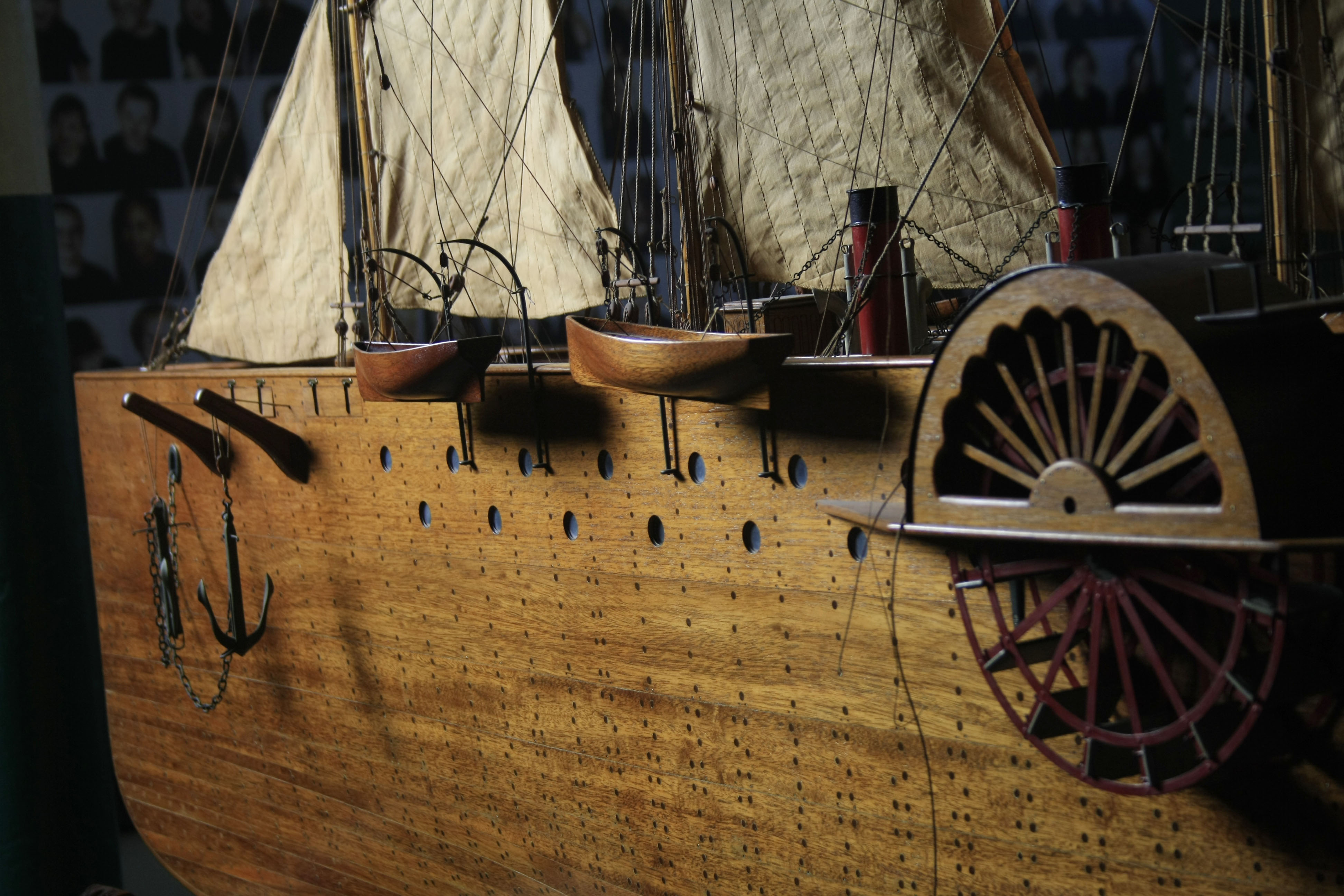
More of a craftsman than an artist per se, James Henry Pullen carved and built ships inspired by his childhood fascination with watching his peers play with toy boats in little puddles. During his lifetime, Pullen became incredibly skilled in his making of these ships, reproducing them in pencil drawings, earning himself the title of ‘the Genius of Earlswood Asylum.'[6] He even attracted the attention of King Edward VII, who began sending him tusks of ivory to work with, and Sir Edward Landseer, who sent him engravings of his work to copy.[7]
James Henry Pullen, Image courtesy of the Down’s Syndrome Association
Esther Brokaw’s early interest in art was encouraged by her Aunt Lois, who took her to visit galleries and bought her art materials during her youth. For forty-four years of her life, Brokaw went undiagnosed. It was only in 2004 that her diagnosis helped her to understand her equal obsessions with painting and stock market charts. Brokaw paints in acrylic, watercolour and oil from photographs she has taken herself. She is renowned for her immaculate detail when it comes to depicting every leaf on a tree, or every beam of light cast down from the sky.[8]
Esther Brokaw, Image courtesy of the Good Purpose Gallery
The above artists are just four examples of the incredible ability of people we call ‘savants.’ The Wisconsin Medical Society, which I have utilised heavily for this post, has a more inclusive list of savants – both artistic and non-artistic.
Despite its association – for me anyway – with religion and spirituality, the term savant is a celebration of unparalleled ability amongst people who have been diagnosed as having a form of ‘disability.’ The awe-inspiring memory and inimitable attention to fact and detail is a testament to human skill and creativity. The fact that many savants choose creative methods to express their extraordinary knowledge is also testament to the power of creativity. The power it has as a vessel for sharing and expression, and the power it has to raise awareness of the uniqueness of the human condition.
George Widener, Magic Square, Image courtesy of Artspace


![billy-tripp-mindfield-1[2]](https://kdoutsiderart.com/wp-content/uploads/2017/04/billy-tripp-mindfield-12.jpg?w=800&h=600)



























 KDOA
KDOA 