Tag: self-taught art

  • Relationships: Alfred Wallis and Ben Nicholson

    Relationships: Alfred Wallis and Ben Nicholson

    ‘Outsider art’ in the traditional sense – i.e. Jean Dubuffet’s description – alludes to an isolated artist, working on the periphery of the mainstream art world. Contrary to this controversial belief, many of the most notable ‘outsider artists’ of the twentieth century were supported, encouraged and ‘outed’ by some of the most famous ‘mainstream’ artists of the same century. This series of blog posts will highlight a few of these relationships, in the hope of rectifying the general thought that artists that often sit under the umbrella of ‘outsider art’ were completely immune to and separate from the twentieth century ‘mainstream’ art world.  In fact, many of the ‘masters’ of modern art were hugely influenced by these relationships.

    #1 Bill Traylor and Charles Shannon
    #2 Alfred Wallis and Ben Nicholson


    # 2: Alfred Wallis and Ben Nicholson
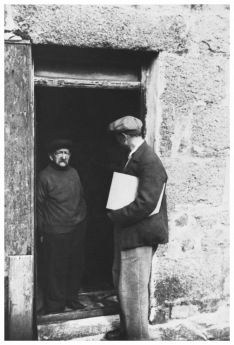
    Meeting: Alfred Wallis and Ben Nicholson (Tate)
    Meeting: Alfred Wallis and Ben Nicholson (Tate)

    In St. Ives in 1928 came another chance meeting of two celebrated twentieth century artists – that of self-taught Cornish fisherman Alfred Wallis (1855 – 1942) and modern favourite, Ben Nicholson (1894 – 1982). This union occurred when Nicholson and a friend, Christopher Wood, came across Wallis’s paintings nailed to a wall beside an old fisherman’s cottage during a visit to the area. Nicholson saw in Wallis’s work what he wanted to achieve in his own – a certain fresh naivety.  Nicholson documented their meeting: “On the way back from Porthmeor Beach, we passed an open door in Back Road West and through it saw some paintings of ships and houses on odd pieces of paper and cardboard nailed up all over the wall, with particularly large nails through the smallest ones. We knocked on the door and inside found Wallis, and the paintings we got from him then were the first he made.”[1]

    Much like Bill Traylor, Wallis is another artist who discovered his creative side later on in life, at the age of 68 after the death of his wife. In his earlier years, it is thought that Wallis went to sea as a fisherman – possibly even from the age of nine. Taking up painting after his retirement from a shop selling salvaged marine goods in St. Ives, Wallis used old torn boxes and ship paints to create his masterpieces.

    In an article authored by Nicholson in 1948, the artist compared Wallis’s style of working to that of Paul Klee:


    “He would cut out the top and bottom of an old cardboard box, and sometimes the four sides, into irregular shapes, using each shape as the key to the movement in a painting, and using the colour and texture of the board as the key to its colour and texture. When the painting was completed, what remained of the original board, a brown, a grey, a white or a green board, sometimes in the sky, sometimes in the sea, or perhaps in a field or a lighthouse, would be as deeply experienced as the remainder of the painting.”[2]

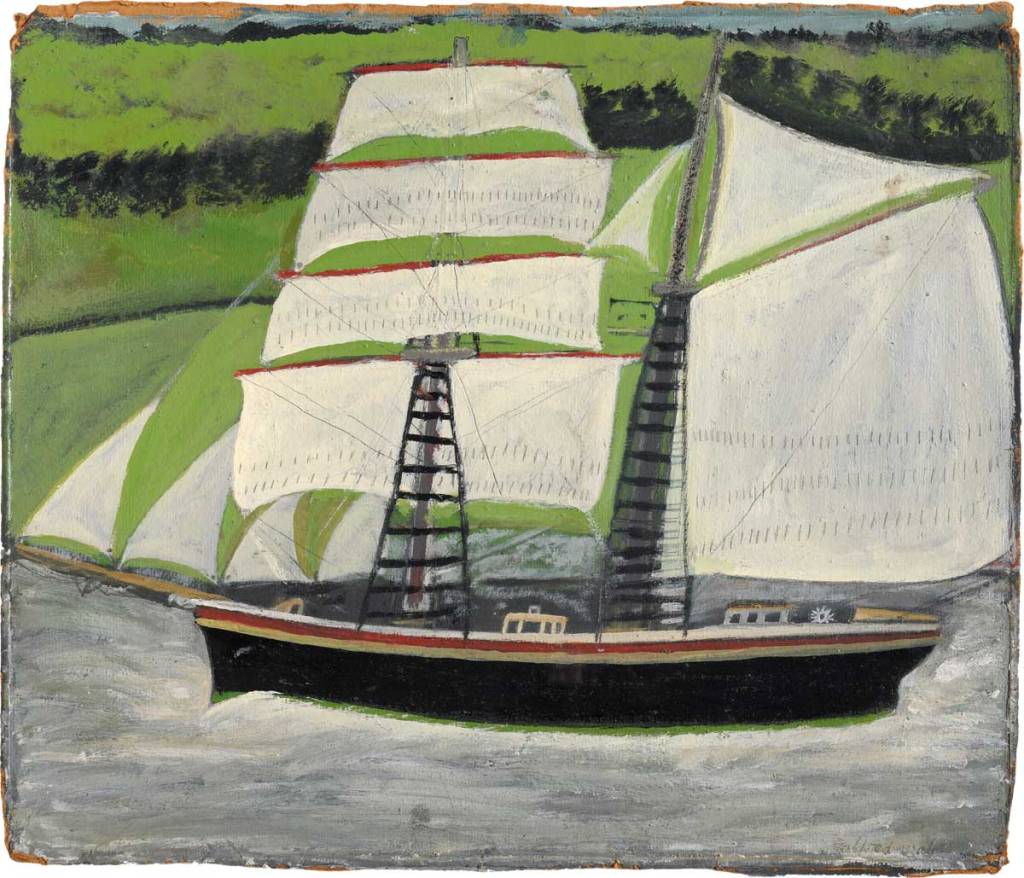
    Wallis’s works are incredibly evocative of what we now see as a self-taught, uninhibited, and untutored style. He largely ignores perspective and often, the objects depicted will vary in size depending on how much importance the artist gave to them.[3]

    Michael Glover, writing for the Independent during a joint exhibition celebrating the works of both Wallis and Nicholson at Compton Verney in 2011, speaks of Nicholson’s behaviour towards the older artist: “He began to patronize the old man, and to buy his paintings for the price of a meal or two. After he returned to his smart home in London, Wallis continues to send him batches, bound up with string and brown paper. Nicholson’s friends bought them too. Wallis began to be lionised a bit by the London avant-garde – Herbert Read and his friends.”[4]

    Nicholson’s interest in Wallis didn’t bring his work great recognition during his lifetime – Wallis continued to live in poverty after the meeting, despite Nicholson’s valiant attempts to promote the self-taught artist’s work and bring it to the attention of the burgeoning modern art scene. We know now, however, that that fateful chance meeting between the two – patronising aside – would in fact set the older artist up to become recognised as one of the most prolific and original 20th Century British artists. His unique ‘primitive’ portrayal of boats and ships provided inspiration to many artists, and his work is undoubtedly considered highly influential in the development of British Modernism.

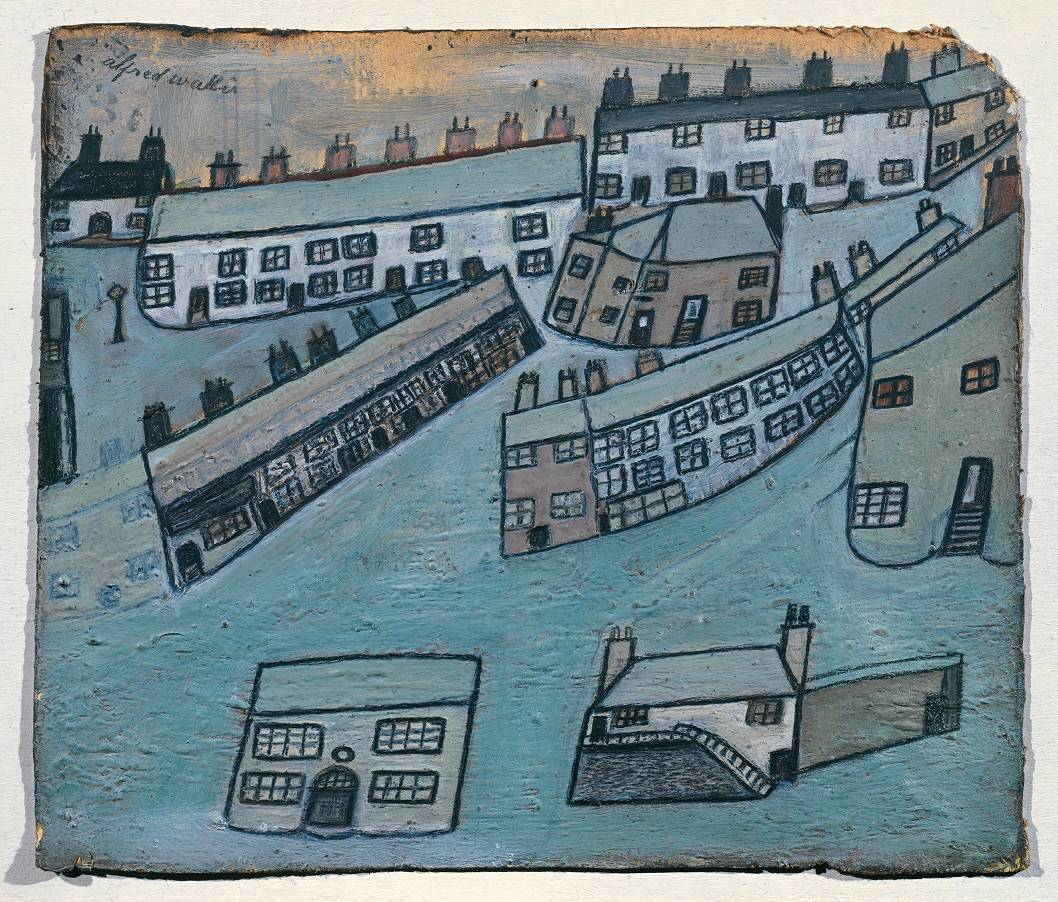
    Alfred Wallis, 'Harbour Scene'
    Alfred Wallis, ‘Harbour Scene’

    Alfred Wallis, 'House at St. Ives'

    Alfred Wallis, ‘House at St. Ives’
    Alfred Wallis, 'The Blue Ship'
    Alfred Wallis, ‘The Blue Ship’
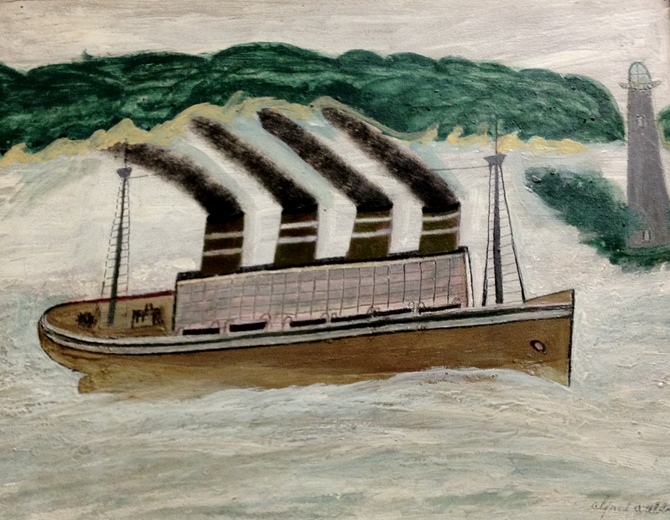
    Alfred Wallis, 'The Steamer'
    Alfred Wallis, ‘The Steamer’

    ‘Relationships’ series:

    #1 Bill Traylor and Charles Shannon

    #2 Alfred Wallis and Ben Nicholson


     References

    [1] Cornwall Calling

    [2] Ben Nicholson, ‘Alfred Wallis’ in Horizon, Vol. VII, No. 37, 1943

    [3] After Alfred Wallis

    [4] Michael Glover, ‘Alfred Wallis and Ben Nicholson, Compton Verney, Warwickshire’ . 31 March 2011 [Available Online]
  • Heartside Studio and Gallery

    Heartside Studio and Gallery

    The Heartside Ministry was founded in 1983 in Grand Rapids, Michigan, as an outreach to the homeless and disenfranchised people of the streets in a neighbourhood abandoned by businesses and avoided by many. In 1993, in response to the needs of the community, the Ministry developed a programme of one-on-one adult literacy classes, further expanding in 1997 to include a computer centre that offered help with resumes, desktop publishing and web access. The Art Studio and Gallery was established along with a pottery studio and a weaving programme, allowing the Heartside community to express themselves, discover their talents and produce saleable items.

    The Art Studio and Gallery represents a large part of what Heartside does, existing as a “safe and catalysing environment for the expression of the emotions, ideas, creativity and spirituality.” The art programme space consists of large storefront windows, high ceilings and a supportive atmosphere that is “especially conducive to artistic endeavour.” The studio space is open to the public throughout the week, providing the opportunity for creation, learning and socialisation, and the gallery is open for special neighbourhood and city functions, and also showcases the work of artists participating in the programme.

    Under the guidance of the Arts Coordinator, the often self-taught artists have produced a prolific body of work spanning various mediums, styles and subject matters. The Coordinator works to “encourage the intuitive and spontaneous artistic tendencies within each individual artist.”

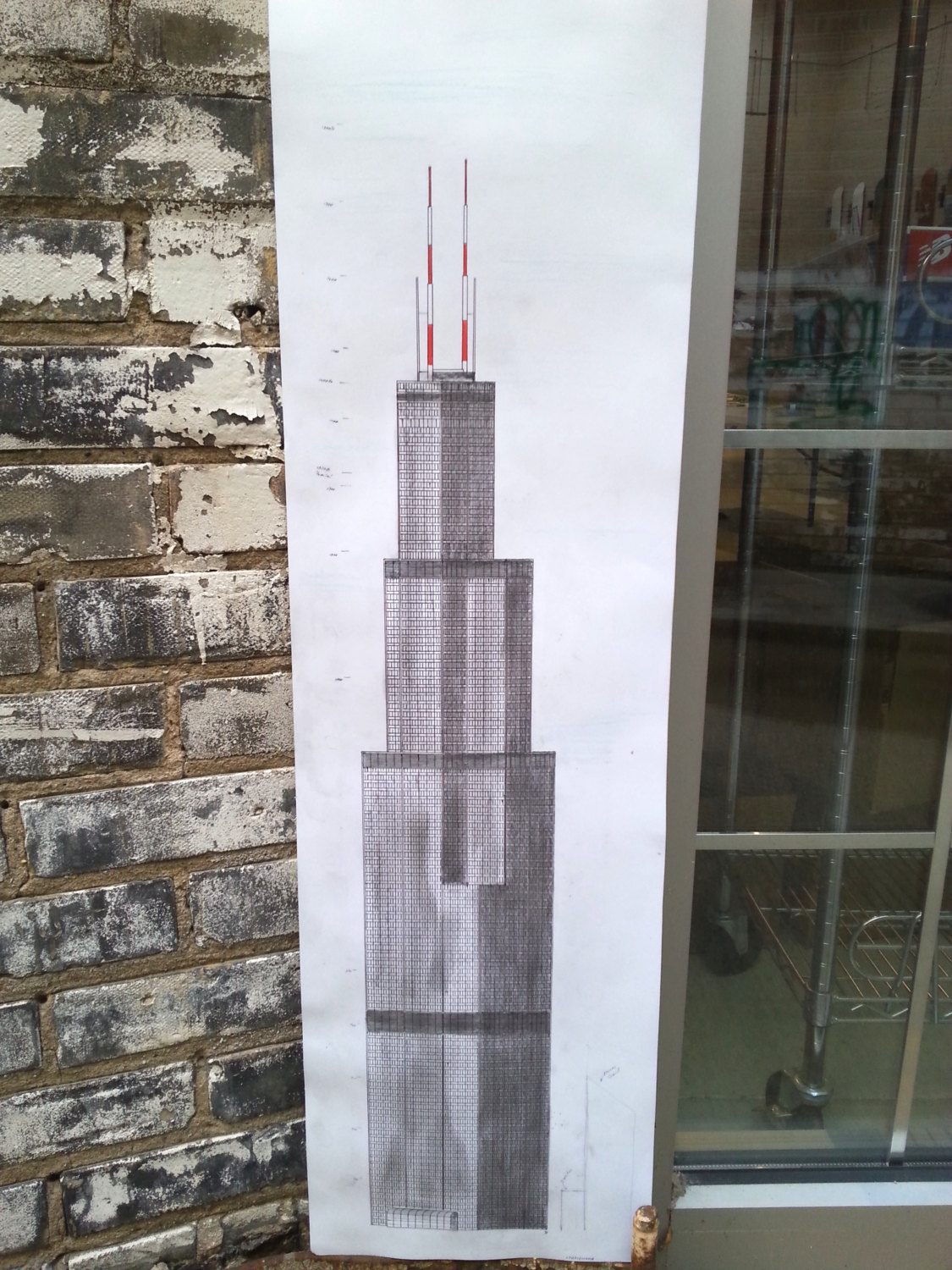
    Tom Salazar, one of the Heartside artists, has been interested in art from a young age. His to-scale intricate impression of the Sears Tower is hand-drawn, with not a computer programme in sight. Sears Tower impressively has every window and is draw foot for foot completely to a smaller scale. Tom also makes miniatures of some of his designs, and takes inspiration from architecture, cars and landscapes, as well as building his own furniture when needed.

    Tom Salazar, 'Hand Drawn Sears Tower'
    Tom Salazar, ‘Hand Drawn Sears Tower’

    Art for another participant of the Heartside programme, Katalina, began as a hobby, before quickly becoming part of who she is as a person. Speaking of the kind of work she produces, Katalina says: “I am a self-taught, mixed-media artist. I use acrylic paints, chalk, pastels, coloured pencils, water-colours, ink, found objects and a wide variety of other media that I come across.” As an artist, Katalina doesn’t limit herself – “any medium or found object can be used in creating art.” She uses vintage photos, and is interested in creating narratives with collage. Katalina adds a final thought: “Art for me is a very healing power. Not only do I create something, but I can also express how I feel at that particular moment by telling a new story.”

    Katalina, 'Family Album'
    Katalina, ‘Family Album’

    Katalina’s Family Album is a mixed-media collage made from magazine photos on book board with the addition of buttons and beads to add texture.

    Katalina's work on display at Heartside
    Katalina’s work on display at Heartside

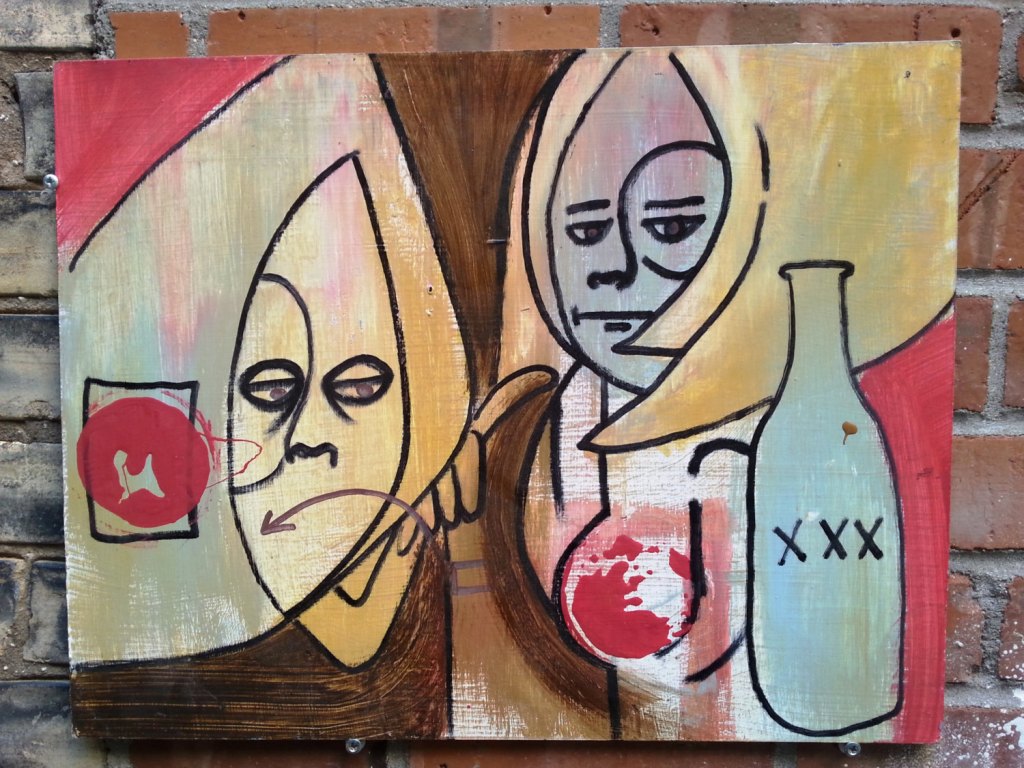
    Scott Robinson, a former street artist, grew up skateboarding – “and when I got too old to do that I traded it in for paints,” he says. Scott adds about his progression from skateboarder to artist that “it’s all connected anyhow – skateboarders just look at the world differently. When I see a bench I don’t see a place to see, I see it as an object. The lines in my paintings reflect that.” Don’t Do It was created by Scott after he became sick of the graffiti scene and the threat of incarceration, instead choosing to bring his work to canvas. It is a piece that initially had no meaning, before Scott noticed a pregnant woman and alcohol within the piece. The title came from an intuitive sense of what the image was; a pregnant mother being tempted by the alcoholic drink.

    Scott Robinson, 'Don't Do It'
    Scott Robinson, ‘Don’t Do It’

    These are just three of the very talented artists working at Heartside Studio and Gallery. For more information on the organisation, click here.
    Most of the art created on the programme is for sale via Heartside’s Etsy gallery, and is priced between $10 and $40, with proceeds directly benefitting the individual artists. To visit the Etsy gallery, click here.
  • Andrew Beswick

    Andrew Beswick

    Artist’s Statement:

    Andrew Beswick is a Manchester-based artist who’s work includes poetry, drawing, performance and sculpture. His approach to art is intuitive and self-taught and his inspiration to begin making art originated from a love of expressionist painting, primitive/ outsider art and the work of groups such as COBRA and the Situationist International. His interest lies in the experimentation with form and the creative process. Each work is seen as incomplete or unfinished, a sketch or an idea that is an end unto itself. With an artistic practice that is centred around themes of spontaneity and the natural environment, he combines elements of cartography, primitivism and poetry with an interest in social history, ethnology and popular culture. In 2006 Andrew studied Art Foundation at Stockport College and the following year he helped establish the Islington Mill Art Academy, an independent art school based in Salford (which he is still actively involved with).


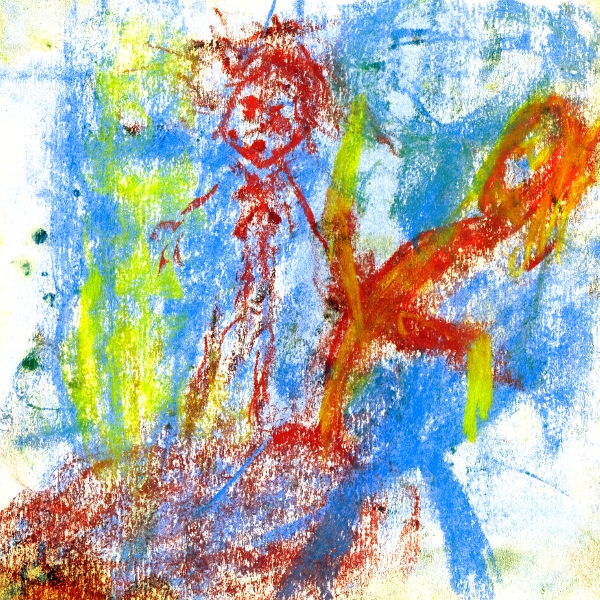
    Andrew Beswick, 'Untitled' (2007)
    Andrew Beswick, ‘Untitled’ (2007)
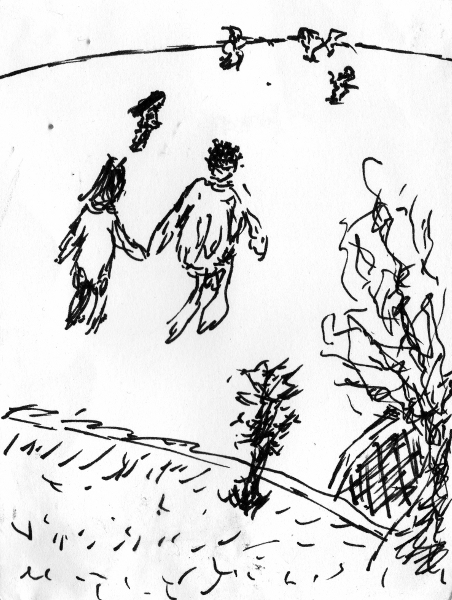
    Andrew Beswick, 'People in Krakow' (2007)
    Andrew Beswick, ‘People in Krakow’ (2007)
    Andrew Beswick, 'Duck' (2007)
    Andrew Beswick, ‘Duck’ (2007)
    Andrew Beswick, Marina De Lagos' (2012)
    Andrew Beswick, Marina De Lagos’ (2012)
    Andrew Beswick, 'Salford in Rush Hour' (2008)
    Andrew Beswick, ‘Salford in Rush Hour’ (2008)

    To see more of Andrew’s work, you can visit his website:
    www.andrewbeswickart.com

    If you would like a showcase of your work on this blog, please get in touch my emailing kdoutsiderart@yahoo.com
    Alternatively, get in touch on Twitter: @kd_outsiderart

  • Joe Cook

    Joe Cook

    (Featured Image: Joe Cook, UV)

    I am always keen to hear from artists who would be interested in a blog post focusing on their work. Usually, I ask for an artist’s statement and a few images which they would like to showcase, but these guidelines are very flexible and I am open to suggestions. If you would like a post on your work, please do contact: kdoutsiderart@yahoo.com.

    This post will focus on the work of Joe Cook, who you can follow on Twitter: @joecooknow


    “My name is Joe Cook, I am 6 foot 2 inches and self-taught.  I make many mistakes and incorporate my natural naivety into my art projects. I am fascinated in particular by portraits and murals.”


    Joe Cook, Curtains


    Joe Cook, Yellow Ashleigh


    Joe Cook, Diane Abbott on depressing her mentions tab in her twitter account


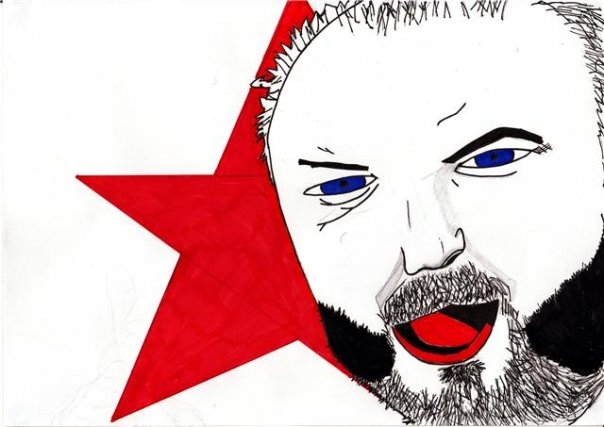
    Joe Cook, Gorgeous George


    Joe Cook, Lady on Laptop

     Thanks to Joe Cook for supplying the images and his artist’s statement.

    Follow Joe on Twitter: @joecooknow


    ** A new post from September 2014 highlights some more recent work of Joe’s. Click here to see it.


  • Martha Grunenwaldt (1910 – 2008)

    Martha Grunenwaldt (1910 – 2008)

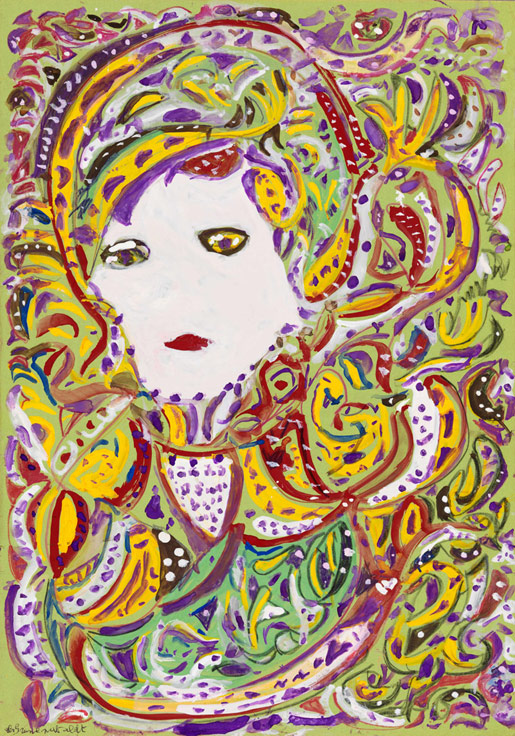
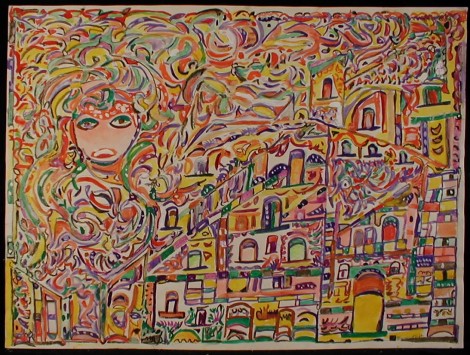
    Martha was born into a musical family where she began life as a folk violinist. She went on to marry a fellow musician, who then took her daughter away from her on their separation. She didn’t begin to create art until the age of 71, after being reunited with her daughter. Martha had worked in later life on a farm where her employers had been so strict that she had not even been allowed to touch her violin. She began using her grandchildren’s crayons and coloured pencils and working on the back of postcards or the reverse side of her daughter’s political posters.  Martha drew images of an ideal world full of colours and shapes; where delicate female faces peer out from within dense patterns.

    Here are some examples of her work:


    Image courtesy of www.outsider-artworld.com 


    Martha Grunenwaldt’s work can be seen at:

    abcd Collection, Paris

    L’Arcine Collection, Musee d’Art Moderne, Lille Metropole

    Art en Marge Collection, Brussels

    Eternod/Mermod Collection, Lausanne

    Musee de la Creation Franche, Begles

    References:

    Raw Vision Outsider Art Sourcebook, 2009

  • Defining ‘Outsider’ Art..

    Defining ‘Outsider’ Art..

    Recently, I have found myself becoming more and more interested in the actual term ‘outsider’ art, and what it really means. Originally coined by Roger Cardinal as an English equivalent to Jean Dubuffet’s Art Brut (or ‘raw’ art), the term has grown to encapsulate a huge variety of works. There are many offshoots of the term, and it has become a sprawling label that many find difficult to define (including myself!)During the ‘golden age’ of ‘outsider’ art; which occurred between 1880 and 1930, the term was predominantly retrospective in that it defined the works of those who were now dead. It mainly included those who were incarcerated in some form or another, or those who suffered from severe social exclusion and the inability to access the commercial art market. Today, the term is more of an ‘umbrella’ for a variety of styles, works and artists. Under this umbrella we might see ‘Contemporary Folk Art’, ‘Marginal Art’, ‘Naïve Art’, ‘Self-Taught Art’ or ‘Visionary Art’. In this post, I hope to try and define some of these offshoots; if they are in fact definable in a black and white sense.

    My understanding of the term ‘outsider’ art itself keeps changing; every time I read more about it – so I am sorry if this post seems confusing or the terms seem to overlap – I am trying to work out where I stand with regards to what the ‘label’ means to me.

    Self-Taught Art:

    Self-Taught Art is probably one of the more common offshoots of ‘outsider’ art that we see used. The term itself is quite self-explanatory; it describes those artists who have not received any formal professional art training. This would insinuate an exclusion (by choice or not) from the commercial or professional art market. But, to some extent, aren’t all artists self-taught? They all have their own unique style and choice of subject matter, despite where or how they receive their formal art training. To describe self-taught artists as ‘outside of the art historical canon’ seems somewhat of a generalisation. Just because an artist has not received professional art training does not mean to any extent that they are not aware of current art trends or the flow of art history.

    Folk Art:

    Folk Art, I think, is a little easier to define. It describes a more traditional, indigenous style that is characteristic of a particular culture. I think I have said it myself already here – it is a style. Self-Taught Art and ‘outsider’ art (however we choose to define it) do not describe a specific style. Some may disagree with me, but I think that ‘outsider’ art far from describes a style. It is not akin to, say, Expressionism or Impressionism or Pop Art. It has become more about labelling the artist, rather than the work itself. Back to Folk Art – Folk Art is in fact the perfect example of how these offshoots of ‘outsider’ art overlap and intermingle. Folk Art itself is often characterised by a unique naïve style (Naïve Art will be discussed later) – perhaps I am getting confused here – if Naïve Art is the style, does that mean that Folk Art is not a distinct style?

    Image
    Thornton Dial – Folk Artist?

    Marginal Art

    Marginal Art describes the work of artists who are on the ‘margins’ of society for numerous reasons. But wait… Isn’t this one of the definitions of ‘outsider’ art? Some describe Marginal Art as that ‘grey’ area which sits right between ‘outsider’ art and the art of the mainstream commercial art world. So, for example, the scale would be as such: Mainstream Art – – – – Marginal Art – – – – Outsider Art?

    Naïve Art

    Naïve Art – I think – can be said to be a style. It is often produced by untrained artists (there’s the overlapping again), who depict realistic scenes combined with fantasy scenes in often bright, bold colours. Often defined by childlike simplicity with regards to the composition, subject matter or colour, present day Naïve Art is often created by those who have received formal art training – in fact, there are now even academies for Naïve Art. Does this mean it is no longer an offshoot of ‘outsider’ art?

    Image
    Grandma Moses – Naive Artist?

    Visionary Art

    Visionary Art is another umbrella term – a term which can avoid the specifics and the confusion created by the label of ‘outsider’ art. It encompasses all of the above; Naïve Art, Folk Art etc. Visionary Environments, however, are slightly different (please refer to my previous blog post for more on Visionary Environments). These environments are created by intuitive artists and describe spaces that have been re-created in an extremely creative manner; often they are ‘fantasy worlds’ into which we can escape. It seems, however, almost ignorant to group these Visionary Environments under the umbrella of ‘outsider’ art – as often, the artists who create this amazing spaces are very much an integral part of their local community; they are by no means on the margins.

    ♦♦♦♦

    I hope I have got you thinking about what the term ‘outsider’ art means to you – it is confusing, I know! The more I think about it, the more questions it raises for me. I am not sure it is really an appropriate label in terms of where the art of marginalised people stands today in the twenty-first century. Today, many an art work is undefinable – it doesn’t fit specifically into the art historical canon, but just putting artists into the ‘outsider’ art category seems to reduce the impact of the label itself. What I enjoy about ‘outsider’ art is the rawness of it; and the diversity – something which seems to be almost characteristic of such a broad title! Let me know what you think about ‘outsider’ art..