Tag: roger cardinal

  • A Note on Outsider Art

    A Note on Outsider Art

    On 31st May, I was very kindly invited to give a talk at the ‘Life is Your Very Own Canvas’ mid-exhibition event in Aberdeen by organiser of the show, Steve Murison. The exhibition showcased work by people who are part of the Penumbra Art Group in Aberdeen. I spoke briefly about outsider art and how I had become interested in it, and what I was doing now to support artists who might be considered ‘outsider.’ Although the talk was brief, I took some time in the run up to refresh my memory on all things outsider art – which I thought I would put together in a blog post.
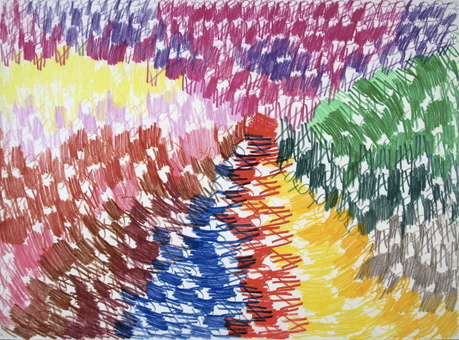
    gaston chaissac
    Gaston Chaissac

    My prior research took me back to when I first starting studying outsider art – right to the beginning, to quotes from Jean Dubuffet and Roger Cardinal. I’m going to split this post into four different sections, just to put my thoughts down on paper (or computer): a brief history of outsider art, what it is today, my interest in outsider art, and what I think about outsider art now.

    First things first, the exhibition was absolutely extraordinary. Many of the artists with work on the wall had never picked up a pen or a paintbrush before joining the art group, and many had re-found their creativity many years after losing it to illness or life events. There was a mixture of 2D pieces, including a series of ‘diary drawings’ illustrating the artist’s daily life in and around the city of Aberdeen, and 3D pieces; like a jaw-dropping papier mache dragon. It was inspiring to meet many of the artists at the event, who were all incredibly proud (as they should be) at having their work hanging in the exhibition.
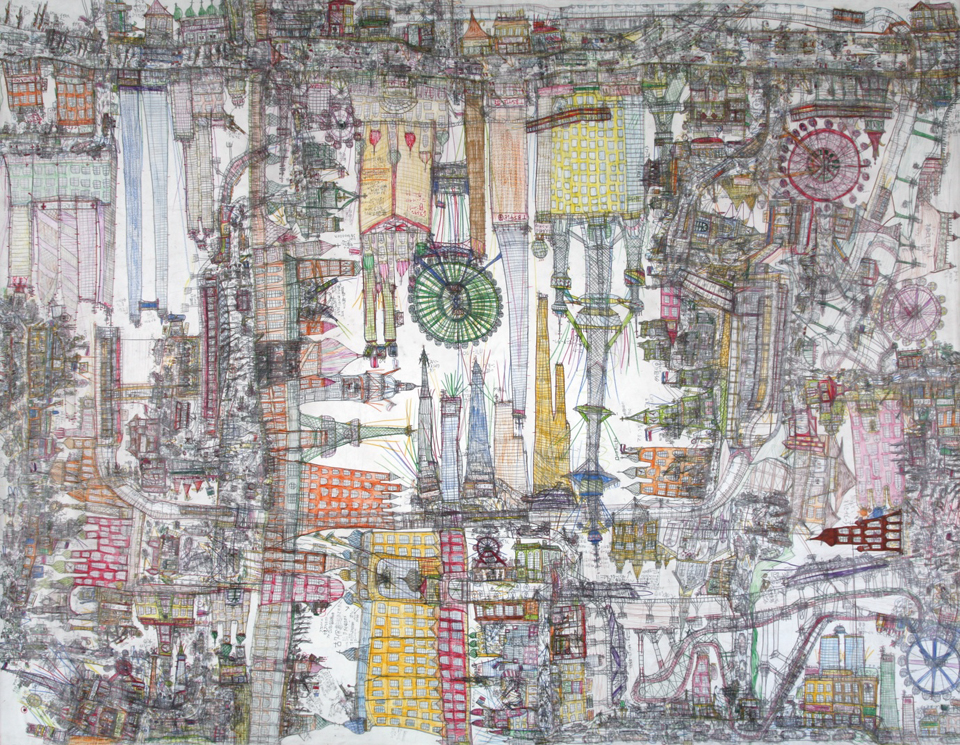
    norimitsukokubo
    Norimitsu Kokubo

    The History

    So, let’s start at the beginning. The initial emergence of outsider art occurred between the ‘Golden Years’ of 1880 and 1930. The term itself was coined by art historian Roger Cardinal in 1972 as an English equivalent to Jean Dubuffet’s ‘Art Brut’ or Raw Art, which was coined in the 1940s. When describing work as ‘Art Brut,’ Dubuffet meant work that was untouched and untainted by traditional artistic and social conventions. In his manifesto Art Brut in Preference to the Cultural Arts (1949) he says:

    “We understand this term (Art Brut) to be works produced by persons unscathed by artistic culture, where mimicry plays little or no part. The artists derive everything – subjects, choice of materials, means of transposition, rhythms, styles of writing etc. – from their own depths, and not from the conventions of classical or fashionable art.”

    Dubuffet’s collection of Art Brut is housed in the Collection de L’Art Brut in Lausanne, Switzerland, for which there is (still) a very strict acquisitions criteria. The museum’s acquisitions are based on the following five characteristics: social marginality, cultural virginity, the disinterested character of the work, artistic autonomy, and inventiveness. There are, of course, contentious ideas within Dubuffet’s strict – and marginalising – criteria. It is incredibly difficult, even so in the early 20th century, for someone to be completely detached and separated from culture in all its forms.

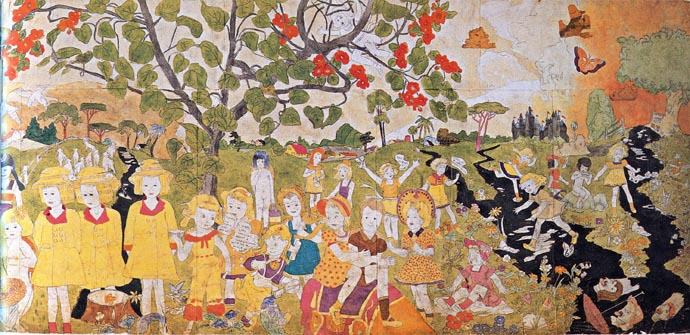
    Take for example some of the most famous outsider artists. Adolf Wolfli worked as a farm hand in his early life; Scottie Wilson was in the armed forces, travelling to both South Africa and India; and Henry Darger worked for most of his life as a caretaker.

    Dubuffet’s Art Brut is idealistic, it is not realistic. And this is where some of the contentions and debates arise around the term and what it stands for – back then and still today.
    dagrer1
    Henry Darger

    Outsider Art in the Present Day

    Throughout the 20th Century, the term gradually gained momentum. It is still around today, although in a very different form to Dubuffet’s Art Brut.  Today, it is more of an umbrella term for work that is created outside of mainstream culture – and includes terms like ‘self-taught art,’ ‘folk art,’ ‘intuitive art.’

    Everyone in the field has their own idea of what it means – a popular one being that anyone who calls themselves an outsider cannot be considered an outsider artist. Originally, outsider art was taken from the homes of artists on the sad happening of their death (like the famous story of Darger whose work was found when his apartment was cleared following his death, whence his tomes of The Vivien Girls books were uncovered).

    And then, of course, there is the divide between mainstream and ‘outsider’ art. At what point does an outsider artist become an ‘insider’ artist? Dubuffet was known to have ‘ex-communicated’ one of his own discoveries, Gaston Chaissac, because of his contact with ‘cultivated circles,’ and Joe Coleman was expelled from the 2002 New York Outsider Art Fair in which he had taken part since 1997 because he had been to art school and had ‘become too aware of the whole business process of selling.’

    A good way to look at it, I think – as it gets very confusing – is how Editor of Raw Vision Magazine, John Maizels talks about it in his book Raw Creation: Outsider Art and Beyond (1996):

    “Think of Art Brut as the white hot centre – the purest form of creativity. The next in a series of concentric circles would be outsider art, including art brut and extending beyond it. This circle would in turn overlap with that of folk art, which would then merge into self-taught art, ultimately diffusing into the realms of so-called professional art.”
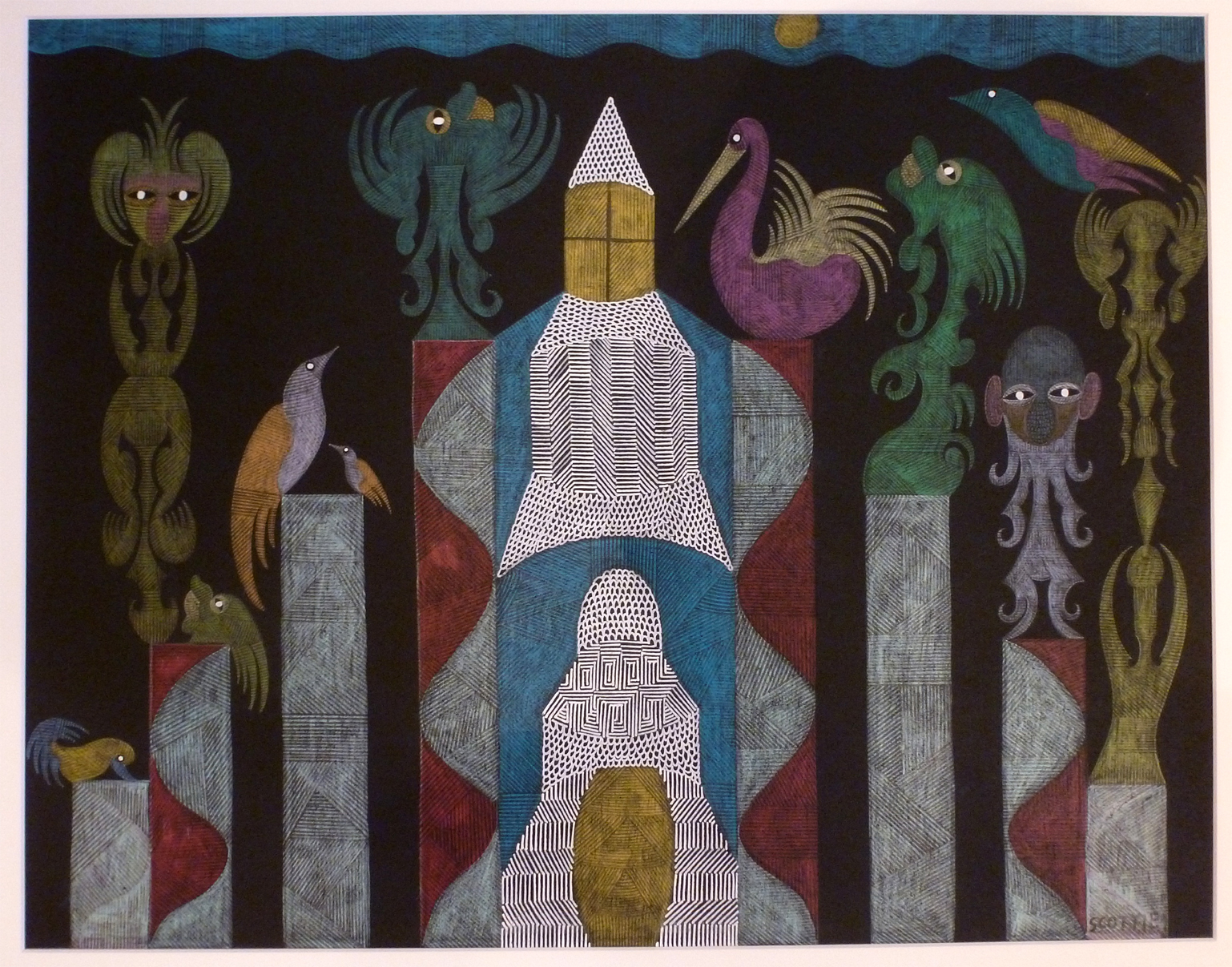
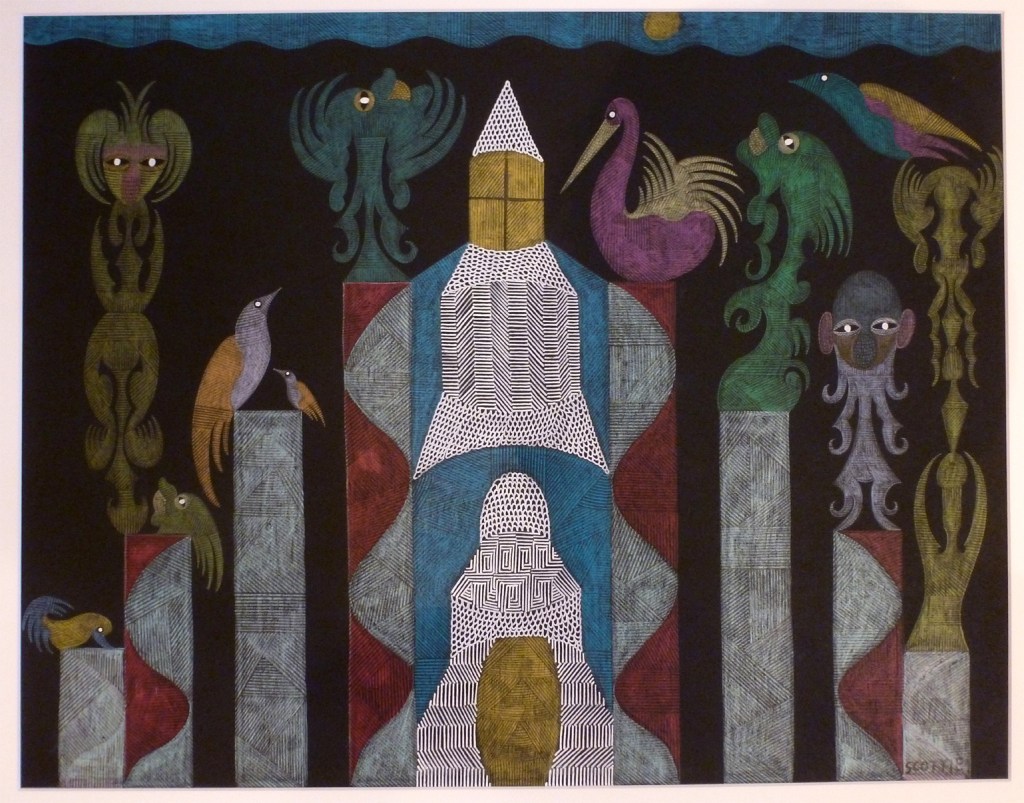
    scottie wilson
    Scottie Wilson

    My Journey with Outsider Art

    My own interest in outsider art first started when I was at university. I studied History of Art, and – surprisingly – we had a whole module on outsider art. Well, it was actually a module on psychoanalysis and art, but the term outsider art kept cropping up, and I was curious. To help with my paper for this module, I visited Bethlem Museum and Archives to look at the work of Richard Dadd. I immediately found myself immersed in this world of raw human creation.

    Outsider art for me often comes straight from within. It’s not made for a market and it doesn’t come out of art schools (although I am certainly not adverse to people who have been to art school aligning themselves with outsider art). It inspires me because one of the most innate and unique things about being a human being is our ability to be creative. I think there is nothing that illustrates this better than outsider art.

    I went on to write my BA Hons dissertation on the links between German Expressionism and outsider art and was not surprised to find that many art movements in the twentieth century were inspired by the work of outsider artists – including the Surrealists and German Expressionists. Artists at this time wanted to capture the intuitive spontaneity of this work to represent the turbulent times they were living through.

    I went on to study for an MA in Art History and by this point was focusing solely on outsider art. I wrote my extended dissertation on the ethics of exhibiting and curating work by outsider artists. For me, it was interesting to think about how ethical it is to display work by someone who never intended for it to be seen. I would think about Henry Darger and his Vivien Girls. He had created this whole world in private – surely it should have been kept private? But if it had been, we wouldn’t have had access to this astounding feat of imagination – maybe the books would have been destroyed?

    I continued my research, thinking about the different ways the work could be displayed to best exhibit its aesthetic and inspirational qualities. Should interpretation include a note on the artist? Should the work stand on its own? There seemed to be so many questions that kept on breeding more questions.

    Ever since I finished my MA four years ago, I have been working with various projects and organisations that promote or support artists facing some kind of barrier to the art world – whether that barrier is their health, disability or social circumstance.
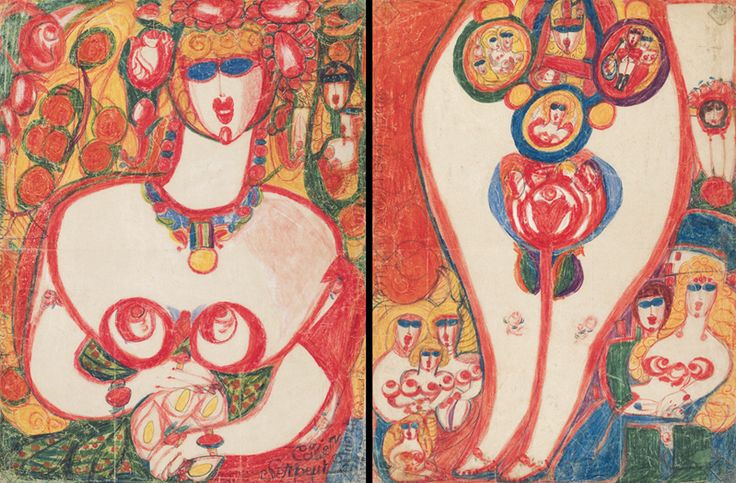
    aloise corbaz
    Aloise Corbaz

    What do I think now?

    For me, the term outsider art should be redundant. It shouldn’t be outsider art – it should just be art. Sometimes, people and artists need a little bit of extra support to get their work out there, and for this reason I think it’s vital to have organisations and projects like Outside In and Creative Future, but I think the next chapter is to challenge the impenetrable art world.

    Why is it so difficult for people to break into the art world if they haven’t been to art school? Who gets to choose what is and isn’t art? For me, outsider art is the bravest form of art. It is defined by artists exposing themselves on paper, in clay, on film, in words, and then sharing it with the world. It’s all about creativity, raw intuition, and the uniqueness of being human – and it can certainly teach us all a lot about humanity!
  • Outsider Art under Analysis: Part One (Speakers)

    Outsider Art under Analysis: Part One (Speakers)

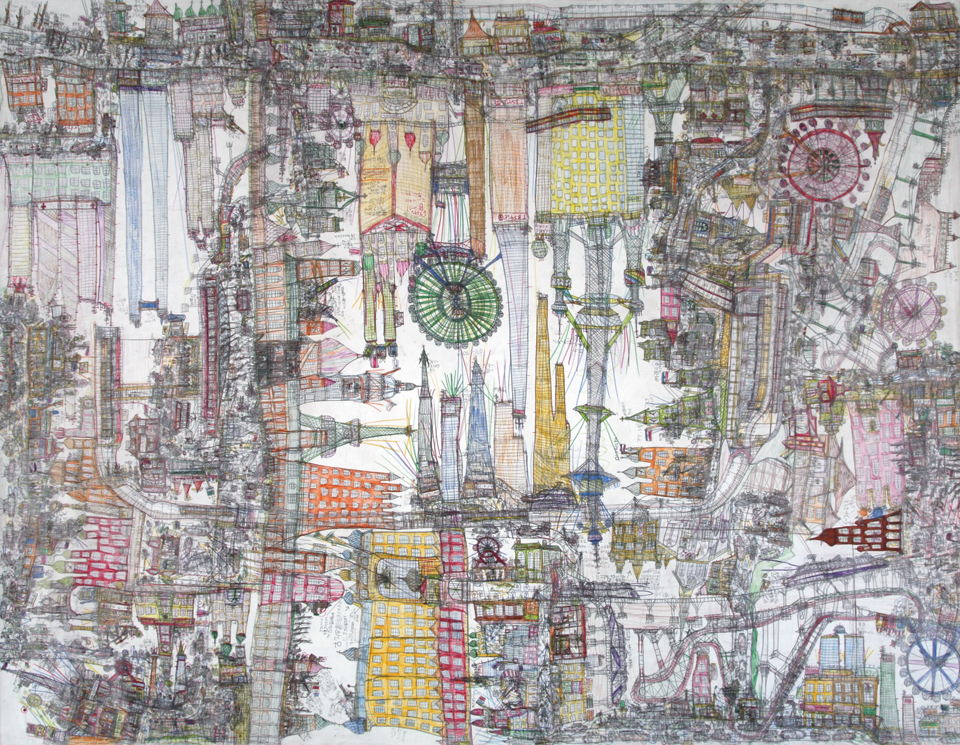
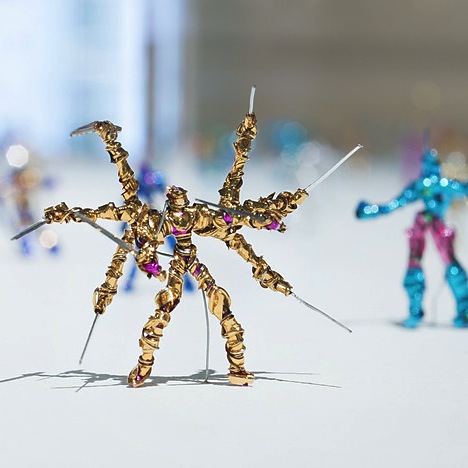
    Above Image:  ‘The Economically Booming City of Tianjin, China’ by Norimitsu Kokubo


    On Saturday 15 June, I visited the Wellcome Collection for a talk on the history and development of ‘outsider art’; an event accompanying the current ‘Souzou: Outsider Art from Japan’ exhibition. Here, I have outlined the main points covered by each of the speakers, and highlighted a few of the questions raised during the discussion. I am hoping to come back to these questions in ‘Part Two’, and answer them for myself. 


    The panel consisted of Roger Cardinal; art historian and ‘coiner’ of the term ‘outsider art’, John Maizels; editor of Raw Vision Magazine, David O’Flynn; consultant psychiatrist at the Lambeth and Maudsley Hospitals, and Shamita Sharmacharja; curator of the current Wellcome Collection exhibition.

    John Maizels chaired the event which aimed to explore the history of ‘outsider art’, right from its early days as a diagnostic tool for psychiatrists to the growing popularity of visionary artists in the present day. Each speaker gave a presentation on their specialist area, followed by a chance for questions and a discussion with the audience.

    Roger Cardinal spoke first, defining work aligned with the term as anything ‘outside the spheres of normal art making,’ before going into detail about the three highly influential characters who really shaped the beginning of what we now know as ‘outsider art’: Jean Dubuffet, Hans Prinzhorn, and Andre Breton. Roger discussed how early on in its development, ‘outsider art’ was merely a diagnostic tool within the asylums of 19th- and early 20th- century Europe. It was Prinzhorn’s interested in the work that really encouraged a much more creative and aesthetic stance, rather than a continuing pathological one.

    The point I found most interesting during Roger’s talk was his stating that ‘outsider art’ is categorically not a movement – it is not a school, a style, or a political movement – instead, it is a ‘movement of one’ in the sense that each artist should be looked at separately. It is a ‘movement of individuals.’ This was great to hear, as it is something I have been trying (and seemingly failing!) to put into words… until now!

    'Untitled', by Shota Katsube
    ‘Untitled’, by Shota Katsube (source: careersuicideblog.wordpress.com)

    Next to speak was David O’Flynn. Having a psychiatrist on the panel was something I found really interesting, and I really wasn’t sure what to expect. I continuously advocate that work aligned with ‘outsider art’, or (for want of not using the term) work created by those on the margins of society, should not in any way be associated with the backgrounds or biographies of the artists, so to have a psychiatrist on the panel was something I questioned – would it take away from the focus on the aesthetic? Would it again pathologise the work?

    David, however, is not only a psychiatrist, but also manages the Adamson Collection – a collection of art founded by Edward Adamson, the ‘father’ of art therapy (I am definitely not an endorser of art therapy – and was pleased to hear David say that he was also extremely ‘anti-interpretation’). He spoke about the change in European mental health care in the mid 20th-century, and how this had a huge impact on the emergence of ‘outsider art’. There was a move from psychiatrists ‘discovering’ or ‘finding’ work created by patients to them actively setting up creative spaces where patients were encouraged to create.

    David also raised a few interesting points with regards to the Adamson collection – and to psychiatric collections more generally. Who has ownership of the work? They were created in a hospital environment during the process of healing; are they art objects or tools for healing? Should the creators be named? What are the copyright issues? David argued that the artists’ names should be shown, afterall, they were denied an identity in the asylums; they shouldn’t be excluded a second time around.

    Although I’m not sure how I feel about psychiatrists talking about ‘outsider art’ (or, actually, just art in general), I do think it was important for David to be there as the emergence of ‘outsider art’ relied quite heavily on the influence and encouragement of certain psychiatrists.

    'Mother', by Toshiko Yamanishi
    ‘Mother’, by Toshiko Yamanishi

    The final speaker was Shamita Sharmacharja, who focused on her curating of the ‘Souzou’ exhibition. Shamita said she had chosen to go for an ‘object-led’ approach rather than a heavily biographical or health focused interpretation – something which I think is very important when displaying ‘outsider art’. It means that the artists’ talents are not simply pushed to one side in favour of their medical history. Shamita quite rightly stated that the artists’ works were  art – she would not focus on the biography of other artists she was displaying, so why would she for this exhibition?

    After the introductory speeches, it was time for audience questions. The questions were wildly diverse, and came from people who worked with artists outside of the ‘mainstream’ art world, and from those who knew fairly little about the subject.


    The Questions

    1) Can ‘outsider artists’ talk about their work meaningfully and coherently? 

    2) Why do we feel we have to label people? Why can’t outsider artists just be called artists?

    3) Why is there so much interest in Japanese ‘outsider art’ at the moment?

    4) Did ‘outsider art’ exist before the 1930s?

    5) What is ‘outsider art’? In simple terms – has it become outdated?

    6) Not everyone is an artist, and not everything is art. People have to go to art school and study what has come before to become an artist.

    7) Why is ‘outsider art’ not taught as part of the art historical canon? 

    In Outsider Art under Analysis: Part Two, I will return to these questions and answer them for myself. I would be really interested to hear other people’s responses to the questions as well.

  • ‘Outsider Art’ and the ‘Traditional’ History of Modern Art

    ‘Outsider Art’ and the ‘Traditional’ History of Modern Art

    In most people’s minds, the development of art (more specifically Western art) in the twentieth century appears pretty linear. It starts with Manet – the father of Modern Art – and the Salon des Refuses in France and moves through the ‘isms’: French Impressionism, Post-Impressionism, Symbolism, Expressionism, Cubism… etc. etc., without much divergence or digression.

    Roger Cardinal, in his essay ‘Cultural Conditioning’ from his pioneering publication Outsider Art (1972), speaks of Jean Dubuffet’s pamphlet, Asphyxiante culture. In the pamphlet, Dubuffet recalls a conversation with a teacher about there always having been an art “alien to established culture and which ipso facto [has] been neglected and finally lost without a trace.”[1] The teacher replied that “if such works had been assessed by contemporary experts and deemed unworthy of preservation, it was to be concluded that they could not have been of comparable value to the works of their time that had survived.”[2] The teacher expanded – he had seen some German paintings that had been executed at almost exactly the same time as the Impressionists were making their mark. BUT, they bore no resemblance to the Monet’s, Sisley’s and Pissarro’s that were taking the art world by storm. The teacher then felt obliged to admit that “they were aesthetically inferior to the work of the Impressionists; art criticism had accordingly been perfectly justified in preferring the latter.”[3]

    In response to his teacher’s somewhat passive acceptance of the power of critics and historians in shaping the history of art, Dubuffet pointed out:

    “The stupidity of this sort of reasoning, based as it is on a notion of objective value that betrays the worst kind of cultural myopia: where respected critics have testified their approval, there can be no dissension; bad marks in art can never be forgiven, at least not by a layman.”[4]

    To Dubuffet, his teacher had “bowed before the prevailing wind emitted by the Establishment, and could consent to find objective beauty only in the place marked out by a superior order.”[5]

    Conversely to Dubuffet’s teacher’s dismissal of art not accepted by the Establishment, I for one can certainly see comparisons between the work of ‘outsider artists’ and the Manets, Matisses and Mondrians of the Modern Art world. The most glaringly obvious comparison (although I’m not a fan of comparisons) comes from the contradictorily all-encompassing Expressionism – which could in theory act as the sole ‘label’ for all of its preceding movements. The essential idea behind Expressionism (which originated in Germany in around 1910) was that “art should not be limited to the recording of visual impressions, but should express emotional experiences and spiritual values.”[6] I think these descriptions also aptly define the majority of works of ‘outsider art’ – raw and emotive, spiritual; a visual incarnation of the inner voice.

    At the time of increasing popularity for German Expressionism, the artists who aligned themselves with the ‘movement’ were becoming aware of ‘outsider art’. They were inspired. The psychologically isolated mechanical era of industrialisation in Germany combined with the imminent threat of war led artists such as Max Beckmann to look for a new language for these continuing contextual dilemmas. German Expressionists looked to convey certain aspects of ‘outsider art’ in their own quest to create a language that was undoubtedly a critical response to contemporary political and social problems.

    Max Beckmann, 'The Night'
    Max Beckmann, ‘The Night’

    So… How is ‘outsider art’ so often excluded from the rigid linear progression of twentieth century Modern Art when it so obviously informed one of the biggest movements of this era?

    Similarly, Henri Rousseau – ridiculed during his life, and never embraced by the ‘accepted’ canon – has come to be recognised as a self-taught genius with works of an impeccably high standard. Alfred H. Barr, Jr., writing the foreword for They Taught Themselves: American Primitive Painters of the 20th Century, notes that, even alongside the famed French Impressionists, “Rousseau now seems one of the foremost French painters of his generation,” who can undoubtedly “hold [his] own in the company of [his] best professionally trained compatriots.”[7]

    Henri Rousseau, 'Exotic Landscape'
    Henri Rousseau, ‘Exotic Landscape’

    Likewise, the thousands of drawings created by Bill Traylor – who was born into slavery in Alabama in 1854 – “didn’t fit into the heroic story of Modern Art.”[8] Jonathan Keats, writing for Forbes, insists that if Traylor had “been known beyond the city limits of Montgomery, he’d have been a worthy rival of Picasso and Matisse.”[9] Keats continues, claiming that Traylor’s work could have “given up the game” – it was “totally untutored yet as sophisticated as anything in a museum.”[10]

    Bill Traylor, 'Untitled Black Male Boar with Curly Tail'
    Bill Traylor, ‘Untitled Black Male Boar with Curly Tail’

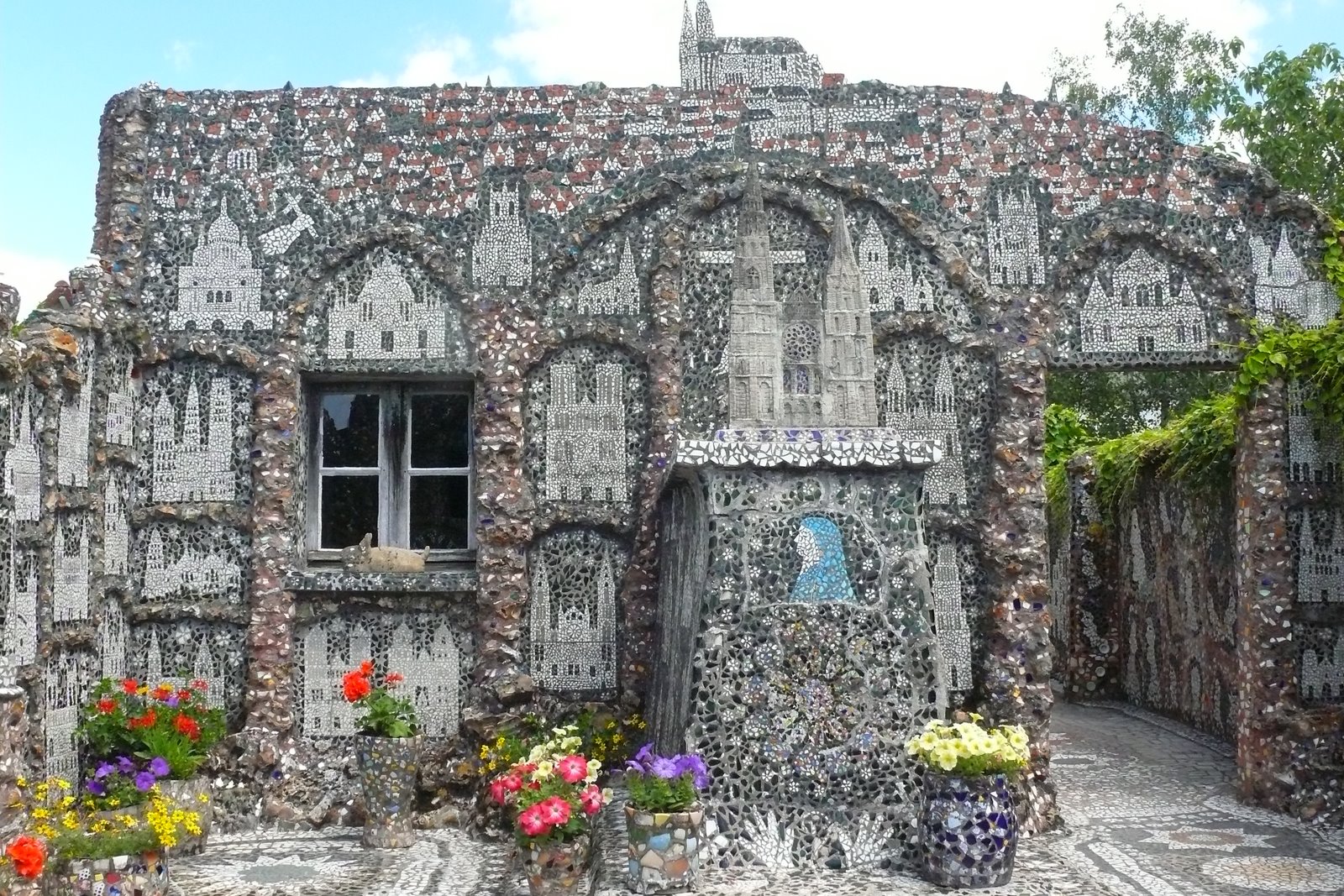
    There are even more glaringly apparent comparisons as we move towards the present day, with the rise of the ‘Ready Made’, or of the ‘Found Object’; both an illustration of the Modernist revolt against traditional materials which saw artists attempt to demonstrate that art can be made from anything. A lot of the most well-known ‘outsider artists’ used any materials that they could get their hands on. Although perhaps not a conscious choice – like those rebellious Modern artists – ‘outsider artists’ are often renowned for their innovative use of found materials. One of the most famous examples is Raymond Isidore’s ‘Picassiette’ – his embellished property, which he decorated with salvaged shards. Perhaps most ‘outsider artists’ could come under this ‘category’, for many of them used non-traditional art-making tools such as toothpaste, or in Traylor’s case, the backs of discarded posters and cardboard scraps.

    Raymond Isidore, 'La Maison Picassiette'
    Raymond Isidore, ‘La Maison Picassiette’

    The list goes on – and the longer it gets, the more confusing it is that the highly influential and original works of ‘outsider artists’ were excluded from the mainstream art world at their time of production and have since been excluded from what we know as ‘The History of Art.’

    The celebrated ‘outsiders’ of today may not have been critically acclaimed at the time, but – luckily – they have not been “neglected and finally lost without a trace”; as Dubuffet’s teacher claimed of most art “alien to established culture.”[11] The more we look back at the development of Western art in the twentieth-century, the more we can start to place pioneering ‘outsider artists’ into the canon of Modern Art. Perhaps with hindsight we can look back at ‘outsider art’ made during the twentieth century and realise that the term has, in fact, been obsolete this whole time.

    As Alan Bowness writes in Modern European Art – a bite-sized overview of the twentieth century art world:

    “Artistic ‘movements’ are the generalizations of journalists when confronted by the existence of new work that cannot be fitted into any convenient pigeon hole. Such terms survive only because they have a certain historical validity, and also because they help to confer some sort of order on the apparent anarchy that the contemporary art scene has, ever since Romanticism, seemed to present.”[12]

    References

    [1] Roger Cardinal, “Cultural Conditioning” in Outsider Art, 1972 [available online: http://www.petulloartcollection.org/history/article.cfm?n_id=19%5D

    [2] Ibid.

    [3] Ibid.

    [4] Ibid.

    [5] Ibid.

    [6] Alan Bowness, Modern European Art, (Thames and Hudson, 1972)

    [7] Alfred H. Barr, Jr., Foreword to They Taught Themselves: American Primitive Painters of the 20th Century (1942, reprinted 1999) [available online: http://www.petulloartcollection.org/history/article.cfm?n_id=1%5D

    [8] Jonathan Keats, ‘Where does Outsider Art belong? Ex-Slave Bill Traylor Reigns Supreme at the Philadelphia Museum’, Forbes [available online: http://www.forbes.com/sites/jonathonkeats/2013/03/13/where-does-outsider-art-belong-ex-slave-bill-traylor-reigns-supreme-at-the-philadelphia-museum/%5D

    [9] Ibid.

    [10] Ibid.

    [11] Op. Cit., Cardinal

    [12] Op. Cit., Bowness