Tag: wellcome collection

  • 2013: A Year of Outsider Art

    2013: A Year of Outsider Art

    Featured Image: Marcel Storr


    It’s certainly true; the past year has been an incredible one in terms of raising the profile of outsider art. It came from almost complete obscurity into the limelight with multiple London-based exhibitions and more national coverage at the Venice Biennale. Here’s a bit of a recap of what happened. Sorry for the UK-centric view here – it’s only because I’m based here! Let me know of any major outsider art events that took place in the last year where you are in the comments below.

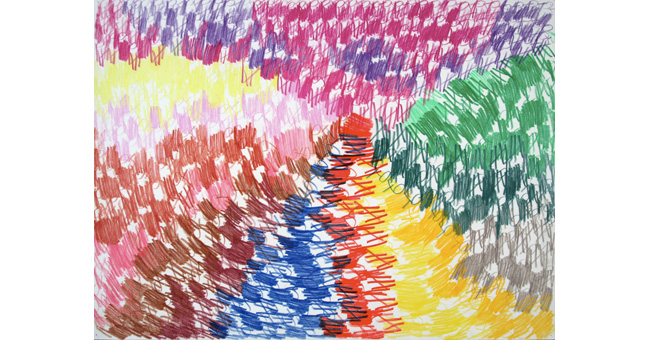
    In March, ‘Souzou: Outsider Art from Japan’ opened at the esteemed Wellcome Collection in London. This display showcased the creations of Japanese artists working at day centres in Japan and was extremely successful in its aim of highlighting the complex intersections between health and creativity, work and wellbeing and mainstream and marginality. It also gave us the word ‘Souzou’, which is perhaps a somewhat better reference for what we currently recognise as Outsider Art, although it has no direct translation in English. In Japanese, depending on how it is written, it can mean creation or imagination. The term itself, I think, goes part of the way in distilling any preconceptions about this type of art because it is a word that the Western world has (somewhat unknowingly) needed for so long.

    The exhibition was a timely reminder of the importance of displaying works created by those who cannot so easily align themselves with the mainstream art world. It blew away the hierarchical idea of biographical context and focused on the achievements of these artists and their incredible creations.
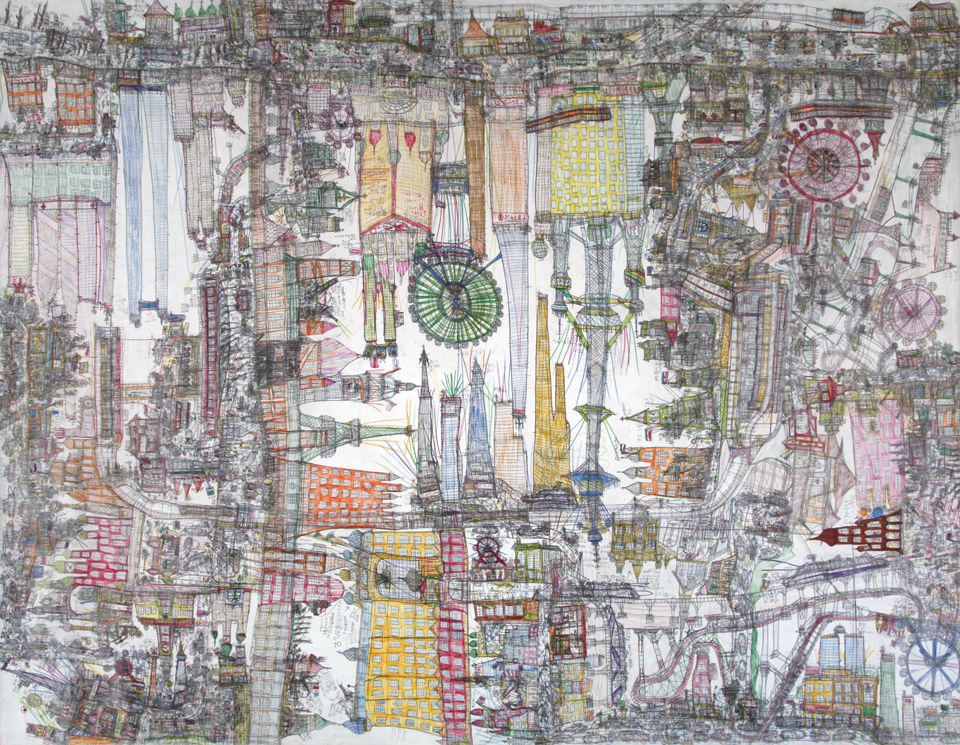
    NorimitsuKokubo
    Norimitsu Kokubo

    Following on from this majorly important exhibition at the Wellcome Collection, the Hayward Gallery hosted ‘Alternative Guide to the Universe’; an exploration of the work of self-taught artists and architects, fringe physicists and visionary inventors. The Hayward Gallery is no stranger to outsider art, having hosted the UK’s first major exhibition of outsider art thirty four years ago, and it certainly did the subject justice once more.

    The show was an incredible display of the power of imagination, most aptly illustrated, perhaps, by ‘gothic futurist’ and hip-hop pioneer Rammellzee’s ‘Letter Racers’, which depicts how the alphabet might look if the letters were to become mechanised and able to fly into battle. It was without a doubt an innovative combination of art and science and re-imagined worlds, of artists and inventors who want to better understand the universe.

    Of course, probably the biggest event in the outsider art calendar this year was the Venice Biennale. The Biennale, which ran from 1 June – 24 November, was titled ‘The Encyclopedic Palace’ by curator Massimiliano Gioni after self-taught artist Marino Auriti’s Palazzo Enciclopedico design for an imaginary museum meant to house all worldly knowledge. The Palace showed works from the past century alongside several new commissions, showcasing one hundred and fifty artists from more than thirty-eight countries. Blurring the line between professional artists and amateurs, outsiders and insiders, the exhibition took an anthropological approach to the study of images, focussing in particular on the realms of the imaginary and the functions of the imagination.

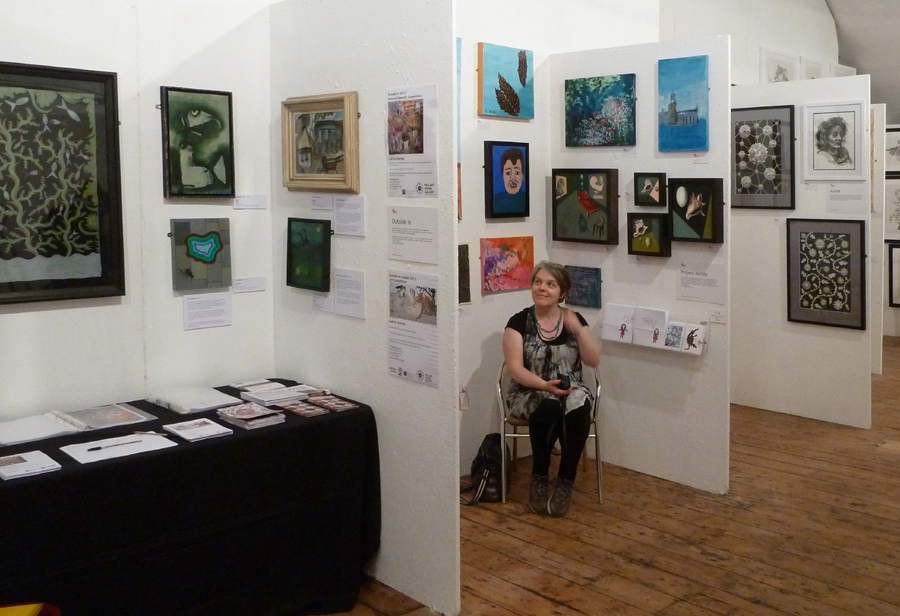
    From 26 September – 28 November, self-proclaimed ‘Outsider Curator’ Sue Kreitzman organised ‘Epiphanies! Secrets of Outsider Art’ at the St. Pancras Hospital Conference Centre in London. The show revealed works covering an impressive range of content, media and style by almost 25 artists, all of whom Kreitzman had personally befriended.

    Orleans House Gallery in Twickenham hosted (and still are hosting!) a major retrospective of the work of Madge Gill, who without training or aspirations for fame produced  thousands of ink drawings during her lifetime. The focal point of the exhibition was The Crucifixion of the Soul, which had not been on display in the UK since 1979. Over ten metres long, this immense calico is inscribed with Gill’s finely wrought doodle-like drawings and is testament to Gill’s commitment to creativity.

    Face to Face with the Outsiders’ at the Julian Hartnoll Gallery in London beautifully brought together a vast and varied range of portraits created by those considered to be on the ‘margins’ of the art world, and ‘The Gravy Train and Roads to Recovery’ in the St. Pancras Hospital Conference Centre in London was an eclectic mix of work by Service Users at the Margarete Centre and Kate Bradbury’s dervishes. Organised by The Arts Project, the exhibition aimed to highlight the idea that whilst treatment for substance misuse historically focussed on harm reduction and substitute prescribing, other recovery methods emphasis equality, opportunity and equal access to society.

    Kate Bradbury's 'Goats'
    Kate Bradbury’s ‘Goats’

    Throughout the year, Outside In ran a touring show as a follow on from their National exhibition in 2012. The show displayed work by twenty artists facing barriers to art world who were selected through the open national competition. Running parallel to this, the organisation also held regional exhibitions which allowed people all over Scotland and England to experience this incredible work.

    So, this is just a brief round-up – and certainly doesn’t cover everything that happened! Here’s to an even better 2014 – we already have a lot to look forward to, including ‘Intuitive Folk’ at Pallant House Gallery and ‘British Folk Art’ at the Tate.


    I would like to take this opportunity wish you all a very Happy New Year, and thank you for reading. I hope you’ve enjoyed all that has been on the Blog this year, and that you will join us again next year. If you have anything you would like to see on here, please do not hesitate to get in touch.
  • Outsider Art under Analysis: Part Two (Answers)

    Outsider Art under Analysis: Part Two (Answers)

    Above image: Marcel Storr

    In Outsider Art under Analysis: Part One (Speakers), I wrote about the talk I attended at the Wellcome Collection on 15 June 2013. In this post, I will answer some of the questions raised during the discussion (no research, just my own thoughts). It would be great to hear everyone else’s answers too, so feel free to add a comment below the post.


    1) Can ‘outsider artists’ talk about their work meaningfully and coherently? 

    This is a difficult one, as I know a lot of people like accompanying interpretative material to aid them when they view an artwork. However, I think that art is really another form of communication, and so the idea that some artists – for example those without speech or writing – can’t actually talk about their work seems quite unimportant. This is more of a question that encompasses the whole of art history and not just ‘outsider art’; do we need accompanying material, or is the work alone enough? I think a lot of artists who are aligned with/align themselves with the notion of ‘outsider art’ (and actually, artists more generally) do use creativity as a way of communicating their ideas, so for this reason, does it matter that some may not be able to ‘talk’ about their work?

    2) Why do we feel we have to label people? Why can’t outsider artists just be called artists?

    This is obviously an on-going debate with regards to the label ‘outsider art,’ which I have spoken about in a previous blog post. I, for one, would love for all art to be considered as just ‘art’ and all artists to be considered as just ‘artists.’ But I think it’s a bit more complicated than that. In the present day, I actually think that the term ‘outsider art’ is verging on redundant. In ten, maybe twenty years’ time, I don’t think we will use it. But, if having had a label at some point has helped raised awareness and can actually bring this art into the mainstream, then it can only be a good thing.

    Karl Schmidt, Rottluff, 'The Factory,' 1909, Brucke Museum, Berlin
    Karl Schmidt, Rottluff, ‘The Factory,’ 1909, Brucke Museum, Berlin

    3) Did ‘outsider art’ exist before the 1930s?

    The golden age of Outsider art was between 1880 and 1930 – so in short, yes! It emerged at this time because of the development and progression of European psychiatry. Patients were encouraged to draw, paint, and take part in alternative activities to aid their recovery. This was also the period when modern artists started to take notice of what was becoming quite a powerful and popular type of art.  There was a lot of discontent due to accelerated mechanisation and urbanisation in Europe at this time, and of course, it encompassed two world wars and a period of huge unrest in between. Many artists working during this period were looking for new direction – they wanted a way to illustrate their discontent, a new way to depict the devastated world around them. The idea that ‘outsider artists’ were self-taught, yet representing the world as they saw it, and their inner worlds, regardless of whether this fitted with the accepted ‘canon’ of the time was something that really resonated– most notably with the German Expressionists such as Karl Schmidt-Rottluff and Max Beckmann, and, of course, the Surrealists.

    The term ‘outsider art’ itself was coined by Roger Cardinal in 1972, following on from Jean Dubuffet’s ‘Art Brut’ or ‘Raw Art’, which emerged in the 1940s.

    4) What is ‘outsider art’? In simple terms – has it become outdated?

    In simple terms, it is very outdated and almost redundant. The meaning of it has changed so much over the decades that actually describing it proves very difficult! It originated as a term to describe work created by those incarcerated within mental institutions, but has evolved to become more of an umbrella term for a whole host of different stylistic approaches – naïve art, folk art, self-taught art, to name but a few. Again, it is useful for the time being in that this art can be ‘called’ something, and is not just floating in the ethers, on the margins of the art world. In fact, particularly this year with the huge exhibitions taking place that are showcasing the talents of artists under this term, it seems almost ridiculous to describe this work as being ‘outside’ of the mainstream. The hope is that one day it won’t need a specific term and work created under this umbrella will simply be known as ‘art.’

    5) Not everyone is an artist, and not everything is art. People have to go to art school and study what has come before to become an artist.

    I really wasn’t sure about this statement. I know a lot of people work very hard to become artists in the dog-eat-dog art world; the go to art school, they learn about art and artists that have gone before, and they build on this in their own practice, BUT I do think that everyone has an inner artist, if this is too far, perhaps, then at least everyone has an immense amount of potential for creativity inside of them. I just don’t know who’s to say what is and isn’t art, and why people who aren’t formally trained cannot be considered as artists. I think this is one of the major reasons that the term itself needs to be forgotten; it gives the illusion of a distinction between who is ‘inside’ and who is ‘outside’ and therefore who can be called an ‘artist.’

    Jean Dubuffet, 'Spinning Round', 1961, Tate.
    Jean Dubuffet, ‘Spinning Round’, 1961, Tate.

    6) Why is ‘outsider art’ not taught as part of the art historical canon? 

    This is something that I really hope will change soon. As part of my undergraduate degree, I was very lucky as I was actually taught about the emergence of outsider art, and about artists such as Louis Wain and Richard Dadd. I think people find it difficult to include in the canon because it is not a ‘movement’, and it did not take place over one definite period of time – it has been happening throughout this period – running parallel, if you will, alongside the history of modern art.

    I also think that historians might find it difficult to talk about – there’s no definitive style etc. And, as Roger Cardinal said at the talk – it is a movement of individuals. I think the way forward is to include ‘outsider artists’ alongside teachings in the development of modern art. After all, they were immensely influential to hugely prolific modern artists, particularly those within the Surrealist movement, and this influence should not be forgotten.

  • What’s On: Spring/Summer 2013

    What’s On: Spring/Summer 2013

    Image above: Impact Art Fair 2011

    Below you will find some excellent and inspiring exhibitions that are taking place (mainly in the UK – sorry!) this spring and summer. From the Wellcome Collection to the Impact Art Fair; a dedicated art fair showcasing work by those facing barriers to the art world due to mental health reasons, disability, substance misuse or other social circumstances, there is bound to be something for everyone. I’m going to try and keep doing these ‘What’s On’ posts regularly to keep you all updated – and as 2013 seems to be a big year for the outsider art world! *(Click on the titles of the exhibitions to visit the webpage)*


    Souzou: Outsider Art from Japan
    Until 30 June 2013

    This exhibition showcases more than 300 works for the first major display of Japanese Outsider Art in the UK. With 46 exceptionally talent artists represented; all of whom are residents and day visitors at social welfare institutions in Japan, this exhibition consists of an excitingly diverse range of ceramics, textiles, paintings, sculpture and drawing.

    Toshiko Yamanishi, 'Mother'
    Toshiko Yamanishi, ‘Mother’
    Image from http://www.wellcomecollection.org

    The Gravy Train and Roads to Recovery
    Until 22 June 2013

    This exhibition at The Conference Centre presents artwork from Service Users at the Margarete Centre and highlights equality, opportunity and equal access to society as treatments for substance misuse. Alongside work by participants of the Margarete Centre are works by upcoming visionary artist Kate Bradbury.

    Image from 'The Gravy Train and Roads to Recovery' Facebook Page
    Image from ‘The Gravy Train and Roads to Recovery’ Facebook Page

    Outside In: On Tour
    Until 3 January 2014

    This touring exhibition consists of the work of 20 artists facing barriers to the art world selected through an open national competition. The tour features the six Award Winners from the Outside In: National exhibition: Kate Bradbury, Manuel Bonifacio, Matthew Sergison-Main, Michelle Roberts, Nigel Kingsbury and Phil Baird.

    The four venues the exhibition will be touring to are: The Museum of East Anglian LifeRoyal Brompton Hospital,  Salisbury Arts Centre and The Public.

    Regina Lafay, 'Convert' Image from www.outsidein.org.uk
    Regina Lafay, ‘Convert’
    Image from www.outsidein.org.uk


    Outside In: Regional

    On the back of the success of Outside In: National, the work of Outside In artists will be popping up all over the country in 2013 – from The Museum of Somerset in the South West and Hastings Museum and Art Gallery in the South East right up to Perth Museum and Art Gallery in Scotland, and everywhere in between. For information on all of the dates and venues, visit Outside In’s website.


    I Ar You at Large Glass Gallery
    Until 24 May 2013

    I Ar You: Portraits by Self-Taught American Artists features an intimate selection of important artists from the Deep South and beyond, presenting self-portraits and anonymous figures alongside images of celebrities, presidents and cowboys.

    Image from www.largeglass.co.uk
    Image from http://www.largeglass.co.uk

    The Alternative Guide to the Universe at the Hayward Gallery
    11 June – 26 August 2013

    An exhibition surveying the work of individuals who create alternatives in art, science and architecture. Focusing on self-taught practitioners whose work is generally produced outside of  established channels and official institutions, The Alternative Guide to the Universe features a range of contributors from fringe physicists to the inventors of new languages, from artists who map cities of the future to others who design imaginary technologies.


    The Impact Art Fair at Block 336, Brixton
    26 – 28 July 2013

    This will be the second Impact Art Fair organised by Creative Future, which showcases work by highly talented artists whose access to the mainstream is limited by mental health issues, disability, chronic ill health or social circumstance.

    *N.B. If you are an artist, you can still enter work for selection for the Impact Art Fair up until 23 April 2013.

    Heidi Aldous Image from www.impact-art-fair.org.uk
    Heidi Aldous
    Image from www.impact-art-fair.org.uk

    “Great and Mighty Things”: Outsider Art from the Jill and Sheldon Bonovitz Collection at The Philadephia Museum of Art
    Until 9 June 2013

    In this innovative exhibition, the power of self-taught artistic talent, the drive of the human spirit to create, and the wonders of highly original inner worlds are revealed. This show surprises and challenges museum goers, forces examination of the conventional definition of the word ‘artist’, and shows that good art is good art regardless of the maker’s resume.


    Gods, Devils and Dreams by Peter Harry Lewis White at Bethlem Gallery
    Until 17 May 2013

    This is an exhibition of large-scale paintings and detailed pencil drawings by Peter White. His work depicts visions and dreamscapes that take the viewer on a journey into abstracted landscapes, figures and happenings. “My exhibition reflects my experiences and my creations. There are some windows into my memory and mind, but the rest is just colour and form.”

    Peter White Image from www.bethlemgallery.com
    Peter White
    Image from www.bethlemgallery.com

    Steve Wright’s House of Dreams
    Museum open days: 11 May, 8 June, 6 July, 3 August and 7 September 2013

    This amazing world of discarded objects has been created by artist Stephen Wright, who uses everyday objects to create mosaics: milk bottle tops, broken dolls, crockery and the rich pickings of car boot sales. The museum is open by appointment, but there are open days on 11 May, 8 June, 6 July, 3 August and 7 September 2013.

    Stephen Wright's House of Dreams Image from www.stephenwrightartist.co.uk
    Stephen Wright’s House of Dreams
    Image from www.stephenwrightartist.co.uk

    To keep up to date with other goings-on in the ‘outsider art’ world, follow me on Twitter: @kd_outsiderart


  • Review – ‘Souzou: Outsider Art from Japan’ at the Wellcome Collection

    Review – ‘Souzou: Outsider Art from Japan’ at the Wellcome Collection

    ‘Outsider art’, although a term that is so often criticised for its ambiguity and uncomfortable sentiments, takes centre stage this spring at the Wellcome Collection in London. Despite the semantic controversy surrounding the term itself, there is nothing ambiguous, controversial or uncomfortable about Souzou: Outsider Art from Japan.

    Unlike the development and history of ‘outsider art’ in Europe; which ran parallel to the discipline of psychiatry – think Hanz Prinzhorn, in Japan, ‘outsider art’ has been “more closely aligned with public health and education reform from 1945.” Kazuo Itoga, considered the father of social welfare reform in Japan, pioneered the principle of producing personal artworks within an institutional context, insisting on self-expression and a policy of ‘non-intervention’ in the creative process.

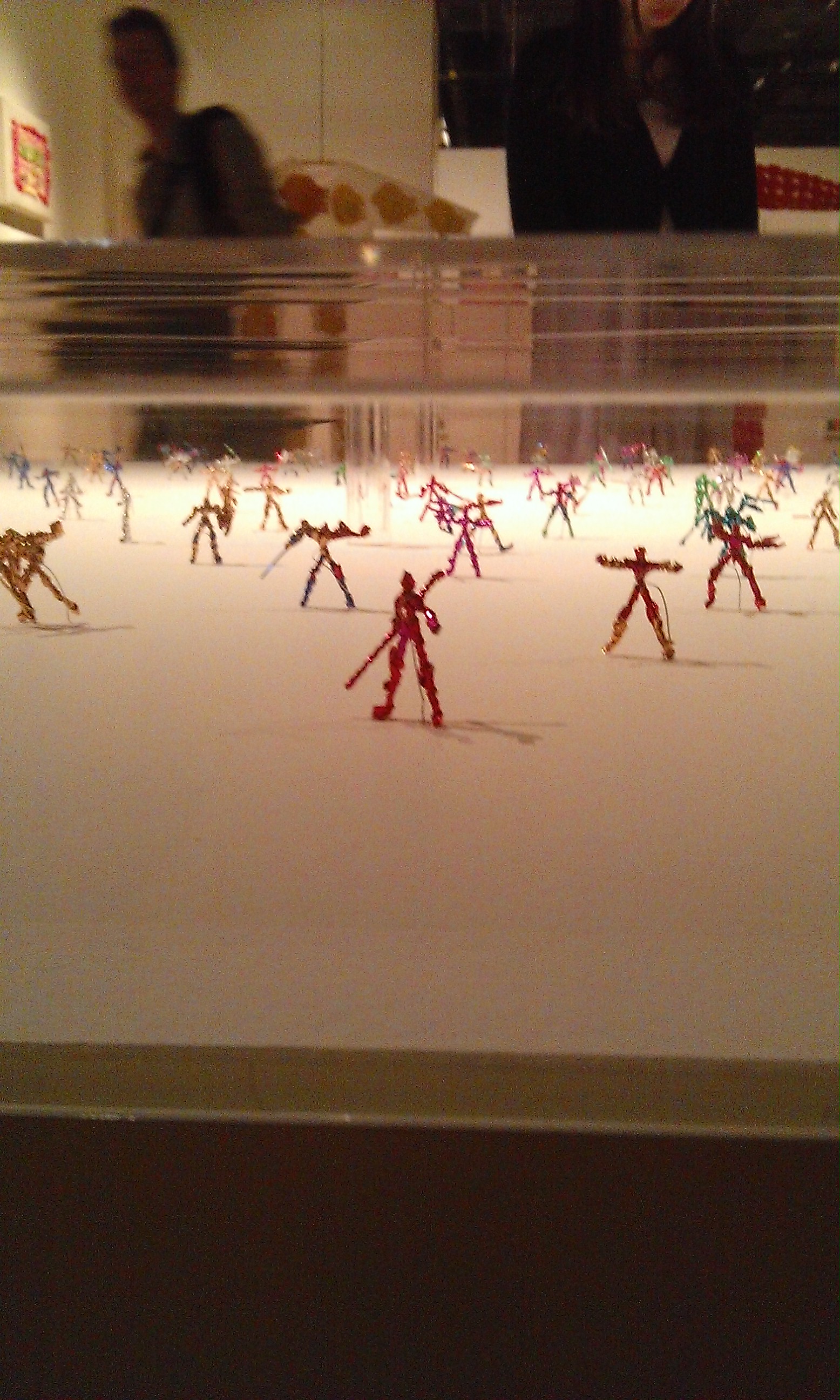
    Historical context aside, the exhibition at the Wellcome Collection is as diverse as the term ‘outsider art’. Amongst the sculpture and 2D works on display are tiny shiny model figures, bongos (the animal – not the drum), lions, life size dolls, still lifes, graphic posters, illustrations of morning tv programmes, and – perhaps some of my favourites – the Fried Chicken Pyjamas and the Pigeon Shaped Cookie Pyjamas by Takahiro Shimoda.

    Shota Katsube
    Shota Katsube
    Takahiro Shimoda 'Fried Chicken Pyjamas'
    Takahiro Shimoda ‘Fried Chicken Pyjamas’

    Split into six named sections – ‘Language’, ‘Making’, ‘Representation’, ‘Relationships’, ‘Culture’ and ‘Possibility’ – the exhibition represents works that are characteristically and stylistically common to what we consider to be ‘traditional outsider art’, as well as works that draw on popular culture, creativity and the structure of language. The section headed ‘language’ looks at the challenge of communication in a written or spoken form and how “visual expression can offer a release from the confines of language.” The ways we encounter language are explored, with Masataka Aikawa’s storybook-inspired ink drawings and Hiroyuki Komatsu’s pieces which reference the plots and characters from his favourite daytime TV programmes.

    Komatsu’s pieces, amongst others, finally highlight that – contrary to Dubuffet’s stubborn views on isolation and immunity – ‘outsider artists’ are more often than not very much in tune with contemporary culture. In fact, there is a whole section of the exhibition entitled ‘Culture’, which demonstrates the “artists’ keen awareness of their surroundings and of the wider cultural context.” Kiyoaki Amemiya’s mountainous landscapes and Ryosuke Otsuji’s “contemporary interpretation” of Okinawan lions highlight the influence of historical Japanese culture; whilst Daisuke Kibushi’s post-war movie posters and Keisuke Ishino’s paper anime figures allude to the impact of popular culture.

    ‘Representation’ and ‘Relationships’ include depictions of the objects and people that the artists experience in their everyday lives. ‘Representation’ raises questions about subjectivity vs objectivity – exemplified in the work of Takashi Shuji and Takanari Nitta, where seemingly everyday objects – hairdryers, windows – “are elevated to objects of beauty,” whilst ‘Relationships’ examines “the ways the artists depict themselves and their multifaceted relationships with other people.” The artists explore idealised visions of themselves (as is the case with the work of Yoko Kubota and Masao Obata), as well as their ambitions, fears, desires and the notions of “absence, uncertainty and erasure.”

    When we think of ‘outsider art’, we often think of the use of unconventional objects – in fact, I recently wrote a post about the ‘outsider artist’ as a pioneer of the ready-made movement in the history of modern art – and this is explored in ‘Making.’ In this section, the importance of work and employment in Japan is highlighted with the use of clay and washi (Japanese paper), used by Komei Bekki and Seiji Murata, who are both employed in these industries respectively. This section includes a vibrant array of tactile materials – textiles, clay, and cloth – which require “repetitive, time-consuming processes that have calming and therapeutic effects.”

    My favourite piece in the show, however, sits in the final category of ‘Possibility.’ Norimitsu Kokubo’s panoramic cityscape is a work-in-progress which depicts a map of the world as visualised through the artist’s internet research. When finished, the work will measure a hefty 10 metres across. This work epitomises this section’s attempt to portray works which “collate and reorder information… to create parallel, ‘improved’ realities.”

    Norimitsu Kokubo, '3 Parks with  a panoramic view. A 360 degree world of panoramic view - Ferris Wheel, clusters of buildings with magnetically-levitated trains, past present future, a suburban town with railroad bridges, a city under development with indigenous peoples and natural resources.'
    Norimitsu Kokubo, ‘3 Parks with a panoramic view. A 360 degree world of panoramic view – Ferris Wheel, clusters of buildings with magnetically-levitated trains, past present future, a suburban town with railroad bridges, a city under development with indigenous peoples and natural resources.’

    The term Souzou, in my opinion, goes part of the way in distilling any preconceptions about this type of art because it is a word that the Western world has (somewhat unknowingly) needed for so long. With no direct translation into English, it can mean either ‘creation’ or ‘imagination’ – “both meanings allude to a force by which new ideas are born and take shape in the world.” Maybe it doesn’t need a direct translation; after all, ‘Outsider Art’ is an “imperfect approximation” of another term that does not translate comfortably into English – Jean Dubuffet’s Art Brut. It is our need for labels and categories that has tied us in a knot when it comes to ‘outsider art’; when really we do not need words at all.

    The exhibition is a timely reminder of the importance of displaying works created by those who cannot so easily align themselves with the mainstream art world. Created by Japanese artists in day centres all over Japan, the works perhaps illustrate the term Souzou better than any English translation ever could, and certainly better than many works in the current contemporary mainstream. The exhibition blows away the hierarchical idea of biographical context and focuses on the achievement of these artists and their incredible creations. There is something here for everyone, and I challenge you not to come away thinking about the astounding imagination and creative ability of these people. Perhaps this year is the year that ‘outsider art’ finally becomes recognised as an illustration of authentic creativity and talent and can once and for all be lost as a category, and works of the Souzou calibre can be known simply as ‘Art.’

    Souzou: Outsider Art from Japan is on at the Wellcome Collection from 28 March – 30 June 2013. For more information, click here.

    All quoted information is taken from the ‘Souzou: Outsider Art from Japan’ exhibition companion, available from the Wellcome Collection.