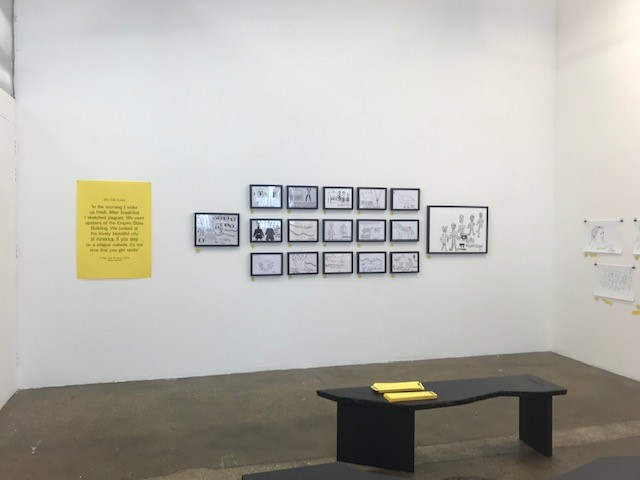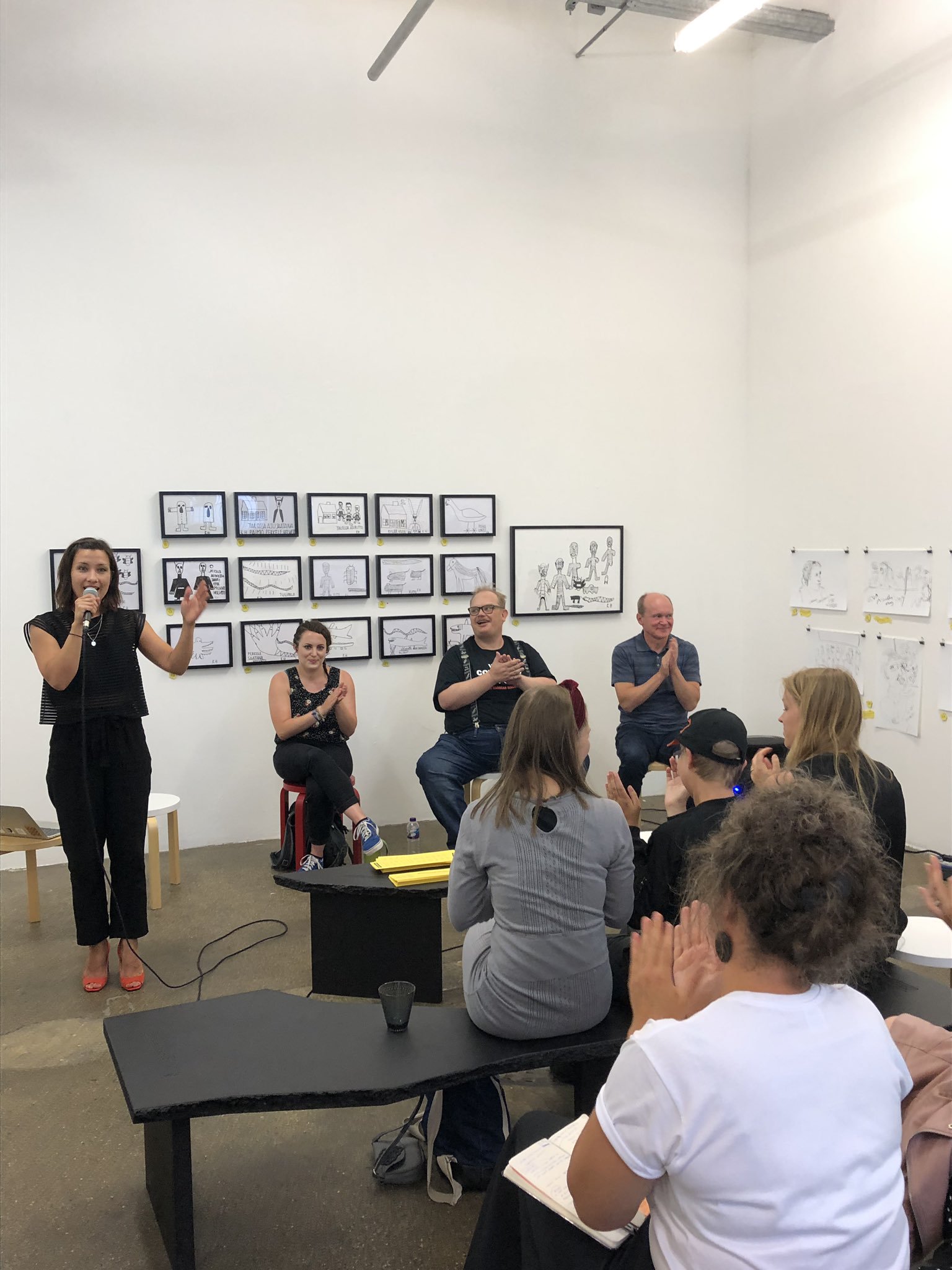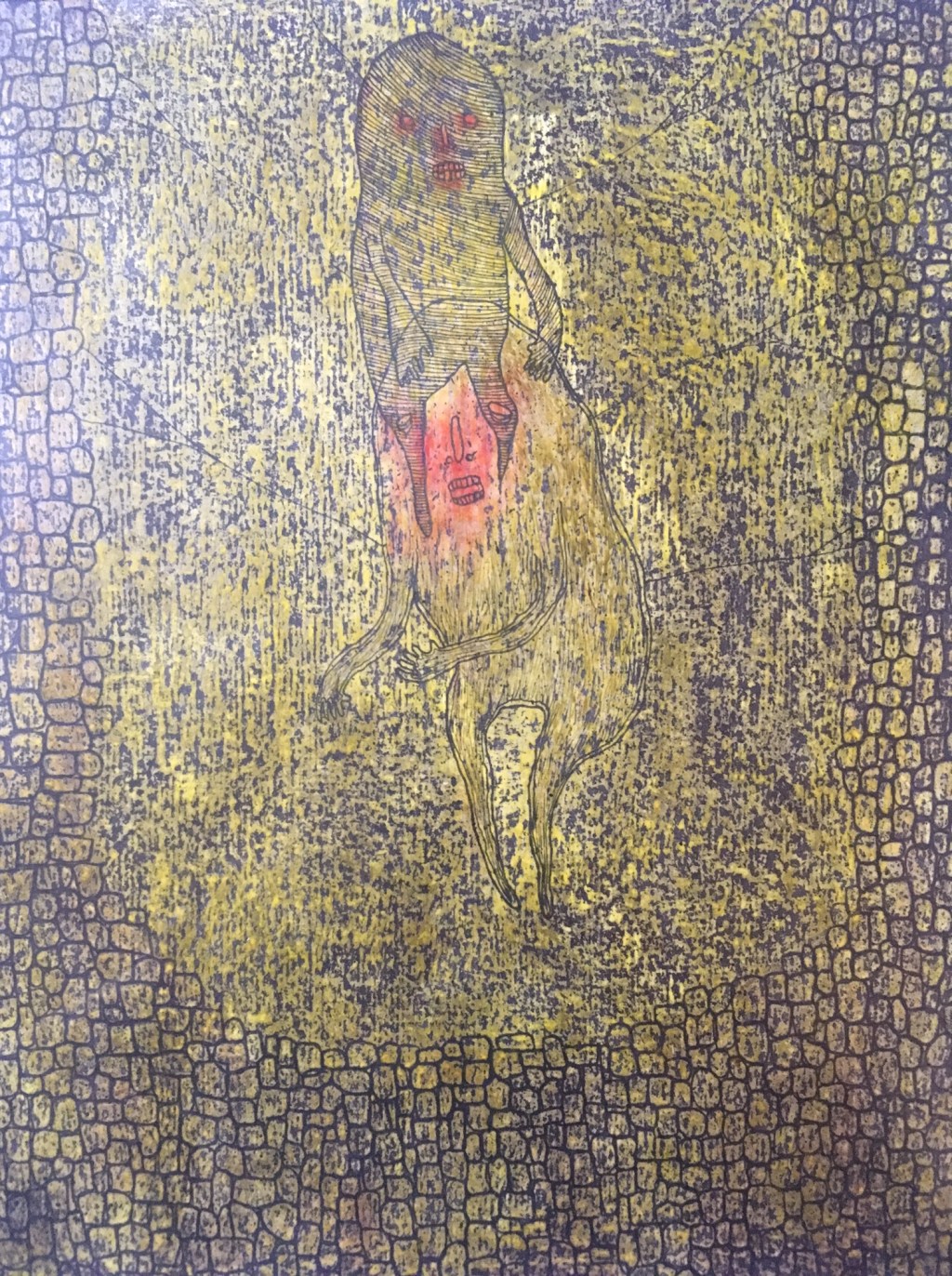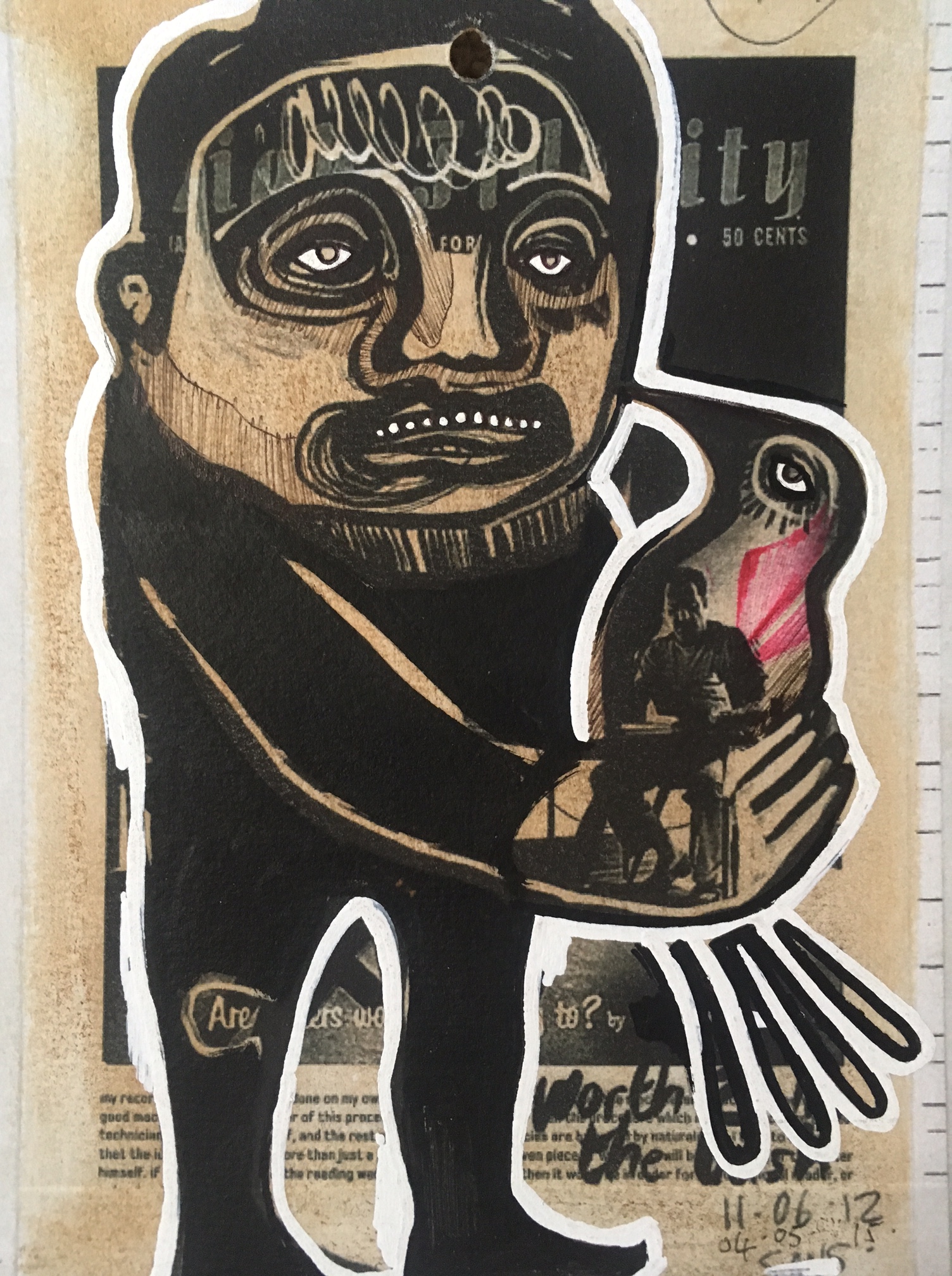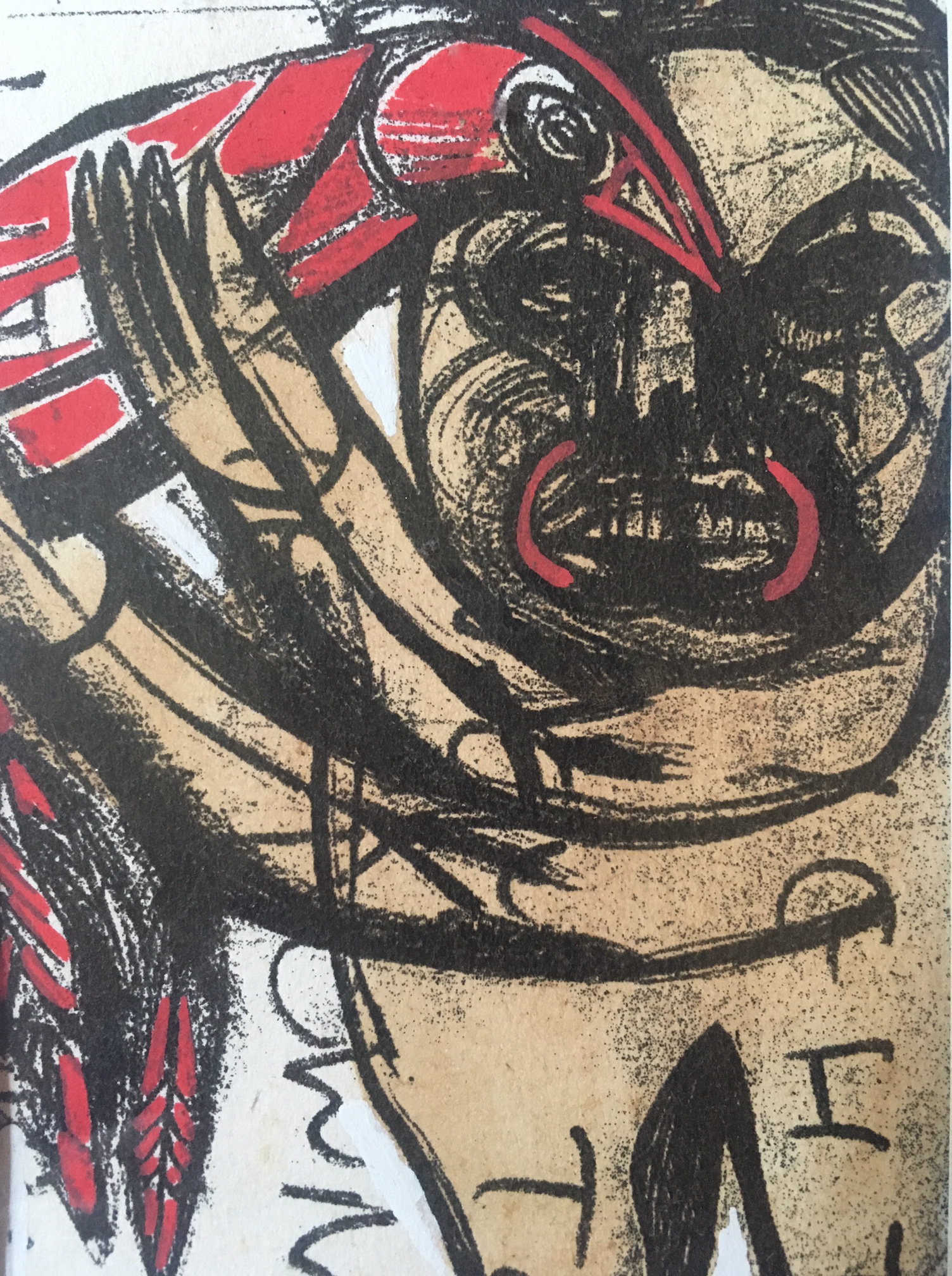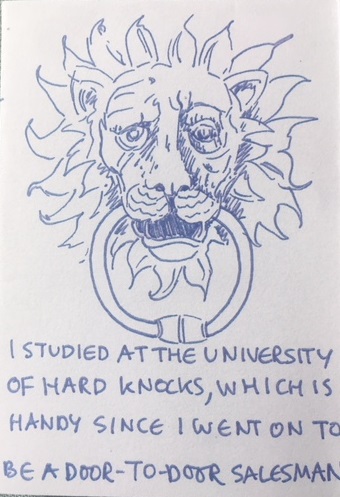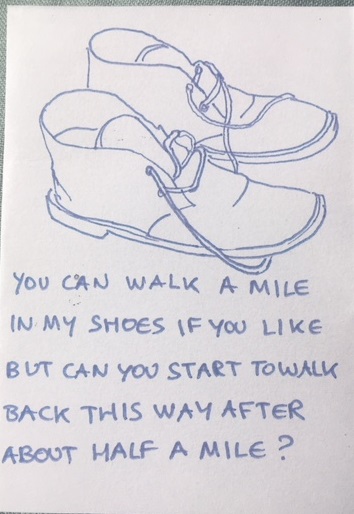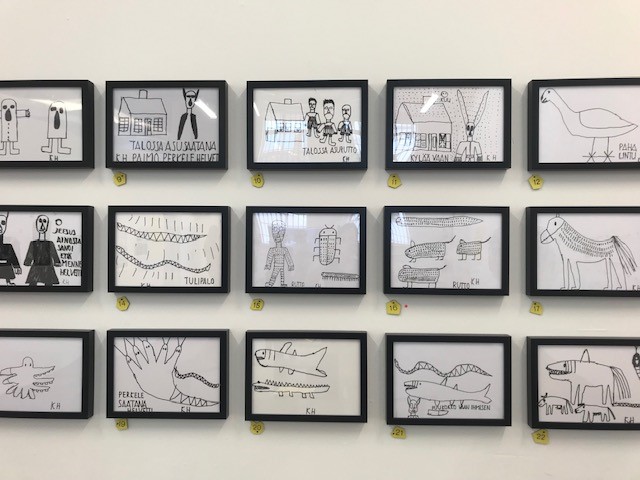
This latest artist showcase highlights beautiful, haunting drawings and zines by Cloud Parliament.
I’d like to be shod
When did your interest in art/creating begin and what is your starting point for each piece?
I don’t recall having an interest: it was always something integral, something I did. When I was about three I used to lift the kitchen drain cover and plunge my feet into the water then pad about making filthy prints on the garden flagstones (parents installed a convex car mirror so they could spot me about to lift the grid!) Then I progressed to making ‘boats’ out of soil, digging holes in the garden and mounding the displaced soil to make a ship around the hole in which I’d sit for hours. I used to see whirls, spirals spinning across the ceiling (eidetic imagery, I think) and lights and shapes and forms and patterns and people and things. I always drew, often with words alongside. The images rise up out of a kind of darkness -not sure how to describe it. Sometimes in the darkness is an eye watching/keeping watch – not always a human eye. Then I know there’s an image about to rise. It’s often sort of spotlit or, if it’s black-and-white it has a filigree fineness to it, a 3D lace-like quality. I try and sketch them when they arrive. Then I work on them, sometimes drawing great blocks of very dark graphite and carving into it with an eraser. Others are fine-pencil to match the filigree origins.
Comb-Toothed Wolves
Who/what influences your work?
I have a world and everything I create pertains to that world, is part of it. I get sudden connections – there’s a whole thing with steam-genies created out of hot food steam – they dissipate as steam does but can be collected and saved from immediate obsoletion in jamjars. When they do revert to water – it’s their blood – and their blood is homeopathy. Pieces of information arise. Alongside images. I love comedy and a lot of my pieces are inspired by the need to create something comedic, wry and awry. But I love Chagall (his colours, his mysticism!), Van Gogh, Paul Klee, Leonora Carrington, Remedios Varo — Eddie Izzard, Ivor Cutler, Lisa Hannawalt, Gabrielle Bell, Dominique Goblet, Kitty Crowther. I have an ever shifting pantheon although no one ever vanishes from it, they may just be given a slight red shift :)
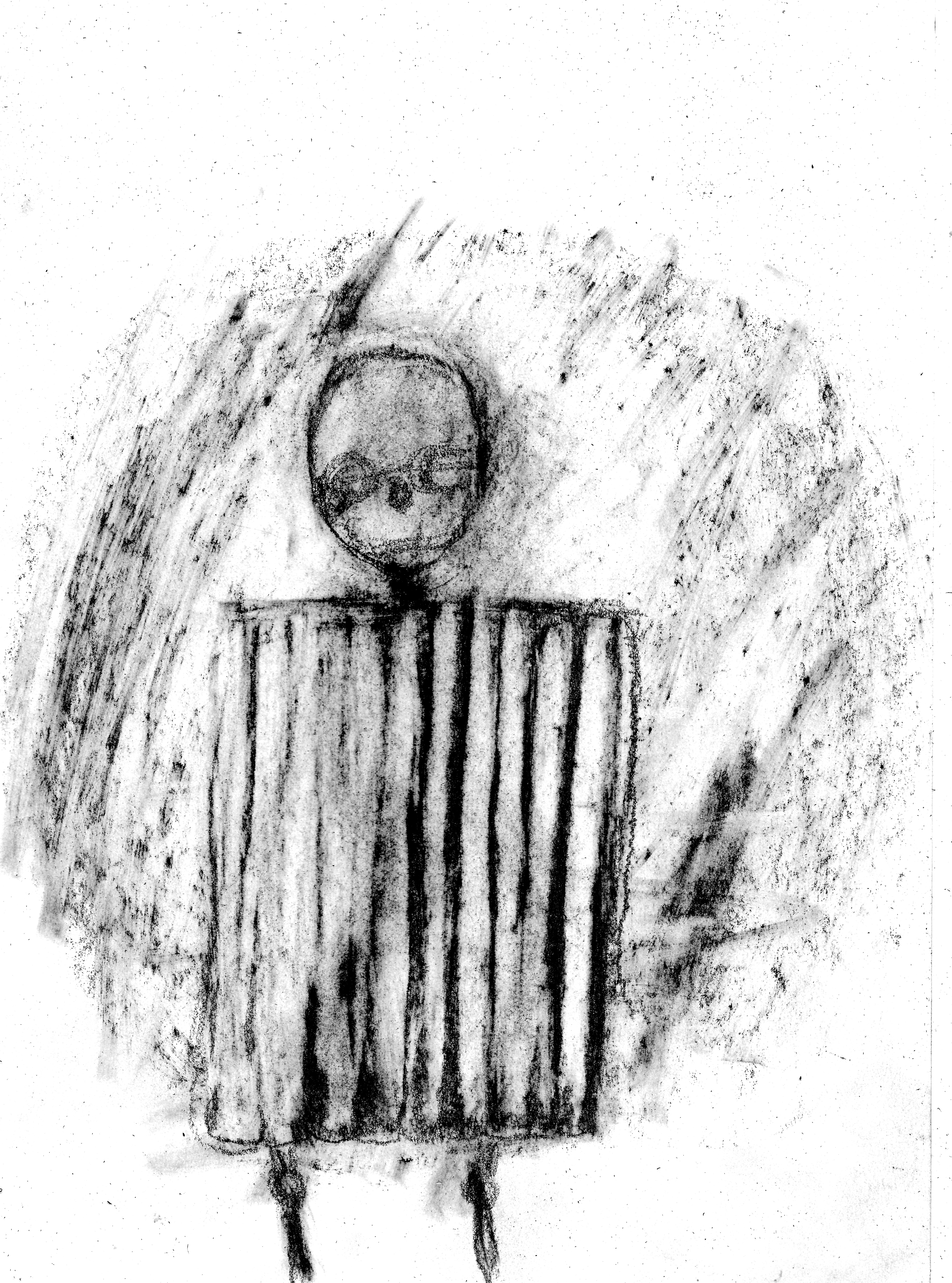
Death having undergone cosmetic surgery replacing their ribs with vertical blinds
What do you hope the viewer gets from your work?
A viewer! Blimey, what do I hope they get from my work? The kind of sudden shift you get when something makes you laugh. A new set of synapse connections… the images arrive, the place they rise from feels real real. Maybe one of the viewers will also recognise something and, who knows, by viewer triangulation we can pinpoint exactly where it is and, together, set off on an expedition.
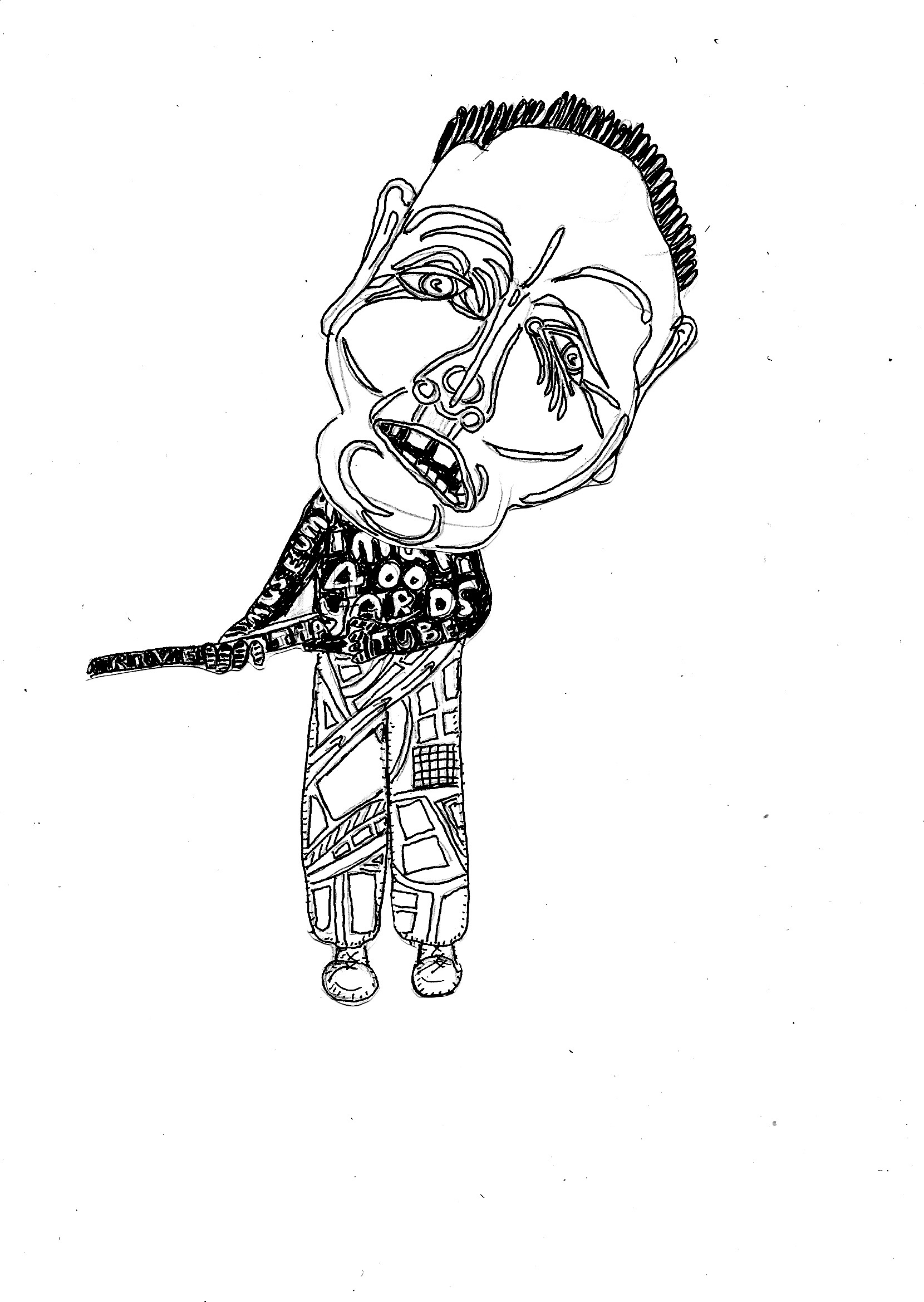
Critter Tie Seller
What do you think about the term Outsider Art? Is there a term that you think works better?
Outsider Art? It’s fine as a portmanteau description. It’s an inclusion zone for we normally excluded bods and our outre output: it suggests a place of acceptance as long as we accept what we are. Sometimes acceptance is tough since it’s acknowledging an unbreachable gulf. I think it is a term more to enable people who are not outsider artists to feel that it’s okay to gain something from seeing work that isn’t conducting itself with the usual propriety and that can’t be understood by bringing the usual keys-to-the-understanding-of-art to it — it lets them pick the lock. And that’s good.
Bayeux Tapestry
What are you working on at the moment?
I’m working on my Map Battalion — the actual personnel and their effects. I’m — as always –creating Cloud Parliament: capturing the exploits of my troubadors who are a kind of water-larvae and part of the Perpetual Choir, and on bottled (as in liquid in bottles) journeys and the journeywomen/men who bottle them, working in giant fountain pans: I’m drawing the moon’s liposuction scars: and a sequence of binbag mermaids who steal from people who are turning into boats on the moat infested with troubadours…
Mediums as Bolts of Cloth
Where do you see your work taking you in the future?
Oh, that’s a difficult question to place in one’s head and pick at! It’s been a surprise how much joy I get from people seeing my work, although when no-one saw it (and if no one sees it) the work will continue and continue because, to misquote Emily Bronte, I am my flipping pictures/doodles/verbal snippets. I’ve been letting the words diminish. Sometimes these days I have problems speaking. I’ve always thought in images. Now I’m letting them through, not blocking them in any way, I’m growing silent. Except for the sound pieces (which I’m making less of). I think the art (or, rather, the world from which they emanate) wants to be seen. Wants to wander about and establish an embassy in this other, greatly excluding world. It wants a spot of detente. I want my art to take me.
Cloud Parliament’s Zines: (to be read from top right, zig-zag down, and end at top left)
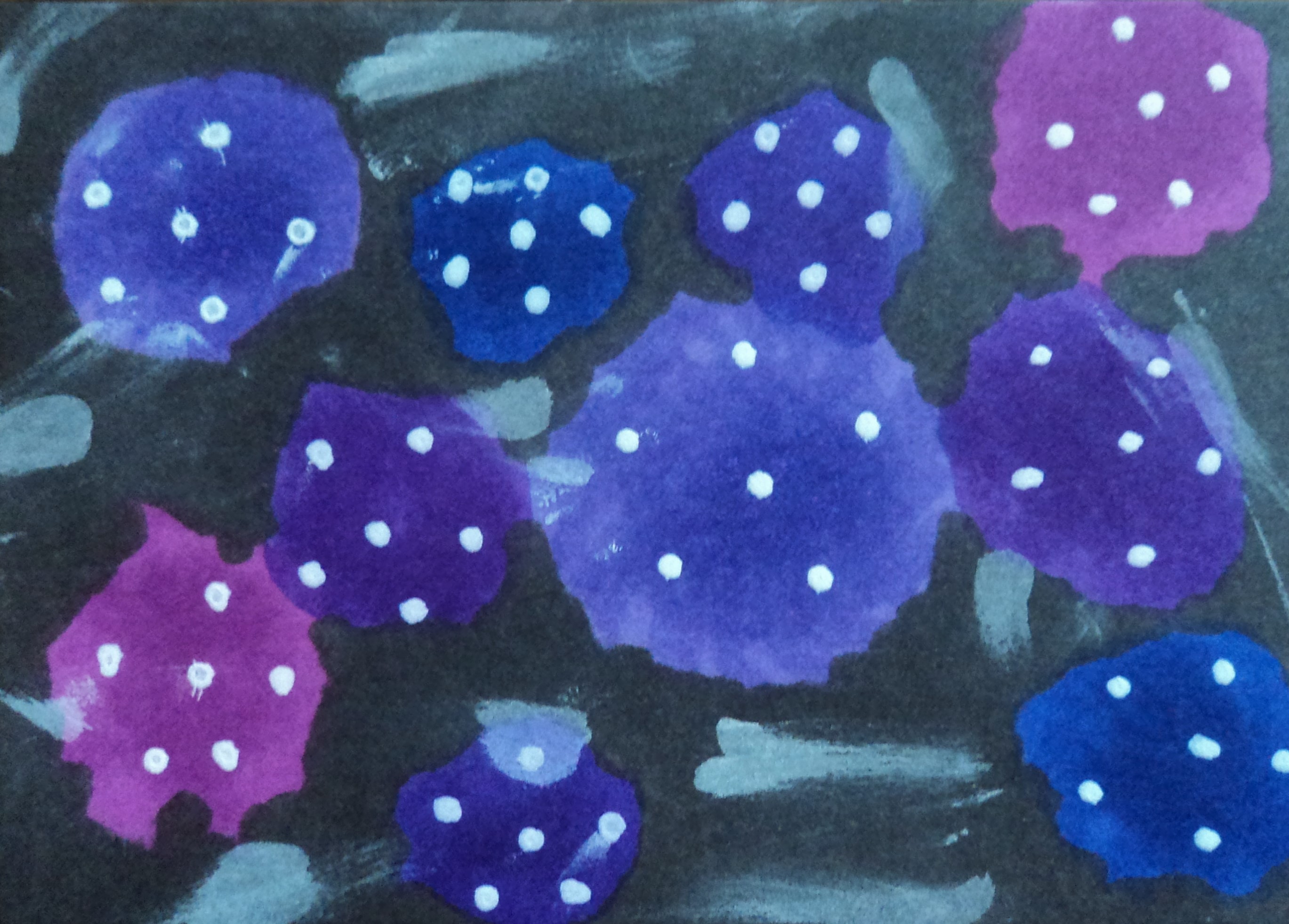
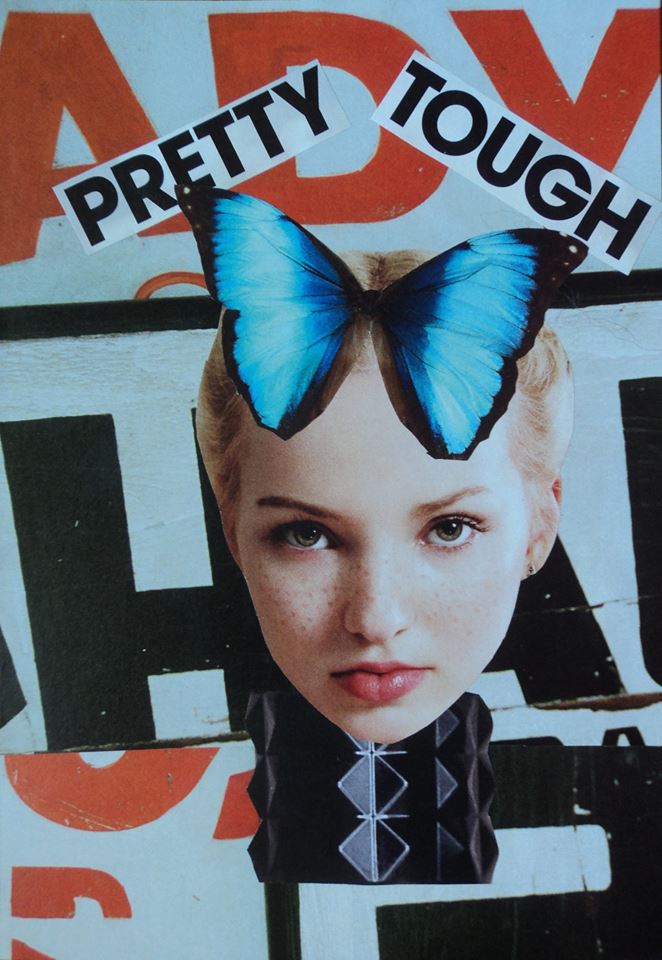
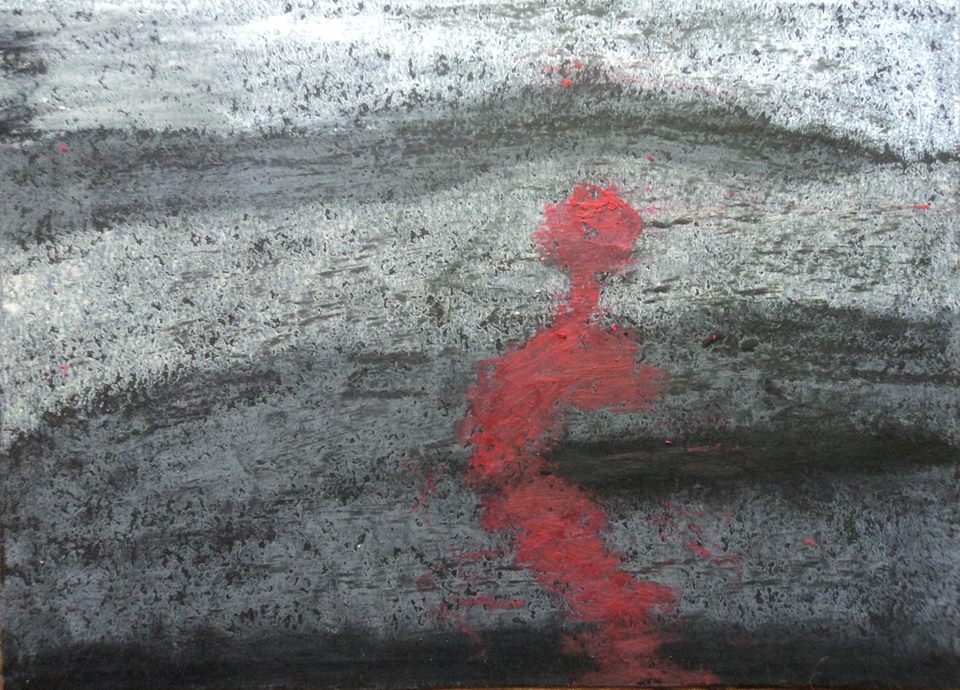
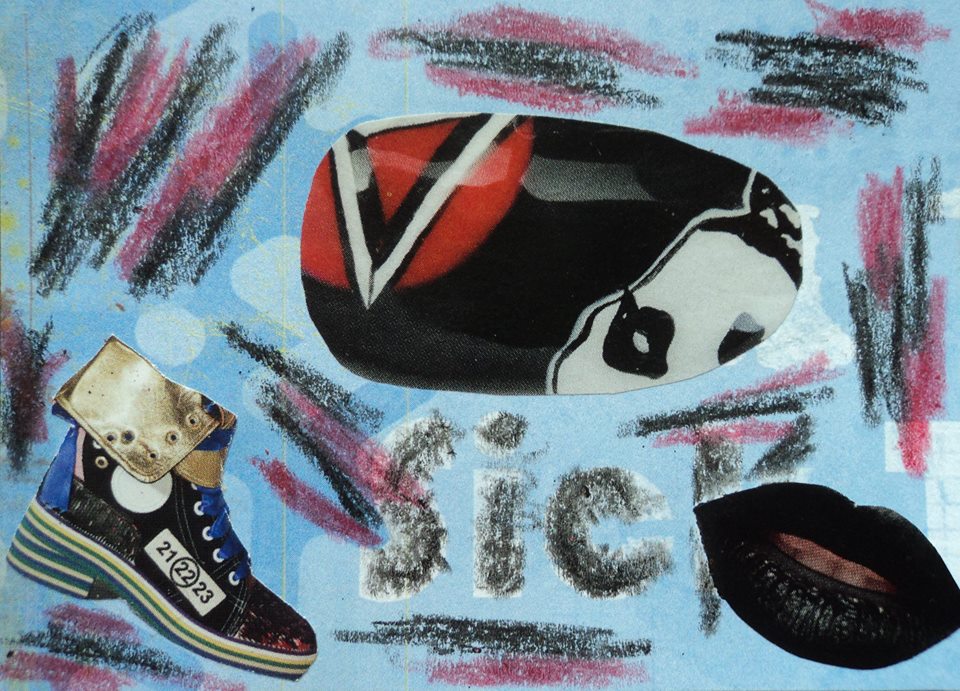
The latest artist showcase comes from Maranda Russell. If you would like a post about your work on the blog, please email kdoutsiderart@yahoo.com.
When did your interest in art/creating begin?
I’ve always had somewhat of an interest in creating art, but as a child I thought I had absolutely no artistic talent because I was often compared to my sister who was a much better artist, and my art teacher in elementary school was definitely not supportive and made me feel like I could never be a good artist. Luckily, in middle school I had an art teacher who showed me that I could improve my art skills and that I did have some talent. It was around that time I started drawing for fun and I have been more artistically inclined ever since. I do tend to go through cycles where I am inspired and make a bunch of art and then I may not make art much for a while, but I always end up coming back to it eventually.
What is your starting point for each piece?
Usually I just “feel” my way through it. I don’t necessarily have a strict process or idea in mind, although I do often have a vague idea of what kind of imagery I want to include, especially if it is a collage of some sort. Paintings tend to be more spontaneous and I have a lot of “happy accidents” that end up turning into pieces I like. I don’t have a particular end in mind for most pieces, I just keep working it until I feel it looks good.
Who/what influences your work?
My favorite classic artists are Van Gogh and Munch. I also have a deep love for outsider artists, art brut, naive art, and abstract expressionism. I get inspiration from all types of places: art magazines, scrapbooking supplies, nature, photographs, advertisements, toys, or whatever else happens to catch my creative eye.
What do you hope the viewer gets from your work?
I hope they find it visually appealing. I hope that they can sense what I was feeling or what feeling I was going after when creating any particular piece. I hope that it makes them feel like they can create art as well. No artistic snobbery or gallery hierarchy here! I just like to express myself and want others to be able to do the same.
What do you think about the term Outsider Art? Is there a term that you think works better?
I like the name personally. We are outsiders from the mainstream, intellectual royalty of the art world, and I am perfectly OK with that. I like being able to use whatever materials I wish, without worrying about whether they are “real” art supplies. I like being able to embrace the eager child in me that is creative and wants to make whatever they want, regardless of what others think about it. I do like the term naive art as well, since I feel I use a lot of child-like curiosity and imagination in my own art. Personally, I find children to be the most pure form of creativity in the world.
What are you working on at the moment?
Whatever inspires me. I don’t have any big plans right now, but I have a lot of art supplies that I like to get out and play around with until I have something I think works. I only make small artworks, from ACEO artist trading card size art (2.5″ x 3.5″) to 9″ x 12″, probably because I tend to have a short attention span and like to be able to finish any particular artwork in one sitting if possible.
Where do you see your work taking you in the future?
Hopefully I will enter and win more art contests and be featured in more art shows. I try to keep track of each country I sell art to, and so far have sold art to collectors in at least 11 countries worldwide. I have also had my art featured in shows in at least 3 countries, and have placed in several art contests for outsider artists. Since I am autistic, I participate in many art shows promoting autistic artists as well.
The next post in my PhD series continues on the theme of the art world as a system, and, more specifically, Becker’s book Art Worlds. This post will focus on the notion of reputation in the art world – how it’s gained, what it means for artists who do gain a ‘reputation,’ and how the theory of reputation excludes art that could or would be considered ‘good’ or ‘great’ art under other circumstances.
I’ll start by reiterating something that has always been a strong (but also evidenced) feeling of mine. That the history of art has only ever celebrated success that has slotted into the expected idea or ‘norm’ of what success looks like. Changes in what is celebrated, or what can be celebrated, do happen, but generally only through the existing channels and expectations of the art world. For example, change is generally catalysed by people who have had previous experience of or in the art world (Marcel Duchamp and his fountain). This means that to create real change in what is expected and what is accepted, ultimately, a systemic upheaval is needed.
The art world has and still does single out somewhat interchangeable artists. It waves a magic wand and calls them ‘special’. But, again, why? How? And who makes these decisions? The idea of the art world being built around individuals and their reputations is a rather Western theory. Many societies’ art systems’ do not work like this, which is why we often don’t hear about specific artists from other countries (non-Western, generally). This is the ‘individualistic’ theory of art. Sociologist Raymonde Moulin’s theory is that the contemporary art world (in western society) frequently celebrates the artist over the art work. This means that anything a certain artist makes will always be celebrated as ‘good art.’
Artists (or artists with a reputation) are special because they make work that no one else can make, or that other people could only make ‘badly.’ The theory states that these artists have a special quality that separates them from others working in a similar field. Take for example, the novels of Charles Dickens. What makes these so special, and therefore so celebrated, compared to other literature from 19th century England? A good question. To answer it, we have to ask ourselves what this ‘something special’ is.
Becker notes that this special quality is seen in works that evoke profound human emotions in audiences, and works that talk to the current social or historical context. If we as the audience know that a work has been created by someone with this ‘superior ability,’ we take more notice of it. This is evidenced in new exhibitions of ‘blockbuster’ artists that pop up all over the world – they are attractive to audiences with experience of the art world at all points on the spectrum. We visit these exhibitions not because we know that every work in the show will be to our liking, but because we know that the work will be of a certain standard, aligned with the artist’s reputation. In essence, we know what to expect.
Because of this idea of reputation building and making, artists start to separate their ‘commercial’ and ‘personal’ work; they mark work as ‘unfinished’ if they are not happy with it, and sometimes, they destroy it or take out lawsuits that mean images of it cannot be published or reproduced. They do this to maintain their reputation. All work they make has to live up to the standard ascribed to them and their work. It is not just artists that gain reputations, though, art works can be described as ‘masterpieces’ and schools of art are judged on the work created by their members. Different mediums also have different reputational status. For example, works made in oil paint are generally considered to be of a higher calibre than glass blown works, or tapestries.
Such reputational ascription needs a certain person or peoples to imbue such status. This elevates academics, historians and critics to the position of reputation-maker. They must select the criteria by which we can determine whether a work, medium or artist is any good. Similarly, those involved in the chain of distribution set similar criteria, or boundaries. For example, a work must be unique, singular, irreplaceable, produced by just one person. A sculpture must not be too heavy to sit on a gallery floor, a piece of music not too long so an audience cannot sit through the full duration.
The problem with this ascription of reputation by a small number of people is that there is so much work being created that an academic, historian, critic, couldn’t possibly know or recognise every piece from a certain genre, or made in a certain medium. This is more difficult, too, in the field of visual art, because visual language is universal. Literature is slightly different, in that not every text is available in every language.
The theory of ‘universals’ suggests that works with the highest reputation are those with lasting power. Some works have been celebrated for years, centuries, and even millennia. We must remember, however, that some works last not because they are incredibly special aesthetically, but because they are historically important. And this also does not answer the question of how contemporary artists still working today are ascribed such high status.
The problem with the individualistic theory and the theory of reputation is that it leaves a lot of people and work behind. It is in essence a selection process that is undertaken by a small few. Mavericks are often closely linked enough to the art world that certain works may get noticed some of the time, but this selection process almost always excludes work by folk and naïve artists (of the four categories Becker discusses in his book). This is not to say that folk or naïve artists to not have any special gifts, or cannot created aesthetically astounding works. A folk artist’s work, if we adhere to the theory of reputation, is too commonplace, and a naïve artist’s too private.
By Kate Davey Referencing Howard S. Becker, Art Worlds, University of California Press, 1982
My previous PhD research-inspired post, ‘The Cycle of Cultural Consumption’, focused mainly on what sort of culture audiences ‘consume’ and why. It looked at Pierre Bourdieu’s theory of habitus, and how our social and educational background is the biggest influencing factor when it comes to the culture that is available – and interesting – to us. As I continue to read and research, I have turned my attention now to artists and their relationship with the art world. So, rather than a focus on audiences, I am looking at producers and how they interact and integrate with the ‘art world’ as a system.
I have recently been reading two books – Gary Alan Fine’s ‘Everyday Genius: Self-Taught Art and Culture of Authenticity’ and Howard S. Becker’s ‘Art Worlds.’ Fine’s book focuses almost exclusively on work by self-taught artists, whereas Becker’s sociological insight into art worlds and how they work is slightly broader, encompassing not just visual art, but other media too. It is Becker’s broader text that I will reference in this post, as it gives more of a contextual overview of the art world and its players. I will return to Fine’s book in a later post.
The art world – and in this case, I am referring to the art world as the art schools, galleries, museums, curators, critics, and media outlets that make up what we would ‘traditionally’ and ‘conventionally’ see as the art system – is based on an historical, standard system of acceptance. Artists are generally expected to attend art school, following this, they might find representation from a gallery or dealer, in turn having their work exhibited in museums, galleries and online. There is this unconscious system constantly ticking over, and only a few are privy to the pattern. As Becker says: “How do we know the pattern? That takes us out of the realm of gestalt psychology and into the operations of art worlds and social worlds generally, for it is a question about the distribution of knowledge, and that is a fact of social organization.” [1]
In ‘Art Worlds,’ Becker describes four main types of artist – the ‘integrated professional,’ ‘the maverick,’ ‘the folk artist,’ and ‘the naïve artist.’ The integrated professional is someone who has journeyed the correct way through this system. They follow the rules when creating their work, and in turn, their work is accepted by art world aficionados. They don’t create anything too surprising, too unexpected, and this is all great – nothing to upset the status quo here. The title ‘maverick’ refers to “artists who have been part of the conventional art world of their time, place, and medium but found it unacceptably constraining.” [2] So these are artists who have entered the art world in the traditional and ‘respected’ way at some point, but have decided it’s not really for them. They know the system, they know how it works, but what they make – or what they want to make – goes against the accepted norm. I guess in a sense you could consider Marcel Duchamp a maverick (although in some respects his impact on the art world as a whole makes him less of a maverick in Becker’s sense and more of an influencer).
This leaves our ‘folk’ artists and our ‘naïve’ artists. Becker’s understanding of a ‘folk’ artist differs slightly from the ‘folk’ artist we might associate with outsider art. He refers mainly to quilt-makers, and people who have learned particular techniques and crafts from their families or communities. His term ‘naïve’ artists probably more closely aligns with our current outsider art category. These artists “create unique and peculiar forms and genres because they have never acquired and internalized the habits of vision and thought professional artists acquire during their training.”[3] Interestingly, Becker says of the terms ‘naïve’ and ‘folk’ that they do not relate to people. Instead, they refer to the position a person holds in relation to the ‘accepted’ art world. He notes that “wherever an art world exists, it defines the boundaries of acceptable art, recognizing those who produce the work it can assimilate as artists entitled to full membership, and denying membership and its benefits to those whose work it cannot assimilate.”
In many cases, the ‘integrated professional’ is the safe bet. They are someone who knows the system, their work aligns with what is expected; it fits into the canon. Imagine, Becker asks, “a canonical artist, fully prepared to produce, and fully capable of producing, the canonical art work. Such an artist would be fully integrated into the existing art world. He would cause no trouble for anyone who had to cooperate with him, and his work would find large and responsive audiences.” [5]
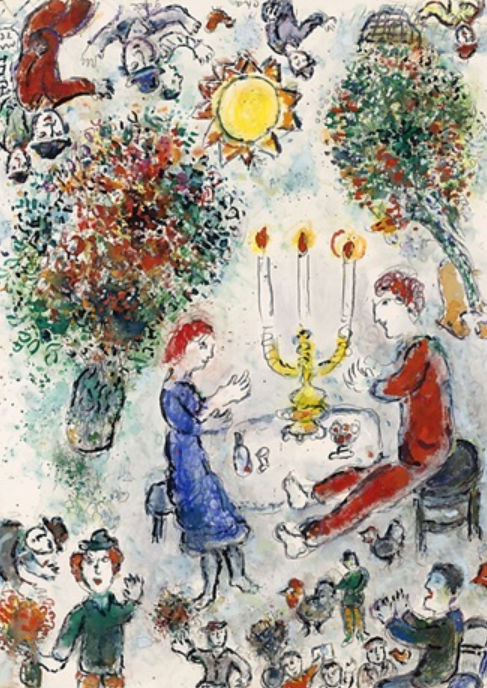
Marc Chagall, Le Repas des Amoureux (The Romantic Dinner) (courtesy of http://www.artnet.com)
So, yes, a safe bet. But is it the right bet? How do we challenge this? My favourite question: who gets to decide? Well, it is, it seems, the decision of those who have travelled the ‘integrated professional’ route: “conventions known to all well-socialized members of a society make possible some of the most basic and important forms of cooperation characteristic of an art world.”[4] Becker mentions Russian philosopher Mikhail Bakhtin’s discussion of the standard of taste, “when he remarked that while what made art great was a matter of opinion, some opinions were better than others because their holders had more experience of the works and genres in question and so could make finer and more justifiable discriminations.”[6]
All decisions are made by certain people at a certain point in history. Decisions about whether a piece of art is accepted into the art world generally has no relation to the aesthetic quality of the work. We know this because “art worlds frequently incorporate at a later date works they originally rejected, so that the distinction must lie not in the work but in the ability of an art world to accept it and its maker.”[7]
All of this thinking about systems and how we mould ourselves to fit them – not just the art world, but a whole host of other societal systems (the education system for one) – had me thinking about something someone said at a conference I attended last week. The conference was about collections of patient created art work in Europe, and so there was a strong focus on mental health, stigma, and the ethical exhibiting of work by people who historically were ‘locked up’ in huge psychiatric institutions. In one session, one of the panellists said that a person experiencing mental health issues shouldn’t be attempting to fit in to a societal system that has been created by ‘well’ people. (It is like that age old adage – if you spend your whole life trying to teach a fish to fly, it will always feel like a failure). Instead, we should seriously be thinking about how our societal systems work, and within these existing systems, we should be consciously making space for people who for whatever reason don’t – or can’t – fit what we consider to be the ‘norm.’
“Who tries things first? Who listens and acts on their opinions? Why are their opinions respected? Concretely, how does word spread from those who see something new that is worth noticing? Why does anyone believe them?”[8]
Thank you for taking the time to read this post. As part of the PhD research process, I am really keen to hear from anyone who has any thoughts on the subjects I am covering in these posts – whether you agree, or strongly disagree! I am particularly keen to hear from artists about their experiences of trying to enter the ‘art world’ (whether this has been positive or negative). You can drop me an email: kdoutsiderart@yahoo.com, or send me a tweet: @kd_outsiderart.
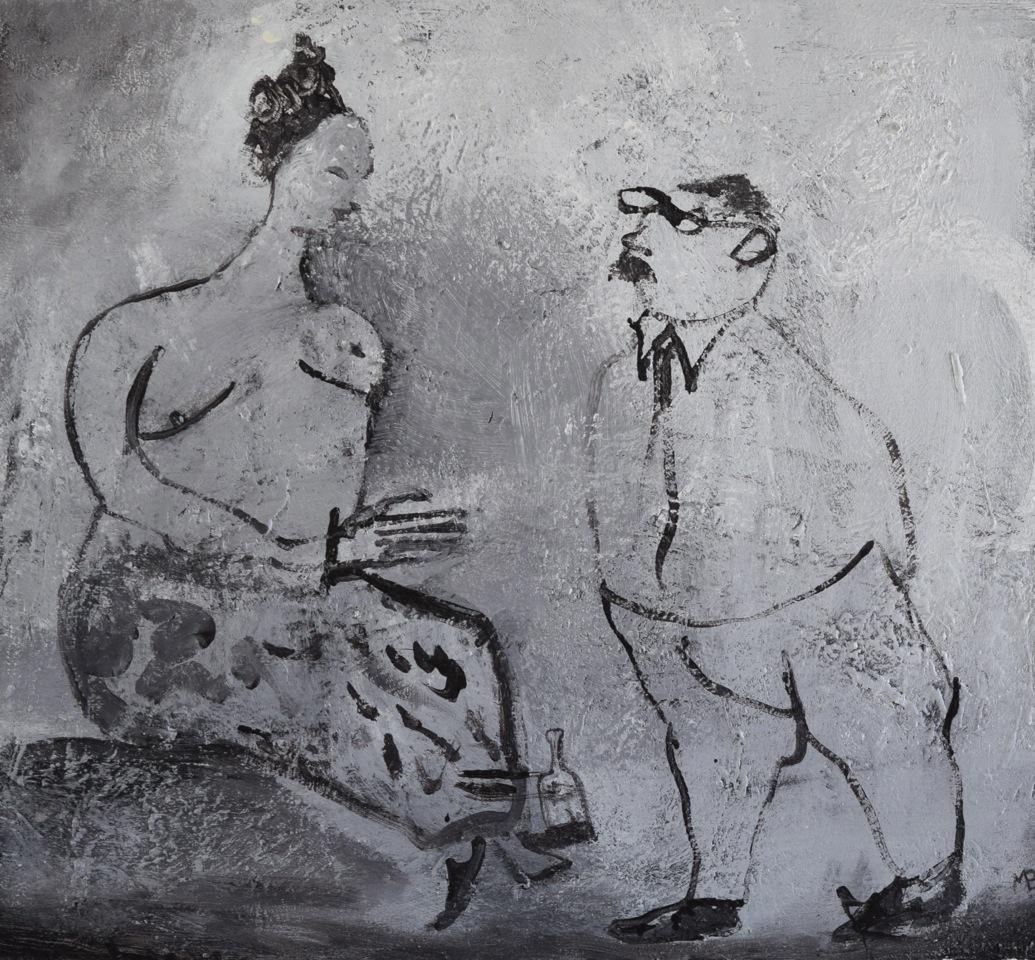
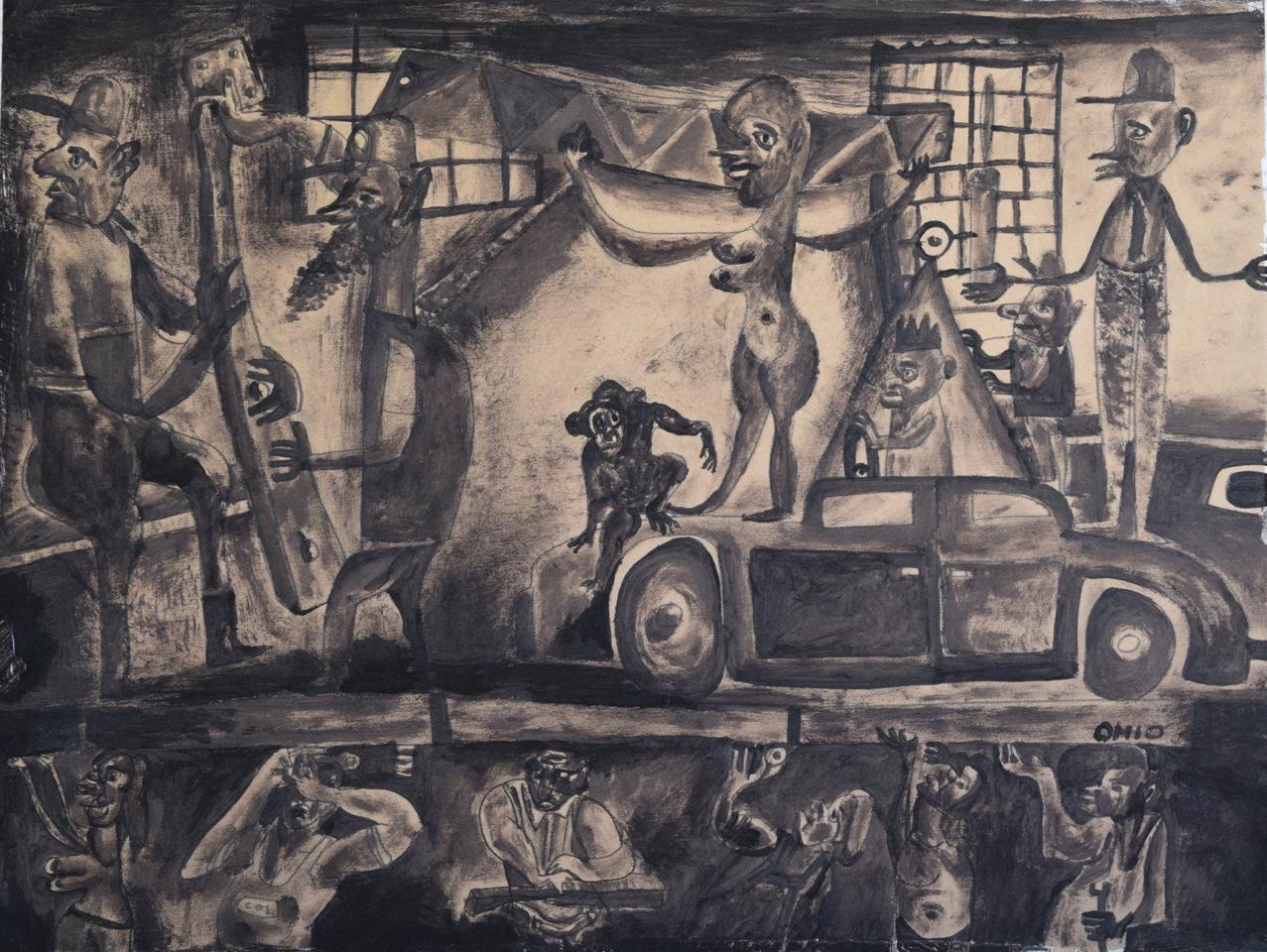
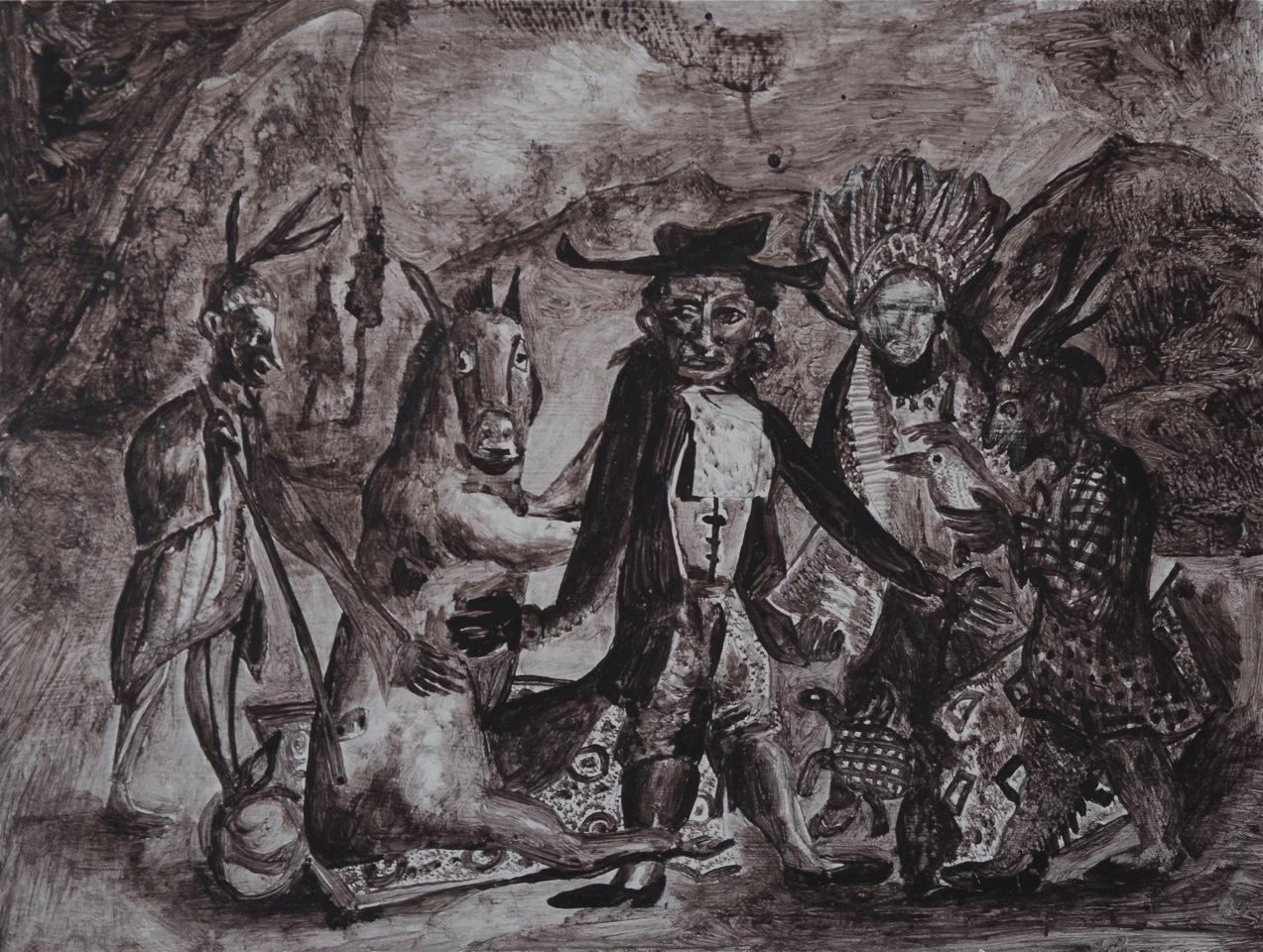
This latest artist showcase comes from Mike Brieger aka Henry Ohio. If you would like a post about your work, please contact kdoutsiderart@yahoo.com.
Heading to the Barbecue
“Once, when I was seven and living in Germany, I saw a an old anatomical etching in a museum. As soon as I came home I drew the figure from memory with all the glorious blue and red veins and the carefully penned notations. Also when I was seven, I remember drawing biblical scenes in religion class. There was a kid there who held his colored pencils bunched in his left hand, ready for his right hand to choose from. This kid was a real artist you could tell; no time to waste picking pencils up and down from a tray, he seemed to be unwilling to let his connection to the drawing be broken. I went ahead and used the same approach. I didn’t want my connection broken either, there were seven lean cows and seven fat cows to draw, the dream of King Saul.
Scene With a Bear
When I was ten, my mom took me to see a Matisse exhibition at the Detroit Institute of Art. It was the two dimensional cutout shapes of his. Now, I love shapes cut out with scissors, but I hated this show so much I felt sick and asked my mom if we could leave, she was surprised because I usually liked to look at art. I realized then, that I had to protect my eyes. Art for me wasn’t just a matter of looking at everything and then choosing what was good. To look at bad art made me sick.
White Tiger
Another time, after cleaning out an apartment I dumped all my paintings to date in the apartment complex dumpster. I was only twenty one and these paintings weren’t that good. Nevertheless driving by the apartment complex a few weeks later I looked up the long driveway just past the dumpster and noticed that one of my paintings had been fished out of the dumpster and screwed to the fencing of the garbage corral. An appropriate gallery for my work at the time. The painting looked good there.
The Professor and the Nymph
What I have noticed about beginning a painting is that no matter what the idea for the painting or the plan, it all usually gets thrown out the window after the first brushstroke. Having said that, however, several reoccurring themes do appear. Early American history scenes, specifically slavery in the south, as well as current race relations. Also strange, zoomorphic scenes of many types.
Factory Scene
Some influences of mine include: The expressionist paintings of Max Beckmann, specifically the carefully painted works from 1920-21 as well as the later large triptychs, early American political cartoons, Alfred Wallis’ ‘Chateau in the Forest’, Romare Bearden’s cityscapes and interiors with the blocks of color mixed with black and white elements, El Greco’s ‘View of Toledo’, Georges Rouault’s early water colors of prostitutes, all of Bill Traylor’s paintings, Eugene Von Bruenchenhein’s chicken bone chairs, Gerard Richter’s squeegeed black and whites, northwest coast Indian carvings and plains, Indian ledger drawings, the hallucinatory landscapes of Chiem Soutine – and so on and on…
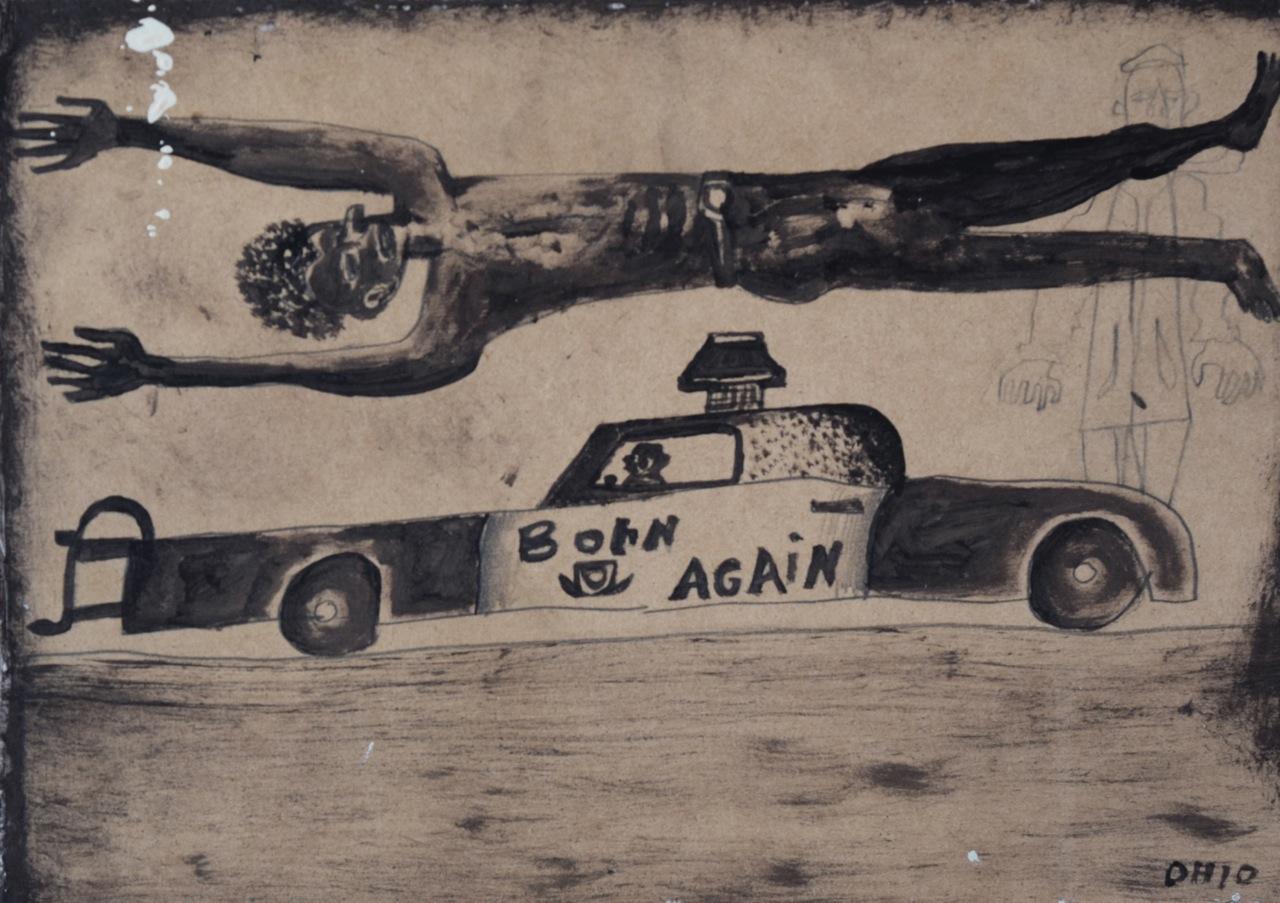
Born Again
The, ‘Outsider’ for me, strictly speaking, is someone who makes art but is not affected very much by the norms of the surrounding art-making culture. Loosely speaking, I would say the outsider is anyone who achieves a good measure of honesty in the work. Spiritually speaking, to be in the groove is what a musician wants. When visual artists make art in the groove I think the terms ‘Outside’ and ‘Inside’ fall away. Also, it’s important to note if the art viewer has an ‘outsider’ or ‘insider’ perspective. I remember seeing a Rosemarie Trockel show. She is one of Germany’s post Joseph Beuys conceptual artists. One of her pieces was a clear plexi box with a couple of white men’s shirts and a few black widow spiders hanging in their webs all around the shirts. Now that moved me. However, the placard said that the tag inside the shirts had a reference to the Marquis De Sade and this was important to understanding the piece. Anyway, I’ve always had a hard time reading when I’m looking at art and wasn’t really able or interested in grasping the concept. So in this case you could say that I was looking at it from an ‘outsiders’ perspective.
Jalopy
Currently I’m working towards completing a small black and white painting every day. I am keeping them small so that I can complete them in a single session. I keep them black and white so I don’t have to suffer the coitus interruptus of squeezing out more paint onto the palette all the time. I can go at it with just a tub of white and a tub of black paint.
Penn and the Indians
Art has been therapeutic for me. I think when you make art there is a very special reorganizing and re-calibrating that takes place within yourself. I am grateful for this. I would like my art to take me to cities that I would like to visit such as Detroit, where I’m from, or New York, where I like to visit, or New Orleans where I have never been. Thank you for reading my thoughts about art.”
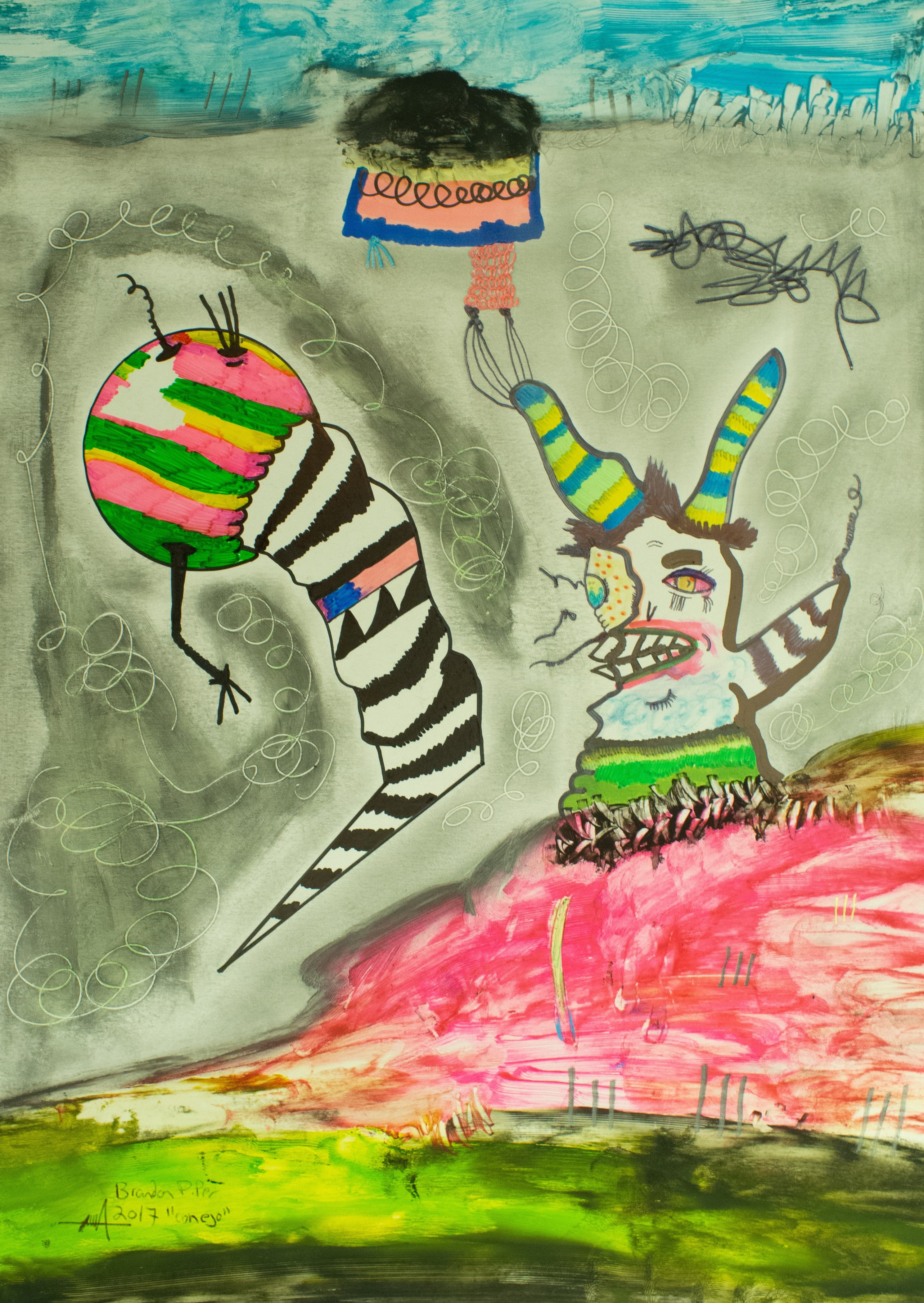
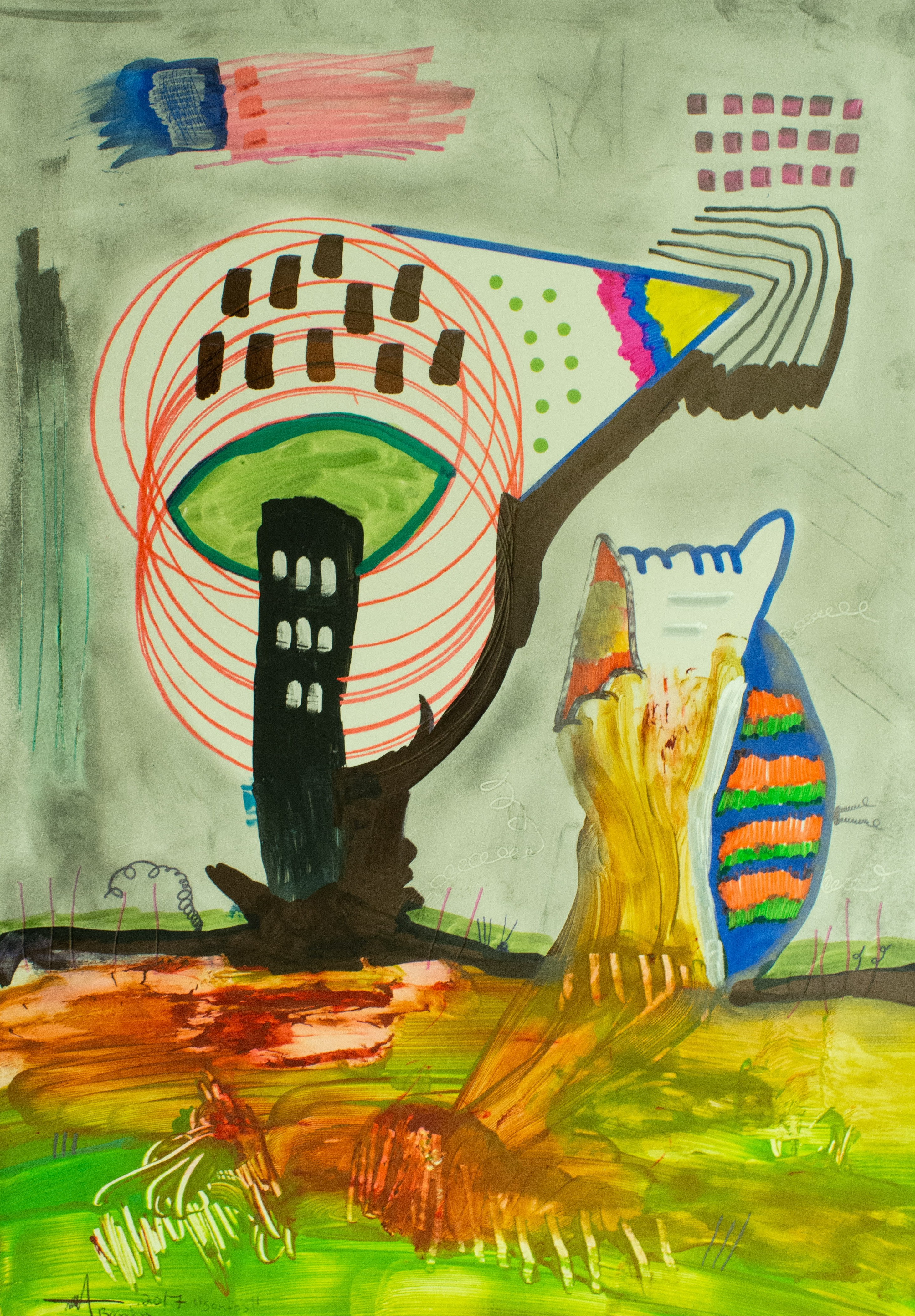
This artist showcase comes from Brandon Piper, who has been making creatures, monsters and aliens since he was two years old. If you would like a showcase about your work, please email kdoutsiderart@yahoo.com.
When did your interest in art/creating begin?
Since I was two years old I’ve made creatures, monsters and aliens.
What is your starting point for each piece?
I only start thinking to make one different each time.
Who/what influences your work?
The residents, Javier Campos, Cabello, Floky El Caballito, and my own nightmares.
What do you hope the viewer gets from your work?
To see how people seek the fake reality, and that they understand how I feel inside.
What do you think about the term Outsider Art? Is there a term that you think works better?
Yes because they are so many painters like me, with too much fear of the people and of the world and we don’t know how to make our work public, or how to survive making our work in an honest way. I have always been afraid to sell my paintings because I am afraid to talk to people in person in the galleries, or in the art shops because I’m too shy and poor, and it is illegal to sell work in the street.
What are you working on at the moment?
I always paint every day. I make animated video clips and I make my own music every day (see my music channel by clicking here). I have been making things every day for five years, but I don’t get paid for it.
Where do you see your work taking you in the future?
To be a big producer and make big animations and big painting for all around the world.
First of all, I would like to start with an apology for the lack of posts of late. I do, however, have good news! I have recently started a PhD at the University of Chichester, in which I will be focusing on the relationship between outsider art and the mainstream art world. Specifically, it will be looking at whether, as is commonly suggested, there really has been a ‘rise’ in outsider art within the mainstream art world – with a particular focus on the last ten years or so.
My intention is to use this blog to share my thoughts along the way – and hopefully have some feedback from you, the reader. If you have any thoughts or comments on any of the posts featured on this blog, please contact me by emailing kdoutsiderart@yahoo.com.
Joanna Simpson, Good Luck Gum Nut Folk
The first assignment that I have been working on as part of my PhD project has seen me entering the world of the sociology and philosophy of art. So, I have been reading a lot of Pierre Bourdieu! I find that blogging has been really helpful for me in amalgamating my thoughts and bringing them together in a less academically rigorous way. In light of this, I would like to share some of my thoughts so far about Bourdieu’s theories on art, and how I propose they relate directly to outsider art and outsider artists.
Pierre Bourdieu, a French scholar whose writings span the 1970s and 1980s, was a philosopher and self-proclaimed sociologist. Influenced by the works of his socialist predecessors; Ludwig Wittgenstein, Karl Marx, Max Weber, Bourdieu’s writings focus on the hierarchies of power that exist within the world. Most useful to me, of course, are his writings about culture. In these, he states that the way we consume and appraise culture is directly dependant on our class and educational background. So, people who have been brought up in households where trips to art exhibitions and excursions to the theatre are a regular – or normal – occurrence, are going to feel more comfortable consuming culture as adults. They will, Bourdieu asserts, already have the skills and tools available to them that will support them in deciphering the context and meaning of a work of art.
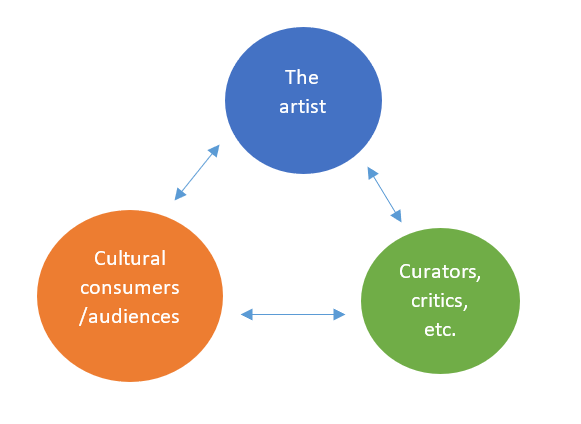
When reading Bourdieu, I was struck by what is apparent to many people working within (or with knowledge of) the art world. There seems to be an impregnable cycle within the art world that means that at every stage of participation, one needs to be from a certain social or educational background. I will call this cycle the ‘cycle of cultural consumption.’ To write about this cycle, I will begin with the artist. However, it is important to note that the artist is not the beginning of the cycle – the artist is just a part of it; the artist could in theory be the beginning, the middle or the end (see diagram above. I hope this will become clearer as I explain each cycle component.
Bourdieu does not write a lot about why artists create. But he does write about who or what influences an artist and how this has changed over the course of the previous few centuries. Prior to the nineteenth century, many artists were commissioned directly by the Church or the State, meaning they had little to no control over the content of their work. The Church and the State held all of the power. However, with the turn of the twentieth century – a century that in its youth in Europe was marred by uncertainty, instability, discontent, and of course, war – a revolution was starting. Artists were becoming autonomous individuals who were inspired by the context within which they were living and working.
Artwork by Jim Sanders
So it seems that at this point the artist was beginning to take back some power. But hold on! How were these artists able to do this? How were they able to erase centuries of codes and language commonly used within works of art – and used, too, by educated cultural consumers who could fluently understand these codes and this language. Because, Bourdieu says, artists like Edouard Manet and Marcel Duchamp were already inside the art world. They were only able to challenge the accepted norm in such a spectacular way because they were already big fish swimming in the ocean of the art world. So, not so revolutionary when we look at it like this.
To relate this to outsider art; it seems it is possible for artists creating challenging, unusual, unique work to have an impact on the art world – to have this work shown and to have it seen. But only if the artist is already able to navigate the art world, which generally assumes that a person has taken the ‘preferred’ educational route (art school), which is generally only possible for people from a certain educational background (most commonly middle-class or upper-class).
The next players in my cycle theory are the ‘taste-makers.’ These are the people who decide what work is shown in a museum or gallery, and therefore what we (the public) consider to be art. These are the curators, the critics, the gallery and museum directors. The gatekeepers. We know these gatekeepers exist as tastemakers because art is such a subjective topic that if there weren’t people in these positions of power making decisions about what we see before we even know what the options are, then there would certainly be many more ‘famous’ or ‘admired’ artists in the world. Imagine for a moment the vast amount of work being produced by artists every single day. All over the world, every minute, every hour. In a world of seven billion people, there is going to be at least one person who likes each new creation. But then why isn’t this reflected in what we see in museums and galleries. Why do we see the same ‘big’ names, the same ‘big blockbuster’ shows? The same artists who are the ‘flavour of the moment’? We see these precisely because of the existence of the taste-makers and gatekeepers who are making our decisions about cultural and aesthetic value for us.
Artwork by Alan Doyle
And the decisions of the tastemakers and gatekeepers favour artists from a specific background (social and educational) because they too are from these backgrounds. In 2015, the Department for Culture, Media and Sport highlighted that 91.8% of jobs in the creative economy in the UK were done by people in ‘more advantaged socio-economic groups’ compared to 66% of the jobs market as a whole.[2] Being from these backgrounds means that tastemakers and gatekeepers curate and interpret works by people from a similar background to themselves (who they relate to – makes sense right?), and therefore for people from a similar background. Again, to bring this back to outsider art – is a curator going to choose to exhibit work by someone who potentially attended the same art school as them, is their peer in that sense, or work by someone who is from a background that they really have no experience of and are therefore unable to relate to?
The Museum Association’s 2015-16 report Valuing Diversity: The Case for Inclusive Museums noted that “museum collections are often not interpreted from diverse viewpoints… Often the good work that comes out of projects is not used or displayed in the long term and therefore is inaccessible to people who would be interested in engaging with narratives that are relevant to their experience.”[3] This quote brings me onto the third person in our cycle of cultural consumption – the consumer.
The artist makes the work, it is then chosen (or not chosen) by the tastemakers and gatekeepers. If it is chosen, maybe it is exhibited with some accompanying wall labels. Maybe these wall labels are written in a language that is unintelligible to someone who has no prior experience of the art world or art school. Someone from a low socio-economic background, or someone who didn’t attend university might visit this exhibition. Whilst there, they realise they are unable to relate to the work that has been produced, because it has been produced by someone from a certain social and educational background that is a world apart from their own experiences. They are unable to understand the codes used within the interpretative material because, again, it has been chosen and written by someone who is from a very different social and educational background. After an experience like this, would you think that the cultural world was for you? I know that I certainly wouldn’t.
Artwork by Jim Sanders
Much of Bourdieu’s writing is informed by experiments and studies he conducted, in particular focusing on understanding the cultural consumer. In The Love of Art, a study conducted by Bourdieu in French museums found that 55% of visitors to French museums held at least a Baccalaureate. Only one per cent of visits were made by farmers or farm labourers, and 4% by industrial manual workers. Tellingly, 23% of visits were made by clerical staff and junior executives, and 45% made by people from an upper class background.[3] Although conducted around 30 years ago (and in France), these results are reflected in data collected much more recently by Arts Council England for their 2017-18 Equality, Diversity and the Creative Case report. The report highlighted that the most frequent National Portfolio Organisation attendees were supervisory, clerical and junior managerial, administrative and professional workers, making up 28.9% of visitors. At 10% of all visits, the least reflected group was semi-skilled and unskilled manual workers.
So here completes the cycle (well, not completes, but continues). When you look at it like this – as Bourdieu does, it becomes clear why efforts need to be made to diversify our arts workforce, our arts audiences and, of course, the art we show in museums and galleries. If we make an effort to diversify just one segment of this cycle of cultural consumption, the ripple effect will surely create a more reflective, innovate and exciting art world that everyone (from all social and educational backgrounds) can enjoy and participate in.
By Kate Davey
References
[1] Department for Culture, Media and Sport, Creative Industries: Focus on Employment, 2016, P6
[2] Museums Association, Valuing Diversity: The Case for Inclusive Museums, 2015-16, P 14
[3] Bourdieu, Pierre and Alain Darbel, The Love of Art, Polity Press, 1991, P 14
Useful books/articles on or by Pierre Bourdieu
Richard Jenkins, Pierre Bourdieu, Routledge, 1992
Pierre Bourdieu, ‘Intellectual Field and Creative Project,’ in M. F. D Young (ed.), Knowledge and Control: New Directions in the Sociology of Education, Collier-Macmillan, 1971
Karl Maton, ‘Habitus,’ in Pierre Bourdieu: Key Concepts edited by Michael Grenfell, Acumen, 2008
Pierre Bourdieu, Distinction: A Social Critique of the Judgement of Taste, Routledge and Kegan, 1979
Pierre Bourdieu and Alain Darbel, The Love of Art, Polity Press, 1991
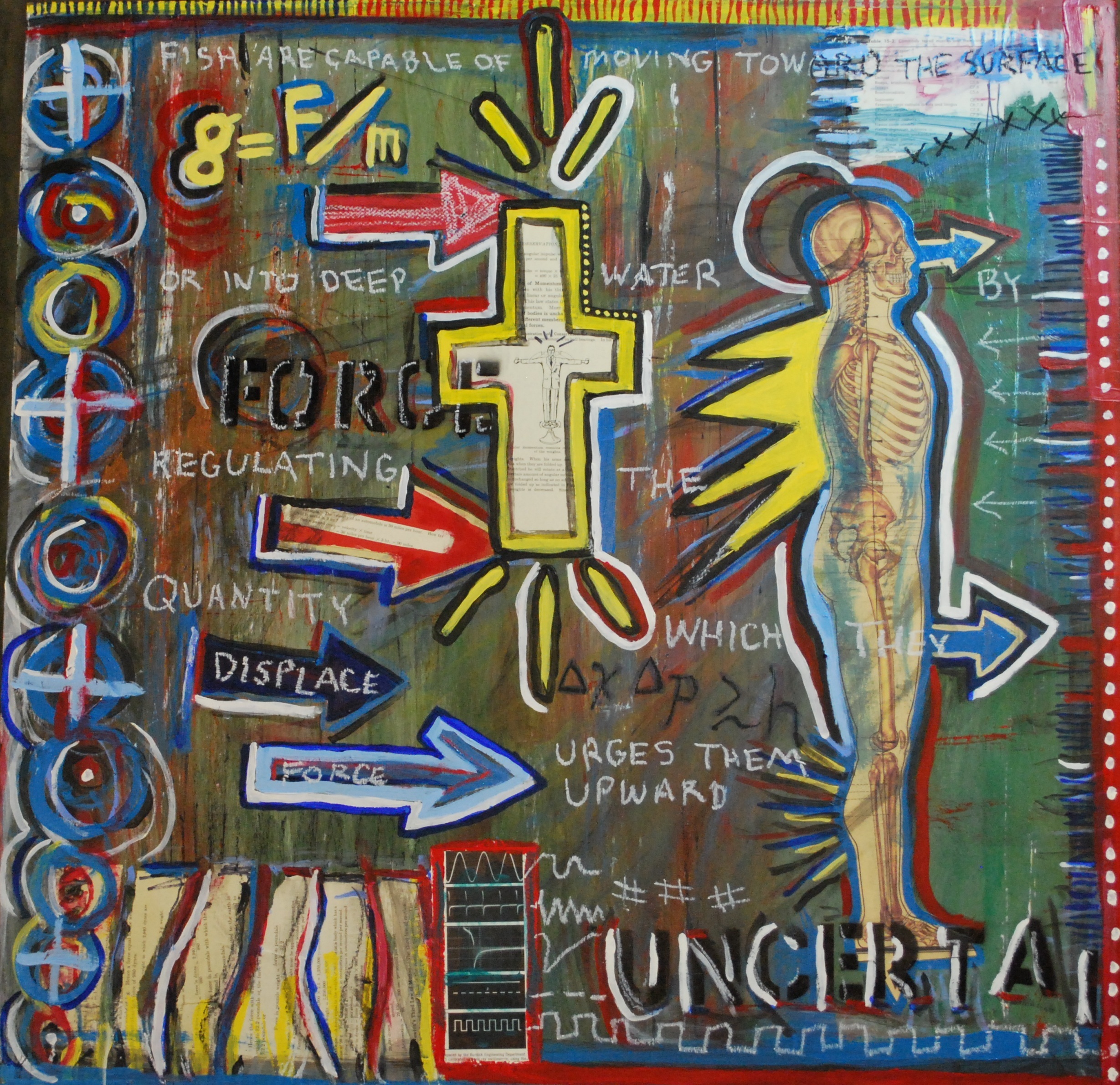
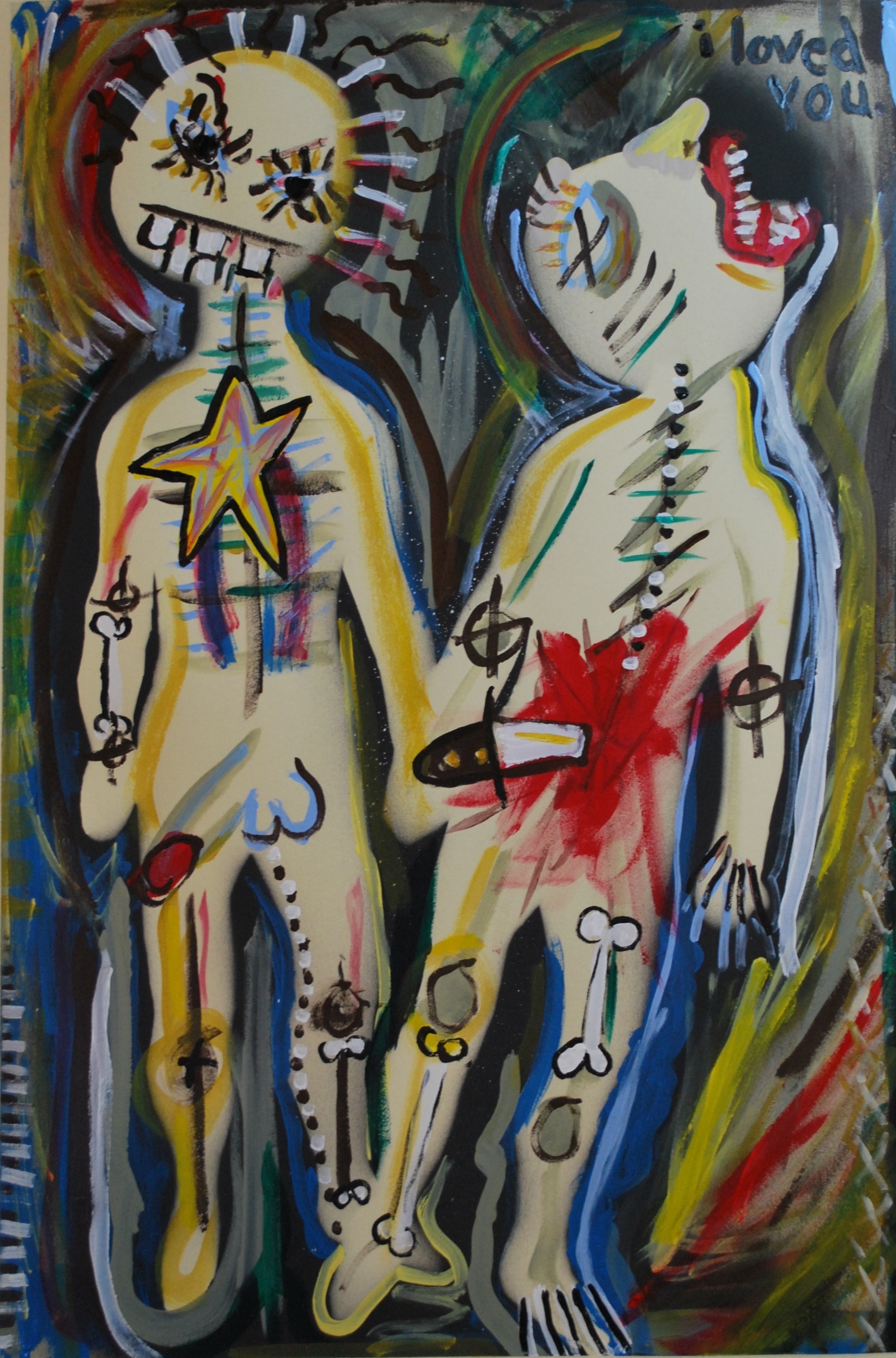
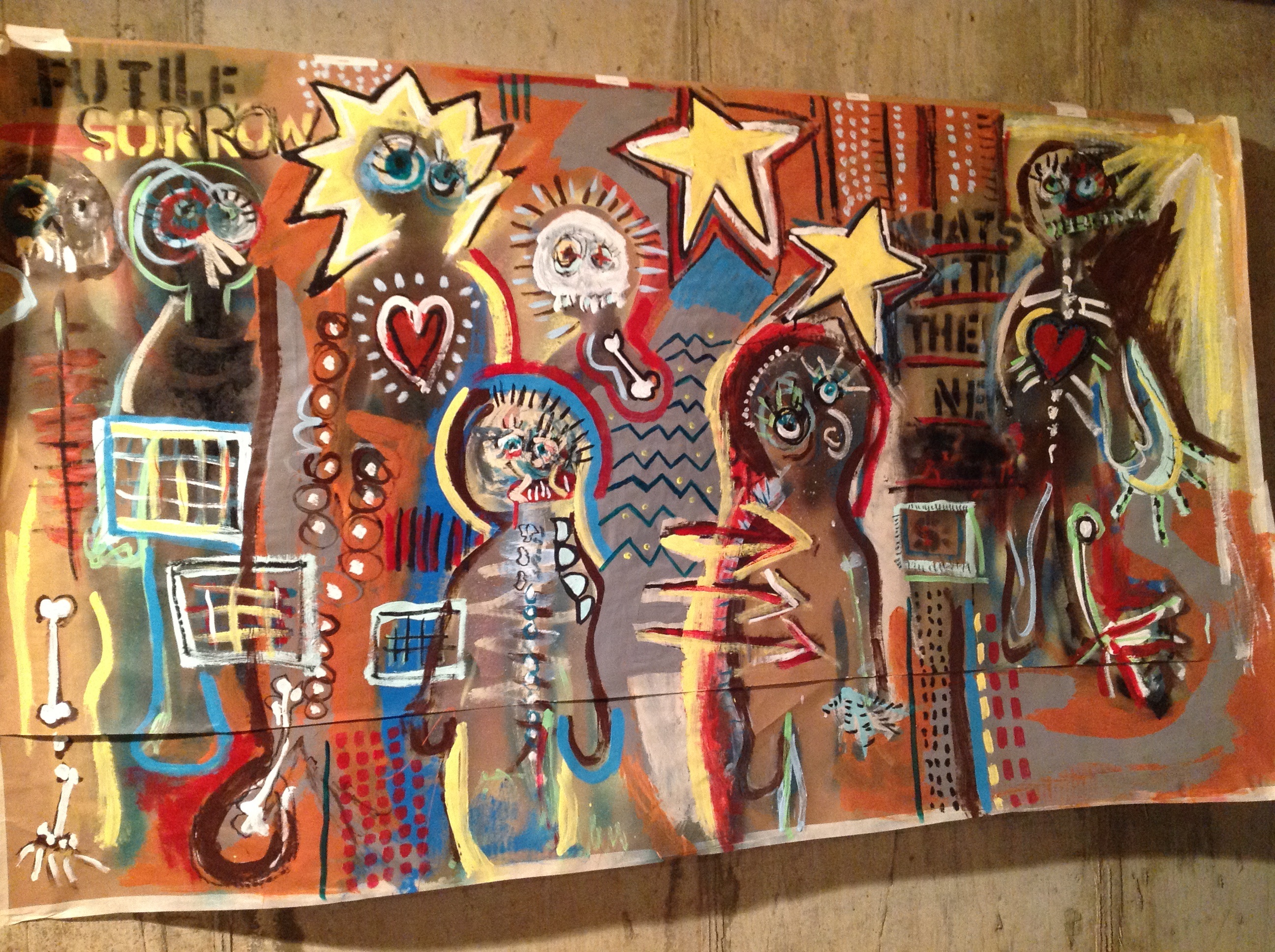
The latest Artist Showcase comes from Andy Dykeman, who’s work is inspired, amongst other things, by forensic autopsies and Punk Rock. A fan of the term outsider art, Andy feels that labels can help direct people to their tastes.
Uncertainty
When did your interest in art/creating begin
I have always drawn and written as long as I can remember. Growing up, my family life was uninspired as far as art was concerned but I wrote and drew constantly. My parents were not sure where I came from. I didn’t start playing music until 8th grade and didn’t start painting until college.
But, I loved you
What is your starting point for each piece?
With my newest paintings, I have been using a template that was outlined from various anatomical charts. I spray paint an outline, then start getting messy with house paints and acrylics.
No eye deer
Who/what influences your work?
After my father passed away, I became driven to paint more and have not slowed down since. Working in a clinic, I am surrounded by the human element as well as anatomy charts and biomedical/histological pictures which seem to make their way into my work.
Having spent time completing forensic autopsies has obviously influenced me, as well as great artists like Mikey Welsh, Butch Anthony, Matt Sesow, all of the members of the COBRA movement, Frank Netter, Basquiat and Norris Embry. And of course, Punk Rock is always an inspiration.
Putin was in my anatomy book
What do you hope the viewer gets from your work?
Some people may “get it.” Many may not. If you like it, that’s the one for you. If not, move on. Some people like mustard, others don’t.
What’s up with the new…
What do you think about the term Outsider Art? Is there a term that you think works better?
Outsider art is just a label. And labels usually suck. Especially when it is pertaining to art. But on the other hand, labels do help direct people to their particular tastes.
What label do you put on a band like Slayer? Heavy metal, thrash metal, black metal, death metal, speed metal? Who knows? Nowadays, just type in any of the labels and start looking (or listening) for what you like.
You can go down the rabbit hole and discover whole new worlds with a simple label. Outsider art, Art Brut, Neo-Expressionism, whatever you wanna call my art is fine with me. However, I prefer outsider art since it usually emphasizes the lack of formal art training/education.
Harpy
What are you working on at the moment?
I am currently prepping for a show on 29th March. That means I am painting a ton.
Breakdown
Where do you see your work taking you in the future?
I have no idea. I am always thrilled for new adventures. Let’s see where this goes. In the meantime, I am keeping my day job.
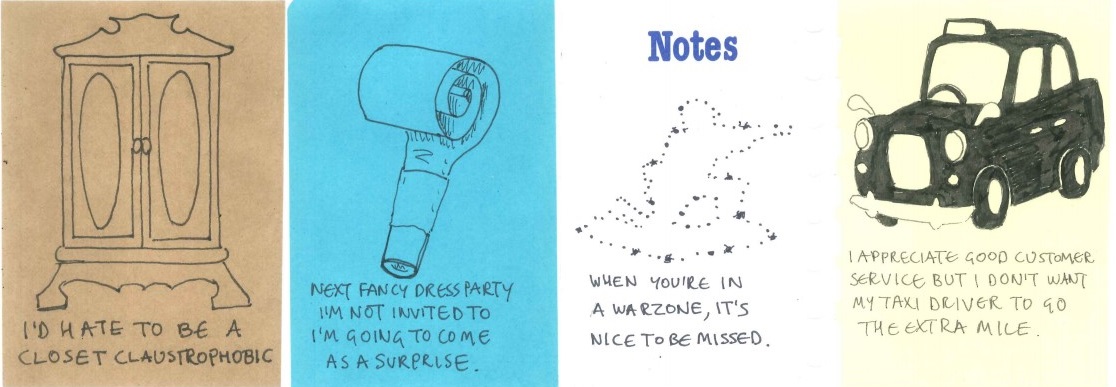
In this post, you can find out more about Will Conway’s ‘Wastes of Ink’ works – what inspires them and what the artist would like you, the viewer, to take away.
When did your interest in art/creating begin?
I’ve always drawn but did a lot of copying things from comics as a child and never thought I really developed a style of my own until I began to illustrate my own words. Maybe I still haven’t.
What is your starting point for each piece?
The Wastes of Ink ones start with picking apart common phrases people say without thinking and making new senses of them. The accompanying image usually springs to mind a little after and I try a few things out. Other times I start with an image that I just can’t leave alone. I get very inspired by techniques and materials but this doesn’t always produce work. It’s just nice to see people who actually know what they’re doing sometimes.
Who/what influences your work?
I grew up on comics and I read a lot of fiction. At any time I have about 30 books on the go. I love slightly macabre illustrators like Edward Gorey and Maurice Sendak. Comics with a visual side like Simon Munnery, Demitri Martin and Ivor Cutler give me a nice boost. I’m recently coming to terms with how influenced I am by pop culture despite pretending to myself that I’m somehow above it.
Some collage work that I’ve been looking at more recently is Hannah Hoch, as well as some more contemporary artists like Isidro Ferrer that my friend Diego recommended.
I’m always really inspired by people I collaborate with, for example Diego (Mallo), Stephen Ong, Marc Olivent and Joe Cook are all fantastic artists. I especially like people who try not to constrain themselves and simply make.
Lastly, I work in a school so I’m always getting inspired by the children and looking for ways to teach the curriculum creatively.
What do you hope the viewer gets from your work?
I want viewers to think, I’d like them to enjoy my strange connections and make their own. I don’t know if my funny ones are laugh out loud but I’ll settle for a snort.
What do you think about the term Outsider Art? Is there a term that you think works better?
We can pick apart any phrase I suppose but I think ‘outsider’ meaning not classically trained or in the west end gallery art world is a useful phrase. I also like the association with mental health. Art as therapy is extremely important, getting what is inside and looking at it ‘outside’ is immensely valuable.
What are you working on at the moment?
I’m making celebrity mashup portraits called slebnamechains and some other little illustration projects but the most exciting stuff is probably my collaborations with other, better artists. The first part of a graphic novel Steak with art by Marc Olivent is nearly finished which is exciting, as it’s been a bee in my bonnet for a while. I’m collaborating with Diego Mallo on a series of pieces called Importmanteaux which are looking very promising. I want to get my children’s book published too but I’m trying to figure out the best way to do the art. Finally, my friend John Parker and I are also making an anthology style zine which will hopefully be very weird.
Where do you see your work taking you in the future?
We shall see but I’m happy for now that it takes me out of my own head for a bit.
Samaneh Atef Derakshan was born in 1989 in the town of Astaneh Ashrafieh in the northern part of Iran. Although she had trained to be a software engineer, in 2014 she decided to devote all her time to her drawings, which she had been creating compulsively since she was a child. This turning point in her life came after a ‘real artist,’ as she referred to him, saw her drawings and encouraged her to keep creating. While being fairly inexperienced as a full-time artist, having participated in only a handful of exhibitions, Samaneh’s artistic voice is powerful and personal, while her aesthetic vocabulary is unmistakable. Below, Samaneh answers a few questions about her life and work.
When did your interest in art/creating begin?
From my childhood when I was 8 years old, I made a dough out of bread crumbs and made sculptures. In my dreams, I was an artist – I didn’t know what was my field but I was famous and an artist.
What is your starting point for each piece?
When I walk around my nightmares, my pains, my happiness and my wishes. I try to show stories from my life.
Who/what influences your work?
Mr. Khodashenas, my friend and Graphic master. The first time he saw my drawings he told me they were amazing and unique. He said you should continue and people will know who you are!
What do you hope the viewer gets from your work?
I hope they understand my drawings, I hope people see my mission about equality between women and men in my country and all over the world.
What do you think about the term Outsider Art? Is there a term that you think works better?
Outsider art for me means freedom without limits. People called us outsider Artist, I think I’m an artist! The name is not important, feelings and love in art are important.
What are you working on at the moment?
I am working on my unique project,that I can’t explain right now.
Where do you see your work taking you in the future?
I have a mission for all women in my land. In the future, I want do special things for this. I have many ideas but I need the support.