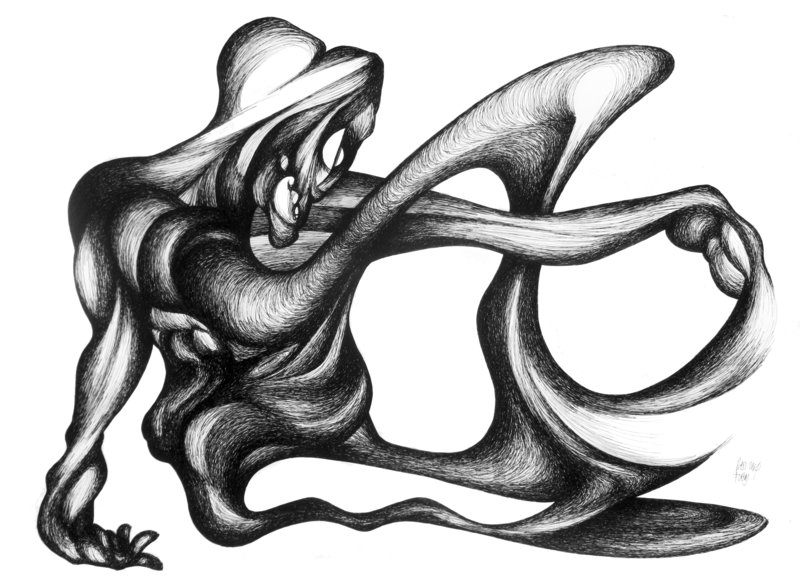
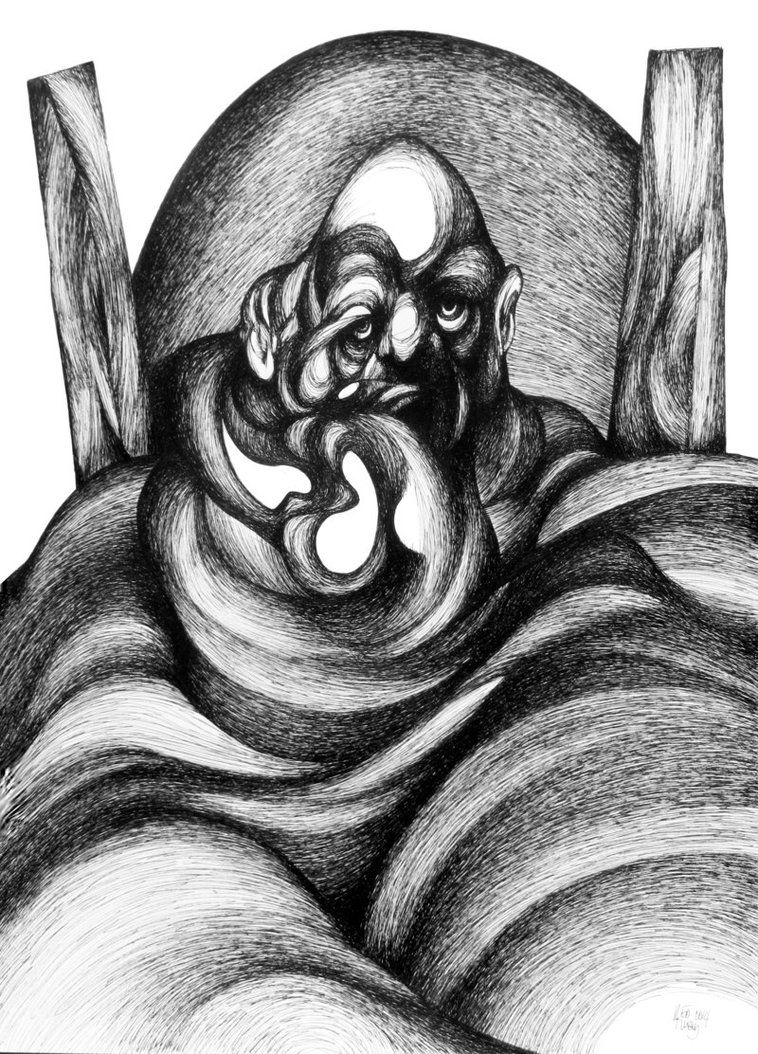
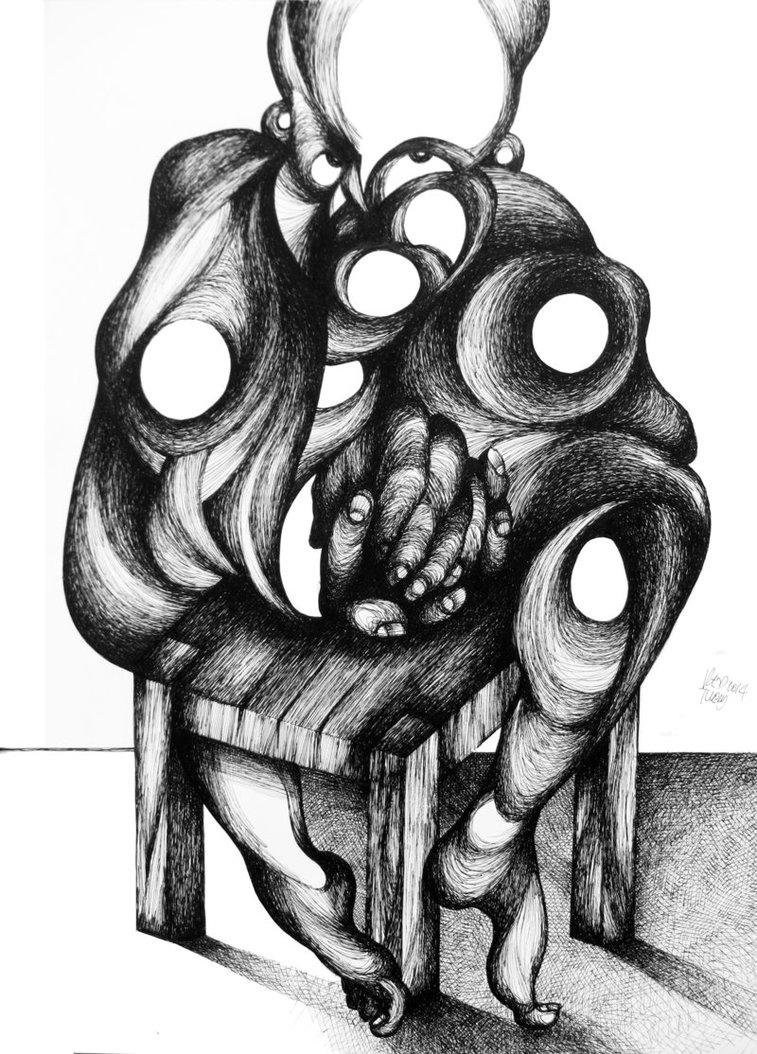
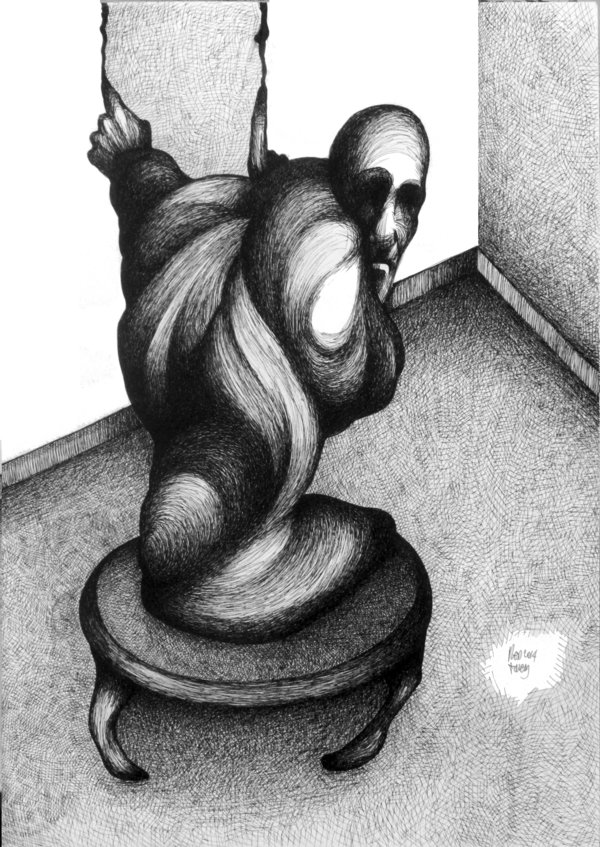
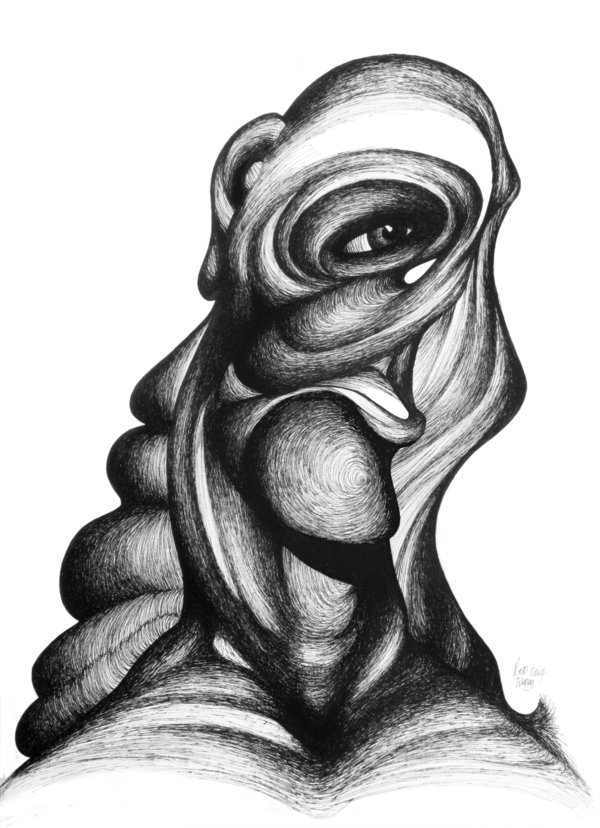
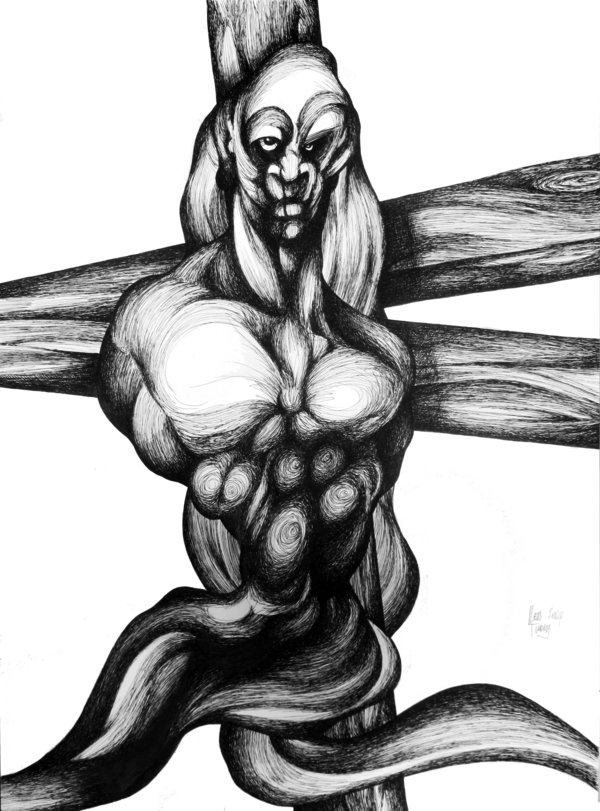
Red Tweny tries to hold together a mixture of Re-Modernism, Expressionism, Dark Art, Surrealism, Pop Art, Dada, and New Figuration in his eerie monochrome depictions. Using one single colour, he creates without digital manipulation, using only his “soul and a traditional ink pen.” Red describes his style:
“It is… a style that I think is quite new and recognisable amongst others, reminiscent of the fears of our century and the uneasiness of our souls. I try to tell you the shabby daily lives as opposed to the higher needs of the human soul, almost always disappointed.”
Red Tweny, A Witch Under the BlanketRed Tweny, Crossing Fingers over a Small ChairRed Tweny, Drawing a Window on an Unsteady TableRed Tweny, the Mona LIsa’s TearRed Tweny, Escape from the PireRed Tweny, MicrocosmsRed Tweny, The Monacle
Brian Gibson: “It’s 2015 now and after recent events the world seems a lot more complex … so I’m heading back to the relative calm of late 2014. Like a lot of people over the festive break I got myself hooked into various forms of social media, reaching saturation point – bloated with meaningful and quirky distractions offering opinions on this that and the other, making me feel futile in the ever-expanding and absorbing world of news feeds and interesting information. I was, however, able to break away from such infectious technology and get back on track, find my bearings and find some time to make a little bit of artwork, engage in some art dialogue and do a bit of offline viewing, that is to say look at some art situated in the real world.
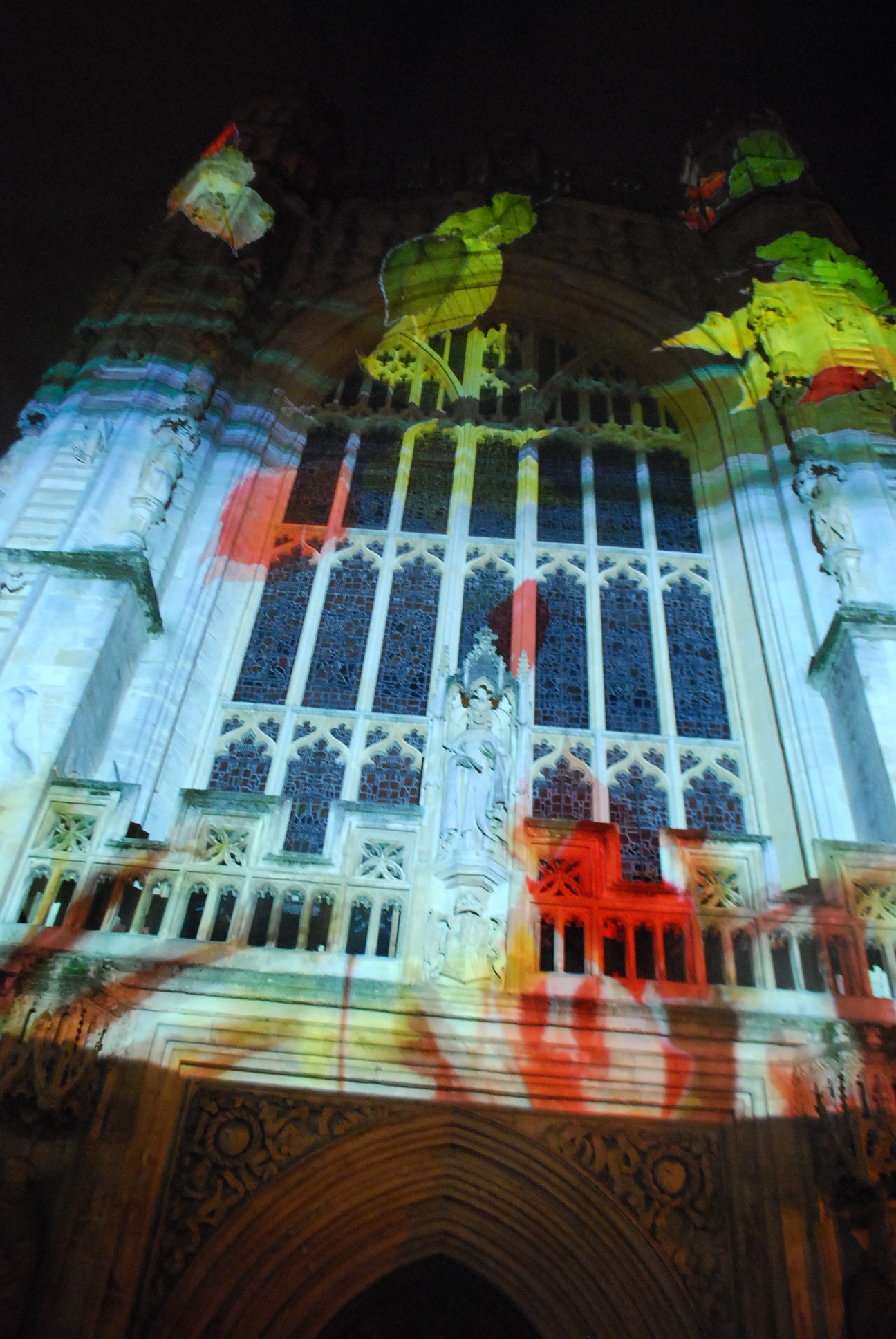
Image from the Transient Graffiti project
It was early December, when listening to the radio, I heard a series of broadcasts on Radio 4’s A Point of View by Philosopher Roger Scruton. Someone that I had not heard of but assumed he must be quite learned and well informed to get such a slot. He began with the subject of ‘fake art’ and, as I’ve had a number of conversations with people on the possibility of faking Outsider Art, I thought that this series would be interesting.
His intent from the start was to clear some ground between what he sees as ‘original art’ that is genuine, sincere and truthful, but difficult to achieve, and the much easier ‘fake art’ that appeals to many critics today. His ire was directed towards the slick world of Jeff Koons and Damien Hirst and the art market that supports them. Cries of the emperor’s new clothes ensued – easy targets, I thought, why mention them now? Ok, they may well represent a particular brand of slick and successful art that looks like a product rather than anything hand made but any real significance either of these two monoliths had in the art world was decades ago. But this high-end financial world is so alien to me and those I know, that I cannot think of a single person who really cares that much about this type of work or what these artists are up to. The likes of Koons and Hirst are really not that important in the world of art that I and many other creative people inhabit. Sure, they are incredibly wealthy but they are old news.
Image from Transient Graffiti project
Next Scruton, in a sweeping gesture, guns for the faceless bureaucrats of the Arts Council who, he implies, fund only that which is unpopular with the public and is therefore arcane, excruciating and meaningless. I find this both insulting and a little disturbing as the Arts Council also funds a number of arts projects for historically marginalised communities who would remain hidden without their support. I have personally been involved in a number of projects, including Transient Grafitti, an animation created by Deaf Adults With Additional Needs, which was projected onto the face of Bath Abbey with additional artwork displayed inside Baths 44AD Gallery. A bringing together various organisations including Action On Hearing Loss and Suited and Booted Studios CLC, this project provided opportunities for a range of creative people to work with each other, developing ideas; going out into the community; being taken seriously; making it happen and showing it to the public who loved it. This would never have happened without their support. It does make me wonder what such an apparently erudite and influential thinker makes of Outsider art? Who knows? Despite listening to all three broadcasts I never get to find out. He does mention in his final broadcast that ‘real art’ (as opposed to ‘fake art’) has to have lasting appeal with three essential factors: beauty, form and redemption. I do not dispute the value of such qualities but they are not the only ingredients that make art real, tangible and meaningful. In the end I found his views quite narrow and patronising, the all-knowing expert dispensing his wisdom to the great unwashed telling us what real art is …really?”
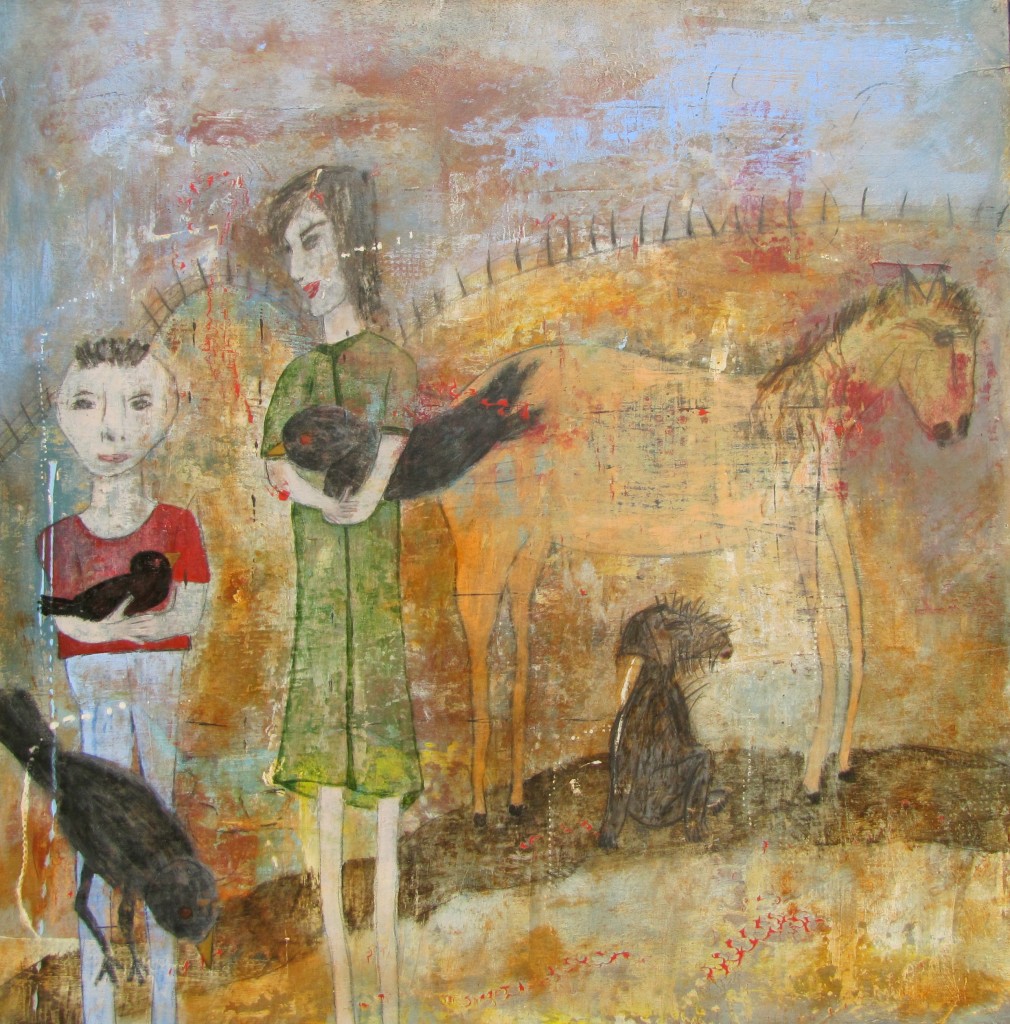
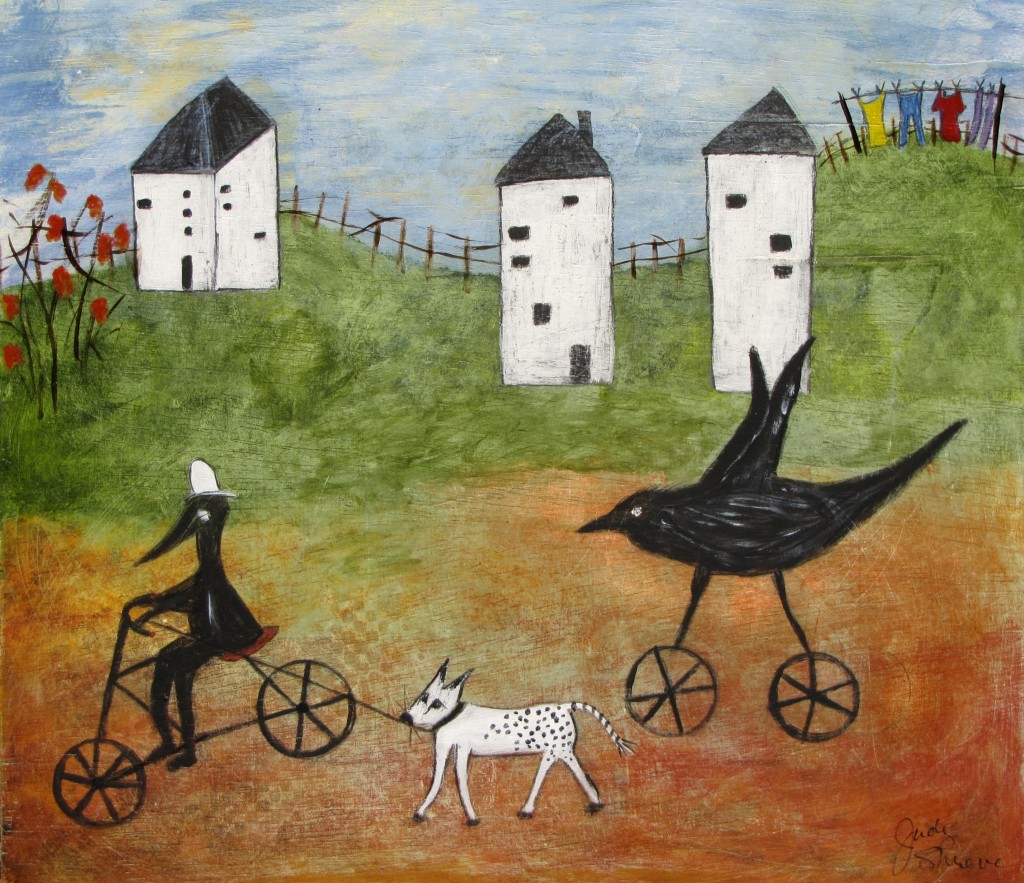
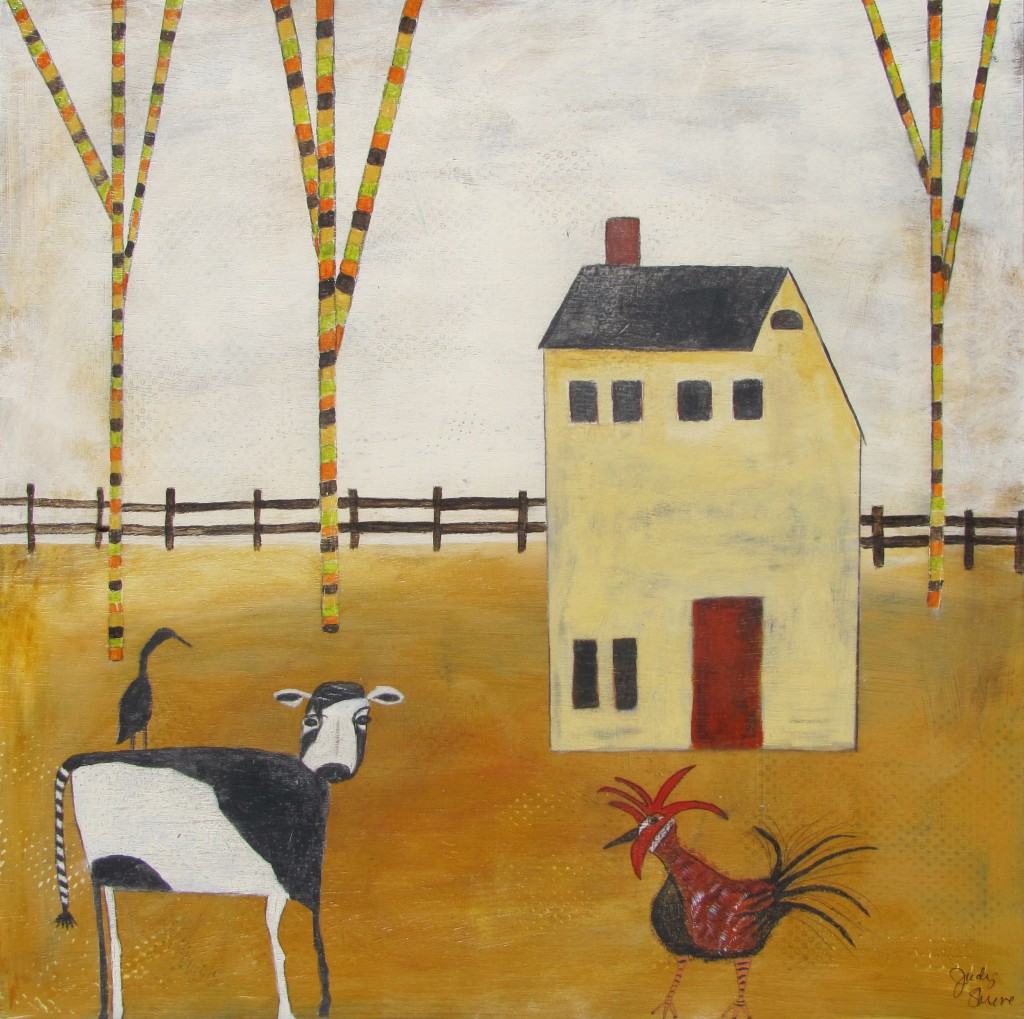
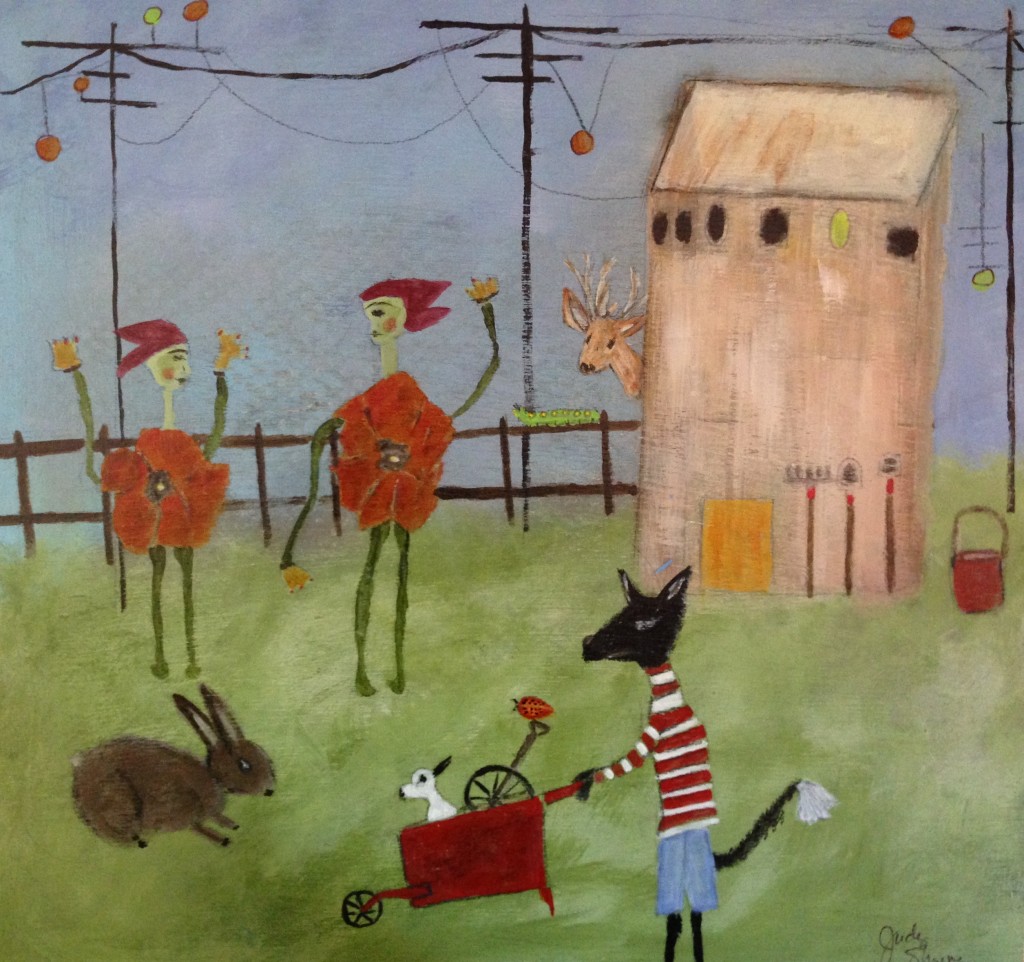
“I am a storyteller and had to learn to tell a story with paints instead of with words. It is my desire to express from a true place and create an emotional response to what I see. It’s not always realistic, because I see this world in an intuitive-abstract way. And it is the feeling that touches my heart that I want to portray in my work no matter what medium I am working with. Every mark I make is a combination of all my life experiences. Each piece contains a lifetime of aesthetic experience and interest for me, a successful piece is one that opens a heart and creates a smile.”
– Judy Shreve
Judy Shreve, Heading out of town for a little funJudy Shreve, Trouble in the hen houseJudy Shreve, Is he talking to meJudy Shreve, Jumped off the merry go roundJudy Shreve, Why do I garden anyway
To see more of Judy’s work, please visit her website by clicking here
First of all – Happy New Year everyone! As we welcome in 2015, here’s a brief list of a few of the must-see outsider art exhibitions taking place this year.
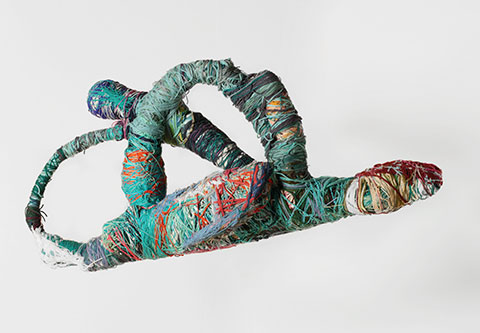
Judith Scott: Bound and Unbound
Brooklyn Museum, New York, US Until 29 March 2015
Judith Scott, Untitled
This exhibition is the first comprehensive US survey of the work of Judith Scott and includes Judith’s three dimensional works as well as a selection of works on paper.
This show will feature paintings and drawings by prolific outsider artist Mary Barnes. The works are predominantly from the collection of Dr Joseph Berke, her therapist and friend, and the exhibition will bring together works spanning her artistic career.
There will be more must-see outsider art exhibitions popping up throughout the year, so please do follow me on twitter: @kd_outsiderart for all the latest news, or check out the ‘Links’ page (by clicking here) to see what the organisations dedicated to showcasing outsider art are up to in 2015.
The essay focuses on several examples of ‘mainstream’ artists who have exploited the term ‘outsider’ for artistic purposes. It starts as you might expect an article focusing on outsider art to – with a description and contextualisation of the term. It then delves into the biographical histories of a selection of artists; their homes, their relationships. It describes their work; their style, their process, their medium. Then Kjellman-Chapin goes on to inform the reader that none of these ‘characters’ are real. They do not and have never existed in their own right. They are all the figment of various others’ imaginations.
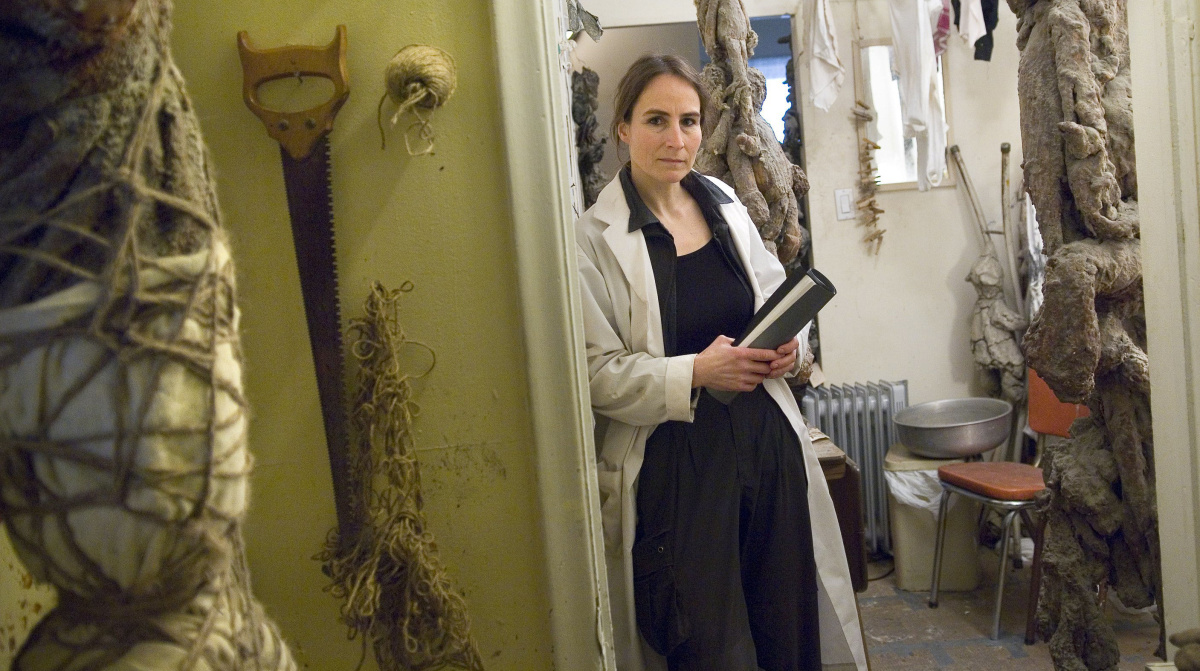
Iris Haussler, an installation artist born in Germany and living in Canada, inhabits the minds and lives of a series of characters. The character that Kjellman-Chapin examines is Joseph Wagenbach, a long term resident of Robinson Street in Toronto, Canada. So private was Wagenbach, that he very rarely left his house. He took to covering his windows in newspaper to further maintain his privacy and was extremely estranged from his neighbours. But in June 2006, following a prolonged absence that was noted by various people in the neighbourhood, the authorities were called and Wagenbach was moved to a care facility. The discovery of hundreds of handmade creations in Wagenbach’s home following his removal, carefully rendered from wax and plaster, was enough to elicit the support of a committee of experts, including an archivist.
All of the handmade objects found in the house had been crafted by Haussler, as had the life of Wagenbach. An extension of the physical, tangible works ‘he’ created, Wagenbach was an art work in his own right, carefully constructed with a completely believable back story (there are many similarities between this and the story of the discovery of Henry Darger’s work). In a 2012 interview, Haussler said of her practice: “My characters are often underdogs, people who are developing obsessive work out of an inner need. When visitors come across their legacies, they notice that these people have dedicated their lives to something bigger in life. Observing that can be inspiring.” [1]
Another example of this character creation is the Spelvin Collection; dreamt up by Beauvais Lyons, professor of printmaking at the University of Tennessee. The Spelvin Collection, part of the Hokes Archives, was brought together by ‘hoax’ collectors George and Helen Spelvin. It contains works by a string of Lyons’ characters including President portrait maker Arthur Middleton, librarian Emma Whorley, jilted bride Charlotte Black, and a selection of religious tracts printed on cereal boxes by Max Pritchard.
Kjellman-Chapin explains the motive behind the dual-role creators and curators Haussler and Lyons: “Through works made by avatars, Haussler and Lyons can critique the orthodoxy of Outsider Art from the inside and reveal it to be itself an elaborate fabrication. Their projects are not simply exercises in faux histories; the layered fictions they have created function in a critical capacity.” [2] The practices of Haussler and Lyons are an incredible illustration of how we – the audience – define outsider art. All of the conjured artists quite neatly fit our evaluation of the outsider category. Their value is “located not in the plastic realities of the objects themselves, but in the capacity of the makers’ location in social space to wash over those objects and images and coat them in a taxonomically valued rhetoric of authenticity.” [3]
‘Arthur Middleton’, with his portraits of American Presidents (Courtesy of artoftheprank.com)
There is perhaps, I think, a lesson here in the recent rise in popularity of outsider art. The example of Haussler and Lyons illustrates the simplicity of creating a believable character whom we can easily (and correctly?) assume would fit even Dubuffet’s strict definition of Art Brut. The use of the term outsider artist is bandied around a considerable amount in Europe and the US at the moment, and there is concern amongst some people that ‘mainstream’ artists will ‘jump on the bandwagon.’ I don’t think Haussler and Lyons have jumped on such a bandwagon – after all, their art is a ‘three dimensional novel’; a whole narrative of these characters, the situations they are in, their thoughts, beliefs, and their experiences. I do wonder, however, why they chose ‘outsiders’ – “shut-ins, outsiders and hoarders with an artistic bent whose fears and obsessions compel their odd creations.” [4] I like to think it’s because they are able to experience true, uninhibited creativity this way, and conjuring up a character so different from themselves provides Haussler and Lyons, and us as the audience, the opportunity to understand more empathically what it might be like for the real Middletons, Horleys and Wagenbachs of the world.
Personally, I found myself fascinated by the work of Haussler and Lyons, but are they turning their characters into the art work? Are they instead exhibiting vulnerable people (regardless of their realness – or lack of it)? And what does this mean for real ‘outsider artists’? I would be interested to hear what you think about this one, so please let me know in the comments below.
Featured image: Agnes Richter, needlepoint jacket [notmodernart.tumblr.com]
Following Brian Gibson’s fantastic previous post, entitled ‘What does it mean to be an Outsider?‘, he has written again for kdoutsiderart. This time, focusing on ‘confessional’ art. Here, her discusses whether artists who have experienced trauma or health issues feel ‘obliged’ to create art that is overtly confessional?
There are a lot of people (past and present) whom I really admire who have the ability to write down, draw and paint to reveal a deeply personal, integral part of themselves succinctly and often explicitly. I have the greatest respect for those people who have such courage, placing a personal account of a particular aspect of their life in the public realm. There are certain works that have completely stirred me emotionally: Frida Kahlo’s drawing of her miscarriage and a painting of an abusive relationship by an artist showing at the Outside In Exhibition at Pallant House Gallery and the Outside In: West exhibition at the Somerset Museum are but two.
When so much art of the modern era can be said to be autobiographical and increasingly stacked online into categories, is it wrong or demeaning to place such works into a genre defined as ‘confessional art’? I certainly don’t think that the two works which I have mentioned were specifically created to fit a market within a particular realm of art practice, even so, there are some artists such as Tracy Emin who seem to have made a very successful career out of ‘fessing up’.
Personally, I don’t know what to make of Tracy Emin anymore. She is now very much part of the art world establishment (I don’t begrudge her success), having evolved from what could be considered a quasi-outsider stance, in part due to the way in which she presents herself and her work, tapping into the psychoanalytic influenced work of Louise Bourgeois and such works from the Prinzhorn collection as Agnes Richter’s needlepoint jacket. Whatever one thinks of Ms Emin herself or her work, she seems to know how to profit from fessing up her past, whilst remaining in the driving seat. Likewise, the pianist James Rhodes has spoken openly about his experiences of abuse and mental health issues, he too seems to be in the driving seat, which to be honest is a pretty enviable position. Whilst this tack might work for some individuals, I am not so sure if this should be considered a creative formula for all those artists who have experienced mental health issues or trauma of some kind. Even so, it can be tempting to mis-read such paths to success, acceptance and acknowledgement as being primarily down to being completely open; revealing your trauma, displaying it in your artwork, and putting it in the public realm for all to see.
I fundamentally believe that people should not be silenced for what they have experienced. I have heard enough about people in glass houses and it being better to remain silent than be thought a fool. However, with the increase of social media platforms, I have noticed an increase in people telling their story because they can, but I wonder what happens after the rush of ‘likes’, when people find something new to share, does anything change significantly for the person concerned? There are some wonderful blogs out there with some incredibly powerful images; there are also other stories which I fear will go unheard and unseen. It takes a lot of courage to fess up, to speak out and say something but my concern is that a lot of confessional art will over time be reduced to the status of another form of ‘the selfie’.
Recently, I have been considering the importance of process and product with reference to art making. Is the process of making the art the most important thing for the artist, or is there something equally as important in having this work shown to the public – whether this is an exhibition, a performance or a publication? Would some, perhaps, even say this public exposure is more important? I am talking in this post about all artists and creative practitioners.
I’m of the opinion that having work exhibited (or performed, or published) is an important part of any artists’ creative practice. It provides the opportunity for the artist to have a voice in the world, and increases their feeling of self-worth. I do, however, have absolutely no doubt about the importance of the creative process – for Outsider Artists; for all artists. For everybody. It allows self-exploration, self-expression, communication and so much more. But, I am interested to know the impact exhibiting has on an artist. As a writer (although not a creative writer), I find that having work published helps me think I am doing something right. This is not to say that if I didn’t have work published, I would cease writing – as this is certainly not the case; I would write regardless of whether anyone was taking a blind bit of notice. But it encourages me to write more, particularly for this blog, where I have an interested following. Publication also means my work can be seen by a wider audience and that means my voice is being shared with more people.
Mr Imagination
Having conducted some research into the subject, I have found that most of the literature on the process versus product idea comes from art therapy schools. As art therapy is not something I am going to discuss in this article, I am taking process to mean the action of creating art (often a very therapeutic undertaking), and I am taking product to mean an exhibition, performance or publication which means the work created can be accessed by the general public.
My decision to write on this topic came about somewhat from bits of my current work. Specifically, looking at the impact a publicly-accessible product can have on offenders and ex-offenders. I think this group highlights my point most succinctly. If works by offenders and ex-offenders – a notoriously stigmatised and marginalised group – can be experienced by the average passer-by, this can have an overwhelming impact on their self-image and, fundamentally, their personal journey towards rehabilitation. Having work displayed/published/performed in a ‘space’ dedicated to the arts means they have a legitimate place in society, and a new ‘label’ (despite my disdain for labels) that is profoundly less negative than the one that society has previously given them. For prisoners, having work and feedback from those ‘on the outside’, can provide links with the community and a huge surge in self-worth: they see themselves as worthy of having their work seen by society.
This is not to say that we still need to think about the ethics of displaying work by Outsider Artists – or any artists for that matter. We must still ensure we are always working towards an ethically considered way of approaching the curation of art by vulnerable people. For more on this, you may like to have a browse through the ‘Curatorial Questions’ section of the blog.
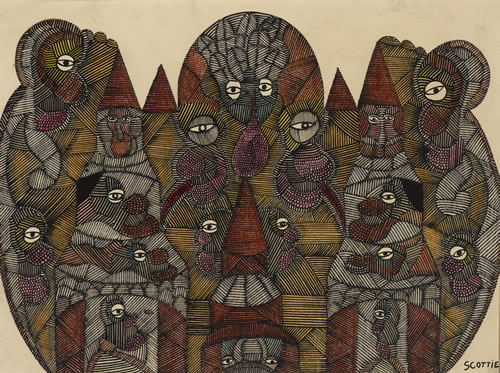
Scottie Wilson, Greedies
I think the internet has certainly had a large part to play in the ‘product’ side of the argument. Now, artists, writers, performers, etc., can upload their work to a website or a blog for the world to see. It is not so dependent on having an exhibition in a sought after location, or having your book published by a well-known publishing house. Perhaps there are artists out there who prior to the internet may not have considered ever having their work seen (perhaps due to a lack of opportunity or luck in the art world), who are now able to share what they are doing with a wider audience. But this, I think, is a technological tangent, albeit an interesting one that I might explore further in future.
Anyway, I think I have said as much as I can, and now it’s over to you. I would be very interested to hear from artists about their thoughts on this subject. Does exhibiting/performing your work provide something extra outside of the creative process? Is feedback important? Is sharing your voice and your thoughts a vital part of your practice?
Please do comment below, write to me on Twitter: @kd_outsiderart, or if you would prefer, send me an email: kdoutsiderart@yahoo.com. Looking forward to hearing your thoughts!
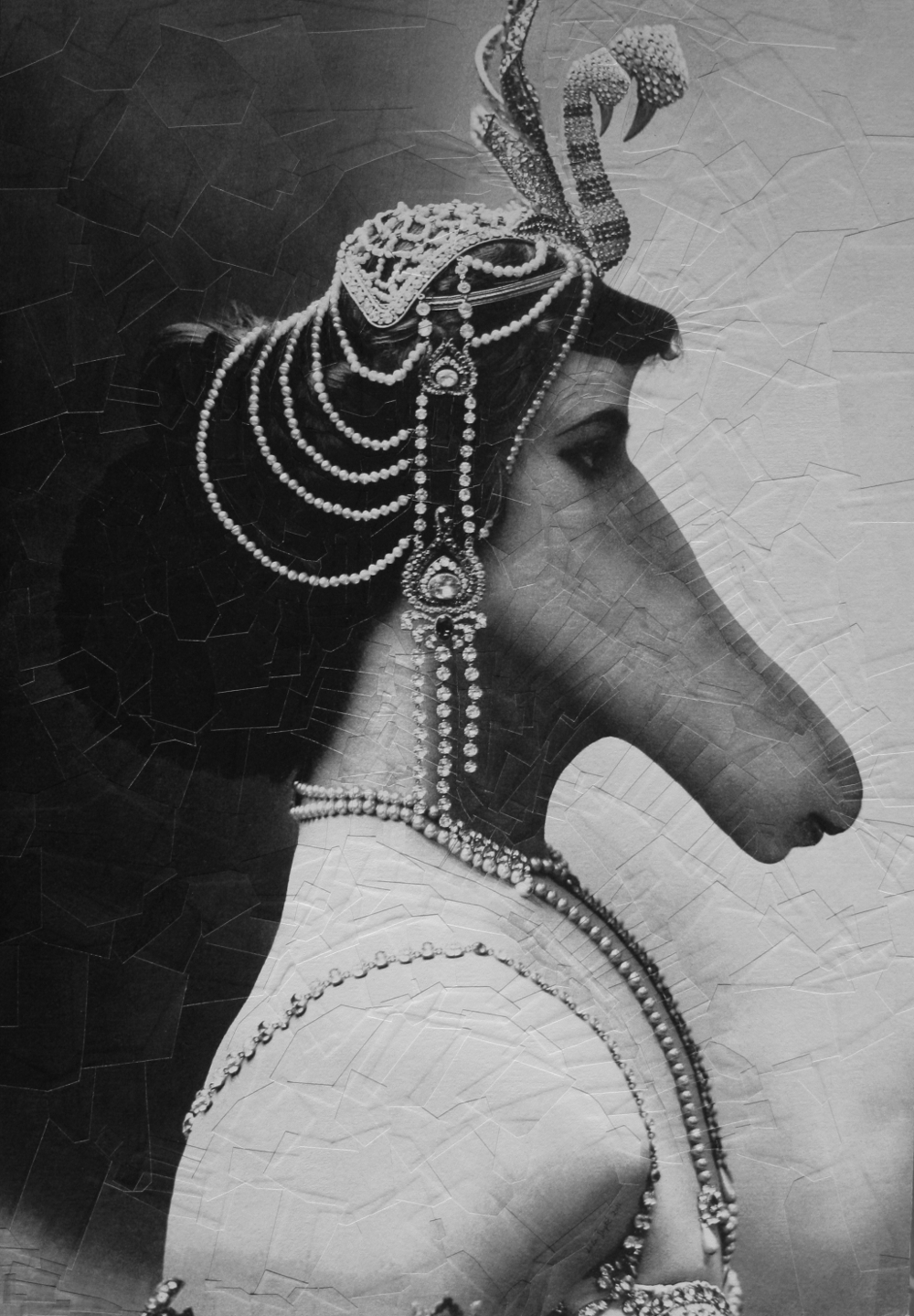
Lola Dupre is a self-taught collage artist and illustrator currently based near Galway in Ireland. Since 2000 she has been living and working in Switzerland, Scotland, France, Spain, Portugal and now Ireland. She has collaborated with photographers including Lisa Carletta, Madame Peripetie, Helen Sobiralski, William Kano and Laetitia Bica. And has published work with magazines such as New Statesman, New Republic, Flaunt, Flair Italia, Hi-Fructose, Die Welt and Revista Marvin and exhibited work with galleries in the USA, France, Japan, Germany, England, Scotland and Australia. She is represented by CES Contemporary in Los Angeles USA.
Lola Dupre, Benjamin NetanyahuLola Dupre, Detail from UntitledLola Dupre, Double DLola Dupre, Exploded Al CaponeLola Dupre, Mata Hari
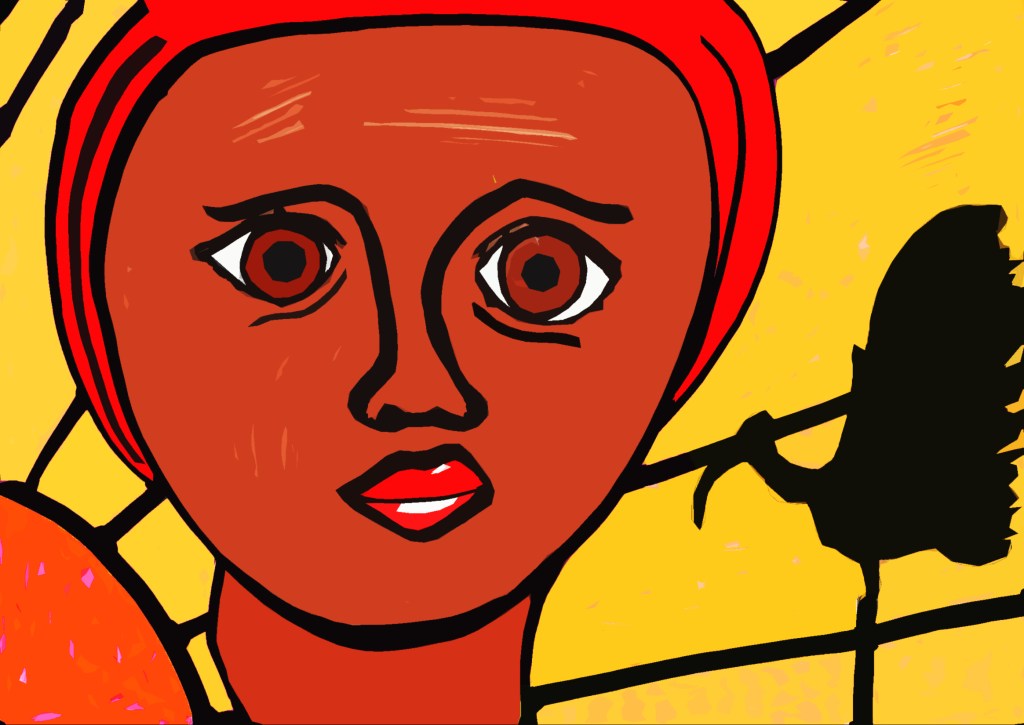
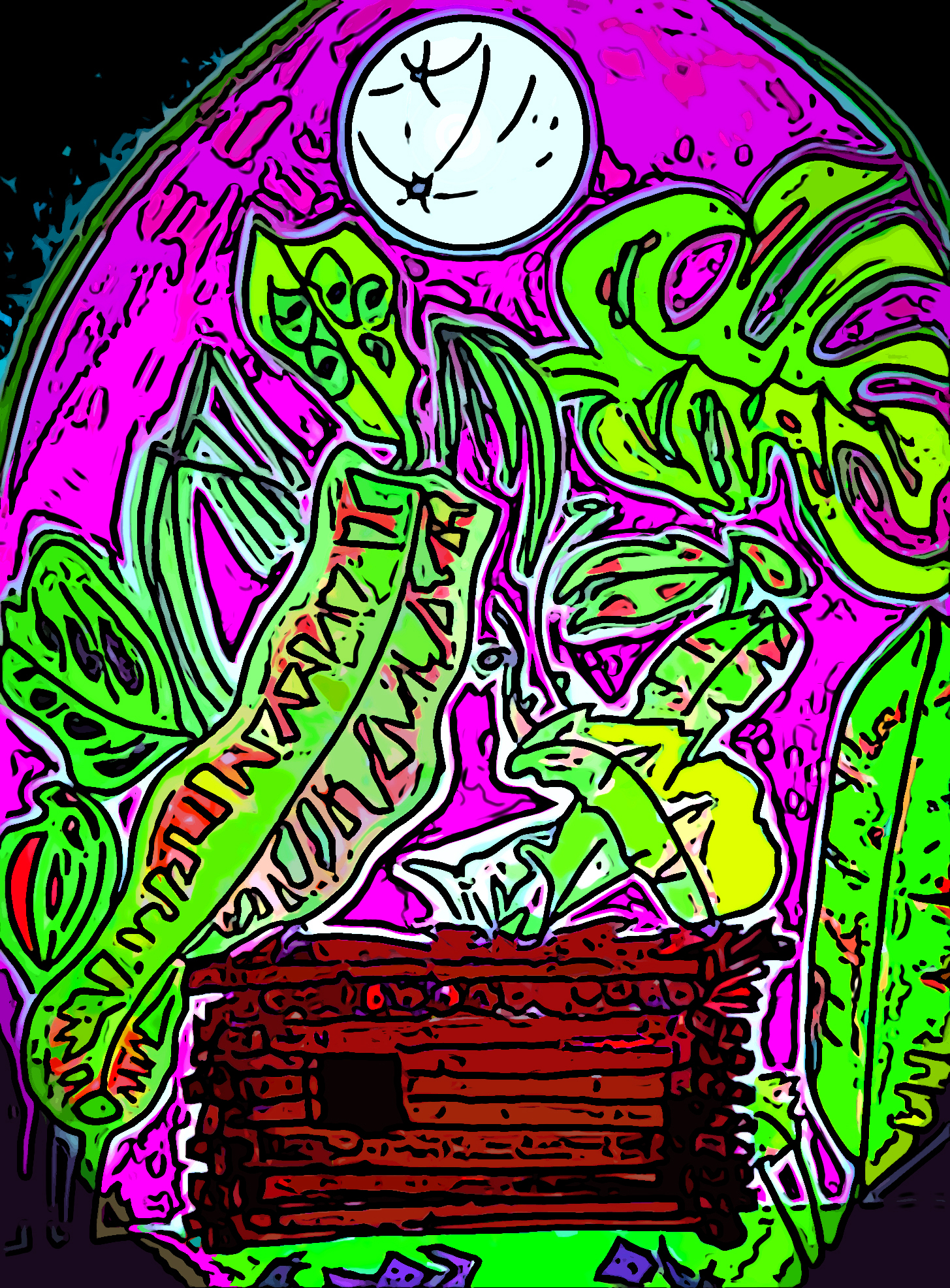
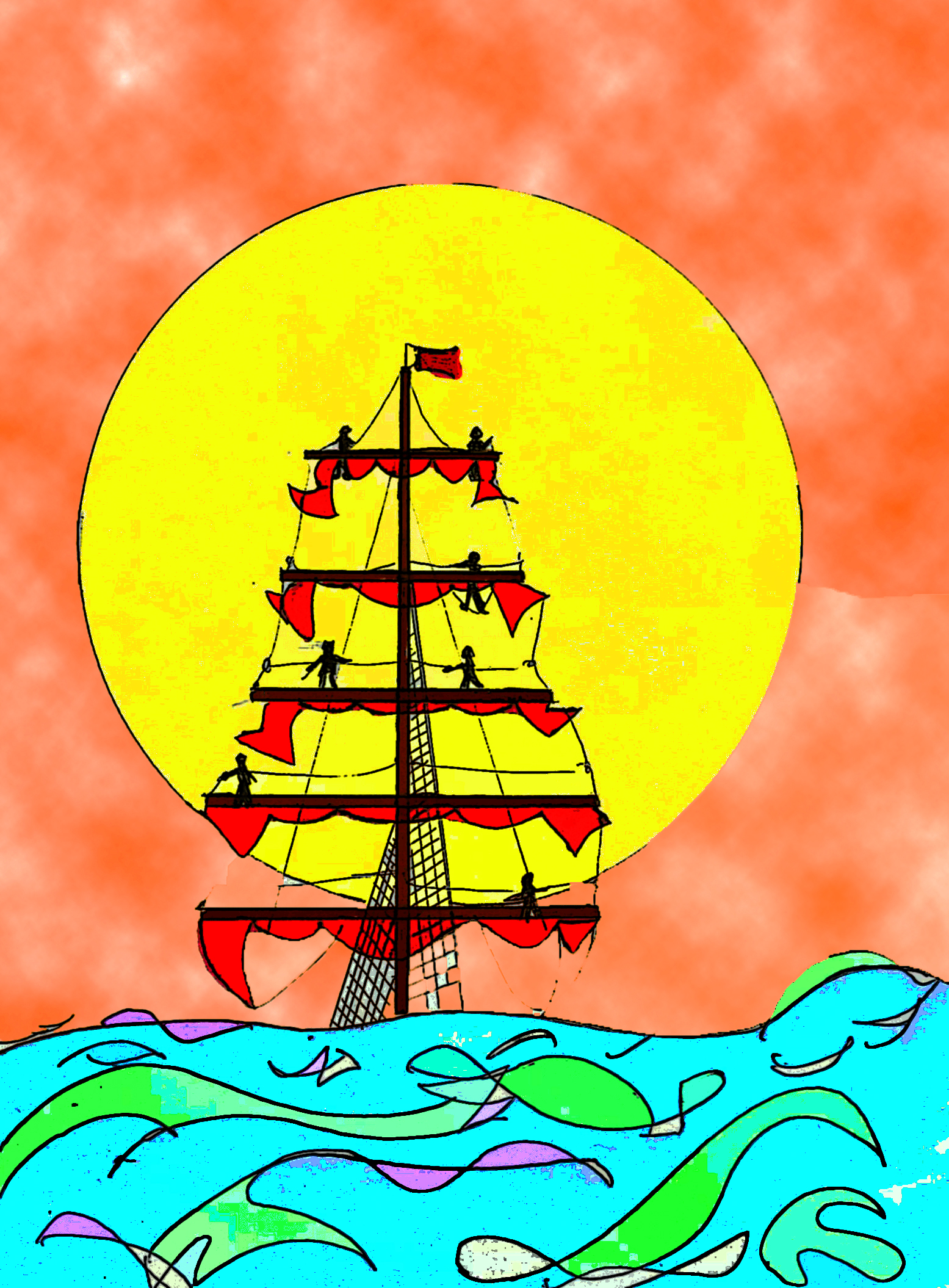
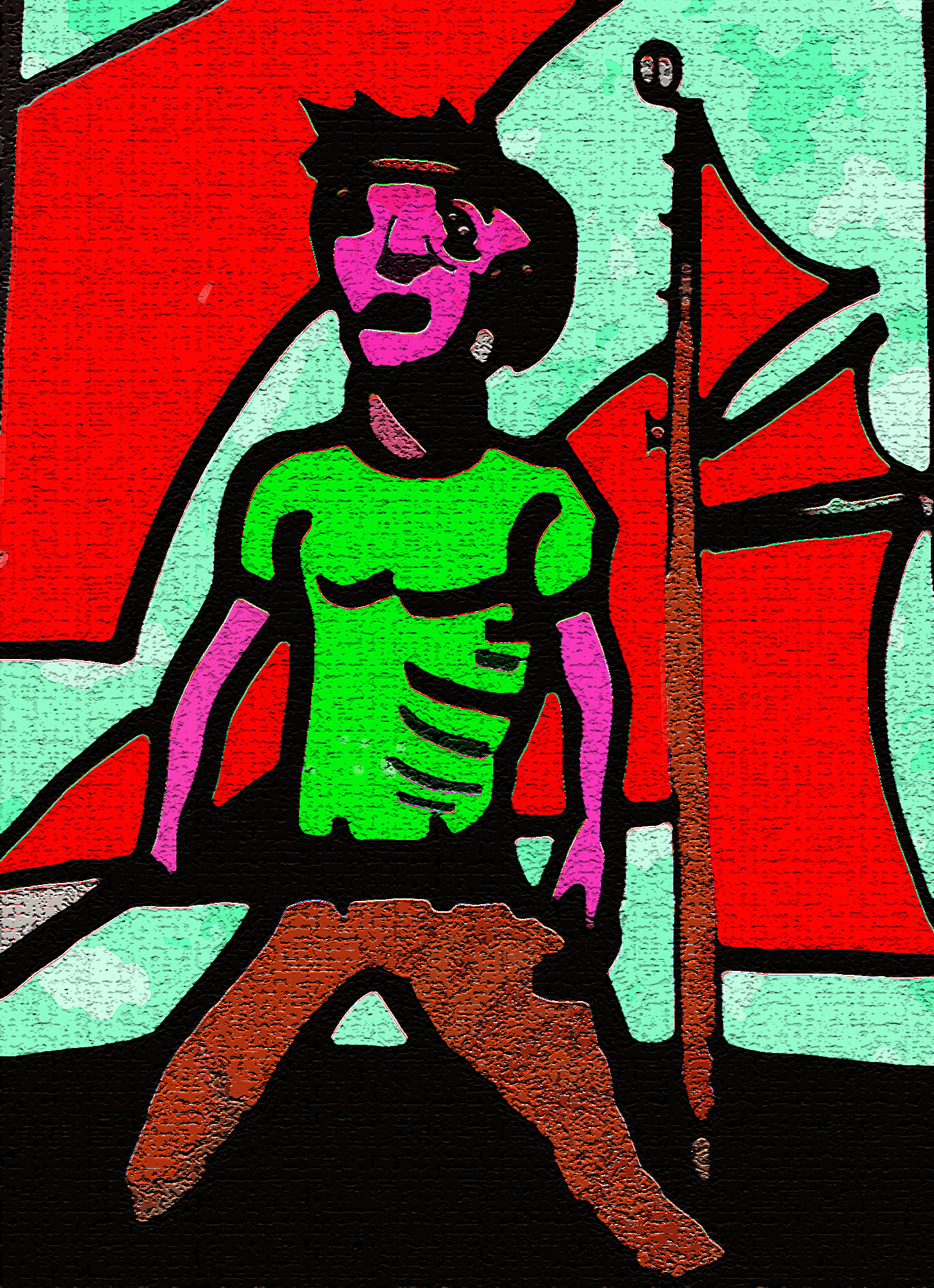
You may remember Joe Cook’s work from a previous post – from all the way back in October 2012! (Click here to read it). Joe got in touch again recently with some images of his most recent work. I thought it would make for an interesting feature to take a look at what Joe’s up to now. Below you’ll find a piece from Joe on what he’s been working on of late, as well as some images of his fantastic new work. Enjoy!
“These images are projections from an imaginary pirate world – a world described in some detail by a friend of mine. Some scenes were described directly to me while others were inspired by old photos of jungles, high seas, ships and pirate revolutions. There remains, especially in children, a notable fascination in pirate worlds – a fascination I have attempted to harness. The images are drawn in ink and then digitally enhanced to increase vibrancy and saturation. This over exaggeration of colour was both to promote an exotic energetic hot alien world and simply to please my personal tastes. There is a particular rebellious story which accompanies these images – a story that will no doubt make its way to the surface.” – Joe Cook


















 KDOA
KDOA 