Although it has not yet reached the highs achieved by auctions of ‘mainstream’ art, the monetary value of ‘outsider art’ is creeping up. This blog is written in light of the recent Christie’s auction of outsider art from the William Louis-Dreyfus Foundation which took place earlier this month.
Over the past couple of months, I have been trawling through reviews of outsider art exhibitions published in the UK national press. It has been an interesting exercise, returning to some of the exhibitions I have visited over the past 10 years; this time, with my researcher’s head on. After diving into several of these reviews – most of which focused on the Wellcome Collection’s Souzou: Outsider Art From Japan, the Hayward Gallery’s Alternative Guide to the Universe and the Whitechapel’s Inner Worlds Outside, I started putting together a list of words and phrases that kept cropping up; words that actually seem a little out of place in a review of an art exhibition.
The above are just a few of the words and phrases that jumped out at me. It’s not the most positive list, but this kind of sets the tone, as you can imagine, for what these exhibition reviews included. This emotive and, quite frankly, dramatic language is not uncommon when it comes to literature associated with outsider art exhibitions – whether that is in the press, in exhibition catalogues, or alongside the art in the exhibition space. This led me down a bit of a worm hole, thinking about the role of the art critic in representing outsider art to the wider public.
As I have mentioned before, we don’t teach our students about outsider art (in the UK, anyway) when they enroll on an art history course at any level, and usually, when a friend or family member asks what it is I’m researching and I answer with ‘outsider art,’ the majority of people look very puzzled. Actually, I was once asked if outsider art meant art that was created outdoors. But this puzzlement is understandable – the general public never hear about this work, and for the most part, many of even the most well-known outsider artists are only really known within the outsider art field. Because of this, we rely heavily on what we read about outsider art; from curators, from historians, and from critics. And because the work is, for the most part, pretty unknown, the language these curators, historians and critics use can be dramatic – or even voyeuristic to some extent. Human beings love hearing about the ‘weird and the wonderful,’ and they love hearing about people who aren’t like them (just think about the fascination a large part of society has with watching Netflix documentaries about serial killers). So this is what the critics play upon.
Martin Ramirez, courtesy of ArtNet
When writing about outsider art, critics have an extra bonus in that the majority of (certainly the ‘traditional’) outsider artists did not consider their work to be ‘art’, and therefore did not write or talk much about it themselves. This means the critic is able to imbue their own views onto this work, and, particularly with the national newspapers, reach much wider art and non-art audiences. This kind of power and freedom (no fear of reprisal from the artists) is no doubt a factor in the overdramatising of this type of work. It is important to consider the role of the curator in this story too. Critics need some to pin their review on; something to ‘appraise against’; a theme or a narrative. Many exhibitions of outsider art are group shows lumping together anyone and everyone who might fit comfortably (or uncomfortably) under that spacious umbrella. So critics are left to review disparate works and people, finding common themes where they can; and this common theme is often health or disability.
The role of the critic in the wider art world is also paramount here. The art world is a market system, and there are people who run the system for their own or others’ gain. Critics are just a small cog in this wider network of sales, exhibitions, and fame. A small, but important cog. Critics are self-imposed definers of taste. They say what’s good and what’s not good, and, much of the time, their views will be plumped up by ulterior motives. I have mentioned Howard Becker and his sociological views about art in previous posts. He talks a lot about the theory of reputation, and how reputations (of artists, and of works), “develop through a process of consensus building in the relevant art world.” He also notes that “the theory of reputation says that reputations are based on works. But, in fact, the reputations of artists, works, and the rest result from the collective activity of art worlds.”[1]
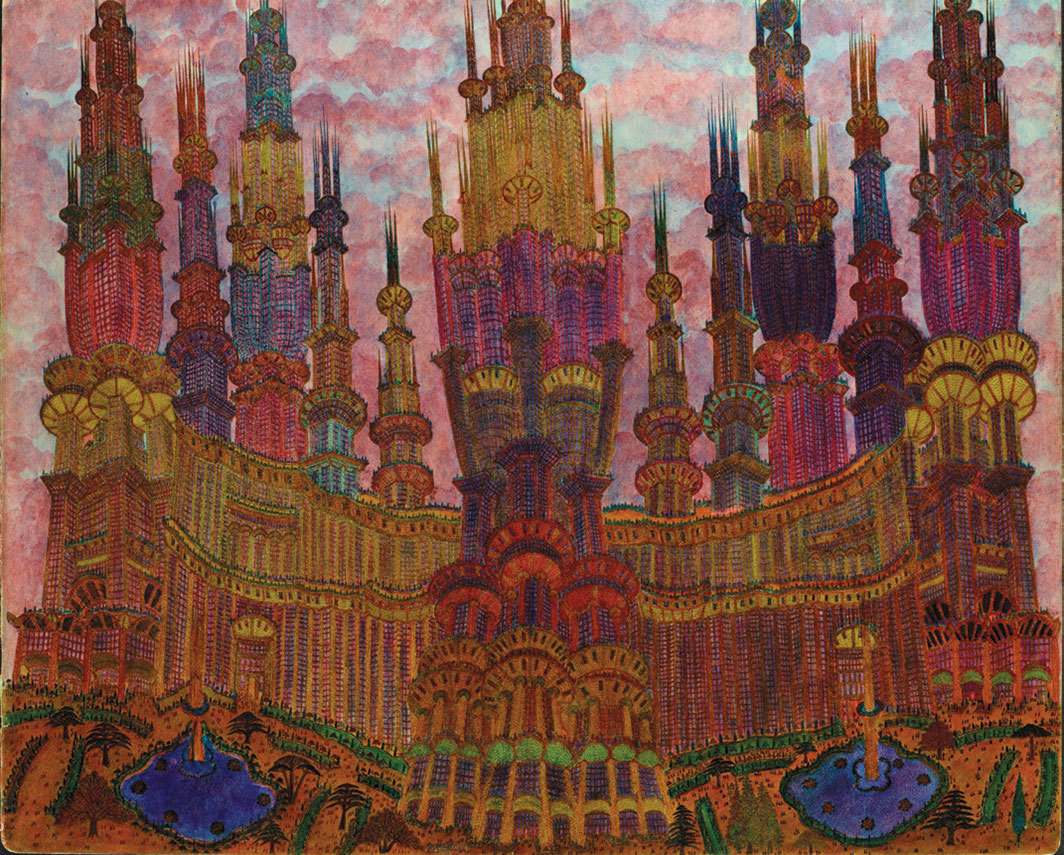
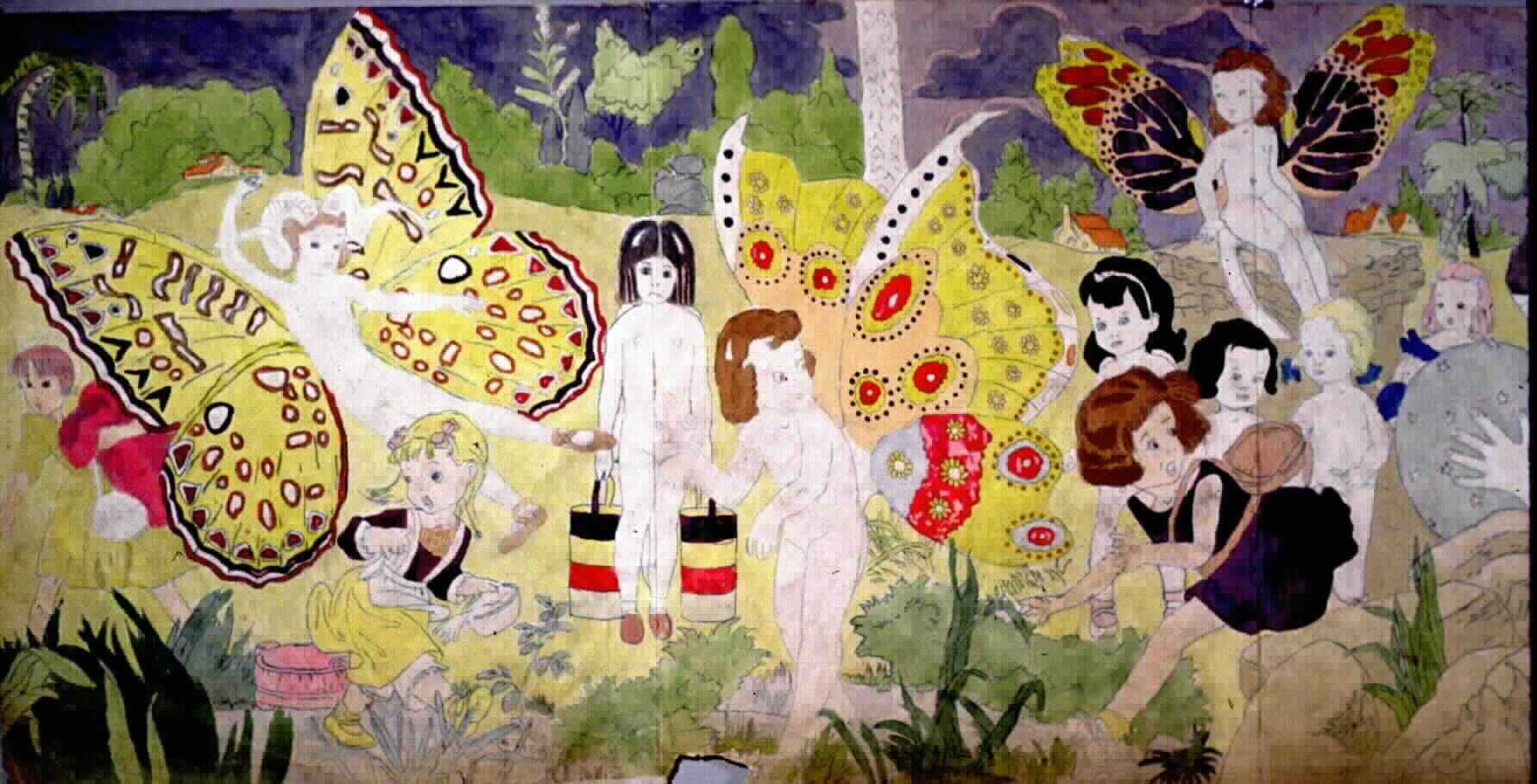
Marcel Storr, courtesy of Artforyum
I found a nice quote by critic Laurence Alloway, which I’d like to finish with. He nicely summarises what he thinks the role of the critic should and shouldn’t involve:
“I think art criticism should be part of the communication system of a mass society, not elite-dominated, not reduced to a single tradition, and certainly not possessing any absolute value.” [2]
References
[1] Becker, Howard. S., Art Worlds, University of California Press, 2008
[2] Kalina, Richard, Imagining the Present: Context, Content and the Role of the Critic, Routledge, 2006
I have just started researching for my next PhD assignment, which will look at the ways the media has reviewed exhibitions of outsider art over the past fifteen years. Whilst working my way through back catalogues of exhibition reviews, I came across Jonathan Jones’ review of the 2014 British Folk Art exhibition at Tate Britain (London).
In his review of the first major exhibition of British folk art (which is actually very positive), Jones identifies folk art as exceptional in that it “shows that there lies a whole other cultural history that is barely ever acknowledged by major galleries.” This got me thinking about a work trip I made to Compton Verney in Warwickshire earlier this year. Compton Verney has its own very broad collection of folk art, which is exhibited in custom designed rooms housed at the very top of a magnificent building.
Incorporating amusing yet beautiful paintings of prized farm animals to visual signs used above shops before reading was something that most people were able to do, the collection is a wonderful accumulation of a history of Britain that we so rarely get to see or experience. It is the day to day life of the everyday person.
Traditionally produced by people from a lower socio-economic background working within their local communities, folk art is often found dancing around the edges of the mainstream art world. Often seen as craft, it has a reputation as being a form of ‘low’ art. The distinction between folk art and ‘mainstream’ art has been emphasised – and embedded – by art institutions, whose historical works endeavour to show either the lives and faces of the upper-classes, or the lives of the working-classes through the eyes of the middle- or upper-classes.
In his review, Jones notes that “where ‘elite’ paintings in the Tate collection might show such people [people from the working-classes] labouring in the fields, here they are shown as they wished to see themselves – dressed up on a festive day instead of working their fingers to the bone.” This distinction between the content of folk art and the content of ‘mainstream’ historical works highlights the influence of art institutions over what we see and know about our own cultural history.
On entering most of the major galleries in London, works in their historical collections will show monarchs, or other men and women of high standing, probably dripping in gold. Or they might show the lives of the lower-classes, but tinged with an authoritative gaze – maybe the people in these depictions are at work, or they are sick. These depictions give us very little insight into the actual lives of people who were not a part of society that was accepted, documented and shared. If we believe what we see in these historical works, we could believe that people from working-classes were just unfeeling toiling machines. But what were their lives really like? What did they enjoy doing? And how did they really see the world?
This is where folk art becomes particularly valuable to us. Because it is in these apparently ‘mundane,’ ‘everyday’ images that we see what life was really like for those who had little to no control over what was recognised as historically important. They are lives and stories that have been hidden by those in positions of power; a kind of propaganda that has shaped how we see our history. And art galleries and museums (being the influential institutions that they are) have had a huge part to play in this. Art, if you think about it, is the only visual documentation we have of ‘what came before.’ If we are only privy to images created and disseminated by those from a certain societal standing, then we only see the world as they experienced it.
“In stately homes from Kenwood to the fictitious Downton Abbey, we are told again and again that Britain’s culture has been shaped down the centuries by the elite, its art collection, it cooks and its gardeners,” Jones notes. This, he says, is just “the view from above.” By exhibiting folk art in our key arts institutions (like Tate, and like Compton Verney), we are giving audiences the chance to experience what everyday life was like for the everyday person. Folk art is an intrinsic part of our history. It is something we cannot afford to lose.
(all images taken by the author at Compton Verney)
I can only apologise for the lack of posts in recent weeks – I hit the ground running at the start of 2018, and haven’t managed to stop just yet. However, I wanted to write a quick post for you as a couple of days ago, I was doing my usual crawl through the internet for the latest news on outsider art: upcoming exhibitions, auctions, in depth articles on individual artists, when I noticed the recurrence of a new word alluding to artists creating outside of the cultural mainstream. The word was ‘autodidact’, which literally means ‘a self-taught person.’
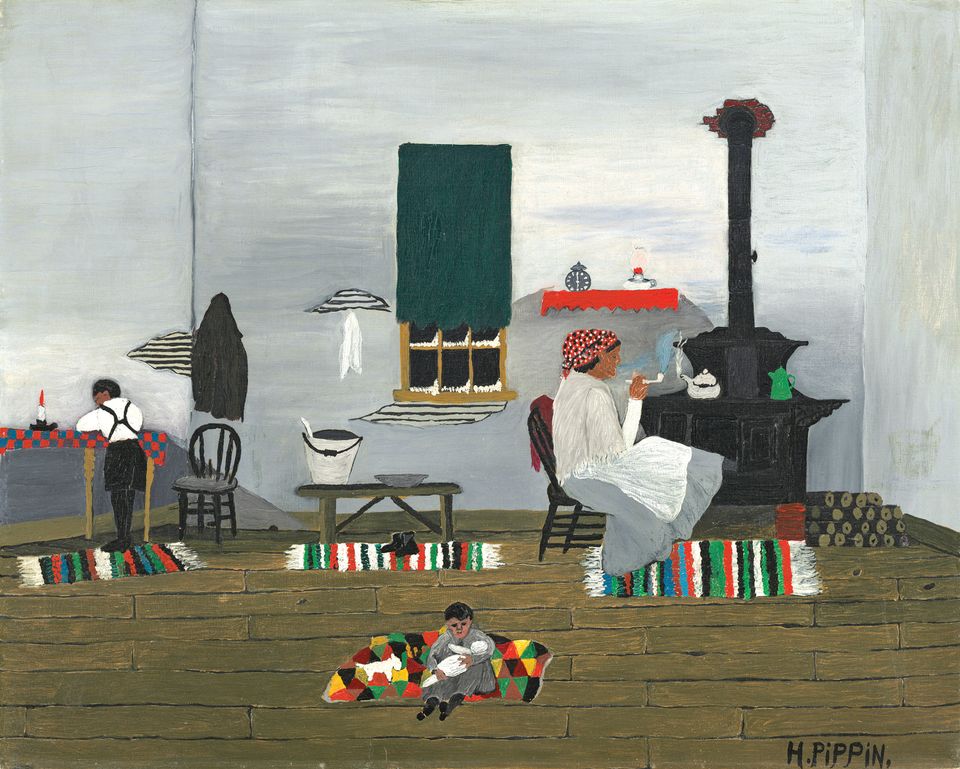
Interior (1944) by Horace Pippin (c) National Gallery of Art, Washington, DC
The first occurrence of the word appeared when I was reading an article on the new ‘Outliers and American Vanguard Art’ exhibition opening at the National Gallery of Art in Washington DC. The exhibition, the article notes, aims to “reconsider the ubiquitous but limited ‘Outsider’ designation as an umbrella term for autodidact artists.” Also interesting is the title of the exhibition itself – more specifically, the use of the term ‘Vanguard’ which means ‘a group of people leading the way in new developments or ideas.’ Both terms are new (to me, anyway), when it comes to describing the work of those traditionally known as outsider artists.
Aloïse Corbaz, image from “Brevario Grimani (circa 1943), 19 pages, bound, in a notebook, colored pencil and pencil on paper, 9 5/8 x 13 inches, collection abcd/Bruno Decharme (photo courtesy of Collection abcd)
The second occurrence of the term (that I came across within the space of about half an hour!) was in an Hyperallergic article about the American Folk Art Museum’s new show, ‘Vestiges and Verse: Notes from the Newfangled Epic.’ In this article, author Edward Gomez notes that the exhibition, “organized by Valerie Rousseau, AFAM’s curator of self-taught art and at brut… calls attention to the integration of text and image in works made by a diverse group of autodidacts.”
The most notable thing about the use of the term – following my reading of the articles and after a quick Google search – seems to be the predominantly positive slant the term gives to art work that is so often seen as ‘lesser’ or ‘not the norm.’ There is a whole Wikipedia page of celebrated famous autodidacts, including but not limited to authors Terry Pratchett and Ernest Hemingway, artists Frida Kahlo and Jean Michel Basquiat, and musicians David Bowie, Jimi Hendrix and Kurt Cobain.
I didn’t, however, see any renowned ‘outsider’ artists on the list. There still seems to be some sort of invisible barrier that separates these big stars of the arts and ‘outsider’ artists – despite there often being similarities in their backgrounds and circumstances. For example, although Basquiat’s background and style of work could undoubtedly be classed as ‘outsider’ (he ran away from home at 15, dropped out of school), he seems to have broken into the mainstream art world without too much trouble. In fact, he was the focus of a very popular exhibition at the Barbican that closed this month.
So, my question (as ever), is what creates this gulf between artists who gain fame and fortune through their work, and those whose legacies are confined to the barracks of ‘outsider’ art? What makes someone eligible to be included in Wikipedia’s ‘autodidact’ list? Do they have to be a certain kind of self-taught? I’d be interested to know your thoughts, so feel free to leave any comments below.
The latest artist showcase comes from Gail Prussky, whose drawings and paintings keep her sane. Gail has answered a few questions about her life and work as an artist ahead of the release of her new book, ‘Broken Balloons.’
When did your interest in art/creating begin?
When I flew out of the womb. I’ve been drawing since I was a little girl. Drawing kept me sane when my parents were THIS close to killing each other. Calmed me when I felt angry, scared or lonely. Kept my brain from exploding when I felt like a hostage in stuffy classrooms. As an adult, my art (especially my drawing) continues to be my therapy. Helps me get the demons out. Keeps me from being a serial killer.
What is the starting point for each piece?
When I’m drawing or painting, I just begin. I never have a plan, I don’t create from a photograph or follow a drawing. I simply let the pen/brush go where it wants to go. My brain isn’t in the room with me when I make art. It comes from a place inside me that has no language, which makes it so difficult to speak about a finished piece.
Who or what influences your work?
Well, obviously all the artists I’ve loved over the years….Picasso, Van Gogh, Gauguin, Matisse, and, of course, Basquiat. And the illustrators-Edward Gorey, Ralph Steadman, Gahan Wilson. These are the artists who’ve influenced me. I was an addiction therapist for ten years, listened to incredibly powerful stories from my addict clients. These stories have a huge influence on my art these days. But mostly, I think, I’m influenced by my own emotions. What I paint or draw is directly related to how I’m feeling that day, and what I’m reacting to. I make GREAT art when I’m angry. And it’s far better than stuffing my face with cheesecake. I think.
What do you hope the viewer gets from your art?
I want my work to resonate emotionally with the viewer. I don’t care if they’re disgusted, angry, happy, or sad. As long as they feel SOMETHING.
What do you think about the term “Outsider Art”?
It’s a very general and vague term. It USED to mean (to me, anyway) art that was created by marginalized people. But that’s not what it means to me anymore. Now (for ME, again) it refers to art created by someone who FEELS marginalized. Isolated. It means creating art that has no rules and no pressures to conform to anything at all. Unique. Dis-connected from the “art world.” Outside the box.
What are you working on at the moment?
Well, I’m ALWAYS drawing. It’s obsessive. Compulsive. Keeps me sane. Painting, though, is more like work to me. I’m currently working on a huge canvas (with acrylics) and I have NO idea where it’s going to go. As usual, I’m not driving the bus, the damn thing will go wherever it wants to go…
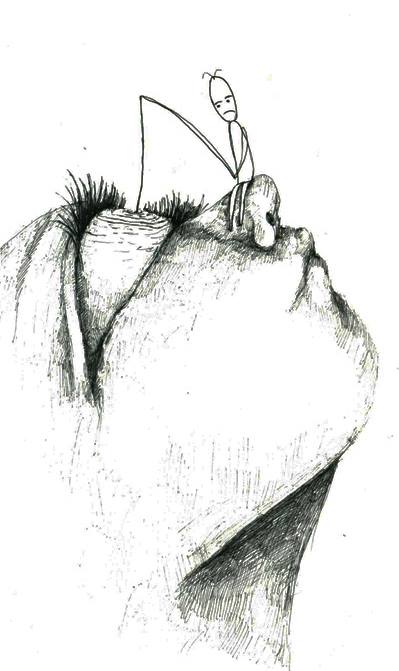
Back in December, Boeeuen Choo’s spiritual art inspired by the design and template of original tarot cards featured on kdoutsiderart. Last month, Boeeuen got back in touch about a new project that I really wanted to feature here. It’s always great to hear from the artists featured in the artist showcases; to hear about their new work, new inspirations and ideas. So, below you’ll find a paragraph from Boeeuen about the ink drawing project, as well as a selection of great images.
“I have always been fascinated by the idea of ‘mind.’ Our mind is like another world – it is impossible to fathom its depths. My idea of psychology is better illustrated visually than in my writings. That is why I decided to create a series of drawings related to the human mind. These drawings are not straightforwardly illustrated, instead, they are quite surreal. However, I want viewers to engage with the stories of drawings personally, emotionally.” – Boeeuen Choo
Boeeuen Choo, Addiction
Boeeuen Choo, Boredom
Boeeuen Choo, Fishing
Boeeuen Choo, Growing Innerself
Boeeuen Choo, Malice
Boeeuen Choo, Mannerism
Boeeuen Choo, Peace
You can see more of Boeeuen Choo’s work by clicking here
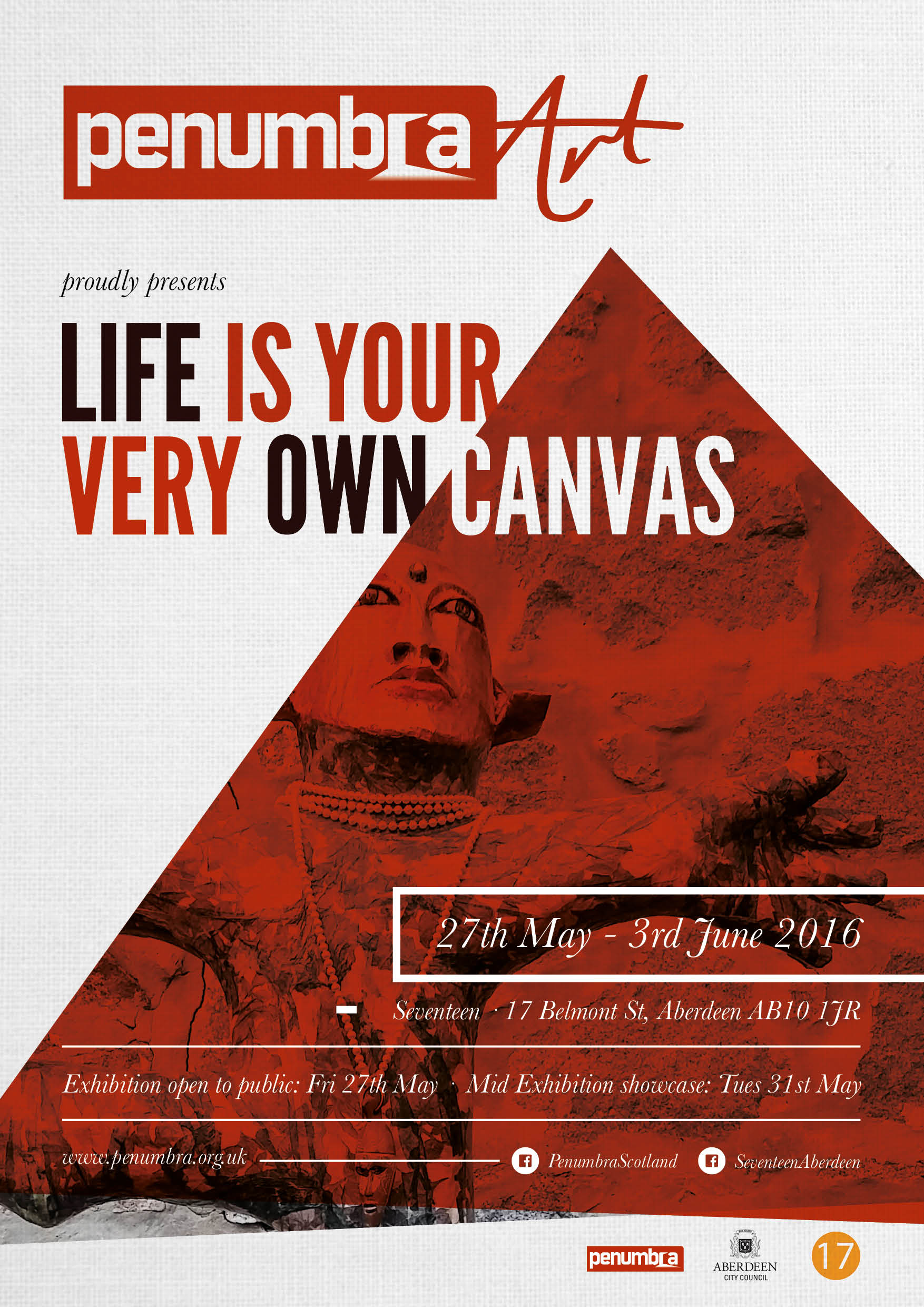
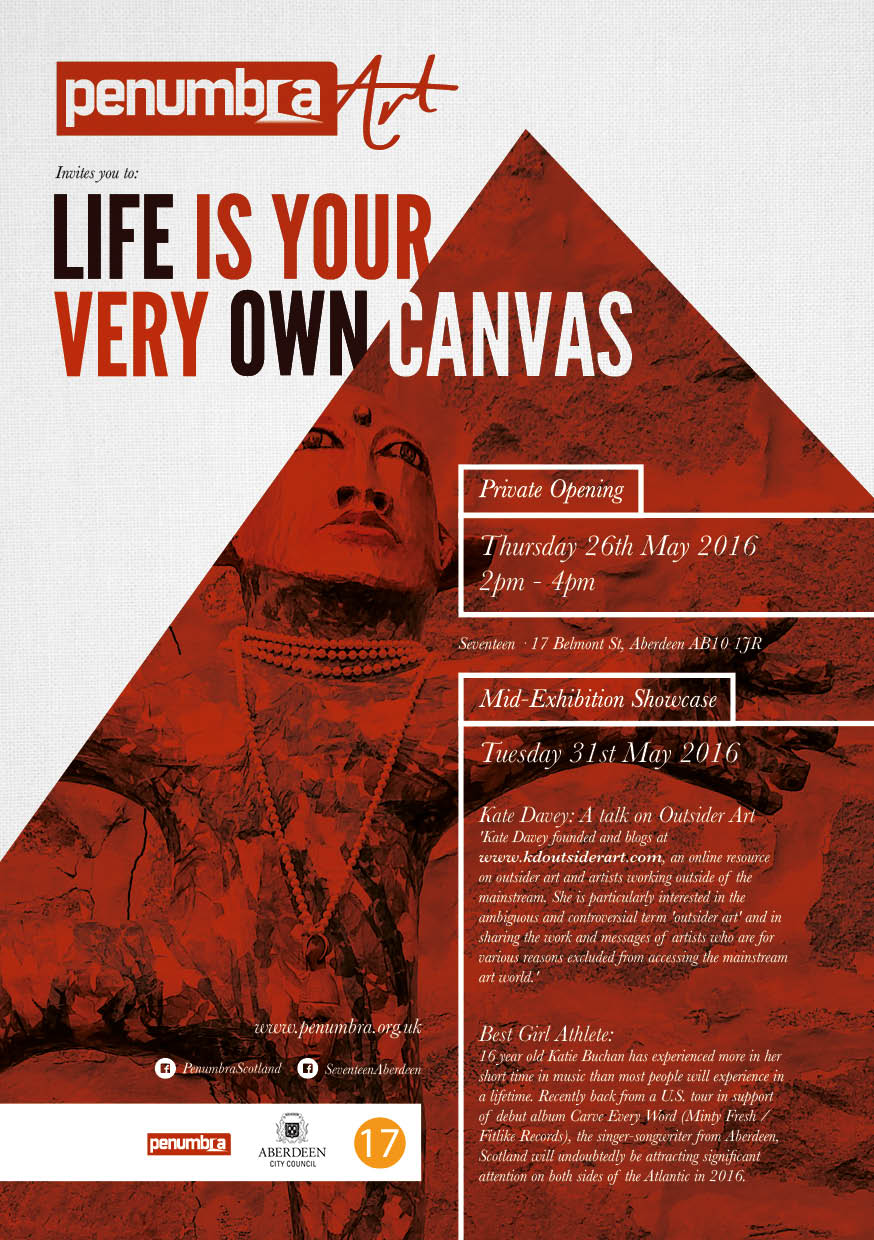
‘Life is Your Very Own Canvas’ is an exhibition showcasing expressive art created by individuals somewhere along the road to recovery. The exhibition has been organised by Penumbra Art; a new collective of artists who are exploring the creative path together in a supportive, encouraging and safe environment. The exhibition is happening from 27 May – 3 June 2016 at Seventeen in Aberdeen.
3D dragon sculptures, high quality black and white street photography and a time travelling comic strip are but a few of the eclectic works on show.
Mid-exhibition, on 31 May, there will be a showcase event where I will be talking about outsider art: then and now, and Best Girl Athlete will be performing.
REDEFINING OUTSIDER ART: LOOKING AT LANGUAGE
AN ONLINE EXHIBITION LOOKING AT THE TERM OUTSIDER ART AND WHAT IT MEANS IN THE 21ST CENTURY
Call out for submissions to an online exhibition focusing on the term outsider art and what it means to YOU as an artist.
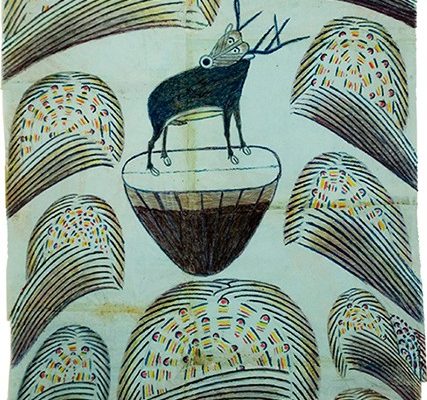
Bill Traylor, Brown Mule, 1939 [source: http://www.petulloartcollection.org]kdoutsiderart.com regularly focuses on the ambiguities of the term outsider art and what potential impact it might have on the artists it aims to ‘define.’ In late 2015, I posted a blog that outlined the thoughts of six artists who find themselves housed under this ‘outsider’ umbrella. Following on from this, I’d like to expand this idea, and am inviting artists who might in some way align themselves with the term outsider art to tell me what they think. I’d like to know what you think of the term outsider art, and – if you have an idea – what a better term might be.
I’m looking for responses in a variety of media – using words, images, sculpture, performance, sound – to contribute to an online exhibition challenging the term outsider art. Unlike other conversations around the term, I’d like us to work together to break down the term outsider art and for you to really think about what it means to you as an artist. By providing real-life responses from artists as well as potential alternatives, we can be a positive addition to the continuing conversation.
Submissions Submitted work must be in a digital format – this can be images, a sound or movie file, or a PDF or Word Document. Each artist can submit one piece, and all pieces must be accompanied with a brief description of how it relates to the continuing conversation around outsider art. Please email all submissions to kdoutsiderart@yahoo.com by 1st July 2016.
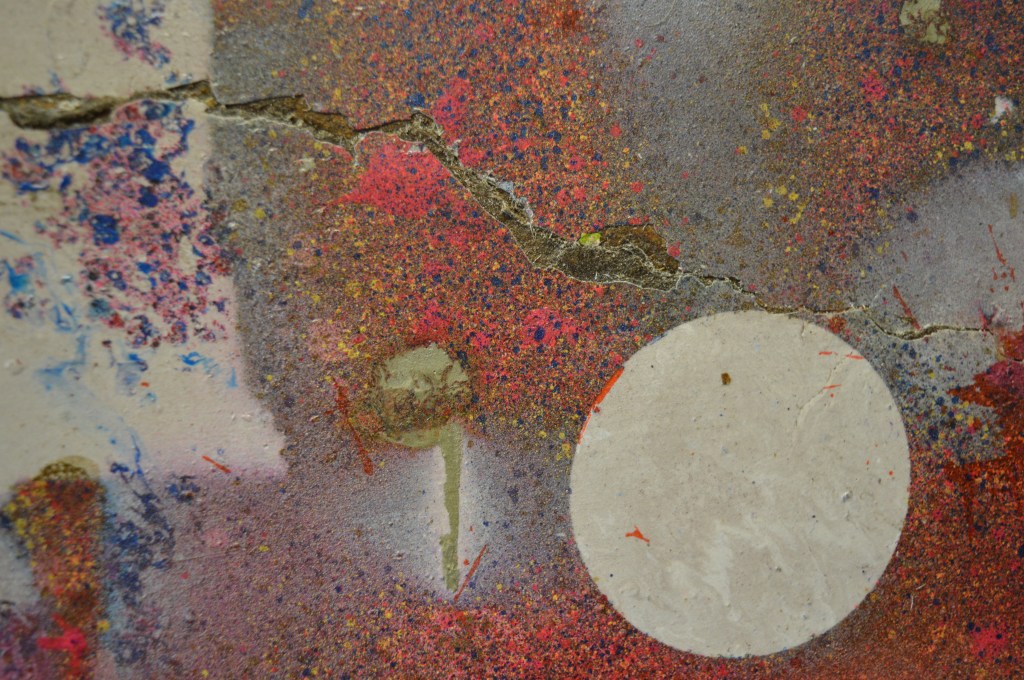
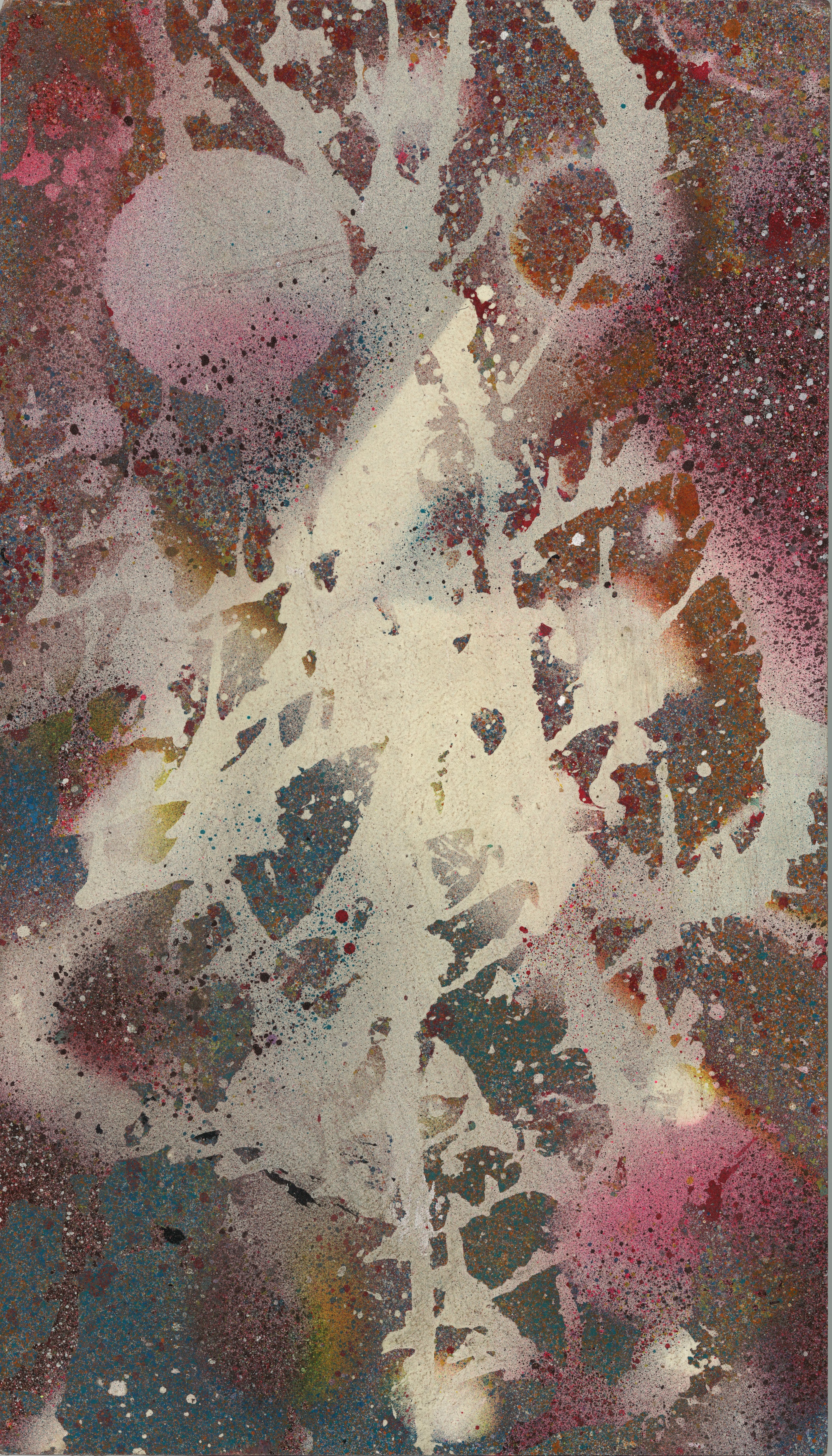
This guest post has been written by Brendan Liam, ‘Curator of the Apocalypse.’ Brendan has coined the term ‘Nomadic Art’ to describe works that are predominantly anonymous, and created on simple materials often found to hand. The work he describes is much nearer street art than fine art in its appearance and style.
Anonymous, Along Came a Tipping Point. “This is a ‘spinning painting.’ It doesn’t literally spin, but it can be hung from any angle.”
“My name is Brendan Liam and I’m Curator of the Apocalypse. I’ve been an outsider artist and curator for less than two years. Before 2014, I had never had any notion of considering myself an artist, much less a curator. I went to the University of Wyoming and wandered from 1992 to 2005. I had 185 credits when I graduated 20 years ago, three of which were related to art, for ‘beginning drawing.’ So I’m educated, but not in art; I have no background in art. My background is economics, business, and real estate. Essentially I had what I call a ‘successful midlife crisis.’ I had been making six figures a year and living the life of an ordinary person and I quit the whole show… and accidentally emerged doing art in the summer of 2014 and I will be doing my first show in Denver this coming November at the Pancakes and Beer show.
I am a good example of an ‘outsider’ for sure. I don’t know about the rules of composition, I don’t understand colour wheels and I don’t care what gallerists or judges say. I just want to sell art to people, preferably people who don’t normally buy art. I usually get my inspiration from small children because they don’t know the rules either.
Anonymous, A Cold Heart Melts
After all that formal education, I certainly didn’t want to go back to college to study art at 42 years old. I gave it some thought, and decided it would be much quicker to create a philosophy of art that championed ignorance. The result may or may not be original – I certainly wouldn’t know – I’m just too damn ignorant. Either way, I call it ‘Nomadic Art.’
‘Nomadic Art’ is closer to street art than fine art. It is always artist-less, or by Anonymous. This is partially because knowing the name attached to a piece of visual art arguably clouds one’s ability to objectively view the art. Naturally some artists are so unique they may not need to sign and thus may not avoid the subjectivity issue addressed normally by anonymity. The important thing to note is the credentials attached to the art here – which are none. No artist means no resume, and all that goes away with that.
Anonymous, Etherea, The Good Witch
All that remains is the art. I fear the deeper into the art world I go, the further from the art I might get. So I’m actually paranoid to some degree, about learning too much from the industry itself. I’d prefer to let the paint teach me; the paint and the preschoolers.
The art is done quickly, in any medium, on any available material and obviously by anyone. This is the heart of Nomadic Art: it is essentially painted garbage. Frames are extremely rare, and if you see one for sale, it’s unusual. For the paintings, you’d never see actual canvas or oil, that’s far too fancy for Art from the Apocalypse. The canvases do include Masonite, composite boards (usually drawer bottoms), OSB (particle boards), wood scraps, paper and just about anything else – except canvas.
Anonymous, The Middle Way Through a Storm
Even the mounts are unusual. If you click the links, you’ll also see some pieces have lengthy stories behind them.”


















 KDOA
KDOA 