Category: PhD

  • Outsider Art and the Art Critic

    Outsider Art and the Art Critic

    Over the past couple of months, I have been trawling through reviews of outsider art exhibitions published in the UK national press. It has been an interesting exercise, returning to some of the exhibitions I have visited over the past 10 years; this time, with my researcher’s head on. After diving into several of these reviews – most of which focused on the Wellcome Collection’s Souzou: Outsider Art From Japan, the Hayward Gallery’s Alternative Guide to the Universe and the Whitechapel’s Inner Worlds Outside, I started putting together a list of words and phrases that kept cropping up; words that actually seem a little out of place in a review of an art exhibition.

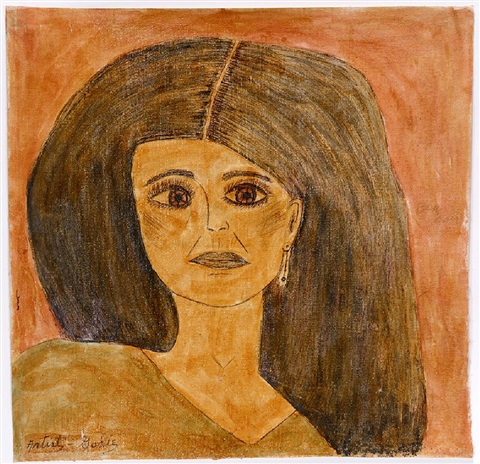
    lee-godie-black-haired-woman
    Lee Godie, Black Haired Woman, courtesy of ArtNet

    Mysterious, disturbing, criminal, eccentric, alienated, troubled, miserable, painful, tragic, psychosis, obsessive, chaotic, unhinged, imbecile, insane, lunatic, depressing, ranting, desperation, relentlessly garbled, utterly ridiculous, lost touch with reality.


    The above are just a few of the words and phrases that jumped out at me. It’s not the most positive list, but this kind of sets the tone, as you can imagine, for what these exhibition reviews included. This emotive and, quite frankly, dramatic language is not uncommon when it comes to literature associated with outsider art exhibitions – whether that is in the press, in exhibition catalogues, or alongside the art in the exhibition space. This led me down a bit of a worm hole, thinking about the role of the art critic in representing outsider art to the wider public.
    As I have mentioned before, we don’t teach our students about outsider art (in the UK, anyway) when they enroll on an art history course at any level, and usually, when a friend or family member asks what it is I’m researching and I answer with ‘outsider art,’ the majority of people look very puzzled. Actually, I was once asked if outsider art meant art that was created outdoors. But this puzzlement is understandable – the general public never hear about this work, and for the most part, many of even the most well-known outsider artists are only really known within the outsider art field. Because of this, we rely heavily on what we read about outsider art; from curators, from historians, and from critics. And because the work is, for the most part, pretty unknown, the language these curators, historians and critics use can be dramatic – or even voyeuristic to some extent. Human beings love hearing about the ‘weird and the wonderful,’ and they love hearing about people who aren’t like them (just think about the fascination a large part of society has with watching Netflix documentaries about serial killers). So this is what the critics play upon.

    Ramirez-Forever-2015-06-e1427136951746-427x400
    Martin Ramirez, courtesy of ArtNet


    When writing about outsider art, critics have an extra bonus in that the majority of (certainly the ‘traditional’) outsider artists did not consider their work to be ‘art’, and therefore did not write or talk much about it themselves. This means the critic is able to imbue their own views onto this work, and, particularly with the national newspapers, reach much wider art and non-art audiences. This kind of power and freedom (no fear of reprisal from the artists) is no doubt a factor in the overdramatising of this type of work. It is important to consider the role of the curator in this story too. Critics need some to pin their review on; something to ‘appraise against’; a theme or a narrative. Many exhibitions of outsider art are group shows lumping together anyone and everyone who might fit comfortably (or uncomfortably) under that spacious umbrella. So critics are left to review disparate works and people, finding common themes where they can; and this common theme is often health or disability.

    The role of the critic in the wider art world is also paramount here. The art world is a market system, and there are people who run the system for their own or others’ gain. Critics are just a small cog in this wider network of sales, exhibitions, and fame. A small, but important cog. Critics are self-imposed definers of taste. They say what’s good and what’s not good, and, much of the time, their views will be plumped up by ulterior motives. I have mentioned Howard Becker and his sociological views about art in previous posts. He talks a lot about the theory of reputation, and how reputations (of artists, and of works), “develop through a process of consensus building in the relevant art world.” He also notes that “the theory of reputation says that reputations are based on works. But, in fact, the reputations of artists, works, and the rest result from the collective activity of art worlds.”[1]

    article00_1064x artforum
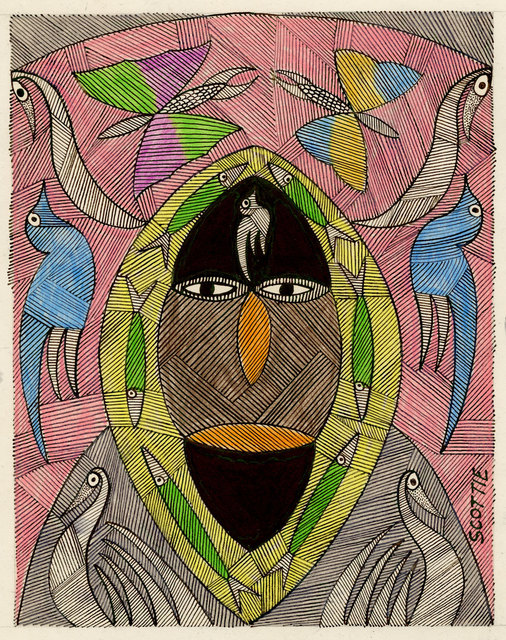
    Marcel Storr, courtesy of Artforyum

    I found a nice quote by critic Laurence Alloway, which I’d like to finish with. He nicely summarises what he thinks the role of the critic should and shouldn’t involve:

    “I think art criticism should be part of the communication system of a mass society, not elite-dominated, not reduced to a single tradition, and certainly not possessing any absolute value.”  [2]


    References

    [1] Becker, Howard. S., Art Worlds, University of California Press, 2008

    [2] Kalina, Richard, Imagining the Present: Context, Content and the Role of the Critic, Routledge, 2006

  • The Importance of Folk Art

    The Importance of Folk Art

    I have just started researching for my next PhD assignment, which will look at the ways the media has reviewed exhibitions of outsider art over the past fifteen years. Whilst working my way through back catalogues of exhibition reviews, I came across Jonathan Jones’ review of the 2014 British Folk Art exhibition at Tate Britain (London).

    1

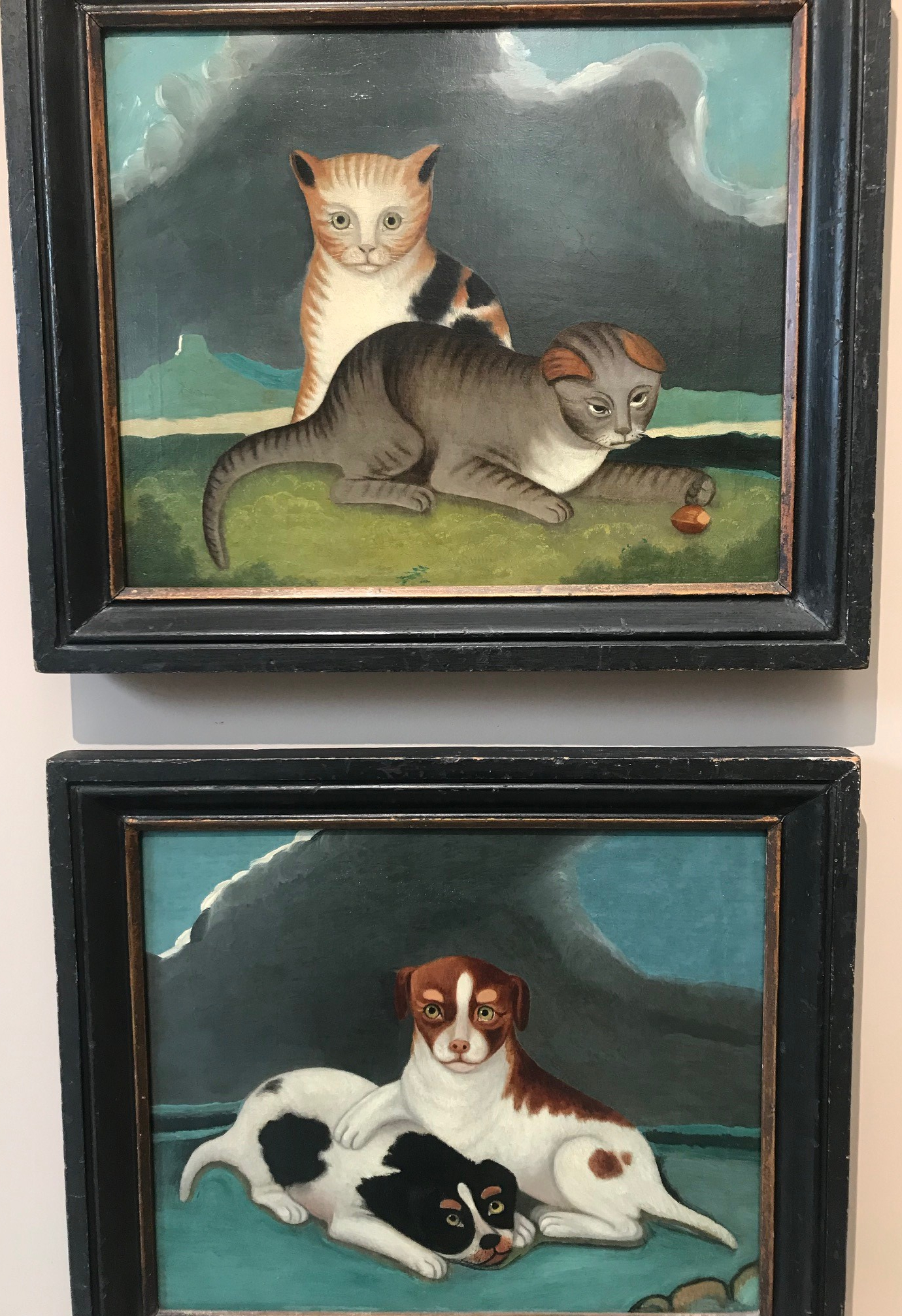
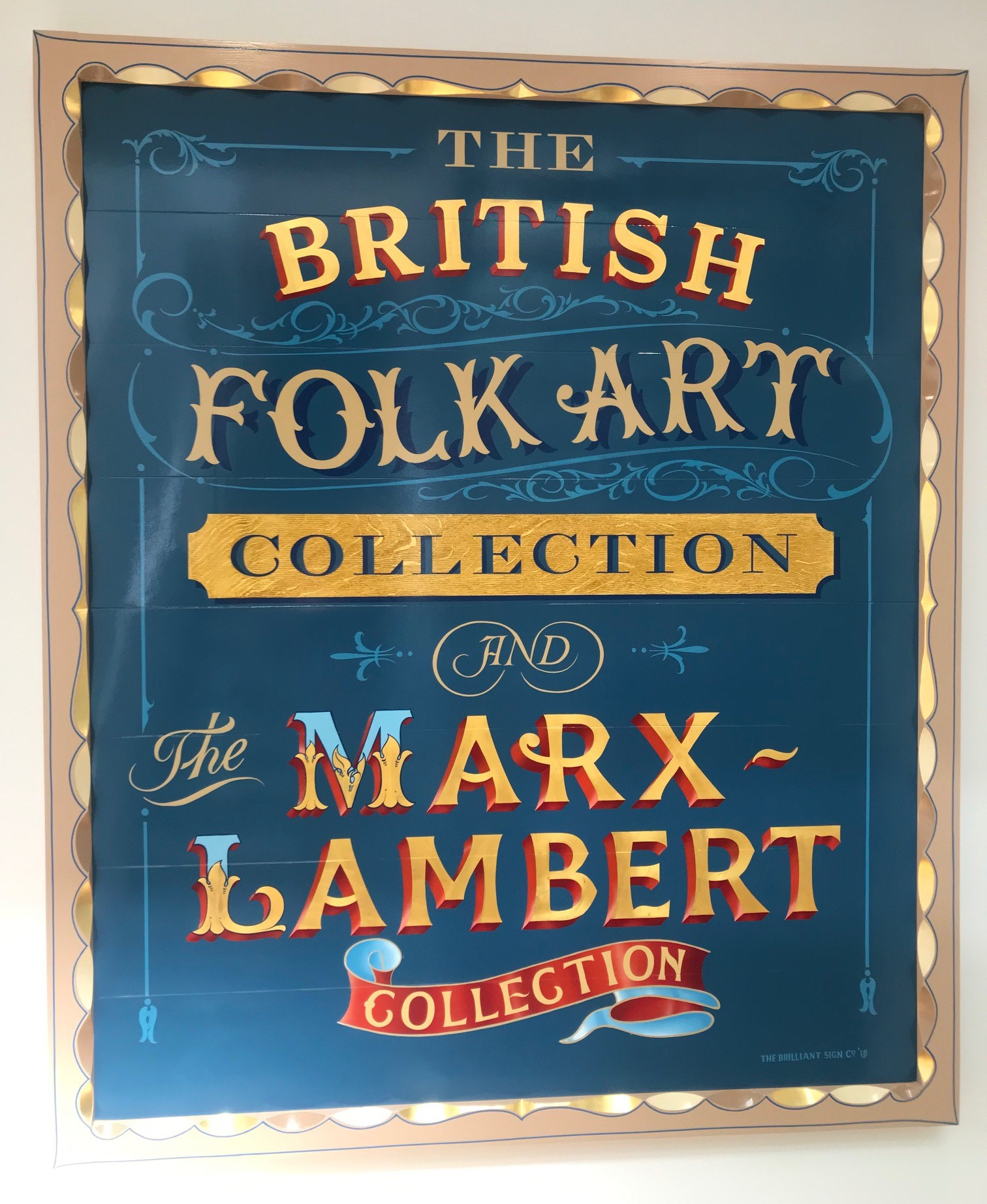
    In his review of the first major exhibition of British folk art (which is actually very positive), Jones identifies folk art as exceptional in that it “shows that there lies a whole other cultural history that is barely ever acknowledged by major galleries.” This got me thinking about a work trip I made to Compton Verney in Warwickshire earlier this year. Compton Verney has its own very broad collection of folk art, which is exhibited in custom designed rooms housed at the very top of a magnificent building.

    5.jpg

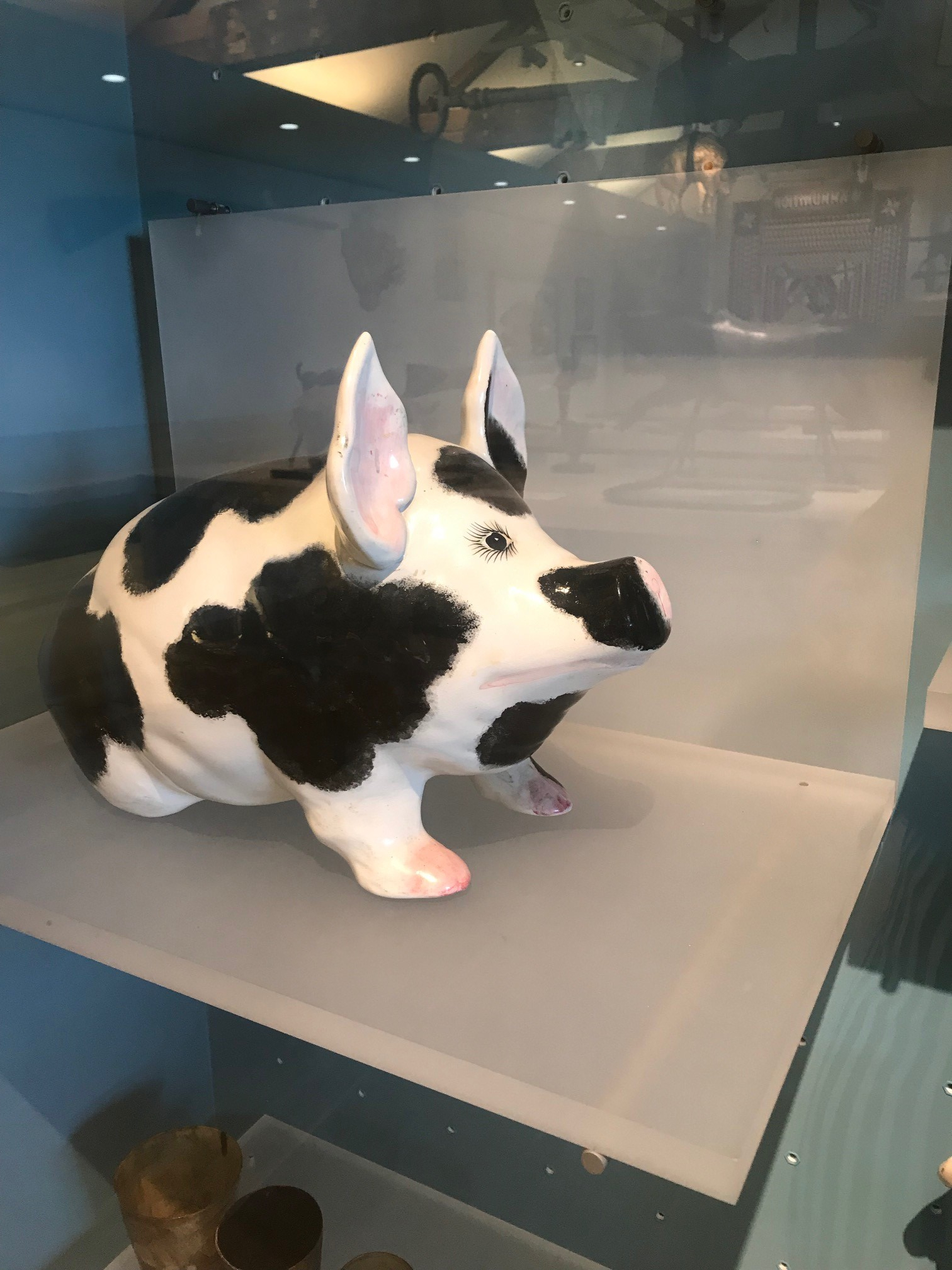
    Incorporating amusing yet beautiful paintings of prized farm animals to visual signs used above shops before reading was something that most people were able to do, the collection is a wonderful accumulation of a history of Britain that we so rarely get to see or experience. It is the day to day life of the everyday person.

    Traditionally produced by people from a lower socio-economic background working within their local communities, folk art is often found dancing around the edges of the mainstream art world. Often seen as craft, it has a reputation as being a form of ‘low’ art. The distinction between folk art and ‘mainstream’ art has been emphasised – and embedded – by art institutions, whose historical works endeavour to show either the lives and faces of the upper-classes, or the lives of the working-classes through the eyes of the middle- or upper-classes.

    7

    In his review, Jones notes that “where ‘elite’ paintings in the Tate collection might show such people [people from the working-classes] labouring in the fields, here they are shown as they wished to see themselves – dressed up on a festive day instead of working their fingers to the bone.” This distinction between the content of folk art and the content of ‘mainstream’ historical works highlights the influence of art institutions over what we see and know about our own cultural history.

    3.jpg

    On entering most of the major galleries in London, works in their historical collections will show monarchs, or other men and women of high standing, probably dripping in gold. Or they might show the lives of the lower-classes, but tinged with an authoritative gaze – maybe the people in these depictions are at work, or they are sick. These depictions give us very little insight into the actual lives of people who were not a part of society that was accepted, documented and shared. If we believe what we see in these historical works, we could believe that people from working-classes were just unfeeling toiling machines. But what were their lives really like? What did they enjoy doing? And how did they really see the world?

    6

    This is where folk art becomes particularly valuable to us. Because it is in these apparently ‘mundane,’ ‘everyday’ images that we see what life was really like for those who had little to no control over what was recognised as historically important. They are lives and stories that have been hidden by those in positions of power; a kind of propaganda that has shaped how we see our history. And art galleries and museums (being the influential institutions that they are) have had a huge part to play in this. Art, if you think about it, is the only visual documentation we have of ‘what came before.’ If we are only privy to images created and disseminated by those from a certain societal standing, then we only see the world as they experienced it.

    4

    “In stately homes from Kenwood to the fictitious Downton Abbey, we are told again and again that Britain’s culture has been shaped down the centuries by the elite, its art collection, it cooks and its gardeners,” Jones notes. This, he says, is just “the view from above.” By exhibiting folk art in our key arts institutions (like Tate, and like Compton Verney), we are giving audiences the chance to experience what everyday life was like for the everyday person. Folk art is an intrinsic part of our history. It is something we cannot afford to lose.

    (all images taken by the author at Compton Verney)

  • Sustainable arts careers for people with disabilities

    Sustainable arts careers for people with disabilities

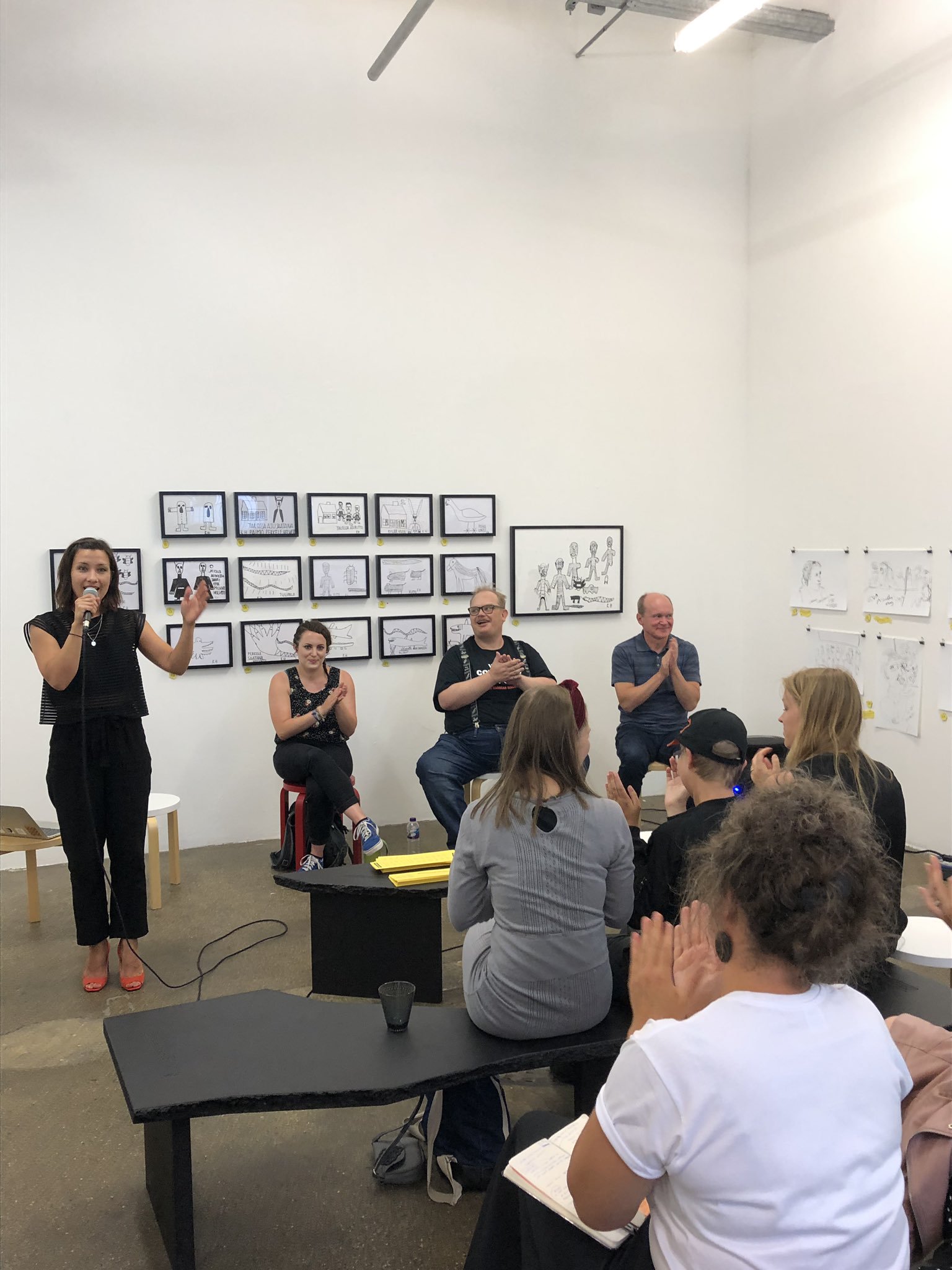
    Earlier this month, I was lucky enough to be invited to join a panel discussion in London organised by Pertti’s Choice in my role as Step Up Coordinator at Outside In. The panel focused on the issue of ‘sustainable arts careers for people with disabilities.’ It chimed nicely with the work I do on Outside In’s Step Up training and professional development programme, which ultimately aims to challenge who is able to take up positions of authority in the art world. I was joined on the panel by Ese Vienamo, who works for the Arts Promotion Center in Finland focusing specifically on ‘outsider art,’ and Sami Helle, from Finnish band Pertti Kurikka. In this post, I wanted to outline some of the topics we covered during the discussion, and reiterate some of my key thoughts.

    perttis choice work 2
    Pertti’s Choice pop up in London

    I started by introducing the current system in the UK, which really highlights the work that needs to be done in recruiting people with disabilities to positions within the arts sector. Arts Council England (ACE)’s 2015-16 Equality, Diversity and the Creative Case report showed that only 4% of staff at National Portfolio Organisations and Major Museum Partners were disabled, compared to 19% of the general population. These figures highlight the ongoing under-representation of disabled people in the arts sector, despite ACE and and other organisations’ attempts to diversify the arts workforce.

    The challenges we face in the UK arts workforce, to me, are defined by a system that has existed in the same, traditional way for a number of years, but is no longer fit for purpose – perhaps has never even been fit for purpose. We expect people (whatever their background or situation) to fit into this existing system, rather than offering a flexibility that can accommodate people who have different needs or requirements. The arts sector is notorious for its long hours and low pay, and is structured in a way that if someone, for example, struggles to travel at rush hour, this might put them out of the running for a job that they would otherwise be perfectly competent at. I think this is epidemic throughout the UK workforce more generally (the 9-5 working week, for example, is not suitable for everyone), but in the liberal world of the arts, which actively encourages and seeks out diversity, we should – and can – expect more.

    Perttis choice panel
    The panel

    As a sector, our inability to diversify our workforce leads to a vicious cycle that continues to create an elite system that many cannot gain entry to. The majority of people working in the arts are from a white, middle-class background, as highlighted in the Department for Culture, Media and Sport’s ‘Creative Industries: Focus on Employment’ report in 2015, which shows that in 2014, 91.9% of jobs in the creative economy were held by people in more advantaged socio-economic groups, compared to 66% of jobs in the wider UK economy. People tend to ‘seek out their own,’ and this means that much of the art we see in galleries, theatres, cinemas, is created by and for people from a white, middle-class and able-bodied background. This is an issue I feel very passionately about because I think as a nation we are missing out on inspiring, innovative and  stimulating art simply because we are not able to open our minds to different ways of working.

    We are dealing with challenges like ingrained preconceptions about people with disabilities, people from low socio-economic backgrounds, and people with mental health issues, as well as a system that is structured in such a rigid and traditional fashion. We need to come together to challenge both of these things in order to create significant and lasting change, and this should be happening from the ‘bottom’ and the ‘top.’ Change is difficult, and it takes time, particularly if there is a system that has existed historically. We need to be approaching this from the top-level (government, CEOs, the big arts institutions), and from the bottom (working with individual organisations to think about diversifying their workforce and how this can be done in a manageable way).

    Perttis choice work 3
    Pertti’s Choice pop up in London

    Discussions around these issues have certainly been started, but there is a long way to go. As a sector, we need to change our mindset, see flexible working as the norm, and certainly start seeing the diversification of the workforce as something that will enrich our artistic output, rather than as something that is tokenistic and needs to be done to ‘tick boxes.’

    Making these changes starts on an individual level, at each and every arts organisation in the UK. Change doesn’t start at the interview process, or even the application process. It starts before that. It starts with the language we use in job descriptions and person specifications, it starts with where we advertise our jobs, and it starts with a different mindset that is actively seeking out perspectives that are different to our own, ingrained narratives. It starts with flexibility – how can people apply for a job (do they have to fill out an application?), can the interview location be flexible? Can the time and date of the interview be flexible? Is there flexibility in the role itself for the right person, and is this outlined in our advertising. We need to be working with people who might not be able to fit into the existing system for whatever reason to help make the system work for them.

    presenting at Perttis choice
    Sitting on the panel at Pertti’s Choice pop up in London

    So, my final word – let’s stop assuming that we should be moulding everyone to fit into the same, broken system, and instead, start actively thinking about we can be changing this system (even in the tiniest way). It is not a one-size-fits-all; it takes communication and flexibility. Because after all, a more diverse workforce = more diverse art.


  • Artificial Hells? A Summary of Claire Bishop

    Artificial Hells? A Summary of Claire Bishop

    Following on from my recent post summarising Julian Spalding’s thoughts on the Eclipse of Art in the twentieth century, I have been reading a number of other texts that focus on the political and societal factors that impacted on the western art world in the twentieth century. This post offers a summary of Claire Bishop’s ‘Artifical Hells: Participatory Art and the Politics of Spectatorship.’ 

    outsider-art-fair-2014-top
    Francesco de Silva, Untitled

    The book looks at the trajectory of participatory art across the twentieth century. Originally a peripheral activity given little to no gravidas in the art world, participatory arts have grown in popularity – and respect – becoming “a genre in [their] own right, with MFA courses on social practice and two dedicated prizes.”[1] The rise and tradition of participatory art is most notable in European countries, where there is a strong parallel with public arts funding. Participatory arts activities, according to Bishop, see the shift of the audience member from ‘viewer’ to ‘collaborator’ or ‘co-producer.’ They are difficult to commercialise, as they are less a concrete object and more a series of events or workshops, yet they occupy a very important place in society.

    Bishop links the rise of participatory arts activities to social and political happenings in Europe in the twentieth century, and, perhaps more notably, to consumption and capitalism. A return to a more ‘social’ art, Bishop claims, can be seen to align with the rise and fall of far left-wing political agendas; for example, the avant-garde in Europe around 1917, the ‘neo’ avant-garde leading up to the late 1960s, and the fall of communism in 1989 could be seen as the driving force behind the participatory art of the 1990s.[2]

    In the UK, Bishop uses the example of the New Labour government of the late 1990s. Under this leadership, public spending on the arts shifted to have a more socially engaged focused. Based heavily on Francois Matarasso’s report on the impact of arts on society, New Labour’s cultural policy focused on what the arts were able to do for society; “increasing employability, minimising crime, fostering aspiration – anything but artistic experimentation and research as values in and of themselves.”[3] The key phrase utilised by New Labour was ‘social exclusion’: “if people became disconnected from schooling and education, and subsequently the labour market, they are more likely to pose problems to welfare systems as a whole.”[4] This new leaning towards the societal impacts of art were deeply criticised by the far-left because they seemed to seek to “conceal social inequality, rendering it cosmetic rather than structural.”[5] Cultural theorist Paola Merli noted that these new ‘uses’ for art would not change structural conditions, they would only help people come to accept them.

    jereon pomp
    Jereon Pomp (Image courtesy of http://www.outsiderartmuseum.nl)

    This politicisation of participatory arts, Bishop states, is:

    “Less about repairing the social bond than a mission to enable all members of society to be self-administering, fully functioning consumers who do not rely on the welfare state and who can cope with a deregulated, privatised word… In this logic, participation in society is merely participation in the task of being individually responsible for what, in the past, was the collective concern of the state.”[6]

    In this instance, Bishop notes, art becomes indistinguishable from government policy. Arts projects that prioritise tangible outcomes and outputs are sociological rather than artistic. This idea of art and creativity as political agenda has (unfortunately) seen arts projects evaluated solely on their positive impact on individuals and communities rather than on any aesthetic level. This way of thinking, Bishop notes, has “led to an ethically charged climate in which participatory and socially engaged art has become largely exempt from art criticism.”[7]

    This notion of separation between ‘art’ which is actively critiqued and ‘participatory art’, which is not (not on an aesthetic level anyway), “reinforces a class division whereby the educated elite speak down to the less privileged.”[8] This idea was initially suggested by Grant Kester, and Bishop agrees with this; that participatory art and its lack of ‘academic critique’ can give participants the image of being passive and vulnerable. Additionally, the continuing separation between how ‘art’ and ‘participatory art’ are dealt with on an aesthetic and critical level means that there are other distinctions and assumptions that are made between the two. Bishop notes that “there is usually the objection that artists who end up exhibiting their work in galleries and museums compromise their projects’ social and political aspirations; the purer position is not to engage in the commercial field at all, even if this means losing audiences.”[9] She continues:

    “Not only is the gallery thought to invite a passive mode of reception (compared to the active co-production of collaborative art), but it also reinforces the hierarchies of elite culture… Even if art engages with ‘real people’, this art is ultimately produced for, and consumed by, a middle-class gallery audience and wealthy collectors.”[10]

    jayne county
    Jayne County, See Me in No Special Light (Image courtesy of the Outsider Art Fair)

    This idea of a differentiation between active and passive; participatory and non-participatory, is unproductive, Bishop notes, because it only reflects societal inequalities. For example, either the spectator is inferior because they do nothing and the performer does something, or the performer is inferior to the critical thinking of the spectator.[11]

    This theory is amplified when Bishop argues that “high culture, as found in art galleries, is produced for and on behalf of the ruling classes; by contrast, ‘the people’ (the marginalised, the excluded) can only be emancipated by direct inclusion in the production of a work.”[12] This is also true of funders of the arts, where there is an underlying assumption that the working-classes can only engage physically, while the middle-classes can engage critically.[13]

    Ultimately, Bishop’s argument is that participatory art is a creation of the ruling powers to seemingly give voice to working-class members of society in a way that doesn’t distribute too much power. Today, she notes, the resurgence of participatory art “accompanies the consequences of the collapse of really existing communism, the apparent absence of a viable left alternative, the emergence of contemporary ‘post-political’ consensus, and the near total marketization of art and education.”[14] Although seemingly a socialist construction that allows people who have not had access to the ‘art’ world as was, participatory art is, according to Bishop, a way for the ruling classes to hold onto the real power, while handing over a sense of a small morself of this power to the rest of society. In his essay The Uses of Democracy (1992), Jacques Ranciere notes that “participation in what we normally refer to as democratic regimes is usually reduced to a question of filling up the spaces left empty by power.”[15]


    References

    (All Claire Bishop, Artifical Hells: Participatory Art and the Politics of Spectatorship, Verso, 2012)

    [1] Bishop, P 2
    [2] Bishop, P 3
    [3] Bishop, P 13
    [4] Bishop, P 13
    [5] Bishop P 13
    [6] Bishop, P 14
    [7] Bishop, P 23
    [8] Bishop, P 26
    [9] Bishop, P 37
    [10] Bishop, P 37
    [11] Bishop, P 38
    [12] Bishop, P 38
    [13] Bishop, P 38
    [14] Bishop, P 276
    [15] Bishop, P 283

  • The Eclipse of Art?

    The Eclipse of Art?

    Continuing on the theme of the construction and sociology of the art world, this blog post references Julian Spalding’s interesting read ‘The Eclipse of Art: Tackling the Crisis in Art Today.’ This post is somewhat a summary of Spalding’s main thoughts, which cover the descent of art in the modern era. In the book, he looks at the changing art education system, the changing language of art, and how value judgements are made about art and who makes them. Spalding is a kind of champion for the ‘traditional’ medium of painting, so much of his work focuses on how we can reinstate painting as the respected art form it once was. As always, please let me know your thoughts in the comments below, or alternatively, drop me an email: kdoutsiderart@yahoo.com. Hope you find something of interest!


    art-1851483_1920

    Julian Spalding’s ‘The Eclipse of Art: Tacking the Crisis in Art Today’ is a somewhat scathing attack on the ready-mades and found-object sculptures of the late twentieth century, and a plea for the return of painting as a respected and important form of art.

    Spalding splits his book into four main sections: the Eclipse of Language, the Eclipse of Learning, the Eclipse of Content and the Eclipse of Judgement. He concludes his argument with a chapter entitled The Passing of the Eclipse, in which he suggests where and how we might move forward from the devastating impact modern art has had on the art world and society as a whole (of course, he talks almost exclusively about the western art world). Despite a heavy criticism of most work produced in media other than oil paint, Spalding finishes the book with a certain optimism for the future; so long as we can move away from the preference of the artist as an individual celebrity over individual works.

    The book is ultimately a comparison between oil painting (historic, modern and contemporary) and other forms of visual art, along with an insight into how the ebbs and flows of the art world over the last century have almost entirely been dictated by collectors, dealers, and rich patrons. This shift in who was ‘in charge’ combined with the aftermath of two world wars, an industrial revolution, and the development of new technologies (e.g. photography and other, more mechanical methods like screen printing) led to a new landscape that was almost a direct reaction to what had come before.

    paint-2940513_1920

    Spalding talks about painting’s descent into obsoletion, echoed by the socialist and feminist voice of John Berger in his pivotal Ways of Seeing. Painting, according to Berger, was “a manifestation of the desire of man (particularly males) to take possession of things, including other people (particularly females).”[1] Painting was on the side of the haves, not the have-nots. Berger championed photography as a new and accessible art form, and questioned the need for the outdated medium of painting when new methods of representation and communication were at our fingertips.

    In ‘The Eclipse of Language,’ Spalding refers to visual art as being “a language, not a craft,”[2] but then follows this up by saying that art is in fact “not a language, because you cannot use it to converse. It is a one way communication.”[3] And, give them their due, artists in the twentieth century were keen to make art more of a two-way conversation, but this was just not possible with the rise of the ready-mades. These new objects on display in the most prestigious museums and galleries in the world were a completed statement. The public had “no choice but to think their own thoughts when looking at such ‘found objects’ because it is impossible to know from just looking at them what the artist intended you to think or feel about them, because they had not been changed by the artist in any way.”[4]

    The chapter ‘the Eclipse of Learning’ is perhaps the most interesting contextually, giving – to some degree – a sense of how we have ended up in this situation. Languages, Spalding asserts, have to be learnt, and “the same is true of the language of art.”[5] Spalding argues that it is through the art education system that things began to radically change. Historically, prior to the industrial revolution, artists would take on apprenticeships as young as thirteen years old, where they would work with an artist for seven to eight years. This was really the only way to learn, because skills like grinding pigments required “years of practice to perfect,” and acquiring materials was financially out of the reach of many.[6] However, the new mechanical equipment born out of the industrial revolution meant the rigorous apprenticeships of the past were no longer needed, and so class divisions began to appear: “Was art a career for those who were good with their hands (the working classes) or for those who were good with their heads (the rule, now managing classes)?”[7] Art was becoming more theoretical; particularly in the way it was starting to be taught in art schools. As a subject, it moved from a respected trade to become part of polytechnic colleges, and then finally, part of the higher education system, available to study at most universities. Students started much later (eighteen, rather than thirteen), and they did not need studios anymore; they could work from home. There was also a bubbling feeling amongst students that selling art was selling out.

    lens-3114729_1920

    Interestingly, Spalding asks the question: are artists born or made? His response is that when we look at art, we might say that artists are born, but this natural freedom and energy is often lost in adolescence – many artists are ‘unmade’ at this point. A revival of the arts apprenticeship, Spalding states, is what the art world needs. Apprenticeships, and a society that is able to select the art it values the most, uninfluenced by dealers, agents, curators and patrons:

    Society as a whole needs to select the art it values the most, but it cannot do this by voting (though the idea is intriguing) or even buying. So if democracy and market forces cannot do the choosing, who does it for us? Who are the selectors and the judges? And what motivates their selection of modern art?[8]

    In ‘The Eclipse of Judgement,’ Spalding discusses the hierarchies that exist in the private and public art worlds and how this impacts hugely on the art work available to audiences. The last half of the twentieth century saw the rise of the artist as a celebrated individual – or celebrity – mirroring E. H. Gombrich’s saying that “there is no such thing as art, only artists,”[9] and Howard Becker’s individualistic theory of art making, which asserts that:

    (1) Specially gifted people (2) create works of exceptional beauty and depth which (3) express profound human emotions and cultural values. (4) The work’s special qualities testify to its maker’s special gifts, and the already known gifts of the maker testify to the special qualities of the work. (5) Since the works reveal the maker’s essential qualities and worth, all the works that person makes, but no others, should be included in the corpus on which his reputation is based.[10]

    istanbul-168774_1920

    The art world, Becker notes, uses “reputations, once made, to organize other activities, treating things and people with distinguished reputations differently from others.”[11]

    Joseph Beuys once said that ‘everyone is an artist,’ but why, then, do some pieces of work sell for much more than others? What makes someone an artist? Spalding argues that this greatly depends on who has an authoritative interest in what is considered art. In the 1990s, London became the capital of the visual arts world, to appreciate “how and why this happened, one needs to understand how an art world can be created by a tiny handful of people in powerful positions. All you need is an artist to make the work, someone to exhibit it, someone to promote it and sell it – though not necessarily in that order.”[12] This process does not involve the public, or their thoughts about art at all. In America, it was more difficult for this system of key players to take hold – it is much bigger geographically, and tastes much more diverse. In London, however, “there was one very big fish in a comparatively small ocean,” and this fish was Charles Saatchi.[13] For decades since Saatchi’s rise to power, artists have been making works specifically to draw his attention; and Saatchi likes to be shocked. The world of dealers, galleries and the art market differs greatly to any other kind of retail ‘endeavour’, because dealers and gallery owners do not want to sell what the public want to buy. They want to promote their ‘stable’ of artists and the expense of other artists. They are not offering what the market wants, they are instead making the market.

    This market system that is driven by the interests of people in positions of power leaves the public with a very narrow view of what work is being made today. This role is technically supposed to be the responsibility of the public museum and gallery. However, in light of drastic and continuing cuts to core funding, public galleries have found themselves at the mercy of these wealthy dealers and collectors. They are “tied to the apron strings of the art market, quite simply because the richer dealers… can help sponsor shows that fill otherwise empty exhibition programmes.”[14]


    References

    [1] Julian Spalding, The Eclipse of the Art World: Tackling the Crisis in Art Today, Prestel Verlag, 2003, P 30

    [2] Spalding, P 38

    [3] Spalding, P 38

    [4] Spalding, P 39

    [5] Spalding, P 41

    [6] Spalding, P 42

    [7] Spalding, P43

    [8] Spalding, P 73

    [9] Spaling, P 76

    [10] Howard S. Becker, Art Worlds, University of California Press, 1982, P 353

    [11] Becker, P 352

    [12] Spalding, P 86

    [13] Spalding P 86

    [14] Spalding, P 89

  • Reputation and the Art World

    Reputation and the Art World

    The next post in my PhD series continues on the theme of the art world as a system, and, more specifically, Becker’s book Art Worlds. This post will focus on the notion of reputation in the art world – how it’s gained, what it means for artists who do gain a ‘reputation,’ and how the theory of reputation excludes art that could or would be considered ‘good’ or ‘great’ art under other circumstances.


    Image result for duchamp's fountain
    Marcel Duchamp’s Foundation (courtesy of http://www.tate.org.uk)

    I’ll start by reiterating something that has always been a strong (but also evidenced) feeling of mine. That the history of art has only ever celebrated success that has slotted into the expected idea or ‘norm’ of what success looks like. Changes in what is celebrated, or what can be celebrated, do happen, but generally only through the existing channels and expectations of the art world. For example, change is generally catalysed by people who have had previous experience of or in the art world (Marcel Duchamp and his fountain). This means that to create real change in what is expected and what is accepted, ultimately, a systemic upheaval is needed.

    The art world has and still does single out somewhat interchangeable artists. It waves a magic wand and calls them ‘special’. But, again, why? How? And who makes these decisions? The idea of the art world being built around individuals and their reputations is a rather Western theory. Many societies’ art systems’ do not work like this, which is why we often don’t hear about specific artists from other countries (non-Western, generally). This is the ‘individualistic’ theory of art. Sociologist Raymonde Moulin’s theory is that the contemporary art world (in western society) frequently celebrates the artist over the art work. This means that anything a certain artist makes will always be celebrated as ‘good art.’

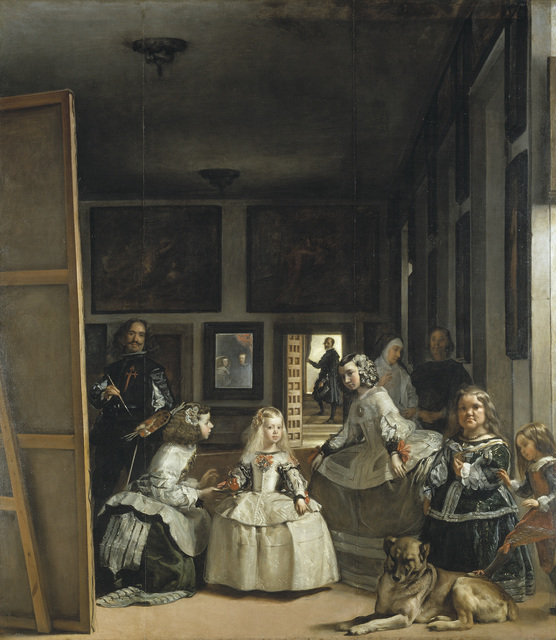
    Diego Velázquez, ‘Las Meninas’, 1656, Museo Nacional del Prado
    Diego Velazquez, Las Meninas, (courtesy of http://www.artsy.net)

    Artists (or artists with a reputation) are special because they make work that no one else can make, or that other people could only make ‘badly.’ The theory states that these artists have a special quality that separates them from others working in a similar field. Take for example, the novels of Charles Dickens. What makes these so special, and therefore so celebrated, compared to other literature from 19th century England? A good question. To answer it, we have to ask ourselves what this ‘something special’ is.

    Becker notes that this special quality is seen in works that evoke profound human emotions in audiences, and works that talk to the current social or historical context. If we as the audience know that a work has been created by someone with this ‘superior ability,’ we take more notice of it. This is evidenced in new exhibitions of ‘blockbuster’ artists that pop up all over the world – they are attractive to audiences with experience of the art world at all points on the spectrum. We visit these exhibitions not because we know that every work in the show will be to our liking, but because we know that the work will be of a certain standard, aligned with the artist’s reputation. In essence, we know what to expect.

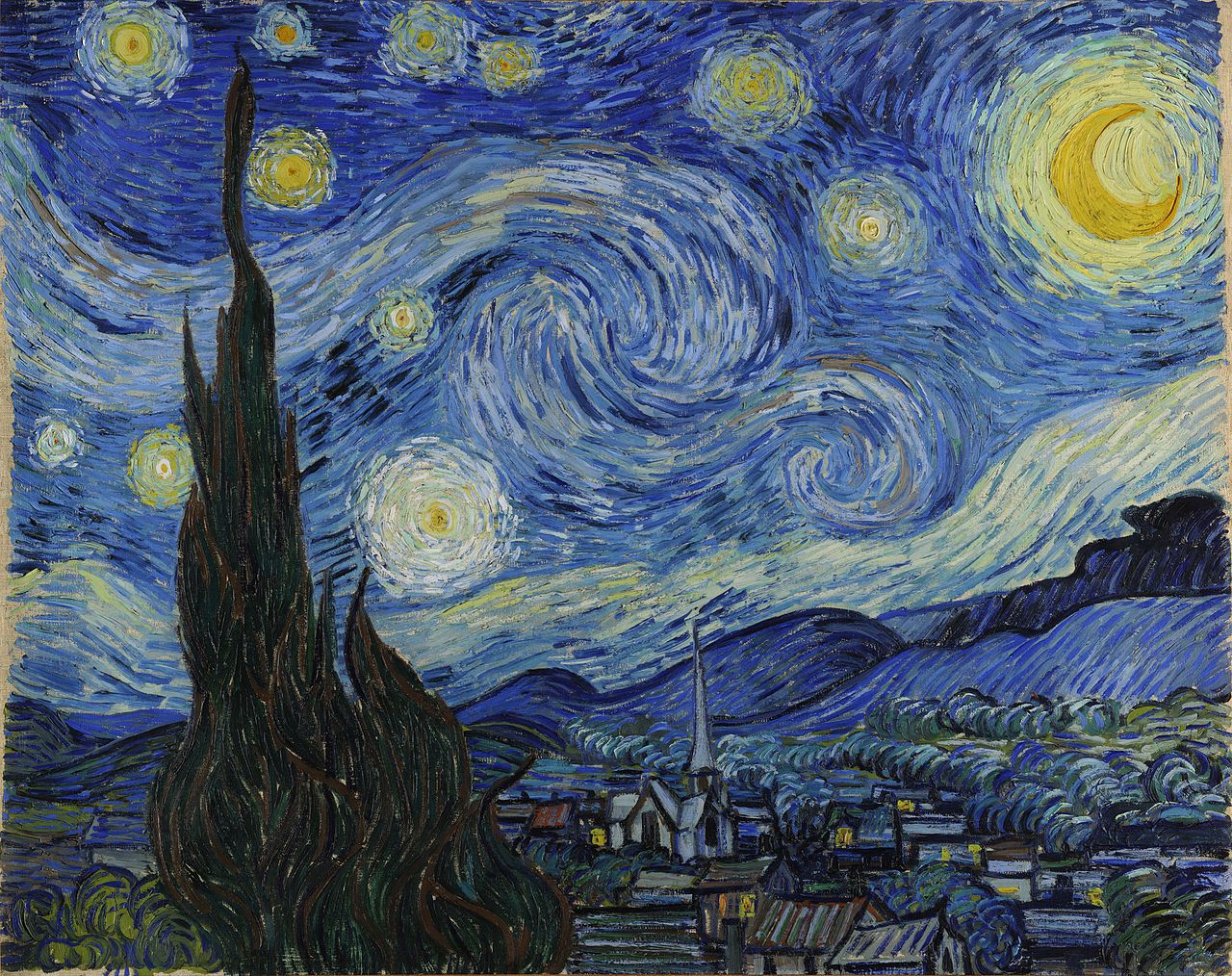
    Vincent Van Gogh, Starry Night (courtesy of http://www.vangoghgallery.com)

    Because of this idea of reputation building and making, artists start to separate their ‘commercial’ and ‘personal’ work; they mark work as ‘unfinished’ if they are not happy with it, and sometimes, they destroy it or take out lawsuits that mean images of it cannot be published or reproduced. They do this to maintain their reputation. All work they make has to live up to the standard ascribed to them and their work. It is not just artists that gain reputations, though, art works can be described as ‘masterpieces’ and schools of art are judged on the work created by their members. Different mediums also have different reputational status. For example, works made in oil paint are generally considered to be of a higher calibre than glass blown works, or tapestries.

    Such reputational ascription needs a certain person or peoples to imbue such status. This elevates academics, historians and critics to the position of reputation-maker. They must select the criteria by which we can determine whether a work, medium or artist is any good. Similarly, those involved in the chain of distribution set similar criteria, or boundaries. For example, a work must be unique, singular, irreplaceable, produced by just one person. A sculpture must not be too heavy to sit on a gallery floor, a piece of music not too long so an audience cannot sit through the full duration.

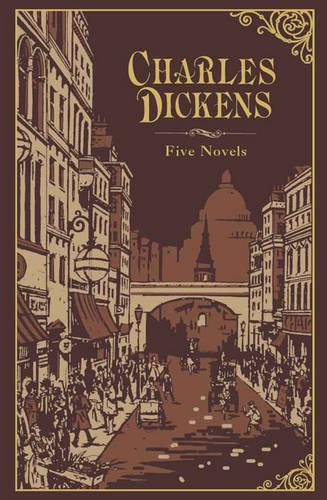
    Image result for charles dickens novels
    Charles Dickens book cover (courtesy of http://www.waterstones.com)

    The problem with this ascription of reputation by a small number of people is that there is so much work being created that an academic, historian, critic, couldn’t possibly know or recognise every piece from a certain genre, or made in a certain medium. This is more difficult, too, in the field of visual art, because visual language is universal. Literature is slightly different, in that not every text is available in every language.

    The theory of ‘universals’ suggests that works with the highest reputation are those with lasting power. Some works have been celebrated for years, centuries, and even millennia. We must remember, however, that some works last not because they are incredibly special aesthetically, but because they are historically important. And this also does not answer the question of how contemporary artists still working today are ascribed such high status.

    The problem with the individualistic theory and the theory of reputation is that it leaves a lot of people and work behind. It is in essence a selection process that is undertaken by a small few. Mavericks are often closely linked enough to the art world that certain works may get noticed some of the time, but this selection process almost always excludes work by folk and naïve artists (of the four categories Becker discusses in his book). This is not to say that folk or naïve artists to not have any special gifts, or cannot created aesthetically astounding works. A folk artist’s work, if we adhere to the theory of reputation, is too commonplace, and a naïve artist’s too private.


    By Kate Davey
    Referencing Howard S. Becker, Art Worlds, University of California Press, 1982

  • The ‘Integrated Professional’ and the ‘Naive Artist’

    The ‘Integrated Professional’ and the ‘Naive Artist’

    My previous PhD research-inspired post, ‘The Cycle of Cultural Consumption’, focused mainly on what sort of culture audiences ‘consume’ and why. It looked at Pierre Bourdieu’s theory of habitus, and how our social and educational background is the biggest influencing factor when it comes to the culture that is available – and interesting – to us. As I continue to read and research, I have turned my attention now to artists and their relationship with the art world. So, rather than a focus on audiences, I am looking at producers and how they interact and integrate with the ‘art world’ as a system.

    I have recently been reading two books – Gary Alan Fine’s ‘Everyday Genius: Self-Taught Art and Culture of Authenticity’ and Howard S. Becker’s ‘Art Worlds.’ Fine’s book focuses almost exclusively on work by self-taught artists, whereas Becker’s sociological insight into art worlds and how they work is slightly broader, encompassing not just visual art, but other media too. It is Becker’s broader text that I will reference in this post, as it gives more of a contextual overview of the art world and its players. I will return to Fine’s book in a later post.


    2
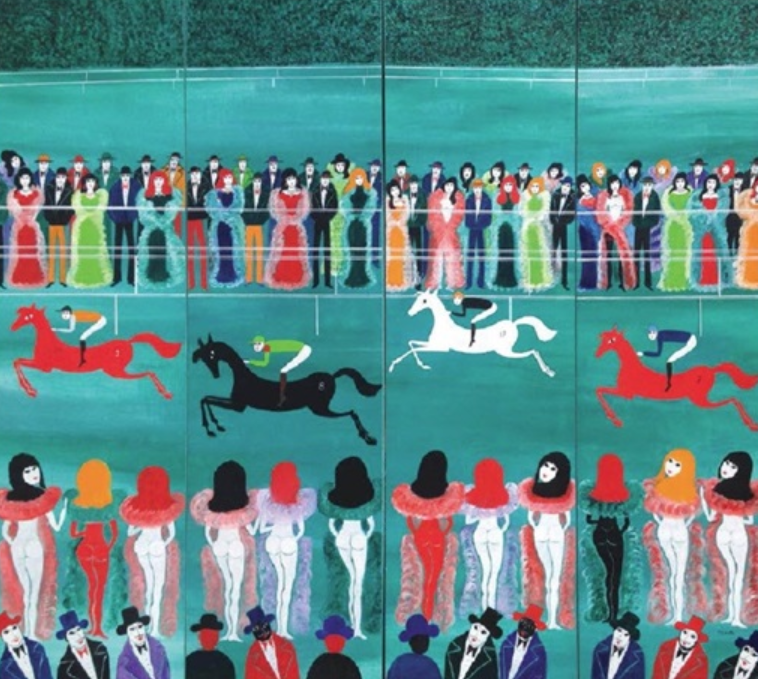
    Poucette, Longchamps (courtesy of http://www.artnet.com)

    The art world – and in this case, I am referring to the art world as the art schools, galleries, museums, curators, critics, and media outlets that make up what we would ‘traditionally’ and ‘conventionally’ see as the art system – is based on an historical, standard system of acceptance. Artists are generally expected to attend art school, following this, they might find representation from a gallery or dealer, in turn having their work exhibited in museums, galleries and online. There is this unconscious system constantly ticking over, and only a few are privy to the pattern. As Becker says: “How do we know the pattern? That takes us out of the realm of gestalt psychology and into the operations of art worlds and social worlds generally, for it is a question about the distribution of knowledge, and that is a fact of social organization.” [1]

    In ‘Art Worlds,’ Becker describes four main types of artist – the ‘integrated professional,’ ‘the maverick,’ ‘the folk artist,’ and ‘the naïve artist.’ The integrated professional is someone who has journeyed the correct way through this system. They follow the rules when creating their work, and in turn, their work is accepted by art world aficionados. They don’t create anything too surprising, too unexpected, and this is all great – nothing to upset the status quo here. The title ‘maverick’ refers to “artists who have been part of the conventional art world of their time, place, and medium but found it unacceptably constraining.” [2] So these are artists who have entered the art world in the traditional and ‘respected’ way at some point, but have decided it’s not really for them. They know the system, they know how it works, but what they make – or what they want to make – goes against the accepted norm. I guess in a sense you could consider Marcel Duchamp a maverick (although in some respects his impact on the art world as a whole makes him less of a maverick in Becker’s sense and more of an influencer).

    1
    Henri Hecht Maik, Marché dans les Hautes Herbes (courtesy of http://www.artnet.com)

    This leaves our ‘folk’ artists and our ‘naïve’ artists. Becker’s understanding of a ‘folk’ artist differs slightly from the ‘folk’ artist we might associate with outsider art. He refers mainly to quilt-makers, and people who have learned particular techniques and crafts from their families or communities. His term ‘naïve’ artists probably more closely aligns with our current outsider art category. These artists “create unique and peculiar forms and genres because they have never acquired and internalized the habits of vision and thought professional artists acquire during their training.”[3] Interestingly, Becker says of the terms ‘naïve’ and ‘folk’ that they do not relate to people. Instead, they refer to the position a person holds in relation to the ‘accepted’ art world. He notes that “wherever an art world exists, it defines the boundaries of acceptable art, recognizing those who produce the work it can assimilate as artists entitled to full membership, and denying membership and its benefits to those whose work it cannot assimilate.”

    In many cases, the ‘integrated professional’ is the safe bet. They are someone who knows the system, their work aligns with what is expected; it fits into the canon. Imagine, Becker asks, “a canonical artist, fully prepared to produce, and fully capable of producing, the canonical art work. Such an artist would be fully integrated into the existing art world. He would cause no trouble for anyone who had to cooperate with him, and his work would find large and responsive audiences.” [5]

    3
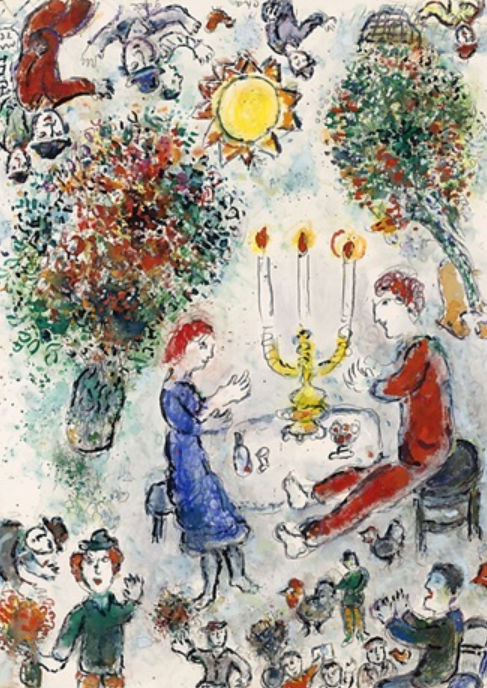
    Marc Chagall, Le Repas des Amoureux (The Romantic Dinner) (courtesy of http://www.artnet.com)

    So, yes, a safe bet. But is it the right bet? How do we challenge this? My favourite question: who gets to decide? Well, it is, it seems, the decision of those who have travelled the ‘integrated professional’ route: “conventions known to all well-socialized members of a society make possible some of the most basic and important forms of cooperation characteristic of an art world.”[4] Becker mentions Russian philosopher Mikhail Bakhtin’s discussion of the standard of taste, “when he remarked that while what made art great was a matter of opinion, some opinions were better than others because their holders had more experience of the works and genres in question and so could make finer and more justifiable discriminations.”[6]

    All decisions are made by certain people at a certain point in history. Decisions about whether a piece of art is accepted into the art world generally has no relation to the aesthetic quality of the work. We know this because “art worlds frequently incorporate at a later date works they originally rejected, so that the distinction must lie not in the work but in the ability of an art world to accept it and its maker.”[7]

    4
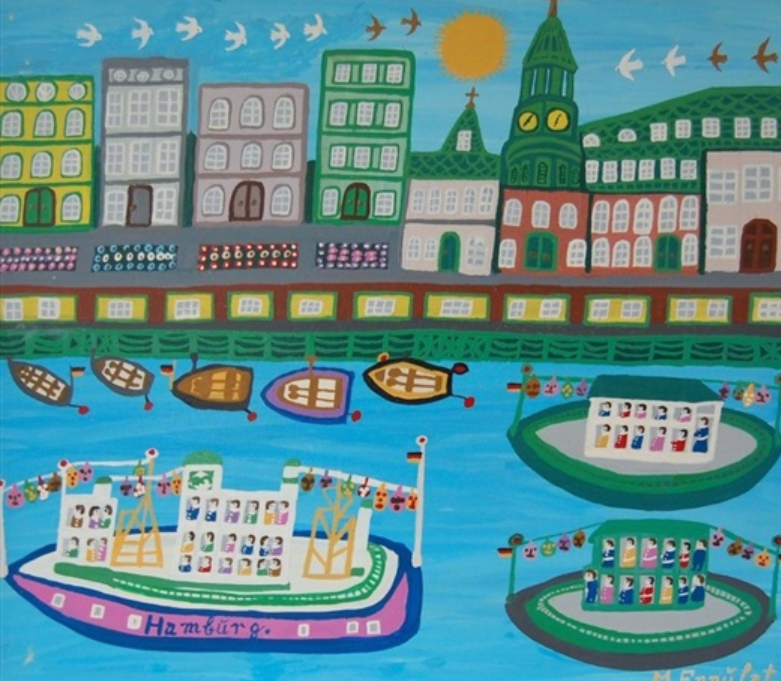
    Minna Ennulat, River Scene Hamburg (courtesy of http://www.artnet.com)

    All of this thinking about systems and how we mould ourselves to fit them – not just the art world, but a whole host of other societal systems (the education system for one) – had me thinking about something someone said at a conference I attended last week. The conference was about collections of patient created art work in Europe, and so there was a strong focus on mental health, stigma, and the ethical exhibiting of work by people who historically were ‘locked up’ in huge psychiatric institutions. In one session, one of the panellists said that a person experiencing mental health issues shouldn’t be attempting to fit in to a societal system that has been created by ‘well’ people. (It is like that age old adage – if you spend your whole life trying to teach a fish to fly, it will always feel like a failure). Instead, we should seriously be thinking about how our societal systems work, and within these existing systems, we should be consciously making space for people who for whatever reason don’t  – or can’t – fit what we consider to be the ‘norm.’

    “Who tries things first? Who listens and acts on their opinions? Why are their opinions respected? Concretely, how does word spread from those who see something new that is worth noticing? Why does anyone believe them?”[8]


    Thank you for taking the time to read this post. As part of the PhD research process, I am really keen to hear from anyone who has any thoughts on the subjects I am covering in these posts – whether you agree, or strongly disagree! I am particularly keen to hear from artists about their experiences of trying to enter the ‘art world’ (whether this has been positive or negative). You can drop me an email: kdoutsiderart@yahoo.com, or send me a tweet: @kd_outsiderart.

    5
    Gustavo Novoa, Daisy Trail (courtesy of http://www.artnet.com)

    References

    [1] Howard S. Becker, ‘Art Worlds,’ University of California Press, 1984, P 41

    [2] Becker, P 233

    [3] Becker, P 265

    [4] Becker, P 46

    [5] Becker, P 228-229

    [6] Becker, P 47

    [7] Becker, P 226-227

    [8] Becker, P 55

  • The Cycle of Cultural Consumption

    The Cycle of Cultural Consumption

    First of all, I would like to start with an apology for the lack of posts of late. I do, however, have good news! I have recently started a PhD at the University of Chichester, in which I will be focusing on the relationship between outsider art and the mainstream art world. Specifically, it will be looking at whether, as is commonly suggested, there really has been a ‘rise’ in outsider art within the mainstream art world – with a particular focus on the last ten years or so.

    My intention is to use this blog to share my thoughts along the way – and hopefully have some feedback from you, the reader. If you have any thoughts or comments on any of the posts featured on this blog, please contact me by emailing kdoutsiderart@yahoo.com.


    Joanna Simpson - Gum Nut Folk
    Joanna Simpson, Good Luck Gum Nut Folk

    The first assignment that I have been working on as part of my PhD project has seen me entering the world of the sociology and philosophy of art. So, I have been reading a lot of Pierre Bourdieu! I find that blogging has been really helpful for me in amalgamating my thoughts and bringing them together in a less academically rigorous way. In light of this, I would like to share some of my thoughts so far about Bourdieu’s theories on art, and how I propose they relate directly to outsider art and outsider artists.

    Pierre Bourdieu, a French scholar whose writings span the 1970s and 1980s, was a philosopher and self-proclaimed sociologist. Influenced by the works of his socialist predecessors; Ludwig Wittgenstein, Karl Marx, Max Weber, Bourdieu’s writings focus on the hierarchies of power that exist within the world. Most useful to me, of course, are his writings about culture. In these, he states that the way we consume and appraise culture is directly dependant on our class and educational background. So, people who have been brought up in households where trips to art exhibitions and excursions to the theatre are a regular – or normal – occurrence, are going to feel more comfortable consuming culture as adults. They will, Bourdieu asserts, already have the skills and tools available to them that will support them in deciphering the context and meaning of a work of art.

    blogpic

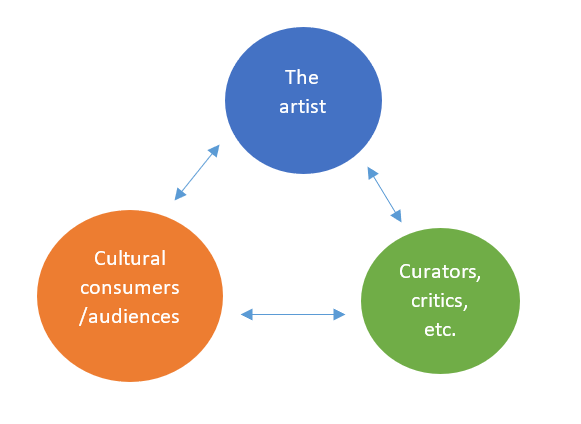
    When reading Bourdieu, I was struck by what is apparent to many people working within (or with knowledge of) the art world. There seems to be an impregnable cycle within the art world that means that at every stage of participation, one needs to be from a certain social or educational background. I will call this cycle the ‘cycle of cultural consumption.’ To write about this cycle, I will begin with the artist. However, it is important to note that the artist is not the beginning of the cycle – the artist is just a part of it; the artist could in theory be the beginning, the middle or the end (see diagram above. I hope this will become clearer as I explain each cycle component.

    Bourdieu does not write a lot about why artists create. But he does write about who or what influences an artist and how this has changed over the course of the previous few centuries. Prior to the nineteenth century, many artists were commissioned directly by the Church or the State, meaning they had little to no control over the content of their work. The Church and the State held all of the power. However, with the turn of the twentieth century – a century that in its youth in Europe was marred by uncertainty, instability, discontent, and of course, war – a revolution was starting. Artists were becoming autonomous individuals who were inspired by the context within which they were living and working.

    Jim Sanders
    Artwork by Jim Sanders

    So it seems that at this point the artist was beginning to take back some power. But hold on! How were these artists able to do this? How were they able to erase centuries of codes and language commonly used within works of art – and used, too, by educated cultural consumers who could fluently understand these codes and this language. Because, Bourdieu says, artists like Edouard Manet and Marcel Duchamp were already inside the art world. They were only able to challenge the accepted norm in such a spectacular way because they were already big fish swimming in the ocean of the art world. So, not so revolutionary when we look at it like this.

    To relate this to outsider art; it seems it is possible for artists creating challenging, unusual, unique work to have an impact on the art world – to have this work shown and to have it seen. But only if the artist is already able to navigate the art world, which generally assumes that a person has taken the ‘preferred’ educational route (art school), which is generally only possible for people from a certain educational background (most commonly middle-class or upper-class).

    The next players in my cycle theory are the ‘taste-makers.’ These are the people who decide what work is shown in a museum or gallery, and therefore what we (the public) consider to be art. These are the curators, the critics, the gallery and museum directors. The gatekeepers. We know these gatekeepers exist as tastemakers because art is such a subjective topic that if there weren’t people in these positions of power making decisions about what we see before we even know what the options are, then there would certainly be many more ‘famous’ or ‘admired’ artists in the world. Imagine for a moment the vast amount of work being produced by artists every single day. All over the world, every minute, every hour. In a world of seven billion people, there is going to be at least one person who likes each new creation. But then why isn’t this reflected in what we see in museums and galleries. Why do we see the same ‘big’ names, the same ‘big blockbuster’ shows? The same artists who are the ‘flavour of the moment’? We see these precisely because of the existence of the taste-makers and gatekeepers who are making our decisions about cultural and aesthetic value for us.

    Alan Doyle 3
    Artwork by Alan Doyle

    And the decisions of the tastemakers and gatekeepers favour artists from a specific background (social and educational) because they too are from these backgrounds. In 2015, the Department for Culture, Media and Sport highlighted that 91.8% of jobs in the creative economy in the UK were done by people in ‘more advantaged socio-economic groups’ compared to 66% of the jobs market as a whole.[2] Being from these backgrounds means that tastemakers and gatekeepers curate and interpret works by people from a similar background to themselves (who they relate to – makes sense right?), and therefore for people from a similar background. Again, to bring this back to outsider art – is a curator going to choose to exhibit work by someone who potentially attended the same art school as them, is their peer in that sense, or work by someone who is from a background that they really have no experience of and are therefore unable to relate to?

    The Museum Association’s 2015-16 report Valuing Diversity: The Case for Inclusive Museums noted that “museum collections are often not interpreted from diverse viewpoints… Often the good work that comes out of projects is not used or displayed in the long term and therefore is inaccessible to people who would be interested in engaging with narratives that are relevant to their experience.”[3] This quote brings me onto the third person in our cycle of cultural consumption – the consumer.

    The artist makes the work, it is then chosen (or not chosen) by the tastemakers and gatekeepers. If it is chosen, maybe it is exhibited with some accompanying wall labels. Maybe these wall labels are written in a language that is unintelligible to someone who has no prior experience of the art world or art school. Someone from a low socio-economic background, or someone who didn’t attend university might visit this exhibition. Whilst there, they realise they are unable to relate to the work that has been produced, because it has been produced by someone from a certain social and educational background that is a world apart from their own experiences. They are unable to understand the codes used within the interpretative material because, again, it has been chosen and written by someone who is from a very different social and educational background. After an experience like this, would you think that the cultural world was for you? I know that I certainly wouldn’t.

    Jim Sanders 2
    Artwork by Jim Sanders

    Much of Bourdieu’s writing is informed by experiments and studies he conducted, in particular focusing on understanding the cultural consumer. In The Love of Art, a study conducted by Bourdieu in French museums found that 55% of visitors to French museums held at least a Baccalaureate. Only one per cent of visits were made by farmers or farm labourers, and 4% by industrial manual workers. Tellingly, 23% of visits were made by clerical staff and junior executives, and 45% made by people from an upper class background.[3] Although conducted around 30 years ago (and in France), these results are reflected in data collected much more recently by Arts Council England for their 2017-18 Equality, Diversity and the Creative Case report. The report highlighted that the most frequent National Portfolio Organisation attendees were supervisory, clerical and junior managerial, administrative and professional workers, making up 28.9% of visitors. At 10% of all visits, the least reflected group was semi-skilled and unskilled manual workers.

    So here completes the cycle (well, not completes, but continues). When you look at it like this – as Bourdieu does, it becomes clear why efforts need to be made to diversify our arts workforce, our arts audiences and, of course, the art we show in museums and galleries. If we make an effort to diversify just one segment of this cycle of cultural consumption, the ripple effect will surely create a more reflective, innovate and exciting art world that everyone (from all social and educational backgrounds) can enjoy and participate in.

    By Kate Davey


    References

    [1] Department for Culture, Media and Sport, Creative Industries: Focus on Employment, 2016, P6

    [2] Museums Association, Valuing Diversity: The Case for Inclusive Museums, 2015-16, P 14

    [3] Bourdieu, Pierre and Alain Darbel, The Love of Art, Polity Press, 1991, P 14

    Useful books/articles on or by Pierre Bourdieu

    Richard Jenkins, Pierre Bourdieu, Routledge, 1992

    Pierre Bourdieu, ‘Intellectual Field and Creative Project,’ in M. F. D Young (ed.), Knowledge and Control: New Directions in the Sociology of Education, Collier-Macmillan, 1971

    Karl Maton, ‘Habitus,’ in Pierre Bourdieu: Key Concepts edited by Michael Grenfell, Acumen, 2008

    Pierre Bourdieu, Distinction: A Social Critique of the Judgement of Taste, Routledge and Kegan, 1979

    Pierre Bourdieu and Alain Darbel, The Love of Art, Polity Press, 1991


    Feature image by Alan Doyle