Category: Artists’ Showcase

  • Karen Sorensen: Creativity and the Creation of Life

    Karen Sorensen: Creativity and the Creation of Life

    Above Image: Karen Sorensen, Fallen Angel


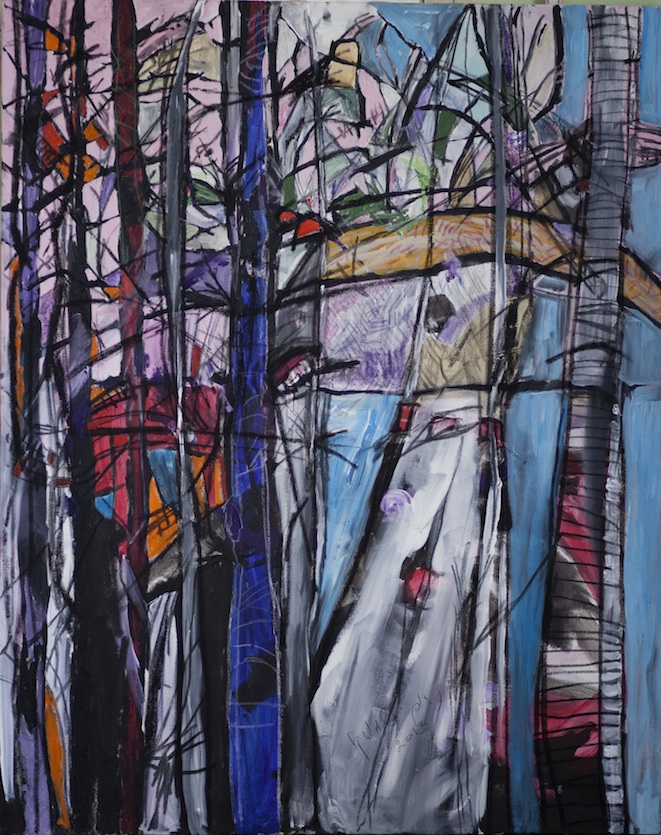
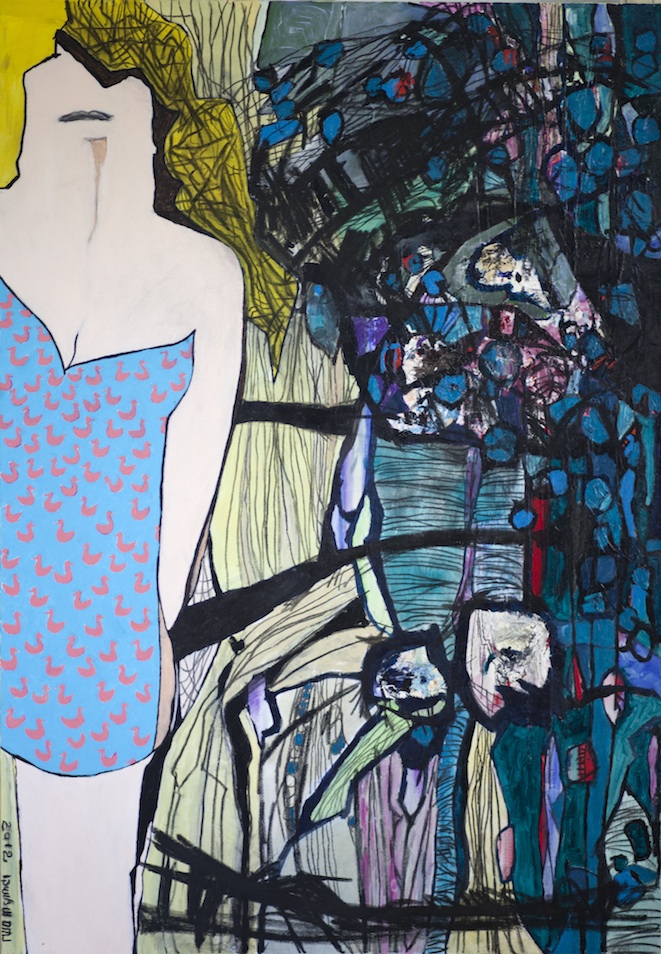
    This week, I’m focusing a blog post on the work of American artist Karen Sorensen. Karen got in touch with me via email, and we have since been to-ing and fro-ing with our thoughts on the art world and its perception and perceived value of women artists and their work (in both the monetary and aesthetic sense). This is particularly poignant seeing as we celebrated International Women’s Day on the 8th March (in the UK at least). I was, of course, also very taken with Karen’s work.

    Karen Sorenson, End of Life
    Karen Sorensen, End of Life

    One of the focal points of Karen’s conversations with me, was her choice between art and motherhood. Karen told me that she had chosen creativity, as to pursue both would have left her completely exhausted. To put this into more of a context, Karen was hospitalised during a prodromal phase of schizophrenia when she was nineteen years old, after which she began to see the world in exquisite detail and colour.

    During the particularly bad stages of her illness, Karen makes art as a reward or to make herself feel better, which inevitably results in complete exhaustion to the point where she is no longer able to lift her arms. This process of invigorated creation lasts for about four hours, after which Karen knows her day’s work is done – and done to the absolute limit of human ability.

    Karen Sorenson, Love is Complicated
    Karen Sorensen, Love is Complicated

    Karen also notes the limiting effect that many anti-psychotic drugs can have on her ability to produce creative work. Because of this, Karen understandably has a strong affinity with British ‘outsider artist’ Nick Blinko. Similarly to Blinko, Karen’s work changes depending on what sort of medication she is taking. Her own favourite work was made, she adds, at the very beginning of her artistic journey, when she needed very little medication.

    Over the course of our email correspondence, Karen and I spoke about Madge Gill and Aloise as examples of two well-known female outsider artists. Both their work, Karen noted, is fairly ‘feminine’ in its aesthetic appearance, with both artists using the female figure as their focal point. In contrast, Karen’s work – for me anyway – contains some more masculine themes, such as male genitalia and ejaculation. Even Karen has noted this herself.

    Karen Sorenson, Spooky World
    Karen Sorensen, Spooky World

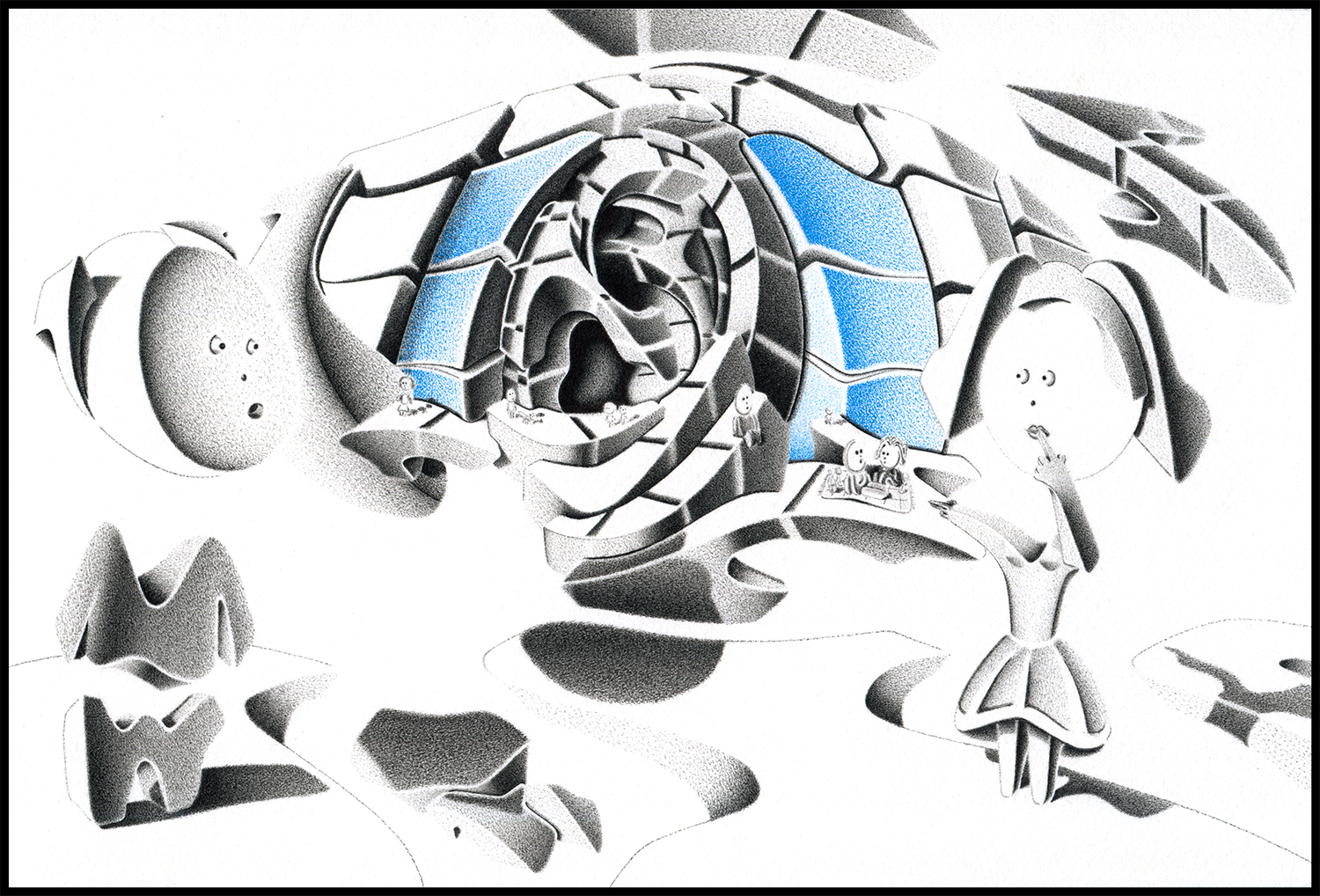
    Motifs regaling ideas of reproduction are dotted throughout Karen’s work – and are what I seem to be drawn to the most. The twisted legs of female characters are perhaps indicative of the baby versus creativity dilemma that Karen has faced throughout her life. For example, in ‘End of Life’, we can see the tight twist of legs on the female character at the bottom, in contrast to the ‘loose legs’ of the male figure she is holding the hand of. Above this couple, a pregnant goat pulls a flying cart which holds the severed heads of grey-face women.

    In ‘Zoo Train’, Karen’s most recent work, a king and queen bring up the rear of a train carrying animals – presumably a sort of touring zoo or circus. Again, the woman’s legs are wound tight, as she holds the hand of her king, whose penis hangs below his clothing. The ejaculation of the male character reaches a small bowl (which brings to mind a garden bird bath) in the bottom right of the piece, another familiar motif in Karen’s work.

    Karen Sorenson, Zoo Train
    Karen Sorensen, Zoo Train

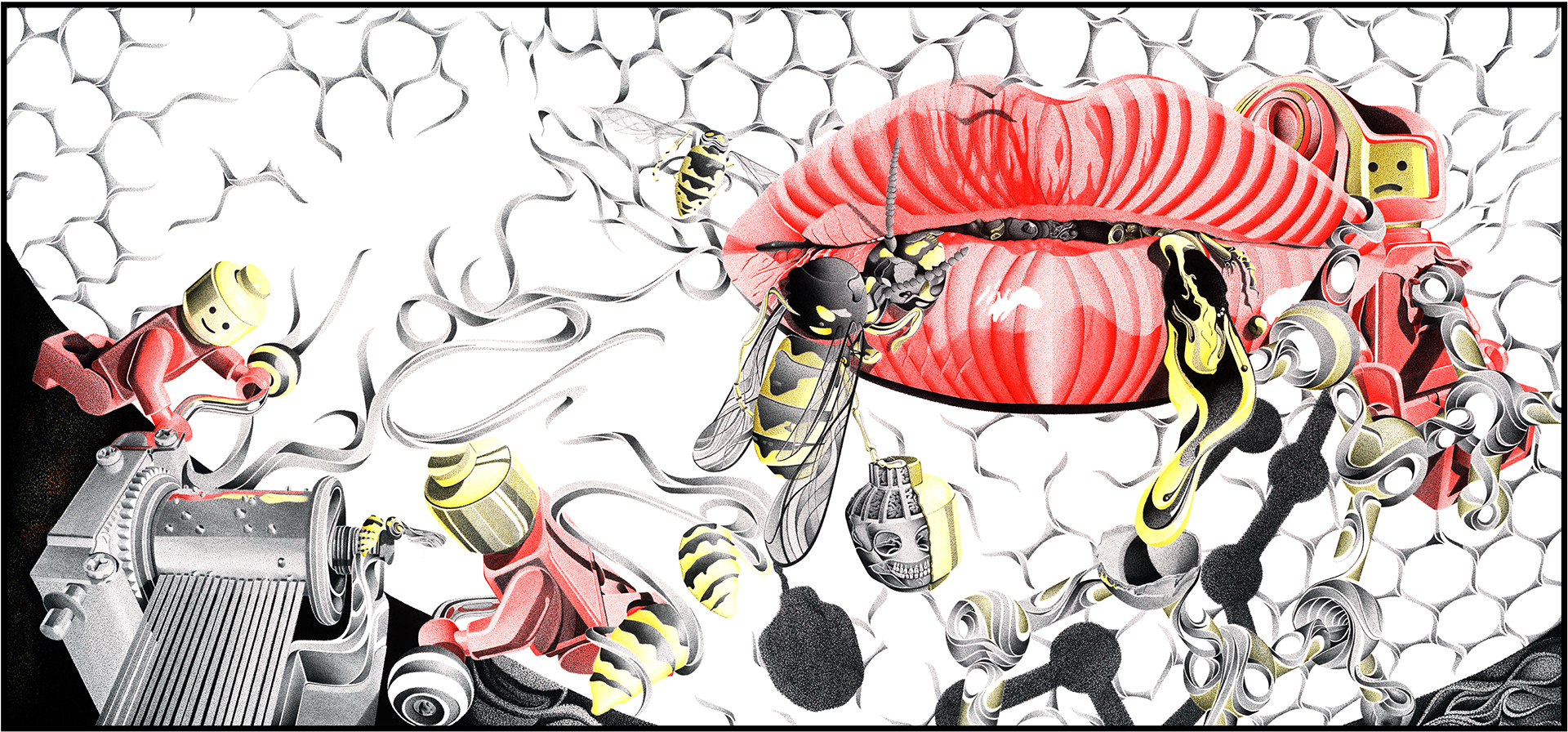
    Life, reproduction and creation feature most commonly in these bright, fantastical pieces; umbilical cords, bald-headed baby faced characters, pregnant creatures and ejaculation. Although the content of Karen’s work is not explicitly feminine – something we might be able to say for Gill and Aloise – the repetitive issues seem to be focused on the constant choice between bearing children or a life a creativity. Through her work, Karen has born new life. Her work is her offering to the world, and it is no less important than the offering of another human being.

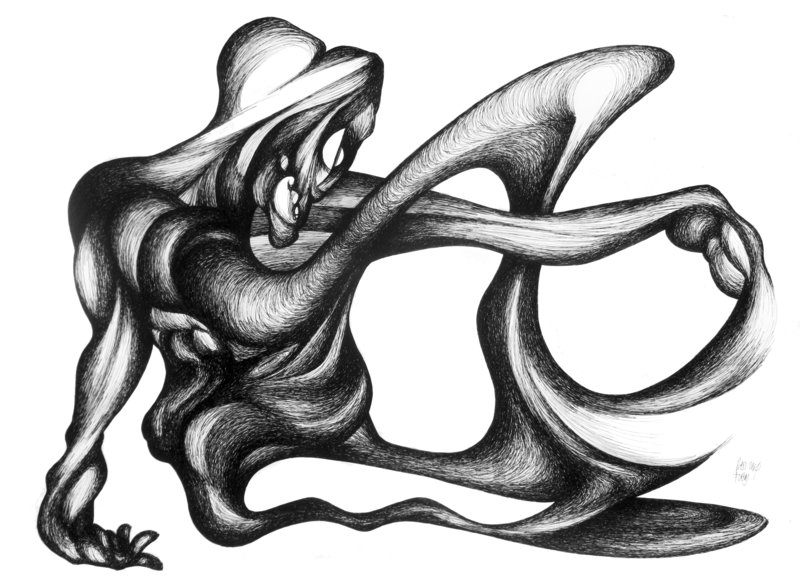
    Karen Sorenson, Elegant Solution
    Karen Sorensen, Elegant Solution

    Click here to see more of Karen’s art


  • Red Tweny

    Red Tweny

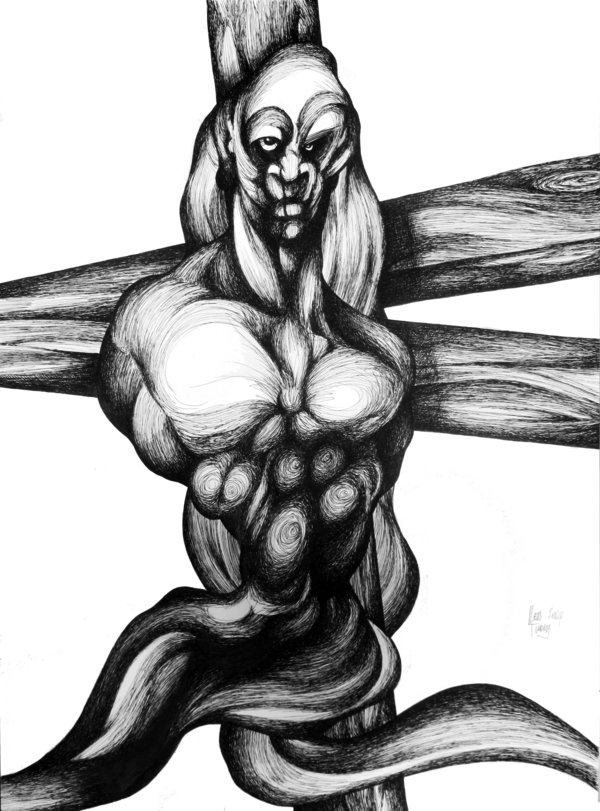
    Above image: Red Tweny, Playing in a Little Space


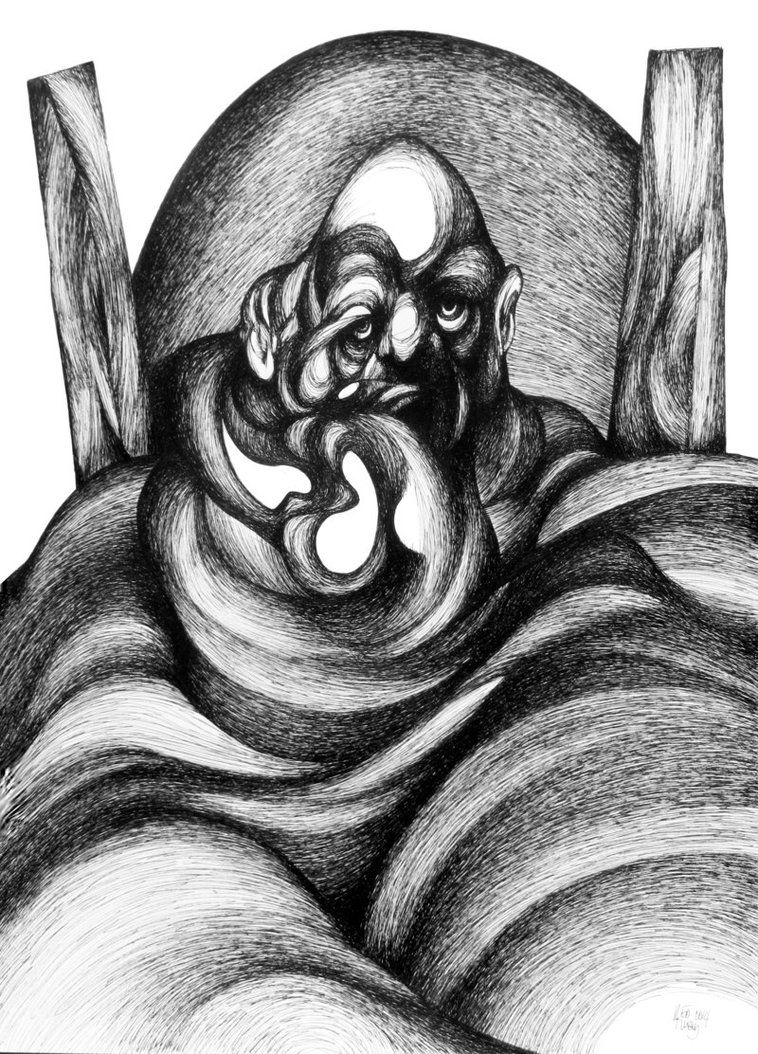
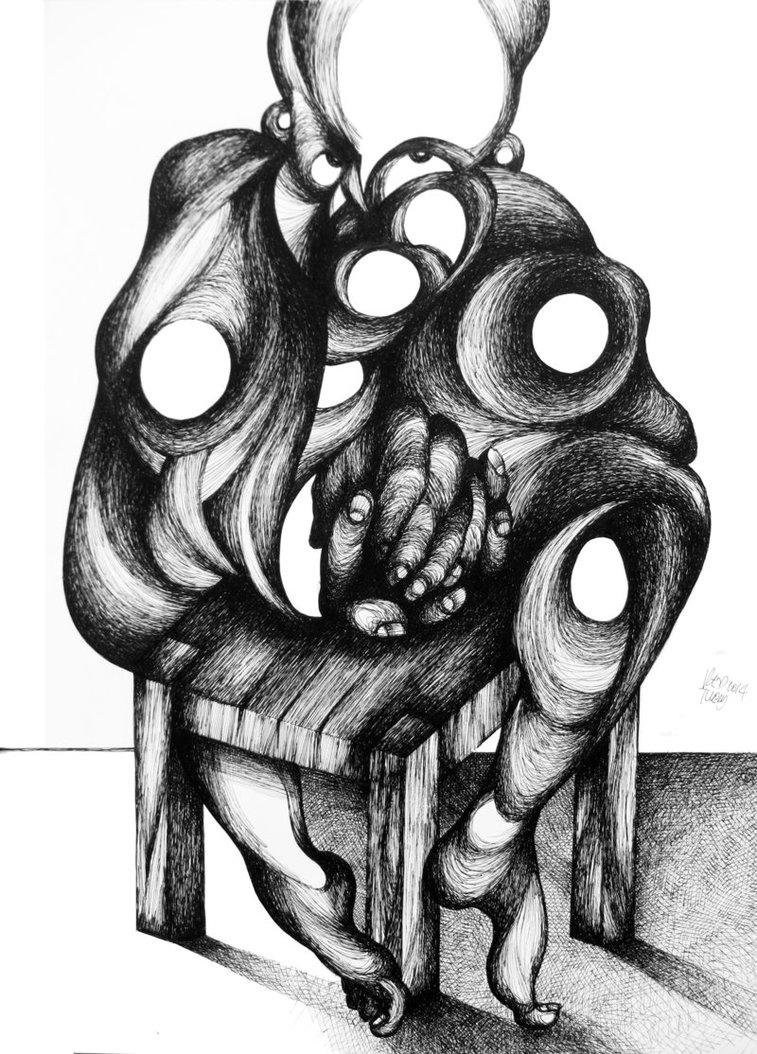
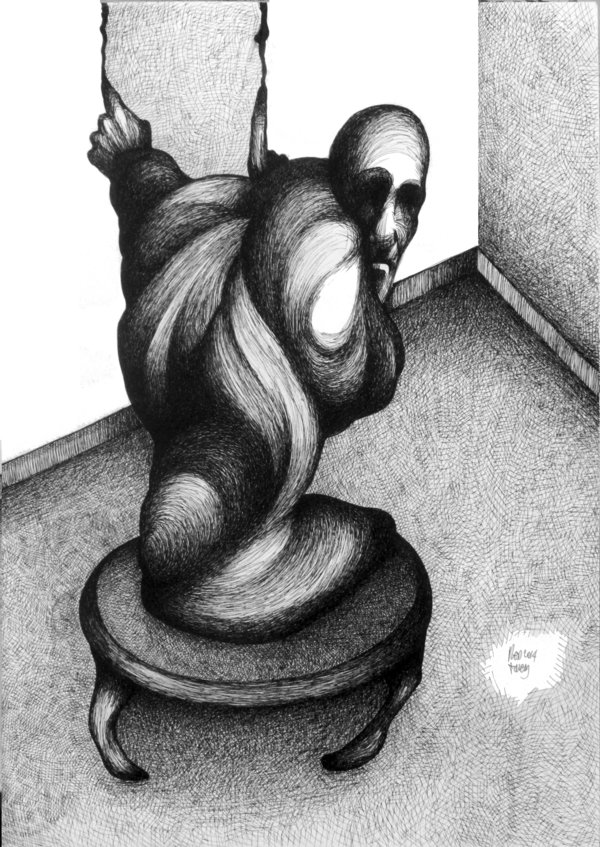
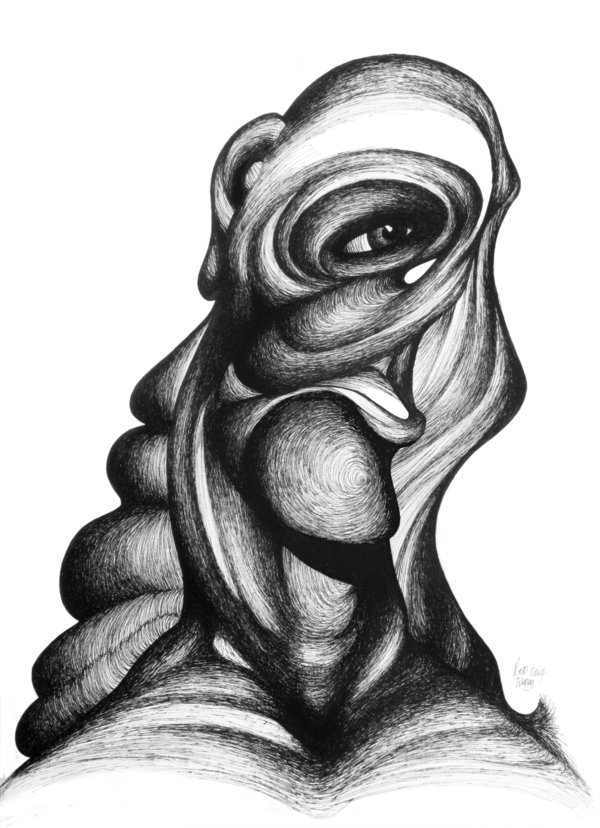
    Red Tweny tries to hold together a mixture of Re-Modernism, Expressionism, Dark Art, Surrealism, Pop Art, Dada, and New Figuration in his eerie monochrome depictions. Using one single colour, he creates without digital manipulation, using only his “soul and a traditional ink pen.” Red describes his style:

    “It is… a style that I think is quite new and recognisable amongst others, reminiscent of the fears of our century and the uneasiness of our souls. I try to tell you the shabby daily lives as opposed to the higher needs of the human soul, almost always disappointed.”

    Red Tweny, A Witch Under the Blanket
    Red Tweny, A Witch Under the Blanket
    Red Tweny, Crossing Fingers over a Small Chair
    Red Tweny, Crossing Fingers over a Small Chair
    Red Tweny, Drawing a Window on an Unsteady Table
    Red Tweny, Drawing a Window on an Unsteady Table
    Red Tweny, the Mona LIsa's Tear
    Red Tweny, the Mona LIsa’s Tear
    Red Tweny, Escape from the Pire
    Red Tweny, Escape from the Pire
    Red Tweny, Microcosms
    Red Tweny, Microcosms
    Red Tweny, The Monacle
    Red Tweny, The Monacle

    Click here to see more of Red Tweny’s work

  • Artist in focus: Judy Shreve

    Artist in focus: Judy Shreve

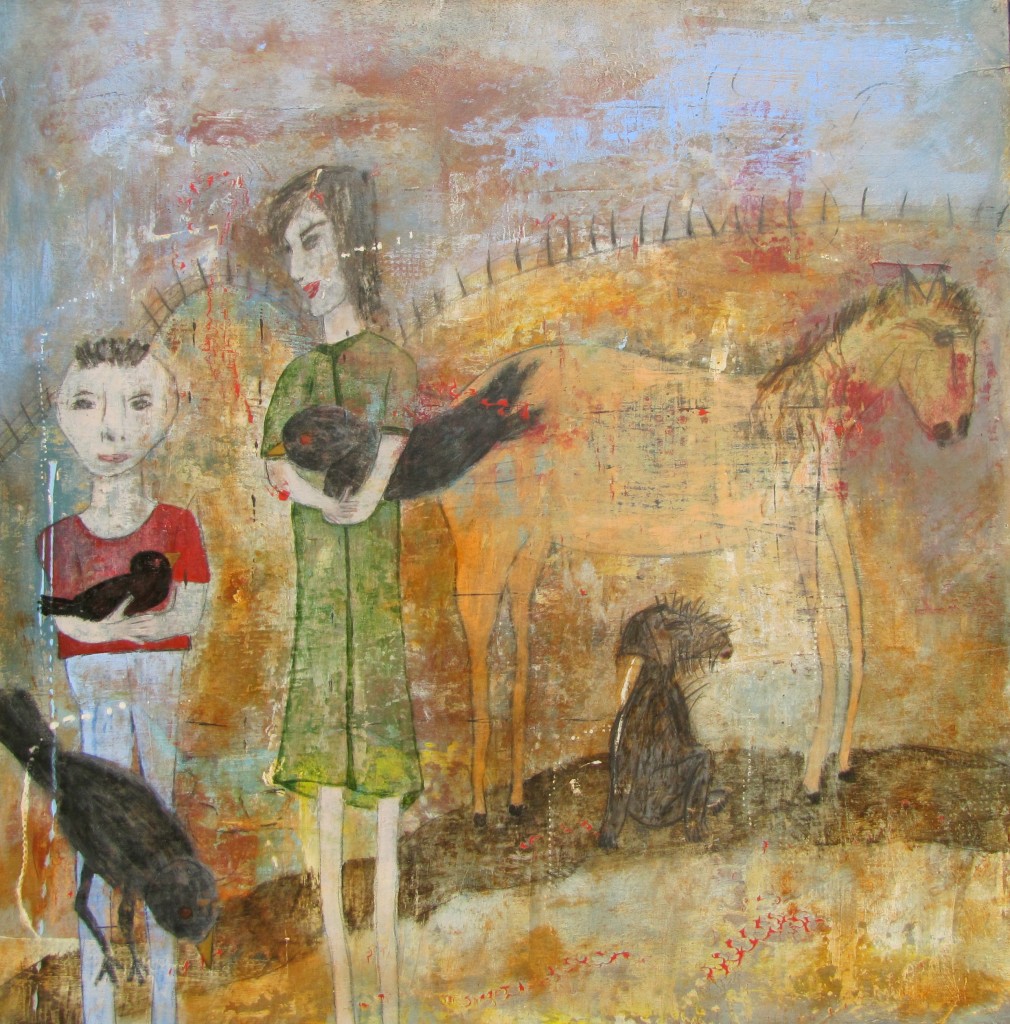
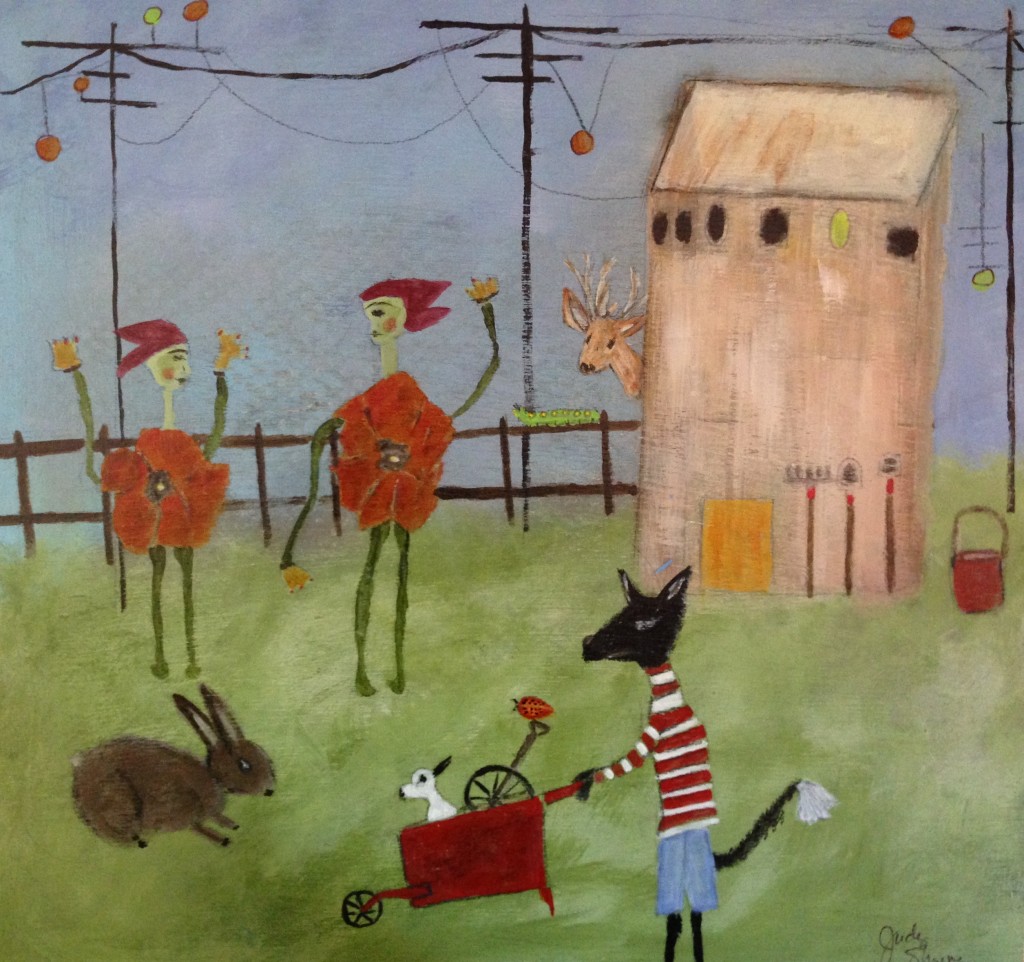
    Above image: Judy Shreve, Sanctuary


    “I am a storyteller and had to learn to tell a story with paints instead of with words. It is my desire to express from a true place and create an emotional response to what I see. It’s not always realistic, because I see this world in an intuitive-abstract way. And it is the feeling that touches my heart that I want to portray in my work no matter what medium I am working with. Every mark I make is a combination of all my life experiences. Each piece contains a lifetime of aesthetic experience and interest for me, a successful piece is one that opens a heart and creates a smile.”

    Judy Shreve


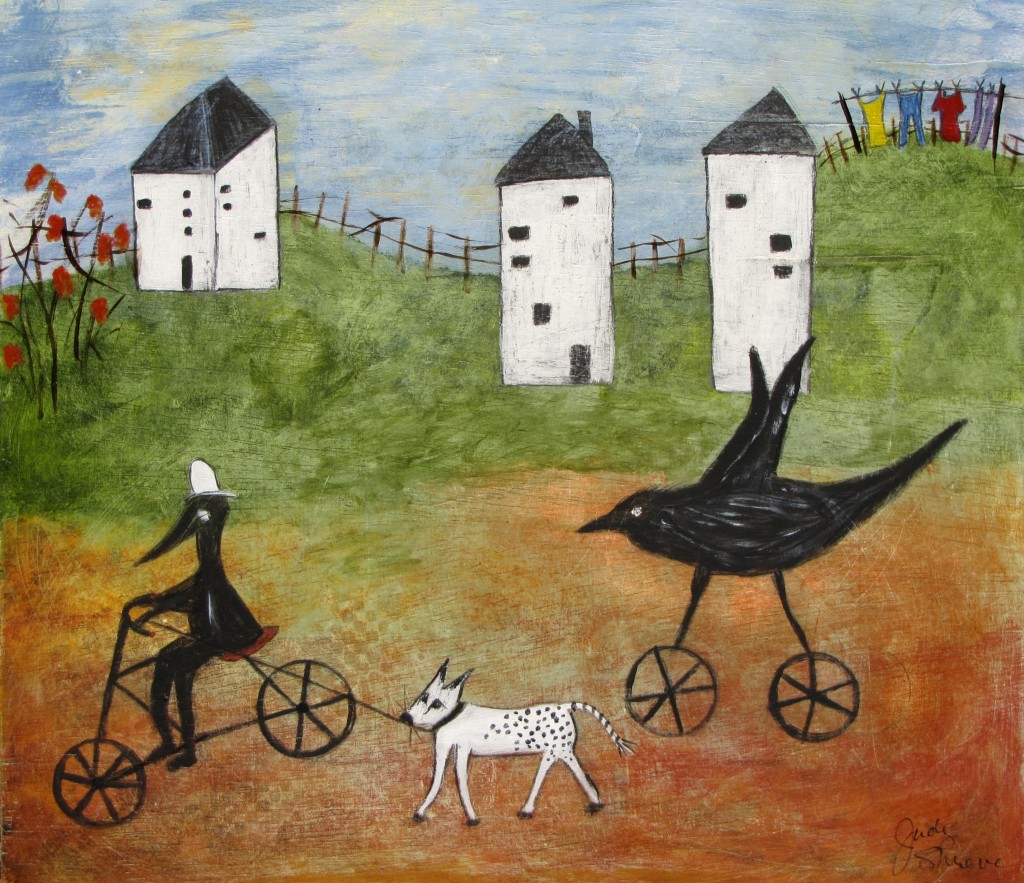
    Judy Shreve, Heading out of town for a little fun
    Judy Shreve, Heading out of town for a little fun
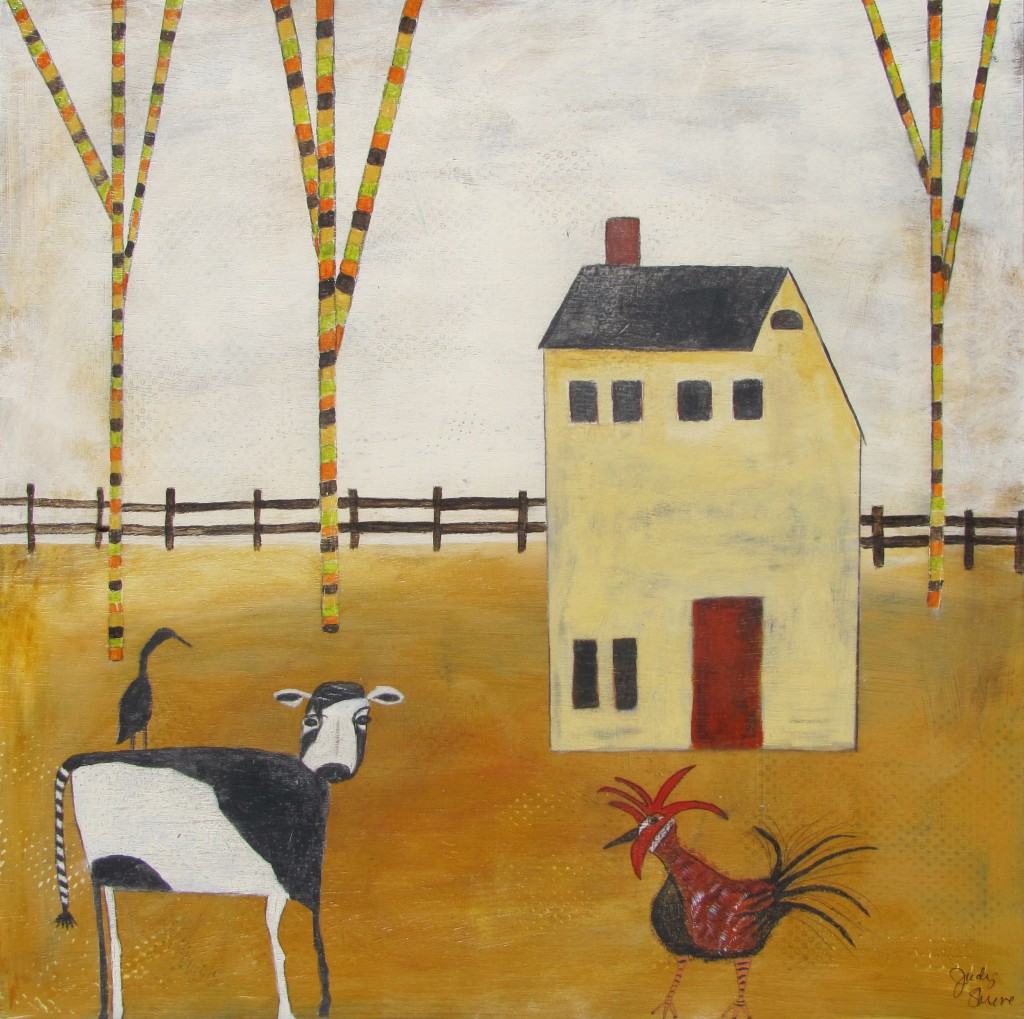
    Judy Shreve, Trouble in the hen house
    Judy Shreve, Trouble in the hen house
    Judy Shreve, Is he talking to me
    Judy Shreve, Is he talking to me
    Judy Shreve, Jumped off the merry go round
    Judy Shreve, Jumped off the merry go round
    Judy Shreve, Why do I garden anyway
    Judy Shreve, Why do I garden anyway

    To see more of Judy’s work, please visit her website by clicking here
  • Creating the ‘Outsider’

    Creating the ‘Outsider’

    Above image: ‘Wagenbach’s’ art at his home (Courtesy of canadianart.ca)


    By complete accident, I stumbled across an article I read a few years back about identity, authenticity and autofiction in relation to outsider art. The piece is called ‘Fake Identity, Real Work: Authenticity, Autofiction, and Outsider Art’ and is by M. Kjellman-Chapin.

    The essay focuses on several examples of ‘mainstream’ artists who have exploited the term ‘outsider’ for artistic purposes. It starts as you might expect an article focusing on outsider art to – with a description and contextualisation of the term. It then delves into the biographical histories of a selection of artists; their homes, their relationships. It describes their work; their style, their process, their medium. Then Kjellman-Chapin goes on to inform the reader that none of these ‘characters’ are real. They do not and have never existed in their own right. They are all the figment of various others’ imaginations.

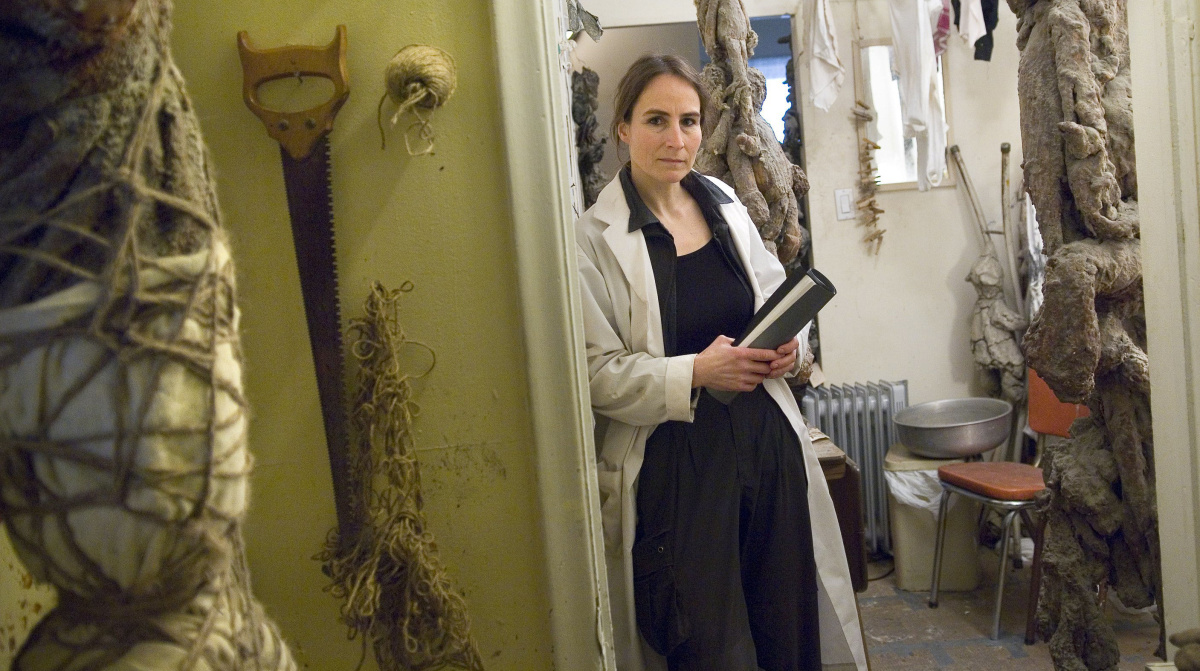
    Iris Haussler, an installation artist born in Germany and living in Canada, inhabits the minds and lives of a series of characters. The character that Kjellman-Chapin examines is Joseph Wagenbach, a long term resident of Robinson Street in Toronto, Canada. So private was Wagenbach, that he very rarely left his house. He took to covering his windows in newspaper to further maintain his privacy and was extremely estranged from his neighbours. But in June 2006, following a prolonged absence that was noted by various people in the neighbourhood, the authorities were called and Wagenbach was moved to a care facility. The discovery of hundreds of handmade creations in Wagenbach’s home following his removal, carefully rendered from wax and plaster, was enough to elicit the support of a committee of experts, including an archivist.

    ar-Art17
    Iris Haussler with ‘Wagenbach’s’ work (Courtesy of http://www.thestar.com)

    All of the handmade objects found in the house had been crafted by Haussler, as had the life of Wagenbach. An extension of the physical, tangible works ‘he’ created, Wagenbach was an art work in his own right, carefully constructed with a completely believable back story (there are many similarities between this and the story of the discovery of Henry Darger’s work). In a 2012 interview, Haussler said of her practice: “My characters are often underdogs, people who are developing obsessive work out of an inner need. When visitors come across their legacies, they notice that these people have dedicated their lives to something bigger in life. Observing that can be inspiring.” [1]

    Another example of this character creation is the Spelvin Collection; dreamt up by Beauvais Lyons, professor of printmaking at the University of Tennessee. The Spelvin Collection, part of the Hokes Archives, was brought together by ‘hoax’ collectors George and Helen Spelvin. It contains works by a string of Lyons’ characters including President portrait maker Arthur Middleton, librarian Emma Whorley, jilted bride Charlotte Black, and a selection of religious tracts printed on cereal boxes by Max Pritchard.

    Kjellman-Chapin explains the motive behind the dual-role creators and curators Haussler and Lyons: “Through works made by avatars, Haussler and Lyons can critique the orthodoxy of Outsider Art from the inside and reveal it to be itself an elaborate fabrication. Their projects are not simply exercises in faux histories; the layered fictions they have created function in a critical capacity.” [2] The practices of Haussler and Lyons are an incredible illustration of how we – the audience – define outsider art. All of the conjured artists quite neatly fit our evaluation of the outsider category. Their value is “located not in the plastic realities of the objects themselves, but in the capacity of the makers’ location in social space to wash over those objects and images and coat them in a taxonomically valued rhetoric of authenticity.” [3]

    arthurmiddleton
    ‘Arthur Middleton’, with his portraits of American Presidents (Courtesy of artoftheprank.com)

    There is perhaps, I think, a lesson here in the recent rise in popularity of outsider art. The example of Haussler and Lyons illustrates the simplicity of creating a believable character whom we can easily (and correctly?) assume would fit even Dubuffet’s strict definition of Art Brut. The use of the term outsider artist is bandied around a considerable amount in Europe and the US at the moment, and there is concern amongst some people that ‘mainstream’ artists will ‘jump on the bandwagon.’ I don’t think Haussler and Lyons have jumped on such a bandwagon – after all, their art is a ‘three dimensional novel’; a whole narrative of these characters, the situations they are in, their thoughts, beliefs, and their experiences. I do wonder, however, why they chose ‘outsiders’ – “shut-ins, outsiders and hoarders with an artistic bent whose fears and obsessions compel their odd creations.” [4] I like to think it’s because they are able to experience true, uninhibited creativity this way, and conjuring up a character so different from themselves provides Haussler and Lyons, and us as the audience, the opportunity to understand more empathically what it might be like for the real Middletons, Horleys and Wagenbachs of the world.

    Personally, I found myself fascinated by the work of Haussler and Lyons, but are they turning their characters into the art work? Are they instead exhibiting vulnerable people (regardless of their realness – or lack of it)? And what does this mean for real ‘outsider artists’? I would be interested to hear what you think about this one, so please let me know in the comments below.


    References


    [1] Artist Interview: Iris Haussler, Now Toronto

    [2] Kjellman-Chapin, Fake Identity, Real Work, p153

    [3] Kjellman-Chapin, Fake Identity, Real Work, p153

    [4] Artist Interview: Iris Haussler, Now Toronto

    Further information

  • Nahum Shmushko

    Nahum Shmushko

    “I’m told that art-making heals.
    I’m also told, that it opens up infected wounds, releasing the pressure.
    Someone even told me, that art opens a window through which you can pop into your own soul.
    Most probably, someone will even say that art can open a window for others to pop into your soul.
    Well, the truth is, making art simply keeps me busy.”
    – Nahum Shmushko

    3 u05E0u05D7u05D5u05DD u05E7u05D8u05DF

    5 u05E0u05D7u05D5u05DD u05E7u05D8u05DF

    13 u05E0u05D7u05D5u05DD u05E7u05D8u05DF

    9 u05E0u05D7u05D5u05DD u05E7u05D8u05DF

    10 u05E0u05D7u05D5u05DD u05E7u05D8u05DF

    17 u05E0u05D7u05D5u05DD u05E7u05D8u05DF

  • Lola Dupre

    Lola Dupre

    Lola Dupre is a self-taught collage artist and illustrator currently based near Galway in Ireland. Since 2000 she has been living and working in Switzerland, Scotland, France, Spain, Portugal and now Ireland. She has collaborated with photographers including Lisa Carletta, Madame Peripetie, Helen Sobiralski, William Kano and Laetitia Bica. And has published work with magazines such as New Statesman, New Republic, Flaunt, Flair Italia, Hi-Fructose, Die Welt and Revista Marvin and exhibited work with galleries in the USA, France, Japan, Germany, England, Scotland and Australia. She is represented by CES Contemporary in Los Angeles USA.

    Lola Dupre, Benjamin Netanyahu
    Lola Dupre, Benjamin Netanyahu
    Lola Dupre, Detail from Untitled
    Lola Dupre, Detail from Untitled
    Lola Dupre, Double D
    Lola Dupre, Double D
    Lola Dupre, Exploded Al Capone
    Lola Dupre, Exploded Al Capone
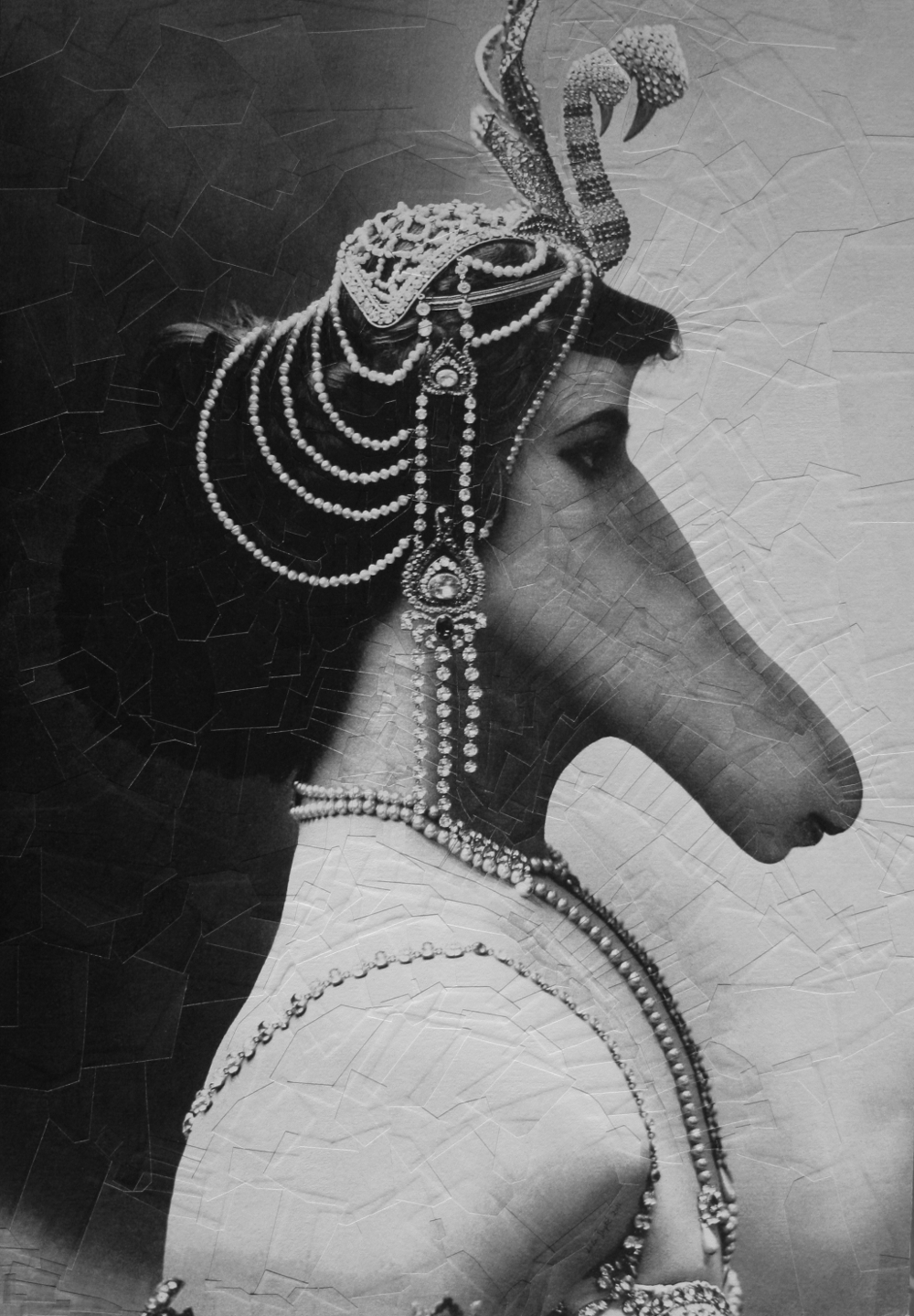
    Lola Dupre, Mata Hari
    Lola Dupre, Mata Hari

    You can see more of Lola’s work by clicking here to visit her website

  • Susan Levin: Art from Dreams

    Susan Levin: Art from Dreams

    ‘My Jungian Journey in Collage, Assemblage and Poetry’

    I was recently sent a book by Susan Levin, who is based in California, entitled ‘Art from Dreams: My Jungian Journey in Collage, Assemblage, and Poetry,’ and felt I had to share it with you. The book is beautiful as an object in itself, but the works inside (particularly the assemblages – which are my particular favourites) are just extraordinary. The book – as noted on Susan Levin’s website – celebrates artistic expression as an exploration for self-awareness.

    “Art making and poetry reveal to ourselves and to others the images and feelings that arise within us in dreams. The very process of creation taps into the source of our inner wisdom. Poetry itself can be accessible as a collage of named images put together in various forms to communicate to and from our innermost selves.”

    Susan Levin has a BA from the University of Michigan and a Masters of Public Health (MPH) from Johns Hopkins University. In addition, she studied at the Center for Creative Studies in Detroit, Michigan. She is now a practising artist in Los Angeles, California.

    CRW_0048


    Alchemy

    Nobody sees us-
    the Archaeologist and me-
    as we excavate the night
    searching for beginnings,
    unearthing symbols, images.
    Everything is held to the fire
    We get close to truth,
    to what is known and unknown.
    We awaken to re-imagine our lives

    CRW_0051

    Home

    I left the ship on the city’s river
    and walked barefoot through its mud
    up the steps to the bank
    to retrieve my currency.
    Now with my valuable fuel,
    I stopped traveling the wrong freeways.
    Redeemed my compass

    susan levin-8

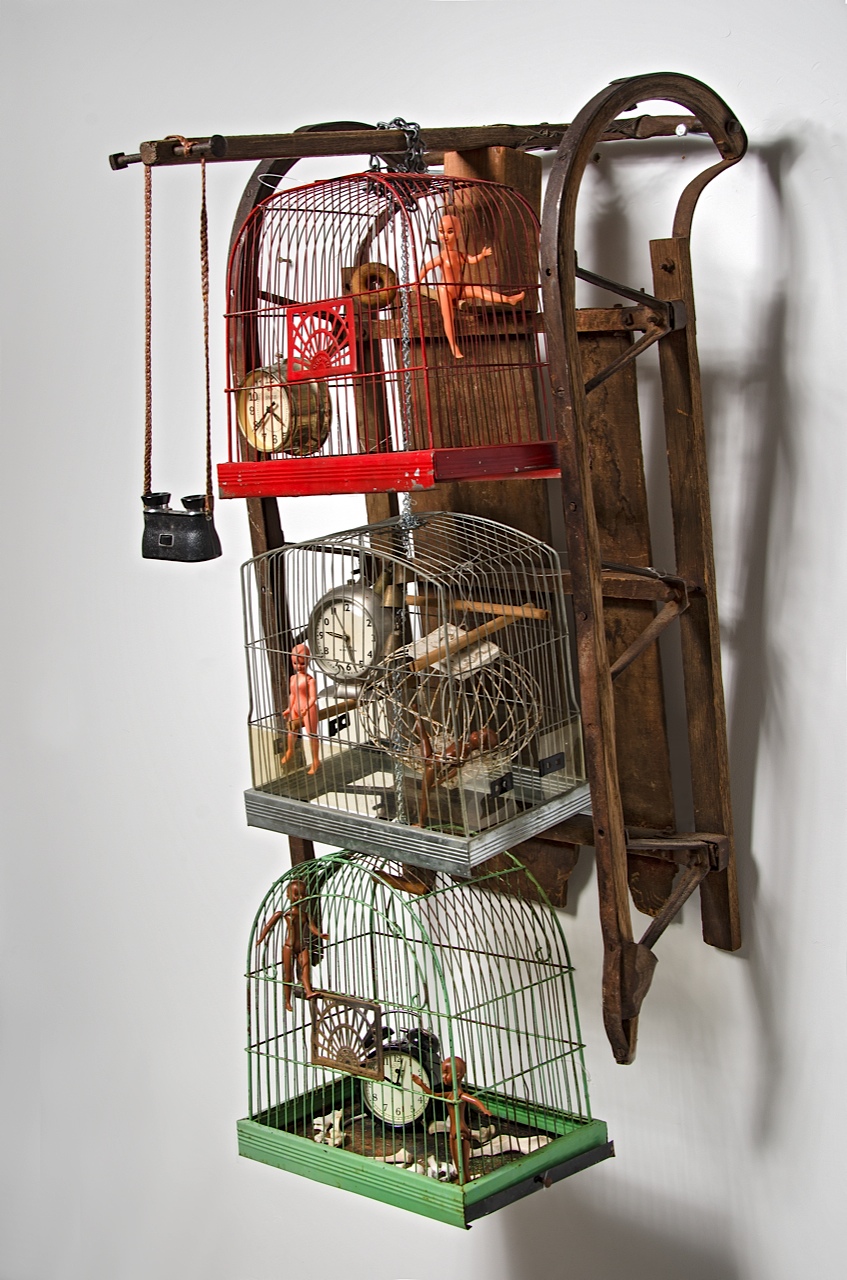
    Cages of our Lives
    susan levin-11
    Night Journey

    You can find our more about Susan, her work, and her book by clicking here

  • Joe Cook: The Pirate Collection

    Joe Cook: The Pirate Collection

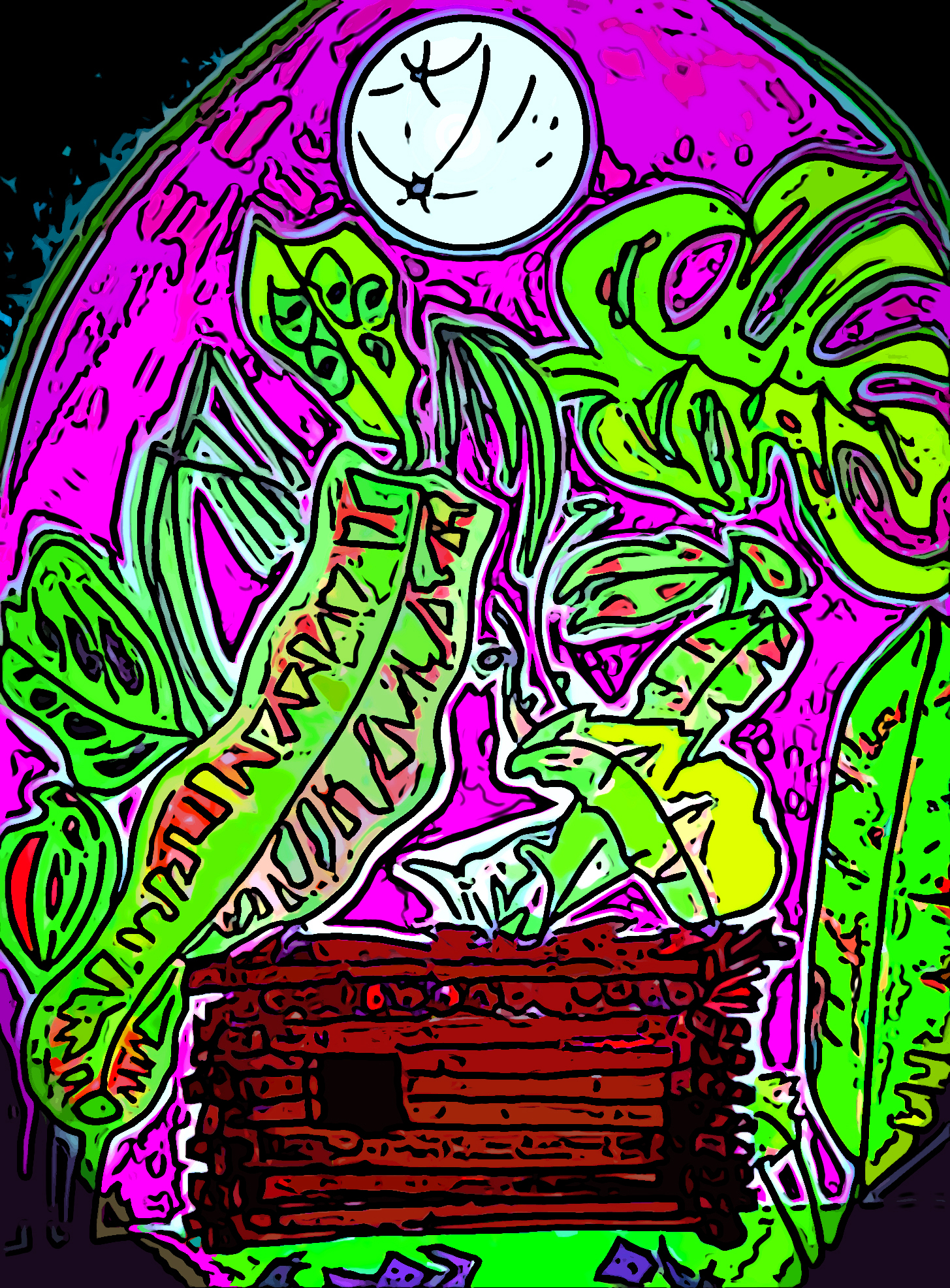
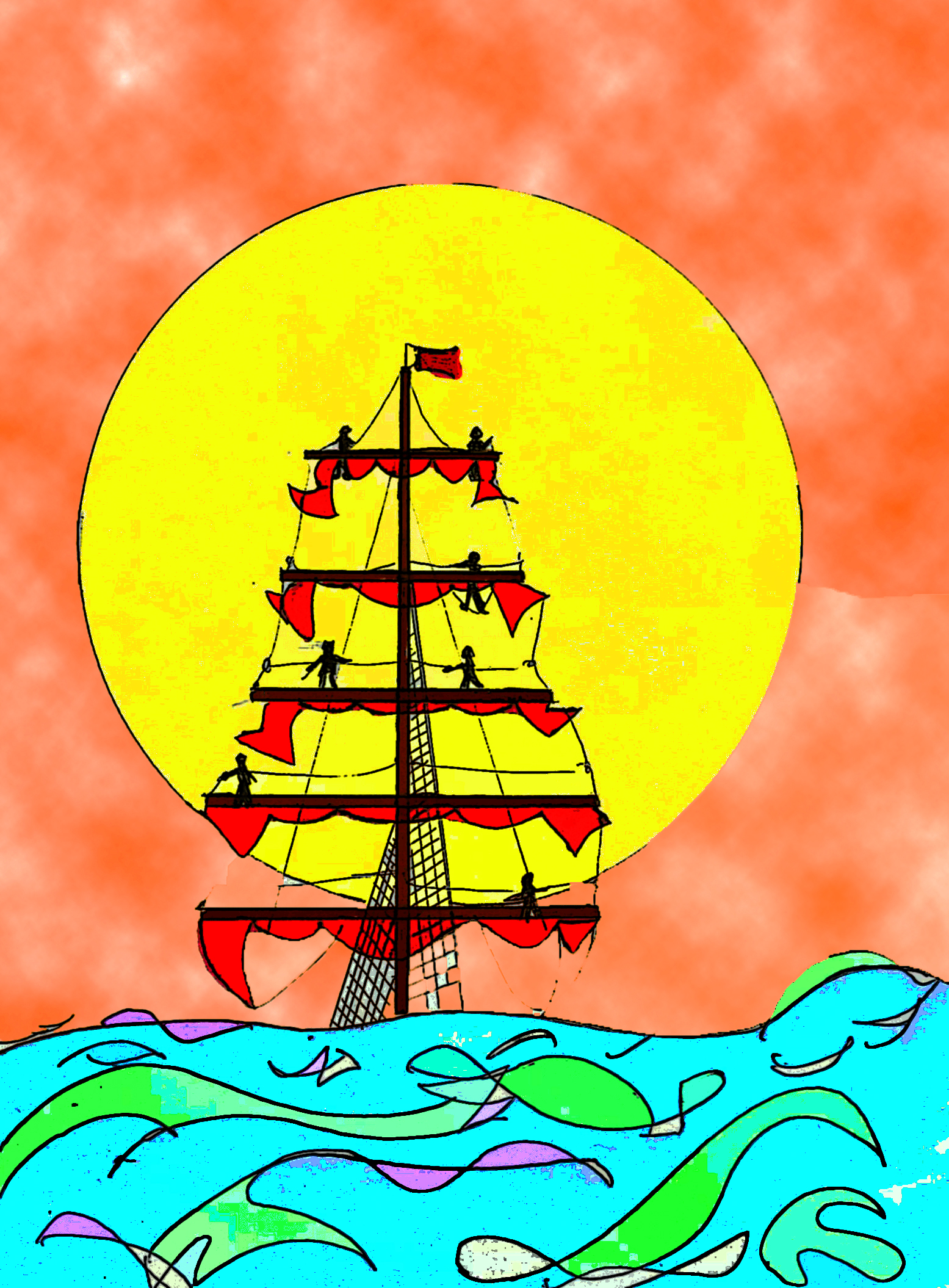
    You may remember Joe Cook’s work from a previous post – from all the way back in October 2012! (Click here to read it). Joe got in touch again recently with some images of his most recent work. I thought it would make for an interesting feature to take a look at what Joe’s up to now. Below you’ll find a piece from Joe on what he’s been working on of late, as well as some images of his fantastic new work. Enjoy!


    “These images are projections from an imaginary pirate world – a world described in some detail by a friend of mine.  Some scenes were described directly to me while others were inspired by old photos of jungles, high seas, ships and pirate revolutions. There remains, especially in children, a notable fascination in pirate worlds – a fascination I have attempted to harness. The images are drawn in ink and then digitally enhanced to increase vibrancy and saturation.  This over exaggeration of colour was both to promote an exotic energetic hot alien world and simply to please my personal tastes.  There is a particular rebellious story which accompanies these images – a story that will no doubt make its way to the surface.” – Joe Cook

    063aa_edited-3


    931


    ppman


    woodcut


    idea_edited-5


    lookhere

  • Brian Gibson: What does it mean to be an ‘Outsider’?

    Brian Gibson: What does it mean to be an ‘Outsider’?

    I asked artist Brian Gibson for his thoughts on the term ‘Outsider Art’ and what it means to him as a practising artist.​ Below is his response and a display of his own artwork. Click here for more information on Brian and his work.

    I have never been quite certain as to where I fit as an Artist. For a long time the thought of being an artist felt very alien to me, it was after all another culture. Artists were clever, confident, sophisticated and well educated people. That was not how I saw myself; I was just some lone youth from a council estate on the outskirts of Newcastle from a single parent household who had a history of truancy with little to show in terms of qualifications.

    On the domestic front it was my Father who could draw, he was very gifted, he could draw calligraphy free hand or paint golden Celtic knots or Spanish dancers onto painted egg shells and all sorts of other intricacies. He was a gifted man who never really dared to share or show his talent beyond the garden gate. In comparison my creative efforts were never so precise. My handwriting was spidery and I never could quite get the hang of perspective; such things didn’t come natural to me, so the notion of becoming an artist wasn’t even on the radar for me. However there was a creative flame that flickered within me and I was fortunate that my efforts were never discouraged and even if the end results often fell short of how I wanted things to be, I was at least able to lose myself in what I would later know as “the creative process.”

    Brian Gibson, White Rabbit
    Brian Gibson, White Rabbit

    Art became less of an alien culture, as I got to know various accomplished works of art via my regular city visits to the art galleries and libraries when absconding from school. Also importantly for me was the fact that I had met someone who had decided to embark on their own creative path; he was a poet by the name of Barry MacSweeny. He lived on the adjacent Council Estate and was the elder cousin of two of my school friends, so occasionally we could find him in his mother’s kitchen writing away whenever we called round for a biscuit and drink of pop.  As one of the emerging 60’s poets, his first book of poems was published when he was just 19 years old. Being older he didn’t have much to do with us, appearance wise he looked a bit like Terry Collier from the TV series “The Likely Lads”; dapper and wiry.

    Having known such a person in my youth left a simmering impression on me. Why I mention him here is that he chose to do something creative and that was influential for me and secondly, if he were a visual artist he might now be considered posthumously to be some kind of Outsider. Although he never went to University, he was nominated for the poetry chair at Oxford. This however turned out to be just a cynical publicity stunt concocted by his publisher. This humiliation along with his own personal demons contributed to him remaining a marginalised poet for over 25 years. He died in 2002 aged 52.

    Brian Gibson, Those Late John Garfield Blues
    Brian Gibson, Those Late John Garfield Blues

    The original definition of  term “Outsider” set out by Roger Cardinal back in the 1970s seems to have evolved and undergone a seismic transformation in recent years, particularly with the expansion of social media. Such connectivity has meant that creative people working outside the mainstream are no longer so dependent on the nod of the well informed to decide whether this or that piece is an actual work of art.

    Now individuals can link up with other individuals, share ideas, post up images, form groups, put together exhibitions and even sell their work. Autonomy, self-empowerment and money – it all sounds rather good but the reality may be a little different. To be an Outsider Artist seems to have become incredibly fashionable of late, numerous tee-shirts and accessories in Selfridges and articles in Sunday supplements seems to be of good indicator of this.

    Outsider Art is now being presented as the more rebellious sibling to the established world of fine art, with Folk art the more amenable earthy but less noteworthy cousin. Outsider Art is more rock and roll, more edgy, and people are proud to wear their Outsiderness like a badge of honour. Now and this may not be a bad thing but I am aware that anyone can get in on the act.  I have seen a lot of savvy websites by individuals where the work veers into being more about a product in a particular style that happens to look like Outsider Art. As a trained artist who was dealing with his or her own mental health issues once said to me: “Outsider Art is easy to fake,” or at least it might seem that way. So a question that I have is “What does it means when such work becomes an entrepreneurial enterprise?”

    Brian Gibson, Candy Says
    Brian Gibson, Candy Says

    There are many other questions regarding the increasing popularity and branding of Outsider Art. I can envisage a future where a retailer such as Primark would be either selling tee-shirts cheaply of original prints from acknowledged Outsiders such as Madge Gill or  Jean Dubuffett and the like or, more likely – to save on copy write issues – just employing some people to produce something that looks a bit  like  the work of an Outsider Artist. Is this any more different than buying an original reprint from a more exclusive and prestigious source or to put it another way, who gets the money and what is the money the measure of ?

    Despite its current popularity, Outsider Artists tend to be Outsiders for a reason. It may well be that the making of work is the sole or soul reason why a person pursues a creative path, everything else may well be an after thought. The poet Barry MacSweeny could write and he could rant and he had his own demons so there were times when he just couldn’t get much of any thing together. I don’t think that this lessened the quality of his work, but I doubt if it served him very well in getting his work published. This seems to be the reality for a number of visual artists that I know, making the work is one thing, doing the rest is another. The added pressures of presenting work to a public audience to a deadline and dealing with unknown people, along with all the other stuff can be more than enough for most.

    Brian Gibson, Way Down in a Hole
    Brian Gibson, Way Down in a Hole

    For a good while now marginalised individuals and groups have worked hard to put themselves in the frame work so to speak in a way in which they feel represents them in the way that they wish to be seen and valued. It can take a lot of time and thought to develop environments where people feel safe and supported but I am sure that I am not the only one to have heard stories of unscrupulous figures waiting in the wings who are only too willing to put their profit and their own prestige way before the people they purport to represent. Having worked with vulnerable adults for over ten years now, I am just a little concerned that with so many self proclaimed Outsiders seeking centre stage, individuals and groups who have been historically marginalised may once again find them selves out of the picture.

    Brian Gibson, Sometimes I Feel Like a Motherless Child
    Brian Gibson, Sometimes I Feel Like a Motherless Child

    A note on Brian’s work (presented in this blog post):


    Earlier this year I produced six pieces with the overall title of  “I am frightened and timid and I don’t want to play” specifically for an exhibition as part of Fringe Arts Bath. Some of  the works are named after the titles of songs but don’t really have much to do with the songs themselves, if at all.


    Click here for Brian’s website
  • Caleb Lewis

    Caleb Lewis

    “Creating pictures is a way in which I can process my own experiences and ingrained anxiety; recording the highs, lows, hopes and fears using line and shape to carry the narrative in my own visual language. I’m looking for a distinct balance and stillness between the elements on the paper, as if millions of random dots coordinated to produce a briefly identifiable image, that hangs quietly in the air before disintegrating back into a random state.” – Caleb Lewis


    Walls Have Ears
    Walls Have Ears
    Leaf
    Leaf
    No Man's Land
    No Man’s Land
    Something Might Turn Up
    Something Might Turn Up
    Requiem
    Requiem
    Ignition
    Ignition

    For more of Caleb’s work, click here


    Click here to see how Caleb makes his work