Category: Artists’ Showcase

  • What Does the Term ‘Outsider Art’ Mean to You?

    Every now and then I like to twist myself up into knots thinking about the term ‘outsider art’; what it means in today’s context and whether we should even be using it anymore. You can find some of my thoughts under the ‘Outsider Art: Theory and Thoughts’ category (or by clicking here), but in this blog post I wanted to share some of the thoughts of artists who have recently featured on the blog. A while ago, I started asking artists what they thought of the term outsider art, and, if they didn’t think it was appropriate or relevant, was there a term better suited to describing their work?

    I’ve had some really interesting responses, and some equally interesting new terms. Maybe it’s time we listened to the artists we are categorising under this term.

    Daniele Valeriani, Vanitas 1 (detail)
    Daniele Valeriani, Vanitas 1 (detail)

    Daniele Valeriani: Dark Surreal Art
    “I could consider myself an outsider for sure due to the fact that I do not care about fashions or easy solutions. In fact what I create is not conditioned or calculated but simply what I like the most. I don’t care about judgments except from other artists I admire, and only then so that I can learn or increase my technique or cultural view. In my case Dark Surreal Art is the term that I find more akin to my art because better emphasizes my style and themes. Outsider is a broader term.”
    More of Daniele’s work is coming soon on the blog

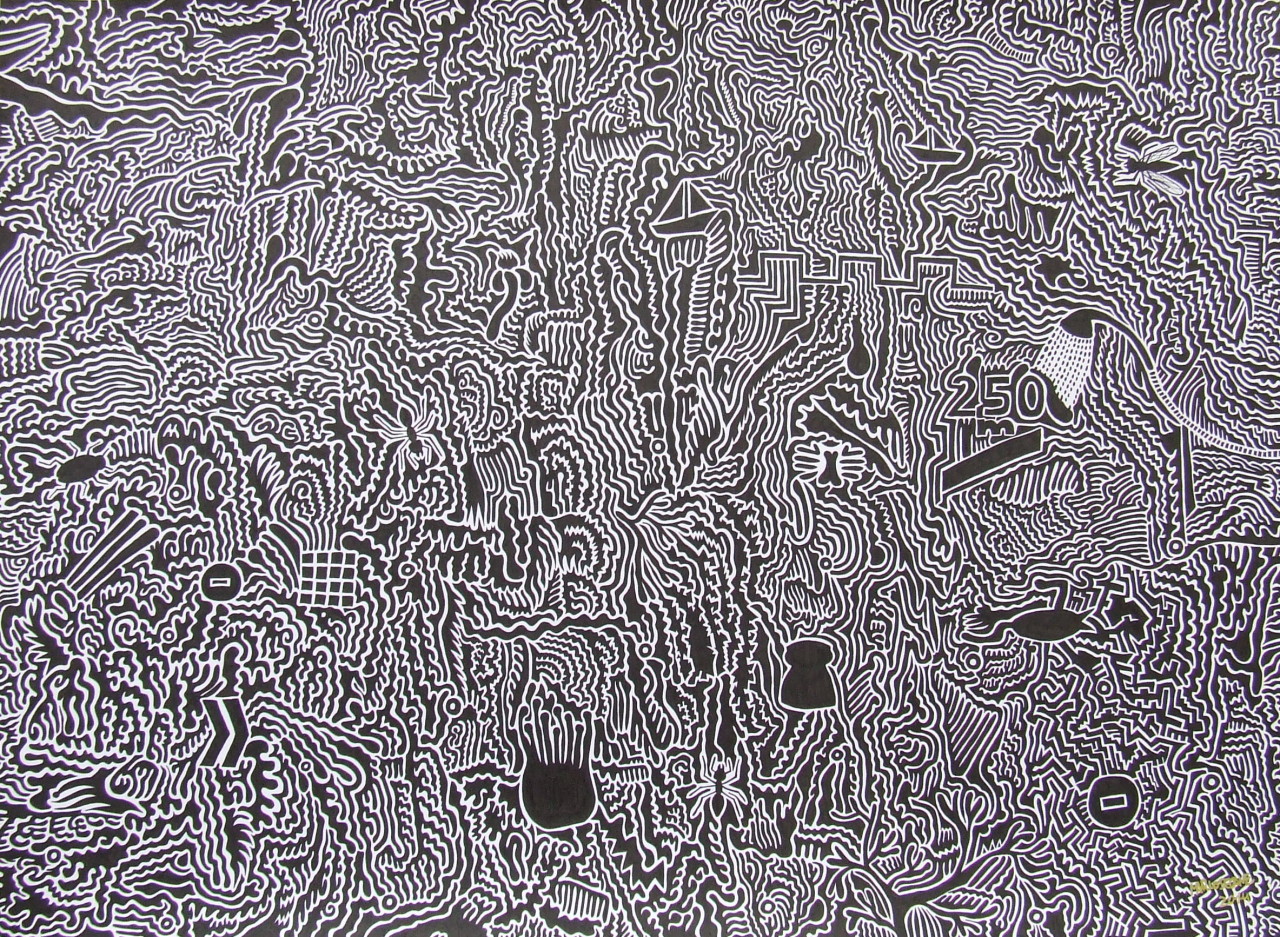
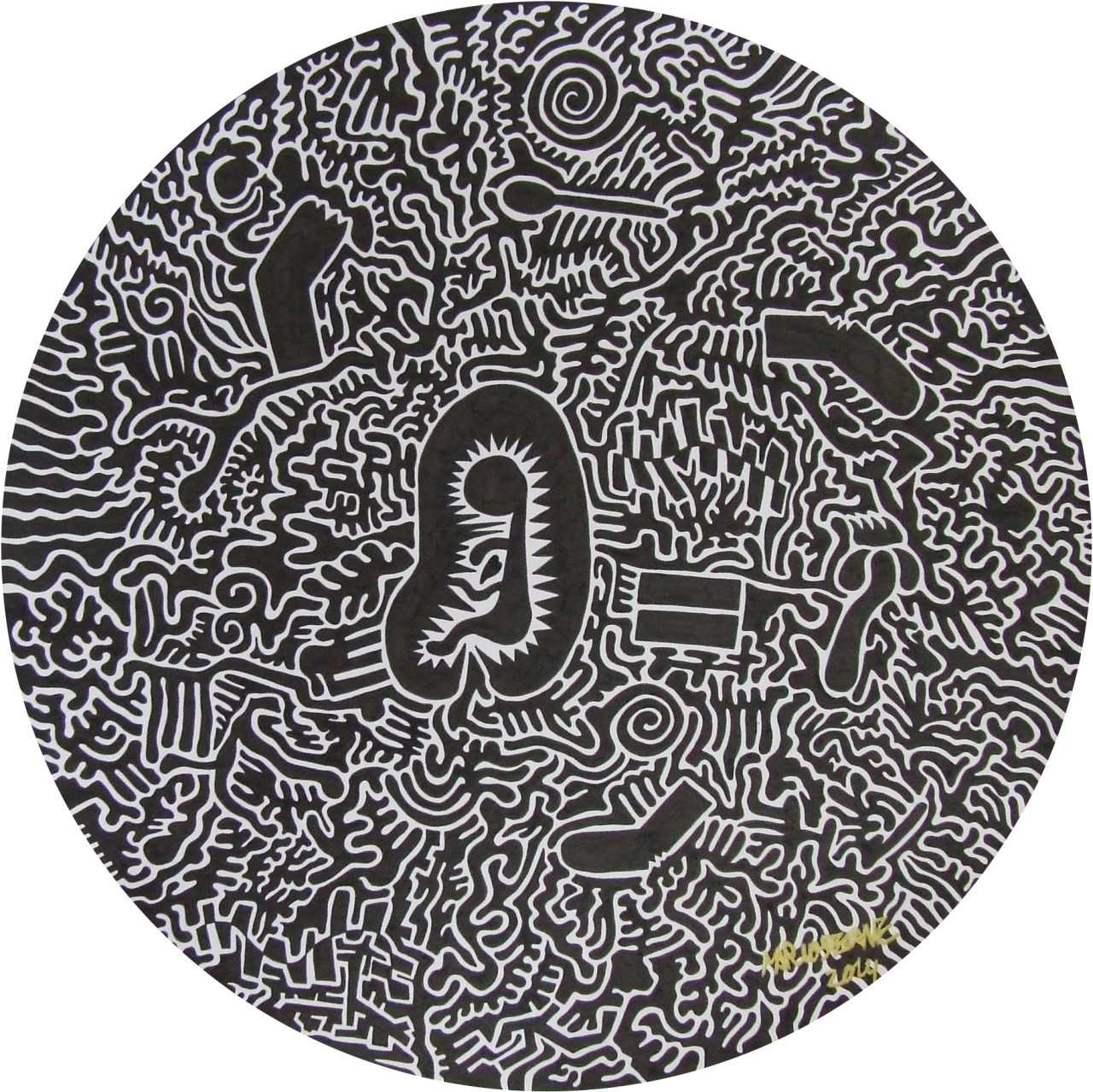
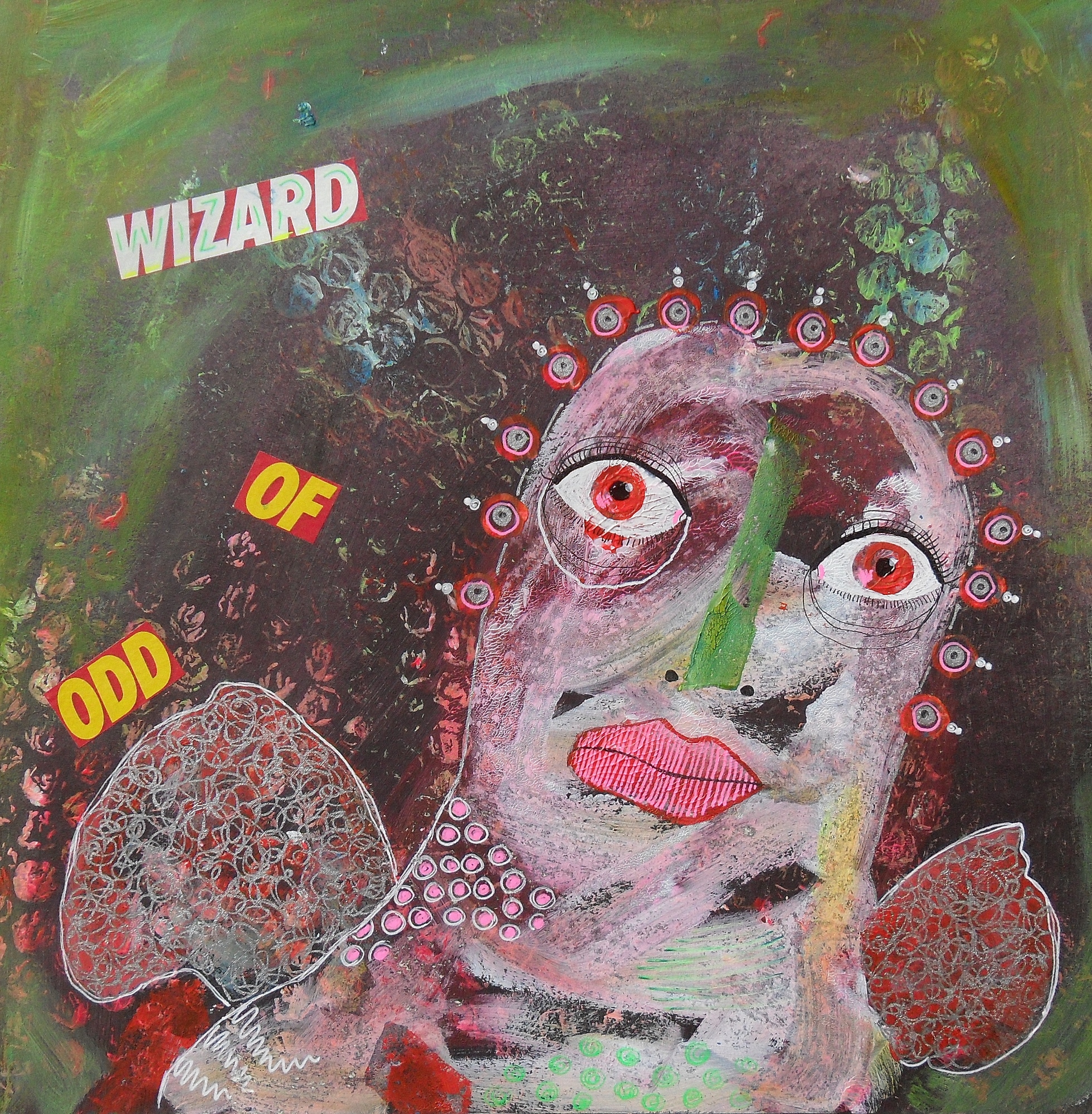
    Mario Soane, Que horas son corazon
    Mario Soane, Que horas son corazon

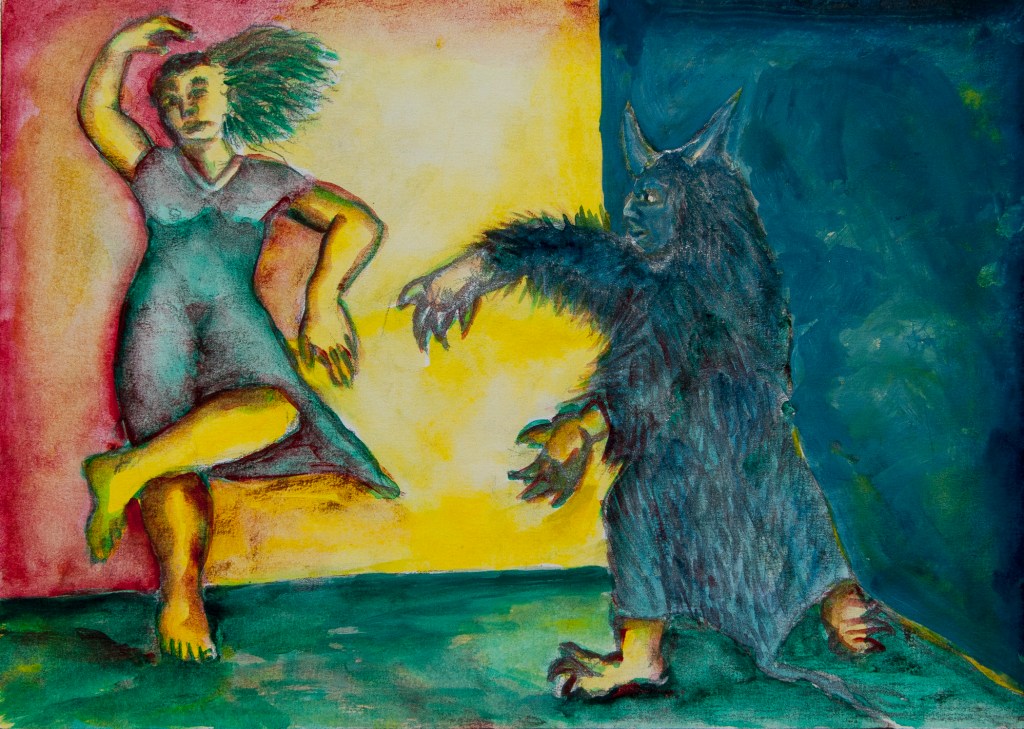
    Mario Seoane: Symbolic Automatism
    “I’ve been an outsider all my life and in every aspect it. If there is a place in art for me, I guess it would be on the outside. But I like the term Art Brut better (not sure if it is because of the French sound to it or what). I believe that art is about brutality, even if it’s about hiding it. We are all animals, brutes. All our actions, as much as they are masked under the shroud of civilization, are brutish in nature. Art is no exception.”
    Click here to see more of Mario’s work

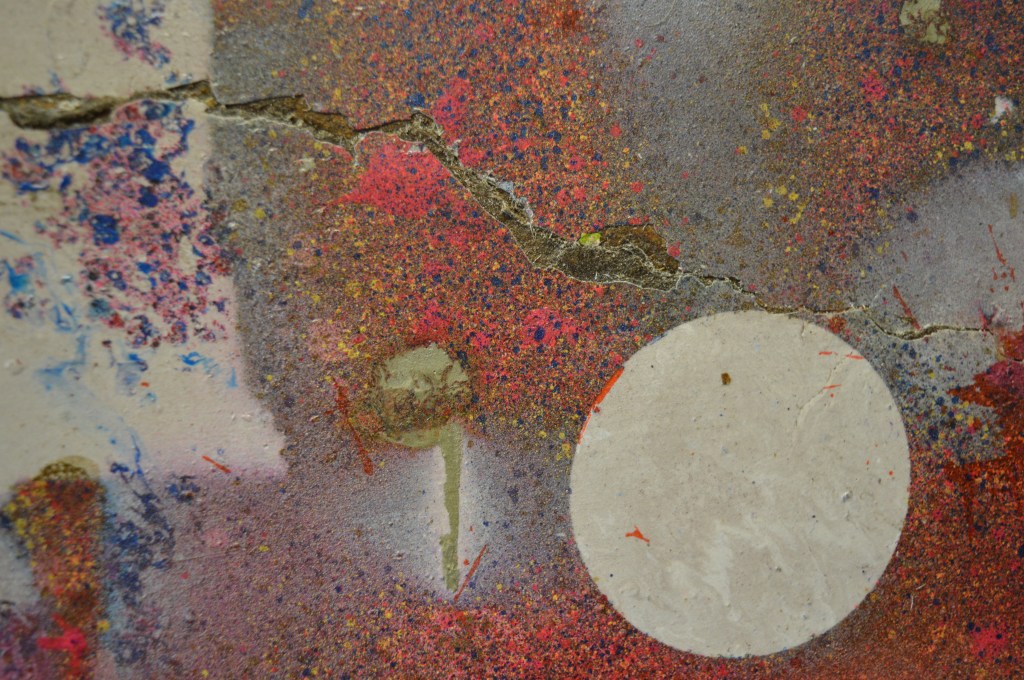
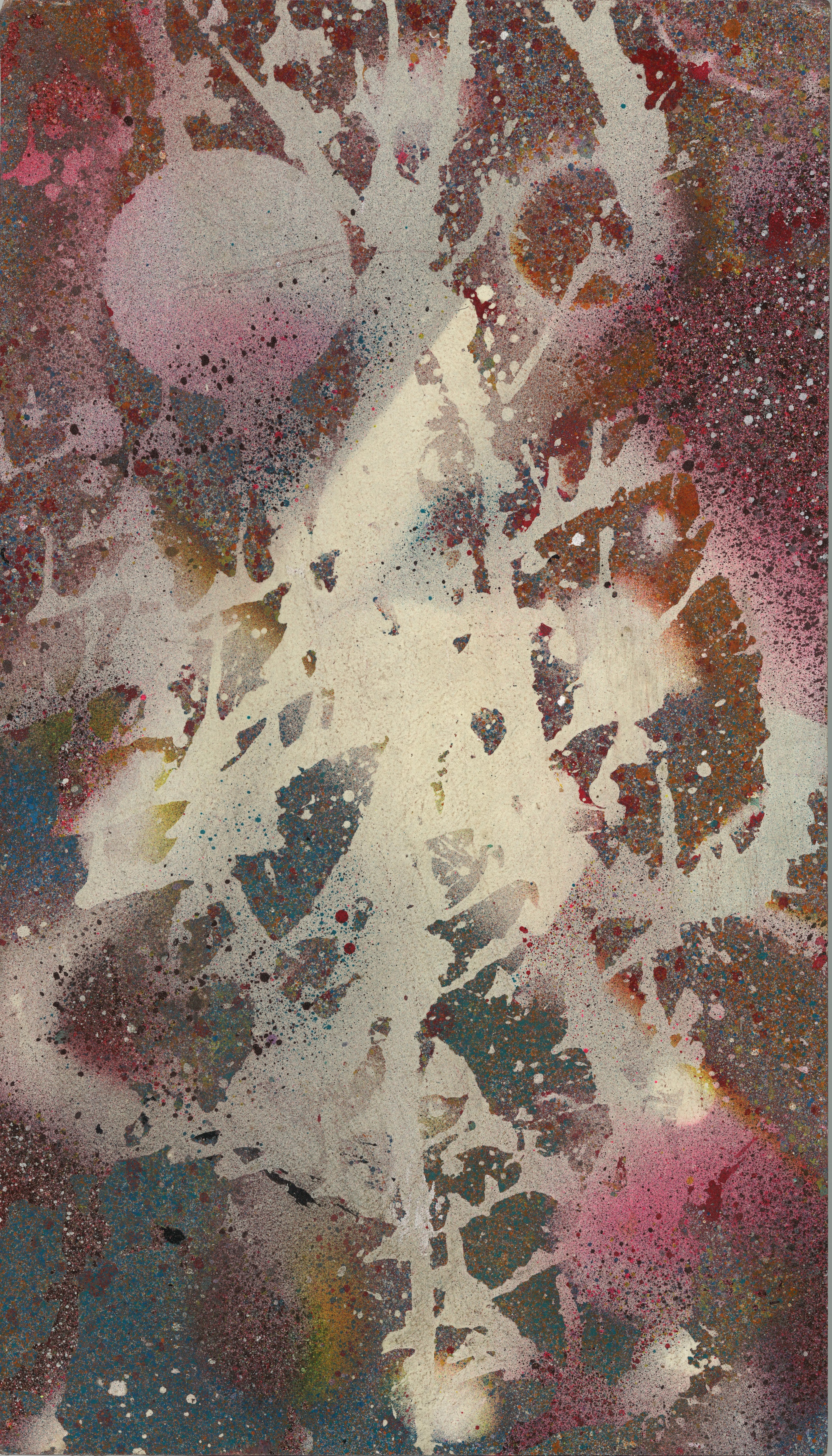
    Anonymous, A Cold Heart Melts
    Anonymous, A Cold Heart Melts

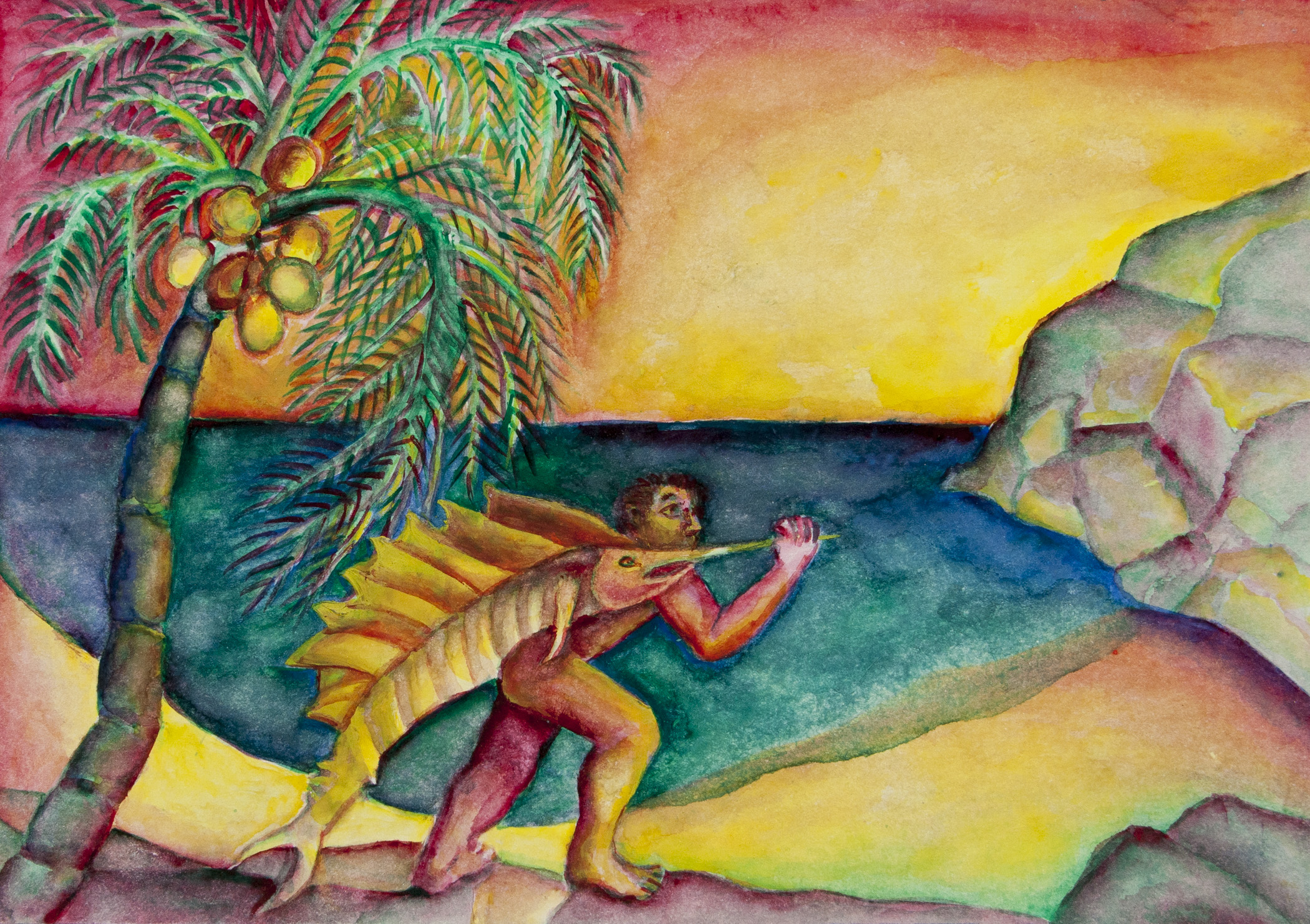
    Brendan Liam: Nomadic Art
    “Nomadic Art is closer to street art than fine art. It is always artist-less, or by Anonymous. This is partially because knowing the name attached to a piece of visual art arguably clouds one’s ability to objectively view the art. Naturally some artists are so unique they may not need to sign and thus may not avoid the subjectivity issue addressed normally by anonymity. The thing to note is the credentials attached to the art here – which are none. No artist means no resume, and all that goes away with that.” Click here to see more on Brendan

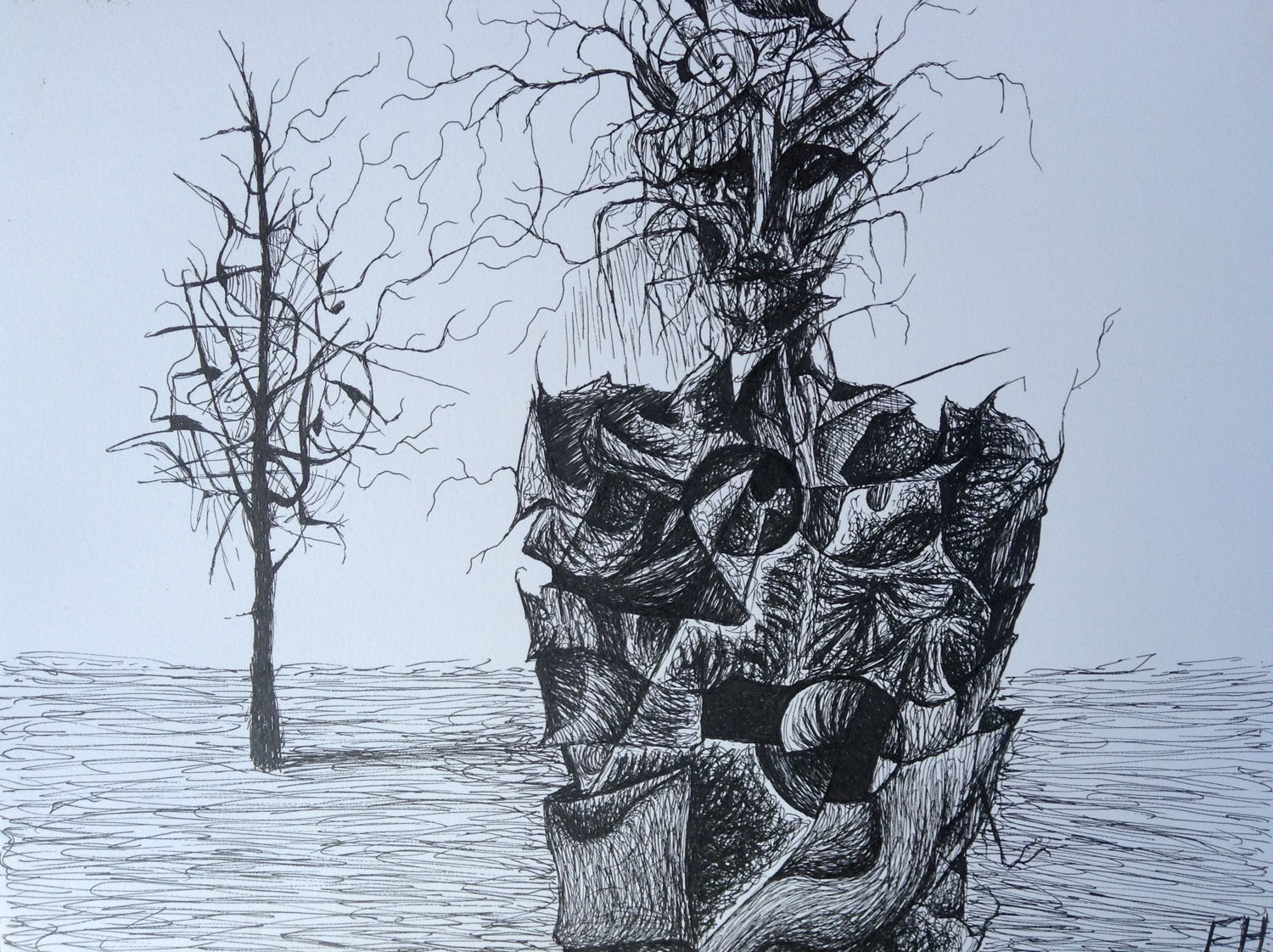
    Frank Heiler, Don't Look
    Frank Heiler, Don’t Look

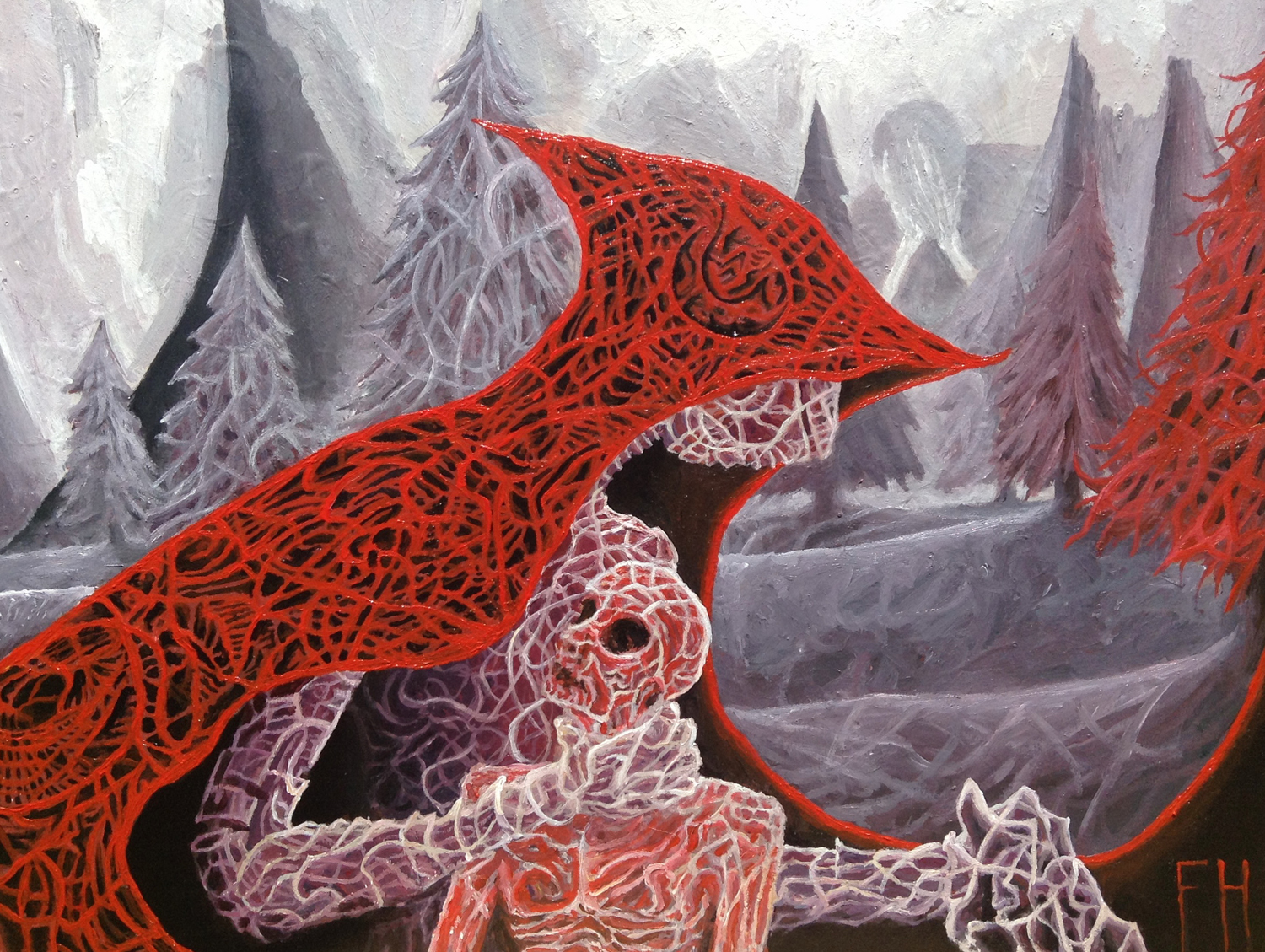
    Frank Heiler: Dark Surrealism
    “I think outsider art fits well with some of my work, especially my more experimental pieces. Although I do draw influences from other artists, I always try to keep a foreign, outside element to my art, something chaotic and new, with my own influence. Dark Surrealism is probably a better term to describe what I do, however.”
    Click here to see more of Frank’s work

    Mr Bartle, The Cellist
    Mr Bartle, The Cellist

    Mr Bartle
    “Like all art classifications it’s useful in grouping together work with similar characteristics, but the term is defined differently in different places. If outsider art is art created by untrained artists, then that’s not me. If outsider art is only art created by people on the edge of society, then that’s not me. Why I feel comfortable with the term and am happy with it as a classification regardless of other people’s ideas of what it should mean, is that I ‘feel’ like an outsider. I’ve never known where I’m supposed to fit into everything. So much of it doesn’t make sense to me – the way I’d like to live, depression.”
    Click here to see more of Mr Bartle’s work

    Beatrice Roberts
    Beatrice Roberts

    Beatrice Roberts
    “Well, due to my own life experience, I feel like an outsider most of the time. I’m not a ‘people person’ and some of this is, I’m sure, due to my past. I was bullied for many years and my self-confidence was eroded to a massive extent. I still have anxiety issues because of it. I was also isolated from family, friends and any support networks, so I got into the habit of being self-reliant. These days I have a wonderful partner and I am slowly but surely healing, but as my art is me, and I feel like an outsider, it is probably a reasonable term to use for my art.”
    Click here to see more of Beatrice’s work

    Let me know what you think. Do any of the terms above resonate with you? What do you think of the term outsider art? Do you like being referred to as an ‘outsider artist’? Post any thoughts in the comments below.

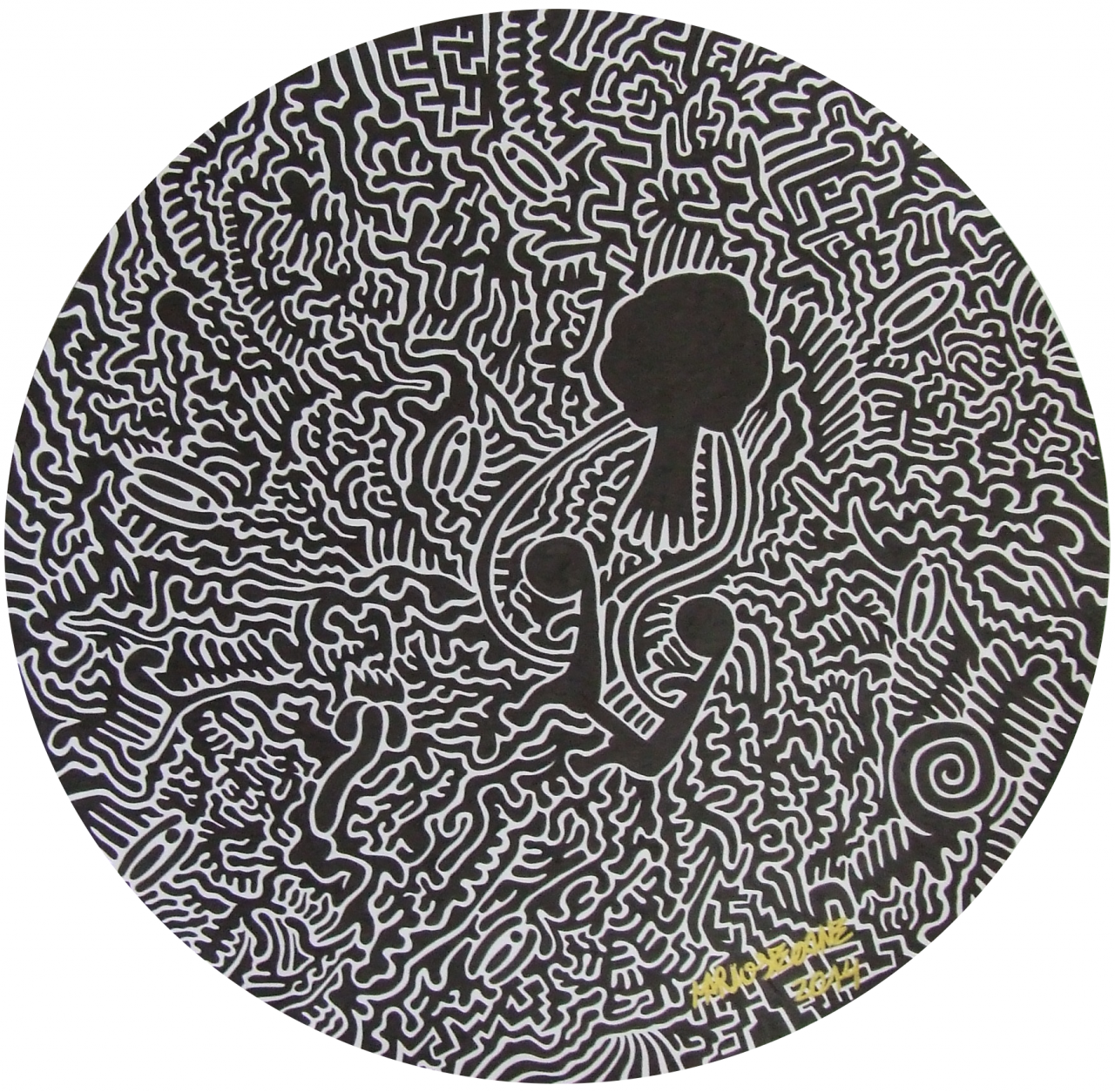
  • Mario Seoane: Symbolic Automatism

    Mario Seoane: Symbolic Automatism

    This post showcases the work of artist Mario Seoane. Mario has been interested in making art all his life, finding his current style during his high-school years when he would doodle away in class. He now calls this style ‘symbolic automatism,’ and has created his own private dictionary of symbols that all have a consistent meaning throughout his work. I asked him a few questions about his life and work.


    All them apples fell from the same tree
    All them apples fell from the same tree

    When did your interest in art/creating begin? 

    I believe I’ve been interested in the arts all my life, independently of the medium. I have an unpublished poetry book stashed in a drawer somewhere called “The little boy sings the Blues”. I’ve always felt the need to express myself artistically. If you look at my books and notepads since primary school, you’ll see drawings all over the place. I used to draw on top of the book’s illustrations and made them my own. Needless to say that my parents and teachers used to kick my ass a lot because of this irreverent behaviour.

    But, the way I express myself today – which I call symbolic automatism – was developed during my high-school years; doodlin’ away endlessly, instead of paying attention to those classes.

    I got sand in all those places
    I got sand in all those places

    What is your starting point for each piece?

    First, something needs to happen that catches my attention. It could be anything, it doesn’t matter: a conversation, a landscape in which I’m embedded, something I’ve read… Then, I start to imagine the whole narrative in terms of symbols: what symbol can I use to represent this or the other. After that, I try to transpose my symbolic ideas to a notepad I always carry around with me and when I like the results I start a new piece.

    Last night I dreamt of shabby docks
    Last night I dreamt of shabby docks

    Who or what influences your work?

    Everything influences my work. I just need some random event from the outside world and off goes my mind in trying to distort reality into my creations. The challenge here is to choose the best themes, since it is impossible for me to implement every idea that crosses my mind.

    In terms of big art names influencing what I do, I’ve had people telling me that my work looks like some fancy name’s, but I really don’t care for that. If it reminds them of anybody else’s, it is not my intention at all. I am doing my own thing here!

    Tercio de varas
    Tercio de varas

    What do you hope the viewer gets from your work?

    I’m really not working with the viewer in mind. I simply expunge my mind into paper. I guess most of the time the viewer will have no idea about what is happening in a given piece, since I am the only one who knows the symbol’s significance. And I like it that way. I have a notepad that I use as a symbol dictionary, where I keep track of every symbol I devise. No one else has ever seen that dictionary and no one ever will. At least while I’m alive. But I guess you can make assumptions about some of the symbols if you pay attention to every piece and their titles, since they’ll keep their significance throughout my work.

    Polish nightmare
    Polish nightmare

    What do you think about the term outsider art? Is there a term that you think works better?

    I’ve been an outsider all my life and in every aspect it. If there is a place in art for me, I guess it would be on the outside. But I like the term art brut better (not sure if it is because of the French sound to it or what). I believe that art is about brutality, even if it’s about hiding it. We are all animals, brutes. All our actions, as much as they are masked under the shroud of civilization, are brutish in nature. Art is no exception. For me, the existence of an artistic expression that inherently humbles itself to this level is fascinating.

    Consented lies
    Consented lies

    What are you working on at the moment? 

    Right now I am finishing a piece called “On how to become a man”. It is a 21.5 by 30 cm, pigment ink and Indian ink on Bristol board. It’s about going into the woods, chopping down some trees and becoming a man in the process. It’s a coming of age kind of thing and I will say no more about it. After that, I have some other ideas ready to be implemented, also on the same support.

    Que horas son corazon
    Que horas son corazon

    Where do you see your work taking you in the future?

    My work is a private thing, but I don’t mind if anybody wants to pay for it, though. I am willing to sell my mind, encoded into paper, but I’ll never sell the key. That being said, I wish I could live off it and, honestly, I am actively pursuing this goal. However, if I can’t, I’ll keep living to create it, because there’s little else I enjoy doing and nothing as much.


    Click here to visit Mario’s website

  • Nomadic Art from the Apocalypse

    Nomadic Art from the Apocalypse

    This guest post has been written by Brendan Liam, ‘Curator of the Apocalypse.’ Brendan has coined the term ‘Nomadic Art’ to describe works that are predominantly anonymous, and created on simple materials often found to hand. The work he describes is much nearer street art than fine art in its appearance and style.


    ????????????????????????????????????
    Anonymous, Along Came a Tipping Point. “This is a ‘spinning painting.’ It doesn’t literally spin, but it can be hung from any angle.”

    “My name is Brendan Liam and I’m Curator of the Apocalypse. I’ve been an outsider artist and curator for less than two years. Before 2014, I had never had any notion of considering myself an artist, much less a curator. I went to the University of Wyoming and wandered from 1992 to 2005.  I had 185 credits when I graduated 20 years ago, three of which were related to art, for ‘beginning drawing.’ So I’m educated, but not in art; I have no background in art. My background is economics, business, and real estate. Essentially I had what I call a ‘successful midlife crisis.’ I had been making six figures a year and living the life of an ordinary person and I quit the whole show… and accidentally emerged doing art in the summer of 2014 and I will be doing my first show in Denver this coming November at the Pancakes and Beer show.

    I am a good example of an ‘outsider’ for sure. I don’t know about the rules of composition, I don’t understand colour wheels and I don’t care what gallerists or judges say. I just want to sell art to people, preferably people who don’t normally buy art. I usually get my inspiration from small children because they don’t know the rules either. 

    Anonymous, A Cold Heart Melts
    Anonymous, A Cold Heart Melts

    After all that formal education, I certainly didn’t want to go back to college to study art at 42 years old. I gave it some thought, and decided it would be much quicker to create a philosophy of art that championed ignorance. The result may or may not be original – I certainly wouldn’t know – I’m just too damn ignorant. Either way, I call it ‘Nomadic Art.’

    Nomadic Art’ is closer to street art than fine art. It is always artist-less, or by Anonymous. This is partially because knowing the name attached to a piece of visual art arguably clouds one’s ability to objectively view the art. Naturally some artists are so unique they may not need to sign and thus may not avoid the subjectivity issue addressed normally by anonymity. The important thing to note is the credentials attached to the art here – which are none. No artist means no resume, and all that goes away with that.

    Anonymous, Etherea, The Good Witch
    Anonymous, Etherea, The Good Witch

    All that remains is the art. I fear the deeper into the art world I go, the further from the art I might get.   So I’m actually paranoid to some degree, about learning too much from the industry itself. I’d prefer to let the paint teach me; the paint and the preschoolers.

    The art is done quickly, in any medium, on any available material and obviously by anyone. This is the heart of Nomadic Art: it is essentially painted garbage. Frames are extremely rare, and if you see one for sale, it’s unusual. For the paintings, you’d never see actual canvas or oil, that’s far too fancy for Art from the Apocalypse. The canvases do include Masonite, composite boards (usually drawer bottoms), OSB (particle boards), wood scraps, paper and just about anything else – except canvas.

    Anonymous, The Middle Way Through a Storm
    Anonymous, The Middle Way Through a Storm

    Even the mounts are unusual. If you click the links, you’ll also see some pieces have lengthy stories behind them.”


    Click here to see more Art from the Apocalypse

  • Apryl Miller: A Visionary Nest

    Apryl Miller: A Visionary Nest

    Apryl Miller credits her artistic career to being raised in a large, creative DIY family. Her work reflects the tradition she was taught as a child; that of making something your own by making it yourself. She came to visual art in later life, crafting a vernacular art environment in which she would raise her young children. In this post, self-proclaimed ‘accidental artist’ Apryl talks about her inspiration and how she came to create her visionary ‘nest.’


    AM 42

    “My journey as an artist is deeply rooted in my childhood. We were a creative, DIY family and we had that attitude, coupled with a belief in the miracles a hand can fashion. We didn’t have a lot of money, but we had a lot of kids and it seems we were always making stuff and entertaining ourselves with different art projects. All our food was made from scratch and we produced both items of necessity and those of more artistic value, like holiday cards and Christmas ornaments. I was steeped in the can do ethos of making things and there was a sense of comfort and pleasure to be derived from all our activities. My work reflects the tradition I was taught as a child, that of making something your own, by making it yourself.

    I was raised in the Pacific Northwest and like many before me, I had to heed the siren call of the bright lights, big city and head out east. I was in a fashion design program in Seattle and I decided that I wanted to go to NYC to finish my degree. I had to find out who I could be and what I might do if I were to head out into the unknown. If I didn’t go, I knew I would always wonder “what if”. I called the airline, and bought a one way ticket to NYC, just like in the movies.

    AM 01 (1)

    A lifelong poet, I came to visual art later in life, when the apex of my background resulted in crafting a home for my young daughters. It was conceived as a creative wonderland for their little souls to be nurtured and supported, a place where their imaginations could soar, unfettered. But what I did not factor in, was how it would do the same for me, too, as we lived out our lives here.

    My space has been described in the press as “one of the most immersive, intricate, habitable art installations in the city…it is extremely important when looking at the history of immersive art installations…” And my personal favourite, “Apryl has changed the way we think about living…” Since crafting my home, like a magician with an endless silk scarf, I have continued to produce with an unabated creativity.

    AM 10

    As I worked, I had no grand scheme, no plan beyond making a creative, expressive living space. I proceeded without rules, because I did not know them. I worked intuitively, which is the way I continue to this day. I was a mom making a nest for my children, using the poetry of color, the poetry of asymmetry and banning the language of ubiquity and the colors of black and white. In the process I came to myself as an artist, in a really delightful way.

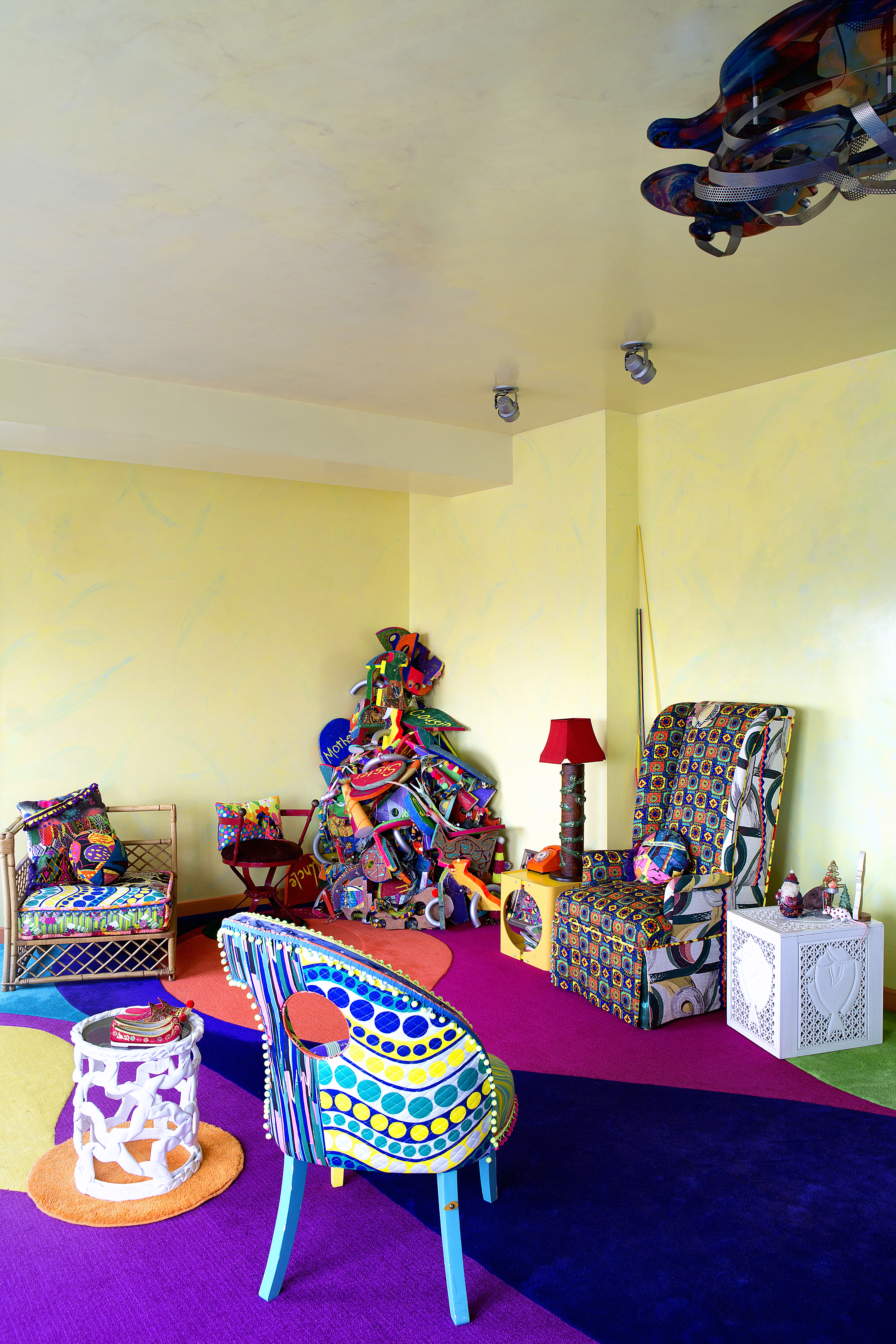
    Most objects were custom made or reworked designs, just for each specific space. An example would be my “Sculptures Masquerading as Furniture”, which are covered in vintage 1960’s garment fabrics. Part of my art is stripping away barriers, and by using garment fabrics I am rendering the experience of furniture more personal and intimate. The concepts behind these pieces and the stories I tell with them takes them to a realm where they transcend furniture. My intention was to create a world unto itself, so people would be captured intellectually and emotionally in the environment. By using few known references, people are able to have a dialogue with the space and to remain connected within it.

    AM 34

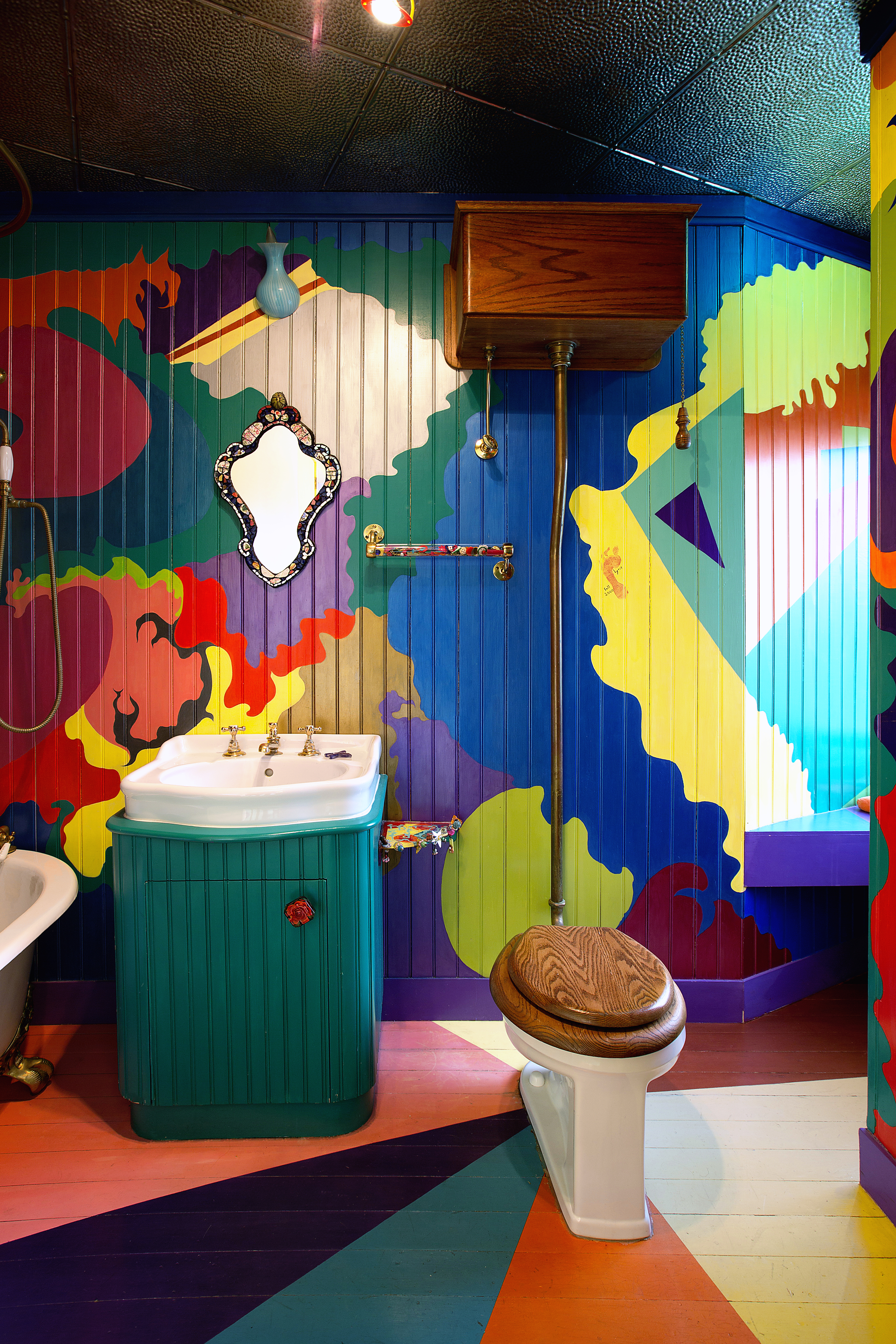
    There are many aspects which distinguish my space from design and place it in the realm of art. The most compelling is that it is about personal expression and everything here is a reflection of my history, experiences and beliefs. There are stories in the carpets, pictures of my children in the kitchen table legs and the messages flow and tumble from room to room. Each space has been obsessively accented through the use of dimensionality, patterns, color and the organic balance of cacophony. When I work, I juxtapose patterns, textures, shapes, materials and colors. By mixing together that which does not belong, a peace is established that contains both energy and calmness.

    My work is about our universal state of imperfection and how it binds us together. There are installations throughout the house that address this topic, most notably in the dining room. It is home to a large installation titled, “The Where and The How Left you and your Silence.” It’s a commentary on the fragility of our human relationships.

    AM 43

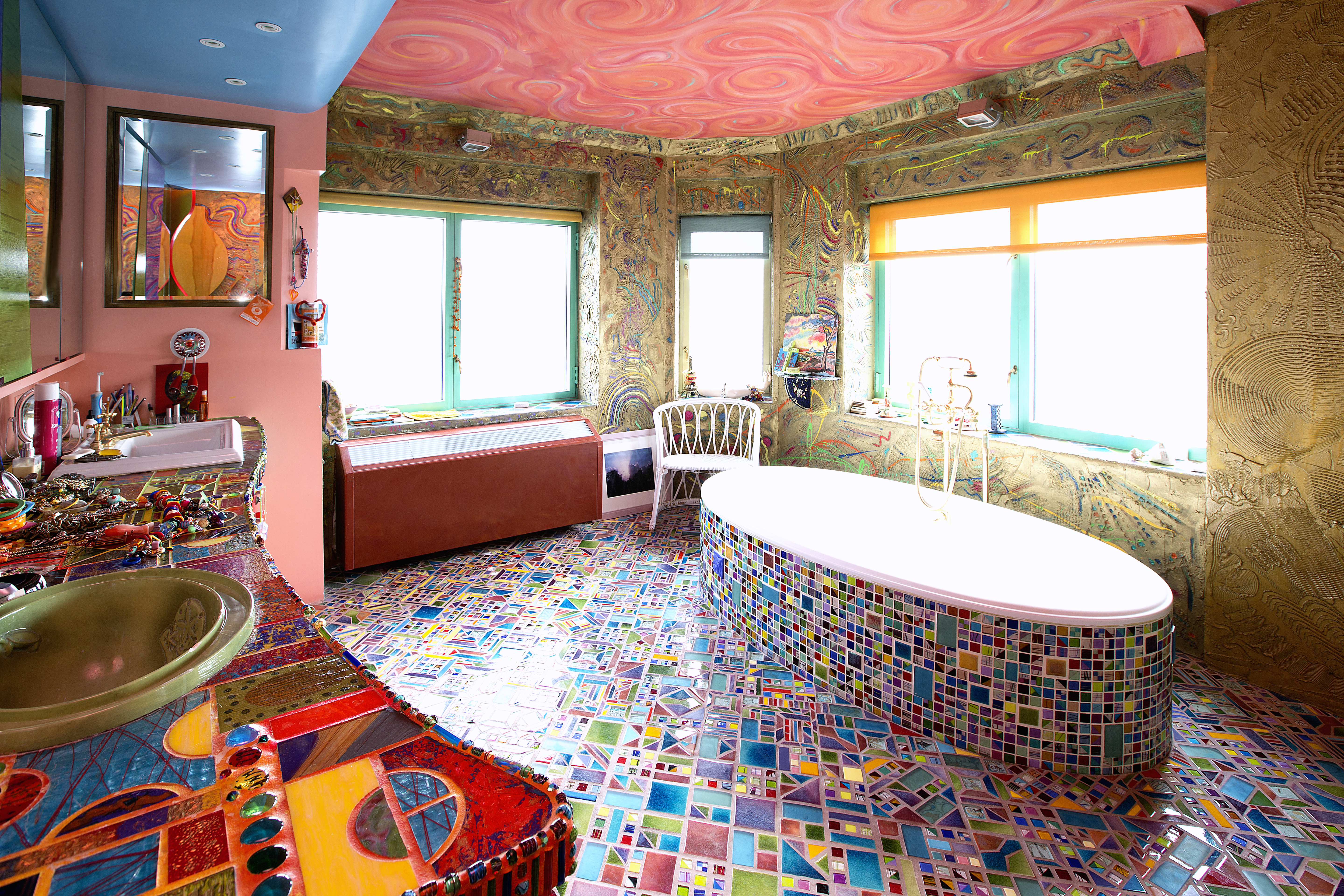
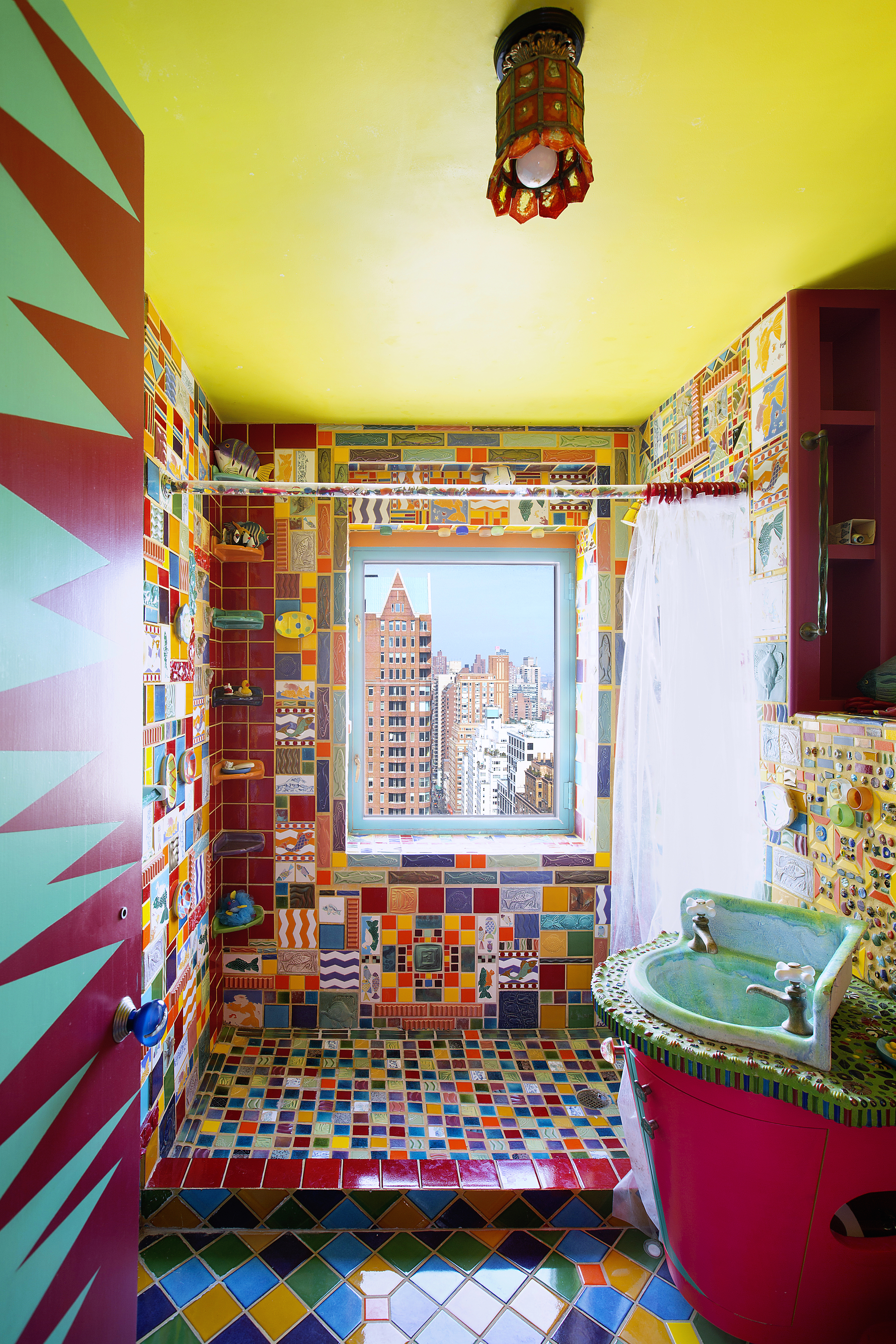
    There are sprawling carpets with tear drops, which is part of my iconography, a child sized loft for one daughter and a stage for the other, over 150 paint colors adorning the walls, with patterns painted inside some of the closets. The bathrooms have custom tile work which I created by cutting up the tiles and reassembling them in my own idiosyncratic fashion. Additionally I drew images on the undersides of clear tiles with Sharpies, continuing the concept of rendering the tiles anew.

    I often think of myself as an accidental artist, as my artistic expression was revealed organically, as I lived my life. As my need for handmade goods increased, my dormant creativity rose to the surface and showed its face to the sun. My story began when I was a small child, and it continued to flourish with the arrival of two more small children, who I desired to protect and nurture, with the full force of my artistic powers. I could not have predicted that I had a latent creativity and no one is more surprised about all of this than me. I hope to continue sharing the story of my space and of my personal work, as I feel it is my calling and I aim to use what God has given me.”
    AM 46

    AM 48 (1)

    AM 49

    AM 51

    AM 52


    Click here to visit Apryl’s website
  • Artist Showcase: Frank Heiler

    Artist Showcase: Frank Heiler

    Every month, we try to showcase the work of one artist who might align themselves or their work with the term ‘outsider art.’ This month, Frank Heiler shares his process and inspiration as well as a selection of his ‘Dark Surrealism.’


    Frank Heiler, Pyrokinesis
    Frank Heiler, Pyrokinesis

    When did your interest in art/creating begin?

    My interest in the arts started very early. I loved drawing as a child, and my mother being an artist/illustrator only added to that fire. As I grew older I would often paint, draw, make videos, and sculpt things out of clay for hours on end just for fun. I’ve always had an innate desire to create something interesting and new.

    Frank Heiler, The Burning Maelstrom
    Frank Heiler, The Burning Maelstrom

    What is your starting point for each piece?

    For many of my acrylic paintings I will begin with a vague idea, maybe a feeling, or maybe something almost fully fleshed out in my mind. I work out a few small, light sketches and then I start painting the idea out for the final draft. I usually prep my painting boards with thick, heavily applied gesso, to add additional texture to the work. Sometimes I will also apply color, or black and white paint expressively, and then look for an image underneath the chaos, and then I do my best to bring out that vision. I usually start my ink drawings much the same, with a light sketch, then I do most of the detail entirely freehand.

    Frank Heiler, The Entangled
    Frank Heiler, The Entangled

    Who/what influences your work?

    My work is influenced heavily by the work of Zdzislaw Beksinski. Discovering his work inspired me to pick up painting seriously. I am also deeply influenced by music, and I never work without it. Survival horror video games, horror films, and horror/scifi literature also inspire me. I often draw from my own thoughts, experiences, and emotions as well, imparting something personal to each work.

    Frank Heiler, The Keeper of Absolute Agony
    Frank Heiler, The Keeper of Absolute Agony

    What do you hope the viewer gets from your work?

    I would hope that the viewer gets a sense of mystery, of foreboding, an unsettling or uncertain feeling from my work. I also try to create beauty within the darkness, maybe using surreal bright colors, or just in my intensive line-work or through texture. I’ve also always loved pieces of art that you can stare at and always see more, so I do my best to emulate this and hide faces, tiny details, and other subtle things in some of my work.

    Frank Heiler, Uriel's Obsession
    Frank Heiler, Uriel’s Obsession

    What do you think about the term outsider art? Is there a term that you think works better?

    I think that it fits well with some of my work, especially my more experimental pieces. Although I do draw influences from other artists, I always try to keep a foreign, outside element to my art, something chaotic and new, with my own influence. Dark Surrealism is probably a better term to describe what I do, however.

    Frank Heiler, Don't Look
    Frank Heiler, Don’t Look

    What are you working on at the moment?

    I’m currently working on a couple of new larger sized paintings, which I’m quite excited about, as well as a few commissioned pieces which I’m thoroughly enjoying!

    Frank Heiler, What Lies Beneath
    Frank Heiler, What Lies Beneath

    Where do you see your work taking you in the future?

    I hopefully see my work taking me further not just in my technical skills, but also in the ability to express my ideas. I also hope it will take me into some gallery shows, some solo shows, or maybe even something bigger.


    To see more of Frank’s work, click here to visit his Facebook page
  • The Art of Mr Bartle

    The Art of Mr Bartle

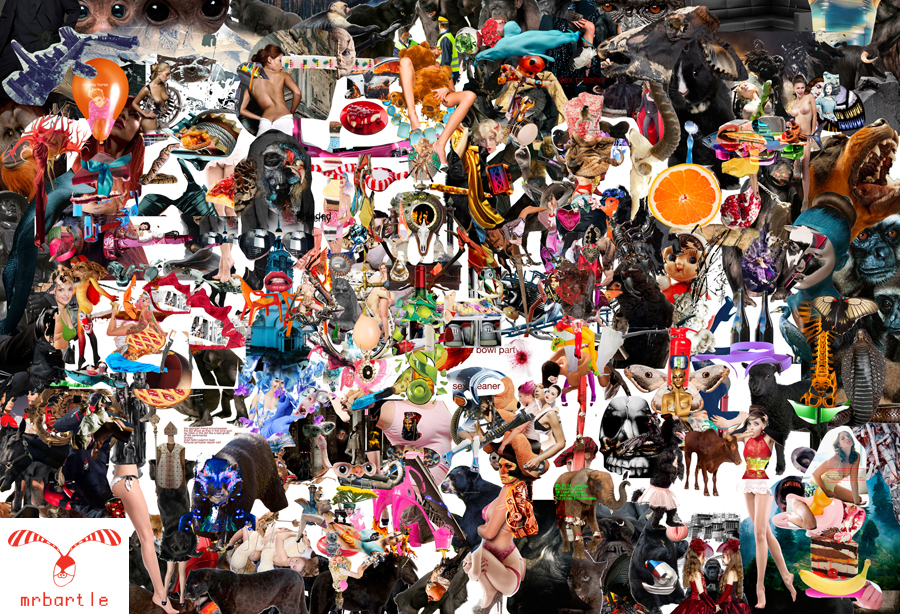
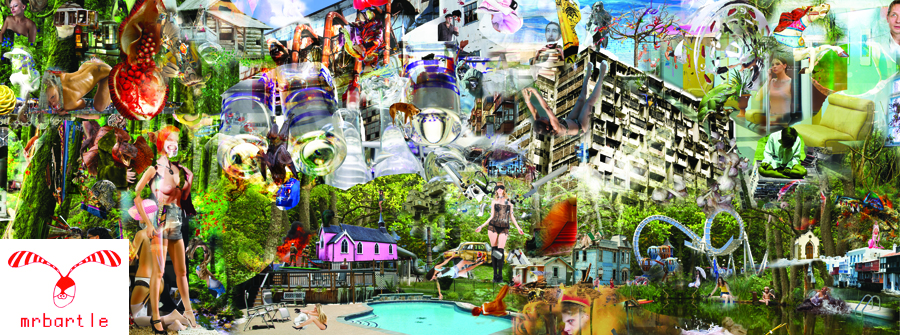
    Mr Bartle uses collage – both paper and Photoshop – as an almost therapeutic process to put his thoughts down ‘on paper.’ Inspired by pop art and creating from a very early age, mr bartle has answered a few questions about his work and his life as an artist.

    Mr Bartle, Angel in the Woods
    Mr Bartle, Angel in the Woods

    When did your interest in art or creating begin? 

    Since day one really, I remember drawing skeletons at primary school, making spacemen out of papier mache. I wanted a pet sparrow after having a dream about one – so I drew one. At that age I was really interested in robotics and anything space related: other worlds, bringing things to life. I think that theme has just continued. I like to create, to make worlds.

    What is your starting point for each piece?

    The starting point is whatever springs into my mind when I sit down to make a new piece. This is inevitably influenced by my mood; what’s been happening in my day; things that have been on my mind. So the starting point is usually a single photograph. This image will then spark a connection with another subject – I’ll get a feeling of what the next image should be. This may lead to one more image or while I’m searching through my image library something else may pop up. Once I have my canvas open in Photoshop with one or two connected images I may go off on a few different paths creating small clusters of images over the page or in separate documents that are then brought together or cut apart. I try and allow the process to be naturally evolving, not censoring thoughts, images, or trying to purposefully DO something with them. As the image comes together I may create something like a building out of sweets and car parts, so there is some control in what is happening, but that stage of the process is still open to change based on mood or a new avenue of thought. The endpoint of each piece just happens, it is out of my control, it’s like the pieces are half alive, they finish themselves when they’re ready. It’s like a realisation, like the pieces are saying “Right, now I’m finished, stop working on me.”

    Mr Bartle, The Gods
    Mr Bartle, The Gods

    I started cutting out little bits of images very roughly maybe 6-8 years ago. The technique came about because of my frustrating with trying to emulate other image makers by very carefully joining images to try and make the end result a very realistic scene, or portrait, whatever the subject was. It just wasn’t quick enough for me, so I started chopping images up like this from scanned images, in Photoshop. The results soon became something that I liked, that suited the way I thought, joined images and ideas, rough round the edges, mistakes, accidents. Photographs for me are my raw material and I think that I paint with photographs, they’re not sacred, they can be cut up, used simply for their colour, their texture or allowed to remain whole.

    Although my work naturally evolves there are definite themes that keep coming back, including Christian symbols, women, water, and buildings and structures.

    Mr Bartle, Nosebleed Jesus
    Mr Bartle, Nosebleed Jesus

    Who or what influences your work?

    Everything influences my work, it’s part of me and all my experiences, thoughts, everything I read, see, do, research, friends I talk to, dreams. Some other artists that have been a big part of my work include Warhol, Richard Hamilton – pop was an early favourite. The collage side of things came about originally by seeing a set of images that my dad’s friend did. When I was younger I made a lot of traditional collages with old magazines like the Sunday Times magazine. Other influences include Hockney, JG Ballard, Tom Waits, Burroughs, the beats, Bukowski, Daniel Johnston, David Lynch, Edward S Curtis, Dali, Kerouac, Jake and Dinos, Polly Morgan, Robert Crumb – the list goes on.

    Depression, The Black Dog. Such a big problem in my life. It’s being following me round since I was about 12, and although I’ve got a better understanding of it now it’s a hard one to live with. There’s nothing heroic about depression, it’s not the wonderful thing that makes me an artist. Alcohol and drugs were something else that I’ve now beaten – they were a way of almost instantly changing my thoughts, of escaping. I found it generally better to ‘do what I was supposed to’ while dealing with these issues as a very personal and private problem. I managed to stop drinking about five years ago with thanks to friends and other means of support, along with smoking and drugs. That continues to be the best thing that I’ve ever done for myself.

    What do you hope the viewer gets from your work?

    That’s quite a difficult one, because it’s not my intention to tell the viewer anything. I don’t start off with an idea of what I’d like people to see, it’s more an almost therapeutic process for me, to get all this ‘stuff’ – these thoughts – out of my head. I’d hope that people would see my work and it would fire their imagination, start a conversation. I think they’re quite hard pieces to sum up in one viewing, and i think they need to be seen more than once. I would hope that people find them interesting and can make their own connections with the images.

    Mr Bartle, The Cellist
    Mr Bartle, The Cellist

    What do you think about the term outsider art? Is there a term that you think works better?

    Like all art classifications it’s useful in grouping together work with similar characteristics, but the term is defined differently in different places. If outsider art is art created by untrained artists, then that’s not me. If outsider art is only art created by people on the edge of society, then that’s not me. Why I feel comfortable with the term and am happy with it as a classification regardless of other people’s ideas of what it should mean, is that I ‘feel’ like an outsider. I’ve never known where I’m supposed to fit into everything. So much of it doesn’t make sense to me – the way I’d like to live, depression. The work I create is a reflection of this confusion. It’s not something that really matters to me anyway, I’ll do my work and if there’s different places for it to exist where like minded people would like to see it, then that’s just fine with me.

    What are you working on at the moment? 

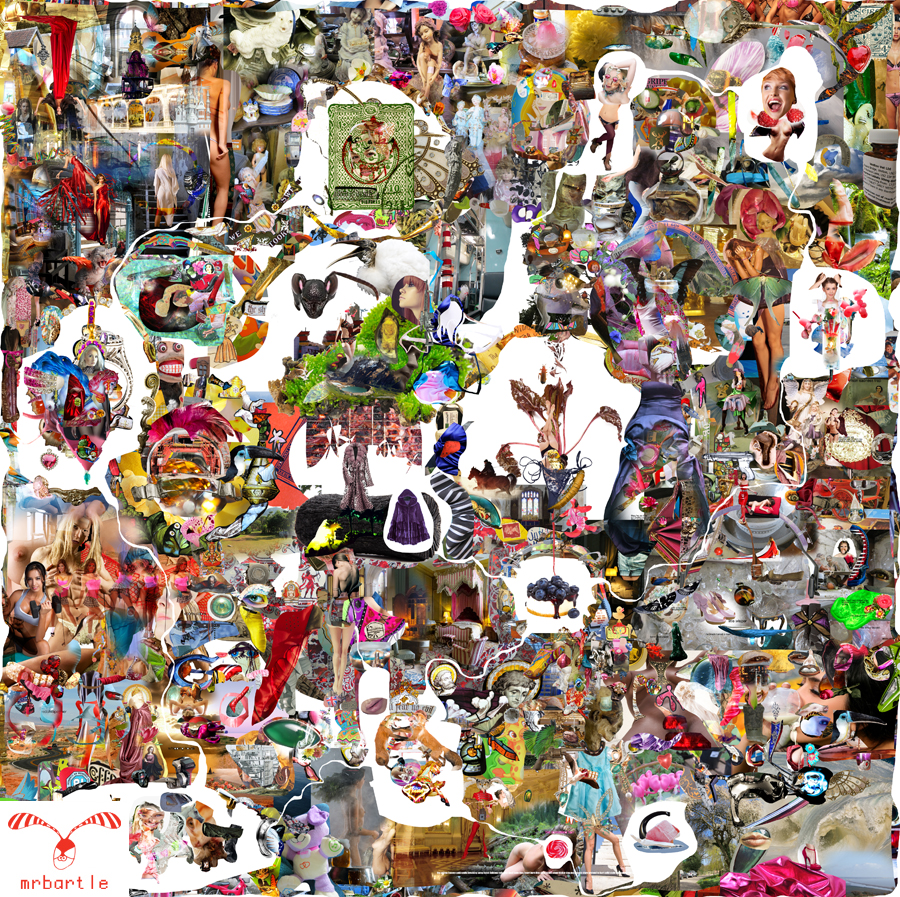
    A few pieces. I kind of stopped the large photo-montages for a while; I got a bit overwhelmed by the process – all those images – knowing that each time it would be a long and often difficult process, so I have half finished pieces that I am slowly looking at anew. I’ve printed one of my unfinished pieces called ‘Prison Sleep’ with holes in it; large open white spaces. I reached a point with the piece that I didn’t know what to do with it, it reached a kind of stalemate, so I broke it apart (in Photoshop) and had it printed with these big spaces in it. The work is now on the table downstairs and I’ve being drawing on top of it, adding diary entries, drawings, text.

    I’ve also being making ‘real’ collages again using old french art magazines and material found in charity and junk shops. They’re progressing quite slowly. Sometimes I feel really inspired to work on them, a lot of the time I’d rather be in the Photoshop environment, where I find it quicker to get ideas and images together. I recently started a couple of pieces where I’m making machines and robots, I’d like to do some spaceships. Just sketches right now. I’ve started getting my images printed onto T-Shirts also. Back to Andy Warhol and mass production side of things, I like the idea of art permeating through everything and am planning some wallpaper pieces. I have plans to source different images from many different sources. I generally have quite a lot of things going on, which makes it easier to be inspired to get on with work if I can pick different pieces up depending on how I feel.

    Mr Bartle, The Stage
    Mr Bartle, The Stage
    Where do you see your work taking you in the future?

    I’d like to make a living from my artwork full time and be represented by galleries here in the UK and abroad as part of a happy, connected and inspiring lifestyle.


    For more information on Mr Bartle, you can:

  • Artist Showcase: Beatrice Roberts

    Artist Showcase: Beatrice Roberts

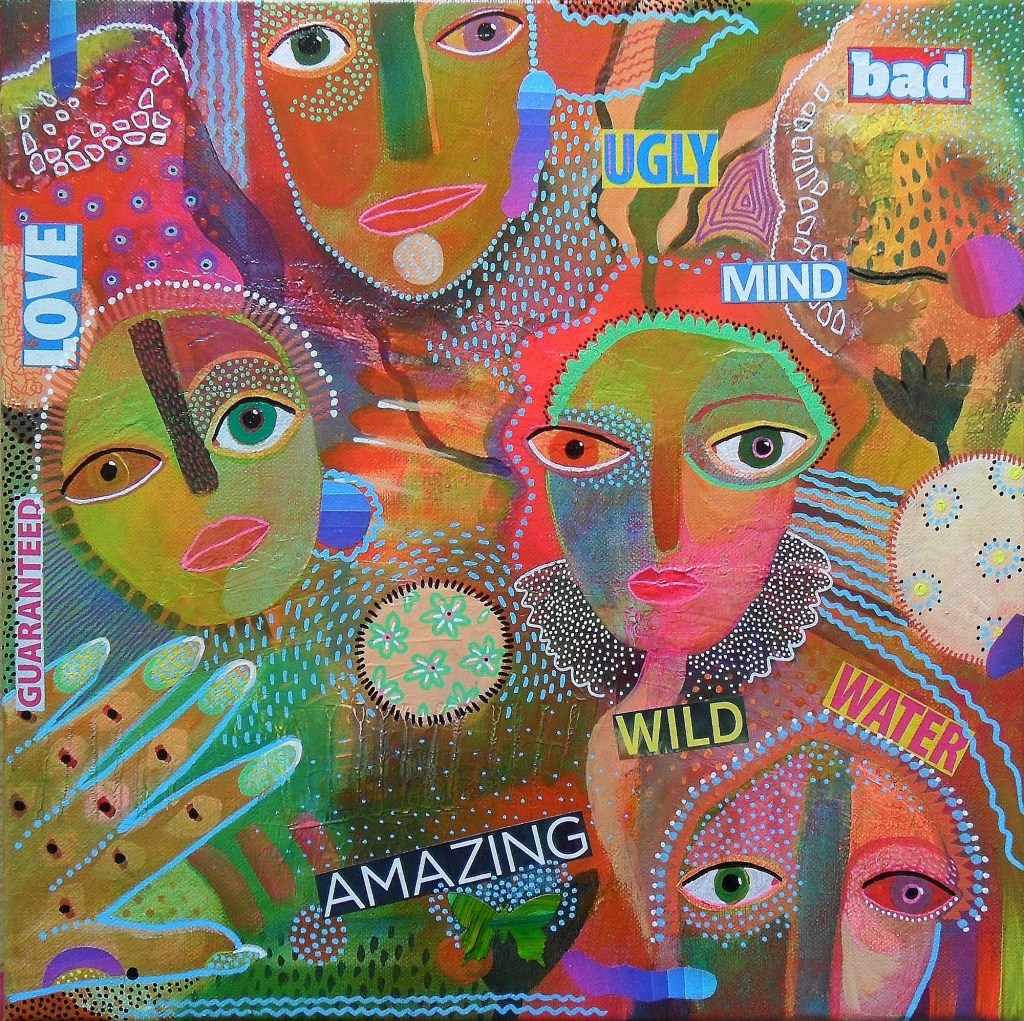
    In a bid to showcase more great art by talented artists on the blog, this month, I asked artist Beatrice Roberts to answer a few questions about her influences and inspiration, and share with us a selection of her fantastically vibrant works.

    SAM_6779 (5)printYES (1474x2000)

    Where did your interest in art/creating begin?

    When I was about 10 my family started going to a holiday camp every year and there was always some pastel portrait artists there. I would stand there for hours and hours watching people have their portraits done, while other kids went to the fairground or did crazy golf or something. I would disappear for hours to go watch them – my mum and dad would always come to the artists to find me. They knew I would be there, absolutely fascinated by the process. I then started drawing portraits of pop stars and my friends and family, and I’m still interested in portraiture and figurative art all these years later.
    SAM_7122 (2) (1597x2000)
    What is your starting point for each piece? And what is the subsequent process?

    Most of my pieces start off with a monoprint. I lay down a shape in thick acrylic on perspex or paper and make a simple print onto another sheet of paper. That shape becomes my subject. I enjoy this process because it’s – perversely – out of my control. I have to work with what is there – with the print I am left with. This makes for a bit of a challenge as I have to ‘bring the work round’ into something recognisable. My animal paintings are also done this way. A large proportion of my work is produced in this manner and I never know what I am going to end up with as I rarely plan. I work spontaneously and my paintings grow organically as I am creating them. I also like to use foam shapes to print with and I often use the stick end of the brush to apply paint to the surface to give raised, impasto lines sections. I love the rawness I get with this technique.

    I use a lot of bright colour in my work, which makes me happy. I build up a great depth of colour by adding several coats of acrylic and which gives a rich, jewel like appearance. I use drawing pens a lot too, adding dots, dashes and outlines with these. Oil pastels also make an appearance sometimes giving another dimension to artwork as they form a kind of ‘resistance’ which the water based paint skates over.
    SAM_7729 (3) (1602x2000)
    Who or what influences your work?

    I enjoy raw art (outsider art?) mostly and I have many favourite artists who all must influence me subconsciously, in one way or another. The list would probably be too long to mention. I have been told that my work is kind of ‘edgy’ or slightly disturbing and I would sort of agree with that – I wouldn’t say my life’s been easy. I got myself into a very bad, long term situation which was incredibly difficult to get out of. I have noticed that recently themes have been coming through my work which relate to the trauma I and my children endured throughout this terrible time. I am sure that being a survivor does have an influence in what I paint and the way I paint. I am finding that being able to refer to these awful times , in my work, is helping me to heal in a way.

    On a lighter note, I do tend to include quite a lot of humour in my art and I am particularly fond of collaging ‘gutter press’ magazine headlines into my pieces to add some sort of weird dimension to which the viewer can add their own thoughts and perceptions.

    The other theme that runs through quite strongly is animals. I am a great respecter of the bird and animal kingdom and I paint a lot of animal, bird and underwater creature subjects, although these are often just for my own enjoyment. I was given a book for my birthday about Ernst Haeckel, the philosopher, biologist and artist and I have been greatly influenced by his beautiful illustrations.
    SAM_7977 (2) (1590x2000)
    What do you hope the viewer gets from your work?

    I hope that they see the voice of a woman with a past, with lots of life experience, who has suffered ups and downs, who has a story to tell. However, I hope they also get my humour, positivity and personality coming through in my work. I had a very bad experience, I lost many, many years, when I was isolated and turned into a non-person, but I am making up for lost time. I am bruised, but my spirit is absolutely not broken.
    SAM_8370 (2) (1388x2000)
    What do you think about the term outsider art – is it an umbrella you’re happy to be under? Is there a more preferable term?

    Well, due to my own life experience, I feel like an outsider most of the time. I’m not a ‘people person’ and some of this is, I’m sure, due to my past. I was bullied for many years and my self confidence was eroded to a massive extent. I still have anxiety issues because of it. I was also isolated from family, friends and any support networks, so I got into the habit of being self reliant. These days I have a wonderful partner and I am slowly but surely healing, but as my art is me, and I feel like an outsider, it is probably a reasonable term to use for my art.
    SAM_8418 (1960x2000)
    What are you working on at the moment?

    I have started work on some nude figures. As I mostly focus on heads in my paintings, this is going to be really interesting for me. I am also preparing some pieces for the Nottingham Castle Open, which is for emerging and established artists in the Midlands. I didn’t make it last year, but I am going to give it another go!
    SAM_8393 (2) (2000x1995)
    Where do you see your art taking you in the future?

    I would obviously like more people to see my art. I have a website at www.bearoberts.co.uk and I  would ideally like gallery representation further afield than my own county. To be represented by a London gallery would give my art credibility and would enable my work to be seen by serious art collectors. Meanwhile, I will continue to submit to as many exhibitions as I can and hopefully gain some collectors. I would also like to possibly create some larger works as I do work on quite a small scale currently.

    You can see more of Beatrice’s work by CLICKING HERE. Additionally, you can follow her on Twitter: @BEATRICEMARTIST.

  • Nek Chand: a creative tour de force

    Nek Chand: a creative tour de force

    It was with great sadness that today – 12th June 2015 – I heard of renowned self-taught artist Nek Chand’s passing at the age of 90. Chand’s Rock Garden in Chandigarh is one of the best known visionary environments in the whole world, and is an unrivalled example of one man’s incredible intuitive vision.
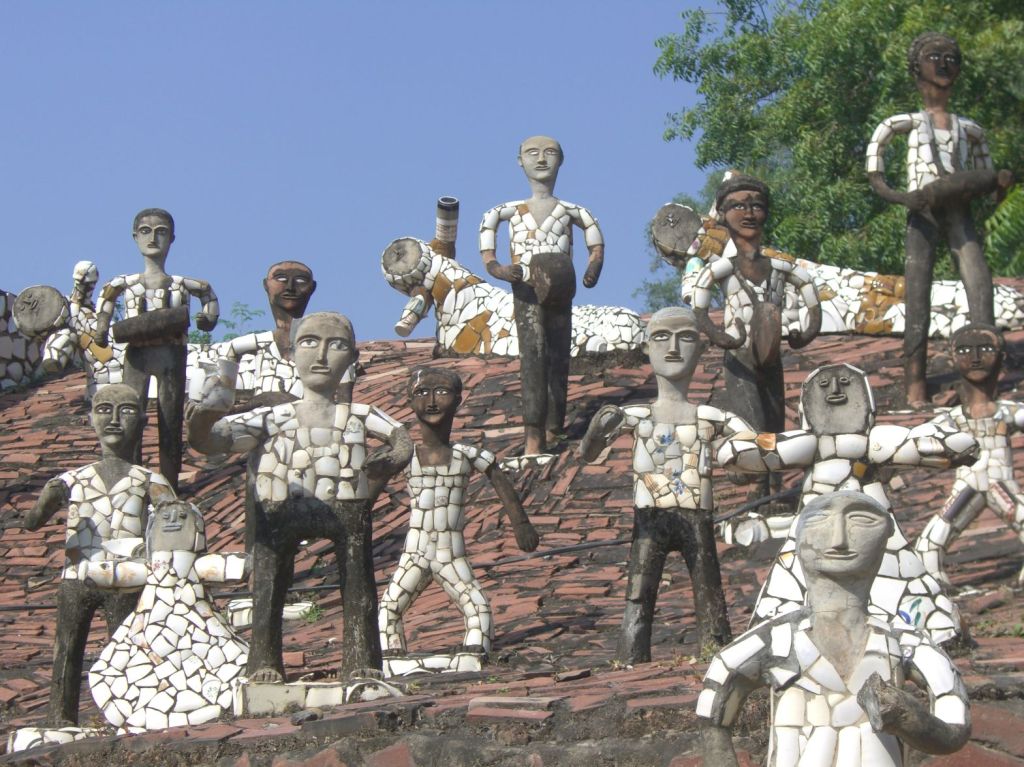
    Nek Chand's Rock Garden
    Nek Chand’s Rock Garden

    Born in 1924 in the village of Berian Kala, in what is now Pakistan, Chand relocated to India with his family in 1947. Eventually, he moved to Chandigarh in the northern part of the country; the first planned ‘utopian’ city in Post-Independence India, designed by Swiss architect Le Corbusier.

    A deeply spiritual man, Chand was fascinated by the mystical significance of rocks, and was by profession a public roads inspector for many years. It was during his time in his role as roads inspector that he began spending his evenings imagining and moulding figures out of recycled and found materials. Pursuing a vision from a dream, Chand cut back a clearing in the jungle on the outskirts of Chandigarh, situated in the middle of the Capitol Complex and the Sukhna Lake; the place where his Rock Garden was to come to life. This space, he believed, had once been home to a glorious kingdom.

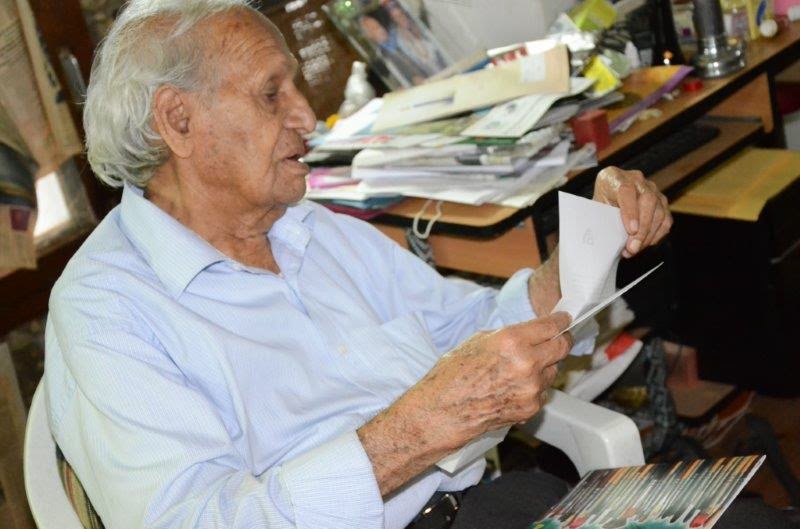
    Nek Chand
    Nek Chand

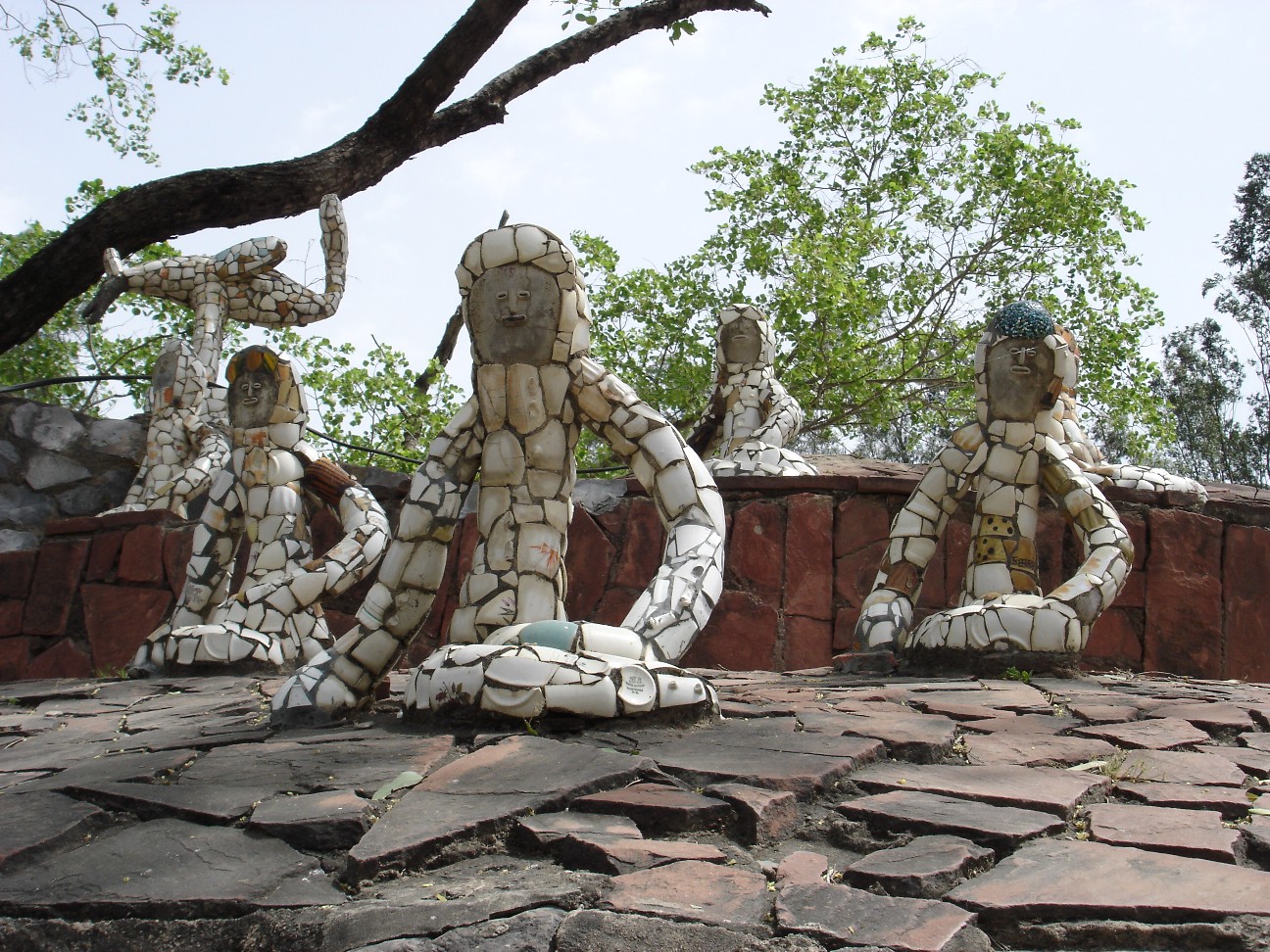
    Chand’s process is indicative of many historically renowned outsider and self-taught artists, with a focus on found objects and recycled materials. He used discarded objects, such as broken crockery, electrical fittings, glass bangles and bicycle frames, building up the bulk of the figure with a cement and sand mix. A final coating of smoothly burnished pure cement combined with waste materials would then be added. Chand believed that each figure contained the spirit of a human being, god or goddess.

    During the making of the Rock Garden Chand was consumed by his vision. He has said before of the Garden: “It began really as a hobby. I started not with the idea that it would become so famous. Every day, after I finished my government job, I would come here to work for at least four hours. At first my wife didn’t understand what I was doing every day, but after I brought her to my jungle hut and showed her my creation, she was very pleased.”

    Nek Chand's Rock Garden
    Nek Chand’s Rock Garden

    In 1972, the Rock Garden – originally an illegal endeavour by Chand in his spare time – became a municipal authority-funded tour de force. Stunned by Chand’s creation, the authorities pumped money and labourers into the project; now the world’s largest visionary environment, with several thousand sculptures covering more than 25-acres. In 1976, it was opened to the public.

    The Nek Chand Foundation was founded in 1997, and today the area is overseen by the Rock Garden Society, opening its doors to over 5,000 visitors every day. It is the second largest tourist attraction in the whole of India – second only to the Taj Mahal.

    Nek Chand's Rock Garden
    Nek Chand’s Rock Garden

    Chand’s creative vision, his fascination with the creation of something from nothing, the conversion of waste into beauty, has led to his position as one of the most respected creators in the world. His Rock Garden is his personal legacy, one that has touched many people’s lives and one that will continue to do so for long after this sad day.

    For those in the UK or visiting between now and October, a selection of mosaic sculptures from Nek Chand’s Rock Garden are currently on display at Pallant House Gallery in Chichester. The exhibition is free to see, and continues until 25 October 2015. Click here for more information

  • Artist in Focus: José Nava

    Artist in Focus: José Nava

    José Nava was born in 1937 and grew up in the working class barrios of Acapulco on the pacific coast of Mexico. In 1962 he travelled to Europe and settled in England. For many years, he worked with the experimental theatre company, The People Show, touring internationally before dedicating himself full time to his art practice. Entirely self-taught, José has produced a substantial body of work over the last 20 years consisting of painting, drawing and sculptures.


    Jose¦ü Nava-1

    Jose¦ü Nava-2

    Jose¦ü Nava-3

    Jose¦ü Nava-4

    Jose¦ü Nava-5

    Jose¦ü Nava-6

    Jose¦ü Nava-7

    Click here to watch ‘Big Fish’; a video about José filmed by his son Zadoc Nava (www.zadocnava.com). You can also see more of JosÉ’s work on his website.

  • C.J Freeman: Illustrating Cards

    C.J Freeman: Illustrating Cards

    For this post, we’re passing the writing baton to Ana Cortez, who will talk about her very talented father, C.J. Freeman.

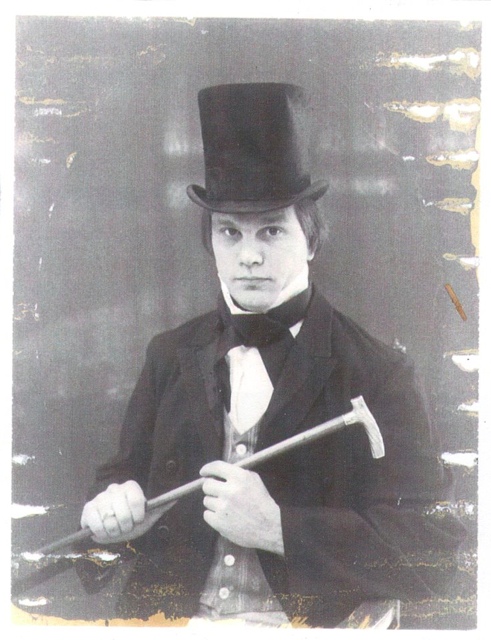
    Growing up I always adored my dad, C.J. Freeman. He was my hero. But as I got older, I began to slowly understand why all the other adults I knew were pissed off at him most of the time. He just couldn’t bring himself to do anything ‘normal’.

    C.J. Freeman
    C.J. Freeman

    Dad led me into worlds and ways of thinking and looking at the world that I remain eternally grateful for. He spent time with me, doing things most adults don’t make time for. Like by the age of 5 or maybe 6 years old he had taught me how to play a decent game of chess. I remember thinking I was pretty rich, earning a quarter for for each line memorized in Lewis Carroll, and I’ll never forget learning how it was so much better to sit at the back row of the circus, where you could fold the pages of your program into paper aeroplanes and send them flying over everyone’s heads in the front row.

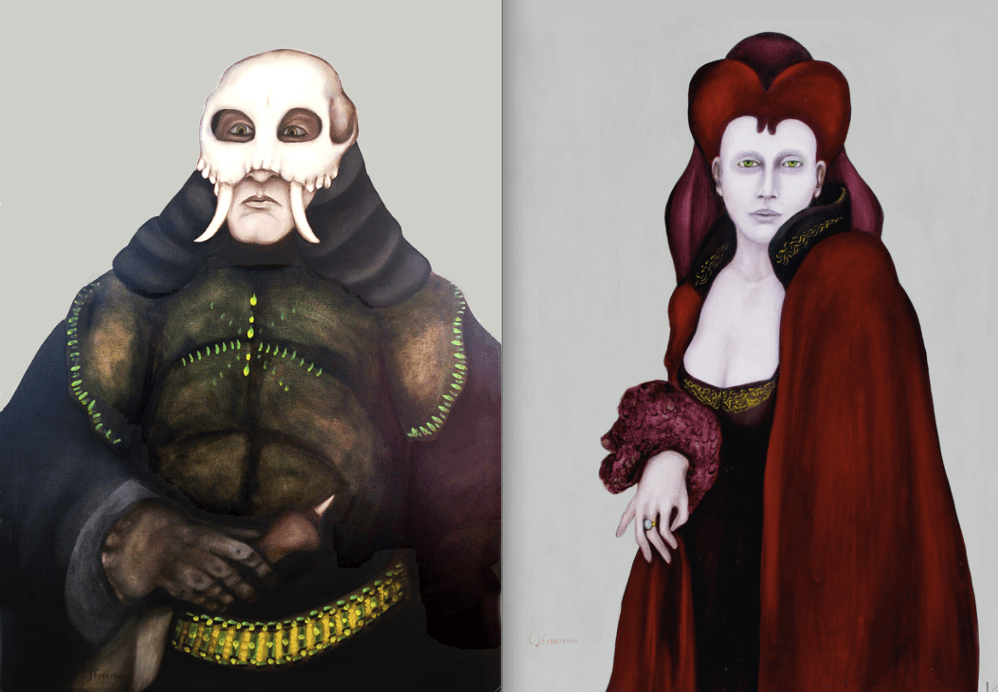
    Dad had been collecting really weird antiques from as far back as I can remember. No matter which corner of the house you came around, you knew some bizarre gorgon or another would be waiting for you. So when dad started painting, of course, it wasn’t nice landscapes or flowers or anything like that. It was Dracula, and people who were half animal with purple skin – reminiscent of figures from the weird fairy tales he had told me as a child.


    Dad got bored really easily. Ordinary life was intolerable for him. So he would assign himself projects that kept his interest. So even though he had no formal experience in art, he had given himself the task of illustrating the playing cards. This was what the paintings were about – one for each of the 52 cards plus jokers. Little did he realize this little “project” would kick off an obsession lasting for the rest of his life.

    Guardian for web jpeg

    So what began happening on the canvas surprised even my dad. As he painted, he became more and more curious about playing cards themselves – which led to another self assigned project. He began researching – hunting through old book stores in search of information about cards. To quote my father, “There is little with such cultural significance we know less about than playing cards.”

    Over time, dad had just about every obscure book that could be had about playing cards. He was writing letters and corresponding with the authors that could be contacted and basically became a playing card detective. A playing card freak. He wanted to know the theory about cards, their mutations over time, and what they could have possibly been created for. He had a few ideas of his own. And he started writing.

    He couldn’t get over the fact that playing cards were a natural calendar (52 cards = 52 weeks of the year, 4 suits = 4 seasons, 13 cards in a suit = 13 weeks in a season,) and he felt he had a mystery to solve. He wrote an entire novel on the subject of fortune telling with playing cards. He claimed it was the spirit of an old black woman that dictated it to him, but I could never tell if he was actually kidding around or not. I don’t think so.

    Early Morgana jpg

    He wrote several screen plays on the same subject, a television series pilot, and an outline for an interactive theatre experience, all centred around his ideas about playing cards and the way they speak. After mailing out manuscripts and walking his portfolio around New York City, and hitting a lot of brick walls, his feverish passion began to wane.

    He became disappointed and disenchanted, although the flame of his obsession was still quietly burning. “Card people” still hung on large canvases around his Victorian style apartment, and he was quietly teaching girlfriends how to “read,” using Polaroid photos of his paintings cut up and glued onto regular bicycle playing cards. He would coach them, dress them up, and help them get “gigs” reading cards. One of his girlfriends took the time to show me what she had learned, and that was the beginning of my own involvement in this whole crazy project. I had just graduated high school at the time, and it was really just a curiosity, although a fascinating one.

    Years later, I got serious about picking up and learning my dad’s way of looking at the playing cards. I was living in Boulder, CO, and dad was in Denver. Cards gave us more reasons to hang out together, and we started spending lots of time on the phone. Hours at a time in fact, sometimes days, talking about cards. Dad had stopped making art since the completion of his original assignment, but this was rekindling his interest. He started illustrating cards again.

    K Hearts copy

    It was fascinating to watch as his style progressed and mutated over the years that followed. He drew hundreds of images for cards. What began as a wood block type style progressively became sleeker and more sophisticated, but always what showed up was original. There was always something unexpected on the kitchen table, which was his work space. He said he liked to “let his hand move” and see what came out.

    At the end, Dad was very sick. You knew he was sick if he was watching TV. He hated TV, but now it seemed to be always droning on in the background. He was in bed almost all the time. He told me “a voice” was visiting him, telling him stories. He called it “the story teller.” He said the stories were fabulous, detailed, on subjects he had little or no previous knowledge of. Stories he could never recount. He told me, for example, of a particular story about a ship told from the viewpoint of a sailor, detailing wondrous specifics about ropes and knots of all sorts. He said the stories were so good, he would clap when the voice was finished, there alone in his bed.


    To date, there are 2 published versions of C.J. Freeman’s art work for playing cards, and snippets of his writing in our collaborate work, “The Playing Card Oracles.” For further information, please click here.