Category: Artists’ Showcase

  • Dan Casado

    Dan Casado

    I am always keen to hear from artists who would be interested in a blog post focusing on their work. Usually, I ask for an artist’s statement and a few images which they would like to showcase, but these guidelines are very flexible and I am open to suggestions. If you would like a post on your work, please do contact: kdoutsiderart@yahoo.com.

    This post will focus on the work of Dan Casado.


    “Nine years ago I established my home-studio in the volcanic island of El Hierro, one of the seven Canary Islands, selected by the UNESCO as a Biosphere Reserve. Here, I began making works transforming junk and found objects into pieces of art: paper collages and sculptural assemblages.

    I see recycling as a compromise and a lifestyle, giving a second life to old, discarded materials, reusing rejected objects to make new artworks.

    Reinventing human and animal forms, freely finding and showing the figures hidden inside found papers and materials, I wonder about human relations, the possibility/impossibility of communication, affections and illusions.

    Art is the tool to re-construct the world. Art is my key.” – Dan Casado


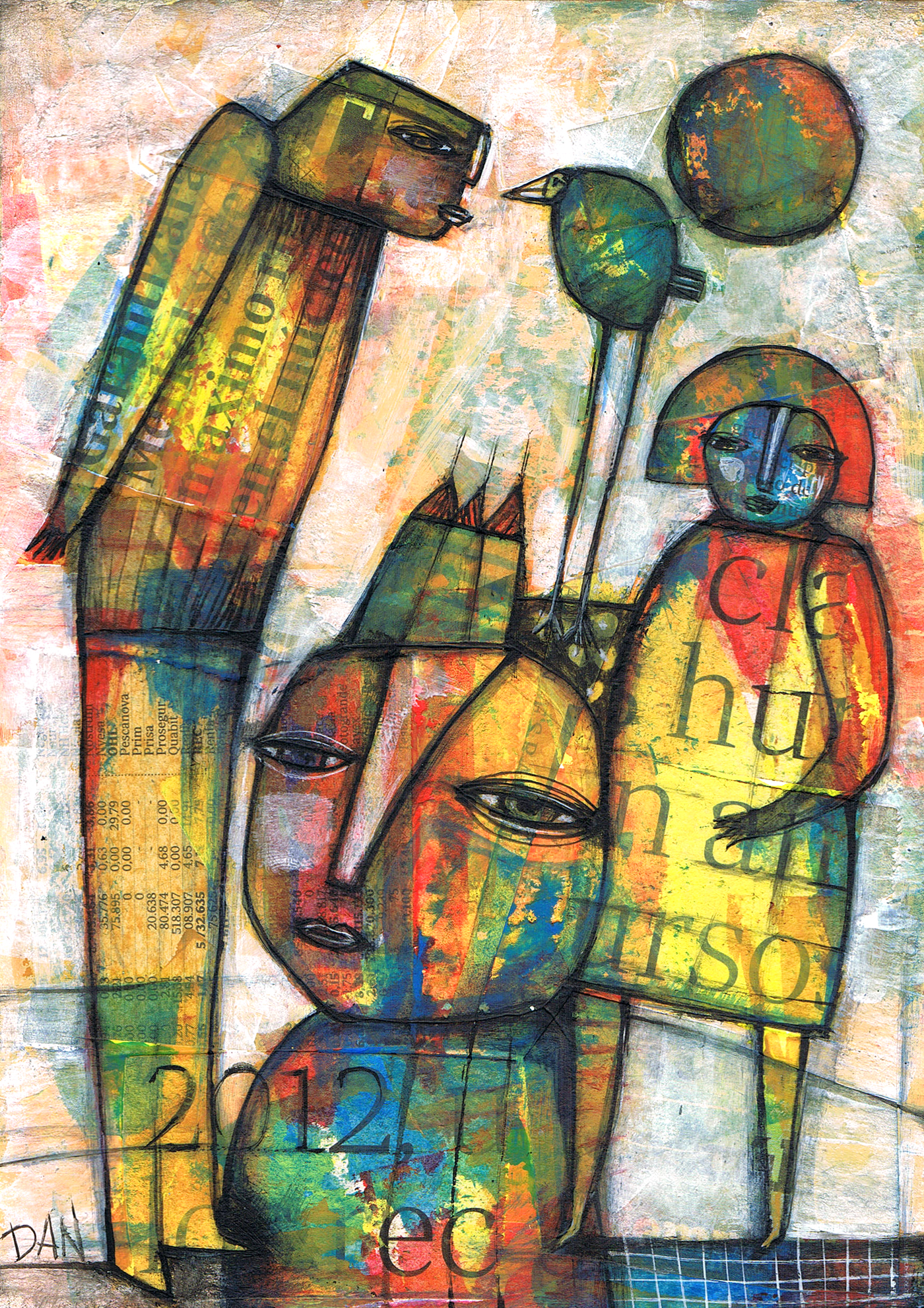
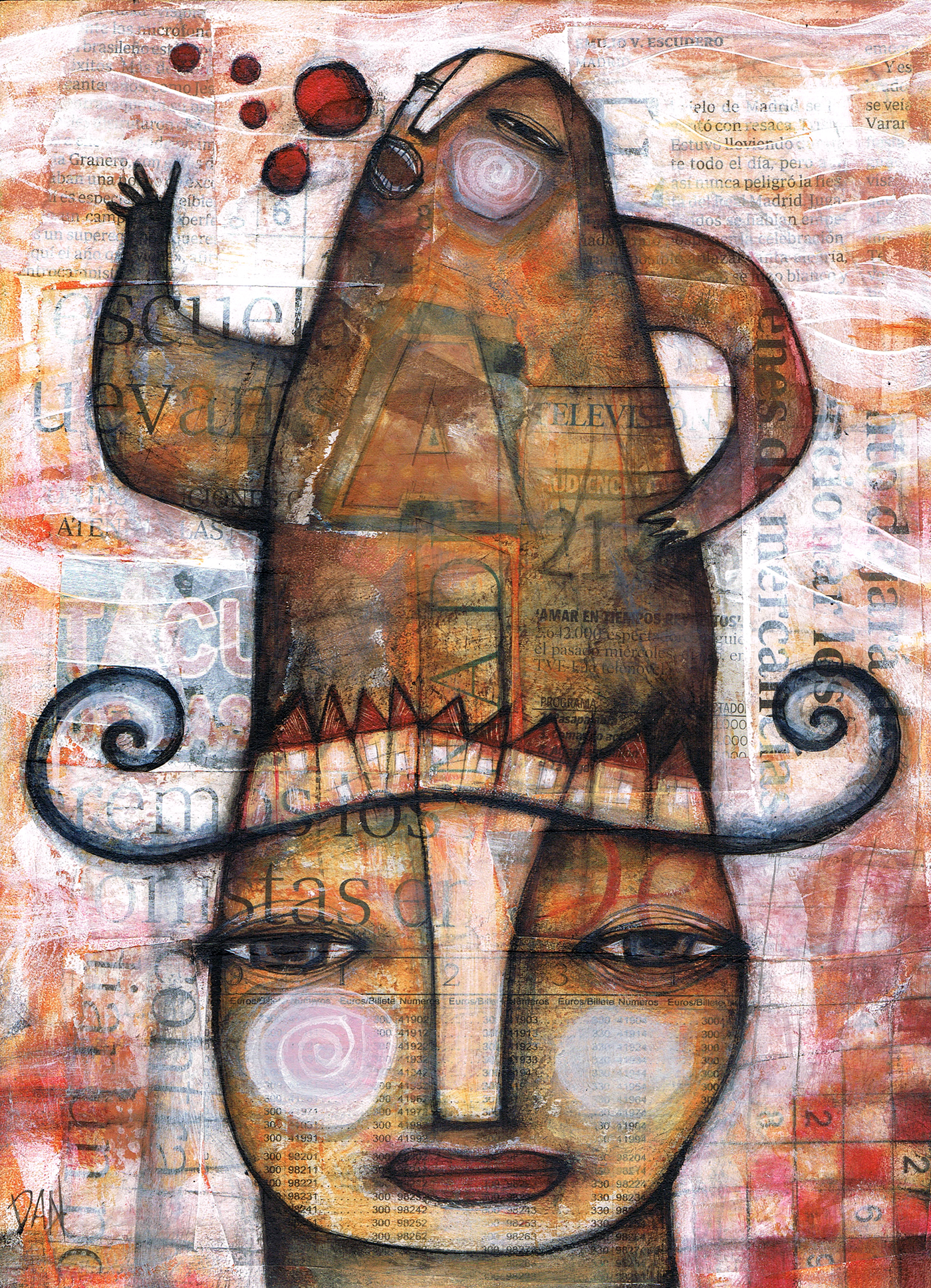
    Dan Casado, ‘Sunny Day’
    Dan Casado, ‘Talking with the Bird’
    Dan Casado, ‘The Mermaid’
    Dan Casado, ‘Volcano’
    Dan Casado, ‘White Sheets’
    Dan Casado, ‘Winged Couple’


    Visit Dan’s website for more information:

    www.dancasado.com


  • Sean Burn

    Sean Burn

    I am always keen to hear from artists who would be interested in a blog post focusing on their work. Usually, I ask for an artist’s statement and a few images which they would like to showcase, but these guidelines are very flexible and I am open to suggestions. If you would like a post on your work, please do contact: kdoutsiderart@yahoo.com.

    This post will focus on the work of Sean Burn.


    “Sean Burn – outsider artist / performer / writer – works across performance / film / installation / soundmapping / visual poetry and spoken word to challenge ownership of narratives. He’s now established a considerable and international track-record with this creative questioning as key. Surrounded, often defined by languages (visual / sonic / textual / performative), we use them to free ourselves. Languages should be owned by all with bandwidth not hierarchy as a better contemporary model. he regularly challenges psychiatry, seeing it as a privileged storytelling rather than a science; this is based on his own long history as (enforced) service-user. He is an advocate of breaking down the stigmas surrounding mental ill health in his work and challenging society’s mis-perceptions. Such creative work saw him short-listed for a dadafest 2009 disability arts award.”


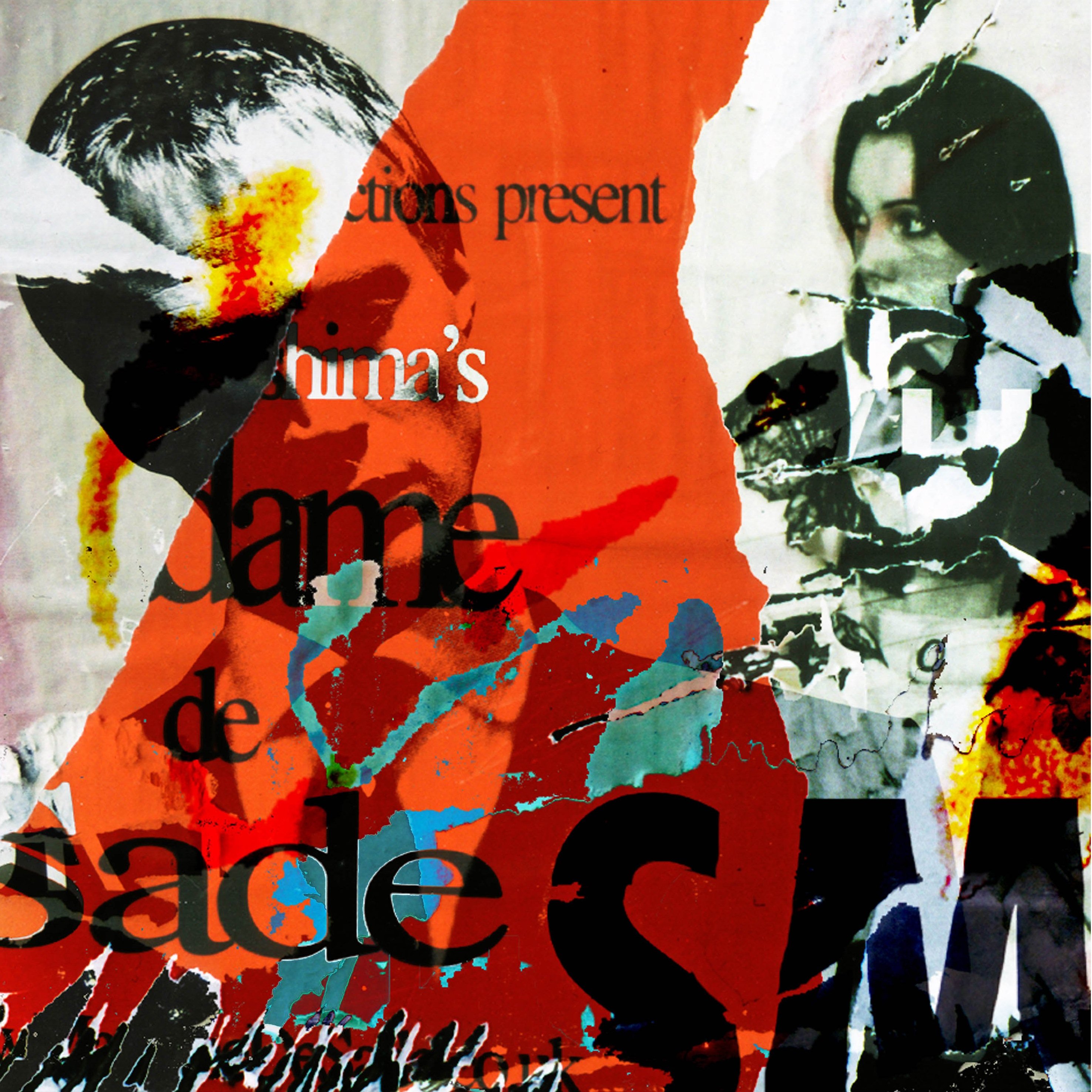
    Sean Burn – ‘Dame de Sade’
    Sean Burn – ‘In These Arms Riots Love’
    Sean Burn – ‘Son R Yo Here R Yu’
    Sean Burn – ‘No’
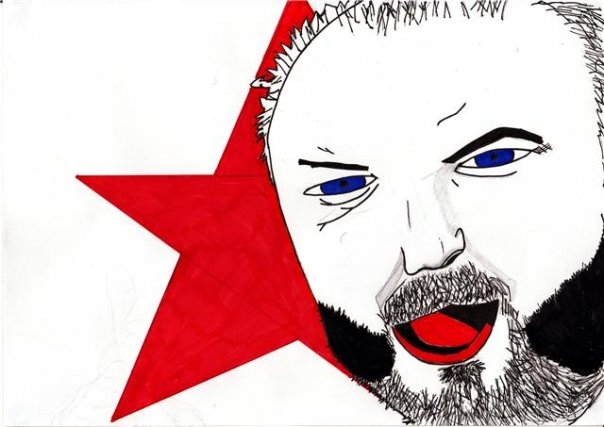
    Sean Burn – ‘Power to the Republika People ov the Fallen’
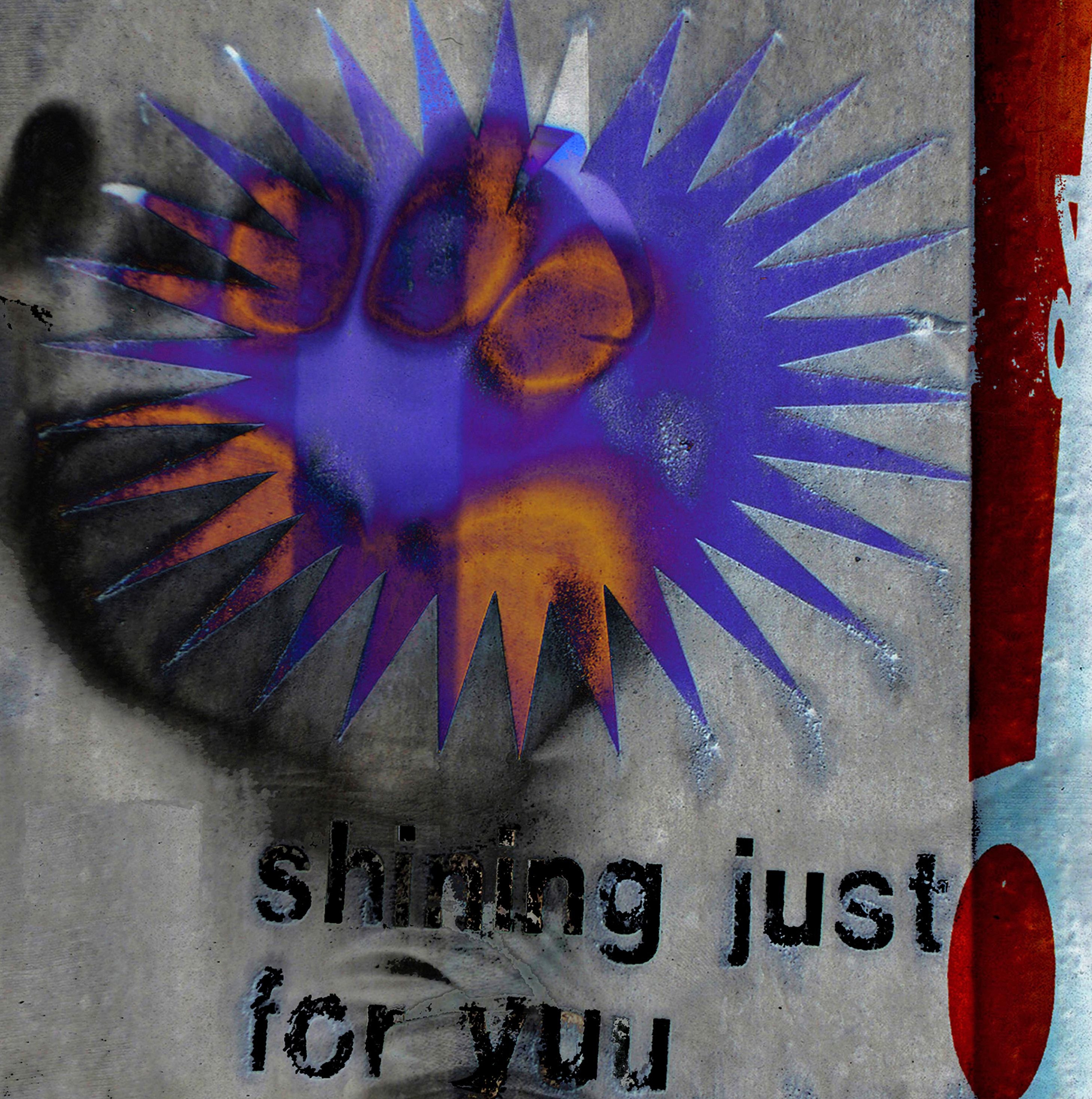
    Sean Burn – ‘Shining Just for Yuu’


    See more of Sean’s work:

    www.outsidein.org.uk/sean-burn

    www.flickr.com/photos/burnsean


  • Kye Wilson

    Kye Wilson

    I am always keen to hear from artists who would be interested in a blog post focusing on their work. Usually, I ask for an artist’s statement and a few images which they would like to showcase, but these guidelines are very flexible and I am open to suggestions. If you would like a post on your work, please do contact: kdoutsiderart@yahoo.com.

    This post will focus on the work of Kye Wilson.

    Above image: Kye Wilson, ‘Self-[Other]’ (video still)


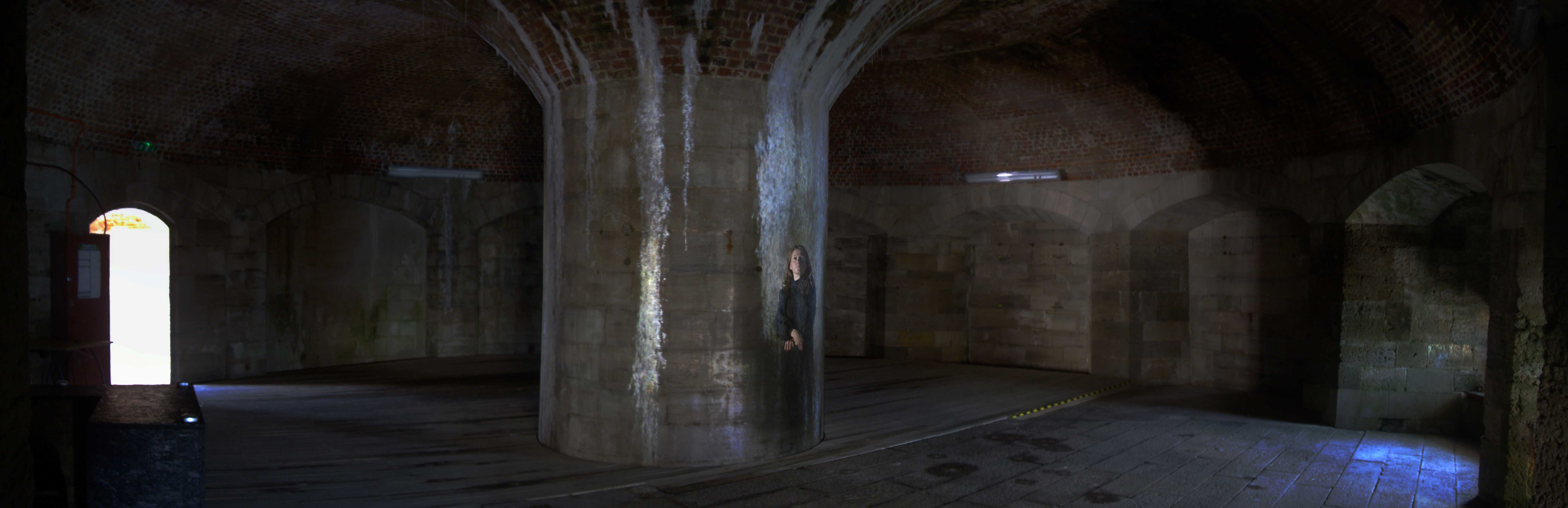
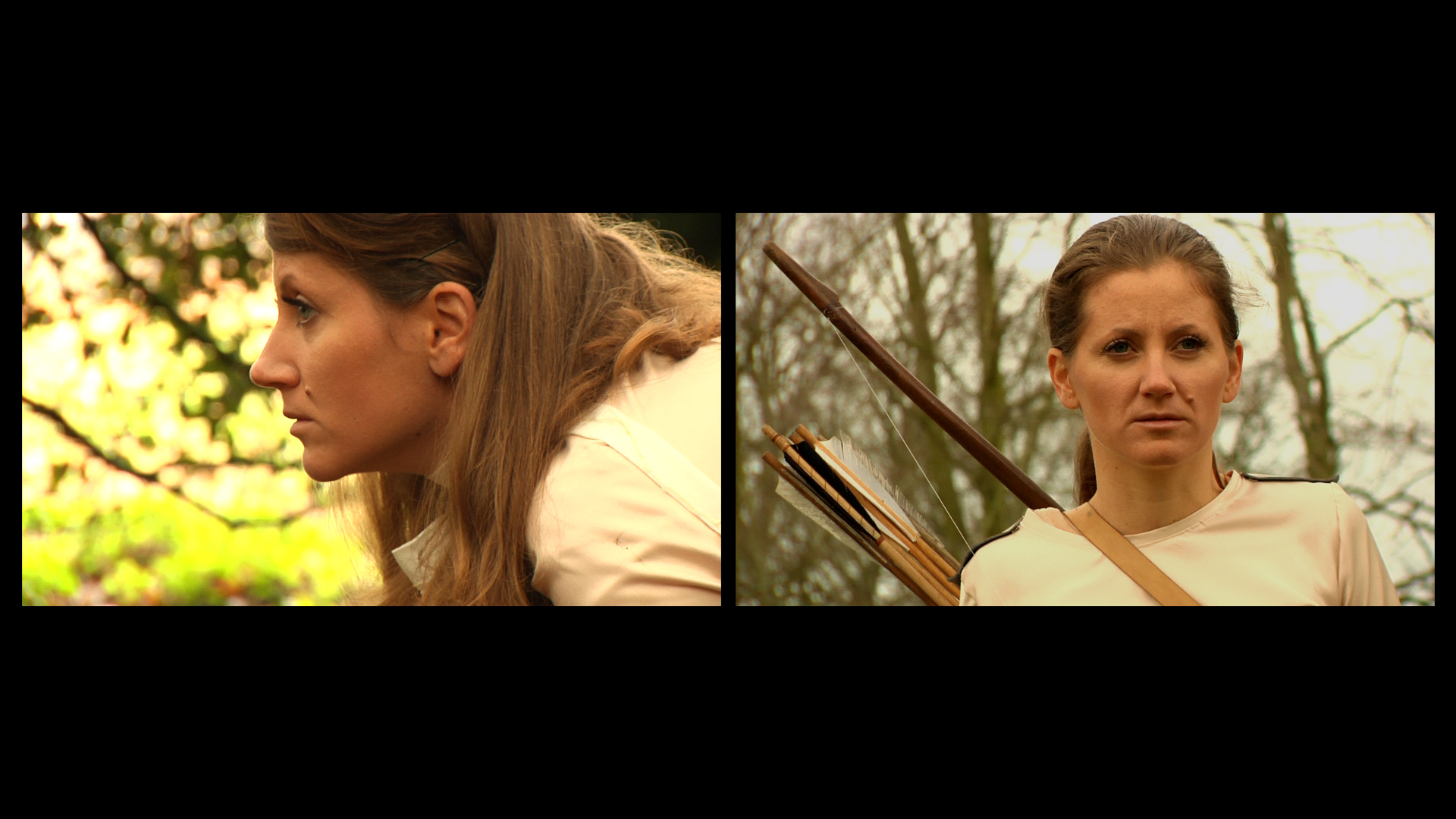
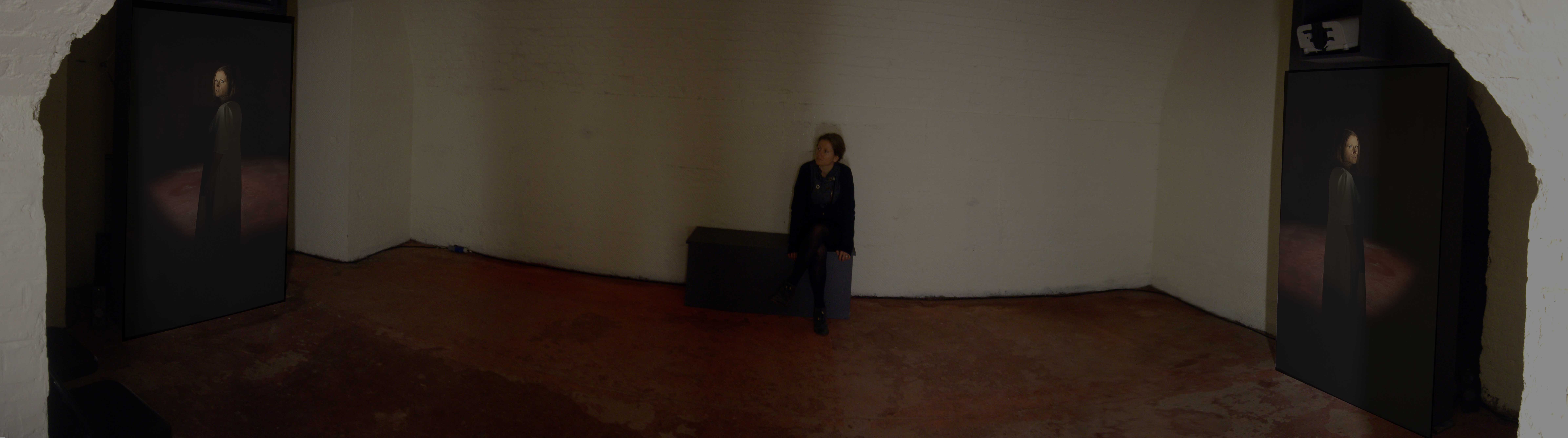
    Kye Wilson is a visual artist and filmmaker who uses moving image to create short films and video installations that explore the notions of space, self and other. A signature characteristic of his work is the embodiment of (him)self through the medium of video, usually in the form of a female protagonist, character or performer. Wilson has exhibited in cinematic, art gallery, non-gallery/heritage and site-specific environments, nationally and internationally. His work has been selected for broadcast worldwide and has acquired numerous awards and commissions from Festival of Video Art Kinolevchyk; Madrid Festival of Contemporary Audio-Visual Arts (MADATAC) and Hayward Gallery.


    Kye Wilson, ‘Entrapment of the o/Other’ (installation view, The Round Tower, Portsmouth, 2011)
    Kye Wilson, ‘Entrapment of the o/Other’ (video still)
    Kye Wilson, ‘Hunter/Hunted’ (installation view, Mottisfont, Near Romsey, 2012)
    Kye Wilson, ‘Hunter/Hunted’ (video still)
    Kye Wilson, ‘Self-[Other]’ (installation view, The Point Barracks, Old Portsmouth, 2011)

     Visit Kye’s website:

    www.kyewilson.co.uk

  • Liam O’Carroll

    Liam O’Carroll

    I am always keen to hear from artists (and in this instance, writers) who would be interested in a blog post focusing on their work. Usually, I ask for an artist’s statement and a few images which they would like to showcase, but these guidelines are very flexible and I am open to suggestions. If you would like a post on your work, please do contact: kdoutsiderart@yahoo.com.

    This post will focus on the written work of Liam O’Carroll.


    I am a writer and an actor.  These two strands usually stay separate but i am at my happiest when occasionally they unite and I get to perform material of my own.  However, as my acting would not be appropriate for this showcase, the creative strand I wish to share here is my writing.  The results of blindness provide such a resource of ideas but rather soberingly, were I to somehow regain significant sight, much of what I hope to write would be lost.  Therefore it is also important to explore work outside of disability.  To that end I have submitted a piece unrelated to visual impairment, though the reader is of course at liberty to make their own interpretations.” – Liam O’Carroll


    Value for Money

    By Liam O’Carroll

    Olly knocked on the open door of the office.

    ‘Ah, Hobson!’ exclaimed Professor Deeping glancing up from his computer.  ‘Come in.’

    Hobson? thought Olly as he stepped into the room, not used to being called by his surname.  Surely that was a bit offhand, like being in the Army or something.

    ‘Now, Hobson, your essay.  You’ll find it on the futon.’

    Olly stared down in dismay at the sheaf of papers.  It was the worst grade he’d ever received.  For anything, a devastating D.  If the mark was humiliating, it was nothing to the ensuing tutorial.  What made it so belittling was that his mentor conducted the verbal evaluation apparently from memory.  Throughout the interview the Professor barely took his eyes from the computer screen and yet his appraisal of the piece was as full, detailed and accurate as if he was the one holding the A4 sheets.

    ‘Forgive me if I continue my revisions as we go.  My latest article.  Highly lucrative.’

    Olly didn’t feel inclined to object, just stood aghast as his tutor explained the reason for so poor a mark, his words accompanied by the sound of feverish typing.

    ‘Your essay is deeply flawed.  No, let us be honest.  Your essay is shit, or as they seem to say up north, shite.  You repeatedly deviate from the question.  Some of your points are relevant, but so they should be.  Of these points, four were interesting, the rest ranged from the obvious to the … well, they were what my schoolteachers used to describe as waffle.’

    Olly blanched at this.  He hadn’t thought it that bad.

    ‘This was clearly left to the last minute.  I will say nothing of the spelling and punctuation mistakes or tangled syntax.  These are beneath me and, indeed, you.

    Now I expect you were probably hoping I’d just give you a vaguely average mark and leave it at that, but that wouldn’t be giving you your money’s worth.  Very important, value for money.  Top-up fees and all that.  I dare not fob you off with empty blather worthy of your own assignment.’

    Professor Deeping punctuated this latest comment by stabbing the enter key with particular venom.

    ‘You feel despondent? that is a good sign.  The answer is to, how should I say; withdraw your finger from its customary domicile, yes?’

    Olly grunted and nodded his head, now feeling utterly ashamed.

    ‘Take on board these comments, my boy, and act on them, your writing will prosper.  For a start, don’t leave it so late.  You had six weeks to write 1500 words.  Make a start when the pressure is off.  Allow the knowledge of the ample time ahead to lift your confidence.  But then use that confidence.  Apply it to the assignment; don’t let it lead you into five weeks of leisure and levity.  They will be five weeks of folly followed by one of panic ending in a summary humiliation at the hands of your tutor – assuming that he or she has any integrity.

    Next thing, focus completely on the question, plan the structure, write clearly, don’t make it up as you go along.  It should be like a stick of rock with a consistent thread throughout.  Nothing superfluous should be permitted.  Where it differs from the stick of rock is that it must develop its message: think of it as a chain, each link pertaining to the last but adding something new until the journey of your argument reaches its conclusion.  Have it proof-read before the final draught, allow time for last minute revisions, and ensure time to print out in a stress-free situation.  If you do this, your mark will rise as does the manhood of Dr Sutton on the appearance of his female students.  Your appalling mark is not due to a want of intellect.  If it were, I would be busily patronising you by now.  I have noted your contributions in seminars: you do have a brain, you’ve just been too lazy and foolish to use it.’

    Professor Deeping paused to lean back in his chair.  When he had finished yawning and stretching, he continued:

    ‘The clarity and honesty with which I address you here is precisely akin to the way you should engage your studies.  Don’t force the square peg of a bad point through the round hole of the evidence.  Be honest.  Be clear.  Focus on what it is your essay addresses and do not deviate.  Make your points, back them up and draw your conclusions.  For instance, I made a point recently to one of my female students that her body language betrayed an active libido.  I cited the following evidence: her pupils were dilated, she seemed breathless, she was wearing abundant perfume and her blouse was undone showing more naked breast than usual.  I drew the conclusion that she was about to meet her lover, that the first flush of romance was still present, her thoughts were dominated by the memory of what they had shared on their last meeting.’  The Professor paused momentarily.  ‘Perhaps not the best example, for, as it proved, I was wrong.  The girl told me that in fact I was the one for whom the fragrance had been applied and the buttons left undone.  She desired me.  This was somewhat embarrassing for I was unable to requite her lust.  I don’t normally like women, though as a gay man I gather I am supposed to.  But I recognise a good brain when I see it and I don’t like it going to waste.  I suppose I was flattered that she coveted me, but I was bound by professional duty, to say nothing of my sexual orientation.  Now, Hobson, had you come in here all aromatic and scantily-clad instead of unshaven and smelling like a docker’s armpit, we might have stumbled on a way to guarantee that you never received such an abysmal grade again.  Now, if you’ll excuse me, I am a very important academic.’

    And after a wary glance towards the futon, Olly hurriedly withdrew.


    Many thanks to Liam for sending this piece of written work and his artist’s statement.

  • Joe Cook

    Joe Cook

    (Featured Image: Joe Cook, UV)

    I am always keen to hear from artists who would be interested in a blog post focusing on their work. Usually, I ask for an artist’s statement and a few images which they would like to showcase, but these guidelines are very flexible and I am open to suggestions. If you would like a post on your work, please do contact: kdoutsiderart@yahoo.com.

    This post will focus on the work of Joe Cook, who you can follow on Twitter: @joecooknow


    “My name is Joe Cook, I am 6 foot 2 inches and self-taught.  I make many mistakes and incorporate my natural naivety into my art projects. I am fascinated in particular by portraits and murals.”


    Joe Cook, Curtains


    Joe Cook, Yellow Ashleigh


    Joe Cook, Diane Abbott on depressing her mentions tab in her twitter account


    Joe Cook, Gorgeous George


    Joe Cook, Lady on Laptop

     Thanks to Joe Cook for supplying the images and his artist’s statement.
    Follow Joe on Twitter: @joecooknow


    ** A new post from September 2014 highlights some more recent work of Joe’s. Click here to see it.


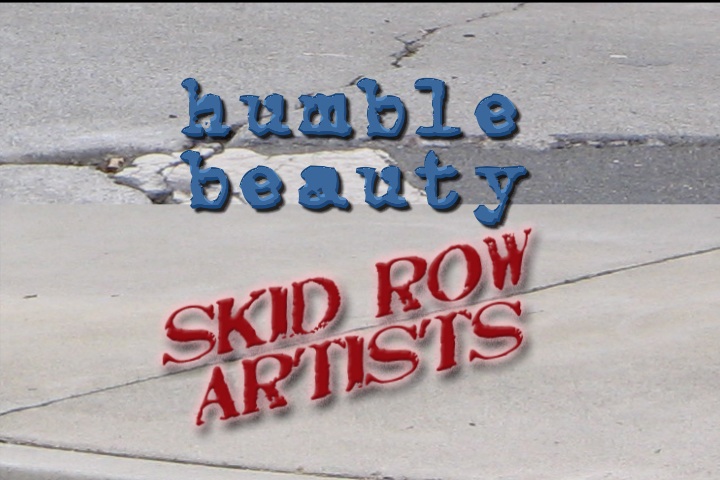
  • Humble Beauty: Skid Row Artists

    Humble Beauty: Skid Row Artists

    ‘People will create art no matter how humble the circumstances and, in return, art changes lives dramatically.  All human beings are artists.
    Whether trained in the academy or a self-taught outsider, the evidence is overwhelming that making art is part of the nature of human beings.  To document how art calms, inspires, asks questions or provides answers — even whole new identities – are some of our objectives in producing HUMBLE BEAUTY.’

    Humble Beauty: Skid Row Artists is a documentary highlighting the lives and work of many artists from Skid Row, Los Angeles. The film is trying to reach its fundraising target by 15th September 2012. Below is a synopsis of the documentary, which I have taken from the website:

    “An hour documentary that tells the stories of a group of talented homeless and formerly homeless men and women who create art — fine arts painting — in the worst area of LA known as Skid Row.  It’s also about the ubiquity of art in human life.  People strive to make art, no matter how humble the circumstances.

    For four years, we have followed the lives and progress of several artists from LA’s Skid Row, reported to be the largest concentration of homeless people in America.  We use several techniques to tell the stories including cinema verite, interviews and narration.  Spontaneous moments from their lives, intimate interviews and their evolving artwork and life’s progress are documented.  We meet oil, acrylic and watercolor painters, charcoal, pen and crayon sketchers and collage makers.  Some artists find their art supplies in garbage cans and dumpsters.  They draw on old paper bags.  Many have joined Art Workshops led by dedicated and remarkable artist/social workers and are given paint, canvases, frames, easels and the technical, creative and supportive guidance to create stunning, often therapeutic, works of art.  Several of these Art Workshop members have shown – and sold – their work in downtown Los Angeles galleries.  Their tight-knit Skid Row community nourishes their artistic abilities.

    Art changed their lives dramatically.  One woman told us that coming to the workshop is the only reason she has for getting up in the morning.  A directionless hustler has become a known, respected painter and employed community leader.  A shy immigrant who creates, in classic primitive style, riotously colorful scenes from his childhood in a tiny Mexican village has suffered a major setback – he’s been admitted to art school at University of California, Berkeley, and awarded a scholarship but can’t attend due to his illegal immigration status.  One artist was a 12-year old runaway from an Indian Reservation in 1941 and has been on the streets of Skid Row ever since.  Art has given their lives meaning and a reason for existence.  There are many stories among the artists of LA’s Skid Row and unimagined talent to bring to the attention of a wide audience.

    We have a non-profit fiscal sponsor, Pharmaka Gallery in downtown Los Angeles, to accept donations on our behalf to finish and market the film.”

    Piece by Enrique Marquez
    Work by Vytautas Pliura
    Piece by Joacquin Roebuck

    Visit the Humble Beauty website:

    www.humblebeauty.com

    for more information

    Good luck and I hope you reach your target!

    To help the campaign please visit: http://www.indiegogo.com/humblebeauty

  • Karen King’s Psychological Portraits

    Karen King’s Psychological Portraits

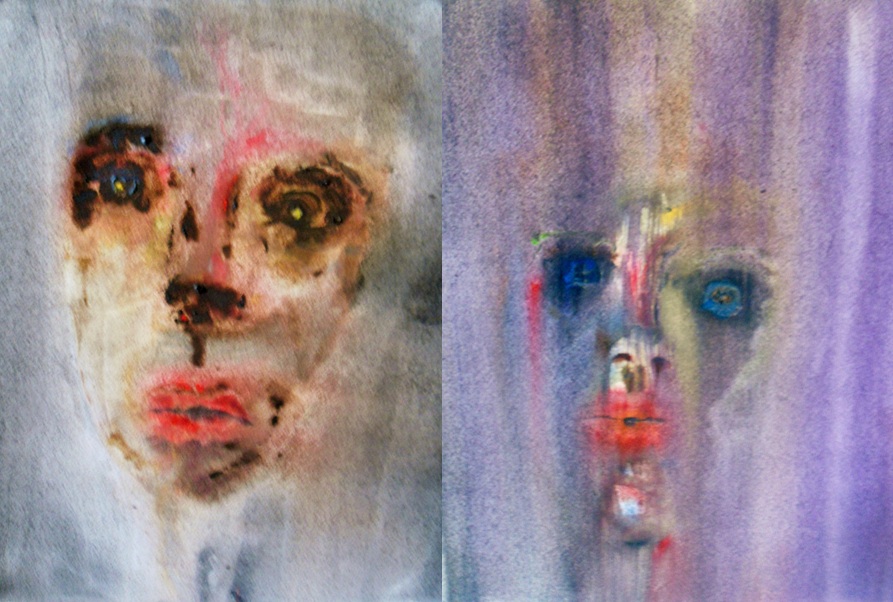
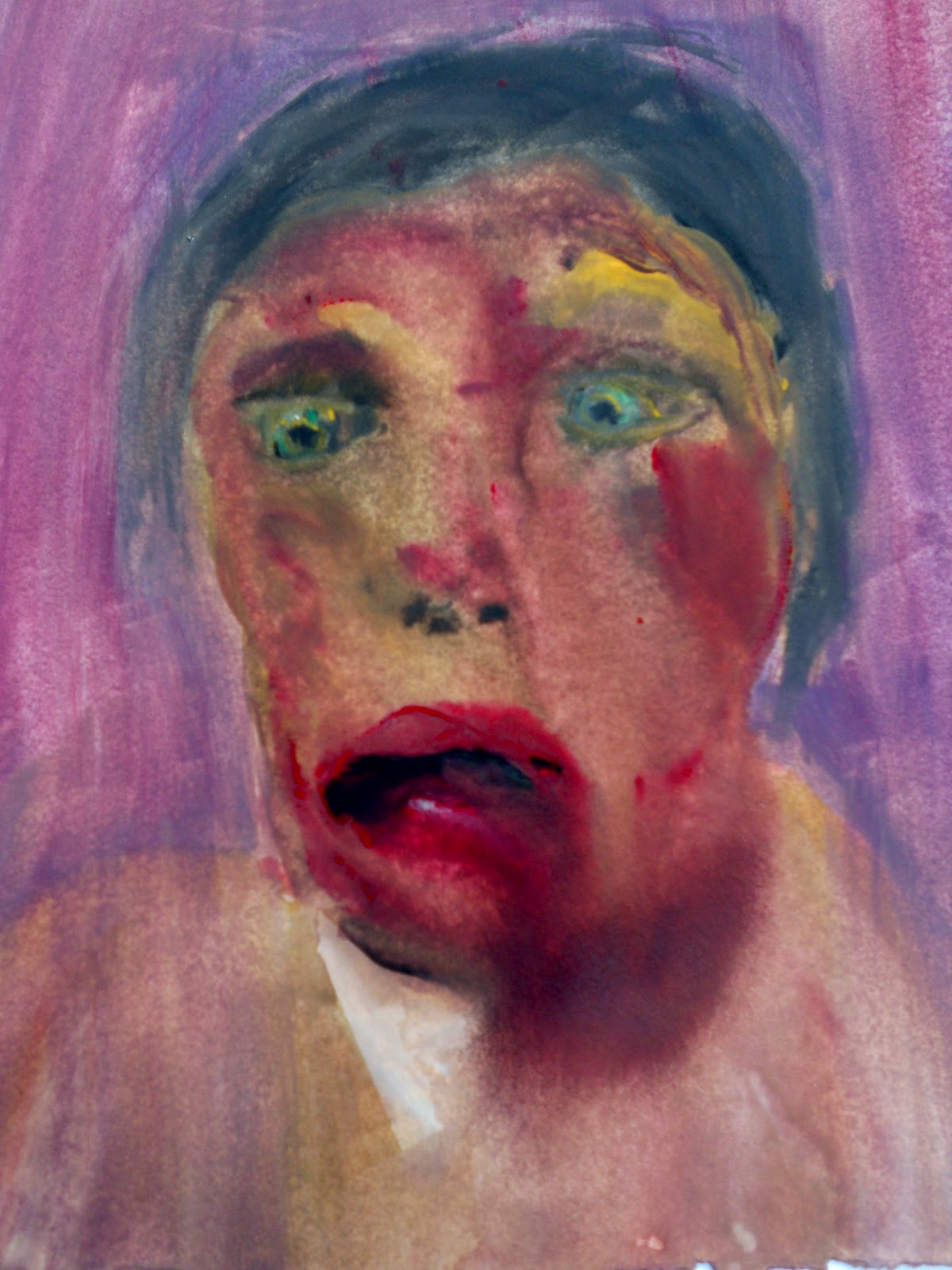
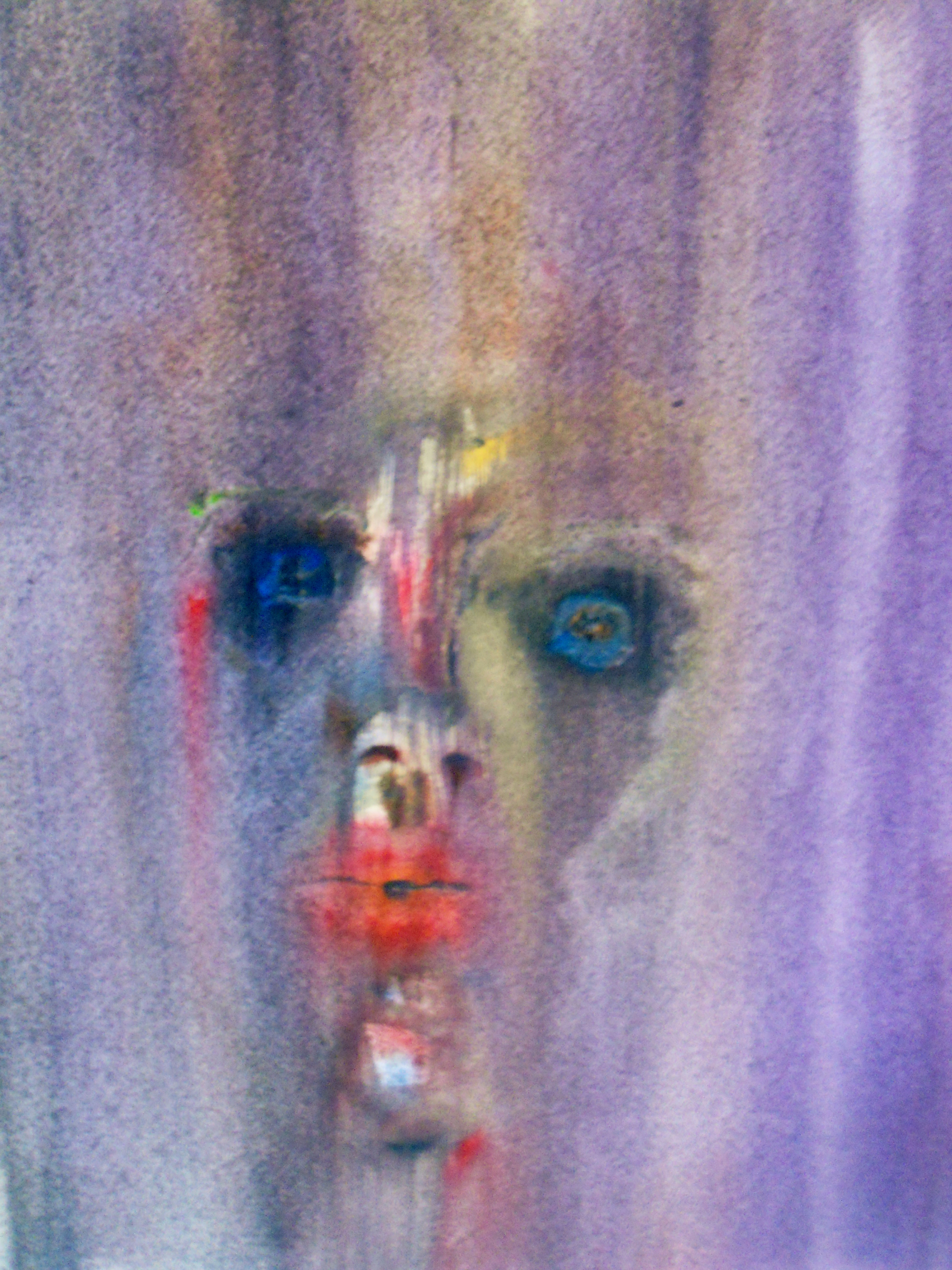
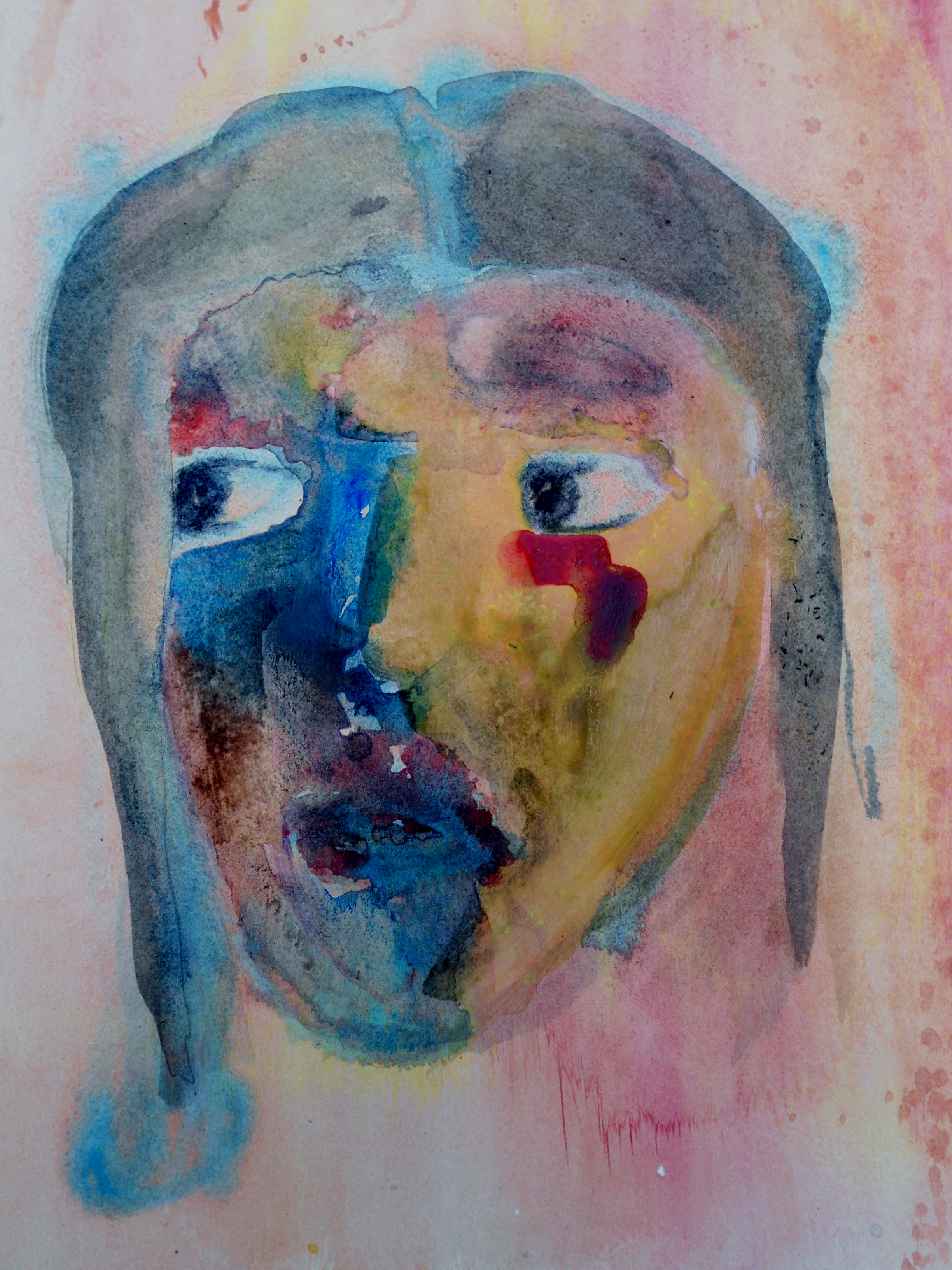
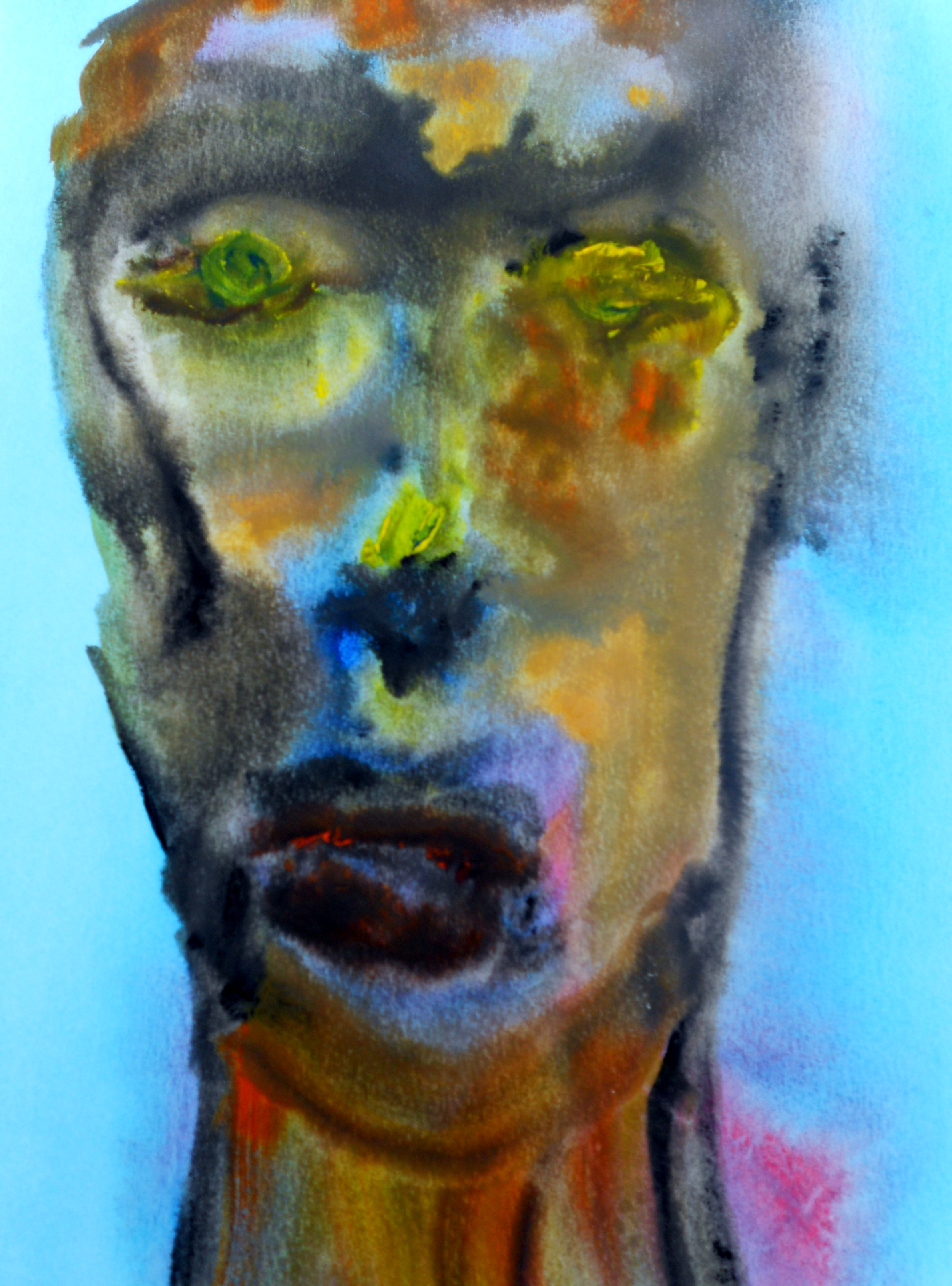
    “Through a series of studies of the human head I am attempting to convey psychological states, emotions beneath the surface and the fragility of the human condition.

    As I tend to paint repetitively, compulsively even, I am also exploring Sigmund Freud’s Theory of Repetition Compulsion, otherwise known as the Death Drive.

    In this theory Freud felt that the act of repetition was directly linked to the urge to cease existing, and with each act of repetitive behaviour we act out our desire to go back to a pre-living state, a desire to cease to exist.

    My conclusion from my research and practice tells me that repetition in art is not static, not destructive as it does push one through to the new, to life in the present, no matter how temporary that may be for all of us.

    When asked about the darkness in his work Francis Bacon said that ‘if you have a strong feeling for life, its shadow death is always with you too’

    I think that artists who work in a repetitive manner may have a stronger need to reconnect to what is human, to express the futility of life in the hope of connecting with others, so that life is no longer futile.

    The poet W. H. Auden likened the process of making a work of art as ‘breaking bread with the dead’, and I am attempting to create paintings that express what it is to be alive and what it is to die.”

    You can follow Karen on Twitter: @kkingartist

    Many thanks to Karen for supplying me with the images and text for this post.

  • Francois Burland (b. 1958)

    Francois Burland (b. 1958)

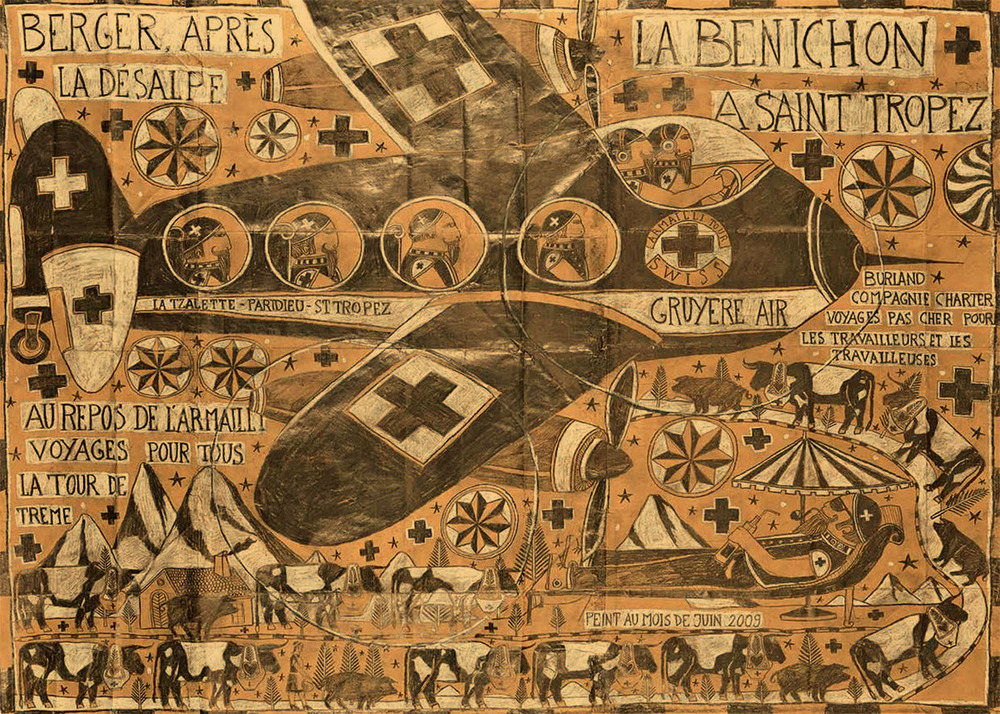
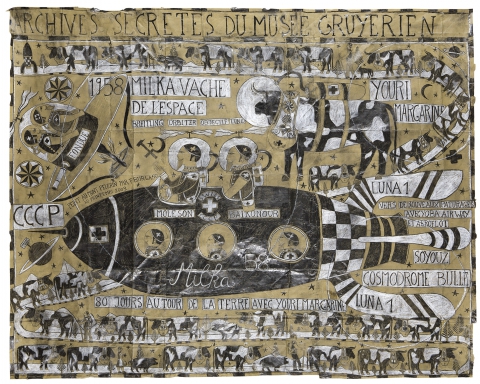
    Burland had a difficult childhood in Lausanne, Switzerland, where he left school after his teachers claimed he was ‘difficult’ due to the nature of his secret drawings. After undergoing psychotherapy, Burland began to use creativity to express himself. Creating predominantly large pieces, often on brown paper, he was fascinated with mythology from all cultures and a visit to Africa enabled him to meet with nomads who encouraged him to create bright, tribal inspired pieces. Despite these bright pieces, Burland’s main bulk of work was mainly completed in black and white; however, in many of his pieces you can clearly see the tribal influences.

    Mixing the antique with more modern literature and philosophy, Burland’s use of a brown paper background gives his work an ancient edge. Burland’s pieces often focus around a central figure or animal, working out towards the edge in a monochrome fashion. Burland now lives on a farm in Switzerland, where he is dedicated to creating his instinctive and visionary works.

    Places to see Burland’s work:

    Eternod/Mermod Collection, Lausanne

    Musee de la Creation Franche, Begles

    Examples of Burland’s work:

    Resources: Raw Vision Outsider Art Sourcebook

  • Martha Grunenwaldt (1910 – 2008)

    Martha Grunenwaldt (1910 – 2008)

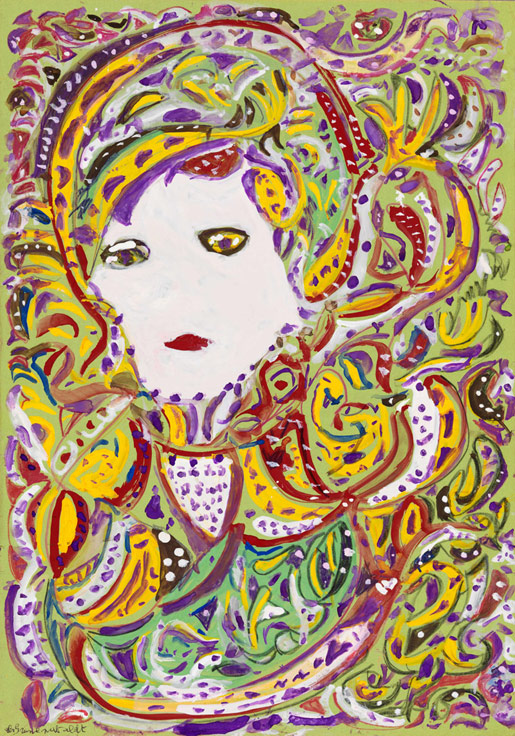
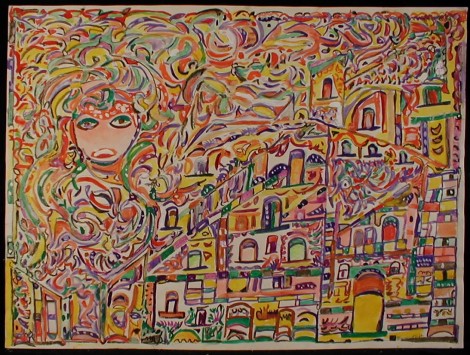
    Martha was born into a musical family where she began life as a folk violinist. She went on to marry a fellow musician, who then took her daughter away from her on their separation. She didn’t begin to create art until the age of 71, after being reunited with her daughter. Martha had worked in later life on a farm where her employers had been so strict that she had not even been allowed to touch her violin. She began using her grandchildren’s crayons and coloured pencils and working on the back of postcards or the reverse side of her daughter’s political posters.  Martha drew images of an ideal world full of colours and shapes; where delicate female faces peer out from within dense patterns.

    Here are some examples of her work:


    Image courtesy of www.outsider-artworld.com 


    Martha Grunenwaldt’s work can be seen at:

    abcd Collection, Paris

    L’Arcine Collection, Musee d’Art Moderne, Lille Metropole

    Art en Marge Collection, Brussels

    Eternod/Mermod Collection, Lausanne

    Musee de la Creation Franche, Begles

    References:

    Raw Vision Outsider Art Sourcebook, 2009

  • Fleury-Joseph Crepin (1875 – 1948)

    Fleury-Joseph Crepin (1875 – 1948)

    Crepin was a plumper from the port of Calais in France. He only began painting in his sixties, after experiencing an increase in his spiritual powers subsequent to meeting painter and medium Victor Simon. Influenced by supernatural voices, Crepin began to fill sketchbooks with dedicatedly symmetrical designs. Crepin’s works are surprisingly mathematical in their creation. He would create his paintings by enlarging sketches onto canvas using a compass and a ruler. Crepin’s hypnotic works are generally based on architectural forms and geometric patterns to which he added human figures and animals. Convinced of his ability to end wars, Crepin believed that the Second World War would end on the completion of his 300th painting; something which by chance did in fact happen.  Jean Dubuffet, who coined the term Art Brut, believed Crepin to be an ‘anti-natural’ artist and was thoroughly intrigued by these spiritual symmetric pieces. After completing 300 works, Crepin moved on to what he called ‘Tableux merveilleux’ of which he completed 45 before his death.


    See some examples of Crepin’s work below:


    Places to see the work of Crepin:

    abcd Collection, Paris

    L’Aracine Collection, Musee d’Art Moderne, Lille Metropole

    Collection de l’Art Brut, Lausanne

    Eternod/Mermod Collection, Lausanne

    Sources:

    Raw Vision’s Outsider Art Sourcebook