In this artist showcase, we bring you the expressive, characterful work of Drew Davies.
Drew Davies, Mr Fizzy Drink
When did your interest in art/creating begin?
Since I was a kid. Painting and making things used to really give me a buzz.
As I got older and had more responsibilities I drifted away from being creative and have just recently got back into it.
Drew Davies, Mr Little Boy Blue
What is your starting point for each piece?
I like to watch people, so that is usually where it starts. I’m interested in everyday people, the ones that just go about their business without fanfare. For me, I always see something in them that ignites an idea. I’ll chew that over in my mind for a week or so then start a piece by spreading paint across the surface. I don’t have any preconceived ideas of how they will be represented, I like that to just come through the work as naturally and honestly as possible.
Drew Davies, Mr Roger
Who/what influences your work?
The process influences my work. It’s a lovely therapy for me.
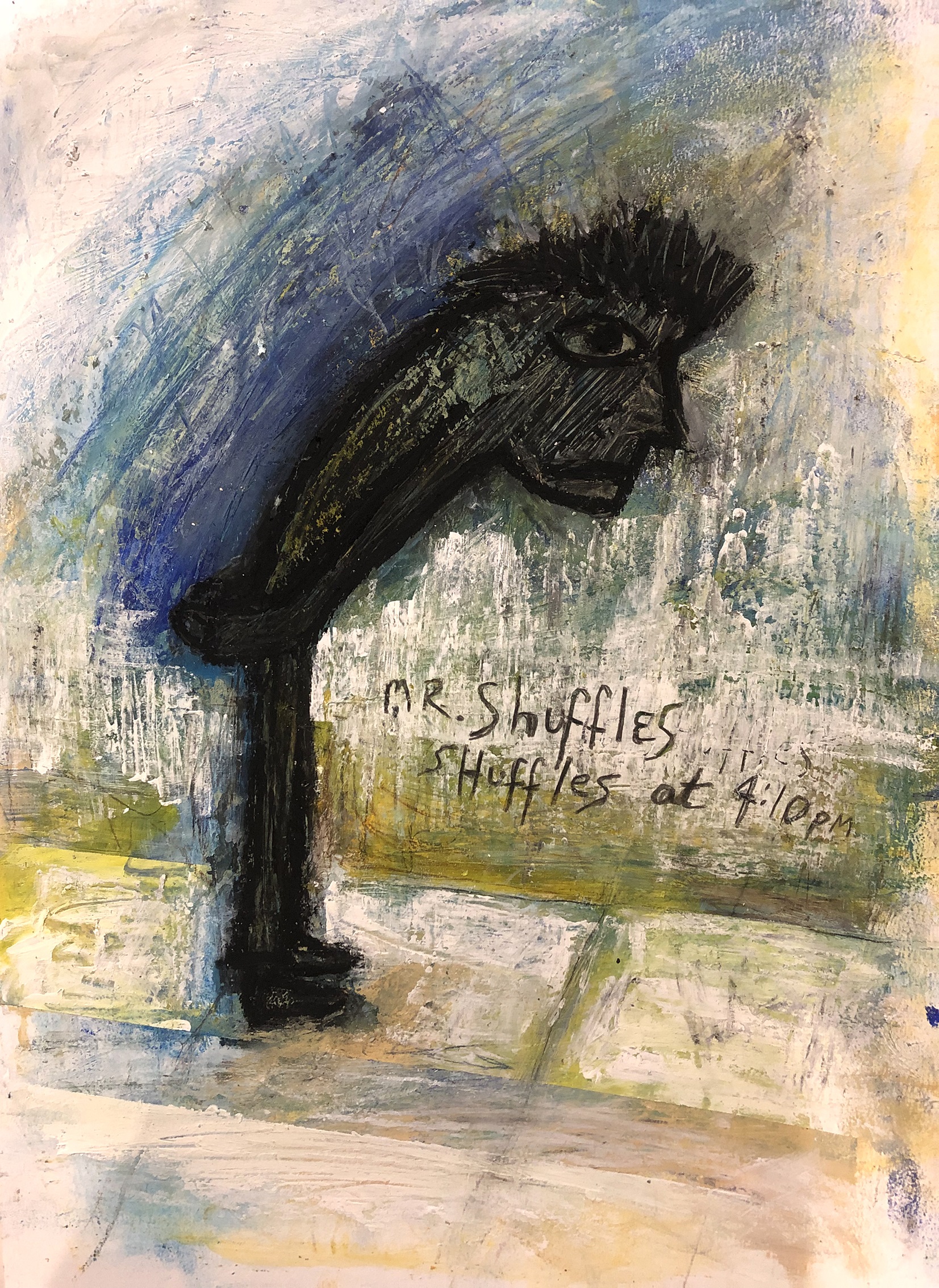
Drew Davies, Mr Shuffles
What do you hope the viewer gets from your work?
A smile would be good and maybe they recognise something of themselves in the work, something honest, a connection to the everyday.
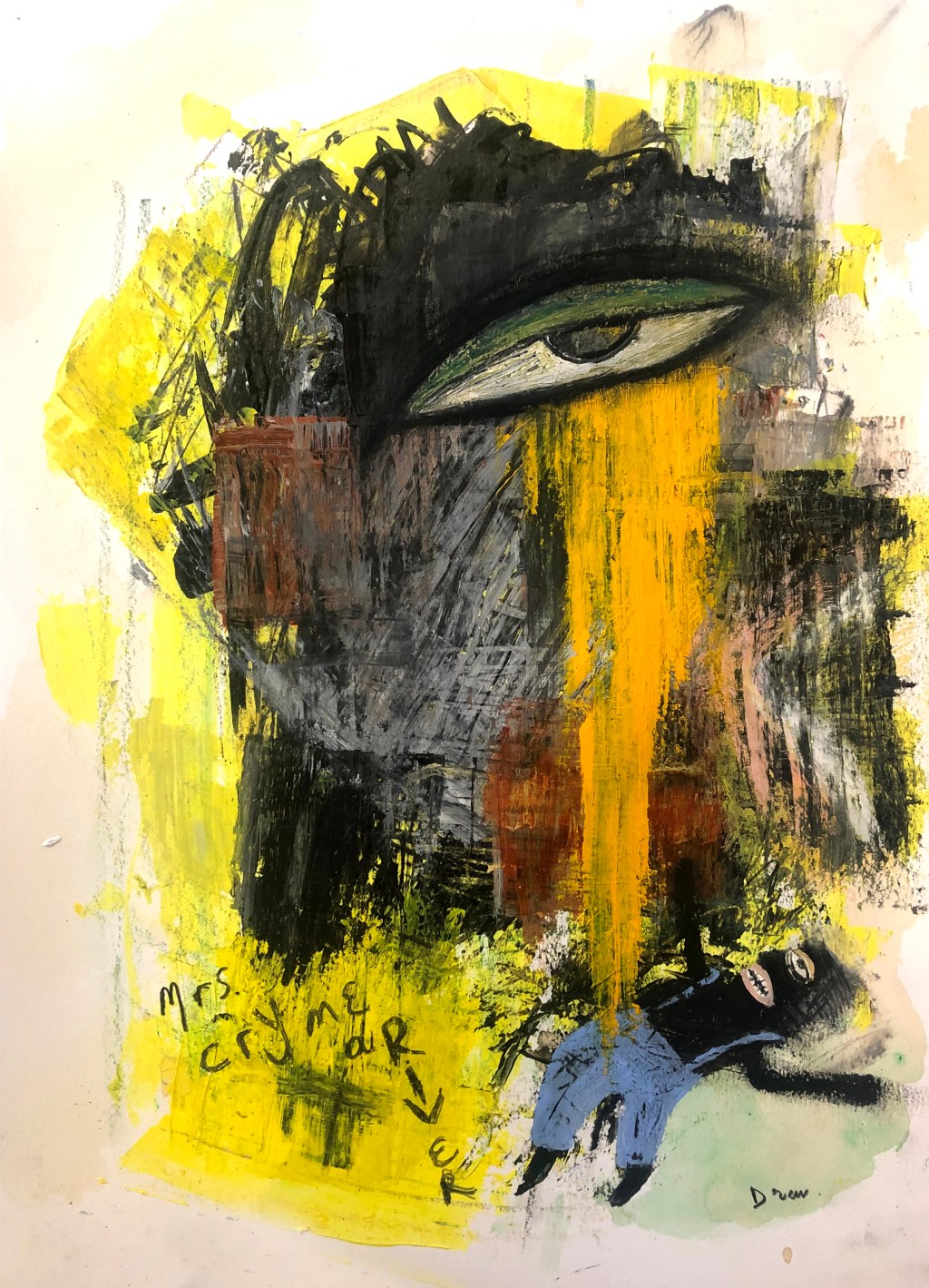
Drew Davies, Mr Cry Me A River
What do you think about the term Outsider Art? Is there a term that you think works better?
I think it’s a very apt description.
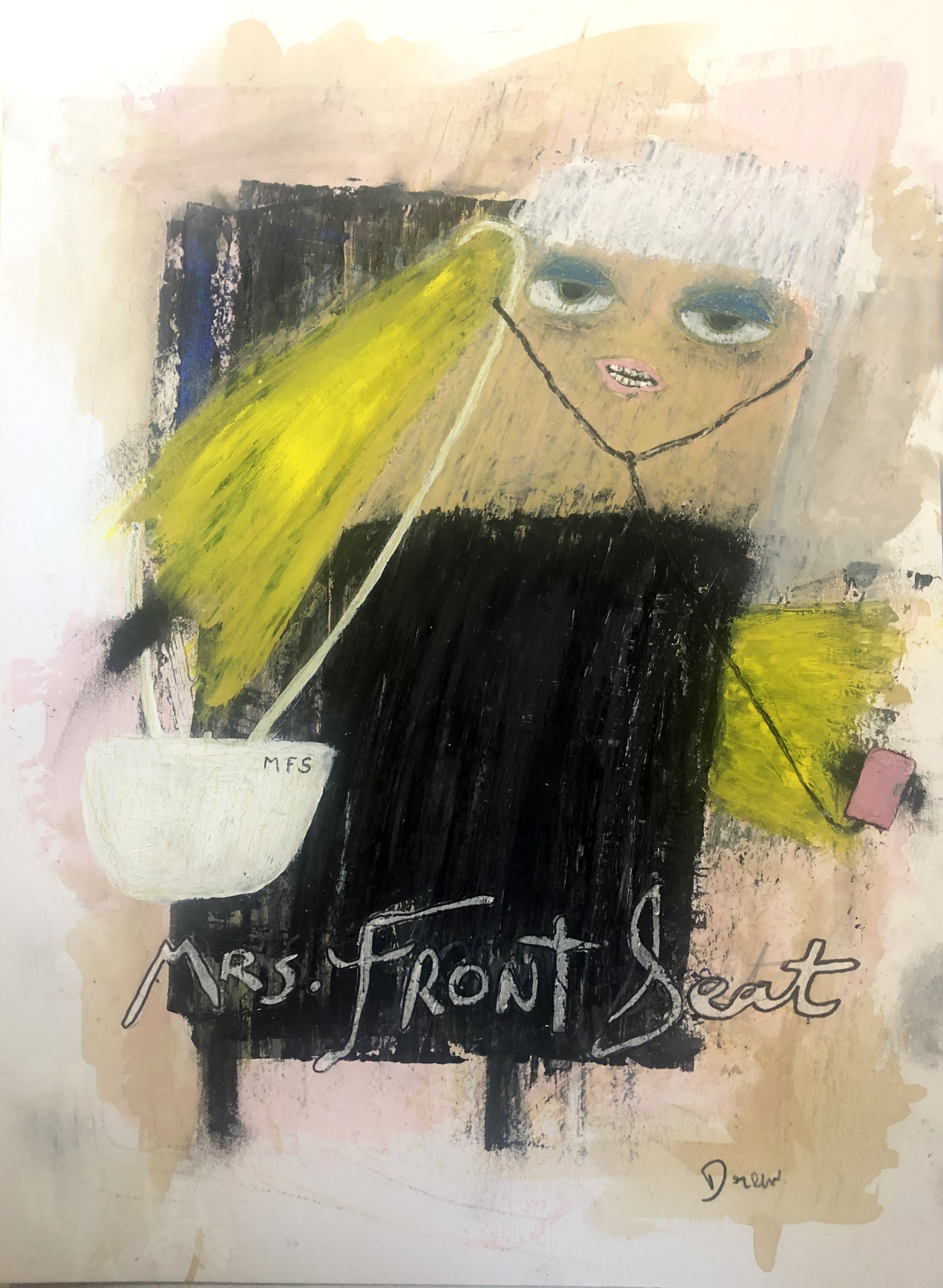
Drew Davies, Mrs Front Seat
What are you working on at the moment?
Three Italian women who walk past my window every morning (very early) who talk really loud. Can’t see it yet but hopefully they will emerge.
Where do you see your work taking you in the future?
I’d like to be able to paint and make enough money to survive frugally but I don’t have very good people skills to be able to push my work, so I’m happy to paint when I can and keep exploring the process.
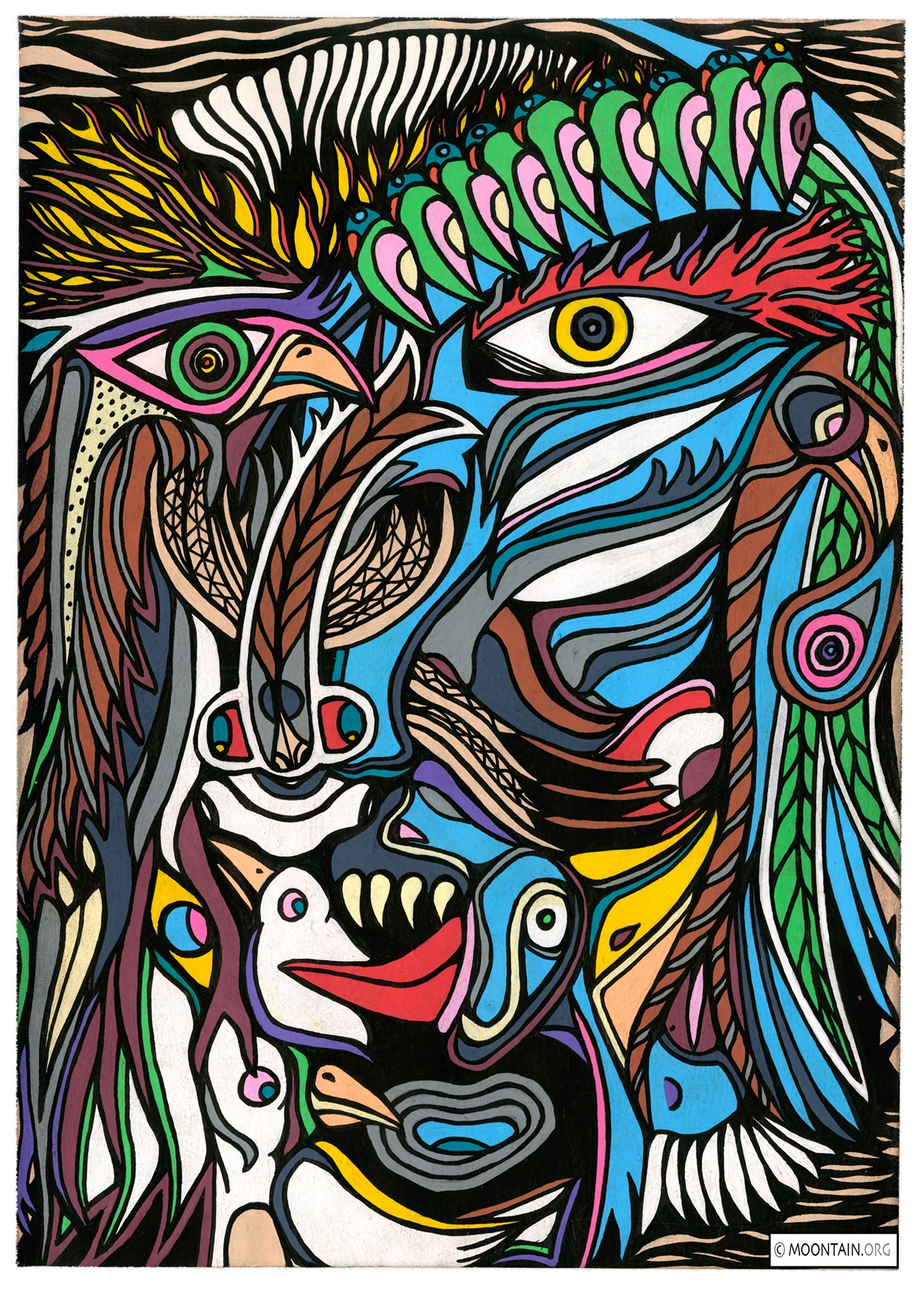
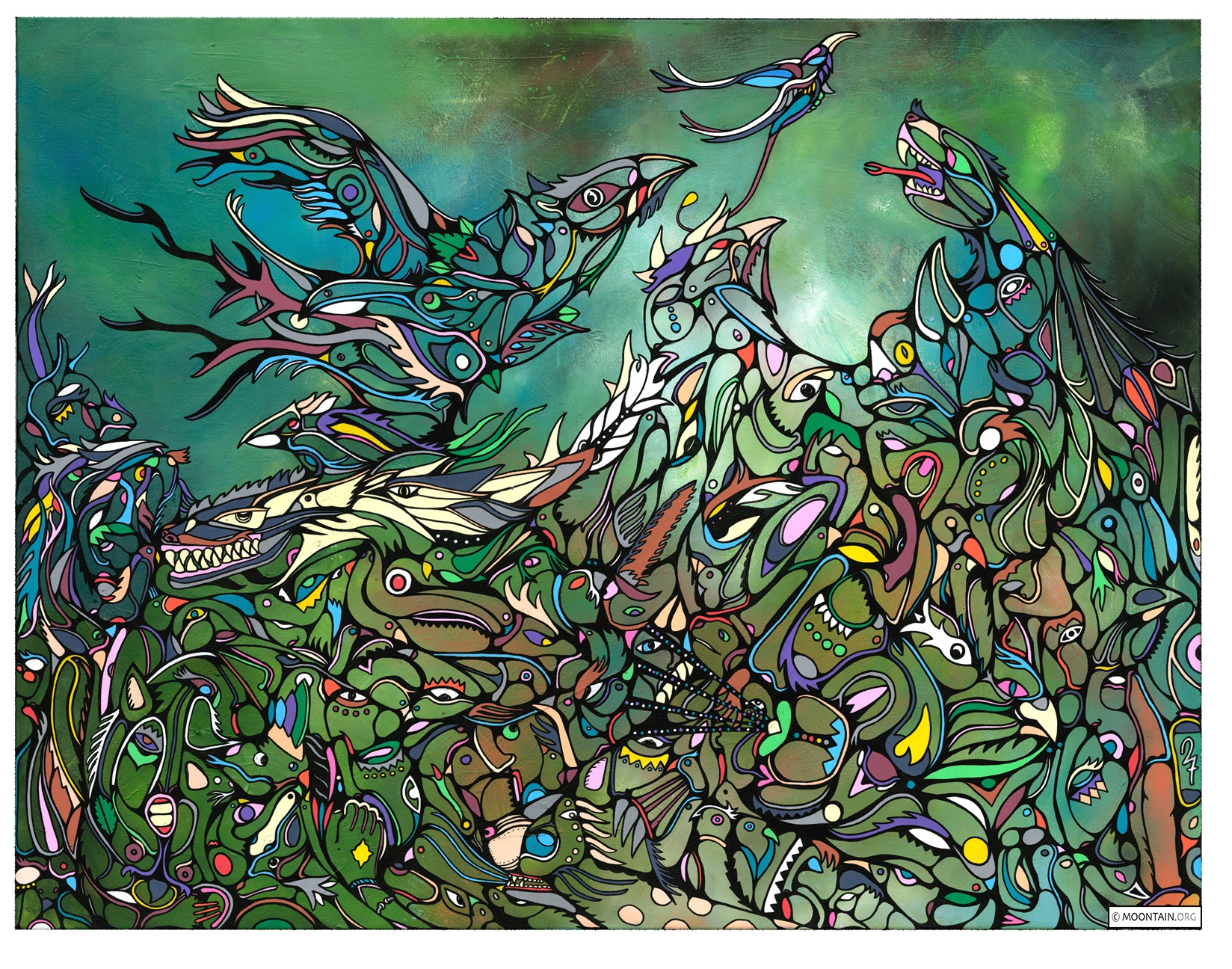
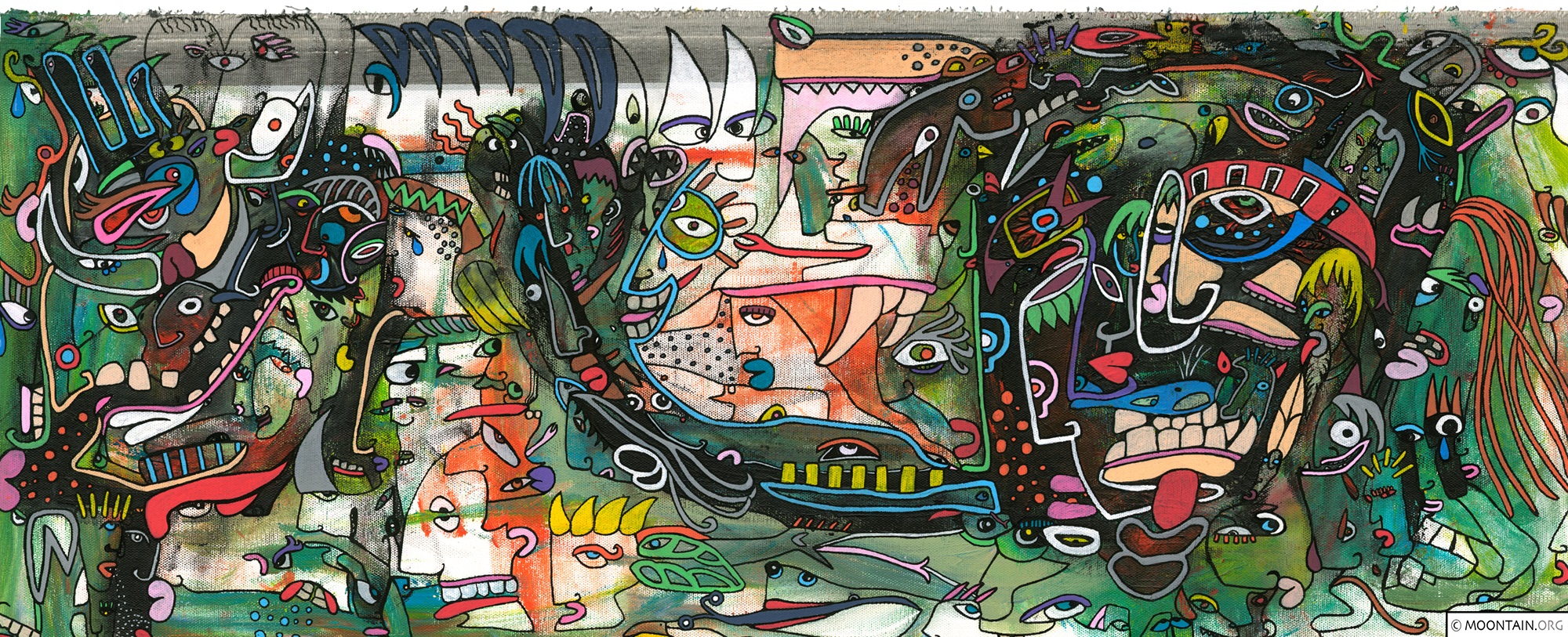
The latest artist showcase highlights the work and life of Moontain.
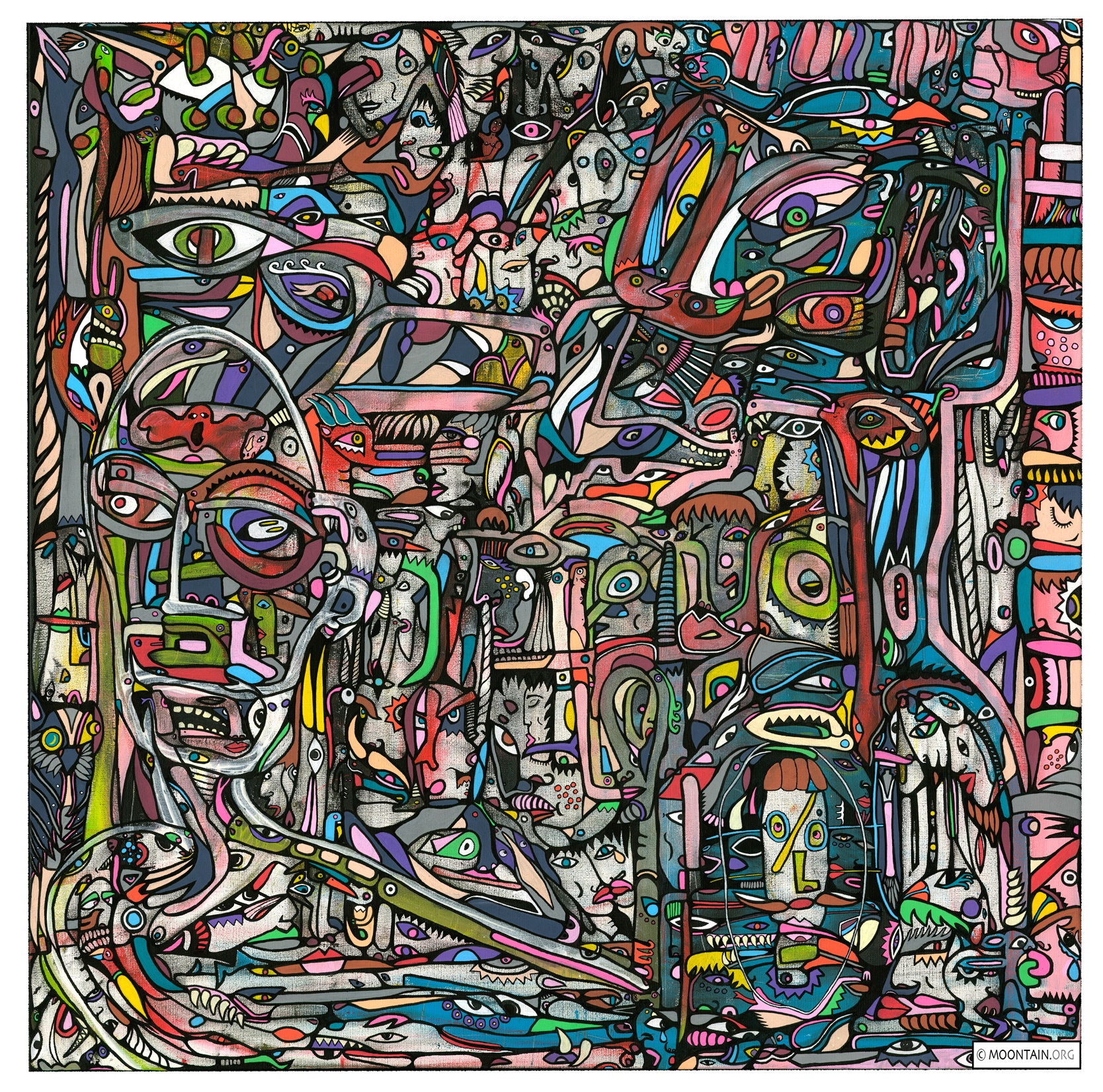
Moontain, TITANOMACHIA
When did your interest in art/creating begin?
It’s always complicated to put a precise date on something that is more related to growing roots than a formal decision. I believe we all are interested in creating, it starts with the first thought, the first imaginary world, our feelings, then, we have the choice to expand it into this reality or not, and I always chose to expand them so it becomes my reality. For as long as I can remember, everything, from a stick of wood in the garden to a musical instrument, have been a subject to creation and expression. Art is just one of the many ways to practice an active thought, and it really started to be serious when I was a teenager, like many people, except that I never stopped.
Moontain, THE PATH OF LIFE
What is your starting point for each piece?
A sort of “call” (from the canvas, stone, wood, vibe etc.)… The intuition that something is already here, just hidden in the dimension of “becoming”. It’s not really an improvisation, but rather a cooperation, full of trust, into the ethereal and the unconscious worlds. Something guides the details and moves allowing the whole to be, I observe it as much as I assist it. The pleasure comes with the meaning revealing itself, and since I’m sensitive to synchronicities as a channel of the consciousness, I’m very interested in the interpretation, information and knowledge coming out of it. Very often, discovering characters, frames in the artwork, makes me think of x or y stories, and once I’m looking for a title or an aphorism to go with it, I find connections between already existing myths and the work in front of me. It is a special feeling, to realize, no matter the time or space, it seems that a universal Source is shared eternally with every life’s forms.
Moontain, AURORA
Who/what influences your work?
Influences obviously come from different levels; sensitivity, impregnation, experiences, tastes and feeling. Also, it can be the shadow of a plant caressing a stone or a ray of sun designing a line on the canvas. But mostly, it’s about Pareidolia. It’s the ultimate guide for my work. From a chaotic display of colours or forms, entities are waiting to be discovered and guessed. In the end, what influences me is the initial vibration, no matter where it comes from, it’s filled with the original flow, where nothing is good or bad, just a matter to renew your experience of this existence and go forward.
Moontain, FLOTS DES AMES (Flood of Souls)
What do you hope the viewer gets from your work?
I do not have a specific “hope” concerning what people can get from the work, because it’s up to each viewer to interpret it, with his/her own personal story. That being said, I have a wish, which would be to see the viewer peacefully let go of his/her tendency to automatically connect what they see, with what they once saw. This way, it would allow them to start a journey into some unknown areas of their mind. As they say, if you want to change the world, change the way you look at it. This is how we can renew our self, the answer, and the question itself.
In my works, at first sight, you can think it’s only a sort of accumulation of forms, but if you take the time to dive into it, you discover an abundance of lives, if you dive even deeper, you notice they’re all interconnected, dependent on each other to exist. The lesson to share would be that through a conscious observation of details animating this whole we live in, you can start to grasp the secret of an harmonious way of life. Ultimately, it gives a notion of infinite respect for every incarnation (ethereal, mineral, flora and fauna …) as they all allow us to be.
Moontain, SEMENTIS
What do you think about the term Outsider Art? Is there a term that you think works better?
I guess people need a word to put on something so they feel reassured. I don’t really care about it. As a French person, I kinda liked this word, the way it sounds, but I don’t think it’s the best way to describe this kind of art. Because it just comes right from the inside of a Soul, and if it’s outside of something, it’s only of soulless components of a society. Aspiration of creation is to reveal how things are all intertwined, not separated, so there must be a better word I guess, but words are not always required to share a message anyway.
Moontain, LES PORTEUR D’AMES (Ark of Souls)
What are you working on at the moment?
I always have many artworks in progress (some are waiting for months, we mature in parallel before we meet again). At the moment I’m focusing on sculptures. I like the connection I find in a stone, because it’s so linked with (out of) Time, it comes from a very ancient past, it has seen so many Earth’s events, and hopefully will continue to do so in the future. This organic interaction carries some authentic vibrations, which is relieving, it has a deep meaning to me… in a perfect world we would sculpt caves, mountains, just like the winds and rivers do, and would write each other stories.
Moontain, DREAMANTRA
Where do you see your work taking you in the future?
I don’t see a specific place or state… in arts or in life in general, it’s all about becoming the best version of our self. Hopefully both follow this path of a better understanding and self-development. To transform limits into potential, interactions into changes and being a part of a needed evolution considering the urgency the planet is in right now. This is even more important than simply making artworks, it’s about reminding people (and myself) why we are experiencing this existence, if not for more consciousness, positive echoes feeding a virtuous circle, then it’d mean nothing.
Recently, whilst undertaking some research around the role of the critic and what makes artists ‘successful’ in the art world, I came across a transcription of a lecture given by Sir Alan Bowness, Art Historian and Director of Tate (1980-1988), at the University of London in 1989. The talk centred on the idea of artistic achievement, and was titled The Conditions of Success: How the Modern Artist Rises to Fame.
Bill Traylor, Man and Large Dog, Smithsonian Institute
In the text, Bowness outlines his idea that there are four steps that lead to an artist achieving recognition and success in the art world. What I found most interesting about this quite rigid ‘how-to’ guide is how little room for success it leaves for those who are not able to complete one of the steps. This, of course, ties into my interests around what continues to separate so-called outsider art from the cultural mainstream.
Early on in the lecture, Bowness asserts that “there is a clear and regular progression towards artistic success. There are,” he says, “in my view, conditions of success, which can be exactly described. And success is conditioned, in an almost deterministic way. Artistic fame is predictable.” These ‘conditions of success’ revolve around the idea of recognition. Recognition from whom, and when this occurs during the artist’s career.
The first condition is peer recognition, and Bowness quite boldly claims that this initial type of recognition is “at first a matter of personality as much as it is of achievement.” He goes on to speak about his discovery of David Hockney during the 1960 annual exhibition of the London Group (Hockney at that time being a 22 year old first year student at the Royal College of Art): “it was quite obvious to… a thirty year old art historian/critic like myself that here was an exceptional talent.”
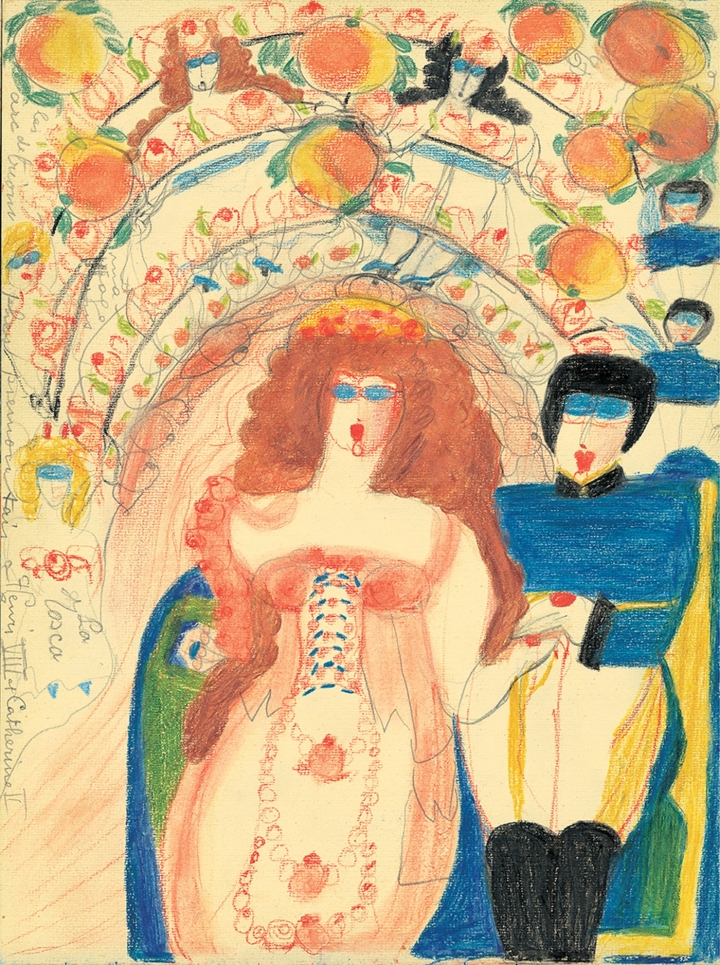
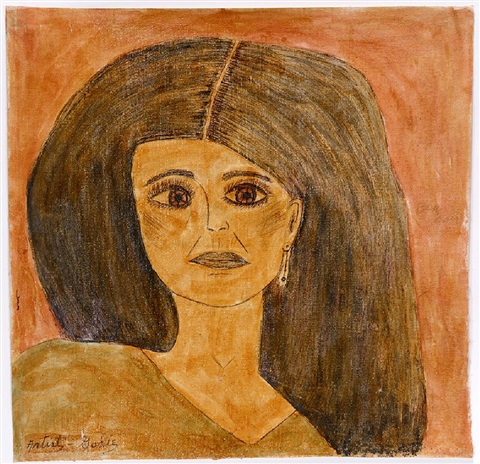
Aloise Corbaz
My immediate issue with this condition is that it first requires the artist to already be rotating in artistic circles and communities. This is generally not the case for artists who are considered to be working outside of the mainstream. It is a condition that relies heavily on an artist having travelled the traditional route – art school, formal and informal networking, student exhibitions, etc. Some of the most well-known outsider artists (think Bill Traylor), did not start creating work until much later in life, and many lived or had lived lives on the outskirts of artistic communities and therefore outside of the possibility of any form of peer critique.
My second issue is that this also requires the artist to have a peer group that is already well established in the art world – or at least one that in some way already holds some kind of esteem. It relies on networks created at some of the most prestigious art schools in the world. Networks that include artists and creatives who already have some kind of influence or sway. This is something that not all aspiring artists are privy to. My final point on this condition is that not all of those we now see as ‘outsider artists’ (for want of a better phrase) originally saw themselves as artists or makers. How then, without even seeing themselves in this way, would they be able to integrate into these important artistic circles and achieve peer recognition?
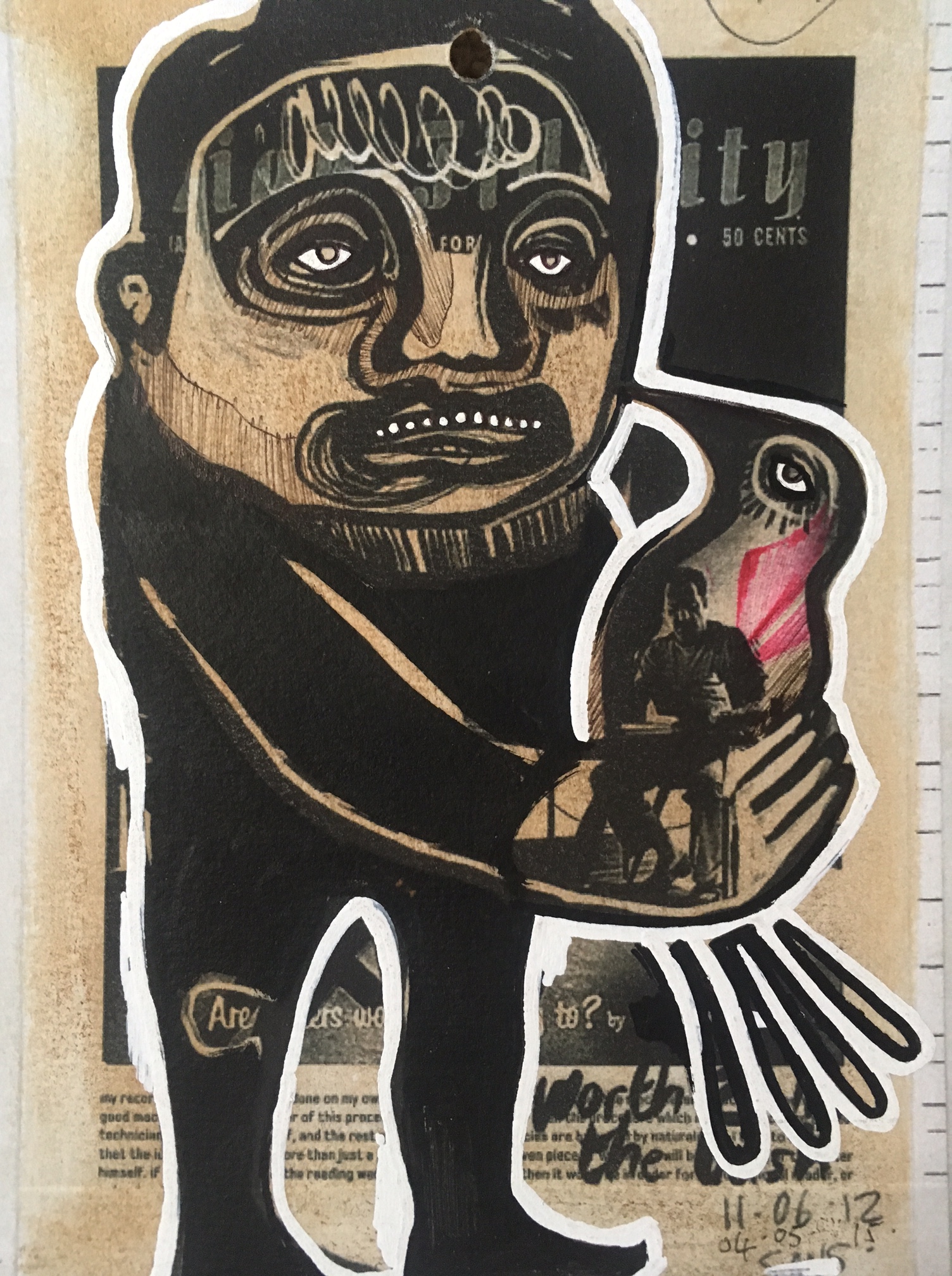
Adolf Wolfli
The second condition that Bowness claims illustrates that someone is on the right path to success is recognition from those who write and talk about art. He notes that “the writer has two important functions: the first is to help create the verbal language that allows us to talk about art… The second… his contribution to the critical debate.” This condition comes, of course, with issues relating to the role of the critic, which I have written about at some length in previous posts. Who are these critics, and what gives them the power to recognise some people as artists, but not others?
The third condition for success is the recognition of patrons and collectors. Now, this where these conditions begin to become a little inextricable. They become tied to one another, and it becomes increasingly more tiresome to differentiate between the influence-r and the influence-d. Those who write about art (the critics, the curators), undoubtedly influence what sort of art prestigious collectors and patrons will buy and sponsor, and likewise, collectors and patrons with power and authority in the art world will have a hefty load of influence over which artists are celebrated by critics and exhibited by curators.
The final stage – the pinnacle – that artists must reach and ‘complete’ is that of being recognised by the public. This, Bowness claims, is what shows that an artist really has become ‘famous.’ To me, this is an interesting idea. From my previous posts – (one example here, and another here) – it seems almost to go without saying that the previous conditions for success will have a huge impact on whether an artist reaches this stage. Without some kind of celebration or support from critics, curators, or collectors and patrons, an artist will struggle to have their work seen by the public. And if the public can’t see the work, how can they possibly judge whether it is a success or not? It is apparent that an artist cannot skip a step on Bowness’ staircase to public acclaim and fame.
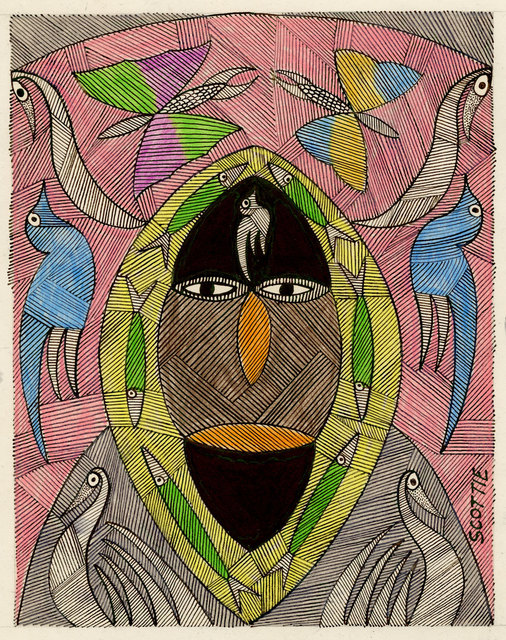
Scottie Wilson, Geometric Face 3
Bowness does talk about the psychological and socio-economic factors that can impede the artist’s journey to success. These factors, he ascertains, play a huge part in whether an artist really can make it to the top. For example, neither Van Gogh, whose mental health issues became a huge barrier, or Gauguin, who simply could not be in the right place at the right time, achieved acclaim or success in their lifetime. This says a lot about the journey for outsider artists – historical and contemporary – who in many different ways continue to come up against psychological or societal factors that will impede their success. What if they can’t afford – or simply aren’t able to – relocate to a big city where there is a vibrant artistic community? Does this mean that fame is just simply not within their reach?
Another of Bowness’ statements does not sit well in relation to the work of outsiders. He says that:
“The creative act is a unique and personal one, but it cannot exist in isolation. I do not believe that any great art has been produced in a non-competitive situation: on the contrary it is the fiercely competitive environment in which the young artist finds himself that drives him to excel.”
This, of course, raises many questions about the very nature of outsider art, much of which is created in isolation, and is not created as part of a competitive relationship with peers. I disagree wholeheartedly with this statement from Bowness. I think it relegates the act of making art – something so unique and innately human – to a formulaic, almost business-like endeavour.
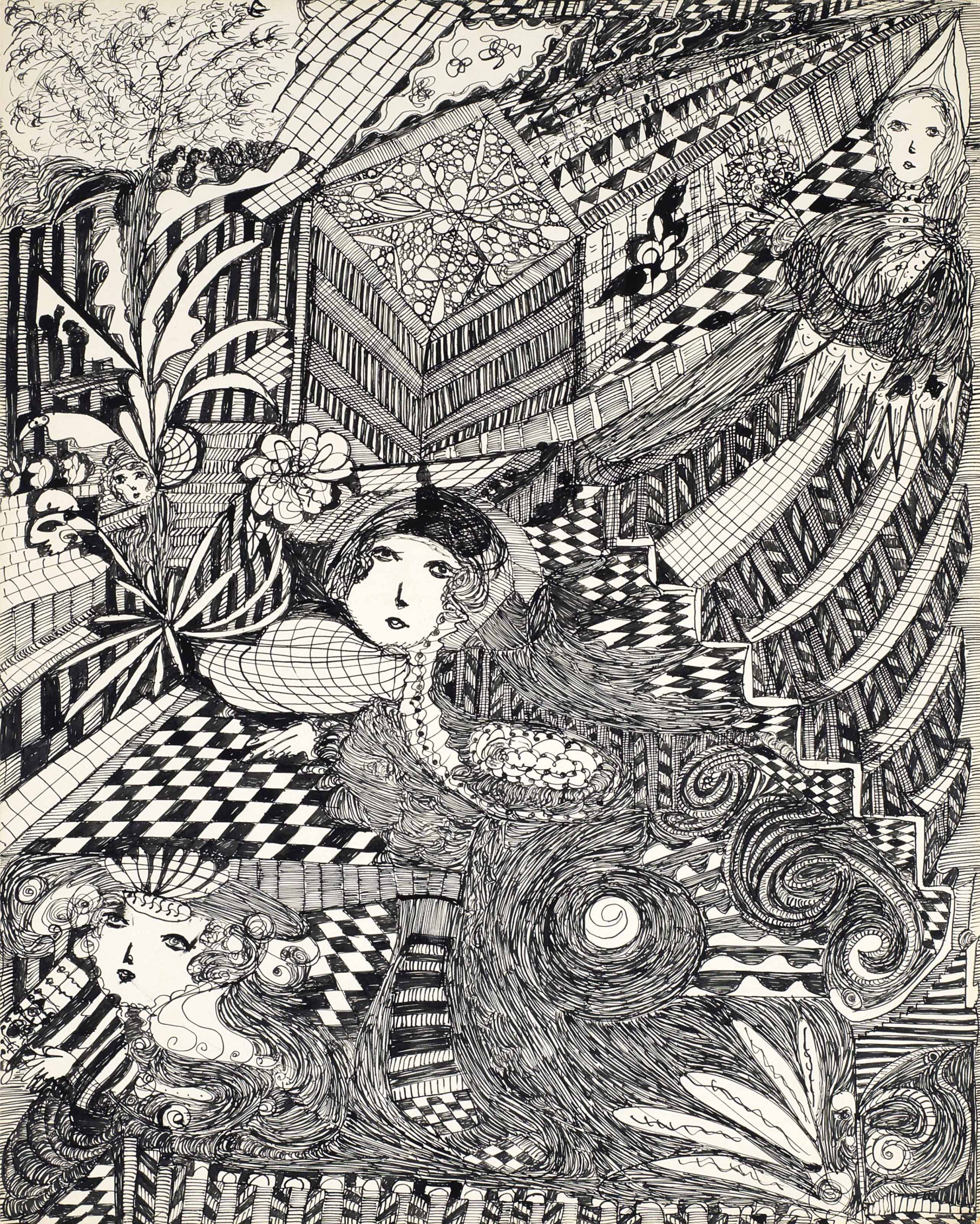
Madge Gill, Untitled
But it is Bowness’ final statement in the text that I struggle with the most. He states that “to imagine that there are unrecognized geniuses working away in isolation somewhere, waiting to be discovered, is simply not credible. Great art doesn’t happen like that.”
From my experience, this is exactly how great art happens. Perhaps the artist is not hidden away, hiding in isolation, but they simply have not been discovered yet. Maybe there are not even trying to be discovered. I think it is naïve to think that we all already know the greatest artists and the greatest art that has ever existed. To think that the best art is already publicly available – we already know where it is, who’s made it, where it’s being made, why it’s being made. I think this simply cannot be true. Think how many people are out there now, all over the world, making art – not for any specific audience, not for any specific purpose, but making, nonetheless. And to think that we cannot consider that to be ‘good’ or ‘successful’ art because it has not already been recognized (by peers, by critics, by collectors, and by the public), just seems to me incredibly absurd.
Bowness’ conditions of success once again outline the rigid, self-feeding system that epitomises large parts of the mainstream art world. Each condition depends on the previous, and all are working in each other’s best interests. This is just one of many examples highlighting how exclusive the art world is as a system. It leaves little room for success for those who are not already on the inside.
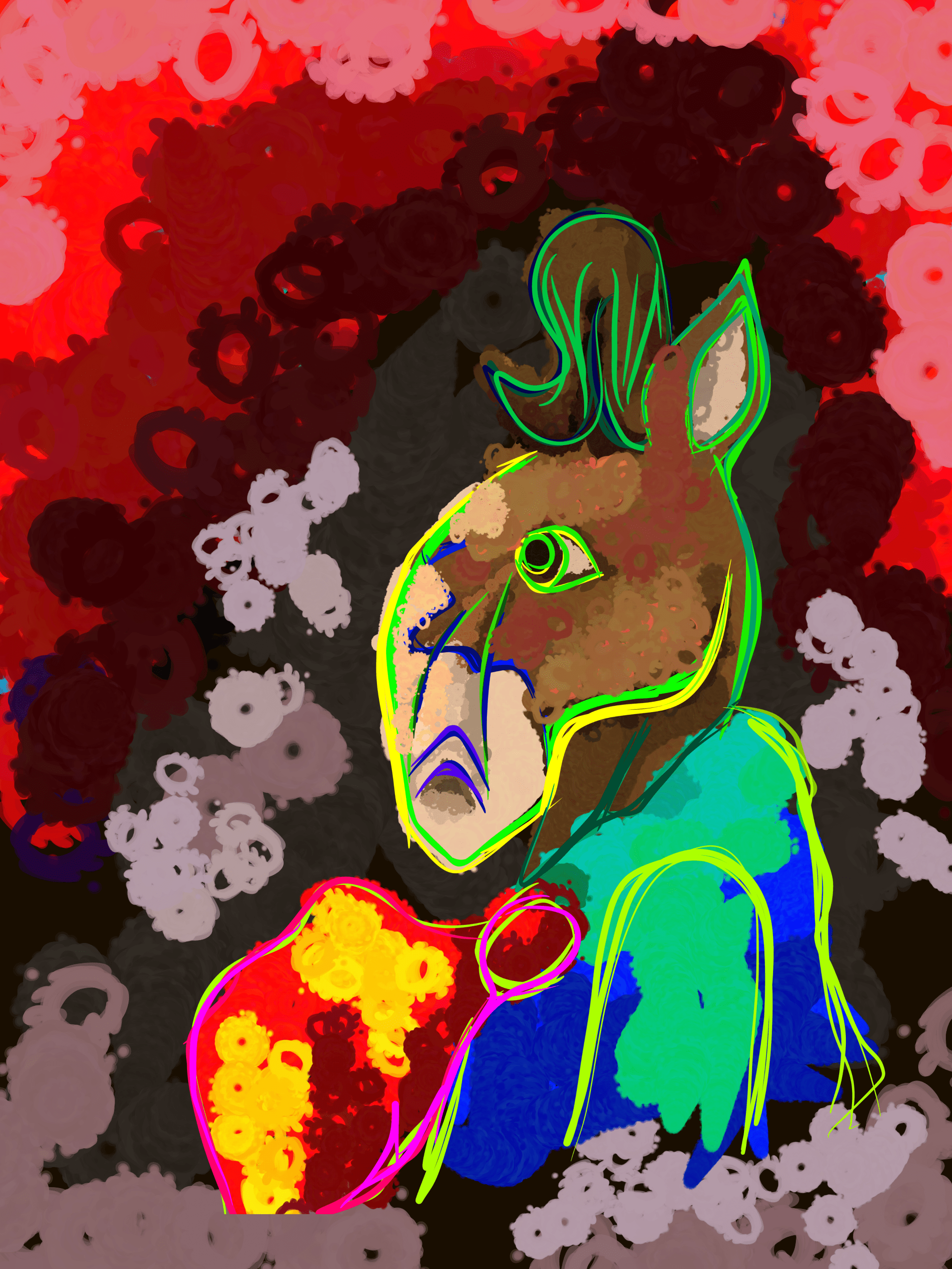
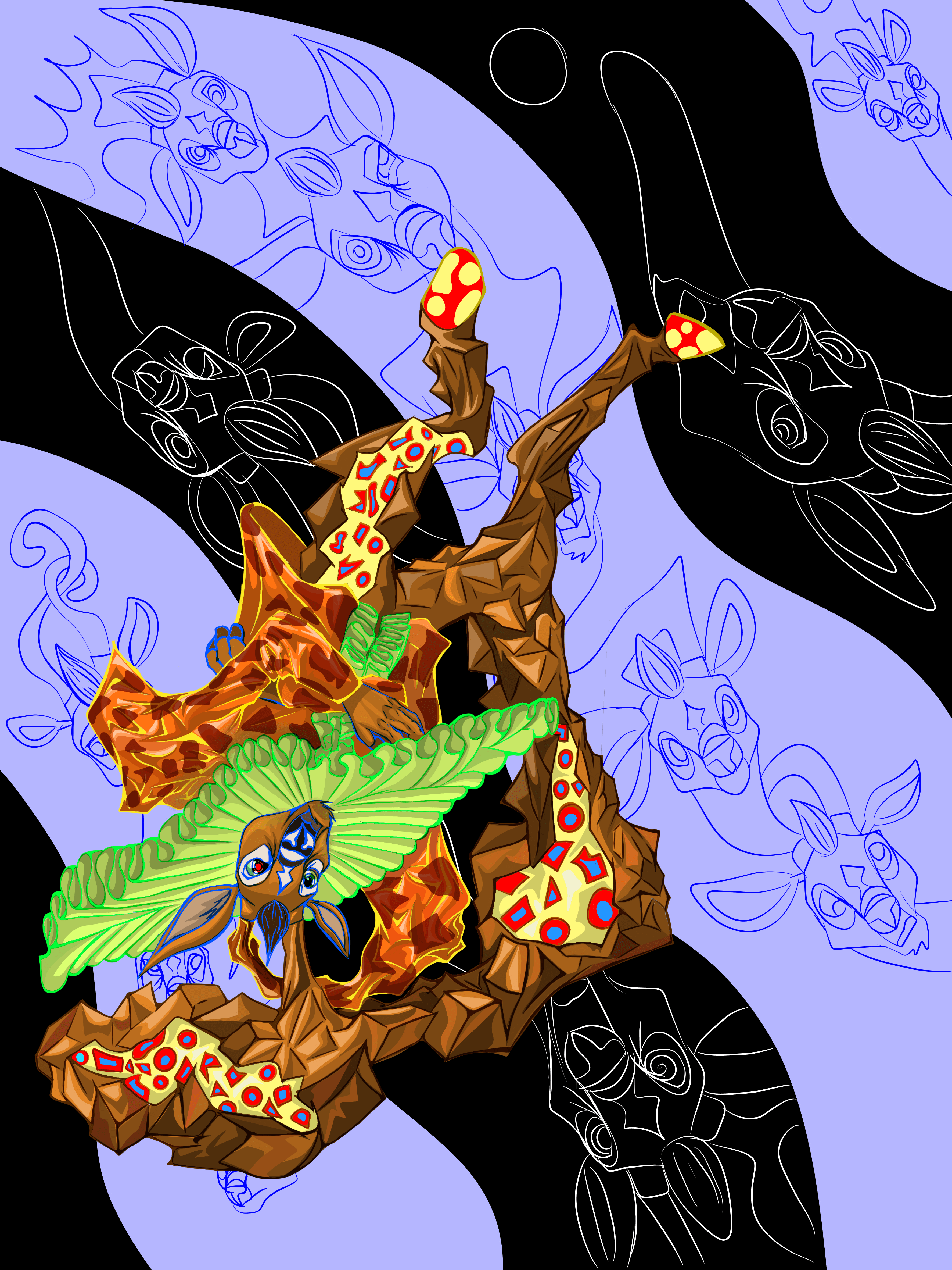
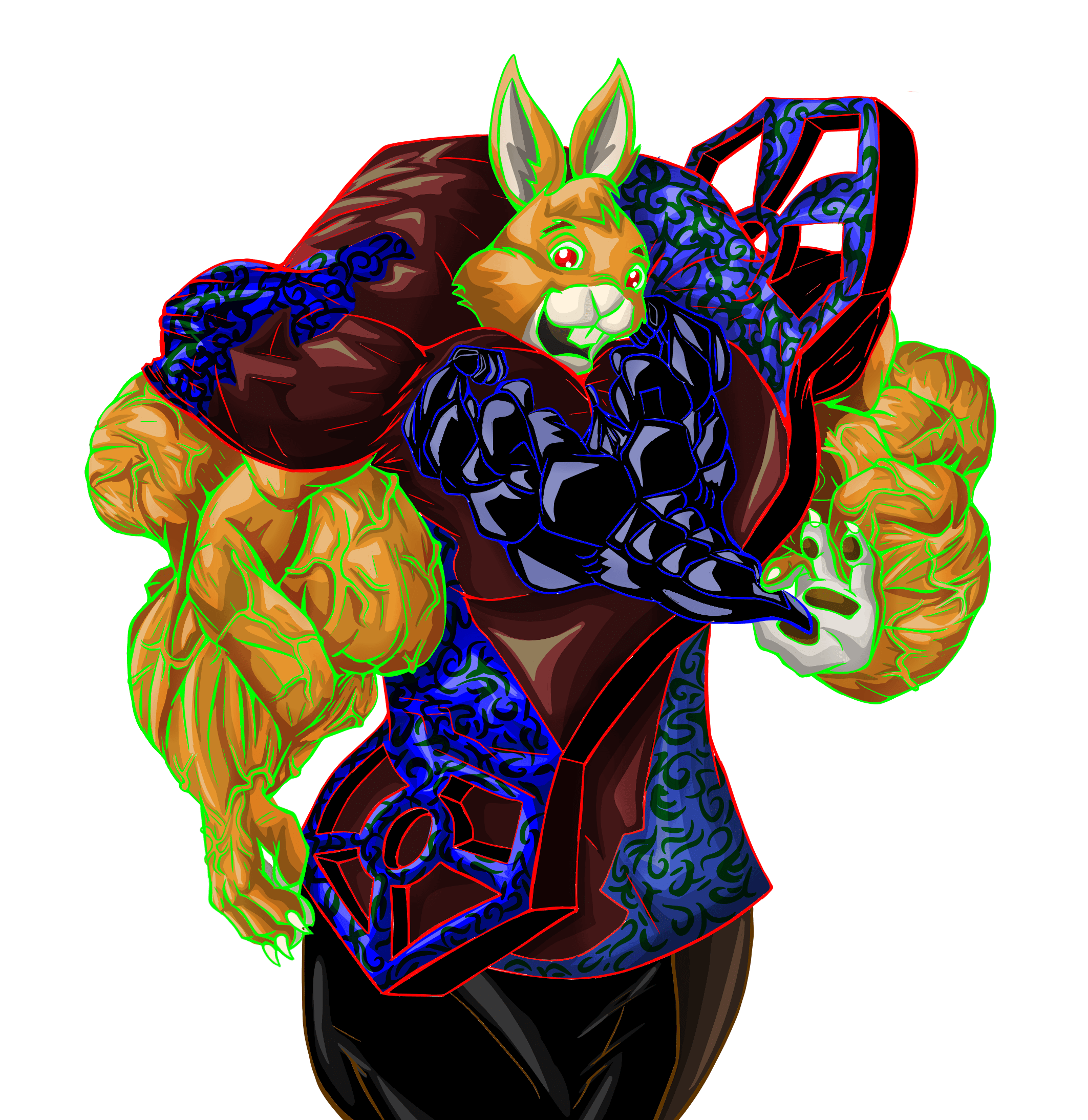
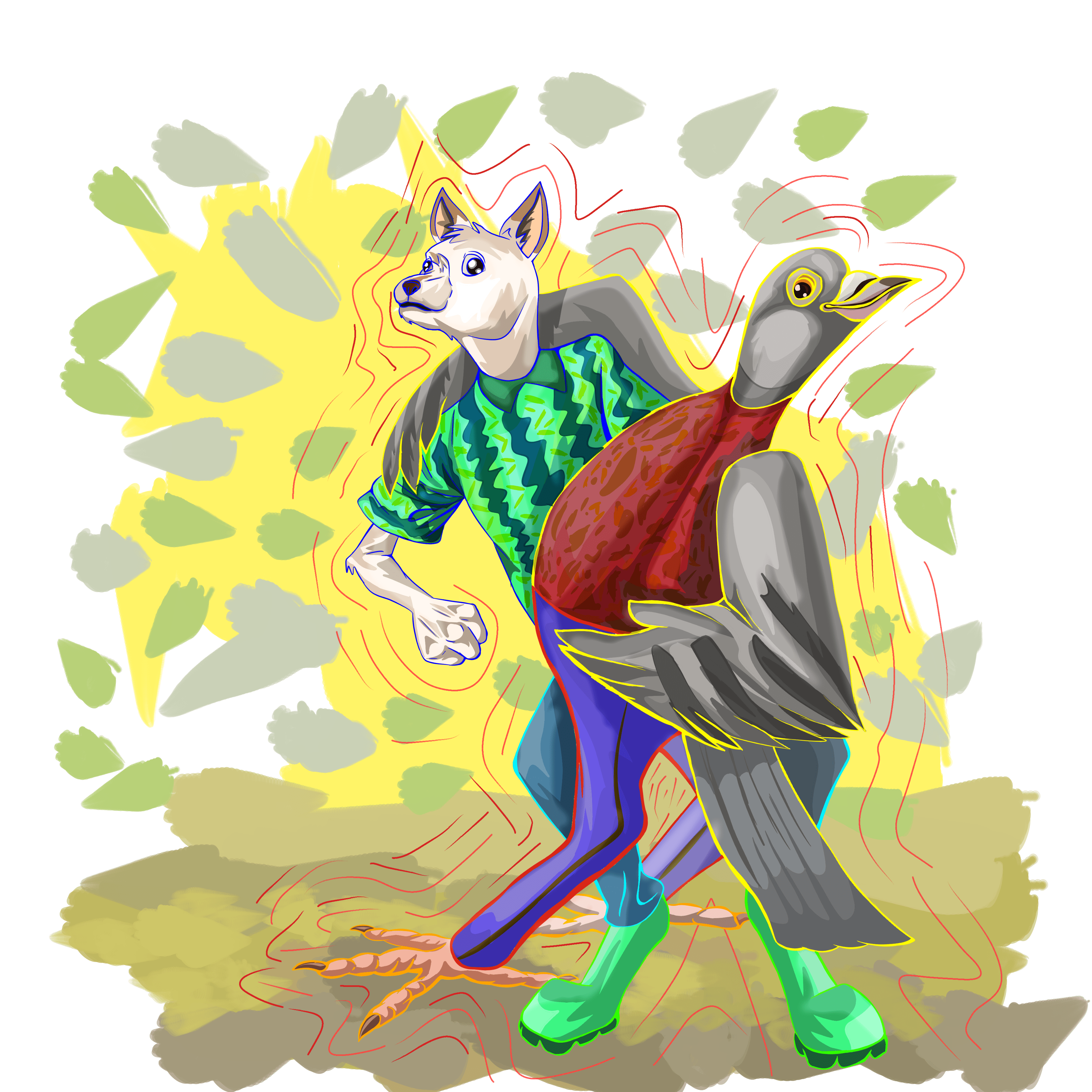
This latest artist showcase shares the life and work of Miguel Angel.
When did your interest in art/creating begin?
My interest began as a child; I liked to draw.
What is your starting point for each piece?
My starting point is surrealism, pop art and sometimes extravagant haute couture attires applied mainly to furry fandom.
Who/what influences your work?
My influence mainly comes from the costumes of designers like Alexander McQueen, or Galliano. Or from works of art like Romero Britto or Anthony Ausgang, and in the furry fandom artists like tamias6, paco panda, bitterkeit, jacato – among many many others!!
What do you hope the viewer gets from your work?
I like when the spectator finds my drawings strange, entertaining and funny – that causes joy and sometimes irony.
What do you think about the term Outsider Art? Is there a term that you think works better?
I see that this term applies to the art of those who did not have artistic academic training, or are naive. I am not sure about that, since it has expanded a lot and it is already art almost anything. In my case, what I do is for a more specific audience like Furry Fandom, but at the same time I want to take this art out of the niche.
What are you working on at the moment?
At this time I upload my work to my page of illustrations “Floky el caballito.” I will also resume an exhibition that I had planned for a long time ago about messenger pigeons that become smartphones so as not to feel relegated with technology.
Where do you see your work taking you in the future?
I don’t know yet, I have a lot of uncertainty about it.
Over the past couple of months, I have been trawling through reviews of outsider art exhibitions published in the UK national press. It has been an interesting exercise, returning to some of the exhibitions I have visited over the past 10 years; this time, with my researcher’s head on. After diving into several of these reviews – most of which focused on the Wellcome Collection’s Souzou: Outsider Art From Japan, the Hayward Gallery’s Alternative Guide to the Universe and the Whitechapel’s Inner Worlds Outside, I started putting together a list of words and phrases that kept cropping up; words that actually seem a little out of place in a review of an art exhibition.
The above are just a few of the words and phrases that jumped out at me. It’s not the most positive list, but this kind of sets the tone, as you can imagine, for what these exhibition reviews included. This emotive and, quite frankly, dramatic language is not uncommon when it comes to literature associated with outsider art exhibitions – whether that is in the press, in exhibition catalogues, or alongside the art in the exhibition space. This led me down a bit of a worm hole, thinking about the role of the art critic in representing outsider art to the wider public.
As I have mentioned before, we don’t teach our students about outsider art (in the UK, anyway) when they enroll on an art history course at any level, and usually, when a friend or family member asks what it is I’m researching and I answer with ‘outsider art,’ the majority of people look very puzzled. Actually, I was once asked if outsider art meant art that was created outdoors. But this puzzlement is understandable – the general public never hear about this work, and for the most part, many of even the most well-known outsider artists are only really known within the outsider art field. Because of this, we rely heavily on what we read about outsider art; from curators, from historians, and from critics. And because the work is, for the most part, pretty unknown, the language these curators, historians and critics use can be dramatic – or even voyeuristic to some extent. Human beings love hearing about the ‘weird and the wonderful,’ and they love hearing about people who aren’t like them (just think about the fascination a large part of society has with watching Netflix documentaries about serial killers). So this is what the critics play upon.
Martin Ramirez, courtesy of ArtNet
When writing about outsider art, critics have an extra bonus in that the majority of (certainly the ‘traditional’) outsider artists did not consider their work to be ‘art’, and therefore did not write or talk much about it themselves. This means the critic is able to imbue their own views onto this work, and, particularly with the national newspapers, reach much wider art and non-art audiences. This kind of power and freedom (no fear of reprisal from the artists) is no doubt a factor in the overdramatising of this type of work. It is important to consider the role of the curator in this story too. Critics need some to pin their review on; something to ‘appraise against’; a theme or a narrative. Many exhibitions of outsider art are group shows lumping together anyone and everyone who might fit comfortably (or uncomfortably) under that spacious umbrella. So critics are left to review disparate works and people, finding common themes where they can; and this common theme is often health or disability.
The role of the critic in the wider art world is also paramount here. The art world is a market system, and there are people who run the system for their own or others’ gain. Critics are just a small cog in this wider network of sales, exhibitions, and fame. A small, but important cog. Critics are self-imposed definers of taste. They say what’s good and what’s not good, and, much of the time, their views will be plumped up by ulterior motives. I have mentioned Howard Becker and his sociological views about art in previous posts. He talks a lot about the theory of reputation, and how reputations (of artists, and of works), “develop through a process of consensus building in the relevant art world.” He also notes that “the theory of reputation says that reputations are based on works. But, in fact, the reputations of artists, works, and the rest result from the collective activity of art worlds.”[1]
Marcel Storr, courtesy of Artforyum
I found a nice quote by critic Laurence Alloway, which I’d like to finish with. He nicely summarises what he thinks the role of the critic should and shouldn’t involve:
“I think art criticism should be part of the communication system of a mass society, not elite-dominated, not reduced to a single tradition, and certainly not possessing any absolute value.” [2]
References
[1] Becker, Howard. S., Art Worlds, University of California Press, 2008
[2] Kalina, Richard, Imagining the Present: Context, Content and the Role of the Critic, Routledge, 2006
In this thought-piece, Jerry Fresia discusses how capitalism has impacted on the art world (inside and outside) over the past century.
Work by Jim Sanders
Power and the Capitalist Class: Capitalists don’t just sit off to the side minding their own business. Their business is the accumulation of capital (money and productive assets). They buy politicians, sit on the boards of museums and universities, and with major grantors, very high end gallerists, and an army of agents, they can shape and define what art fits into the insider art world of high end galleries, major art fairs, and auction houses. Central to the insider art system is the grooming of artists whose work supports their ideological needs, who are malleable, and, therefore, willing to accept direction into the inside circle.
The capitalist class first exercised its cultural power as a class when it defined, designed, and promoted a group of artists that articulated its ideological needs as an emerging hegemonic class following World War II. These soon-to-be-inside artists became known as the Abstract Expressionists. Using numerous capitalists back galleries and museums – primarily MOMA NYC which was created by the Rockefeller family – and the CIA (secretly directing the full range of art activities in western Europe as well as intellectual journals for 17 years), capitalists, during the post-war era, made it imperative that all artists pushed to the inside had to make work that was totally abstract, that is, “politically silent,” and free from any European influences. In other words, the American capitalist class, at that point in time, had enough power to create, in effect, a cultural factory. Out of this cultural factory, American Expressionism and the phenomenon of artists dependent upon capitalist cultural power, otherwise known as ‘inside artists’, were born.
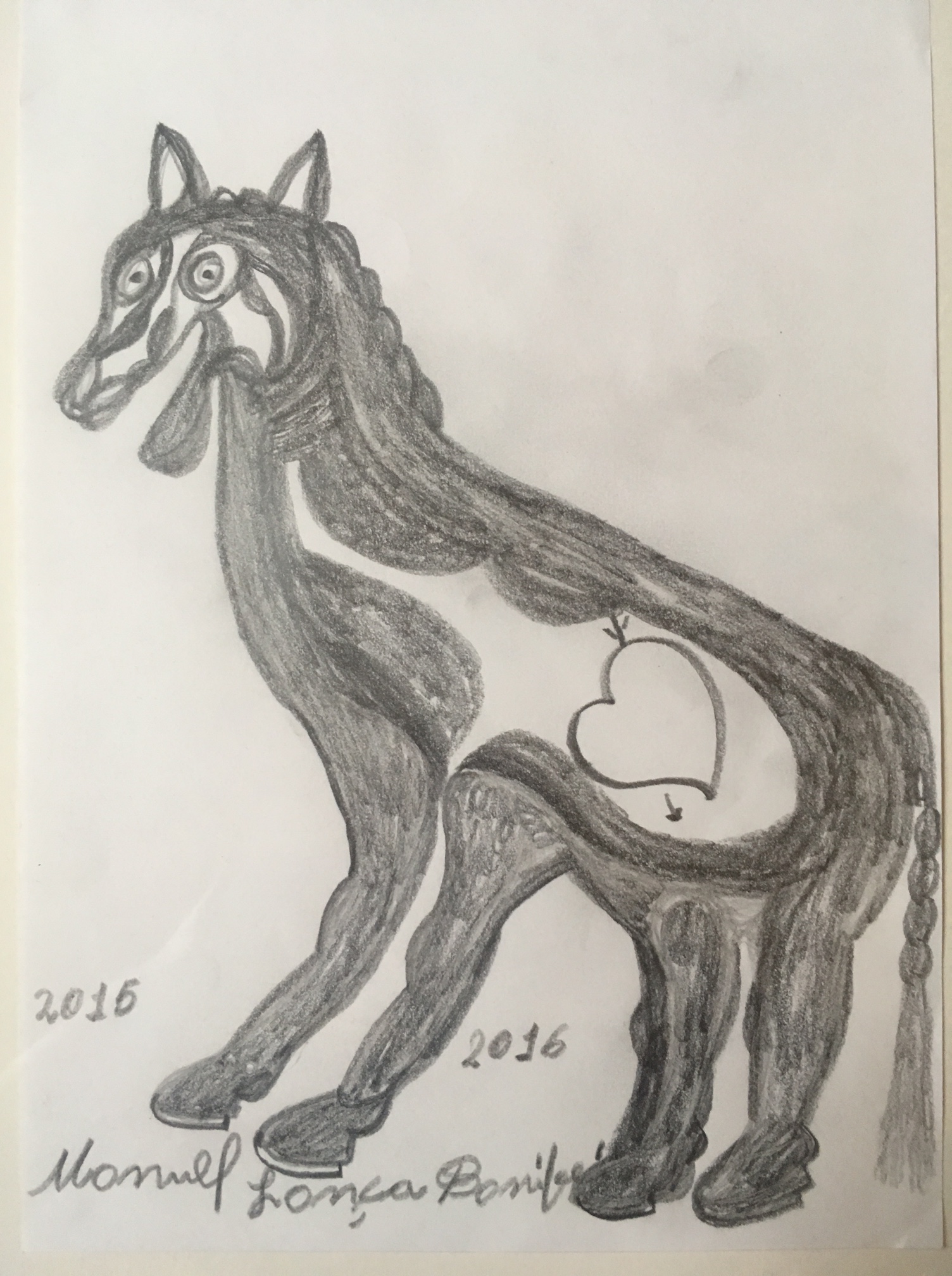
Work by Manuel Bonifacio
How Work is Produced: Capitalism is a specific way of making our houses, cars, computers, and even the way we grow our food. It is a system of production. Within this system, there are people designated as bosses: these are the people who work with their minds and do mental work. These people are the owners, sometimes referred to as planners. Not too long ago, they were called the bourgeoisie. And then there are the workers who in their work life are told what to do. They work with their hands and do mindless work. They are sometimes referred to as blue collar people, people who work on the line, or just plain workers. Not too long ago, they were called the proletariat. In the art world, they are called assistants.
All major artists, for a hundred years, prior to WWII were outsider artists. They controlled their own work in studios or out of doors and inveighed against the bourgeoisie regularly. They were consciously independent. No one told them what to do in their work. But by the 1960s, some artists began adopting capitalism a way of making their art. They called themselves “executive artists” or “ideas men” and turned their studios into factories, using other artists (assistants) as workers to make their art. Notable among these executive artists were Frank Stella, Andy Warhol, Claes Oldenburg, James Rosenquist, Carl Andre, Robert Morris, Damien Hirst, Jeff Koons and others. Roy Lichtenstein predicted that all (inside) artists would eventually adopt factory values and practices in their work. These capitalist artists, working closely with capitalist financiers, marketing specialists, and luxury goods manufacturers were absorbed into the capitalist-class run museums-academy-auction-house troika. This is the core of what may be called the ‘inside.’
Work by Alan Doyle
The Inside-Outside Artist Division: Work that is dependent on the approval of gallerists, financial backers, is produced for a particular market, or made in collaboration with luxury goods manufacturers, can be said to be instrumental, that is, produced as a means to satisfy some end external to the artist. This instrumental rationality is what defines the inside artist. His work (and it is mostly his) is always based upon a calculation: what must I do to please another and maximize market value? Every artist who works within this charmed inside circle is infected by this way of being and thinking. Wonder or mystery may not enter spontaneously into his process because his process is always a controlled activity of production. This uninviting situation is born of dependence and obedience that is central to the values of capitalist production.
At the moment that the inside artist is born, so too is the excluded ‘outside’ artist. Because she has not been directed into the inside circle, she is free from the need to make art that meets criteria external to herself. Independent and free, she is able to find passages into a realm where wonder is revitalized. She is free to give greater expression to play in her work as she feels the need. In other words, her work is authentically an expression of who she is. Her process is an activity of expression and of becoming.
Obviously, the outside artist needs the material rewards that accompany inside artist status so that she is able to sustain the liveliness of her work in comfort. But addressing the question of how the outside artist might go about achieving that end requires a further discussion of strategy. The point here, only, is to think in terms not of the art product, or genre or quality of the product of the outside artist vis-à-vis the product of the inside artist or of ways of penetrating the inside circle, but to think in terms of celebrating and protecting the process out of which the work of the outside artist has been given life. The inside-outsider separation is along that fault line.
I have just started researching for my next PhD assignment, which will look at the ways the media has reviewed exhibitions of outsider art over the past fifteen years. Whilst working my way through back catalogues of exhibition reviews, I came across Jonathan Jones’ review of the 2014 British Folk Art exhibition at Tate Britain (London).
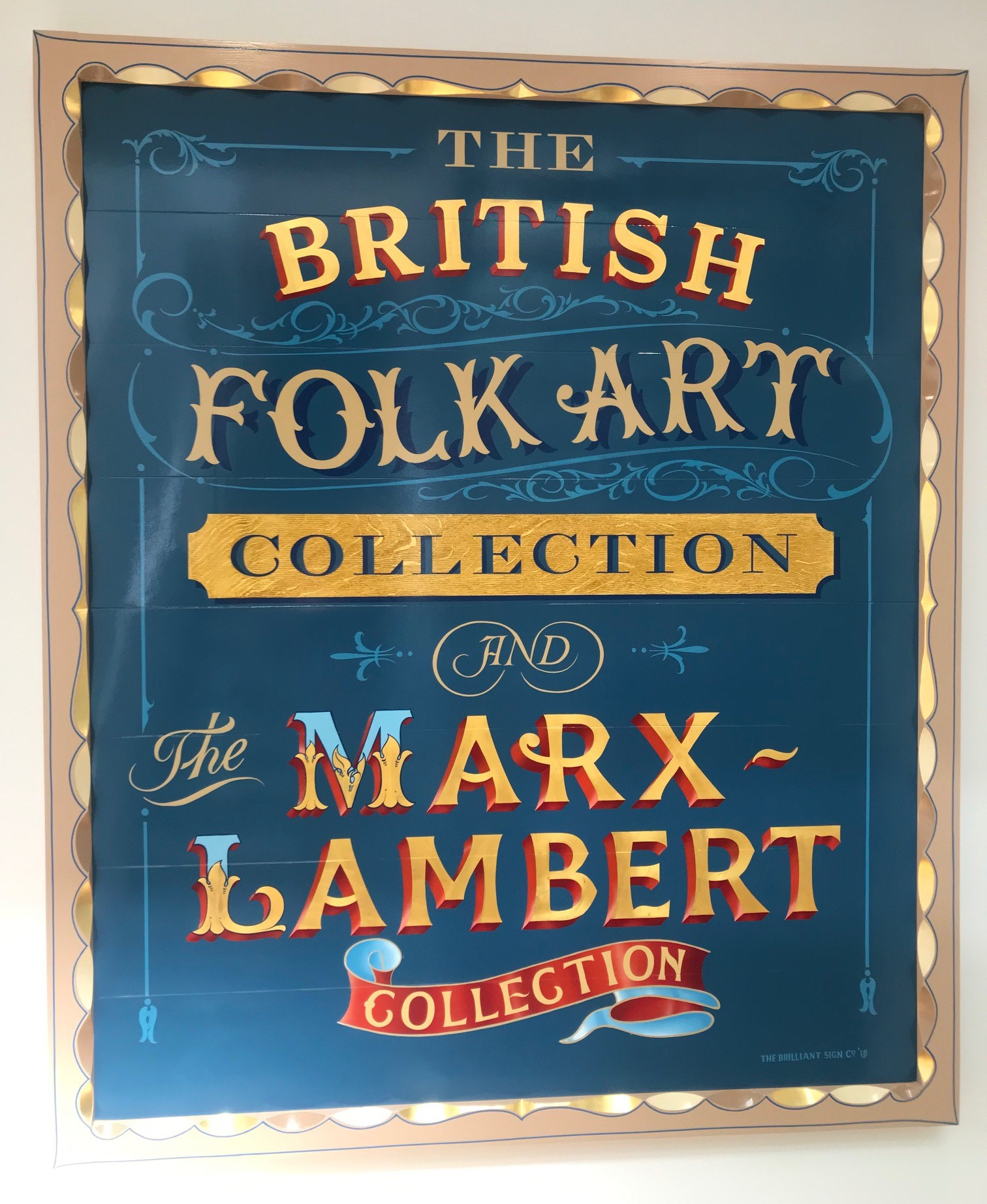
In his review of the first major exhibition of British folk art (which is actually very positive), Jones identifies folk art as exceptional in that it “shows that there lies a whole other cultural history that is barely ever acknowledged by major galleries.” This got me thinking about a work trip I made to Compton Verney in Warwickshire earlier this year. Compton Verney has its own very broad collection of folk art, which is exhibited in custom designed rooms housed at the very top of a magnificent building.
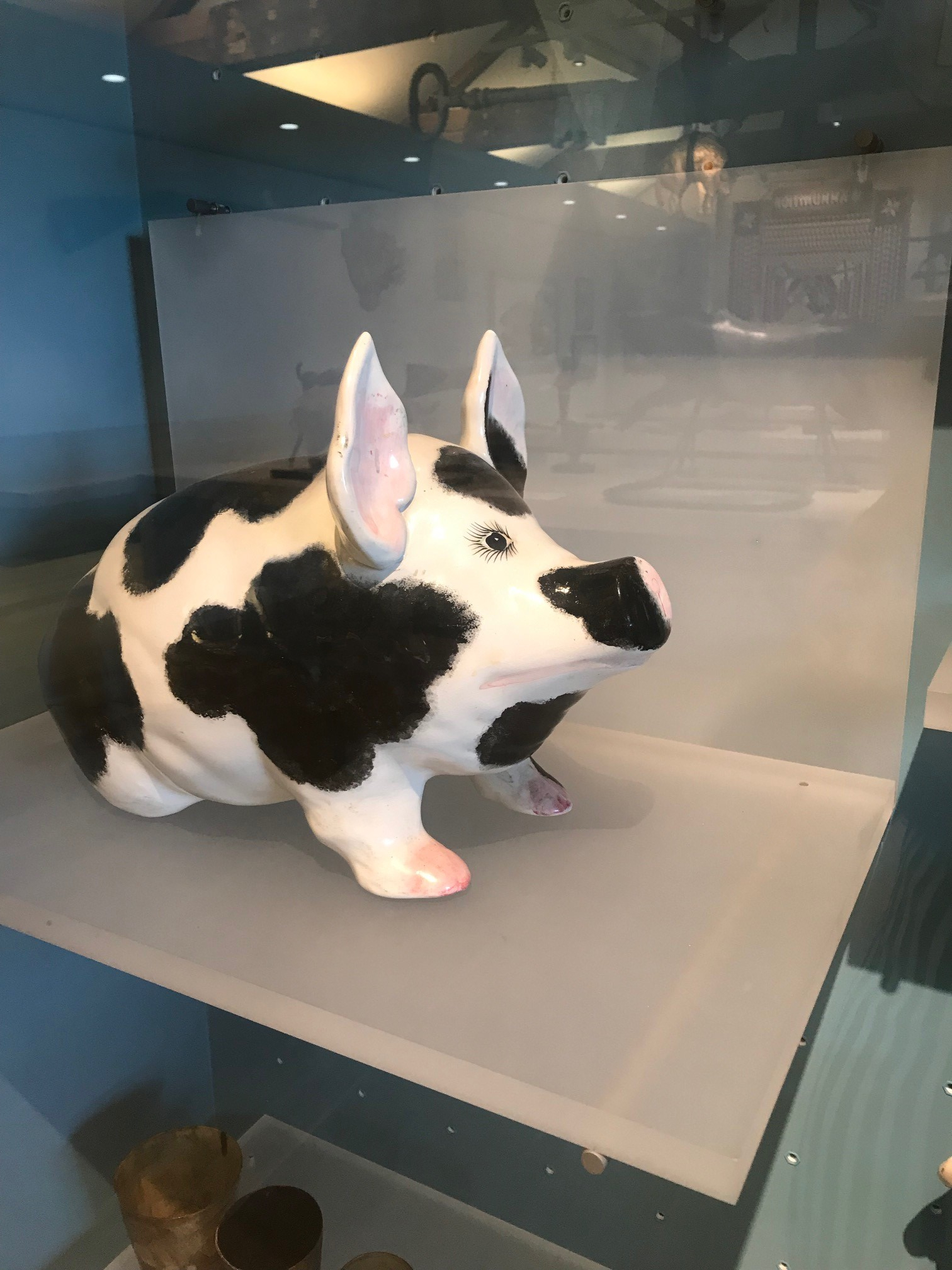
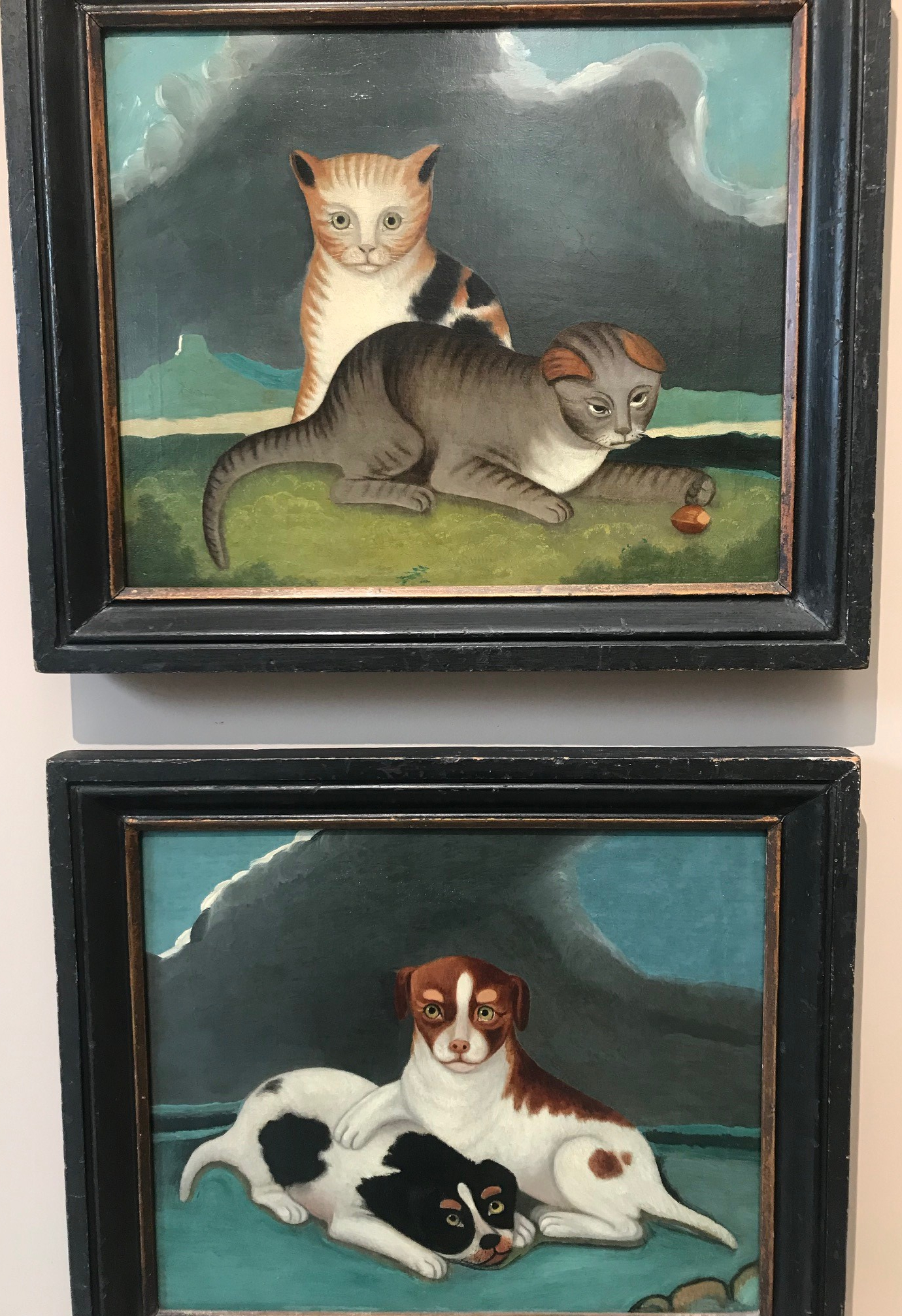
Incorporating amusing yet beautiful paintings of prized farm animals to visual signs used above shops before reading was something that most people were able to do, the collection is a wonderful accumulation of a history of Britain that we so rarely get to see or experience. It is the day to day life of the everyday person.
Traditionally produced by people from a lower socio-economic background working within their local communities, folk art is often found dancing around the edges of the mainstream art world. Often seen as craft, it has a reputation as being a form of ‘low’ art. The distinction between folk art and ‘mainstream’ art has been emphasised – and embedded – by art institutions, whose historical works endeavour to show either the lives and faces of the upper-classes, or the lives of the working-classes through the eyes of the middle- or upper-classes.
In his review, Jones notes that “where ‘elite’ paintings in the Tate collection might show such people [people from the working-classes] labouring in the fields, here they are shown as they wished to see themselves – dressed up on a festive day instead of working their fingers to the bone.” This distinction between the content of folk art and the content of ‘mainstream’ historical works highlights the influence of art institutions over what we see and know about our own cultural history.
On entering most of the major galleries in London, works in their historical collections will show monarchs, or other men and women of high standing, probably dripping in gold. Or they might show the lives of the lower-classes, but tinged with an authoritative gaze – maybe the people in these depictions are at work, or they are sick. These depictions give us very little insight into the actual lives of people who were not a part of society that was accepted, documented and shared. If we believe what we see in these historical works, we could believe that people from working-classes were just unfeeling toiling machines. But what were their lives really like? What did they enjoy doing? And how did they really see the world?
This is where folk art becomes particularly valuable to us. Because it is in these apparently ‘mundane,’ ‘everyday’ images that we see what life was really like for those who had little to no control over what was recognised as historically important. They are lives and stories that have been hidden by those in positions of power; a kind of propaganda that has shaped how we see our history. And art galleries and museums (being the influential institutions that they are) have had a huge part to play in this. Art, if you think about it, is the only visual documentation we have of ‘what came before.’ If we are only privy to images created and disseminated by those from a certain societal standing, then we only see the world as they experienced it.
“In stately homes from Kenwood to the fictitious Downton Abbey, we are told again and again that Britain’s culture has been shaped down the centuries by the elite, its art collection, it cooks and its gardeners,” Jones notes. This, he says, is just “the view from above.” By exhibiting folk art in our key arts institutions (like Tate, and like Compton Verney), we are giving audiences the chance to experience what everyday life was like for the everyday person. Folk art is an intrinsic part of our history. It is something we cannot afford to lose.
(all images taken by the author at Compton Verney)
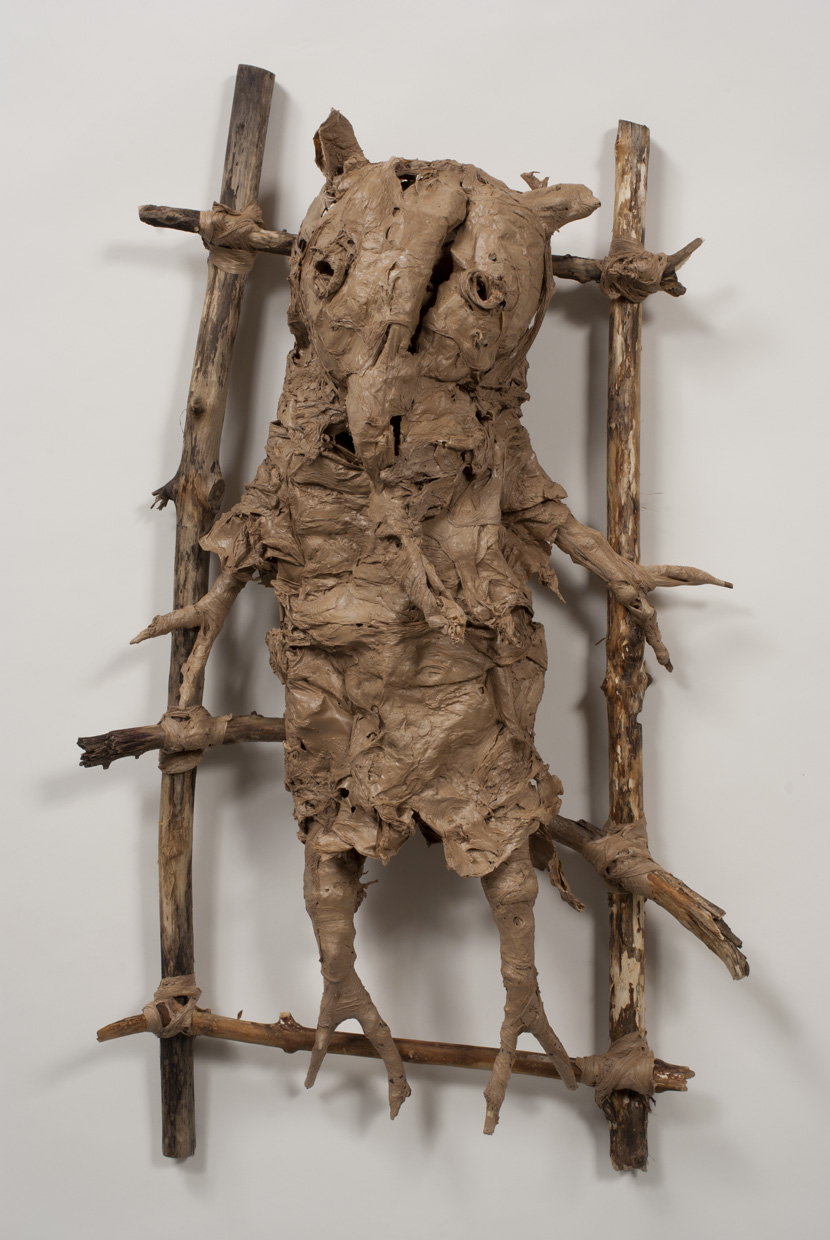
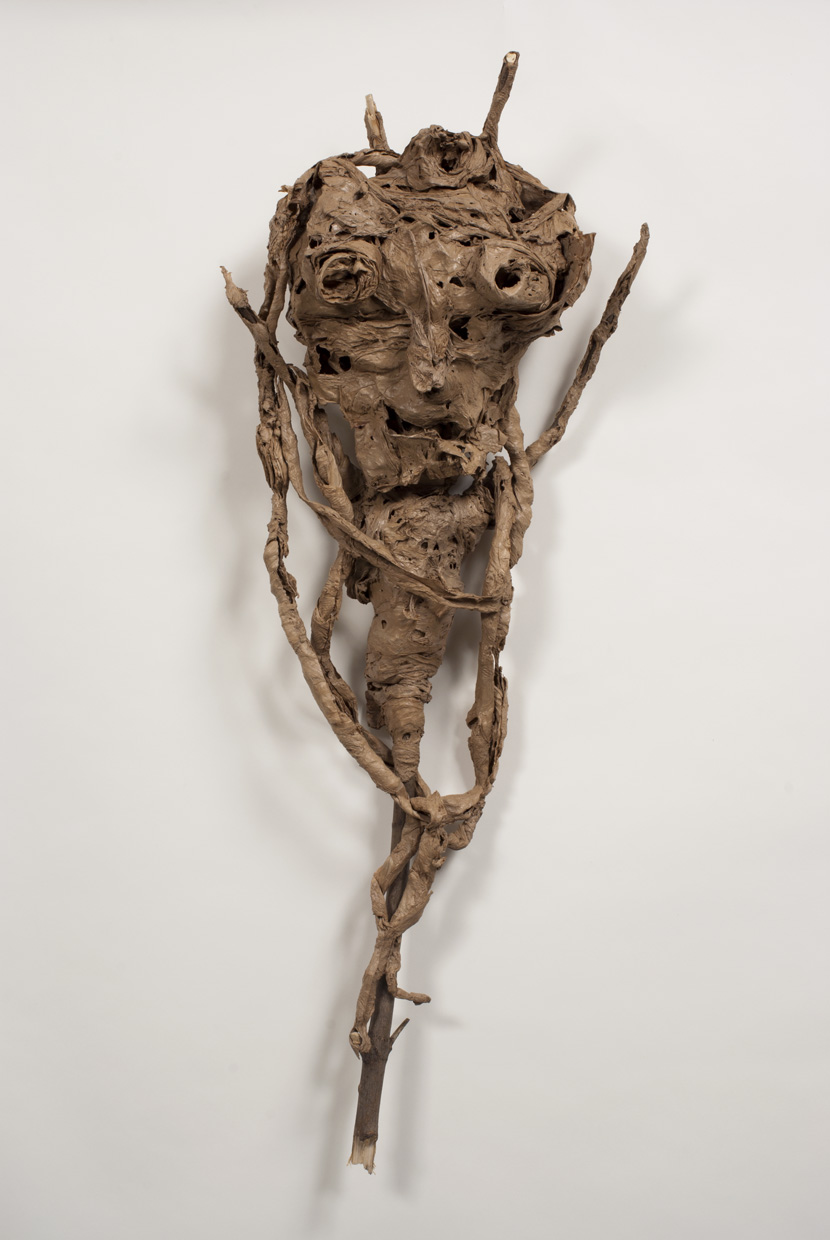
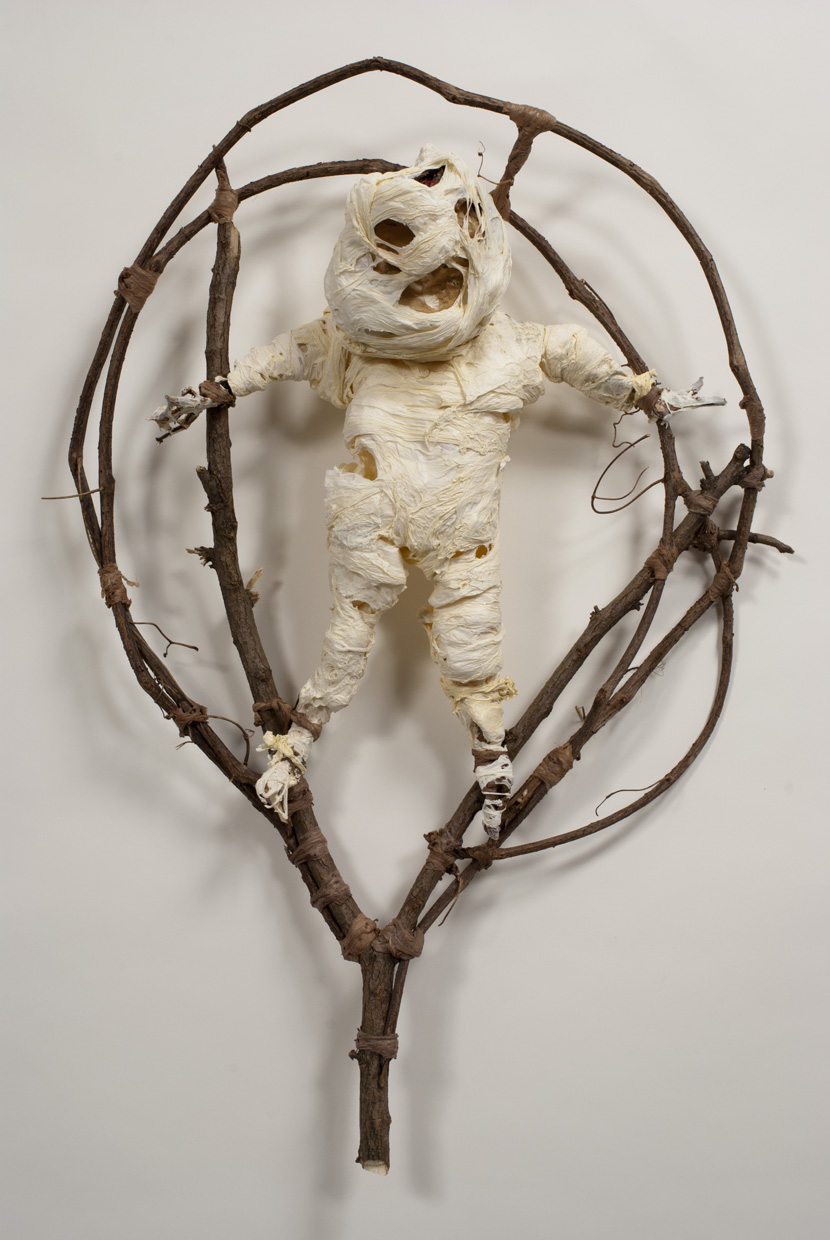
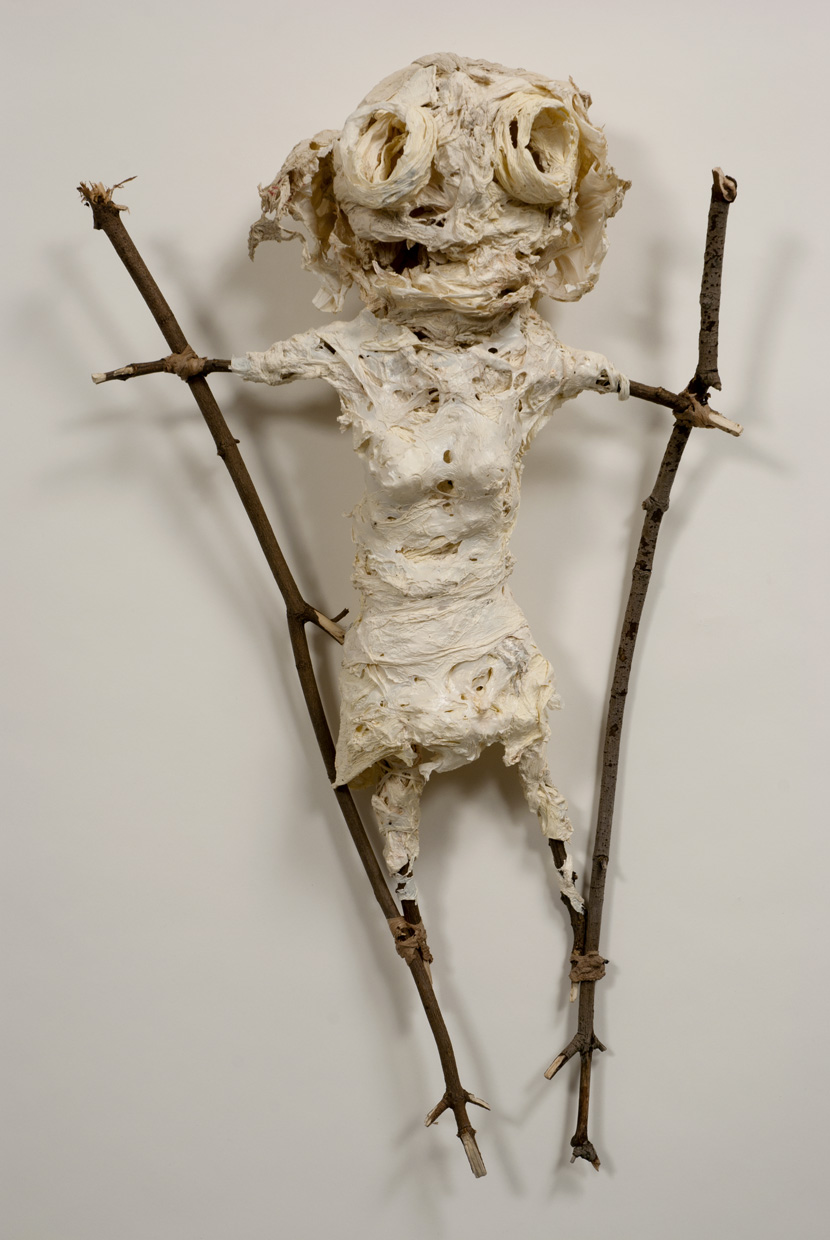
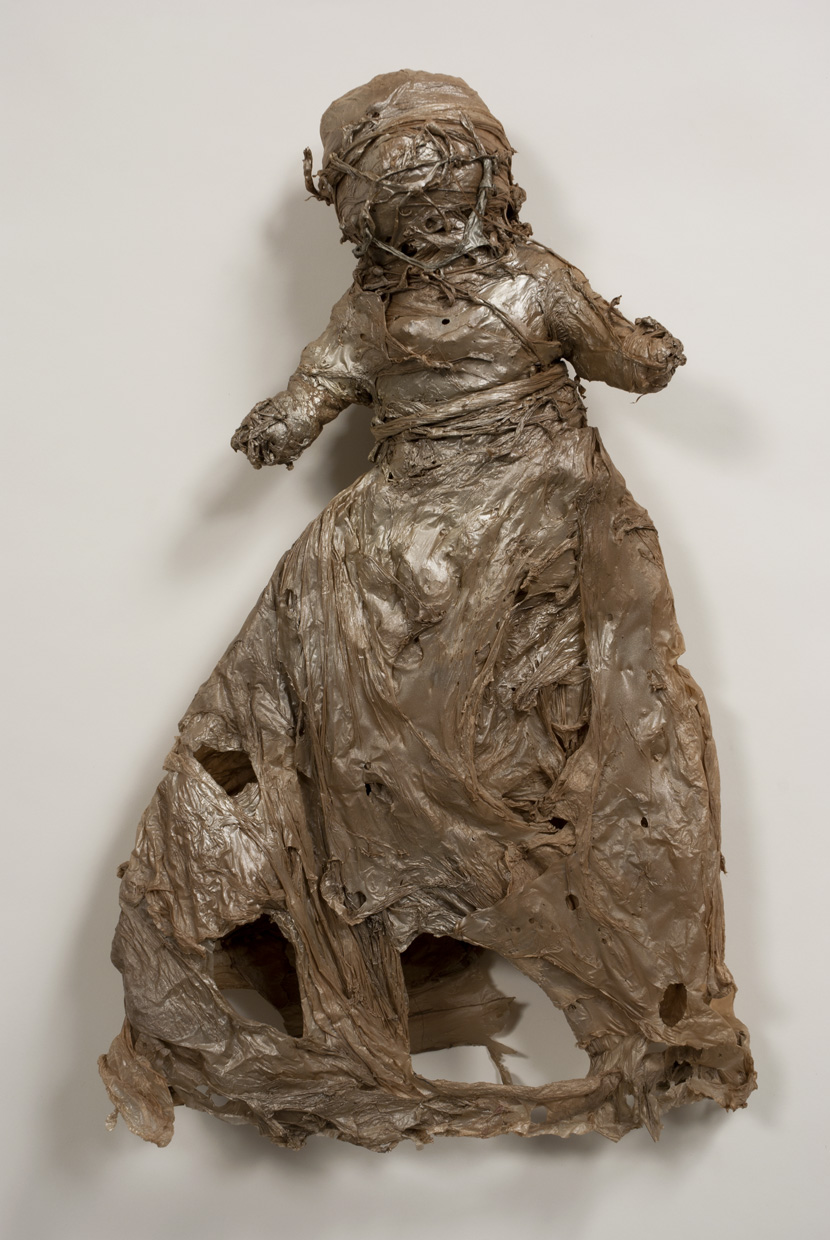
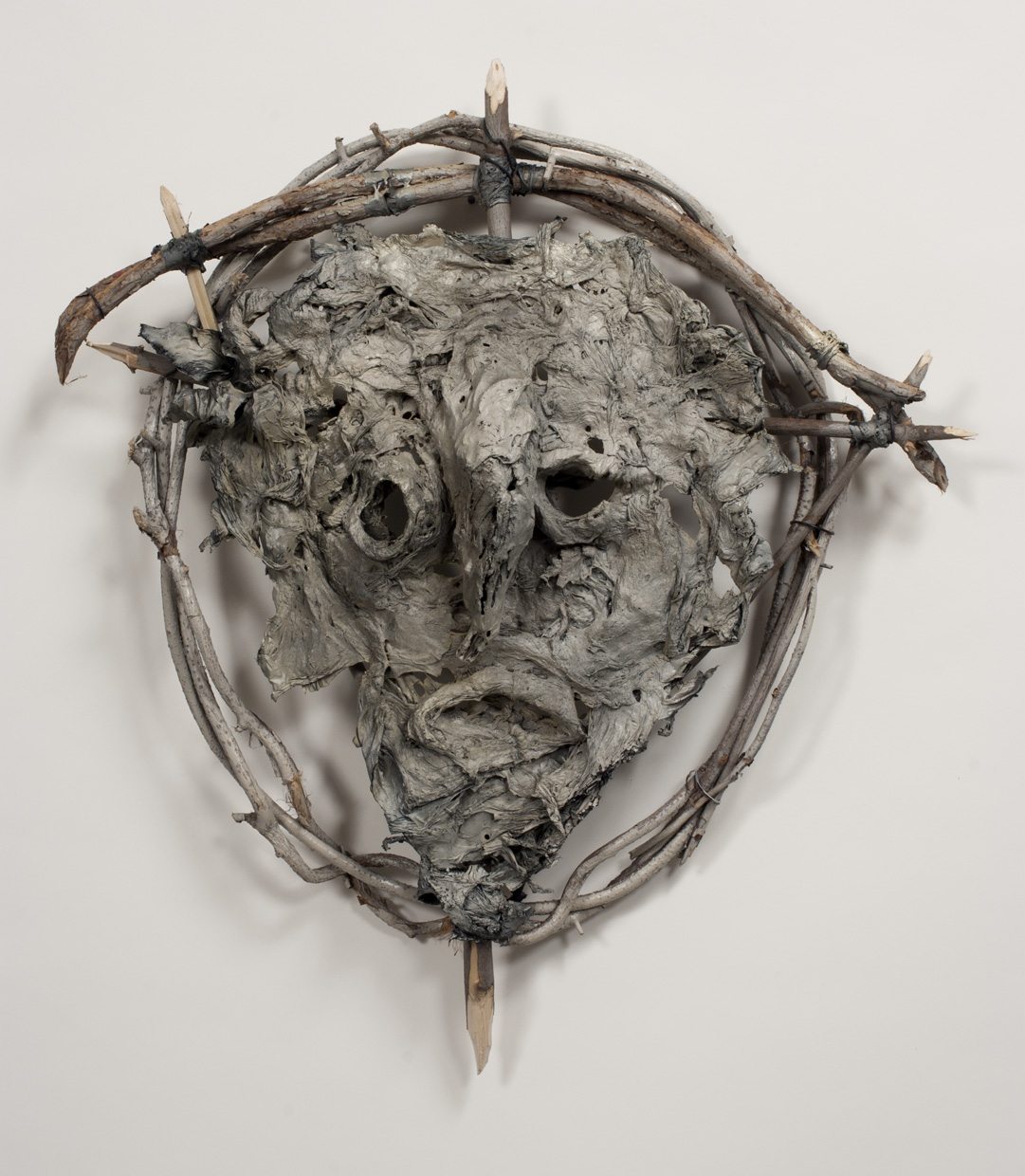
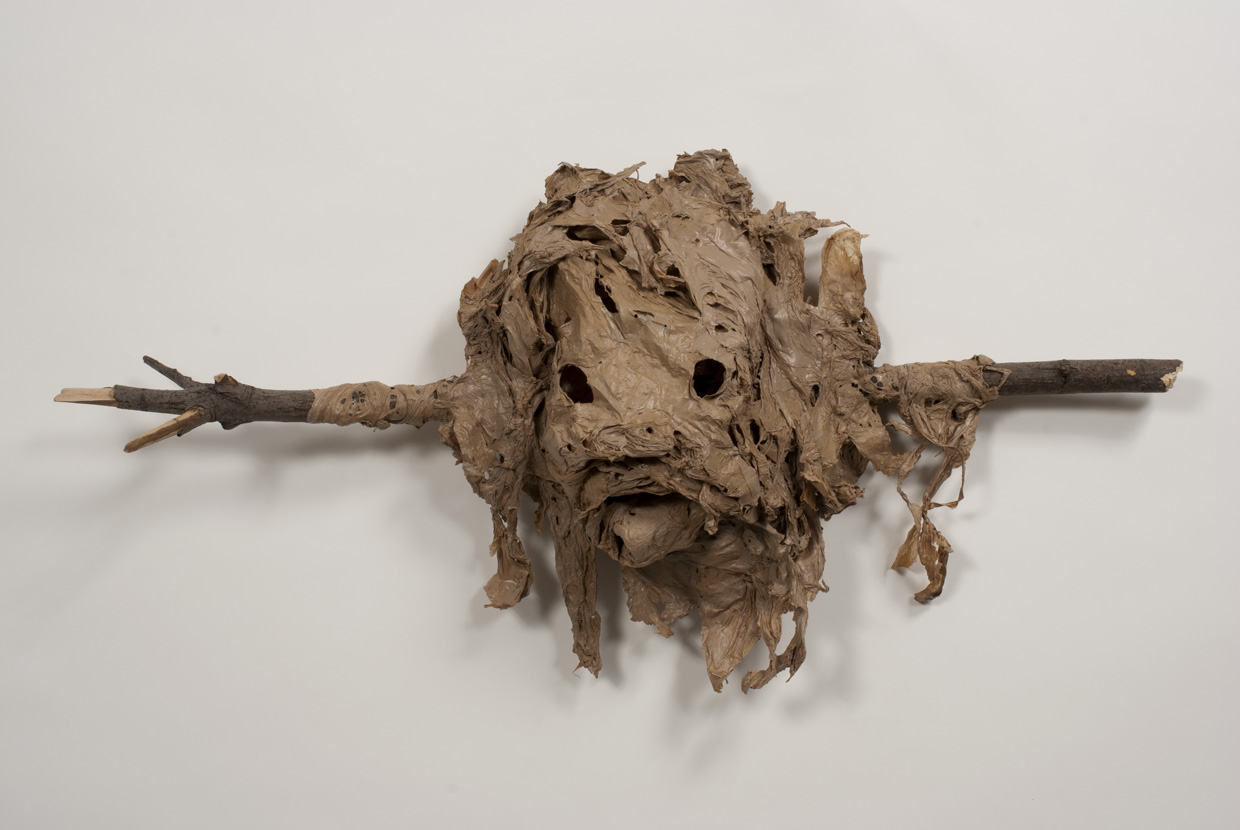
The latest artist showcase comes from Robert Haggerty. If you would like to have your work featured on the site, please send an email to kdoutsiderart@yahoo.com.
“Art is the conscious making of numinous objects.” K. J. Bishop
“As an artist, I engage the grotesque in pursuit of the numinous. Sometimes I think of myself as an archaeologist digging in the bogs of the unconscious, other times as a child convinced that the coat hanging on the door is the boogieman. To evoke the numinous, I use common detritus, discarded plastic bags and dead branches. For my pallet I use the colors of the underworld: the black of dry gangrene and tar, the brown of mud and shit, the white of bone and maggot, the grey of clay and ash. For me a work is finished only when it feels haunted.”
When did your interest in art/creating begin?
My mother introduced me to molding clay and the possibilities of cardboard and Quaker Oats boxes before I went off to school. When I began a second career, teaching Art at an Early Childhood Center, I realized that I was now doing professional what my Mom did instinctively.
What is your starting point for each piece?
The starting point for my work occurs in my praxis or it doesn’t occur at all. When heated, plastic bags expand, contract, congeal and curl. This malleability permits spontaneous images, especially faces, to emerge. Such images are my starting points.
What do you hope the viewer gets from your work?
Simply put, an epiphany. While working on a piece there comes a moment when I can go no further, a moment when the work stares back in its naked wonder and I am left dumbfounded and baffled. I want the viewer to experience that moment, to stop in his or her tracks, startled.
What do you think of the term Outsider Art?
The term covers a broad range of styles and subjects. For me, the question is, “where do I see myself on this spectrum.” When I think about Outsider Art, I see a Venn diagram with two overlapping circles, one representing Outsider Art, the other “Insider Art.” For me the overlap is the sweet spot.
What are you working on at the moment?
I’m working on a piece for a Local Arts Council Exhibition celebrating “The Day of the Dead,” the Mexican holiday when the souls of the departed are believed to walk the earth. For obvious reasons, I seldom participate in exhibitions with defined themes. But this one is too hard to resist.
Where do you see your work taking you in the future?
My work will evolve and change over time. At present, I’m content with what I’m doing and have no desire to go off in another direction. Hopefully, at some point I will acquire gallery representation.
Who/what influences your work?
Alberto Giacometti, “The subject of every work of Art is primordial.”
Paleolithic Venus Figurines, awe-inspiring and less than 10 inches high.
Tribal Art. The first time I saw a Kafigeledjo Oracle, the hair on the back of my neck stood up.
Bog Mummies and other naturally occurring numinous phenomena.
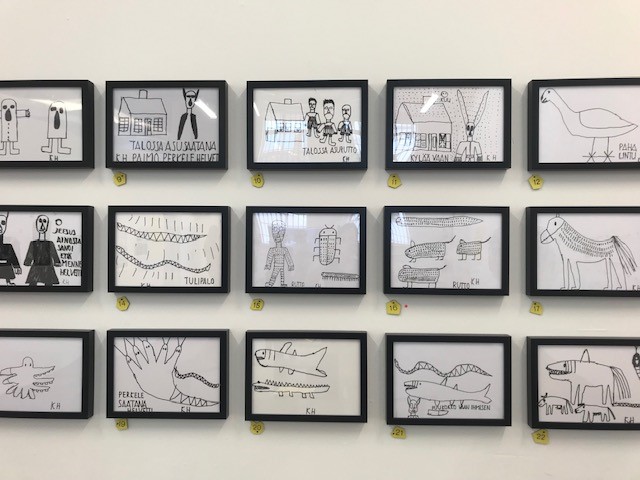
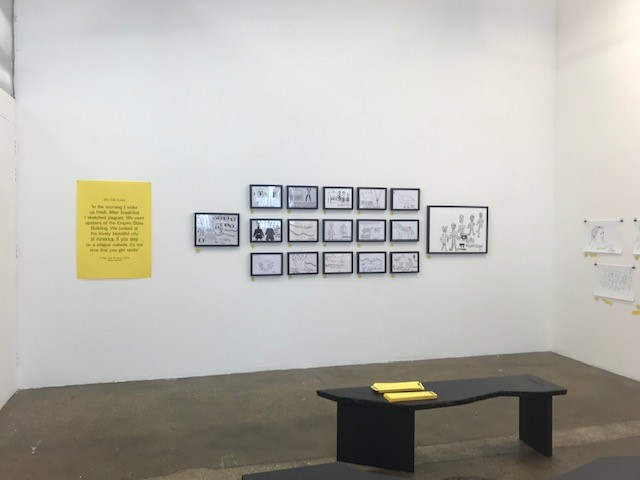
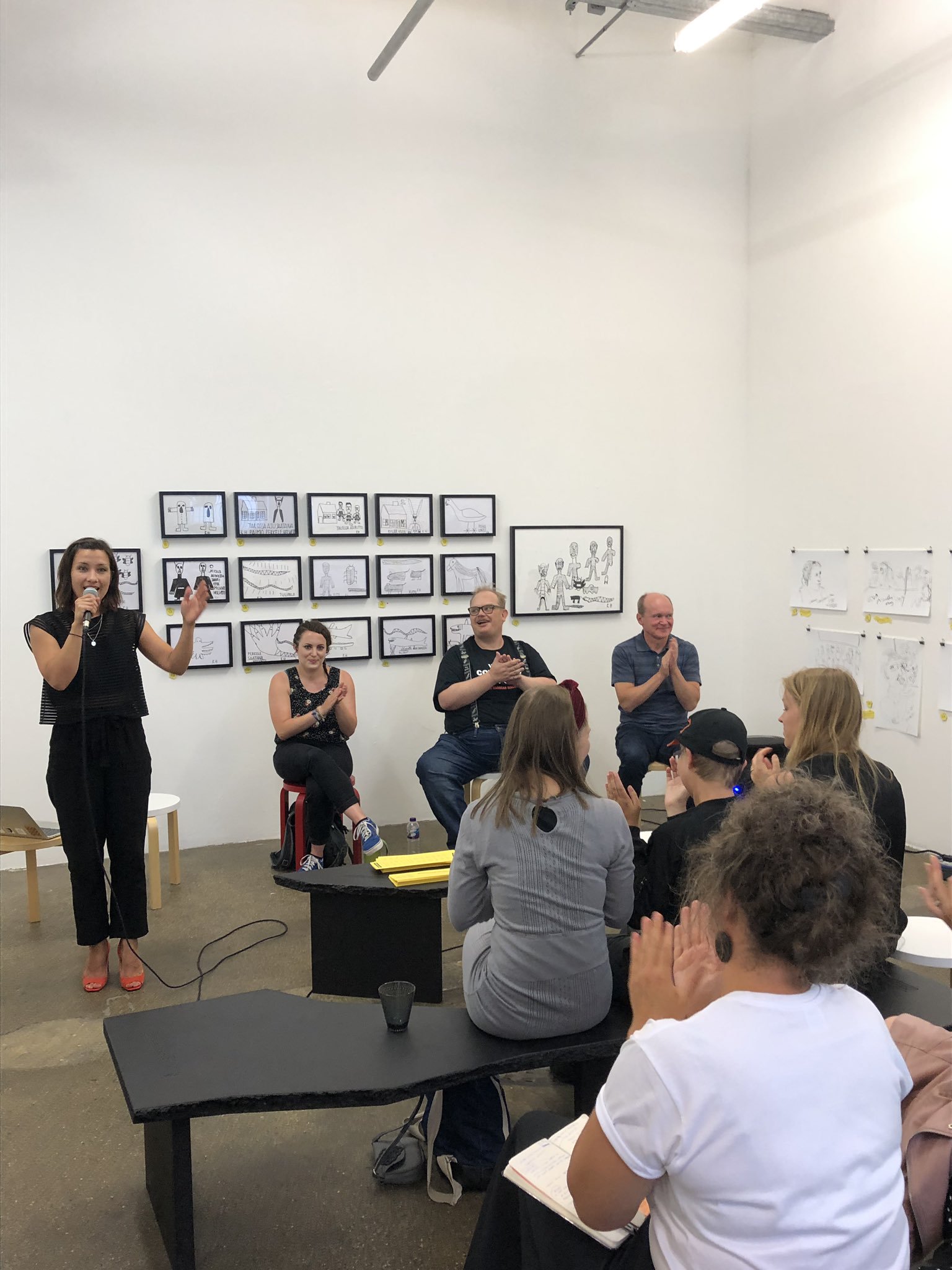
Earlier this month, I was lucky enough to be invited to join a panel discussion in London organised by Pertti’s Choice in my role as Step Up Coordinator at Outside In. The panel focused on the issue of ‘sustainable arts careers for people with disabilities.’ It chimed nicely with the work I do on Outside In’s Step Up training and professional development programme, which ultimately aims to challenge who is able to take up positions of authority in the art world. I was joined on the panel by Ese Vienamo, who works for the Arts Promotion Center in Finland focusing specifically on ‘outsider art,’ and Sami Helle, from Finnish band Pertti Kurikka. In this post, I wanted to outline some of the topics we covered during the discussion, and reiteratesome of my key thoughts.
Pertti’s Choice pop up in London
I started by introducing the current system in the UK, which really highlights the work that needs to be done in recruiting people with disabilities to positions within the arts sector. Arts Council England (ACE)’s 2015-16 Equality, Diversity and the Creative Case report showed that only 4% of staff at National Portfolio Organisations and Major Museum Partners were disabled, compared to 19% of the general population. These figures highlight the ongoing under-representation of disabled people in the arts sector, despite ACE and and other organisations’ attempts to diversify the arts workforce.
The challenges we face in the UK arts workforce, to me, are defined by a system that has existed in the same, traditional way for a number of years, but is no longer fit for purpose – perhaps has never even been fit for purpose. We expect people (whatever their background or situation) to fit into this existing system, rather than offering a flexibility that can accommodate people who have different needs or requirements. The arts sector is notorious for its long hours and low pay, and is structured in a way that if someone, for example, struggles to travel at rush hour, this might put them out of the running for a job that they would otherwise be perfectly competent at. I think this is epidemic throughout the UK workforce more generally (the 9-5 working week, for example, is not suitable for everyone), but in the liberal world of the arts, which actively encourages and seeks out diversity, we should – and can – expect more.
The panel
As a sector, our inability to diversify our workforce leads to a vicious cycle that continues to create an elite system that many cannot gain entry to. The majority of people working in the arts are from a white, middle-class background, as highlighted in the Department for Culture, Media and Sport’s ‘Creative Industries: Focus on Employment’ report in 2015, which shows that in 2014, 91.9% of jobs in the creative economy were held by people in more advantaged socio-economic groups, compared to 66% of jobs in the wider UK economy. People tend to ‘seek out their own,’ and this means that much of the art we see in galleries, theatres, cinemas, is created by and for people from a white, middle-class and able-bodied background. This is an issue I feel very passionately about because I think as a nation we are missing out on inspiring, innovative and stimulating art simply because we are not able to open our minds to different ways of working.
We are dealing with challenges like ingrained preconceptions about people with disabilities, people from low socio-economic backgrounds, and people with mental health issues, as well as a system that is structured in such a rigid and traditional fashion. We need to come together to challenge both of these things in order to create significant and lasting change, and this should be happening from the ‘bottom’ and the ‘top.’ Change is difficult, and it takes time, particularly if there is a system that has existed historically. We need to be approaching this from the top-level (government, CEOs, the big arts institutions), and from the bottom (working with individual organisations to think about diversifying their workforce and how this can be done in a manageable way).
Pertti’s Choice pop up in London
Discussions around these issues have certainly been started, but there is a long way to go. As a sector, we need to change our mindset, see flexible working as the norm, and certainly start seeing the diversification of the workforce as something that will enrich our artistic output, rather than as something that is tokenistic and needs to be done to ‘tick boxes.’
Making these changes starts on an individual level, at each and every arts organisation in the UK. Change doesn’t start at the interview process, or even the application process. It starts before that. It starts with the language we use in job descriptions and person specifications, it starts with where we advertise our jobs, and it starts with a different mindset that is actively seeking out perspectives that are different to our own, ingrained narratives. It starts with flexibility – how can people apply for a job (do they have to fill out an application?), can the interview location be flexible? Can the time and date of the interview be flexible? Is there flexibility in the role itself for the right person, and is this outlined in our advertising. We need to be working with people who might not be able to fit into the existing system for whatever reason to help make the system work for them.
Sitting on the panel at Pertti’s Choice pop up in London
So, my final word – let’s stop assuming that we should be moulding everyone to fit into the same, broken system, and instead, start actively thinking about we can be changing this system (even in the tiniest way). It is not a one-size-fits-all; it takes communication and flexibility. Because after all, a more diverse workforce = more diverse art.
Following on from my recent post summarising Julian Spalding’s thoughts on the Eclipse of Art in the twentieth century, I have been reading a number of other texts that focus on the political and societal factors that impacted on the western art world in the twentieth century. This post offers a summary of Claire Bishop’s ‘Artifical Hells: Participatory Art and the Politics of Spectatorship.’
Francesco de Silva, Untitled
The booklooks at the trajectory of participatory art across the twentieth century. Originally a peripheral activity given little to no gravidas in the art world, participatory arts have grown in popularity – and respect – becoming “a genre in [their] own right, with MFA courses on social practice and two dedicated prizes.”[1] The rise and tradition of participatory art is most notable in European countries, where there is a strong parallel with public arts funding. Participatory arts activities, according to Bishop, see the shift of the audience member from ‘viewer’ to ‘collaborator’ or ‘co-producer.’ They are difficult to commercialise, as they are less a concrete object and more a series of events or workshops, yet they occupy a very important place in society.
Bishop links the rise of participatory arts activities to social and political happenings in Europe in the twentieth century, and, perhaps more notably, to consumption and capitalism. A return to a more ‘social’ art, Bishop claims, can be seen to align with the rise and fall of far left-wing political agendas; for example, the avant-garde in Europe around 1917, the ‘neo’ avant-garde leading up to the late 1960s, and the fall of communism in 1989 could be seen as the driving force behind the participatory art of the 1990s.[2]
In the UK, Bishop uses the example of the New Labour government of the late 1990s. Under this leadership, public spending on the arts shifted to have a more socially engaged focused. Based heavily on Francois Matarasso’s report on the impact of arts on society, New Labour’s cultural policy focused on what the arts were able to do for society; “increasing employability, minimising crime, fostering aspiration – anything but artistic experimentation and research as values in and of themselves.”[3] The key phrase utilised by New Labour was ‘social exclusion’: “if people became disconnected from schooling and education, and subsequently the labour market, they are more likely to pose problems to welfare systems as a whole.”[4] This new leaning towards the societal impacts of art were deeply criticised by the far-left because they seemed to seek to “conceal social inequality, rendering it cosmetic rather than structural.”[5] Cultural theorist Paola Merli noted that these new ‘uses’ for art would not change structural conditions, they would only help people come to accept them.
This politicisation of participatory arts, Bishop states, is:
“Less about repairing the social bond than a mission to enable all members of society to be self-administering, fully functioning consumers who do not rely on the welfare state and who can cope with a deregulated, privatised word… In this logic, participation in society is merely participation in the task of being individually responsible for what, in the past, was the collective concern of the state.”[6]
In this instance, Bishop notes, art becomes indistinguishable from government policy. Arts projects that prioritise tangible outcomes and outputs are sociological rather than artistic. This idea of art and creativity as political agenda has (unfortunately) seen arts projects evaluated solely on their positive impact on individuals and communities rather than on any aesthetic level. This way of thinking, Bishop notes, has “led to an ethically charged climate in which participatory and socially engaged art has become largely exempt from art criticism.”[7]
This notion of separation between ‘art’ which is actively critiqued and ‘participatory art’, which is not (not on an aesthetic level anyway), “reinforces a class division whereby the educated elite speak down to the less privileged.”[8] This idea was initially suggested by Grant Kester, and Bishop agrees with this; that participatory art and its lack of ‘academic critique’ can give participants the image of being passive and vulnerable. Additionally, the continuing separation between how ‘art’ and ‘participatory art’ are dealt with on an aesthetic and critical level means that there are other distinctions and assumptions that are made between the two. Bishop notes that “there is usually the objection that artists who end up exhibiting their work in galleries and museums compromise their projects’ social and political aspirations; the purer position is not to engage in the commercial field at all, even if this means losing audiences.”[9] She continues:
“Not only is the gallery thought to invite a passive mode of reception (compared to the active co-production of collaborative art), but it also reinforces the hierarchies of elite culture… Even if art engages with ‘real people’, this art is ultimately produced for, and consumed by, a middle-class gallery audience and wealthy collectors.”[10]
Jayne County, See Me in No Special Light (Image courtesy of the Outsider Art Fair)
This idea of a differentiation between active and passive; participatory and non-participatory, is unproductive, Bishop notes, because it only reflects societal inequalities. For example, either the spectator is inferior because they do nothing and the performer does something, or the performer is inferior to the critical thinking of the spectator.[11]
This theory is amplified when Bishop argues that “high culture, as found in art galleries, is produced for and on behalf of the ruling classes; by contrast, ‘the people’ (the marginalised, the excluded) can only be emancipated by direct inclusion in the production of a work.”[12] This is also true of funders of the arts, where there is an underlying assumption that the working-classes can only engage physically, while the middle-classes can engage critically.[13]
Ultimately, Bishop’s argument is that participatory art is a creation of the ruling powers to seemingly give voice to working-class members of society in a way that doesn’t distribute too much power. Today, she notes, the resurgence of participatory art “accompanies the consequences of the collapse of really existing communism, the apparent absence of a viable left alternative, the emergence of contemporary ‘post-political’ consensus, and the near total marketization of art and education.”[14] Although seemingly a socialist construction that allows people who have not had access to the ‘art’ world as was, participatory art is, according to Bishop, a way for the ruling classes to hold onto the real power, while handing over a sense of a small morself of this power to the rest of society. In his essay The Uses of Democracy (1992), Jacques Ranciere notes that “participation in what we normally refer to as democratic regimes is usually reduced to a question of filling up the spaces left empty by power.”[15]
References
(All Claire Bishop, Artifical Hells: Participatory Art and the Politics of Spectatorship, Verso, 2012)
[1] Bishop, P 2 [2] Bishop, P 3 [3] Bishop, P 13 [4] Bishop, P 13 [5] Bishop P 13 [6] Bishop, P 14 [7] Bishop, P 23 [8] Bishop, P 26 [9] Bishop, P 37 [10] Bishop, P 37 [11] Bishop, P 38 [12] Bishop, P 38 [13] Bishop, P 38 [14] Bishop, P 276 [15] Bishop, P 283






















 KDOA
KDOA 