Blog

  • Humble Beauty: Skid Row Artists

    Humble Beauty: Skid Row Artists

    ‘People will create art no matter how humble the circumstances and, in return, art changes lives dramatically.  All human beings are artists.

    Whether trained in the academy or a self-taught outsider, the evidence is overwhelming that making art is part of the nature of human beings.  To document how art calms, inspires, asks questions or provides answers — even whole new identities – are some of our objectives in producing HUMBLE BEAUTY.’

    Humble Beauty: Skid Row Artists is a documentary highlighting the lives and work of many artists from Skid Row, Los Angeles. The film is trying to reach its fundraising target by 15th September 2012. Below is a synopsis of the documentary, which I have taken from the website:

    “An hour documentary that tells the stories of a group of talented homeless and formerly homeless men and women who create art — fine arts painting — in the worst area of LA known as Skid Row.  It’s also about the ubiquity of art in human life.  People strive to make art, no matter how humble the circumstances.

    For four years, we have followed the lives and progress of several artists from LA’s Skid Row, reported to be the largest concentration of homeless people in America.  We use several techniques to tell the stories including cinema verite, interviews and narration.  Spontaneous moments from their lives, intimate interviews and their evolving artwork and life’s progress are documented.  We meet oil, acrylic and watercolor painters, charcoal, pen and crayon sketchers and collage makers.  Some artists find their art supplies in garbage cans and dumpsters.  They draw on old paper bags.  Many have joined Art Workshops led by dedicated and remarkable artist/social workers and are given paint, canvases, frames, easels and the technical, creative and supportive guidance to create stunning, often therapeutic, works of art.  Several of these Art Workshop members have shown – and sold – their work in downtown Los Angeles galleries.  Their tight-knit Skid Row community nourishes their artistic abilities.

    Art changed their lives dramatically.  One woman told us that coming to the workshop is the only reason she has for getting up in the morning.  A directionless hustler has become a known, respected painter and employed community leader.  A shy immigrant who creates, in classic primitive style, riotously colorful scenes from his childhood in a tiny Mexican village has suffered a major setback – he’s been admitted to art school at University of California, Berkeley, and awarded a scholarship but can’t attend due to his illegal immigration status.  One artist was a 12-year old runaway from an Indian Reservation in 1941 and has been on the streets of Skid Row ever since.  Art has given their lives meaning and a reason for existence.  There are many stories among the artists of LA’s Skid Row and unimagined talent to bring to the attention of a wide audience.

    We have a non-profit fiscal sponsor, Pharmaka Gallery in downtown Los Angeles, to accept donations on our behalf to finish and market the film.”

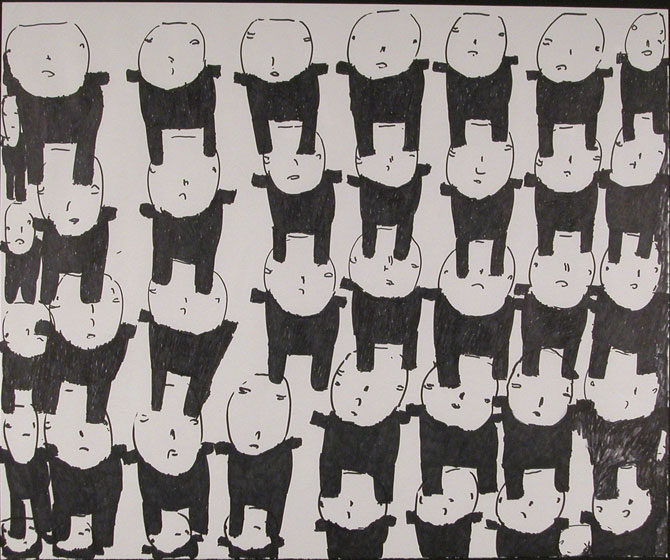
    Piece by Enrique Marquez
    Work by Vytautas Pliura
    Piece by Joacquin Roebuck

    Visit the Humble Beauty website:

    www.humblebeauty.com

    for more information

    Good luck and I hope you reach your target!

    To help the campaign please visit: http://www.indiegogo.com/humblebeauty

  • Accessible Exhibitions: Outsider Art For All

    Accessible Exhibitions: Outsider Art For All

    ‘For, if outsider art arises from people who have no connection to the established art world, it ought to return to that world as well.’ This sentence, found in an article focusing on Intuit’s current constant struggle to ‘get people in the door’ got me thinking about interpretative curatorial techniques with relation to outsider art exhibitions. Straying slightly from the direct meaning behind this interesting sentence, I started to think about how outsider art exhibitions should be curated in a way that makes them accessible to those who have little to no art historical education.

    During research for my MA dissertation, I was looking into the idea of voyeurism and how a voyeuristic audience response with regards to outsider art exhibitions can be reduced by utilising different curatorial techniques. I have to say, I got a bit caught up with the whole voyeurism issue, until it was brought to my attention (partially by the Bethlem Heritage Blog) that we have to, in theory, provide biographical information about outsiders artists – or at the very least provide information on the ambiguity of the term itself, otherwise exhibitions on the subject would be incredibly inaccessible for those with no prior knowledge of the subject.

    Bethlem Heritage’s Curatorial Conversations (which I have been avidly following), focused last month on the often dangerous use of the term ‘voyeurism’ and how it can potentially stigmatise visitors; particularly those who ‘may have a general interest but little knowledge of the realities of mental health experiences and treatment.’ It is in essence, the post claims, pointless to preach to the converted – those who already have prior knowledge of mental illness. The aim of Bethlem is to ‘contribute towards the destigmatisation of mental health’, and this can only really be done by opening access to those with no prior knowledge on or experience of the matter.

    Similarly to this, Intuit’s new executive director, Joel Mangers, notes how he wants to attract people, ‘the bikers who go up and down Milwaukee Avenue, for instance’, who perhaps wouldn’t normally find themselves entering a space exhibiting outsider art; one of Mangers plans to do just this is to ‘bring Intuit exhibitions into public spaces.’

    Jean Dubuffet, in his 1949 manifesto Art brut in Preference to the Cultural Arts claimed that when he used the term Art Brut he was referring to works ‘produced by persons unscathed by artistic culture’. This highlights the traditional view that outsider art comes from a place where there is no mainstream cultural influence (perhaps not particularly relevant in the present day, however); and in essence, it should be able to return to a place (or to people) who are not predisposed to ideas of art or art theory from the contemporary mainstream.

    References

    http://art.newcity.com/2012/08/28/eye-exam-outsider-art-for-all/ – ‘Eye Exam: Outsider Art for All’ by Jason Foumberg

    http://bethlemheritage.wordpress.com/tag/curatorial-conversations/ – Bethlem Heritage’s Curatorial Conversations

    Fitzpatrick, Anthony, ‘Research Assistant Report’, in Framing Marginalised Art, ed. by. K. Jones et al., (Australian Research Council, 2007).

  • Shadows of a Dream – Brighton 17.09.12 – 21.01.13

    Shadows of a Dream – Brighton 17.09.12 – 21.01.13

    Shadows of a Dream is an collaborative exhibition between Outside In and Creative Future which will explore emotion, surrealism, light and dark through painting, drawing, collage, prints and textiles.

    The exhibition will present work from Jessica Levine, Mercedes Gil Simon, Maria Kuipers, Michelle Roberts and Neal Pearce.

    The exhibition will run from the 17th September 2012 until the 21st January 2013, and will be taking place at the Outside In: Gallery in Brighton, which you can find at:

    Wellington House Day Options
    Wellington Street
    Brighton,
    BN2 3AX

    To find out more, please visit Outside In: Gallery and Creative Future

    For more information on the artists involved, please use the following links to be taken to their personal webpages or their Outside In online galleries.

    Maria Kuipers

    Mercedes Gil Simon

    Jessica Levine

    Neal Pearce

    Michelle Roberts

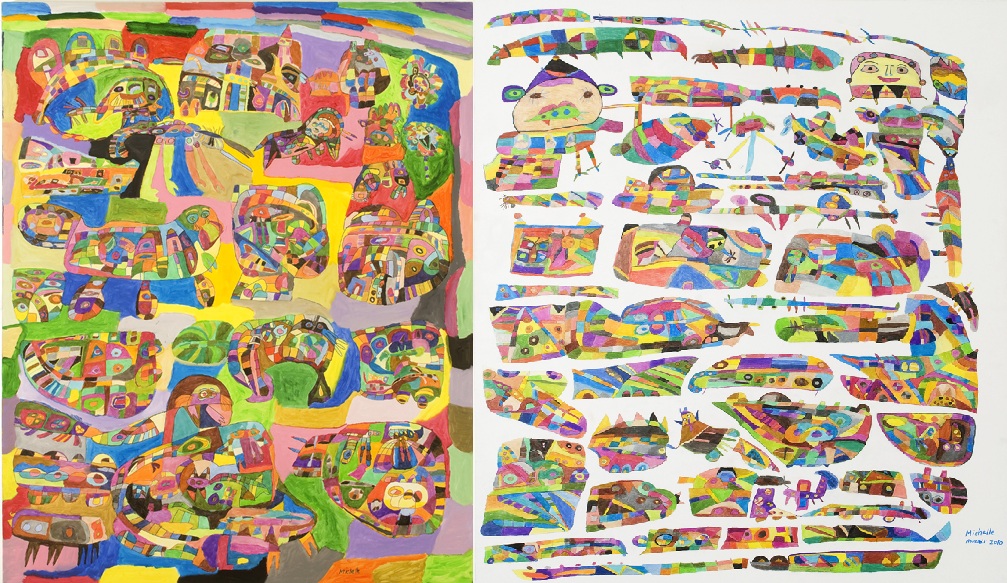
    The cover image for this post is composed of two images created by Michelle Roberts; Dinosaur World and Spanish Holiday

  • Karen King’s Psychological Portraits

    Karen King’s Psychological Portraits

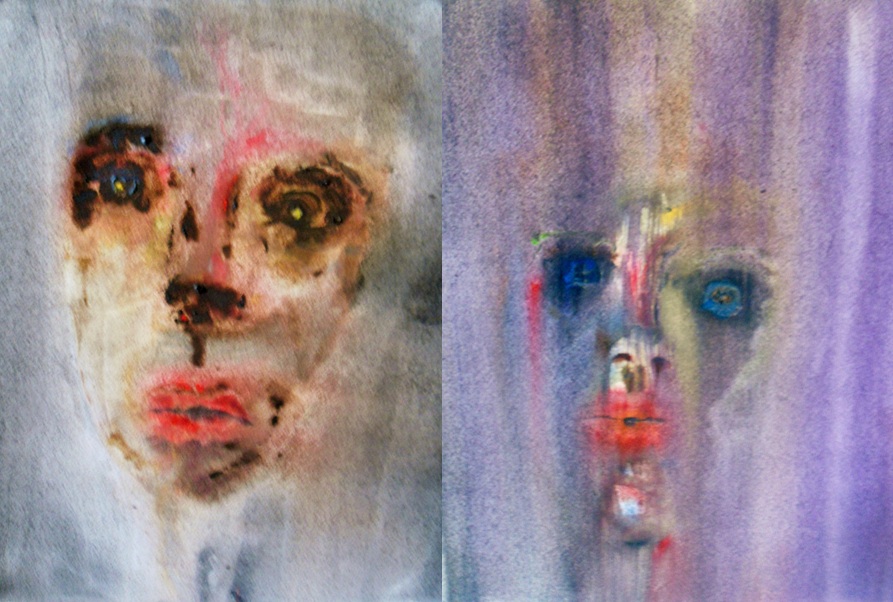
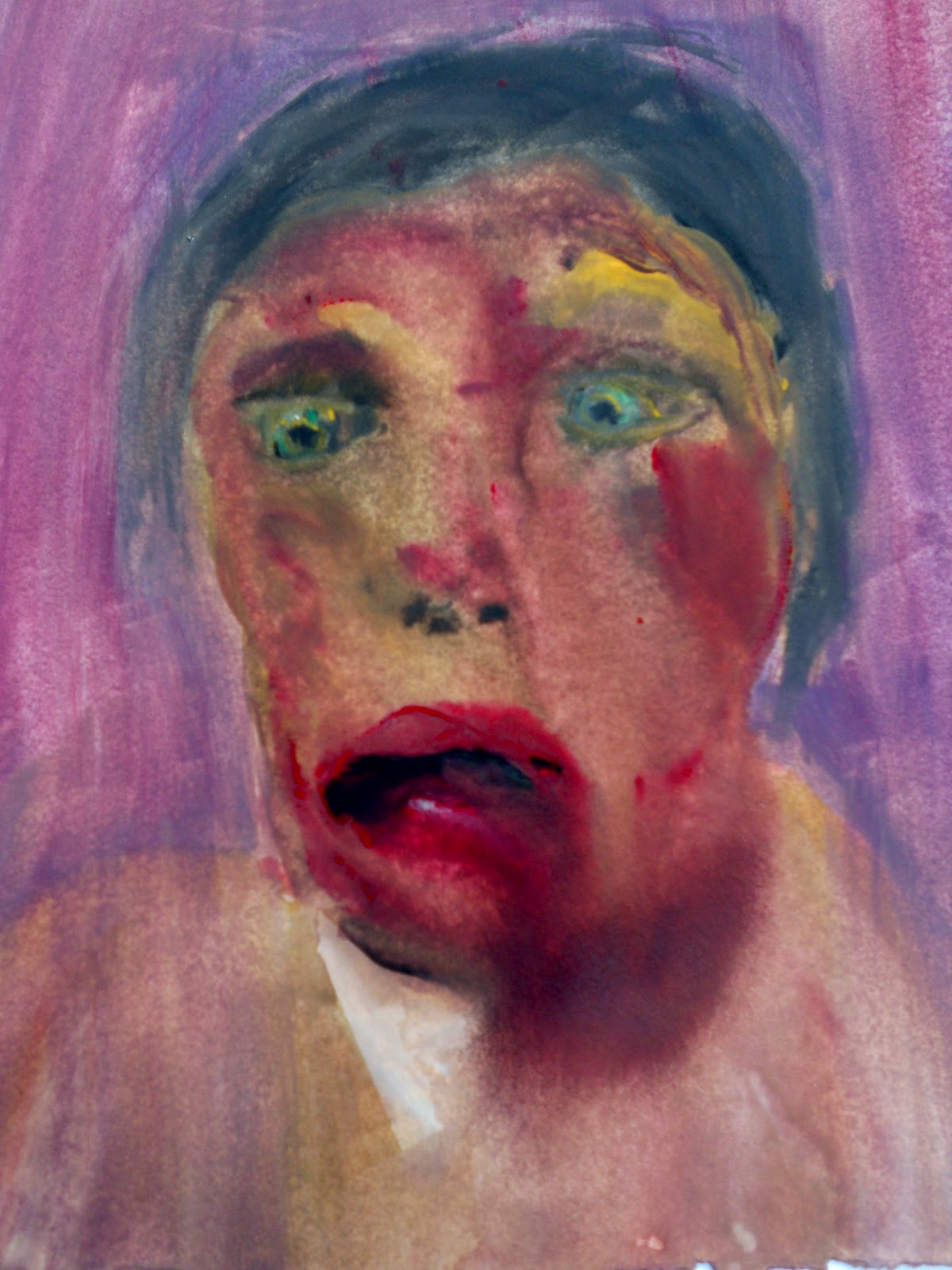
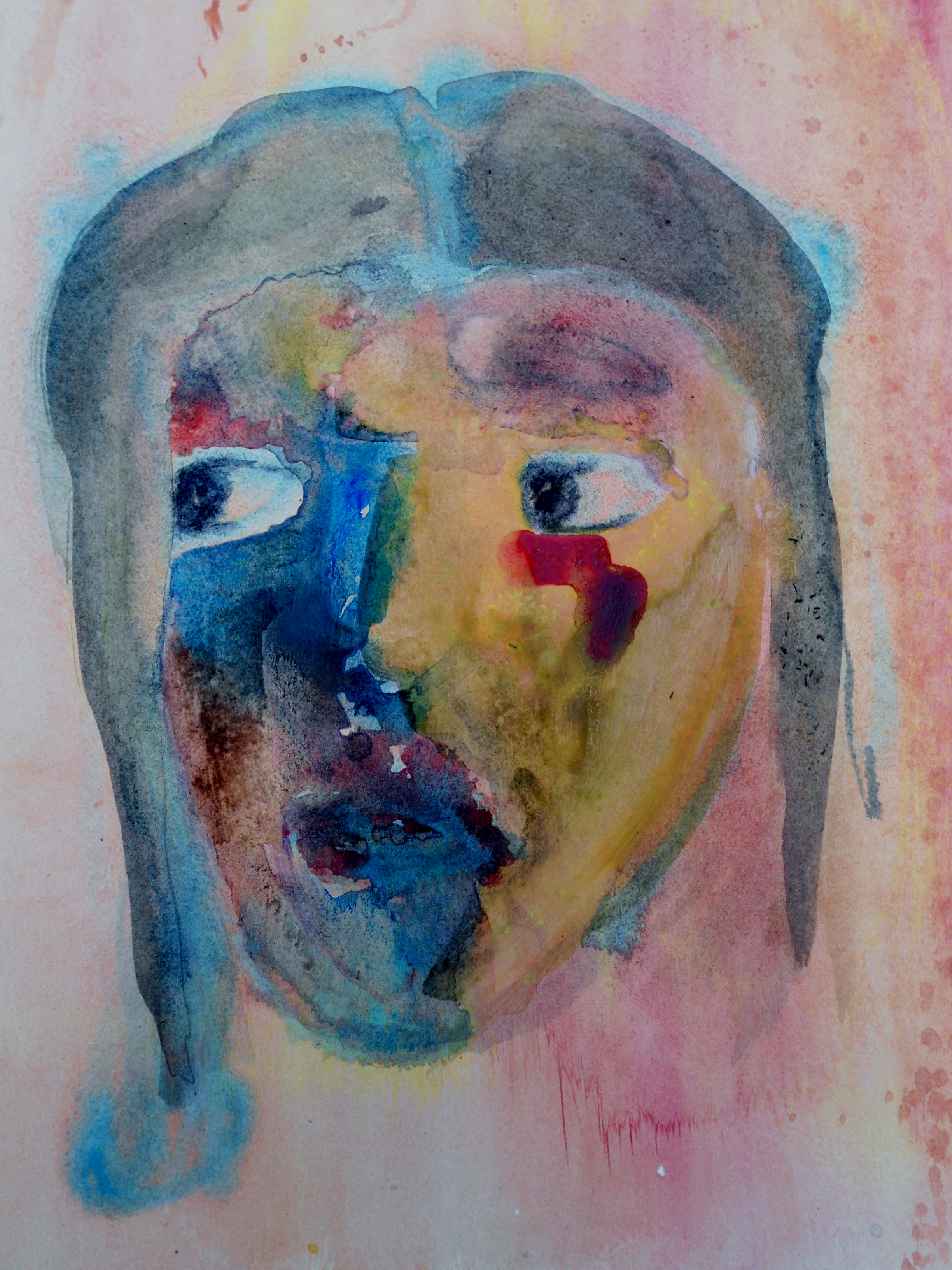
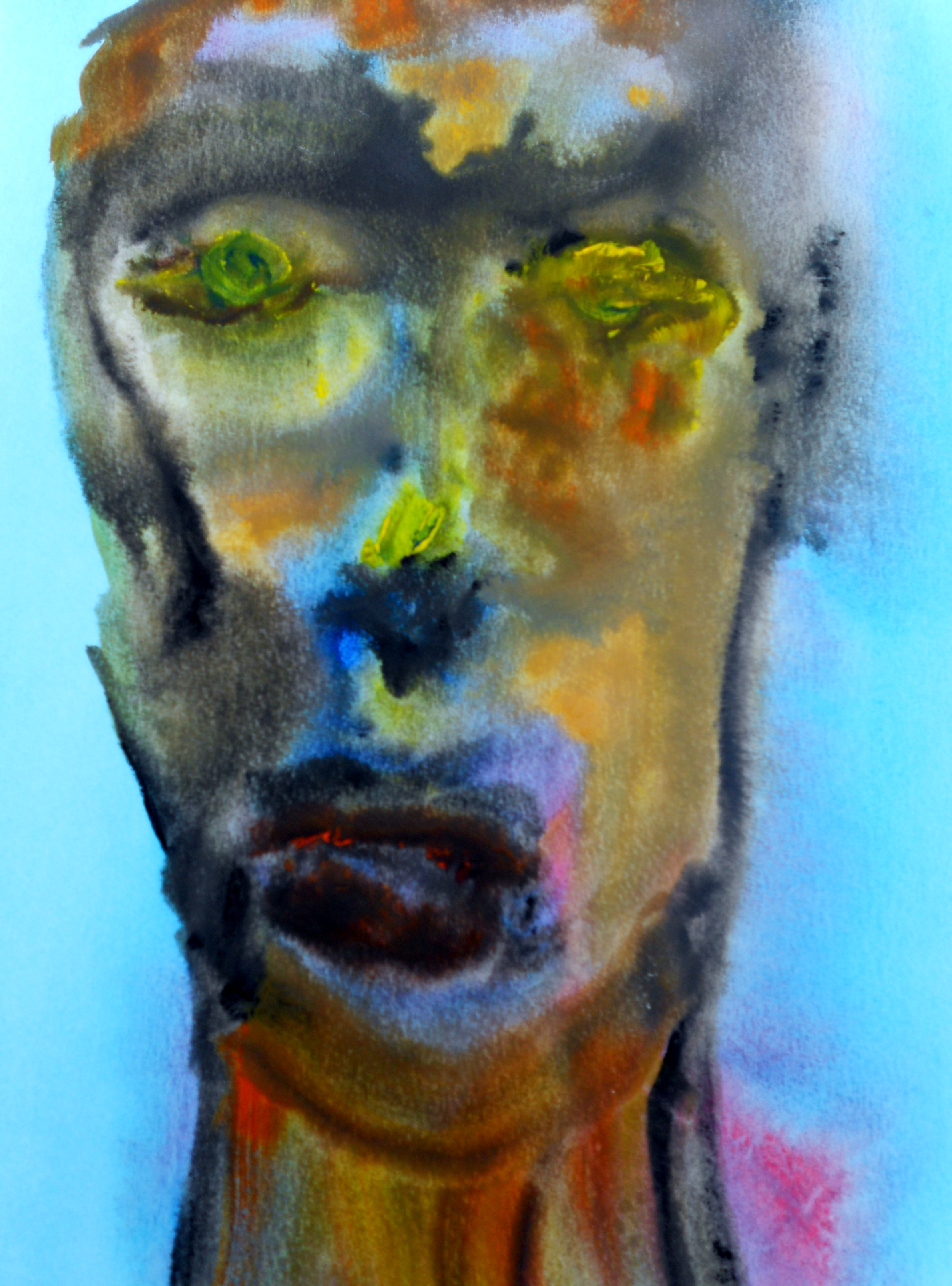
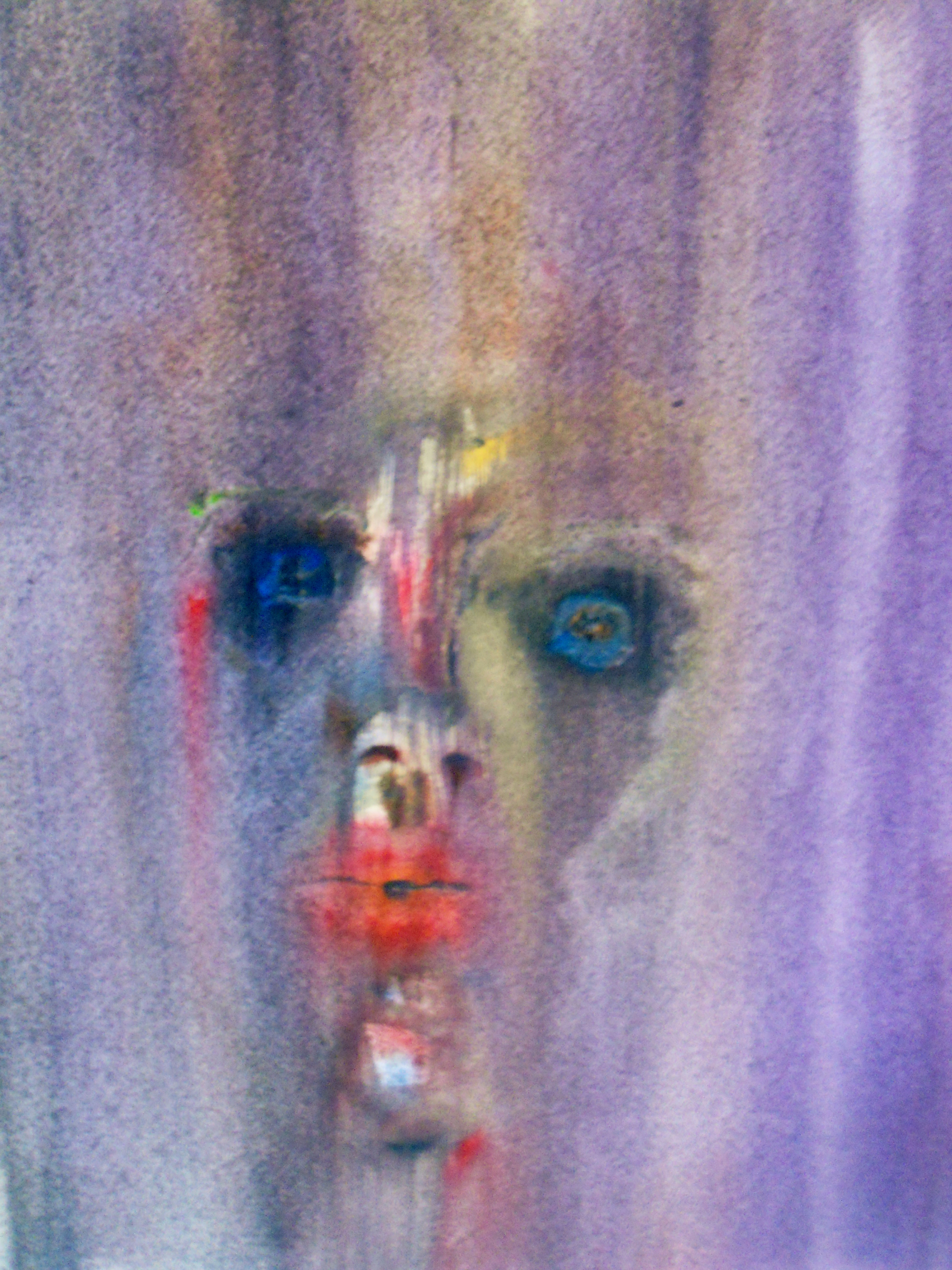
    “Through a series of studies of the human head I am attempting to convey psychological states, emotions beneath the surface and the fragility of the human condition.

    As I tend to paint repetitively, compulsively even, I am also exploring Sigmund Freud’s Theory of Repetition Compulsion, otherwise known as the Death Drive.

    In this theory Freud felt that the act of repetition was directly linked to the urge to cease existing, and with each act of repetitive behaviour we act out our desire to go back to a pre-living state, a desire to cease to exist.

    My conclusion from my research and practice tells me that repetition in art is not static, not destructive as it does push one through to the new, to life in the present, no matter how temporary that may be for all of us.

    When asked about the darkness in his work Francis Bacon said that ‘if you have a strong feeling for life, its shadow death is always with you too’

    I think that artists who work in a repetitive manner may have a stronger need to reconnect to what is human, to express the futility of life in the hope of connecting with others, so that life is no longer futile.

    The poet W. H. Auden likened the process of making a work of art as ‘breaking bread with the dead’, and I am attempting to create paintings that express what it is to be alive and what it is to die.”

    You can follow Karen on Twitter: @kkingartist

    Many thanks to Karen for supplying me with the images and text for this post.

  • Francois Burland (b. 1958)

    Francois Burland (b. 1958)

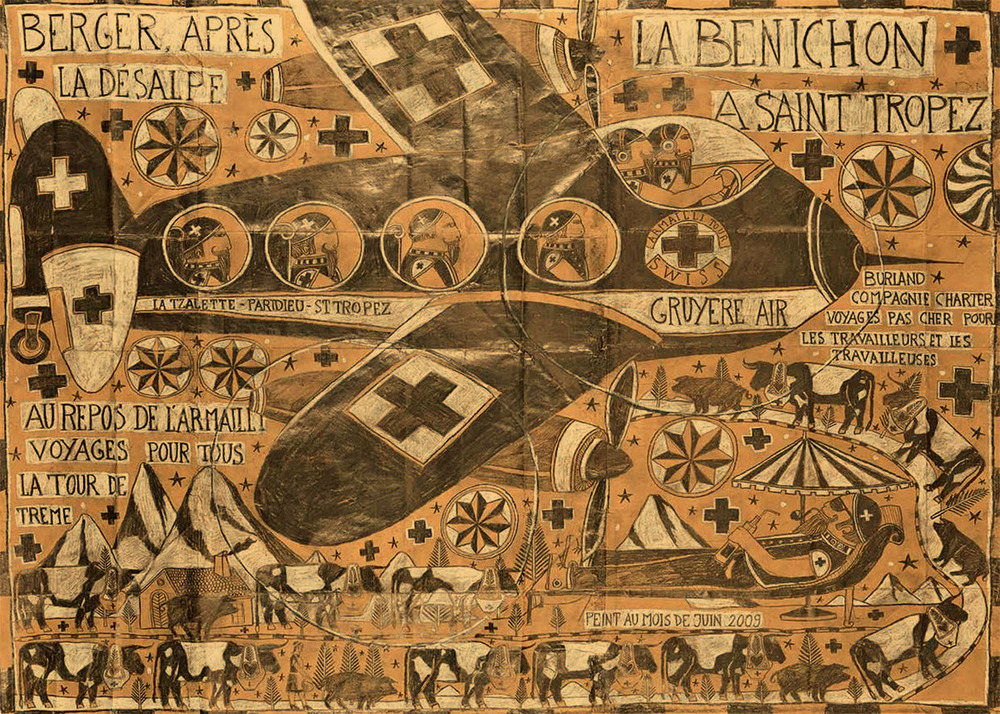
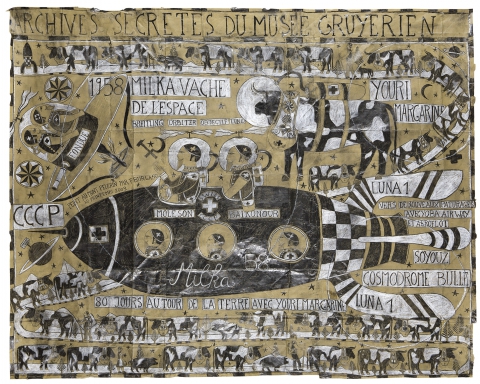
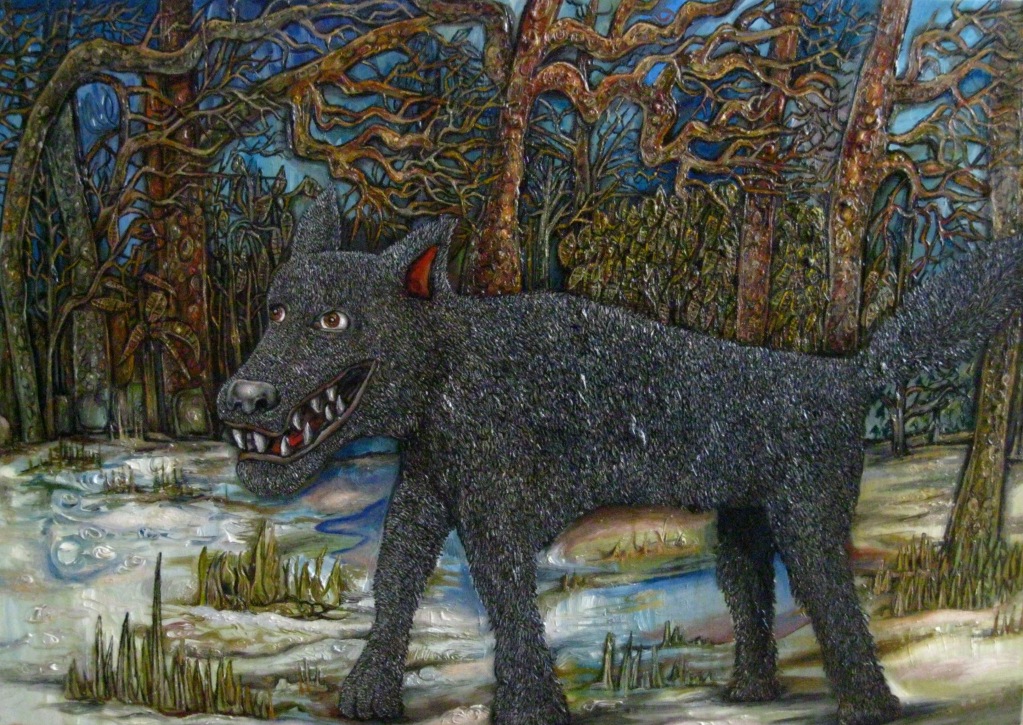
    Burland had a difficult childhood in Lausanne, Switzerland, where he left school after his teachers claimed he was ‘difficult’ due to the nature of his secret drawings. After undergoing psychotherapy, Burland began to use creativity to express himself. Creating predominantly large pieces, often on brown paper, he was fascinated with mythology from all cultures and a visit to Africa enabled him to meet with nomads who encouraged him to create bright, tribal inspired pieces. Despite these bright pieces, Burland’s main bulk of work was mainly completed in black and white; however, in many of his pieces you can clearly see the tribal influences.

    Mixing the antique with more modern literature and philosophy, Burland’s use of a brown paper background gives his work an ancient edge. Burland’s pieces often focus around a central figure or animal, working out towards the edge in a monochrome fashion. Burland now lives on a farm in Switzerland, where he is dedicated to creating his instinctive and visionary works.

    Places to see Burland’s work:

    Eternod/Mermod Collection, Lausanne

    Musee de la Creation Franche, Begles

    Examples of Burland’s work:

    Resources: Raw Vision Outsider Art Sourcebook

  • Martha Grunenwaldt (1910 – 2008)

    Martha Grunenwaldt (1910 – 2008)

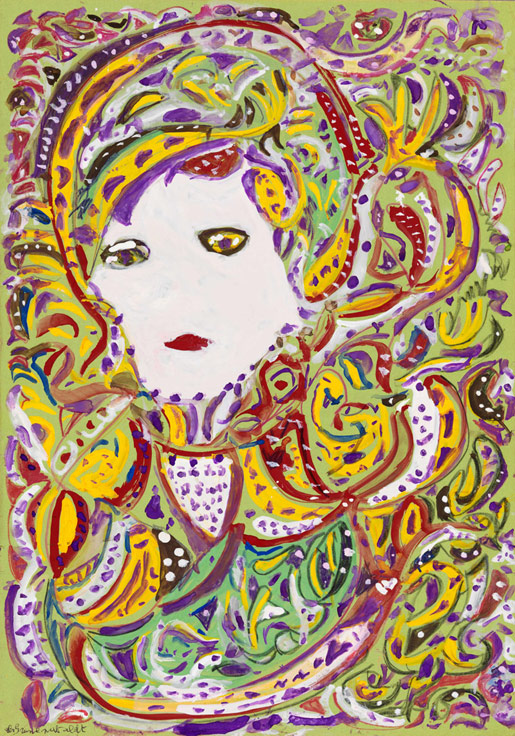
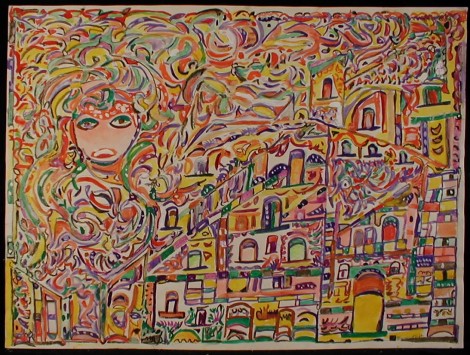
    Martha was born into a musical family where she began life as a folk violinist. She went on to marry a fellow musician, who then took her daughter away from her on their separation. She didn’t begin to create art until the age of 71, after being reunited with her daughter. Martha had worked in later life on a farm where her employers had been so strict that she had not even been allowed to touch her violin. She began using her grandchildren’s crayons and coloured pencils and working on the back of postcards or the reverse side of her daughter’s political posters.  Martha drew images of an ideal world full of colours and shapes; where delicate female faces peer out from within dense patterns.

    Here are some examples of her work:


    Image courtesy of www.outsider-artworld.com 


    Martha Grunenwaldt’s work can be seen at:

    abcd Collection, Paris

    L’Arcine Collection, Musee d’Art Moderne, Lille Metropole

    Art en Marge Collection, Brussels

    Eternod/Mermod Collection, Lausanne

    Musee de la Creation Franche, Begles

    References:

    Raw Vision Outsider Art Sourcebook, 2009

  • Fleury-Joseph Crepin (1875 – 1948)

    Fleury-Joseph Crepin (1875 – 1948)

    Crepin was a plumper from the port of Calais in France. He only began painting in his sixties, after experiencing an increase in his spiritual powers subsequent to meeting painter and medium Victor Simon. Influenced by supernatural voices, Crepin began to fill sketchbooks with dedicatedly symmetrical designs. Crepin’s works are surprisingly mathematical in their creation. He would create his paintings by enlarging sketches onto canvas using a compass and a ruler. Crepin’s hypnotic works are generally based on architectural forms and geometric patterns to which he added human figures and animals. Convinced of his ability to end wars, Crepin believed that the Second World War would end on the completion of his 300th painting; something which by chance did in fact happen.  Jean Dubuffet, who coined the term Art Brut, believed Crepin to be an ‘anti-natural’ artist and was thoroughly intrigued by these spiritual symmetric pieces. After completing 300 works, Crepin moved on to what he called ‘Tableux merveilleux’ of which he completed 45 before his death.


    See some examples of Crepin’s work below:


    Places to see the work of Crepin:

    abcd Collection, Paris

    L’Aracine Collection, Musee d’Art Moderne, Lille Metropole

    Collection de l’Art Brut, Lausanne

    Eternod/Mermod Collection, Lausanne

    Sources:

    Raw Vision’s Outsider Art Sourcebook

  • Is this the end of Traditional Outsider Art?

    Is this the end of Traditional Outsider Art?

    “In the early days, self-taught art made its way to New York via pickers, who trolled around the back roads of the South looking for visually oriented wackos, bought their work in bulk, and sold it for a big profit.” [1]

    The gap between traditional Outsider Art and the Outsider Art of the contemporary art world is become increasingly expansive. Often, when we conjure up an image of an Outsider Artist in our head, we imagine an obsessive recluse; perhaps incarcerated within a mental institution. In the twenty-first century, however, this is far from reality. The growing group of organisations and ‘progressive’ studios that liberally encourage creativity in those who are by various means marginalised from society are becoming the norm.

    No longer do psychiatrists or doctors trawl institutions, inquiring as to whether anyone has made any ‘strange creations’ of late; once a common way of locating Outsider Art in the early twentieth century. Drug therapies, talking therapies and the general change in attitude, particularly toward those who are suffering with mental health problems, have altered the landscape of Outsider Art forever.

    Lucienne Piery, in her book entitled ‘Art Brut: The Origins of Outsider Art’ claims:

    “The fact is that inventive creations have not been located in psychiatric hospitals since the 1950s, when drug therapies became widespread, except for the few notable exceptions who are represented by precisely those patients who are not medicated.” [2]

    The Outsider Art world is become more inclusive. The term itself is not so much a retrospective label, defining the work of artists whose work was uncovered on their death. Instead, it defines a new calibre of marginalised artists who are proactive in getting their art seen; who want to show it to as many people as possible, to have exhibitions and enter competitions. Despite what I mention here about the increasing inclusivity of the genre, there are many institutions who still yearn for the ‘authentic reclusive madman’. For example, the Collection de l’Art Brut in Lausanne; the collection pioneered by Jean Dubuffet himself, carries out a strict examination on works that are to be entered into the collection. Piery describes this examination:

    “It is necessary to have a body of works in order to evaluate how independent and original the artist is… The examination requires information about the life and personality of the artist, his motivations and the conditions of creation… The museum’s selections and acquisitions are based on the following five criteria: social marginality, cultural virginity, the disinterested character of the work, artistic autonomy and inventiveness.”[3]

    I think the more inclusive nature of Outsider Art can only be a good thing. The technological era we now live in makes it almost impossible for anyone to be culturally virginal; to find someone who is almost completely culturally untouched would be incredibly difficult.

    Present day Outsider Artists have much more control over the interpretation, display and sale of their own work. They have been given more autonomy, but organisations that aim to provide a platform for marginalised artists act as a middle-man to help overcome their vulnerability to exploitation. The artists now have a say in whether their biography becomes the focal point; taking on more importance than their work, or whether they would prefer not to discuss their background at all. The interpretation of Outsider Art used to be the domain of the ‘white western’ curator, but that right has now been (quite rightly) handed back to the artists themselves.

    [1] Larissa MacFarquhar, ‘Crazy About Art’ in the New York Times, 29th January 1996

    [2] Lucienne Piery, Art Brut: The Origins of Outsider Art, Published by the Collection de l’Art Brut, 2001, p 195

    [3] Ibid, p 197

  • What’s On: July 2012

    What’s On: July 2012

    ‘British Outsider Art’

    At Bethlem Heritage
    7th July – 3rd November 2012

    www.bethlemheritage.org.uk

    ‘Tight Modern’

    Tight Modern (a miniature version of Tate Modern) has just finished a stint at Royal Brompton Hospital in London. The exhibition will be in Brighton from the 9th until the 12th of August 2012 at East Street Bastion.

    www.wix.com/tightmodern/gallery
    www.creativefuture.org.uk

    ‘One in Four’

    An online auction being held by Studio Upstairs between 12th July and 23rd July 2012. A viewing night of the artworks will be held at The Royal Academy of Arts on the 20th July 2012. The auction is a collaboration between Studio Upstairs and The Royal Academy of Arts to raise awareness of the fact that one in four people will suffer with a mental illness in their lifetime.

    www.studioupstairs.org.uk

    ‘August Walla Retrospective’

    At Galerie Gugging
    Until 28th October 2012

    www.gugging.org

    ‘Outside In: London 2012’

    At Cafe Gallery (part of CGP London) to coincide with the Paralympics
    16th August – 9th September 2012

    www.outsidein.org.uk

    ‘Outside In: National 2012’

    The deadline for the national competition is 20th July 2012. Maginalised artists are able to submit up to 2 pieces of work from their Outside In online gallery to the competition.

    www.outsidein.org.uk

    ‘Creative Response: Summer Exhibition’

    12th June – 13th July 2012

    www.creativeresponsearts.org