Blog

  • Jim Sanders at Into You Tattoo

    Jim Sanders at Into You Tattoo

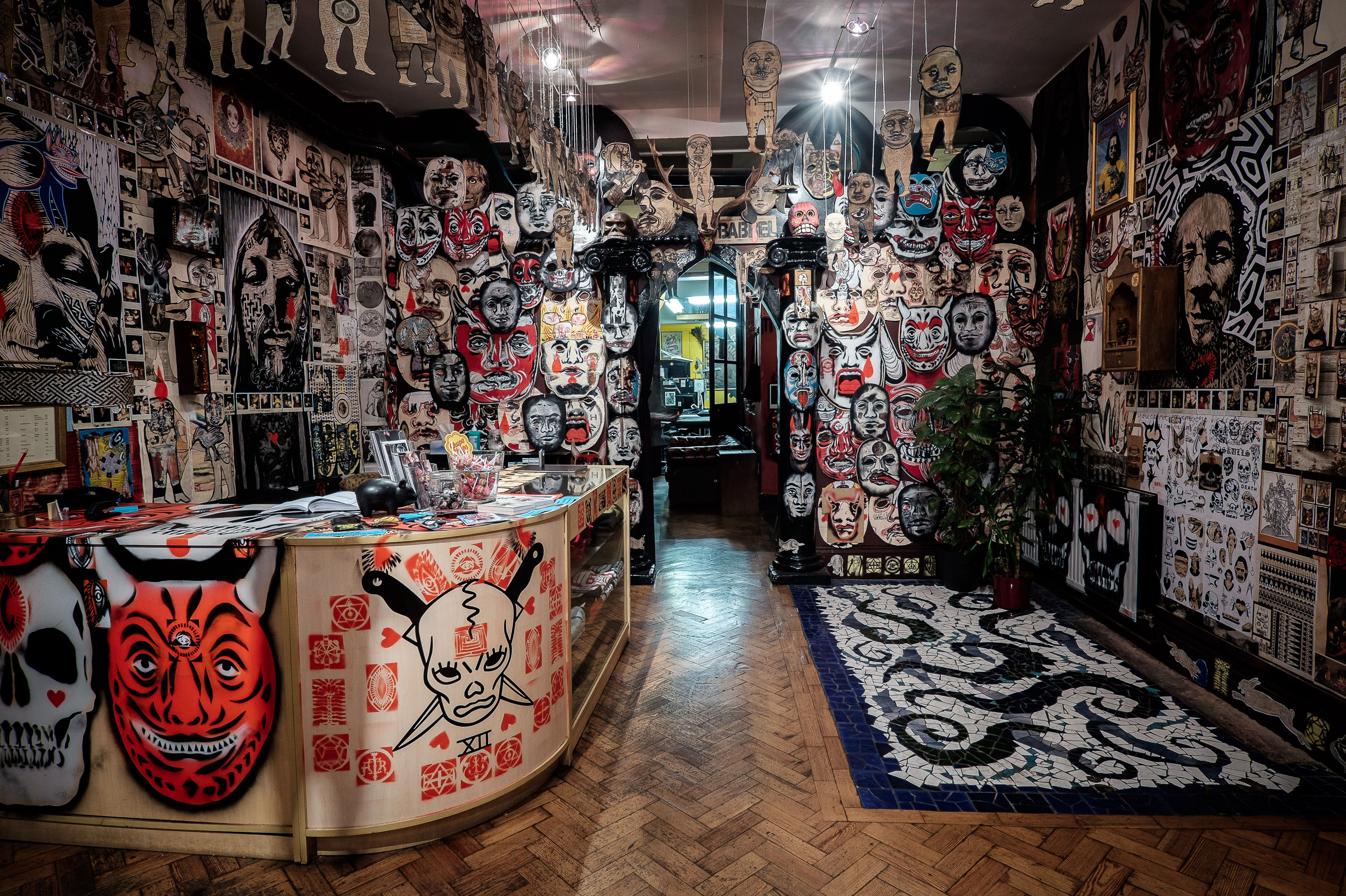
    The walls – and ceiling – of Into You Tattoo in Clerkenwell are currently covered in the religion-inspired, life-portraying works of Brighton-based artist Jim Sanders to mark the closure of the parlour’s central London franchise. The body of drawings plastering the space have been created over a period of five years and feature images of faces, figures and animals acting as studies of the human behaviours and interactions in an overcrowded world.


    DSCF2068 copy
    Image courtesy of David Toolan

    Jim Sanders // Artist

    “I first met Alex Binnie about eight years ago as we shared the same framer (Alex is also an artist and originally trained as a medical illustrator, I believe) – Tim Harbridge, who ran a place in Kemptown called the Fair Trade Gallery. Tim is also a very fine musician and would put on gigs in the tiny gallery space, and Alex and I came across each other at one of these and immediately hit it off.

    A few years later Alex invited me to have an exhibition of my work at his Into You Tattoo shop in London and that was the first time I saw the place. I have had maybe two or three exhibitions there now and Alex has visited my house on several occasions. I think him seeing the way my house looks prompted him to ask me to create a similar installation to commemorate their last year in their Clerkenwell location.

    DSCF2031 copy
    Image courtesy of David Toolan

    I had a vague plan of how I wanted to decorate the shop and my actual physical starting point was using the A0 photocopies of Alex’s woodblock print portraits of shop tattooists past and present. Alex had provided me with them a few weeks in advance of starting the installation and I had altered them by staining them with tea and cutting them in half vertically and mixing up the faces to create strange distorted characters. I pasted these onto the walls at a certain height all around the shop to create focal points and from there I let it grow pretty much organically. For example, a box of old polaroids taken in the shop 20 years ago served to make a fine frame around these portraits.

    The starting point on the wall by the stairs (which had the largest drop) was three A0 photocopies of the full figure of Blue; the heavily tattooed receptionist. I wanted her to be like the God Shiva with many arms emerging, a towering presence to be seen when you entered through the door of the shop. The arms were taken from photographs of the other current tattooists.

    DSCF2108 copy
    Image courtesy of David Toolan

    I also knew that I wanted to cover the wall facing the door, separating the front of shop with the tattooing area with masks and faces, echoing the installation I created at Le Lieu Unique in Nantes.

    The installation took one week to complete. I would start work at noon every day when the shop opened and would stay until about 10 or 11 at night – sometimes even one ‘o’ clock in the morning. I wanted the walls to be covered as with the skin; with nothing left untouched, and reflecting the same themes of imagery, mythology, astrology, symbolism, sex, and death.

    The installation is there for the entire year, so I wanted to present an abundance of imagery so those frequenting the shop can keep discovering new stories hidden amongst the cacophony. I hope my work acts as a memorial to the life that has taken place at the tattoo parlour over the last 23 years. A reminder to regular visitors of what has gone on there, and maybe a sense of wonder for those encountering the place for the first time.”


    Alex Binnie // Into You Manager

    “I’ve had my shop in Clerkenwell for almost 23 years now. It’s a big space; too big almost. For a while we had different art shows in the front of the shop, but it got to be a drag organising it. I thought – let’s let Jim do something big and fun, and completely different to anything else in any other tattoo shop. I knew he could work big and fast, and he was up to the job.

    DSCF2011 copy
    Image courtesy of David Toolan

    I asked Jim to create something in his unique style, using raw materials I would provide. We got together some images from all of us at the shop and I let him run with it. One of the main elements is blow ups of some of the woodcut portraits I’ve done of some of the guys that work in the shop. I mainly left the creativity up to Jim though.

    The customers like it for sure. Tattoo shops have started to have a bit of a generic look, and I wanted to mix it up a little. It’s gone down well.”


    If you would like to see Jim’s work at Into You, you can visit the shop at 144 St John’s Street, London, EC1v 4UA, Monday – Saturday 12 – 7pm. Click here to visit the shop’s website.

  • Julio Cesar Osorio: Communicating from the Subconscious

    Julio Cesar Osorio: Communicating from the Subconscious

    In light of his two current exhibitions in London, Julio Cesar Osorio talks about finding inspiration in the darkest of places and his want to portray his own unique journey, inviting the viewer to jump in and join him – not unquestioningly – on his travels to a more vibrant world.


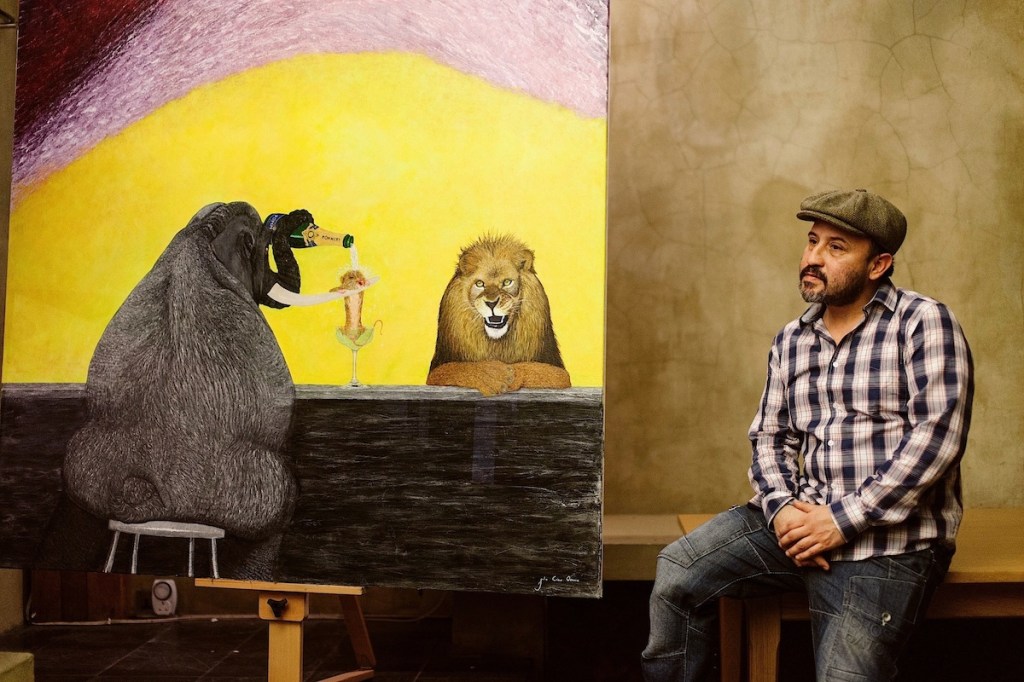
    Elephant final web
    Elephant

    When did you first start making art?

    Looking back at my life I can honestly say that I have always been very analytical about my surroundings. I have always looked for the beauty within things; even at a microscopic level, like when I looked at an onion skin under a microscope for the first time in biology class and thought that the shapes and patterns looked lovely. I have always visually admired things, but it wasn’t really until I landed in prison that I took up art. From the word go I was over taken by the therapeutic power of painting; it became my passion and provided an escape from where I was.

    What originally inspired you, and what inspires you now?

    I did a degree in photography and digital imaging 15 years ago and during that time Dali became my inspiration to create surreal work; to carve one’s own story to illustrate what’s on one’s mind. This was exactly what I did when I discovered that I could paint in prison. This would be the tool I would use to create – even in the environment I was in.

    To this day, surrealism has been the genre I have chosen to work in and a surrealist is the type of artist I wish to be classed as.

    Lionpotrait w
    Julio with his Lion Portrait

    What is your process – from starting to finishing? How long does it take?

    I write down ideas or do small sketches of what the idea involves, and then look for relevant imagery; photos, magazine cuttings, etc., that I think might work in my painting and then I’ll start by painting the background. Then I’ll move on to sketch the subject matter, making sure it’s all in the ideal place and when I’m happy with the layout, I’ll go on to paint them.

    Each piece has varied in the time it’s taken to produce. Most of my work was produced in prison, where I became so prolific that I would work at least 10 hours a day seven day a week. As a result, I would produce at least two pieces a month. Since my release in September 2013, I have only produced one 190 x 190cm painting completed over a period of one year.

    What do you hope viewers get from your work?

    I produced all of my work and honed my skills in prison. I used the medium of painting to transport my mind with the goal of taking the viewer on my journey, encouraging them to place themselves in the work, to read and question all the thoughts and feeling that I used in every one of my pieces.

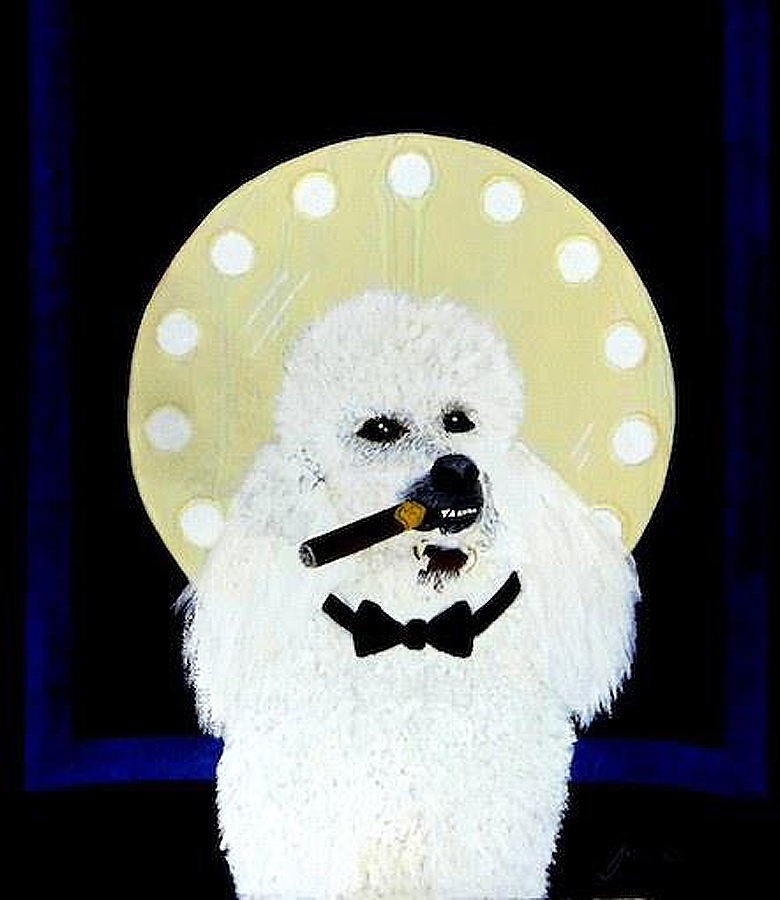
    Fat dog
    Fat Dog

    What are you working on at the moment?

    At present I am working on promoting my work and my name through social media, and I am preparing a marketing strategy to generate sales.
    I am also working on a series of photographs that I have of body painting on females. I am adding paint to these so they become mixed media pieces.

    Tell us a bit about your current exhibitions?

    At present I have got two exhibitions running concurrently in two different parts of London looking at two different themes.


    See Julio Cesar Osorio’s work in London…


    The Communication of Colours from a Very Dull Place

    Until 31st January at Coffee Wake Cup, 14 Clapham Park Road, London, SW4 7BB. Open daily from 7am – 7pm.

    Concentrating on the use of colours in the works on display and how Julio used them vibrantly whilst in prison; a very dark and dull environment. Julio wanted to show the polar opposite of what he was experiencing at the time.

    The Artist’s Subconscious

    Until 31st January at Freud Bar/Gallery, 198 Shaftesbury Avenue, London, WC2H 8JL.
    “The liberty of the individual is no gift of civilisation. It was greatest before there was any civilisation.” – Sigmund Freud.
    This exhibition concentrates on Julio’s works that evolved from his inner thoughts during his time in prison.

  • The ‘S’ Word: can the arts reduce mental health stigma?

    The ‘S’ Word: can the arts reduce mental health stigma?

    In the UK – despite much progress since the abolition of large psychiatric hospitals and a significant increase in care in the community – stigma surrounding mental health issues is still an incredibly prominent issue. The Mental Health Foundation notes that “people with mental health problems say that the social stigma attached to mental ill health and the discrimination they experience can make their difficulties worse and make it harder to recover.” Existing stigma can be exacerbated by the media’s biased and often hyperbolized coverage of people with mental health issues, which often paints a portrait of dangerous criminals who should be avoided. Considering one in four people will experience a mental health problem at some point in their lives, this is a very key issue.


    paint


    The research


    Many organisations and researchers have looked into the impact the arts can have on reducing stigma, with predominantly positive findings and results. Two researchers from the University of Strathclyde’s School of Applied Social Sciences – Lee Knifton and Neil Quinn – have conducted research into the impact of the arts on mental health stigma. They started with a week-long mental health arts and film festival in Glasgow and Lanarkshire in 2007, which has since developed into a national programme in numerous locations in Scotland. The learning from their accompanying research has continually shaped the festival, and they have found that “arts events reduce stigma amongst audiences and media by increasing positive beliefs rather than simply reducing negative ones.”

    In ‘Using theatre to address mental illness stigma: a knowledge translation study in bipolar disorder’ (2014), E. Michalak et al. noted that “Emerging evidence… indicates that an effective multifaceted strategy to prevent and reduce mental illness stigma would include creative arts and contact-based approaches.”[Michalak et al. 2014]. The paper concluded that:

    “The power of arts-based approaches, which are consonant with the current emphasis on narrative-based medicine, may lie in their potential to reach and speak to an audience that may not be responsive to conventional methods for addressing stigma and may represent a yet-to-be fully tapped mechanism for change.” [Michalak et al 2014].

    The arts can be – and have been – used in a myriad of ways in an attempt to reduce stigma. For example, in 2013, Time to Change commissioned two British artists to create ‘get well soon’ cards to be sent to people experiencing mental health issues. This campaign was a result of findings that showed 79% of the public would consider sending a card to someone experiencing a physical health problem, but only 50% would consider sending one to someone experiencing a mental health problem.

    bobbin


    Unique characteristics


    I want to move away slightly from the statistics, and think about characteristics innate to the arts that might enable them to be key players in reducing stigma and discrimination towards – well anyone – but let’s talk about them in relation to mental health. The arts are unique in their universal accessibility – from Hollywood blockbuster films, to visual arts exhibitions and popular music, making them a vital resource to be tapped into. They offer a channel through which real, down-to-earth stories about human experience of mental health issues can be conveyed to the general public.

    The arts have long been known for their ability to provide the artist with a voice, and this voice can be used for powerful results. A key form of communication, the arts are cross-cultural, cross-language, and cross-class. They can represent the things that cannot be put into words, or conveyed through language.

    MECCA (Multi-Ethnic Collaborative of Community Agencies) have run a Stigma Reduction through the Arts project, ultimately focusing on “reducing behavioral and mental health disparities through reducing the associated stigma surrounding mental illness” by creating specialist workshops that utilised educational documentaries, collaborative expression, and exhibitions. The notes on the project mention that:

    “Artistic expression of thoughts, emotions, and attitudes through a variety of mediums provides the general public with the opportunity to view mental health issues through a consumer perspective in an effort to counteract stereotypes, dispel prejudice, discrimination, and negative attitudes contributing to the stigma.”

    painting


    Providing a different ‘label’


    Not only is art a great way to communicate different – and often difficult – messages, it also gives its maker a new ‘label.’ Now, I’m certainly no advocate for labels, but labelling is something we as humans innately do. We like to group things together so we can use our existing knowledge to make sense of new information.

    A key example here is the annual Koestler Trust exhibition held at the Southbank Centre in London every autumn. The exhibition showcases work by people in prison, secure patients, and detainees. Although not focusing on mental health, it is still a prime example of reducing stigma using the arts. In this case, stigma surrounding those who are or who have been in prison or detained in a secure setting. The exhibition, situated as it is in a huge mainstream arts centre, removes the label ‘offender’ or ‘prisoner’ from the creator, instead presenting them to the world as an ‘artist’ or ‘writer.’

    As multi-faceted human beings, art exhibitions and events can highlight another side of us. They can show the world what we’re really good at, or what we’re really passionate about. They are also really good at compressing more than one emotion, sentiment, or message into one concise image – or song, or poem.

    By looking at just one painting, you might be able to see and understand very quickly how someone is feeling and why they might be experiencing these feelings. If we were to go about finding this out through conversation, it could take a while – not to mention an awful lot of trust-building, and in reality, we might give up after not too long.

    It would be good to hear whether you think the arts are key for reducing stigma surrounding mental health – and if so, why are they? Post in the comments below if you have any thoughts!

    pencils


    References


    Erin E Michalak et al., ‘Using theatre to address mental illness stigma: a knowledge translation study in bipolar disorder,’ International Journal of Bipolar Disorders, 2014, 2:1. Available online: http://www.journalbipolardisorders.com/content/2/1/1
  • Boeeuen Choo: Spiritual Art

    Boeeuen Choo: Spiritual Art

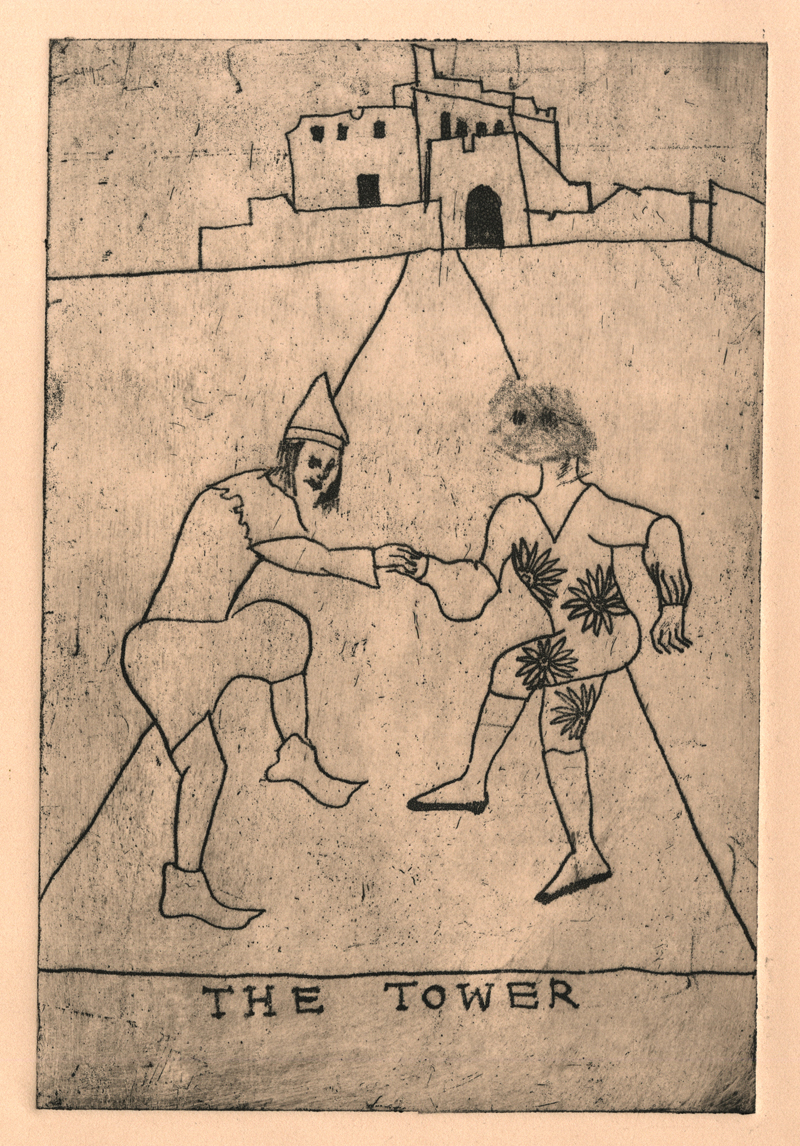
    This Artist Showcase comes from Boeeuen Choo, who is inspired by the design and template of original tarot cards.

    The Queen
    The Queen

    I always have been drawing – ever since I was young. And then I decided to pursue art as my career. My interest is in the design and template of original tarot cards, and that’s what made me decide to turn my drawings into versions of tarot cards – although some titles are made up and do not exist in the original tarot form.

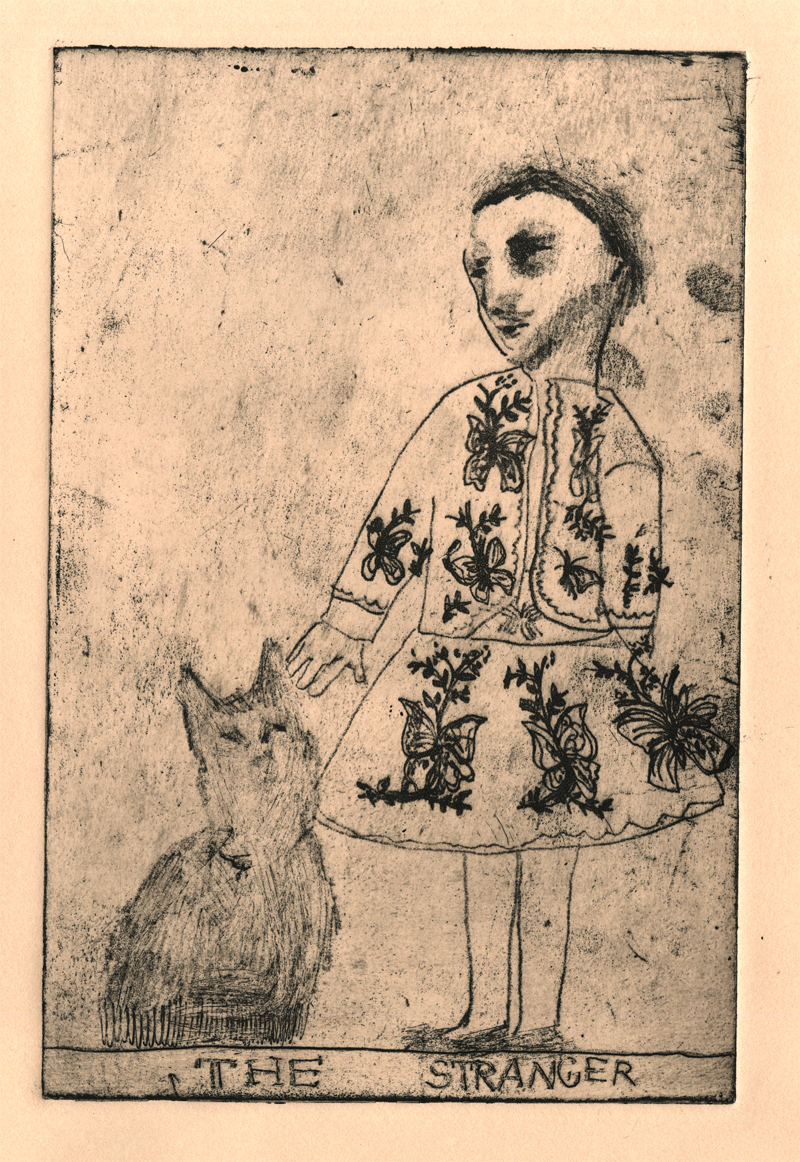
    The Stranger
    The Stranger

    Initially, I decide what title I’m going to work from, and then I’ll draw something from my imagination that connects with that title. I believe that being in a different country to my family, friends and culture really influenced my work. I was originally born in South Korea and I moved to the US when I was fifteen years old. I was young and alone in another country, with my family back in Korea. I think this experience influenced my view on everything, including art.

    The Dystopia
    The Dystopia

    I hope that my work evokes emotion from the viewer. My goal is for the viewer to interpret the piece in their own way, as if they were looking in mirror.

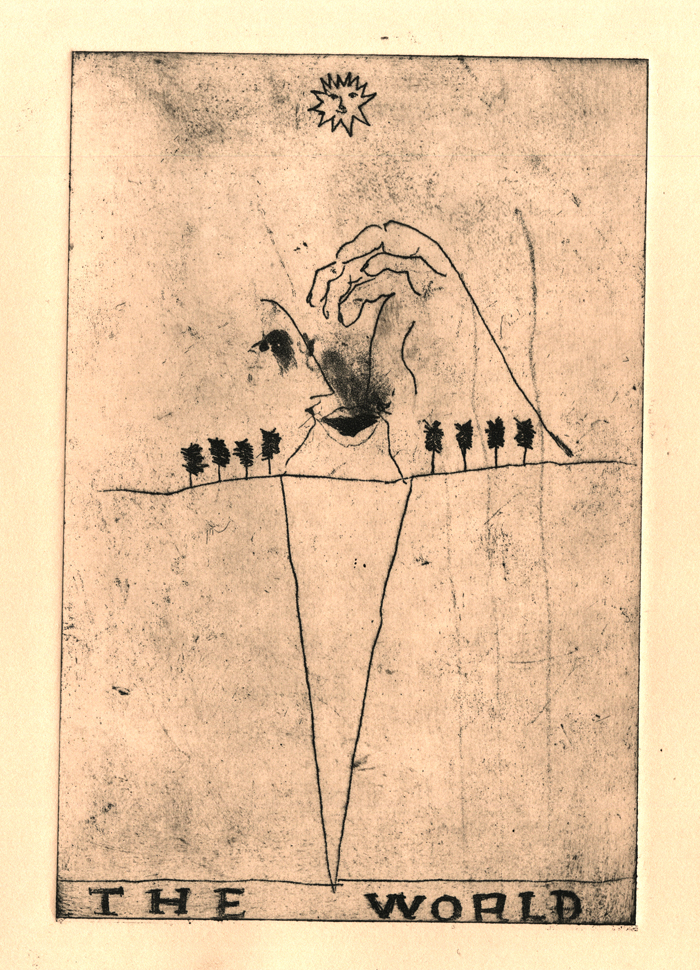
    The World
    The World

    If I were to choose a term other than Outsider Art, I think I would choose ‘spiritual art’. I think this term more accurately describes what I do. I like to work on different things at the same time, and more recently, I have been concentrating on pattern work.

    Click here to see more of Boeeuen’s work

    The Tower
    The Tower
    The Fool
    The Fool
  • Daniele Valeriani: Dark Surreal Art

    Daniele Valeriani: Dark Surreal Art

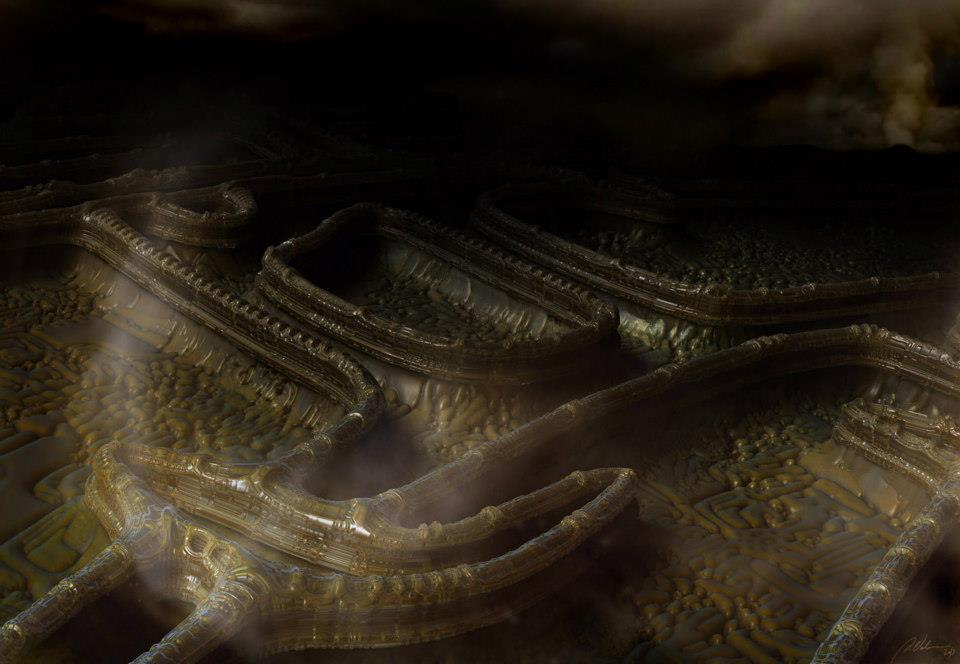
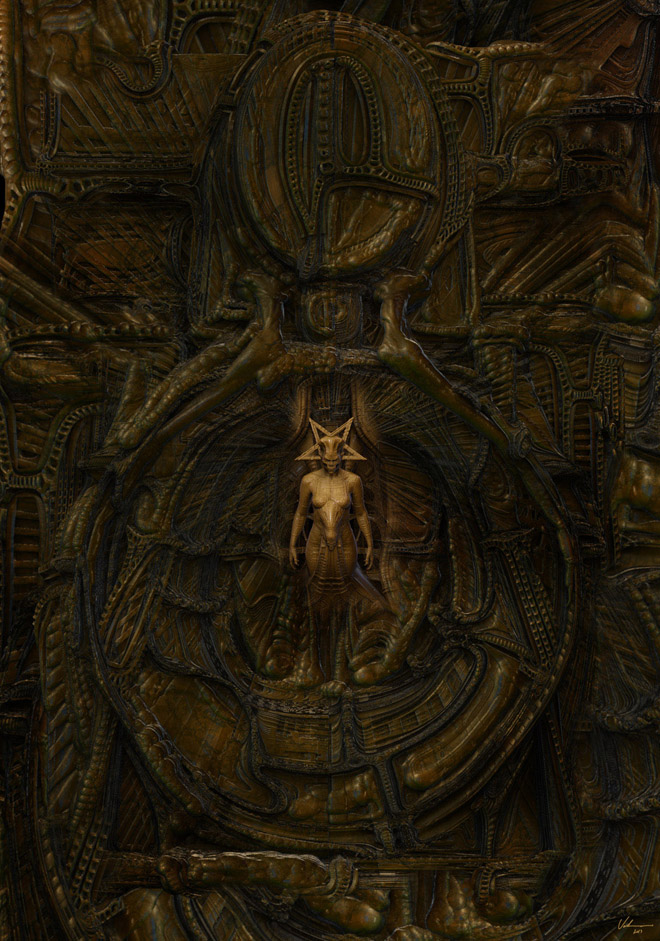
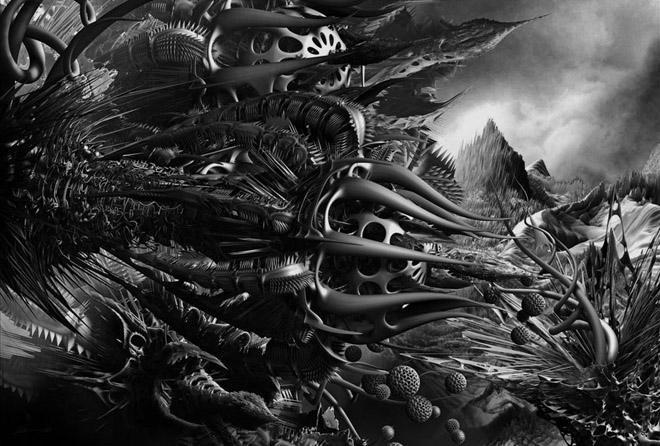
    This artist showcase features the work of Daniele Valeriani, whose works have always been focused on the wonders of nature and science fiction. Describing his work as ‘Dark Surreal Art’, he has created work for some well known bands, including Dark Funeral and Dissection.


    The Lake
    The Lake

    When did your interest in art/creating begin?

    In my childhood. My father was a Surrealist painter and I loved so much watching him while he painted. I could say I followed in his footsteps from an early age. My games were pens, pencils and paper – til now! It’s therapeutic for me to scribble on paper although with time I’ve moved entirely onto digital art. I feel more comfortable with it because it’s more immediate – not that it’s more easy, but I can understand sooner rather than later if an illustration has a certain potential or not. I remember when I was a just a child that I literally ate a couple of my father’s books about Bosch and Salvador Dalì. I still keep those books full of doodles here and there. Not only the Flemish painters and Surrealists have inspired me; I’ve lost myself in books about nature (minerals, insects, shells, plants) as well. The contemplation of nature was my main thrust and then then it was music. I can confidently say that art chose me when I was born and the same influences of the past are still present today.

    Vanitas 1
    Vanitas 1

    What is your starting point for each piece?

    Usually I start from some very coarse sketches on paper or maybe even a raw digital work, just playing with splashes of colour until the work emerges. Even for my 3D works I don’t use an orthodox approach, leaving everything dictated in the first instance until a more rational part of me emerges to dictate a certain order.

    Vanitas 3
    Vanitas 3

    Who/what influences your work?

    As I mentioned before my father’s influence was crucial due to the many inherited interests but if I had to mention some artists in particular of course HR Giger, as well as Bosch, Dalì, Beksinski and the great Master Agostino Arrivabene with whom I have had the luck and honour to work in more than occasion.

    Landscape 1
    Landscape 1

    What do you hope the viewer gets from your work?

    In general, not indifference. I do what I do because it is vital for myself. My mind is too crowded to be the home of so many different fantasies and realities that I would end up exploding. It’s a way to exorcise and exercise my fantasies, my dream journeys. Sometimes I have different reactions once the work is done so it’s hard to answer properly. I wish my works inspire other artists too. Appreciation from other masters and cultural exchange with them is what satisfies me more. The more you grow the more you learn each time, this is my main goal.

    The Portal
    The Portal

    What do you think about the term Outsider Art? Is there a term that you think works better?

    I could consider myself an outsider for sure due to the fact that I do not care about fashions or easy solutions. In fact what I create is not conditioned or calculated but simply what I like the most. I don’t care about judgments except from other artists I admire, and only then so that I can learn or increase my technique or cultural view. In my case Dark Surreal Art is the term that I find more akin to my art because better emphasizes my style and themes. Outsider is a broader term.

    Garden of Delights XV
    Garden of Delights XV

    What are you working on at the moment?

    I’m always working on new ideas and tests to realise my visions. Even the study of new digital tools is essential; I’m constantly updating. I started working on my portfolio / catalogue that I will distribute along with limited edition prints for those who want to buy them. I’m receiving lots of requests at the moment (and that’s great!)

    Landscape 9 - Towers
    Landscape 9 – Towers

    Where do you see your work taking you in the future?

    It would be nice to enter into the good graces of some enlightened gallery that doesn’t disdain digital art. I’d also like to realise my own sculptures, starting with my three-dimensional work. I also want to continue collaborations with other artists to create unique, valuable works of art.


    Click here to see more of Daniele’s work

  • What Does the Term ‘Outsider Art’ Mean to You?

    Every now and then I like to twist myself up into knots thinking about the term ‘outsider art’; what it means in today’s context and whether we should even be using it anymore. You can find some of my thoughts under the ‘Outsider Art: Theory and Thoughts’ category (or by clicking here), but in this blog post I wanted to share some of the thoughts of artists who have recently featured on the blog. A while ago, I started asking artists what they thought of the term outsider art, and, if they didn’t think it was appropriate or relevant, was there a term better suited to describing their work?

    I’ve had some really interesting responses, and some equally interesting new terms. Maybe it’s time we listened to the artists we are categorising under this term.

    Daniele Valeriani, Vanitas 1 (detail)
    Daniele Valeriani, Vanitas 1 (detail)

    Daniele Valeriani: Dark Surreal Art
    “I could consider myself an outsider for sure due to the fact that I do not care about fashions or easy solutions. In fact what I create is not conditioned or calculated but simply what I like the most. I don’t care about judgments except from other artists I admire, and only then so that I can learn or increase my technique or cultural view. In my case Dark Surreal Art is the term that I find more akin to my art because better emphasizes my style and themes. Outsider is a broader term.”
    More of Daniele’s work is coming soon on the blog

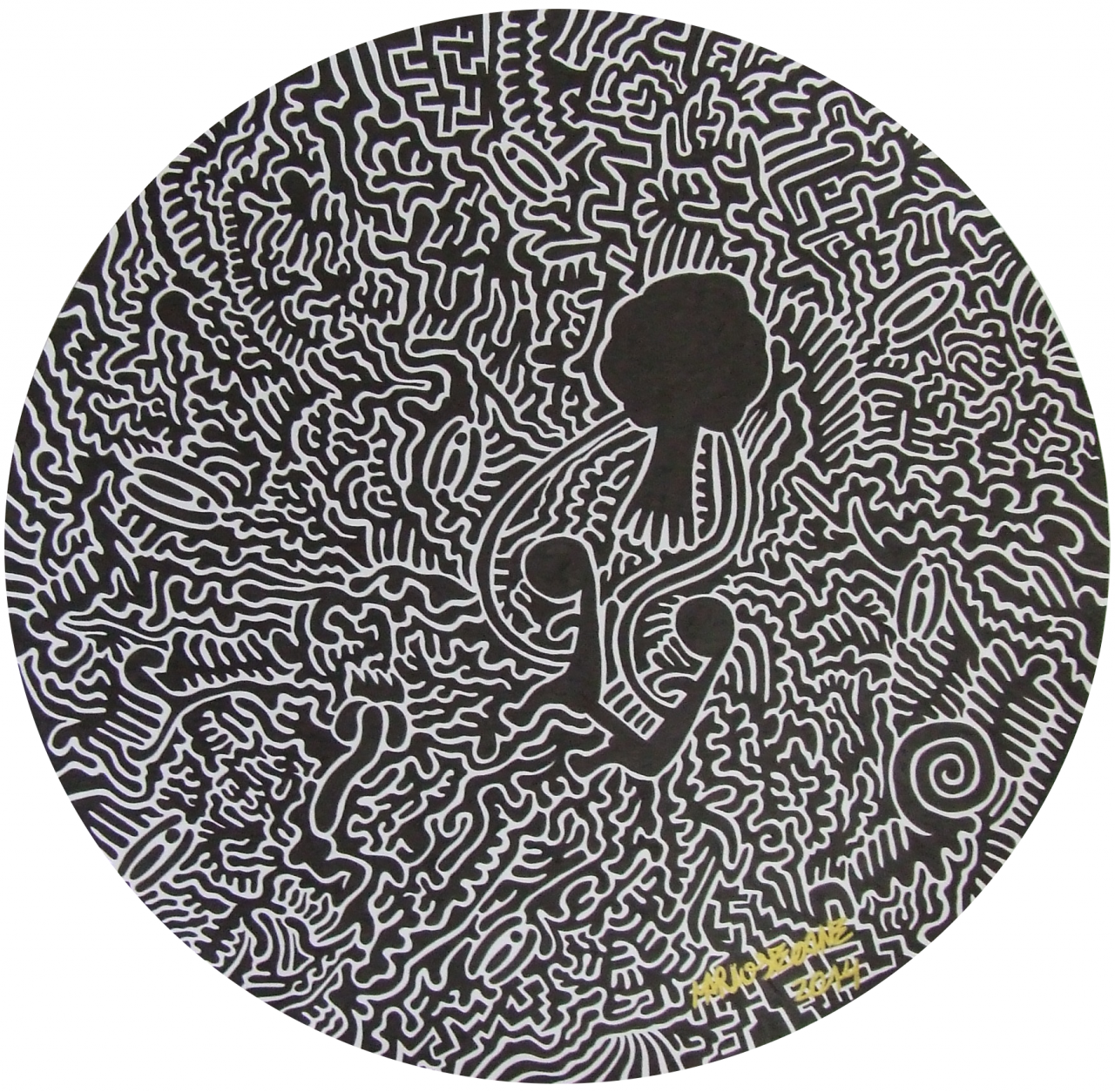
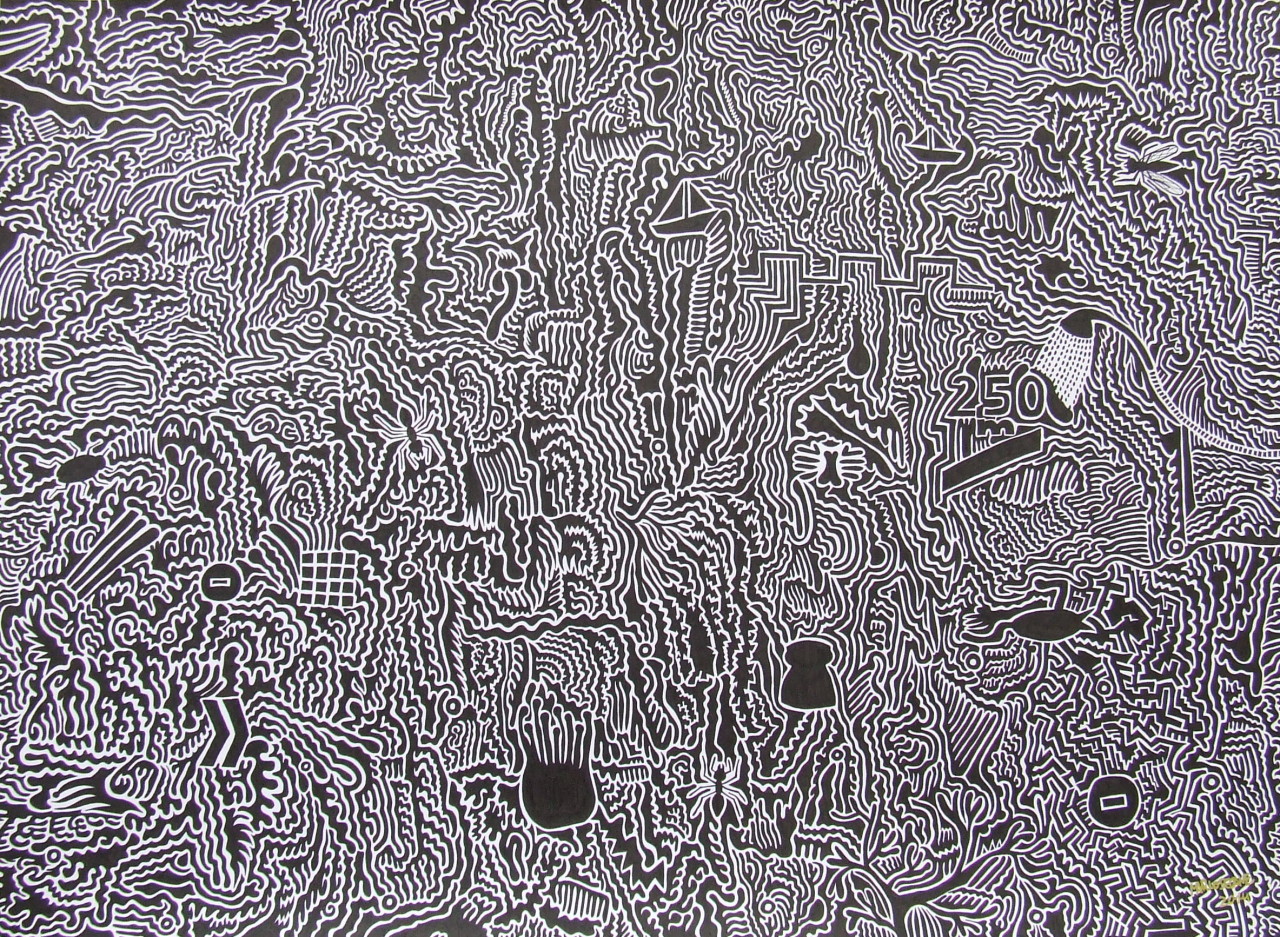
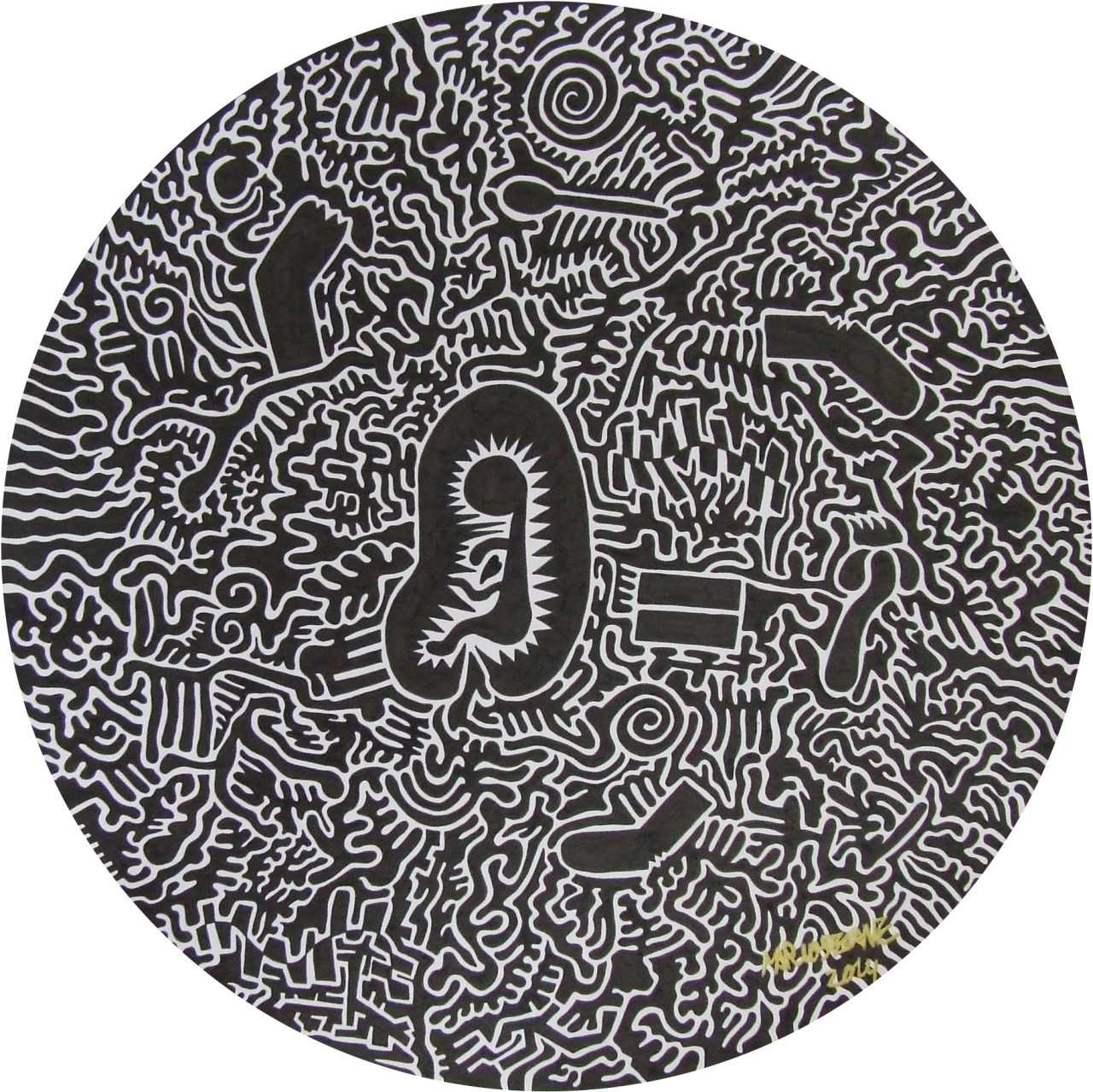
    Mario Soane, Que horas son corazon
    Mario Soane, Que horas son corazon

    Mario Seoane: Symbolic Automatism
    “I’ve been an outsider all my life and in every aspect it. If there is a place in art for me, I guess it would be on the outside. But I like the term Art Brut better (not sure if it is because of the French sound to it or what). I believe that art is about brutality, even if it’s about hiding it. We are all animals, brutes. All our actions, as much as they are masked under the shroud of civilization, are brutish in nature. Art is no exception.”
    Click here to see more of Mario’s work

    Anonymous, A Cold Heart Melts
    Anonymous, A Cold Heart Melts

    Brendan Liam: Nomadic Art
    “Nomadic Art is closer to street art than fine art. It is always artist-less, or by Anonymous. This is partially because knowing the name attached to a piece of visual art arguably clouds one’s ability to objectively view the art. Naturally some artists are so unique they may not need to sign and thus may not avoid the subjectivity issue addressed normally by anonymity. The thing to note is the credentials attached to the art here – which are none. No artist means no resume, and all that goes away with that.” Click here to see more on Brendan

    Frank Heiler, Don't Look
    Frank Heiler, Don’t Look

    Frank Heiler: Dark Surrealism
    “I think outsider art fits well with some of my work, especially my more experimental pieces. Although I do draw influences from other artists, I always try to keep a foreign, outside element to my art, something chaotic and new, with my own influence. Dark Surrealism is probably a better term to describe what I do, however.”
    Click here to see more of Frank’s work

    Mr Bartle, The Cellist
    Mr Bartle, The Cellist

    Mr Bartle
    “Like all art classifications it’s useful in grouping together work with similar characteristics, but the term is defined differently in different places. If outsider art is art created by untrained artists, then that’s not me. If outsider art is only art created by people on the edge of society, then that’s not me. Why I feel comfortable with the term and am happy with it as a classification regardless of other people’s ideas of what it should mean, is that I ‘feel’ like an outsider. I’ve never known where I’m supposed to fit into everything. So much of it doesn’t make sense to me – the way I’d like to live, depression.”
    Click here to see more of Mr Bartle’s work

    Beatrice Roberts
    Beatrice Roberts

    Beatrice Roberts
    “Well, due to my own life experience, I feel like an outsider most of the time. I’m not a ‘people person’ and some of this is, I’m sure, due to my past. I was bullied for many years and my self-confidence was eroded to a massive extent. I still have anxiety issues because of it. I was also isolated from family, friends and any support networks, so I got into the habit of being self-reliant. These days I have a wonderful partner and I am slowly but surely healing, but as my art is me, and I feel like an outsider, it is probably a reasonable term to use for my art.”
    Click here to see more of Beatrice’s work

    Let me know what you think. Do any of the terms above resonate with you? What do you think of the term outsider art? Do you like being referred to as an ‘outsider artist’? Post any thoughts in the comments below.

  • Mario Seoane: Symbolic Automatism

    Mario Seoane: Symbolic Automatism

    This post showcases the work of artist Mario Seoane. Mario has been interested in making art all his life, finding his current style during his high-school years when he would doodle away in class. He now calls this style ‘symbolic automatism,’ and has created his own private dictionary of symbols that all have a consistent meaning throughout his work. I asked him a few questions about his life and work.


    All them apples fell from the same tree
    All them apples fell from the same tree

    When did your interest in art/creating begin? 

    I believe I’ve been interested in the arts all my life, independently of the medium. I have an unpublished poetry book stashed in a drawer somewhere called “The little boy sings the Blues”. I’ve always felt the need to express myself artistically. If you look at my books and notepads since primary school, you’ll see drawings all over the place. I used to draw on top of the book’s illustrations and made them my own. Needless to say that my parents and teachers used to kick my ass a lot because of this irreverent behaviour.

    But, the way I express myself today – which I call symbolic automatism – was developed during my high-school years; doodlin’ away endlessly, instead of paying attention to those classes.

    I got sand in all those places
    I got sand in all those places

    What is your starting point for each piece?

    First, something needs to happen that catches my attention. It could be anything, it doesn’t matter: a conversation, a landscape in which I’m embedded, something I’ve read… Then, I start to imagine the whole narrative in terms of symbols: what symbol can I use to represent this or the other. After that, I try to transpose my symbolic ideas to a notepad I always carry around with me and when I like the results I start a new piece.

    Last night I dreamt of shabby docks
    Last night I dreamt of shabby docks

    Who or what influences your work?

    Everything influences my work. I just need some random event from the outside world and off goes my mind in trying to distort reality into my creations. The challenge here is to choose the best themes, since it is impossible for me to implement every idea that crosses my mind.

    In terms of big art names influencing what I do, I’ve had people telling me that my work looks like some fancy name’s, but I really don’t care for that. If it reminds them of anybody else’s, it is not my intention at all. I am doing my own thing here!

    Tercio de varas
    Tercio de varas

    What do you hope the viewer gets from your work?

    I’m really not working with the viewer in mind. I simply expunge my mind into paper. I guess most of the time the viewer will have no idea about what is happening in a given piece, since I am the only one who knows the symbol’s significance. And I like it that way. I have a notepad that I use as a symbol dictionary, where I keep track of every symbol I devise. No one else has ever seen that dictionary and no one ever will. At least while I’m alive. But I guess you can make assumptions about some of the symbols if you pay attention to every piece and their titles, since they’ll keep their significance throughout my work.

    Polish nightmare
    Polish nightmare

    What do you think about the term outsider art? Is there a term that you think works better?

    I’ve been an outsider all my life and in every aspect it. If there is a place in art for me, I guess it would be on the outside. But I like the term art brut better (not sure if it is because of the French sound to it or what). I believe that art is about brutality, even if it’s about hiding it. We are all animals, brutes. All our actions, as much as they are masked under the shroud of civilization, are brutish in nature. Art is no exception. For me, the existence of an artistic expression that inherently humbles itself to this level is fascinating.

    Consented lies
    Consented lies

    What are you working on at the moment? 

    Right now I am finishing a piece called “On how to become a man”. It is a 21.5 by 30 cm, pigment ink and Indian ink on Bristol board. It’s about going into the woods, chopping down some trees and becoming a man in the process. It’s a coming of age kind of thing and I will say no more about it. After that, I have some other ideas ready to be implemented, also on the same support.

    Que horas son corazon
    Que horas son corazon

    Where do you see your work taking you in the future?

    My work is a private thing, but I don’t mind if anybody wants to pay for it, though. I am willing to sell my mind, encoded into paper, but I’ll never sell the key. That being said, I wish I could live off it and, honestly, I am actively pursuing this goal. However, if I can’t, I’ll keep living to create it, because there’s little else I enjoy doing and nothing as much.


    Click here to visit Mario’s website

  • Outsider Art in Paris

    Outsider Art in Paris

    After taking part in this year’s PARIS OUTSIDER ART FAIR (with Outside In, where I am the Communications Officer), I can see the transformation that is visibly taking place within the outsider art field. With major galleries (albeit predominantly from the field itself) from all over the world taking up a stall at the fair, the ‘cabinet of curiosity’ idea of outsider art exhibitions gone-by seems to have well and truly disappeared. The younger sibling of the lauded New York Outsider Art Fair, the Paris incarnation is quickly growing legs, and this was no more apparent than this year in the centre of such a cosmopolitan city with a constant stream of visitors: art lovers, collectors, and curious passersby alike.


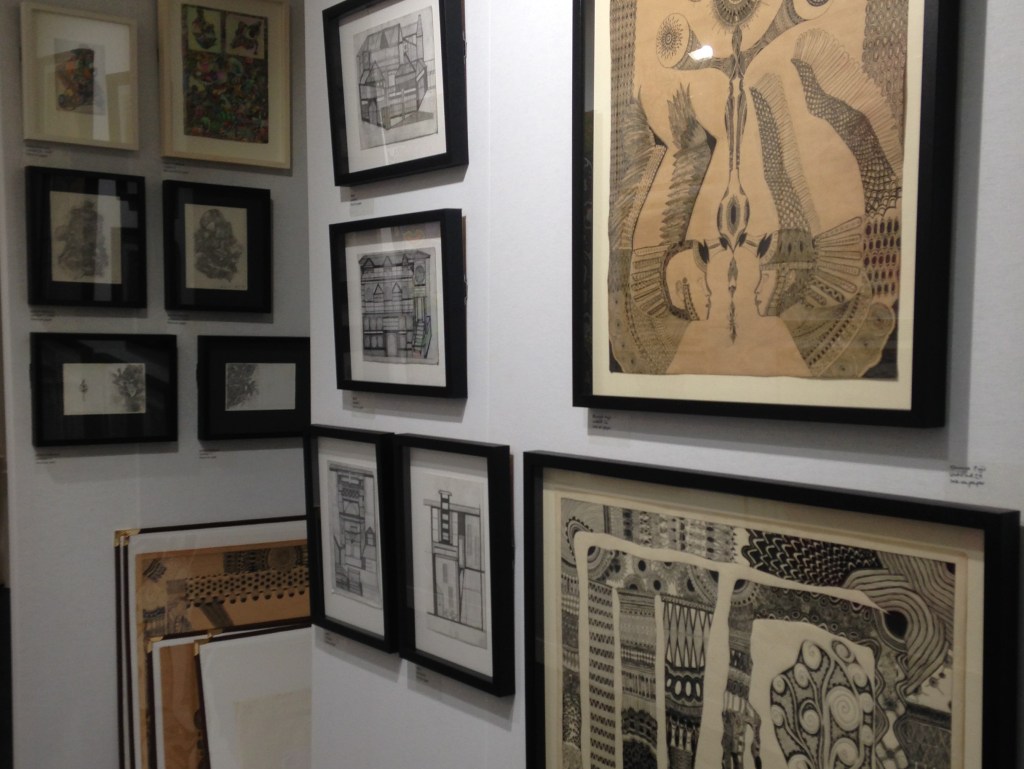
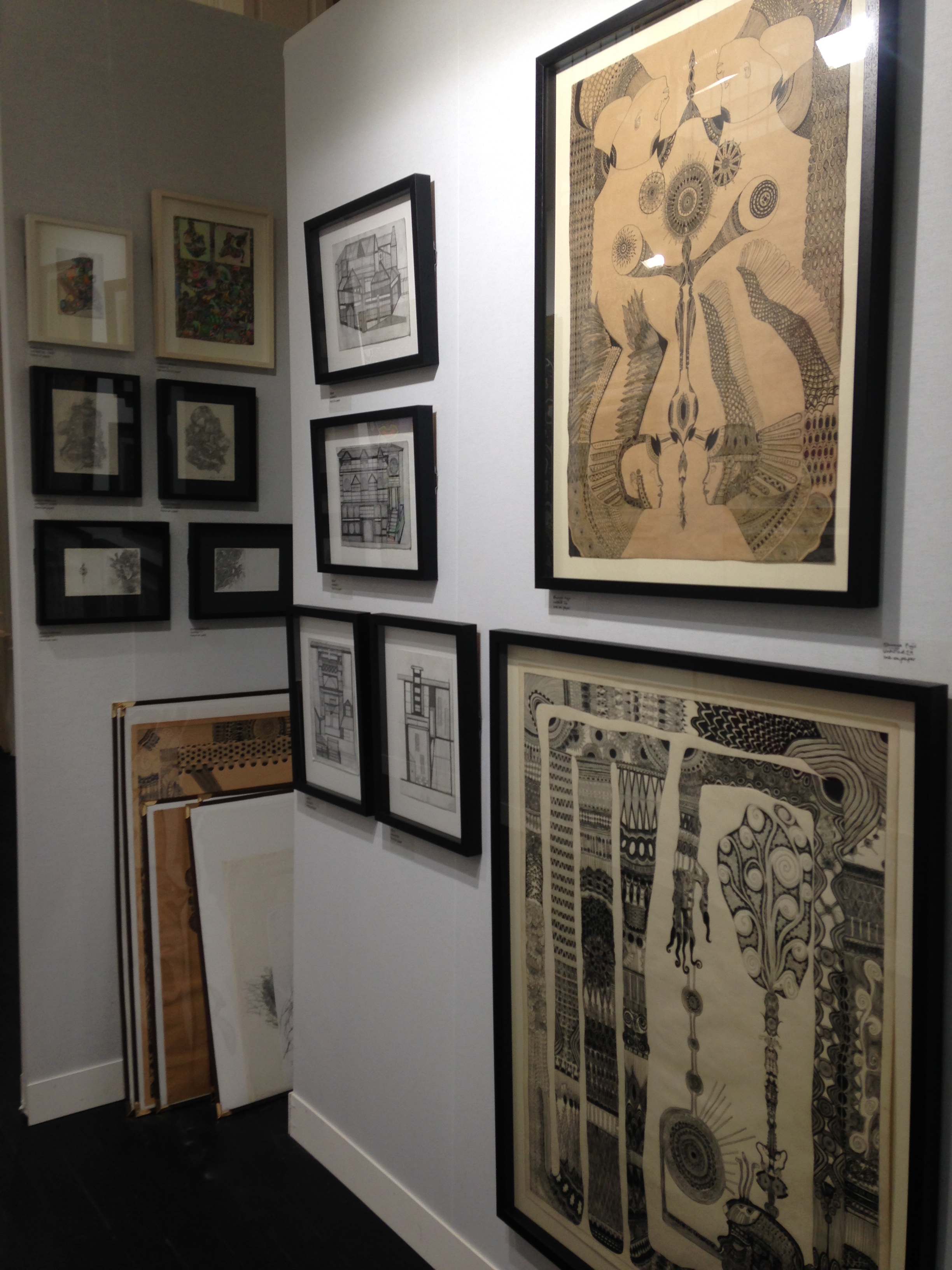
    Martin Phillimore, Albert and Shinya Fujii's work on the Outside In stall
    Martin Phillimore, Albert and Shinya Fujii’s work on the Outside In stall

    In previous years, the Fair has been held at Hotel le A, with each stall having its own intimate hotel room showcase. This year, it had a much more Fair-like air at the Hotel du Duc; a grand conference and event venue located near the Paris Opera House.

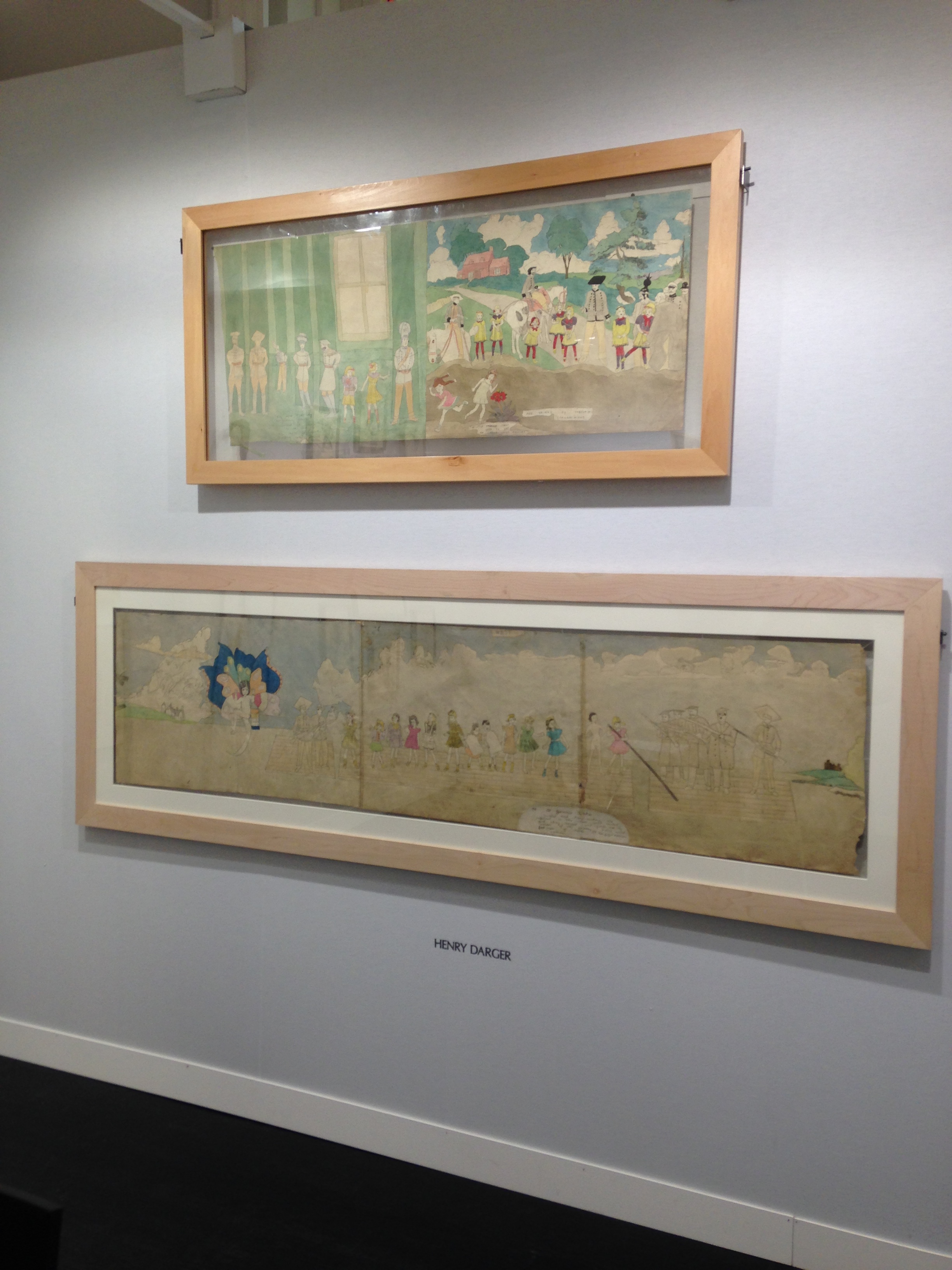
    This year the Ricco/Maresca Gallery from New York set up shop on this side of the Atlantic for the first time, London-based England & Co had their debut in Paris, and Australia was represented in the form of Coo-ee; specialists in Australian Aboriginal Art. In addition to the dealer stalls, there was a programmed talk featuring psychologists, psychiatrists, artists and curators, focusing on sexuality in the work of Henry Darger, Eugene von Bruenchenhein, Aloise Corbaz and Miroslav Tichy, and a specially curated corner of work by Japanese artist Shinichi Sawada.

    Gregory Blackstock at the Garde Rail Gallery
    Gregory Blackstock at the Garde Rail Gallery

    What was refreshing was that, if you were unaware as to the title or contents of the fair, you could so easily have believed it was a very-much-mainstream-art-world-art-fair. The stalls were curated to an incredibly professional level, and the quality of work on display was unquestionable. It was fantastic to see work by some of the big names there in the flesh: Henry Darger, Bill Traylor, George Widener, and Martin Ramirez. But what was equally fantastic was the huge number of emerging artists brought to the fair by galleries who so obviously respected their work, and who so obviously respected the artists. At the Outside In stall, we were representing Bali and Buddhism inspired ink drawings by Japanese artist Shinya Fujii, whose work has only ever been exhibited outside of Japan on one other occasion. It attracted a huge amount of interest, and it was so wonderful to see people returning at the end of the day to say they had fallen in love with it; they simply couldn’t go home without it.

    Marie-Rose Lortet's solo show
    Marie-Rose Lortet’s solo show

    I was really pleased to see work by ‘anthropologist’ of the everyday, Gregory Blackstock, presented by the Garde Rail Gallery from Austin, Texas. Blackstock creates visual lists based on what he has experienced, memorised and then regurgitated. These include Monsters of the Deep, Classical Clowns and The Irish Joys – amongst hundreds of other categories. I spoke to Karen Light-Pina from the Garde Rail Gallery, who discovered Blackstock’s work in 2003. This interaction was typical of the fair; being able to meet and talk to a gallerist who personally knows the artist.

    Carlo Zinelli pieces seemed to pop up on several stalls, perhaps a sign that he is flavour of the moment. Zinelli was diagnosed with schizophrenia during his time volunteering for the Spanish Civil War in 1939 and was soon placed on medical leave, where he was committed to a psychiatric hospital in Verona. After ten years, he was admitted to a painting atelier created by sculptors Michael Noble and Pino Castagna, where he painted for hours every day with tempera paints and coloured pencils – often on both sides of the paper. His works are bright, bold blocks of colour, telling the story of his childhood.

    Marcel Storr's work
    Marcel Storr’s work

    There were several exhibiting artists present at the fair, including Cathy Ward whose scratchboard works were presented by Galerie Toxic. I saw Cathy many times, deep in conversation with visitors who were visibly excited at being able to ask the artist herself about her own work; her inspiration, her process, her style. And I think Cathy was equally as keen to share her work with visitors in person. French artist Marie-Rose Lortet had a solo exhibition of her lace architectural structures and faces with the Marie Finaz Gallery, and was herself present at the stall on several occasions.

    There was something about the rawness and the depth of the work that made the Fair unlike any other. Fairs can at times be at risk of becoming a caricature of the commercial, corporate, hard-sell, but this was far from it. This was about enjoying the work, and enjoying the artists’ stories. There was a sense of camaraderie between the stalls, despite the fact that many were competing for sales and displaying works by the same artists. I think this camaraderie came from a want to protect the artists on display, but all the while shouting from the rooftops about how talented they are.

    Henry Darger's work at the Carl Hammer stall
    Henry Darger’s work at the Carl Hammer stall

    Overall it was great. It is so refreshing to see this kind of art having a stage like this; a stage that has been a long time coming, and a stage that many mainstream artists and mainstream art galleries can take for granted. Far from being the ‘European version’ of the New York Outsider Art Fair, it was noticeable that this was in fact an international event in its own right and it is without a doubt becoming a key date on the Outsider Art calendar. I look forward to next year’s incarnation!

  • Nomadic Art from the Apocalypse

    Nomadic Art from the Apocalypse

    This guest post has been written by Brendan Liam, ‘Curator of the Apocalypse.’ Brendan has coined the term ‘Nomadic Art’ to describe works that are predominantly anonymous, and created on simple materials often found to hand. The work he describes is much nearer street art than fine art in its appearance and style.


    ????????????????????????????????????
    Anonymous, Along Came a Tipping Point. “This is a ‘spinning painting.’ It doesn’t literally spin, but it can be hung from any angle.”

    “My name is Brendan Liam and I’m Curator of the Apocalypse. I’ve been an outsider artist and curator for less than two years. Before 2014, I had never had any notion of considering myself an artist, much less a curator. I went to the University of Wyoming and wandered from 1992 to 2005.  I had 185 credits when I graduated 20 years ago, three of which were related to art, for ‘beginning drawing.’ So I’m educated, but not in art; I have no background in art. My background is economics, business, and real estate. Essentially I had what I call a ‘successful midlife crisis.’ I had been making six figures a year and living the life of an ordinary person and I quit the whole show… and accidentally emerged doing art in the summer of 2014 and I will be doing my first show in Denver this coming November at the Pancakes and Beer show.

    I am a good example of an ‘outsider’ for sure. I don’t know about the rules of composition, I don’t understand colour wheels and I don’t care what gallerists or judges say. I just want to sell art to people, preferably people who don’t normally buy art. I usually get my inspiration from small children because they don’t know the rules either. 

    Anonymous, A Cold Heart Melts
    Anonymous, A Cold Heart Melts

    After all that formal education, I certainly didn’t want to go back to college to study art at 42 years old. I gave it some thought, and decided it would be much quicker to create a philosophy of art that championed ignorance. The result may or may not be original – I certainly wouldn’t know – I’m just too damn ignorant. Either way, I call it ‘Nomadic Art.’

    Nomadic Art’ is closer to street art than fine art. It is always artist-less, or by Anonymous. This is partially because knowing the name attached to a piece of visual art arguably clouds one’s ability to objectively view the art. Naturally some artists are so unique they may not need to sign and thus may not avoid the subjectivity issue addressed normally by anonymity. The important thing to note is the credentials attached to the art here – which are none. No artist means no resume, and all that goes away with that.

    Anonymous, Etherea, The Good Witch
    Anonymous, Etherea, The Good Witch

    All that remains is the art. I fear the deeper into the art world I go, the further from the art I might get.   So I’m actually paranoid to some degree, about learning too much from the industry itself. I’d prefer to let the paint teach me; the paint and the preschoolers.

    The art is done quickly, in any medium, on any available material and obviously by anyone. This is the heart of Nomadic Art: it is essentially painted garbage. Frames are extremely rare, and if you see one for sale, it’s unusual. For the paintings, you’d never see actual canvas or oil, that’s far too fancy for Art from the Apocalypse. The canvases do include Masonite, composite boards (usually drawer bottoms), OSB (particle boards), wood scraps, paper and just about anything else – except canvas.

    Anonymous, The Middle Way Through a Storm
    Anonymous, The Middle Way Through a Storm

    Even the mounts are unusual. If you click the links, you’ll also see some pieces have lengthy stories behind them.”


    Click here to see more Art from the Apocalypse

  • Apryl Miller: A Visionary Nest

    Apryl Miller: A Visionary Nest

    Apryl Miller credits her artistic career to being raised in a large, creative DIY family. Her work reflects the tradition she was taught as a child; that of making something your own by making it yourself. She came to visual art in later life, crafting a vernacular art environment in which she would raise her young children. In this post, self-proclaimed ‘accidental artist’ Apryl talks about her inspiration and how she came to create her visionary ‘nest.’


    AM 42

    “My journey as an artist is deeply rooted in my childhood. We were a creative, DIY family and we had that attitude, coupled with a belief in the miracles a hand can fashion. We didn’t have a lot of money, but we had a lot of kids and it seems we were always making stuff and entertaining ourselves with different art projects. All our food was made from scratch and we produced both items of necessity and those of more artistic value, like holiday cards and Christmas ornaments. I was steeped in the can do ethos of making things and there was a sense of comfort and pleasure to be derived from all our activities. My work reflects the tradition I was taught as a child, that of making something your own, by making it yourself.

    I was raised in the Pacific Northwest and like many before me, I had to heed the siren call of the bright lights, big city and head out east. I was in a fashion design program in Seattle and I decided that I wanted to go to NYC to finish my degree. I had to find out who I could be and what I might do if I were to head out into the unknown. If I didn’t go, I knew I would always wonder “what if”. I called the airline, and bought a one way ticket to NYC, just like in the movies.

    AM 01 (1)

    A lifelong poet, I came to visual art later in life, when the apex of my background resulted in crafting a home for my young daughters. It was conceived as a creative wonderland for their little souls to be nurtured and supported, a place where their imaginations could soar, unfettered. But what I did not factor in, was how it would do the same for me, too, as we lived out our lives here.

    My space has been described in the press as “one of the most immersive, intricate, habitable art installations in the city…it is extremely important when looking at the history of immersive art installations…” And my personal favourite, “Apryl has changed the way we think about living…” Since crafting my home, like a magician with an endless silk scarf, I have continued to produce with an unabated creativity.

    AM 10

    As I worked, I had no grand scheme, no plan beyond making a creative, expressive living space. I proceeded without rules, because I did not know them. I worked intuitively, which is the way I continue to this day. I was a mom making a nest for my children, using the poetry of color, the poetry of asymmetry and banning the language of ubiquity and the colors of black and white. In the process I came to myself as an artist, in a really delightful way.

    Most objects were custom made or reworked designs, just for each specific space. An example would be my “Sculptures Masquerading as Furniture”, which are covered in vintage 1960’s garment fabrics. Part of my art is stripping away barriers, and by using garment fabrics I am rendering the experience of furniture more personal and intimate. The concepts behind these pieces and the stories I tell with them takes them to a realm where they transcend furniture. My intention was to create a world unto itself, so people would be captured intellectually and emotionally in the environment. By using few known references, people are able to have a dialogue with the space and to remain connected within it.

    AM 34

    There are many aspects which distinguish my space from design and place it in the realm of art. The most compelling is that it is about personal expression and everything here is a reflection of my history, experiences and beliefs. There are stories in the carpets, pictures of my children in the kitchen table legs and the messages flow and tumble from room to room. Each space has been obsessively accented through the use of dimensionality, patterns, color and the organic balance of cacophony. When I work, I juxtapose patterns, textures, shapes, materials and colors. By mixing together that which does not belong, a peace is established that contains both energy and calmness.

    My work is about our universal state of imperfection and how it binds us together. There are installations throughout the house that address this topic, most notably in the dining room. It is home to a large installation titled, “The Where and The How Left you and your Silence.” It’s a commentary on the fragility of our human relationships.

    AM 43

    There are sprawling carpets with tear drops, which is part of my iconography, a child sized loft for one daughter and a stage for the other, over 150 paint colors adorning the walls, with patterns painted inside some of the closets. The bathrooms have custom tile work which I created by cutting up the tiles and reassembling them in my own idiosyncratic fashion. Additionally I drew images on the undersides of clear tiles with Sharpies, continuing the concept of rendering the tiles anew.

    I often think of myself as an accidental artist, as my artistic expression was revealed organically, as I lived my life. As my need for handmade goods increased, my dormant creativity rose to the surface and showed its face to the sun. My story began when I was a small child, and it continued to flourish with the arrival of two more small children, who I desired to protect and nurture, with the full force of my artistic powers. I could not have predicted that I had a latent creativity and no one is more surprised about all of this than me. I hope to continue sharing the story of my space and of my personal work, as I feel it is my calling and I aim to use what God has given me.”

    AM 46

    AM 48 (1)

    AM 49

    AM 51

    AM 52


    Click here to visit Apryl’s website