Recently, I have been considering the importance of process and product with reference to art making. Is the process of making the art the most important thing for the artist, or is there something equally as important in having this work shown to the public – whether this is an exhibition, a performance or a publication? Would some, perhaps, even say this public exposure is more important? I am talking in this post about all artists and creative practitioners.
I’m of the opinion that having work exhibited (or performed, or published) is an important part of any artists’ creative practice. It provides the opportunity for the artist to have a voice in the world, and increases their feeling of self-worth. I do, however, have absolutely no doubt about the importance of the creative process – for Outsider Artists; for all artists. For everybody. It allows self-exploration, self-expression, communication and so much more. But, I am interested to know the impact exhibiting has on an artist. As a writer (although not a creative writer), I find that having work published helps me think I am doing something right. This is not to say that if I didn’t have work published, I would cease writing – as this is certainly not the case; I would write regardless of whether anyone was taking a blind bit of notice. But it encourages me to write more, particularly for this blog, where I have an interested following. Publication also means my work can be seen by a wider audience and that means my voice is being shared with more people.
Mr Imagination
Having conducted some research into the subject, I have found that most of the literature on the process versus product idea comes from art therapy schools. As art therapy is not something I am going to discuss in this article, I am taking process to mean the action of creating art (often a very therapeutic undertaking), and I am taking product to mean an exhibition, performance or publication which means the work created can be accessed by the general public.
My decision to write on this topic came about somewhat from bits of my current work. Specifically, looking at the impact a publicly-accessible product can have on offenders and ex-offenders. I think this group highlights my point most succinctly. If works by offenders and ex-offenders – a notoriously stigmatised and marginalised group – can be experienced by the average passer-by, this can have an overwhelming impact on their self-image and, fundamentally, their personal journey towards rehabilitation. Having work displayed/published/performed in a ‘space’ dedicated to the arts means they have a legitimate place in society, and a new ‘label’ (despite my disdain for labels) that is profoundly less negative than the one that society has previously given them. For prisoners, having work and feedback from those ‘on the outside’, can provide links with the community and a huge surge in self-worth: they see themselves as worthy of having their work seen by society.
This is not to say that we still need to think about the ethics of displaying work by Outsider Artists – or any artists for that matter. We must still ensure we are always working towards an ethically considered way of approaching the curation of art by vulnerable people. For more on this, you may like to have a browse through the ‘Curatorial Questions’ section of the blog.
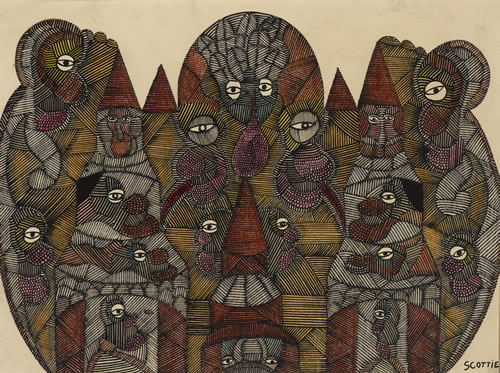
Scottie Wilson, Greedies
I think the internet has certainly had a large part to play in the ‘product’ side of the argument. Now, artists, writers, performers, etc., can upload their work to a website or a blog for the world to see. It is not so dependent on having an exhibition in a sought after location, or having your book published by a well-known publishing house. Perhaps there are artists out there who prior to the internet may not have considered ever having their work seen (perhaps due to a lack of opportunity or luck in the art world), who are now able to share what they are doing with a wider audience. But this, I think, is a technological tangent, albeit an interesting one that I might explore further in future.
Anyway, I think I have said as much as I can, and now it’s over to you. I would be very interested to hear from artists about their thoughts on this subject. Does exhibiting/performing your work provide something extra outside of the creative process? Is feedback important? Is sharing your voice and your thoughts a vital part of your practice?
Please do comment below, write to me on Twitter: @kd_outsiderart, or if you would prefer, send me an email: kdoutsiderart@yahoo.com. Looking forward to hearing your thoughts!
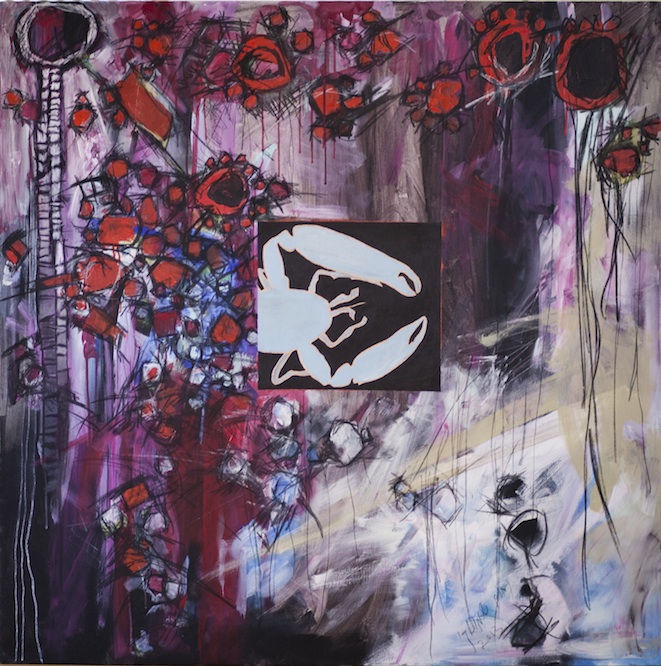
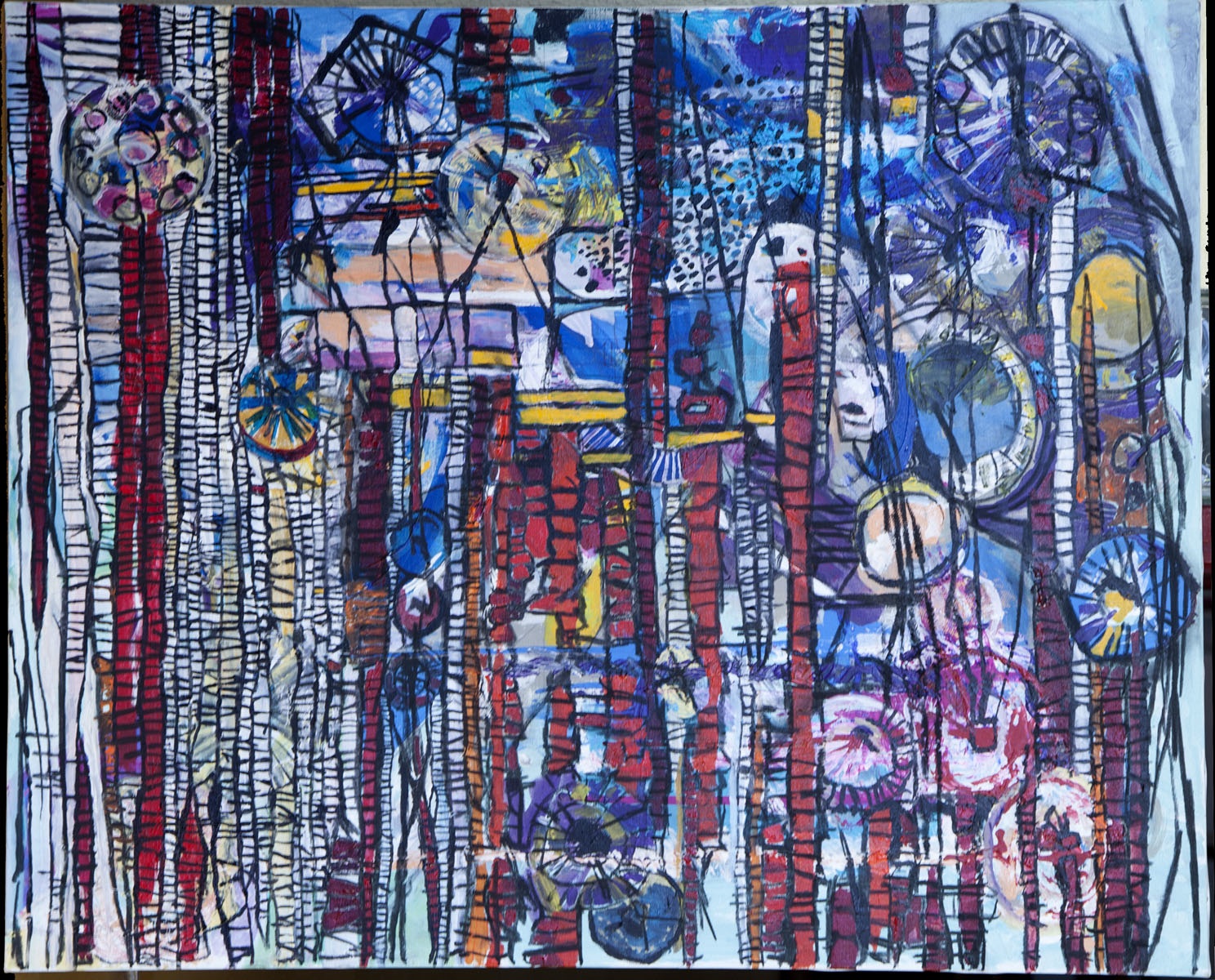
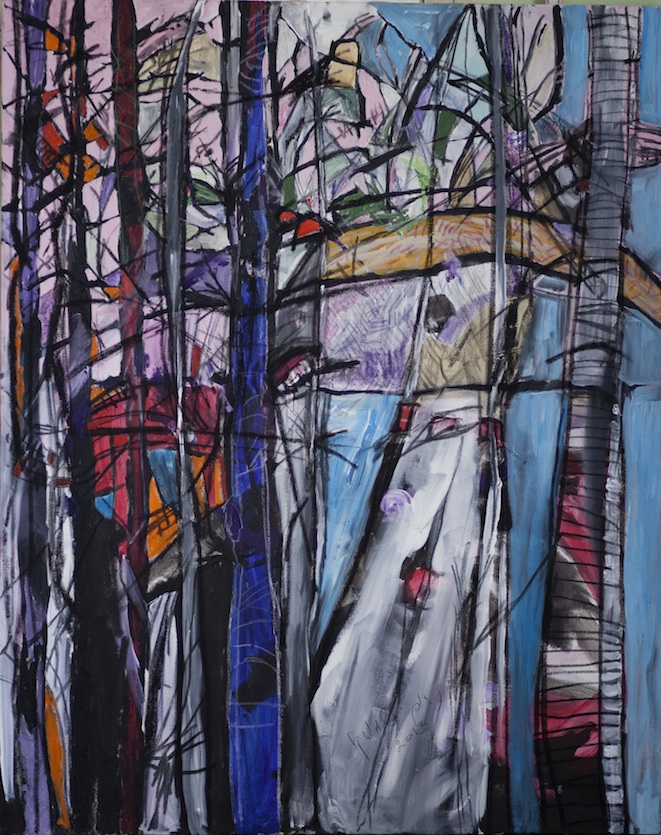
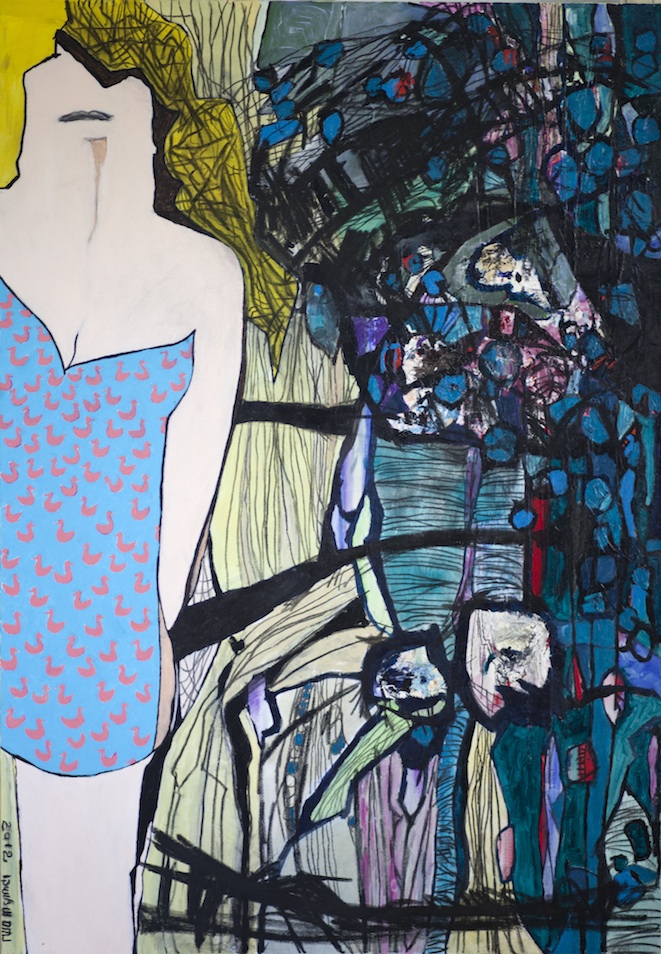
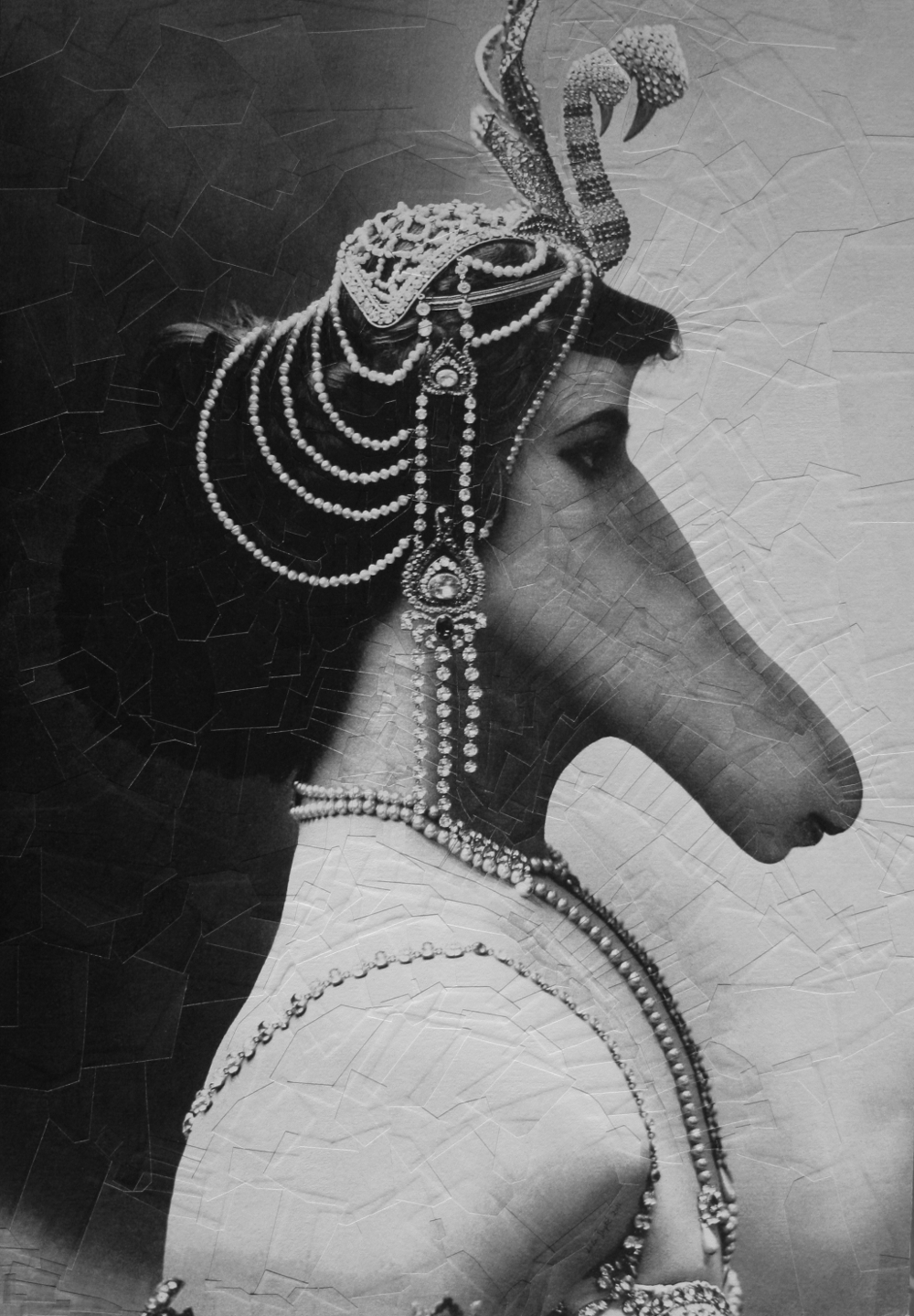
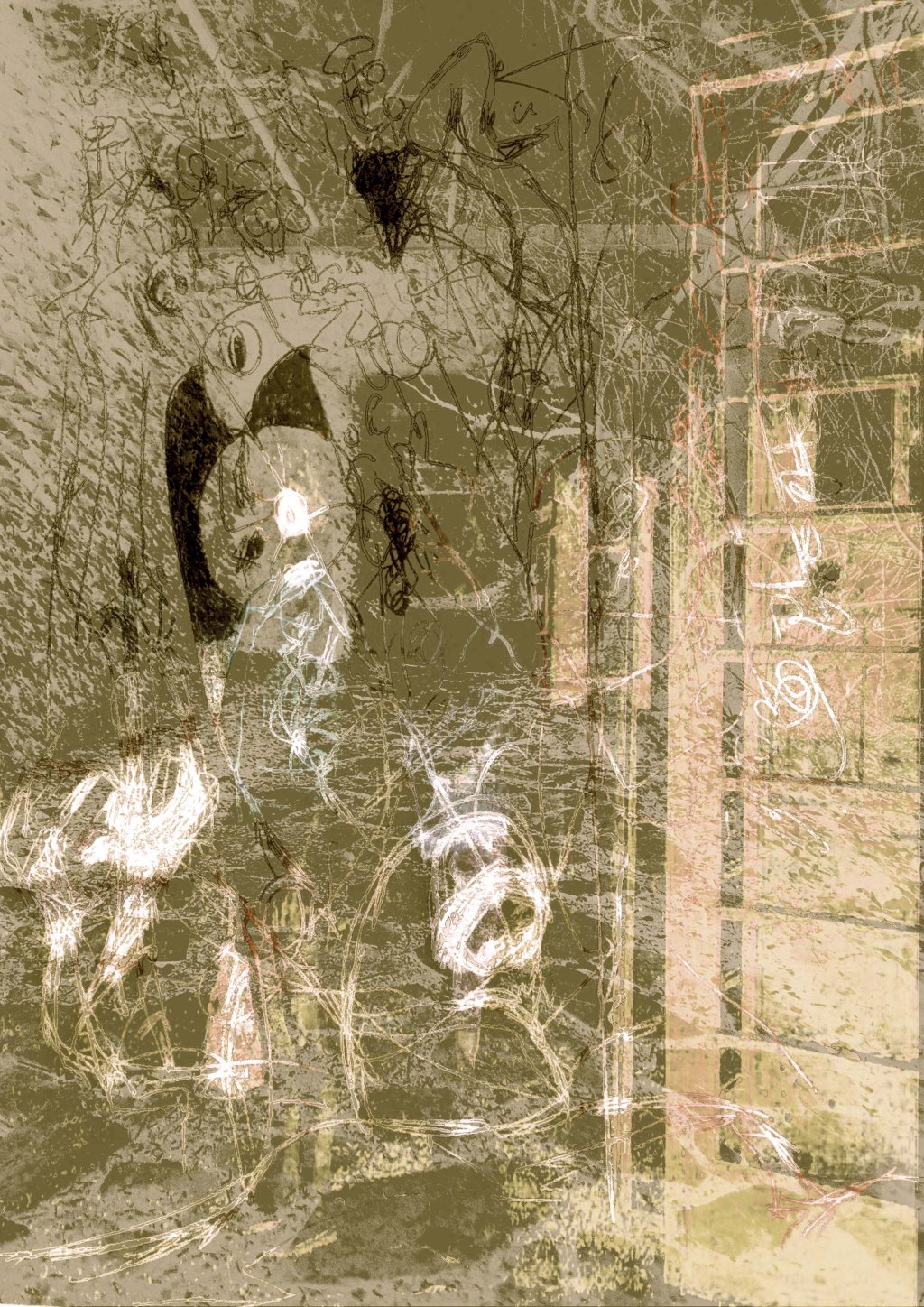
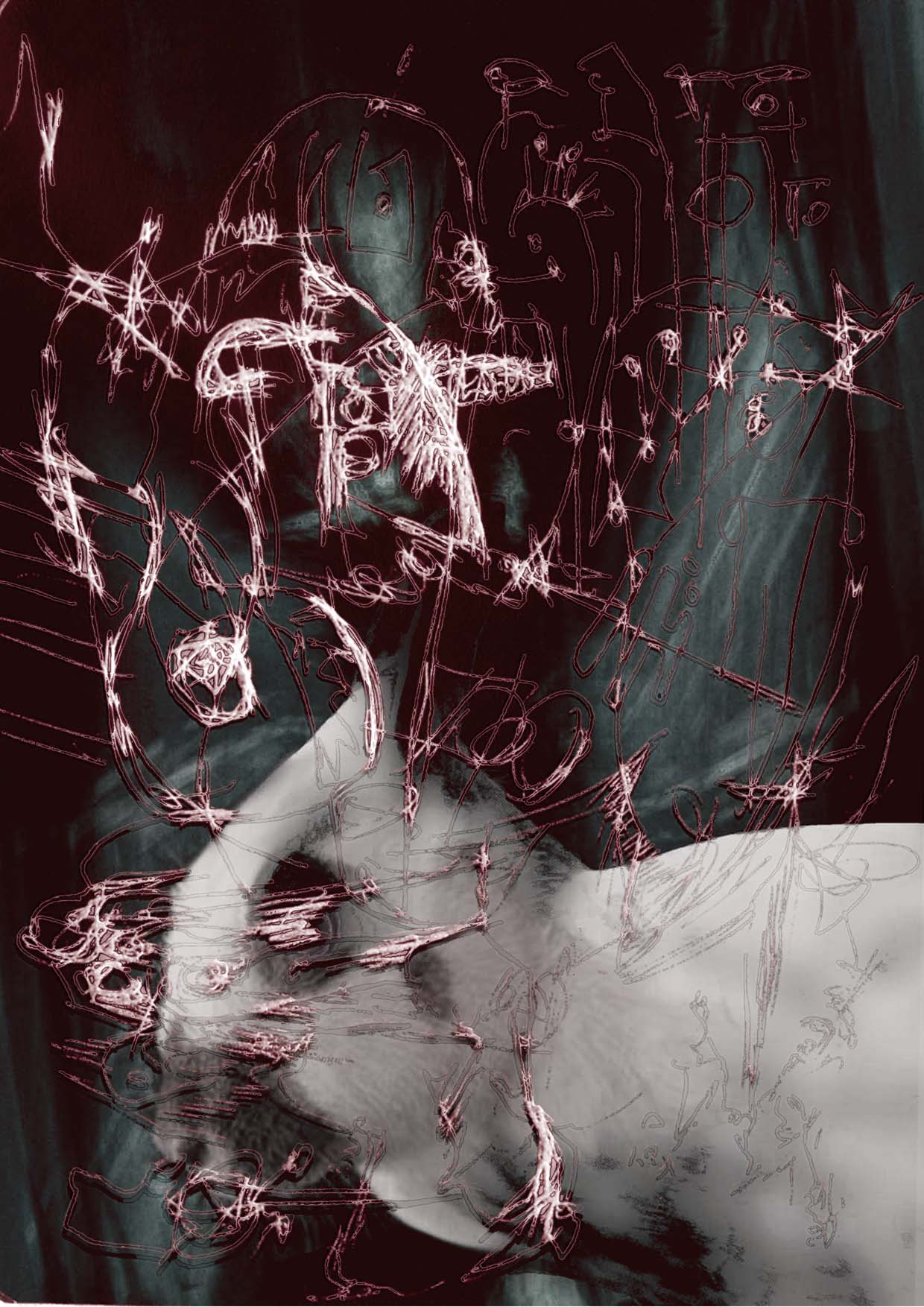
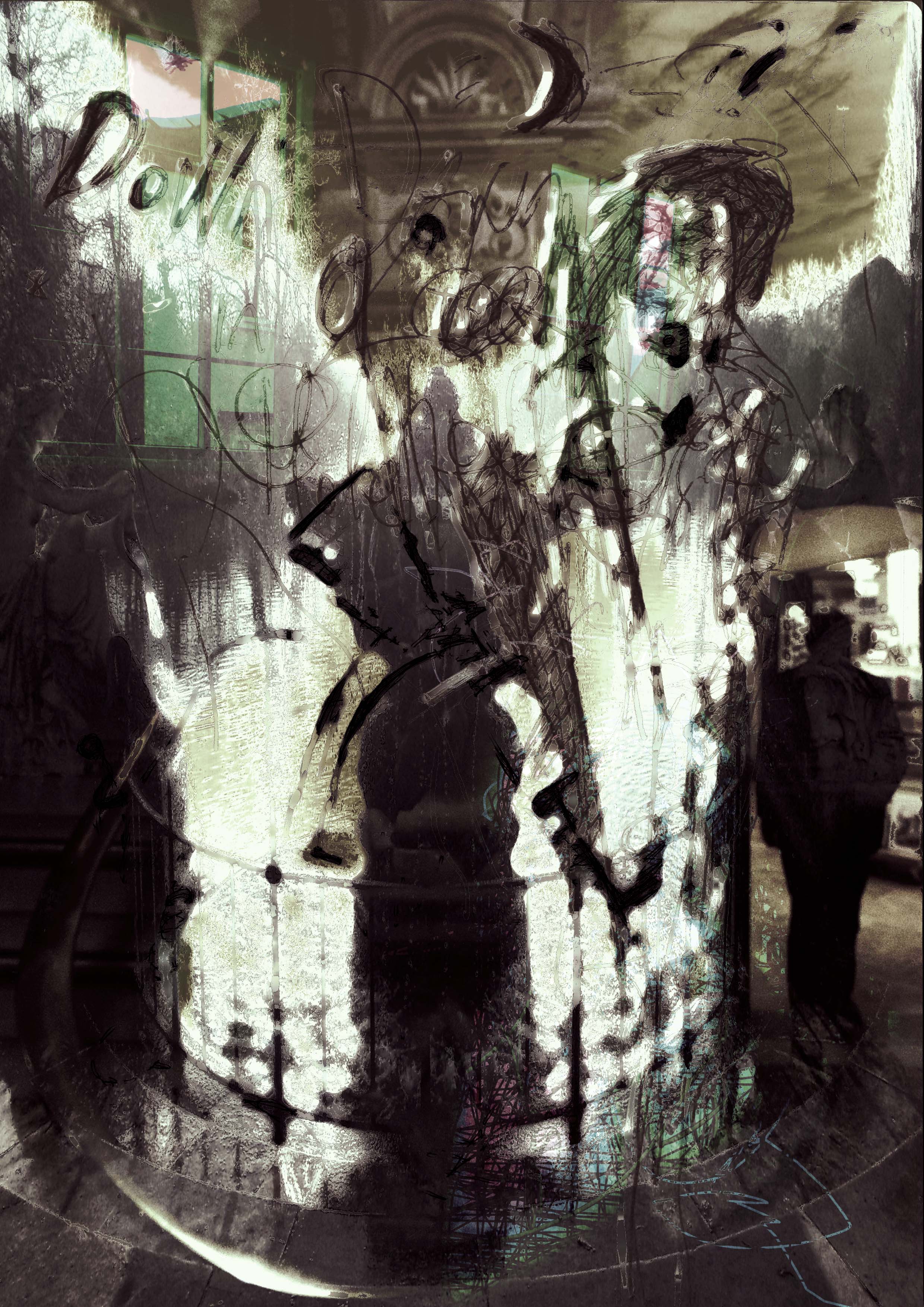
Lola Dupre is a self-taught collage artist and illustrator currently based near Galway in Ireland. Since 2000 she has been living and working in Switzerland, Scotland, France, Spain, Portugal and now Ireland. She has collaborated with photographers including Lisa Carletta, Madame Peripetie, Helen Sobiralski, William Kano and Laetitia Bica. And has published work with magazines such as New Statesman, New Republic, Flaunt, Flair Italia, Hi-Fructose, Die Welt and Revista Marvin and exhibited work with galleries in the USA, France, Japan, Germany, England, Scotland and Australia. She is represented by CES Contemporary in Los Angeles USA.
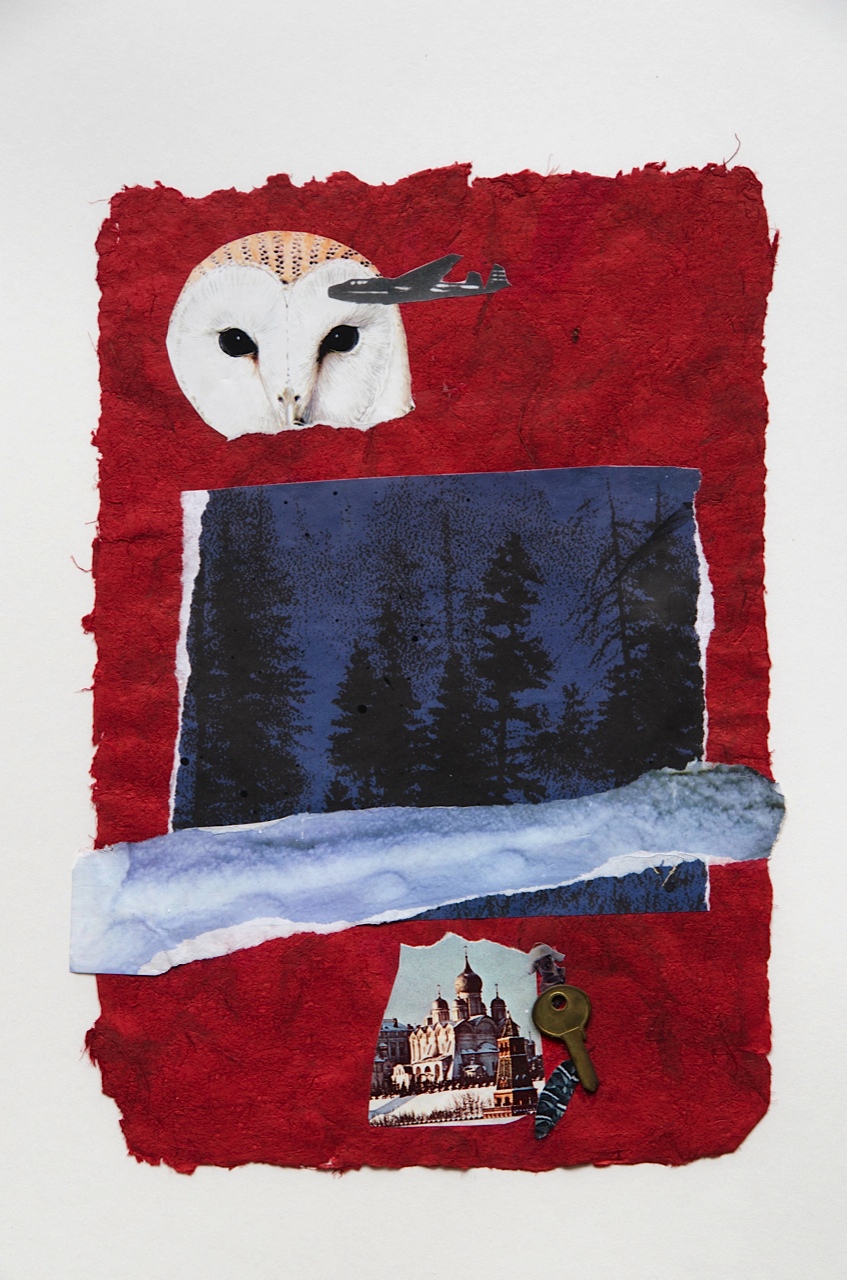
Lola Dupre, Benjamin NetanyahuLola Dupre, Detail from UntitledLola Dupre, Double DLola Dupre, Exploded Al CaponeLola Dupre, Mata Hari
‘My Jungian Journey in Collage, Assemblage and Poetry’
I was recently sent a book by Susan Levin, who is based in California, entitled ‘Art from Dreams: My Jungian Journey in Collage, Assemblage, and Poetry,’ and felt I had to share it with you. The book is beautiful as an object in itself, but the works inside (particularly the assemblages – which are my particular favourites) are just extraordinary. The book – as noted on Susan Levin’s website – celebrates artistic expression as an exploration for self-awareness.
“Art making and poetry reveal to ourselves and to others the images and feelings that arise within us in dreams. The very process of creation taps into the source of our inner wisdom. Poetry itself can be accessible as a collage of named images put together in various forms to communicate to and from our innermost selves.”
Susan Levin has a BA from the University of Michigan and a Masters of Public Health (MPH) from Johns Hopkins University. In addition, she studied at the Center for Creative Studies in Detroit, Michigan. She is now a practising artist in Los Angeles, California.
Alchemy
Nobody sees us-
the Archaeologist and me-
as we excavate the night
searching for beginnings,
unearthing symbols, images.
Everything is held to the fire
We get close to truth,
to what is known and unknown.
We awaken to re-imagine our lives
Home
I left the ship on the city’s river
and walked barefoot through its mud
up the steps to the bank
to retrieve my currency.
Now with my valuable fuel,
I stopped traveling the wrong freeways.
Redeemed my compass
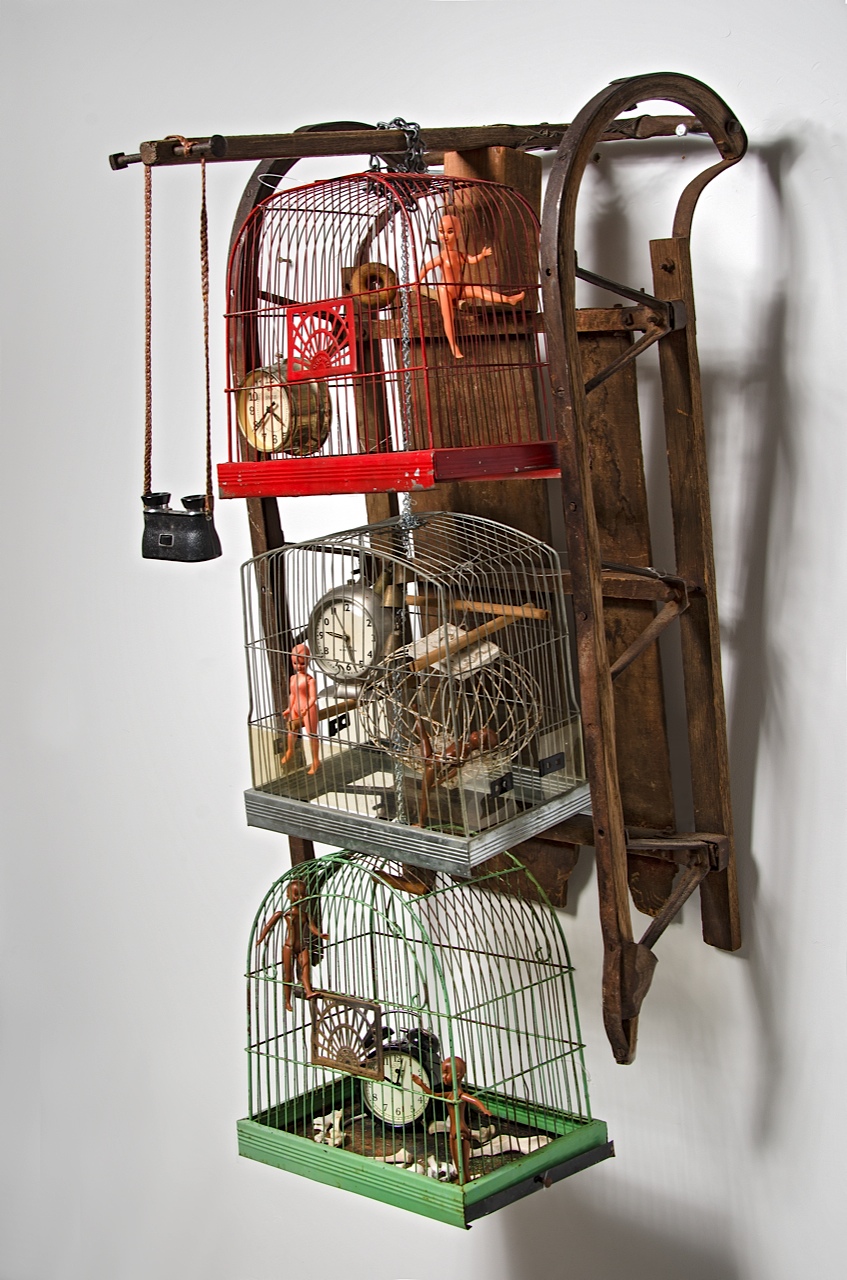
Cages of our Lives
Night Journey
You can find our more about Susan, her work, and her book by clicking here
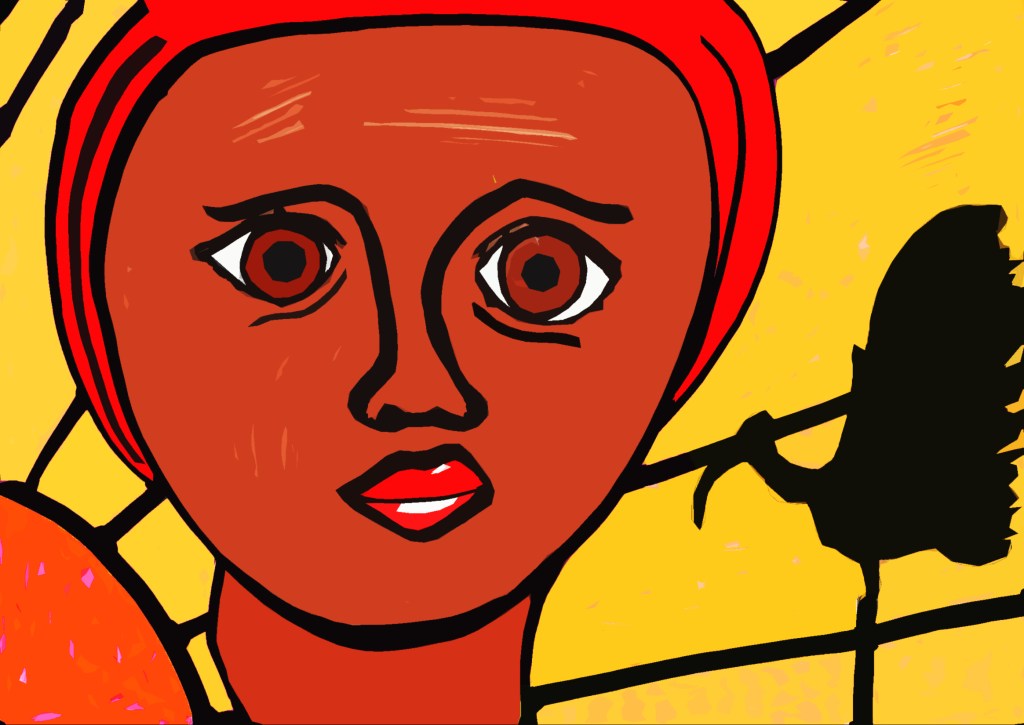
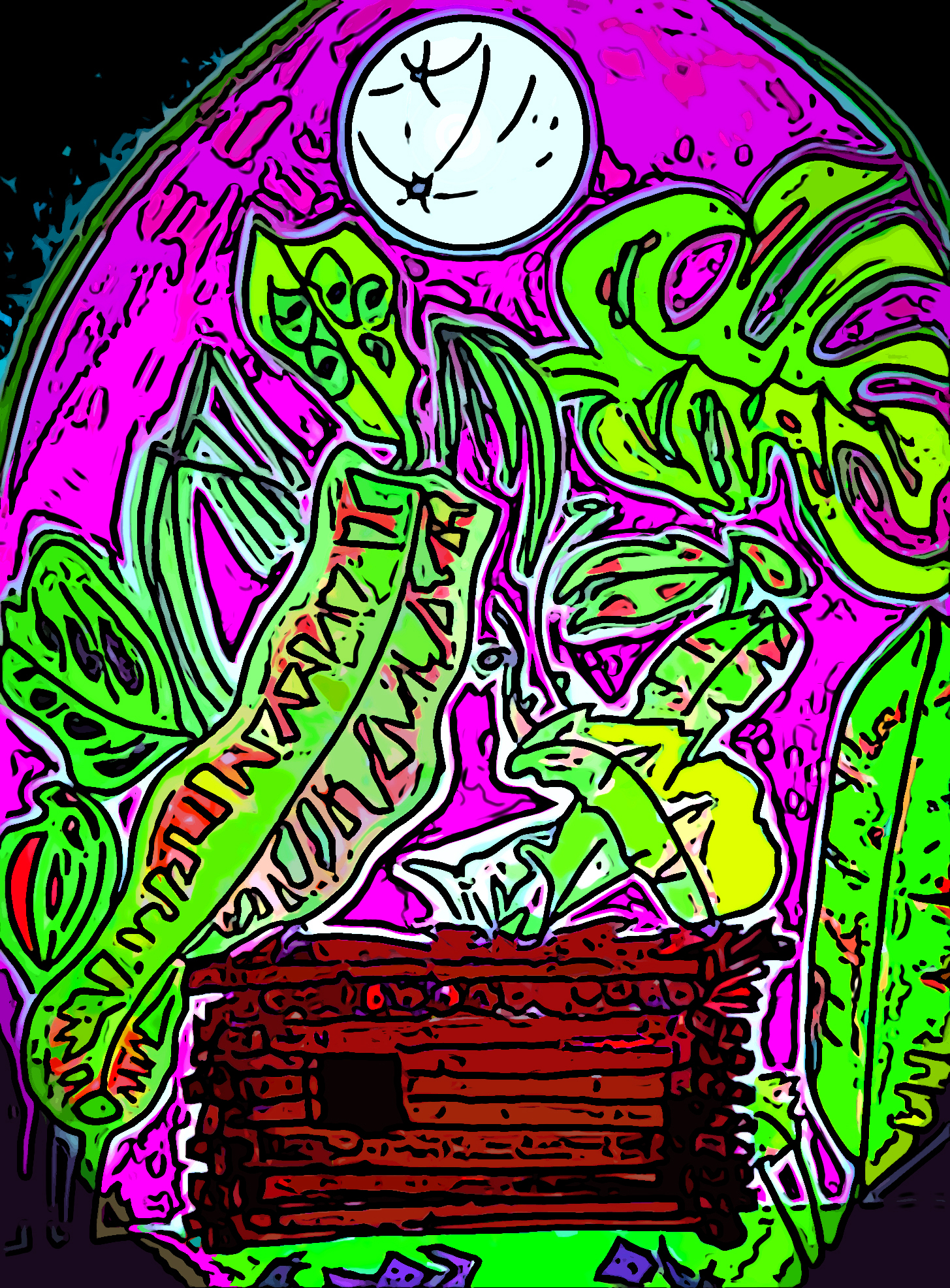
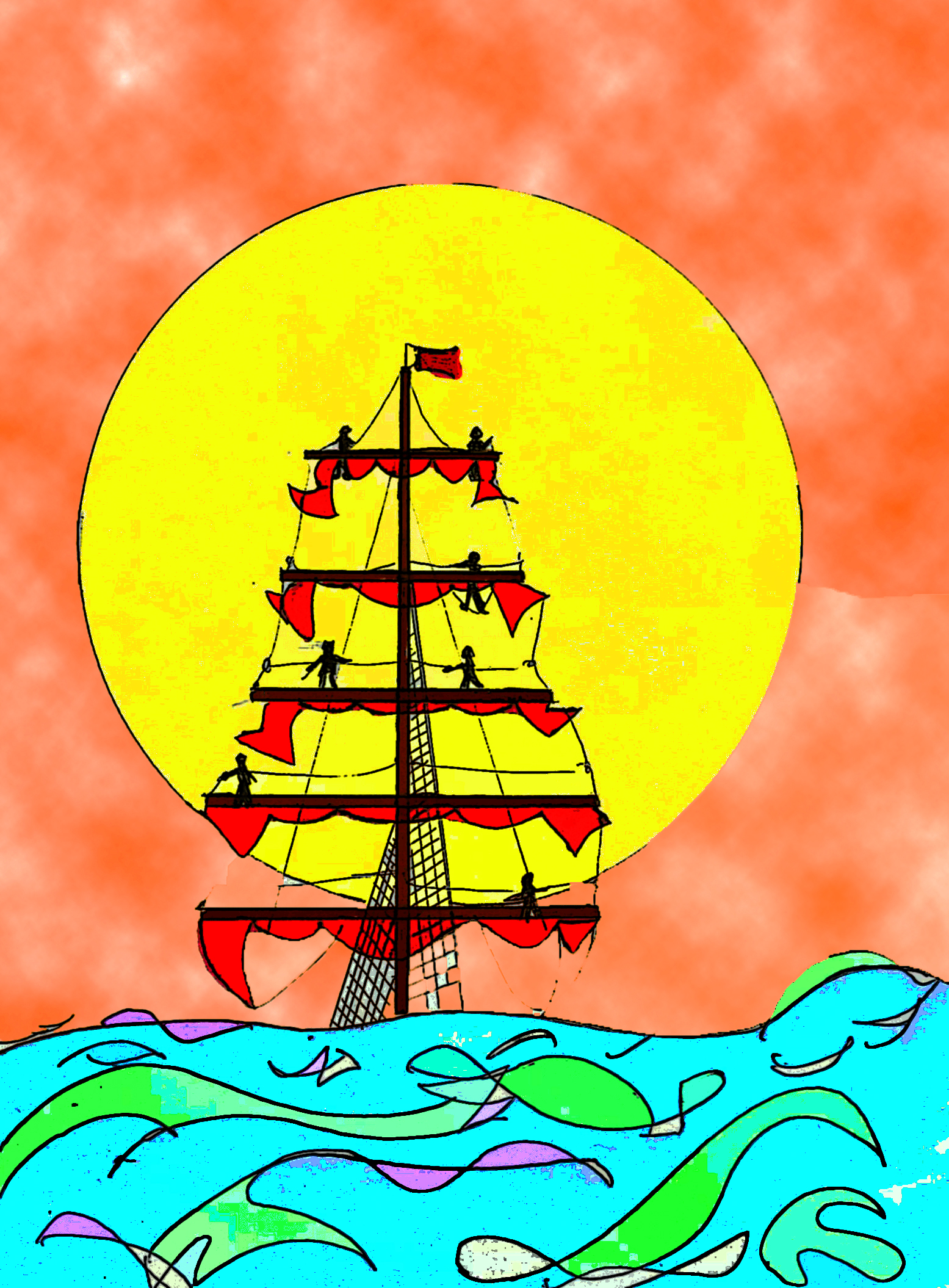
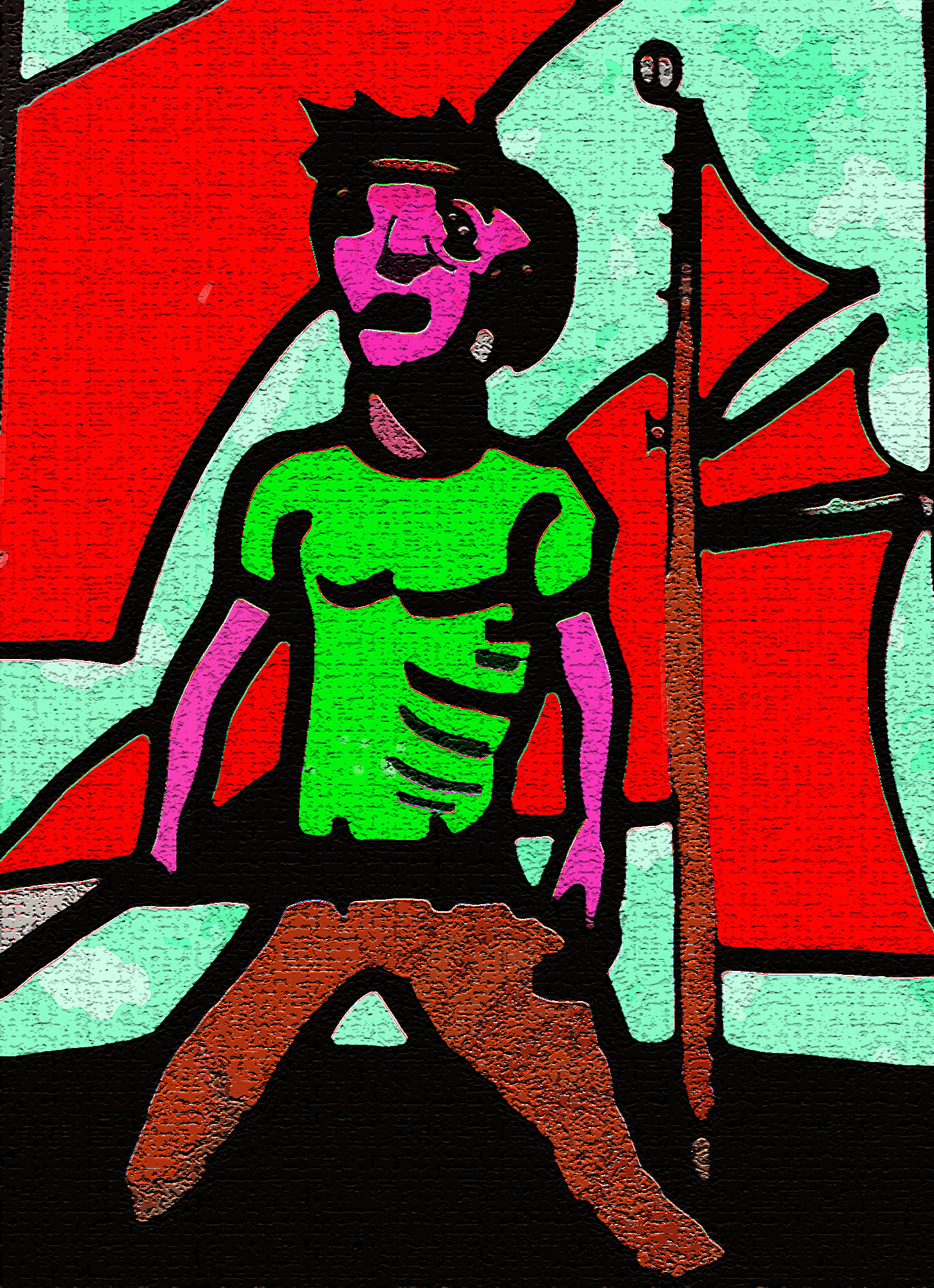
You may remember Joe Cook’s work from a previous post – from all the way back in October 2012! (Click here to read it). Joe got in touch again recently with some images of his most recent work. I thought it would make for an interesting feature to take a look at what Joe’s up to now. Below you’ll find a piece from Joe on what he’s been working on of late, as well as some images of his fantastic new work. Enjoy!
“These images are projections from an imaginary pirate world – a world described in some detail by a friend of mine. Some scenes were described directly to me while others were inspired by old photos of jungles, high seas, ships and pirate revolutions. There remains, especially in children, a notable fascination in pirate worlds – a fascination I have attempted to harness. The images are drawn in ink and then digitally enhanced to increase vibrancy and saturation. This over exaggeration of colour was both to promote an exotic energetic hot alien world and simply to please my personal tastes. There is a particular rebellious story which accompanies these images – a story that will no doubt make its way to the surface.” – Joe Cook
I asked artist Brian Gibson for his thoughts on the term ‘Outsider Art’ and what it means to him as a practising artist. Below is his response and a display of his own artwork. Click here for more information on Brian and his work.
I have never been quite certain as to where I fit as an Artist. For a long time the thought of being an artist felt very alien to me, it was after all another culture. Artists were clever, confident, sophisticated and well educated people. That was not how I saw myself; I was just some lone youth from a council estate on the outskirts of Newcastle from a single parent household who had a history of truancy with little to show in terms of qualifications.
On the domestic front it was my Father who could draw, he was very gifted, he could draw calligraphy free hand or paint golden Celtic knots or Spanish dancers onto painted egg shells and all sorts of other intricacies. He was a gifted man who never really dared to share or show his talent beyond the garden gate. In comparison my creative efforts were never so precise. My handwriting was spidery and I never could quite get the hang of perspective; such things didn’t come natural to me, so the notion of becoming an artist wasn’t even on the radar for me. However there was a creative flame that flickered within me and I was fortunate that my efforts were never discouraged and even if the end results often fell short of how I wanted things to be, I was at least able to lose myself in what I would later know as “the creative process.”
Brian Gibson, White Rabbit
Art became less of an alien culture, as I got to know various accomplished works of art via my regular city visits to the art galleries and libraries when absconding from school. Also importantly for me was the fact that I had met someone who had decided to embark on their own creative path; he was a poet by the name of Barry MacSweeny. He lived on the adjacent Council Estate and was the elder cousin of two of my school friends, so occasionally we could find him in his mother’s kitchen writing away whenever we called round for a biscuit and drink of pop. As one of the emerging 60’s poets, his first book of poems was published when he was just 19 years old. Being older he didn’t have much to do with us, appearance wise he looked a bit like Terry Collier from the TV series “The Likely Lads”; dapper and wiry.
Having known such a person in my youth left a simmering impression on me. Why I mention him here is that he chose to do something creative and that was influential for me and secondly, if he were a visual artist he might now be considered posthumously to be some kind of Outsider. Although he never went to University, he was nominated for the poetry chair at Oxford. This however turned out to be just a cynical publicity stunt concocted by his publisher. This humiliation along with his own personal demons contributed to him remaining a marginalised poet for over 25 years. He died in 2002 aged 52.
Brian Gibson, Those Late John Garfield Blues
The original definition of term “Outsider” set out by Roger Cardinal back in the 1970s seems to have evolved and undergone a seismic transformation in recent years, particularly with the expansion of social media. Such connectivity has meant that creative people working outside the mainstream are no longer so dependent on the nod of the well informed to decide whether this or that piece is an actual work of art.
Now individuals can link up with other individuals, share ideas, post up images, form groups, put together exhibitions and even sell their work. Autonomy, self-empowerment and money – it all sounds rather good but the reality may be a little different. To be an Outsider Artist seems to have become incredibly fashionable of late, numerous tee-shirts and accessories in Selfridges and articles in Sunday supplements seems to be of good indicator of this.
Outsider Art is now being presented as the more rebellious sibling to the established world of fine art, with Folk art the more amenable earthy but less noteworthy cousin. Outsider Art is more rock and roll, more edgy, and people are proud to wear their Outsiderness like a badge of honour. Now and this may not be a bad thing but I am aware that anyone can get in on the act. I have seen a lot of savvy websites by individuals where the work veers into being more about a product in a particular style that happens to look like Outsider Art. As a trained artist who was dealing with his or her own mental health issues once said to me: “Outsider Art is easy to fake,” or at least it might seem that way. So a question that I have is “What does it means when such work becomes an entrepreneurial enterprise?”
Brian Gibson, Candy Says
There are many other questions regarding the increasing popularity and branding of Outsider Art. I can envisage a future where a retailer such as Primark would be either selling tee-shirts cheaply of original prints from acknowledged Outsiders such as Madge Gill or Jean Dubuffett and the like or, more likely – to save on copy write issues – just employing some people to produce something that looks a bit like the work of an Outsider Artist. Is this any more different than buying an original reprint from a more exclusive and prestigious source or to put it another way, who gets the money and what is the money the measure of ?
Despite its current popularity, Outsider Artists tend to be Outsiders for a reason. It may well be that the making of work is the sole or soul reason why a person pursues a creative path, everything else may well be an after thought. The poet Barry MacSweeny could write and he could rant and he had his own demons so there were times when he just couldn’t get much of any thing together. I don’t think that this lessened the quality of his work, but I doubt if it served him very well in getting his work published. This seems to be the reality for a number of visual artists that I know, making the work is one thing, doing the rest is another. The added pressures of presenting work to a public audience to a deadline and dealing with unknown people, along with all the other stuff can be more than enough for most.
Brian Gibson, Way Down in a Hole
For a good while now marginalised individuals and groups have worked hard to put themselves in the frame work so to speak in a way in which they feel represents them in the way that they wish to be seen and valued. It can take a lot of time and thought to develop environments where people feel safe and supported but I am sure that I am not the only one to have heard stories of unscrupulous figures waiting in the wings who are only too willing to put their profit and their own prestige way before the people they purport to represent. Having worked with vulnerable adults for over ten years now, I am just a little concerned that with so many self proclaimed Outsiders seeking centre stage, individuals and groups who have been historically marginalised may once again find them selves out of the picture.
Brian Gibson, Sometimes I Feel Like a Motherless Child
A note on Brian’s work (presented in this blog post):
Earlier this year I produced six pieces with the overall title of “I am frightened and timid and I don’t want to play” specifically for an exhibition as part of Fringe Arts Bath. Some of the works are named after the titles of songs but don’t really have much to do with the songs themselves, if at all.
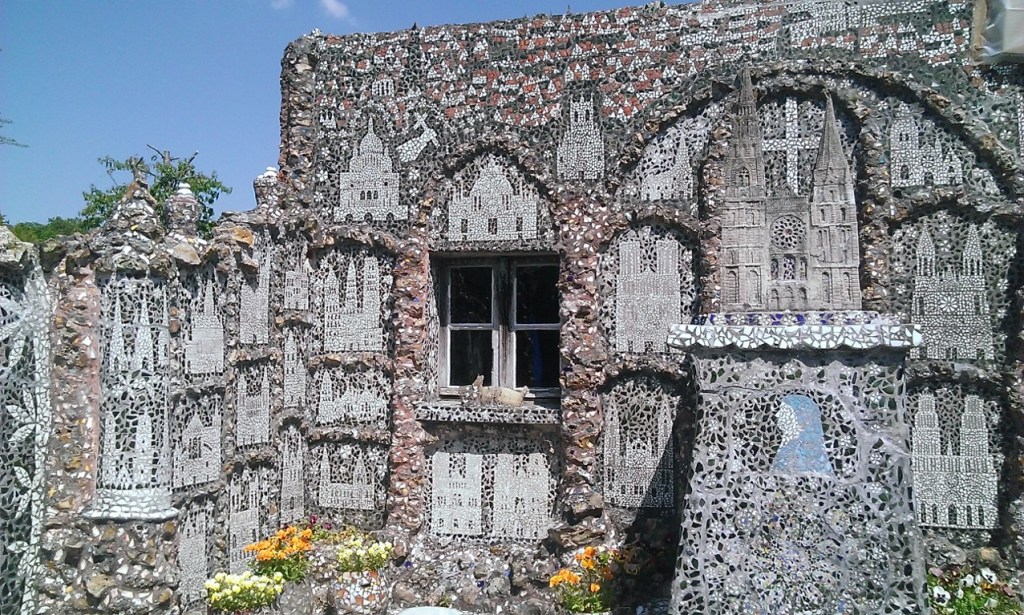
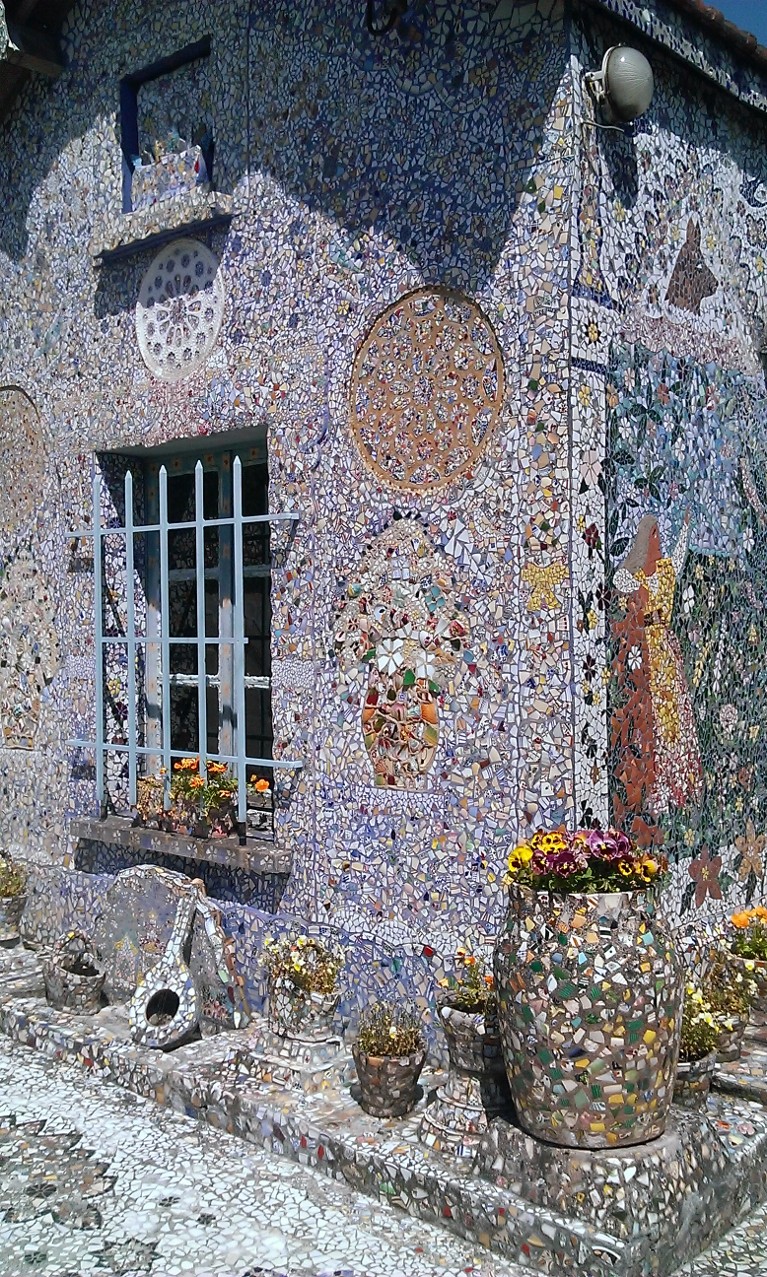
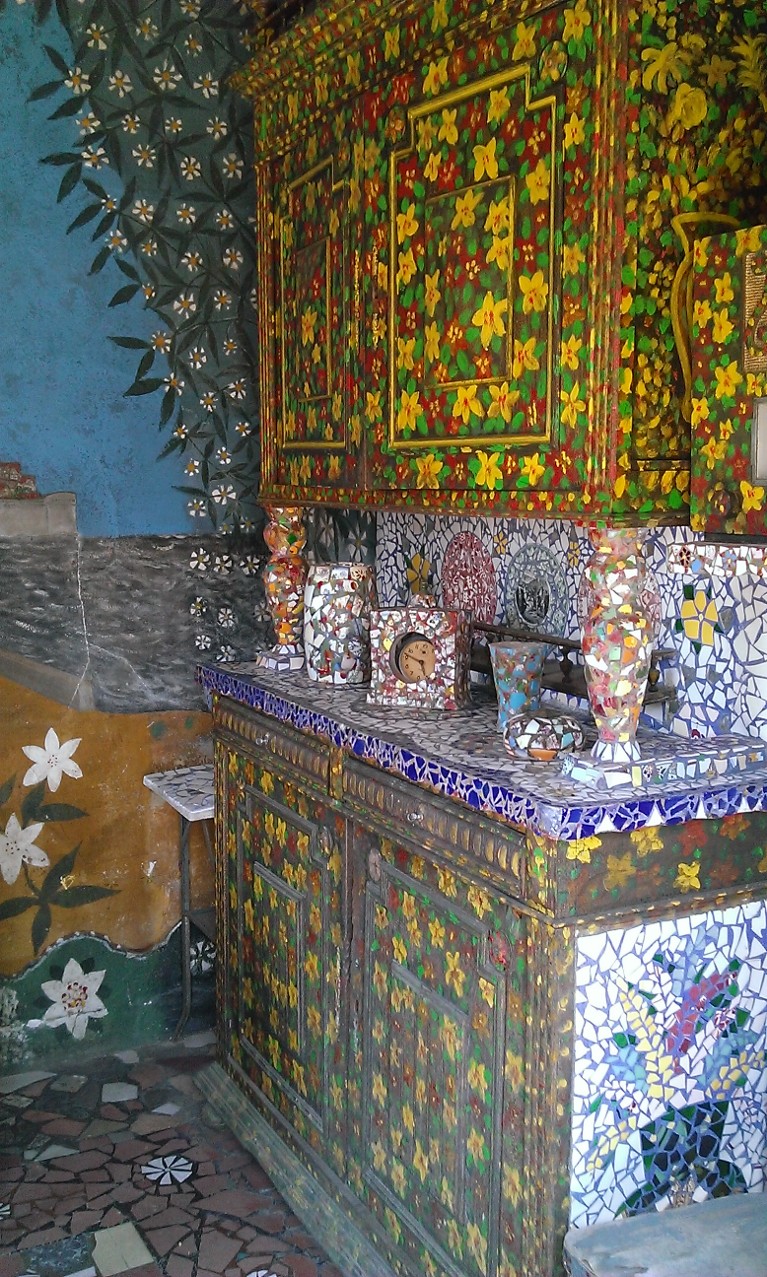
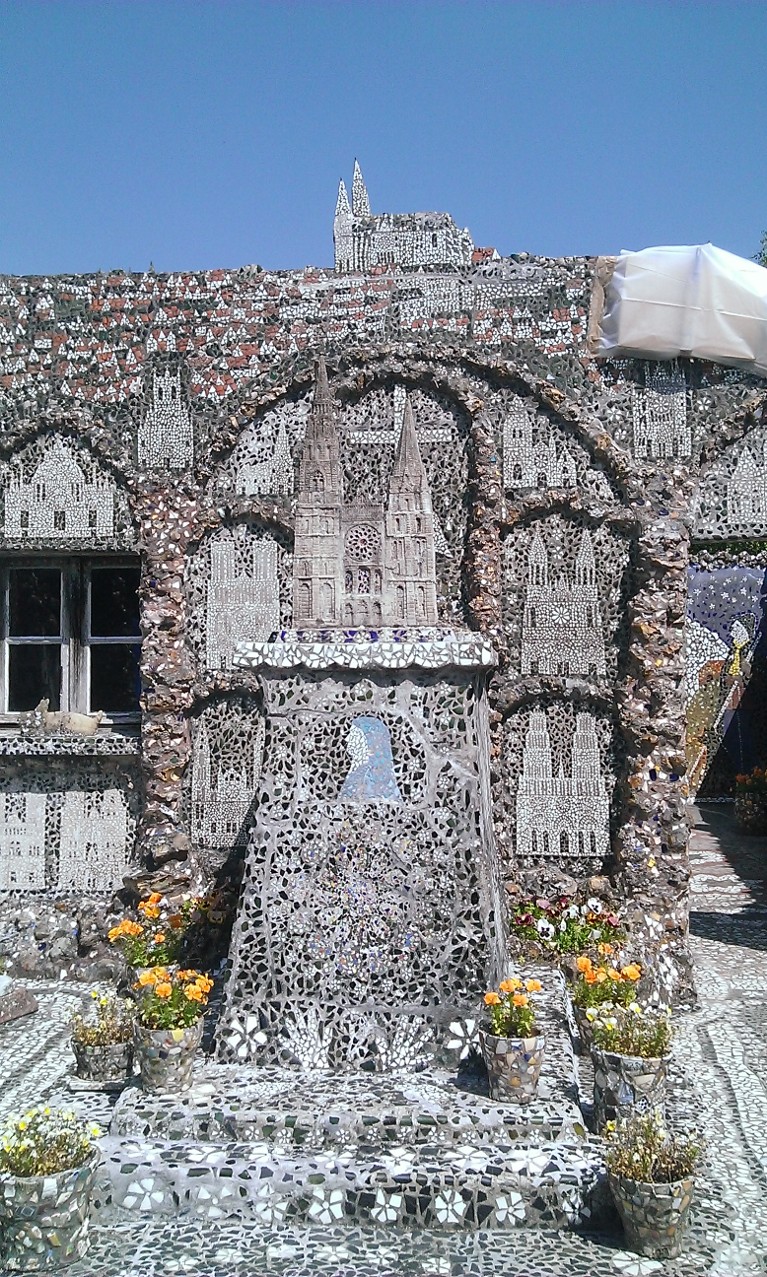
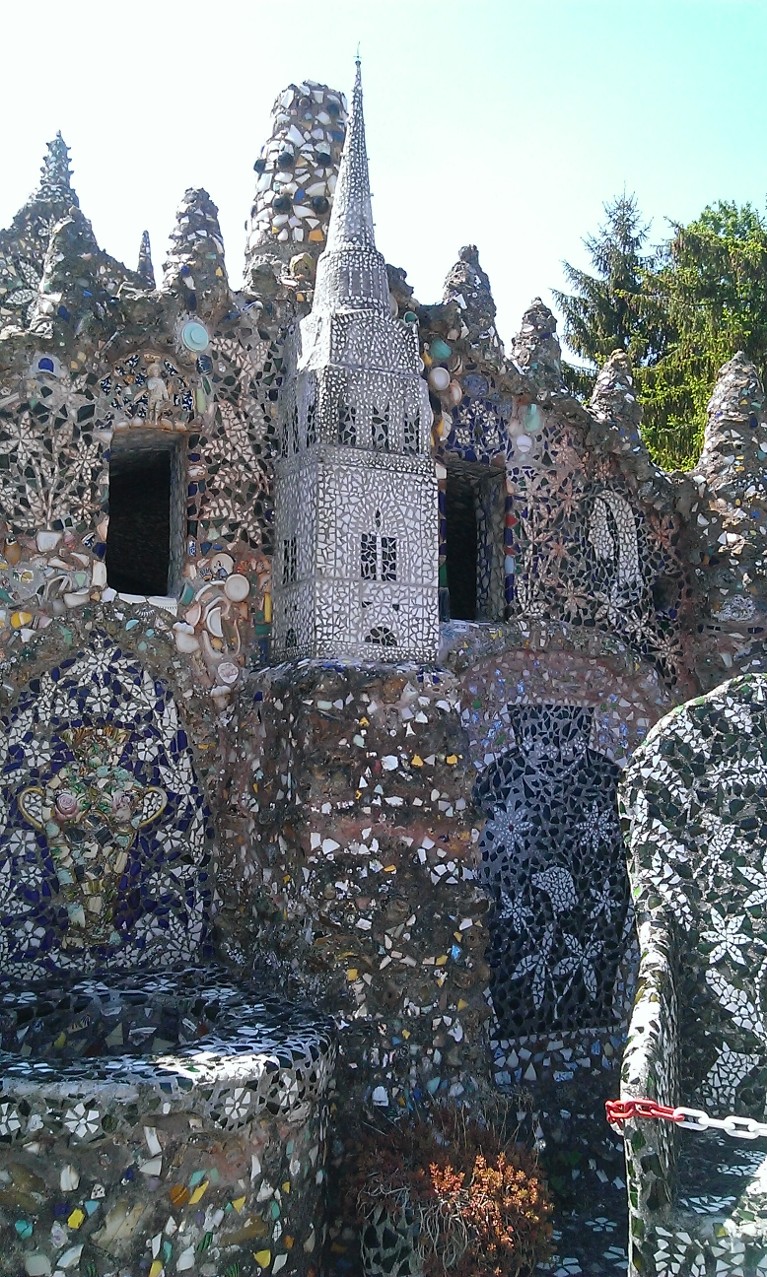
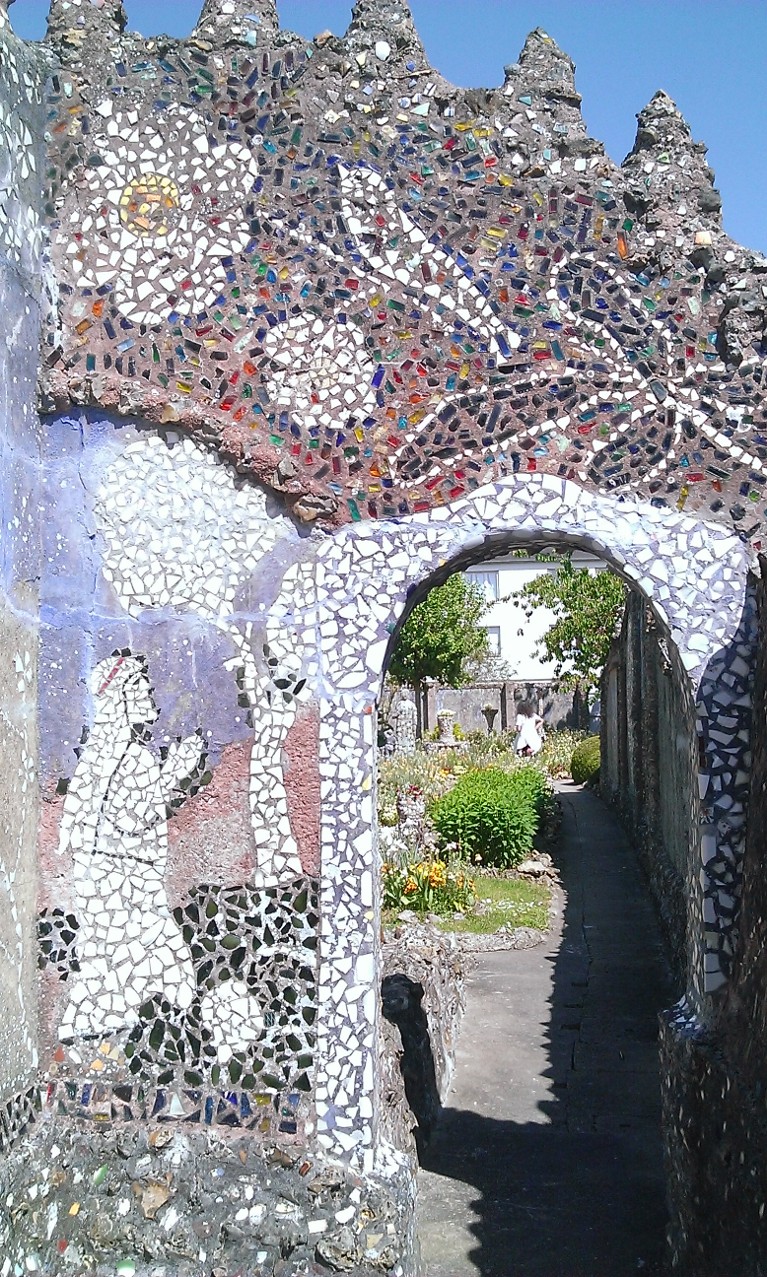
In May, I was lucky enough to have the chance to visit Raymond Isidore’s La Maison Picassiette in Chartres, France. I have mentioned Isidore’s tremendous creation briefly before (click here), but here I wanted to share some photographs I took during my visit with you. I don’t want to write too much about the site here, as you can find out some excellent information on the Spaces Archive page (click here), but the mosaic house took almost thirty years for Isidore to complete, earning him the name ‘Picassiette’ – a twist on the French term for scavenger (pique-assiette) and a reference to Pablo Picasso and plates (assiette). Please feel free to share your experience of Isidore’s Picassiette in the comments below, or by emailing kdoutsiderart@yahoo.com.
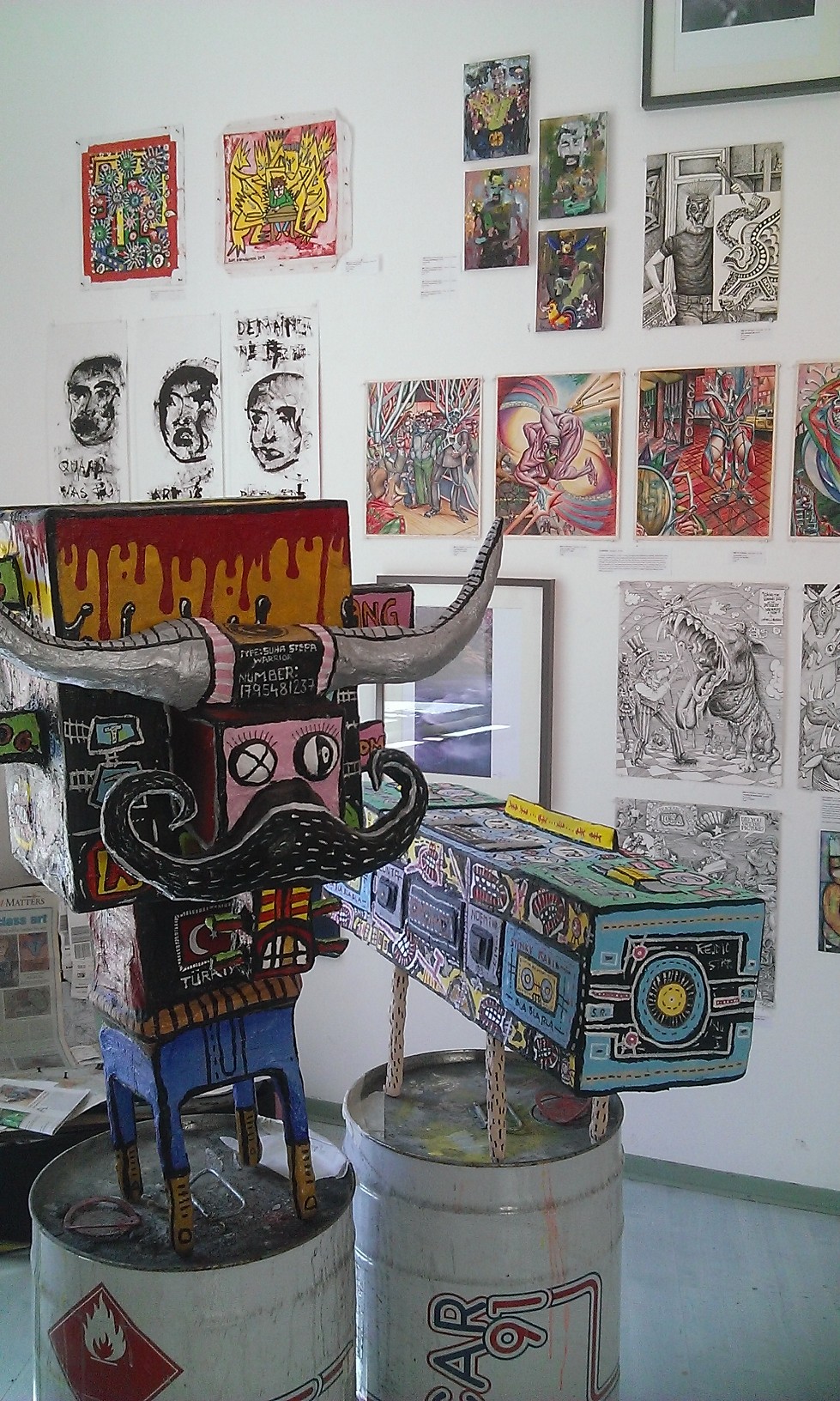
During a recent trip to Slovenia, I visited ‘Circus Terminal’ at Gallery Kud Esko in Piran (17 – 25 May 2014). The artist-led project, an initiative of ‘Uncooked Culture’, is a collaborative travelling art mission, which disregards academic background and aims to celebrate the differences and similarities of all human beings through their creations. Since 2012, the exhibition – which was launched in the UK at The Tabernacle in London in March of that year – has visited eight countries: Spain, France, Thailand, USA, Holland, New Zealand, and Slovenia. It has grown from 41 artists living in 12 different countries to a project exhibiting more than 350 works by over 85 artists. The final stop on the tour will be Suriname in July 2014.
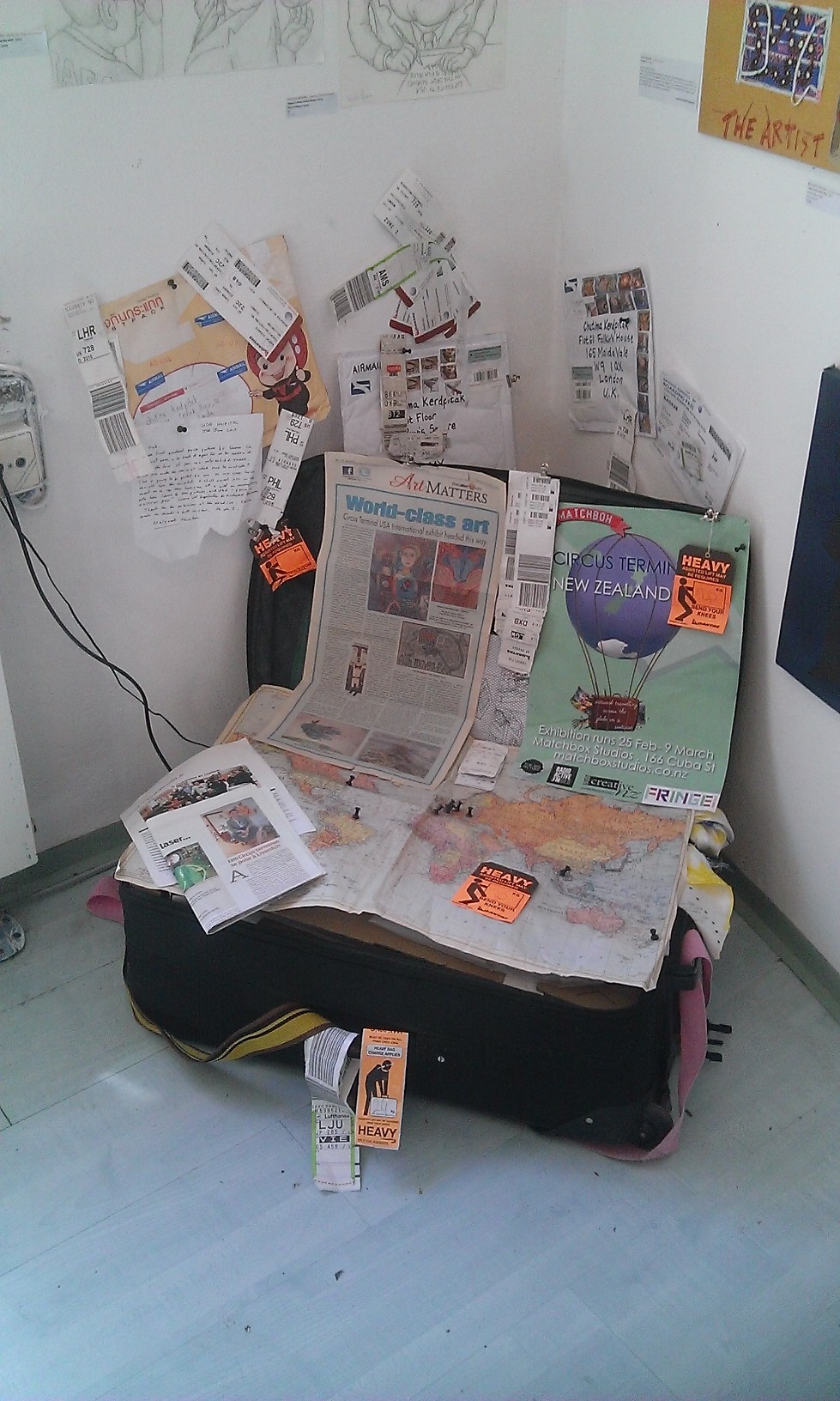
In every country, local artists are invited to participate in the exhibition and other collaborative activities; an indicator of how the project has grown so fruitfully during its lifetime. Once the artist has had work exhibited in their home town, they are invited to put their work in founder and curator Chutima Kerdpitak’s suitcase to be shown on the next legs of the tour. Alongside Chutima (Nok), each regional exhibition has a lead artist –in New Zealand it was Wellington artist Lynn Todd, in London Miranda Sky, and in Spain Gustav Glander – as well as invited artists who exhibit alongside the international collective. The project has had one guest artist; Sue Kreitzman in London.
Chutima’s suitcase
The exhibition in Piran was sat back just off of the main Venetian-style square of the town. Chalked directions marked the walls in the alleyways: ‘Art Exhibition This Way.’ Through a deserted basement and up a flight of stairs, art work began springing up on the walls. The main room was, in every sense, a white cube. But the difference here was that art washed the walls on all sides, including the pillars in the centre. There was colour, ink, sculpture, photography, intricate models, big pieces, small pieces. Almost too overwhelming at first glance, with works piled from floor to ceiling – though not offensively. It was going to take a few circuits to take everything in.
Some of the highlights of the Piran show were works by Carlo Keshishian, Dan Casado and the graphic works of Jim Meehan; about whom Nok shared an interesting story during my visit. Jim was discovered in Pennsylvania during Circus Terminal USA in 2013. Chris and Paul Czainski (two UK artists) had been offered a residency at Clay on Main in Pennsylvania near Boyertown where Circus Terminal was being held. They came across Jim at a community event they ran, after which he invited them to his house. The next day, the artists told Nok that Jim’s house was covered in thousands of works that had rarely been seen by anyone – let alone exhibited anywhere. Jim then visited Circus Terminal and has been involved with the project ever since.
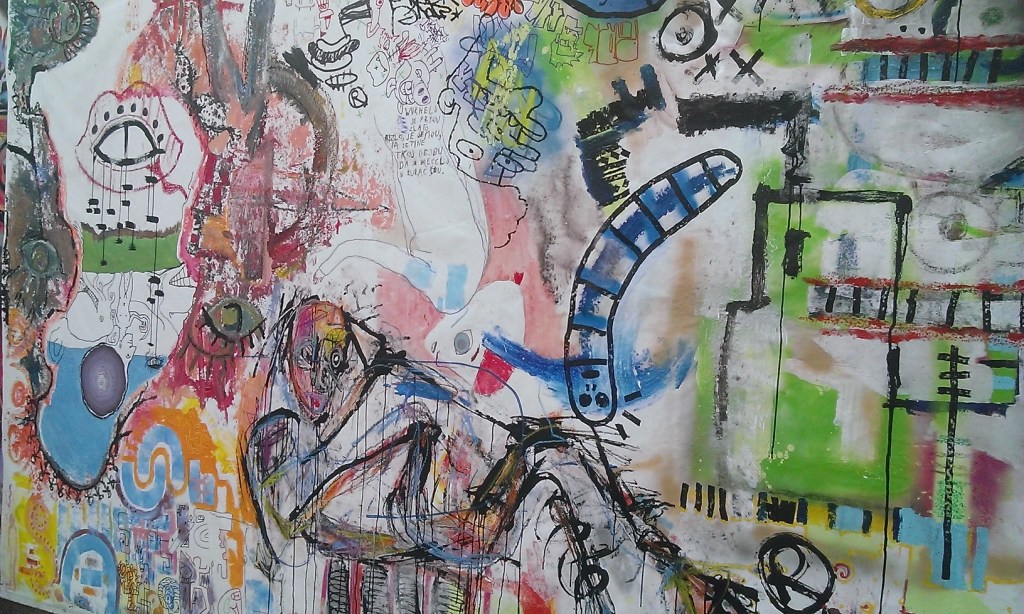
Back to the show in Piran: outside in the yard, a collaborative graffiti wall. Here, several artists had worked on one canvas; painting, drawing, splashing, spraying, to create a large melting pot that could quite easily have been chopped into several smaller, self-sufficient pieces. This outdoor masterpiece embodied the mission of the project; collaboration, togetherness, and an indifference to academic and personal backgrounds. Here, trained artists worked alongside self-taught artists, ‘outsiders’ and ‘insiders’ rubbed shoulders.
Founder Nok says the initiative’s set up was – somewhat – a response to the dog-eat-dog nature of the mainstream art world: “To rely on the establishment to value our art cannot be justified by any creative individual. Rejection discourages creative passion and inspiration. Most artists wish to show their creations to the eyes of the world, creating our own opportunities BY and FOR artists is a sustainable route to building confidence and as a way of progression as an artist instead of being passive and counting on ready-made opportunities.”
“The particular purpose of Uncooked Culture is inclusion,” Nok continues. “We want to assist artists by encouraging them to either start or continue their passion in creating art without putting personal curatorial judgement on their practice and art educational background. I see the process of curated exhibitions; whether by independent curators, a group of curators, a jury, or an organisation as a judgement made from personal taste, preference, and to fit a theme that is inclusive to the ones that meet the criteria. At the same time, it excludes those individuals who may have created distinctive work, but who do not fall under the specific criteria.”
‘Circus Terminal’ builds a worldwide community of artists using social media to create physical collaborative activities amongst its members at hosted destinations across the globe. The project has showcased works from ‘outsiders’, ‘neo-outsiders’ and ‘insiders’ and is a fine example of how to globally dismiss the labels we have become so used to bandying around. The inclusion of ‘insiders’ and ‘outsiders’ – and everything in between – as well as artists from a huge number of countries and cultures, leads to an innovative barrier-breaking project that epitomises collaboration, inspiration and overwhelming creativity.
When the exhibition travels to Suriname, South America, it will be joined by work from the following artists: Dhiradj Ramsamoedj, George Struikelblok, Hanka Wolterstorff, Kenneth Flijders, Kit-Ling Tjon Pian Gie, Kurt Nahar, Reinier Asmoredjo, Roddney Tjon Poen Gie and Sri Irodikromo.
The exhibition will run from 22 – 27 July 2014 at De Hal Muti-Purpose Hall in Paramaribo, Suriname, and will be led by Rinaldo Klas in collaboration with Readytex Gallery.
Click here for information on the beginnings of Circus Terminal
“Creating pictures is a way in which I can process my own experiences and ingrained anxiety; recording the highs, lows, hopes and fears using line and shape to carry the narrative in my own visual language. I’m looking for a distinct balance and stillness between the elements on the paper, as if millions of random dots coordinated to produce a briefly identifiable image, that hangs quietly in the air before disintegrating back into a random state.” – Caleb Lewis
Walls Have EarsLeafNo Man’s LandSomething Might Turn UpRequiemIgnition
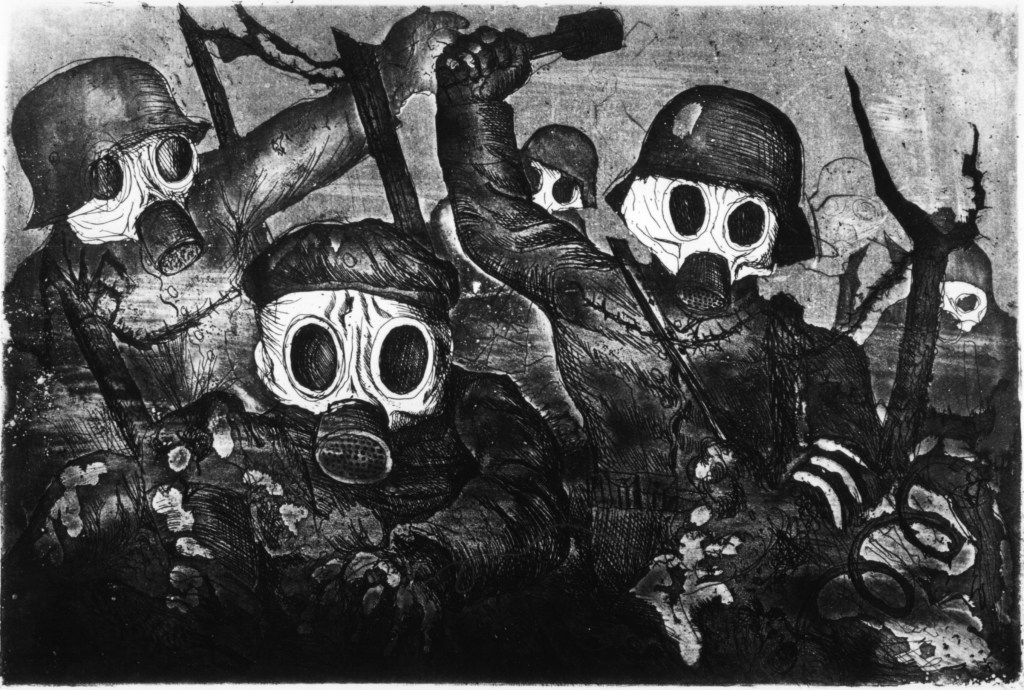
Above image: Otto Dix, Sturmtruppe geht unter Gas vor (Stormtroops advancing under a gas attack), 1924 [Courtesy of: lewebpedagogique.com]
I recently visited an exhibition of German artist Otto Dix’s series of prints entitled Der Krieg (The War) at the De La Warr Pavilion in Bexhill, East Sussex. I studied this series for my undergraduate dissertation a while back; where I focused on the links between German Expressionism and Outsider Art – more specifically the impact that experiences such as war can have on our mental health and how this makes the distinction between Outsider Art and ‘other’ art movements ever more intangible.
During the First World War Dix volunteered to join the German army and was assigned to a field artillery regiment in Dresden. He took part in the Battle of the Somme before being transferred to the Eastern Front. He then returned to fight on the Western Front in 1918. In this year, he was wounded in the neck before being discharged from service in the December. His exposure to warfare had a profound impact, resulting in recurring nightmares in which he crawled through destroyed houses.
“For all its waste, the war provided a windfall for scavengers. The First World War produced generations of happy worms and maggots. Trench rats roamed as big as beavers. Gas was sometimes a welcome respite as it decimated these pests.”
– Taken from Otto Dix: Der Krieg exhibition pamphlet from the De La Warr Pavilion.
Between 1915 and 1925, Dix created a significant group of paintings as a way of coming to terms with his harrowing wartime experiences. He began painting in a new style; a style which combined certain stylistic tropes and aspects of both Futurism and Expressionism, and in 1924 he produced Der Krieg – a collection of fifty etchings and aquatints. The series is possibly one of the greatest anti-war depictions ever to be made, and is often compared to Francisco Goya’s Los Desastres.
This idea of the depiction of destruction and trauma as a source of creative impulse was widely common during the years following the First World War, resulting in a different kind of Expressionism emerging within Germany. At this time, there was a clear shift from a primitive, nostalgic, almost disengaged pre-war Expressionism, to a much angrier, political, ravaged Expressionism in the years following the First World War. Expressionist artists at this time seemed – quite understandably – engulfed by a ‘madness’ brought on by the normalisation of warfare and everything that came with it.
Notably, in 1937, Dix’s work was included in the Nazi generated Entartete Kunst (Degenerate Art) exhibition in Munich. Even before the party had come to power in 1933, they had begun comparing images by avant-garde artists with those of the ‘clinically insane.’ Paul Schultze-Naumburg, a Nazi architect, was well known for contrasting the works of modern artists, such as Emil Nolde, with photographs of patients with physical disabilities with the intention of proving that modern art was pathological and degenerate.[1]
The Nazis used modern art; Cubist, Expressionist and Dadaist works amongst others, as a scapegoat for the country’s economic collapse – a supposed conspiracy by Communists and Jews, and instead attempted to bring the focus of art back to the ideals of the human body.[2]
Otto Dix, Mahlzeit in der Sappe (Mealtime in the Trenches), 1924 [Courtesy of: arttattler.com]
“A trench soldier quickly gulps a meal in the company of a human skeleton trapped in the frozen landscape beside him.”
– Taken from Otto Dix: Der Krieg exhibition pamphlet from the De La Warr Pavilion.
July 19 1937 in Munich: more than 650 paintings, sculptures and prints taken from large German public collections were put on display with the aim of showing the German population what kind of art was to be considered inherently ‘un-German.’ Both abstract and representational works, including pieces by Dix, were condemned – as were the attempts to combine art and industry that had been pioneered by the Bauhaus artists. The exhibition, however regrettably, has made a place for itself as the most visited and viewed exhibition of modern art, with two million visitors in Munich, and a further one million viewers as it travelled across Germany and Austria.
The works of George Grosz and Dix – and Expressionism more generally as a movement – were singled out to exemplify the idea of degeneracy within modern art.[3] Dix was particularly condemned due to his ‘defeatist’ attitude towards the war. His paintings The Seven Deadly Sins (1933) and The Triumph of Death (1934) portray the dangers of Nazism, and because of this, he was treated with utmost suspicion throughout the Third Reich.
The Nazis saw ‘degenerate’ art as a “metaphor of the madman as the artist,” with Adolf Hitler developing a dialogue that insinuated that the avant-garde artist should be considered as an ‘outsider.'[4]
Otto Dix, Gastpte – Templeux-la-Fosse, August 1916 (Gas Victims – Templeux-la-Fosse, August 1916), 1924 [Courtesy of: http://www.port-magazine.com]
“By 1924, people were aware of the horrors of gas but censored wartime reporting spared many from its ghastly details. Here the results are depicted with raw clarity of someone who was there. Indeed, much of Der Krieg was based on Dix’s wartime diary drawings. Many were probably struck by the appearance of the victims, darkened for lack of oxygen and the nonchalance of the medical staff who had seen it many times before.”
– Taken from Otto Dix: Der Krieg exhibition pamphlet from the De La Warr Pavilion.
A certain political and social ‘madness’ continued for the people of Germany throughout the reign of Hitler and his National Socialist Party. The extermination of German citizens based solely on race, ethnicity or religion was widely executed, as well as the mass rejection of works by some of the leading avant-garde artists. The whole era was epitomised by what defined ‘madness’, with the line between the ‘sane’ and ‘normal’ – if we are even able to define these terms – and that of the ‘pathological’ becoming increasingly blurred.
The work of the German Expressionists, and the artists themselves, may have been deemed ‘insane’ by many critics at the time, but, as Jean Dubuffet claims, “very often the most delirious, most feverish works, those that are apparently stamped most clearly with the characteristics ascribed to madness, have as their authors people considered as normal.”[5]
Annette Becker, writing in The Avant-Garde, Madness and the Great War, claims that “there is hardly more sense in the claim that there is an insane art as there is a dyspeptic art, or the art of those with knee troubles.”[6] Jon Thompson, curator of the Inner Worlds Outside exhibition at the Whitechapel Gallery, London in 2006 insinuates that “all human minds are fundamentally the same,” we are all the product of modernity and, influenced by Marx he “speaks to the degrees to which we are all alienated in one way or another, or in many ways at once.”[7] German Expressionism – and the work of Dix – was essentially a product of its time; a time that was characterised by alienation, discontent and the ‘madness’ of political instability and mechanical warfare.
[1] Berthold Hinz, “‘Degenerate’ and ‘Authentic’: Aspects of Art and Power in the Third Reich,” Art and Power: Europe under the dictators 1930 – 45. Eds. Ades, Dawn, Tim Benton, David Elliott and Iain Boyd White, The Southbank Centre, 1995.
[2] Stephanie Barron, ed. German Expressionism 1915 – 1925: The Second Generation, Los Angeles County Museum of Art, 1988.
[3] Hinz, “‘Degenerate’ and ‘Authentic’: Aspects of Art and Power in the Third Reich.”
[4] Sander Gilman, “The Mad Man as Artist: Medicine, History and Degenerate Art,” Journal of Contemporary History, Vol. 20, No. 4 (1985): p594
[5] David Maclagan, Outsider Art: from the Margins to the Marketplace, Reaktion Books, 2009: p38
[6] Annette Becker, “The Avant-Garde, Madness and the Great War,” Journal of Contemporary History, Vol. 35, No. 1 (2000): p81






















![Otto Dix, Schädel (Skull), 1924 [Courtesy of: www.deborahfeller.com]](https://kdoutsiderart.com/wp-content/uploads/2014/06/the-skull-1924.jpg)

![Otto Dix, Gastpte - Templeux-la-Fosse, August 1916 (Gas Victims - Templeux-la-Fosse, August 1916), 1924 [Courtesy of: www.port-magazine.com]](https://kdoutsiderart.com/wp-content/uploads/2014/06/gas-victims.jpg)
 KDOA
KDOA 