Tag: outsider art

  • Circus Terminal Worldwide: Next Stop Suriname

    Circus Terminal Worldwide: Next Stop Suriname

    During a recent trip to Slovenia, I visited ‘Circus Terminal’ at Gallery Kud Esko in Piran (17 – 25 May 2014). The artist-led project, an initiative of ‘Uncooked Culture’, is a collaborative travelling art mission, which disregards academic background and aims to celebrate the differences and similarities of all human beings through their creations. Since 2012, the exhibition – which was launched in the UK at The Tabernacle in London in March of that year – has visited eight countries: Spain, France, Thailand, USA, Holland, New Zealand, and Slovenia. It has grown from 41 artists living in 12 different countries to a project exhibiting more than 350 works by over 85 artists. The final stop on the tour will be Suriname in July 2014.

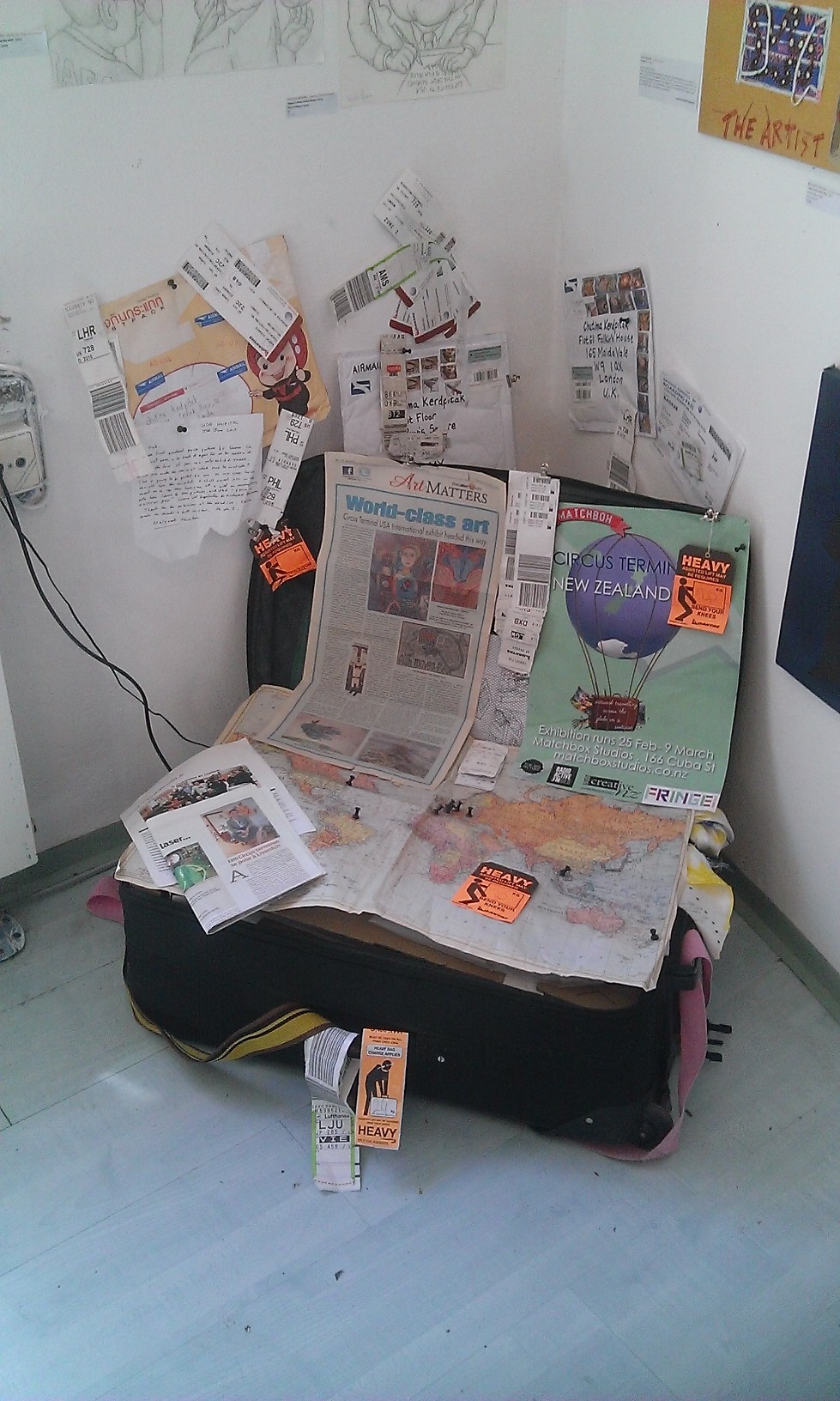
    In every country, local artists are invited to participate in the exhibition and other collaborative activities; an indicator of how the project has grown so fruitfully during its lifetime. Once the artist has had work exhibited in their home town, they are invited to put their work in founder and curator Chutima Kerdpitak’s suitcase to be shown on the next legs of the tour. Alongside Chutima (Nok), each regional exhibition has a lead artist –in New Zealand it was Wellington artist Lynn Todd, in London Miranda Sky, and in Spain Gustav Glander – as well as invited artists who exhibit alongside the international collective. The project has had one guest artist; Sue Kreitzman in London.

    Chutima's suitcase
    Chutima’s suitcase

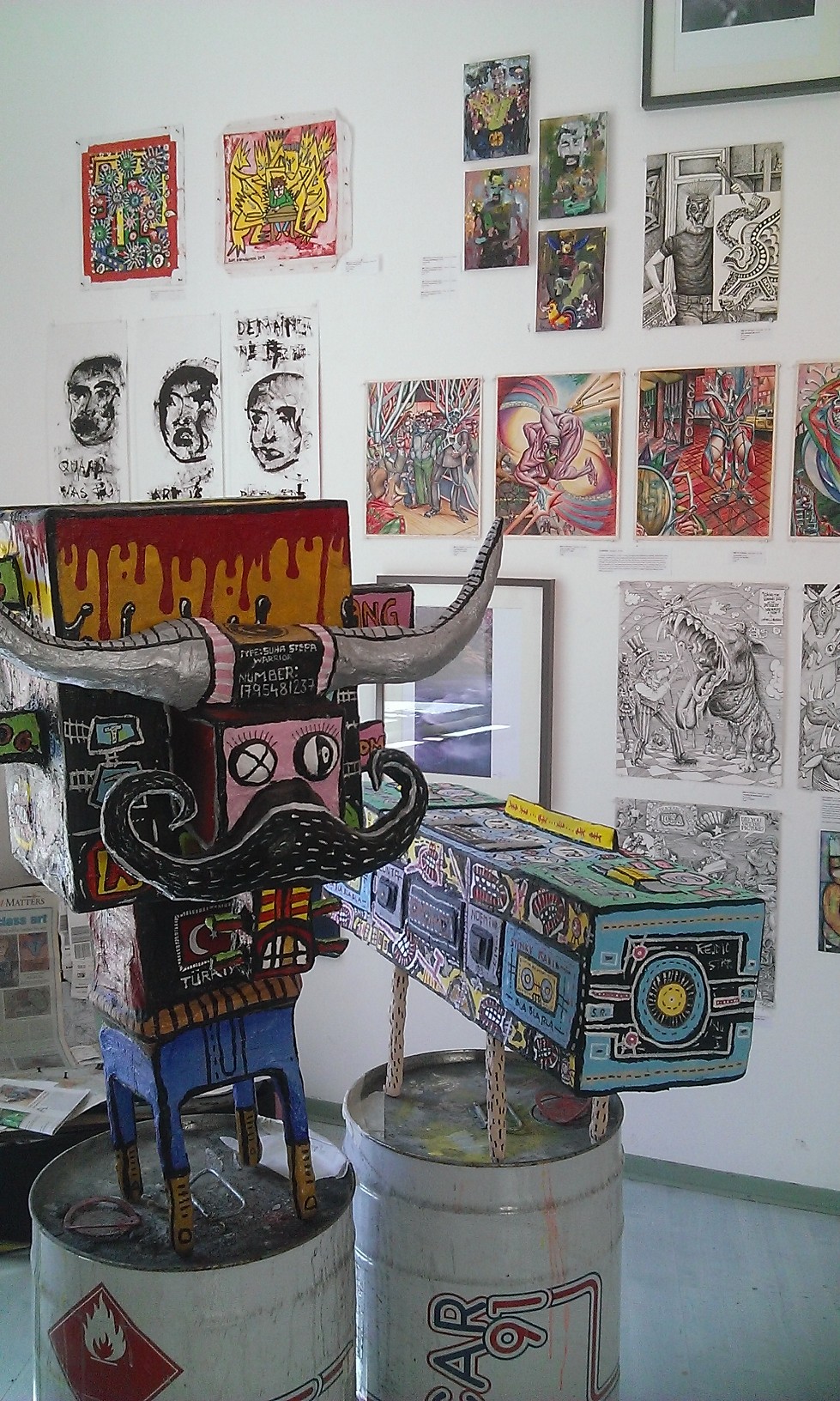
    The exhibition in Piran was sat back just off of the main Venetian-style square of the town. Chalked directions marked the walls in the alleyways: ‘Art Exhibition This Way.’ Through a deserted basement and up a flight of stairs, art work began springing up on the walls. The main room was, in every sense, a white cube. But the difference here was that art washed the walls on all sides, including the pillars in the centre. There was colour, ink, sculpture, photography, intricate models, big pieces, small pieces. Almost too overwhelming at first glance, with works piled from floor to ceiling – though not offensively. It was going to take a few circuits to take everything in.

    WP_20140525_012

    Some of the highlights of the Piran show were works by Carlo Keshishian, Dan Casado and the graphic works of Jim Meehan; about whom Nok shared an interesting story during my visit. Jim was discovered in Pennsylvania during Circus Terminal USA in 2013. Chris and Paul Czainski (two UK artists) had been offered a residency at Clay on Main in Pennsylvania near Boyertown where Circus Terminal was being held. They came across Jim at a community event they ran, after which he invited them to his house. The next day, the artists told Nok that Jim’s house was covered in thousands of works that had rarely been seen by anyone – let alone exhibited anywhere. Jim then visited Circus Terminal and has been involved with the project ever since.

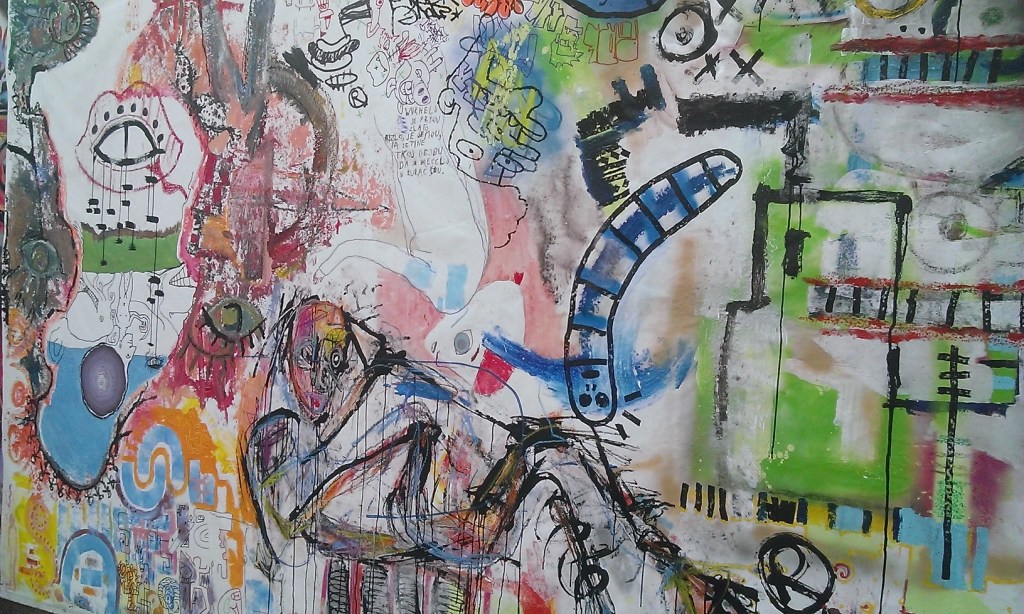
    Back to the show in Piran: outside in the yard, a collaborative graffiti wall. Here, several artists had worked on one canvas; painting, drawing, splashing, spraying, to create a large melting pot that could quite easily have been chopped into several smaller, self-sufficient pieces. This outdoor masterpiece embodied the mission of the project; collaboration, togetherness, and an indifference to academic and personal backgrounds. Here, trained artists worked alongside self-taught artists, ‘outsiders’ and ‘insiders’ rubbed shoulders.

    Founder Nok says the initiative’s set up was – somewhat – a response to the dog-eat-dog nature of the mainstream art world: “To rely on the establishment to value our art cannot be justified by any creative individual. Rejection discourages creative passion and inspiration. Most artists wish to show their creations to the eyes of the world, creating our own opportunities BY and FOR artists is a sustainable route to building confidence and as a way of progression as an artist instead of being passive and counting on ready-made opportunities.”

    “The particular purpose of Uncooked Culture is inclusion,” Nok continues. “We want to assist artists by encouraging them to either start or continue their passion in creating art without putting personal curatorial judgement on their practice and art educational background. I see the process of curated exhibitions; whether by independent curators, a group of curators, a jury, or an organisation as a judgement made from personal taste, preference, and to fit a theme that is inclusive to the ones that meet the criteria. At the same time, it excludes those individuals who may have created distinctive work, but who do not fall under the specific criteria.”

    WP_20140525_005

    ‘Circus Terminal’ builds a worldwide community of artists using social media to create physical collaborative activities amongst its members at hosted destinations across the globe. The project has showcased works from ‘outsiders’, ‘neo-outsiders’ and ‘insiders’ and is a fine example of how to globally dismiss the labels we have become so used to bandying around. The inclusion of ‘insiders’ and ‘outsiders’ – and everything in between – as well as artists from a huge number of countries and cultures, leads to an innovative barrier-breaking project that epitomises collaboration, inspiration and overwhelming creativity.

    When the exhibition travels to Suriname, South America, it will be joined by work from the following artists: Dhiradj Ramsamoedj, George Struikelblok, Hanka Wolterstorff, Kenneth Flijders, Kit-Ling Tjon Pian Gie, Kurt Nahar, Reinier Asmoredjo, Roddney Tjon Poen Gie and Sri Irodikromo.


    The exhibition will run from 22 – 27 July 2014 at De Hal Muti-Purpose Hall in Paramaribo, Suriname, and will be led by Rinaldo Klas in collaboration with Readytex Gallery.

    Click here for information on the beginnings of Circus Terminal

    Circus Terminal Worldwide on Facebook


    This slideshow requires JavaScript.

  • Caleb Lewis

    Caleb Lewis

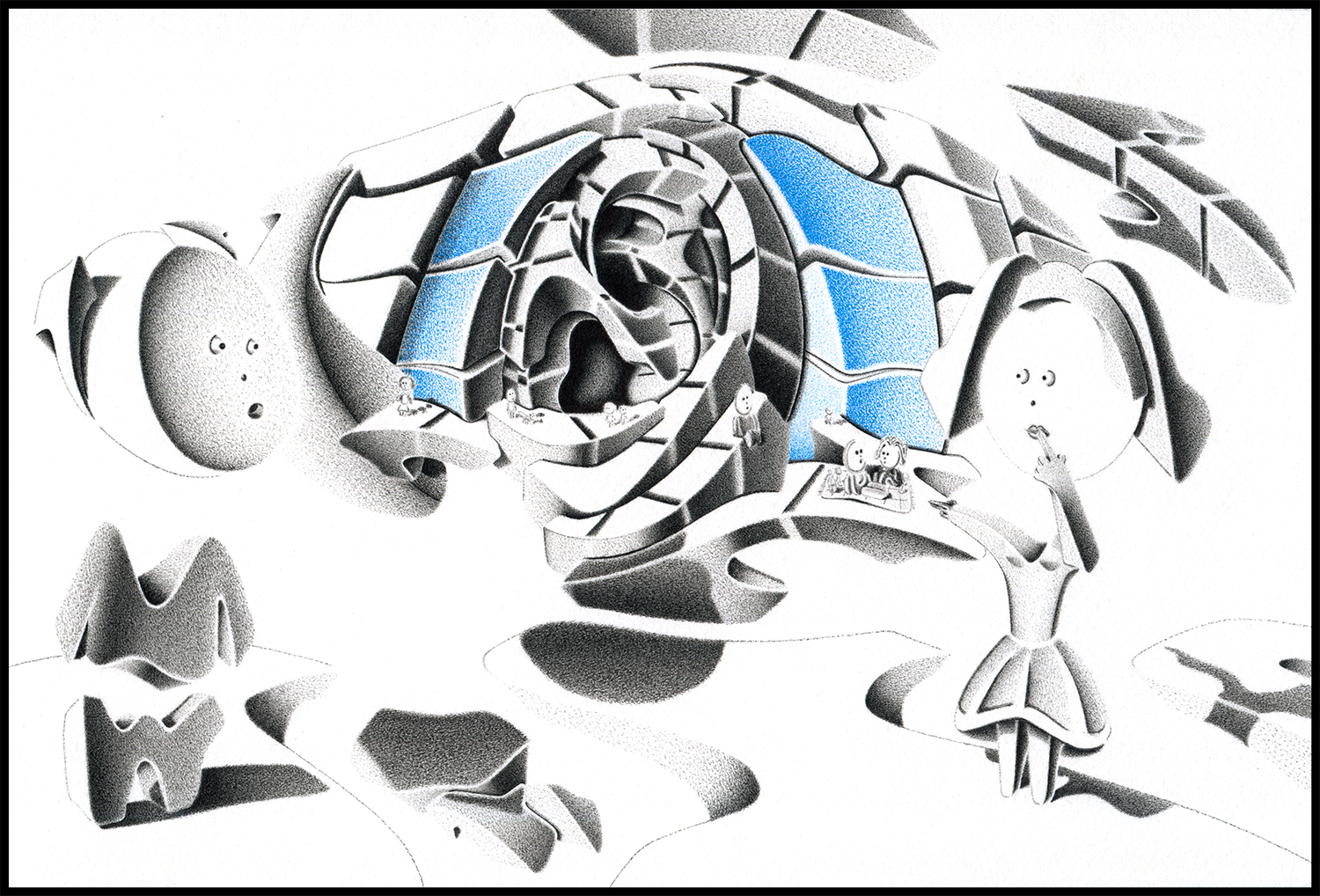
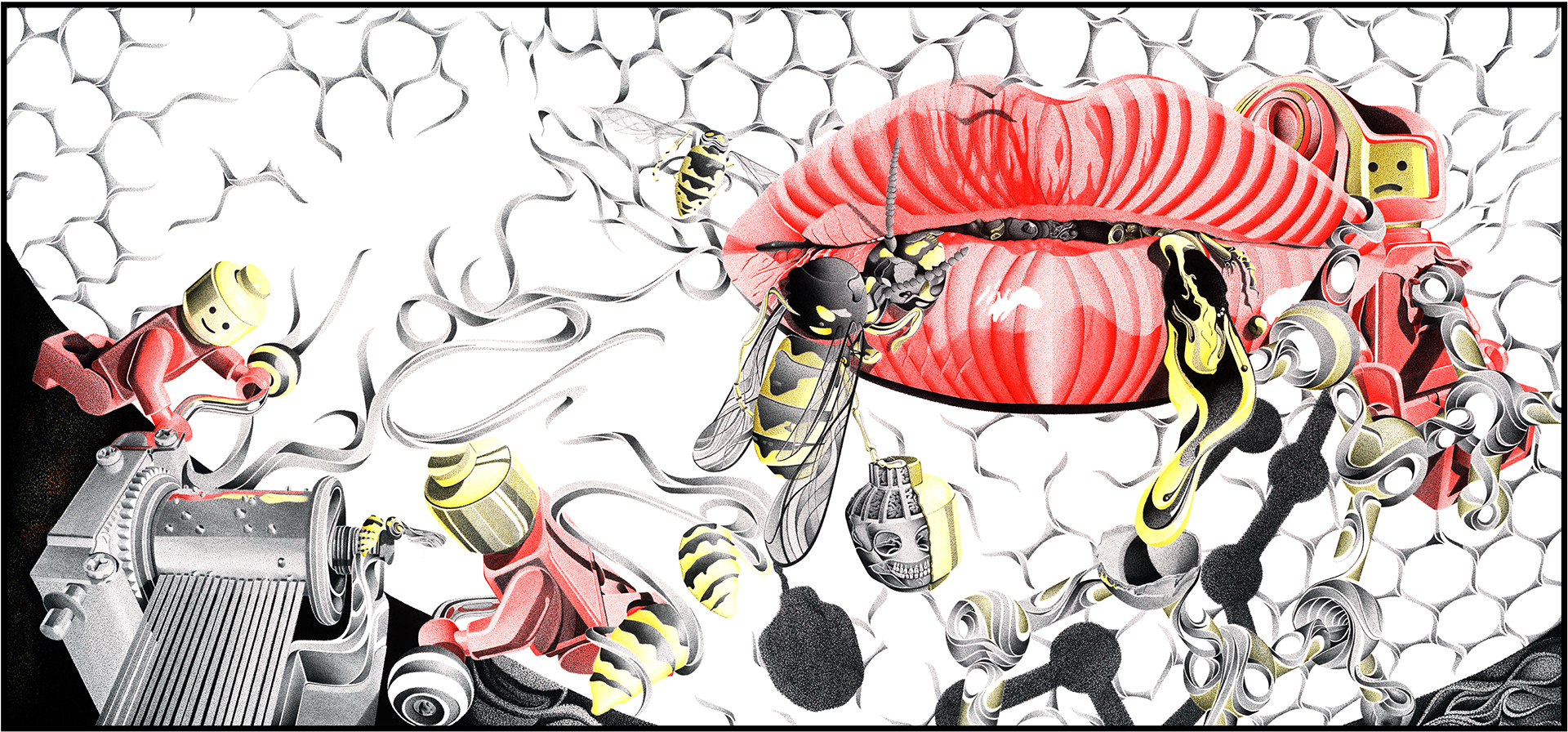
    “Creating pictures is a way in which I can process my own experiences and ingrained anxiety; recording the highs, lows, hopes and fears using line and shape to carry the narrative in my own visual language. I’m looking for a distinct balance and stillness between the elements on the paper, as if millions of random dots coordinated to produce a briefly identifiable image, that hangs quietly in the air before disintegrating back into a random state.” – Caleb Lewis


    Walls Have Ears
    Walls Have Ears
    Leaf
    Leaf
    No Man's Land
    No Man’s Land
    Something Might Turn Up
    Something Might Turn Up
    Requiem
    Requiem
    Ignition
    Ignition

    For more of Caleb’s work, click here


    Click here to see how Caleb makes his work


  • Otto Dix: The ‘Madness’ of Modern Warfare

    Otto Dix: The ‘Madness’ of Modern Warfare

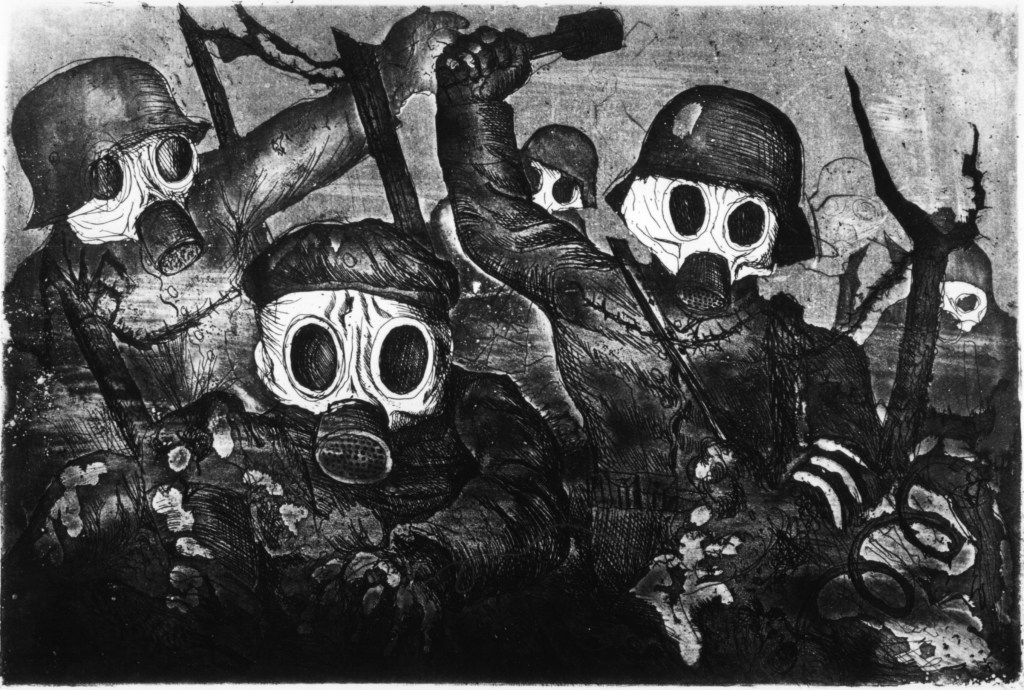
    Above image: Otto Dix, Sturmtruppe geht unter Gas vor (Stormtroops advancing under a gas attack), 1924 [Courtesy of: lewebpedagogique.com]


    I recently visited an exhibition of German artist Otto Dix’s series of prints entitled Der Krieg (The War) at the De La Warr Pavilion in Bexhill, East Sussex. I studied this series for my undergraduate dissertation a while back; where I focused on the links between German Expressionism and Outsider Art – more specifically the impact that experiences such as war can have on our mental health and how this makes the distinction between Outsider Art and ‘other’ art movements ever more intangible.


    During the First World War Dix volunteered to join the German army and was assigned to a field artillery regiment in Dresden. He took part in the Battle of the Somme before being transferred to the Eastern Front. He then returned to fight on the Western Front in 1918. In this year, he was wounded in the neck before being discharged from service in the December. His exposure to warfare had a profound impact, resulting in recurring nightmares in which he crawled through destroyed houses.

    Otto Dix, Schädel (Skull), 1924 [Courtesy of: www.deborahfeller.com]
    Otto Dix, Schädel (Skull), 1924 [Courtesy of: http://www.deborahfeller.com]

    “For all its waste, the war provided a windfall for scavengers. The First World War produced generations of happy worms and maggots. Trench rats roamed as big as beavers. Gas was sometimes a welcome respite as it decimated these pests.”

    – Taken from Otto Dix: Der Krieg exhibition pamphlet from the De La Warr Pavilion.


    Between 1915 and 1925, Dix created a significant group of paintings as a way of coming to terms with his harrowing wartime experiences. He began painting in a new style; a style which combined certain stylistic tropes and aspects of both Futurism and Expressionism, and in 1924 he produced Der Krieg –  a collection of fifty etchings and aquatints. The series is possibly one of the greatest anti-war depictions ever to be made, and is often compared to Francisco Goya’s Los Desastres. 

    This idea of the depiction of destruction and trauma as a source of creative impulse was widely common during the years following the First World War, resulting in a different kind of Expressionism emerging within Germany. At this time, there was a clear shift from a primitive, nostalgic, almost disengaged pre-war Expressionism, to a much angrier, political, ravaged Expressionism in the years following the First World War. Expressionist artists at this time seemed – quite understandably – engulfed by a ‘madness’ brought on by the normalisation of warfare and everything that came with it.

    Notably, in 1937, Dix’s work was included in the Nazi generated Entartete Kunst (Degenerate Art) exhibition in Munich. Even before the party had come to power in 1933, they had begun comparing images by avant-garde artists with those of the ‘clinically insane.’ Paul Schultze-Naumburg, a Nazi architect, was well known for contrasting the works of modern artists, such as Emil Nolde, with photographs of patients with physical disabilities with the intention of proving that modern art was pathological and degenerate.[1]

    The Nazis used modern art; Cubist, Expressionist and Dadaist works amongst others, as a scapegoat for the country’s economic collapse – a supposed conspiracy by Communists and Jews, and instead attempted to bring the focus of art back to the ideals of the human body.[2]

    Otto Dix, Mahlzeit in der Sappe (Mealtime in the Trenches), 1924
    Otto Dix, Mahlzeit in der Sappe (Mealtime in the Trenches), 1924 [Courtesy of: arttattler.com]

    “A trench soldier quickly gulps a meal in the company of a human skeleton trapped in the frozen landscape beside him.”

    – Taken from Otto Dix: Der Krieg exhibition pamphlet from the De La Warr Pavilion.


    July 19 1937 in Munich: more than 650 paintings, sculptures and prints taken from large German public collections were put on display with the aim of showing the German population what kind of art was to be considered inherently ‘un-German.’ Both abstract and representational works, including pieces by Dix, were condemned – as were the attempts to combine art and industry that had been pioneered by the Bauhaus artists. The exhibition, however regrettably, has made a place for itself as the most visited and viewed exhibition of modern art, with two million visitors in Munich, and a further one million viewers as it travelled across Germany and Austria.

    The works of George Grosz and Dix – and Expressionism more generally as a movement – were singled out to exemplify the idea of degeneracy within modern art.[3] Dix was particularly condemned due to his ‘defeatist’ attitude towards the war. His paintings The Seven Deadly Sins (1933) and The Triumph of Death (1934) portray the dangers of Nazism, and because of this, he was treated with utmost suspicion throughout the Third Reich.

    The Nazis saw ‘degenerate’ art as a “metaphor of the madman as the artist,” with Adolf Hitler developing a dialogue that insinuated that the avant-garde artist should be considered as an ‘outsider.'[4]

    Otto Dix, Gastpte - Templeux-la-Fosse, August 1916 (Gas Victims - Templeux-la-Fosse, August 1916), 1924 [Courtesy of: www.port-magazine.com]
    Otto Dix, Gastpte – Templeux-la-Fosse, August 1916 (Gas Victims – Templeux-la-Fosse, August 1916), 1924 [Courtesy of: http://www.port-magazine.com]

    “By 1924, people were aware of the horrors of gas but censored wartime reporting spared many from its ghastly details. Here the results are depicted with raw clarity of someone who was there. Indeed, much of Der Krieg was based on Dix’s wartime diary drawings. Many were probably struck by the appearance of the victims, darkened for lack of oxygen and the nonchalance of the medical staff who had seen it many times before.”

    – Taken from Otto Dix: Der Krieg exhibition pamphlet from the De La Warr Pavilion.


    A certain political and social ‘madness’ continued for the people of Germany throughout the reign of Hitler and his National Socialist Party. The extermination of German citizens based solely on race, ethnicity or religion was widely executed, as well as the mass rejection of works by some of the leading avant-garde artists. The whole era was epitomised by what defined ‘madness’, with the line between the ‘sane’ and ‘normal’ – if we are even able to define these terms – and that of the ‘pathological’ becoming increasingly blurred.

    The work of the German Expressionists, and the artists themselves, may have been deemed ‘insane’ by many critics at the time, but, as Jean Dubuffet claims, “very often the most delirious, most feverish works, those that are apparently stamped most clearly with the characteristics ascribed to madness, have as their authors people considered as normal.”[5]

    Annette Becker, writing in The Avant-Garde, Madness and the Great War, claims that “there is hardly more sense in the claim that there is an insane art as there is a dyspeptic art, or the art of those with knee troubles.”[6] Jon Thompson, curator of the Inner Worlds Outside exhibition at the Whitechapel Gallery, London in 2006 insinuates that “all human minds are fundamentally the same,” we are all the product of modernity and, influenced by Marx he “speaks to the degrees to which we are all alienated in one way or another, or in many ways at once.”[7] German Expressionism – and the work of Dix – was essentially a product of its time; a time that was characterised by alienation, discontent and the ‘madness’ of political instability and mechanical warfare.


    Otto Dix: Der Krieg continues at the De La Warr Pavilion in Bexhill until 27 July 2014. Click here for more information on the exhibition.

    References

    [1] Berthold Hinz, “‘Degenerate’ and ‘Authentic’: Aspects of Art and Power in the Third Reich,” Art and Power: Europe under the dictators 1930 – 45. Eds. Ades, Dawn, Tim Benton, David Elliott and Iain Boyd White, The Southbank Centre, 1995.

    [2] Stephanie Barron, ed. German Expressionism 1915 – 1925: The Second Generation, Los Angeles County Museum of Art, 1988.

    [3] Hinz, “‘Degenerate’ and ‘Authentic’: Aspects of Art and Power in the Third Reich.”

    [4] Sander Gilman, “The Mad Man as Artist: Medicine, History and Degenerate Art,” Journal of Contemporary History, Vol. 20, No. 4 (1985): p594

    [5] David Maclagan, Outsider Art: from the Margins to the Marketplace, Reaktion Books, 2009: p38

    [6] Annette Becker, “The Avant-Garde, Madness and the Great War,” Journal of Contemporary History, Vol. 35, No. 1 (2000): p81

    [7] Adrian Searle, Meet the Misfits


  • Mark Gregor

    Mark Gregor

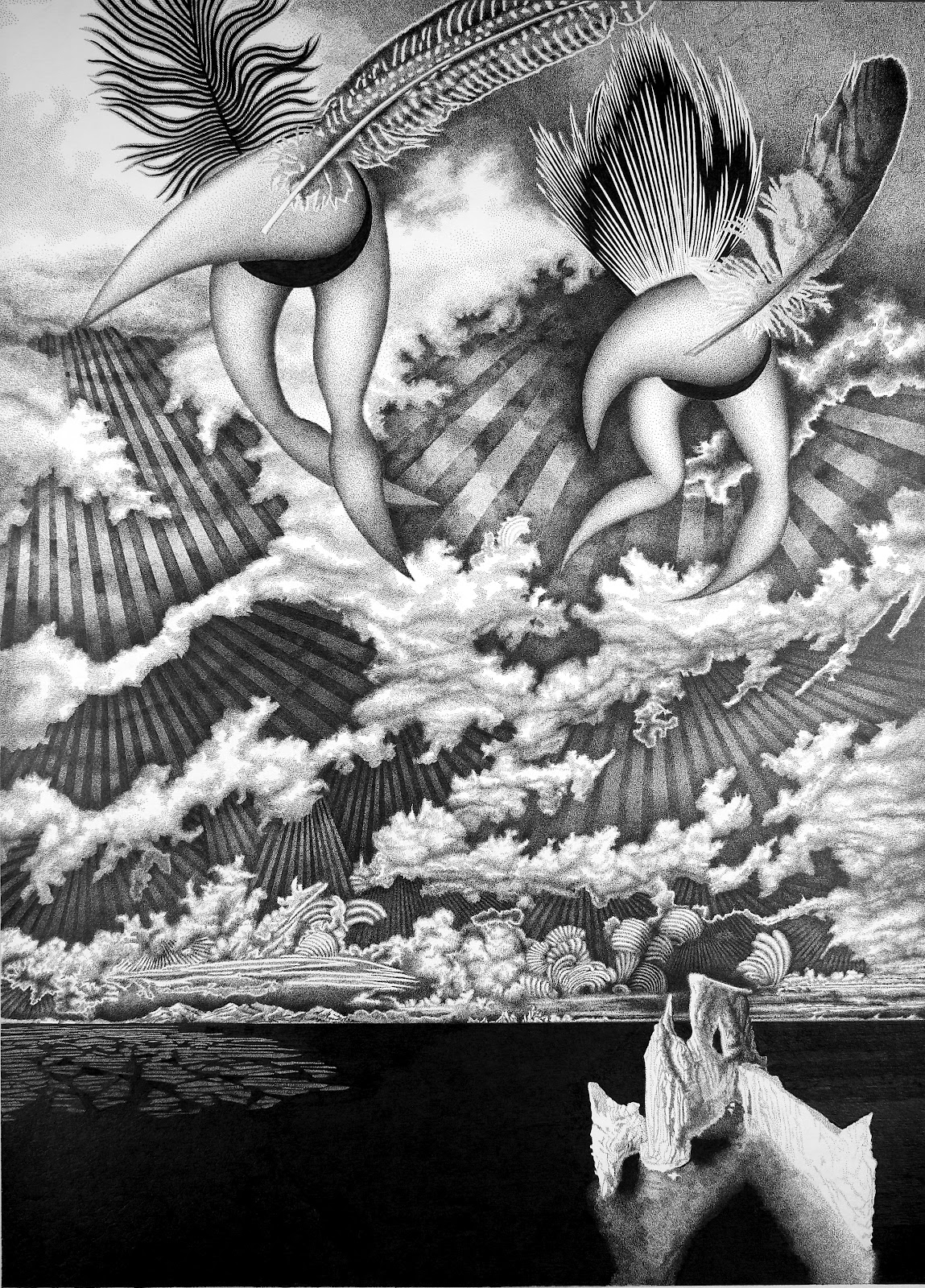
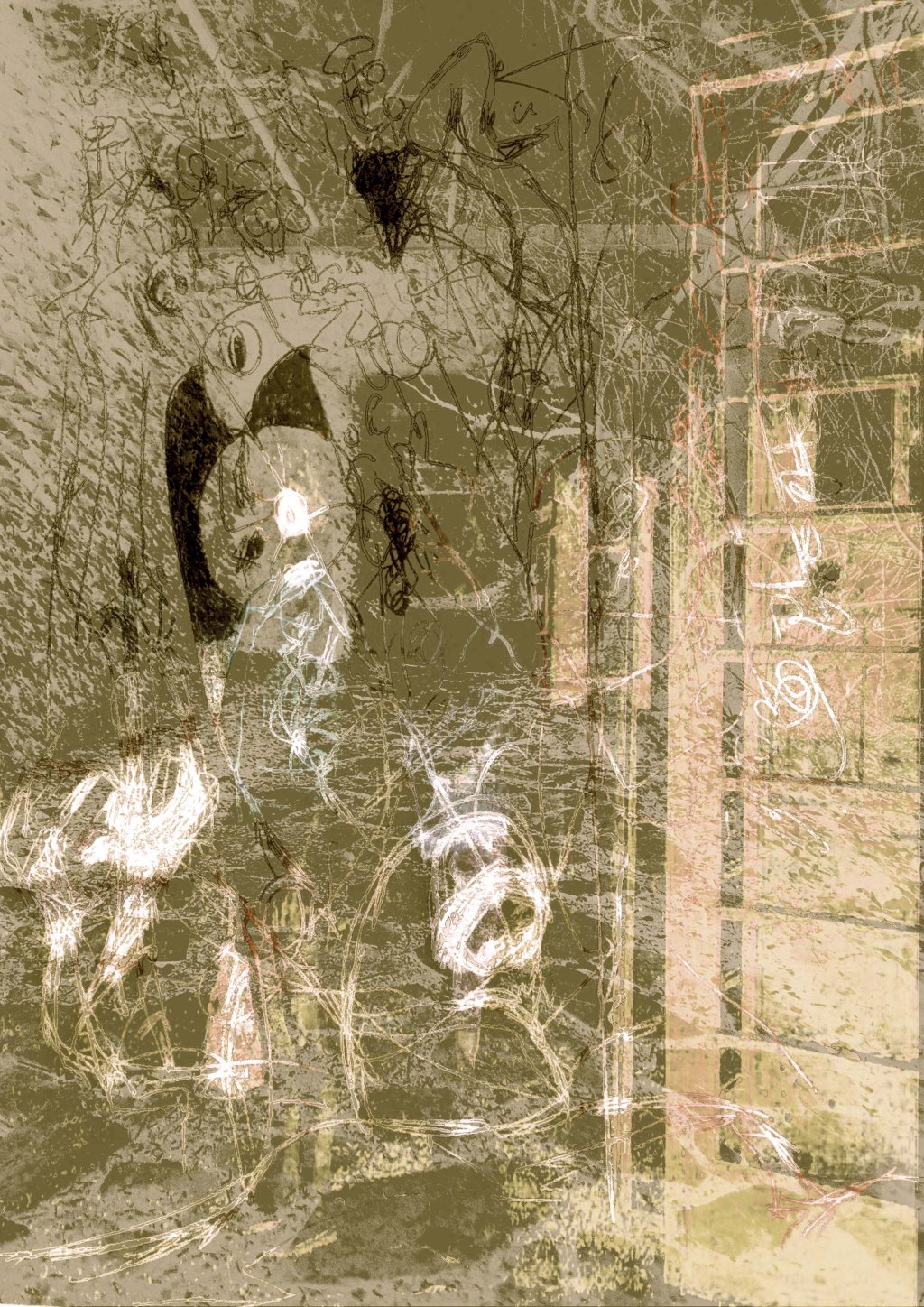
    Mark Gregor (born Marek) studied at Falmouth School of Art to gain a BA Hons in Fine Art before working in Bristol taking commissions for reproductions of Old Master paintings for interior designers and architects. In 1990, Mark had major brain surgery for an aneurysm. He continued to produce his work in his flat up until his death in May 2014. His incredible pen drawings bring creatures of the imagination roaring to life and bounding off of the page. Take a look at some of these extraordinary works below.

    Pen on paper
    Pen on paper
    Pen on paper
    Pen on paper
    Pen on paper
    Pen on paper
    Pen on paper
    Pen on paper
    Pen on paper
    Pen on paper

    See more of Mark’s work by visiting his website:
    www.markgregorart.blogspot.co.uk
    For more information on Mark’s work, please email Sue Gregor: suegregor@gmail.com
  • Jelly Buckingham

    Jelly Buckingham

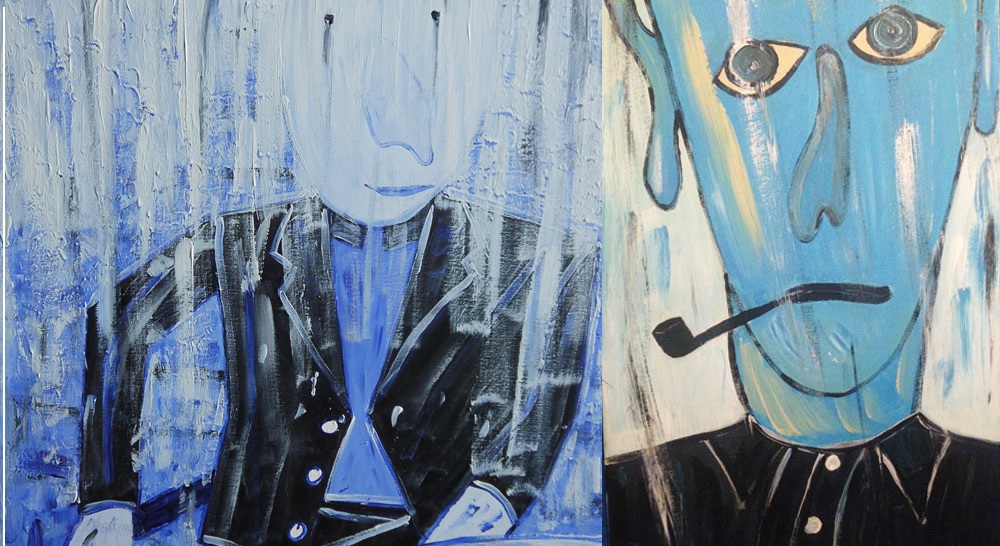
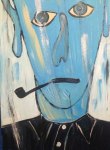
    Above images: Jelly Buckingham, Ghost & The Smartest Eye


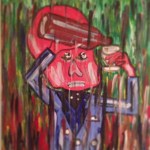
    Jelly Buckingham works with acrylic on canvas. Mister Jellington usually likes to work late at night, and quenches his mind with copious quantities of sweet tea, water mixtures, the endless gurgle of 100m deep whirlpools of paint, and surreal landscapes created by melodic sounds. Sometimes he listens to the same song up to fifty times during one session to maintain mood and momentum. Each painting is a very organic process and Jelly is primarily concerned with capturing not only a certain character but a specific feeling and mood.


     Jelly also produces T-Shirts:

    black tshirt2 flatcream Tshirt flat


    See more of Jelly’s work here:
    facebook.com/jellybuckinghambrand


  • Manuel Bonifacio: My Imaginary Cave

    Manuel Bonifacio: My Imaginary Cave

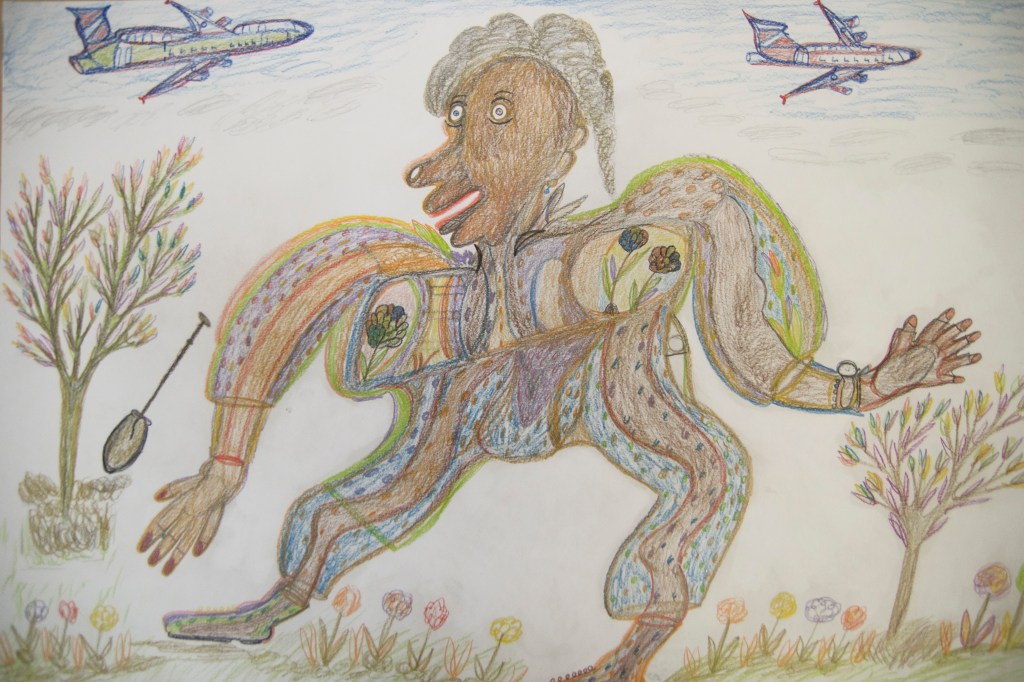
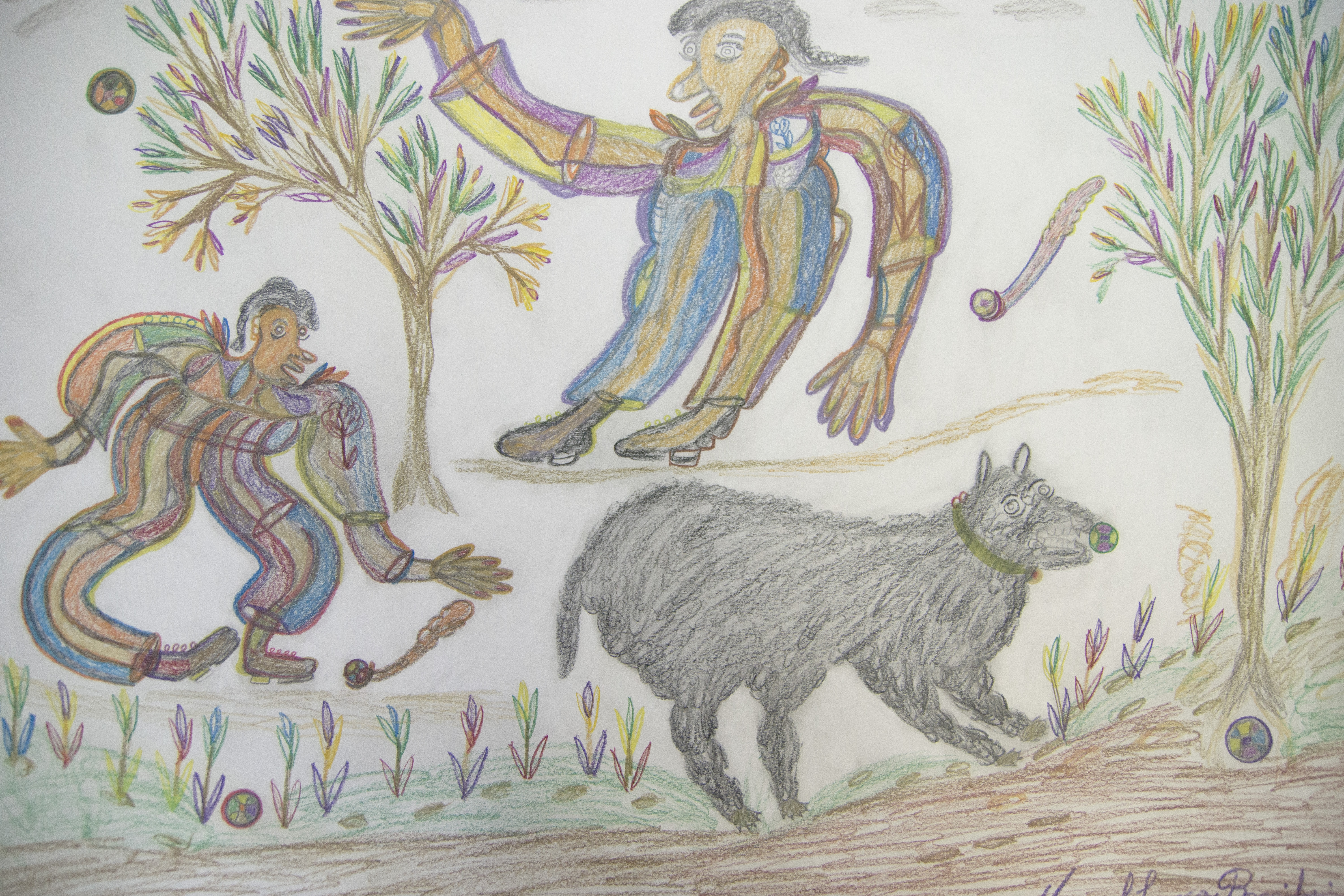
    Above image: Manuel Bonifacio, Aeroplanes and Spades


    On 29 April, Pallant House Gallery welcomed a new exhibition showcasing the work of Manuel Bonifacio; one of six Outside In 2012 Award Winners. The exhibition is a colourful array of Bonifacio’s imaginative characters and creatures, and is definitely a must-see if you’re down on the south coast in the next month.

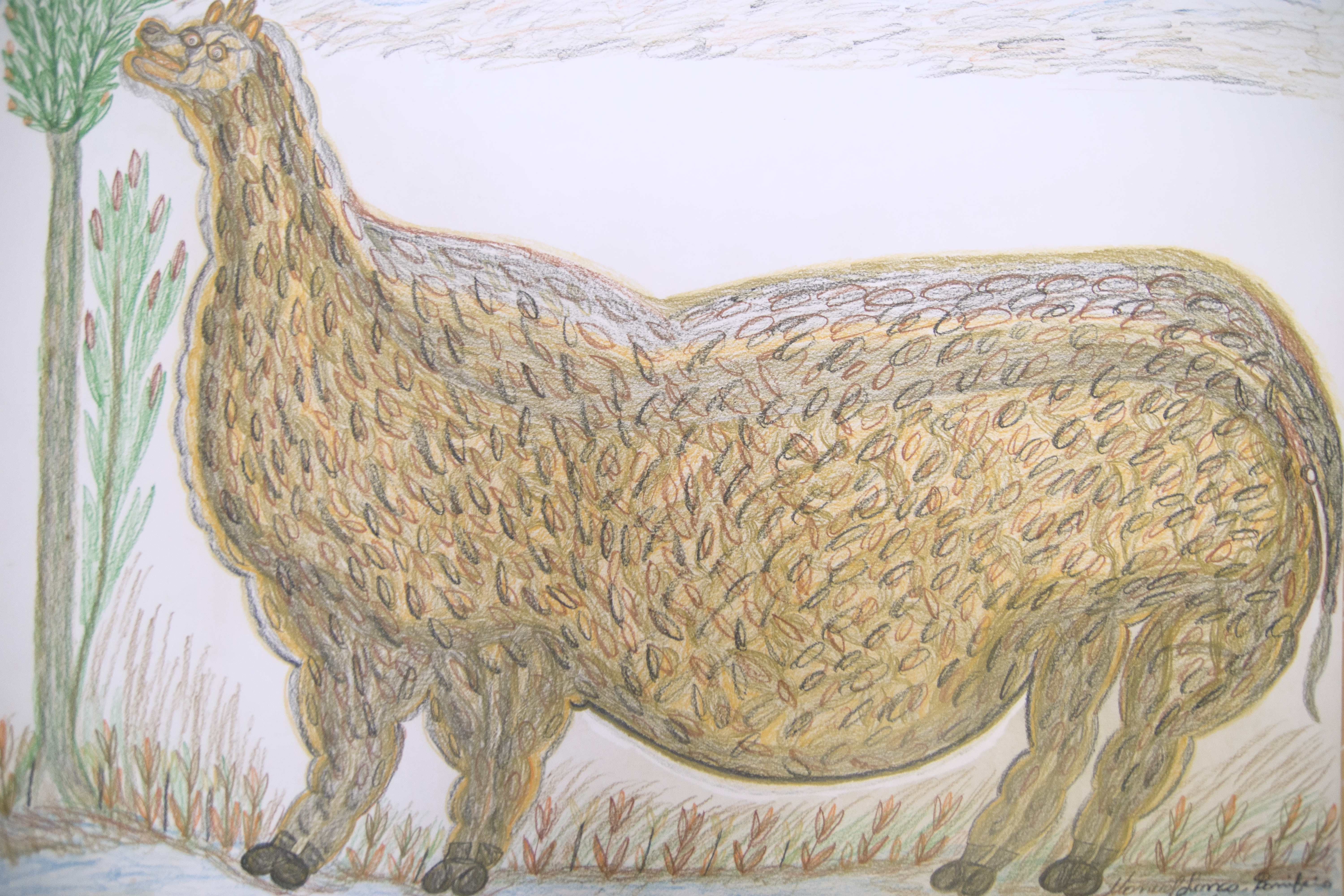
    Born in December 1947 near Lisbon, Portugal, Bonifacio pursued his interest in drawing and pottery after dropping out of school at the age of eight. His most recent collection of work, which features the award winning ‘Mermaid’ and a selection of pottery, is inspired by his passion for archaeology and animals. Bonifacio paints, draws, sculpts and makes at ArtVenture – a creative day centre for adults with learning difficulties – for four hours every Wednesday and Friday. Since his Award win, Bonifacio has exhibited in Birmingham and London and now has work in collections in Switzerland and New York. In recognition of Bonifacio’s talent, an Outsider Art collector will be travelling over from Switzerland to attend this much-anticipated exhibition.

    Manuel Bonifacio, Jungle Animal
    Manuel Bonifacio, Jungle Animal

    “Manuel’s thing at the moment is mermaids, but he loves motorbikes,” his niece says. “He likes to do things his own way; he thinks ‘I’m the artist and I know what I’m doing’!” Bonifacio’s mermaids (one of which one him the Award in 2012) have an interesting narrative all of their own. “They live in Lisbon, but they go all over the world,” says Bonifacio. Lisbon is in fact populated with several mermaid statues, including eight in the large fountains in Rossio Square. Bonifacio adds: “All the children used to say ‘Look, there she  is – the mermaid!’ She waves to the people, and then goes under water again when the boats pass.”

    At a young age, Bonifacio joined the fire brigade as a volunteer and his life’s ambition was to be in the army. Many of his works reflect his passion for army transportation, depicting helicopters, aeroplanes, motorbikes and boats. His work is also inspired by politics and everything he sees on television, but most of it comes straight from his colourful imagination. His sister describes the huge variety of subject matter he depicts: “The birth of Jesus, the circus, the Pope, the Queen, Margaret Thatcher and David Cameron, dancers, Christmas-inspired pieces, motorcycles, musicians, buskers, birds, divers, fish, helicopters, dogs, horses, wolves, mermaids, and always people. There are faces in most of his work.”

    Manuel Bonifacio, Motorbike and Man
    Manuel Bonifacio, Motorbike and Man

    Keen to explore and take on a challenge, Bonifacio has previously experimented with printmaking and wood carving and he occasionally dabbles in watercolours and oils. His portfolio also includes an array of distinctive ceramic mugs, vessels and faces. Walking from Cobham to Kingston regularly – a 20 minute drive – Bonifacio notes down road names, makes sketches and absorbs nature and life, which are ever present in his work. One of his figures was inspired by a statue on a roundabout in his hometown, but more generally, the characters he so vividly creates come straight from his mind. There is a sense that he could conjure anything; a donkey, a bullfighter, or various forms of transport.

    Bonifacio’s sister, Maria Odone, says: “Manuel’s work has been a valuable asset to everyone who knows him as it is also a way he likes to communicate. His ideas and perception of what is going on around him both locally and nationally are very unique. His ambition as an artist is to travel around the world, finding places and people that will inspire him.”

    Manuel Bonifacio, Ball Games
    Manuel Bonifacio, Ball Games

    Roger Cardinal, who coined the term Outsider Art in 1972 as the English equivalent of Jean Dubuffet’s Art Brut, was one of the Outside In: National judges. He speaks of the moment he first saw Bonifacio’s Mermaid at the Gallery: “It struck me as entirely familiar and made me think of the Frenchman Guillaume Pujolle, an early star of Art Brut whose lyrical images I cherish. This brief and decisive moment established Bonifacio as my top choice. The Mermaid is a perfect reality for him [Bonifacio]. I see her arms and elongated fingers as enacting the motions of swimming, although she can also be said to be flying. Hence she is capable of traversing earth, sea and air, and becomes and emblem of the artist’s unfettered imagination.”


    Entry to Manuel Bonifacio: My Imaginary Cave is free. The exhibition continues in the Studio at Pallant House Gallery until 1 June 2014.


    To see more of Manuel’s work, click here.

  • Taxonomy: The Problems of Categorisation

    Taxonomy: The Problems of Categorisation

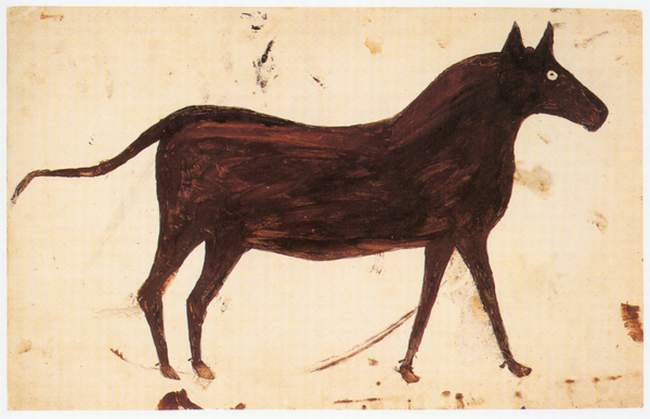
    Above image: Bill Traylor, Brown Mule, 1939 (source: www.petulloartcollection.org)


    “Categorisation is something that we do naturally and unconsciously every day. We recognise one animal as a cat and another as a dog. We organise objects in the world around us in ways that reflect these categories. In our kitchens, we keep baking trays with other baking trays, saucepans with other saucepans and keep food separate from cleaning products. We categorise ideas, people, tasks and objects. Categorisation is fundamental to the way we think.” – James Sinclair, 2006.

    As humans, we categorise things to make sense of the world; we link new things to past experiences, and we group similar people or ideas. We group genres of books in the library. We archive our emails in labelled folders. If we did not do this, we would “become inundated by our environment and unable to cope.”[1] This is a poignant theory with regards to the relative ambiguity of Outsider Art.

    I am not sure if you have heard of the fictitious taxonomy of animals described by writer Jorge Luis Borges in 1942. It looked at the work of John Wilkins; a 17th-century philosopher who proposed a new language that would parallel as a classification system. Borges wanted to illustrate the arbitrariness of such a way of categorising the world, so used an example of a taxonomy taken from an ancient Chinese encyclopaedia entitled ‘Celestial Emporium of Benevolent Knowledge.’ The list described in the encyclopaedia divides animals into one of 14 categories:

    • Those that belong to the emperor
    • Embalmed ones
    • Those that are trained
    • Suckling pigs
    • Mermaids
    • Fabulous ones
    • Stray dogs
    • Those that are included in this classification
    • Those that tremble as if they were mad
    • Innumerable ones
    • Those drawn with a very fine camel hair brush
    • Et cetera
    • Those that have just broken the flower vase
    • Those that, at a distance, resemble flies.

    Quite ridiculous, right? It is a similar story for the huge list of terms we have that fall under the umbrella of Outsider Art (not quite so ridiculous, but probably equally as long). Here are just a few that I have come across at some point: self-taught art, visionary art, primitive art, naive art, marginalised art.. etc. etc. Sometimes giving things labels help us make sense of them, but it can also mean we end up generalising about people or situations that, actually, we have absolutely no idea about.

    I have written before about my position on the debate with regard to the term Outsider Art. I sit somewhere between thinking we should not need it, and thinking that to have a label means that people recognise it. Particularly people who have not been aware of it before. We have seen, more so in the last year, an exponential increase in awareness of the subject (particularly in the UK, thanks to a number of high profile London-based exhibitions on the subject). Now, when I tell someone what I blog on, they have some idea what I am talking about. And surely, this can only be a good thing. Raising the profile of this art is of course number one on my agenda. But following close behind is number two on the agenda: to eliminate the discriminatory and redundant term used to describe it. It is a double-edge sword, it seems; raising people’s awareness of a term that one day we hope to be rid of.

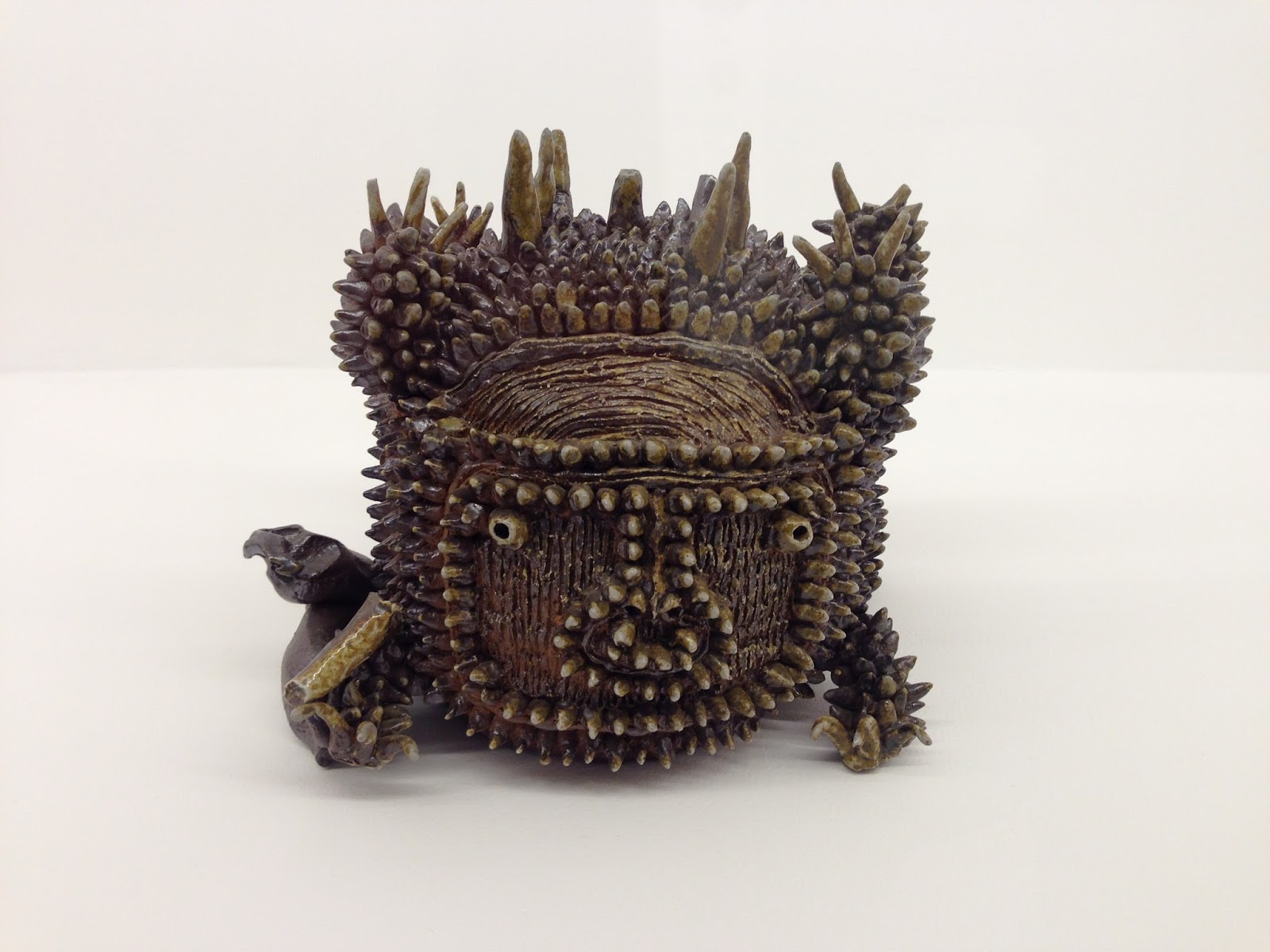
    Shinichi Sawada
    Shinichi Sawada

    Outsider Art is one of those terms that would fit into that ‘other’ tick box you get on forms, or your ‘miscellaneous’ email folder. It is where everything that cannot be neatly categorised can be bundled up, and we can smile, thinking we’ve hoovered the dust up. Everything is in its place. But it is this attitude that means that it is becoming increasingly difficult to break open Outsider Art and get people to actually think about what they are grouping together. To put it crudely, we are grouping people diagnosed with mental health issues with ex-offenders, ex-offenders with those who have not been to art school, and those who have not been to art school with artists who paint or draw in a way that is not similar to what we conventionally consider to be art. We are, in essence, grouping people. Is this not the same as those sweeping generalisations that go against our twenty-first century ideas about acceptance, inclusivity, and political correctness? Do all women like the colour pink, all men like cars and sport? I do not recall other types of art being categorised in this way. Surely this in some way goes against our innate need for categorisation, because – like the Chinese encyclopaedia – it does not make any sense.

    To move forward, we need to continue to break down the barriers around what we consider to be Outsider Art. We need to have open conversations about what it is, where it is going, and what it all means. But then we need to consciously think about – as humans with innate needs – how we can better categorise the work under this umbrella. I, for one, have not figured this out yet, but I feel like we are making some progress simply by raising awareness about it. It feels like the first step on a ladder that looks a little something like this: Awareness > De-constructing > Re-constructing. And maybe the re-construction of the category will provide evidence that we actually do not need such a term – we will realise that the work of ‘Outsider Artists’ actually fits within the ‘accepted’ canon of art history; after all, all art made in the past is, by its existence, the history of art.


    Let me know what you think in the comments below, or on Twitter: @kd_outsiderart

    References

    [1] Kate Griffiths, ‘The Role of Categorization in Perception’, 2000

  • Michael Dawson

    Michael Dawson

    Above image: Michael Dawson, Song Bomb


    “I produce vibrant works on paper, wood, MDF and canvas in a neo-expressionist style that is often mistaken as ‘outsider’ but I take that as a compliment.

    Intense and energetic, rich in vivid colour and heavily covered in text, stencils and bursts of texture, the works are primarily concerned with a universal experience filtered through my life. I suggest dichotomies, wealth vs poverty, primitive vs sophisticated, integration vs segregation, justice vs injustice and inner vs outer experience.

    Whilst the majority of my work evidently references pop, neo expressionism and outsider art, I have successfully developed a language of my own. I harness the synergy of appropriation; poetry, drawing and painting which marries text and image, abstraction and figuration, historical information mixed with contemporary critique.

    Places that I have visited also directly influence my work — the colours of New Orleans, the Caribbean and Malaysia, and the urban landscapes of New York, Paris, London and Berlin.

    Contemporary culture, history, geography, political and corporate worlds, word-play, social commentary and music all get put into the food blender too.

    My work has no set agenda, theme or literal subject matter — it is informed by what I am passionate about, what makes me angry and what makes me joyous — how I respond to what I see and hear around me… I try to find beauty in the ordinary, in the mundane, in the over-looked, and in what is commonly regarded as ugly… I am also scathing of what I see as unfair, cruel and brutal in the world. This is also your world.”

    – Michael Dawson.

    zap-happy_fs
    Zaphappy
    Holy Island Lust for Life
    Holy Island (Lust for Life)
    All Ju Ju Bendy
    All Ju Ju Bendy Business Coming To An End
    Zap
    Magic Cat

    See more of Michael’s work at:
    www.m-dawson.co.uk


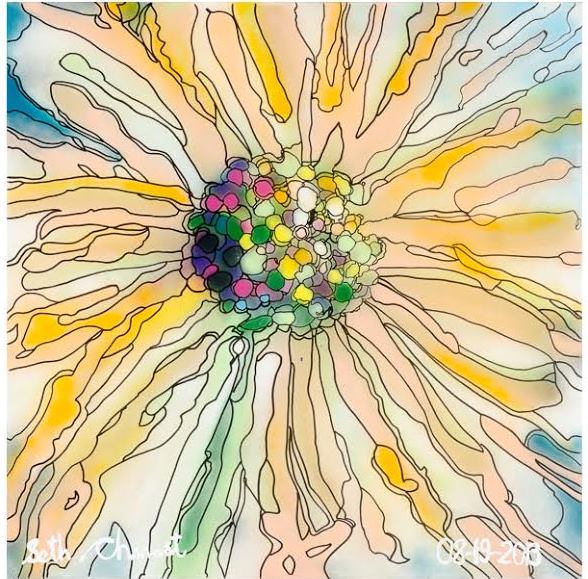
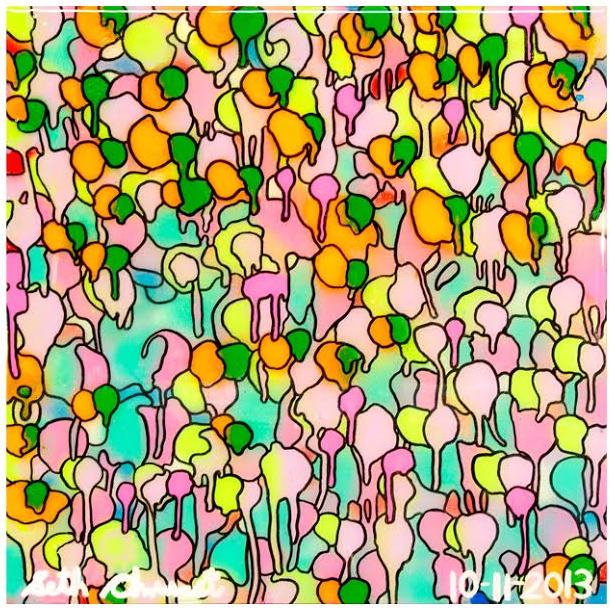
  • Seth Chwast

    Seth Chwast

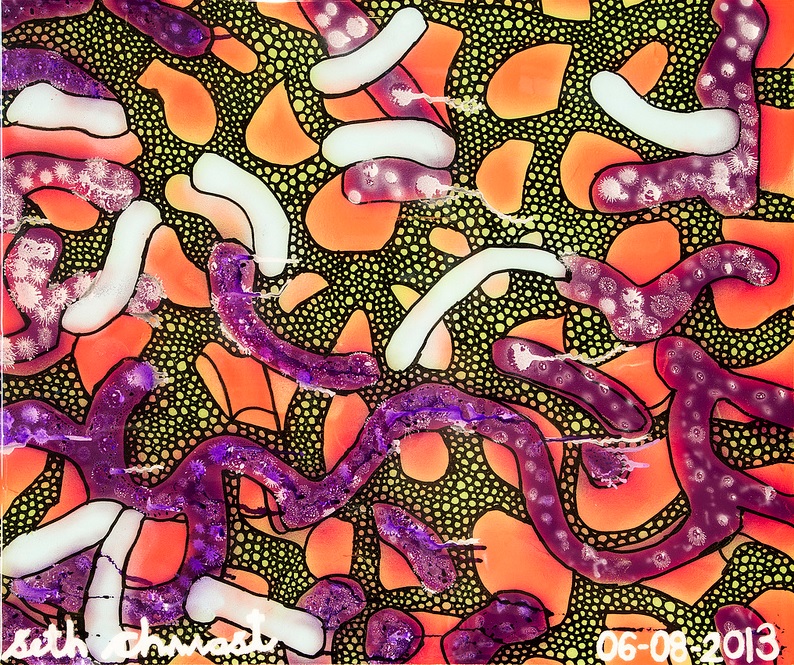
    Above image: Seth Chwast, The Flying Shapes


    In 2003, at the age of 20, Seth Chwast took an oil painting class at the Cleveland Museum of Art, where he first began describing his world in paint. He displayed an innate ability to mix colours and create amazing works of art that reflect his vision of his world and the world around him. Ten years into his career, Seth has shown his work at numerous locations in the United States including the Time Equities Building in New York City and Penn State College of Medicine. With over 700 paintings, drawings, silkscreens and sculptures to his name, Seth’s subject matter ranges from cityscapes, mythical creatures and portraits to animals and abstract paintings.

    Hot Pink Echinacea
    Hot Pink Echinacea
    The Big Pink Flower
    The Big Pink Flower
    Multi Coloured Shapes Jungle
    Multi Coloured Shapes Jungle
    The Abstract Garden with Multicoloured Leaves
    The Abstract Garden with Multicoloured Leaves
    The Clover in my Garden
    The Clover in my Garden

    Visit Seth Chwast’s website:
    www.sethchwast.com

  • Hidekazu Sogabe

    Hidekazu Sogabe

    Hidekazu Sogabe was born in Osaka and has lived and worked in London since 1997. His early paint work puts together abstract, flattened figures, whilst his more recent sculptural work re-imagines his concerns for embodied experience.


    You can see more of Hidekazu’s work by clicking here