Why ‘outsider art’ is still on the outside – and what needs to change
Over the past decade, ‘outsider art’ has been nominated for the Turner Prize, it has been included in Royal Academy summer shows, there have been major exhibitions in UK gallery and museum spaces. Yet, despite this increased visibility, it remains far from fully accepted within the cultural mainstream in this country. My research asks a simple question: why?
As my research continues, I have been looking at the notion of the art ‘competition.’ More specifically, I have been looking at the barriers that surround these competitions; focusing on the application and selection processes.
In many parts of our lives, we are encouraged to fit into an already existing and established ‘box.’ This box, if you will, has been made by and for people who already exist in privileged positions. As Penny Jane Burke and Jackie McManus note in a 2011 article for Discourse: Studies in the Cultural Politics of Education:
“Inclusion often works as a disciplinary technology to ‘include those who are excluded into the dominant framework/state of being, rather than challenging existing inequalities within the mainstream system, or encouraging alternative ways of being.”[1]
Although writing about inequalities in the application process for art courses at universities in the UK, many of the points made by Burke and McManus also relate to the application and selection process integral to many art competitions. The steps of any application process are almost seen as necessary – and they tend not to be questioned. To be in for a chance to win, you must apply, and to apply, you must follow the rules. And those who win deserve to win because they have earned it. They have been voted the best of the rest, and that result is the correct result because the system is the system and it works.
Burke and McManus note that “meritocracy is premised on the belief that all individuals who work hard, and have the prerequisite ability, can succeed within a fair and democratic system.” However, they continue by saying that what is not taken into account here is that this idea “does not address differential social positions and power relations, which provide some social groups with greater access to the valuable cultural and material resources necessary to ‘play the game’ and succeed.”[2]
There is so much assumption placed in an application process. Assumption that the applicant will know what is being assessed, assumption about who might apply, and an assumption that the applicant will be able to easily follow the application process. This is especially important to note when many competitions come with a hefty application process and more often than not, a hefty entry fee too. In essence we are asking people to spend a lot of time and money that they may not have on entering something where they really have no way of knowing their possibility of success.
In their 2000 article, Nachoem M. Wijnberg and Gerda Gemser identified three basic types of selection system; “market selection, peer selection, and expert selection.”[3] They explain these types of selection system in the following ways:
“In the case of market selection, the producers are the selected and the consumers are the selectors. In peer selection, on the other hand, the selectors and the selected are part of the same group. In the case of expert selection, the selectors are neither producers nor consumers, but have the power to shape selection by virtue of specialized knowledge and distinctive abilities.”[4]
Traditionally, peer selection was the predominant method of selection – think of the Salons and Academies where artists rose through the ranks and were responsible for selecting newer, emerging artists for exhibition. However, in more recent years, expert selection has become the favoured method. This shift has happened due to several factors, but the most pivotal is perhaps the emergence of dealers who have necessitated the assistance of art critics to bring attention to their chosen art or artists. Eventually, Wijnberg and Gemser note, “the modern art museums would also begin to exhibit works by artists in the same group in order to highlight current trends, thus supporting the efforts of both the ideological dealers and the art critics.”[5]
The issue with all three selection methods is that the “value of most cultural products is generally hard to ascertain, in part because the standards to be used for this purpose are seldom clear and rarely obvious.”[6] Therefore, Wijnberg and Gemser highlight that:
“An innovation attains value only if it is considered valuable by the selectors that control a given selection system. This may lead to serious problems for art that contains innovations that are not valued within an existing selection system. In many instances, therefore, art that is innovative will only be successful if the innovators that champion it succeed in changing the ways in which value is determined. This often means changing the selection system itself.”[7]
The issue here is that existing processes mean that value-based judgements made by selectors can only be subjective, and therefore an artist’s success in a competition format depends heavily on the aesthetic taste of the ‘judging panel.’ So, this is one issue with the art competition format.
Interestingly, in Burke and McManus’ research into the admissions process for UK arts courses, they found that the “’worthy’ student seems to be associated with the ‘unusual’ and the processes of creativity that involve risk-taking and invention (characteristics historically associated with the white, euro-centric forms of masculinity).”[8] We are asking applicants to jump through hoops that have been created by a certain group, and therefore, will innately be more accessible for that same certain group.
Burke and McManus suggest a critical approach for selectors. There needs to be a sense of “critical reflexivity, to interrogate the ways that their decisions might be shaped by exclusive values and perspectives, which profoundly influence how candidates are (or are not) recognized as having talent, ability, and potential.”[9] But I don’t think we just need selectors to be more critical, I think the selectors of the selectors need to be more critical. It is no good simply trying to mould and coach someone to fit our existing expectations. We need to evaluate and change the existing inequitable systems.
I would be really keen to hear from you about your experiences of entering an art competition. How did you find the application process? Was it a good experience? Was it a bad one? Please do feel free to comment below, or drop me an email: kdoutsiderart@yahoo.com.
References
[1] Penny Jane Burke and Jackie McManus, ‘Art for a few: exclusions and misrecognitions in higher education admissions practices,’ in Discourse: Studies in the Cultural Politics of Education, Vol. 32, No. 5, 2011, pp 699 – 712, p 700
[2] Op. Cit., p 701-702
[3] Nachoem M. Wijnberg and Gerda Gemser, ‘Adding Value to Innovation: Impressionism and the Transformation of the Selection System in Visual Arts,’ in Organization Science, Vol. 11, No. 3, 2000, pp 323 – 329, p 323
Recently, whilst undertaking some research around the role of the critic and what makes artists ‘successful’ in the art world, I came across a transcription of a lecture given by Sir Alan Bowness, Art Historian and Director of Tate (1980-1988), at the University of London in 1989. The talk centred on the idea of artistic achievement, and was titled The Conditions of Success: How the Modern Artist Rises to Fame.
Bill Traylor, Man and Large Dog, Smithsonian Institute
In the text, Bowness outlines his idea that there are four steps that lead to an artist achieving recognition and success in the art world. What I found most interesting about this quite rigid ‘how-to’ guide is how little room for success it leaves for those who are not able to complete one of the steps. This, of course, ties into my interests around what continues to separate so-called outsider art from the cultural mainstream.
Early on in the lecture, Bowness asserts that “there is a clear and regular progression towards artistic success. There are,” he says, “in my view, conditions of success, which can be exactly described. And success is conditioned, in an almost deterministic way. Artistic fame is predictable.” These ‘conditions of success’ revolve around the idea of recognition. Recognition from whom, and when this occurs during the artist’s career.
The first condition is peer recognition, and Bowness quite boldly claims that this initial type of recognition is “at first a matter of personality as much as it is of achievement.” He goes on to speak about his discovery of David Hockney during the 1960 annual exhibition of the London Group (Hockney at that time being a 22 year old first year student at the Royal College of Art): “it was quite obvious to… a thirty year old art historian/critic like myself that here was an exceptional talent.”
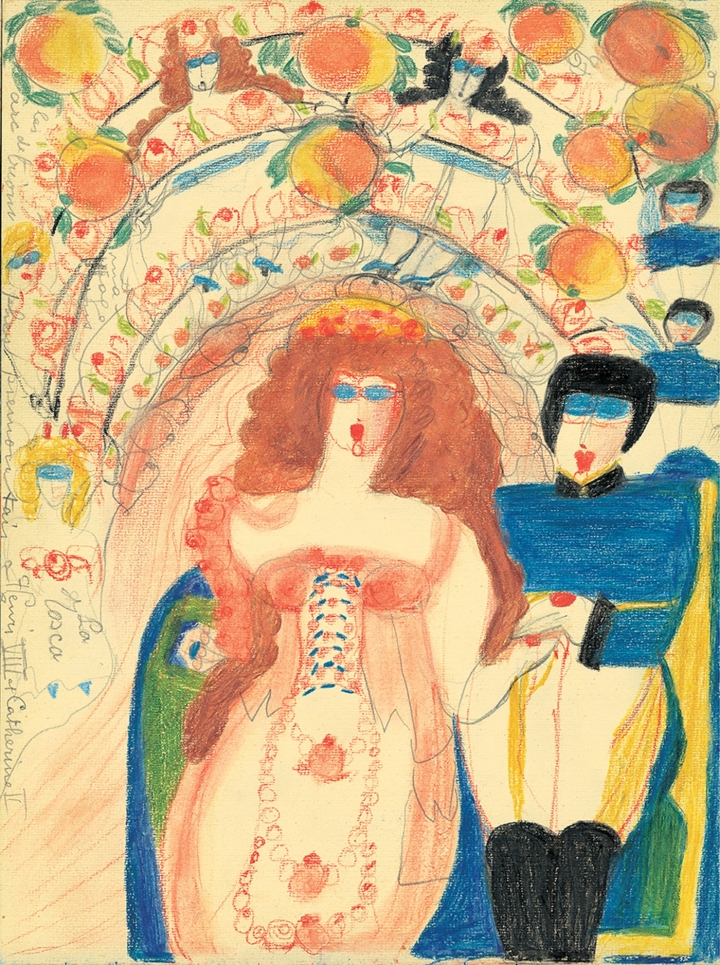
Aloise Corbaz
My immediate issue with this condition is that it first requires the artist to already be rotating in artistic circles and communities. This is generally not the case for artists who are considered to be working outside of the mainstream. It is a condition that relies heavily on an artist having travelled the traditional route – art school, formal and informal networking, student exhibitions, etc. Some of the most well-known outsider artists (think Bill Traylor), did not start creating work until much later in life, and many lived or had lived lives on the outskirts of artistic communities and therefore outside of the possibility of any form of peer critique.
My second issue is that this also requires the artist to have a peer group that is already well established in the art world – or at least one that in some way already holds some kind of esteem. It relies on networks created at some of the most prestigious art schools in the world. Networks that include artists and creatives who already have some kind of influence or sway. This is something that not all aspiring artists are privy to. My final point on this condition is that not all of those we now see as ‘outsider artists’ (for want of a better phrase) originally saw themselves as artists or makers. How then, without even seeing themselves in this way, would they be able to integrate into these important artistic circles and achieve peer recognition?
Adolf Wolfli
The second condition that Bowness claims illustrates that someone is on the right path to success is recognition from those who write and talk about art. He notes that “the writer has two important functions: the first is to help create the verbal language that allows us to talk about art… The second… his contribution to the critical debate.” This condition comes, of course, with issues relating to the role of the critic, which I have written about at some length in previous posts. Who are these critics, and what gives them the power to recognise some people as artists, but not others?
The third condition for success is the recognition of patrons and collectors. Now, this where these conditions begin to become a little inextricable. They become tied to one another, and it becomes increasingly more tiresome to differentiate between the influence-r and the influence-d. Those who write about art (the critics, the curators), undoubtedly influence what sort of art prestigious collectors and patrons will buy and sponsor, and likewise, collectors and patrons with power and authority in the art world will have a hefty load of influence over which artists are celebrated by critics and exhibited by curators.
The final stage – the pinnacle – that artists must reach and ‘complete’ is that of being recognised by the public. This, Bowness claims, is what shows that an artist really has become ‘famous.’ To me, this is an interesting idea. From my previous posts – (one example here, and another here) – it seems almost to go without saying that the previous conditions for success will have a huge impact on whether an artist reaches this stage. Without some kind of celebration or support from critics, curators, or collectors and patrons, an artist will struggle to have their work seen by the public. And if the public can’t see the work, how can they possibly judge whether it is a success or not? It is apparent that an artist cannot skip a step on Bowness’ staircase to public acclaim and fame.
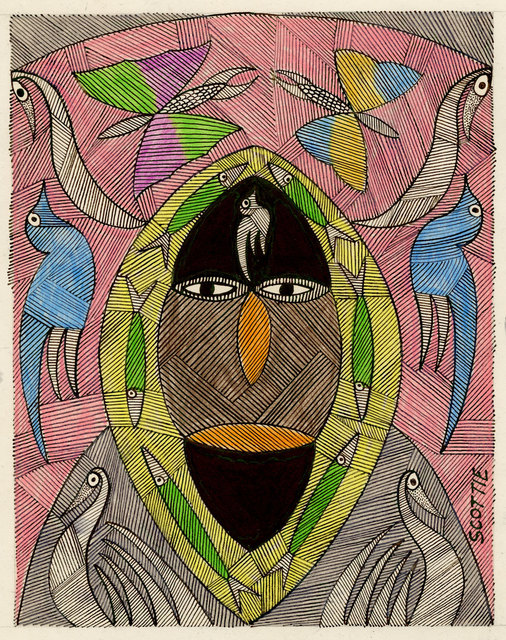
Scottie Wilson, Geometric Face 3
Bowness does talk about the psychological and socio-economic factors that can impede the artist’s journey to success. These factors, he ascertains, play a huge part in whether an artist really can make it to the top. For example, neither Van Gogh, whose mental health issues became a huge barrier, or Gauguin, who simply could not be in the right place at the right time, achieved acclaim or success in their lifetime. This says a lot about the journey for outsider artists – historical and contemporary – who in many different ways continue to come up against psychological or societal factors that will impede their success. What if they can’t afford – or simply aren’t able to – relocate to a big city where there is a vibrant artistic community? Does this mean that fame is just simply not within their reach?
Another of Bowness’ statements does not sit well in relation to the work of outsiders. He says that:
“The creative act is a unique and personal one, but it cannot exist in isolation. I do not believe that any great art has been produced in a non-competitive situation: on the contrary it is the fiercely competitive environment in which the young artist finds himself that drives him to excel.”
This, of course, raises many questions about the very nature of outsider art, much of which is created in isolation, and is not created as part of a competitive relationship with peers. I disagree wholeheartedly with this statement from Bowness. I think it relegates the act of making art – something so unique and innately human – to a formulaic, almost business-like endeavour.
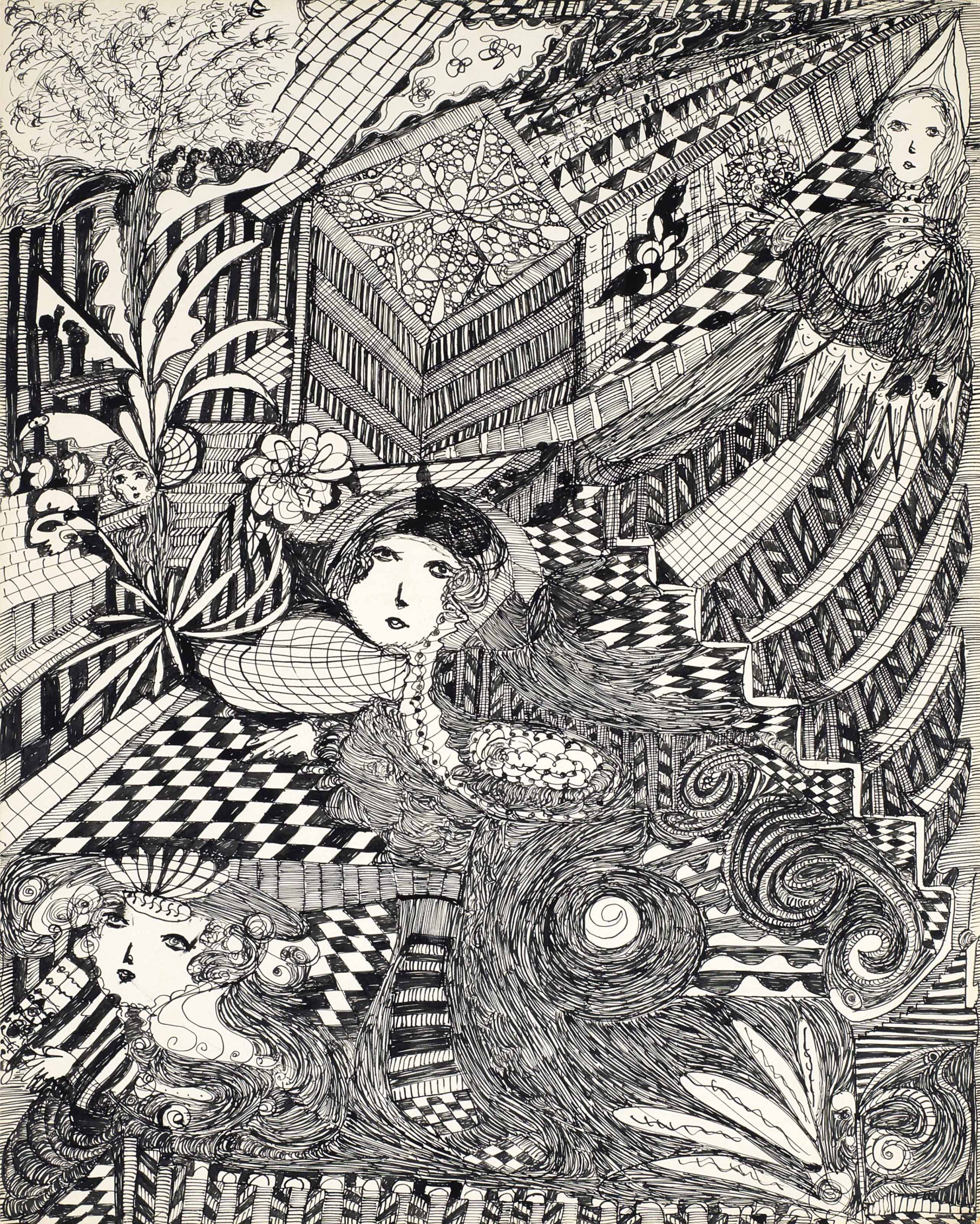
Madge Gill, Untitled
But it is Bowness’ final statement in the text that I struggle with the most. He states that “to imagine that there are unrecognized geniuses working away in isolation somewhere, waiting to be discovered, is simply not credible. Great art doesn’t happen like that.”
From my experience, this is exactly how great art happens. Perhaps the artist is not hidden away, hiding in isolation, but they simply have not been discovered yet. Maybe there are not even trying to be discovered. I think it is naïve to think that we all already know the greatest artists and the greatest art that has ever existed. To think that the best art is already publicly available – we already know where it is, who’s made it, where it’s being made, why it’s being made. I think this simply cannot be true. Think how many people are out there now, all over the world, making art – not for any specific audience, not for any specific purpose, but making, nonetheless. And to think that we cannot consider that to be ‘good’ or ‘successful’ art because it has not already been recognized (by peers, by critics, by collectors, and by the public), just seems to me incredibly absurd.
Bowness’ conditions of success once again outline the rigid, self-feeding system that epitomises large parts of the mainstream art world. Each condition depends on the previous, and all are working in each other’s best interests. This is just one of many examples highlighting how exclusive the art world is as a system. It leaves little room for success for those who are not already on the inside.
My previous PhD research-inspired post, ‘The Cycle of Cultural Consumption’, focused mainly on what sort of culture audiences ‘consume’ and why. It looked at Pierre Bourdieu’s theory of habitus, and how our social and educational background is the biggest influencing factor when it comes to the culture that is available – and interesting – to us. As I continue to read and research, I have turned my attention now to artists and their relationship with the art world. So, rather than a focus on audiences, I am looking at producers and how they interact and integrate with the ‘art world’ as a system.
I have recently been reading two books – Gary Alan Fine’s ‘Everyday Genius: Self-Taught Art and Culture of Authenticity’ and Howard S. Becker’s ‘Art Worlds.’ Fine’s book focuses almost exclusively on work by self-taught artists, whereas Becker’s sociological insight into art worlds and how they work is slightly broader, encompassing not just visual art, but other media too. It is Becker’s broader text that I will reference in this post, as it gives more of a contextual overview of the art world and its players. I will return to Fine’s book in a later post.
The art world – and in this case, I am referring to the art world as the art schools, galleries, museums, curators, critics, and media outlets that make up what we would ‘traditionally’ and ‘conventionally’ see as the art system – is based on an historical, standard system of acceptance. Artists are generally expected to attend art school, following this, they might find representation from a gallery or dealer, in turn having their work exhibited in museums, galleries and online. There is this unconscious system constantly ticking over, and only a few are privy to the pattern. As Becker says: “How do we know the pattern? That takes us out of the realm of gestalt psychology and into the operations of art worlds and social worlds generally, for it is a question about the distribution of knowledge, and that is a fact of social organization.” [1]
In ‘Art Worlds,’ Becker describes four main types of artist – the ‘integrated professional,’ ‘the maverick,’ ‘the folk artist,’ and ‘the naïve artist.’ The integrated professional is someone who has journeyed the correct way through this system. They follow the rules when creating their work, and in turn, their work is accepted by art world aficionados. They don’t create anything too surprising, too unexpected, and this is all great – nothing to upset the status quo here. The title ‘maverick’ refers to “artists who have been part of the conventional art world of their time, place, and medium but found it unacceptably constraining.” [2] So these are artists who have entered the art world in the traditional and ‘respected’ way at some point, but have decided it’s not really for them. They know the system, they know how it works, but what they make – or what they want to make – goes against the accepted norm. I guess in a sense you could consider Marcel Duchamp a maverick (although in some respects his impact on the art world as a whole makes him less of a maverick in Becker’s sense and more of an influencer).
This leaves our ‘folk’ artists and our ‘naïve’ artists. Becker’s understanding of a ‘folk’ artist differs slightly from the ‘folk’ artist we might associate with outsider art. He refers mainly to quilt-makers, and people who have learned particular techniques and crafts from their families or communities. His term ‘naïve’ artists probably more closely aligns with our current outsider art category. These artists “create unique and peculiar forms and genres because they have never acquired and internalized the habits of vision and thought professional artists acquire during their training.”[3] Interestingly, Becker says of the terms ‘naïve’ and ‘folk’ that they do not relate to people. Instead, they refer to the position a person holds in relation to the ‘accepted’ art world. He notes that “wherever an art world exists, it defines the boundaries of acceptable art, recognizing those who produce the work it can assimilate as artists entitled to full membership, and denying membership and its benefits to those whose work it cannot assimilate.”
In many cases, the ‘integrated professional’ is the safe bet. They are someone who knows the system, their work aligns with what is expected; it fits into the canon. Imagine, Becker asks, “a canonical artist, fully prepared to produce, and fully capable of producing, the canonical art work. Such an artist would be fully integrated into the existing art world. He would cause no trouble for anyone who had to cooperate with him, and his work would find large and responsive audiences.” [5]
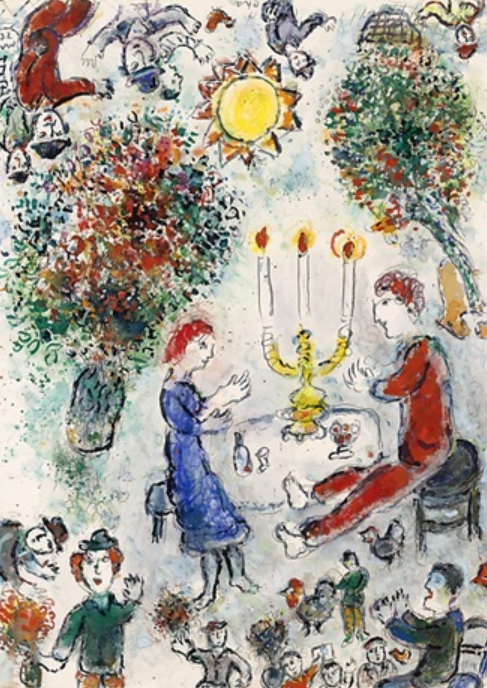
Marc Chagall, Le Repas des Amoureux (The Romantic Dinner) (courtesy of http://www.artnet.com)
So, yes, a safe bet. But is it the right bet? How do we challenge this? My favourite question: who gets to decide? Well, it is, it seems, the decision of those who have travelled the ‘integrated professional’ route: “conventions known to all well-socialized members of a society make possible some of the most basic and important forms of cooperation characteristic of an art world.”[4] Becker mentions Russian philosopher Mikhail Bakhtin’s discussion of the standard of taste, “when he remarked that while what made art great was a matter of opinion, some opinions were better than others because their holders had more experience of the works and genres in question and so could make finer and more justifiable discriminations.”[6]
All decisions are made by certain people at a certain point in history. Decisions about whether a piece of art is accepted into the art world generally has no relation to the aesthetic quality of the work. We know this because “art worlds frequently incorporate at a later date works they originally rejected, so that the distinction must lie not in the work but in the ability of an art world to accept it and its maker.”[7]
All of this thinking about systems and how we mould ourselves to fit them – not just the art world, but a whole host of other societal systems (the education system for one) – had me thinking about something someone said at a conference I attended last week. The conference was about collections of patient created art work in Europe, and so there was a strong focus on mental health, stigma, and the ethical exhibiting of work by people who historically were ‘locked up’ in huge psychiatric institutions. In one session, one of the panellists said that a person experiencing mental health issues shouldn’t be attempting to fit in to a societal system that has been created by ‘well’ people. (It is like that age old adage – if you spend your whole life trying to teach a fish to fly, it will always feel like a failure). Instead, we should seriously be thinking about how our societal systems work, and within these existing systems, we should be consciously making space for people who for whatever reason don’t – or can’t – fit what we consider to be the ‘norm.’
“Who tries things first? Who listens and acts on their opinions? Why are their opinions respected? Concretely, how does word spread from those who see something new that is worth noticing? Why does anyone believe them?”[8]
Thank you for taking the time to read this post. As part of the PhD research process, I am really keen to hear from anyone who has any thoughts on the subjects I am covering in these posts – whether you agree, or strongly disagree! I am particularly keen to hear from artists about their experiences of trying to enter the ‘art world’ (whether this has been positive or negative). You can drop me an email: kdoutsiderart@yahoo.com, or send me a tweet: @kd_outsiderart.








 KDOA
KDOA 