Tag: koestler trust

  • Review: Koestler Voices, New Poetry from Prisons

    Review: Koestler Voices, New Poetry from Prisons

    In this post, writer Nick Moss reviews the Koestler Trust’s latest poetry pamphlet, Koestler Voices: New Poetry from Prisons. The collection was published to coincide with the Koestler Trust’s latest national exhibition, ‘Inside,’ which appeared at the Southbank Centre until 15th November 2017. The Koestler Trust is an arts charity that supports prisoners, ex-prisoners and detainees to express themselves creatively.
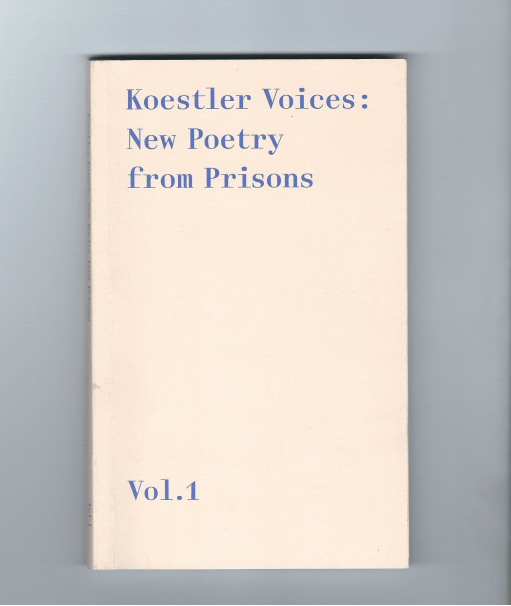

    koestlervoices

    “I should declare an interest at the start, insofar as I have 2 poems in the book. However, all the other works are new to me and I have no personal knowledge of any of the authors.

    This volume was prompted by the reaction of exhibition visitors to the poetry curated by Benjamin Zephaniah in the 2016 Koestler Trust exhibition. The essence of the poems is captured by Benjamin Zephaniah in his introduction, where he comments that “These poems are absurd and strange, they are light and heavy, they are intense, intellectual and playful. They are honest.”

    In a recent Guardian article on the Teach First and Unlock projects to introduce graduate prison officers (The Guardian 9 November 2017) one of the graduates interviewed reported his first time on a wing: “I’ve never come into contact with people like this before.” I think it’s important therefore to recognise how important it is to have these poems described by Zephaniah as “intellectual”. We, the ‘people like them’ who fill the jails, are capable of critical thought and reflection. If ‘intellectual’ simply connotes a level of prestige acquired through academic qualification then it has no essential meaning. If it applies to anyone engaged in a critical analysis (in this case of the institutions which contain us) then prisoners such as the writers here are more deserving of the label than the blinkered, knee jerk civil servants who draw up Ministry of Justice policies.

    address-book-2246444_1920

    The book is divided into 4 sections – Inside, Outside, Portraits/Pictures, Letters/ Confessions – and this review can only attempt to give a snapshot of each section.

    The poetry covering Inside moves from despairing to defiant. One writer focuses on the song of a nightingale he hears at Dartmoor Prison, another gives us a picture of ‘the weans runnin riot/ mair interested in sweets’ in the visiting hall. ‘Networked Gym-Fit Recidivist’ captures the ‘nonchalant callousness’ of ‘a prison officer bellowing’ and is scathing about the standards of prison healthcare and the point of it all, concluding, ‘It’s just a  scam, the wrapper’s off.’ Many of the poems in Inside are about looking out; the view of outside from the cell window. Outside can be a strange place. I remember standing in the yard at Belmarsh looking at the block of flats in Plumstead I’d lived in 10 years ago. Outside is where time hasn’t ground to a halt. Outside is the ‘sweet remembered earth’ that Bob writes of in Lockdown. From outside Leslie tells us ‘sunshine shone/through the window casting/ a shadow of bars / unto his appeal papers.’

    The Outside section opens with the brilliant ‘Killie Bus Tales’- written in Scottish dialect – ‘drinkin cans a Super n Frosty Jacks (ah wish ah hudnae sat as close tae the back.)’ There are several poems that experiment with Scottish dialect. They are written with a confidence and dry wit that suggests the authors have been enjoying Irvine Welsh and James Kelman along the way. We also get to see the impact of jail time on the families left behind. Graham’s heart-breaking ‘Empty Chair’ is a cool, carefree ode to summer madness, until we reach the end:

    empty chair, warmth of sun

    cold beer, the clink of ice in mum’s spiced rum

    barbeque smoke mixing with skunk

    tapping of feet to Fool’s Gold Funk

    children laugh splashing without a care

    daisies and bluebells in their hair

    but no one mentions that empty chair.

    Some of the poems are playful, like Jacinda’s ‘Animal School’, where ‘Wonger drank from the toilets/ And everyone was late,’ and Jonathan’s ‘I Built a Rocket Ship.’ Others have a real fury; ‘See Nothing, hear nothing, speak nothing’s’ tale of ‘smart uniforms and shiny boots/ dragged and kicked and took me away/where no one will hear and no one will see/ and now, I am nothing.’
    adult-1850177_1920

    Portraits and Pictures is perhaps the most powerful section, with the poets digging deep to capture aspects of their friends and families, building narratives of lives where people come and go, stand, fall, fail and stand up again. ‘The Piano Player,’ with ‘hooch fuelled/ male voices/full of angry/jobless depression,’ Guiltfoot Ron: ‘He’s got an angry knee/ and an eyeful of fear,’ Dys-Leg-Sarah who sees ‘Words squirming like wriggly squiggly worms on a page.’ These are wonderful poems, capturing the essence of vulnerable, raw lives in just a few lines.

    Letters/ Confessions contains work which is heart-breaking, and work which is disturbing (in its proper sense of disrupting ordinary perception, shaking the reader’s view of things.) These are poems of loss, ‘Tortured/By Wondering how you are’; ‘…eager to forgive/ In the midst of our own little dust storm.’ Poems also of defiance: ‘You rained your fists on me/ endless thumps you hoped would break me/They are now my bricks.’ One of the strongest and strangest poems is Leon’s ‘Understand Me,’- ‘Understand me arresting the terrorisms of the night/over breakfast I’ll let them loose in the kitchen.’  Leon’s poem has the down-at -heel surrealism of Adrian Henri, but, most importantly, when it says ‘Understand Me,’ it does so on its own terms. ‘Understand me locking the door at midnight/throwing the key away. Later I will climb in/through a window.’ This poem could stand for the book as a whole; prisoners saying ‘Understand me – but understand me as I am, not as some caricature of a prisoner you have as an idee fixe.’

    Koestler Voices shows prisoners thinking hard about who they are and where they are. As prisoners and ex-prisoners, we have no choice but to do so. Perhaps this volume will stand as proof that we might also be worth listening to.

    By Nick Moss


    Koestler Voices: New Poetry from Prisons is available for £10 from the Koestler Trust, 168A Du Cane Road, London, W12 0TX. Click here to visit the Koestler Trust’s website

  • Art by Offenders: Strength, Vulnerability, and Forgiveness

    Art by Offenders: Strength, Vulnerability, and Forgiveness

    Above image: Lost Fruit | Thornford Park Hospital, The Tolkien Trust Silver Award for Drawing


    The Koestler Trust’s sixth annual UK showcase this year takes the form of ‘The Strength and Vulnerability Bunker’, curated by Mercury prize-winning rapper, Speech Debelle. The national exhibition, which is moulded yearly by a different group or individual, displays work by prisoners, offenders on community sentences, secure mental health patients and immigration detainees. 

    This year’s theme – the relationship between strength and vulnerability – was chosen as it threads together the work on display with Debelle’s music. Debelle’s political interventions (which include three albums pinpointing areas of social justice and injustice), make her the perfect candidate to provide a voice for those whose lives are being transformed by the power of art.


    “The Koestler Awards represent an injection of creativity, humanity and empowerment into the closed world of prisons” – Stephen Shaw, Prisons and Probation Ombudsman.

    This year’s exhibition has some strong, undeniably prison-centric, work. ‘Untitled’ by Patrick from HMP Leeds starkly shows the divide between the inside and outside. In it, a figure looks solemnly (although this is only an assumption, as all we can see is the back of his head) through the bars of what we can ascertain to be his cell. On the ‘outside’, skyscrapers loom above luscious green trees and two magpies – which symbolise joy in the well-known rhyme – perch on the prison boundary. There are, however, signs of life and hope within the confines of this prisoner’s cell. A butterfly rests on an arm, and two ladybirds and a spider scale the inside of the bars.

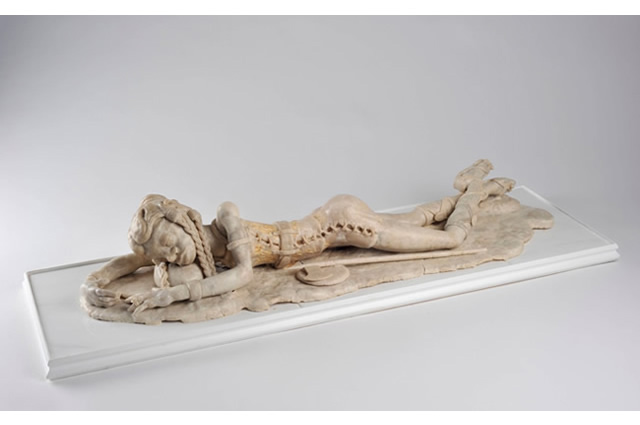
    Sleeping Brunnhilde | Derbyshire Probation Service, The Anne Peaker Platinum Award for Sculpture
    Sleeping Brunnhilde | Derbyshire Probation Service, The Anne Peaker Platinum Award for Sculpture

    ‘Not of the World’, by an inmate at HM Prison Cookham Wood, reflects “how far away the earth is when you’re locked up. Also, how far anything and anyone are from your reach in jail.” These are the artist’s own words. In the piece, a figure, plagued by darkness, looks longingly (again, maybe my assumption) towards the whole of the earth which sits uncomfortably out of reach on the horizon line.

    These two pieces quite obviously describe feelings of isolation, incarceration, and the loss of freedom. But there are more subtle pieces. ‘First Hour’, by an artist from Prison Littlehey and made entirely from chicken bones and glue, represents the feelings of a prisoner during the first hour of being ‘inside.’ Crouched over, the perfectly executed figure is both strong and incredibly vulnerable at the same time. Single chicken bones are extremely robust, but put them together as has been done with this sculpture, and they are fragile; the piece could topple or crack at any moment.

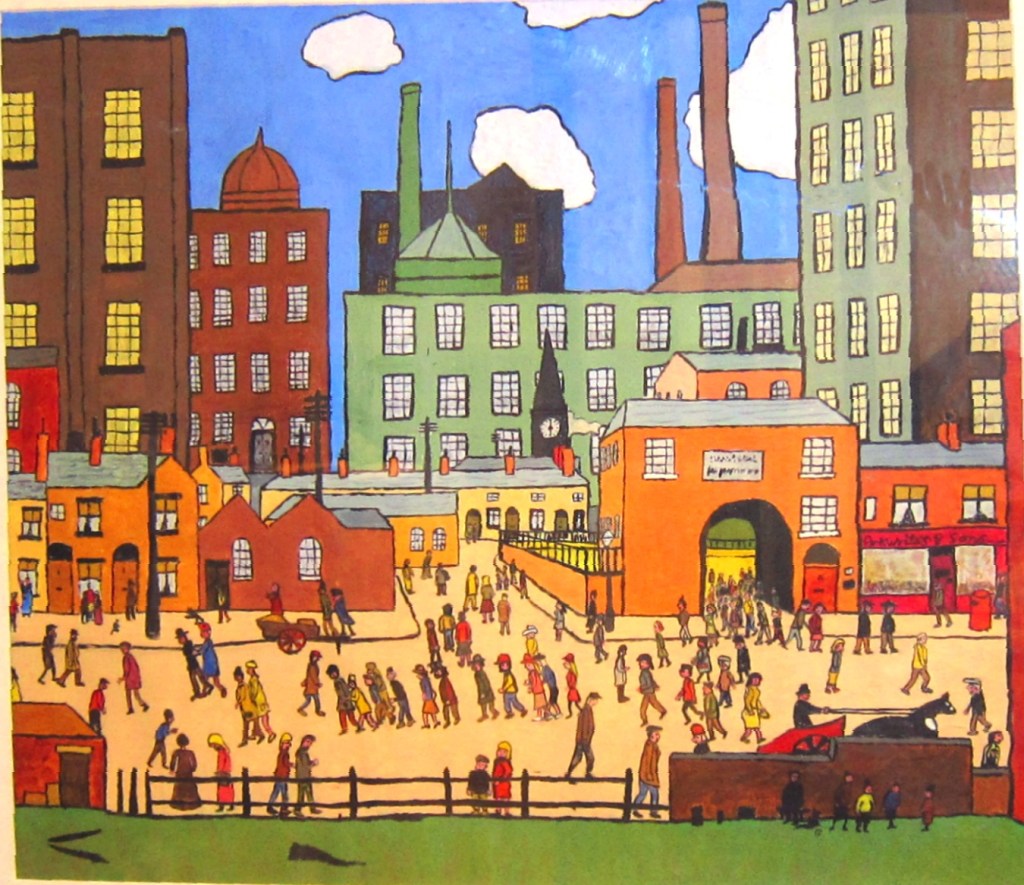
    The Dancers | HMP Brixton, The Patrick Holmes Platinum Award for Oil or Acrylic
    The Dancers | HMP Brixton, The Patrick Holmes Platinum Award for Oil or Acrylic

    Similarly to ‘First Hour’, other works on display are made out of any material that the artists could get their hands on. ‘Escape with a Book’, by an artist at HM Prison and Young Offender Institution Exeter is made entirely from soap, with the hands stained using tea bags. It was probably carved, as suggested by the exhibition host (an ex-offender employed to enhance the audience’s experience whilst gaining CV building skills), using a smuggled razor blade – something which makes it all the more intriguing. The artist was prepared to create this piece regardless of the rules.  ‘Sleeping Brunnhilde’,  by an artist from the Derbyshire Probation Service, was created using bread and PVA glue; such simple materials.

    The works on display were chosen from more than 7000 pieces of art created by prisoners, secure patients and immigration detainees, and each and everyone follows a personal journey reflecting on the meaning of both strength and vulnerability. The arts have been proven, more so in recent years, to be an incredibly effective way of engaging with offenders who are feeling isolated or alienated from mainstream education and employment.

    Creativity flourishes in prisons, more so than in any other institution; perhaps as a result of the physical incarceration.  This exhibition provides an opportunity for the artists to have their talents showcased, and is an example of how prisoners work through their feelings – in this instance strength, vulnerability and forgiveness – as part of their rehabilitation. Creativity and self-expression can often be the key to increasing self-esteem and self-efficacy; all proven factors in reducing rates of re-offending. Not to mention, the works in this exhibition are absolutely fantastic to look at – these artists are incredibly talented. Maybe once they have served their sentences, they can shake off that label of ‘prisoner’ ‘convict’ or even ‘ex-criminal’ and ‘ex-offender’ and instead be known more positively as ‘artists.’

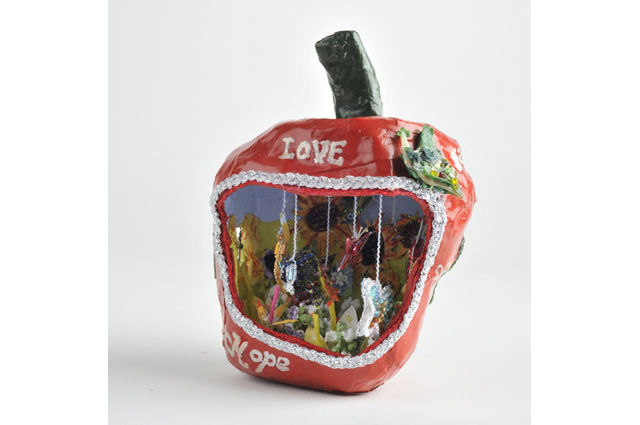
    Garden of Eden, HM Prison Styal, Dalrymple Bronze Award for Sculpture
    Garden of Eden, HM Prison Styal, Dalrymple Bronze Award for Sculpture

    The exhibition is running until 1 December at the Southbank Centre, London. Click here for opening times and other information. 


    Exhibited artists on what the words ‘strength’ and ‘vulnerability’ mean to them

    “Without strength, you can’t go on. Without vulnerability, you can’t grow as a person. “

    “Being able to take a ‘warts and all’ look at myself through art does leave me feeling vulnerable to emotions I’ve closed off for years. However, I feel I’m in a safe environment with supportive peers and tutors. That is the strength of art.”

    “Strength means to me, someone who keeps going and keeps trying, no matter what obstacles they may face. Vulnerability means to me, someone who is human. Everyone is vulnerable and we all deal with it every day.”


    More information


  • Safety Net of Sky: 30th March – 27th May

    Safety Net of Sky: 30th March – 27th May


    The Koestler Trust is currently running an exhibition curated by young people from the Liverpool Youth Offending Service, with help from professional curators.

    The exhibition includes paintings, drawings and sculpture as well as creative writing which were selected from entried to the 2011 Koestler Awards.

    The exhibition is taking place at the World Museum on William Brown Street in Liverpool.

    For more information you can visit: The Koestler Trust or the World Museum