Category: Visionary Environments

  • Kdoutsiderart on Tour: Folk Art Environments

    Kdoutsiderart on Tour: Folk Art Environments

    I can only apologise for my lack of posting lately! Following the busy period of January – March – which included the 5 year (online and offline) anniversary celebrations, things have slid a little. One of the reasons I let things slide was because I have been planning a trip to the southern states of the US. I leave next week, and am heading to New Orleans LA, Austin TX, Memphis TN, and Nashville TN. As well as taking in the sights and culture of these wonderful cities, I am also hoping to squeeze in visits to several folk art environments.

    There are many folk art environments in the south – of course, because much of the most renowned folk art is indigenous to the southern states. I scoured my Raw Vision Outsider Art Sourcebook (the last two editions!), and planned my route. I worked out that I can feasibly visit four of these environments during my trip (I did try to fit more in, but many were a little – and some were spectacularly – out of the way).

    From New Orleans, I am driving West to just outside of Austin, which means a stop off in Houston on the way. In Houston, my plan is to visit the following environments:

    1. Jeff McKissack’s The Orange Show (Houston, TX)

    theorangeshow
    Image courtesy of TripAdvisor

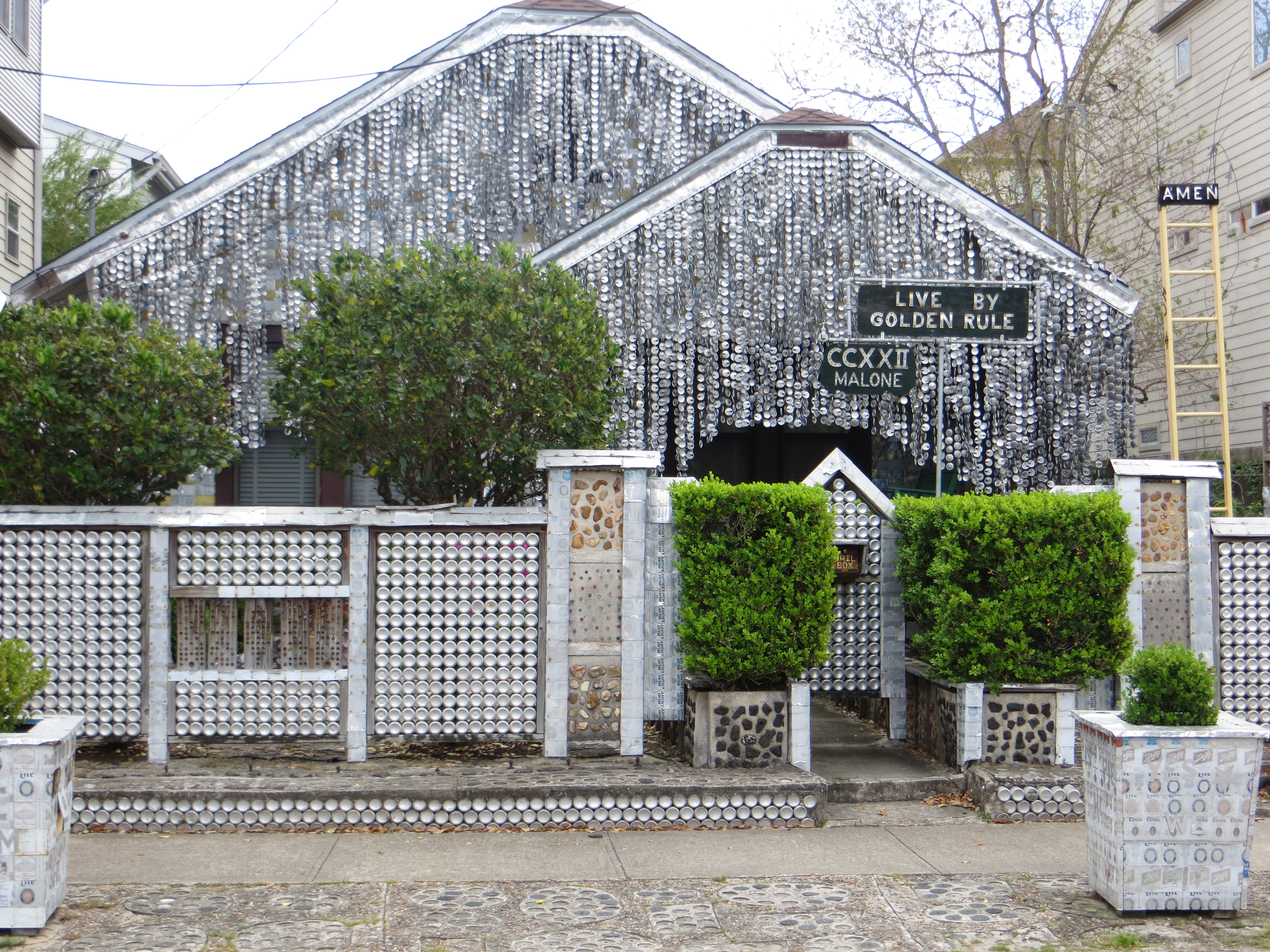
    2. John Milkovisch’s The Beer Can House (Houston, TX)

    beercanhouse
    Image courtesy of Suitcases & Sweets

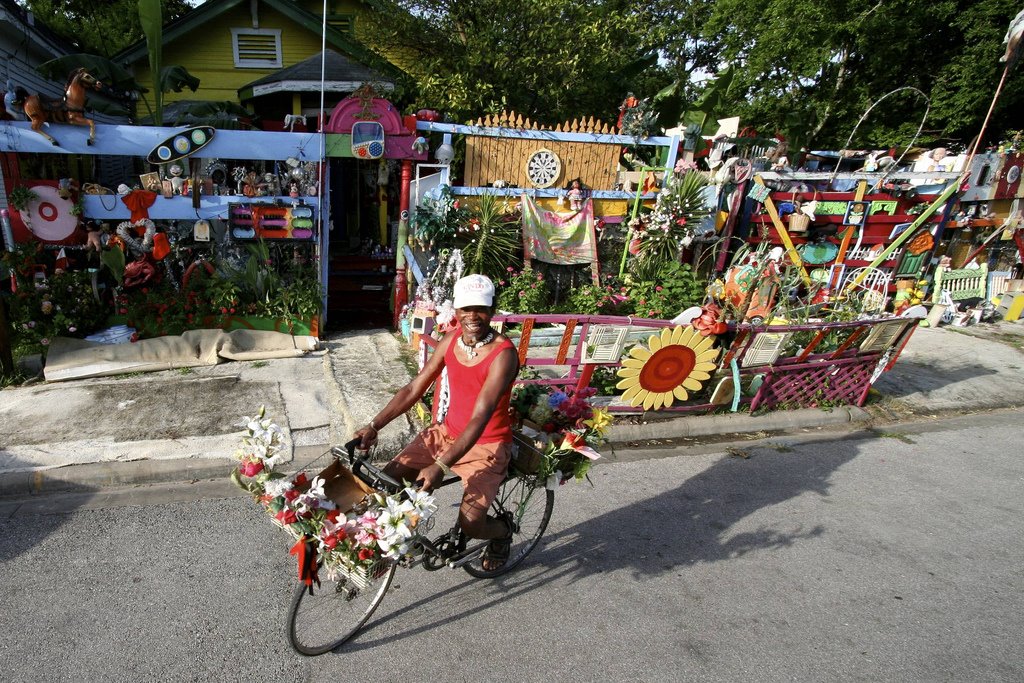
    3. Cleveland Turner’s Flower Man’s House (Houston, TX)

    flowermanshouse
    Image courtesy of Deep Fried Kudzu

    And then, when I’m driving between Memphis and Nashville, I’m hoping to stop off in Brownsville, TN on the way to visit:

    4. Billy Tripp’s The Mindfield (Brownsville, TN)

    billy-tripp-mindfield-1[2]
    Image courtesy of Amusing Planet
    I’m hoping that on my return I’ll be able to share my adventures and pictures with you. If you have any suggestions as to other environments I might be able to stop by at on my route, drop a comment below! See you all soon!


  • Apryl Miller: A Visionary Nest

    Apryl Miller: A Visionary Nest

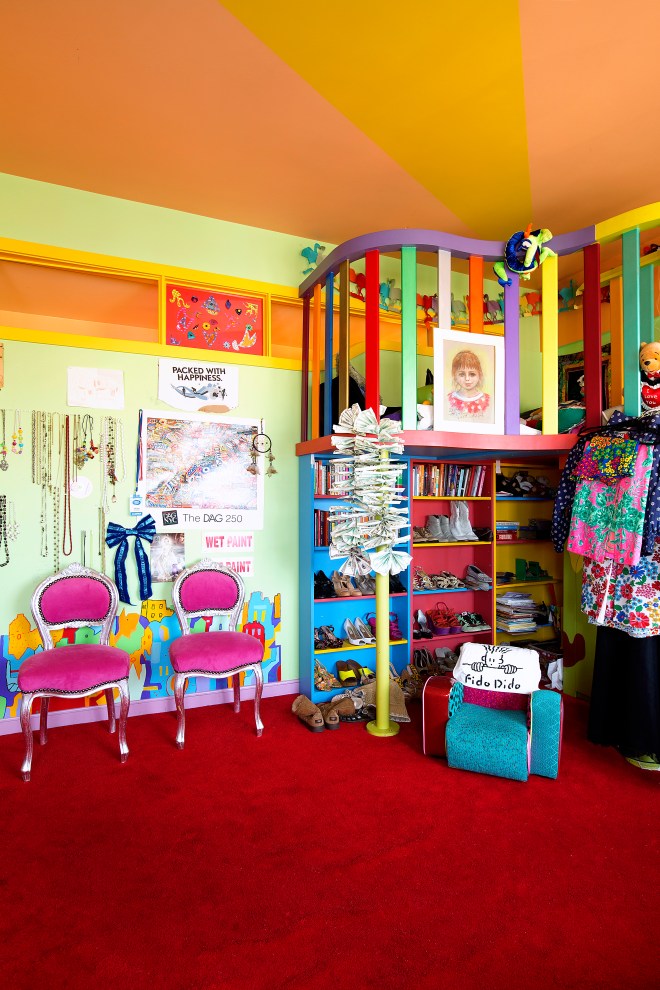
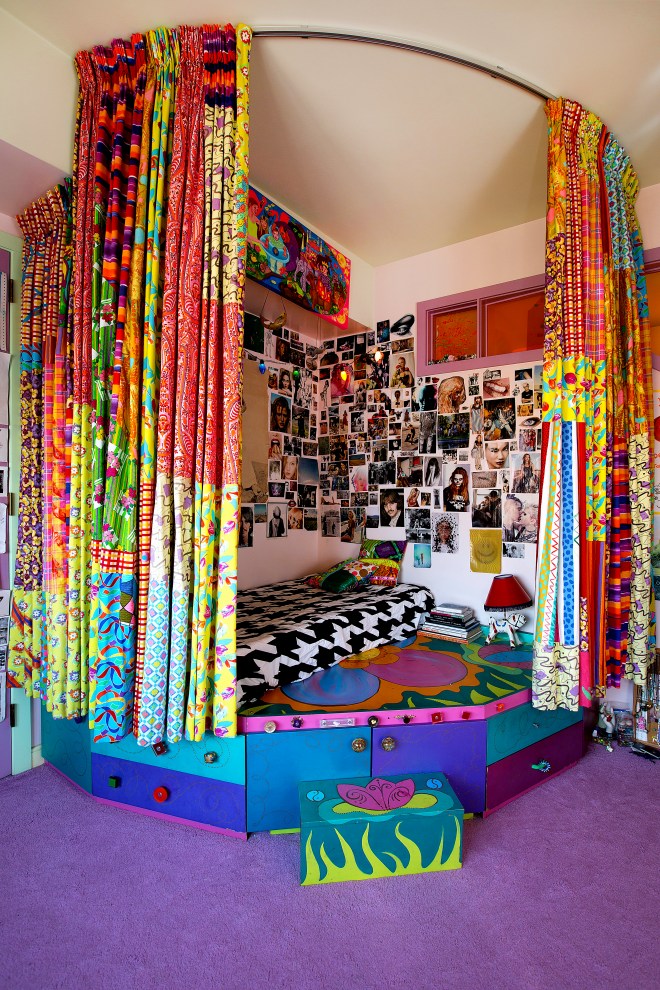
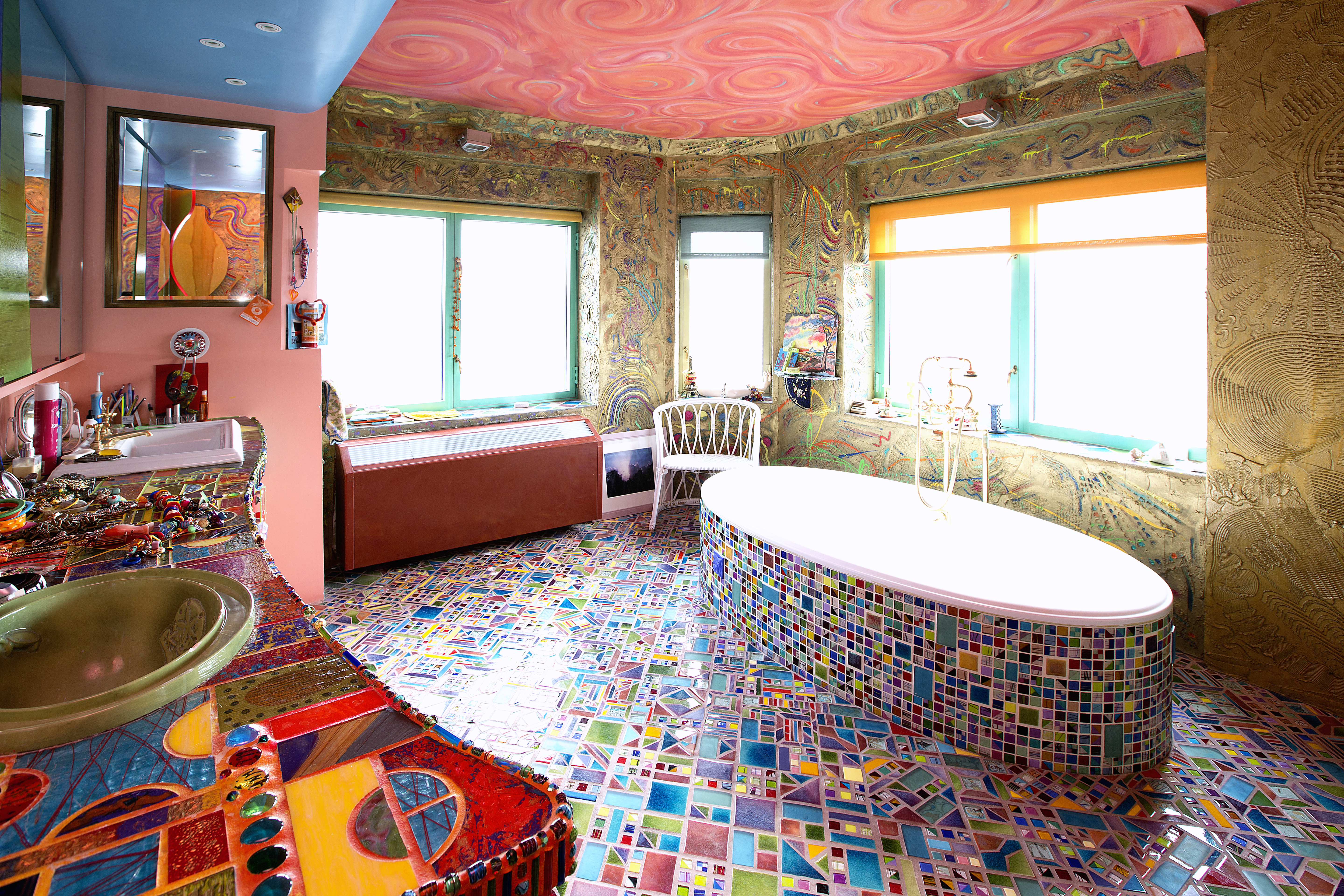
    Apryl Miller credits her artistic career to being raised in a large, creative DIY family. Her work reflects the tradition she was taught as a child; that of making something your own by making it yourself. She came to visual art in later life, crafting a vernacular art environment in which she would raise her young children. In this post, self-proclaimed ‘accidental artist’ Apryl talks about her inspiration and how she came to create her visionary ‘nest.’


    AM 42

    “My journey as an artist is deeply rooted in my childhood. We were a creative, DIY family and we had that attitude, coupled with a belief in the miracles a hand can fashion. We didn’t have a lot of money, but we had a lot of kids and it seems we were always making stuff and entertaining ourselves with different art projects. All our food was made from scratch and we produced both items of necessity and those of more artistic value, like holiday cards and Christmas ornaments. I was steeped in the can do ethos of making things and there was a sense of comfort and pleasure to be derived from all our activities. My work reflects the tradition I was taught as a child, that of making something your own, by making it yourself.

    I was raised in the Pacific Northwest and like many before me, I had to heed the siren call of the bright lights, big city and head out east. I was in a fashion design program in Seattle and I decided that I wanted to go to NYC to finish my degree. I had to find out who I could be and what I might do if I were to head out into the unknown. If I didn’t go, I knew I would always wonder “what if”. I called the airline, and bought a one way ticket to NYC, just like in the movies.

    AM 01 (1)

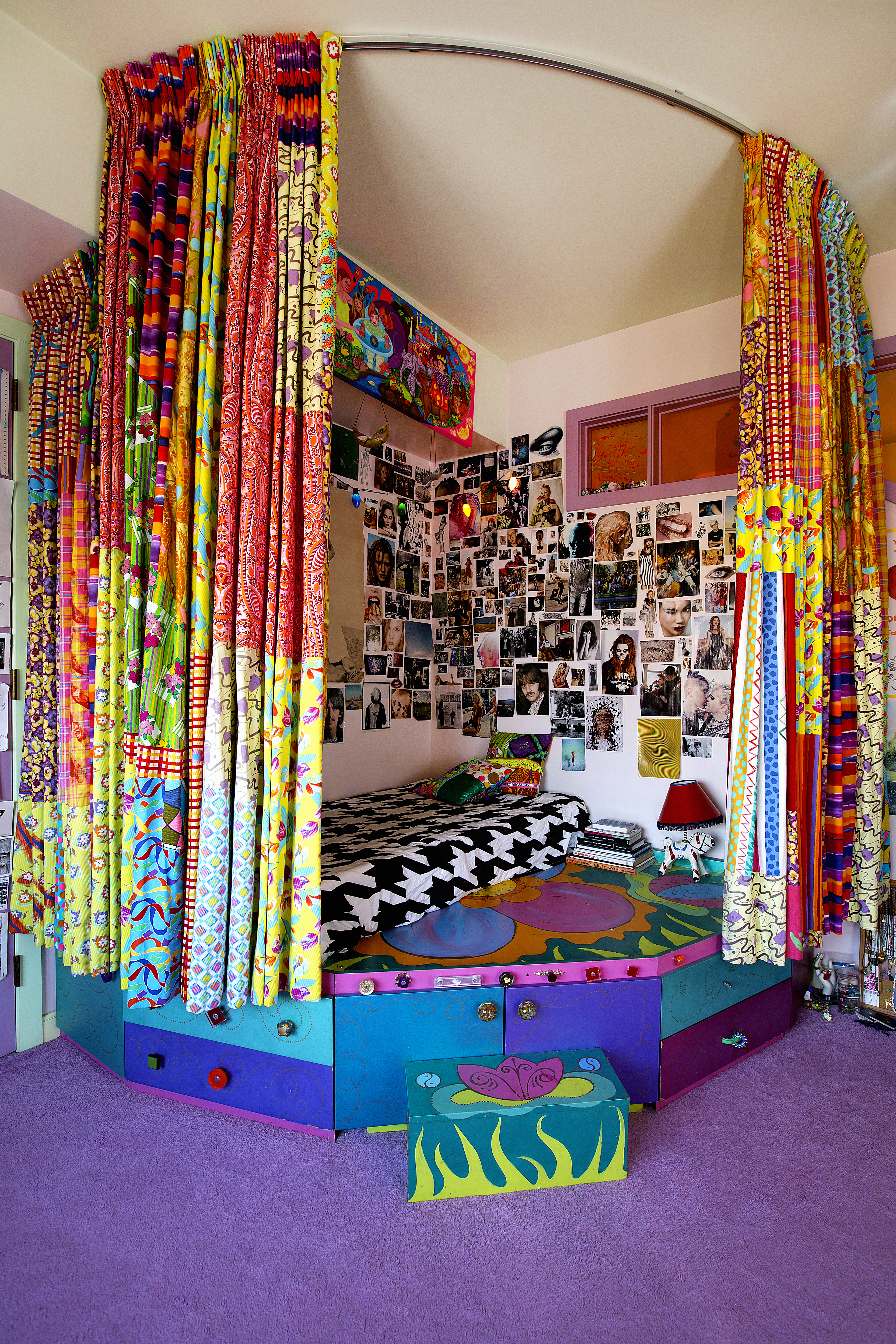
    A lifelong poet, I came to visual art later in life, when the apex of my background resulted in crafting a home for my young daughters. It was conceived as a creative wonderland for their little souls to be nurtured and supported, a place where their imaginations could soar, unfettered. But what I did not factor in, was how it would do the same for me, too, as we lived out our lives here.

    My space has been described in the press as “one of the most immersive, intricate, habitable art installations in the city…it is extremely important when looking at the history of immersive art installations…” And my personal favourite, “Apryl has changed the way we think about living…” Since crafting my home, like a magician with an endless silk scarf, I have continued to produce with an unabated creativity.

    AM 10

    As I worked, I had no grand scheme, no plan beyond making a creative, expressive living space. I proceeded without rules, because I did not know them. I worked intuitively, which is the way I continue to this day. I was a mom making a nest for my children, using the poetry of color, the poetry of asymmetry and banning the language of ubiquity and the colors of black and white. In the process I came to myself as an artist, in a really delightful way.

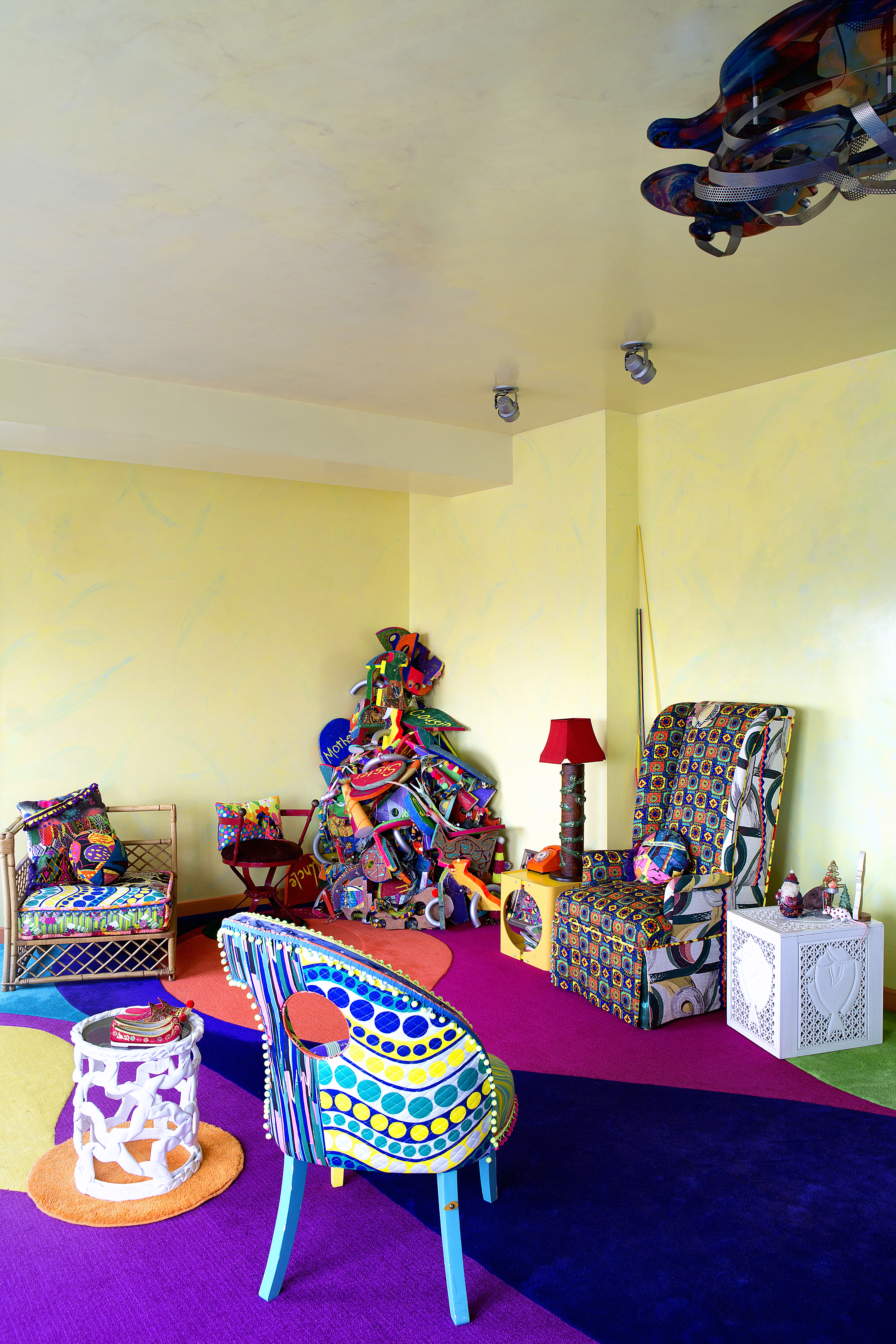
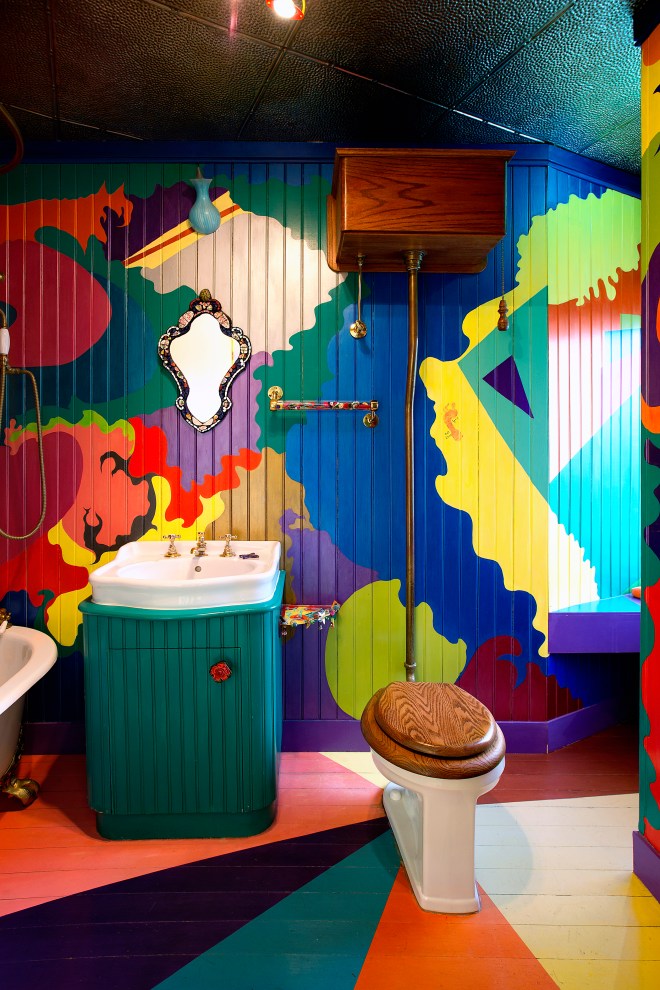
    Most objects were custom made or reworked designs, just for each specific space. An example would be my “Sculptures Masquerading as Furniture”, which are covered in vintage 1960’s garment fabrics. Part of my art is stripping away barriers, and by using garment fabrics I am rendering the experience of furniture more personal and intimate. The concepts behind these pieces and the stories I tell with them takes them to a realm where they transcend furniture. My intention was to create a world unto itself, so people would be captured intellectually and emotionally in the environment. By using few known references, people are able to have a dialogue with the space and to remain connected within it.
    AM 34

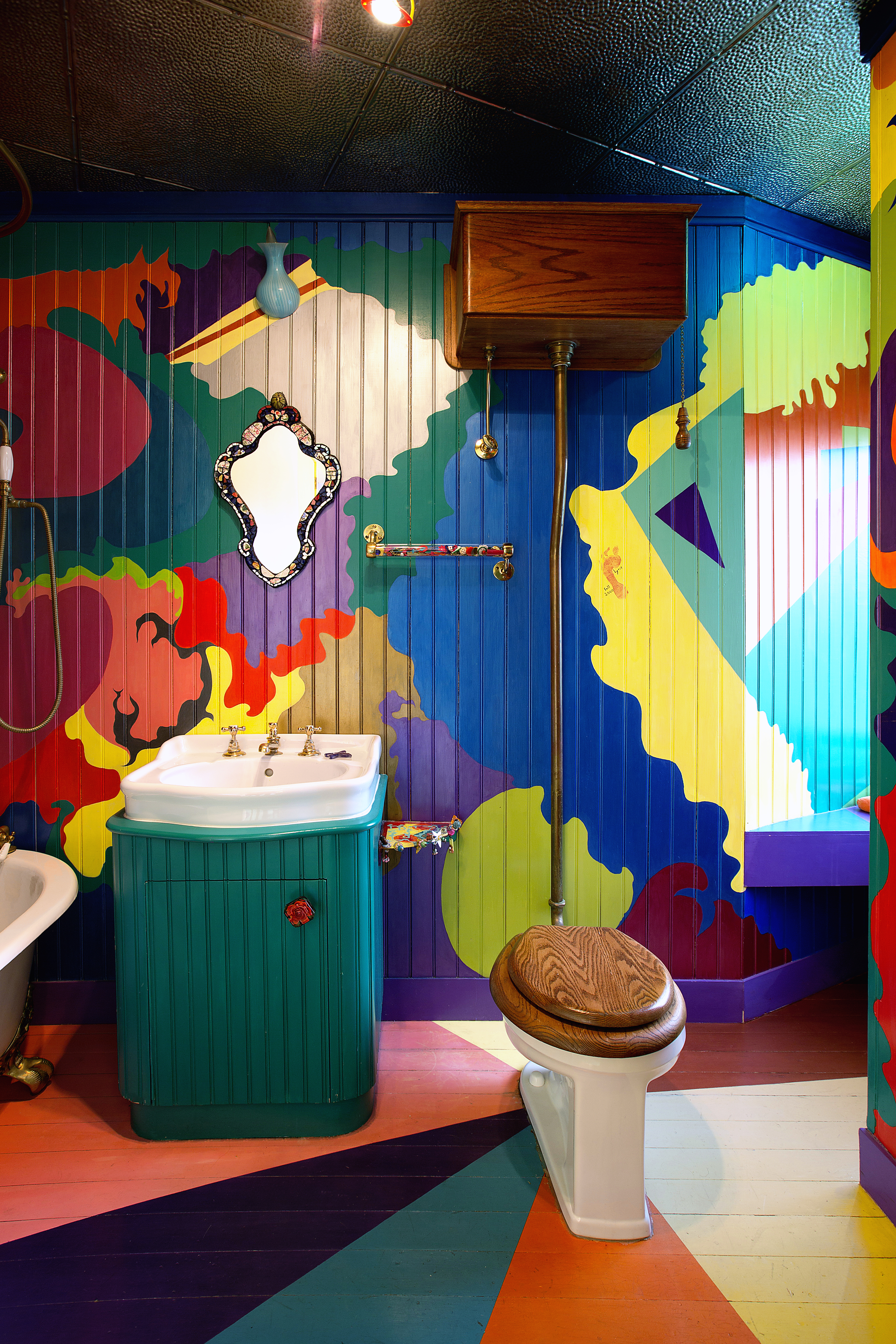
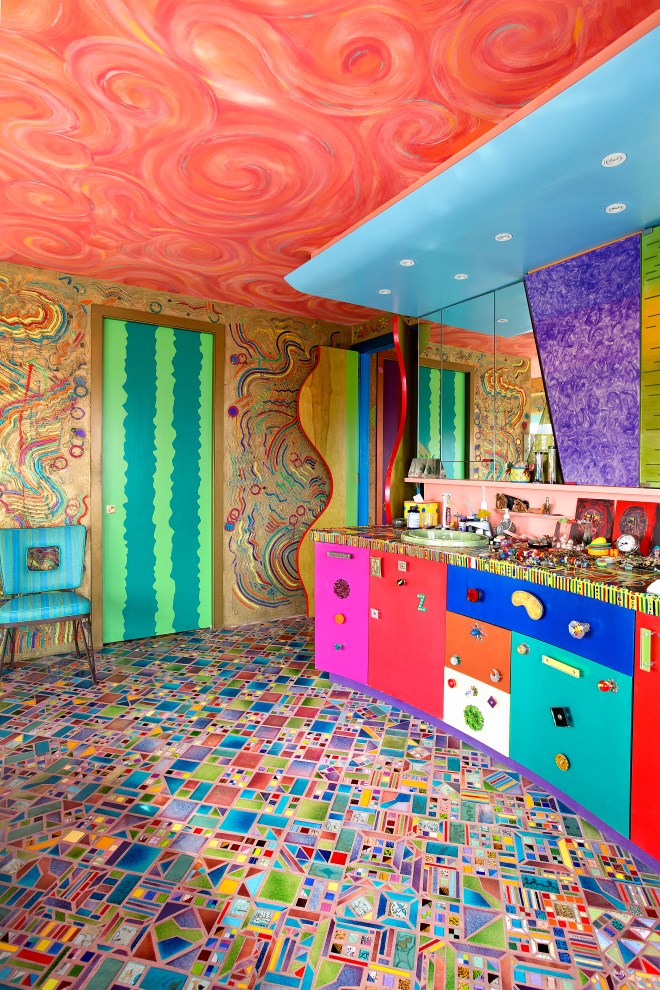
    There are many aspects which distinguish my space from design and place it in the realm of art. The most compelling is that it is about personal expression and everything here is a reflection of my history, experiences and beliefs. There are stories in the carpets, pictures of my children in the kitchen table legs and the messages flow and tumble from room to room. Each space has been obsessively accented through the use of dimensionality, patterns, color and the organic balance of cacophony. When I work, I juxtapose patterns, textures, shapes, materials and colors. By mixing together that which does not belong, a peace is established that contains both energy and calmness.

    My work is about our universal state of imperfection and how it binds us together. There are installations throughout the house that address this topic, most notably in the dining room. It is home to a large installation titled, “The Where and The How Left you and your Silence.” It’s a commentary on the fragility of our human relationships.
    AM 43

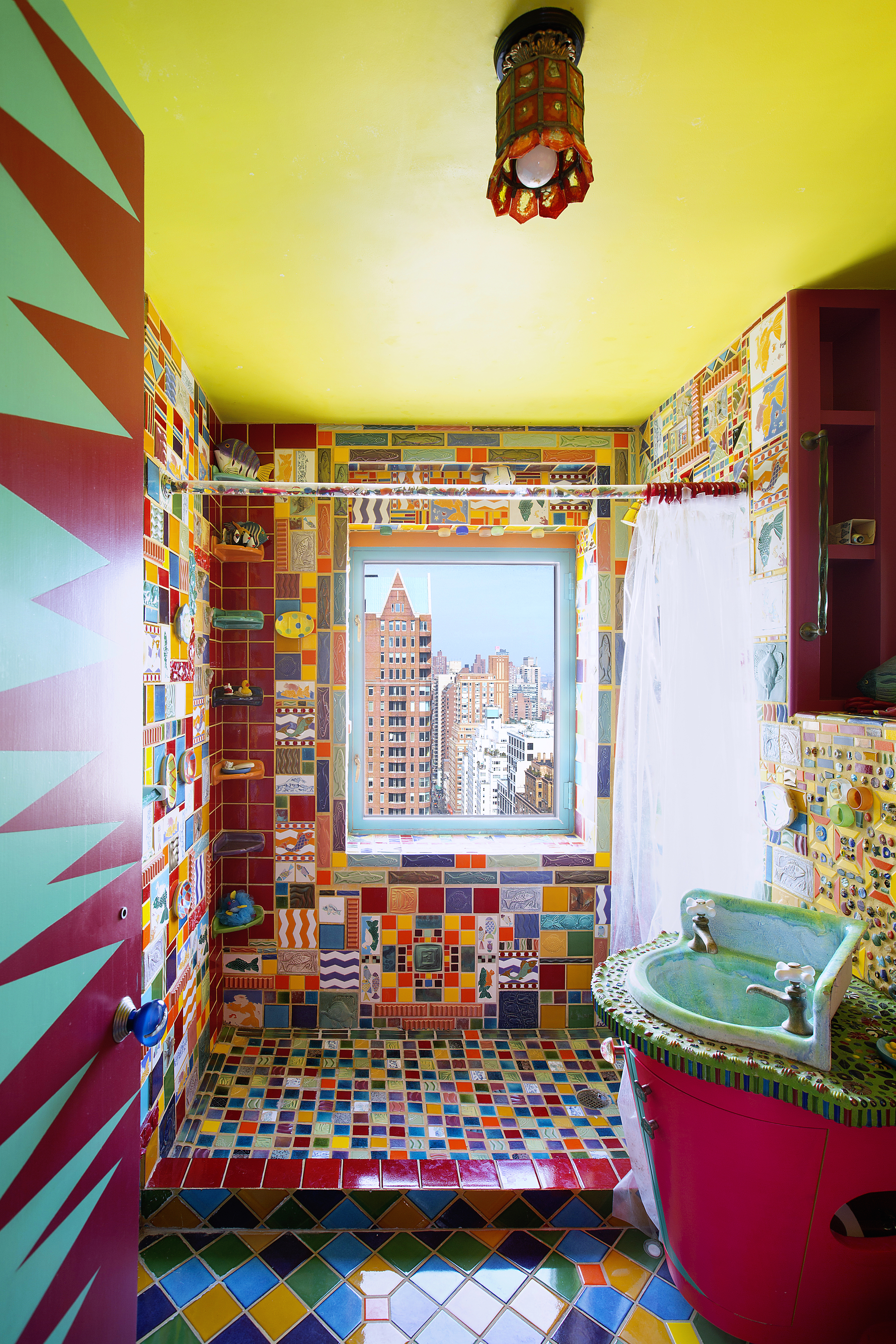
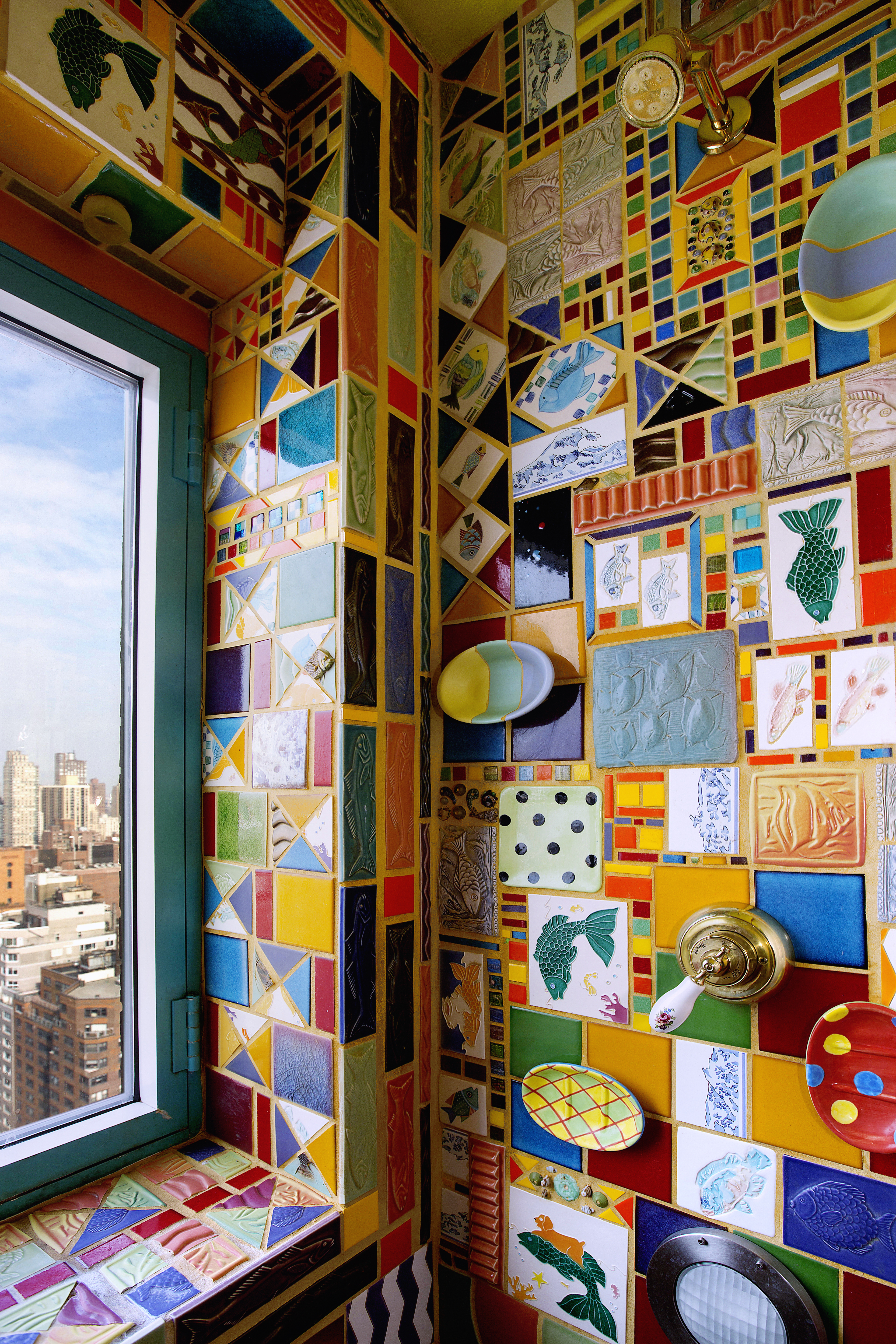
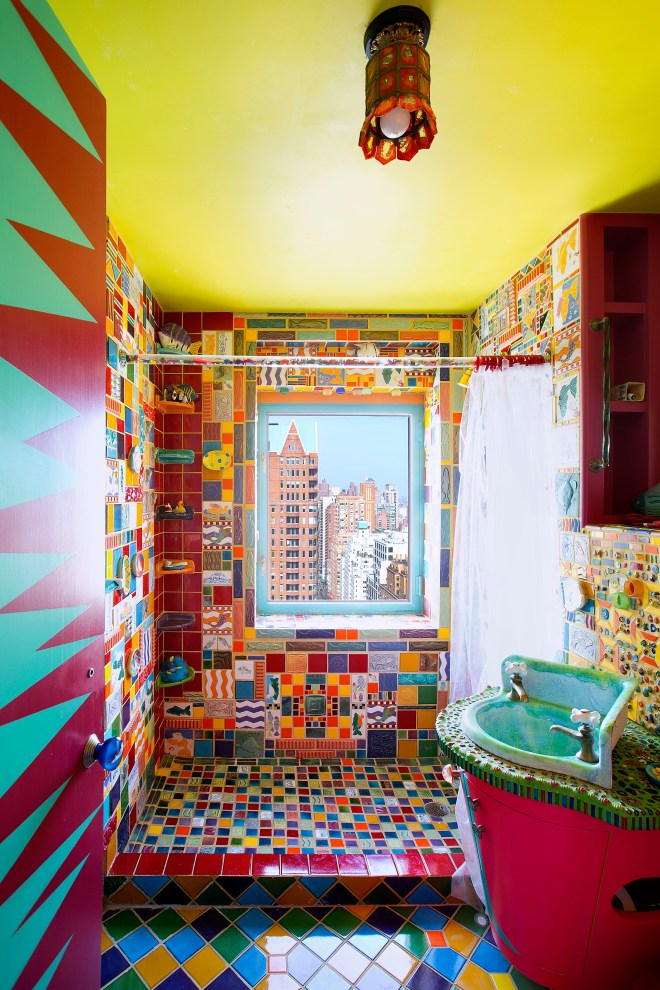
    There are sprawling carpets with tear drops, which is part of my iconography, a child sized loft for one daughter and a stage for the other, over 150 paint colors adorning the walls, with patterns painted inside some of the closets. The bathrooms have custom tile work which I created by cutting up the tiles and reassembling them in my own idiosyncratic fashion. Additionally I drew images on the undersides of clear tiles with Sharpies, continuing the concept of rendering the tiles anew.

    I often think of myself as an accidental artist, as my artistic expression was revealed organically, as I lived my life. As my need for handmade goods increased, my dormant creativity rose to the surface and showed its face to the sun. My story began when I was a small child, and it continued to flourish with the arrival of two more small children, who I desired to protect and nurture, with the full force of my artistic powers. I could not have predicted that I had a latent creativity and no one is more surprised about all of this than me. I hope to continue sharing the story of my space and of my personal work, as I feel it is my calling and I aim to use what God has given me.”

    AM 46

    AM 48 (1)

    AM 49

    AM 51

    AM 52


    Click here to visit Apryl’s website
  • Raymond Isidore: La Maison Picassiette

    Raymond Isidore: La Maison Picassiette

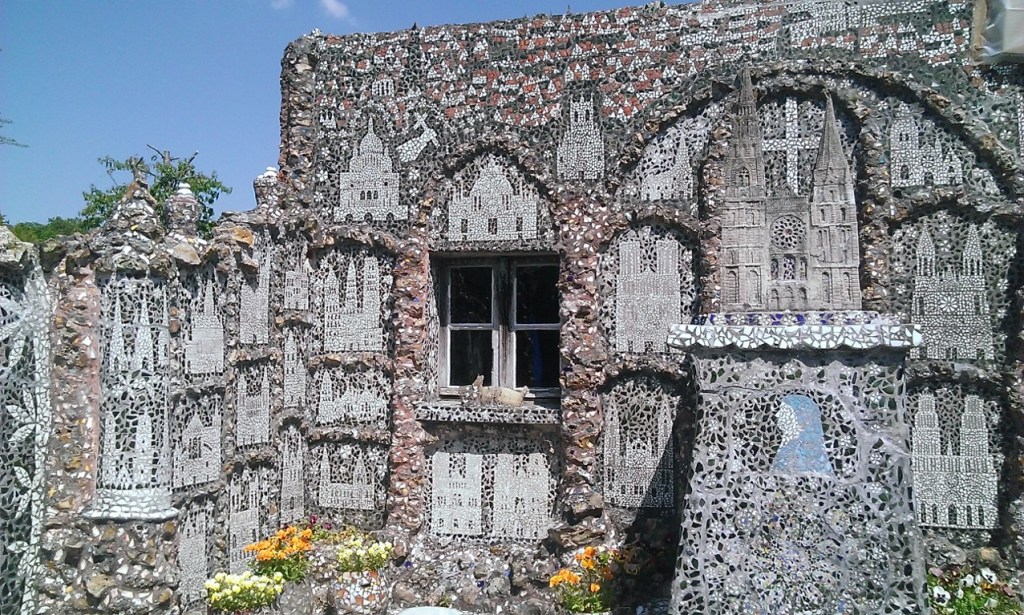
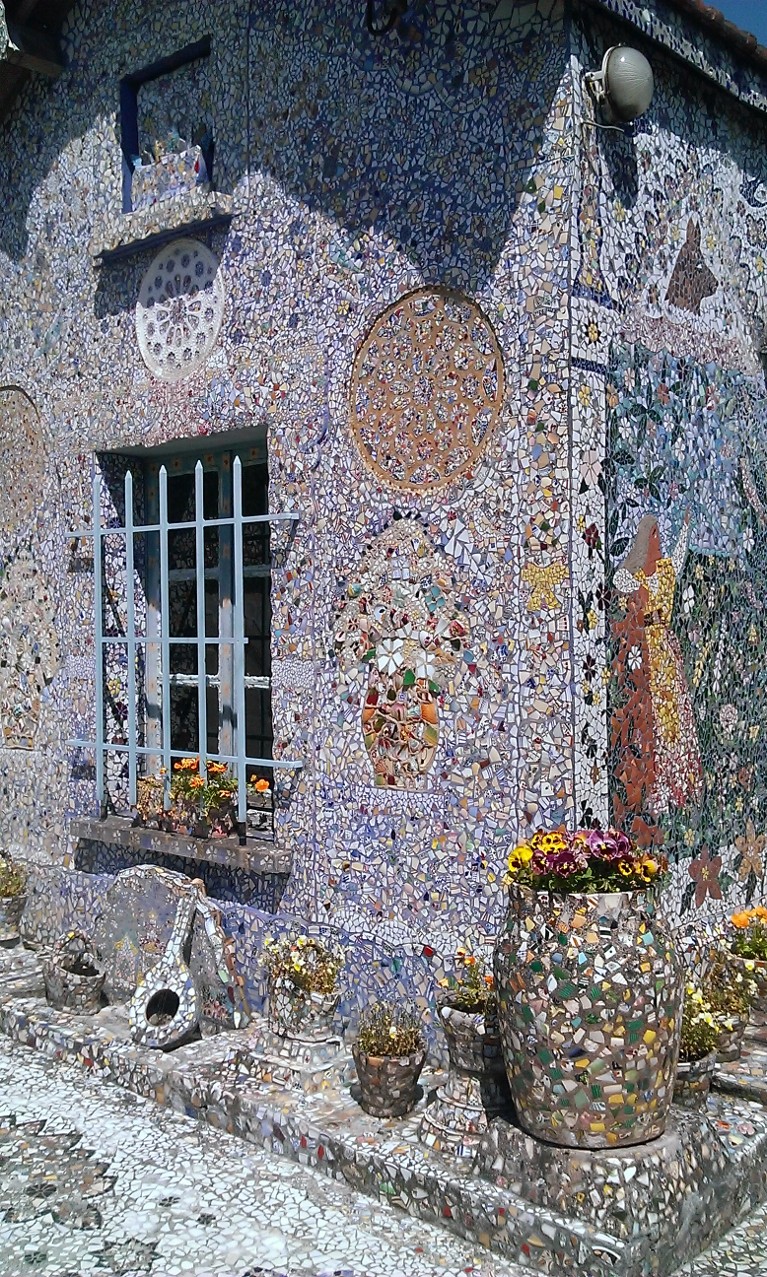
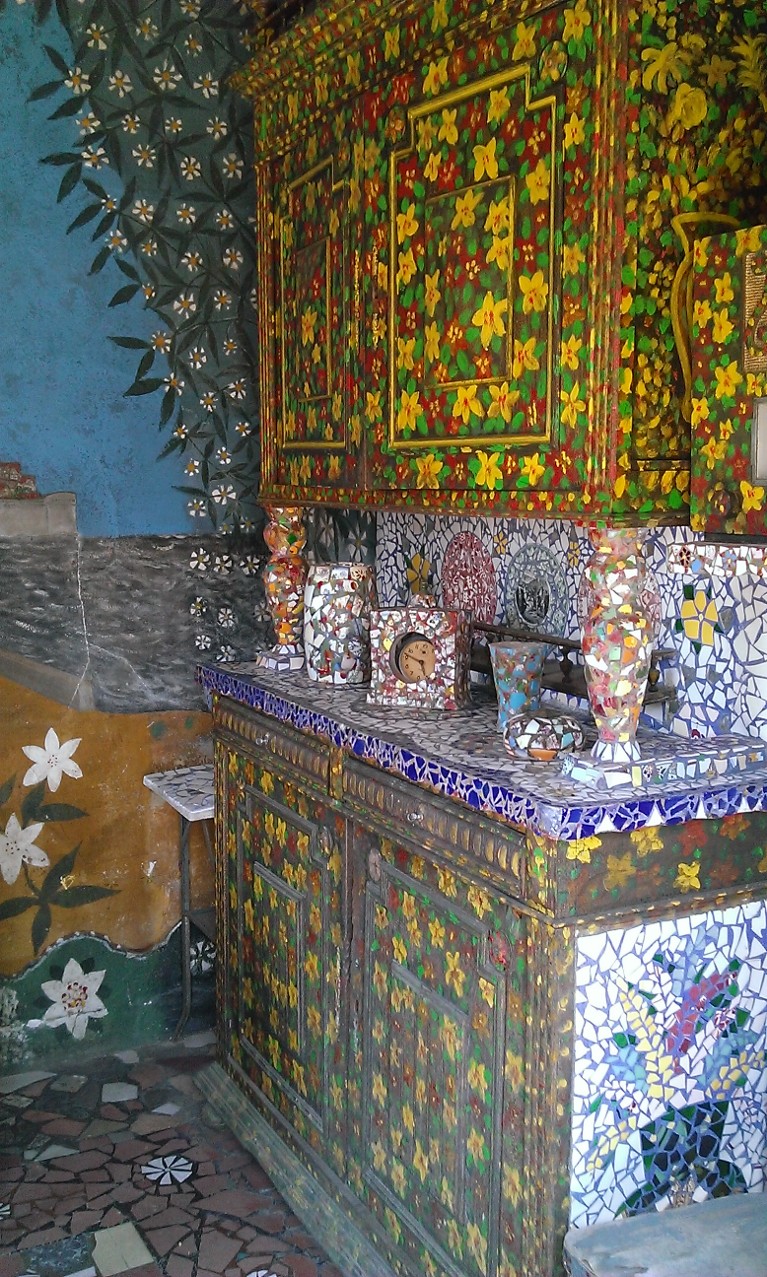
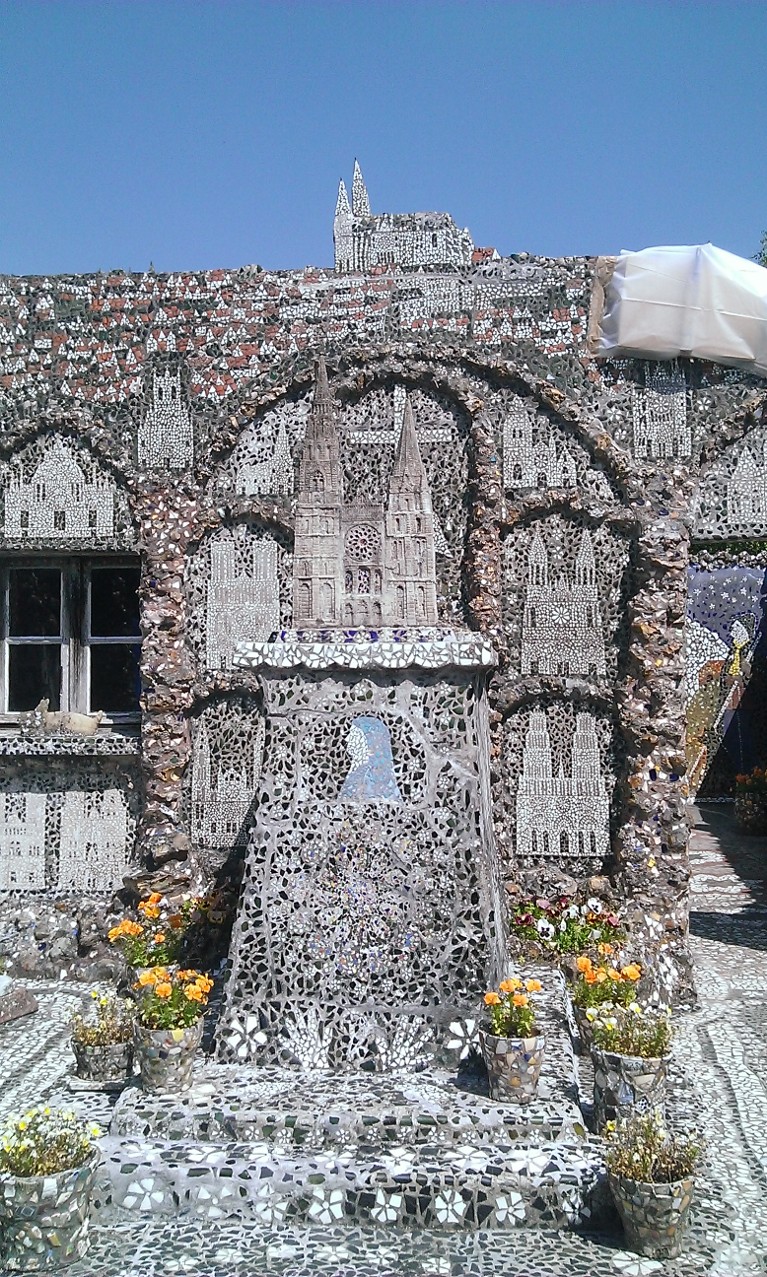
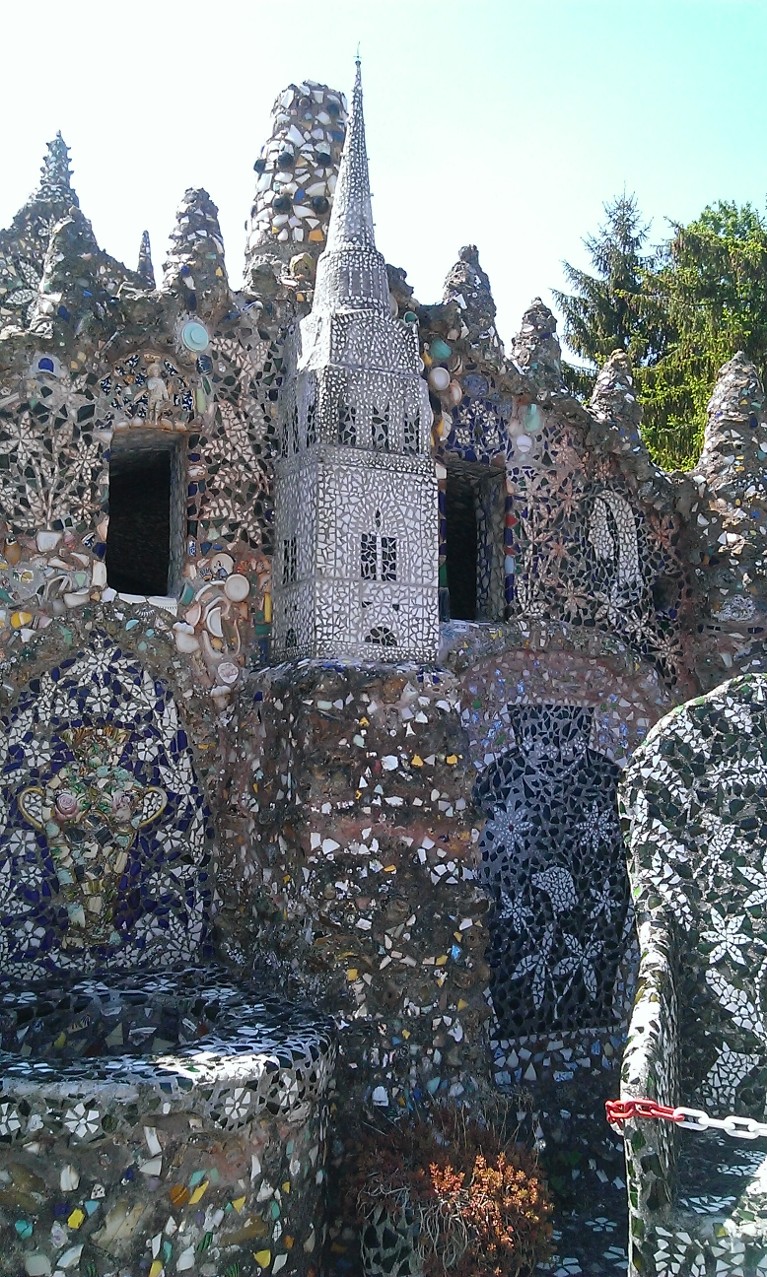
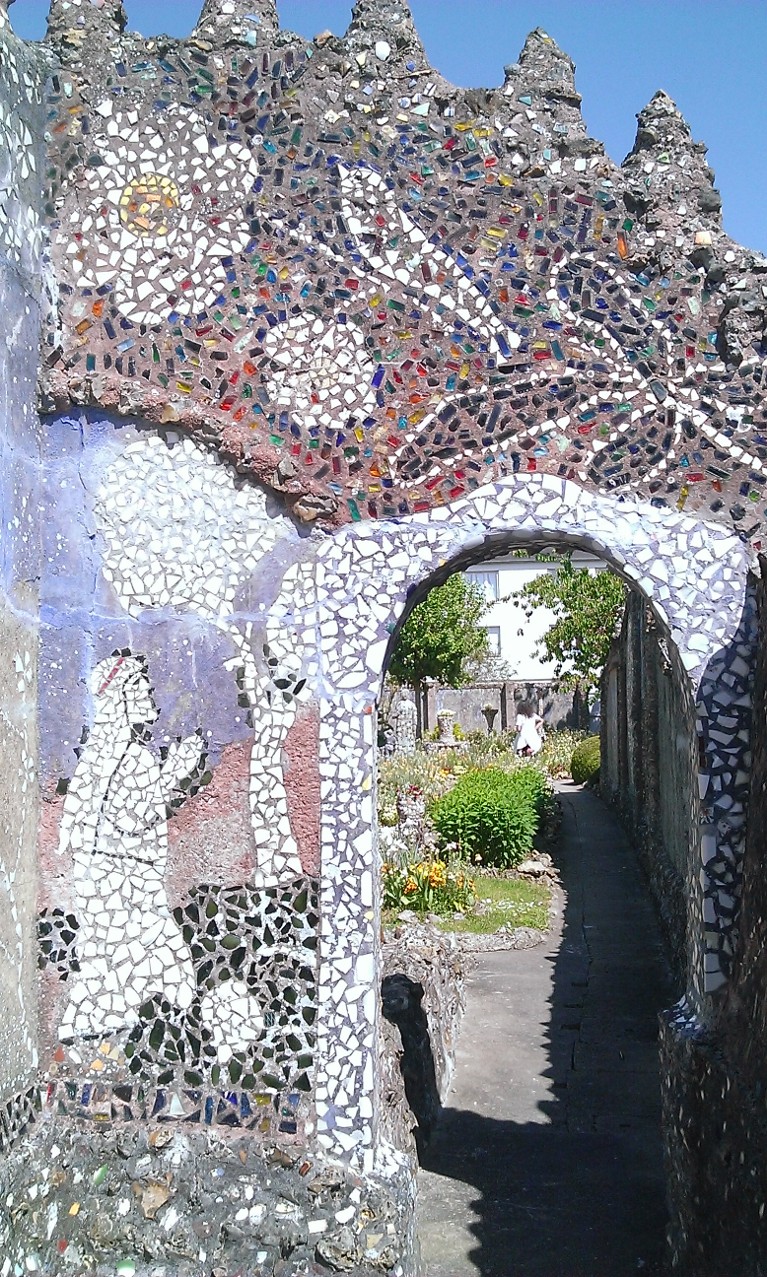
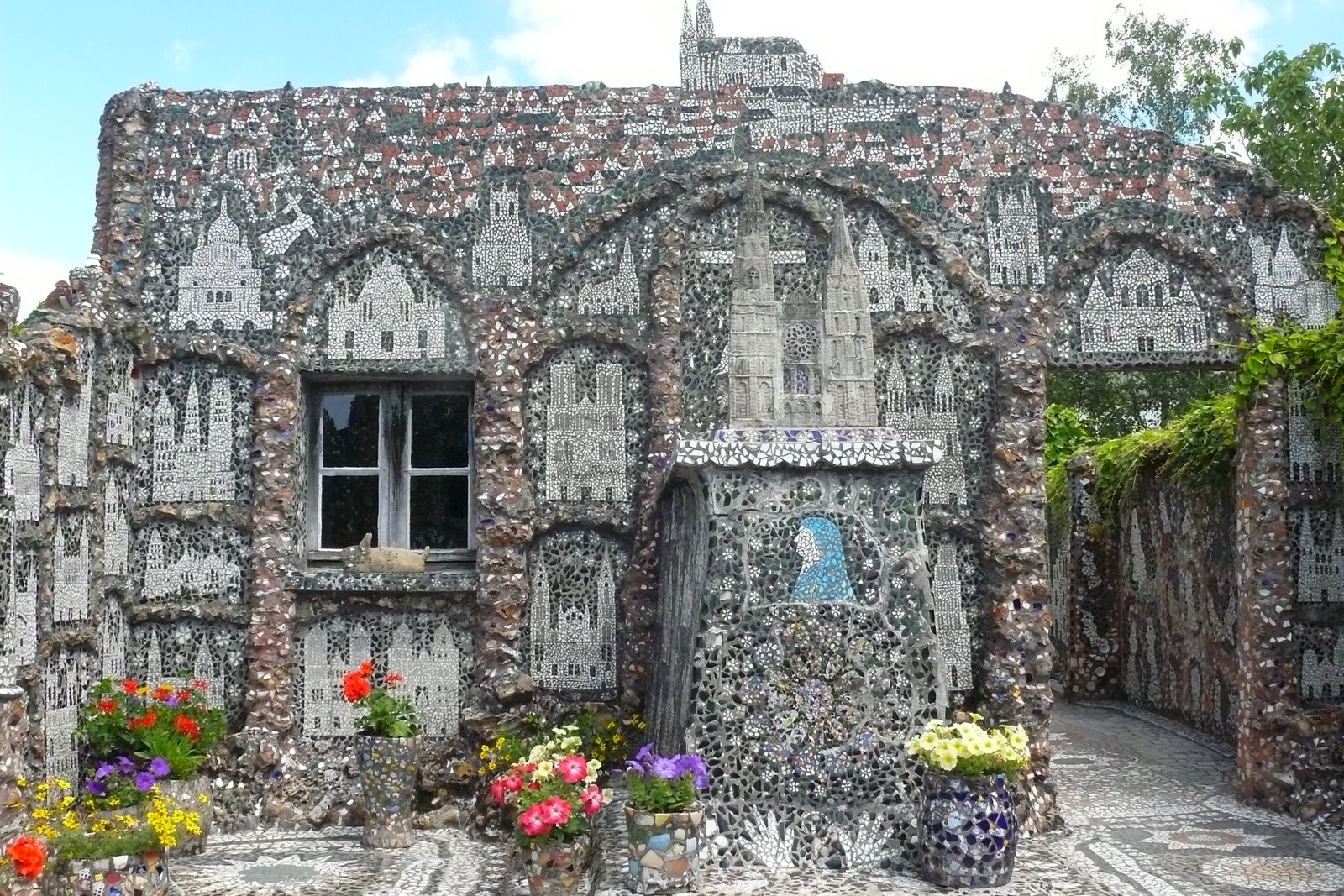
    In May, I was lucky enough to have the chance to visit Raymond Isidore’s La Maison Picassiette in Chartres, France. I have mentioned Isidore’s tremendous creation briefly before (click here), but here I wanted to share some photographs I took during my visit with you. I don’t want to write too much about the site here, as you can find out some excellent information on the Spaces Archive page (click here), but the mosaic house took almost thirty years for Isidore to complete, earning him the name ‘Picassiette’ – a twist on the French term for scavenger (pique-assiette) and a reference to Pablo Picasso and plates (assiette). Please feel free to share your experience of Isidore’s Picassiette in the comments below, or by emailing kdoutsiderart@yahoo.com.

    WP_20140517_007

    WP_20140517_012

    WP_20140517_032

    WP_20140517_035

    WP_20140517_036

    WP_20140517_038

    WP_20140517_039

    WP_20140517_063

    WP_20140517_079

    WP_20140517_085


    Useful links:


  • Visionary Environments: Pamela Irving

    Visionary Environments: Pamela Irving

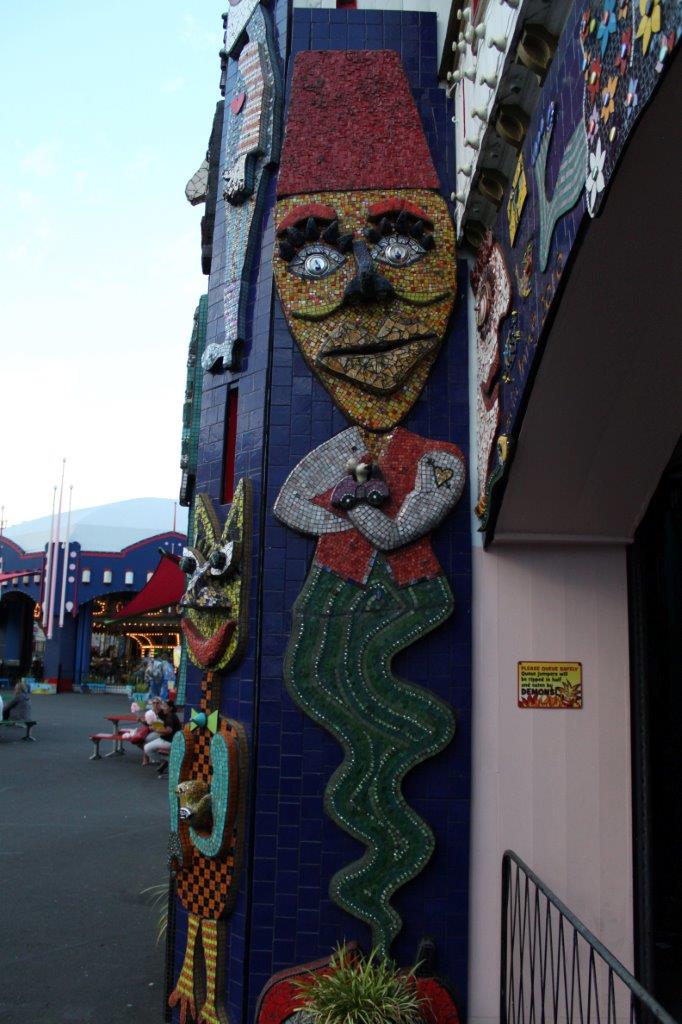
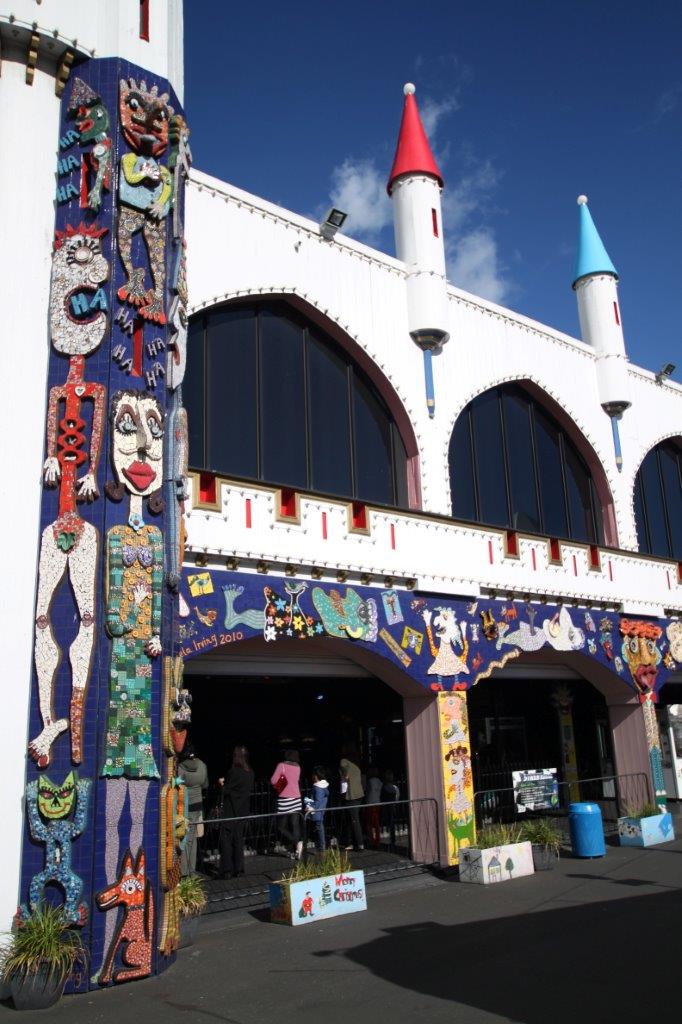
    ‘Dreaming with Open Eyes’ – a sculptural mosaic installation at Luna Park, Melbourne, by Pamela Irving.

    Dreaming with Open Eyes is about serendipity and destiny.


    “For years I had fantasized about creating a large scale installation in Melbourne. My aesthetic has developed over three decades. It reflects interest in myth, bold use of colour, whimsy and the figurative and narrative traditions. This has culminated in the creation of my own cast of quirky characters. My inspiration has been taken from diverse sources and gathered from extensive travels. These include “outsider” art environments and the legacy of ancient Roman mosaics.

    Early in 2010, by chance, Mary Stuart the CEO of Luna Park visited my studio/gallery in Bentleigh, Melbourne. Mary loved my bird encrusted courtyard. The courtyard is totally covered in mosaics and bird figurines. She invited me to create something quirky like the courtyard, for Luna Park. Hence the commission to commence work on the Luna Palace Building.

    Luna Park is one of Australia’s oldest tourist attractions. It has been thrilling children and adults alike since 1912.

    The title “Dreaming with Open Eyes” is descriptive of my process, as I work in my studio, as I walk down the street I am dreaming and imagining my works.

    This commission is a dream come true. To create a large scale mosaic installation on one of Australia’s most iconic tourist attractions. The commission is now in its 4th year. Another large section will be added by the end of this year.

    Entrance to Luna Park is free so if you are in Melbourne please feel free to visit.”

    – Pamela Irving 
    'Dreaming with Open Eyes', Pamela Irving. Photo credit: Jake Griffin.
    ‘Dreaming with Open Eyes’, Pamela Irving. Photo credit: Jake Griffin.
    'Dreaming with Open Eyes', Pamela Irving. Photo credit: Jake Griffin
    ‘Dreaming with Open Eyes’, Pamela Irving. Photo credit: Jake Griffin
    'Dreaming with Open Eyes', Pamela Irving. Photo credit: Jake Griffin
    ‘Dreaming with Open Eyes’, Pamela Irving. Photo credit: Jake Griffin
    'Dreaming with Open Eyes', Pamela Irving. Photo credit: Jake Griffin
    ‘Dreaming with Open Eyes’, Pamela Irving. Photo credit: Jake Griffin

    You can also visit Pamela’s studio/gallery by appointment. Details can be found on www.pamelairving.com.au and
    www.facebook.com/pamelairvingart


  • Visionary Environments

    Visionary Environments

    Raymond Isidore’s La Maison Picassiette

    Often, when we first think of ‘outsider’ art, we imagine 2D paintings or collages made from recycled materials, rather than fantastical landscapes and installations in the wild. Visionary environments are huge scale artistic projects that are inbued with a sense of personal involvement and subjectivity; two characteristics which result in these dreamlike spaces being most closely associated with the work of ‘outsider’ artists.

    Some of the greatest work ever attributed to ‘outsider’ artists has been in the form of these visionary environments. These projects often take the artist years – or occassionally a lifetime – to complete; often becoming an obsession or an extreme compulsion. La Maison Picassiette located in Saint-Cheron, Chartres, France, is a mosaic-ed house created by Raymond Isidore (1900 – 1964). The house was built by Isidore himself, and then covered in broken pieces of china and crockery – a hobby which soon escalated into an obsession. Eventually, Isidore covered the interior of the house as well as the outside walls and the garden. After completing the mosaicing of the house, Isidore added a courtyard and a tiny chapel to his original house – these, of course, were decorated in the same way. Isidore died of exhaustion just two years after completing his increasingly all consuming project.

    Tyree Guyton’s Heidelberg Project

    Tyree Guyton’s (b. 1955) Heidelberg Project, which is located in Detroit, Michigan, USA, began as a stand against the effect of the Detroit riots he experienced as a child. Guyton began by tidying up the area and using the refuse that was collected to create an open-air art project. Over the years, his continuing to decorate decaying and derelict buildings has create

    d tension between Guyton and the local authorities. As well as using found items and recycled materials to create the open-air space, Guyton also used his own paintings and messages to cover the area – he wanted to highlight “the problems of poverty and urban ghettos” and to “save forgotten neighbourhoods and inspire people to use and appreciate art as a means to enrich their environment.”[1]

    In the UK, Kevin Duffy (b. 1945) has spent the last 31 years creating Tudor Village in North Ashton, Lancashire. Duffy is fascinated by traditional British vernacular architecture – but far from providing a purpose such as shelter, Tudor Village’s purpose is predominantly to satisfy his own need to create. More like stage sets, the buildings that the site encompasses are mainly facades – they have no interior. The site itself is a garden centre – but it is not a garden centre in the commercial sense; its main purpose is to provide an income for Duffy’s creations and to allow him the time and money to keep building. Duffy hopes to continue adding to the work and sees it as a lifelong commitment.

    Kevin Duffy’s Tudor Village

    Many of these visionary environments are abandoned once their creators pass away. This inevitably leads to their delapidation and decay. There is also the question as to whether the public should have access to these secret and extremely personal open-air environments. This is true in the case of John Fairnington, who created a ‘fantastical’ garden for his disabled son Edwin. The garden, known as the Cement Menagerie, contains approximately 300 animal sculptures. Fairnington left the garden to charity, but his son John bought it back to open it to the public. Similarly, Kevin Duffy enjoys receiving visitors at Tudor Village and encourages people to visit whenever they can.

    [1] Outsider Art Sourcebook,Published by Raw Vision, p 189