Over the past decade or so, much of my longer writing and think-pieces have lived here on this website. I am truly thankful and appreciative of your continued support and engagement with my posts that often (to me) feel like a stream of consciousness!
However, as my research and thinking have developed, I’ve felt an increasing need for a space that allows for more regular, direct and conversational writing.
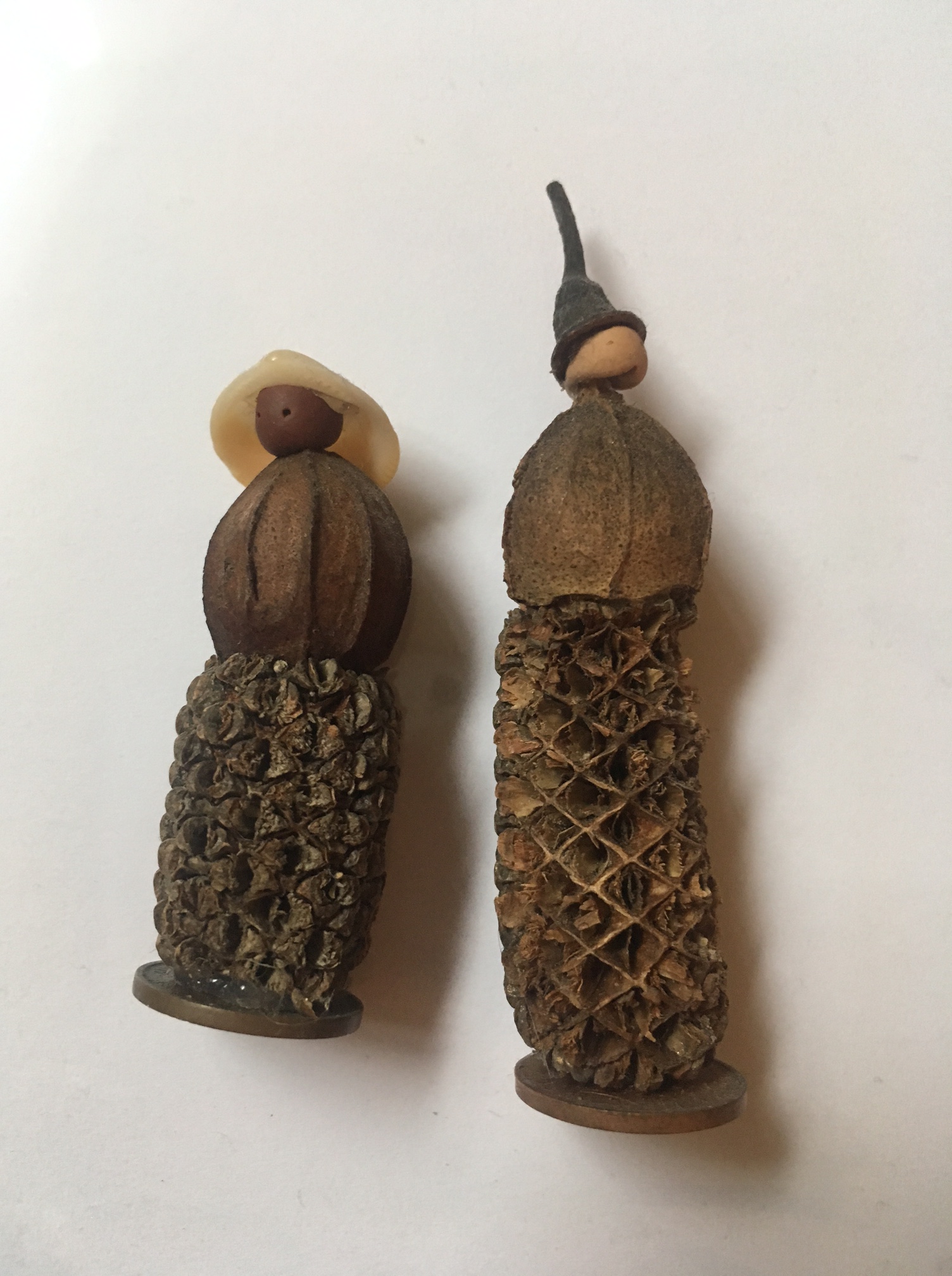
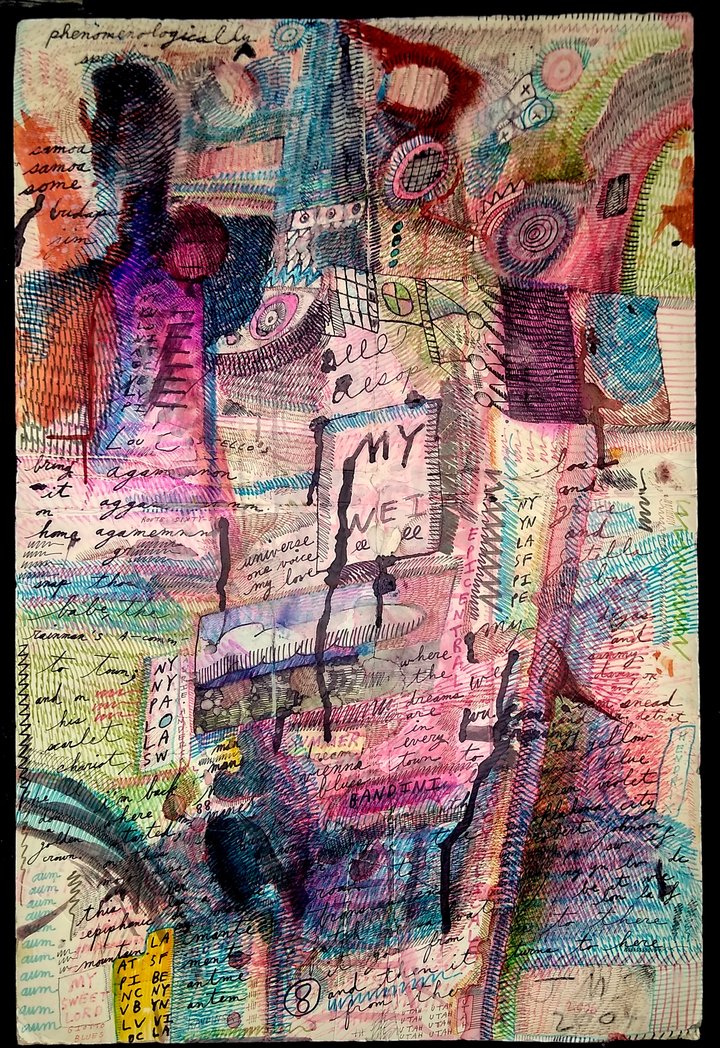
Joanna Simpson, Gum Nut Folk
For that reason, I am moving much of my blog-style writing away from this website and onto Substack.
I’ve launched a new series over there called ‘Outsider Art Today’, and rather than occasional blog posts, this series will be an ongoing sequence of (accessible) essays that will be delivered directly to subscribers via email. If you’d like to continue reading my work, and to receive new pieces as they’re published, Substack is now the place to do that.
The Outsider Art Today series will be a breakdown of my PhD research, week by week. It begins with the historical roots of the term; from Dubuffet’s concept of Art Brut to Roger Cardinal’s introduction of ‘outsider art’ before moving onto the contemporary landscape and the more complex question of whether increased visibility necessarily equates to structural change.
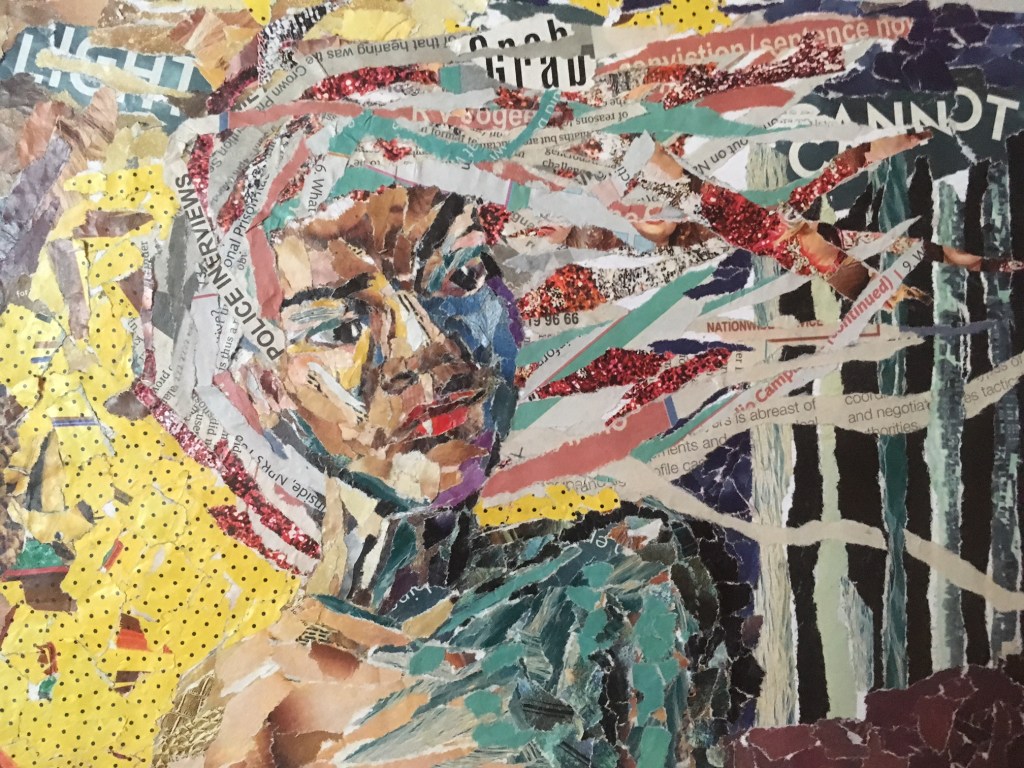
Alan Doyle
Over the coming weeks (and months!), I’ll be breaking my research down into accessible, bitesize essays exploring contemporary attitudes to the term ‘outsider art’, the spaces it is allowed to occupy, the role of cultural gatekeepers, and the institutional mechanisms that reproduce exclusion.
For the forseeable, this writing will live on Substack, and new posts will be shared there rather than on this blog.
If you’d like to follow along, I’d love you to join me and subscribe (it’s completely free).
Really looking forward to continuing the conversation with you.
Just as a note – this website will remain active, and I very much hope it continues to serve as a useful resource: a place to learn more about outsider art and to access information about some of the artists I’ve had the privilege of showcasing over the years.
Why ‘outsider art’ is still on the outside – and what needs to change
Over the past decade, ‘outsider art’ has been nominated for the Turner Prize, it has been included in Royal Academy summer shows, there have been major exhibitions in UK gallery and museum spaces. Yet, despite this increased visibility, it remains far from fully accepted within the cultural mainstream in this country. My research asks a simple question: why?
Following on from my previous post – which was more of an announcement that there will be more posts soon – I want to just further contextualise my research with the hope of identifying for you its purpose and what I hope it is able to achieve. Ultimately, I hope you can find something new or something useful that can help in your advocacy for outsider art or, if you are an artist yourself, can help you understand why your experience of navigating the UK cultural sector may have been particularly challenging.
Hugest apologies for such a long absence. Life things have been happening over the past couple of years – including (but not limited to!) becoming a parent and getting my head down to finish my PhD. After six long years, I have now finally completed my PhD research and I am really excited to share this with you over a number of posts on this blog. Please do comment or contact me if you’d like to join in the conversation. I’d really like for this to be a shared space to reflect, ask difficult questions and utlimately look towards reshaping the systems and structures that continue to make the UK art world incredibly exclusive.
I am really pleased to be co-leading a new Research Group on behalf of Outside In for Tate and the Paul Mellon Centre’s British Art Network. The Research Groups typically run for one year, and offer an opportunity for an in depth focus on a particular part of British art history, providing new perspectives and new ways of engaging academically and curatorially with often overlooked areas of history. I am delighted to be co-leading this group with Jo Doll, an Outside In artist and Ambassador, and participant in Heritage Lottery Funded New Dialogues project.
Apologies for such a break since the last blog post – 2022 is flying by! I’ve been continuing with my PhD research and over the last couple of months I have been interviewing artists who see themselves as facing some form of barrier to the UK mainstream art world. Although I have worked in this area now for over 10 years, I rarely get the chance to sit down one on one with artists and really listen to their story spoken in their own words, so this has felt like a real privilege. The interviews have been incredibly insightful, and I have been struck by how articulate artists have been about the inherent issues embedded within the UK’s cultural system.
Although it has not yet reached the highs achieved by auctions of ‘mainstream’ art, the monetary value of ‘outsider art’ is creeping up. This blog is written in light of the recent Christie’s auction of outsider art from the William Louis-Dreyfus Foundation which took place earlier this month.
As my research continues, I have been looking at the notion of the art ‘competition.’ More specifically, I have been looking at the barriers that surround these competitions; focusing on the application and selection processes.
In many parts of our lives, we are encouraged to fit into an already existing and established ‘box.’ This box, if you will, has been made by and for people who already exist in privileged positions. As Penny Jane Burke and Jackie McManus note in a 2011 article for Discourse: Studies in the Cultural Politics of Education:
“Inclusion often works as a disciplinary technology to ‘include those who are excluded into the dominant framework/state of being, rather than challenging existing inequalities within the mainstream system, or encouraging alternative ways of being.”[1]
Although writing about inequalities in the application process for art courses at universities in the UK, many of the points made by Burke and McManus also relate to the application and selection process integral to many art competitions. The steps of any application process are almost seen as necessary – and they tend not to be questioned. To be in for a chance to win, you must apply, and to apply, you must follow the rules. And those who win deserve to win because they have earned it. They have been voted the best of the rest, and that result is the correct result because the system is the system and it works.
Burke and McManus note that “meritocracy is premised on the belief that all individuals who work hard, and have the prerequisite ability, can succeed within a fair and democratic system.” However, they continue by saying that what is not taken into account here is that this idea “does not address differential social positions and power relations, which provide some social groups with greater access to the valuable cultural and material resources necessary to ‘play the game’ and succeed.”[2]
There is so much assumption placed in an application process. Assumption that the applicant will know what is being assessed, assumption about who might apply, and an assumption that the applicant will be able to easily follow the application process. This is especially important to note when many competitions come with a hefty application process and more often than not, a hefty entry fee too. In essence we are asking people to spend a lot of time and money that they may not have on entering something where they really have no way of knowing their possibility of success.
In their 2000 article, Nachoem M. Wijnberg and Gerda Gemser identified three basic types of selection system; “market selection, peer selection, and expert selection.”[3] They explain these types of selection system in the following ways:
“In the case of market selection, the producers are the selected and the consumers are the selectors. In peer selection, on the other hand, the selectors and the selected are part of the same group. In the case of expert selection, the selectors are neither producers nor consumers, but have the power to shape selection by virtue of specialized knowledge and distinctive abilities.”[4]
Traditionally, peer selection was the predominant method of selection – think of the Salons and Academies where artists rose through the ranks and were responsible for selecting newer, emerging artists for exhibition. However, in more recent years, expert selection has become the favoured method. This shift has happened due to several factors, but the most pivotal is perhaps the emergence of dealers who have necessitated the assistance of art critics to bring attention to their chosen art or artists. Eventually, Wijnberg and Gemser note, “the modern art museums would also begin to exhibit works by artists in the same group in order to highlight current trends, thus supporting the efforts of both the ideological dealers and the art critics.”[5]
The issue with all three selection methods is that the “value of most cultural products is generally hard to ascertain, in part because the standards to be used for this purpose are seldom clear and rarely obvious.”[6] Therefore, Wijnberg and Gemser highlight that:
“An innovation attains value only if it is considered valuable by the selectors that control a given selection system. This may lead to serious problems for art that contains innovations that are not valued within an existing selection system. In many instances, therefore, art that is innovative will only be successful if the innovators that champion it succeed in changing the ways in which value is determined. This often means changing the selection system itself.”[7]
The issue here is that existing processes mean that value-based judgements made by selectors can only be subjective, and therefore an artist’s success in a competition format depends heavily on the aesthetic taste of the ‘judging panel.’ So, this is one issue with the art competition format.
Interestingly, in Burke and McManus’ research into the admissions process for UK arts courses, they found that the “’worthy’ student seems to be associated with the ‘unusual’ and the processes of creativity that involve risk-taking and invention (characteristics historically associated with the white, euro-centric forms of masculinity).”[8] We are asking applicants to jump through hoops that have been created by a certain group, and therefore, will innately be more accessible for that same certain group.
Burke and McManus suggest a critical approach for selectors. There needs to be a sense of “critical reflexivity, to interrogate the ways that their decisions might be shaped by exclusive values and perspectives, which profoundly influence how candidates are (or are not) recognized as having talent, ability, and potential.”[9] But I don’t think we just need selectors to be more critical, I think the selectors of the selectors need to be more critical. It is no good simply trying to mould and coach someone to fit our existing expectations. We need to evaluate and change the existing inequitable systems.
I would be really keen to hear from you about your experiences of entering an art competition. How did you find the application process? Was it a good experience? Was it a bad one? Please do feel free to comment below, or drop me an email: kdoutsiderart@yahoo.com.
References
[1] Penny Jane Burke and Jackie McManus, ‘Art for a few: exclusions and misrecognitions in higher education admissions practices,’ in Discourse: Studies in the Cultural Politics of Education, Vol. 32, No. 5, 2011, pp 699 – 712, p 700
[2] Op. Cit., p 701-702
[3] Nachoem M. Wijnberg and Gerda Gemser, ‘Adding Value to Innovation: Impressionism and the Transformation of the Selection System in Visual Arts,’ in Organization Science, Vol. 11, No. 3, 2000, pp 323 – 329, p 323
Recently, I have been returning to the classic texts of outsider art in an attempt to uncover where the marginalisation of this type of work really began. My research has uncovered a few key areas that illustrate how ingrained the idea of ‘otherness’ and ‘us’ and ‘them’ is when it comes to outsider art and the artists who create it. This marginalisation and imbalance of power is so embedded in the culture of outsider art; in how it emerged, in how it is described, and in how it is valued, that it is difficult to move past its history and look towards a new, integrated outsider art that enjoys the same reverie as works that are readily welcomed into the cultural mainstream.
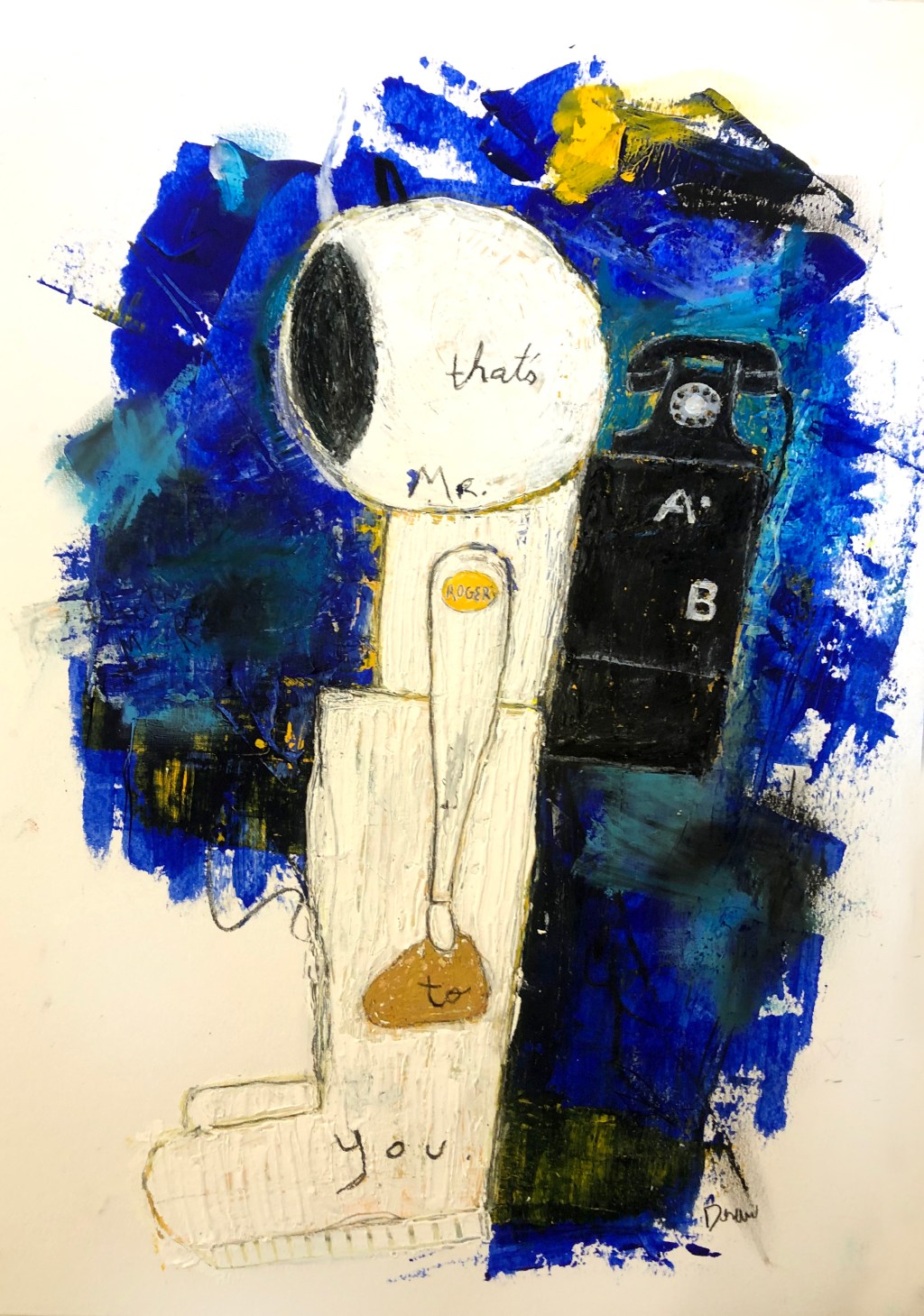
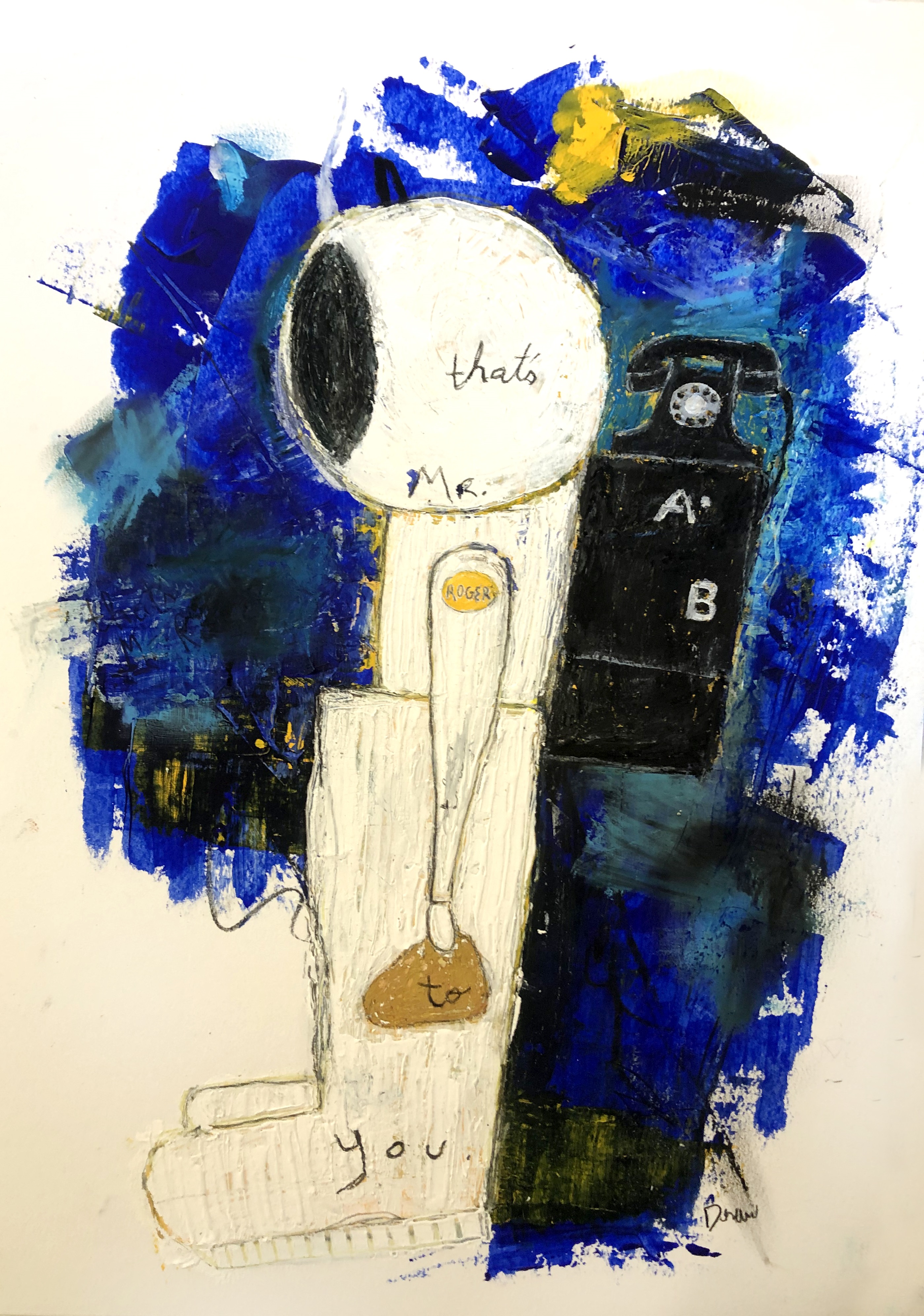
Drew Davies, Mr Roger
My research has first led me to explore the emergence of outsider art. And here, already, we can see structural power imbalance at play. If we think back to the key developments in the emergence of outsider art, we see a pattern; outsider artists being ‘discovered’ by those already in positions of influence and power.
The first major – and most obvious – example is Jean Dubuffet and his coining of the term Art Brut. The story of Dubuffet and his support for Art Brut is an excellent illustration of how the system works. Dubuffet, for a start, was already an accepted part of the cultural mainstream. He was an artist in his own right; a disillusioned one, albeit, but accepted nonetheless. It was his position on the ‘inside’ that enabled him to throw caution to the wind and leave the mainstream for a world of raw and unfettered creativity. This example speaks to sociologist Howard Becker’s idea of the Maverick artist; an artist who has already achieved acclaim and acceptance within the mainstream who then goes it alone, creating more daring and outrageous work. Becker uses Duchamp as his key example, but Dubuffet equally fits the mould in his search for something different and other. The idea being that you have to already be on the inside to make real change – and to get noticed for it.
Jack Oliver, Ratfink
Now Dubuffet’s name is inextricably linked with Art Brut and outsider art forever more. In his position as the creator of Art Brut, Dubuffet held – and still holds – all of the power. Often, it is not the artists whose names we recall when we talk about the category of outsider art, but Dubuffet’s name; he is now the father of this genre.
Like Dubuffet, there were other European artists who before the First World War were becoming disillusioned with the art world. They were dissatisfied with culture and society as a whole and were looking for something more authentic. It is these artists we see looking for inspiration in other communities, countries and continents – think Picasso and his intrigue with the primitive, or Kandinsky and his fascination with art made by children. It is similar to how the middle classes now seek authenticity in other cultures through travel. But still, it is a search for the other, a search for something different. This directly relates to a number of European artists becoming interested in the art of psychiatric patients following the publication of Hans Prinzhorn’s Artistry of the Mentally Ill in 1922. They were looking for something other, and they found it here, in the work of those who were removed both physically and socially from the worlds of these mainstream artists.
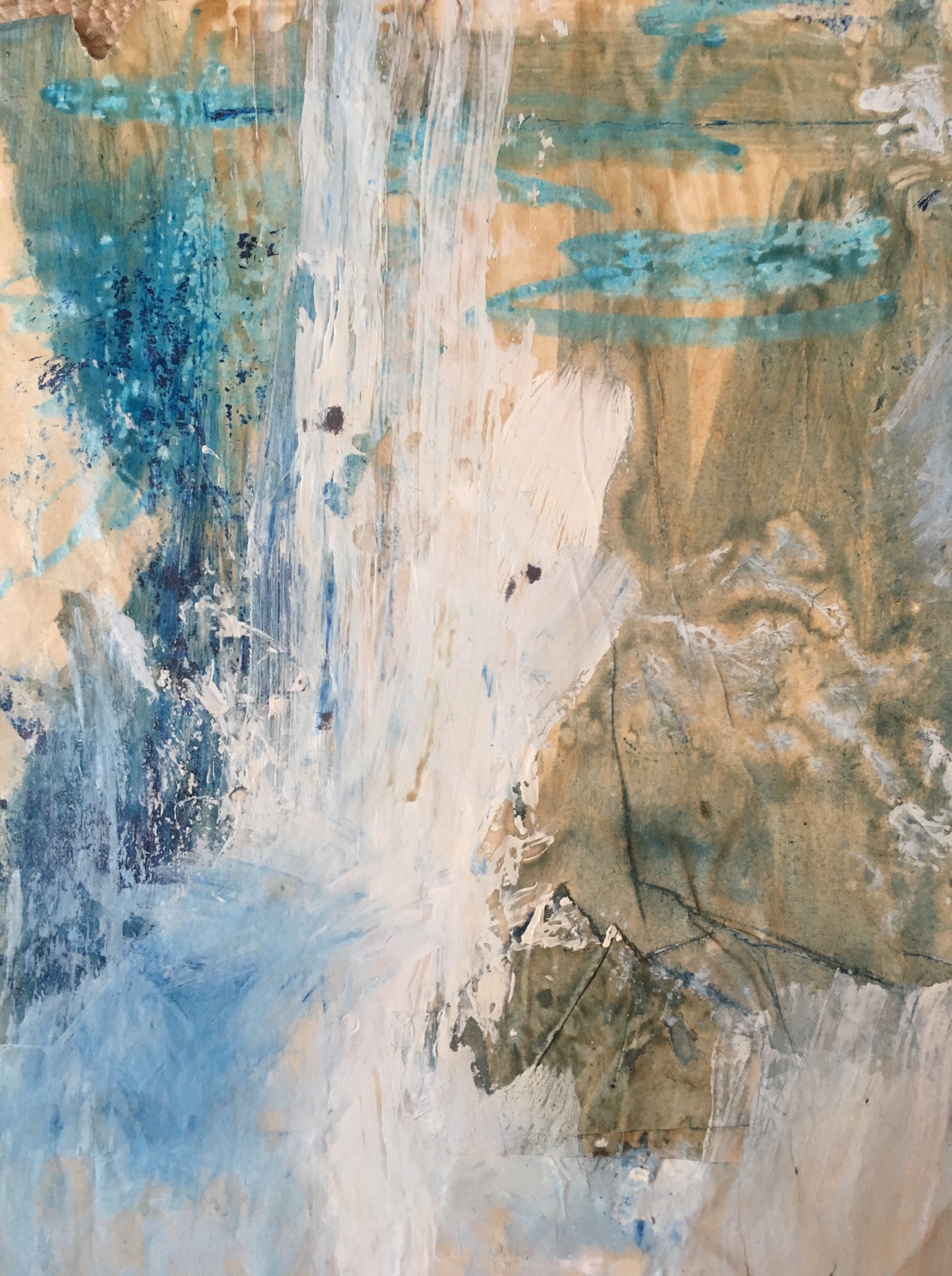
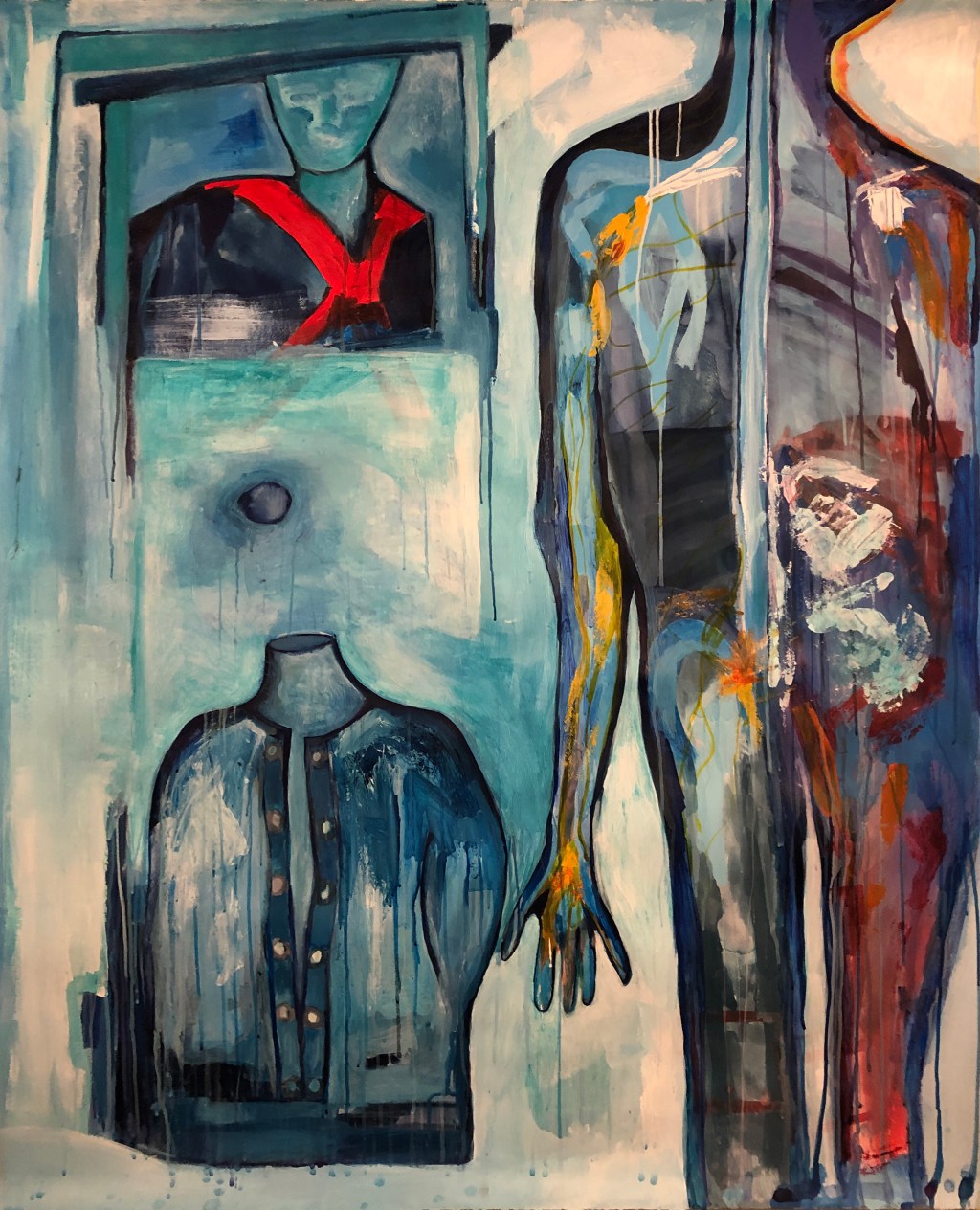
Cloud Parliament, I’d Like To Be Shod
There is a history of this type of dissatisfaction amongst mainstream artists. But, almost always, their new and shocking work eventually becomes accepted as ‘progress’ and is welcomed into our historical canon – for example Surrealism, Expressionism, Fauvism, Cubism. This, however, has not been the same for outsider art. It has remained on the outside, a parallel running alongside the canon of the twentieth century mainstream.
Aside from artists already in acclaimed positions within the mainstream, we also have psychiatrists and medical professionals to thank for the emergence of the category of outsider art; particulary, of course, the work of psychiatric patients. I have mentioned Hans Prinzhorn already; psychiatrist, art historian and founder of the Prinzhorn Collection, but there are numerous others including Walter Morgenthaler, Dr Paul Gaston Meunier, Dr Charles Ladame. Whether we agree with the sharing of work by patients in psychiatric hospitals (with the issues of ethics and consent that come with it), what is at the core of this side of the emergence of outsider art is vulnerable artists being presented to the world by medical professionals. Again, people who already hold some kind of societal influence.
Robert Haggerty
The third group that emerged during my research is arts professionals who hold some clout in the art world. Ultimately, it is curators, collectors, dealers and directors who shape the canon, and therefore the possibility of acclaim, celebration – and even just visibility – lies at their door. In his 2011 book ‘Groundwaters: a century of art by self-taught and outsider artists,’ Charles Russell tells the story of Alfred Barr, the first director of MoMA. Barr was in fact a great believer in the value of outsider and untrained art, organising a number of exhibitions that showed his support. His vision, however, was not matched by MoMA’s board of trustees, and Barr was consequently removed from the position of director. Although he remained employed in the collections department, MoMA has shown very little support for untrained art ever since. Here, we have the perfect example of how powerful people can change the course of history. Who knows what kind of art world we might be experiencing today if the work of untrained and outsider artists had garnered more support from MoMA’s trustees at the time.
So, even just the way outsider art has emerged as a field is made up of unequal power dynamics and issues of otherness. It is no wonder then, that there is difficulty in encouraging those inside the mainstream to see this work in the same light as trained artists. There is such a strong history of marginalisation here, right from the very beginning, and what is most apparent is that in this display of ‘us’ and ‘them,’ what we most desperately need are the voices of the outsider artists themselves.
As always, I’d love to hear your thoughts. You can post them in the comments below, or email kdoutsiderart@yahoo.com. Thanks for reading!
First of all, I apologise for my absence, and I hope everyone is managing to stay safe and well in the strange times we are all living through. It’s been a tricky couple of months trying to get hold of books etc. for my studies due the closure of libraries during the pandemic. As things here in the UK start to re-open again, I am now able to resume my research – and, because of the slight break, I am feeling more motivated than ever.
This month, I have been re-familiarising myself with many of the key texts published in the outsider art field. I have been returning to books by Gary Alan Fine, Charles Russell, John Maizels, Colin Rhodes, and, this week, the simply titled 1972 book ‘Outsider Art’ authored by the late and great Roger Cardinal. This book really can be considered the defining text. It is where the term ‘outsider art’ originated from and was written as an English equivalent to Jean Dubuffet’s numerous texts on Art Brut.
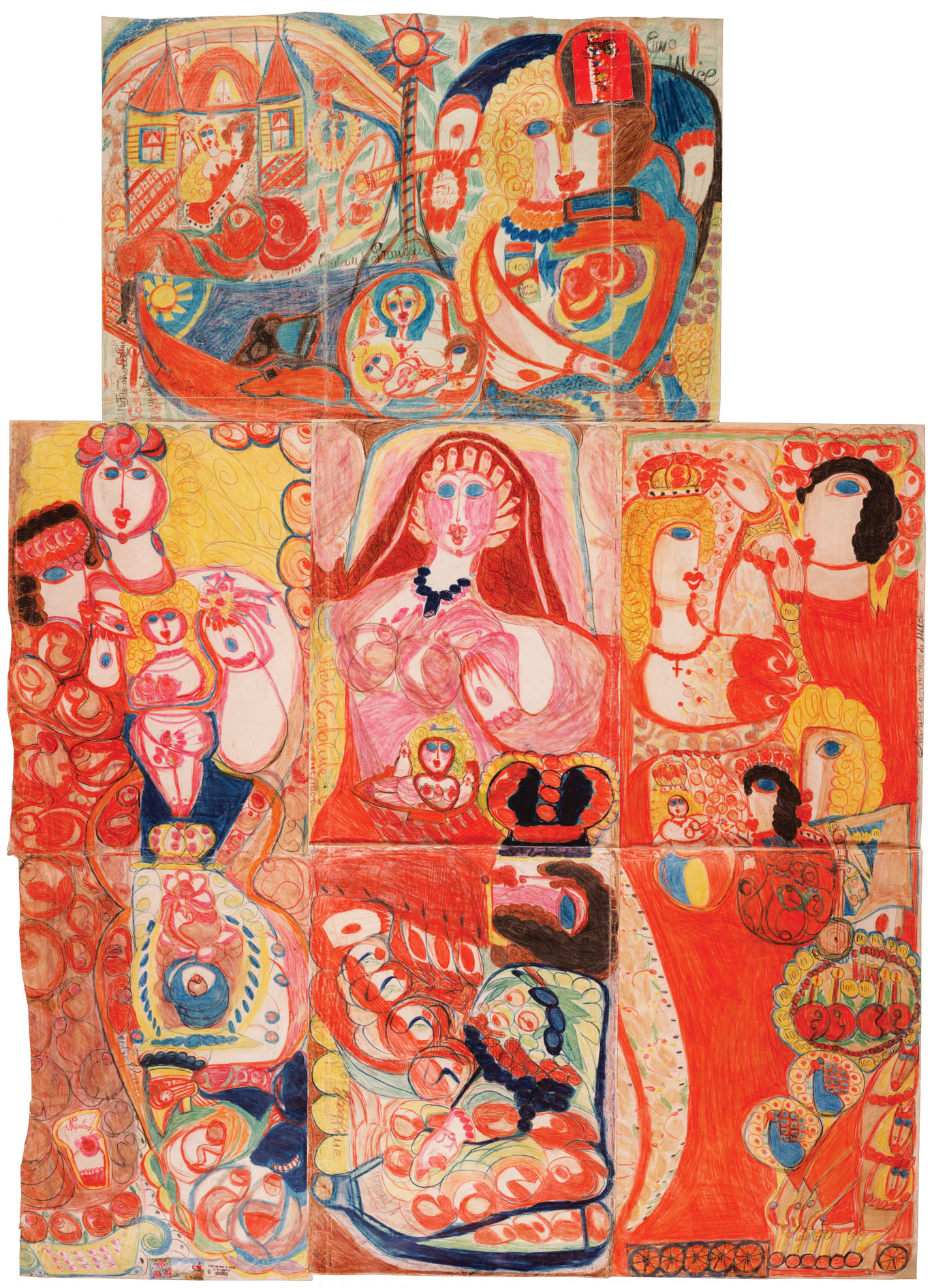
Cardinal’s book does offer an introduction to the field and the term itself, but it is predominantly a close analysis of several ‘outsider artists’ and their work. Including, but not limited to, Adolf Wolfli, Scottie Wilson, Augustin Lesage, Madge Gill, Raymond Isidore, and Aloise Corbaz. However, it is not these individual reviews that interest me; instead, it is Cardinal’s refining of the term outsider art and what he asserts it does and does not encompass. Although much more liberal in his definition than Dubuffet and his strictly ‘anti-cultural’ Art Brut, Cardinal does suggest that he refers mostly to schizophrenic, autistic and innocent artists when he talks about outsider art. He excludes, quite notably, naïve art and primitive art. Naïve art because it is created by hobbyists who, although untrained, aim to have their work accepted and admired within the traditional canon. Primitive art because, although visually different to what we in the Western world might see as art, it is in fact very much part of a constructed societal culture.
This is all interesting. However, it is Cardinal’s assertion that the realities of those who make ‘outsider art’ are so disparate and diverse that we cannot group them under one term that strikes the biggest chord with me. In essence, he says that there is such a thing as an outsider artist, but there is no such thing as outsider art. If this is the case, then we cannot consider outsider art as a group, school or movement that we can massage into the mainstream canon.
“To talk of art brut is, then, to talk about a large number of independent artistic worlds that ought not to be envisaged as forming a block, much less a school.” [Cardinal, p 46]
This is a particularly strong theory because it goes some way to explaining why outsider art continues to be marginalised by the mainstream art world. Historically, art schools and movements that have grown out of rebellion against the cultural and artistic norms of their time have eventually been welcomed into our celebrated Western art history. Think German Expressionism, the avant-garde artists of the early twentieth century, Surrealists, Fauvists. Rebellion has always happened, and despite the shocking nature of the work at the time of emergence, the movements noted above have come to be a comfortable and recognisable part of our cultural history. This, however, is not the case with outsider art. It has continued to linger on a parallel path, just off the main thoroughfare that is the accepted Western canon. Sometimes it knocks at the door, sometimes it is welcomed right in, but always it is asked to leave – usually through the back door, and quietly at that.
I know that Cardinal’s views on the term outsider art became much more inclusive as time went on, but I think his original theory here is absolutely key. It comes down – as always – to our need as human beings to categorise and group, and to our inability to understand or accept difference. Perhaps by acknowledging this, we can begin to look at work made by outsider artists as what it is – individual displays of incredible creativity. Maybe this want and need to group it, to define it, is preventing us from truly enjoying it.
What do you think? Is there such a thing as outsider art? What about outsider artists? Let me know in the comments below, or drop me an email: kdoutsiderart@yahoo.com.
You might also be interested in a series national arts charity Outside In are running on outsider art. It includes a number of fascinating blog posts by artists and arts professionals on the idea of outsider art – click here to take a look.







 KDOA
KDOA 