Category: Outsider Art: Theory and Thoughts

  • A Year of KDoutsiderart…

    A Year of KDoutsiderart…

    So, this January marks the first birthday of KDoutsiderart – an endeavour I originally began as a productive distraction from MA term paper writing and a way to reconnect with my love of outsider art that I seemed to have forgotten amidst writing papers on the more mainstream variety of art. I did not expect to still be blogging in a year’s time, and I certainly did not expect to find a whole world of outsider-art-enthusiasts out there. Talking to people (most commonly friends and family) about the blog in its first stages of production seemed to elicit the same response many times over; ‘is there that much to say about outsider art?’ I started to wonder how long I could write about this topic for – would anyone be interested? Did I know enough about it? Of course, I have since found out that many, many people are interested and outsider art is a topic that one doesn’t ‘need to know a lot about’ to ‘get.’

    I thought I would share these initial thoughts with you, and also note some of the things that the blog itself has taught me since its inception in January 2012.


    Where did the blog come from?

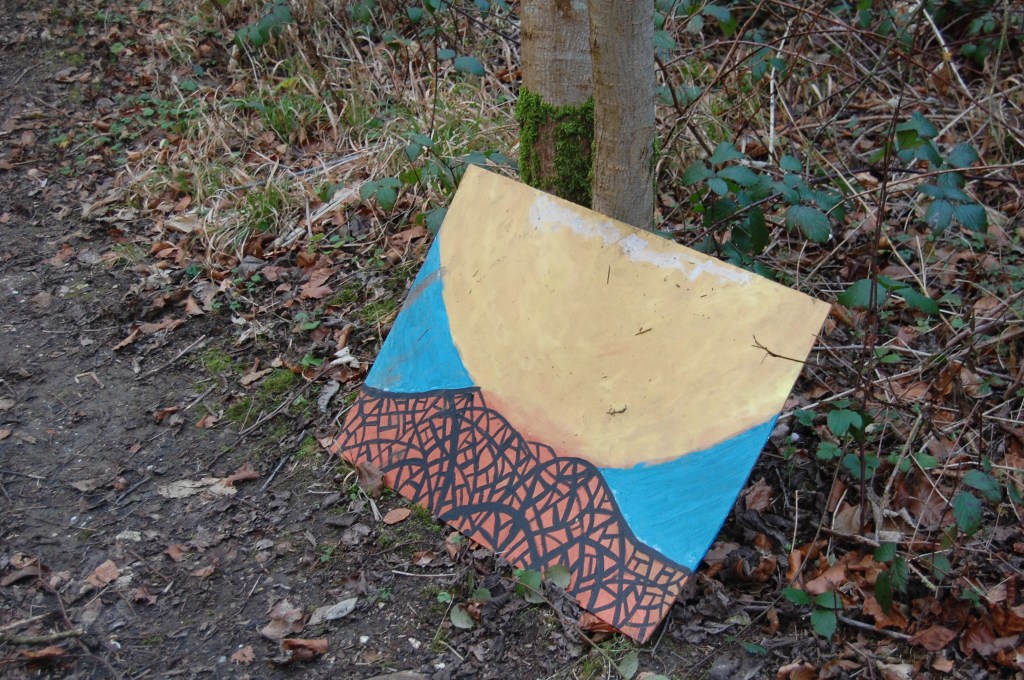
    The blog-idea initially surfaced after I had taken my dog for a walk in nearby woodland. During the walk, I had come across an open-air, unmanned art exhibition. I found works leaning against trees and hanging from branches and one thought crossed my mind – I had to show this earthly production to people. It was fantastic to see works in such an environment and it was even more fantastic in September when, via the blog, I found one of the artists who had taken part in the exhibition. The outdoor display had been a part of an MA dissertation called ‘An Unplugged Moment’ in which works were placed in the woods as a way to take art back to nature. My commitment to the blog peaked in summer 2012 when I began working with a couple of organisations aiming to promote and provide a platform for artists facing barriers to the art world.

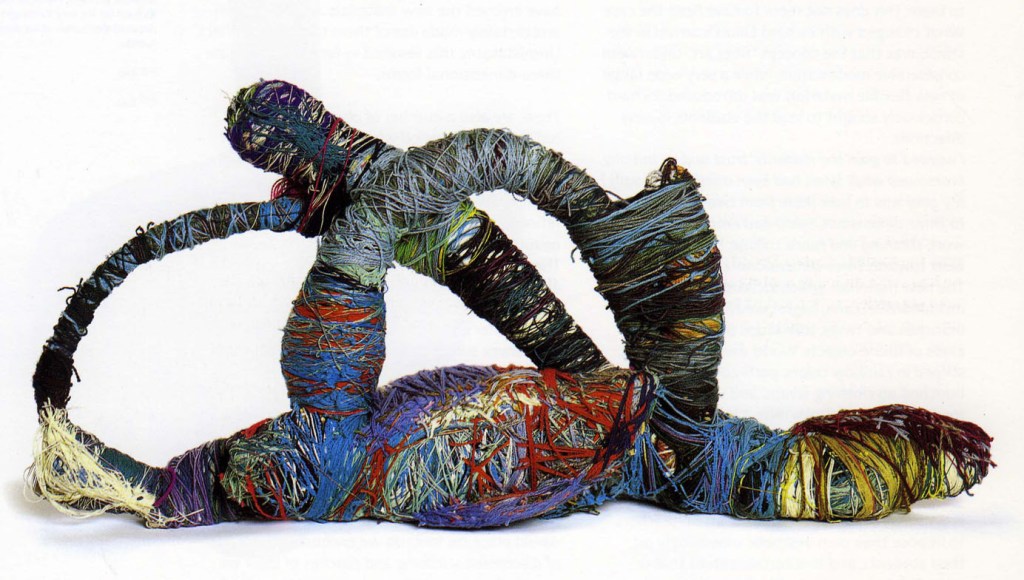
    'Such Great Heights' by Faracy Moon Grouse
    ‘Such Great Heights’ by Faracy Moon Grouse

    What has the blog taught you?

    If you follow KDoutsiderart, you may have noticed that there are a lot of posts on my changing opinion on the world of outsider art and indeed the term ‘outsider’ itself (here, herehere, here and here). As part of my MA last year, I wrote my dissertation on the difficulties facing curators of outsider art, and the research I did for this kept bringing up new thought processes and angles surrounding the topic. One thing I perhaps would have changed after this research is the name KDoutsiderart. The term itself is becoming more and more outdated and pigeon-holey. The thing I perhaps enjoy the most about outsider art is that it cannot be pigeonholed; therefore, in essence, it does not need a name.

    Where do you stand on the subject now?

    Speaking now, in January 2013, although I still struggle to put it coherently into words, I think I can finally explain why I am so interested in this form of art. For me, much of the mainstream art world is based on business, money and commodity. Money is of course a necessity for anyone pursuing a career as an artist, but these are all words that, for me, damage what art should be. Outsider art has not developed out of previous art movements, and it has no distinctive formal or visual style. Outsider art is the epitome of art as an extension of the being; something raw and needed in many instances. For me, this is what art should be about. Art and creativity can come from anywhere, and take the form of anything, and outsider art very effectively illustrates this.

    The best bit about the blog?

    My favourite part of working on the blog last year was seeing all the work sent into me by artists hoping to get their work ‘out there.’ I really enjoyed creating a platform for artists who are perhaps side-lined from the mainstream art world for whatever reason, and I hope to continue to do this throughout 2013. There is now a page on the blog dedicated to artists who have appeared on it, and I think this is the blog’s greatest achievement in the last year.

    Outsider art in 2013

    In recent years, we have seen a much needed change in opinion from museums, the media and other institutions with regards to outsider art. This year, the Wellcome Collection will be exhibiting (for the first time in the UK) Japanese outsider art, and of course last autumn/winter we saw Pallant House Gallery’s ‘Outside In: National’, which so beautifully gave outsider art the space and curation it deserves within in an internationally renowned institution. The New York Outsider Art Fair will once again be taking place at the end of this month (be it under new ownership), helping to give outsider art the much needed professional and commercial respect it deserves.

  • Outsider Art: An Ethical Minefield? What About Voyeurism…

    Outsider Art: An Ethical Minefield? What About Voyeurism…

    Above Image: Jean Dubuffet, ‘Les Vicissitudes’, 1977 (Source: http://www.tate.org.uk/art/work/T03679)

    I handed in my MA dissertation just over two months ago – and only now do I finally feel ready to return to it to blog about some of the queries it raised with regards to ‘outsider’ art (including but not limited to ethical issues, problems facing curators and, of course, the infinitely ambiguous definition of the term). One of the main questions I found myself focusing on when I began writing, was the issue of voyeurism; who gains what from viewing the work of ‘outsider’ artists. This ‘issue’ as such became a question to which I changed my mind about somewhere around 100 times during the writing process.


    “Though Outsiders expect nothing from us, not even our attention, we steal upon them like eavesdroppers.”[1]


    During the nineteenth-century, the time when the idea of art and ‘madness’ was first being explored by the Romantics, the relationship between the two was curiously idealistic. This unquestionably romantic view of madness was rarely based upon any real experience of insanity, but was rather a fantasy of madness; an idea of a wild, untameable, unbridled creativity. From this early on, we can see the beginnings of a voyeuristic interest in the work of those who were perhaps marginalised from society. Even Hans Prinzhorn’s Artistry of the Mentally Ill, published in 1922, focused more on the art of psychiatric patients as a pathological endeavour as opposed to an aesthetic one. There is, afterall, no stylistic guidelines with regards to the definition of the term ‘outsider’ art itself, meaning there is often more interest in the artist than in the work as a reason for ‘classification’ as an ‘outsider.’

    Despite my initial thoughts focusing more on the possibility of potential voyeurism, I soon decisively changed my mind – I have even written a blog post on how continually worrying about the presence of voyeurism can perhaps affect the accessibility of ‘outsider’ art exhibitions for those with little to no prior knowledge of the subject.


    “Why look at outsider and self-taught art, if not out of romantic nostalgia for some image of unfettered individuality and expressive freedom? Or is our fascination with this art just one more form of voyeurism?” [2]


    Just yesterday, conincidentally enough, I came across this article, in which Ian Patel asks who exactly benefits from ‘outsider’ art. The article, similarly to my initial thoughts about ‘outsider’ art exibitions being steeped in potential voyeurism, suggests that there are “many ethical questions surrounding the public display of art produced by what might be termed ‘vulnerable adult’ constituencies.” Patel continues, saying that “such exhibitions tend to go unquestioned as a positive force for both participating artists and the viewing public,” and that “participating artists are assumed to benefit from artistic recognition.”

    The article goes on to suggest that there are perhaps deeper ethical questions to consider with regards to the “public consumption” of marginal art. Patel considers The Koestler Trust – whose work he claims at first glance could appear as a “voyeuristic thirst for productions rooted in human degradation, infamy and shame.”

    Although the article does move on to talk more about how marginal art exhibitions can act as a “powerful advocacy tool,” I was interested in how voyeurism is often a recurring theme with regards to the subject of ‘outsider art.’

    Judith Scott, Source: http://www.nytimes.com

    Voyeurism, in my opinion, is a very dangerous word when considering what people get out of ‘outsider’ art. I can’t speak for everyone – but I can tell you what I get out of it. I studied History of Art at undergraduate level and two months ago, I completed an MA in Art History and Museum Curating. I think somewhere along the way, I got dissillusioned with the ‘mainstream’ art world (contemporary in particular). I have always believed that creativity is not something you can learn – going to art school isn’t going to teach you how to be creative, or imaginative. I also think it is not something that should work like a production mill for monetary gain. I think it is something innate, something that makes us human. I do, however, believe that everyone has the capacity for creativity. Art should be for everyone, not just those with an Art History degree, or a Fine Art degree for that matter, and ‘outsider’ art helps me to appreciate this. For me, there’s nothing like being blown away by a work of art created by someone with no formal training – someone who has produced a piece based on a feeling or raw creative intuition; something that can’t be put into words. Something that is a reflection of humanity and a portrayal of these feelings which make us human, rather than a creation made for commercial interest or capital.

    For me (and Patel also notes this too), public exhibitions are often not the “end-goal” of community art programmes. It is the therapeutic effect of creating and producing that should be celebrated – the final exhibition is just a space to share this. Increasing inclusivity within the art world is a whole huge leap towards a more generally inclusive society, and shunting this merging of the ‘inside’ and ‘outside’ (whoever gets to decide these terms) by using the term ‘voyeurism’ will only delay the process.


    References

    [1] V. Willing, ‘Out of Order’, in In Another World: Outsider Art from Europe and America Exhibition Catalogue, 1987.

    [2] Lyle Rexer, How to Look at Outsider Art, 2005.

    Response to article ‘Outside Looking In’ by Ian Patel, published at www.artsprofessional.co.uk

  • Can we Place ‘Outsider Art’ within an Historical Context?

    Can we Place ‘Outsider Art’ within an Historical Context?

    Whenever someone asks me about Outsider Art, I always find it really difficult deciding where to begin. I know I have already written a ‘brief history’ of Outsider Art on my ‘About’ page, but that is more of an overview in comparison to this post. I thought it would be interesting to share some of the research I did whilst writing my dissertation with regards to the emergence and history of Outsider Art; a ‘movement’ that appears to be floating on the outskirts of traditional art history. This post will locate where I think Outsider Art really came from, and the key exhibitions and events that saw its apparent emergence during the ‘golden years’ of 1880 and 1930.


    Can we Place ‘Outsider Art’ within an Historical Context?

    A history of ‘Outsider Art’ is somewhat intangibly difficult to offer. Unlike other art movements, it did not specifically emerge from a precursory movement; it is in essence ‘an art bereft of historical and cultural context.’[1] However, if we begin somewhere, it is undoubtedly with the change in treatment towards psychiatric patients at the turn of the twentieth century. A more humane philosophy within the psychiatric institutions of Europe meant that psychiatrists were becoming more interested in the day to day lives of their incarcerated patients. In terms of psychiatry and the treatment of the mentally ill, the nineteenth century became the ‘century of the asylum.’[2] Before this period, patients had been incarcerated in overcrowded, abusive ‘madhouses’, alongside criminals and the terminally sick.

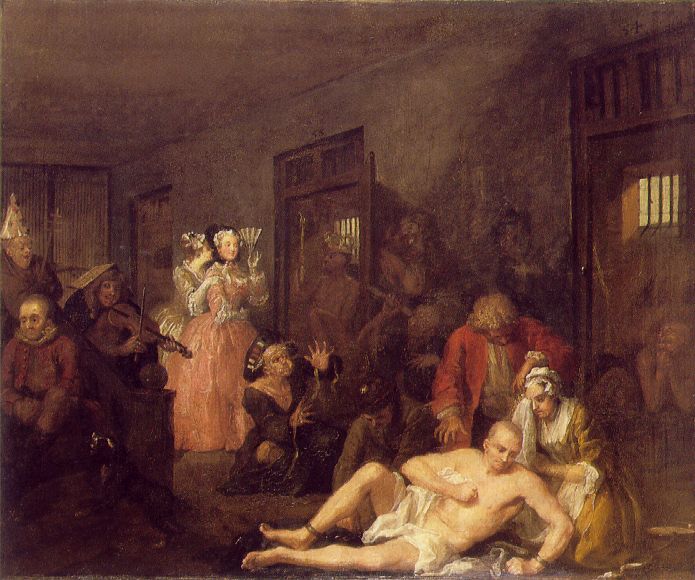
    Hans Prinzhorn, a pioneering collector of art created by those in psychiatric incarceration, was appointed in February 1919 to oversee the collection of art created by patients at the Heidelberg Psychiatric Clinic. It was Prinzhorn’s Artistry of the Mentally Ill (1922) which really drew peoples’ attention to ‘Outsider Art’ as an aesthetic and artistic endeavour as opposed to a pathological one. Prior to the publication of Prinzhorn’s book, landmark exhibitions of ‘Psychotic Art’ were held in both 1900 and 1913 at Bethlem Royal Hospital, which has a gallery and archives dedicated to the work of its past and present patients. This was seen as quite a progression, considering it was at Bethlem that just a century earlier the mentally ill were humiliatingly exhibited as objects for the entertainment of wealthier classes (see image below).

    William Hogarth, ‘The Rake’s Progress: The Rake in Bedlam’, 1735
    This piece shows two wealthy women who have paid to view the ‘madness’ of Bedlam.

    Similar exhibitions to the first two held at Bethlem were subsequently held in Berlin and Moscow, and the first ‘mad museum’ was opened in France in 1905.[3] Outsiders: An Art Without Precedent or Tradition, held at The London Hayward Gallery in 1979 was the first major survey exhibition of Outsider Art; since then, exhibitions have appeared all over the world in institutions such as the Tate and Whitechapel Gallery as well as in large European and American museums including the Los Angeles County Museum of Art. The ‘discovery’ of ‘Outsider Art’, Rhodes claims, ‘was part of an extensive search by modernist painters… for new forms of art that offered an alternative to what they perceived as the dried-up academicism of the western tradition.’[4]

    Jean Dubuffet, pioneer of Art Brut penned a manifesto entitled Art Brut in Preference to the Cultural Arts inn1949, in which he intended to ‘valorise the idiosyncratic creative works of individuals which he considered to be outside “the system”,’ but also to ‘directly challenge and undermine the authority of “high culture” and conventional definitions of art.’[5] This manifesto, and this period just after the end of the Second World War, saw a rise in interest in the works of Brut artists, yet Dubuffet was keen to keep these works infinitely separate from works within the ‘cultural mainstream.’ In 1972, Roger Cardinal coined the British term ‘Outsider Art’ as an alternative to the French term penned by Dubuffet.

    In the present day, we can still see some links to what I will call ‘traditional Outsider Art’; the art described and championed by Dubuffet and the works that Prinzhorn identified in his 1922 publication with regards to what we may include today as ‘Outsider Art’. However, the turn of the twenty-first century has seen the art world become more accepting of ‘Outsider Art’; over a century after its initial emergence. Many of the artists grouped under the term have gone on to find artistic fame within their lifetime; something unheard of during the early years.

    The term has definitely expanded, and during its expansion, it has become ever more difficult to place it within an art historical context. Since its very first emergence during those ‘golden years’, it has extended over a period of over a century; something which cannot be said for other, more ‘mainstream’ art movements (the isms for example: Impressionism, Fauvism, Cubism etc.). Perhaps it defies an art historical context. This is actually something that I quite like the idea of. Whilst ‘professional’ artists continue to create in a linear manner, with much regard and consideration for what has gone before, ‘Outsider Artists’ make art that is raw and, although not isolated from contemporary culture (this is a whole other debate – Dubuffet’s claim that the work of traditional Brut artists was always, without question, untouched by culture is something I wholeheartedly disagree with in every respect), it is not dependent on what has happened historically. It is art of the people, rather than the art of an era.

    References:

    [1]A. Fitzpatrick ‘Research Assistant Report’ in Framing Marginalised Art, 2010, p30

    [2] J Harsin, ‘Gender, Class and Madness in Nineteenth-Century France’ in French Historical Studies, 1991, p1050

    [3] C. Rhodes, Outsider Art: Spontaneous Alternatives, 2000, p53

    [4] Rhodes, Spontaneous Alternatives, p8

    [5] Fitzpatrick, ‘Research Assistant Report’, p 11

    (Image Credit: Judith Scott, image from: http://www.judithscottdocumentary.org/press-photos.htm)

    © Copyright, Kate Davey, 2012

  • Does Intention Have an Impact on what we Consider to be ‘Art’?

    Does Intention Have an Impact on what we Consider to be ‘Art’?

    I thought it was about time to produce another post on where I’m currently standing with regards to the never-ceasing debate on the definition of the term ‘Outsider Art’. This post is partially influenced by an article I came across this week, written by Jillian Steinhauer for Hyperallergic entitled ‘What Does “Outsider Artist” Even Mean’(see the end of this post for a link to the article). This post will focus on the idea of ‘intent’ – whether the intention behind creating a piece makes it ‘Art’ (with a capital A) – and what this means for ‘Outsider Art’.

    Steinhauer’s article was in essence influenced by a previous post from another Hyperallergic editor, Kyle Chayka, which discussed Wendy Vainity’s 3D web animations. Chayka claims of Vainity’s work – “Are the videos outsider art, or the work of a knowing artist making amazingly weird work on purpose?” Here, Chayka seems to be making no discernible difference between ‘strange artists’ and ‘Outsider Artists’. Is art about intentions, Steinhauer asks; and, “how much does – and should – the artist’s intentions affect how we receive his or her work?” Steinhauer draws on a 2007 blog post written by dealer Edward Winkleman who claimed that he couldn’t get himself “unstuck from an assumption about the importance of intent in art.” Winkleman continues, saying that “this assumption has led me to conclude that the work of Henry Darger, for example, is not ‘Art’ because (or so it’s been reported) he had no intention of ever showing it to anyone.”

    So, does intention define a work as ‘Art’? Perhaps it does – for example, many things in day to day life could conceivably be referred to as art, if they are placed into a gallery setting or bought by a known ‘Art’ dealer – but what stops them being referred to as such? Intent, I guess. This was the case with ‘ready-mades’, such as Duchamp’s Urinal  – taking something ‘every day’ and making it into art because of the intention behind it. Surely then, most ‘traditional’ ‘Outsider Art’ should not be classified as ‘Art’ (with a capital A). I, however, disagree with this. I’m still not sure how I really define ‘Art’ as such – can there ever really be a definition? And, likewise, I’m still not sure what defines ‘Outsider Art’. I am sure, however, that just because ‘Outsider Artists’ often never intended for their work to be seen in public doesn’t mean we can’t see it as ‘Art’ (with a capital A).

    Steinhauer’s article: ‘What Does “Outsider Artist” Even Mean?’

  • Accessible Exhibitions: Outsider Art For All

    Accessible Exhibitions: Outsider Art For All

    ‘For, if outsider art arises from people who have no connection to the established art world, it ought to return to that world as well.’ This sentence, found in an article focusing on Intuit’s current constant struggle to ‘get people in the door’ got me thinking about interpretative curatorial techniques with relation to outsider art exhibitions. Straying slightly from the direct meaning behind this interesting sentence, I started to think about how outsider art exhibitions should be curated in a way that makes them accessible to those who have little to no art historical education.

    During research for my MA dissertation, I was looking into the idea of voyeurism and how a voyeuristic audience response with regards to outsider art exhibitions can be reduced by utilising different curatorial techniques. I have to say, I got a bit caught up with the whole voyeurism issue, until it was brought to my attention (partially by the Bethlem Heritage Blog) that we have to, in theory, provide biographical information about outsiders artists – or at the very least provide information on the ambiguity of the term itself, otherwise exhibitions on the subject would be incredibly inaccessible for those with no prior knowledge of the subject.

    Bethlem Heritage’s Curatorial Conversations (which I have been avidly following), focused last month on the often dangerous use of the term ‘voyeurism’ and how it can potentially stigmatise visitors; particularly those who ‘may have a general interest but little knowledge of the realities of mental health experiences and treatment.’ It is in essence, the post claims, pointless to preach to the converted – those who already have prior knowledge of mental illness. The aim of Bethlem is to ‘contribute towards the destigmatisation of mental health’, and this can only really be done by opening access to those with no prior knowledge on or experience of the matter.

    Similarly to this, Intuit’s new executive director, Joel Mangers, notes how he wants to attract people, ‘the bikers who go up and down Milwaukee Avenue, for instance’, who perhaps wouldn’t normally find themselves entering a space exhibiting outsider art; one of Mangers plans to do just this is to ‘bring Intuit exhibitions into public spaces.’

    Jean Dubuffet, in his 1949 manifesto Art brut in Preference to the Cultural Arts claimed that when he used the term Art Brut he was referring to works ‘produced by persons unscathed by artistic culture’. This highlights the traditional view that outsider art comes from a place where there is no mainstream cultural influence (perhaps not particularly relevant in the present day, however); and in essence, it should be able to return to a place (or to people) who are not predisposed to ideas of art or art theory from the contemporary mainstream.

    References

    http://art.newcity.com/2012/08/28/eye-exam-outsider-art-for-all/ – ‘Eye Exam: Outsider Art for All’ by Jason Foumberg

    http://bethlemheritage.wordpress.com/tag/curatorial-conversations/ – Bethlem Heritage’s Curatorial Conversations

    Fitzpatrick, Anthony, ‘Research Assistant Report’, in Framing Marginalised Art, ed. by. K. Jones et al., (Australian Research Council, 2007).

  • Is this the end of Traditional Outsider Art?

    Is this the end of Traditional Outsider Art?

    “In the early days, self-taught art made its way to New York via pickers, who trolled around the back roads of the South looking for visually oriented wackos, bought their work in bulk, and sold it for a big profit.” [1]

    The gap between traditional Outsider Art and the Outsider Art of the contemporary art world is become increasingly expansive. Often, when we conjure up an image of an Outsider Artist in our head, we imagine an obsessive recluse; perhaps incarcerated within a mental institution. In the twenty-first century, however, this is far from reality. The growing group of organisations and ‘progressive’ studios that liberally encourage creativity in those who are by various means marginalised from society are becoming the norm.

    No longer do psychiatrists or doctors trawl institutions, inquiring as to whether anyone has made any ‘strange creations’ of late; once a common way of locating Outsider Art in the early twentieth century. Drug therapies, talking therapies and the general change in attitude, particularly toward those who are suffering with mental health problems, have altered the landscape of Outsider Art forever.

    Lucienne Piery, in her book entitled ‘Art Brut: The Origins of Outsider Art’ claims:

    “The fact is that inventive creations have not been located in psychiatric hospitals since the 1950s, when drug therapies became widespread, except for the few notable exceptions who are represented by precisely those patients who are not medicated.” [2]

    The Outsider Art world is become more inclusive. The term itself is not so much a retrospective label, defining the work of artists whose work was uncovered on their death. Instead, it defines a new calibre of marginalised artists who are proactive in getting their art seen; who want to show it to as many people as possible, to have exhibitions and enter competitions. Despite what I mention here about the increasing inclusivity of the genre, there are many institutions who still yearn for the ‘authentic reclusive madman’. For example, the Collection de l’Art Brut in Lausanne; the collection pioneered by Jean Dubuffet himself, carries out a strict examination on works that are to be entered into the collection. Piery describes this examination:

    “It is necessary to have a body of works in order to evaluate how independent and original the artist is… The examination requires information about the life and personality of the artist, his motivations and the conditions of creation… The museum’s selections and acquisitions are based on the following five criteria: social marginality, cultural virginity, the disinterested character of the work, artistic autonomy and inventiveness.”[3]

    I think the more inclusive nature of Outsider Art can only be a good thing. The technological era we now live in makes it almost impossible for anyone to be culturally virginal; to find someone who is almost completely culturally untouched would be incredibly difficult.

    Present day Outsider Artists have much more control over the interpretation, display and sale of their own work. They have been given more autonomy, but organisations that aim to provide a platform for marginalised artists act as a middle-man to help overcome their vulnerability to exploitation. The artists now have a say in whether their biography becomes the focal point; taking on more importance than their work, or whether they would prefer not to discuss their background at all. The interpretation of Outsider Art used to be the domain of the ‘white western’ curator, but that right has now been (quite rightly) handed back to the artists themselves.

    [1] Larissa MacFarquhar, ‘Crazy About Art’ in the New York Times, 29th January 1996

    [2] Lucienne Piery, Art Brut: The Origins of Outsider Art, Published by the Collection de l’Art Brut, 2001, p 195

    [3] Ibid, p 197

  • ‘Framing Marginalised Art’

    ‘Framing Marginalised Art’

    I have just been doing some research for my dissertation into the different display techniques used by curators when exhibiting ‘outsider’ art and I came across the following categories in a book entitled Framing Marginalised Art by Karen Jones, Eugen Koh, Nurin Veis, Anthony White, Rosalind Hurworth, Johanna Bell, Brad Shrimpton and Anthony Fitzpatrick.

    1) Biographical Emphasis

    This way of exhibiting the work focuses on the biography of the artist. Although this is often viewed as a negative way to display the work of marginalised artists, Marcus Davies, in his 2007 book On Outsider Art and the Margins of the Mainstream, claims that it has some positives.

    One of the positive points that Davies focuses on is the way that this form of framing can make the work of ‘outsiders’ become more understandable, as the viewer can begin to see the circumstances from which the work is created. It is a also a way to show work that is perhaps culturally and aesthetically complex and it can also give the artist a voice; a voice with which they can tell their story.

    However, this display technique can “add to preconceptions that Outsider Art comes from a place of extreme otherness; the life of the artist may overshadow the actual artwork.”[1] Using a biographical emphasis can often be a substitute for real engagement with the work; however, this method is extremely popular when it comes to exhibiting ‘outsider’ art, and it has raised the marketability of work and exhibitions of the kind.

    2) Formal Emphasis

    This emphasis tries to eliminate the distraction or substitution of a biographical context and instead encourage a direct and uninterrupted engagement with the work itself on an aesthetic level. This method allows the work to speak for itself and lets the audience make a decision for themselves based on “the product of the individual’s art-making process and the intended use of the art object.”[2] Here, “formal considerations function to level the playing field between inside and out.”[3]

    An example of the use of a formal emphasis within an exhibition is the Musgrave Kinley Outsider Art Collection at the Irish Museum of Modern Art in Dublin, where ‘outsider’ art was displayed alongside the work of mainstream artists. Another viable example of this framing technique is the Inner Worlds Outside exhibition held at Whitechapel Gallery in London – where works by ‘outsider’ artists were displayed alongside the work of German Expressionists.

    However, Framing Marginalised Art argues that despite being the most aligned with the contemporary art world, this method also has its downsides. Using a formal emphasis can, argue the authors, do a disservice to the artist; “muting their individual voices and ‘obscuring important ethical questions about the personal and social costs of the production of this art’.”[4]

    3) Appropriate Emphasis

    This emphasis focuses on the individual relationship between the artwork and the audience. An example of this emphasis used within an exhibition can be seen in Parallel Visions: Modern Artists and Outsider Art held at the Los Angeles County Museum of Art in 1992. Davies claims that “in recasting the relationship between modern and Outsider Art, the exhibition replaced the standard frameworks of biographical and formal analysis with a more flexible model based on meaningful interactions between artwork, beholder, and context.”[5]

    Maurice Tuchman, co-curator of the exhibition, noted that by displaying ‘outsider’ art alongside ‘established, canonical’ artists, “all works are equally valid as art…. aesthetically challenging and intensely involving.”[6]

    4) Patrimonial Emphasis

    The emphasis here is on the promotion and preservation of ‘outsider’ art. It is “concerned with the ‘far-reaching cultural implications of outsider production’ which provides ‘a philosophical outlook premised on the preservation of culturally significant creations in deference to their specific social contexts’.”[7]

    I would be very interested to hear your thoughts on these ’emphases’; whether you think they are a valid way of ‘categorising’ ‘outsider’ art exhibitions, or, perhaps, you think there are other techniques used commonly within the exhibition of marginalised art?

    References:

    [1] Framing Marginalised Art by Jones Veis, White, Hurworth, Bell, Shrimpton and Fitzpatrick (2010), p 29 (Appendix 2)

    [2] Ibid.

    [3] Ibid.

    [4] Ibid.

    [5] Framing Marginalised Art by Jones Veis, White, Hurworth, Bell, Shrimpton and Fitzpatrick (2010), p 30 (Appendix 2)

    [6] Ibid.

    [7] Ibid.

  • Art Therapy vs Art AS Therapy

    Art Therapy vs Art AS Therapy

    In the recent Spring 2012 edition of Raw Vision, there is an article by Randy M. Vick which discusses the possible difference between what we might consider Art Therapy and what we might consider Art AS Therapy. Vick writes on the subject:

    “I have seen community studios run by both art therapists and artists, and have observed some important differences as well as clearly shared values and approaches. Almost without exception, I have been politely yet firmly told by the artist facilitators that what was being done was not art therapy.”[1]

    Similarly, in previous issues of Raw Vision, Sue Steward has been seen writing about the history of ‘progressive studios and workshops’.

    This is the beginning of what is quite a complex subject. Often it is assumed that the work that is created in these ‘progressive studios and workshops’ is the result of art therapy; but, generally, this is not the case.

    Running parallel to Dubuffet’s collection and coining of the term Art Brut was a new discipline – art therapy; which is, if we can define it, a focus on the interpretation of ‘unconscious material.’ There is, it seems, a continuum that begins with art therapy and ends with art as therapy. At the one end of the continuum, art therapy “employs an exploratory give-and-take between client and therapist with the goal of achieving psychological insight and beneficial change,” and at the other end sits art as therapy; “which places the benefit in the process of making and de-emphasises verbal exploration of the psychological meaning of the product.” [2]

    Those who use these ‘progressive studios’, which are often run by pracitising artists, are often “not driven by the need to share or to communicate, but rather to make tangible unspoken worlds with their own inherent logistics.”[3] Mind’s website (on the page which discusses art therapy), touches briefly upon the difference between the two ends of the continuum:

    “Creative arts may of course be very helpful, and for some people, the very fact that their creativity is art in its own right, rather than therapy, is one of the most important things that give it value.”[4]

    The artists who often work in these  ‘progressive studio’ environments aresometimes those we might define as ‘outsider’ – (again, see my post on the vagueness of this term!), and often exhibiting their work is an extension of this importance of creating and creation to their wellbeing. It is the creating of the artwork that provides the therapy, not the interpretation of it.

    [1] Raw Vision Spring 2012, p 24

    [2] Raw Vision Spring 2012, p 25

    [3] Engage Magazine 23, p 24

    [4] Mind website: http://www.mind.org.uk

  • Defining ‘Outsider’ Art..

    Defining ‘Outsider’ Art..

    Recently, I have found myself becoming more and more interested in the actual term ‘outsider’ art, and what it really means. Originally coined by Roger Cardinal as an English equivalent to Jean Dubuffet’s Art Brut (or ‘raw’ art), the term has grown to encapsulate a huge variety of works. There are many offshoots of the term, and it has become a sprawling label that many find difficult to define (including myself!)During the ‘golden age’ of ‘outsider’ art; which occurred between 1880 and 1930, the term was predominantly retrospective in that it defined the works of those who were now dead. It mainly included those who were incarcerated in some form or another, or those who suffered from severe social exclusion and the inability to access the commercial art market. Today, the term is more of an ‘umbrella’ for a variety of styles, works and artists. Under this umbrella we might see ‘Contemporary Folk Art’, ‘Marginal Art’, ‘Naïve Art’, ‘Self-Taught Art’ or ‘Visionary Art’. In this post, I hope to try and define some of these offshoots; if they are in fact definable in a black and white sense.

    My understanding of the term ‘outsider’ art itself keeps changing; every time I read more about it – so I am sorry if this post seems confusing or the terms seem to overlap – I am trying to work out where I stand with regards to what the ‘label’ means to me.

    Self-Taught Art:

    Self-Taught Art is probably one of the more common offshoots of ‘outsider’ art that we see used. The term itself is quite self-explanatory; it describes those artists who have not received any formal professional art training. This would insinuate an exclusion (by choice or not) from the commercial or professional art market. But, to some extent, aren’t all artists self-taught? They all have their own unique style and choice of subject matter, despite where or how they receive their formal art training. To describe self-taught artists as ‘outside of the art historical canon’ seems somewhat of a generalisation. Just because an artist has not received professional art training does not mean to any extent that they are not aware of current art trends or the flow of art history.

    Folk Art:

    Folk Art, I think, is a little easier to define. It describes a more traditional, indigenous style that is characteristic of a particular culture. I think I have said it myself already here – it is a style. Self-Taught Art and ‘outsider’ art (however we choose to define it) do not describe a specific style. Some may disagree with me, but I think that ‘outsider’ art far from describes a style. It is not akin to, say, Expressionism or Impressionism or Pop Art. It has become more about labelling the artist, rather than the work itself. Back to Folk Art – Folk Art is in fact the perfect example of how these offshoots of ‘outsider’ art overlap and intermingle. Folk Art itself is often characterised by a unique naïve style (Naïve Art will be discussed later) – perhaps I am getting confused here – if Naïve Art is the style, does that mean that Folk Art is not a distinct style?

    Image
    Thornton Dial – Folk Artist?

    Marginal Art

    Marginal Art describes the work of artists who are on the ‘margins’ of society for numerous reasons. But wait… Isn’t this one of the definitions of ‘outsider’ art? Some describe Marginal Art as that ‘grey’ area which sits right between ‘outsider’ art and the art of the mainstream commercial art world. So, for example, the scale would be as such: Mainstream Art – – – – Marginal Art – – – – Outsider Art?

    Naïve Art

    Naïve Art – I think – can be said to be a style. It is often produced by untrained artists (there’s the overlapping again), who depict realistic scenes combined with fantasy scenes in often bright, bold colours. Often defined by childlike simplicity with regards to the composition, subject matter or colour, present day Naïve Art is often created by those who have received formal art training – in fact, there are now even academies for Naïve Art. Does this mean it is no longer an offshoot of ‘outsider’ art?

    Image
    Grandma Moses – Naive Artist?

    Visionary Art

    Visionary Art is another umbrella term – a term which can avoid the specifics and the confusion created by the label of ‘outsider’ art. It encompasses all of the above; Naïve Art, Folk Art etc. Visionary Environments, however, are slightly different (please refer to my previous blog post for more on Visionary Environments). These environments are created by intuitive artists and describe spaces that have been re-created in an extremely creative manner; often they are ‘fantasy worlds’ into which we can escape. It seems, however, almost ignorant to group these Visionary Environments under the umbrella of ‘outsider’ art – as often, the artists who create this amazing spaces are very much an integral part of their local community; they are by no means on the margins.

    ♦♦♦♦

    I hope I have got you thinking about what the term ‘outsider’ art means to you – it is confusing, I know! The more I think about it, the more questions it raises for me. I am not sure it is really an appropriate label in terms of where the art of marginalised people stands today in the twenty-first century. Today, many an art work is undefinable – it doesn’t fit specifically into the art historical canon, but just putting artists into the ‘outsider’ art category seems to reduce the impact of the label itself. What I enjoy about ‘outsider’ art is the rawness of it; and the diversity – something which seems to be almost characteristic of such a broad title! Let me know what you think about ‘outsider’ art..

  • What is Outsider?

    What is Outsider?

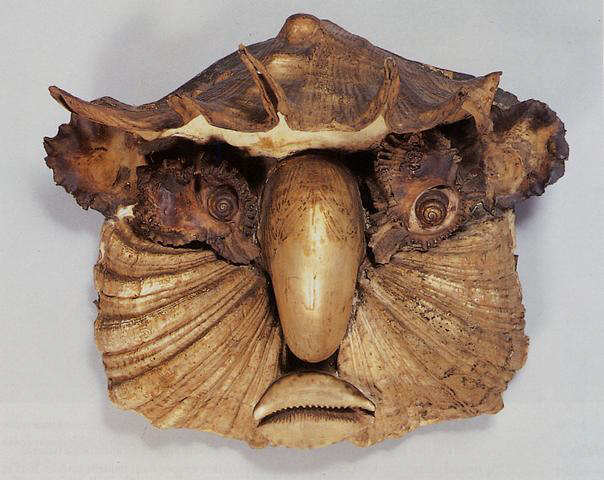
    Pascal Maissoneuve

    I have recently been conducting some further research into the way we display and interpret exhibitions of Outsider Art or work by Marginalised Artists. This research has raised a few questions for me that I thought might be interesting to include in the blog.

    I have been reading Lyle Rexer’s ‘How to Look at Outsider Art’, in which the author himself questions what really counts as Outsider Art. The term itself is so broad and covers so many different bases that more often than not we struggle to aptly define it at all. Rexer provides numerous definitions throughout the introduction and first chapter of the book; a chapter entitled ‘Art without Artists’. He quite correctly claims that Outsider Art “unlike the isms… does not refer to the art but to the status of the people who make it.”[1] He adds that the term has “become a catchall phrase for everything that is ostensibly raw, untutored and irrational in art.”[2]

    The traditional ‘movement’ of Outsider Art (if we can even call it a movement at all; apparently lacking precursors and emerging mainly as a ‘hindsight’ movement) includes artists from a whole host of different backgrounds. We have the ‘legendary’ Outsiders who include Henry Darger, Richard Dadd and Adolf Wolfli, alongside less well known artists who have been labelled within this category. But, Rexer argues – as I do to some extent – what really defines all of these artists? What is it about them or their work that enables us to group them all within this category of Outsider Art?

    Certainly, within the traditional art historical canon, movements such as Impressionism, Expressionism, and Surrealism to name a few, are defined by the work not the artist. They are defined by a distinct style, a certain brushstroke, or bold colours. Outsider Art is much more difficult to define in this way. It is based on the artist – their psychological state, their political standing or their social exclusion. As Rexer notes: “in art galleries and in most exhibitions of self-taught and outsider art, one is likely to see everything from early America advertising signs and Native American artifacts to Haitian Voudou flags, religious art from the South, and works by people in severe mental distress.”[3]

    Is it right, then, to group artists such as the academically trained Dadd together with the very private Darger? Darger, as one example, certainly did not actively want anyone to see his work, or even discuss it. Is Dadd only grouped within this category of Outsider Art because of his battle with Schizophrenia which resulted in him murdering his own father? After all, before the onset of his Schizophrenia, he was a professionally trained artist, who travelled the world to advance his skills. We could argue that artists such as Paul Cezanne, Gustave Courbet and Eduard Manet were Outsider Artists of their time. They did not fit into any previously existing art historical movement, and their work challenged pre-existing ideas of colour, subject matter and style. Rexer explains that the group of artists who exhibited at the Salon des Refuses of 1863 after announcing a break with tradition could be described as Outsiders – they were consciously working outside of the art historical norm.

    Giuseppe Archimboldo’s work of still lifes using fruit and vegetables are world-renowned, but similar work by Pascal Maisonneuve using shells to create faces is labelled as Outsider Art. How do we explain this divide, this difference? It has crossed my mind that perhaps the work of celebrated Outsider Artists such as Darger and Wolfli might come to be accepted into an art historical movement within time. Perhaps Maisonneuve’s work might sit alongside Archimboldo’s in an exhibition celebrating still lifes – just as the work of the Impressionists now sits in the timeline of the progression of nineteenth century French painting, following the work of David and Ingres. Outsider Art seems to me to be a label that encompasses the work of artists whom we do not know how – or where – to put. It is a ‘movement’ (in the loosest sense of the term) that covers a huge expanse of time and a huge range of styles, subject matter and indeed history. To finish, I would like to use a thought-provoking quote by Rexer which highlights the complicated nature of using such a broad term: “many of these objects do share some common ground, but putting them into a very large suitcase called ‘self-taught’ or ‘outsider’ certainly makes them harder to appreciate.”[4]

    References:

    [1] Rexer, Lyle. How to Look at Outsider Art  (Harry N. Abrams Inc, 2005), p 12

    [2] Ibid, p 6

    [3] Ibid, p 10

    [4] Ibid, p 10