Category: Exhibitions

  • Radical Craft: Alternative Ways of Making

    Radical Craft: Alternative Ways of Making

    A new exhibition organised by Outside In and Craftspace is launching at Pallant House Gallery on 12 March 2016, illustrating the different and more alternative ways material and craft techniques can be utilised by artists and makers. ‘Radical Craft: Alternative Ways of Making’ will showcase work by historically renowned artists associated with the Outsider Art field alongside contemporary self-taught artists who see themselves as facing barriers to the art world; 21 of whom have been selected through an open submission process.


    Aradne - The Gathering
    Aradne, The Gathering

    Outside In, a project based at Pallant House Gallery, Chichester (UK), that supports artists who see themselves as facing barriers to the art world for reasons including health, disability, social circumstance or isolation, facilitated the open submission section of the exhibition, calling on the 2,000 UK-based artists with online galleries on their website to submit their craft based work for possible inclusion in the show. There were over 200 submissions, and the final works were selected by a panel including textile artist Alice Kettle; artist and Outside In Award Winner Phil Bard; Laura Hamilton, Co-Curator of ‘Radical Craft’; Katy Norris, Curator at Pallant House Gallery; and Deirdre Figueiredo, Director of Craftspace.

    The incredibly diverse work by UK artists will sit alongside pieces by artists of international renown from Asia, North America and Europe. The artists in this section of the exhibition include Dalton Ghetti, whose intricate pencil-graphite carvings are inspired by what he experiences on a day-to-day basis, and Julia Krause-Harder, who creates gigantic dinosaurs in mixed media.

    JuliaKrause-Harder_Stegosaurus_1 (1)
    Julia Krause-Harder, Stegosaurus, Image courtesy of Atelier Goldstein

    What ties the work in this exhibition together is the radical missions and processes that underlie each creation. These include intuitive responses to textiles; autobiographical responses to the natural or urban environment; and folkloric or surreal perceptions of the world. The exhibition’s aims lie most significantly in wanting to break down barriers. These barriers are two-fold. Firstly, there is a want to challenge preconceptions surrounding who can be considered an artist and what can be considered art – does someone need to have been to art school? Do they need to have exhibited in a high profile venue? – and secondly, the different but related question of why craft is often considered a ‘lesser’ form of art. Although the latter – and in many ways the former – are not directly answered within the show, the inclusion of both untrained artists and craft works within a nationally renowned modern British art gallery leaves some pause for thought.

    The exhibition will reveal not just who makes radical craft, but why they do, what they are inspired by, and ultimately, what the finished pieces – tied up as they are in the hopes, dreams and experiences of each maker – look like aesthetically.

    Beth Hopkins - Found Object Figure
    Beth Hopkins, Found Object Figure

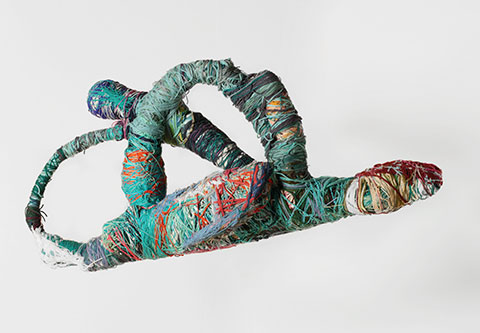
    There are works in the exhibition which literally take this idea of being tied up in and with the history and context of the maker. In Nnena Kalu’s work, wound and bound bodies emerge as she builds and layers material upon material. Somewhat aesthetically similar, Judith Scott starts with an object hidden deep within the wraps and binds of her 3D sculptures. She repetitively hides and covers, whereas Kalu keeps building and building. Michael Smith’s customised jeans embody another form of wrapping. In his work, Smith alters something that already exists (in this case clothing), making his mark with masking tape, in the process creating the appearance of mythical creatures and new human-esque characters.

    From the above, you can see that textiles and fabric-based work will make up a large chunk of the show. In addition to the wrapping and winding of Kalu, Scott and Smith, there will be the machine embroidered web-like worlds of UK-based Aradne, and the impressive woven birch bark clothing of Finland’s Erkki Pekkarinen. Other materials and processes utilised in a radical way within the exhibition are Horace Lindezey’s wire drawings of the seven suits he owns for special occasions, and the found objects and discarded electrical gadgets that are given a new lease of life by Beth Hopkins.

    Nykykansantaiteilija Erkki Pekkarinen ja tuohipuku.
    Erkki Pekkarinen, Photograph of the artist wearing woven birch bark suit, Image courtesy of Veli Grano

    The exhibition is going to be key in the field, both in its attempt to raise the profile of artists working outside of the mainstream, and in its bold and courageous move to highlight the importance of craft within the art world. Much of work in the exhibition is primarily a form of communication; it is how the artist is most able to convey their unique messages, emotions and perspectives. With this end, craft enables the maker to create something that is wholly sincere. Working directly with the material; pulling, sewing, sticking, moulding, touching, feeling, their product is unavoidably connected to their physical being.

    Excitingly, the work in ‘Radical Craft: Alternative Ways of Making’ is the aesthetic and tangible result of unheard voices, radical imaginations, and – perhaps most poignantly – incredible creativity that, until now, has been overlooked by much of the art world.


    The exhibition is at Pallant House Gallery from 12 March – 12 June 2016, before touring around the UK. For more information, please click here.

    Featured Image: Nnena Kalu with one of her bound sculptures

  • Jim Sanders at Into You Tattoo

    Jim Sanders at Into You Tattoo

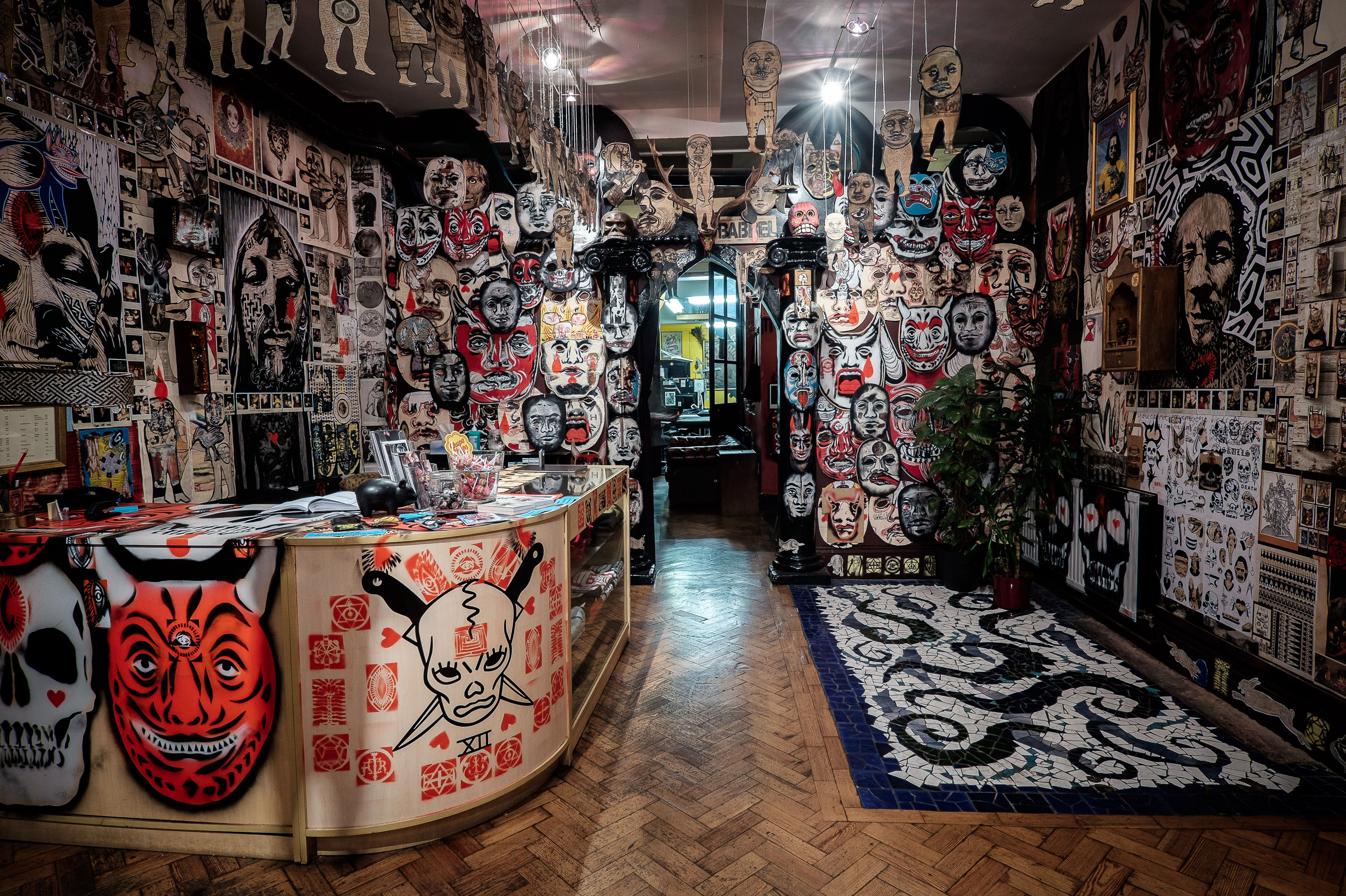
    The walls – and ceiling – of Into You Tattoo in Clerkenwell are currently covered in the religion-inspired, life-portraying works of Brighton-based artist Jim Sanders to mark the closure of the parlour’s central London franchise. The body of drawings plastering the space have been created over a period of five years and feature images of faces, figures and animals acting as studies of the human behaviours and interactions in an overcrowded world.


    DSCF2068 copy
    Image courtesy of David Toolan

    Jim Sanders // Artist

    “I first met Alex Binnie about eight years ago as we shared the same framer (Alex is also an artist and originally trained as a medical illustrator, I believe) – Tim Harbridge, who ran a place in Kemptown called the Fair Trade Gallery. Tim is also a very fine musician and would put on gigs in the tiny gallery space, and Alex and I came across each other at one of these and immediately hit it off.

    A few years later Alex invited me to have an exhibition of my work at his Into You Tattoo shop in London and that was the first time I saw the place. I have had maybe two or three exhibitions there now and Alex has visited my house on several occasions. I think him seeing the way my house looks prompted him to ask me to create a similar installation to commemorate their last year in their Clerkenwell location.

    DSCF2031 copy
    Image courtesy of David Toolan

    I had a vague plan of how I wanted to decorate the shop and my actual physical starting point was using the A0 photocopies of Alex’s woodblock print portraits of shop tattooists past and present. Alex had provided me with them a few weeks in advance of starting the installation and I had altered them by staining them with tea and cutting them in half vertically and mixing up the faces to create strange distorted characters. I pasted these onto the walls at a certain height all around the shop to create focal points and from there I let it grow pretty much organically. For example, a box of old polaroids taken in the shop 20 years ago served to make a fine frame around these portraits.

    The starting point on the wall by the stairs (which had the largest drop) was three A0 photocopies of the full figure of Blue; the heavily tattooed receptionist. I wanted her to be like the God Shiva with many arms emerging, a towering presence to be seen when you entered through the door of the shop. The arms were taken from photographs of the other current tattooists.

    DSCF2108 copy
    Image courtesy of David Toolan

    I also knew that I wanted to cover the wall facing the door, separating the front of shop with the tattooing area with masks and faces, echoing the installation I created at Le Lieu Unique in Nantes.

    The installation took one week to complete. I would start work at noon every day when the shop opened and would stay until about 10 or 11 at night – sometimes even one ‘o’ clock in the morning. I wanted the walls to be covered as with the skin; with nothing left untouched, and reflecting the same themes of imagery, mythology, astrology, symbolism, sex, and death.

    The installation is there for the entire year, so I wanted to present an abundance of imagery so those frequenting the shop can keep discovering new stories hidden amongst the cacophony. I hope my work acts as a memorial to the life that has taken place at the tattoo parlour over the last 23 years. A reminder to regular visitors of what has gone on there, and maybe a sense of wonder for those encountering the place for the first time.”


    Alex Binnie // Into You Manager

    “I’ve had my shop in Clerkenwell for almost 23 years now. It’s a big space; too big almost. For a while we had different art shows in the front of the shop, but it got to be a drag organising it. I thought – let’s let Jim do something big and fun, and completely different to anything else in any other tattoo shop. I knew he could work big and fast, and he was up to the job.

    DSCF2011 copy
    Image courtesy of David Toolan

    I asked Jim to create something in his unique style, using raw materials I would provide. We got together some images from all of us at the shop and I let him run with it. One of the main elements is blow ups of some of the woodcut portraits I’ve done of some of the guys that work in the shop. I mainly left the creativity up to Jim though.

    The customers like it for sure. Tattoo shops have started to have a bit of a generic look, and I wanted to mix it up a little. It’s gone down well.”


    If you would like to see Jim’s work at Into You, you can visit the shop at 144 St John’s Street, London, EC1v 4UA, Monday – Saturday 12 – 7pm. Click here to visit the shop’s website.

  • Julio Cesar Osorio: Communicating from the Subconscious

    Julio Cesar Osorio: Communicating from the Subconscious

    In light of his two current exhibitions in London, Julio Cesar Osorio talks about finding inspiration in the darkest of places and his want to portray his own unique journey, inviting the viewer to jump in and join him – not unquestioningly – on his travels to a more vibrant world.


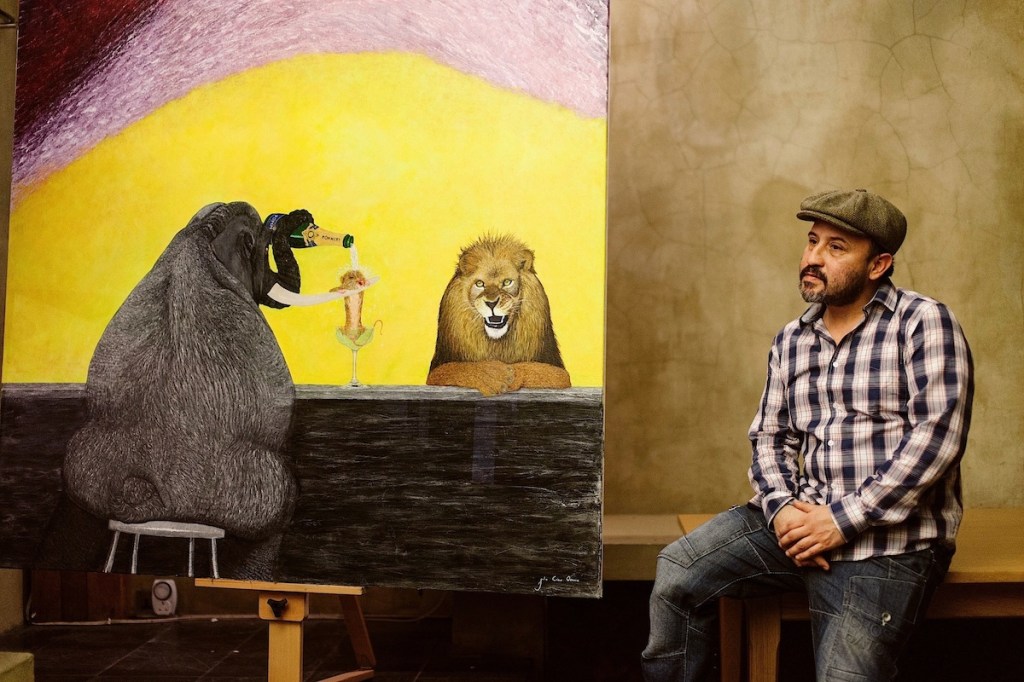
    Elephant final web
    Elephant

    When did you first start making art?

    Looking back at my life I can honestly say that I have always been very analytical about my surroundings. I have always looked for the beauty within things; even at a microscopic level, like when I looked at an onion skin under a microscope for the first time in biology class and thought that the shapes and patterns looked lovely. I have always visually admired things, but it wasn’t really until I landed in prison that I took up art. From the word go I was over taken by the therapeutic power of painting; it became my passion and provided an escape from where I was.

    What originally inspired you, and what inspires you now?

    I did a degree in photography and digital imaging 15 years ago and during that time Dali became my inspiration to create surreal work; to carve one’s own story to illustrate what’s on one’s mind. This was exactly what I did when I discovered that I could paint in prison. This would be the tool I would use to create – even in the environment I was in.

    To this day, surrealism has been the genre I have chosen to work in and a surrealist is the type of artist I wish to be classed as.

    Lionpotrait w
    Julio with his Lion Portrait

    What is your process – from starting to finishing? How long does it take?

    I write down ideas or do small sketches of what the idea involves, and then look for relevant imagery; photos, magazine cuttings, etc., that I think might work in my painting and then I’ll start by painting the background. Then I’ll move on to sketch the subject matter, making sure it’s all in the ideal place and when I’m happy with the layout, I’ll go on to paint them.

    Each piece has varied in the time it’s taken to produce. Most of my work was produced in prison, where I became so prolific that I would work at least 10 hours a day seven day a week. As a result, I would produce at least two pieces a month. Since my release in September 2013, I have only produced one 190 x 190cm painting completed over a period of one year.

    What do you hope viewers get from your work?

    I produced all of my work and honed my skills in prison. I used the medium of painting to transport my mind with the goal of taking the viewer on my journey, encouraging them to place themselves in the work, to read and question all the thoughts and feeling that I used in every one of my pieces.

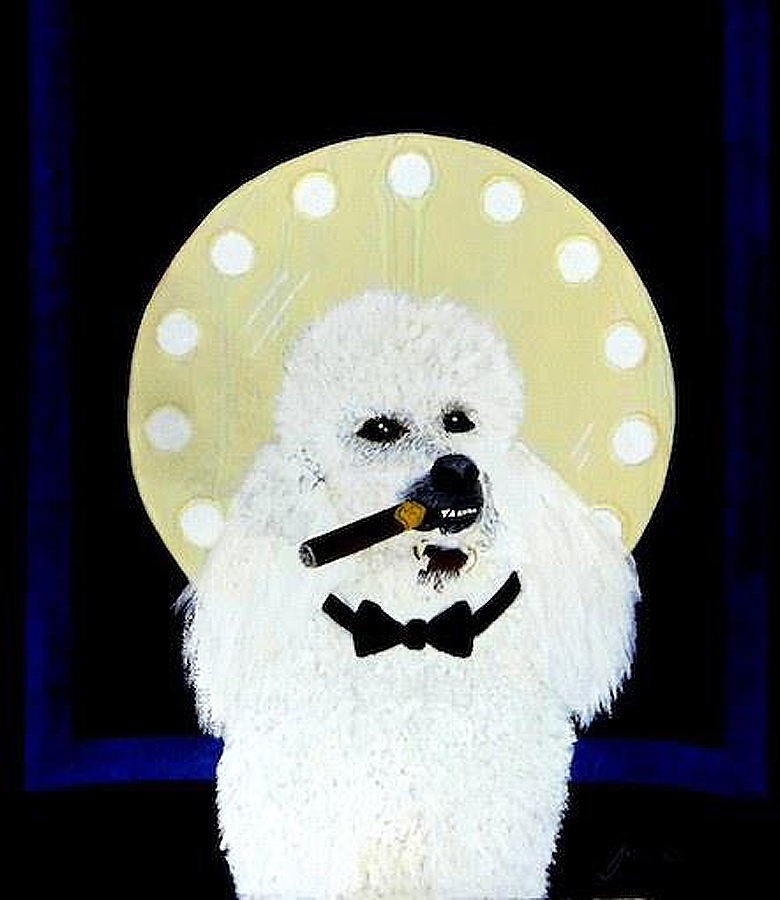
    Fat dog
    Fat Dog

    What are you working on at the moment?

    At present I am working on promoting my work and my name through social media, and I am preparing a marketing strategy to generate sales.
    I am also working on a series of photographs that I have of body painting on females. I am adding paint to these so they become mixed media pieces.

    Tell us a bit about your current exhibitions?

    At present I have got two exhibitions running concurrently in two different parts of London looking at two different themes.


    See Julio Cesar Osorio’s work in London…


    The Communication of Colours from a Very Dull Place

    Until 31st January at Coffee Wake Cup, 14 Clapham Park Road, London, SW4 7BB. Open daily from 7am – 7pm.

    Concentrating on the use of colours in the works on display and how Julio used them vibrantly whilst in prison; a very dark and dull environment. Julio wanted to show the polar opposite of what he was experiencing at the time.

    The Artist’s Subconscious

    Until 31st January at Freud Bar/Gallery, 198 Shaftesbury Avenue, London, WC2H 8JL.
    “The liberty of the individual is no gift of civilisation. It was greatest before there was any civilisation.” – Sigmund Freud.
    This exhibition concentrates on Julio’s works that evolved from his inner thoughts during his time in prison.

  • Outsider Art in Paris

    Outsider Art in Paris

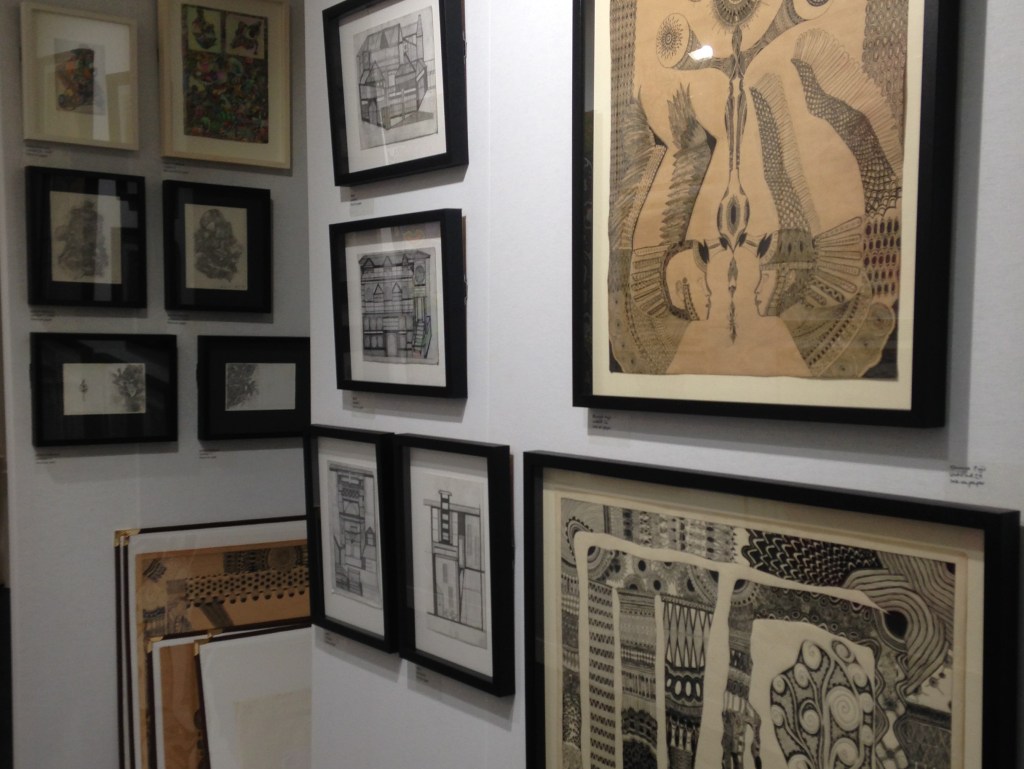
    After taking part in this year’s PARIS OUTSIDER ART FAIR (with Outside In, where I am the Communications Officer), I can see the transformation that is visibly taking place within the outsider art field. With major galleries (albeit predominantly from the field itself) from all over the world taking up a stall at the fair, the ‘cabinet of curiosity’ idea of outsider art exhibitions gone-by seems to have well and truly disappeared. The younger sibling of the lauded New York Outsider Art Fair, the Paris incarnation is quickly growing legs, and this was no more apparent than this year in the centre of such a cosmopolitan city with a constant stream of visitors: art lovers, collectors, and curious passersby alike.


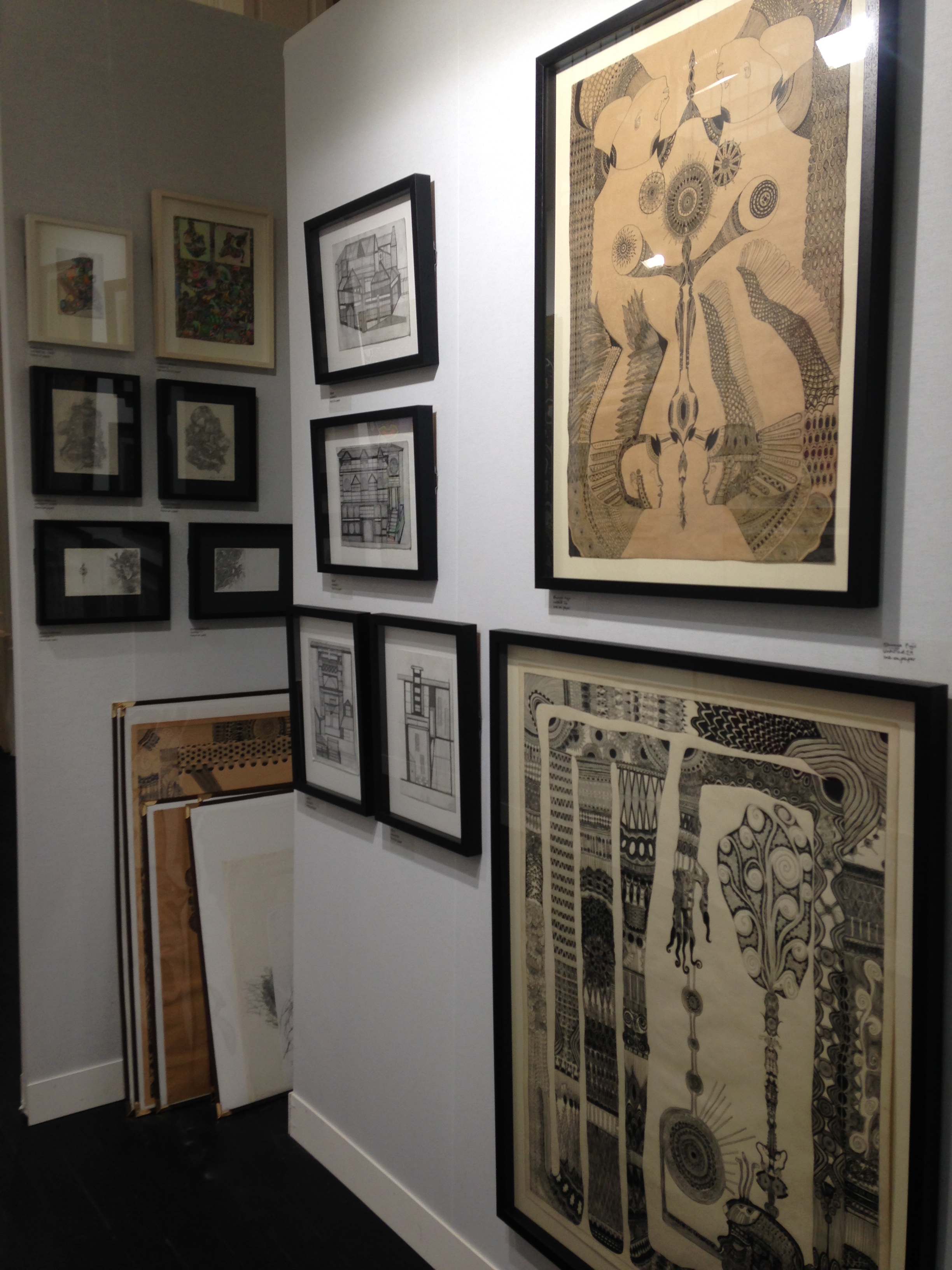
    Martin Phillimore, Albert and Shinya Fujii's work on the Outside In stall
    Martin Phillimore, Albert and Shinya Fujii’s work on the Outside In stall

    In previous years, the Fair has been held at Hotel le A, with each stall having its own intimate hotel room showcase. This year, it had a much more Fair-like air at the Hotel du Duc; a grand conference and event venue located near the Paris Opera House.

    This year the Ricco/Maresca Gallery from New York set up shop on this side of the Atlantic for the first time, London-based England & Co had their debut in Paris, and Australia was represented in the form of Coo-ee; specialists in Australian Aboriginal Art. In addition to the dealer stalls, there was a programmed talk featuring psychologists, psychiatrists, artists and curators, focusing on sexuality in the work of Henry Darger, Eugene von Bruenchenhein, Aloise Corbaz and Miroslav Tichy, and a specially curated corner of work by Japanese artist Shinichi Sawada.

    Gregory Blackstock at the Garde Rail Gallery
    Gregory Blackstock at the Garde Rail Gallery

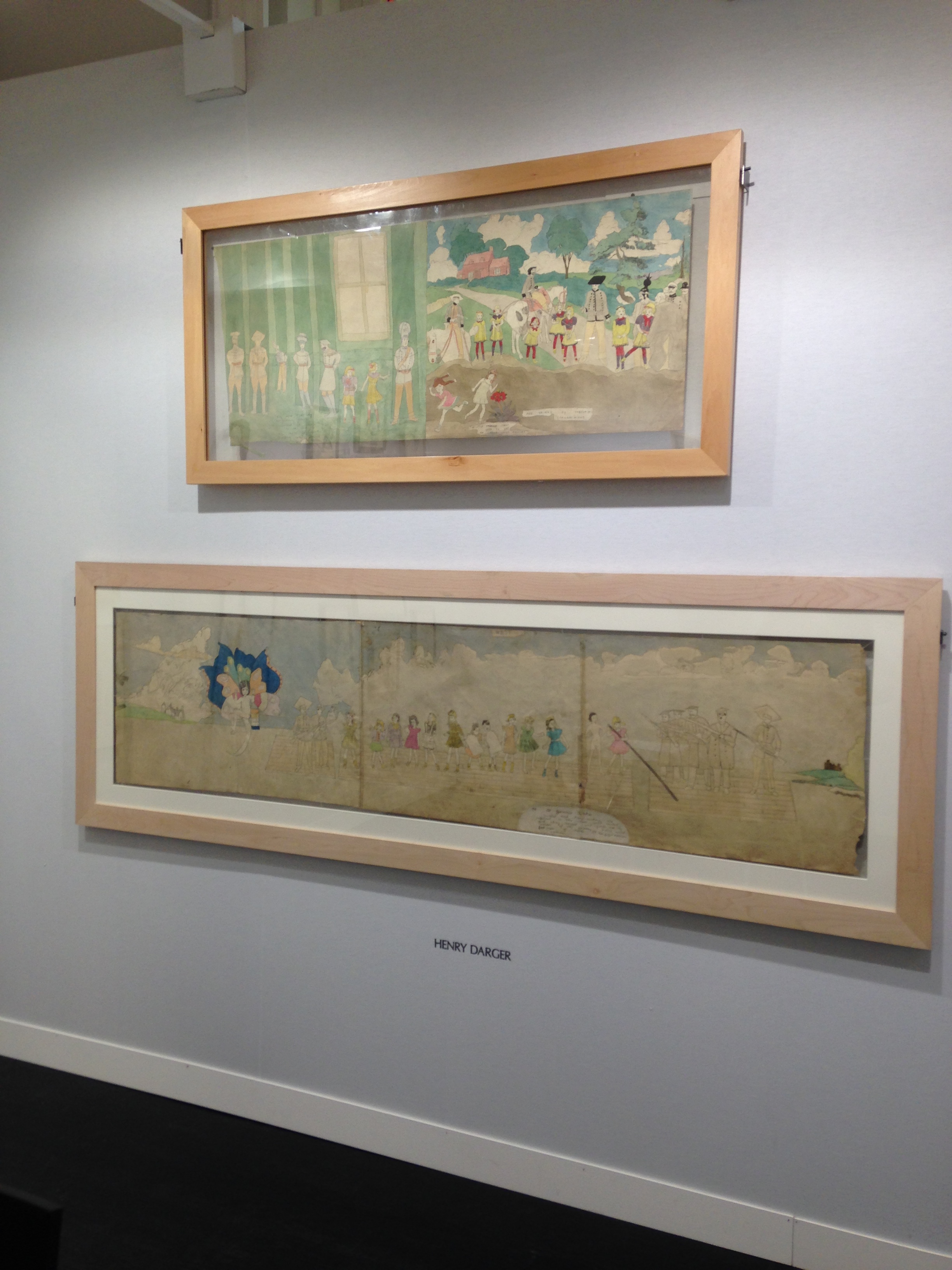
    What was refreshing was that, if you were unaware as to the title or contents of the fair, you could so easily have believed it was a very-much-mainstream-art-world-art-fair. The stalls were curated to an incredibly professional level, and the quality of work on display was unquestionable. It was fantastic to see work by some of the big names there in the flesh: Henry Darger, Bill Traylor, George Widener, and Martin Ramirez. But what was equally fantastic was the huge number of emerging artists brought to the fair by galleries who so obviously respected their work, and who so obviously respected the artists. At the Outside In stall, we were representing Bali and Buddhism inspired ink drawings by Japanese artist Shinya Fujii, whose work has only ever been exhibited outside of Japan on one other occasion. It attracted a huge amount of interest, and it was so wonderful to see people returning at the end of the day to say they had fallen in love with it; they simply couldn’t go home without it.

    Marie-Rose Lortet's solo show
    Marie-Rose Lortet’s solo show

    I was really pleased to see work by ‘anthropologist’ of the everyday, Gregory Blackstock, presented by the Garde Rail Gallery from Austin, Texas. Blackstock creates visual lists based on what he has experienced, memorised and then regurgitated. These include Monsters of the Deep, Classical Clowns and The Irish Joys – amongst hundreds of other categories. I spoke to Karen Light-Pina from the Garde Rail Gallery, who discovered Blackstock’s work in 2003. This interaction was typical of the fair; being able to meet and talk to a gallerist who personally knows the artist.

    Carlo Zinelli pieces seemed to pop up on several stalls, perhaps a sign that he is flavour of the moment. Zinelli was diagnosed with schizophrenia during his time volunteering for the Spanish Civil War in 1939 and was soon placed on medical leave, where he was committed to a psychiatric hospital in Verona. After ten years, he was admitted to a painting atelier created by sculptors Michael Noble and Pino Castagna, where he painted for hours every day with tempera paints and coloured pencils – often on both sides of the paper. His works are bright, bold blocks of colour, telling the story of his childhood.

    Marcel Storr's work
    Marcel Storr’s work

    There were several exhibiting artists present at the fair, including Cathy Ward whose scratchboard works were presented by Galerie Toxic. I saw Cathy many times, deep in conversation with visitors who were visibly excited at being able to ask the artist herself about her own work; her inspiration, her process, her style. And I think Cathy was equally as keen to share her work with visitors in person. French artist Marie-Rose Lortet had a solo exhibition of her lace architectural structures and faces with the Marie Finaz Gallery, and was herself present at the stall on several occasions.

    There was something about the rawness and the depth of the work that made the Fair unlike any other. Fairs can at times be at risk of becoming a caricature of the commercial, corporate, hard-sell, but this was far from it. This was about enjoying the work, and enjoying the artists’ stories. There was a sense of camaraderie between the stalls, despite the fact that many were competing for sales and displaying works by the same artists. I think this camaraderie came from a want to protect the artists on display, but all the while shouting from the rooftops about how talented they are.

    Henry Darger's work at the Carl Hammer stall
    Henry Darger’s work at the Carl Hammer stall

    Overall it was great. It is so refreshing to see this kind of art having a stage like this; a stage that has been a long time coming, and a stage that many mainstream artists and mainstream art galleries can take for granted. Far from being the ‘European version’ of the New York Outsider Art Fair, it was noticeable that this was in fact an international event in its own right and it is without a doubt becoming a key date on the Outsider Art calendar. I look forward to next year’s incarnation!

  • Daniel and Rodney: two perspectives on geometric form

    Daniel and Rodney: two perspectives on geometric form

    This month sees the opening of an Outside In exhibition in collaboration with Bethlem Gallery. Outside In: Bethlem will showcase the work of Daniel and Rodney, who have refined yet differing perspectives on geometric form. The exhibition will run from 19 August – 11 September at Bethlem Gallery, which is situated within the grounds of the Bethlem Royal Hospital in Beckenham, Kent.

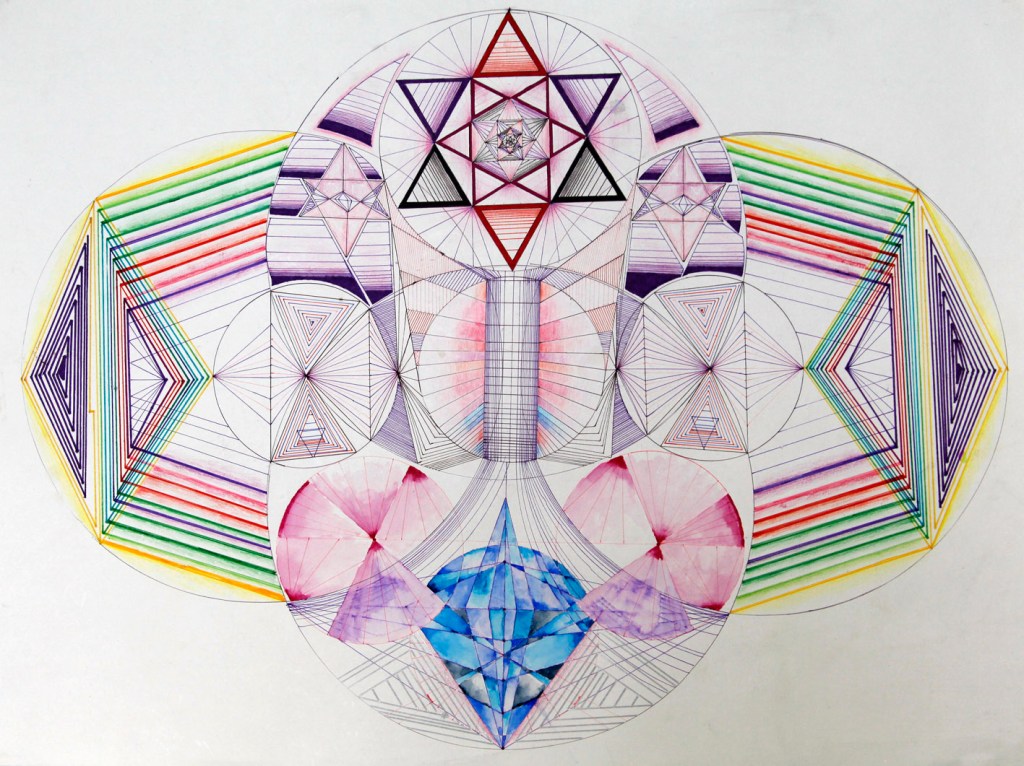
    Daniel and Rodney were selected for the exhibition by Simon Martin, Artistic Director of Pallant House Gallery, who was drawn to the idea of two artists using drawing within their work, but to different ends. Both Daniel and Rodney use linear marks to create sophisticated images, but whilst Daniel builds up complex mandala-like structures, Rodney pares back all detail to the simplest of forms.

    Rodney, Untitled
    Rodney, Untitled

    Daniel’s Metatron works form a series of drawings that all use geometric shapes, lines and vivid colour. With a tightly developed methodology for constructing structures and composing forms, Daniel has created a strong visual identity for his work. “It takes me a couple of months to do one piece, as I do it bit by bit in my own time and space,” Daniel says. “You can always find a face in my drawings that for me represents Archangel Metatron, accompanied by the third eye.”

    Daniel, Metatronic Circuit 2
    Daniel, Metatronic Circuit 2

    Simon says of Daniel’s work: “It has a remarkable precision and control, and yet it seems imaginatively free. The abstract forms and colours in his drawings and paintings seem to exist without reference to the physical world and they remind us that the artist can be like a shaman to the unconscious and a deeper spirituality.”

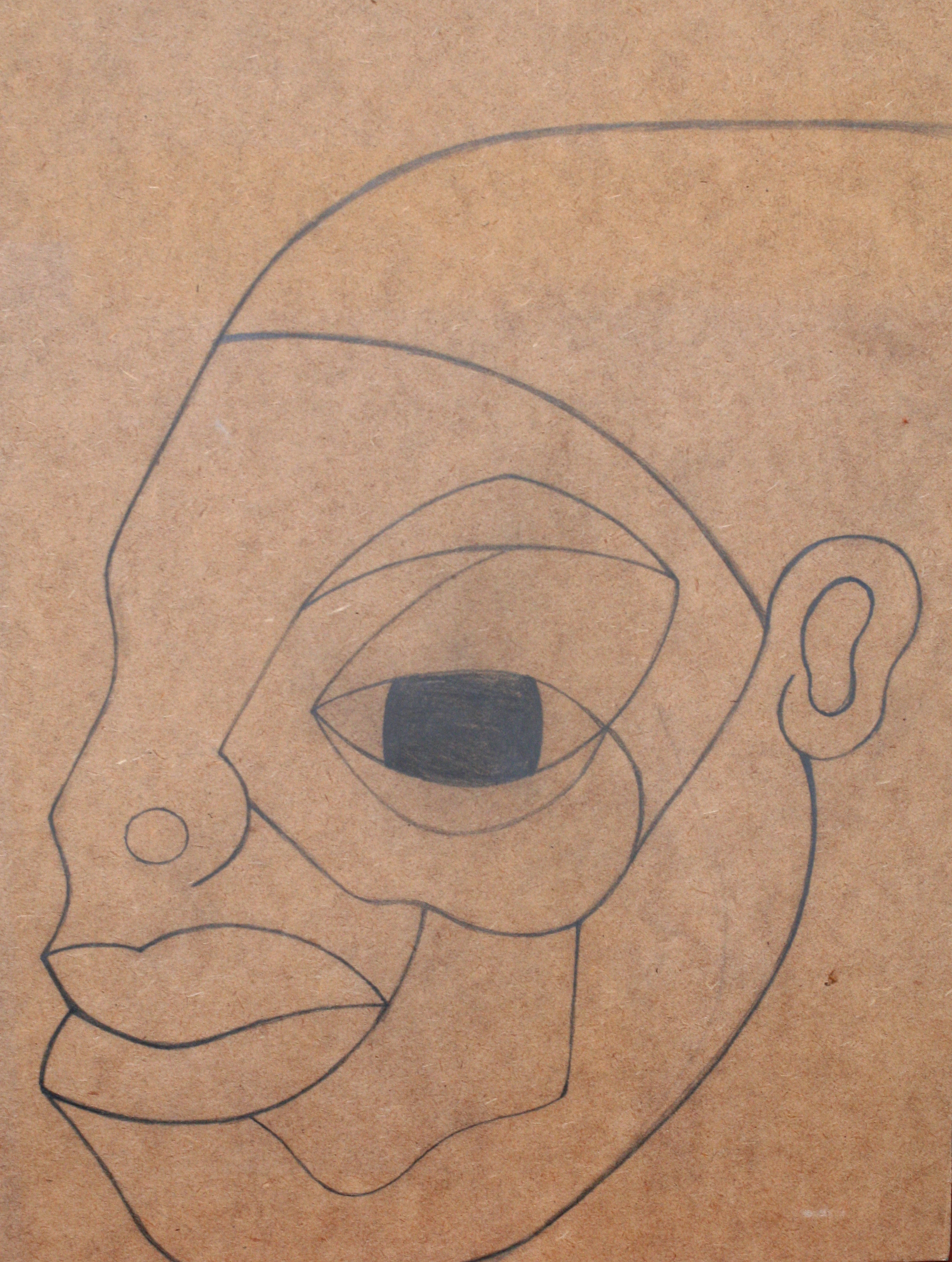
    Rodney, Jamaican Head
    Rodney, Jamaican Head

    Similar in their use of geometric forms to Daniel’s pieces, the beautifully precise and simple forms of Rodney’s work come from his studies of the world around him and include people, interiors, guns, stereos, boxes and locks. His sophisticated process of distilling complex forms down to something more refined and elegant is carried out quietly and without any formal training. “Rodney’s drawings have a powerful simplicity,” says Simon. “He seems to distill the physical world down to the simplest scaffold of linear forms.”

    Daniel, Pink Metatronic Circuit 3
    Daniel, Pink Metatronic Circuit 3

    Outside In and Bethlem Gallery both have the same ethos when it comes to promoting work by artists facing barriers to the mainstream art world, and this exhibition will combine these efforts for the second time, resulting in a high-quality show with a focus on geometric forms created in two unique styles.

    For more information on the exhibition, please click here.

  • Nek Chand: a creative tour de force

    Nek Chand: a creative tour de force

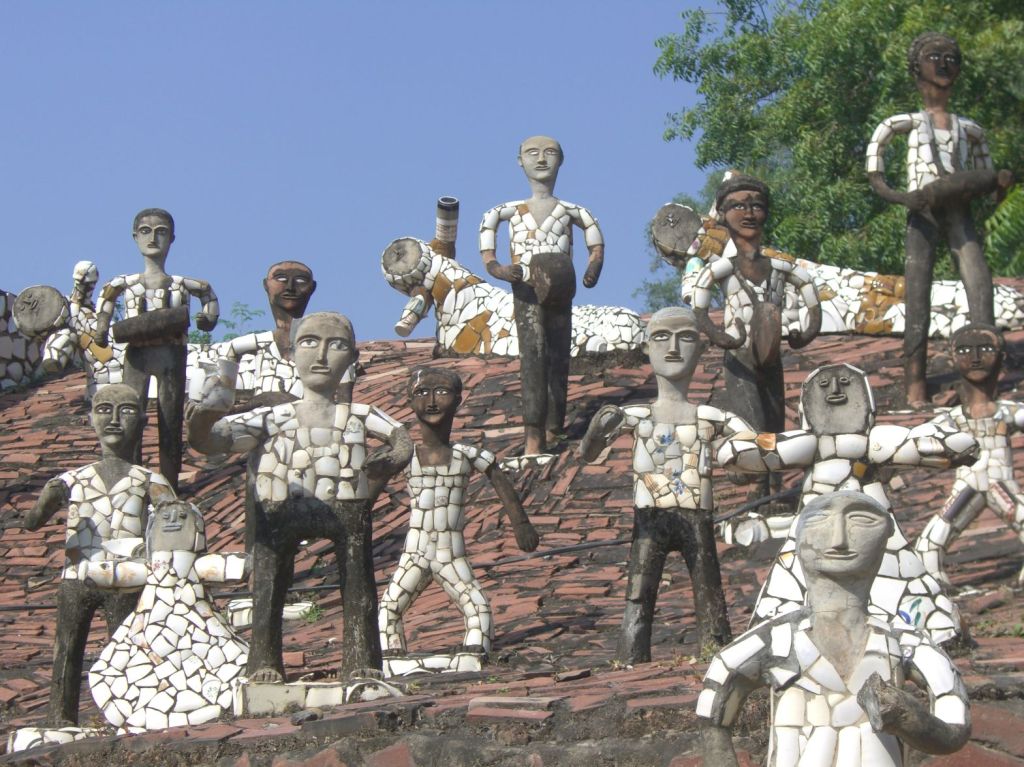
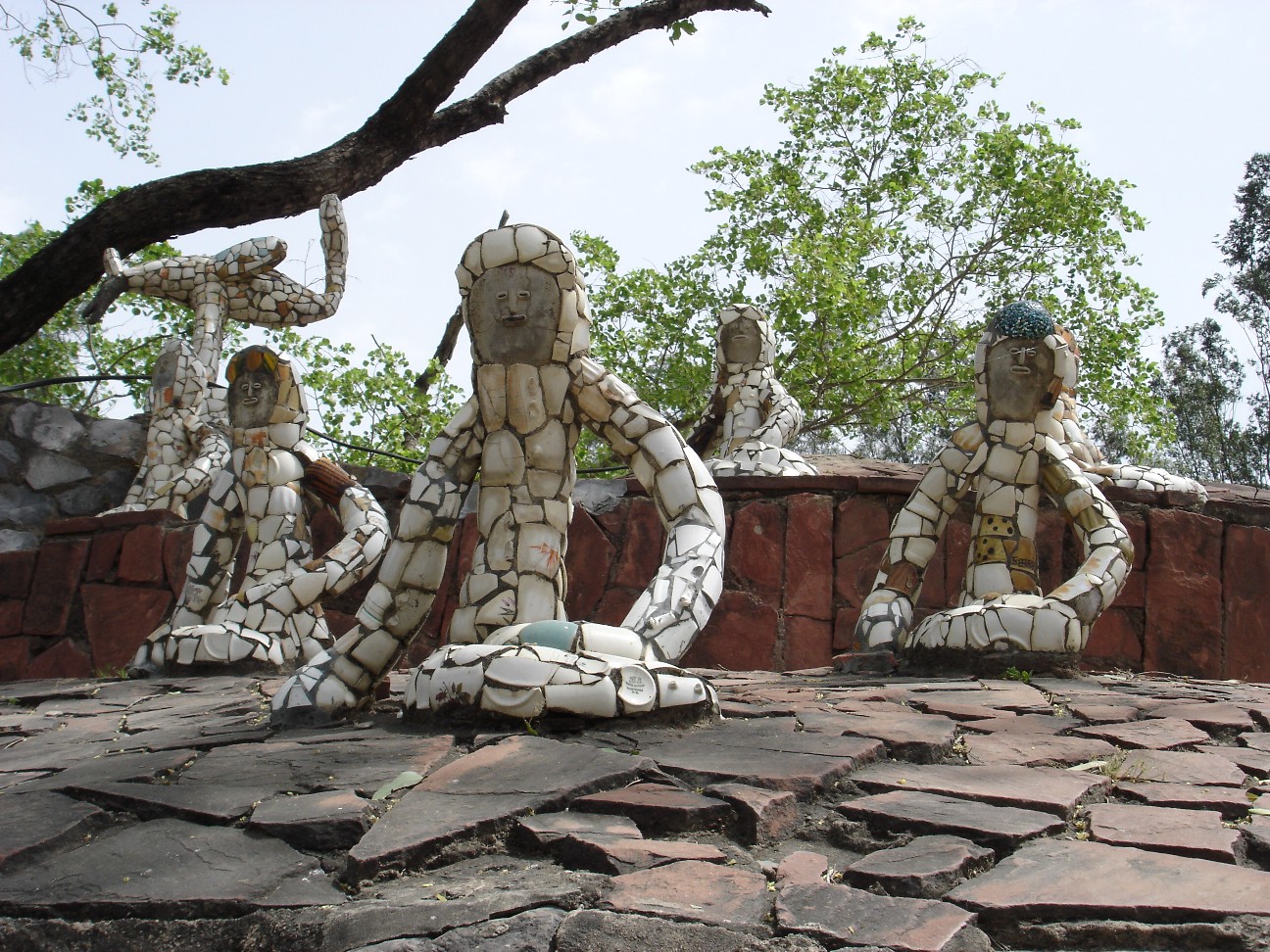
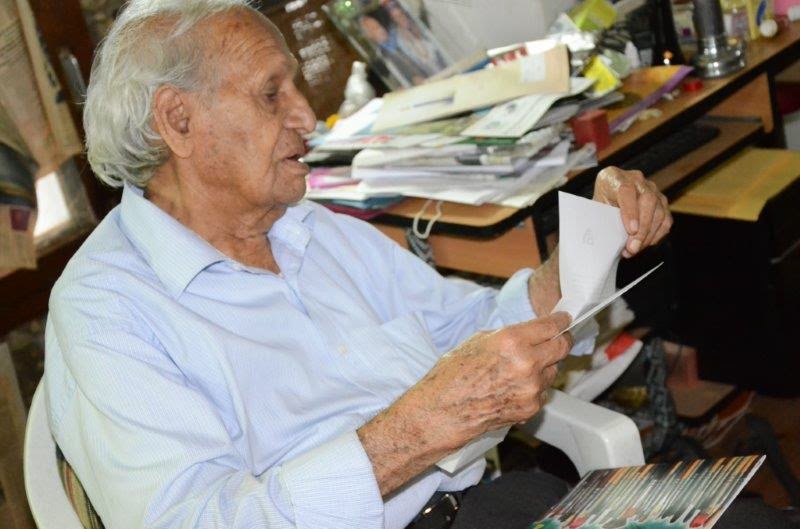
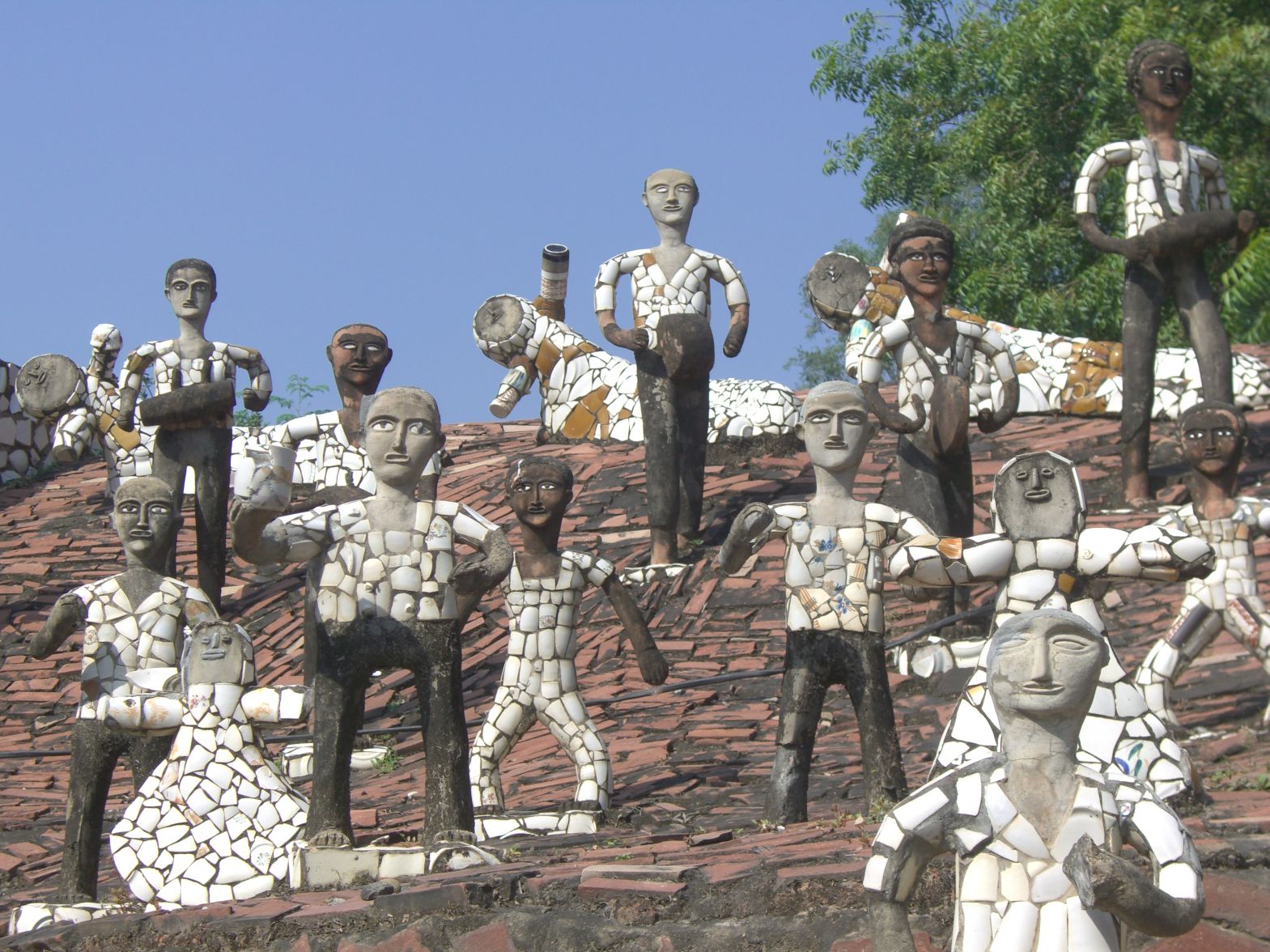
    It was with great sadness that today – 12th June 2015 – I heard of renowned self-taught artist Nek Chand’s passing at the age of 90. Chand’s Rock Garden in Chandigarh is one of the best known visionary environments in the whole world, and is an unrivalled example of one man’s incredible intuitive vision.
    Nek Chand's Rock Garden
    Nek Chand’s Rock Garden

    Born in 1924 in the village of Berian Kala, in what is now Pakistan, Chand relocated to India with his family in 1947. Eventually, he moved to Chandigarh in the northern part of the country; the first planned ‘utopian’ city in Post-Independence India, designed by Swiss architect Le Corbusier.

    A deeply spiritual man, Chand was fascinated by the mystical significance of rocks, and was by profession a public roads inspector for many years. It was during his time in his role as roads inspector that he began spending his evenings imagining and moulding figures out of recycled and found materials. Pursuing a vision from a dream, Chand cut back a clearing in the jungle on the outskirts of Chandigarh, situated in the middle of the Capitol Complex and the Sukhna Lake; the place where his Rock Garden was to come to life. This space, he believed, had once been home to a glorious kingdom.

    Nek Chand
    Nek Chand

    Chand’s process is indicative of many historically renowned outsider and self-taught artists, with a focus on found objects and recycled materials. He used discarded objects, such as broken crockery, electrical fittings, glass bangles and bicycle frames, building up the bulk of the figure with a cement and sand mix. A final coating of smoothly burnished pure cement combined with waste materials would then be added. Chand believed that each figure contained the spirit of a human being, god or goddess.

    During the making of the Rock Garden Chand was consumed by his vision. He has said before of the Garden: “It began really as a hobby. I started not with the idea that it would become so famous. Every day, after I finished my government job, I would come here to work for at least four hours. At first my wife didn’t understand what I was doing every day, but after I brought her to my jungle hut and showed her my creation, she was very pleased.”

    Nek Chand's Rock Garden
    Nek Chand’s Rock Garden

    In 1972, the Rock Garden – originally an illegal endeavour by Chand in his spare time – became a municipal authority-funded tour de force. Stunned by Chand’s creation, the authorities pumped money and labourers into the project; now the world’s largest visionary environment, with several thousand sculptures covering more than 25-acres. In 1976, it was opened to the public.

    The Nek Chand Foundation was founded in 1997, and today the area is overseen by the Rock Garden Society, opening its doors to over 5,000 visitors every day. It is the second largest tourist attraction in the whole of India – second only to the Taj Mahal.

    Nek Chand's Rock Garden
    Nek Chand’s Rock Garden

    Chand’s creative vision, his fascination with the creation of something from nothing, the conversion of waste into beauty, has led to his position as one of the most respected creators in the world. His Rock Garden is his personal legacy, one that has touched many people’s lives and one that will continue to do so for long after this sad day.

    For those in the UK or visiting between now and October, a selection of mosaic sculptures from Nek Chand’s Rock Garden are currently on display at Pallant House Gallery in Chichester. The exhibition is free to see, and continues until 25 October 2015. Click here for more information

  • Miraculous Urgency: exploring the relationship between catharsis and art

    Miraculous Urgency: exploring the relationship between catharsis and art

    You may have seen a blog I posted back in March about an upcoming exhibition kdoutsiderart.com is organising in collaboration with Now and Again Gallery in Brighton, UK. I’d just like to extend a huge thank you to all of the artists who submitted work – the standard was incredibly high, and myself and Daniella Norton, the co-curator, thoroughly enjoyed browsing through the fantastic work. We have now narrowed down the exhibiting artists to 24, and are eagerly awaiting the arrival of their work at the Gallery.

    Lucy Richards, Between Two Worlds
    Lucy Richards, Between Two Worlds

    The exhibiting artists include: Jonathan Alibone, Michael Bartlett, Polly Blake, Sean Burn, Nick Carrick, Lou Clement, Ellen Cross, Nikki Davidson-Bowman, Hannah Dennison, Jayne Eagle, Libby Goddard, Sharon Jaque, Lydia Meehan, Jenny Milarski, Steve Murison, Susan Plover, Lucy Richards, Ginette Rimmington-Jones, Luciana Rosado, Katie Sollohub, Anthony Stevens, Chris Stevens, Mike Stoakes and Joshua Uvieghara.

    Katie Sollohub, A Handful of Memories
    Katie Sollohub, A Handful of Memories

    The exhibition will include works created in a whole host of ways, in a wide range of media, including, but not limited to: paintings, drawings, sketchbooks, film, sound pieces and sculpture, and it will focus on the link between art and catharsis. We are currently in the process of putting together a booklet with written pieces by various artists and writers outlining their thoughts on the links and the importance of art in providing a cathartic release. With the show, ‘Miraculous Urgency,’ we hope to highlight introspective moments within artistic practice where, for whatever reason, a cathartic act has taken place during the making of the work. It will shine a light on the importance of creativity, and how, in many cases, process is equally as important as product.

    Ellen Cross, Father
    Ellen Cross, Father

    We will be holding a preview event on Saturday 4th July, 6 – 9pm at the Gallery space: Now and Again Gallery, 17B Beaconsfield Villas, Brighton, BN1 6HA, and would love you to come along if you are in Brighton. The exhibition will continue on the 10th, 11th, 17th and 18th July, 1 – 5pm (or by appointment at other times).

    You can find out more about the Gallery by clicking here.

    If you would like more information on the exhibition, please get in touch by emailing: kdoutsiderart@yahoo.com.


    Featured image: Luciana Rosado

  • Outside In: Intuitive Visions

    Outside In: Intuitive Visions

    Featured Image: Martin Phillimore, All the Fun at the Fair


    Two new exhibitions opening in Brighton this weekend illustrate the fantastic work being created by artists represented on the Outside In website. Both exhibitions are taking place during May – famously ‘Brighton Festival’ month. One is in partnership with HOUSE Festival 2015; the visual arts arm of Brighton Festival, and the other in collaboration with Brighton’s Artists Open Houses, another Festival related endeavour which sees artists of Brighton and Hove throw open the front doors of their homes.

    ‘Intuitive Visions: Shifting the Margins’

    ‘Intuitive Visions: Shifting the Margins’, in collaboration with HOUSE 2015, will take place at Phoenix Brighton from 3 – 31 May, showcasing the work of nine Outside In artists: Aradne, Blair McCormick, John Ackhurst, Jonathan Kenneth William Pettitt, Luc Raesmith, Martin Phillimore, Michelle Roberts, Paul Bellingham and Sally Ward. Curated by Katy Norris, curator at Pallant House Gallery, the exhibition includes a host of intuitive works, including Paul Bellingham’s ‘blind drawings’, which he creates by closing his eyes and drawing a head, before opening his eyes and filling any extraneous space with colour.

    Paul Bellingham, Comfort Comes
    Paul Bellingham, Comfort Comes

    The utilisation of found objects and materials is common in the show, with Luc Raesmith working quickly and intuitively with available recycled and found materials: “I am a colour obsessive, as well as a ‘magpie’ for images, textiles and metals, plus beach and street plastic flotsam.” Similarly, Sally Ward will often pick up materials from charity shops; fabrics that already have a history of their own, before stamping, spraying and sewing them to give them a new lease of life.

    Colour is abundant in the exhibition, with the likes of Jonathan Kenneth William Pettitt’s ‘Love Tears’ and ‘Pee Thrips,’ and Martin Phillimore’s untitled doodles. Similarly, Michelle Roberts’ colourful and complex worlds have a distinct logic and meaning that connect to her own life. Working methodically across each canvas, Michelle starts by building layers of patterns, working from left to right and top to bottom, before selectively filling the shapes with colour.

    Jonathan Pettitt - Love Tears
    Jonathan Kenneth William Pettitt, Love Tears

    The exhibition is a culmination of a burgeoning relationship between Outside In and HOUSE 2015 – something that will undoubtedly benefit both the public and the two organisations by offering new audiences the opportunity to engage with exciting contemporary work.

    Click here for more information on ‘Intuitive Visions: Shifting the Margins.’


    ‘Being Creative is Good For You!’

    ‘Being Creative is Good For You!’ sees Outside In and The Wellbeing Gallery – based at Brighton Health and Wellbeing Centre – collaborate for the second time as part of Brighton’s Artists Open Houses. Showcasing work by four Outside In artists: Aradne, Annika Malmqvist, Anthony Stevens and Valerie Potter, the exhibition aims to highlight how these four artists have discovered their own personal fabric-based techniques to channel their creativity and improve their wellbeing.

    Aradne, Aureola 3
    Aradne, Aureola 3

    From Aradne’s technique of utilising a sewing machine as a drawing implement, to Anthony Stevens’ textiles imbued with deep, symbolic meanings, this exhibition pivots around the notion that using your hands and creating can be incredibly beneficial to health and wellbeing. Anthony says: “To create is one of the fundamental experiences of being human. It feels so much more invigorating to create from the nuts and bolts of our own lives, than to just stagnate and consume what is made available to us.”

    Anthony Stevens_CultureVulture
    Anthony Stevens, Culture Vulture

    The exhibition will be accompanied by a series of related events, including an interactive, creative workshop led by artist and curator Jude Hart, as well as mini-workshops led by exhibiting artists Aradne and Anthony Stevens. In these mini-workshops, participants will have the chance to learn a new technique or simply enjoy being creative.

    Click here for more information on ‘Being Creative is Good For You!’


    About Outside In

    Founded by Pallant House Gallery in 2006, Outside In provides a platform for those who define themselves as facing barriers to the art world due to health, disability, social circumstance or isolation. The goal of the project is to create a fairer art world which rejects traditional values and institutional judgements about whose work can and should be displayed.

    www.outsidein.org.uk

  • An Exploration of Catharsis and Art

    An Exploration of Catharsis and Art

    This post focuses on the relationship between art and catharsis and is a precursor to an exhibition I will be co-curating with Daniella Norton in June/July this year at Now and Again Gallery in Brighton, UK (see below for information on how to submit). The exhibition is currently open for submissions, and we are looking for artists who consider their work to be the result of catharsis or a cathartic act to submit. Catharsis is a term widely recognised to have originated in Aristotle’s work; most notably, his text Poetics. It is, in short, a process that provides relief (often psychological) through the expression of emotions or repressed experiences.

    Most writings on catharsis – historical and philosophical – speak of catharsis as a process that affects those experiencing or viewing a work of art or a play (see Aristotle’s writings on catharsis which focus mainly on the act of catharsis taking place for observers of tragedies). For the exhibition, we are taking this one step further (or perhaps one step sideways), and looking predominantly at the aesthetic result of a cathartic act in visual art.

    Louise Bourgeois
    Louise Bourgeois

    There is a long history and much research into the cathartic effect of art-making and art as a therapeutic act has long been taken seriously by arts and health professionals. There are many curatorial angles, but with this show our main hope is to highlight how making work that has a cathartic impact is something many artists do regardless of what their ‘commercial’ practice is about, as well as reiterating its equal visual importance. We hope it will also raise other questions – for example, whether a cathartic moment for the artist during the process of making directly translates into an ‘Aristotlean’ response for the viewer – a ‘chain of catharsis.’

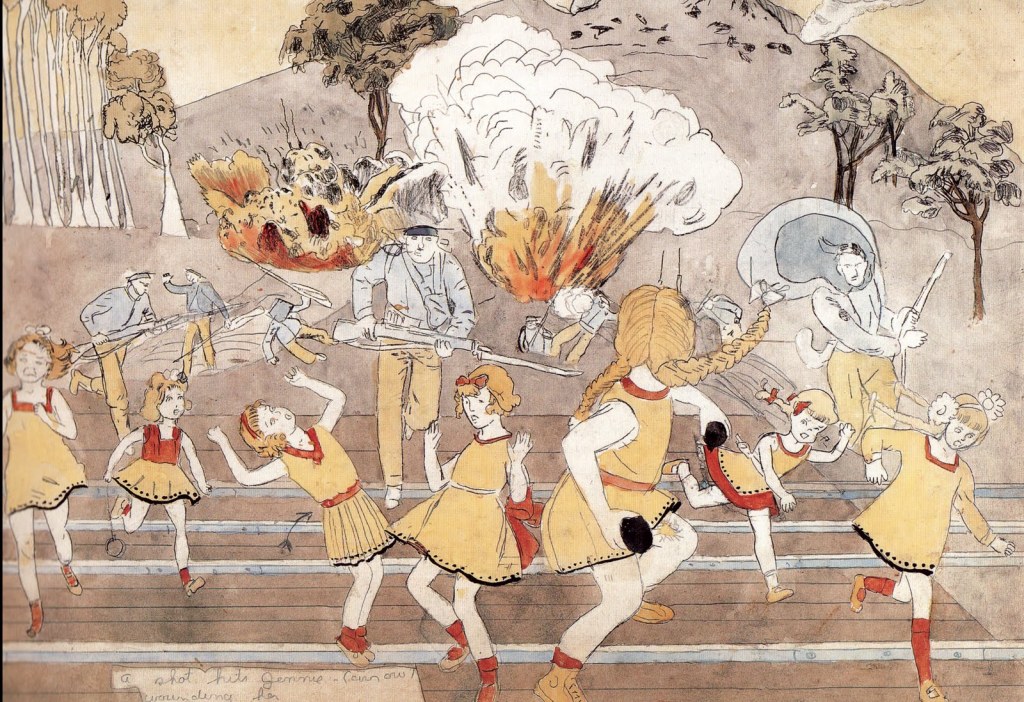
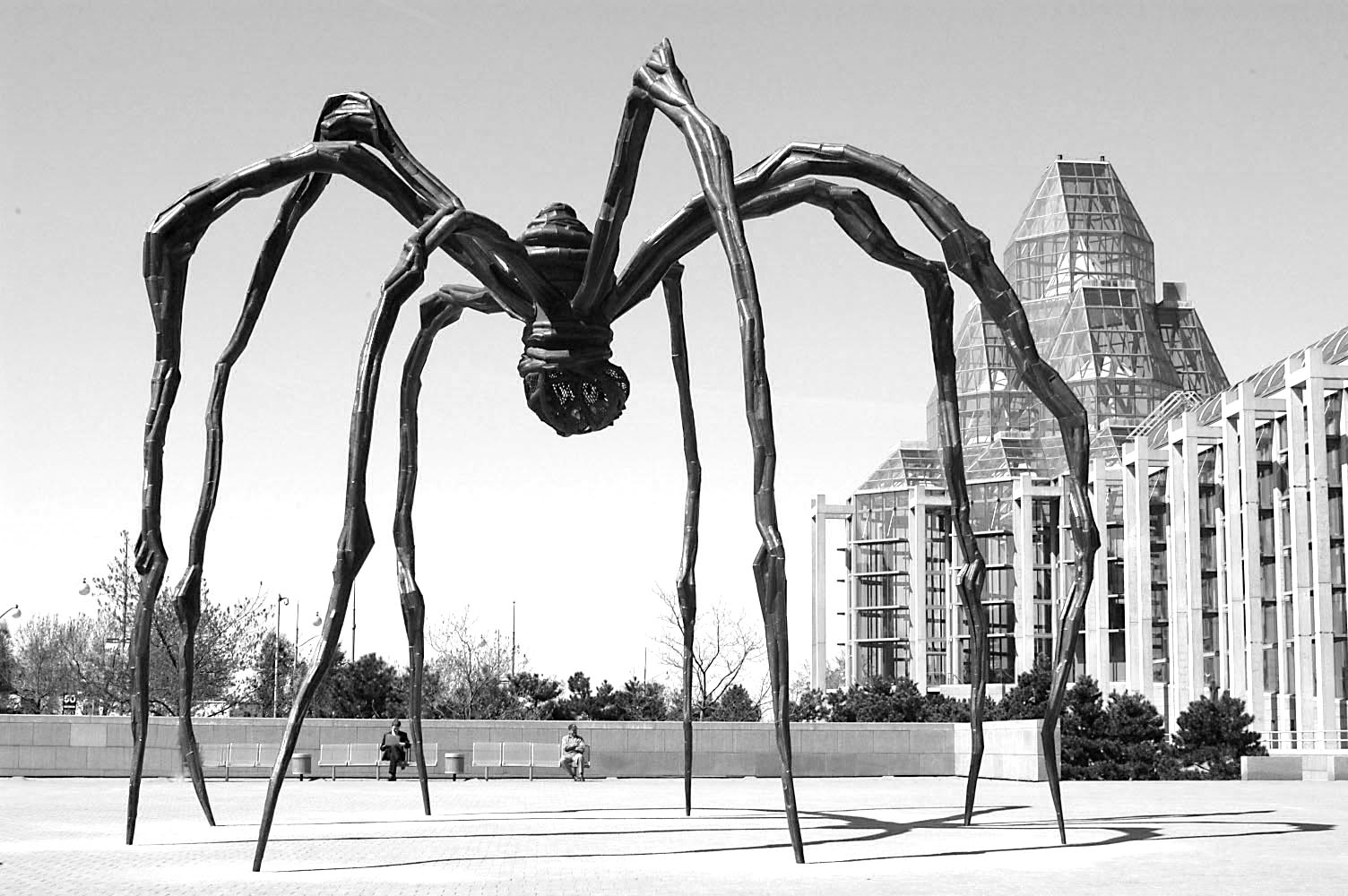
    This idea of catharsis is something that links both the ‘mainstream’ art world and the ‘outsider’ art world; in fact, it links all artists, or, to go even further, every human. It is a universal process – and is something that reiterates the widely held belief that every human has the potential to be creative. Many well-known outsider artists did not create with an audience in mind. Henry Darger is a case in point – he never thought his work would be seen by anyone. So why create the vivid world of the Vivien Girls in the Realms of the Unreal for such a long time? Similarly, there are many ‘mainstream’ artists whose work is the result of a cathartic act. Louise Bourgeois’ work was “heavily influenced by traumatic, psychological events from her childhood,” [1] and the artist herself considered her practice to be highly therapeutic or cathartic.

    Henry Darger [courtesy of www.carlhammergallery.com]
    Henry Darger [courtesy of http://www.carlhammergallery.com]
    Sometimes, it is not the end result that is most important to the artist, but the intangible ‘middle-part’ in which that very end result is created. In this instance, the end result might be discarded, or not looked upon as ‘proper art’ (whatever that is) – or even art. With this exhibition, we want to shine a light on this very important – and interesting – work, because after all, why shouldn’t it have as much precedence as its ‘commercial’ counterpart?


    Submissions: an opportunity for artists


    The dictionary definition of cathartic is: “providing psychological relief through the open expression of strong emotions.” It is the purging, or evacuation, of feelings and emotions.

    Work created as catharsis by artists might differ from their general artistic practice. It might be the work that is created for more personal reasons, the sort of work that is created regardless of whether anyone was ever going to see it or not. Or perhaps the term catharsis covers an artist’s whole practice. Maybe it is a piece that was the result of a powerful reaction to something whether made at the time or a later date.

    Perhaps many artists operate in a more ‘Brechtian’ state of unresolved or subverted catharsis, whereby there is no relief or rebalancing through the work at least; they carry on making and making and thinking and thinking. The viewer might leave the piece with unresolved thoughts akin to Brecht’s ‘activated’ audiences. However, this exhibition seeks introspective moments within artistic practice, where for whatever reason, a cathartic practice has taken place.

    We are keen to find artists willing to share work that they consider to have been made with some cathartic intent or result. To submit work, please send a jpeg image no larger than 1MB to: daniellacnorton@gmail.com.

    Please include: title, materials, dimensions, and state whether the work is framed or unframed. The deadline for submissions is Sunday 26 April 2015. Selected works will need to be delivered to the Gallery in Brighton by Sunday 24 May 2015.

    The exhibition will be held in mid-June through to July in Brighton and if your piece is selected you will need to pay the postage/courier costs and insurance to and from the venue. Please get in touch for further details.

    Kate Davey | kdoutsiderart.com | kdoutsiderart@yahoo.com

    Daniella Norton | Now and Again Gallery (www.facebook.com/GalleryNowAndAgain / click here for the Gallery blog | daniellacnorton@gmail.com


    References

    [1] theartstory.org

  • Outsider Art to see in 2015

    Outsider Art to see in 2015

    First of all – Happy New Year everyone! As we welcome in 2015, here’s a brief list of a few of the must-see outsider art exhibitions taking place this year.


    Judith Scott: Bound and Unbound

    Brooklyn Museum, New York, US
    Until 29 March 2015

    Judith Scott, Untitled
    Judith Scott, Untitled

    This exhibition is the first comprehensive US survey of the work of Judith Scott and includes Judith’s three dimensional works as well as a selection of works on paper.

    Click here for more information


    Welcome to the World of Mr. Imagination

    Intuit: The Center for Intuitive and Outsider Art, Chicago, US
    9 January – 25 April 2015

    mr imagination

    This is the first Chicago retrospective for Mr. Imagination; a celebrated outsider artist whose career spanned more than thirty years.

    Click here for more information


    Mary Barnes: Boo-Bah

    The Nunnery, Bow Arts, London UK
    16 January – 29 March 2015

    Mary Barnes, courtesy of www.bowarts.org
    Mary Barnes, courtesy of http://www.bowarts.org

    This show will feature paintings and drawings by prolific outsider artist Mary Barnes. The works are predominantly  from the collection of Dr Joseph Berke, her therapist and friend, and the exhibition will bring together works spanning her artistic career.

    Click here for more information


    New York Outsider Art Fair

    Center 548, New York, US
    29 January – 1 February 2015

    new york outsider art fair

    The annual New York Outsider Art Fair showcases work by some of the most renowned outsider artists.

    Click here for more information


    Nek Chand

    Pallant House Gallery, Chichester UK
    Summer 2015

    Nek Chand, photo from the Rock Garden in Chandigarh
    Nek Chand, photo from the Rock Garden in Chandigarh

    Pallant House Gallery in Chichester will house some of Nek Chand’s famous figurative sculptures in their garden this summer.
    Click here for more information


    Paris Outsider Art Fair

    4 Rue d’Artois, Paris, France
    22 – 25 October 2015

    paris art fair 2015

    Like the New York Outsider Art Fair, the Paris incarnation will similarly showcase work by renowned outsider artists.

    Click here for more information


    There will be more must-see outsider art exhibitions popping up throughout the year, so please do follow me on twitter: @kd_outsiderart for all the latest news, or check out the ‘Links’ page (by clicking here) to see what the organisations dedicated to showcasing outsider art are up to in 2015.