Category: Curatorial Questions

  • The Importance of Folk Art

    The Importance of Folk Art

    I have just started researching for my next PhD assignment, which will look at the ways the media has reviewed exhibitions of outsider art over the past fifteen years. Whilst working my way through back catalogues of exhibition reviews, I came across Jonathan Jones’ review of the 2014 British Folk Art exhibition at Tate Britain (London).

    1

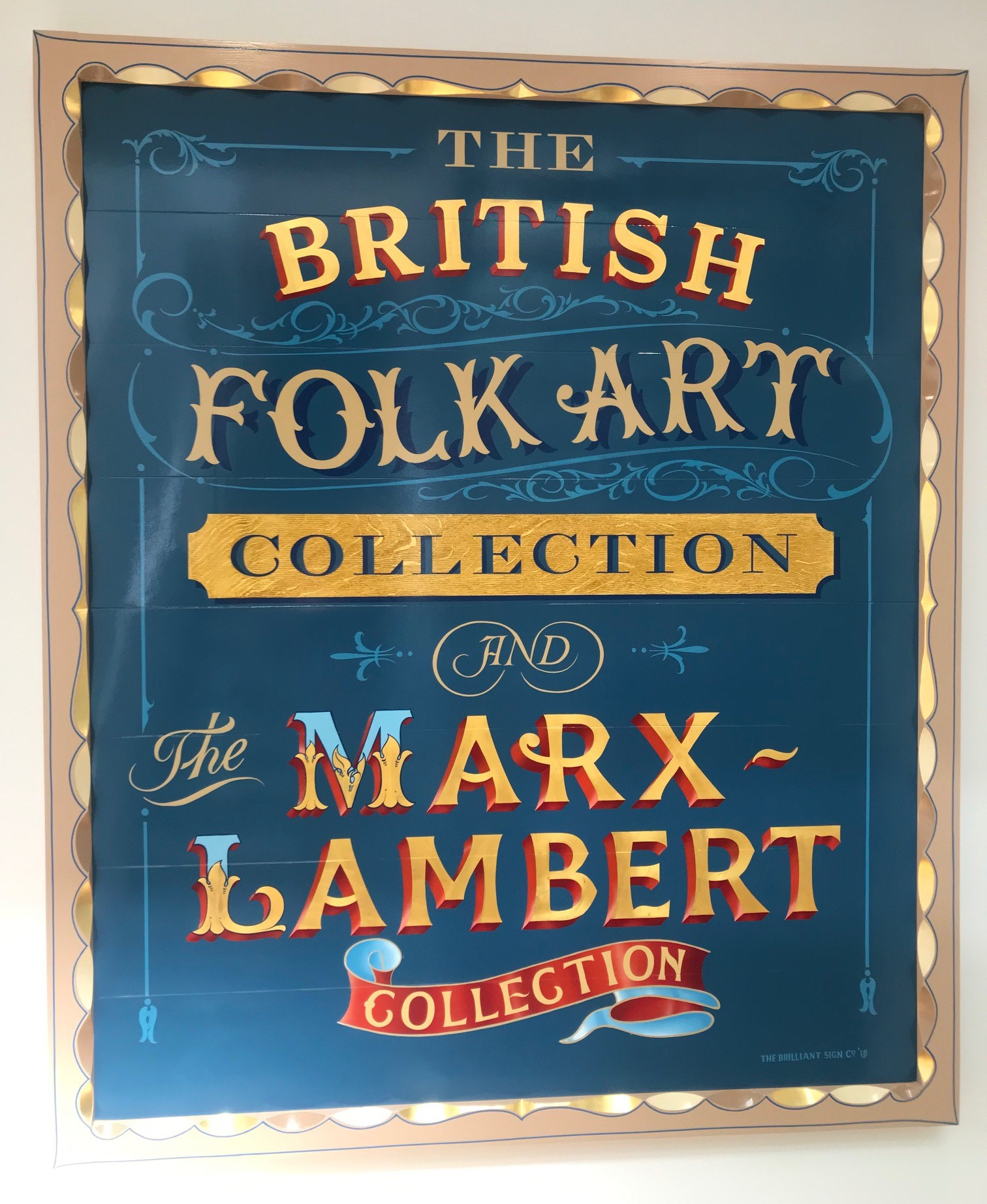
    In his review of the first major exhibition of British folk art (which is actually very positive), Jones identifies folk art as exceptional in that it “shows that there lies a whole other cultural history that is barely ever acknowledged by major galleries.” This got me thinking about a work trip I made to Compton Verney in Warwickshire earlier this year. Compton Verney has its own very broad collection of folk art, which is exhibited in custom designed rooms housed at the very top of a magnificent building.

    5.jpg

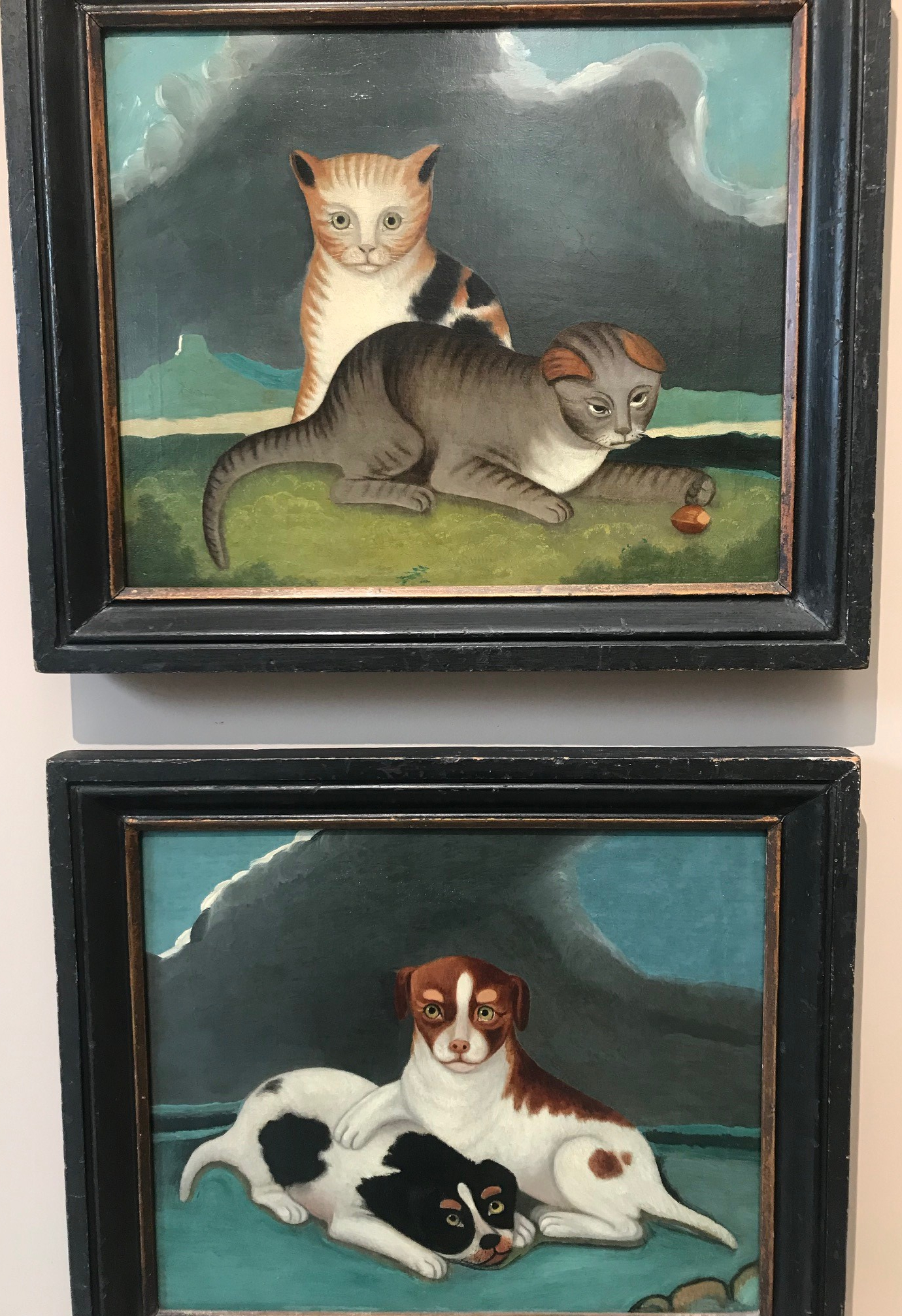
    Incorporating amusing yet beautiful paintings of prized farm animals to visual signs used above shops before reading was something that most people were able to do, the collection is a wonderful accumulation of a history of Britain that we so rarely get to see or experience. It is the day to day life of the everyday person.

    Traditionally produced by people from a lower socio-economic background working within their local communities, folk art is often found dancing around the edges of the mainstream art world. Often seen as craft, it has a reputation as being a form of ‘low’ art. The distinction between folk art and ‘mainstream’ art has been emphasised – and embedded – by art institutions, whose historical works endeavour to show either the lives and faces of the upper-classes, or the lives of the working-classes through the eyes of the middle- or upper-classes.

    7

    In his review, Jones notes that “where ‘elite’ paintings in the Tate collection might show such people [people from the working-classes] labouring in the fields, here they are shown as they wished to see themselves – dressed up on a festive day instead of working their fingers to the bone.” This distinction between the content of folk art and the content of ‘mainstream’ historical works highlights the influence of art institutions over what we see and know about our own cultural history.

    3.jpg

    On entering most of the major galleries in London, works in their historical collections will show monarchs, or other men and women of high standing, probably dripping in gold. Or they might show the lives of the lower-classes, but tinged with an authoritative gaze – maybe the people in these depictions are at work, or they are sick. These depictions give us very little insight into the actual lives of people who were not a part of society that was accepted, documented and shared. If we believe what we see in these historical works, we could believe that people from working-classes were just unfeeling toiling machines. But what were their lives really like? What did they enjoy doing? And how did they really see the world?

    6

    This is where folk art becomes particularly valuable to us. Because it is in these apparently ‘mundane,’ ‘everyday’ images that we see what life was really like for those who had little to no control over what was recognised as historically important. They are lives and stories that have been hidden by those in positions of power; a kind of propaganda that has shaped how we see our history. And art galleries and museums (being the influential institutions that they are) have had a huge part to play in this. Art, if you think about it, is the only visual documentation we have of ‘what came before.’ If we are only privy to images created and disseminated by those from a certain societal standing, then we only see the world as they experienced it.

    4

    “In stately homes from Kenwood to the fictitious Downton Abbey, we are told again and again that Britain’s culture has been shaped down the centuries by the elite, its art collection, it cooks and its gardeners,” Jones notes. This, he says, is just “the view from above.” By exhibiting folk art in our key arts institutions (like Tate, and like Compton Verney), we are giving audiences the chance to experience what everyday life was like for the everyday person. Folk art is an intrinsic part of our history. It is something we cannot afford to lose.

    (all images taken by the author at Compton Verney)

  • In Focus: the Context of Outsider Art

    In Focus: the Context of Outsider Art

    Welcome to the final installment of ‘In Focus,’ a series of blog posts featuring question and answer sessions between me and PhD student Marion Scherr. In this last post, we’ll look at the term outsider art in an international context, and discuss the relationship between outsider art and the ‘traditional, mainstream’ art that is taught to college and university students. 


    Steve Murison - Unwitch My Heart with Bile and Rum
    Steve Murison, Unwitch My Heart with Bile and Rum


    Marion Scherr (MS): What are your experiences or thoughts on how ‘Outsider Art’ is dealt with on an international scale? I’m always wondering why the term is used predominantly – and with a few important exceptions – in the English-speaking West, and hasn’t caught on in other countries/languages to a certain extent.

    Kate Davey (KD): This is a very interesting question, and something I am working with at the moment. I think, even within Europe, there is a lot of variation about how the term Outsider Art is used and the connotations that surround it. From my experience, there are parts of Europe that still very much use a medical model when discussing outsider artists and the work they create. I think this is probably because that is where the work originated in many parts of Europe – in psychiatric institutions – and it was found predominantly by doctors (e.g. Prinzhorn and Morganthaler).

    I am not entirely sure why it seems so different in the UK – it is perhaps more to do with the history of mental health than the history of outsider art. Certainly there are very few organisations that focus on a medical model in the UK. Even Bethlem Gallery, which is attached to the Royal Bethlem Hospital, does not focus on a medical model. The artists are very much at the heart of what they do, and it is about being an artist rather than a patient.

    In places like America, terms like self-taught or folk art are much more common than the term outsider art, and again, I think it is more a reflection on social history than art history, and I think this is the case for much of the world. In recent years, outsider art from Japan has become a big market, with much of the work that falls under this category being produced in Japan’s day centres. Again, social reasons rather than artistic – and I think this is probably the key to understanding why the term is so different across the world. I am not saying I agree with this idea, because it instantly takes the focus away from the art and puts it on society, politics and medicine (which we are trying to move away from in the outsider art world and focus purely on aesthetic), but it certainly seems to be true.

    Manuel Lanca Bonifacio
    Manuel Lanca Bonifacio

    MS: I would be interested to hear more about your thoughts regarding the position of ‘Outsider Art’ in relation to “general” art history as taught in schools and universities. Do you think ‘Outsider Art’ should or can be included into the curriculum of art history? If so, how would you suggest it should be contextualized?

    KD: I think it very much should be a part of taught art history at schools and universities. I was lucky enough to be taught about outsider art during my undergraduate degree in art history, but nonetheless it was taught in a separate module that was actually entitled ‘Psychoanalysis and Art.’ So, again, it was separated from the ‘art’ world, and was taught as more of a medical module. There are so many examples of key modern artists being influenced and inspired by the work of outsider artists, that if we do omit it from what we teach, we are at risk of missing out a huge and vitally important part of history.

    In terms of contextualising outsider art, I think history can contextualise it perfectly well on its own. It was created at a certain point in time, for a certain reason – and much of it did intertwine with social, political and economic history. I wrote my undergraduate dissertation on the links between German Expressionism and Outsider Art, and this is a perfect example of a well-known (now, anyway) group of artists wanting to imitate the intuitive rawness evoked by outsider artists as a reaction to their own social and political context. There are many moments where outsider art dovetails with the ‘mainstream’ art world throughout art history, and I think to ignore this is to do a disservice to the greater picture of what ‘art’ is and what it can explain about society and humanity (now, and historically).


    We hope you have enjoyed the In Focus series! If you have any comments or questions, please do post them below. Both Marion and I would love to hear your thoughts on any of the topics we’ve been discussing. 


    Featured Image by Matthew

  • In Focus: The Fascination with Outsider Art

    In Focus: The Fascination with Outsider Art

    Here is the third installment of the ‘In Focus’ series, which sees regular question and answer sessions between me and PhD student Marion Scherr. This post looks at the increasing fascination with outsider art, and the lack of the artist’s voice in exhibitions and publications.


    Steve Murison - The One and Only Number One In Our Hearts Forever, Lemar
    Steve Murison, The One and Only Number One In Our Hearts Forever, Lemar

    Marion Scherr (MS): Although ‘Outsider Art’ is still a niche phenomenon, it seems to get more and more popular (considering the amount of exhibitions, specialist galleries, book publications etc.). Where do you think this increasing fascination with ‘Outsider Art’ comes from? Why do people seem to need this concept of the ‘Other’ or of the ‘Outsider’ in your opinion?

    Kate Davey (KD): This is a really interesting question, and it’s something that I think I have figured out in some part based on my own experience of viewing outsider art. I think the ballooning in popularity of outsider art has in some respects had a lot to do with the art market and what sells. In recent years, the ‘otherness’ and ‘difference’ of outsider art has grown in popularity and galleries and dealers have managed to put a price on this.

    If we move away from the art market – as I think this can sometimes muddy the water – in my opinion, the popularity of outsider art has come from people looking for something they can relate to on a more personal level. Certainly for me, fatigue with the ‘mainstream’ art world, and a sense that art was becoming more about money and sales and less about expressing an idea or a position, led me to become fascinated with outsider art. I think people (both art world and general public) can look at a piece of outsider art and feel like they are seeing a raw idea or expression. What I find with outsider art is that it gives me a physical reaction, which is something I rarely experience when looking at ‘mainstream’ art.

    Increasingly, the world is becoming more capitalist, everything is based around making money and spending money, and I think there is a pull from outsider art because generally the artist has not made it to sell, or to increase their following, or to become famous. It is this naivety, and, ultimately, the feeling that we are looking at someone’s inner thoughts or inner voice, that is really magnetic. It is human nature to want to find out about people, to understand people who are the same as us, who are different to us, and I think outsider art really enables us to do this.

    Particularly in the world we are living in today, outsider art can break down barriers between people from different backgrounds, from different countries, of different races and religion, and I think this is something people are actively searching for at the moment.

    Jim Sanders
    Jim Sanders

    MS: Considering the popularity of the genre ‘Outsider Art’, it still surprises me how little we actually hear from the artists themselves when we visit exhibitions or museums etc. In most cases there is a curator or collector talking “about” the artist and his/her work. Your blog seems to be one of the rare exceptions in the field, where artists are invited to share their version of the story and experience with the term. I’d be interested to find out more about your thoughts on this issue. Why is it that ‘Outsider Artists’ are normally left out of the dialogue?

    KD: Absolutely, I completely agree with you on this one. I think it’s definitely getting better, and there are certainly studios, projects and organisations that are working on rectifying this issue in the outsider art world by putting the artist’s voice at the heart of their work.

    Personally, I find it incredibly important to include the voice of artists, not just in exhibitions and publications, but also in defining the term and discussing its development. I think the idea of curators and art historians defining what a movement is, who can be involved, and what is written about it is something that dates back a long way. I think the nature of outsider art and the artists the term can encompass is one of the stumbling blocks curators in this area have to learn to work with. Artists can be non-verbal; artists might not consider what they create to be art; they might not know how to talk about it. I think curators can try to fill this gap, when really, we should constantly be checking ourselves, making sure we’re working with artists at every stage of the process, enabling them to communicate about their work in whatever way that might be (video, words, poetry, other visual tools). And if they aren’t able to communicate about it, then realising that that is OK too. The work will speak for itself.

    Because a lot of outsider artists have not travelled the traditional route through art school, they probably won’t have learnt about the art market and how it works along the way. They are creating as a form of catharsis, it can be an urge, or an innate part of their survival. It can be easy for curators who see the incredible output of outsider artists to take advantage, and I think this is something that has tainted the outsider art world. I am a strong believer in co-production, and as curators and promoters of outsider art we also have a social responsibility to not be another ‘institution’ that labels people, that puts words in their mouths, or groups people or artists in a way they are not comfortable with. It is difficult, and it is a learning process, but we need to overcome the historical idea that curators are the ‘expert’ or the ‘trend-setters.’

    There is so much to be gained from working with artists directly, learning about their processes, how they work, what inspires them, and it is such a shame that this can so often be lost in the way work is displayed. Particularly with contemporary outsider art (where the artists are still living!), we have such a great opportunity to share the voices and insights of such a huge range of interesting people. It can be a great way not to just learn about art, but to learn about difference and similarity – and human nature!


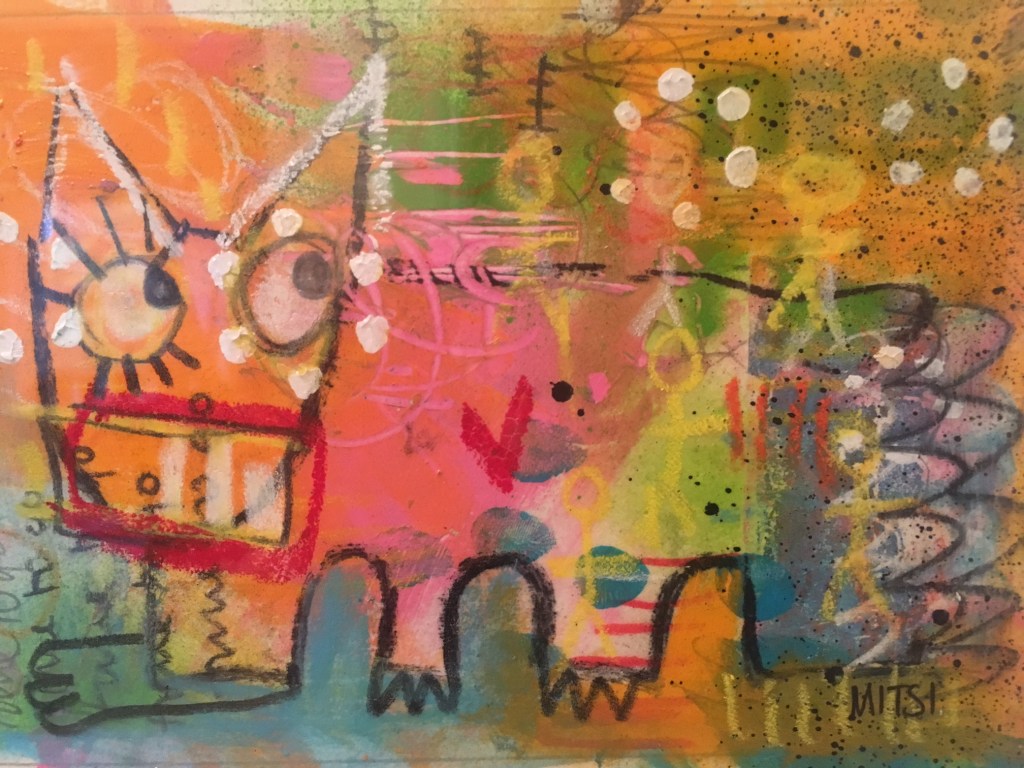
    Featured Image: Mitsi B, Time to Go

  • In Focus: Exhibiting Outsider Art

    In Focus: Exhibiting Outsider Art

    Welcome to the second installment of ‘In Focus,’ a series of blog posts that see a question and answer session taking place between me and PhD student Marion Scherr. This post focuses on the implications of the term ‘outsider art’ for the artists it describes, and considerations when exhibiting works of outsider art. 


    Joanna Simpson - Gum Nut Folk
    Joanna Simpson, Good Luck Gum Nut Folk

    Marion Scherr (MS): You know many artists yourself and seem to have talked quite a bit with them about the term. Could you give a brief overview of the different opinions and viewpoints artists have about the term? What are the pros and cons people mention when speaking to you about the term ‘Outsider Art’?

    Kate Davey (KD): I’ve generally found that artists don’t feel as strongly about the term as academics and curators do, which I find interesting. I’ve had mixed responses, from people who are really pleased to have a found a term (that comes with its own artistic community) that they feel an affinity with. Others have expressed feelings about it being quite limiting, particularly in terms of what kind of shows they can enter or exhibit in, and how they are viewed as an artist.

    Interestingly, a couple of years ago I did a blog post focusing on artists’ responses to the term. From this, you can see that a fair few of the artists note that in the term outsider art they have found a ‘movement’ that they feel they themselves and their work can belong in – and belong in successfully. I think there’s something about artists who might see themselves as ‘outsider artists’ finding a community of other artists who view themselves and their work in this way. I find this is quite different to the mainstream art world which can be quite saturated with competition. Certainly I’ve found much more comradery amongst outsider artists, which is always really good to see.

    I think I might have mentioned this in a previous answer, but I think that artists who see themselves as ‘outsider’ artists are able to access more support with their professional development and their artistic career through organisations specifically set up to support and promote artists doing this kind of work, which is so important.

    Julia Clark
    Julia Clark, Owl

    MS: Do you think the way in which a work of art is perceived changes, if the audience is told it has been produced by an ‘Outsider’? What is the feedback of gallery/museum visitors like in this regard in your experience?

    KD: In my experience, there have been mixed reviews, but generally people are very open to experiencing new kinds of art, and particularly art that might be different to the work they normally view. It’s not to everyone’s taste, and I think this is sometimes where a bit of context can be really useful. I have had a couple of experiences in the past where exhibition-goers have maybe asked ‘what’s wrong with’ one of the artists whose work is on display, but I generally take this as an interest or curiosity in the work and the person who made it – and this is when I’ll talk about outsider art and what it means today.

    I think in recent years the market and for and opinion of outsider art has come on leaps and bounds – certainly in the U.K. where we’ve had big exhibitions at the Wellcome Collection and the Hayward Gallery. The main thing, I think, is to display work by ‘outsider artists’ just as you would the work of a ‘mainstream’ artist, so the public see it as valid art and are able to appreciate it for its aesthetic qualities.

    I’ve had a few really positive experiences where people weren’t expecting to come across ‘outsider’ art at a gallery or museum, but they have gone away feeling like the work was the most powerful work they saw during their visit.

    I think as taste makers, curators and galleries have a role to play here. As long as they are showing ‘outsider’ work (and showing it well) then art audiences (and the more general public) will come to see this work as valid – and, most importantly, as art.

    MS: In one of your blog posts you mention that the show ‘Jazz Up Your Lizard’ has changed your mind about curating ‘Outsider Art’. Rather than presenting it in a ‘white cube’ you speak about turning this approach round and “shaping the place to fit the work” and/or finding a space, that works well with particular artworks. What are your opinions on this issue now? What do you normally look out for and what elements do you consider, when you think about the place and setting of a show?

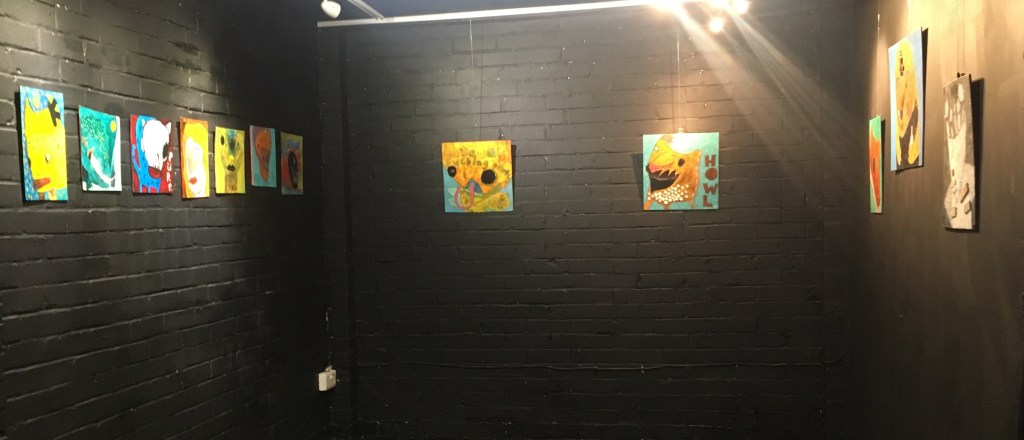
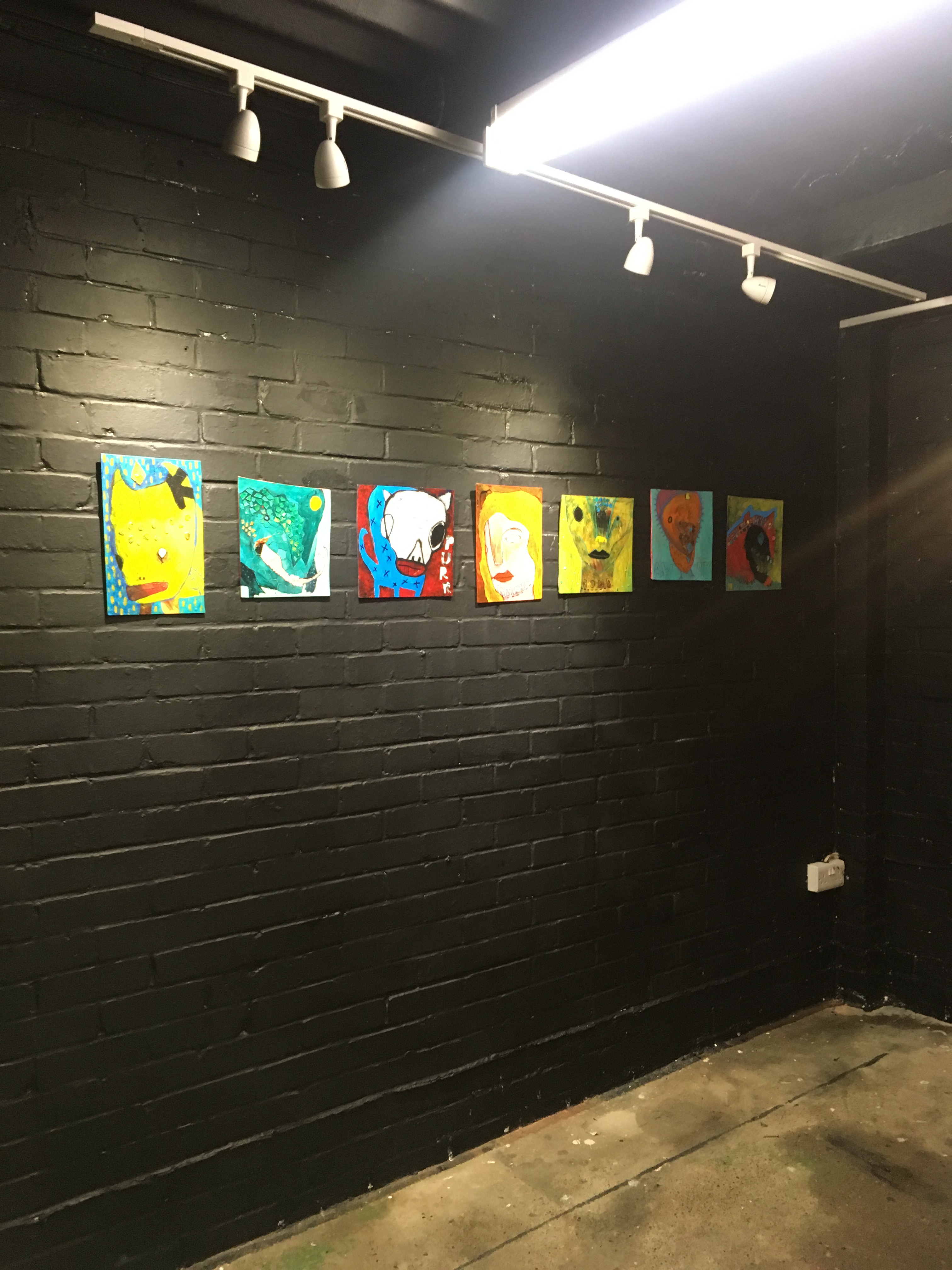
    KD: The Jazz Up Your Lizard show was a real turning point for me. As I’ve written about before, I was adamant that outsider art be shown the same way as its ‘mainstream’ parallel. However, this show was a bit different, as I was working very closely with the artist throughout – an artist I have known and admired for a long time. There were also some practical issues involved – the exhibition space had been painted black, and the curator I was working with on the show really liked the colour (and so did I!). The exhibiting artist’s work is very bright, but macabre in content. I think the black just really brought out the colours, as well as the darker side of the works – that on first inspection can sometimes seem fairly jolly.

    When curating exhibitions in future, I’d really like to take the lessons I learnt from this show on board. Things I would now consider include what it is we want to pull from the work – what is the essence of it? What might people get from it and how can we help this along? I’ll always work closely with the artist, where possible, as they are the best interpreter of the work. When curating, I really like to think about audiences who might not ‘naturally’ consider visiting an art exhibition – or more specifically an outsider art exhibition. Anything that helps them experience this work is absolutely vital. This includes colour, space, accessibility, accompanying text, events etc. So these are now all things I consider in great detail.


    Featured Image: Don’t Look Back in Anger by a Koestler Trust entrant

  • Nick Moss: Curatorial Ethics and Outsider Art

    Nick Moss: Curatorial Ethics and Outsider Art

    In this post, writer Nick Moss reflects on the curatorial issues facing outsider art curators – and curators more widely. 
    curating5


    What follows are simply observations on issues arising from curation practices in relation to outsider art. They follow on from discussions with Kate Davey, further to my earlier reviews of the Ida Applebroog exhibition at Hauser and Wirth and Susan Te Kahurangi King at Marlborough Contemporary. Each of us separately visited the exhibitions and subsequently identified issues which the original reviews did not address. The issues are not unique to those exhibitions and so merit further consideration, towards which this is intended as a brief contribution.

    A simple point arising from the Applebroog exhibition relates to the extent to which the ‘white cube’ of the contemporary commercial gallery can trap and repress the unique, auratic element of non-professional art. The Applebroog paintings at Hauser and Wirth were displayed in a continuous line that ran throughout the gallery – one small watercolour or pastel succeeding another. The strength, the vitality, of these works is en masse, as a defiant ‘fuck you’ to psychological trauma, and the form of curation employed undermined the statement. It appeared that the curation was unable to take sufficient inspiration from the work to break from rote practice.

    Brian O’ Doherty contends that the white cube “is the single major convention through which art is passed.”[1] Jens Hoffman goes further and argues that the white cube “increases the aura around an object, it separates an object from its ‘real world’ context, and yet it is a ‘real world’ in itself.”[2] The implication, necessarily, is that alongside the gallery space, the artwork requires curatorial intervention to establish its meaning – a point of view that will be addressed below. But this notion of the ‘white cube’ in and of itself attracts, as O’ Doherty has recognised, “some of the sanctity of the church, the formality of the courtroom, the mystique of the experimental laboratory (joined) with chic design to produce a unique chamber of aesthetics.”

    For the philosopher of art Peter Osborne, “Contemporary art produces (or fails to produce) the non-place of art space as the condition of its autonomy and hence its ability to function as ‘art.’ Art cannot live, qua art, within the everyday as the everyday. Rather it necessarily disrupts the everyday-ness of the everyday from within. Since it is both ‘autonomous’ and a ‘social fact.'[3] To the extent that Osborne’s position is coherent at all, it amounts to saying that art’s autonomy is conditional on its validation by the art-space -and that anything within the art-space is art (a rehashing of Duchamp). Thus, art’s uniqueness, its capacity to intervene in and disrupt the everyday, becomes conditional on its separation from the everyday.

    All of the critics and curators referenced thus far make use of the concept of ‘non-place’ as developed by the French anthropologist Marc Auge. By ‘non place’ Auge means “ a space which cannot be defined as relational, or historical, or concerned with identity.” This non-place is made up of “transit points and temporary abodes…where the habitue of supermarkets, slot machines and credit cards communicates wordlessly, through gestures, with an abstract, unmediated commerce.”[4]
    curating1

    For Auge, then, the non-place is conceived negatively. However, for Osborne, “The gallery itself, however, in its classical modern form as the ‘white cube’ is a self-enclosed, self-insulating space. And it is in its specific character as a self-enclosed, specialised place that the gallery appears as an exemplary non-place, in Auge’s sense.” Or, as Hoffman puts it, the white cube is a ‘blank slate,’ which allows “for guilt-free looking…(an) investment of time and attention.”

    What this misses is that for Auge the non-place is, in effect, a ‘retail space’ – and the ‘white cube’ is then no more than the art-space which generates that mode of attention best suited to the consideration of art as financial investment. This is the case even if the curatorial intent is otherwise. The form the space takes dictates the form of validation bestowed on the artworks on display.

    Particularly in relation to outsider art, this represents something of a missed opportunity. Much non-professional art is, for want of a more effective construction, self-curating. If we take as examples Luang Phor Khom’s Wat Phai Rong Wua, Ferdinand Cheval’s Palais Ideal, JP Dinsmoor’s Garden of Eden, the works of Nek Chand; not only are they conceived on a  vast scale, they are planned by their creators to exist in and impact upon their environment in ways which are thought through, they are pre-planned.

    The same is true of non-professional art which is conceived on a smaller scale. Pascale Verbena says of his work “I don’t just take any old piece of wood, I gather them in winter at river mouths and on beaches when no one is around. I work on experience. I invent, that’s my way of discharge. They’re bottles thrown into the sea with messages inside.”

    Such being the case, I’d contend that there is, then, an ethical duty which falls upon the curator of ‘outsider art’ – however broadly conceived, and however crude and containing a descriptive term it is. Given that this is art produced by people who, whether because they are not sanctioned and validated by the art education production line, or because they produce art in situations of confinement, struggle to be heard; the duty of the curator is to ensure that it is the artist’s voice that predominates – to step out of the way and allow the messages in the bottles to be fully understood.

    curating2

    There is an assumption that the non-professional artist has no preconceived idea of how their work should be displayed. The opposite is the case. The patron saint of curating, Hans Ulrich Obrist, at least, acknowledges this, in a more general sense. “Alighiero Boetti told me that if I wanted to curate exhibitions then I should under no circumstances do what everybody else was doing – just giving artists a certain room and suggesting that they fill it. What would be more important would be to talk to the artists and ask them what projects they could not realise under existing conditions. Ever since, this has been a central theme of my exhibitions. I don’t believe in the creativity of the curator. I don’t think that the exhibition-maker has brilliant ideas around which the exhibition maker must fit. Instead the process always starts with a conversation, in which I ask the artists what their unrealised projects are, and then the task is to find the means to realise them.”[5]

    It is certainly the case that many of Obrist’s curatorial acolytes have never moved to embrace the idea of curation as conversation. We are told instead that the role of the curator is to “orchestrate and encourage novel ways of looking” and that the curator has become “author, choreographer, and director, asking the works to come together, and coaxing them to broach subjects that might be beyond their individual scope but well within their breadth” (both of these  from Hoffmann).

    I’d suggest that the ethical position the curator of outsider art ought to adopt though is not that of author, but that of translator. If we are dealing with artists who, whether because they lack ‘qualification’ or are excluded by confinement, go unheard, we have a duty to bring their voices forward. If the curator as author drowns out the voice of the socially-excluded artist, then the curator, simply, takes a place within that hierarchy of oppression/exclusion which defines the artist as ‘outside.’

    This duty stands whether the artist is living or dead. If the artist is no longer living then the curator should engage with and research the work such that the artist’s subjectivity remains alive through the artistic legacy brought to display. In relation to the curation of outsider art, we might take a pejorative review and invert it to one of approbation. One of the reviews of the Hayward Gallery’s 1979 ‘Outsiders’ exhibition described it as bringing “the lunatic into the city square.”[6] If we assume instead of ‘lunatic’ the artists grouped in the show are ‘excluded,’ then the role of the curator ought properly be precisely to prise open the “self-enclosed, self-isolating space” of the white cube, and work with the excluded to invade the city square. First injunction – listen to the artist!

    curating3

    The second point is a simpler, but crucial one. In a Guardian review of the Susan Te Kahurangi King exhibition, we read the following :-

    “It is (freelance curator Chris) Byrne, with Petita (Cole-the artist’s sister)’s assistance, who selects the works for exhibition; Susan herself has no understanding of the concepts of either ownership or selection, Petita says. Initially the family rule was that the drawings could be shown but not sold, though they have since relented. ‘Think about it,’ Petita told her sisters after seeing Byrne’s careful framing for the Miami exhibition last year. ‘When the show is over are we going to say, get them out of those frames, send them back here, they belong in the clear files on my shelves?'[7]

    This was displayed without comment by the Marlborough Contemporary gallery as part of its selection of press cuttings. It raises a major concern, though. If Susan has no understanding of the concept of ownership and the drawings are all to be sold – who benefits from the sale and what happens to the monies raised? (We make no judgement in this regard – the monies may well all be properly accounted for and used to Susan’s  benefit). The point is that neither The Guardian nor the gallery thought this issue worthy of comment or explanation. The issue of safeguarding, though, ought to be central to any ethical curatorial practice in relation to artists who are in some form of confinement, have communication difficulties, or some other form of vulnerability. The potential for exploitation is obvious. The Indigenous Art Code produced to intervene in and prevent the exploitation of indigenous artists in Australia by commercial dealers perhaps provides some useful points to consider:

    “Dealer Members Must Act Honestly – Dealer Members must at all times act fairly, honestly, professionally and in good conscience when dealing with an Artist, whether they are dealing directly with the Artist or dealing with the Artist through an Artist’s Representative. Examples of conduct that would not meet the required standard include, but are not limited to: (a) unfair or unreasonable conduct; (b) undue pressure or influence, including threats; (c) not acting in good faith; (d) paying an Artist by means of alcohol or drugs; (e) unfairly taking advantage of, or exploiting, an Artist; and (f) paying or agreeing to pay an Artist an amount or other consideration for the Artist’s Artwork that is, in all the circumstances, against good conscience.”[8]

    It is not to doubt the ethical practice of the galleries discussed herein to acknowledge that the commercial art market is, potentially, a field of rapacity and disillusion for the ‘outsider’ artist. This fact acknowledged, the ethical curator has a duty both to ensure that the voice of the artist is heard on the aesthetic terms agreed with the artist, and that all business conducted with the artist is done so within a set of agreed ethical practices which it falls to the curator to ensure is carried out. After all, if as Hoffmann has it, the curator-as-author wants to make “new modes of being and thinking evident,” it would be unfortunate if what lay behind these were old rituals of rip-off and exclusion.


    References

    [1] Brian O’ Doherty, Inside the White Cube : The Ideology of Gallery Space, University of California Press, 1999

    [2] Jens Hoffmann, (Curating) From A-Z, JRP/RINGIER 2014

    [3] Peter Osborne, Anywhere or Not At All, Verso 2013

    [4] Marc Auge, Non-Places: Introduction to an Anthropology of Super-Modernity, Verso, 1995

    [5] Hans Ulbrich Obrist and Asad Raza, Ways of Curating, Penguin, 2014

    [6] John Maizels, Raw Creation, Phaidon, 1996

    [7] The Guardian, Silent Witness, 31 May, 2017

    [8] Indigenous Art Code [availble online: http://www.indigenousartcode.org/wp-content/uploads/2011/06/Indigenous-Art-Code.pdf%5D

     

  • Place and space: exhibiting outsider art

    Place and space: exhibiting outsider art

    My recent co-curation of Jazz Up Your Lizard, the exhibition of work by Steve Murison that celebrate five years’ of the blog, got me thinking again about what it means to be a curator of outsider art.

    img_2607
    Jazz Up Your Lizard at Gallery Lock In

    In previous posts, I have mentioned that the role of a curator is to display work that fits into the ‘outsider’ category in exactly the same way as you would go about displaying ‘mainstream’ art. White cube, professional frames, even spacing, measurements and accuracy, pristine walls. The idea being that art is art is art, regardless of what ‘category’ it fits into and regardless of who created it. It should be just art. And of course, the best way to break down any distinctions is to hold the work in the same stead when it comes to showing it to the public.

    However, certain factors have changed my mind. Whilst curating Steve’s show, I suddenly had a bit of a revelation. It was a revelation that was partly the result of the existing practicalities of the gallery space, but also a revelation in what it means to curate work that is unique, distinctive, and alive beyond the surface it has been created on.

    img_2599
    Jazz Up Your Lizard at Gallery Lock In

    Gallery Lock In, the venue for the exhibition, is unique in itself. From the outside, it’s just two garages, and when the doors are down, you wouldn’t even be able to guess what’s going on inside. But manager and curator Beth Troakes has done a fantastic job of creating a unique, cavernous, characterful space. It’s not a bland white cube. It has life as a space in it’s own right – even without any work on the walls.

    The walls in the gallery had been painted black for a previous exhibition, and we decided to leave them like that. Steve’s work is vibrant, and on the surface quite jolly, but it hides hints of darker inferences. I was apprehensive at first, given the thoughts I’d outlined in previous posts. In fact, what we managed to create was an exhibition that was a whole new piece of art in itself. The unique character of the gallery really complemented Steve’s equally unique work. They played together in a way that brought out the best in both.

    img_2601
    Jazz Up Your Lizard at Gallery Lock In

    Perhaps everything I’d insisted about white cube spaces was actually a huge generalisation. There is work that is better complemented, better exhibited, in spaces that are equally as edgy. Sure, Steve’s work would have looked great in a white washed, square gallery space – because his work is great full stop. But in Gallery Lock In, it looked like it belonged there. It looked comfortable, at home.

    Maybe we are doing a disservice to some works by trying to squeeze them into a space that’s the wrong size, the wrong shape, the wrong fit. Maybe the purpose of an outsider art curator – or in fact, any curator – is to find (or make) a space that works with the art, shaping the place to fit the work, rather than the other way round.

    It would be great to know what you think about this – leave your comments below!

  • A Note on Outsider Art

    A Note on Outsider Art

    On 31st May, I was very kindly invited to give a talk at the ‘Life is Your Very Own Canvas’ mid-exhibition event in Aberdeen by organiser of the show, Steve Murison. The exhibition showcased work by people who are part of the Penumbra Art Group in Aberdeen. I spoke briefly about outsider art and how I had become interested in it, and what I was doing now to support artists who might be considered ‘outsider.’ Although the talk was brief, I took some time in the run up to refresh my memory on all things outsider art – which I thought I would put together in a blog post.
    gaston chaissac
    Gaston Chaissac

    My prior research took me back to when I first starting studying outsider art – right to the beginning, to quotes from Jean Dubuffet and Roger Cardinal. I’m going to split this post into four different sections, just to put my thoughts down on paper (or computer): a brief history of outsider art, what it is today, my interest in outsider art, and what I think about outsider art now.

    First things first, the exhibition was absolutely extraordinary. Many of the artists with work on the wall had never picked up a pen or a paintbrush before joining the art group, and many had re-found their creativity many years after losing it to illness or life events. There was a mixture of 2D pieces, including a series of ‘diary drawings’ illustrating the artist’s daily life in and around the city of Aberdeen, and 3D pieces; like a jaw-dropping papier mache dragon. It was inspiring to meet many of the artists at the event, who were all incredibly proud (as they should be) at having their work hanging in the exhibition.

    norimitsukokubo
    Norimitsu Kokubo

    The History

    So, let’s start at the beginning. The initial emergence of outsider art occurred between the ‘Golden Years’ of 1880 and 1930. The term itself was coined by art historian Roger Cardinal in 1972 as an English equivalent to Jean Dubuffet’s ‘Art Brut’ or Raw Art, which was coined in the 1940s. When describing work as ‘Art Brut,’ Dubuffet meant work that was untouched and untainted by traditional artistic and social conventions. In his manifesto Art Brut in Preference to the Cultural Arts (1949) he says:

    “We understand this term (Art Brut) to be works produced by persons unscathed by artistic culture, where mimicry plays little or no part. The artists derive everything – subjects, choice of materials, means of transposition, rhythms, styles of writing etc. – from their own depths, and not from the conventions of classical or fashionable art.”

    Dubuffet’s collection of Art Brut is housed in the Collection de L’Art Brut in Lausanne, Switzerland, for which there is (still) a very strict acquisitions criteria. The museum’s acquisitions are based on the following five characteristics: social marginality, cultural virginity, the disinterested character of the work, artistic autonomy, and inventiveness. There are, of course, contentious ideas within Dubuffet’s strict – and marginalising – criteria. It is incredibly difficult, even so in the early 20th century, for someone to be completely detached and separated from culture in all its forms.

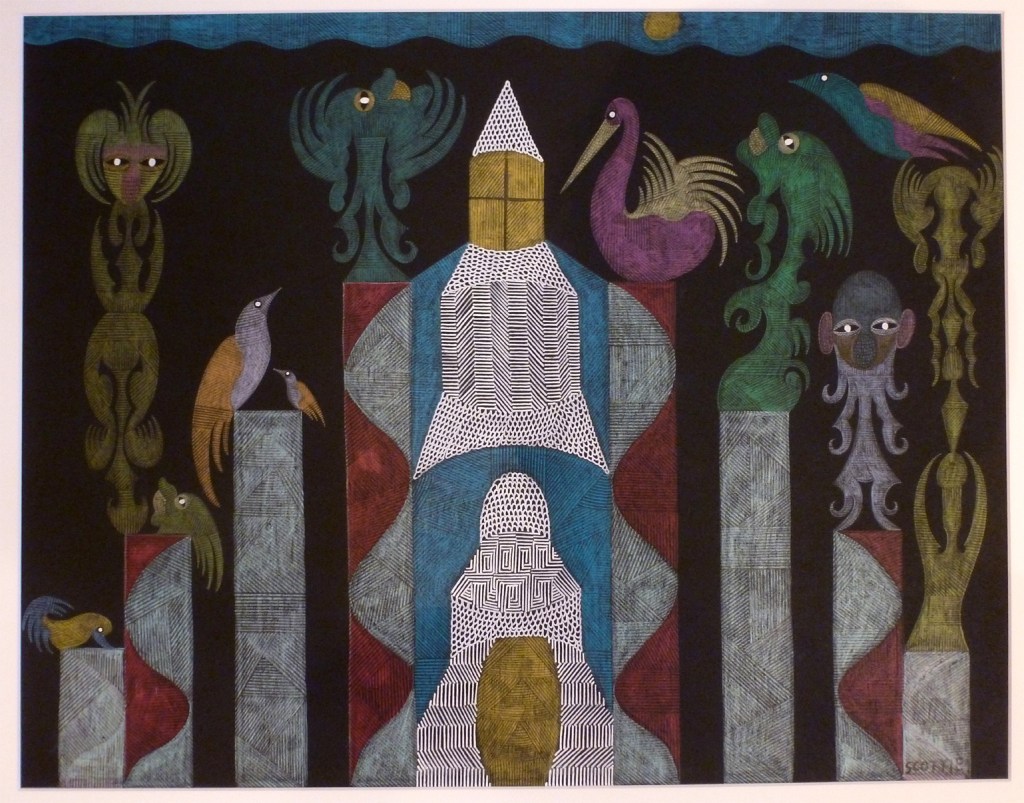
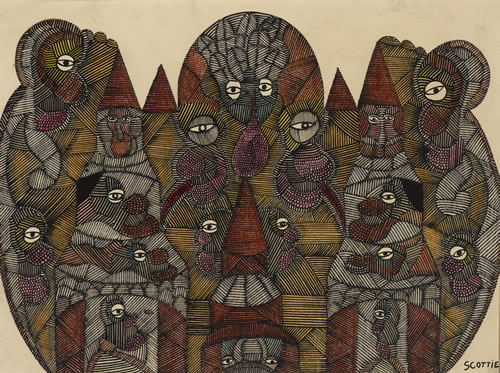
    Take for example some of the most famous outsider artists. Adolf Wolfli worked as a farm hand in his early life; Scottie Wilson was in the armed forces, travelling to both South Africa and India; and Henry Darger worked for most of his life as a caretaker.

    Dubuffet’s Art Brut is idealistic, it is not realistic. And this is where some of the contentions and debates arise around the term and what it stands for – back then and still today.

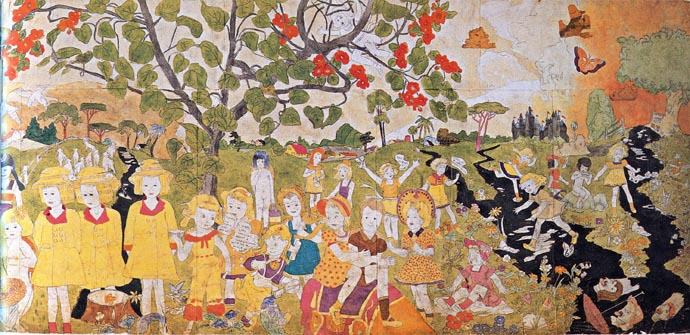
    dagrer1
    Henry Darger

    Outsider Art in the Present Day

    Throughout the 20th Century, the term gradually gained momentum. It is still around today, although in a very different form to Dubuffet’s Art Brut.  Today, it is more of an umbrella term for work that is created outside of mainstream culture – and includes terms like ‘self-taught art,’ ‘folk art,’ ‘intuitive art.’

    Everyone in the field has their own idea of what it means – a popular one being that anyone who calls themselves an outsider cannot be considered an outsider artist. Originally, outsider art was taken from the homes of artists on the sad happening of their death (like the famous story of Darger whose work was found when his apartment was cleared following his death, whence his tomes of The Vivien Girls books were uncovered).

    And then, of course, there is the divide between mainstream and ‘outsider’ art. At what point does an outsider artist become an ‘insider’ artist? Dubuffet was known to have ‘ex-communicated’ one of his own discoveries, Gaston Chaissac, because of his contact with ‘cultivated circles,’ and Joe Coleman was expelled from the 2002 New York Outsider Art Fair in which he had taken part since 1997 because he had been to art school and had ‘become too aware of the whole business process of selling.’

    A good way to look at it, I think – as it gets very confusing – is how Editor of Raw Vision Magazine, John Maizels talks about it in his book Raw Creation: Outsider Art and Beyond (1996):

    “Think of Art Brut as the white hot centre – the purest form of creativity. The next in a series of concentric circles would be outsider art, including art brut and extending beyond it. This circle would in turn overlap with that of folk art, which would then merge into self-taught art, ultimately diffusing into the realms of so-called professional art.”

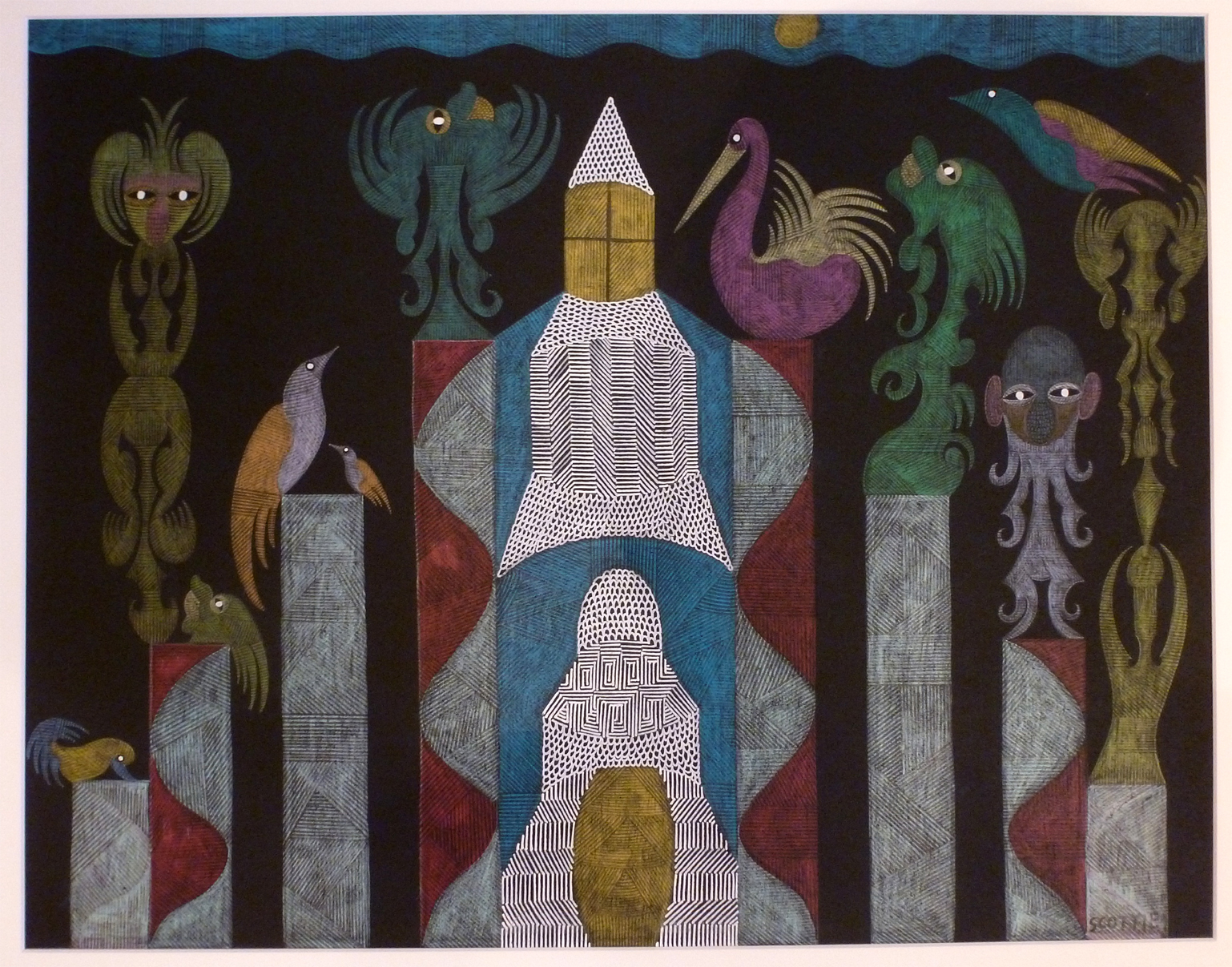
    scottie wilson
    Scottie Wilson

    My Journey with Outsider Art

    My own interest in outsider art first started when I was at university. I studied History of Art, and – surprisingly – we had a whole module on outsider art. Well, it was actually a module on psychoanalysis and art, but the term outsider art kept cropping up, and I was curious. To help with my paper for this module, I visited Bethlem Museum and Archives to look at the work of Richard Dadd. I immediately found myself immersed in this world of raw human creation.

    Outsider art for me often comes straight from within. It’s not made for a market and it doesn’t come out of art schools (although I am certainly not adverse to people who have been to art school aligning themselves with outsider art). It inspires me because one of the most innate and unique things about being a human being is our ability to be creative. I think there is nothing that illustrates this better than outsider art.

    I went on to write my BA Hons dissertation on the links between German Expressionism and outsider art and was not surprised to find that many art movements in the twentieth century were inspired by the work of outsider artists – including the Surrealists and German Expressionists. Artists at this time wanted to capture the intuitive spontaneity of this work to represent the turbulent times they were living through.

    I went on to study for an MA in Art History and by this point was focusing solely on outsider art. I wrote my extended dissertation on the ethics of exhibiting and curating work by outsider artists. For me, it was interesting to think about how ethical it is to display work by someone who never intended for it to be seen. I would think about Henry Darger and his Vivien Girls. He had created this whole world in private – surely it should have been kept private? But if it had been, we wouldn’t have had access to this astounding feat of imagination – maybe the books would have been destroyed?

    I continued my research, thinking about the different ways the work could be displayed to best exhibit its aesthetic and inspirational qualities. Should interpretation include a note on the artist? Should the work stand on its own? There seemed to be so many questions that kept on breeding more questions.

    Ever since I finished my MA four years ago, I have been working with various projects and organisations that promote or support artists facing some kind of barrier to the art world – whether that barrier is their health, disability or social circumstance.

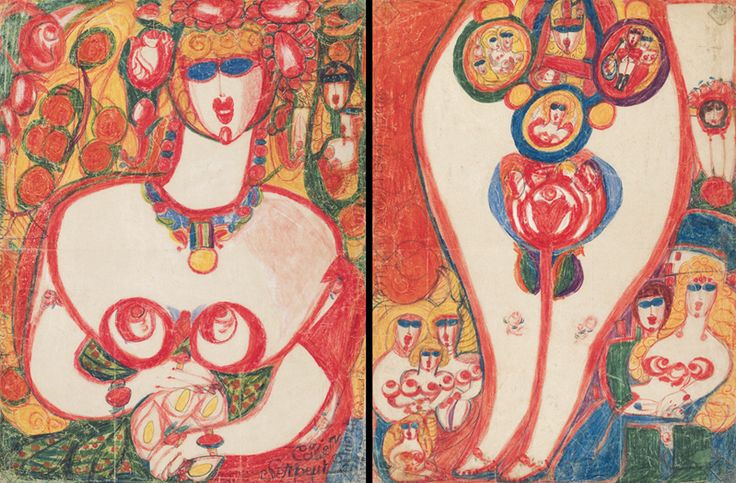
    aloise corbaz
    Aloise Corbaz

    What do I think now?

    For me, the term outsider art should be redundant. It shouldn’t be outsider art – it should just be art. Sometimes, people and artists need a little bit of extra support to get their work out there, and for this reason I think it’s vital to have organisations and projects like Outside In and Creative Future, but I think the next chapter is to challenge the impenetrable art world.

    Why is it so difficult for people to break into the art world if they haven’t been to art school? Who gets to choose what is and isn’t art? For me, outsider art is the bravest form of art. It is defined by artists exposing themselves on paper, in clay, on film, in words, and then sharing it with the world. It’s all about creativity, raw intuition, and the uniqueness of being human – and it can certainly teach us all a lot about humanity!

  • The ‘S’ Word: can the arts reduce mental health stigma?

    The ‘S’ Word: can the arts reduce mental health stigma?

    In the UK – despite much progress since the abolition of large psychiatric hospitals and a significant increase in care in the community – stigma surrounding mental health issues is still an incredibly prominent issue. The Mental Health Foundation notes that “people with mental health problems say that the social stigma attached to mental ill health and the discrimination they experience can make their difficulties worse and make it harder to recover.” Existing stigma can be exacerbated by the media’s biased and often hyperbolized coverage of people with mental health issues, which often paints a portrait of dangerous criminals who should be avoided. Considering one in four people will experience a mental health problem at some point in their lives, this is a very key issue.


    paint


    The research


    Many organisations and researchers have looked into the impact the arts can have on reducing stigma, with predominantly positive findings and results. Two researchers from the University of Strathclyde’s School of Applied Social Sciences – Lee Knifton and Neil Quinn – have conducted research into the impact of the arts on mental health stigma. They started with a week-long mental health arts and film festival in Glasgow and Lanarkshire in 2007, which has since developed into a national programme in numerous locations in Scotland. The learning from their accompanying research has continually shaped the festival, and they have found that “arts events reduce stigma amongst audiences and media by increasing positive beliefs rather than simply reducing negative ones.”

    In ‘Using theatre to address mental illness stigma: a knowledge translation study in bipolar disorder’ (2014), E. Michalak et al. noted that “Emerging evidence… indicates that an effective multifaceted strategy to prevent and reduce mental illness stigma would include creative arts and contact-based approaches.”[Michalak et al. 2014]. The paper concluded that:

    “The power of arts-based approaches, which are consonant with the current emphasis on narrative-based medicine, may lie in their potential to reach and speak to an audience that may not be responsive to conventional methods for addressing stigma and may represent a yet-to-be fully tapped mechanism for change.” [Michalak et al 2014].

    The arts can be – and have been – used in a myriad of ways in an attempt to reduce stigma. For example, in 2013, Time to Change commissioned two British artists to create ‘get well soon’ cards to be sent to people experiencing mental health issues. This campaign was a result of findings that showed 79% of the public would consider sending a card to someone experiencing a physical health problem, but only 50% would consider sending one to someone experiencing a mental health problem.

    bobbin


    Unique characteristics


    I want to move away slightly from the statistics, and think about characteristics innate to the arts that might enable them to be key players in reducing stigma and discrimination towards – well anyone – but let’s talk about them in relation to mental health. The arts are unique in their universal accessibility – from Hollywood blockbuster films, to visual arts exhibitions and popular music, making them a vital resource to be tapped into. They offer a channel through which real, down-to-earth stories about human experience of mental health issues can be conveyed to the general public.

    The arts have long been known for their ability to provide the artist with a voice, and this voice can be used for powerful results. A key form of communication, the arts are cross-cultural, cross-language, and cross-class. They can represent the things that cannot be put into words, or conveyed through language.

    MECCA (Multi-Ethnic Collaborative of Community Agencies) have run a Stigma Reduction through the Arts project, ultimately focusing on “reducing behavioral and mental health disparities through reducing the associated stigma surrounding mental illness” by creating specialist workshops that utilised educational documentaries, collaborative expression, and exhibitions. The notes on the project mention that:

    “Artistic expression of thoughts, emotions, and attitudes through a variety of mediums provides the general public with the opportunity to view mental health issues through a consumer perspective in an effort to counteract stereotypes, dispel prejudice, discrimination, and negative attitudes contributing to the stigma.”

    painting


    Providing a different ‘label’


    Not only is art a great way to communicate different – and often difficult – messages, it also gives its maker a new ‘label.’ Now, I’m certainly no advocate for labels, but labelling is something we as humans innately do. We like to group things together so we can use our existing knowledge to make sense of new information.

    A key example here is the annual Koestler Trust exhibition held at the Southbank Centre in London every autumn. The exhibition showcases work by people in prison, secure patients, and detainees. Although not focusing on mental health, it is still a prime example of reducing stigma using the arts. In this case, stigma surrounding those who are or who have been in prison or detained in a secure setting. The exhibition, situated as it is in a huge mainstream arts centre, removes the label ‘offender’ or ‘prisoner’ from the creator, instead presenting them to the world as an ‘artist’ or ‘writer.’

    As multi-faceted human beings, art exhibitions and events can highlight another side of us. They can show the world what we’re really good at, or what we’re really passionate about. They are also really good at compressing more than one emotion, sentiment, or message into one concise image – or song, or poem.

    By looking at just one painting, you might be able to see and understand very quickly how someone is feeling and why they might be experiencing these feelings. If we were to go about finding this out through conversation, it could take a while – not to mention an awful lot of trust-building, and in reality, we might give up after not too long.

    It would be good to hear whether you think the arts are key for reducing stigma surrounding mental health – and if so, why are they? Post in the comments below if you have any thoughts!

    pencils


    References


    Erin E Michalak et al., ‘Using theatre to address mental illness stigma: a knowledge translation study in bipolar disorder,’ International Journal of Bipolar Disorders, 2014, 2:1. Available online: http://www.journalbipolardisorders.com/content/2/1/1

  • Reclaiming Outsider Art

    Reclaiming Outsider Art

    Has the time finally come to erase the term outsider art? Its all-encompassing – and negatively perceived – character divides many people. I have personally been edging ever closer to this idea over the past few years. However, in perhaps a somewhat hesitant, cautious U-turn, I have been coming round to the idea of using the term outsider art more freely – in a ‘reclaiming’ kind of way. Rather similar to the way the term ‘disability arts’ has been reclaimed. If we are able to reclaim and redefine the term, it could be a powerful vessel through which we can promote work by artists outside of the mainstream. It could be the basis of a community which includes people from all over the world, from a huge number of different cultures and backgrounds. For artists who work predominantly alone, or artists who are not linked to a wider art community or network, it could provide a lifeline, a point of identification, confirmation.

    Shinichi Sawada
    Shinichi Sawada

    The idea of ‘reclaiming’ a term is something that is becoming increasingly common in all parts of the world and is strongly linked to the idea of identity. Paula M. L. Moya in ‘Reclaiming Identity’ undertook the task of reclaiming identities because they are “evaluatable theoretical claims that have epistemic consequences. Who we understand ourselves to be will have consequences for how we experience and understand the world.”[1] After all, words aren’t bad, or derogatory; it is the meaning we imbue them with that makes them so. Are we able to change the negative meaning of words; flip them on their head and imbue them with positivity?

    Whilst researching for this post, I read a fair few texts about identity, which recognise two camps when it comes to derogatory or unfavourable terms: the Absolutist and the Reclaimer. The Absolutist thinks that the only way to overcome the negative connotations of certain labels and phrases is to eradicate them completely, whereas the Reclaimer asserts that certain terms “mark important features of the target group’s social history, and that reclaiming the term – making it non-derogatory – is both possible and desirable.”[2]

    Bill Traylor
    Bill Traylor

    So, if we relate this to outsider art, we can see that many camps are actively trying to discourage use of the term – the Absolutists. But, Hendricks and Oliver in ‘Language and Liberation’ assert that we can use the term in our favour. We are able to “detach the semantic content of the term from its pragmatic role of derogation, and it is desirable because doing so would take a weapon away from those who would wield it and would empower those who had formerly been victims.”[3] So, if we follow their theory, we could take the power away from those who currently hold it – perhaps this is the dealers, curators; high end art world people, and give it back to the artists. It could become a unifying term so that artists working outside of the mainstream with little to no contact with other artists or art networks can feel a part of something, a sense of belonging and validation, and perhaps even a sense of affirmation that they are, in fact, artists.

    – Kate Davey


    I would really like to hear what you think about the idea of the reclamation or eradication of the term outsider art in the comments below. Obviously, there is far more reading to be done into ‘identity’ and reclamation, but hopefully this is a starting point.


    References

    [1] Paula M. L. Moya, Reclaiming Identity, http://clogic.eserver.org/3-1&2/moya.html

    [2] Christina Hendricks and Kelly Oliver, Language and Liberation: Feminism, Philosophy and Language, State University of New York Press, 1999, p42

    [3] Ibid.

    Featured image: James Castle

  • Process Vs. Product in Creative Practice

    Process Vs. Product in Creative Practice

    Recently, I have been considering the importance of process and product with reference to art making. Is the process of making the art the most important thing for the artist, or is there something equally as important in having this work shown to the public – whether this is an exhibition, a performance or a publication? Would some, perhaps, even say this public exposure is more important? I am talking in this post about all artists and creative practitioners.

    I’m of the opinion that having work exhibited (or performed, or published) is an important part of any artists’ creative practice. It provides the opportunity for the artist to have a voice in the world, and increases their feeling of self-worth. I do, however, have absolutely no doubt about the importance of the creative process – for Outsider Artists; for all artists. For everybody. It allows self-exploration, self-expression, communication and so much more. But, I am interested to know the impact exhibiting has on an artist. As a writer (although not a creative writer), I find that having work published helps me think I am doing something right. This is not to say that if I didn’t have work published, I would cease writing – as this is certainly not the case; I would write regardless of whether anyone was taking a blind bit of notice.  But it encourages me to write more, particularly for this blog, where I have an interested following. Publication also means my work can be seen by a wider audience and that means my voice is being shared with more people.

    Mr Imagination
    Mr Imagination

    Having conducted some research into the subject, I have found that most of the literature on the process versus product idea comes from art therapy schools. As art therapy is not something I am going to discuss in this article, I am taking process to mean the action of creating art (often a very therapeutic undertaking), and I am taking product to mean an exhibition, performance or publication which means the work created can be accessed by the general public.

    My decision to write on this topic came about somewhat from bits of my current work. Specifically, looking at the impact a publicly-accessible product can have on offenders and ex-offenders. I think this group highlights my point most succinctly. If works by offenders and ex-offenders – a notoriously stigmatised and marginalised group – can be experienced by the average passer-by, this can have an overwhelming impact on their self-image and, fundamentally, their personal journey towards rehabilitation. Having work displayed/published/performed in a ‘space’ dedicated to the arts means they have a legitimate place in society, and a new ‘label’ (despite my disdain for labels) that is profoundly less negative than the one that society has previously given them. For prisoners, having work and feedback from those ‘on the outside’, can provide links with the community and a huge surge in self-worth: they see themselves as worthy of having their work seen by society.

    This is not to say that we still need to think about the ethics of displaying work by Outsider Artists – or any artists for that matter. We must still ensure we are always working towards an ethically considered way of approaching the curation of art by vulnerable people. For more on this, you may like to have a browse through the ‘Curatorial Questions’ section of the blog.

    Scottie Wilson, Greedies
    Scottie Wilson, Greedies

    I think the internet has certainly had a large part to play in the ‘product’ side of the argument. Now, artists, writers, performers, etc., can upload their work to a website or a blog for the world to see. It is not so dependent on having an exhibition in a sought after location, or having your book published by a well-known publishing house. Perhaps there are artists out there who prior to the internet may not have considered ever having their work seen (perhaps due to a lack of opportunity or luck in the art world), who are now able to share what they are doing with a wider audience. But this, I think, is a technological tangent, albeit an interesting one that I might explore further in future.

    Anyway, I think I have said as much as I can, and now it’s over to you. I would be very interested to hear from artists about their thoughts on this subject. Does exhibiting/performing your work provide something extra outside of the creative process? Is feedback important? Is sharing your voice and your thoughts a vital part of your practice?

    Please do comment below, write to me on Twitter: @kd_outsiderart, or if you would prefer, send me an email: kdoutsiderart@yahoo.com. Looking forward to hearing your thoughts!