Blog

  • Nikifor (1895 – 1968)

    Nikifor (1895 – 1968)

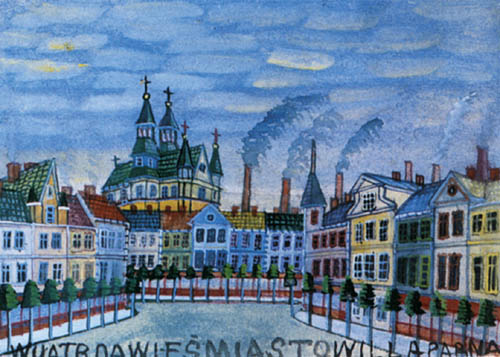
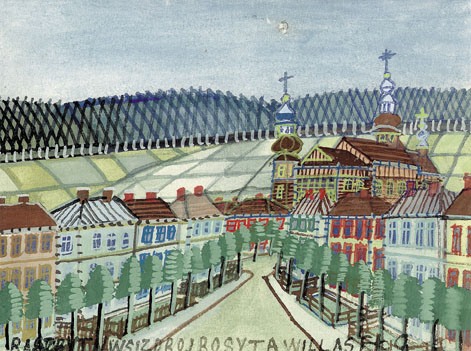
    Nikifor was born in Poland to a domestic servant and an unknown father. His mother died during his childhood, meaning he was left to rely on the goodwill of his community for survival; poor, illiterate and with a severe speech impediment. Nikifor began to provide for himself by begging, before a stay in hospital introduced him to watercolours. By 13, Nikifor was painting on discarded paper and cigarette packets which he would then stamp the back of and sell to people passing by. He then travelled from village to village trying to sell his art, using the name Nikifor Matejko; the surname of a famous Polish artist – possibly highlighting how strongly he considered himself to be a professional artist. He used a variety of materials to create his work, including watercolour, gouache and crayon; works which portrayed the countryside or intricately detailed buildings.

    You might notice there are inscriptions that lie along the bottom of many of Nikifor’s works; these often do not make any sense or do not mean anything in particular. It has been noted that he may have added these to his pieces to give the illusion of his literacy.

    Nikifor’s work did receive some interest during his lifetime, and was even exhibited across Europe as well as in America. However, it wasn’t until much later in his life that people began to take a serious interest in his work; at a point when creating was becoming a burden to him.

    Nikifor considered himself superior to others because he was an artist; despite the little acclaim and acknowledgement he receieved really right up until the end of his artistic career. He is however very well known in Poland, with a museum dedicated to his work in his hometown of Krynica.

    Below are some of Nikifor’s cityscapes and intricately painted buildings:


    Sources:

    • Outsider Art Sourcebook, published by RawVision

  • ‘Framing Marginalised Art’

    ‘Framing Marginalised Art’

    I have just been doing some research for my dissertation into the different display techniques used by curators when exhibiting ‘outsider’ art and I came across the following categories in a book entitled Framing Marginalised Art by Karen Jones, Eugen Koh, Nurin Veis, Anthony White, Rosalind Hurworth, Johanna Bell, Brad Shrimpton and Anthony Fitzpatrick.

    1) Biographical Emphasis

    This way of exhibiting the work focuses on the biography of the artist. Although this is often viewed as a negative way to display the work of marginalised artists, Marcus Davies, in his 2007 book On Outsider Art and the Margins of the Mainstream, claims that it has some positives.

    One of the positive points that Davies focuses on is the way that this form of framing can make the work of ‘outsiders’ become more understandable, as the viewer can begin to see the circumstances from which the work is created. It is a also a way to show work that is perhaps culturally and aesthetically complex and it can also give the artist a voice; a voice with which they can tell their story.

    However, this display technique can “add to preconceptions that Outsider Art comes from a place of extreme otherness; the life of the artist may overshadow the actual artwork.”[1] Using a biographical emphasis can often be a substitute for real engagement with the work; however, this method is extremely popular when it comes to exhibiting ‘outsider’ art, and it has raised the marketability of work and exhibitions of the kind.

    2) Formal Emphasis

    This emphasis tries to eliminate the distraction or substitution of a biographical context and instead encourage a direct and uninterrupted engagement with the work itself on an aesthetic level. This method allows the work to speak for itself and lets the audience make a decision for themselves based on “the product of the individual’s art-making process and the intended use of the art object.”[2] Here, “formal considerations function to level the playing field between inside and out.”[3]

    An example of the use of a formal emphasis within an exhibition is the Musgrave Kinley Outsider Art Collection at the Irish Museum of Modern Art in Dublin, where ‘outsider’ art was displayed alongside the work of mainstream artists. Another viable example of this framing technique is the Inner Worlds Outside exhibition held at Whitechapel Gallery in London – where works by ‘outsider’ artists were displayed alongside the work of German Expressionists.

    However, Framing Marginalised Art argues that despite being the most aligned with the contemporary art world, this method also has its downsides. Using a formal emphasis can, argue the authors, do a disservice to the artist; “muting their individual voices and ‘obscuring important ethical questions about the personal and social costs of the production of this art’.”[4]

    3) Appropriate Emphasis

    This emphasis focuses on the individual relationship between the artwork and the audience. An example of this emphasis used within an exhibition can be seen in Parallel Visions: Modern Artists and Outsider Art held at the Los Angeles County Museum of Art in 1992. Davies claims that “in recasting the relationship between modern and Outsider Art, the exhibition replaced the standard frameworks of biographical and formal analysis with a more flexible model based on meaningful interactions between artwork, beholder, and context.”[5]

    Maurice Tuchman, co-curator of the exhibition, noted that by displaying ‘outsider’ art alongside ‘established, canonical’ artists, “all works are equally valid as art…. aesthetically challenging and intensely involving.”[6]

    4) Patrimonial Emphasis

    The emphasis here is on the promotion and preservation of ‘outsider’ art. It is “concerned with the ‘far-reaching cultural implications of outsider production’ which provides ‘a philosophical outlook premised on the preservation of culturally significant creations in deference to their specific social contexts’.”[7]

    I would be very interested to hear your thoughts on these ’emphases’; whether you think they are a valid way of ‘categorising’ ‘outsider’ art exhibitions, or, perhaps, you think there are other techniques used commonly within the exhibition of marginalised art?

    References:

    [1] Framing Marginalised Art by Jones Veis, White, Hurworth, Bell, Shrimpton and Fitzpatrick (2010), p 29 (Appendix 2)

    [2] Ibid.

    [3] Ibid.

    [4] Ibid.

    [5] Framing Marginalised Art by Jones Veis, White, Hurworth, Bell, Shrimpton and Fitzpatrick (2010), p 30 (Appendix 2)

    [6] Ibid.

    [7] Ibid.

  • Mr Imagination (1948 – 2012)

    Mr Imagination (1948 – 2012)

    “Years ago my great aunt predicted I was going to be a minister, and in a way she was right,” Warmack said. “I think every artist is a minister and a messenger in a way.”


    Gregory Warmack, better known as Mr. Imagination, died on 30th May 2012 in an Atlanta Hospital aged 64.

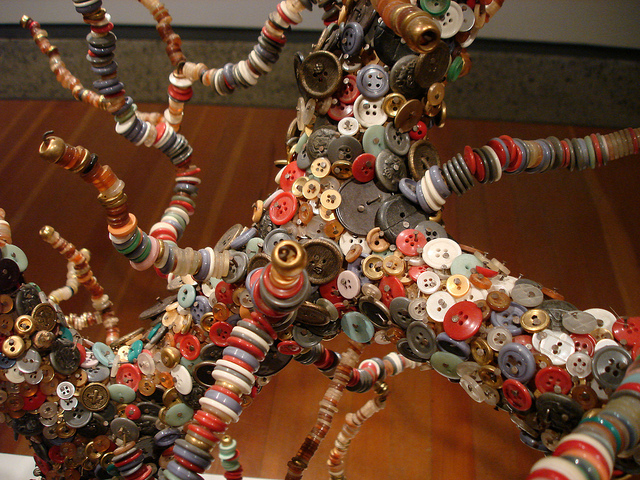
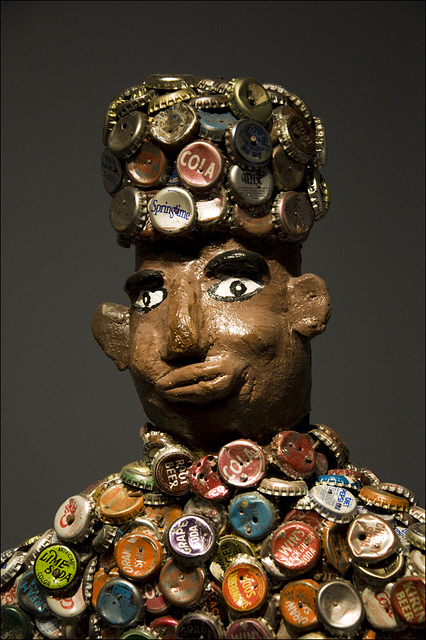
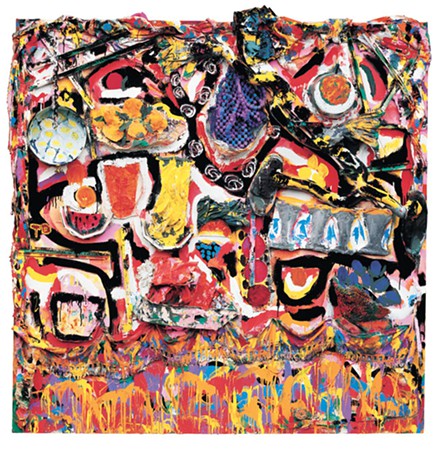
    Dedicating his life to creating spiritually powerful art, Mr. I’s creations consisted of discarded items such as bottle caps and paintbrushes which he began to make after he woke from a coma following a robbery in the late 1970s.

    Contemporary American Folk Art: A Collector’s Guide, a 1996 book, claimed that Mr. I “beats the Chicago Sanitation Department to back-alley waste and assembles what most of us would consider trash into sculptures of great power… Warmack’s work is beautiful, but it has another level as well – it is about the black experience and Warmack’s search for his African roots.”[1]

    In the later years of his life, Warmack set up and ran workshops for children; Carl Hammer, a gallery owner claims that “he was very effective in communicating to children the idea that your imagination can allow you to create art from any material….it wasn’t just something you did with a brush and paint.” [2]

    Some of his works are shown below:


    References:

    [1] http://www.suntimes.com/news/obituaries/12871422-418/chicago-artist-famed-for-using-bottle-caps-was-known-as-mr-imagination.html

    [2] http://articles.chicagotribune.com/2012-05-31/entertainment/ct-mov-0601-mr-imagination-obit-20120531_1_bottle-caps-community-arts-center-outsider-art

  • Diego Samper – Panopticon

    Diego Samper – Panopticon

    In 2003, Diego Samper was given the opportunity to tour a recently closed 120 year old Columbian prison in the town of Ibague, which was based on the idea of the British Panopticon prison; as its design allowed for increased surveillance and enabled hidden jailers to see every cell from a single position. The building itself housed political prisoners in the late nineteenth century.

    The prisoners who were incarcerated within this jail were allowed to freely express themselves on the walls of their cells; the idea being that they could create their own ‘space.’

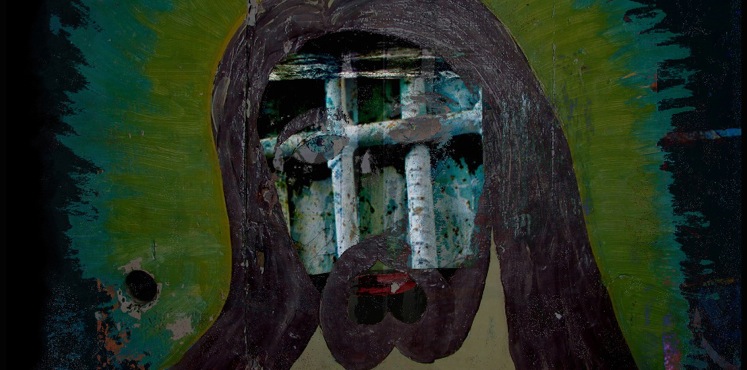
    Within the confines of the Ibague jail, prisoners seeking subjective freedom and solace, protested and expressed their opposition by richly decorating every surface. They deluged the prison with flowers, stars, saints, birds, fishes, mermaids and peacocks. The captive population asserted the significance of decoration for the soul in opposition to the machine aesthetic stripped down by the philosophy of modernism.[1]

    On his visit, Samper may have anticipated hard core pornography, but apart from the representation of a few nude females, the art was predominantly religious, or based on the idea of freedom. He was surprised by the vividness of colour used – he even claimed to have only taken a black and white film, on the assumption that the works would all be muted greys. [2]

    Samper photographed many of the works he encountered, realising that they were evidence of the abundant freedom that our own imagination can bestow upon us. In a place of isolation and incarceration, many of the prisoners sought out solace and salvation through religion, or indeed simply the momentary experience of freedom through their own creativity.

    Fascinated by the idea of increased surveillance and how it is in human nature to express or seek freedom even in the most hopeless states of oppression, Samper used 80 of the images to create a film entitled Panopticon, which is described as “a kind of visual dreamy sequence that occasionally turns into a nightmare.” [3]

    The film journeys through a rich visual underworld of prisoner art and psychology and through it, reveals aspects of contemporary Columbian social and political realities. [4]

    The idea of the Panopticon design itself has perhaps come to be a representation of the modern, technological world we now live in. With CCTV cameras around every corner, the average person can expect to be captured between 70 and 300 times per day in the UK. There is the feeling of a general global loss of freedom. Samper’s film is an evidential example of the freedom and escape that our own imagination and creativity can give us; particularly in today’s world where the margins of freedom, privacy and escape are becoming increasingly narrow.

    References:

    [1] from Notes Concerning the Panopticon, by Geoffrey Smedley, available online at: http://www.diegosamper.com/panopticonEn.html

    [2] http://www.coastreporter.net/article/20120615/SECHELT0501/306159998/-1/sechelt/prison-art-in-samper-film

    [3] http://www.coastreporter.net/article/20120615/SECHELT0501/306159998/-1/sechelt/prison-art-in-samper-film

    [4] http://www.diegosamper.com/panopticonEn.html

    FOR MORE INFORMATION ON DIEGO SAMPER’S WORK, PLEASE VISIT: www.diegosamper.com

  • ‘Insider Art’: The Work of Artists in Prison

    ‘Insider Art’: The Work of Artists in Prison

    Matthew Meadows’ book entitled ‘Insider Art’ looks at the rise in art made by prisoners and how this work has come to take a prominent place within the contemporary art world. Grayson Perry writes the foreword for the book, in which he notes that in this ‘Insider Art’ he sees “the basic human desire to make something tangible out of thoughts and feelings.” [1] These works remind Perry of where he came from and are a sobering reminder that perhaps at one point in his life he could have taken a “darker turn” but instead he chose art; much as many of these prisoners who create this ‘Insider Art’ have done, but perhaps a little later than Perry did.

    I’m an artist, and it’s a passion which burns with me to the point that it hurts. I am self-taught through books and many a long night and a short pencil. [2]

    This statement highlighted by Meadows in his first chapter is written by an inmate at HMP Wealstun. In the UK in 2009, 90,000 men and women were in custody, on remand sentenced or detained; 3,000 of which were young people. But why is ‘Insider Art’ so popular?

    Meadows argues that the “risk taking and rule breaking” appear within some of these works and that we “respond to its conviction, originality and often compelling content.” [3] In recent years, we have seen the establishment of prison arts charities; one of the most predominant being The Koestler Trust which was founded in 1962 by Arthur Koestler. In the USA, ‘Insider Art’ has established a market for itself both online and within galleries and in Holland, plans are in place to open a permanent collection of prison art from Europe in an unused prison building.

    Meadows also broaches the subject of victim responses to the exhibition and promotion of work created by those incarcerated in prisons across the world. Kelly Flyn of Victim Support claims that there is no unanimous thought held by victims:

    Victims’ views are extremely diverse and range from lifelong anger to total disinterest and feelings are likely to change over time. Therefore it’s just not possible to be able to say what victims might or might not think of prisoners’ art – there would be those who’d think it outrageous that prisons provide art courses, those who have no view one way or another, and those who’d say it’s a good idea. [4]

    It is a very sensitive subject. When the artist of a very well-known piece of art hanging in the Royal Festival Hall was revealed to be a child murderer and sex offender serving a life sentence, many were outraged that he was able to exhibit his work and even earn money from it. After much protestation, his work was removed from the gallery and the Royal Festival Hall issued a formal apology to the families of his victims.

    It can be difficult for people in society to see the possible benefit that might come out of exhibiting ‘Insider Art’. An article written for the Guardian in 2007 entitled ‘Arts in Prison Can Bring Hope to Broken Lives’ claims that whilst there is no excuse for committing crime or causing harm, “it’s usually the case that those who do behave badly towards others lack any real sense of self-worth or self-respect. And people who do not feel good about themselves are hardly likely to feel empathy or consideration for others.” [5] Creative activity in itself considerably aids personal development and it can bring hope or meaning to “broken, dysfunctional lives.” [6] A lot of people who begin creating art, or undertaking any creative activity, in the prison environment often have not had any experience of it beforehand. The opportunity for them to try such things can have spectacular results.

    Stretch, like The Koestler Trust, is another charity that aims to bring art into prisons. Recognising that art galleries and museums were out of bounds to prisoners, Stretch established a way to take the museum to the prisoners. They created virtual tours of museums such as the V&A, as well as asking artists to go into the prisons and share their ideas and head workshops with the prisoners. The workshops have even led to prisons gaining work placements on their release.

    Erwin James, author of the Guardian article, closes with:

    Engaging with art can restore confidence and self-worth; it can improve sociability and generate aspiration. Art and creative activity can be the perfect vehicle for revealing the complexities of the human condition. Prisons should open their doors wide to anyone who wants to promote it, and the government should recognise its value as an effective deterrent to re-offending.

    Afterall, “prisoner lives enhanced bring enhancement to the wider community.” [7]

    References:

    [1] Matthew Meadows, Insider Art, (A & C, 2010) p 8

    [2] Meadows, Insider Art, p 11

    [3] Meadows, Insider Art, p 11

    [4] Meadows, Insider Art, p 12

    [5] http://www.guardian.co.uk/artanddesign/artblog/2007/jul/19/artsinprisoncanbringhope

    [6] http://www.guardian.co.uk/artanddesign/artblog/2007/jul/19/artsinprisoncanbringhope

    [7] http://www.guardian.co.uk/artanddesign/artblog/2007/jul/19/artsinprisoncanbringhope
  • What’s On – June 2012

    What’s On – June 2012

    Flash of Splendour Artists

    Image
    Charlie Lagden, The London Job, 2009

    Flash of Splendour Artists @ Threadneedle Street, London

    Ongoing

    Flash of Splendour Artists is a “groundbreaking and highly acclaimed not-for-profit creative arts organisation working with music, poetry and the visual arts to effect societal change.”

    The exhibition itself will focus on the work of 5 young British artists who are mentored by Flash of Splendour Arts.

    The organisation itself specialises in “fostering creativity and self-determination in children and young adults, with a passionate interest in empowering those disempowered, for whatever reason, by their societal positioning.”

    For more information please visit: www.flashofsplendour.com

    Creative Future

    // Tight Modern Submissions \\

    50 works will be selected from submissions by marginalised or disabled artists to go on a touring exhibition across Sussex and London. The gallery is a minute replica of the Tate Modern, will dimensions of 8 ft x 5 ft with a 12 ft high chimney.

    Images that are submitted should be original, photographs, collages or computer generated, measuring 18 x 13 cm or 13 x 13 cm. Each artwork entered will cost £5.

    There are prizes of £250, £175 and £75.

    DEADLINE: 4TH JUNE 2012

    Once selections are made, the exhibition will take place at the following venues, on the following dates:

    London: 13th – 17th June @ Royal Brompton Hospital

    Brighton: 9th – 12th August @ East Street Bastion

    London: 10th October @ Gillet Square, Hackney

    Chichester: 9th – 11th November @ Pallant House Gallery

    For more information please visit: www.wix.com/tightmodern/gallery

    Studio Upstairs

    Image

    RIGHT HERE RIGHT NOW @ CRE8 Centre, Hackney Wick

    31st May – 7th June

    “A group show focusing on the lives of ten Studio Upstairs artists…. Where the viewer is invited into the secret world of each artist.”

    For more information please visit: www.studioupstairs.org.uk

    Outsider Folk Art Gallery

    Image

    Intertwined @ The Freedman Gallery at Albright College – Reading PA, USA

    20th May – 1st July 2012

    This exhibition “examines the artistic relationship of a mother and daughter, and a father and son, who have experienced extraordinary circumstances.”

    For more information please visit: www.outsiderfolkart.com

    The Graeter Art Gallery

    ImageTridacna @ The Graeter Art Gallery

    3rd May onwards

    The artworks on display in this exhibition mirror the struggle of the Tridacna; a creature which when put in peril will vanish, leaving behind just a skeleton.

    The exhibition includes pieces that represented “suspended dreams” and a “romantic merging of humanity, nature and animal.”

    For more information please visit: www.graeterartgallery.com

    Bethlem Heritage

    Hollow Space and Outgrowth @ Bethlem Gallery

    13th June – 13th July 2012

    “Artists from Bethlem Gallery respond to the historical and art  collection in the Archives and Museum.”

    For more information please visit: www.bethlemheritage.co.uk

  • Art Therapy vs Art AS Therapy

    Art Therapy vs Art AS Therapy

    In the recent Spring 2012 edition of Raw Vision, there is an article by Randy M. Vick which discusses the possible difference between what we might consider Art Therapy and what we might consider Art AS Therapy. Vick writes on the subject:

    “I have seen community studios run by both art therapists and artists, and have observed some important differences as well as clearly shared values and approaches. Almost without exception, I have been politely yet firmly told by the artist facilitators that what was being done was not art therapy.”[1]

    Similarly, in previous issues of Raw Vision, Sue Steward has been seen writing about the history of ‘progressive studios and workshops’.

    This is the beginning of what is quite a complex subject. Often it is assumed that the work that is created in these ‘progressive studios and workshops’ is the result of art therapy; but, generally, this is not the case.

    Running parallel to Dubuffet’s collection and coining of the term Art Brut was a new discipline – art therapy; which is, if we can define it, a focus on the interpretation of ‘unconscious material.’ There is, it seems, a continuum that begins with art therapy and ends with art as therapy. At the one end of the continuum, art therapy “employs an exploratory give-and-take between client and therapist with the goal of achieving psychological insight and beneficial change,” and at the other end sits art as therapy; “which places the benefit in the process of making and de-emphasises verbal exploration of the psychological meaning of the product.” [2]

    Those who use these ‘progressive studios’, which are often run by pracitising artists, are often “not driven by the need to share or to communicate, but rather to make tangible unspoken worlds with their own inherent logistics.”[3] Mind’s website (on the page which discusses art therapy), touches briefly upon the difference between the two ends of the continuum:

    “Creative arts may of course be very helpful, and for some people, the very fact that their creativity is art in its own right, rather than therapy, is one of the most important things that give it value.”[4]

    The artists who often work in these  ‘progressive studio’ environments aresometimes those we might define as ‘outsider’ – (again, see my post on the vagueness of this term!), and often exhibiting their work is an extension of this importance of creating and creation to their wellbeing. It is the creating of the artwork that provides the therapy, not the interpretation of it.

    [1] Raw Vision Spring 2012, p 24

    [2] Raw Vision Spring 2012, p 25

    [3] Engage Magazine 23, p 24

    [4] Mind website: http://www.mind.org.uk

  • Defining ‘Outsider’ Art..

    Defining ‘Outsider’ Art..

    Recently, I have found myself becoming more and more interested in the actual term ‘outsider’ art, and what it really means. Originally coined by Roger Cardinal as an English equivalent to Jean Dubuffet’s Art Brut (or ‘raw’ art), the term has grown to encapsulate a huge variety of works. There are many offshoots of the term, and it has become a sprawling label that many find difficult to define (including myself!)During the ‘golden age’ of ‘outsider’ art; which occurred between 1880 and 1930, the term was predominantly retrospective in that it defined the works of those who were now dead. It mainly included those who were incarcerated in some form or another, or those who suffered from severe social exclusion and the inability to access the commercial art market. Today, the term is more of an ‘umbrella’ for a variety of styles, works and artists. Under this umbrella we might see ‘Contemporary Folk Art’, ‘Marginal Art’, ‘Naïve Art’, ‘Self-Taught Art’ or ‘Visionary Art’. In this post, I hope to try and define some of these offshoots; if they are in fact definable in a black and white sense.

    My understanding of the term ‘outsider’ art itself keeps changing; every time I read more about it – so I am sorry if this post seems confusing or the terms seem to overlap – I am trying to work out where I stand with regards to what the ‘label’ means to me.

    Self-Taught Art:

    Self-Taught Art is probably one of the more common offshoots of ‘outsider’ art that we see used. The term itself is quite self-explanatory; it describes those artists who have not received any formal professional art training. This would insinuate an exclusion (by choice or not) from the commercial or professional art market. But, to some extent, aren’t all artists self-taught? They all have their own unique style and choice of subject matter, despite where or how they receive their formal art training. To describe self-taught artists as ‘outside of the art historical canon’ seems somewhat of a generalisation. Just because an artist has not received professional art training does not mean to any extent that they are not aware of current art trends or the flow of art history.

    Folk Art:

    Folk Art, I think, is a little easier to define. It describes a more traditional, indigenous style that is characteristic of a particular culture. I think I have said it myself already here – it is a style. Self-Taught Art and ‘outsider’ art (however we choose to define it) do not describe a specific style. Some may disagree with me, but I think that ‘outsider’ art far from describes a style. It is not akin to, say, Expressionism or Impressionism or Pop Art. It has become more about labelling the artist, rather than the work itself. Back to Folk Art – Folk Art is in fact the perfect example of how these offshoots of ‘outsider’ art overlap and intermingle. Folk Art itself is often characterised by a unique naïve style (Naïve Art will be discussed later) – perhaps I am getting confused here – if Naïve Art is the style, does that mean that Folk Art is not a distinct style?

    Image
    Thornton Dial – Folk Artist?

    Marginal Art

    Marginal Art describes the work of artists who are on the ‘margins’ of society for numerous reasons. But wait… Isn’t this one of the definitions of ‘outsider’ art? Some describe Marginal Art as that ‘grey’ area which sits right between ‘outsider’ art and the art of the mainstream commercial art world. So, for example, the scale would be as such: Mainstream Art – – – – Marginal Art – – – – Outsider Art?

    Naïve Art

    Naïve Art – I think – can be said to be a style. It is often produced by untrained artists (there’s the overlapping again), who depict realistic scenes combined with fantasy scenes in often bright, bold colours. Often defined by childlike simplicity with regards to the composition, subject matter or colour, present day Naïve Art is often created by those who have received formal art training – in fact, there are now even academies for Naïve Art. Does this mean it is no longer an offshoot of ‘outsider’ art?

    Image
    Grandma Moses – Naive Artist?

    Visionary Art

    Visionary Art is another umbrella term – a term which can avoid the specifics and the confusion created by the label of ‘outsider’ art. It encompasses all of the above; Naïve Art, Folk Art etc. Visionary Environments, however, are slightly different (please refer to my previous blog post for more on Visionary Environments). These environments are created by intuitive artists and describe spaces that have been re-created in an extremely creative manner; often they are ‘fantasy worlds’ into which we can escape. It seems, however, almost ignorant to group these Visionary Environments under the umbrella of ‘outsider’ art – as often, the artists who create this amazing spaces are very much an integral part of their local community; they are by no means on the margins.

    ♦♦♦♦

    I hope I have got you thinking about what the term ‘outsider’ art means to you – it is confusing, I know! The more I think about it, the more questions it raises for me. I am not sure it is really an appropriate label in terms of where the art of marginalised people stands today in the twenty-first century. Today, many an art work is undefinable – it doesn’t fit specifically into the art historical canon, but just putting artists into the ‘outsider’ art category seems to reduce the impact of the label itself. What I enjoy about ‘outsider’ art is the rawness of it; and the diversity – something which seems to be almost characteristic of such a broad title! Let me know what you think about ‘outsider’ art..

  • Visionary Environments

    Visionary Environments

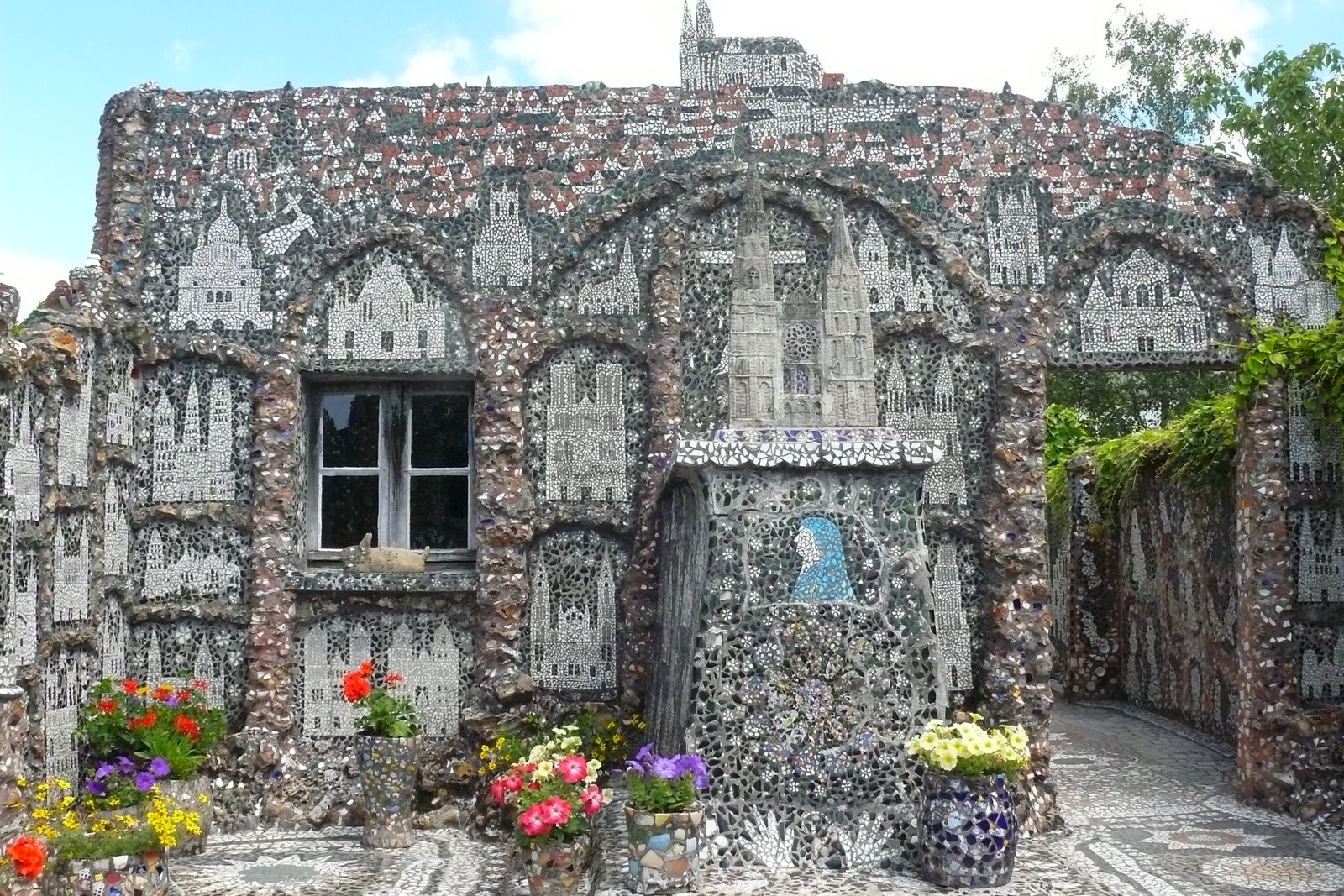
    Raymond Isidore’s La Maison Picassiette

    Often, when we first think of ‘outsider’ art, we imagine 2D paintings or collages made from recycled materials, rather than fantastical landscapes and installations in the wild. Visionary environments are huge scale artistic projects that are inbued with a sense of personal involvement and subjectivity; two characteristics which result in these dreamlike spaces being most closely associated with the work of ‘outsider’ artists.

    Some of the greatest work ever attributed to ‘outsider’ artists has been in the form of these visionary environments. These projects often take the artist years – or occassionally a lifetime – to complete; often becoming an obsession or an extreme compulsion. La Maison Picassiette located in Saint-Cheron, Chartres, France, is a mosaic-ed house created by Raymond Isidore (1900 – 1964). The house was built by Isidore himself, and then covered in broken pieces of china and crockery – a hobby which soon escalated into an obsession. Eventually, Isidore covered the interior of the house as well as the outside walls and the garden. After completing the mosaicing of the house, Isidore added a courtyard and a tiny chapel to his original house – these, of course, were decorated in the same way. Isidore died of exhaustion just two years after completing his increasingly all consuming project.

    Tyree Guyton’s Heidelberg Project

    Tyree Guyton’s (b. 1955) Heidelberg Project, which is located in Detroit, Michigan, USA, began as a stand against the effect of the Detroit riots he experienced as a child. Guyton began by tidying up the area and using the refuse that was collected to create an open-air art project. Over the years, his continuing to decorate decaying and derelict buildings has create

    d tension between Guyton and the local authorities. As well as using found items and recycled materials to create the open-air space, Guyton also used his own paintings and messages to cover the area – he wanted to highlight “the problems of poverty and urban ghettos” and to “save forgotten neighbourhoods and inspire people to use and appreciate art as a means to enrich their environment.”[1]

    In the UK, Kevin Duffy (b. 1945) has spent the last 31 years creating Tudor Village in North Ashton, Lancashire. Duffy is fascinated by traditional British vernacular architecture – but far from providing a purpose such as shelter, Tudor Village’s purpose is predominantly to satisfy his own need to create. More like stage sets, the buildings that the site encompasses are mainly facades – they have no interior. The site itself is a garden centre – but it is not a garden centre in the commercial sense; its main purpose is to provide an income for Duffy’s creations and to allow him the time and money to keep building. Duffy hopes to continue adding to the work and sees it as a lifelong commitment.

    Kevin Duffy’s Tudor Village

    Many of these visionary environments are abandoned once their creators pass away. This inevitably leads to their delapidation and decay. There is also the question as to whether the public should have access to these secret and extremely personal open-air environments. This is true in the case of John Fairnington, who created a ‘fantastical’ garden for his disabled son Edwin. The garden, known as the Cement Menagerie, contains approximately 300 animal sculptures. Fairnington left the garden to charity, but his son John bought it back to open it to the public. Similarly, Kevin Duffy enjoys receiving visitors at Tudor Village and encourages people to visit whenever they can.

    [1] Outsider Art Sourcebook,Published by Raw Vision, p 189

  • Outside In: National 2012

    Outside In: National 2012

    Outside In‘s National Exhibition will take place between the 27th October 2012 and 3rd February 2013 at Pallant House Gallery in Chichester. Outside In work to provide a platform for artists who are marginalised from sociaty due to a number of reasons including mental health issues, social circumstances and disability. The deadline for applications for the exhibition is Friday 20th July 2012, and there is no submission fee for entering the competition. There will be six award winners who will receive a month long solo exhibition in the Studio at Pallant House.

    Accompanying the Outside In: National will be other exhibitions based around the idea of ‘outsider’ art. Pallant House will be exhibiting the work of Jean Dubuffet, who originally coined the term Art Brut. He was a painter and sculptor as well as a collector of ‘outsider’ art in the early 20th century. As an artist, Dubuffet disregarded traditional ideals of beauty and instead focused on what he believed to be a more authentic and ‘raw’ approach to creating art. The exhibition at Pallant House will focus on the L’Horloupe series within Dubuffet’s collection.

    Also accompanying Outside In: National will be an exhibition of Pat Douthwaite’s prints. Douthwaite is considered both a ‘self-taught’ and ‘outsider’ artist after starting her life as a dancer and aspiring actress. After giving up the stage to focus on her art, Douthwaite was encouraged not to attend art school by fellow Scottish artist J. D. Ferguson. Lacking a permanent base, Douthwaite worked from numerous cities and countries including England, Scotland, North Africa, India and South America, but eventually struggled with physical illness after an attack she suffered in Edinburgh. Douthwaite exhibited regularly within the art world, but her work and its unique style was not considered to fit into the artistic conventions of her day. She was uninterested in becoming caught up in the art world, instead being comfortable being linked to ‘outsider’ art.

    Douthwaite’s early work was heavily influenced by the work of Dubuffet – something which connects the two exhibitions at Pallant House which are accompanying Outside In: National this coming Autumn/Winter.

    This series of exhibitions is something not to be missed by those interested in the work of ‘outsider’ artists. For more information on the exhibitions, and to keep up to date when information is released about them, please visit Outside In‘s website.