Blog

  • Artist Showcase: Frank Heiler

    Artist Showcase: Frank Heiler

    Every month, we try to showcase the work of one artist who might align themselves or their work with the term ‘outsider art.’ This month, Frank Heiler shares his process and inspiration as well as a selection of his ‘Dark Surrealism.’


    Frank Heiler, Pyrokinesis
    Frank Heiler, Pyrokinesis

    When did your interest in art/creating begin?

    My interest in the arts started very early. I loved drawing as a child, and my mother being an artist/illustrator only added to that fire. As I grew older I would often paint, draw, make videos, and sculpt things out of clay for hours on end just for fun. I’ve always had an innate desire to create something interesting and new.

    Frank Heiler, The Burning Maelstrom
    Frank Heiler, The Burning Maelstrom

    What is your starting point for each piece?

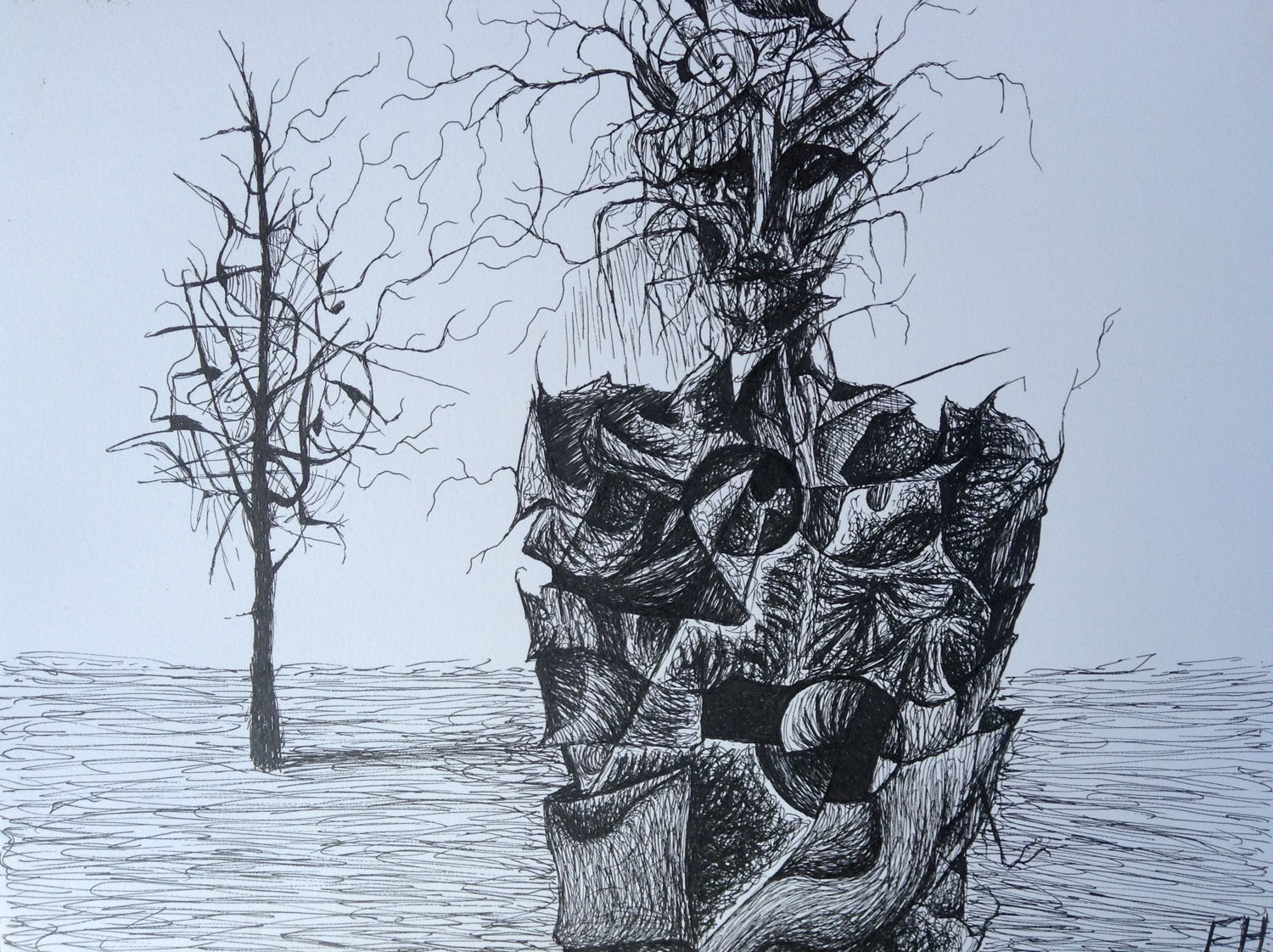
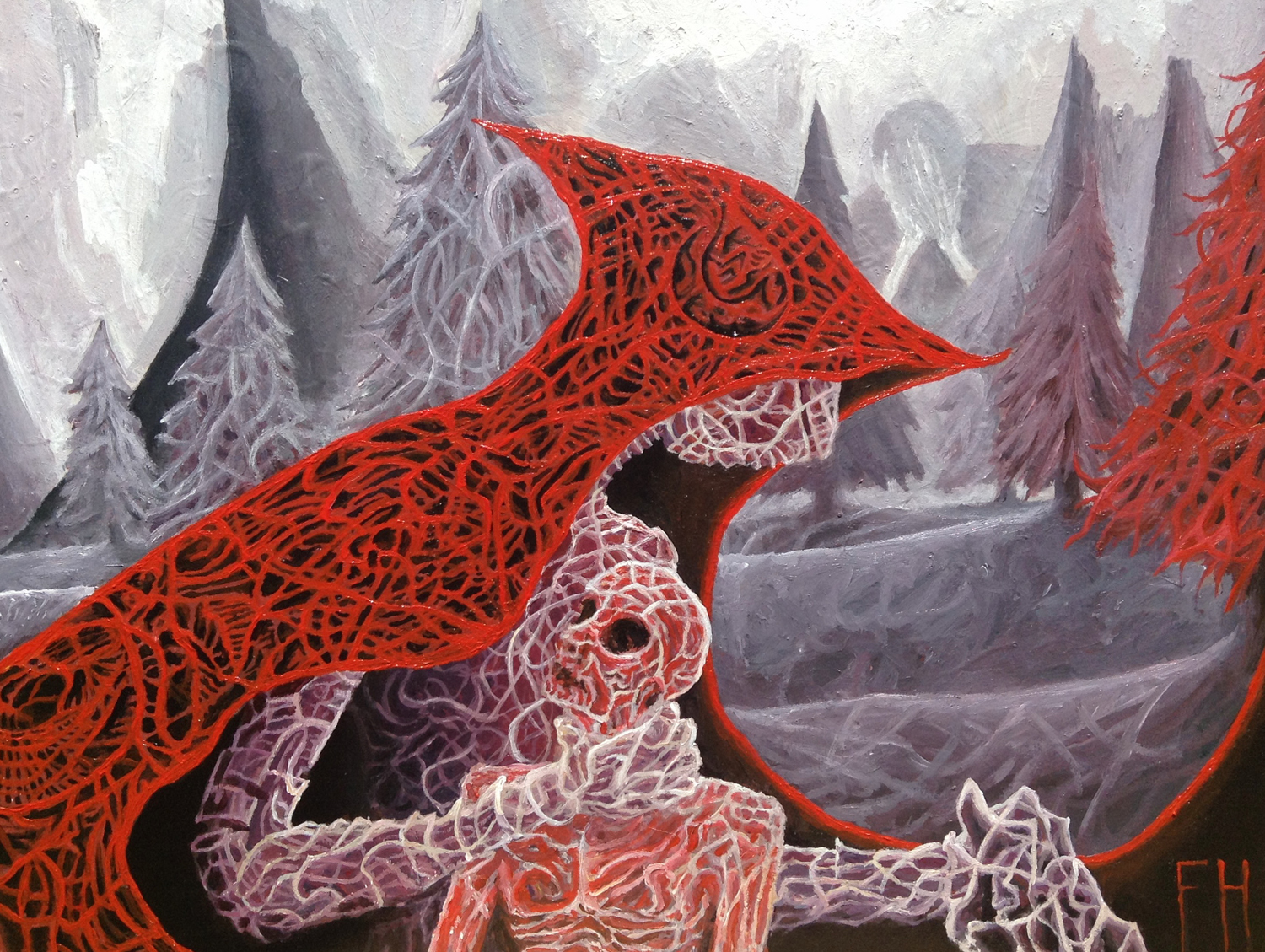
    For many of my acrylic paintings I will begin with a vague idea, maybe a feeling, or maybe something almost fully fleshed out in my mind. I work out a few small, light sketches and then I start painting the idea out for the final draft. I usually prep my painting boards with thick, heavily applied gesso, to add additional texture to the work. Sometimes I will also apply color, or black and white paint expressively, and then look for an image underneath the chaos, and then I do my best to bring out that vision. I usually start my ink drawings much the same, with a light sketch, then I do most of the detail entirely freehand.

    Frank Heiler, The Entangled
    Frank Heiler, The Entangled

    Who/what influences your work?

    My work is influenced heavily by the work of Zdzislaw Beksinski. Discovering his work inspired me to pick up painting seriously. I am also deeply influenced by music, and I never work without it. Survival horror video games, horror films, and horror/scifi literature also inspire me. I often draw from my own thoughts, experiences, and emotions as well, imparting something personal to each work.

    Frank Heiler, The Keeper of Absolute Agony
    Frank Heiler, The Keeper of Absolute Agony

    What do you hope the viewer gets from your work?

    I would hope that the viewer gets a sense of mystery, of foreboding, an unsettling or uncertain feeling from my work. I also try to create beauty within the darkness, maybe using surreal bright colors, or just in my intensive line-work or through texture. I’ve also always loved pieces of art that you can stare at and always see more, so I do my best to emulate this and hide faces, tiny details, and other subtle things in some of my work.

    Frank Heiler, Uriel's Obsession
    Frank Heiler, Uriel’s Obsession

    What do you think about the term outsider art? Is there a term that you think works better?

    I think that it fits well with some of my work, especially my more experimental pieces. Although I do draw influences from other artists, I always try to keep a foreign, outside element to my art, something chaotic and new, with my own influence. Dark Surrealism is probably a better term to describe what I do, however.

    Frank Heiler, Don't Look
    Frank Heiler, Don’t Look

    What are you working on at the moment?

    I’m currently working on a couple of new larger sized paintings, which I’m quite excited about, as well as a few commissioned pieces which I’m thoroughly enjoying!

    Frank Heiler, What Lies Beneath
    Frank Heiler, What Lies Beneath

    Where do you see your work taking you in the future?

    I hopefully see my work taking me further not just in my technical skills, but also in the ability to express my ideas. I also hope it will take me into some gallery shows, some solo shows, or maybe even something bigger.


    To see more of Frank’s work, click here to visit his Facebook page
  • Valid Art: creativity and affirmation

    Valid Art: creativity and affirmation

    A new qualitative study, commissioned by Axisweb, focuses on how artists receive validation for their work outside of the ‘traditional’ gallery setting. I think this is particularly poignant for all artists including self-taught artists and those who are not or do not wish to be aligned with the gallery agenda.


    The researchers working on the study interviewed producers, commissioners and artists, seeking views on how different people receive validation for their creative endeavours, and whether the existing structures have – or had – an impact on how they seek or receive validation. The main findings are outlined below in a brief summary:


    “The findings reveal an ad-hoc and informal approach to validation in the field. The commissioners, producers and artists interviewed agreed that the responsibility for seeking and maintaining validation falls largely to artists. While this was accepted as the norm, the majority of artists perceive a lack of support structures to help those operating outside the gallery system achieve and maintain external validation.”

    gallery

    There a few interesting things to take away from this in terms of thinking about validation and how artists receive it, seek it, and ultimately whether they need it at all. Traditionally, one of the key characteristics of the ‘outsider artist’ is their ability to create for themselves; because they need to, because they want to, rather than creating a saleable object or a commodity item. So where do they get their validation from? It may even be more difficult for them to find validation, with many not having not had the ‘rite of passage’ that is art school.

    Does validation come with a price tag? Is work of a higher monetary value confirmation of a valid and successful artist? It, thankfully, seems not. In the report, artist Joshua Sofaer is quoted as saying: “Amongst me and my peers, we might consider somebody that goes towards gallery representation, starts making discrete objects, as somebody who has sold out.Although he does go on to say that “other people might think they’ve arrived.” Additionally, many respondents felt that gallery backing was “more meaningful to others than to the artists themselves,” with many claiming that “the commercial numbers-led art world was potentially detrimental to the development of a high quality and original artistic practice.”

    paint1

    It is refreshing to see that although gallery representation is often sought after, many of the respondents did not “view gallery validation as a good fit for their values and practices.” Increasingly, it is perhaps true to say that artists are needing gallery representation less and less; for many, it is no longer the gold at the end of the rainbow. With the burgeoning use of the internet for self-promotion, artists can market and sell their work without the middle man, creating and selling on their own terms. This does, however, require the artist to have some knowledge of utilising internet marketing tools, a hurdle to overcome if you’re working towards self-representation.

    Although it is comforting to see the findings highlight the differing value systems amongst artists “from those they see underpinning mainstream galleries and the work shown there,” to me it seems there is still some way to go. Take, for example, the difference in status between community and educational art and a ‘national gallery commission,’ the former is still looked upon as lesser form of art than the latter, despite the inclusion of community and learning programmes in most major national and regional art galleries and museums. Worryingly, artist Ania Bas acknowledged that “A lot of artists that I know… don’t talk about any work that they would do for the education department… In fear that this would mean that they would never… be invited to do a show in the gallery.”

    gallery2

    So it seems from the report that whether validation is based on monetary value, visibility or gallery representation, there still seems to be an apparent separation, in terms of both support and funding, between work traditionally included in the ‘gallery agenda’ and art produced by socially engaged artists or those working outside of the mainstream. How do we overcome this? There certainly needs to be some sort of reform in terms of what high quality, valid art looks like, and in terms of who gets to decide. Rather than a sellable end item, perhaps a focus on process and idea needs to come to the fore. After all, if the only art seen as valid is the art that ‘sells’ and the only successful artists are those with a nose for business, we will continue to miss out on so much rich, unique and meaningful creativity.

    The concluding paragraph of the Axisweb report mentions that to encourage a rethinking of current validation systems, any new provision should be artist-led, because “without this, artists could be disenfranchised through external values being imposed on them in ‘top down’ regulatory ways. This in turn might undermine the existing quality and nature of artists’ work occurring within the broad category of socially engaged or non-gallery art.”

    creativity

    I’d be interested to know what validation looks like to you. Does it come from the art world, does it come from yourself, and how do you go about finding it? Please post any responses you might have in the comments below – thank you!


    Axisweb commissioned Validation beyond the gallery (June 2015) from Manchester School of Art, focusing on artists working outside of the gallery system. The report was written by Amanda Ravetz and Lucy Wright. You can read the full report by clicking here.

  • Daniel and Rodney: two perspectives on geometric form

    Daniel and Rodney: two perspectives on geometric form

    This month sees the opening of an Outside In exhibition in collaboration with Bethlem Gallery. Outside In: Bethlem will showcase the work of Daniel and Rodney, who have refined yet differing perspectives on geometric form. The exhibition will run from 19 August – 11 September at Bethlem Gallery, which is situated within the grounds of the Bethlem Royal Hospital in Beckenham, Kent.

    Daniel and Rodney were selected for the exhibition by Simon Martin, Artistic Director of Pallant House Gallery, who was drawn to the idea of two artists using drawing within their work, but to different ends. Both Daniel and Rodney use linear marks to create sophisticated images, but whilst Daniel builds up complex mandala-like structures, Rodney pares back all detail to the simplest of forms.

    Rodney, Untitled
    Rodney, Untitled

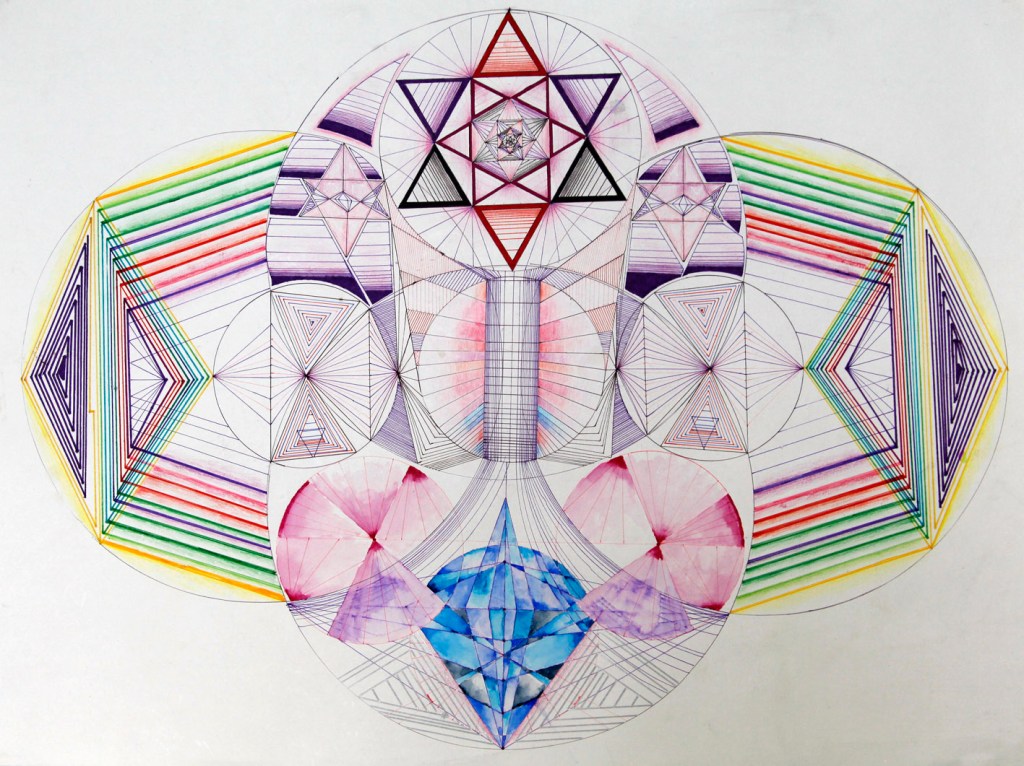
    Daniel’s Metatron works form a series of drawings that all use geometric shapes, lines and vivid colour. With a tightly developed methodology for constructing structures and composing forms, Daniel has created a strong visual identity for his work. “It takes me a couple of months to do one piece, as I do it bit by bit in my own time and space,” Daniel says. “You can always find a face in my drawings that for me represents Archangel Metatron, accompanied by the third eye.”

    Daniel, Metatronic Circuit 2
    Daniel, Metatronic Circuit 2

    Simon says of Daniel’s work: “It has a remarkable precision and control, and yet it seems imaginatively free. The abstract forms and colours in his drawings and paintings seem to exist without reference to the physical world and they remind us that the artist can be like a shaman to the unconscious and a deeper spirituality.”

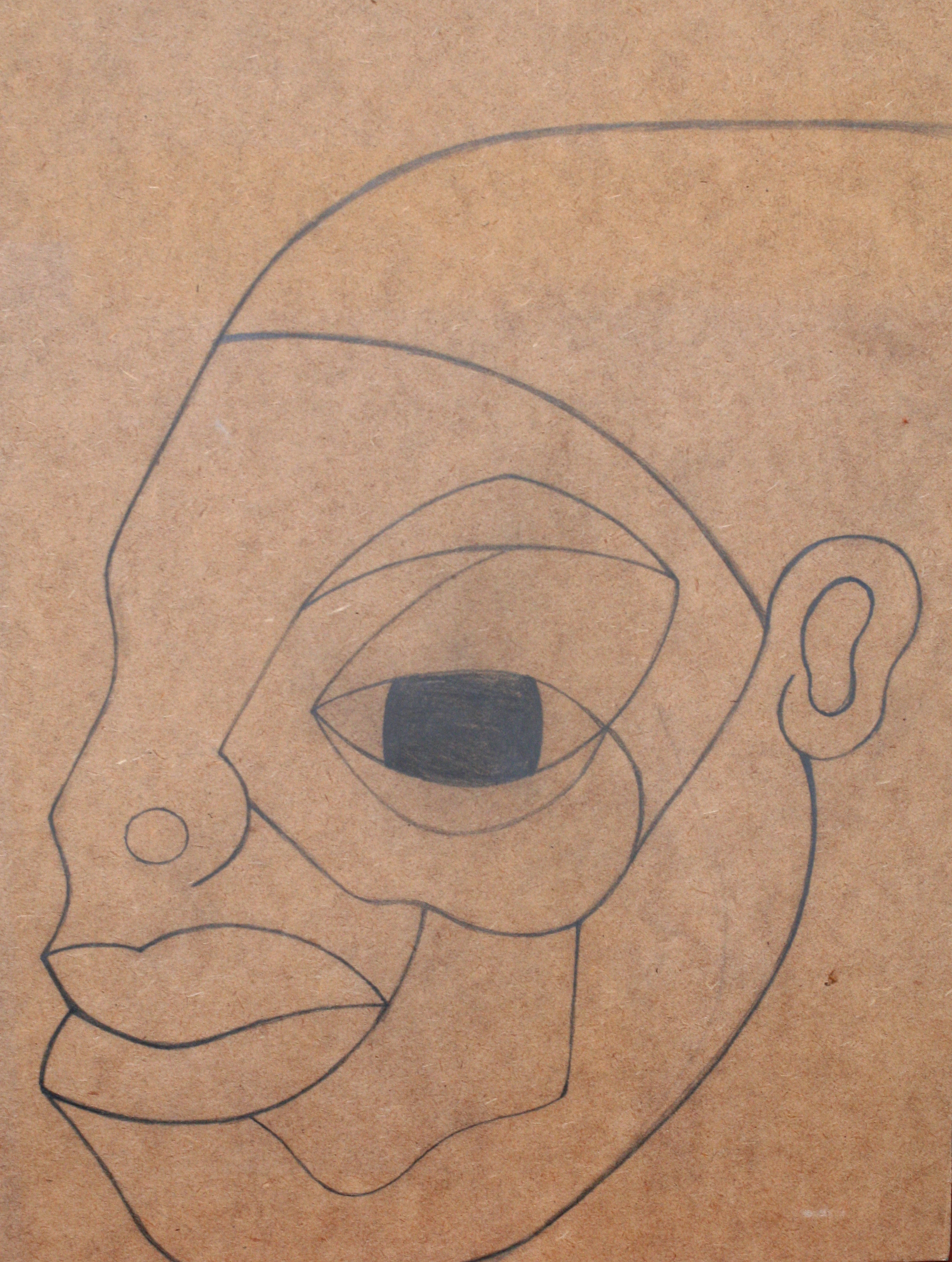
    Rodney, Jamaican Head
    Rodney, Jamaican Head

    Similar in their use of geometric forms to Daniel’s pieces, the beautifully precise and simple forms of Rodney’s work come from his studies of the world around him and include people, interiors, guns, stereos, boxes and locks. His sophisticated process of distilling complex forms down to something more refined and elegant is carried out quietly and without any formal training. “Rodney’s drawings have a powerful simplicity,” says Simon. “He seems to distill the physical world down to the simplest scaffold of linear forms.”

    Daniel, Pink Metatronic Circuit 3
    Daniel, Pink Metatronic Circuit 3

    Outside In and Bethlem Gallery both have the same ethos when it comes to promoting work by artists facing barriers to the mainstream art world, and this exhibition will combine these efforts for the second time, resulting in a high-quality show with a focus on geometric forms created in two unique styles.

    For more information on the exhibition, please click here.

  • The Art of Mr Bartle

    The Art of Mr Bartle

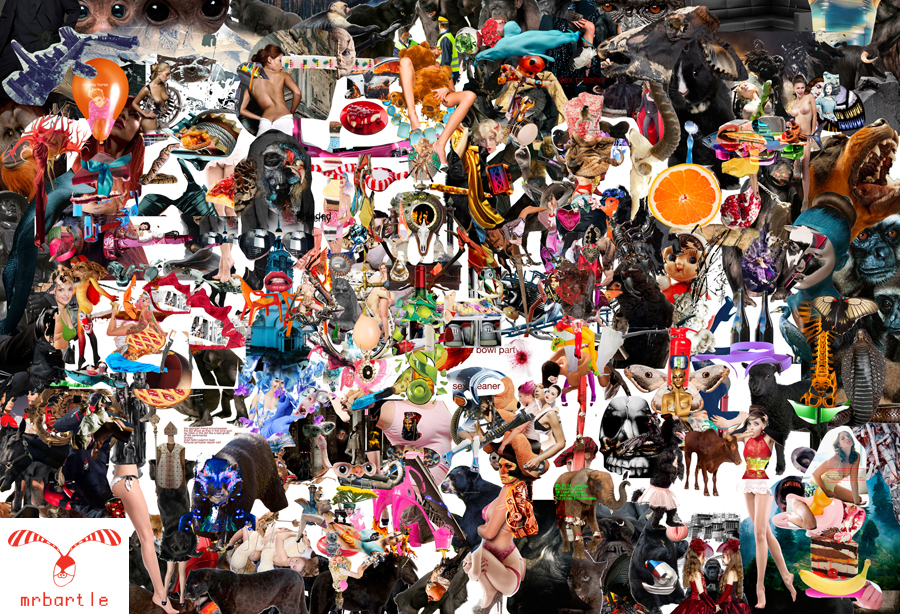
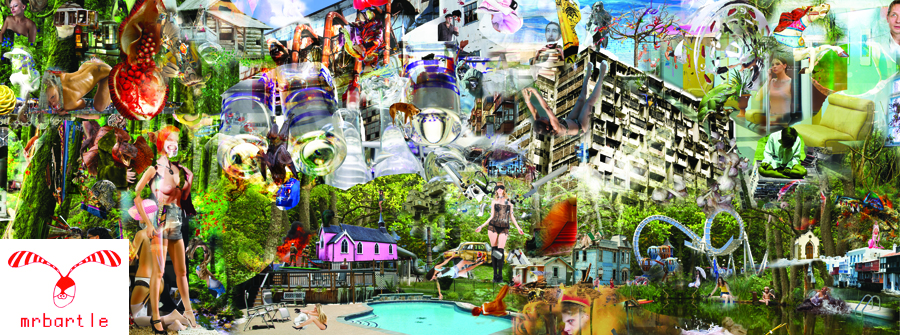
    Mr Bartle uses collage – both paper and Photoshop – as an almost therapeutic process to put his thoughts down ‘on paper.’ Inspired by pop art and creating from a very early age, mr bartle has answered a few questions about his work and his life as an artist.

    Mr Bartle, Angel in the Woods
    Mr Bartle, Angel in the Woods

    When did your interest in art or creating begin? 

    Since day one really, I remember drawing skeletons at primary school, making spacemen out of papier mache. I wanted a pet sparrow after having a dream about one – so I drew one. At that age I was really interested in robotics and anything space related: other worlds, bringing things to life. I think that theme has just continued. I like to create, to make worlds.

    What is your starting point for each piece?

    The starting point is whatever springs into my mind when I sit down to make a new piece. This is inevitably influenced by my mood; what’s been happening in my day; things that have been on my mind. So the starting point is usually a single photograph. This image will then spark a connection with another subject – I’ll get a feeling of what the next image should be. This may lead to one more image or while I’m searching through my image library something else may pop up. Once I have my canvas open in Photoshop with one or two connected images I may go off on a few different paths creating small clusters of images over the page or in separate documents that are then brought together or cut apart. I try and allow the process to be naturally evolving, not censoring thoughts, images, or trying to purposefully DO something with them. As the image comes together I may create something like a building out of sweets and car parts, so there is some control in what is happening, but that stage of the process is still open to change based on mood or a new avenue of thought. The endpoint of each piece just happens, it is out of my control, it’s like the pieces are half alive, they finish themselves when they’re ready. It’s like a realisation, like the pieces are saying “Right, now I’m finished, stop working on me.”
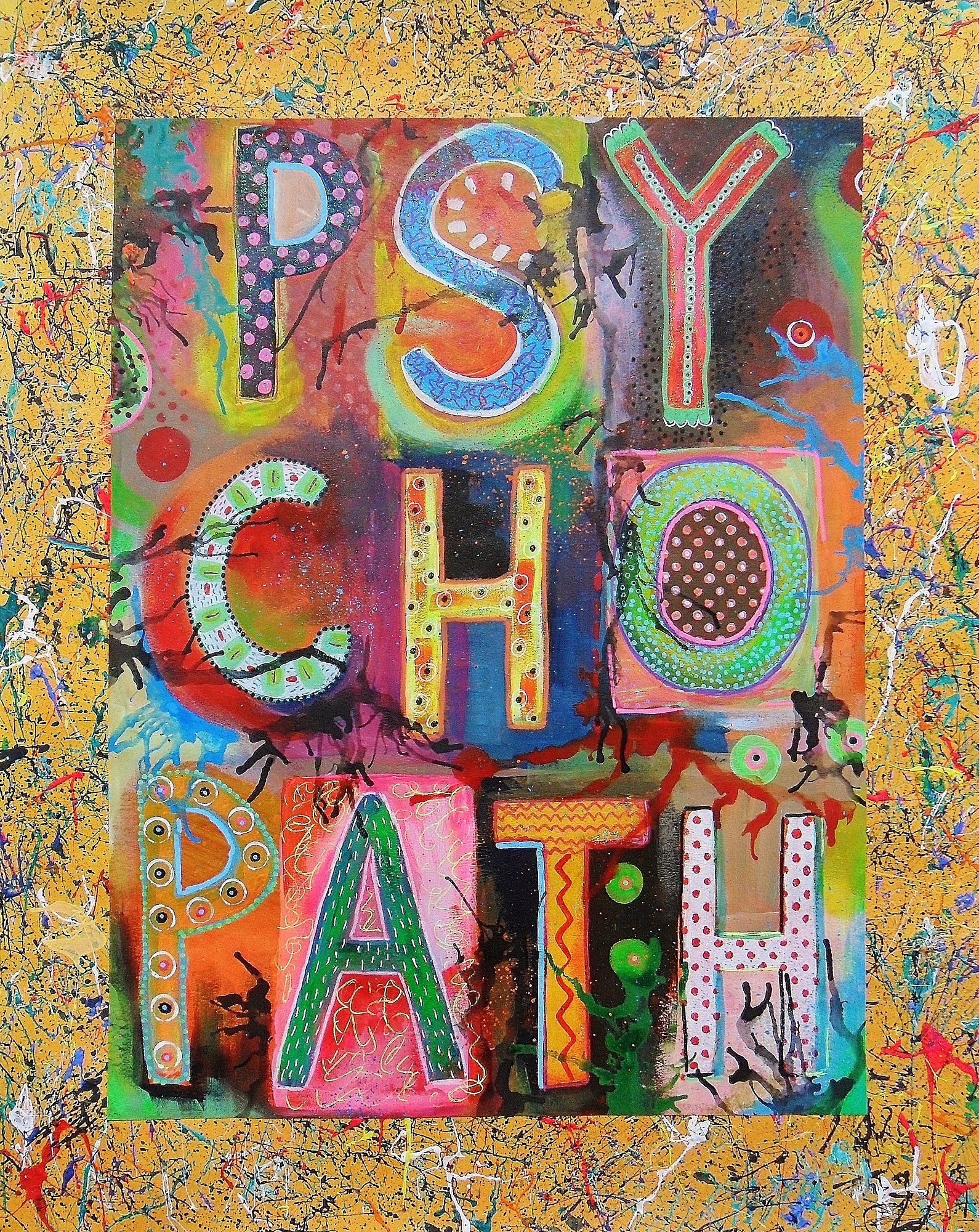
    Mr Bartle, The Gods
    Mr Bartle, The Gods

    I started cutting out little bits of images very roughly maybe 6-8 years ago. The technique came about because of my frustrating with trying to emulate other image makers by very carefully joining images to try and make the end result a very realistic scene, or portrait, whatever the subject was. It just wasn’t quick enough for me, so I started chopping images up like this from scanned images, in Photoshop. The results soon became something that I liked, that suited the way I thought, joined images and ideas, rough round the edges, mistakes, accidents. Photographs for me are my raw material and I think that I paint with photographs, they’re not sacred, they can be cut up, used simply for their colour, their texture or allowed to remain whole.

    Although my work naturally evolves there are definite themes that keep coming back, including Christian symbols, women, water, and buildings and structures.

    Mr Bartle, Nosebleed Jesus
    Mr Bartle, Nosebleed Jesus

    Who or what influences your work?

    Everything influences my work, it’s part of me and all my experiences, thoughts, everything I read, see, do, research, friends I talk to, dreams. Some other artists that have been a big part of my work include Warhol, Richard Hamilton – pop was an early favourite. The collage side of things came about originally by seeing a set of images that my dad’s friend did. When I was younger I made a lot of traditional collages with old magazines like the Sunday Times magazine. Other influences include Hockney, JG Ballard, Tom Waits, Burroughs, the beats, Bukowski, Daniel Johnston, David Lynch, Edward S Curtis, Dali, Kerouac, Jake and Dinos, Polly Morgan, Robert Crumb – the list goes on.

    Depression, The Black Dog. Such a big problem in my life. It’s being following me round since I was about 12, and although I’ve got a better understanding of it now it’s a hard one to live with. There’s nothing heroic about depression, it’s not the wonderful thing that makes me an artist. Alcohol and drugs were something else that I’ve now beaten – they were a way of almost instantly changing my thoughts, of escaping. I found it generally better to ‘do what I was supposed to’ while dealing with these issues as a very personal and private problem. I managed to stop drinking about five years ago with thanks to friends and other means of support, along with smoking and drugs. That continues to be the best thing that I’ve ever done for myself.

    What do you hope the viewer gets from your work?

    That’s quite a difficult one, because it’s not my intention to tell the viewer anything. I don’t start off with an idea of what I’d like people to see, it’s more an almost therapeutic process for me, to get all this ‘stuff’ – these thoughts – out of my head. I’d hope that people would see my work and it would fire their imagination, start a conversation. I think they’re quite hard pieces to sum up in one viewing, and i think they need to be seen more than once. I would hope that people find them interesting and can make their own connections with the images.

    Mr Bartle, The Cellist
    Mr Bartle, The Cellist

    What do you think about the term outsider art? Is there a term that you think works better?

    Like all art classifications it’s useful in grouping together work with similar characteristics, but the term is defined differently in different places. If outsider art is art created by untrained artists, then that’s not me. If outsider art is only art created by people on the edge of society, then that’s not me. Why I feel comfortable with the term and am happy with it as a classification regardless of other people’s ideas of what it should mean, is that I ‘feel’ like an outsider. I’ve never known where I’m supposed to fit into everything. So much of it doesn’t make sense to me – the way I’d like to live, depression. The work I create is a reflection of this confusion. It’s not something that really matters to me anyway, I’ll do my work and if there’s different places for it to exist where like minded people would like to see it, then that’s just fine with me.

    What are you working on at the moment? 

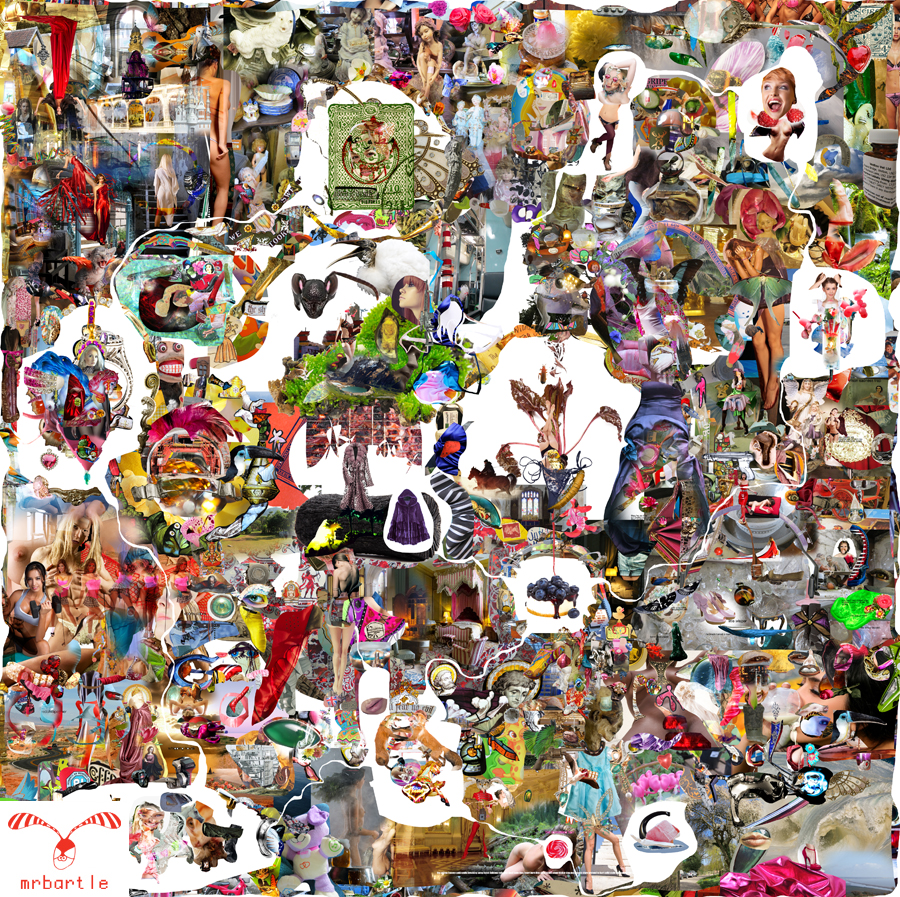
    A few pieces. I kind of stopped the large photo-montages for a while; I got a bit overwhelmed by the process – all those images – knowing that each time it would be a long and often difficult process, so I have half finished pieces that I am slowly looking at anew. I’ve printed one of my unfinished pieces called ‘Prison Sleep’ with holes in it; large open white spaces. I reached a point with the piece that I didn’t know what to do with it, it reached a kind of stalemate, so I broke it apart (in Photoshop) and had it printed with these big spaces in it. The work is now on the table downstairs and I’ve being drawing on top of it, adding diary entries, drawings, text.

    I’ve also being making ‘real’ collages again using old french art magazines and material found in charity and junk shops. They’re progressing quite slowly. Sometimes I feel really inspired to work on them, a lot of the time I’d rather be in the Photoshop environment, where I find it quicker to get ideas and images together. I recently started a couple of pieces where I’m making machines and robots, I’d like to do some spaceships. Just sketches right now. I’ve started getting my images printed onto T-Shirts also. Back to Andy Warhol and mass production side of things, I like the idea of art permeating through everything and am planning some wallpaper pieces. I have plans to source different images from many different sources. I generally have quite a lot of things going on, which makes it easier to be inspired to get on with work if I can pick different pieces up depending on how I feel.

    Mr Bartle, The Stage
    Mr Bartle, The Stage
    Where do you see your work taking you in the future?

    I’d like to make a living from my artwork full time and be represented by galleries here in the UK and abroad as part of a happy, connected and inspiring lifestyle.


    For more information on Mr Bartle, you can:

  • Artist Showcase: Beatrice Roberts

    Artist Showcase: Beatrice Roberts

    In a bid to showcase more great art by talented artists on the blog, this month, I asked artist Beatrice Roberts to answer a few questions about her influences and inspiration, and share with us a selection of her fantastically vibrant works.

    SAM_6779 (5)printYES (1474x2000)

    Where did your interest in art/creating begin?

    When I was about 10 my family started going to a holiday camp every year and there was always some pastel portrait artists there. I would stand there for hours and hours watching people have their portraits done, while other kids went to the fairground or did crazy golf or something. I would disappear for hours to go watch them – my mum and dad would always come to the artists to find me. They knew I would be there, absolutely fascinated by the process. I then started drawing portraits of pop stars and my friends and family, and I’m still interested in portraiture and figurative art all these years later.
    SAM_7122 (2) (1597x2000)
    What is your starting point for each piece? And what is the subsequent process?

    Most of my pieces start off with a monoprint. I lay down a shape in thick acrylic on perspex or paper and make a simple print onto another sheet of paper. That shape becomes my subject. I enjoy this process because it’s – perversely – out of my control. I have to work with what is there – with the print I am left with. This makes for a bit of a challenge as I have to ‘bring the work round’ into something recognisable. My animal paintings are also done this way. A large proportion of my work is produced in this manner and I never know what I am going to end up with as I rarely plan. I work spontaneously and my paintings grow organically as I am creating them. I also like to use foam shapes to print with and I often use the stick end of the brush to apply paint to the surface to give raised, impasto lines sections. I love the rawness I get with this technique.

    I use a lot of bright colour in my work, which makes me happy. I build up a great depth of colour by adding several coats of acrylic and which gives a rich, jewel like appearance. I use drawing pens a lot too, adding dots, dashes and outlines with these. Oil pastels also make an appearance sometimes giving another dimension to artwork as they form a kind of ‘resistance’ which the water based paint skates over.
    SAM_7729 (3) (1602x2000)
    Who or what influences your work?

    I enjoy raw art (outsider art?) mostly and I have many favourite artists who all must influence me subconsciously, in one way or another. The list would probably be too long to mention. I have been told that my work is kind of ‘edgy’ or slightly disturbing and I would sort of agree with that – I wouldn’t say my life’s been easy. I got myself into a very bad, long term situation which was incredibly difficult to get out of. I have noticed that recently themes have been coming through my work which relate to the trauma I and my children endured throughout this terrible time. I am sure that being a survivor does have an influence in what I paint and the way I paint. I am finding that being able to refer to these awful times , in my work, is helping me to heal in a way.

    On a lighter note, I do tend to include quite a lot of humour in my art and I am particularly fond of collaging ‘gutter press’ magazine headlines into my pieces to add some sort of weird dimension to which the viewer can add their own thoughts and perceptions.

    The other theme that runs through quite strongly is animals. I am a great respecter of the bird and animal kingdom and I paint a lot of animal, bird and underwater creature subjects, although these are often just for my own enjoyment. I was given a book for my birthday about Ernst Haeckel, the philosopher, biologist and artist and I have been greatly influenced by his beautiful illustrations.
    SAM_7977 (2) (1590x2000)
    What do you hope the viewer gets from your work?

    I hope that they see the voice of a woman with a past, with lots of life experience, who has suffered ups and downs, who has a story to tell. However, I hope they also get my humour, positivity and personality coming through in my work. I had a very bad experience, I lost many, many years, when I was isolated and turned into a non-person, but I am making up for lost time. I am bruised, but my spirit is absolutely not broken.
    SAM_8370 (2) (1388x2000)
    What do you think about the term outsider art – is it an umbrella you’re happy to be under? Is there a more preferable term?

    Well, due to my own life experience, I feel like an outsider most of the time. I’m not a ‘people person’ and some of this is, I’m sure, due to my past. I was bullied for many years and my self confidence was eroded to a massive extent. I still have anxiety issues because of it. I was also isolated from family, friends and any support networks, so I got into the habit of being self reliant. These days I have a wonderful partner and I am slowly but surely healing, but as my art is me, and I feel like an outsider, it is probably a reasonable term to use for my art.
    SAM_8418 (1960x2000)
    What are you working on at the moment?

    I have started work on some nude figures. As I mostly focus on heads in my paintings, this is going to be really interesting for me. I am also preparing some pieces for the Nottingham Castle Open, which is for emerging and established artists in the Midlands. I didn’t make it last year, but I am going to give it another go!
    SAM_8393 (2) (2000x1995)
    Where do you see your art taking you in the future?

    I would obviously like more people to see my art. I have a website at www.bearoberts.co.uk and I  would ideally like gallery representation further afield than my own county. To be represented by a London gallery would give my art credibility and would enable my work to be seen by serious art collectors. Meanwhile, I will continue to submit to as many exhibitions as I can and hopefully gain some collectors. I would also like to possibly create some larger works as I do work on quite a small scale currently.

    You can see more of Beatrice’s work by CLICKING HERE. Additionally, you can follow her on Twitter: @BEATRICEMARTIST.

  • Nek Chand: a creative tour de force

    Nek Chand: a creative tour de force

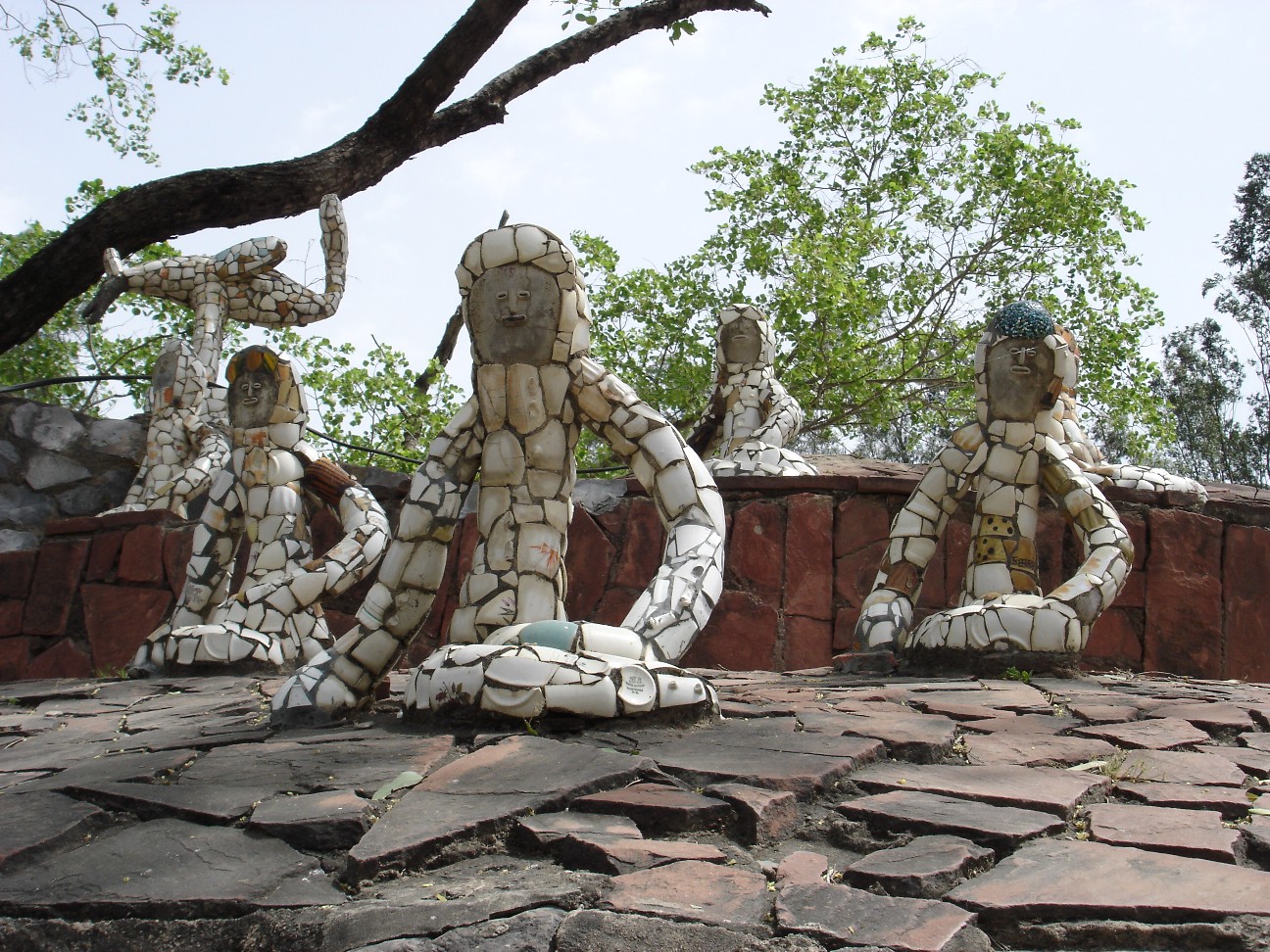
    It was with great sadness that today – 12th June 2015 – I heard of renowned self-taught artist Nek Chand’s passing at the age of 90. Chand’s Rock Garden in Chandigarh is one of the best known visionary environments in the whole world, and is an unrivalled example of one man’s incredible intuitive vision.
    Nek Chand's Rock Garden
    Nek Chand’s Rock Garden

    Born in 1924 in the village of Berian Kala, in what is now Pakistan, Chand relocated to India with his family in 1947. Eventually, he moved to Chandigarh in the northern part of the country; the first planned ‘utopian’ city in Post-Independence India, designed by Swiss architect Le Corbusier.

    A deeply spiritual man, Chand was fascinated by the mystical significance of rocks, and was by profession a public roads inspector for many years. It was during his time in his role as roads inspector that he began spending his evenings imagining and moulding figures out of recycled and found materials. Pursuing a vision from a dream, Chand cut back a clearing in the jungle on the outskirts of Chandigarh, situated in the middle of the Capitol Complex and the Sukhna Lake; the place where his Rock Garden was to come to life. This space, he believed, had once been home to a glorious kingdom.

    Nek Chand
    Nek Chand

    Chand’s process is indicative of many historically renowned outsider and self-taught artists, with a focus on found objects and recycled materials. He used discarded objects, such as broken crockery, electrical fittings, glass bangles and bicycle frames, building up the bulk of the figure with a cement and sand mix. A final coating of smoothly burnished pure cement combined with waste materials would then be added. Chand believed that each figure contained the spirit of a human being, god or goddess.

    During the making of the Rock Garden Chand was consumed by his vision. He has said before of the Garden: “It began really as a hobby. I started not with the idea that it would become so famous. Every day, after I finished my government job, I would come here to work for at least four hours. At first my wife didn’t understand what I was doing every day, but after I brought her to my jungle hut and showed her my creation, she was very pleased.”
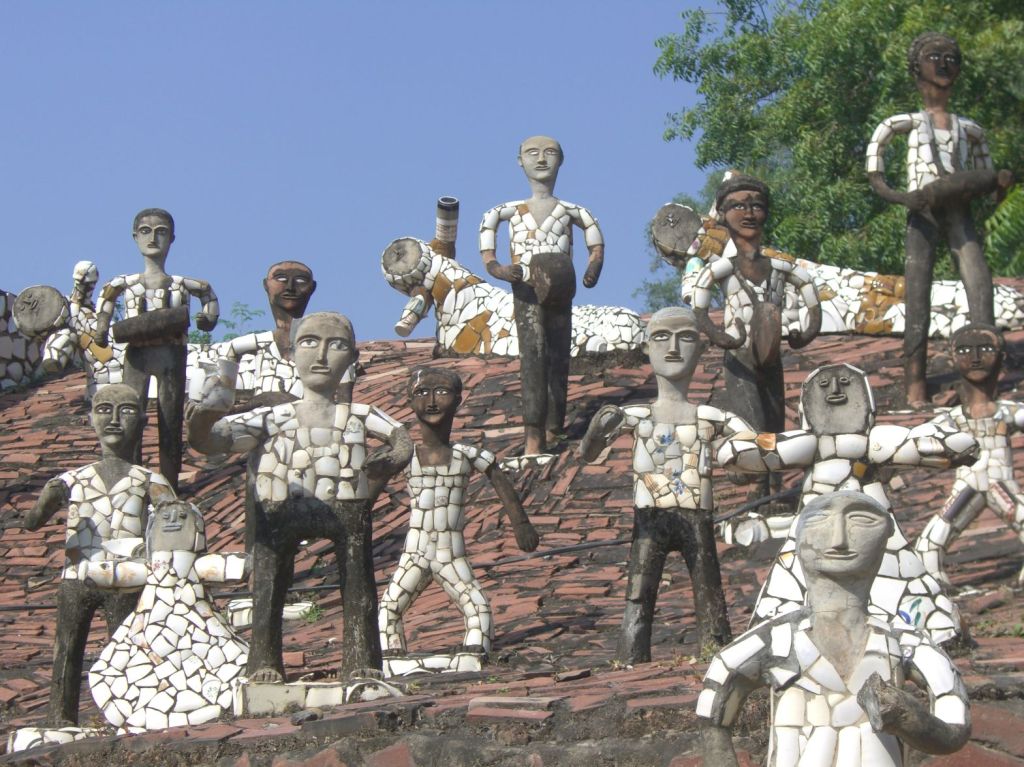
    Nek Chand's Rock Garden
    Nek Chand’s Rock Garden

    In 1972, the Rock Garden – originally an illegal endeavour by Chand in his spare time – became a municipal authority-funded tour de force. Stunned by Chand’s creation, the authorities pumped money and labourers into the project; now the world’s largest visionary environment, with several thousand sculptures covering more than 25-acres. In 1976, it was opened to the public.

    The Nek Chand Foundation was founded in 1997, and today the area is overseen by the Rock Garden Society, opening its doors to over 5,000 visitors every day. It is the second largest tourist attraction in the whole of India – second only to the Taj Mahal.

    Nek Chand's Rock Garden
    Nek Chand’s Rock Garden

    Chand’s creative vision, his fascination with the creation of something from nothing, the conversion of waste into beauty, has led to his position as one of the most respected creators in the world. His Rock Garden is his personal legacy, one that has touched many people’s lives and one that will continue to do so for long after this sad day.

    For those in the UK or visiting between now and October, a selection of mosaic sculptures from Nek Chand’s Rock Garden are currently on display at Pallant House Gallery in Chichester. The exhibition is free to see, and continues until 25 October 2015. Click here for more information

  • Miraculous Urgency: exploring the relationship between catharsis and art

    Miraculous Urgency: exploring the relationship between catharsis and art

    You may have seen a blog I posted back in March about an upcoming exhibition kdoutsiderart.com is organising in collaboration with Now and Again Gallery in Brighton, UK. I’d just like to extend a huge thank you to all of the artists who submitted work – the standard was incredibly high, and myself and Daniella Norton, the co-curator, thoroughly enjoyed browsing through the fantastic work. We have now narrowed down the exhibiting artists to 24, and are eagerly awaiting the arrival of their work at the Gallery.

    Lucy Richards, Between Two Worlds
    Lucy Richards, Between Two Worlds

    The exhibiting artists include: Jonathan Alibone, Michael Bartlett, Polly Blake, Sean Burn, Nick Carrick, Lou Clement, Ellen Cross, Nikki Davidson-Bowman, Hannah Dennison, Jayne Eagle, Libby Goddard, Sharon Jaque, Lydia Meehan, Jenny Milarski, Steve Murison, Susan Plover, Lucy Richards, Ginette Rimmington-Jones, Luciana Rosado, Katie Sollohub, Anthony Stevens, Chris Stevens, Mike Stoakes and Joshua Uvieghara.

    Katie Sollohub, A Handful of Memories
    Katie Sollohub, A Handful of Memories

    The exhibition will include works created in a whole host of ways, in a wide range of media, including, but not limited to: paintings, drawings, sketchbooks, film, sound pieces and sculpture, and it will focus on the link between art and catharsis. We are currently in the process of putting together a booklet with written pieces by various artists and writers outlining their thoughts on the links and the importance of art in providing a cathartic release. With the show, ‘Miraculous Urgency,’ we hope to highlight introspective moments within artistic practice where, for whatever reason, a cathartic act has taken place during the making of the work. It will shine a light on the importance of creativity, and how, in many cases, process is equally as important as product.

    Ellen Cross, Father
    Ellen Cross, Father

    We will be holding a preview event on Saturday 4th July, 6 – 9pm at the Gallery space: Now and Again Gallery, 17B Beaconsfield Villas, Brighton, BN1 6HA, and would love you to come along if you are in Brighton. The exhibition will continue on the 10th, 11th, 17th and 18th July, 1 – 5pm (or by appointment at other times).

    You can find out more about the Gallery by clicking here.

    If you would like more information on the exhibition, please get in touch by emailing: kdoutsiderart@yahoo.com.


    Featured image: Luciana Rosado

  • Reclaiming Outsider Art

    Reclaiming Outsider Art

    Has the time finally come to erase the term outsider art? Its all-encompassing – and negatively perceived – character divides many people. I have personally been edging ever closer to this idea over the past few years. However, in perhaps a somewhat hesitant, cautious U-turn, I have been coming round to the idea of using the term outsider art more freely – in a ‘reclaiming’ kind of way. Rather similar to the way the term ‘disability arts’ has been reclaimed. If we are able to reclaim and redefine the term, it could be a powerful vessel through which we can promote work by artists outside of the mainstream. It could be the basis of a community which includes people from all over the world, from a huge number of different cultures and backgrounds. For artists who work predominantly alone, or artists who are not linked to a wider art community or network, it could provide a lifeline, a point of identification, confirmation.

    Shinichi Sawada
    Shinichi Sawada

    The idea of ‘reclaiming’ a term is something that is becoming increasingly common in all parts of the world and is strongly linked to the idea of identity. Paula M. L. Moya in ‘Reclaiming Identity’ undertook the task of reclaiming identities because they are “evaluatable theoretical claims that have epistemic consequences. Who we understand ourselves to be will have consequences for how we experience and understand the world.”[1] After all, words aren’t bad, or derogatory; it is the meaning we imbue them with that makes them so. Are we able to change the negative meaning of words; flip them on their head and imbue them with positivity?

    Whilst researching for this post, I read a fair few texts about identity, which recognise two camps when it comes to derogatory or unfavourable terms: the Absolutist and the Reclaimer. The Absolutist thinks that the only way to overcome the negative connotations of certain labels and phrases is to eradicate them completely, whereas the Reclaimer asserts that certain terms “mark important features of the target group’s social history, and that reclaiming the term – making it non-derogatory – is both possible and desirable.”[2]

    Bill Traylor
    Bill Traylor

    So, if we relate this to outsider art, we can see that many camps are actively trying to discourage use of the term – the Absolutists. But, Hendricks and Oliver in ‘Language and Liberation’ assert that we can use the term in our favour. We are able to “detach the semantic content of the term from its pragmatic role of derogation, and it is desirable because doing so would take a weapon away from those who would wield it and would empower those who had formerly been victims.”[3] So, if we follow their theory, we could take the power away from those who currently hold it – perhaps this is the dealers, curators; high end art world people, and give it back to the artists. It could become a unifying term so that artists working outside of the mainstream with little to no contact with other artists or art networks can feel a part of something, a sense of belonging and validation, and perhaps even a sense of affirmation that they are, in fact, artists.

    – Kate Davey


    I would really like to hear what you think about the idea of the reclamation or eradication of the term outsider art in the comments below. Obviously, there is far more reading to be done into ‘identity’ and reclamation, but hopefully this is a starting point.


    References

    [1] Paula M. L. Moya, Reclaiming Identity, http://clogic.eserver.org/3-1&2/moya.html

    [2] Christina Hendricks and Kelly Oliver, Language and Liberation: Feminism, Philosophy and Language, State University of New York Press, 1999, p42

    [3] Ibid.

    Featured image: James Castle

  • Artist in Focus: José Nava

    Artist in Focus: José Nava

    José Nava was born in 1937 and grew up in the working class barrios of Acapulco on the pacific coast of Mexico. In 1962 he travelled to Europe and settled in England. For many years, he worked with the experimental theatre company, The People Show, touring internationally before dedicating himself full time to his art practice. Entirely self-taught, José has produced a substantial body of work over the last 20 years consisting of painting, drawing and sculptures.


    Jose¦ü Nava-1

    Jose¦ü Nava-2

    Jose¦ü Nava-3

    Jose¦ü Nava-4

    Jose¦ü Nava-5

    Jose¦ü Nava-6

    Jose¦ü Nava-7

    Click here to watch ‘Big Fish’; a video about José filmed by his son Zadoc Nava (www.zadocnava.com). You can also see more of JosÉ’s work on his website.

  • Outside In: Intuitive Visions

    Outside In: Intuitive Visions

    Featured Image: Martin Phillimore, All the Fun at the Fair


    Two new exhibitions opening in Brighton this weekend illustrate the fantastic work being created by artists represented on the Outside In website. Both exhibitions are taking place during May – famously ‘Brighton Festival’ month. One is in partnership with HOUSE Festival 2015; the visual arts arm of Brighton Festival, and the other in collaboration with Brighton’s Artists Open Houses, another Festival related endeavour which sees artists of Brighton and Hove throw open the front doors of their homes.

    ‘Intuitive Visions: Shifting the Margins’

    ‘Intuitive Visions: Shifting the Margins’, in collaboration with HOUSE 2015, will take place at Phoenix Brighton from 3 – 31 May, showcasing the work of nine Outside In artists: Aradne, Blair McCormick, John Ackhurst, Jonathan Kenneth William Pettitt, Luc Raesmith, Martin Phillimore, Michelle Roberts, Paul Bellingham and Sally Ward. Curated by Katy Norris, curator at Pallant House Gallery, the exhibition includes a host of intuitive works, including Paul Bellingham’s ‘blind drawings’, which he creates by closing his eyes and drawing a head, before opening his eyes and filling any extraneous space with colour.

    Paul Bellingham, Comfort Comes
    Paul Bellingham, Comfort Comes

    The utilisation of found objects and materials is common in the show, with Luc Raesmith working quickly and intuitively with available recycled and found materials: “I am a colour obsessive, as well as a ‘magpie’ for images, textiles and metals, plus beach and street plastic flotsam.” Similarly, Sally Ward will often pick up materials from charity shops; fabrics that already have a history of their own, before stamping, spraying and sewing them to give them a new lease of life.
    Colour is abundant in the exhibition, with the likes of Jonathan Kenneth William Pettitt’s ‘Love Tears’ and ‘Pee Thrips,’ and Martin Phillimore’s untitled doodles. Similarly, Michelle Roberts’ colourful and complex worlds have a distinct logic and meaning that connect to her own life. Working methodically across each canvas, Michelle starts by building layers of patterns, working from left to right and top to bottom, before selectively filling the shapes with colour.

    Jonathan Pettitt - Love Tears
    Jonathan Kenneth William Pettitt, Love Tears

    The exhibition is a culmination of a burgeoning relationship between Outside In and HOUSE 2015 – something that will undoubtedly benefit both the public and the two organisations by offering new audiences the opportunity to engage with exciting contemporary work.

    Click here for more information on ‘Intuitive Visions: Shifting the Margins.’


    ‘Being Creative is Good For You!’

    ‘Being Creative is Good For You!’ sees Outside In and The Wellbeing Gallery – based at Brighton Health and Wellbeing Centre – collaborate for the second time as part of Brighton’s Artists Open Houses. Showcasing work by four Outside In artists: Aradne, Annika Malmqvist, Anthony Stevens and Valerie Potter, the exhibition aims to highlight how these four artists have discovered their own personal fabric-based techniques to channel their creativity and improve their wellbeing.

    Aradne, Aureola 3
    Aradne, Aureola 3

    From Aradne’s technique of utilising a sewing machine as a drawing implement, to Anthony Stevens’ textiles imbued with deep, symbolic meanings, this exhibition pivots around the notion that using your hands and creating can be incredibly beneficial to health and wellbeing. Anthony says: “To create is one of the fundamental experiences of being human. It feels so much more invigorating to create from the nuts and bolts of our own lives, than to just stagnate and consume what is made available to us.”

    Anthony Stevens_CultureVulture
    Anthony Stevens, Culture Vulture

    The exhibition will be accompanied by a series of related events, including an interactive, creative workshop led by artist and curator Jude Hart, as well as mini-workshops led by exhibiting artists Aradne and Anthony Stevens. In these mini-workshops, participants will have the chance to learn a new technique or simply enjoy being creative.

    Click here for more information on ‘Being Creative is Good For You!’


    About Outside In

    Founded by Pallant House Gallery in 2006, Outside In provides a platform for those who define themselves as facing barriers to the art world due to health, disability, social circumstance or isolation. The goal of the project is to create a fairer art world which rejects traditional values and institutional judgements about whose work can and should be displayed.

    www.outsidein.org.uk