Tag: pallant house gallery

  • Nek Chand: a creative tour de force

    Nek Chand: a creative tour de force

    It was with great sadness that today – 12th June 2015 – I heard of renowned self-taught artist Nek Chand’s passing at the age of 90. Chand’s Rock Garden in Chandigarh is one of the best known visionary environments in the whole world, and is an unrivalled example of one man’s incredible intuitive vision.
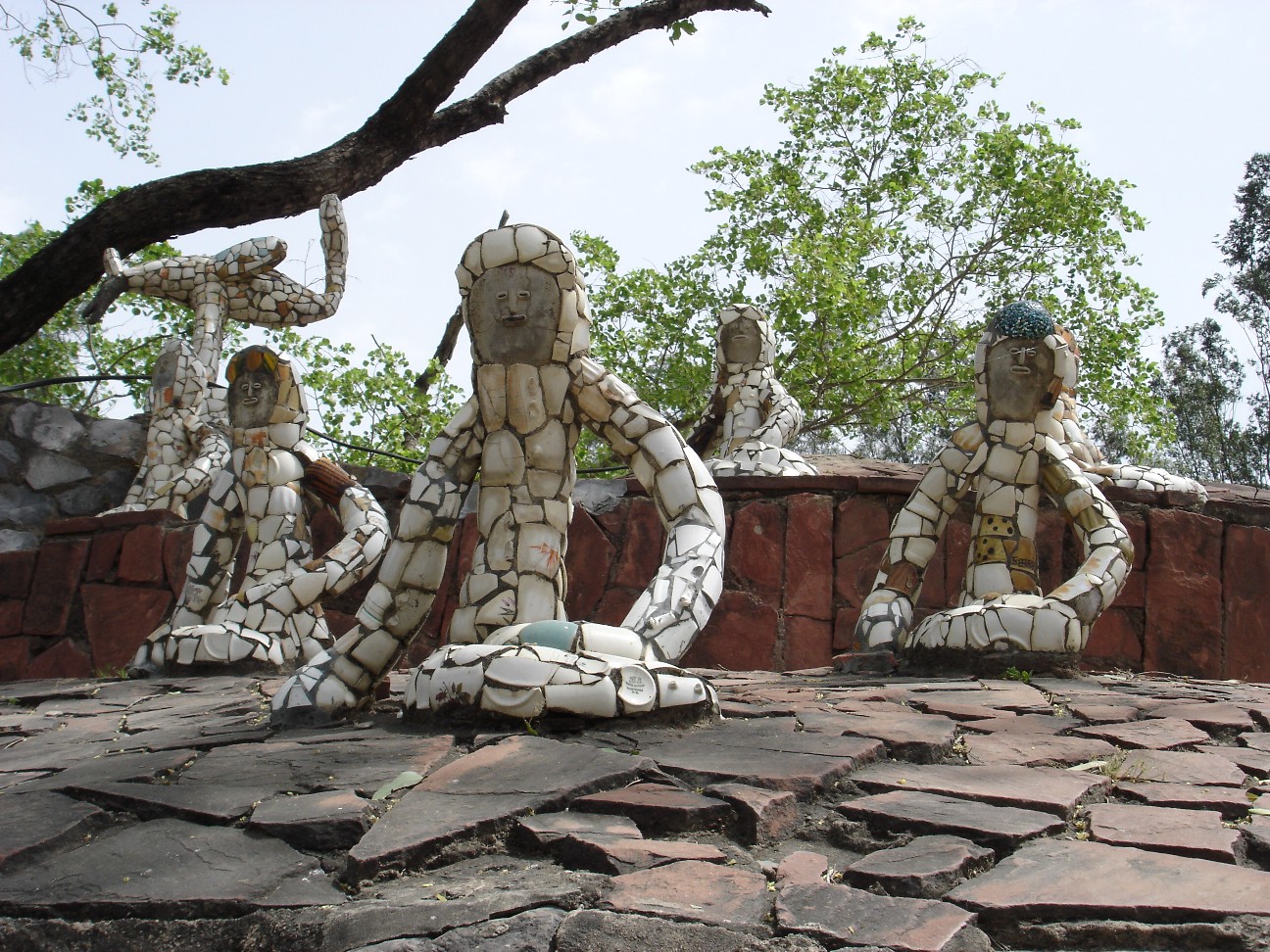
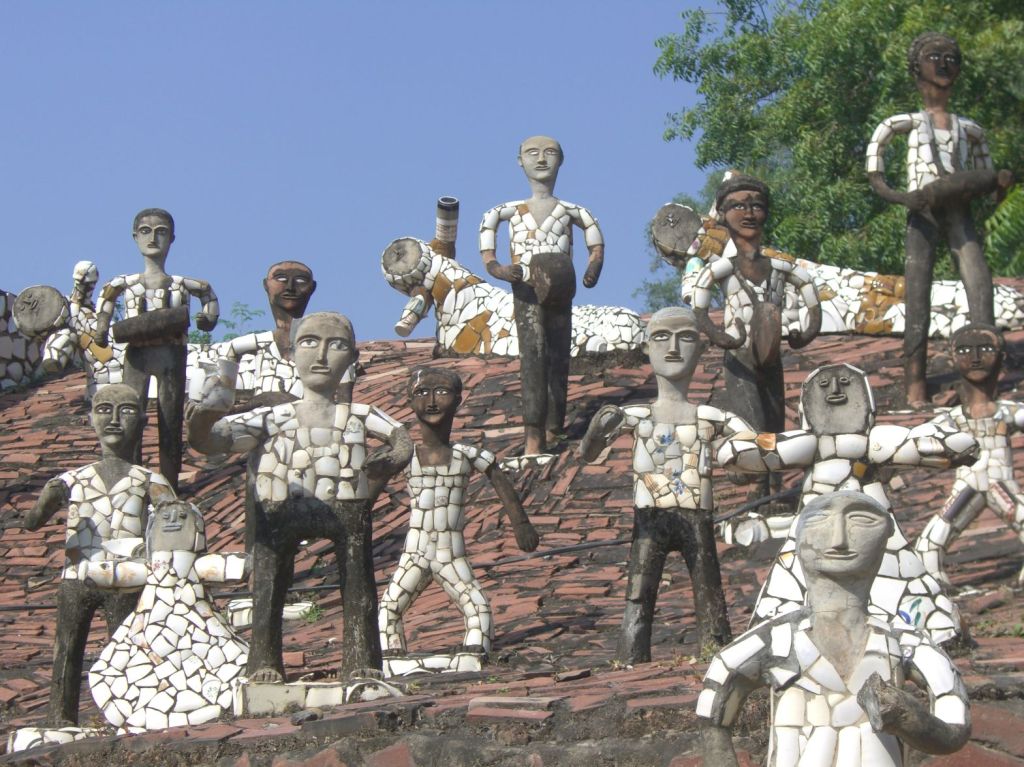
    Nek Chand's Rock Garden
    Nek Chand’s Rock Garden

    Born in 1924 in the village of Berian Kala, in what is now Pakistan, Chand relocated to India with his family in 1947. Eventually, he moved to Chandigarh in the northern part of the country; the first planned ‘utopian’ city in Post-Independence India, designed by Swiss architect Le Corbusier.

    A deeply spiritual man, Chand was fascinated by the mystical significance of rocks, and was by profession a public roads inspector for many years. It was during his time in his role as roads inspector that he began spending his evenings imagining and moulding figures out of recycled and found materials. Pursuing a vision from a dream, Chand cut back a clearing in the jungle on the outskirts of Chandigarh, situated in the middle of the Capitol Complex and the Sukhna Lake; the place where his Rock Garden was to come to life. This space, he believed, had once been home to a glorious kingdom.
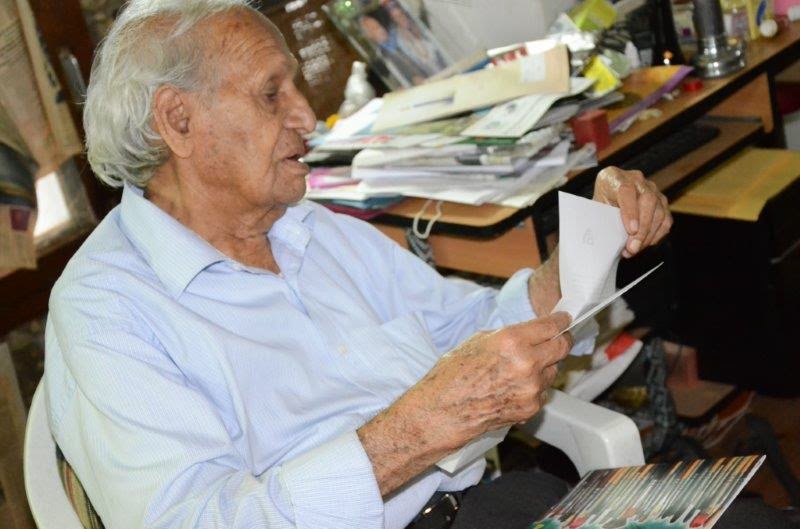
    Nek Chand
    Nek Chand

    Chand’s process is indicative of many historically renowned outsider and self-taught artists, with a focus on found objects and recycled materials. He used discarded objects, such as broken crockery, electrical fittings, glass bangles and bicycle frames, building up the bulk of the figure with a cement and sand mix. A final coating of smoothly burnished pure cement combined with waste materials would then be added. Chand believed that each figure contained the spirit of a human being, god or goddess.

    During the making of the Rock Garden Chand was consumed by his vision. He has said before of the Garden: “It began really as a hobby. I started not with the idea that it would become so famous. Every day, after I finished my government job, I would come here to work for at least four hours. At first my wife didn’t understand what I was doing every day, but after I brought her to my jungle hut and showed her my creation, she was very pleased.”

    Nek Chand's Rock Garden
    Nek Chand’s Rock Garden

    In 1972, the Rock Garden – originally an illegal endeavour by Chand in his spare time – became a municipal authority-funded tour de force. Stunned by Chand’s creation, the authorities pumped money and labourers into the project; now the world’s largest visionary environment, with several thousand sculptures covering more than 25-acres. In 1976, it was opened to the public.

    The Nek Chand Foundation was founded in 1997, and today the area is overseen by the Rock Garden Society, opening its doors to over 5,000 visitors every day. It is the second largest tourist attraction in the whole of India – second only to the Taj Mahal.

    Nek Chand's Rock Garden
    Nek Chand’s Rock Garden

    Chand’s creative vision, his fascination with the creation of something from nothing, the conversion of waste into beauty, has led to his position as one of the most respected creators in the world. His Rock Garden is his personal legacy, one that has touched many people’s lives and one that will continue to do so for long after this sad day.

    For those in the UK or visiting between now and October, a selection of mosaic sculptures from Nek Chand’s Rock Garden are currently on display at Pallant House Gallery in Chichester. The exhibition is free to see, and continues until 25 October 2015. Click here for more information

  • Manuel Bonifacio: My Imaginary Cave

    Manuel Bonifacio: My Imaginary Cave

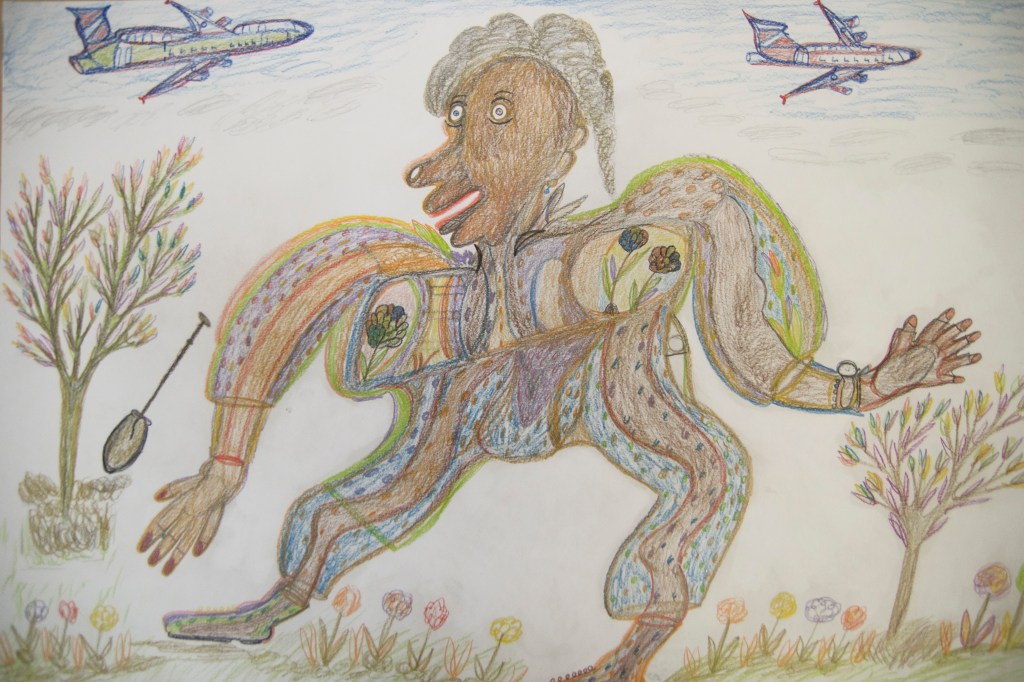
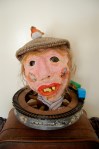
    Above image: Manuel Bonifacio, Aeroplanes and Spades


    On 29 April, Pallant House Gallery welcomed a new exhibition showcasing the work of Manuel Bonifacio; one of six Outside In 2012 Award Winners. The exhibition is a colourful array of Bonifacio’s imaginative characters and creatures, and is definitely a must-see if you’re down on the south coast in the next month.

    Born in December 1947 near Lisbon, Portugal, Bonifacio pursued his interest in drawing and pottery after dropping out of school at the age of eight. His most recent collection of work, which features the award winning ‘Mermaid’ and a selection of pottery, is inspired by his passion for archaeology and animals. Bonifacio paints, draws, sculpts and makes at ArtVenture – a creative day centre for adults with learning difficulties – for four hours every Wednesday and Friday. Since his Award win, Bonifacio has exhibited in Birmingham and London and now has work in collections in Switzerland and New York. In recognition of Bonifacio’s talent, an Outsider Art collector will be travelling over from Switzerland to attend this much-anticipated exhibition.

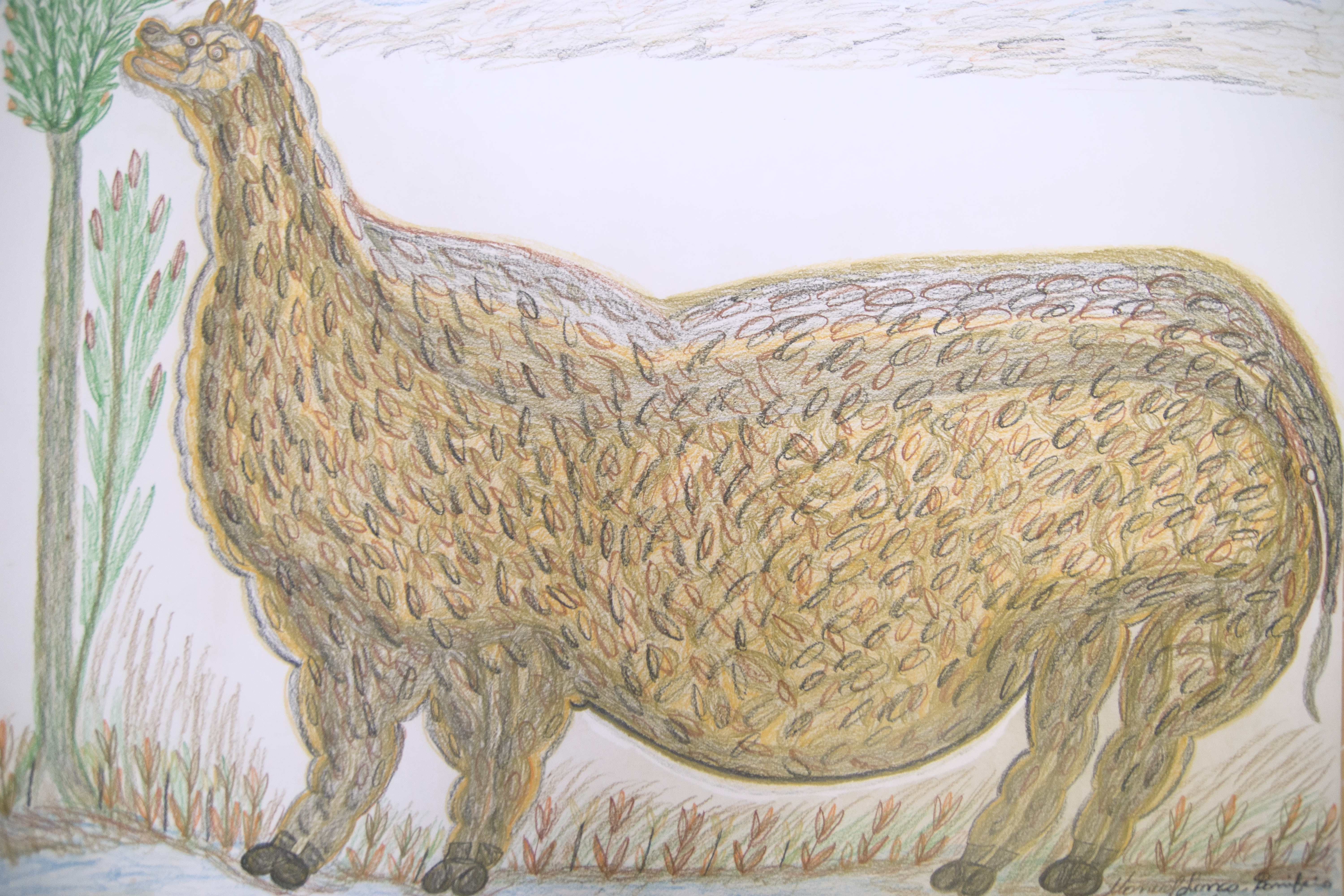
    Manuel Bonifacio, Jungle Animal
    Manuel Bonifacio, Jungle Animal

    “Manuel’s thing at the moment is mermaids, but he loves motorbikes,” his niece says. “He likes to do things his own way; he thinks ‘I’m the artist and I know what I’m doing’!” Bonifacio’s mermaids (one of which one him the Award in 2012) have an interesting narrative all of their own. “They live in Lisbon, but they go all over the world,” says Bonifacio. Lisbon is in fact populated with several mermaid statues, including eight in the large fountains in Rossio Square. Bonifacio adds: “All the children used to say ‘Look, there she  is – the mermaid!’ She waves to the people, and then goes under water again when the boats pass.”

    At a young age, Bonifacio joined the fire brigade as a volunteer and his life’s ambition was to be in the army. Many of his works reflect his passion for army transportation, depicting helicopters, aeroplanes, motorbikes and boats. His work is also inspired by politics and everything he sees on television, but most of it comes straight from his colourful imagination. His sister describes the huge variety of subject matter he depicts: “The birth of Jesus, the circus, the Pope, the Queen, Margaret Thatcher and David Cameron, dancers, Christmas-inspired pieces, motorcycles, musicians, buskers, birds, divers, fish, helicopters, dogs, horses, wolves, mermaids, and always people. There are faces in most of his work.”

    Manuel Bonifacio, Motorbike and Man
    Manuel Bonifacio, Motorbike and Man

    Keen to explore and take on a challenge, Bonifacio has previously experimented with printmaking and wood carving and he occasionally dabbles in watercolours and oils. His portfolio also includes an array of distinctive ceramic mugs, vessels and faces. Walking from Cobham to Kingston regularly – a 20 minute drive – Bonifacio notes down road names, makes sketches and absorbs nature and life, which are ever present in his work. One of his figures was inspired by a statue on a roundabout in his hometown, but more generally, the characters he so vividly creates come straight from his mind. There is a sense that he could conjure anything; a donkey, a bullfighter, or various forms of transport.

    Bonifacio’s sister, Maria Odone, says: “Manuel’s work has been a valuable asset to everyone who knows him as it is also a way he likes to communicate. His ideas and perception of what is going on around him both locally and nationally are very unique. His ambition as an artist is to travel around the world, finding places and people that will inspire him.”

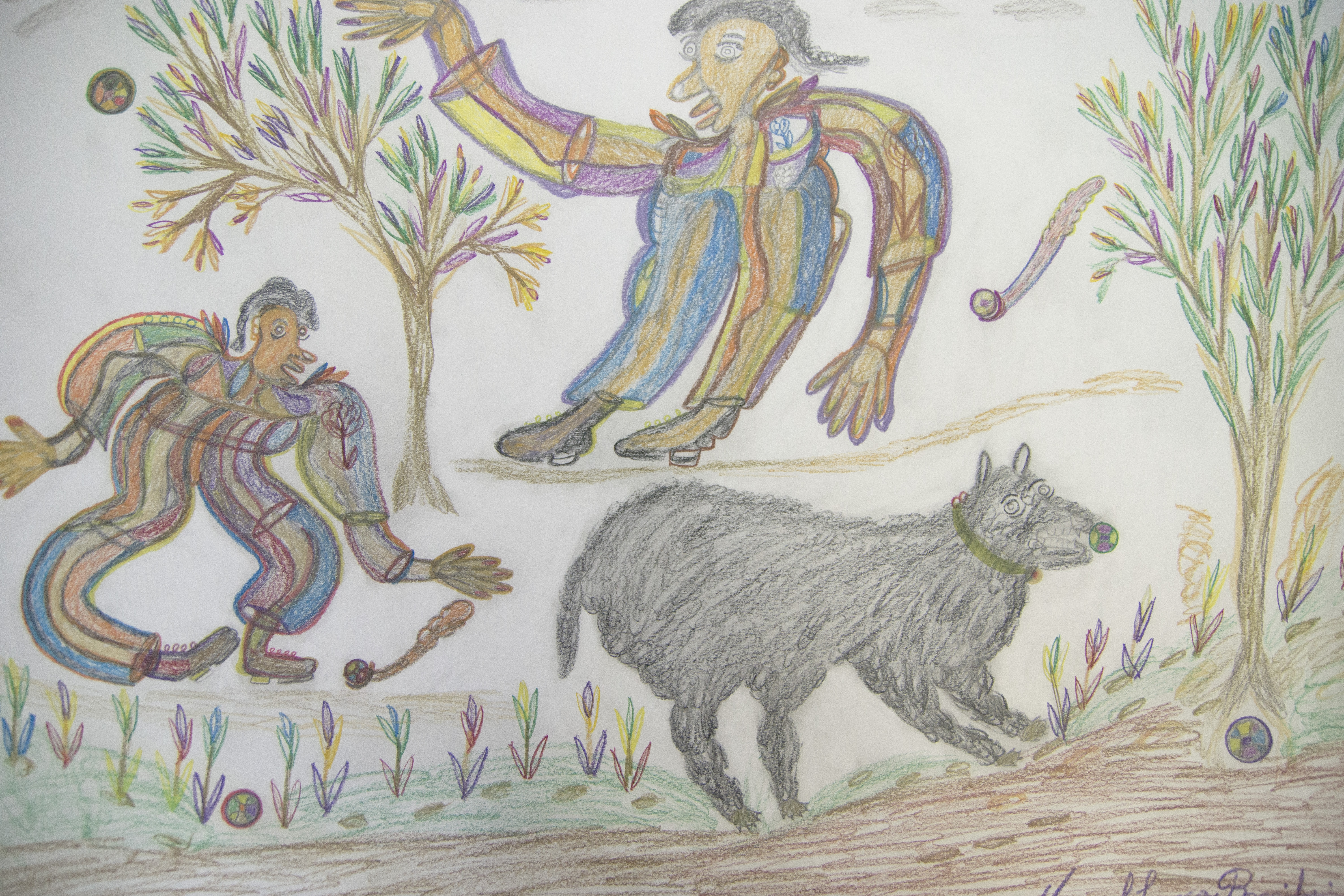
    Manuel Bonifacio, Ball Games
    Manuel Bonifacio, Ball Games

    Roger Cardinal, who coined the term Outsider Art in 1972 as the English equivalent of Jean Dubuffet’s Art Brut, was one of the Outside In: National judges. He speaks of the moment he first saw Bonifacio’s Mermaid at the Gallery: “It struck me as entirely familiar and made me think of the Frenchman Guillaume Pujolle, an early star of Art Brut whose lyrical images I cherish. This brief and decisive moment established Bonifacio as my top choice. The Mermaid is a perfect reality for him [Bonifacio]. I see her arms and elongated fingers as enacting the motions of swimming, although she can also be said to be flying. Hence she is capable of traversing earth, sea and air, and becomes and emblem of the artist’s unfettered imagination.”


    Entry to Manuel Bonifacio: My Imaginary Cave is free. The exhibition continues in the Studio at Pallant House Gallery until 1 June 2014.


    To see more of Manuel’s work, click here.

  • Kate Bradbury: Squalls and Murmurations

    Kate Bradbury: Squalls and Murmurations

    Open until 1 December 2013 at Pallant House Gallery, Chichester, Kate Bradbury: Squalls and Murmurations is the second exhibition in a series celebrating the Six Award Winners of Outside In: National 2012, a triennial competition for artists from the margins.

    Art Historian Roger Cardinal, performance artist Bobby Baker and ex-Director of Pallant House Gallery, Stefan van Raay, chose Kate Bradbury as one of six Outside In Award Winners as part of the 2012 National exhibition, for which one of the prizes was a solo exhibition in the Studio. Cardinal said of the competition and the subsequent winners: “It is about showing the public that ordinary people without training can produce great work. Art can happen anywhere in all sorts of places.”

    Bradbury’s art career began some years ago in a run-down house in North London, where she started to intuitively make pictures and sculptures from abandoned belongings. Unearthing a role of thin Chinese paper and a well of black ink, an unforeseen tide of repetitive image and pattern-making promptly began. Bradbury also created sculptures from salvaged litter found in the tall, crumbling house.

    This obsession with found objects can perhaps be traced back to Bradbury’s childhood, where some family friends who were archaeologists would take her off into caves where she witnessed cave paintings with crude handprints and began finding and collecting things. Now, Bradbury collects material on her way to work, or on her way home from work – whatever she can find and wherever she can find it.

    Her suitcase people – the doctor, the artist, and Railroad Jim – all have their own personalities, each with a story inside their box-bodies. New additions to Bradbury’s family of sculptures are her ‘goat’ creatures. Constructed from the bristle-end of brushes, severed musical instruments and human faces, they came to life after Bradbury happened upon the ‘disembodied goat heads’ at her local car boot sale. Not wanting to separate a few goats from the herd, Bradbury took the lot before restoring them: “I have gifted them legs and bodies and I hope that one day soon I will have identified and practised the Holler that will alert a distant herdsman to their whereabouts, so that they may return to their native hills.”

    To complement her trademark sculptures, the exhibition also includes some of Bradbury’s trademark ink drawings. It was one of these fantastical black and white worlds; The ones that I’ve been saving to make a feather bed, for which Bradbury was granted Outside In: Award Winner status. Bradbury says of her contrasting practices (sculpture and ink): “Both of these have become passions that fill both my waking and sleeping hours with ink-stains and splinters.”

    It is this diverse creativity that gives the exhibition its name. Bradbury explains: “A squall is a storm and that suited the swirly patterns in my drawings. The monoprints often have a stormy sky and a lot of the sculptures are crude and brutal in texture. Murmuration is playing on the word murmur, a much quieter space like the fine lines and delicate paper that I draw with. So it’s loud and quiet and reflects both sides of my work.”

    With no formal art education, Bradbury is inspired by known – Klee, Miro, Franz Kline – and unknown artists, stage sets, archaeology, visions, inventions, and by music and song. She thinks about ideas for her work whilst at her day job – in a sandwich shop – where she has the space to go to a different place in her head. She doesn’t make work to please an audience; she makes it because it needs to be made. She explains: “I get a picture of something in my head and then need to make it, to offload it and then I can think about something else. I get obsessed with an idea and try to see it through. I’d love to get a studio and be able to make some bigger or noisier work and I like the idea of making a stage set, working with animation and just to keep finding inspiration.”


    Outside In was set up by Pallant House Gallery in 2006 to provide opportunities for artists with a desire to create who see themselves as facing a barrier to the art world. The project’s main vehicle is a triennial open art exhibition which was first held in 2007 and featured 100 artists from across Sussex. By 2012, the project had gone national, engaging more than 1,500 artists and 13,000 audience members.


    Kate Bradbury: Squalls and Murmurations will be on in the Studio at Pallant House Gallery until 1 December 2013. Entry is free. Click here for more information.
    Outside In website
  • Outside In: National, Pallant House Gallery

    Outside In: National, Pallant House Gallery

    (Featured Image: Carlo Keshishian, Over-Load)

    It is an exciting month ahead at Pallant House Gallery in Chichester this October as we see the opening of three exhibitions focusing on the work of outsider artists, or those who face barriers to the mainstream art world. The triennial competition, Outside In: National, will showcase works by selected finalists who submitted their work the competition earlier this year. Accompanying this ground-breaking exhibition will be a chance to see the fascinatingly diverse work of Pat Douthwaite and (for the first time in the UK in almost 50 years!) a major review of the work of Jean Dubuffet: father of Art Brut.


    Outside In: National
    27th October 2012 – 3rd February 2013

    ‘A Ground-breaking open-entry exhibition for artists producing work from the edges of society. The exhibition will showcase 80 works by over 60 artists selected from pieces submitted to the Outside In: National competition over the past year. From substance misusers to self-taught visionaries, the exhibition will provide a unique insight into the extraordinary breadth and vitality of work produced by individuals from outside the mainstream art world.’

    www.outsidein.org.uk

    Pat Douthwaite: An Uncompromising Vision
    23rd October 2012 – 3rd February 2013

    Despite an introduction to painting by J. D. Fergusson, whose wife Douthwaite had studied mime and modern dance with, Douthwaite was for the most part a self-taught artist. Because of this, she is often associated with Outsider Art in spite of her regular exhibition schedule. She was controversially not interested in establishing a place within the cultural mainstream and was always comfortable being linked to the term Outsider Art; her early work was even influenced by pioneer of Art Brut, Jean Dubuffet. Douthwaite lived a predominantly disorderly lifestyle; a lifestyle that involved a lot of travel and a lack of a permanent base or studio from which to work. Douthwaite worked in a variety of media including collage and assemblage, making her work as colourful as her semi-nomadic life.

    Learn more about Douthwaite’s life and work in the Pat Douthwaite ‘Step Up’ pack. Step Up is an innovative project that offers training for marginalised and outsider artists, enabling them to feel more confident delivering workshops and conducting in-depth research: www.pallant.org.uk/docs/stepupdouthwaitelowres_0.pdf


    Pat Douthwaite, Simon With a Gun, 1967


    Jean Dubuffet: Transitions
    20th October 2012 – 3rd February 2013

    Transitions will be the first major review of Dubuffet’s work for almost 50 years in a UK institution. Organised with the assistance of the Fondation Dubuffet in Paris, the exhibition will feature key paintings, drawings and sculpture from collections across France and the UK.

    Born in Le Havre in 1901, Dubuffet ran his father’s wine business for 17 years before returning to painting in his distinctively simple, primitive style. Dubuffet himself was fascinated by the work of children and the insane, eventually leading him to coin the term Art Brut in 1945, which translates as ‘Raw Art’. In 1949, Dubuffet produced a manifesto entitled Art Brut in Preference to the Cultural Arts, in which he intended to ‘valorise the idiosyncratic creative works of individuals which he considered to be outside “the system”,’ but to also ‘directly challenge and undermine the authority of “high culture” and conventional definitions of art.’ [Karen Jones et al., Framing Marginalised Art, 2010, p 11].

    By emulating the ‘crude, violent’ energy of the work of children and the ‘clinically insane’, Dubuffet soon had the term he coined applied to his own work, ‘rather than to their stylistic source as he had intended.’ [http://www.dubuffet.com/bio.htm]


    Jean Dubuffet, Le bariole Mariole, 1964


    www.pallant.org.uk

    www.outsidein.org.uk