Tag: brian gibson

  • Brian Gibson: Real Art… Really?

    Brian Gibson: Real Art… Really?

    Above image: Transient Graffiti on Bath Abbey (courtesy of http://www.suitedandbooted.org)


    Brian Gibson: “It’s 2015 now and after recent events the world seems a lot more complex … so I’m heading back to the relative calm of late 2014. Like a lot of people over the festive break I got myself hooked into various forms of social media, reaching saturation point – bloated with meaningful and quirky distractions offering opinions on this that and the other, making me feel futile in the ever-expanding and absorbing world of news feeds and interesting information. I was, however, able to break away from such infectious technology and get back on track, find my bearings and find some time to make a little bit of artwork, engage in some art dialogue and do a bit of offline viewing, that is to say look at some art situated in the real world.

    Image from the Transient Graffiti project
    Image from the Transient Graffiti project

    It was early December, when listening to the radio, I heard a series of broadcasts on Radio 4’s A Point of View by Philosopher Roger Scruton. Someone that I had not heard of but assumed he must be quite learned and well informed to get such a slot. He began with the subject of ‘fake art’ and, as I’ve had a number of conversations with people on the possibility of faking Outsider Art, I thought that this series would be interesting.

    His intent from the start was to clear some ground between what he sees as ‘original art’ that is genuine, sincere and truthful, but difficult to achieve, and the much easier ‘fake art’ that appeals to many critics today. His ire was directed towards the slick world of Jeff Koons and Damien Hirst and the art market that supports them. Cries of the emperor’s new clothes ensued – easy targets, I thought, why mention them now? Ok, they may well represent a particular brand of slick and successful art that looks like a product rather than anything hand made but any real significance either of these two monoliths had in the art world was decades ago. But this high-end financial world is so alien to me and those I know, that I cannot think of a single person who really cares that much about this type of work or what these artists are up to. The likes of Koons and Hirst are really not that important in the world of art that I and many other creative people inhabit. Sure, they are incredibly wealthy but they are old news.
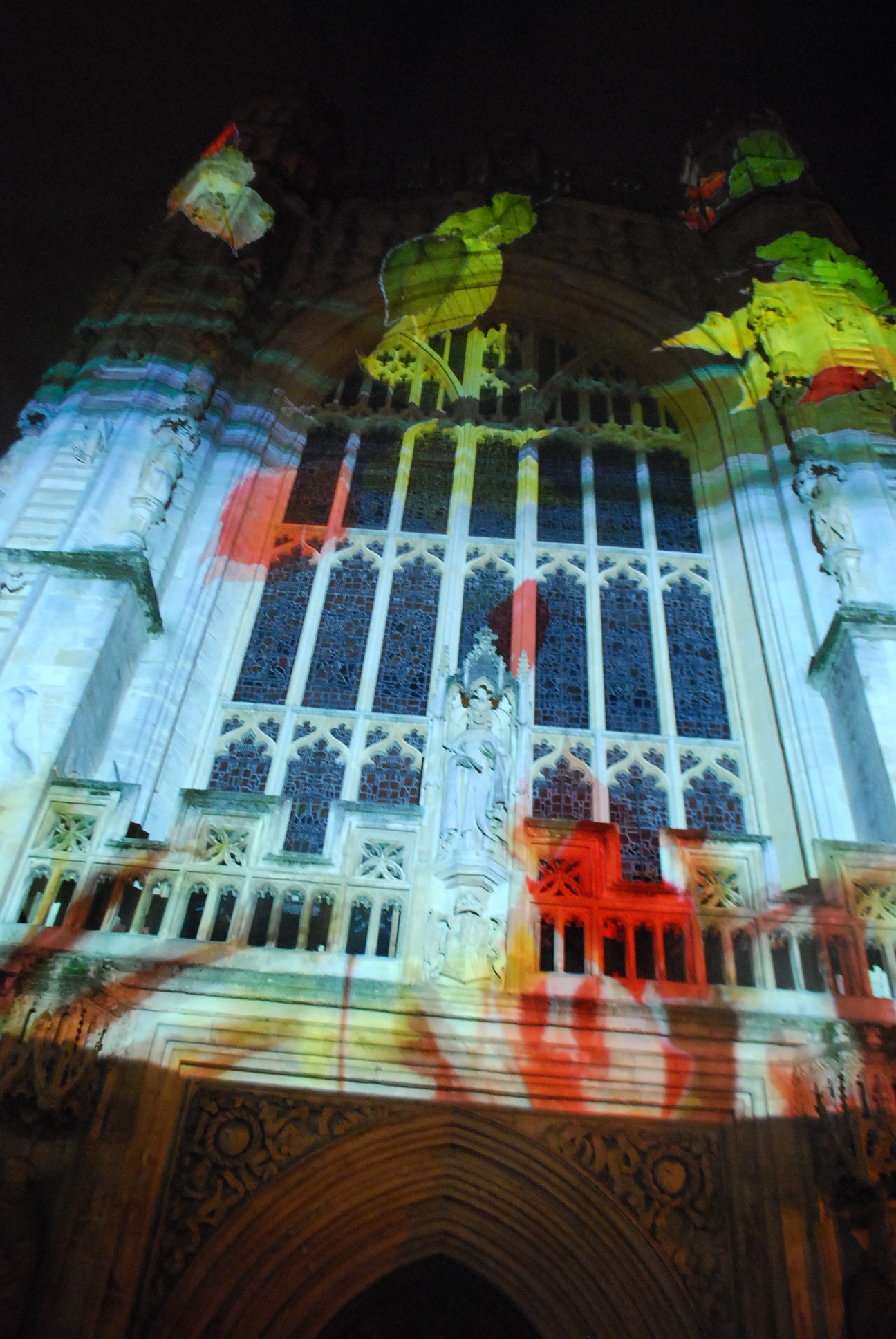
    Image from Transient Graffiti project
    Image from Transient Graffiti project

    Next Scruton, in a sweeping gesture, guns for the faceless bureaucrats of the Arts Council who, he implies, fund only that which is unpopular with the public and is therefore arcane, excruciating and meaningless. I find this both insulting and a little disturbing as the Arts Council also funds a number of arts projects for historically marginalised communities who would remain hidden without their support. I have personally been involved in a number of projects, including Transient Grafitti, an animation created by Deaf Adults With Additional Needs, which was projected onto the face of Bath Abbey with additional artwork displayed inside Baths 44AD Gallery. A bringing together various organisations including Action On Hearing Loss and Suited and Booted Studios CLC, this project provided opportunities for a range of creative people to work with each other, developing ideas; going out into the community; being taken seriously; making it happen and showing it to the public who loved it. This would never have happened without their support. It does make me wonder what such an apparently erudite and influential thinker makes of Outsider art? Who knows? Despite listening to all three broadcasts I never get to find out. He does mention in his final broadcast that ‘real art’ (as opposed to ‘fake art’) has to have lasting appeal with three essential factors: beauty, form and redemption. I do not dispute the value of such qualities but they are not the only ingredients that make art real, tangible and meaningful. In the end I found his views quite narrow and patronising, the all-knowing expert dispensing his wisdom to the great unwashed telling us what real art is …really?”


    Post by Brian Gibson

  • Brian Gibson: Fessing Up

    Brian Gibson: Fessing Up

    Featured image: Agnes Richter, needlepoint jacket [notmodernart.tumblr.com]


    Following Brian Gibson’s fantastic previous post, entitled ‘What does it mean to be an Outsider?‘, he has written again for kdoutsiderart. This time, focusing on ‘confessional’ art. Here, her discusses whether artists who have experienced trauma or health issues feel ‘obliged’ to create art that is overtly confessional?

    There are a lot of people (past and present) whom I really admire who have the ability to write down, draw and paint to reveal a deeply personal, integral part of themselves succinctly and often explicitly. I have the greatest respect for those people who have such courage, placing a personal account of a particular aspect of their life in the public realm. There are certain works that have completely stirred me emotionally: Frida Kahlo’s drawing of her miscarriage and a painting of an abusive relationship by an artist showing at the Outside In Exhibition at Pallant House Gallery and the Outside In: West exhibition at the Somerset Museum are but two.

    When so much art of the modern era can be said to be autobiographical and increasingly stacked online into categories, is it wrong or demeaning to place such works into a genre defined as ‘confessional art’? I certainly don’t think that the two works which I have mentioned were specifically created to fit a market within a particular realm of art practice, even so, there are some artists such as Tracy Emin who seem to have made a very successful career out of  ‘fessing up’.

    Personally, I don’t know what to make of Tracy Emin anymore. She is now very much part of the art world establishment (I don’t begrudge her success), having evolved from what could be considered a quasi-outsider stance, in part due to the way in which she presents herself and her  work, tapping into the psychoanalytic influenced work of Louise Bourgeois and such works from the Prinzhorn collection as Agnes Richter’s needlepoint jacket. Whatever one thinks of Ms Emin herself or her work, she  seems to know how to profit from fessing up her past, whilst remaining in the driving seat. Likewise, the pianist James Rhodes has spoken openly about his experiences of abuse and mental health issues, he too seems to be in the driving seat, which to be honest is a pretty enviable position. Whilst this tack might work for some individuals, I am not so sure if this should be considered a creative formula for all those artists who have experienced mental health issues or trauma of some kind.  Even so, it can be tempting to mis-read such paths to success, acceptance and acknowledgement as being primarily down to being completely open; revealing your trauma, displaying it in your artwork, and putting it in the public realm for all to see.

    I fundamentally believe that people should not be silenced for what they have experienced. I have heard enough about people in glass houses and it being better to remain silent than be thought a fool. However, with the increase of social media platforms, I have noticed an increase in people telling their story because they can, but I wonder what happens after the rush of ‘likes’, when people find something new to share, does anything change significantly for the person concerned?  There are some wonderful blogs out there with some incredibly powerful images; there are also other stories which I fear will go unheard and unseen.  It takes a lot of courage to fess up, to speak out and say something but my concern is that a lot of confessional art will over time be reduced to the status of another form of ‘the selfie’.


  • Brian Gibson: What does it mean to be an ‘Outsider’?

    Brian Gibson: What does it mean to be an ‘Outsider’?

    I asked artist Brian Gibson for his thoughts on the term ‘Outsider Art’ and what it means to him as a practising artist.​ Below is his response and a display of his own artwork. Click here for more information on Brian and his work.

    I have never been quite certain as to where I fit as an Artist. For a long time the thought of being an artist felt very alien to me, it was after all another culture. Artists were clever, confident, sophisticated and well educated people. That was not how I saw myself; I was just some lone youth from a council estate on the outskirts of Newcastle from a single parent household who had a history of truancy with little to show in terms of qualifications.

    On the domestic front it was my Father who could draw, he was very gifted, he could draw calligraphy free hand or paint golden Celtic knots or Spanish dancers onto painted egg shells and all sorts of other intricacies. He was a gifted man who never really dared to share or show his talent beyond the garden gate. In comparison my creative efforts were never so precise. My handwriting was spidery and I never could quite get the hang of perspective; such things didn’t come natural to me, so the notion of becoming an artist wasn’t even on the radar for me. However there was a creative flame that flickered within me and I was fortunate that my efforts were never discouraged and even if the end results often fell short of how I wanted things to be, I was at least able to lose myself in what I would later know as “the creative process.”

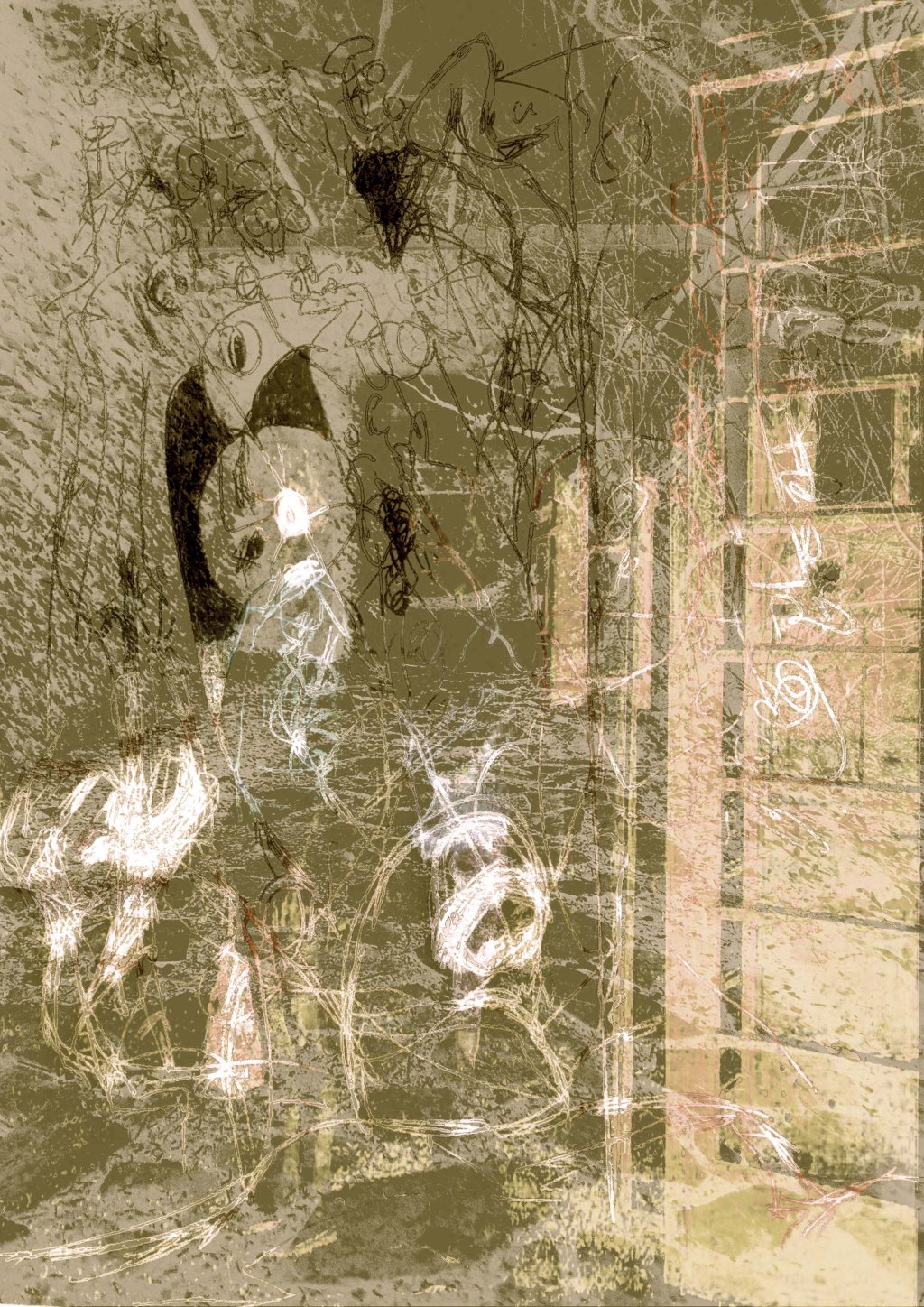
    Brian Gibson, White Rabbit
    Brian Gibson, White Rabbit

    Art became less of an alien culture, as I got to know various accomplished works of art via my regular city visits to the art galleries and libraries when absconding from school. Also importantly for me was the fact that I had met someone who had decided to embark on their own creative path; he was a poet by the name of Barry MacSweeny. He lived on the adjacent Council Estate and was the elder cousin of two of my school friends, so occasionally we could find him in his mother’s kitchen writing away whenever we called round for a biscuit and drink of pop.  As one of the emerging 60’s poets, his first book of poems was published when he was just 19 years old. Being older he didn’t have much to do with us, appearance wise he looked a bit like Terry Collier from the TV series “The Likely Lads”; dapper and wiry.

    Having known such a person in my youth left a simmering impression on me. Why I mention him here is that he chose to do something creative and that was influential for me and secondly, if he were a visual artist he might now be considered posthumously to be some kind of Outsider. Although he never went to University, he was nominated for the poetry chair at Oxford. This however turned out to be just a cynical publicity stunt concocted by his publisher. This humiliation along with his own personal demons contributed to him remaining a marginalised poet for over 25 years. He died in 2002 aged 52.

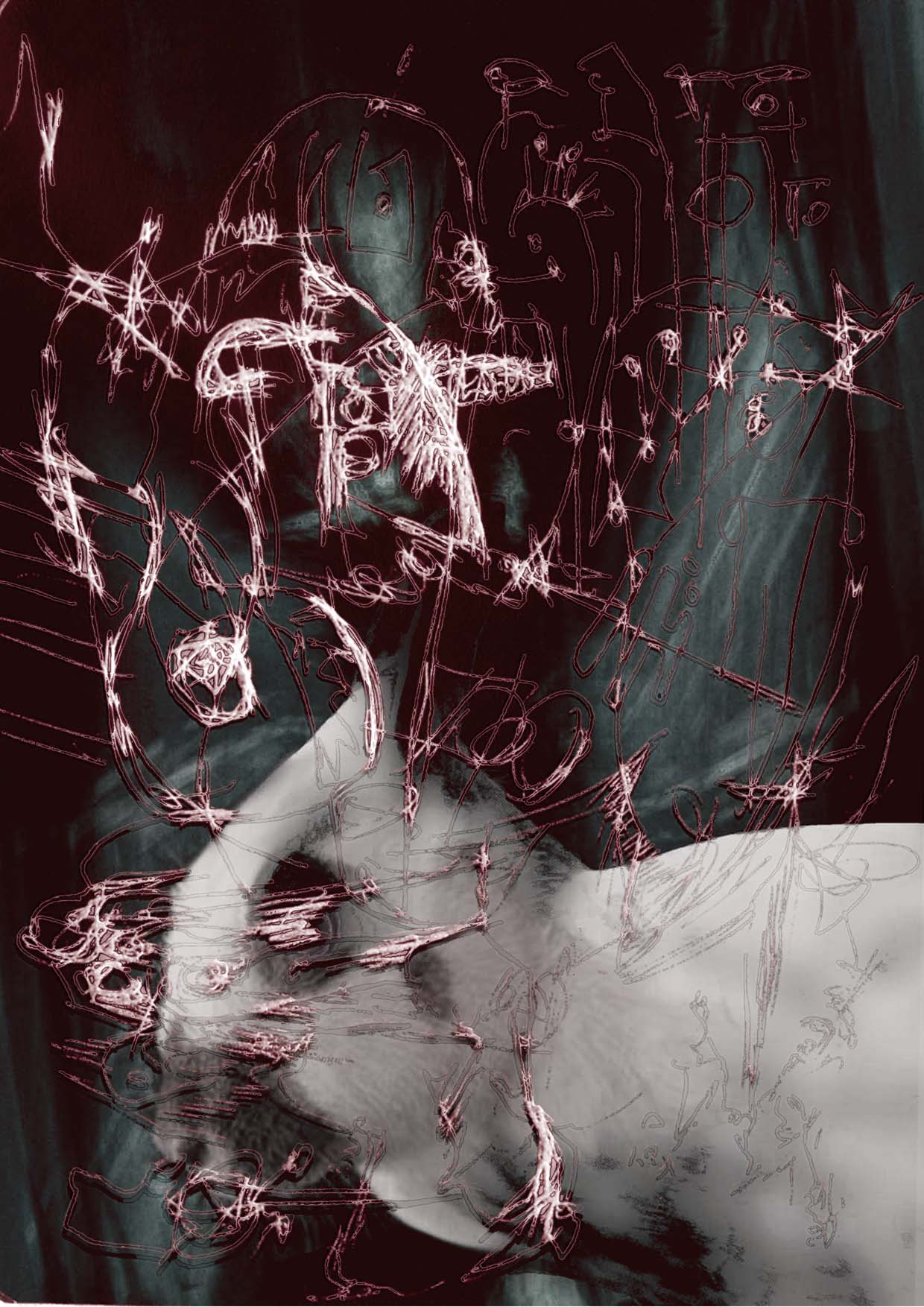
    Brian Gibson, Those Late John Garfield Blues
    Brian Gibson, Those Late John Garfield Blues

    The original definition of  term “Outsider” set out by Roger Cardinal back in the 1970s seems to have evolved and undergone a seismic transformation in recent years, particularly with the expansion of social media. Such connectivity has meant that creative people working outside the mainstream are no longer so dependent on the nod of the well informed to decide whether this or that piece is an actual work of art.

    Now individuals can link up with other individuals, share ideas, post up images, form groups, put together exhibitions and even sell their work. Autonomy, self-empowerment and money – it all sounds rather good but the reality may be a little different. To be an Outsider Artist seems to have become incredibly fashionable of late, numerous tee-shirts and accessories in Selfridges and articles in Sunday supplements seems to be of good indicator of this.

    Outsider Art is now being presented as the more rebellious sibling to the established world of fine art, with Folk art the more amenable earthy but less noteworthy cousin. Outsider Art is more rock and roll, more edgy, and people are proud to wear their Outsiderness like a badge of honour. Now and this may not be a bad thing but I am aware that anyone can get in on the act.  I have seen a lot of savvy websites by individuals where the work veers into being more about a product in a particular style that happens to look like Outsider Art. As a trained artist who was dealing with his or her own mental health issues once said to me: “Outsider Art is easy to fake,” or at least it might seem that way. So a question that I have is “What does it means when such work becomes an entrepreneurial enterprise?”

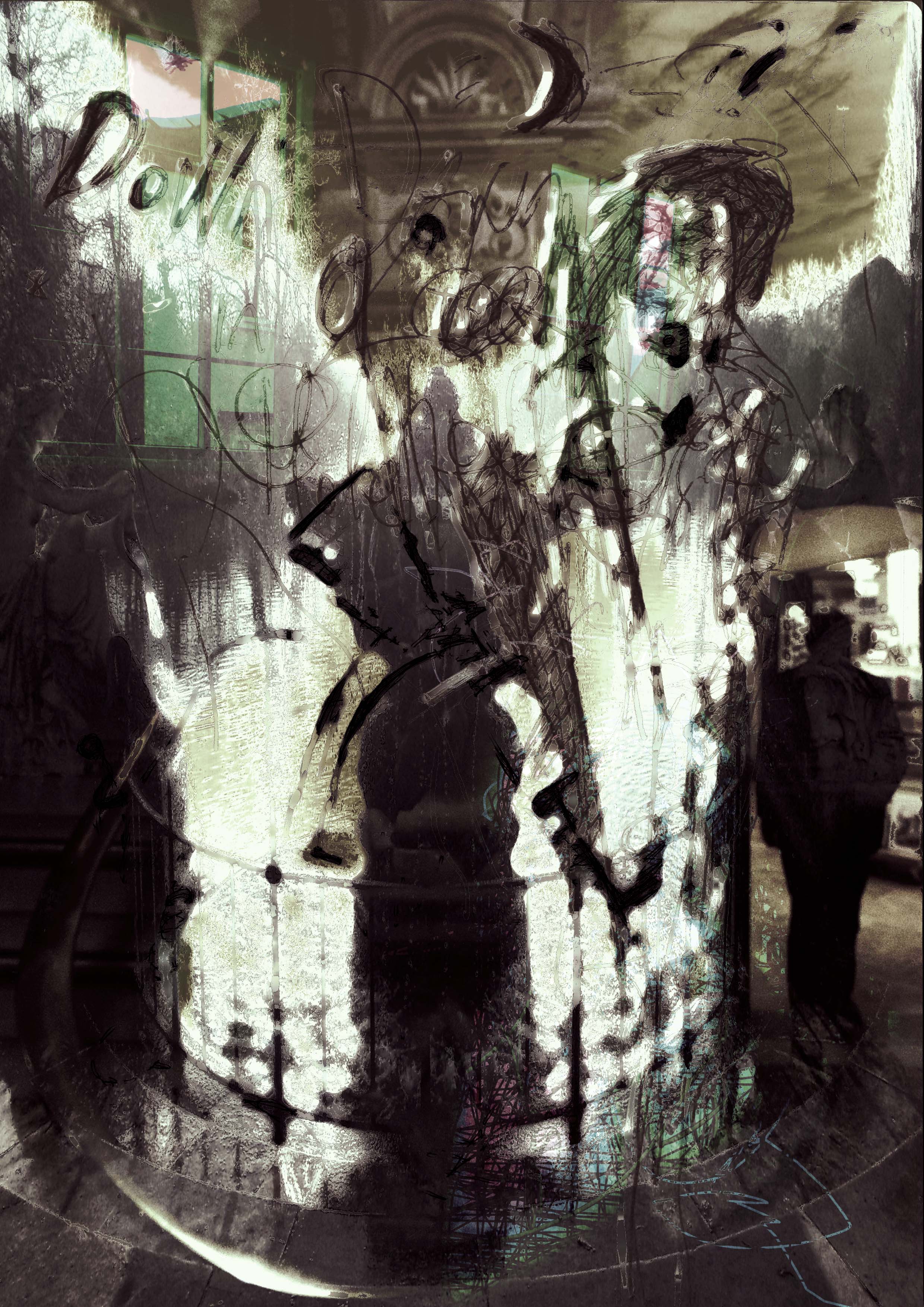
    Brian Gibson, Candy Says
    Brian Gibson, Candy Says

    There are many other questions regarding the increasing popularity and branding of Outsider Art. I can envisage a future where a retailer such as Primark would be either selling tee-shirts cheaply of original prints from acknowledged Outsiders such as Madge Gill or  Jean Dubuffett and the like or, more likely – to save on copy write issues – just employing some people to produce something that looks a bit  like  the work of an Outsider Artist. Is this any more different than buying an original reprint from a more exclusive and prestigious source or to put it another way, who gets the money and what is the money the measure of ?

    Despite its current popularity, Outsider Artists tend to be Outsiders for a reason. It may well be that the making of work is the sole or soul reason why a person pursues a creative path, everything else may well be an after thought. The poet Barry MacSweeny could write and he could rant and he had his own demons so there were times when he just couldn’t get much of any thing together. I don’t think that this lessened the quality of his work, but I doubt if it served him very well in getting his work published. This seems to be the reality for a number of visual artists that I know, making the work is one thing, doing the rest is another. The added pressures of presenting work to a public audience to a deadline and dealing with unknown people, along with all the other stuff can be more than enough for most.

    Brian Gibson, Way Down in a Hole
    Brian Gibson, Way Down in a Hole

    For a good while now marginalised individuals and groups have worked hard to put themselves in the frame work so to speak in a way in which they feel represents them in the way that they wish to be seen and valued. It can take a lot of time and thought to develop environments where people feel safe and supported but I am sure that I am not the only one to have heard stories of unscrupulous figures waiting in the wings who are only too willing to put their profit and their own prestige way before the people they purport to represent. Having worked with vulnerable adults for over ten years now, I am just a little concerned that with so many self proclaimed Outsiders seeking centre stage, individuals and groups who have been historically marginalised may once again find them selves out of the picture.

    Brian Gibson, Sometimes I Feel Like a Motherless Child
    Brian Gibson, Sometimes I Feel Like a Motherless Child

    A note on Brian’s work (presented in this blog post):


    Earlier this year I produced six pieces with the overall title of  “I am frightened and timid and I don’t want to play” specifically for an exhibition as part of Fringe Arts Bath. Some of  the works are named after the titles of songs but don’t really have much to do with the songs themselves, if at all.


    Click here for Brian’s website