Category: Psychological Theory and Art

  • The ‘Savant’ Artist

    The ‘Savant’ Artist

    I have wanted to write about this subject for a while now, ever since I first received a wall calendar of a certain artist’s work as a Christmas present over two years ago. Since then, I have been lucky enough to see this artist’s work in person at the Paris Outsider Art Fair in 2015, and have now purchased another calendar, four notepads and a book. The artist is Gregory Blackstock, a ‘savant’ with a gift for drawing.
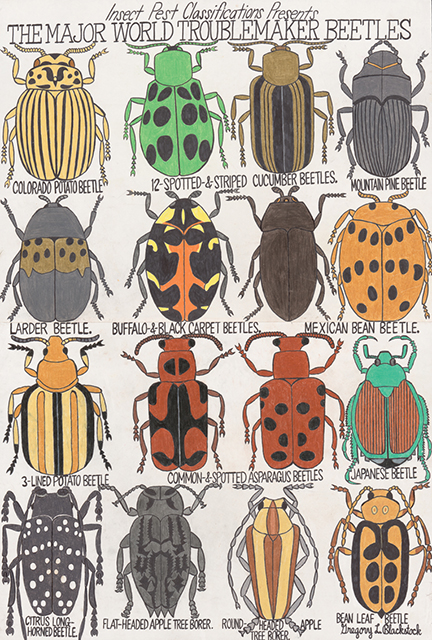

    blackstock_the-majorworld-troublemakerbeetles-thanks-raw-vision
    Gregory Blackstock, The Major World Troublemaker Beetles, Image courtesy of Raw Vision

    This post will focus on the phenomenon that is the ‘savant’ artist. The term savant is most commonly used to describe someone with a developmental disability (for example autism) who demonstrates extraordinary abilities. Savants like Blackstock have long been considered within the outsider art bracket, and have been represented in various exhibitions on the subject, including the Hayward Gallery’s ‘Alternative Guide to the Universe’ in 2013.

    The most famous savant outside of the art world is likely to be Kim Peek, who inspired the film Rain Man, which in turn raised awareness of ‘autistic savants’ –  or people with extraordinary abilities. Peek’s extensive knowledge library included world and American history, people and leaders, geography, sport, movies, the Bible, calendar calculations, telephone area codes and Shakespeare. Although there are many savants who do not express their abilities creatively, there are a huge number who do. The Wisconsin Medical Society dedicates a whole page to Artistic Autistic Savants,  noting that “to many of the artistic savants, it is their release – their escape – their way to fit into a noisy and disordered world. Their way to connect with the people around them. They create and they perform because they are compelled to by the forces that make them unique, but they also do so because it brings them tremendous joy.”[1]

    blackstock_the-windmills_gregkuceragallery
    Gregory Blackstock, The Windmills, Image courtesy of the Greg Kucera Gallery

    In this post, I want to outline the work of four ‘Artistic Autistic Savants’; Gregory Blackstock (b. 1946), George Widener (b. 1962), James Henry Pullen (1835 – 1916), and Esther Brokaw (b. 1960). The work of all four is exceptional in its accuracy, whether that be in the representation of historical facts and dates, lists of obscure animals, hand-carved ships, or the leaves of a tree.

    estherbrokaw_wildflowers-artslant
    Esther Brokaw, Wildflowers, Image courtesy of Artslant

    In his book ‘Outsider Art and the Autistic Creator’, Roger Cardinal writes about Blackstock’s outstanding ability to regurgitate thousands of facts, images, numbers, and languages from memory – he can even recite the names of all of the children from his schooldays.[2]

    Darold A. Treffert, in his foreword for ‘Blackstock’s Collections’,  writes that “Blackstock shows those characteristic traits that constitute Savant Syndrome: an extraordinary skill coupled with outstanding memory grafted onto some underlying disability. But while all savants have that basic matrix, each savant is also unique, and that certainly is the case with Blackstock. First of all, his meticulously drawn lists of all sorts of items are , as an artistic format, inimitable. Second, most savants have skills in only one area of expertise, such as art, music, or mathematics – spectacular as those skills might be. But Blackstock has several areas of special skills, a somewhat unusual circumstance among savants.”[3]

    blackstock-theartsupplies
    Gregory Blackstock, The Art Supplies

    The depths of Blackstock’s knowledge and memory is really quite something. So vast and varied is it, the illustrated guide to his work, ‘Blackstock Collections,’ sees it imperative to categorise such a huge number of works under different headings – ‘Fish I like,’ ‘The Tools,’ ‘Architectural Collection,’ ‘ The Noisemakers,’ ‘Our Famous Birds.’ This way, we are able to make better sense of this one man’s awe-inspiring encyclopedic knowledge.

    George Widener, another – equally prolific – savant, was represented in the Hayward Gallery’s ‘Alternative Guide to the Universe.’ Widener’s brain has been proven to function like a super-calculator; allowing him to process information in a wholly different way to the majority of people.[4] His favoured method of communication is the calendar format. His calendars help him to consider time and space in a linear pattern, and they often refer to historical events – like the sinking of the Titanic, but they can also be made up of registration plates or telephone numbers.[5]

    widener-megalopolis_henryboxergallery
    George Widener, Megalopolis, Image courtesy of the Henry Boxer Gallery

    More of a craftsman than an artist per se, James Henry Pullen carved and built ships inspired by his childhood fascination with watching his peers play with toy boats in little puddles. During his lifetime, Pullen became incredibly skilled in his making of these ships, reproducing them in pencil drawings, earning himself the title of ‘the Genius of Earlswood Asylum.'[6] He even attracted the attention of King Edward VII, who began sending him tusks of ivory to work with, and Sir Edward Landseer, who sent him engravings of his work to copy.[7]
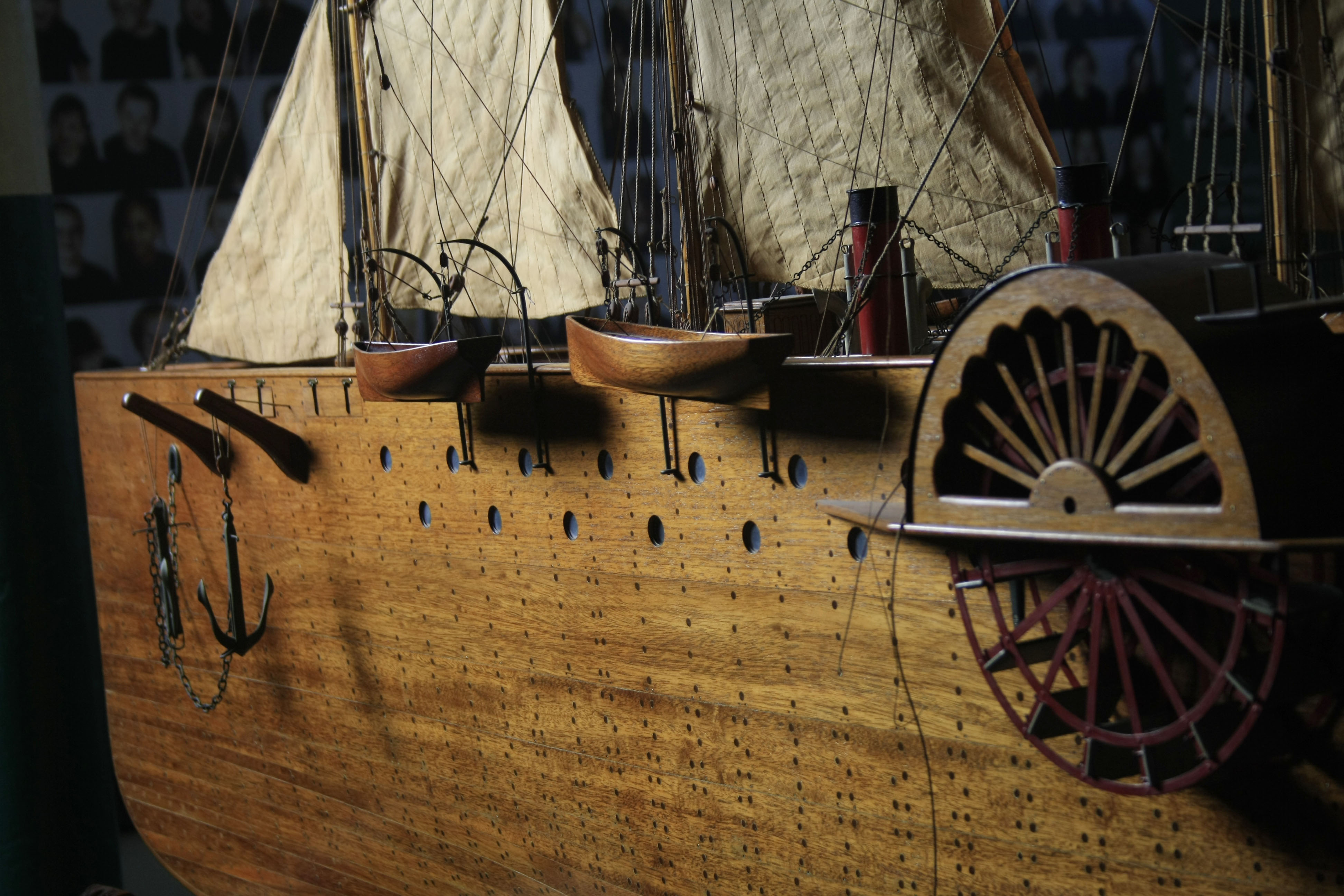
    james-henry-pullen_downsyndromeeassociation2
    James Henry Pullen, Image courtesy of the Down’s Syndrome Association

    Esther Brokaw’s early interest in art was encouraged by her Aunt Lois, who took her to visit galleries and bought her art materials during her youth. For forty-four years of her life, Brokaw went undiagnosed. It was only in 2004 that her diagnosis helped her to understand her equal obsessions with painting and stock market charts. Brokaw paints in acrylic, watercolour and oil from photographs she has taken herself. She is renowned for her immaculate detail when it comes to depicting every leaf on a tree, or every beam of light cast down from the sky.[8]

    esther-brokaw_goodpurposegallery
    Esther Brokaw, Image courtesy of the Good Purpose Gallery

    The above artists are just four examples of the incredible ability of people we call ‘savants.’ The Wisconsin Medical Society, which I have utilised heavily for this post, has a more inclusive list of savants – both artistic and non-artistic.

    Despite its association – for me anyway – with religion and spirituality, the term savant is a celebration of unparalleled ability amongst people who have been diagnosed as having a form of ‘disability.’ The awe-inspiring memory and inimitable attention to fact and detail is a testament to human skill and creativity. The fact that many savants choose creative methods to express their extraordinary knowledge is also testament to the power of creativity. The power it has as a vessel for sharing and expression, and the power it has to raise awareness of the uniqueness of the human condition.

    george_widener_magic_square_1024x768_artspace
    George Widener, Magic Square, Image courtesy of Artspace

    References

    [1] Wisconsin Medical Society – The Artistic Autistic Savant

    [2] Roger Cardinal, Outsider Art and the autistic creator, 2009 (available online: https://www.ncbi.nlm.nih.gov/pmc/articles/PMC2677583/)

    [3] Blackstock’s Collections (2006), p10

    [4] Outsider Art Fair

    [5] Collection de l’Art Brut Lausanne 

    [6] Wisconsin Medical Society

    [7] Langdon Down Museum

    [8] Wisconsin Medical Society

  • The ‘S’ Word: can the arts reduce mental health stigma?

    The ‘S’ Word: can the arts reduce mental health stigma?

    In the UK – despite much progress since the abolition of large psychiatric hospitals and a significant increase in care in the community – stigma surrounding mental health issues is still an incredibly prominent issue. The Mental Health Foundation notes that “people with mental health problems say that the social stigma attached to mental ill health and the discrimination they experience can make their difficulties worse and make it harder to recover.” Existing stigma can be exacerbated by the media’s biased and often hyperbolized coverage of people with mental health issues, which often paints a portrait of dangerous criminals who should be avoided. Considering one in four people will experience a mental health problem at some point in their lives, this is a very key issue.


    paint


    The research


    Many organisations and researchers have looked into the impact the arts can have on reducing stigma, with predominantly positive findings and results. Two researchers from the University of Strathclyde’s School of Applied Social Sciences – Lee Knifton and Neil Quinn – have conducted research into the impact of the arts on mental health stigma. They started with a week-long mental health arts and film festival in Glasgow and Lanarkshire in 2007, which has since developed into a national programme in numerous locations in Scotland. The learning from their accompanying research has continually shaped the festival, and they have found that “arts events reduce stigma amongst audiences and media by increasing positive beliefs rather than simply reducing negative ones.”

    In ‘Using theatre to address mental illness stigma: a knowledge translation study in bipolar disorder’ (2014), E. Michalak et al. noted that “Emerging evidence… indicates that an effective multifaceted strategy to prevent and reduce mental illness stigma would include creative arts and contact-based approaches.”[Michalak et al. 2014]. The paper concluded that:

    “The power of arts-based approaches, which are consonant with the current emphasis on narrative-based medicine, may lie in their potential to reach and speak to an audience that may not be responsive to conventional methods for addressing stigma and may represent a yet-to-be fully tapped mechanism for change.” [Michalak et al 2014].

    The arts can be – and have been – used in a myriad of ways in an attempt to reduce stigma. For example, in 2013, Time to Change commissioned two British artists to create ‘get well soon’ cards to be sent to people experiencing mental health issues. This campaign was a result of findings that showed 79% of the public would consider sending a card to someone experiencing a physical health problem, but only 50% would consider sending one to someone experiencing a mental health problem.

    bobbin


    Unique characteristics


    I want to move away slightly from the statistics, and think about characteristics innate to the arts that might enable them to be key players in reducing stigma and discrimination towards – well anyone – but let’s talk about them in relation to mental health. The arts are unique in their universal accessibility – from Hollywood blockbuster films, to visual arts exhibitions and popular music, making them a vital resource to be tapped into. They offer a channel through which real, down-to-earth stories about human experience of mental health issues can be conveyed to the general public.

    The arts have long been known for their ability to provide the artist with a voice, and this voice can be used for powerful results. A key form of communication, the arts are cross-cultural, cross-language, and cross-class. They can represent the things that cannot be put into words, or conveyed through language.

    MECCA (Multi-Ethnic Collaborative of Community Agencies) have run a Stigma Reduction through the Arts project, ultimately focusing on “reducing behavioral and mental health disparities through reducing the associated stigma surrounding mental illness” by creating specialist workshops that utilised educational documentaries, collaborative expression, and exhibitions. The notes on the project mention that:

    “Artistic expression of thoughts, emotions, and attitudes through a variety of mediums provides the general public with the opportunity to view mental health issues through a consumer perspective in an effort to counteract stereotypes, dispel prejudice, discrimination, and negative attitudes contributing to the stigma.”

    painting


    Providing a different ‘label’


    Not only is art a great way to communicate different – and often difficult – messages, it also gives its maker a new ‘label.’ Now, I’m certainly no advocate for labels, but labelling is something we as humans innately do. We like to group things together so we can use our existing knowledge to make sense of new information.

    A key example here is the annual Koestler Trust exhibition held at the Southbank Centre in London every autumn. The exhibition showcases work by people in prison, secure patients, and detainees. Although not focusing on mental health, it is still a prime example of reducing stigma using the arts. In this case, stigma surrounding those who are or who have been in prison or detained in a secure setting. The exhibition, situated as it is in a huge mainstream arts centre, removes the label ‘offender’ or ‘prisoner’ from the creator, instead presenting them to the world as an ‘artist’ or ‘writer.’

    As multi-faceted human beings, art exhibitions and events can highlight another side of us. They can show the world what we’re really good at, or what we’re really passionate about. They are also really good at compressing more than one emotion, sentiment, or message into one concise image – or song, or poem.

    By looking at just one painting, you might be able to see and understand very quickly how someone is feeling and why they might be experiencing these feelings. If we were to go about finding this out through conversation, it could take a while – not to mention an awful lot of trust-building, and in reality, we might give up after not too long.

    It would be good to hear whether you think the arts are key for reducing stigma surrounding mental health – and if so, why are they? Post in the comments below if you have any thoughts!

    pencils


    References


    Erin E Michalak et al., ‘Using theatre to address mental illness stigma: a knowledge translation study in bipolar disorder,’ International Journal of Bipolar Disorders, 2014, 2:1. Available online: http://www.journalbipolardisorders.com/content/2/1/1

  • Taxonomy: The Problems of Categorisation

    Taxonomy: The Problems of Categorisation

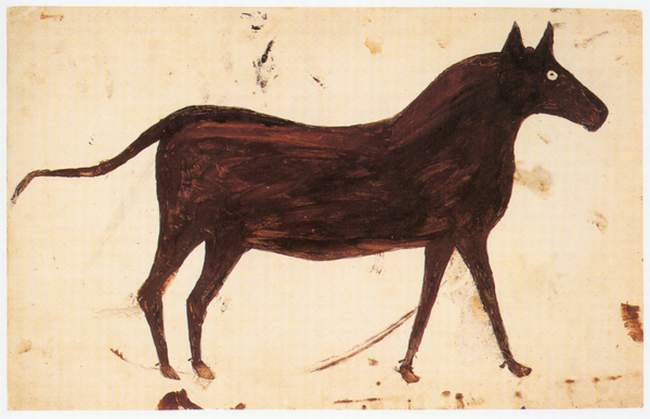
    Above image: Bill Traylor, Brown Mule, 1939 (source: www.petulloartcollection.org)


    “Categorisation is something that we do naturally and unconsciously every day. We recognise one animal as a cat and another as a dog. We organise objects in the world around us in ways that reflect these categories. In our kitchens, we keep baking trays with other baking trays, saucepans with other saucepans and keep food separate from cleaning products. We categorise ideas, people, tasks and objects. Categorisation is fundamental to the way we think.” – James Sinclair, 2006.

    As humans, we categorise things to make sense of the world; we link new things to past experiences, and we group similar people or ideas. We group genres of books in the library. We archive our emails in labelled folders. If we did not do this, we would “become inundated by our environment and unable to cope.”[1] This is a poignant theory with regards to the relative ambiguity of Outsider Art.

    I am not sure if you have heard of the fictitious taxonomy of animals described by writer Jorge Luis Borges in 1942. It looked at the work of John Wilkins; a 17th-century philosopher who proposed a new language that would parallel as a classification system. Borges wanted to illustrate the arbitrariness of such a way of categorising the world, so used an example of a taxonomy taken from an ancient Chinese encyclopaedia entitled ‘Celestial Emporium of Benevolent Knowledge.’ The list described in the encyclopaedia divides animals into one of 14 categories:

    • Those that belong to the emperor
    • Embalmed ones
    • Those that are trained
    • Suckling pigs
    • Mermaids
    • Fabulous ones
    • Stray dogs
    • Those that are included in this classification
    • Those that tremble as if they were mad
    • Innumerable ones
    • Those drawn with a very fine camel hair brush
    • Et cetera
    • Those that have just broken the flower vase
    • Those that, at a distance, resemble flies.

    Quite ridiculous, right? It is a similar story for the huge list of terms we have that fall under the umbrella of Outsider Art (not quite so ridiculous, but probably equally as long). Here are just a few that I have come across at some point: self-taught art, visionary art, primitive art, naive art, marginalised art.. etc. etc. Sometimes giving things labels help us make sense of them, but it can also mean we end up generalising about people or situations that, actually, we have absolutely no idea about.

    I have written before about my position on the debate with regard to the term Outsider Art. I sit somewhere between thinking we should not need it, and thinking that to have a label means that people recognise it. Particularly people who have not been aware of it before. We have seen, more so in the last year, an exponential increase in awareness of the subject (particularly in the UK, thanks to a number of high profile London-based exhibitions on the subject). Now, when I tell someone what I blog on, they have some idea what I am talking about. And surely, this can only be a good thing. Raising the profile of this art is of course number one on my agenda. But following close behind is number two on the agenda: to eliminate the discriminatory and redundant term used to describe it. It is a double-edge sword, it seems; raising people’s awareness of a term that one day we hope to be rid of.

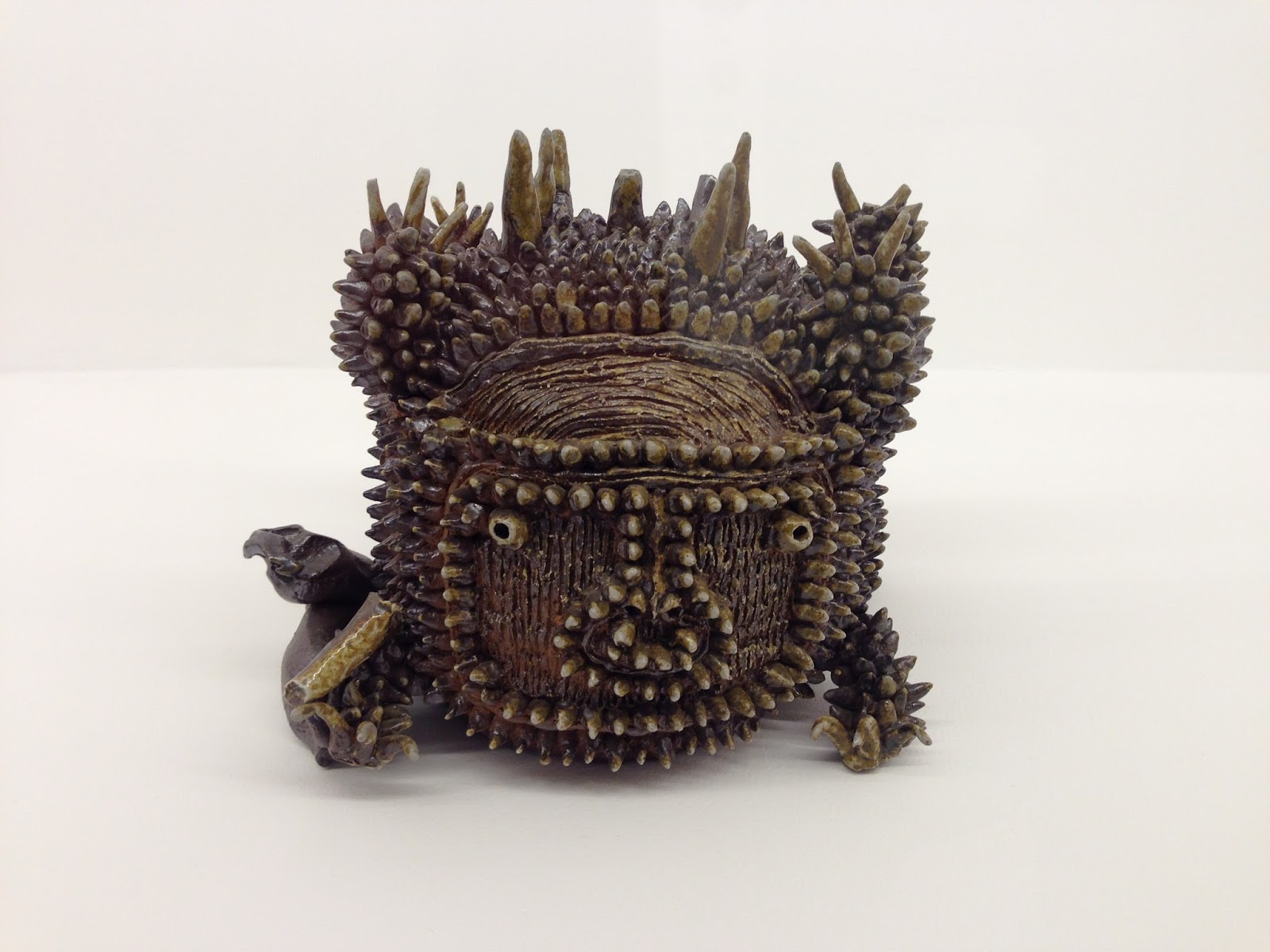
    Shinichi Sawada
    Shinichi Sawada

    Outsider Art is one of those terms that would fit into that ‘other’ tick box you get on forms, or your ‘miscellaneous’ email folder. It is where everything that cannot be neatly categorised can be bundled up, and we can smile, thinking we’ve hoovered the dust up. Everything is in its place. But it is this attitude that means that it is becoming increasingly difficult to break open Outsider Art and get people to actually think about what they are grouping together. To put it crudely, we are grouping people diagnosed with mental health issues with ex-offenders, ex-offenders with those who have not been to art school, and those who have not been to art school with artists who paint or draw in a way that is not similar to what we conventionally consider to be art. We are, in essence, grouping people. Is this not the same as those sweeping generalisations that go against our twenty-first century ideas about acceptance, inclusivity, and political correctness? Do all women like the colour pink, all men like cars and sport? I do not recall other types of art being categorised in this way. Surely this in some way goes against our innate need for categorisation, because – like the Chinese encyclopaedia – it does not make any sense.

    To move forward, we need to continue to break down the barriers around what we consider to be Outsider Art. We need to have open conversations about what it is, where it is going, and what it all means. But then we need to consciously think about – as humans with innate needs – how we can better categorise the work under this umbrella. I, for one, have not figured this out yet, but I feel like we are making some progress simply by raising awareness about it. It feels like the first step on a ladder that looks a little something like this: Awareness > De-constructing > Re-constructing. And maybe the re-construction of the category will provide evidence that we actually do not need such a term – we will realise that the work of ‘Outsider Artists’ actually fits within the ‘accepted’ canon of art history; after all, all art made in the past is, by its existence, the history of art.


    Let me know what you think in the comments below, or on Twitter: @kd_outsiderart

    References

    [1] Kate Griffiths, ‘The Role of Categorization in Perception’, 2000