Blog

  • C.J Freeman: Illustrating Cards

    C.J Freeman: Illustrating Cards

    For this post, we’re passing the writing baton to Ana Cortez, who will talk about her very talented father, C.J. Freeman.

    Growing up I always adored my dad, C.J. Freeman. He was my hero. But as I got older, I began to slowly understand why all the other adults I knew were pissed off at him most of the time. He just couldn’t bring himself to do anything ‘normal’.

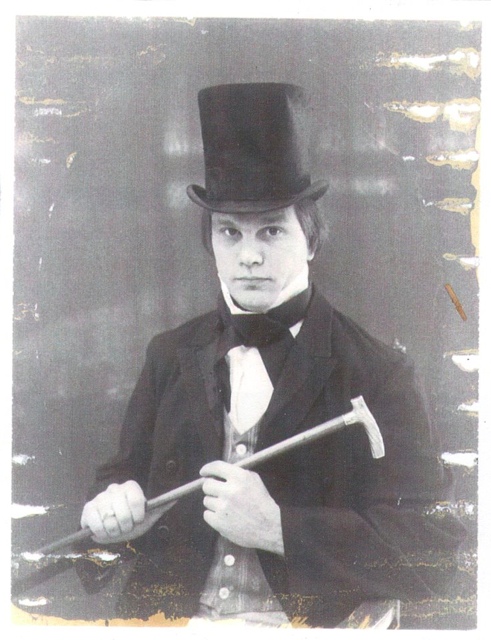
    C.J. Freeman
    C.J. Freeman

    Dad led me into worlds and ways of thinking and looking at the world that I remain eternally grateful for. He spent time with me, doing things most adults don’t make time for. Like by the age of 5 or maybe 6 years old he had taught me how to play a decent game of chess. I remember thinking I was pretty rich, earning a quarter for for each line memorized in Lewis Carroll, and I’ll never forget learning how it was so much better to sit at the back row of the circus, where you could fold the pages of your program into paper aeroplanes and send them flying over everyone’s heads in the front row.

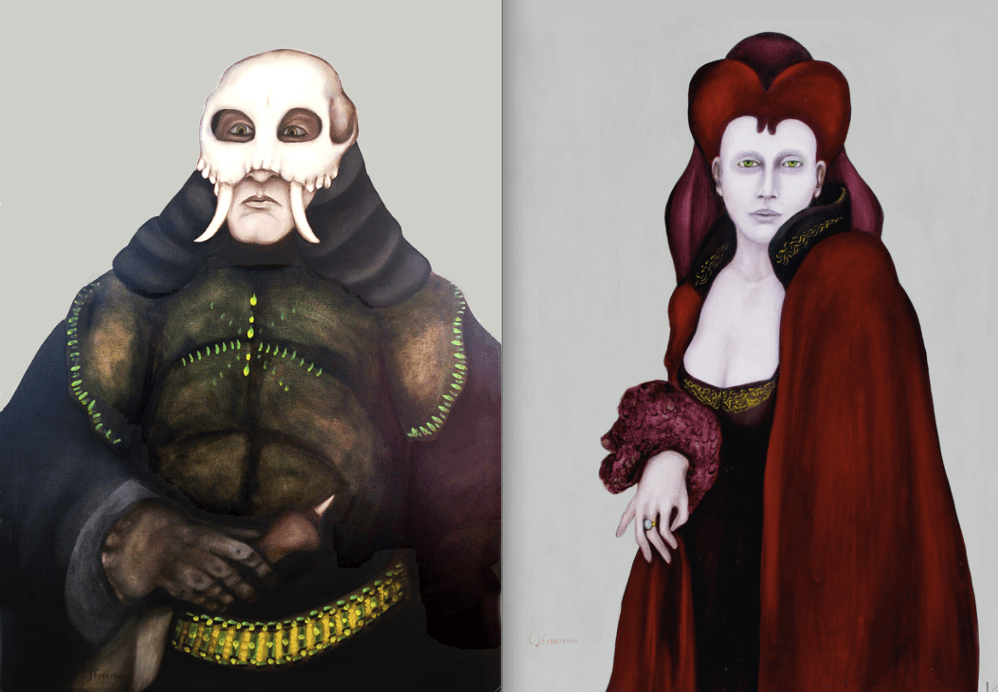
    Dad had been collecting really weird antiques from as far back as I can remember. No matter which corner of the house you came around, you knew some bizarre gorgon or another would be waiting for you. So when dad started painting, of course, it wasn’t nice landscapes or flowers or anything like that. It was Dracula, and people who were half animal with purple skin – reminiscent of figures from the weird fairy tales he had told me as a child.


    Dad got bored really easily. Ordinary life was intolerable for him. So he would assign himself projects that kept his interest. So even though he had no formal experience in art, he had given himself the task of illustrating the playing cards. This was what the paintings were about – one for each of the 52 cards plus jokers. Little did he realize this little “project” would kick off an obsession lasting for the rest of his life.

    Guardian for web jpeg

    So what began happening on the canvas surprised even my dad. As he painted, he became more and more curious about playing cards themselves – which led to another self assigned project. He began researching – hunting through old book stores in search of information about cards. To quote my father, “There is little with such cultural significance we know less about than playing cards.”

    Over time, dad had just about every obscure book that could be had about playing cards. He was writing letters and corresponding with the authors that could be contacted and basically became a playing card detective. A playing card freak. He wanted to know the theory about cards, their mutations over time, and what they could have possibly been created for. He had a few ideas of his own. And he started writing.

    He couldn’t get over the fact that playing cards were a natural calendar (52 cards = 52 weeks of the year, 4 suits = 4 seasons, 13 cards in a suit = 13 weeks in a season,) and he felt he had a mystery to solve. He wrote an entire novel on the subject of fortune telling with playing cards. He claimed it was the spirit of an old black woman that dictated it to him, but I could never tell if he was actually kidding around or not. I don’t think so.

    Early Morgana jpg

    He wrote several screen plays on the same subject, a television series pilot, and an outline for an interactive theatre experience, all centred around his ideas about playing cards and the way they speak. After mailing out manuscripts and walking his portfolio around New York City, and hitting a lot of brick walls, his feverish passion began to wane.

    He became disappointed and disenchanted, although the flame of his obsession was still quietly burning. “Card people” still hung on large canvases around his Victorian style apartment, and he was quietly teaching girlfriends how to “read,” using Polaroid photos of his paintings cut up and glued onto regular bicycle playing cards. He would coach them, dress them up, and help them get “gigs” reading cards. One of his girlfriends took the time to show me what she had learned, and that was the beginning of my own involvement in this whole crazy project. I had just graduated high school at the time, and it was really just a curiosity, although a fascinating one.

    Years later, I got serious about picking up and learning my dad’s way of looking at the playing cards. I was living in Boulder, CO, and dad was in Denver. Cards gave us more reasons to hang out together, and we started spending lots of time on the phone. Hours at a time in fact, sometimes days, talking about cards. Dad had stopped making art since the completion of his original assignment, but this was rekindling his interest. He started illustrating cards again.

    K Hearts copy

    It was fascinating to watch as his style progressed and mutated over the years that followed. He drew hundreds of images for cards. What began as a wood block type style progressively became sleeker and more sophisticated, but always what showed up was original. There was always something unexpected on the kitchen table, which was his work space. He said he liked to “let his hand move” and see what came out.

    At the end, Dad was very sick. You knew he was sick if he was watching TV. He hated TV, but now it seemed to be always droning on in the background. He was in bed almost all the time. He told me “a voice” was visiting him, telling him stories. He called it “the story teller.” He said the stories were fabulous, detailed, on subjects he had little or no previous knowledge of. Stories he could never recount. He told me, for example, of a particular story about a ship told from the viewpoint of a sailor, detailing wondrous specifics about ropes and knots of all sorts. He said the stories were so good, he would clap when the voice was finished, there alone in his bed.


    To date, there are 2 published versions of C.J. Freeman’s art work for playing cards, and snippets of his writing in our collaborate work, “The Playing Card Oracles.” For further information, please click here.

  • An Exploration of Catharsis and Art

    An Exploration of Catharsis and Art

    This post focuses on the relationship between art and catharsis and is a precursor to an exhibition I will be co-curating with Daniella Norton in June/July this year at Now and Again Gallery in Brighton, UK (see below for information on how to submit). The exhibition is currently open for submissions, and we are looking for artists who consider their work to be the result of catharsis or a cathartic act to submit. Catharsis is a term widely recognised to have originated in Aristotle’s work; most notably, his text Poetics. It is, in short, a process that provides relief (often psychological) through the expression of emotions or repressed experiences.

    Most writings on catharsis – historical and philosophical – speak of catharsis as a process that affects those experiencing or viewing a work of art or a play (see Aristotle’s writings on catharsis which focus mainly on the act of catharsis taking place for observers of tragedies). For the exhibition, we are taking this one step further (or perhaps one step sideways), and looking predominantly at the aesthetic result of a cathartic act in visual art.

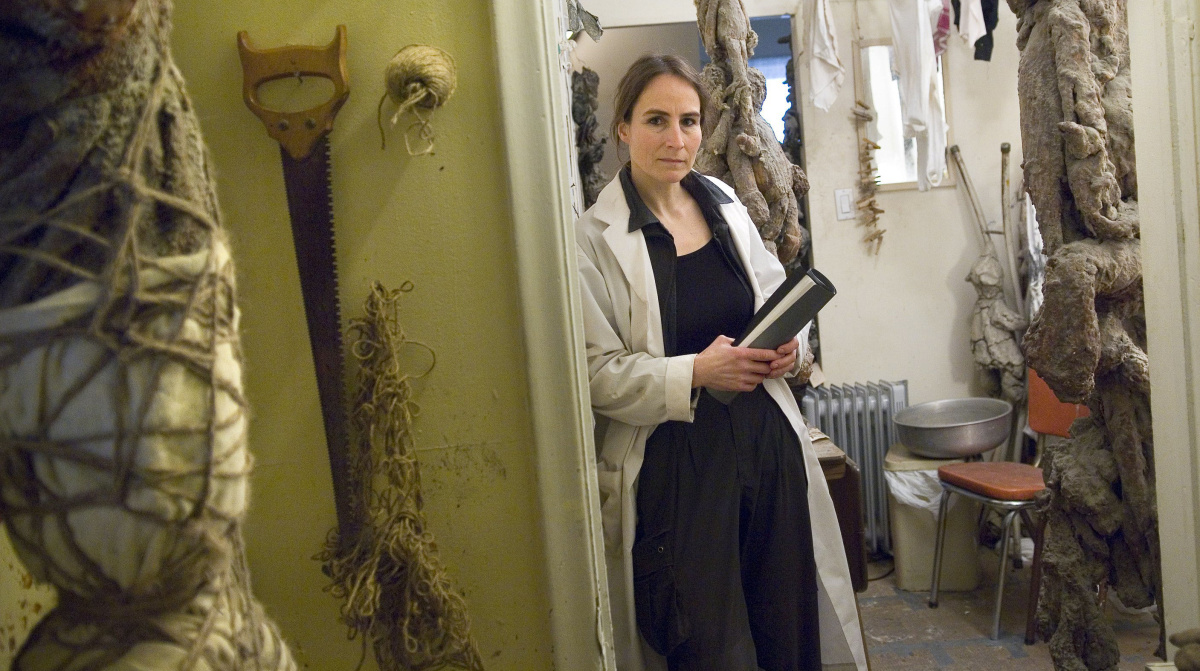
    Louise Bourgeois
    Louise Bourgeois

    There is a long history and much research into the cathartic effect of art-making and art as a therapeutic act has long been taken seriously by arts and health professionals. There are many curatorial angles, but with this show our main hope is to highlight how making work that has a cathartic impact is something many artists do regardless of what their ‘commercial’ practice is about, as well as reiterating its equal visual importance. We hope it will also raise other questions – for example, whether a cathartic moment for the artist during the process of making directly translates into an ‘Aristotlean’ response for the viewer – a ‘chain of catharsis.’

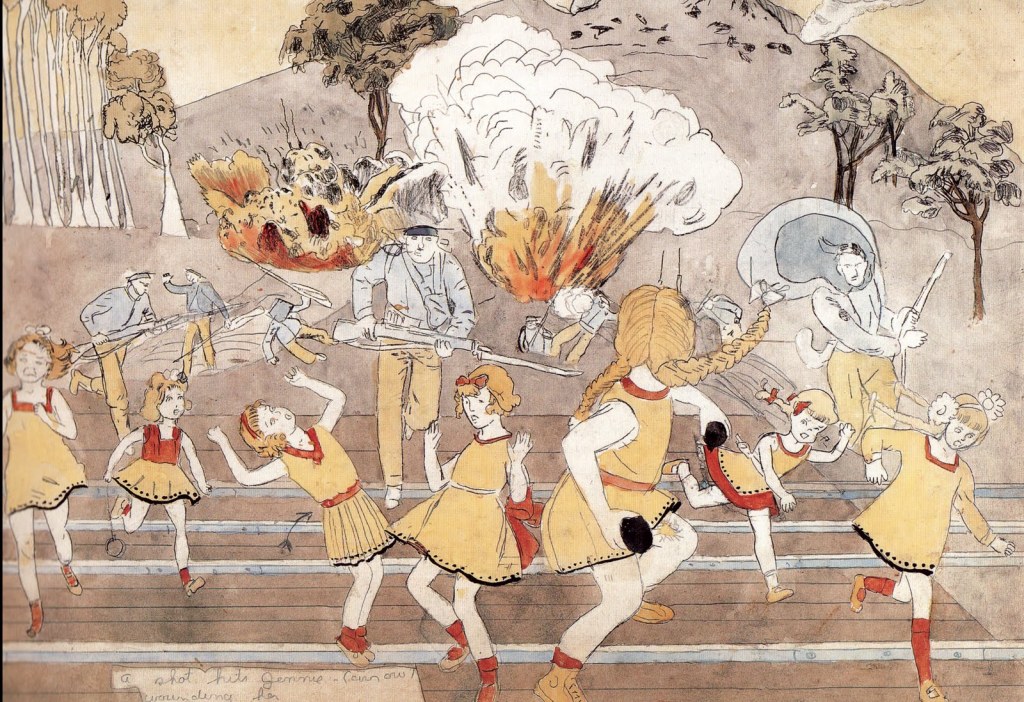
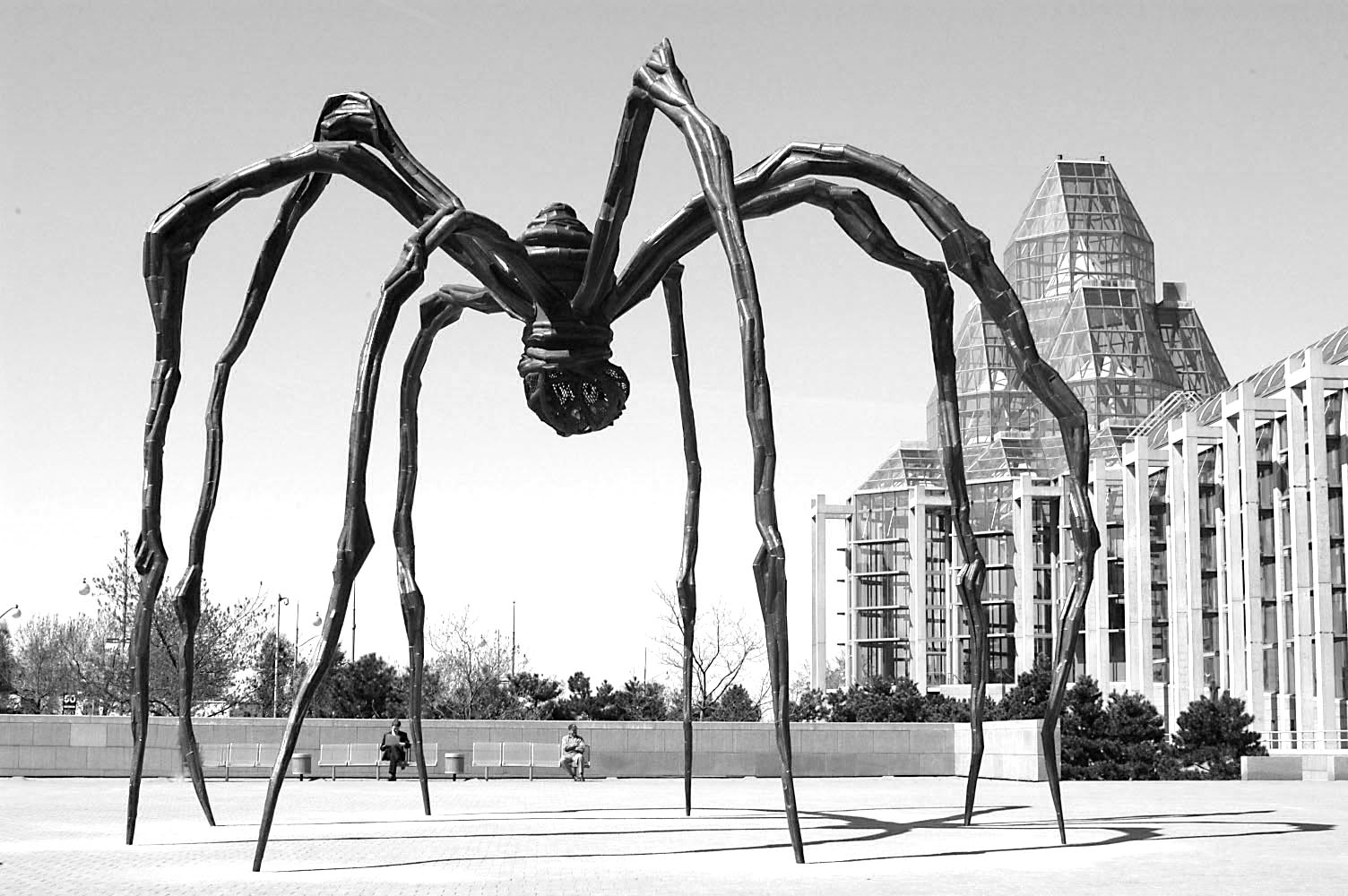
    This idea of catharsis is something that links both the ‘mainstream’ art world and the ‘outsider’ art world; in fact, it links all artists, or, to go even further, every human. It is a universal process – and is something that reiterates the widely held belief that every human has the potential to be creative. Many well-known outsider artists did not create with an audience in mind. Henry Darger is a case in point – he never thought his work would be seen by anyone. So why create the vivid world of the Vivien Girls in the Realms of the Unreal for such a long time? Similarly, there are many ‘mainstream’ artists whose work is the result of a cathartic act. Louise Bourgeois’ work was “heavily influenced by traumatic, psychological events from her childhood,” [1] and the artist herself considered her practice to be highly therapeutic or cathartic.

    Henry Darger [courtesy of www.carlhammergallery.com]
    Henry Darger [courtesy of http://www.carlhammergallery.com]
    Sometimes, it is not the end result that is most important to the artist, but the intangible ‘middle-part’ in which that very end result is created. In this instance, the end result might be discarded, or not looked upon as ‘proper art’ (whatever that is) – or even art. With this exhibition, we want to shine a light on this very important – and interesting – work, because after all, why shouldn’t it have as much precedence as its ‘commercial’ counterpart?


    Submissions: an opportunity for artists


    The dictionary definition of cathartic is: “providing psychological relief through the open expression of strong emotions.” It is the purging, or evacuation, of feelings and emotions.

    Work created as catharsis by artists might differ from their general artistic practice. It might be the work that is created for more personal reasons, the sort of work that is created regardless of whether anyone was ever going to see it or not. Or perhaps the term catharsis covers an artist’s whole practice. Maybe it is a piece that was the result of a powerful reaction to something whether made at the time or a later date.

    Perhaps many artists operate in a more ‘Brechtian’ state of unresolved or subverted catharsis, whereby there is no relief or rebalancing through the work at least; they carry on making and making and thinking and thinking. The viewer might leave the piece with unresolved thoughts akin to Brecht’s ‘activated’ audiences. However, this exhibition seeks introspective moments within artistic practice, where for whatever reason, a cathartic practice has taken place.

    We are keen to find artists willing to share work that they consider to have been made with some cathartic intent or result. To submit work, please send a jpeg image no larger than 1MB to: daniellacnorton@gmail.com.

    Please include: title, materials, dimensions, and state whether the work is framed or unframed. The deadline for submissions is Sunday 26 April 2015. Selected works will need to be delivered to the Gallery in Brighton by Sunday 24 May 2015.

    The exhibition will be held in mid-June through to July in Brighton and if your piece is selected you will need to pay the postage/courier costs and insurance to and from the venue. Please get in touch for further details.

    Kate Davey | kdoutsiderart.com | kdoutsiderart@yahoo.com

    Daniella Norton | Now and Again Gallery (www.facebook.com/GalleryNowAndAgain / click here for the Gallery blog | daniellacnorton@gmail.com


    References

    [1] theartstory.org

  • Karen Sorensen: Creativity and the Creation of Life

    Karen Sorensen: Creativity and the Creation of Life

    Above Image: Karen Sorensen, Fallen Angel


    This week, I’m focusing a blog post on the work of American artist Karen Sorensen. Karen got in touch with me via email, and we have since been to-ing and fro-ing with our thoughts on the art world and its perception and perceived value of women artists and their work (in both the monetary and aesthetic sense). This is particularly poignant seeing as we celebrated International Women’s Day on the 8th March (in the UK at least). I was, of course, also very taken with Karen’s work.

    Karen Sorenson, End of Life
    Karen Sorensen, End of Life

    One of the focal points of Karen’s conversations with me, was her choice between art and motherhood. Karen told me that she had chosen creativity, as to pursue both would have left her completely exhausted. To put this into more of a context, Karen was hospitalised during a prodromal phase of schizophrenia when she was nineteen years old, after which she began to see the world in exquisite detail and colour.

    During the particularly bad stages of her illness, Karen makes art as a reward or to make herself feel better, which inevitably results in complete exhaustion to the point where she is no longer able to lift her arms. This process of invigorated creation lasts for about four hours, after which Karen knows her day’s work is done – and done to the absolute limit of human ability.

    Karen Sorenson, Love is Complicated
    Karen Sorensen, Love is Complicated

    Karen also notes the limiting effect that many anti-psychotic drugs can have on her ability to produce creative work. Because of this, Karen understandably has a strong affinity with British ‘outsider artist’ Nick Blinko. Similarly to Blinko, Karen’s work changes depending on what sort of medication she is taking. Her own favourite work was made, she adds, at the very beginning of her artistic journey, when she needed very little medication.

    Over the course of our email correspondence, Karen and I spoke about Madge Gill and Aloise as examples of two well-known female outsider artists. Both their work, Karen noted, is fairly ‘feminine’ in its aesthetic appearance, with both artists using the female figure as their focal point. In contrast, Karen’s work – for me anyway – contains some more masculine themes, such as male genitalia and ejaculation. Even Karen has noted this herself.

    Karen Sorenson, Spooky World
    Karen Sorensen, Spooky World

    Motifs regaling ideas of reproduction are dotted throughout Karen’s work – and are what I seem to be drawn to the most. The twisted legs of female characters are perhaps indicative of the baby versus creativity dilemma that Karen has faced throughout her life. For example, in ‘End of Life’, we can see the tight twist of legs on the female character at the bottom, in contrast to the ‘loose legs’ of the male figure she is holding the hand of. Above this couple, a pregnant goat pulls a flying cart which holds the severed heads of grey-face women.

    In ‘Zoo Train’, Karen’s most recent work, a king and queen bring up the rear of a train carrying animals – presumably a sort of touring zoo or circus. Again, the woman’s legs are wound tight, as she holds the hand of her king, whose penis hangs below his clothing. The ejaculation of the male character reaches a small bowl (which brings to mind a garden bird bath) in the bottom right of the piece, another familiar motif in Karen’s work.

    Karen Sorenson, Zoo Train
    Karen Sorensen, Zoo Train

    Life, reproduction and creation feature most commonly in these bright, fantastical pieces; umbilical cords, bald-headed baby faced characters, pregnant creatures and ejaculation. Although the content of Karen’s work is not explicitly feminine – something we might be able to say for Gill and Aloise – the repetitive issues seem to be focused on the constant choice between bearing children or a life a creativity. Through her work, Karen has born new life. Her work is her offering to the world, and it is no less important than the offering of another human being.

    Karen Sorenson, Elegant Solution
    Karen Sorensen, Elegant Solution

    Click here to see more of Karen’s art


  • Red Tweny

    Red Tweny

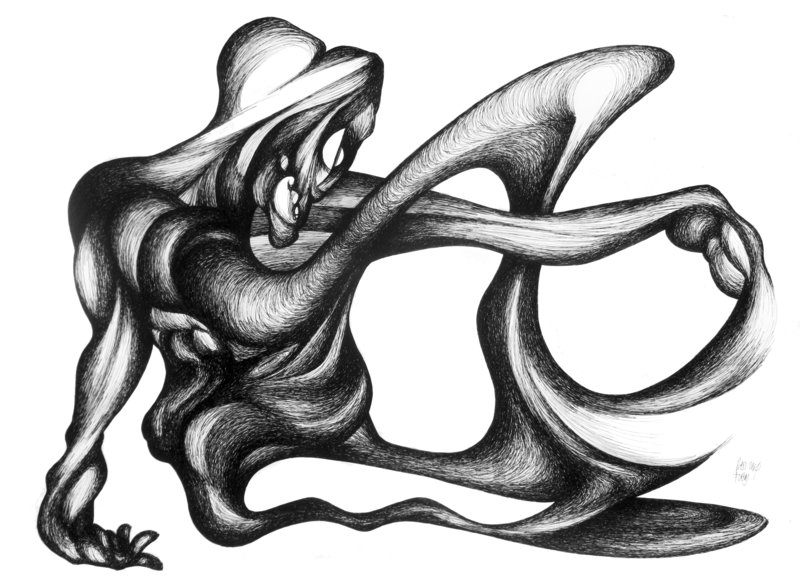
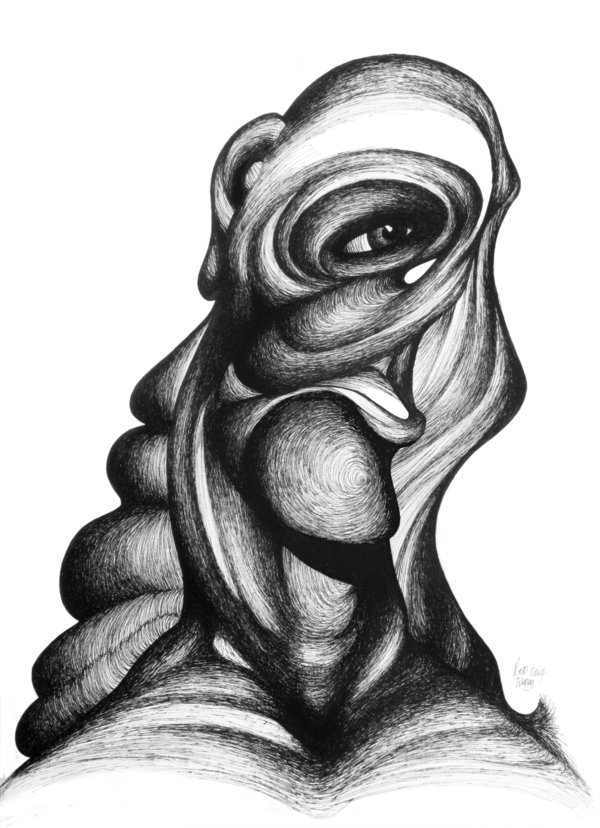
    Above image: Red Tweny, Playing in a Little Space


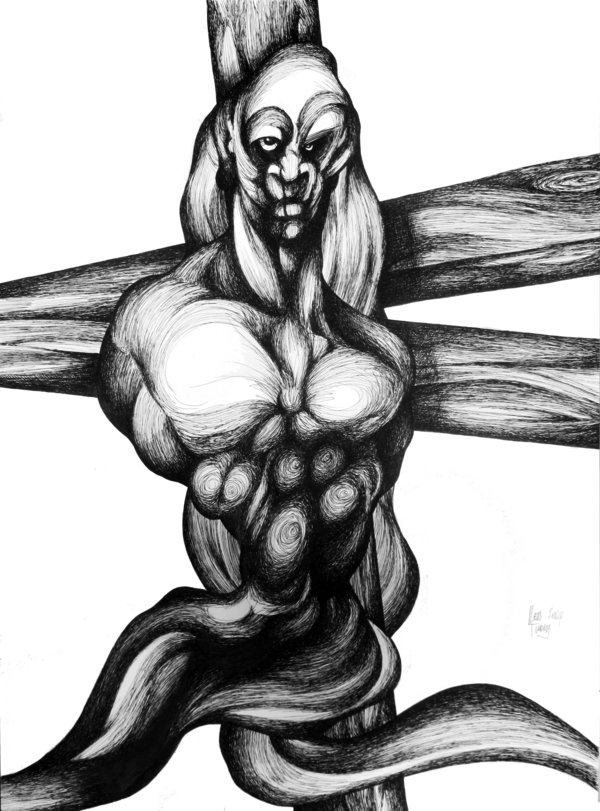
    Red Tweny tries to hold together a mixture of Re-Modernism, Expressionism, Dark Art, Surrealism, Pop Art, Dada, and New Figuration in his eerie monochrome depictions. Using one single colour, he creates without digital manipulation, using only his “soul and a traditional ink pen.” Red describes his style:

    “It is… a style that I think is quite new and recognisable amongst others, reminiscent of the fears of our century and the uneasiness of our souls. I try to tell you the shabby daily lives as opposed to the higher needs of the human soul, almost always disappointed.”

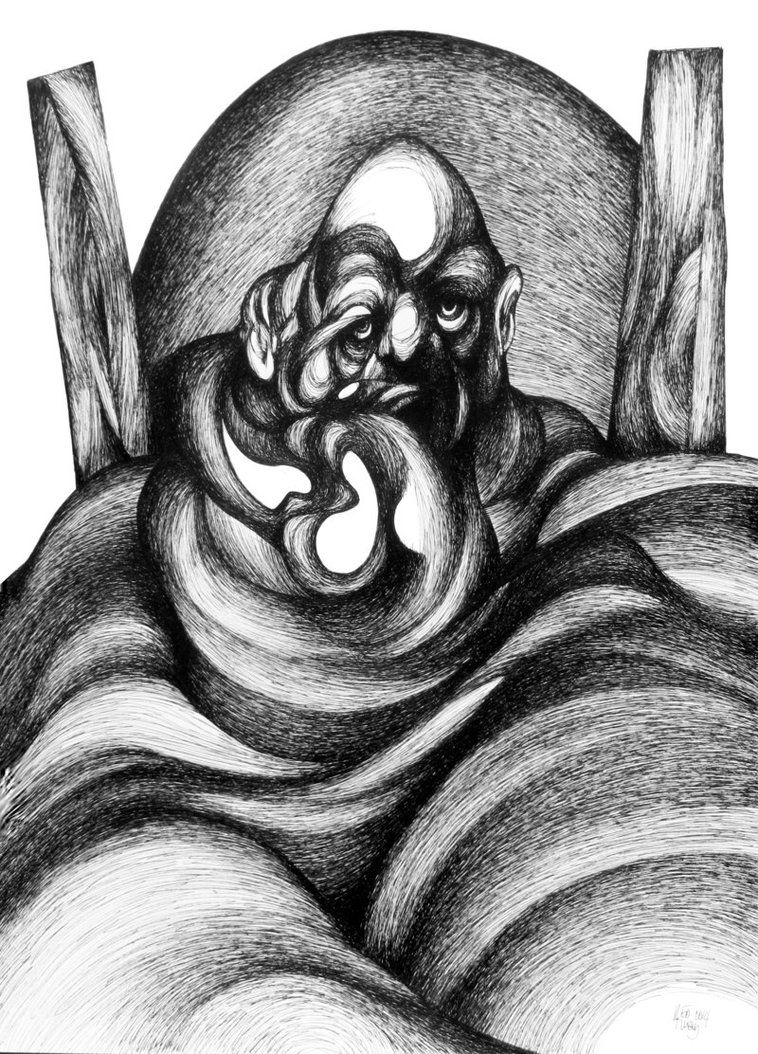
    Red Tweny, A Witch Under the Blanket
    Red Tweny, A Witch Under the Blanket
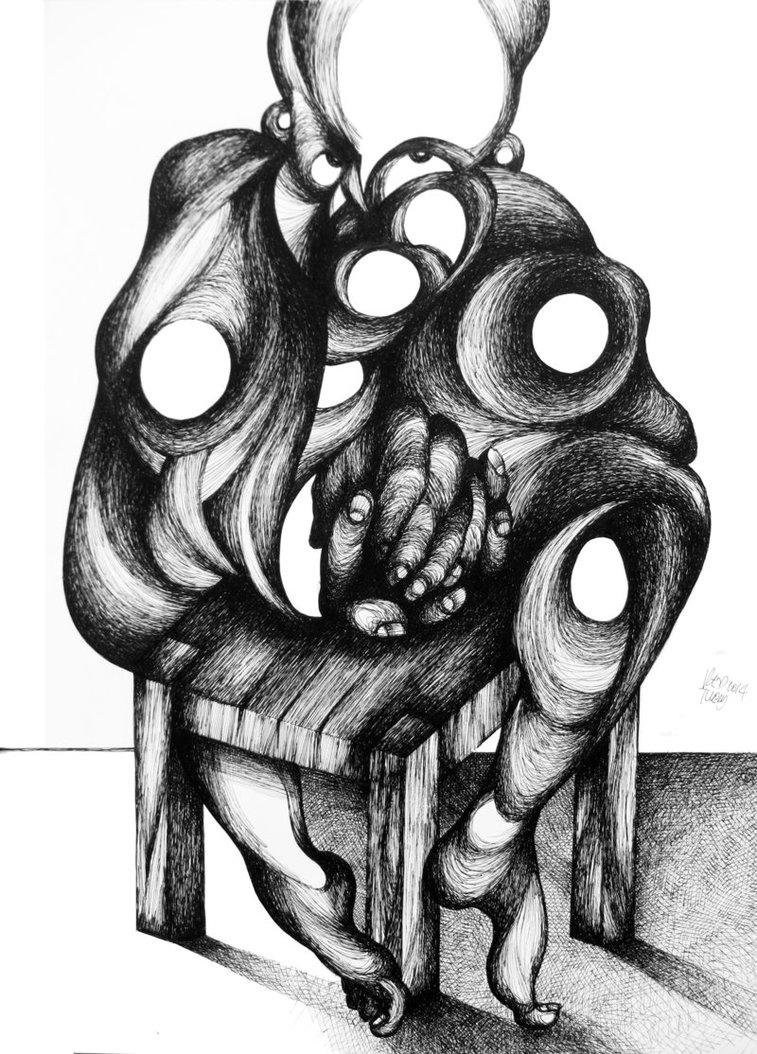
    Red Tweny, Crossing Fingers over a Small Chair
    Red Tweny, Crossing Fingers over a Small Chair
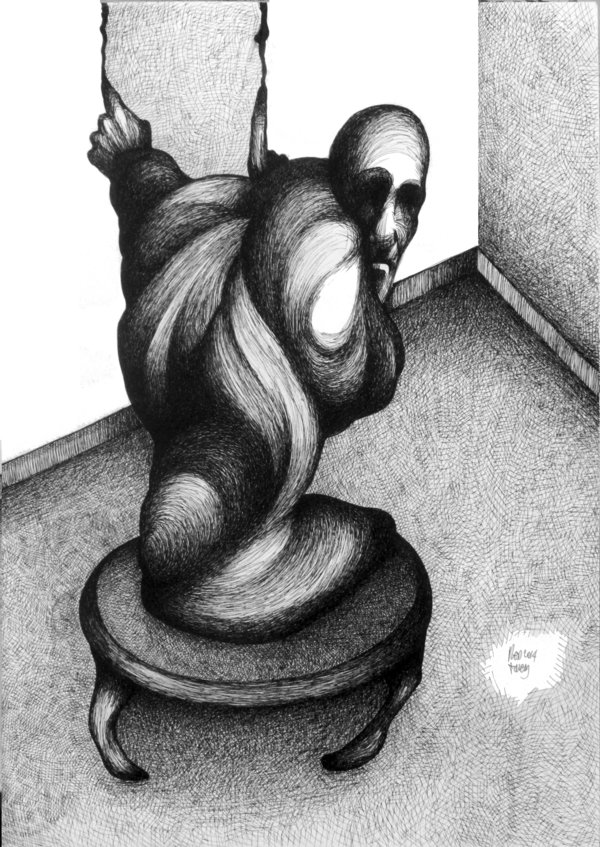
    Red Tweny, Drawing a Window on an Unsteady Table
    Red Tweny, Drawing a Window on an Unsteady Table
    Red Tweny, the Mona LIsa's Tear
    Red Tweny, the Mona LIsa’s Tear
    Red Tweny, Escape from the Pire
    Red Tweny, Escape from the Pire
    Red Tweny, Microcosms
    Red Tweny, Microcosms
    Red Tweny, The Monacle
    Red Tweny, The Monacle

    Click here to see more of Red Tweny’s work

  • Brian Gibson: Real Art… Really?

    Brian Gibson: Real Art… Really?

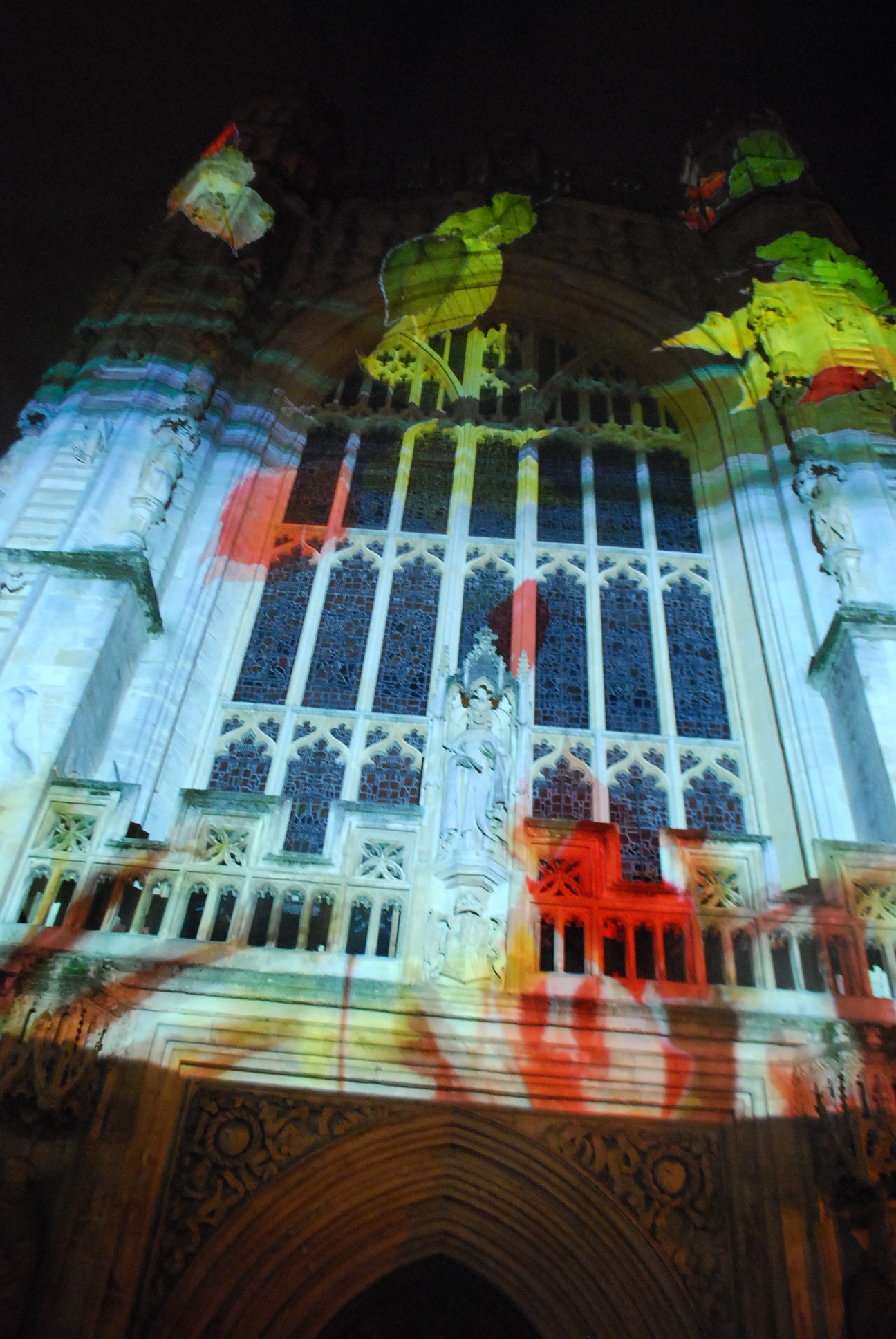
    Above image: Transient Graffiti on Bath Abbey (courtesy of http://www.suitedandbooted.org)


    Brian Gibson: “It’s 2015 now and after recent events the world seems a lot more complex … so I’m heading back to the relative calm of late 2014. Like a lot of people over the festive break I got myself hooked into various forms of social media, reaching saturation point – bloated with meaningful and quirky distractions offering opinions on this that and the other, making me feel futile in the ever-expanding and absorbing world of news feeds and interesting information. I was, however, able to break away from such infectious technology and get back on track, find my bearings and find some time to make a little bit of artwork, engage in some art dialogue and do a bit of offline viewing, that is to say look at some art situated in the real world.

    Image from the Transient Graffiti project
    Image from the Transient Graffiti project

    It was early December, when listening to the radio, I heard a series of broadcasts on Radio 4’s A Point of View by Philosopher Roger Scruton. Someone that I had not heard of but assumed he must be quite learned and well informed to get such a slot. He began with the subject of ‘fake art’ and, as I’ve had a number of conversations with people on the possibility of faking Outsider Art, I thought that this series would be interesting.

    His intent from the start was to clear some ground between what he sees as ‘original art’ that is genuine, sincere and truthful, but difficult to achieve, and the much easier ‘fake art’ that appeals to many critics today. His ire was directed towards the slick world of Jeff Koons and Damien Hirst and the art market that supports them. Cries of the emperor’s new clothes ensued – easy targets, I thought, why mention them now? Ok, they may well represent a particular brand of slick and successful art that looks like a product rather than anything hand made but any real significance either of these two monoliths had in the art world was decades ago. But this high-end financial world is so alien to me and those I know, that I cannot think of a single person who really cares that much about this type of work or what these artists are up to. The likes of Koons and Hirst are really not that important in the world of art that I and many other creative people inhabit. Sure, they are incredibly wealthy but they are old news.

    Image from Transient Graffiti project
    Image from Transient Graffiti project

    Next Scruton, in a sweeping gesture, guns for the faceless bureaucrats of the Arts Council who, he implies, fund only that which is unpopular with the public and is therefore arcane, excruciating and meaningless. I find this both insulting and a little disturbing as the Arts Council also funds a number of arts projects for historically marginalised communities who would remain hidden without their support. I have personally been involved in a number of projects, including Transient Grafitti, an animation created by Deaf Adults With Additional Needs, which was projected onto the face of Bath Abbey with additional artwork displayed inside Baths 44AD Gallery. A bringing together various organisations including Action On Hearing Loss and Suited and Booted Studios CLC, this project provided opportunities for a range of creative people to work with each other, developing ideas; going out into the community; being taken seriously; making it happen and showing it to the public who loved it. This would never have happened without their support. It does make me wonder what such an apparently erudite and influential thinker makes of Outsider art? Who knows? Despite listening to all three broadcasts I never get to find out. He does mention in his final broadcast that ‘real art’ (as opposed to ‘fake art’) has to have lasting appeal with three essential factors: beauty, form and redemption. I do not dispute the value of such qualities but they are not the only ingredients that make art real, tangible and meaningful. In the end I found his views quite narrow and patronising, the all-knowing expert dispensing his wisdom to the great unwashed telling us what real art is …really?”


    Post by Brian Gibson

  • Artist in focus: Judy Shreve

    Artist in focus: Judy Shreve

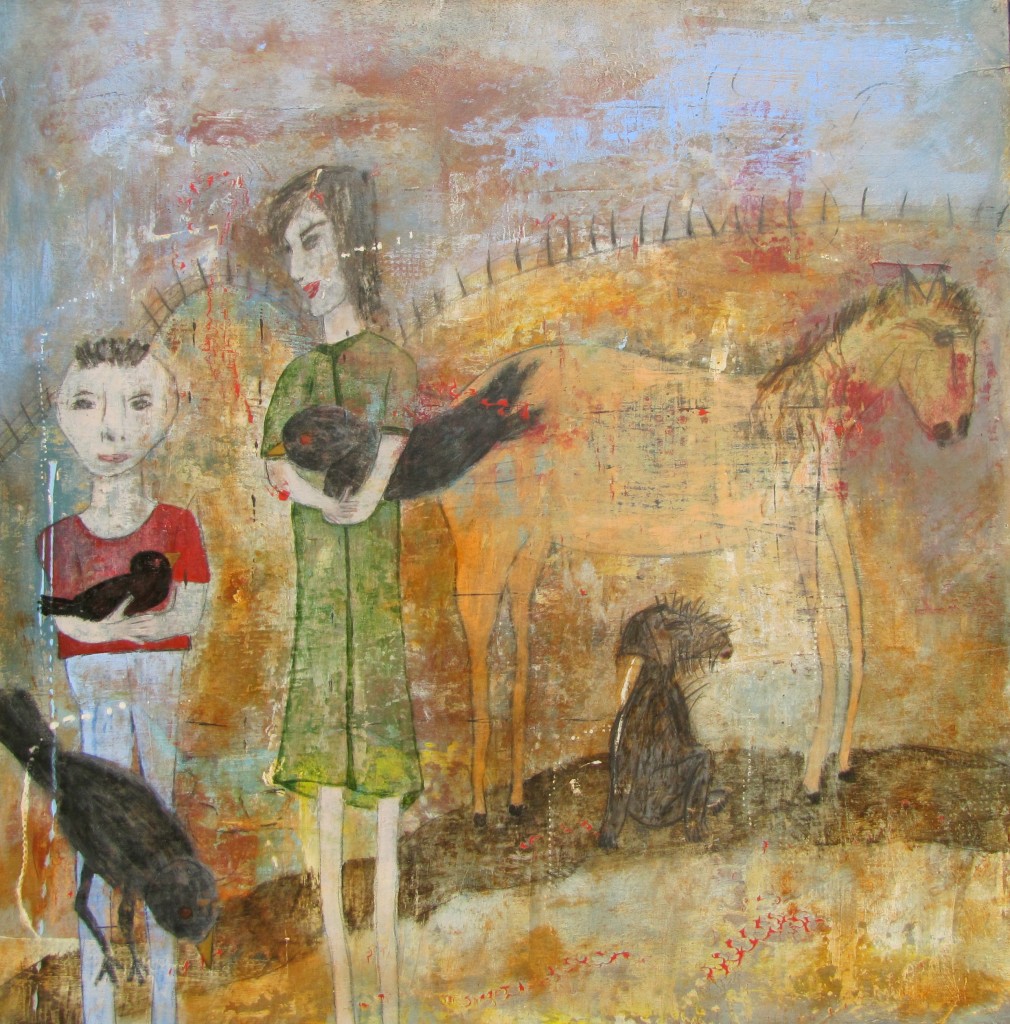
    Above image: Judy Shreve, Sanctuary


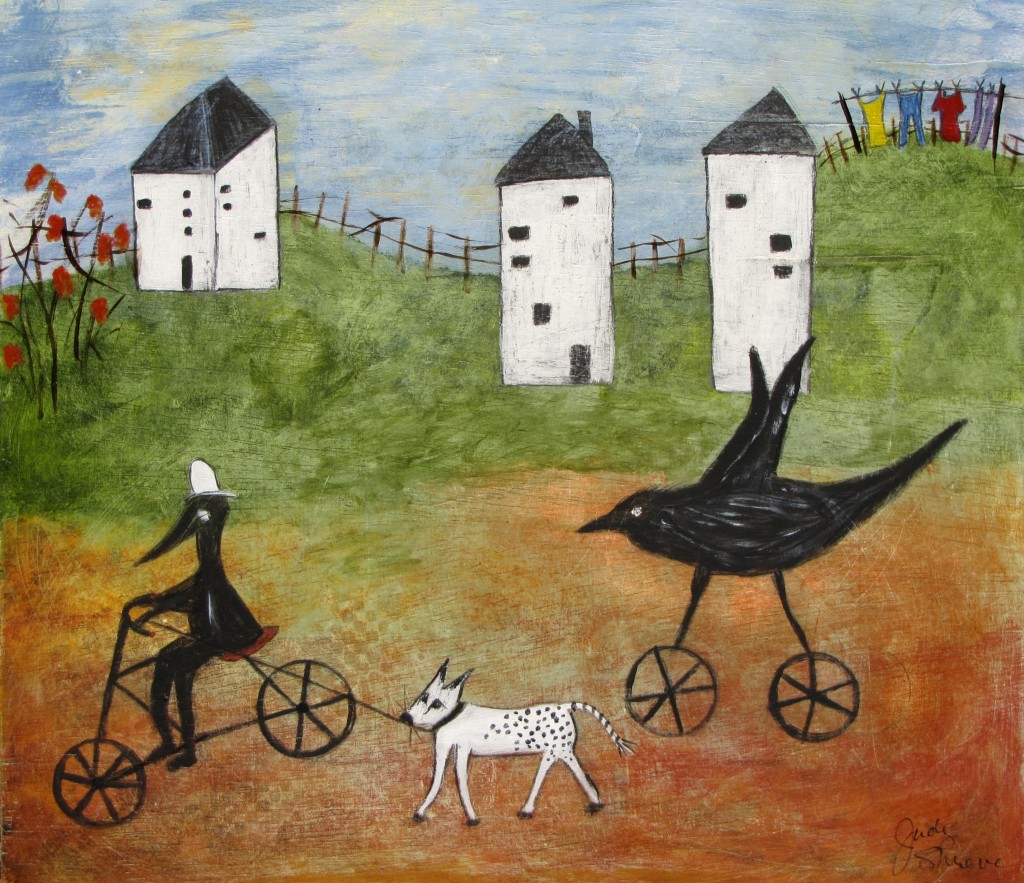
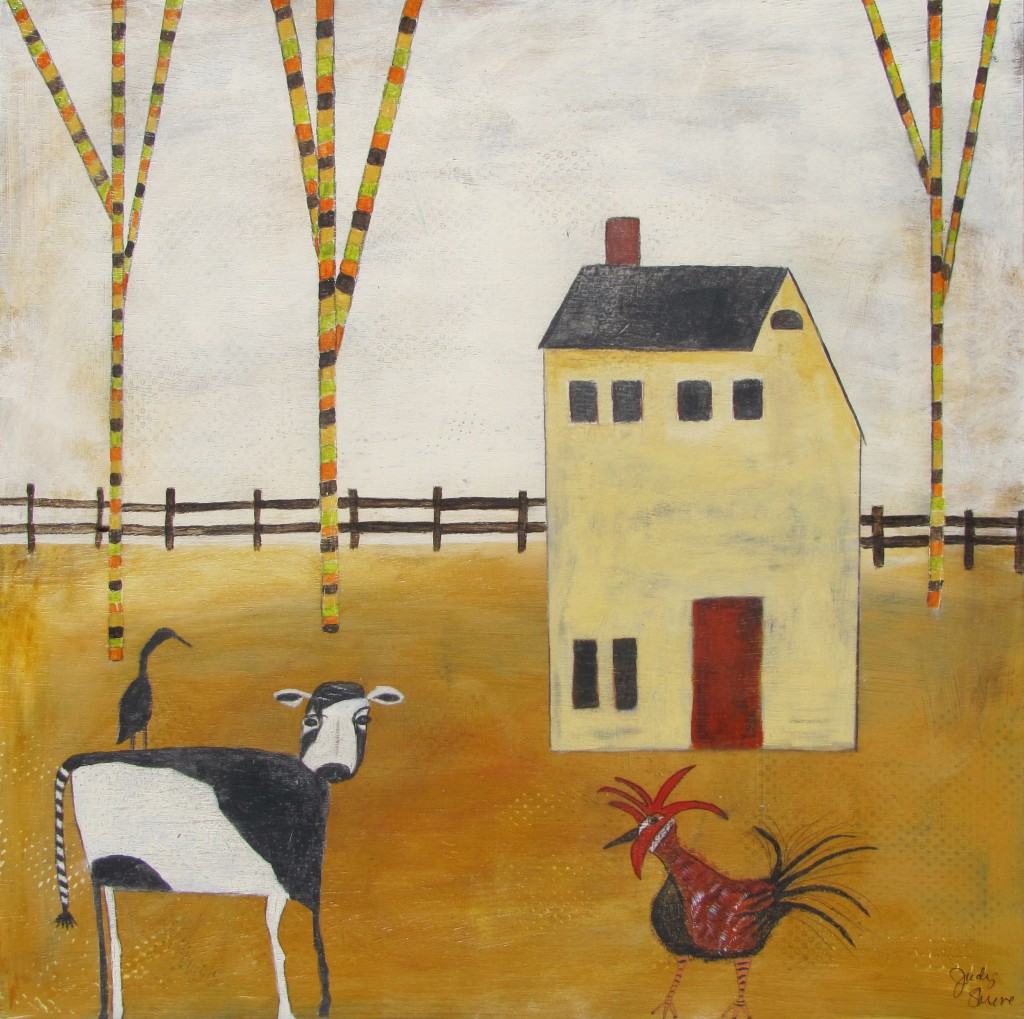
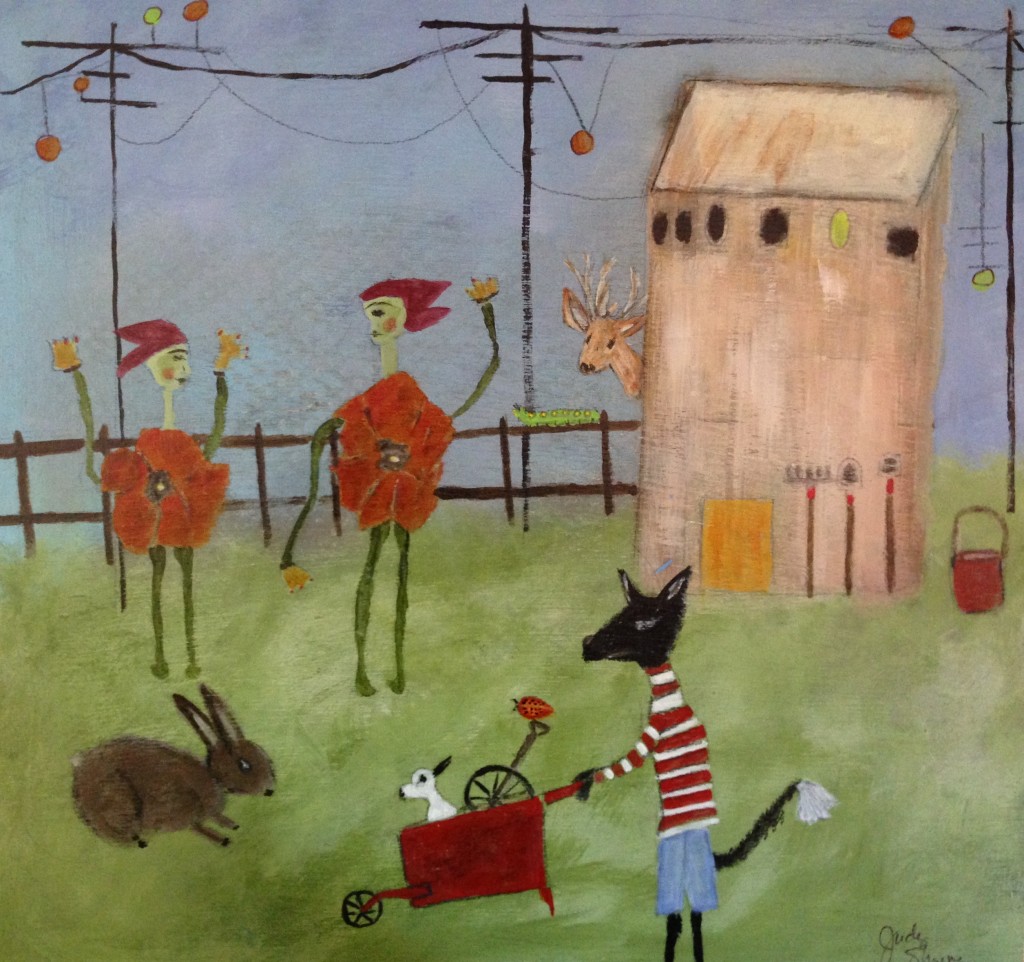
    “I am a storyteller and had to learn to tell a story with paints instead of with words. It is my desire to express from a true place and create an emotional response to what I see. It’s not always realistic, because I see this world in an intuitive-abstract way. And it is the feeling that touches my heart that I want to portray in my work no matter what medium I am working with. Every mark I make is a combination of all my life experiences. Each piece contains a lifetime of aesthetic experience and interest for me, a successful piece is one that opens a heart and creates a smile.”

    Judy Shreve


    Judy Shreve, Heading out of town for a little fun
    Judy Shreve, Heading out of town for a little fun
    Judy Shreve, Trouble in the hen house
    Judy Shreve, Trouble in the hen house
    Judy Shreve, Is he talking to me
    Judy Shreve, Is he talking to me
    Judy Shreve, Jumped off the merry go round
    Judy Shreve, Jumped off the merry go round
    Judy Shreve, Why do I garden anyway
    Judy Shreve, Why do I garden anyway

    To see more of Judy’s work, please visit her website by clicking here
  • Outsider Art to see in 2015

    Outsider Art to see in 2015

    First of all – Happy New Year everyone! As we welcome in 2015, here’s a brief list of a few of the must-see outsider art exhibitions taking place this year.


    Judith Scott: Bound and Unbound

    Brooklyn Museum, New York, US
    Until 29 March 2015

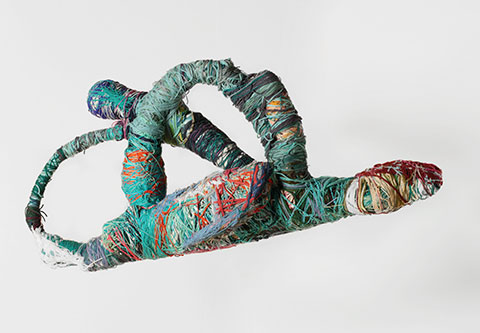
    Judith Scott, Untitled
    Judith Scott, Untitled

    This exhibition is the first comprehensive US survey of the work of Judith Scott and includes Judith’s three dimensional works as well as a selection of works on paper.

    Click here for more information


    Welcome to the World of Mr. Imagination

    Intuit: The Center for Intuitive and Outsider Art, Chicago, US
    9 January – 25 April 2015

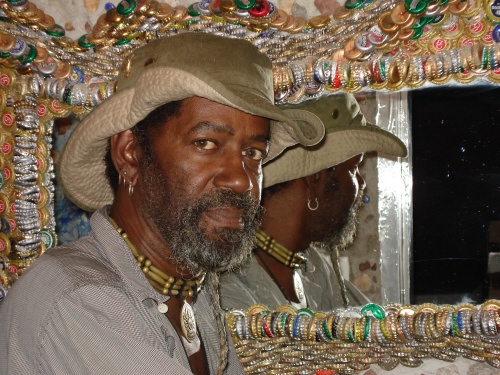
    mr imagination

    This is the first Chicago retrospective for Mr. Imagination; a celebrated outsider artist whose career spanned more than thirty years.

    Click here for more information


    Mary Barnes: Boo-Bah

    The Nunnery, Bow Arts, London UK
    16 January – 29 March 2015

    Mary Barnes, courtesy of www.bowarts.org
    Mary Barnes, courtesy of http://www.bowarts.org

    This show will feature paintings and drawings by prolific outsider artist Mary Barnes. The works are predominantly  from the collection of Dr Joseph Berke, her therapist and friend, and the exhibition will bring together works spanning her artistic career.

    Click here for more information


    New York Outsider Art Fair

    Center 548, New York, US
    29 January – 1 February 2015

    new york outsider art fair

    The annual New York Outsider Art Fair showcases work by some of the most renowned outsider artists.

    Click here for more information


    Nek Chand

    Pallant House Gallery, Chichester UK
    Summer 2015

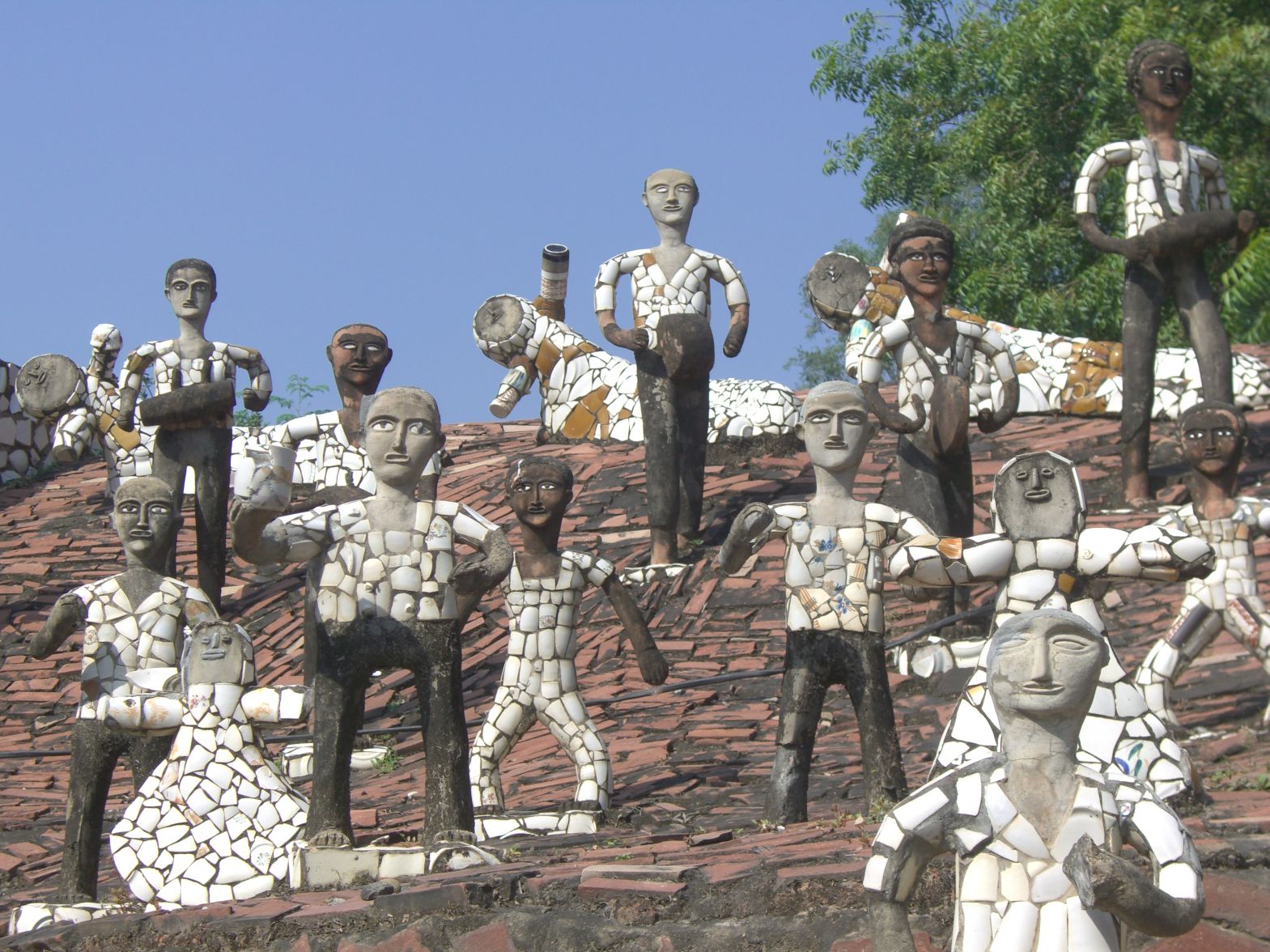
    Nek Chand, photo from the Rock Garden in Chandigarh
    Nek Chand, photo from the Rock Garden in Chandigarh

    Pallant House Gallery in Chichester will house some of Nek Chand’s famous figurative sculptures in their garden this summer.

    Click here for more information


    Paris Outsider Art Fair

    4 Rue d’Artois, Paris, France
    22 – 25 October 2015

    paris art fair 2015

    Like the New York Outsider Art Fair, the Paris incarnation will similarly showcase work by renowned outsider artists.

    Click here for more information


    There will be more must-see outsider art exhibitions popping up throughout the year, so please do follow me on twitter: @kd_outsiderart for all the latest news, or check out the ‘Links’ page (by clicking here) to see what the organisations dedicated to showcasing outsider art are up to in 2015.
  • Creating the ‘Outsider’

    Creating the ‘Outsider’

    Above image: ‘Wagenbach’s’ art at his home (Courtesy of canadianart.ca)


    By complete accident, I stumbled across an article I read a few years back about identity, authenticity and autofiction in relation to outsider art. The piece is called ‘Fake Identity, Real Work: Authenticity, Autofiction, and Outsider Art’ and is by M. Kjellman-Chapin.

    The essay focuses on several examples of ‘mainstream’ artists who have exploited the term ‘outsider’ for artistic purposes. It starts as you might expect an article focusing on outsider art to – with a description and contextualisation of the term. It then delves into the biographical histories of a selection of artists; their homes, their relationships. It describes their work; their style, their process, their medium. Then Kjellman-Chapin goes on to inform the reader that none of these ‘characters’ are real. They do not and have never existed in their own right. They are all the figment of various others’ imaginations.

    Iris Haussler, an installation artist born in Germany and living in Canada, inhabits the minds and lives of a series of characters. The character that Kjellman-Chapin examines is Joseph Wagenbach, a long term resident of Robinson Street in Toronto, Canada. So private was Wagenbach, that he very rarely left his house. He took to covering his windows in newspaper to further maintain his privacy and was extremely estranged from his neighbours. But in June 2006, following a prolonged absence that was noted by various people in the neighbourhood, the authorities were called and Wagenbach was moved to a care facility. The discovery of hundreds of handmade creations in Wagenbach’s home following his removal, carefully rendered from wax and plaster, was enough to elicit the support of a committee of experts, including an archivist.

    ar-Art17
    Iris Haussler with ‘Wagenbach’s’ work (Courtesy of http://www.thestar.com)

    All of the handmade objects found in the house had been crafted by Haussler, as had the life of Wagenbach. An extension of the physical, tangible works ‘he’ created, Wagenbach was an art work in his own right, carefully constructed with a completely believable back story (there are many similarities between this and the story of the discovery of Henry Darger’s work). In a 2012 interview, Haussler said of her practice: “My characters are often underdogs, people who are developing obsessive work out of an inner need. When visitors come across their legacies, they notice that these people have dedicated their lives to something bigger in life. Observing that can be inspiring.” [1]

    Another example of this character creation is the Spelvin Collection; dreamt up by Beauvais Lyons, professor of printmaking at the University of Tennessee. The Spelvin Collection, part of the Hokes Archives, was brought together by ‘hoax’ collectors George and Helen Spelvin. It contains works by a string of Lyons’ characters including President portrait maker Arthur Middleton, librarian Emma Whorley, jilted bride Charlotte Black, and a selection of religious tracts printed on cereal boxes by Max Pritchard.

    Kjellman-Chapin explains the motive behind the dual-role creators and curators Haussler and Lyons: “Through works made by avatars, Haussler and Lyons can critique the orthodoxy of Outsider Art from the inside and reveal it to be itself an elaborate fabrication. Their projects are not simply exercises in faux histories; the layered fictions they have created function in a critical capacity.” [2] The practices of Haussler and Lyons are an incredible illustration of how we – the audience – define outsider art. All of the conjured artists quite neatly fit our evaluation of the outsider category. Their value is “located not in the plastic realities of the objects themselves, but in the capacity of the makers’ location in social space to wash over those objects and images and coat them in a taxonomically valued rhetoric of authenticity.” [3]

    arthurmiddleton
    ‘Arthur Middleton’, with his portraits of American Presidents (Courtesy of artoftheprank.com)

    There is perhaps, I think, a lesson here in the recent rise in popularity of outsider art. The example of Haussler and Lyons illustrates the simplicity of creating a believable character whom we can easily (and correctly?) assume would fit even Dubuffet’s strict definition of Art Brut. The use of the term outsider artist is bandied around a considerable amount in Europe and the US at the moment, and there is concern amongst some people that ‘mainstream’ artists will ‘jump on the bandwagon.’ I don’t think Haussler and Lyons have jumped on such a bandwagon – after all, their art is a ‘three dimensional novel’; a whole narrative of these characters, the situations they are in, their thoughts, beliefs, and their experiences. I do wonder, however, why they chose ‘outsiders’ – “shut-ins, outsiders and hoarders with an artistic bent whose fears and obsessions compel their odd creations.” [4] I like to think it’s because they are able to experience true, uninhibited creativity this way, and conjuring up a character so different from themselves provides Haussler and Lyons, and us as the audience, the opportunity to understand more empathically what it might be like for the real Middletons, Horleys and Wagenbachs of the world.

    Personally, I found myself fascinated by the work of Haussler and Lyons, but are they turning their characters into the art work? Are they instead exhibiting vulnerable people (regardless of their realness – or lack of it)? And what does this mean for real ‘outsider artists’? I would be interested to hear what you think about this one, so please let me know in the comments below.


    References


    [1] Artist Interview: Iris Haussler, Now Toronto

    [2] Kjellman-Chapin, Fake Identity, Real Work, p153

    [3] Kjellman-Chapin, Fake Identity, Real Work, p153

    [4] Artist Interview: Iris Haussler, Now Toronto

    Further information

  • Brian Gibson: Fessing Up

    Brian Gibson: Fessing Up

    Featured image: Agnes Richter, needlepoint jacket [notmodernart.tumblr.com]


    Following Brian Gibson’s fantastic previous post, entitled ‘What does it mean to be an Outsider?‘, he has written again for kdoutsiderart. This time, focusing on ‘confessional’ art. Here, her discusses whether artists who have experienced trauma or health issues feel ‘obliged’ to create art that is overtly confessional?

    There are a lot of people (past and present) whom I really admire who have the ability to write down, draw and paint to reveal a deeply personal, integral part of themselves succinctly and often explicitly. I have the greatest respect for those people who have such courage, placing a personal account of a particular aspect of their life in the public realm. There are certain works that have completely stirred me emotionally: Frida Kahlo’s drawing of her miscarriage and a painting of an abusive relationship by an artist showing at the Outside In Exhibition at Pallant House Gallery and the Outside In: West exhibition at the Somerset Museum are but two.

    When so much art of the modern era can be said to be autobiographical and increasingly stacked online into categories, is it wrong or demeaning to place such works into a genre defined as ‘confessional art’? I certainly don’t think that the two works which I have mentioned were specifically created to fit a market within a particular realm of art practice, even so, there are some artists such as Tracy Emin who seem to have made a very successful career out of  ‘fessing up’.

    Personally, I don’t know what to make of Tracy Emin anymore. She is now very much part of the art world establishment (I don’t begrudge her success), having evolved from what could be considered a quasi-outsider stance, in part due to the way in which she presents herself and her  work, tapping into the psychoanalytic influenced work of Louise Bourgeois and such works from the Prinzhorn collection as Agnes Richter’s needlepoint jacket. Whatever one thinks of Ms Emin herself or her work, she  seems to know how to profit from fessing up her past, whilst remaining in the driving seat. Likewise, the pianist James Rhodes has spoken openly about his experiences of abuse and mental health issues, he too seems to be in the driving seat, which to be honest is a pretty enviable position. Whilst this tack might work for some individuals, I am not so sure if this should be considered a creative formula for all those artists who have experienced mental health issues or trauma of some kind.  Even so, it can be tempting to mis-read such paths to success, acceptance and acknowledgement as being primarily down to being completely open; revealing your trauma, displaying it in your artwork, and putting it in the public realm for all to see.

    I fundamentally believe that people should not be silenced for what they have experienced. I have heard enough about people in glass houses and it being better to remain silent than be thought a fool. However, with the increase of social media platforms, I have noticed an increase in people telling their story because they can, but I wonder what happens after the rush of ‘likes’, when people find something new to share, does anything change significantly for the person concerned?  There are some wonderful blogs out there with some incredibly powerful images; there are also other stories which I fear will go unheard and unseen.  It takes a lot of courage to fess up, to speak out and say something but my concern is that a lot of confessional art will over time be reduced to the status of another form of ‘the selfie’.


  • Nahum Shmushko

    Nahum Shmushko

    “I’m told that art-making heals.
    I’m also told, that it opens up infected wounds, releasing the pressure.
    Someone even told me, that art opens a window through which you can pop into your own soul.
    Most probably, someone will even say that art can open a window for others to pop into your soul.
    Well, the truth is, making art simply keeps me busy.”
    – Nahum Shmushko

    3 u05E0u05D7u05D5u05DD u05E7u05D8u05DF

    5 u05E0u05D7u05D5u05DD u05E7u05D8u05DF

    13 u05E0u05D7u05D5u05DD u05E7u05D8u05DF

    9 u05E0u05D7u05D5u05DD u05E7u05D8u05DF

    10 u05E0u05D7u05D5u05DD u05E7u05D8u05DF

    17 u05E0u05D7u05D5u05DD u05E7u05D8u05DF